Health Care Department Operations Manual

Chapter 3 – Health Care Operations

Article 1 – Complete Care Model

3.1.1 Complete Care Model

  • Policy

    • California Correctional Health Care Services (CCHCS) in partnership with other California Department of Corrections and Rehabilitation (CDCR) divisions shall manage and deliver medically necessary health care services to the patient population.  The Complete Care Model (CCM) is based on the industry standard known as the Patient-Centered Health Home.  The CCM shall serve as the foundation for CCHCS health care services delivery. Within the CCM, staff shall utilize a Whole Person Care approach which recognizes that the best way to improve health outcomes is to consider the full spectrum of a patient’s needs – including medical, behavioral, socioeconomic, and beyond. This model improves patient care, reduces the need for hospitalizations and emergency services and enhances staff satisfaction.  The CCM includes the following foundational principles and requirements:

    • Continuous Care.  Health care systems and processes shall be structured to ensure that patients have a consistent relationship with a team of interdisciplinary staff accountable for their care, which allows Care Team members to know a patient’s history from experience, integrate new information and decisions from a whole-patient perspective, gain the confidence of their patients, and effectively advocate for patients.

      • CCHCS shall establish interdisciplinary Care Teams at each institution, accountable for the care of defined patient panels and the exchange of relevant clinical information between treatment teams.

      • Each patient shall be assigned a Care Team, and as much as possible, the patient’s primary care encounters shall occur with members of the assigned Care Team.

      • CCHCS shall take action to minimize unnecessary patient transfers from one Care Team to another and shall design effective systems and processes to ensure that patient needs are communicated prior to transfers and patients receive timely access to necessary services before, during, and after transfer.

    • Comprehensive Care.  The health care system shall be designed to meet the patient’s health needs as a whole person, promote collaboration and coordination of services to address a single discipline, condition, or episode of care.  CCHCS shall employ risk stratification, population management, and case management among the strategies used to achieve comprehensive care.

      • The Care Team shall be responsible for:

        • Assessing and periodically evaluating patient health needs;

        • Meeting health care needs, including prevention and wellness services, episodic care, chronic care, urgent or acute care, and end-of-life care; and

        • Assessing health care needs beyond the scope of the health care team and referring patients to appropriate providers and services.

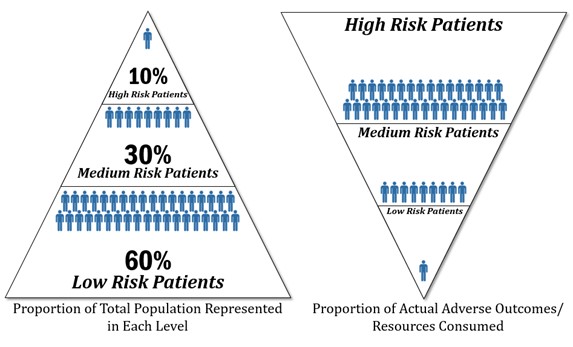
      • CCHCS shall implement programs for patients by risk stratification; provide care management services to patients commensurate with their individual needs and risk levels; and identify and manage subpopulations of patients per evidence-based guidelines.

    • Coordination of Care.  Patient services shall be coordinated and health information exchanged across all health care settings, levels of care, and specialty services.

      • The Care Team shall serve as the hub for organizing and scheduling health care services, facilitating appropriate delivery of health care services within and across systems, maintaining continuity of care, and managing exchange of information.

      • The Care Team shall establish reliable processes and systems to track the status and follow-up of specialty referrals, diagnostic studies, and treatment regimens from all disciplines including the Division of Rehabilitative Programs.

      • CCHCS shall establish standardized expectations and processes for clear and open communication between the Care Team and other care providers, which shall include:

        • Ensuring accountability for transitions in care;

        • Providing patient support and education before, during, and after transitions in care; and

        • Building relationships with other health care staff providing services to patients within the patient panel

    • Patient-Centered Care.  Health care staff shall encourage patients to partner in their own care and to make informed decisions related to their health and health care choices.  Health care staff shall incorporate the patients’ goals, preferences, and needs into treatment plans whenever feasible and appropriate.

      • The Care Team and other health care staff shall actively engage and empower patients to participate in care planning and delivery, supporting patients in learning to manage their own care between appointments with health care staff.

      • CCHCS shall implement programs to assess and improve patient health literacy and promote self-management planning and activities.

    • Preventive Care.   Health care staff shall provide preventive care to the patient population based on age, gender, and other clinical recommendations from the United States Preventive Services Task Force Guide to Clinical Preventive Services where health care staff can focus on disease prevention and health maintenance.  It includes early diagnosis of disease, discovery and identification of patients at risk of development of specific problems, counseling, and other necessary intervention to avert a health problem.  Surveillance for infectious diseases, screening tests, health education, and immunization programs are common examples of preventive care.

    • Accessible Care.  CCHCS shall ensure that patients receive timely access to the full range of necessary services, that communication with patients is delivered effectively, and adapted as necessary to the patient’s needs.

      • Scheduling systems and processes shall incorporate strategies to optimize access to care and reduce wait times, including a flexible appointment system that accommodates visit lengths, same-day visits, and scheduled follow-ups, as well as strategies to increase efficiency, such as consolidated/bundled appointments.

      • When possible, health care staff shall consider patient preferences regarding access, such as providing appointment times that do not interfere with the patient’s work shifts or classes.

    • Use of Health Information.  Health care staff shall use health information systems to identify and manage individual patients and patient populations, apply evidence-based standards and guidelines, and to promote continuity and coordination of care and interoperability of health care documentation to improve patient outcomes.

      • Health records shall be completed timely, accurately, and thoroughly, and records from outside the electronic health record shall be readily available prior to patient encounters.

      • CCHCS shall develop connectivity via electronic or other information pathways to encourage timely and effective communication between providers caring for the same patient.

      • CCHCS staff shall  integrate clinical decision support into electronic systems to promote the application of current guidelines or standards as appropriate in the course of patient care.

      • CCHCS shall produce reports for the management of individual patients and patient populations, such as patient registries, patient profiles, and patient summaries, and health care staff shall use these reports regularly for purposes of care management, population management, and other patients care activities.

    • Continuous Improvement.  At all levels of the organization (statewide, regional, institution, and Care Team or program), leaders shall be responsible for establishing a culture of teamwork, continuous learning, and innovation.  Activities to continuously evaluate and improve health care processes shall be incorporated into the day-to-day work of health care staff.

      • Leaders shall champion cultural change, as well as specific improvement strategies, such as initiatives from the institution’s annual improvement plan.

      • Responsibility for conducting improvement activities shall be shared by all staff, from leadership to team members.

      • CCHCS shall establish an effective communication system to keep staff at all levels of the organization appraised of improvement priorities, organizational goals, and performance evaluation findings.

      • CCHCS shall use data and statistical tools to provide Care Teams with feedback about their performance in critical health care processes and the health outcomes of patients within their assigned panel.

  • Purpose

    • To establish a standardized and integrated care model that organizes and delivers core primary care functions to improve:

    • Quality of care and patient outcomes.

    • Efficiency and value of care.

    • Patient and staff satisfaction.

    • Adherence to legal and regulatory requirements.

  • Responsibility

    • Statewide

      • CCHCS and CDCR departmental leadership, at all levels of the organization shall ensure administrative, custodial, and clinical systems are in place and appropriate tools, training, technical assistance, and levels of resources are available so that Care Teams can successfully implement the CCM.

      • The Director, Health Care Operations and Corrections Services, and Director, Health Care Services, are responsible for statewide planning, implementation, and evaluation of the CCM.

    • Regional

      • Regional Health Care Executives are responsible for the administration of this policy at the subset of institutions within an assigned region.

    • Institution

      • The Chief Executive Officer is responsible for implementation of this policy at the institution level.

  • References

  • Revision History

    • Effective: 07/2015
      Revised: 08/2020

3.1.2 Scope of Patient Care Services

  • Procedure Overview

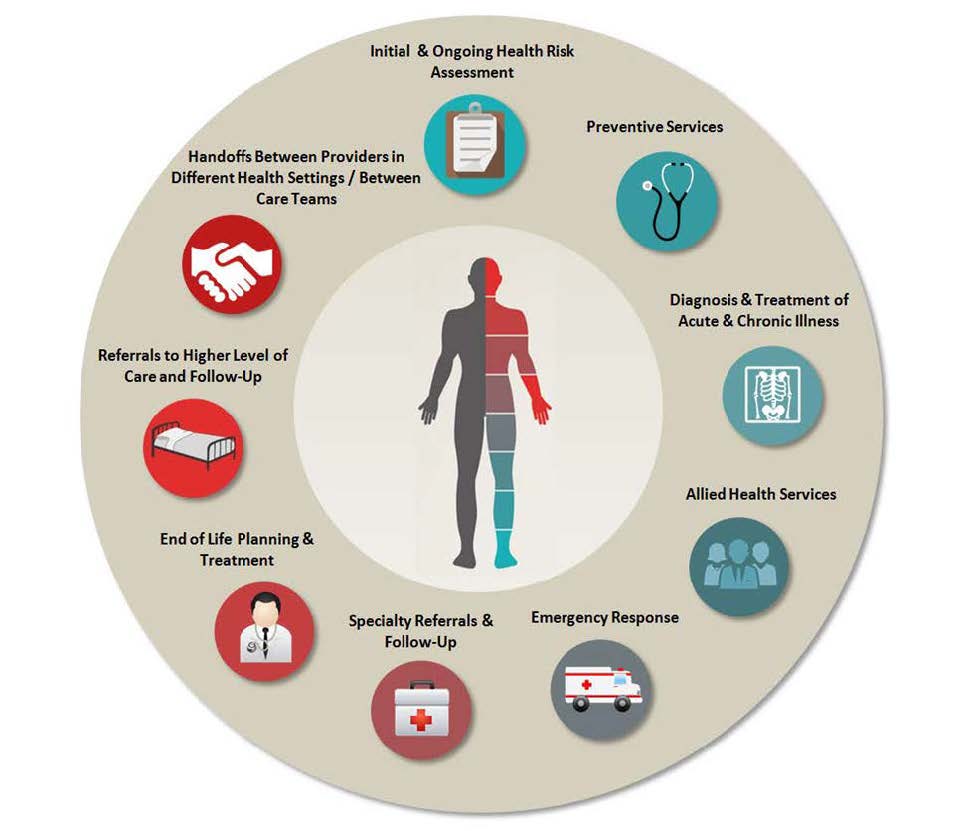
    • Under the Complete Care Model (CCM), an assigned Primary Care Team (PCT) serves as the center of each patient’s Health Home, directly delivering the majority of dental, medical, mental health, and nursing services and coordinating all care that falls outside the team’s scope of services (refer to the figure below).  Applicable standards for the delivery and coordination of the services outlined in this procedure can be found in existing California Correctional Health Care Services (CCHCS) and Division of Health Care Services policies and procedures.  PCTs remain responsible for adhering to these standards under the CCM (refer to Appendix 1, Services and/or Coordinated by the Primary Care Team and Associated Standards in the Health Care Department Operations Manual).

    • Complete Care Model Patient Care Services

    • This is an image titled Complete Care Model Patient Care Services. It is a tan circular image with the following patient care services aspects in a circle and a correlating graphic – Initial and Ongoing Health Risk Assessment has a graphic of a clipboard with a piece of blank paper and a teal background; Preventive Services has a graphic of a black stethoscope and a teal background; Diagnosis and Treatment of Acute and Chronic Illness has a graphic of an x-ray of the rib cage, pelvis, and arms with a teal background; Allied Health Services has an outline of three people who look like health care staff with a teal background; Emergency Response has a graphic of an ambulance with a gray background; Specialty Referrals and Follow-up has a graphic of a white medical briefcase with a red cross on the front of the case with a dark red background; End of Life Planning and Treatment has graphic of a doctor with a black tie, white coat, and stethoscope and a red background; Referrals to Higher Level of Care and Follow-Up has a graphic of a bed with a tan blanket and black bedframe with a bright red background; Handoffs Between Providers in Different Health Settings/Between Care Teams has ta graphic of two hands shaking with a dark red background. In the middle of the circle is the outline of the human body, the left half of the body is shaded grey and the right half is shaded red on head of the body and gradually fades to teal at the feet.

    • This procedure incorporates existing policies and procedures that describe the scope of primary care services provided and coordinated by the PCTs to fulfill their role as the center of each patient’s Health Home by following the CCM.  Refer to the Health Care Department Operations Manual and the Mental Health Services Delivery System Program Guide.  In addition, the PCTs shall utilize existing decision support tools such as Care Guides, Nursing Protocols, Order Sets, Standing Orders, etc., when providing services.

  • Responsibility

    • Statewide

      • California Department of Corrections and Rehabilitation and CCHCS departmental leadership at all levels of the organization, within the scope of their authority, shall ensure administrative, custodial, and clinical systems are in place and appropriate tools, training, technical assistance, and levels of resources are available so that Care Teams can successfully implement the Scope of Patient Care Services Procedure.

    • Regional

      • Regional Health Care Executives are responsible for implementation of this procedure at the subset of institutions within an assigned region.

    • Institutional

      • The Chief Executive Officer (CEO) has overall responsibility for implementation and ongoing oversight of a system to provide management of the Scope of Patient Care Services. The CEO delegates decision-making authority to designated Institutional Health Care Executives for daily operations of the Scope of Patient Care Services Procedure and ensures adequate resources are deployed to support the system.

      • The CEO and all members of the institution leadership team are responsible for ensuring all necessary resources are in place to support the successful implementation of this procedure at all levels including, but not limited to, the following:

        • Institution level

        • Patient panel level

        • Patient level

      • The CEO and all members of the institution leadership team shall ensure access to and utilization of equipment, supplies, health information systems, patient registries and summaries, and evidence-based guidelines.

      • The CEO and all members of the institution leadership team as a part of the Quality Management process on an ongoing basis shall:

        • Review and compare institutions’ PCT performance, including the overall quality of services, health outcomes, assignment of consistent and adequate resources, utilization of Dashboards, Master Registries, Patient Summaries, decision support tools and address issues pertaining to delivery of the Scope of Patient Care Services.

        • Provide PCT members with adequate resources, including protected time, staffing, physical plant, information technology, and equipment/supplies to accomplish daily tasks.

        • Work with custody staff to minimize unnecessary patient movement and ensure appropriate escort and transport.

      • The Chief Nurse Executive is responsible for the overall daily clinic operations and ensuring that the institution has designated supervisors to monitor clinic operations including, but not limited to:

        • Efficiency.

        • Coordination.

        • Supplies.

        • Equipment.

        • Physical plant issues.

        • Scheduling and access to care on a daily basis.

        • Identifying and addressing or elevating concerns regarding barriers.

  • Procedure

    • Services Delivered and/or Coordinated by the Primary Care Team

    • The PCT is responsible for coordinating care for patients within the assigned panel and pulling in other health care staff as necessary to meet the needs of the patient.  The PCT identifies services that are outside of the team’s purview, coordinates patients’ access to necessary services, and ensures appropriate follow up after services have been provided by other providers in other health care settings.

    • The PCT provides the full scope of primary care services to patients within an assigned patient panel including, but not limited to:

      • Care coordination.

      • Initial and ongoing health risk assessment.

      • Preventive services, such as health screenings, health promotion, and health maintenance services.

      • Diagnosis and treatment of acute and chronic illness.

      • Allied Health Services required for diagnosis and treatment of acute and chronic illness such as diagnostic testing, medication administration, nutritional services, and health care equipment and supplies.

      • Emergency response.

      • Planning for end-of-life care such as advance directives, Physicians’ Orders for Life-Sustaining Treatment, and palliative care.

      • Specialty referrals and follow up.

      • Referrals to higher levels of care and follow up.

      • Facilitating handoffs between providers in different health care settings or between Care Teams to ensure the best possible care for the patient and continuity of planned care, pending appointments or services, medications, medical equipment and supplies, and all other necessary treatment.

  • Appendices

    • Appendix 1: Services Delivered and/or Coordinated by the Primary Care Team and Associated Standards in the Health Care Department Operations Manual

  • References

  • Revision History

    • Effective: 06/2016
      Revised: 03/2017

  • Appendix 1: Services Delivered and/or Coordinated by the Primary Care Team and Associated Standards in the Health Care Department Operations Manual

    Service TypeApplicable Standards
    Initial and Ongoing Health Risk Assessment∙ Reception Center (HCDOM Section 3.1.9)
    ∙ Health Care Transfer (HCDOM Section 3.1.10)
    ∙ Comprehensive Accommodation (HCDOM Section 3.6.2)
    ∙ Medical Classification System (HCDOM Section 1.2.14)
    ∙ Care Team and Patient Panels (HCDOM Section 3.1.3)
    ∙ Scheduling and Access to Care (HCDOM Section 3.1.6)
    ∙ Population and Care Management Services (HCDOM Section 3.1.7)
    Preventive Services∙ Public Health and Infection Control (HCDOM Chapter 3, Article 8)
    ∙ Patient Health Care Education (HCDOM Section 3.1.4)
    ∙ Patient Care During Pregnancy and Childbirth (HCDOM Section 3.1.17)
    ∙ Dental Services (HCDOM Chapter 3, Article 3)
    Diagnosis and Treatment of Acute and Chronic Illness∙ Scheduling and Access to Care (HCDOM Section 3.1.6)
    ∙ Medication Management (HCDOM Chapter 3, Article 2)
    ∙ Clinical Guidelines (HCDOM Section 1.2.2)
    ∙ Gender Dysphoria Management (HCDOM Section 4.1.7)
    ∙ Hepatitis C Management
    ∙ Nursing Services/Protocols
    ∙ Dental Services (HCDOM Chapter 3, Article 3)
    Allied Health Services∙ Laboratory Services (HCDOM Section 3.1.15)
    ∙ Medical Imaging Services (HCDOM Section 3.1.14)
    ∙ Outpatient Dietary Intervention (HCDOM Section 3.1.12)
    ∙ Durable Medical Equipment and Medical Supply (HCDOM Section 3.6.1)
    ∙ Pharmacy Services (HCDOM Chapter 3, Article 5)
    Emergency Response∙ Emergency Medical Response (HCDOM Chapter 3, Article 7)
    Specialty Referral and Follow-Up∙ Outpatient Specialty Services (HCDOM Section 3.1.12)
    ∙ Utilization Management Program (HCDOM Section 1.2.15)
    ∙ Physician Orders for Life Sustaining Treatment (HCDOM Section 2.4.2)
    End-of-Life Planning and Treatment∙ Palliative Care and Treatment (HCDOM Section 3.1.18)
    ∙ Advance Directive for Health Care (HCDOM Section 2.4.1)
    ∙ Physician Orders for Life Sustaining Treatment (HCDOM Section 2.4.2)
    Referrals to Higher Levels of Care and Follow-Up∙ Health Care Transfer (HCDOM Section 3.1.10)
    ∙ Specialized Health Care Housing (HCDOM Section 3.1.11)
    Handoffs Between Providers in Different Health Settings/Between Care Teams∙ Health Care Transfer (HCDOM Section 3.1.10)
    • This list is not a complete listing of all associated policies and procedures.

3.1.3 Care Teams and Patient Panels

  • Procedure Overview

    • The Complete Care Model Policy maintains a Patient-Centered Health Home for each patient consisting of an interdisciplinary Care Team responsible for delivering comprehensive care for patients in accordance with their health care needs, directly providing the majority of clinical care services, and coordinating care when patients require services beyond what the Care Team provides.

    • This procedure defines interdisciplinary Care Teams, identifying the team members and outlining their roles and responsibilities.  In addition, this procedure outlines the process for assigning each patient to a Care Team, presents the expectations for notification to patients and panel management, and introduces daily and twice-monthly forums that Care Teams shall use to monitor and manage both clinic operations and changes in the patient panel.

  • Responsibility

    • Statewide

      • California Correctional Health Care Services (CCHCS) and California Department of Corrections and Rehabilitation (CDCR) departmental leadership at all levels of the organization, within the scope of their authority, shall ensure administrative, custodial, and clinical systems are in place and appropriate tools, training, technical assistance, and levels of resources are available to ensure the scheduling system is successfully implemented and maintained.

    • Regional

      • Regional Health Care Executives are responsible for the administration of this procedure at the subset of institutions within an assigned region.

    • Institutional

      • The Chief Executive Officer (CEO) has the overall responsibility for implementation and ongoing oversight of the scheduling system at the institution and patient panel level.  The CEO delegates decision-making authority to the Chief Nurse Executive (CNE) for daily operations of the scheduling system and ensures adequate resources are deployed to support the system including, but not limited to, the following:

        • Ensuring access to and utilization of equipment, supplies, health information systems, patient registries, patient summaries, and evidence-based guidelines.

        • Assigning patients to a Care Team.

        • Maintaining a list of the core members of each Care Team which shall be available to all institutional staff. Patients shall be informed of their assigned Care Team members at intake and/or upon request.

        • Ensuring consistent Care Team staffing with a back-up system for core members.

        • Providing Care Team members with the information they need during huddles (e.g., Huddle Report).

        • Ensuring protected time for Care Teams to hold daily huddles.

        • Documenting and tracking huddle actions and attendance.

        • Ensuring that at least twice-monthly, each Care Team conducts a Population Management Working Session utilizing tools such as dashboards, patient  registries, patient summaries, and Electronic Health Record System (EHRS) tools to address concerns related to potential gaps in care and improve patient outcomes.

        • Adequately preparing new Care Team members to assume team roles and responsibilities.

        • Assessing competence of existing Care Team members.

        • Updating procedures, roles and responsibilities as new tools and technology become available.

        • Reviewing/comparing institution Care Team performance, including the overall quality of services, health outcomes, assignment of consistent and adequate resources, utilization of dashboards, patient registries, patient summaries, and other decision support tools and address issues as necessary.

        • Providing Care Team members with adequate resources, including protected time, staffing, physical plant, information technology, and equipment/supplies to accomplish daily tasks.

        • Working with custody staff to minimize unnecessary patient movement that results in changes to a patient’s panel assignment.

        • Ensuring, in collaboration with the Warden, that the institution establishes a Local Operating Procedure by which priority health care ducats are issued and delivery by custody staff is verified and documented.

        • Requiring institution leadership to establish a back-up system to ensure scheduling queues are managed when Scheduling Support staff are on leave or otherwise unable to meet daily monitoring requirements.

      • TheCEO, or designee, and all members of the institution leadership team are responsible for establishing an organizational culture that promotes teamwork across disciplines.

      • The CNE, or designee, is responsible for:

        • The overall daily operations of the scheduling system for health care within the EHRS.

        • The coordination of health care between health care scheduling systems (e.g., outside specialty appointments).

        • Oversight and management of the scheduling processes and resources, including personnel.

        • Ensuring that the institution has a designated scheduling lead to monitor scheduling processes on a daily basis and identify and address or elevate barriers to access.

        • Ensuring that Scheduling Support staff is available for all clinical areas.

      • The Chief Medical Executive (CME), or designee, is responsible for the overall medical management of patients and ensures resources are available to meet the needs of the population.

      • The Supervising Registered Nurse and Chief Physician and Surgeon or CME, or designees, shall meet as needed to review the Care Team’s performance, including the overall quality of services, health outcomes, level of care utilization and shall utilize dashboards, patient registries, patient summaries, and all electronic decision support tools to address or elevate issues as necessary.

  • Procedure

    • Patient Panels

      • Institution leaders shall adopt methods to promote a consistent, ongoing relationship between patients and their Care Teams to achieve operational efficiency; ensure timely access to care; optimize movement and escort capabilities; balance workload; address patient acuity and complexity to support patients in the management and organization of their care.

      • Each patient shall be assigned to a Care Team and be notified of the Care Team assignment.

      • Assignment to a Care Team may be organized in a variety of ways, as dictated by the needs of patients and the institution including, but not limited to, assignment by the following:

        • Housing unit.

        • Alphabetical roster.

        • Last two digits of CDCR number.

        • Custodial factors.

        • Mental health program assignment.

        • Medical factors and other special patient needs.

      • All Care Teams shall have access to the master registry.

        • Institutions shall communicate any change in their strategy for panel assignment to headquarters to preserve the accuracy and reliability of the master registry.

        • The Care Team is responsible for tracking the status of the assigned patient panel and shall monitor the master registry and Huddle Report daily, identifying changes to the assigned patient panel and communicating changes to team members using the daily huddle or other appropriate forums.

    • Care Team Members

      • Care Team Composition

        • At a minimum, each Care Team shall consist of the following core members:

          • Primary Care Providers (PCPs).

          • Primary Care – Registered Nurse (RN).

          • Provider support staff (e.g., Certified Nursing Assistants, Medical Assistants, or Licensed Vocational Nurses [LVN]).

          • Medication Administration Nurse (LVN/Psychiatric Technician).

          • Care Manager – RN.

          • LVN Care Coordinator.

          • Administrative support staff.

          • Other members, as needed.

        • Other team members may be added to the Care Team on a per-patient basis. For example, the Care Team would include a dentist and other dental staff when planning, delivering, and coordinating services for a patient with complex dental needs. The range of possible Care Team members includes, but is not limited to, custody staff, pharmacy staff, dietitians, specialists, specialty nursing staff, laboratory or imaging staff, and therapists (e.g., occupational, recreational, respiratory, and other types of therapists).

        • Depending on the mission of the institution and the needs of the patient panel, members may be added to the Care Team as core members.  For example, if there is a high proportion of patients with serious mental illnesses in a patient panel, a Primary Mental Health Clinician and/or Primary Psychiatrist may serve as members of the Care Team.

      • Continuity in Team Membership

        • Institutions shall avoid unnecessary changes in the membership of the Care Team to reduce disruptions in care.  Individual changes in Care Team membership do not require formal notice to patients.

        • The institutions’ CME, or designee, shall ensure the Care Team has assigned and available Care Team members at all times with minimal disruptions to continuity.

        • The institution CEO, CME, and CNE, or designees, shall ensure each core member of the Care Team:

          • Is assigned and available.

          • Has a consistent back-up staff member.

          • Has a coordinated schedule to optimize continuity.

          • Has scheduled hours of work in alignment with clinic operational needs.

          • Has scheduled work hours and hours of clinic operation in alignment for the entire Care Team.

        • Contingency plans shall be in place to optimize continuity in the event of scheduled absences and, whenever possible, in the event of unscheduled absences. Back-up designations shall be included in the Care Team.

      • In recognition that communication and collaboration between Care Team members is greatly facilitated by being present in the same clinic space at the same time, institution leaders shall:

        • Review the schedules and work locations of Care Team members, at least annually, and take action to optimize the number of hours that core members work in the clinic together and have access to patients.

        • Ensure that Care Team members are located in close proximity to each other when they are providing services to patients, wherever possible.

    • Roles and Responsibilities of the Care Team

      • The entire Care Team shall be accountable for the outcomes of patients in the assigned patient panel, and each Care Team member shall be responsible to ensure efficiency and effectiveness of the Care Team (Refer to Appendix 1, Care Team Roles and Responsibilities).

      • All Care Team members shall be required to:

        • Establish and maintain professional, effective, and therapeutic relationships with patients.

        • Create a climate of mutual respect in which individual Care Team members feel comfortable sharing their concerns about unsafe, ineffective, or inefficient processes, systems, or operations, including the inappropriate management of individual patients.

        • Promote clear and frequent communication between Care Team members.

        • Participate fully in the Care Team’s collective efforts to manage the patient panel, including identifying necessary patient care activities and allocating work among Care Team members.

        • Maintain an up-to-date knowledge of trends, best practices, and guidelines in clinical practice and operations as relevant to each Care Team member’s respective licensure.

        • Evaluate the quality of clinic processes and services in the course of day-to-day work and collaborate with other Care Team members to investigate and resolve quality problems.

        • Promote a safe, effective, efficient, and collaborative work environment.

      • Documentation of patient care and the patients’ response to care is essential for effective communication between health care providers and providing quality health care.  To ensure accurate recording of patient care activities and to ensure the transfer of information between the members of the interdisciplinary care team, health care staff shall:

        • Document all patient contacts, interventions, observations, care and treatments provided and the results of the care and treatment in the health record at the time of service.

        • Record documentation using the Subjective, Objective, Assessment, Plan, Education format or use other forms of documentation such as narrative charting, charting by exception, focused assessment, etc., as indicated by the clinical situation.  However, all documentation shall contain subjective and objective patient care data at a minimum regardless of format.

        • Ensure that all documentation complies with the documentation standards contained in the Health Care Department Operations Manual, Chapter 2, Article 3, Health Information Management.

    • Daily Care Team Huddle

      • The Care Team shall convene each business day in a Care Team Huddle to:

        • Monitor changes to the patient panel, such as transfers to and from the panel, and take action to continue and/or coordinate care for these patients.

        • Discuss recent health care events, problems and trends that impact patients within the assigned patient panel, identify services that may need to be provided to patients, and determine how and when services will be provided including, but not limited to the following:

          • Unscheduled Triage and Treatment Area visits.

          • Medical holds.

          • Transfers to and from higher levels of care.

          • Pending consultations and specialty services requests.

          • New patients assigned to the Care Team. Once seen in the clinic, the RN or PCP shall order a follow up based on their chronic care conditions.

          • Abnormal laboratory findings.

          • High risk patient/care management issues.

          • Mental health issues (e.g., self-injurious behavior, suicidal/homicidal ideation, coordination of testing procedures).

          • Medication line issues, including specialty medications that require coordination with offsite (e.g., chemotherapy, Narcotic Treatment Program methadone).

          • Polypharmacy.

        • Manage day-to-day clinic operations, including preparation for that day’s encounters, conferring with custody, addressing security or construction impacts to clinic processes, and planning coverage of clinic services while staff are on leave.

        • Discuss daily clinical operational problems, such as the following:

          • Episodic care triage.

          • Same day and next day relevant health information availability (e.g., diagnostic study reports, consultation notes, and discharge summaries) and add-on appointments.

          • Review and resolution of scheduling concerns.

          • Potential barriers to care, including lockdowns, restricted movement, fog lines, backlogs, and other considerations.

          • Staffing issues, such as upcoming vacation, mandatory training, or other events affecting availability of staff.

          • Supply/resource issues.

          • Review and discussion of the Care Team’s performance with respect to targeted disease management and preventive service metrics.

          • Ongoing evaluation and improvement.

      • Institutional leadership shall establish a standard start time for Care Team Huddles to ensure that Care Team members have protected times for huddles and that huddles begin on time.

      • Huddle Preparation

        • Institutional leadership shall work with Care Team members to:

        • Incorporate the use of the Patient Summary.

        • Use a standard Daily Huddle Script and Daily Huddle Report that prompts Care Team members to address topics mandated in this procedure (Refer to the Daily Huddle Script and Daily Huddle Report).

        • Determine who shall be responsible to have the Huddle Report at each daily huddle, and what other information shall be provided to the Care Team in advance of the huddle.

      • Huddle Documentation

        • Care Teams shall document patients and issues discussed during the Primary Care Huddle and actions taken as a result, monitoring to ensure that necessary follow up has occurred.

        • Each Care Team shall be responsible for monitoring the Daily Huddle Script, and Training Participation Sign-in Sheet.

    • Monitoring and Sustainability

      • Institutional leadership shall designate a standing committee reporting to the local Quality Management Committee for oversight of the Complete Care Model monitoring activities. The Care Team shall:

        • Take corrective action to resolve and/or elevate concerns identified in the review.

        • Review and action shall be documented and forwarded to the designated committee.

      • The CEO and institutional leadership team shall establish an ongoing monitoring program to periodically assess the quality of Care Team services and adherence to this procedure including, but not limited to:

        • Accuracy and efficacy of panel assignment strategies.

        • Stability of Care Team staffing and use of back-up systems.

        • The amount of time each day that all Care Team members are working in the clinic together and any associated physical plant issues.

        • Inclusion of other team members/disciplines to manage patient care.

        • Care Team Huddle attendance.

        • Frequency, quality, and timeliness of daily Primary Care Huddles.

        • Documentation of Primary Care Huddle activities and necessary follow up.

        • Frequency and quality of Population Management Working Sessions.

        • Adverse events or barriers linked to Care Team processes described in this procedure.

      • The CEO and institutional leadership team shall utilize or implement a monitoring process to assess the Care Team members and staff supporting Care Team processes.  The monitoring process shall include, but is not limited to, feedback about skills required to successfully provide or support primary care services such as:

        • Clinical skills (e.g., history-taking, physical examinations, assessment, and treatment planning).

        • Adherence to policy guidelines, protocols, and decision support tools.

        • Recognition of patient care needs that fall outside the scope of what is provided by the Care Team and appropriate and timely referral.

        • Management of handoffs as patients move from one Care Team to another or across levels of care.

        • Care management of patients who are high risk or otherwise clinically complex.

        • Population and panel management, including provision of preventive services and managing subpopulations with specific chronic diseases.

        • Self-management planning and patient education.

        • Effective communication.

        • Optimizing access to care through use of co-consultation, appointment bundling, same-day appointments, and other strategies.

        • Redesigning clinic processes to increase efficiency and use team members to the full extent of their licensure.

        • Identification, analysis, and resolution of quality problems, including use of data to evaluate performance and investigate problems.

        • Application of available patient management tools, including patient registries and EHRS.

        • Overall contribution to the Care Team and a culture that promotes teamwork.

    • Training and Decision Support

      • The CEO and institutional leadership team shall establish an orientation and training program to ensure that all staff serving as members of a Care Team or supporting Care Team functions fully understand their roles and responsibilities prior to assuming their duties.  Elements of the program shall include, but are not limited to review of:

      • Expectations in this procedure.

      • Any changes to local Care Team processes.

      • National health care industry advances pertinent to the Patient-Centered Health Home.

      • New information systems or technology that may increase the efficiency or effectiveness of Care Team processes or forums.

      • Updates in clinical practice, including new CCHCS guidelines, standing orders, nursing protocols, industry best practices, and findings in clinical literature.

      • Training needs.

  • Appendices

    • Appendix 1: Care Team Roles and Responsibilities

  • References

  • Revision History

    • Effective: 06/2016
      Revised: 12/2020

  • Appendix 1: Care Team Roles and Responsibilities

    Care TeamRoles and Responsibilities
    Primary Care Providera. Attend and actively participate in the daily huddle.
    b. Diagnose and manage the patients’ episodic illnesses, chronic conditions, preventive care, and their complex needs.
    c. Order and coordinate patient care services including, but not limited to, specialty and higher level of care.
    d. Support Transitional Services Team (Resource Registered Nurse [RN]) in transition planning for complex medical conditions.
    Mental Health Clinician and/or Psychiatrista. When indicated, attend and actively participate in Primary Care Huddles to provide mental health input into patient behaviors, compliance, and treatment options as they relate to the patient’s mental health condition.
    b. Coordinate mental health care, as needed.
    c. Provide relevant mental health history.
    d. Support Transitional Services Team (Resource RN) in transition planning for complex mental health conditions.
    Dentista. When indicated, attend and actively participate in Primary Care Huddles to provide input concerning dental treatment needs.
    b. Coordinate patient care services including, but not limited to, oral surgery services, lab tests, diagnostic imaging and diagnostic procedures. 
    c. Consult with other care team members on the patient’s episodic illnesses, chronic conditions, preventive care needs, and mental health conditions.
    d. Provide input on dental infections/conditions, refusals of dental care and planned dental care that may affect other aspects of the patient’s overall health care needs.
    Primary Care Provider Support Staffa. Attend and actively participate in the daily huddle.
    b. Prepare patients for visits (e.g., vital signs, weights, gathering specialty reports and diagnostic results, other health information preparation).
    c. Conduct/perform Point-of-Care testing and administration of treatments in accordance with licensure/certification.
    d. Assist with tracking and access to Durable Medical Equipment.
    Primary Care RNa. Attend and actively participate in the daily huddle.
    b. Manage the patient’s episodic illnesses, chronic conditions, preventive care needs, and their complex care management using established protocols and other decision support. 
    c. Advocate for the patient.
    d. Coordinate the patient care services for the designated patient panel.
    e. Manage medication for patients assigned to the team.
    f. Provide patient education.
    g. Conduct/perform Point-of-Care testing.
    h. Participate in discharge planning.
    Licensed Vocational Nurse Care Coordinatora. Attend and actively participate in the daily huddle.
    b. Advocate for the patient.
    c. Monitor designated patient panel registries and report any changes to the team members.
    d. Coordinate the patient care services for the designated patient panel.
    e. Manage medication for patients assigned to the team.
    f. Provide patient education.
    g. Conduct/perform Point-of-Care testing.
    h. Participate in discharge planning.
    Supervising Registered Nurse (SRN) IIa. Attend and actively participate in the daily huddle as indicated.
    b. Oversight of key clinical processes including, but not limited to, scheduling and medication management, and management of refused orders inbox.
    c. Audit compliance for a variety of nursing measures including, but not limited to, quality of care.
    d. Identify opportunities for improvement. 
    e. Communicate staffing needs.
    f. Coordinate with custody to mitigate barriers affecting access to health care.
    g. Facilitate conflict resolution.
    h. Provide clinical support as indicated.
    Primary Care Team Office Techniciana. Attend and actively participate in the daily huddle.
    b. Ensure all patients are appropriately scheduled.
    c. Ensure access to care barriers are made known to the full Care Team.
    d. Retain records from daily huddles.
    e. Prepare information for daily huddles.
    f. Maintain attendance records for daily huddles.
    g. Schedule patients in the scheduling system in accordance with policy timeframes.
    h. Ensure Care Team workload is balanced for scheduled patients. 
    i. Maintain a current and accurate schedule for the clinic.
    j. Support improvements in the design of the clinic schedule to optimize efficiency and access to care, such as open access scheduling, or consolidation of multiple appointments for the same patient into a single encounter.
    Transitional Services Team (Resource RN)a. When indicated, attend the Daily Huddle to provide pertinent information to Care Team members regarding transitional planning for qualifying complex patients, and communicate any needed support from Primary Care Team (PCT) members.
    b. Assessing identified patients with complex care needs across all health care domains, and liaise with other internal and external stakeholders to ensure care needs are addressed prior to release to the community, and when possible, prior to entry into the prison system.
    c. Support the PCT when transition planning to the community involves specialty health care and rehabilitative services.
    d. Coordinate with community health care and rehabilitative agencies to ensure continuity of care for qualifying complex patients.
    e. Coordinate care with prisons and jails for patients departing on a temporary basis, such as transfers related to court appearances, higher levels of care for medical, mental health, or dental reasons.
    f. Communicate identified needs with parole offices and probation offices and arranging specialize care services with community health care providers, when and where appropriate.
    Medication Administration Nursea. Attend and actively participate in the daily huddle when possible.
    b. Ensure timely delivery of prescribed medications to patients on the panel.
    c. Alert the Care Team of adherence issues and adverse medication events.
    d. Alert pharmacy or the SRN II when prescribed medications are unavailable.
    e. Report medication errors.
    f. Alert the SRN II to medication administration access issues.
    g. Reconcile medication orders in the Electronic Health Record System.
    h. Perform routine vitals that are associated with medications.
    i. Conduct/perform Point-of-Care testing as associated with medication delivery.

3.1.4 Patient Education

  • Policy

    • California Correctional Health Care Services (CCHCS) staff shall provide clinical and health education to patients regarding disease prevention, recommended treatment modalities, and available health care resources at all stages of their confinement within any California Department of Corrections and Rehabilitation (CDCR) facility.  Patient education shall be a continuous and ongoing process designed to educate and inform the patient beginning with the patient’s arrival at a Reception Center and continuing throughout incarceration.

    • The CCHCS/CDCR Patient Education Program supports the Complete Care Model by recognizing that the patient is an active partner in their own health care.  The patient, their Primary Care Team, and other health care providers determine the most appropriate health care goals, interventions, and outcomes based on the patient’s health care needs and personal objectives with the understanding that an informed patient delivers an improved patient outcome and reduces overall morbidity and mortality.

    • Patient education within CCHCS consists of two main components which are Clinical Patient Education and Health Education.  Clinical Patient Education is a planned, systemic, and sequential program of teaching provided to patients in a clinical environment based on the patient’s assessment, evaluation, diagnosis, prognosis, individual needs, and care requirements pursuant to the patients’ health status and desired outcomes.  Health Education is provided to all patients to promote general health and wellness, disease prevention, and is designed to change and improve health behaviors within the patient population.

  • Purpose

    • To provide education that promotes wellness and empowers patients to actively participate in their disease management and prevention.

  • Responsibilities

    • Statewide

      • CDCR and CCHCS departmental leadership at all levels of the organization, within the scope of their authority, shall ensure administrative, custodial, and clinical systems are in place, and appropriate tools, training, technical assistance, and levels of resources are available so that health care staff can successfully implement and maintain the Patient Education Program.

      • The Undersecretary, Health Care Services, CDCR, and the Directors of CCHCS are responsible for statewide planning, implementation, and evaluation of the Patient Education Program.

      • The Undersecretary, Health Care Services, CDCR, and the Directors of CCHCS shall designate a statewide committee with responsibility for the oversight of all aspects of the Patient Education Program within CCHCS/CDCR.  The designated committee shall be multidisciplinary and consist of, at a minimum, the following members, or their designees, the Deputy Directors of Medical, Nursing, Mental Health and Dental Services, Pharmacy, Ancillary and Allied Health Services, and the Regional Health Care Executives (RHCEs).  The committee shall be responsible for ensuring appropriate, standardized patient education material is developed and available for patients statewide and at all levels of care.

    • Regional

      • RHCEs are responsible for implementation of this policy and procedure at the subset of institutions within an assigned region.

    • Institutional

      • The Chief Executive Officer (CEO) has overall responsibility for implementation and ongoing oversight of a system to provide management of Patient Education Programs in their institution.  The CEO delegates decision making authority to designated health care executives for daily operations of the Patient Education Program and ensures adequate resources are deployed to support the program.

      • The CEO and all members of the institution leadership team are responsible for ensuring resources are in place to support the successful implementation of this procedure at all levels, which include access to and utilization of equipment, supplies, health information systems, patient registries and summaries, and evidence-based guidelines.

      • Institution-specific local operating procedures shall be developed and implemented based upon the tools provided by statewide health care leadership.

      • Each institution shall designate a subcommittee in writing that has responsibility for the oversight and coordination of all Patient Education Programs within the institution. The designated subcommittee shall report to the institution’s Quality Management Committee. At a minimum, the designated subcommittee shall ensure that patient education (clinical and peer mentoring) is provided based on the identified needs of their patient population by:

        • Identifying high-risk groups within their patient population.

        • Facilitating health care events within CDCR and/or the Local Community (e.g., Substance Abuse Prevention, Influenza Campaigns, Heat Injury Prevention).

        • Reviewing clinical and health education needs identified during discussions with Patient Representative Groups (i.e., Men’s Advisory Council [MAC], Women’s Advisory Council [WAC], and Inmate Family Council [IFC]).

        • Identifying needs based on reviews of patient grievances.

        • Identifying needs based on internal and external audits and reviews (e.g., Patient Safety, Medication Administration Process Improvement Program, Office of Internal Affairs, or Prison Law Office visits).

        • Holding discussions with CDCR partners (i.e., custody, Inmate Education Services and Vocational/Prison Industry Authority [PIA] Training and Services).

      • Each institution shall ensure that clinical education, health education, and Patient Education Programs are:

        • Coordinated.

        • Mutually supportive and meet the needs of the patient population as a whole.

        • Address the needs of identified high-risk patient populations as well as the health care needs and goals self-identified by the patient population.

  • Procedure Overview

    • This procedure provides guidelines for the development, utilization, provision, and documentation of health care education to CDCR/CCHCS patients.  The purpose of the Patient Education Program is to promote wellness and empower patients to actively participate in disease prevention and management.  This program aims to reduce morbidity/mortality and overall health care costs.

    • Patient education shall be provided to each patient within CDCR on a continuous and ongoing basis using processes designed to educate and inform the patient beginning with arrival at a Reception Center (RC) and continuing throughout incarceration.  The CCHCS/CDCR Patient Education Program consists of two main components which are Clinical Patient Education and Health Education, both of which are an integral part and support of the Complete Care Model.

    • CCHCS/CDCR Patient Education Program shall support the goals of the Public Safety and Rehabilitation Act of 2016 (Proposition 57) through clinical and peer mentor programs designed to encourage and enable patients to understand and take responsibility for their health care needs and decisions, gain insight, and actively and fully participate in rehabilitative programs in preparation for their reintegration into the community once they complete their incarceration and transition to supervision.

  • Procedure

    • General Requirements

      • The Patient Orientation to Health Care Services Handbook shall be available in each institution law library and shall be provided to each patient within 14 business days upon arrival and upon patient request by the Receiving & Release (R&R) or Primary Care Nurses at any CDCR institution.

      • Each Standardized Nurse Protocol/Procedure and Care Guide shall include a patient education component, including printed material that shall be provided to the patient.

      • All patient education material shall be provided in a manner that can be used by the patient population to which it will be distributed.

        • The Statewide Patient Education Committee shall ensure printed materials are developed in both English and Spanish to the greatest extent possible.  Languages other than English or Spanish shall have patient education material translated into the identified language.

        • To the extent possible, printed materials shall also be provided in formats, or by methods, accessible by patients with visual impairments in accordance with the Health Care Department Operations Manual (HCDOM), Section 2.1.2, Effective Communication Documentation.  Institutions where the identified visually impaired population (DPV) exceeds 10% shall coordinate with the headquarters Patient Education Committee to have selected patient education material published in a large print version.

    • Reception Centers

      • Patient education shall begin with the patient’s arrival into CDCR custody at the RC.  The RC R&R nursing staff shall:

      • Identify barriers to learning and ensure accommodations are documented in the health record.  Examples include, but are not limited to:

        • Language.

        • Learning difficulties as documented in the patient’s transfer records or reported by the patient such as necessary effective communication (EC) accommodations (visual, hearing, speech).

      • Accommodations shall be provided based on the patient’s reported needs until formal testing can be performed (i.e., Hearing Testing or Test for Adult Basic Education testing, or Developmental Disabilities Program [DDP] screening).

    • Clinical Education Programs – Verbal and Written Patient Education

      • As described in (e)(1) above, CDCR/CCHCS shall develop and/or provide written material designed to support patient education, develop health literacy, improve the overall quality of life and health care outcomes, and reduce morbidity and mortality.

      • Individual face-to-face patient education

        • The most significant and effective method of patient education is direct verbal contact with a health care provider.  Within CCHCS/CDCR, most patient education is performed during face-to-face clinical encounters.  CCHCS/CDCR staff shall utilize every patient visit as an opportunity for therapeutic intervention and education.

        • CCHCS/CDCR staff who provide patient education shall document in the health record the education provided, the patient’s understanding of the information provided, and EC accommodations used (if needed).

    • Clinical Education Program – Institutional General Requirements

      • Each institution shall develop a Patient Education Program tailored to the identified needs of their institution. At a minimum, the program shall include the following elements:

        • R&R patient education (i.e., Patient Orientation to Health Care Services Handbook, Sick Call Process for the institution, the conduct of medication lines, access to health care processes, etc.)

        • Patient education during clinical contacts as needed

        • Nursing-led Therapeutic Groups (NL-TGs)

        • Orientation to available self-management and substance abuse programs

        • Peer Mentor Program

        • Woman’s Health Program (Central California Women’s Facility, California Institution for Women, and Folsom State Prison-Women’s Facility)

      • The patient education process shall begin upon arrival at the institution.  The R&R nurse shall ensure that each patient requiring accommodation has access to the Durable Medical Equipment necessary for effective learning and communication (e.g., glasses, hearing aids, and batteries).

      • Patient education shall be a component of each health care visit.  Documentation in the health record may include the following, as applicable:

        • Patient education provided

        • Printed material provided

        • Patient’s understanding of the education provided

        • EC process used (if applicable)

        • Topics include, but are not limited to:

          • Wellness & Prevention

          • Newly Diagnosed Disease (Episodic or Chronic)

          • Treatment Plan

          • Patient Goals

          • Medications and Treatments (Therapies)

          • Procedures, Diagnostic Tests, and Preventative Screening

          • Compliance/Adherence

          • Men’s/Women’s Health to include disease prevention and family planning

      • During Primary Care Team Huddles, Population Management Working Sessions, and/or mental health (MH) Interdisciplinary Treatment Team (IDTT), health care staff shall identify therapeutic groups which would be beneficial to include in a patient’s treatment plan or plan of care.  This may include NL-TGs, mental health groups, self-management, etc.  Any discussions and recommendations shall be documented in the health record.

      • Patient education for patients participating in the Mental Health Services Delivery System (MHSDS) shall receive patient education as described in the MHSDS Program Guide.

        • Patient education provided under this section shall supplement the clinical patient education provided under this procedure and be designed to meet the patient’s unique mental health needs as identified in their MH Interdisciplinary Treatment Plan.

        • The patient’s MH treatment team shall coordinate with the patient’s primary care team to meet the full range of clinical education needs through the development of adaptations to the educational process necessitated by clinical and mental health diagnosis (e.g., adapting IDTT plan based on visual problems, or Chronic Care Plan based on MH diagnosis, [i.e., schizophrenia or DDP status]).

      • Dental patients shall receive patient education as described in the HCDOM, Chapter 3, Article 3, Dental Care.  Dental staff shall coordinate with the patient’s primary care and MH Health Treatment Teams (as applicable) to coordinate education activities and necessary adaptations to the standard dental education program and/or materials.

      • Where indicated, health care staff shall coordinate with other institutional staff to coordinate Patient Education Programs based on identified needs for rehabilitation and success such as:

        • Division of Rehabilitative Program staff for educational, vocational, and Cognitive Behavioral Therapy programs.

        • PIA to develop works skills.

        • Community Transition Program staff to coordinate pre-release activities and possible parole needs, etc.

    • Clinical Education Programs – Nursing-led Therapeutic Groups

      • Each patient shall be provided the opportunity to participate in nursing-led group activities that provide education on disease processes, positive health behaviors and health improvement, therapeutic interventions (clinical and self-directed), and are designed to improve the patients overall quality of life and health status.

      • Content development

        • An approved set of NL-TGs shall be developed to meet identified patient needs on a statewide basis.

        • Content and curricula shall be developed and standardized statewide.  A multidisciplinary team shall develop NL-TGs under the direction of a Headquarters Chief Nurse Executive (HQ CNE).

        • Each NL-TG shall meet established guidelines and quality metrics as determined by the Statewide Patient Education Committee.

        • The HQ CNE shall designate a Nurse Consultant Program Review (NCPR) to lead the NL-TG development process.  The NCPR shall collaborate with other disciplines to ensure content is accurate, relevant, and evidence-based.

        • NL-TGs will be written in a manner to qualify for Milestone, Rehabilitative Achievement, or other incarcerated person participation credits as delineated in California Proposition 57.

        • NL-TGs shall be separated into broad categories.  Each category may have multiple individual lesson plans which support the overall category patient education goal.  A list of approved NL-TGs shall be maintained under the direction of the designated HQ CNE.

      • NL-TG Scheduling

        • The institution CNE shall coordinate with the Community Resource Manager as outlined in the established workflow and collaborate with medical, mental health, dental, and custody staff to create a Master Schedule of Groups offered within the institution.

        • The institution CNE is responsible for approving and signing the Nursing Master Schedule and ensuring that it is included in the designated subcommittee’s discussion and minutes.

        • The institution CNE shall build upon the Nursing Group schedule utilizing the needs of the patient population being served to ensure the quality and variety of the NL-TGs as well as their relevance to the patient population.

        • NL-TGs may be scheduled and offered seven days per week on both second and third watch (See     Appendix 1).

        • Groups shall be considered for all patients including those in the general population, patients with physical disabilities, cognitive impairments or substance use disorders, and all participants in the DDP and/or MHSDS.

          • Individual patient factors to be considered may include:

            • Patient classification and/or housing

            • Groups available on the master schedule

            • Times groups are scheduled

            • Any current behavior issues or concerns, any precipitating event

            • Perceived knowledge deficit

          • Institutional factors to be considered may include:

            • Whether classifications of patients (i.e., DDP and Enhanced Outpatient Program patients) are permitted to mix for therapeutic purposes

            • Physical plant limitations – available space

            • Custody support

      • Based on the category, the Primary Care Registered Nurse (PCRN) or Mental Health Registered Nurse (MHRN) shall determine specific groups to be provided from those that are made available in the statewide nursing education library available on Lifeline.  When possible, suggestions for classes shall be discussed with the patient before scheduling.  This discussion shall be documented in the health record.

      • The PCRN or MHRN shall place an order in the health record for each category of the group.

      • The patient shall be scheduled for a group encounter via the Health Care Priority Ducat Scheduling System by category and specific group content desired.

      • At the conclusion of each therapeutic group session, the nurse facilitator shall document participation, attainment of goals, and other pertinent information in each attendee’s health record.  Attendance shall also be documented in the patient scheduling system.

    • Health Care Education – Peer Education Programs

      • Peer Health Care Education (PHE) is an effective means of providing health care education in a manner that is relevant and relatable for the individual patient.  Each institution shall develop a Patient Education Program designed to improve overall health literacy based on the needs identified by their patient population. 

      • PHE shall be developed collaboratively with input from each health care discipline and institutional stakeholders (e.g., custody, MAC/WAC, IFC).

      • Patients may be referred to a PHE group by any CDCR/CCHCS staff member, or they may request enrollment by submitting a CDCR 22, Inmate/Parolee Request for Interview, Item or Service, and/or CDCR 7362, Health Care Services Request, per the local operating procedure.  The patient shall be notified of the results of the request in writing via institutional mail within 14 business days of the request.

      • General Requirements

        • The CDCR/CCHCS Patient Education Program is designed to provide ongoing peer mentoring and informal education for the management of chronic health issues (e.g., diabetes mellitus, pain, weight control) using an evidence-based curriculum.

        • The CDCR/CCHCS Patient Education Program is a partnership between health care, institutional staff, and the patients, each of whom are equally involved in the program’s development and implementation.

      • Incarcerated Peer Mentors (IPMs) provide their peers with structured health information and education which will help create the kind of cultural change that benefits the incarcerated, supervised persons, their families, and communities through a common frame of reference and set of shared experiences relevant to the patient. 

      • Each institution shall coordinate with institutional custody leadership to establish a sufficient number of paid IPM positions to meet the identified needs of the institution.  IPMs shall be assigned, monitored, supervised, and evaluated in compliance with the requirements set forth in California Code of Regulations, Title 15, and the Department Operations Manual for participation in the Inmate Work Incentive and Training Program (IWTIP).  Nursing Supervisors may be designated as supervisors for the IPMs working in patient education.

      • Trained staff shall facilitate the Patient Education Program.  While the primary support for the program shall be provided by nursing staff, each discipline shall provide expertise as necessary.

        • Each institution shall designate one Lead PHE Facilitator and a sufficient number of PHE coordinators to coordinate and, as necessary, conduct activities related to the implementation and administration of the Patient Education Program.

        • These positions do not necessarily need to be licensed clinical staff; however, if they are not, a Registered Nurse shall be designated as a resource for the Lead PHE Facilitator.

      • Program Development (Curricula)

        • A multidisciplinary team shall develop each Peer Health Group curriculum under the direction of a HQ CNE.

        • PHE classes shall include, but not be limited to:

          • Vaccines

          • STDs

          • HIV

          • Hepatitis C

          • Norovirus

          • Healthy Lifestyle

          • Depression

          • Grief

          • Substance Use

        • Nursing staff shall collaborate with other health care professionals and interact with patients to ensure that health-related information discussed in peer mentoring meetings is of reasonable accuracy so as to promote health maintenance.

      • Each institution shall develop a program in which IPMs are randomly observed to ensure the quality of material and to support the IPMs in group facilitation activities.

      • Each IPM shall be trained and their “mastery” of the material verified prior to their conducting of any peer health care education activities.  Training, competency, and periodic observations shall be documented in the IPM’s IWTIP files.

      • A local community connection is a valuable resource for the IPMs.  It is important that each institution coordinate their Patient Education Program with programs offered by community-based organizations.  Community-based organization shall be encouraged and recruited to participate in facilitating the program training patients and in the sharing of resources, expertise, and follow up upon release from CDCR custody.

  • Appendices

  • Appendix 1: Sample NL-TG Schedule

  • References

  • California Penal Code, Part 3, Title 2, Chapter 3, Sections 3407 and 3409

  • California Proposition 57: The Public Safety and Rehabilitation Act of 2016

  • Health Care Department Operations Manual, Chapter 2, Article 1, Section 2.1.2, Effective Communication Documentation

  • Health Care Department Operations Manual, Chapter 3, Article 3, Dental Care

  • The Joint Commission, (2018). Retrieved from: https://www.jointcommission.org/Topics/

  • U.S. Department of Health and Human Services (2017). Agency for Healthcare Research and Quality: Guide to patient and family engagement in hospital quality and safety. Retrieved from:
    https://www.ahrq.gov/professionals/systems/hospital/engagingfamilies/index.html

  • Revision History

  • Effective: 01/2006
    Revised: 07/2019

  • Appendix 1: Sample Nurse Lead Treatment Group Schedule

  • Institution:  Anywhere State Prison

    Day of WeekHoursTitleLocation
    Monday0900-1000Cancer AwarenessA5-102
    1030-1200Medication ManagementA5-102
    1230-1400Anger Management (Module 1)A3-101
    1415-1545Victim AwarenessA5-102
    1830-2000Self Care Skills (Module 1)A3-101
    Tuesday1300-1400Anger Management (Module 2)A5-102
    1415-1545Men’s HealthA5-102
    Wednesday0900-1000Cancer AwarenessA5-102
    1030-1200Medication ManagementA5-102
    1230-1400Anger Management (Module 1)A3-101
    1415-1545Victim AwarenessA5-102
    1830-2000Self Care Skills (Module 1)A3-101
    Thursday0900-1000Stress ManagementA5-102
    1030-1200Men’s HealthA5-102
    1230-1400Diabetes’s Education & Spt. GpA3-101
    1415-1545Asthma Education & Spt. GpA5-102
    Friday0900-1000Cancer AwarenessA5-102
    1030-1200Medication ManagementA5-102
    1230-1400Anger Management (Module 1)A3-101
    1415-1545Victim AwarenessA5-102
    1830-2000Self Care Skills (Module 2)A3-101

3.1.5 Scheduling and Access to Care

  • Policy

    • California Correctional Health Care Services (CCHCS) and California Department of Corrections and Rehabilitation (CDCR) shall utilize systems and processes to optimize access to care and maintain an effective and efficient scheduling system to ensure timely patient access to health care services. This includes a flexible appointment system that accommodates various encounter appointment types, encounter lengths, same-day encounters, and scheduled follow-ups as well as strategies to increase efficiency, such as consolidated appointments. This procedure also specifies roles and responsibilities for key staff involved in the scheduling system.

  • Responsibility

    • Statewide

      • CCHCS and CDCR departmental leadership at all levels of the organization, within the scope of their authority, shall ensure administrative, custodial, and clinical systems are in place, and appropriate tools, training, technical assistance, and levels of resources are available to ensure the scheduling system is successfully implemented and maintained.

    • Regional

      • Regional Health Care Executives are responsible for the administration of this procedure at the subset of institutions within an assigned region.

    • Institutional

      • The Chief Executive Officer (CEO) has overall responsibility for implementation and ongoing oversight of the scheduling and access processes at the institution. The CEO delegates decision-making authority to the institution leadership team for daily operations to ensure adequate resources are deployed to support the process including, but not limited to the following:

        • Ensuring access to and utilization of equipment, supplies, health information systems, patient registries, patient summaries, and evidence-based guidelines.

        • Assigning patients to a Care Team.

        • Maintaining a list of the core members of each Care Team, which shall be available to all institutional staff.  Patients shall be informed of their assigned Care Team members at intake or upon request.

        • Ensuring consistent Care Team staffing with a plan to designate back-up staff.

        • Providing Care Team members with the information they need during huddles (e.g., communication of on-call information).

        • Ensuring protected time for Care Teams to hold daily huddles and twice-monthly population management working sessions.

        • Documenting and tracking huddle actions, follow-up deliverables and attendance.

        • Ensuring that at least twice-monthly, each Care Team conducts a Population Management Working Session utilizing tools such as dashboards, patient registries, patient summaries, and other tools to identify potential gaps in care and opportunities to improve safe, appropriate, timely and cost-effective services.

        • Adequately preparing new Care Team members to assume team roles and responsibilities.

        • Assessing competence of existing Care Team members.

        • Updating institution procedures, roles, and responsibilities as new tools and technology become available.

        • Reviewing or comparing institution Care Team performance including the overall quality of services, health outcomes, assignment of consistent and adequate resources; utilization of dashboards, patient registries, patient summaries, and decision support tools; and addressing issues as necessary.

        • Providing Care Team members with adequate resources including staffing, physical plant, information technology, and equipment or supplies to accomplish daily tasks.

        • Working with custody staff to minimize unnecessary patient movement resulting in changes to a patient’s panel assignment.

        • Requiring institution leadership to establish a back-up system to ensure that scheduling queues are managed when Scheduling Support Staff are on leave or otherwise unable to meet daily monitoring requirements.

        • Ensure Local Operating Procedures are followed by applicable staff under the CEO and Warden’s direction.

      • The CEO and all members of the institution leadership team are responsible for establishing an organizational culture that promotes teamwork among Care Team members and across disciplines.

      • The CEO and institution leadership team shall review institution-wide scheduling and access to care data monthly in the context of local Quality Management Committee and subcommittee meetings.

      • To ensure accuracy of scheduling system data, the institution leadership team shall:

        • Periodically evaluate the reliability of scheduling system data through comparison with independent data sources, such as movement or ducat reports and progress notes, or audits for abnormal or incomplete entries.

        • Take effective action to remedy unreliable data, including creating or revising decision support, updating desk procedures, and redesigning orientation and training strategies.

        • Re-validate problematic data monthly until the data reliability issue is resolved.

      • Local quality improvement committees shall act as appropriate to investigate quality problems and develop interventions to improve access.

      • The Chief Nurse Executive (CNE) is responsible for:

        • The overall daily operations of the scheduling system for medical care.

        • The daily coordination of health care services between health care scheduling systems.

        • Daily oversight and management of scheduling processes and resources including personnel. 

        • Ensuring that the institution has a designated Scheduling Supervisor to monitor scheduling processes daily and identify and address or elevate barriers to access.

        • Ensuring that Scheduling Support Staff is available daily for all clinical areas.

      • The Chief Medical Executive (CME) is responsible for the overall medical management of patients and ensures provider resources are available to meet the needs of the population.

      • At least monthly, the CME and CNE shall review the effectiveness of local scheduling processes including, but not limited to, the following in each Primary Care Clinic to determine if adjustments need to be made to the overall clinic operations plan to meet patient care needs in an efficient manner:

        • Scheduling Reports.

        • Utilization of the consolidated patient provider calendar.

        • Utilization of open access time and co-consultation.

        • Number of additional “add-on” appointments.

        • Current backlog.

        • Wait times.

        • Refusal rates.

      • The Supervising Registered Nurse (RN) and Chief Physician and Surgeon shall meet to review the Care Teams’ performance including the overall quality of services, health outcomes, and level of care utilization and shall utilize dashboards, patient registries, patient summaries, and decision support tools to address or elevate issues as necessary.

      • The Scheduling Supervisor over Clinics and the Clinic Manager shall:

        • Review select information daily to identify and immediately address scheduling system problems.

        • Determine whether all Scheduling Support Staff, Nursing Staff, Primary Care Providers (PCPs) and Medical Assistants, attend their respective clinics that day and shall verify that appropriate back-up has been provided if any of these staff are unavailable.

        • Review scheduling management reports daily including, but not limited to, the following:

          • Scheduling system diagnostic data to identify data entry errors and appointment trends.

          • Scheduling queues not managed properly.

          • Duplicate appointments and orders.

          • Unscheduleable appointments.

          • Other scheduling system issues.

        • Review clinic scheduling processes to ensure utilization of strategies such as open access, encounter consolidation, scheduling conflict resolution, and co-consultation to optimize access.

        • Improve communication processes within the Care Team and across health care settings that impact scheduling and access, including daily huddles.

        • Provide frequent feedback to health care staff involved in the scheduling system on their individual performance based upon findings from daily observation of scheduling processes.

      • The Care Team

        • At least monthly, the Care Team shall evaluate the effectiveness and efficiency of scheduling processes and overall access to care. The Care Team shall consider trends in the following:

          • Adherence to access timeframes.

          • Proportion of appointments seen as scheduled and reasons patients were not seen as scheduled.

          • Episodic Care referral rates to the PCP.

          • Effectiveness of scheduling strategies, such as open access, encounter consolidation, scheduling conflict resolution, and co-consultation.

          • Design of clinic schedules (e.g., number of open access slots, allotting certain time blocks for different appointment types).

          • Productivity.

          • Demand management, including episodic care, chronic care, chronos, medication refusals and other types of non-adherence counseling, and grievances.

          • Allocation of work across team members.

          • Clinic closures.

          • Specialty provider network issues.

          • Completeness and accuracy of scheduling data.

          • Security and construction impact to access.

          • Population management health care alerts.

        • The Care Team shall take corrective action to resolve and elevate concerns identified in the review. The Care Team review and corrective action shall be documented and forwarded to the designated committee.

      • Health care staff shall be trained in scheduling and access to care concepts and principles. Targeted training shall be provided to those who have specific roles in the scheduling process (e.g., providers, nurses, schedulers). A system for the orientation, mentoring, and cross-training of all critical positions in the scheduling system shall be maintained.

      • Each institution shall ensure all Scheduling Support Staff have a desk procedure with guidance on how to employ the scheduling system accurately and effectively with information tailored to different work locations and scheduling functions. The desk procedure shall be updated as scheduling processes change.

      • Each institution shall develop or adopt decision support tools (e.g., forms, checklists):

        • Prompting clinic staff to communicate clearly to Scheduling Support Staff.

        • Giving tips on how to enter data in a way that is recognized by the scheduling system.

        • Reminding Scheduling Support Staff and clinic staff of new scheduling procedures and updated access to care timeframes.

      • Staff involved in the scheduling system shall receive training on changes to scheduling processes and tools as they evolve and periodic refresher training on their roles and responsibilities.

  • Procedure

    • General Scheduling Concepts

      • Standardized Scheduling System

        • All institutions shall use the standardized statewide scheduling system.

      • Scope of the Scheduling Process

        • The scheduling process shall begin upon a patient’s arrival at CDCR and continue throughout the patient’s stay.

      • Scheduling System User Designations and Accessibility

        • Staff shall submit a Solution Center ticket to add or change a provider or location.

    • Access to Health Care Services

      • Hours of Access

        • All CDCR incarcerated persons shall have access to medically necessary health care services seven days per week, 24 hours per day.

          • RNs shall be onsite at the institution seven days per week, 24 hours per day.

          • A Provider-on-call or Medical Officer of the Day shall be available 24 hours a day,7 days a week to provide consultation and onsite care as necessary.

          • Medical, mental health, and dental services shall be available at any time.

          • STAT laboratory tests listed on the Approved STAT Testing Menu are available seven days per week, 24 hours per day.

        • Each institution shall establish hours of operation for Primary Care Clinics, generally at least eight hours per day, Monday through Friday, excluding state holidays.

      • Methods of Access

        • Licensed Health Care Initiated Appointments

          • Access to care includes planned health care encounters scheduled at appropriate intervals and initiated by licensed health care staff as part of ongoing treatment planning and care management to address health care needs.

        • Patient Request for Services:

          • Access to care also includes episodic encounters requested by patients either through written request, verbal report, or demonstration of urgent or emergent health care needs.

          • At any time, patients with health care needs may submit a CDCR 7362, Health Care Services Request Form. Patients with urgent health care needs may complete a CDCR 7362 or notify any institutional staff, including correctional staff for assistance. Patients with life-threatening conditions shall receive immediate medical attention.

          • If a patient is unable to complete a CDCR 7362, health care staff shall complete the form on behalf of the patient. Health care staff shall document the complaint and the reason the patient did not personally complete the CDCR 7362 and shall sign and date the CDCR 7362.

          • Institutions shall ensure the CDCR 7362 is available to patients in the housing units, clinics, and Reception Centers. Housing unit staff and health care staff shall make the CDCR 7362 available upon request. Each institution shall have at least one locked box on each yard and facility designated for patients to deposit the CDCR 7362, which shall be accessible to patients daily.

        • Initial Review and Triage of a CDCR 7362

          • On normal business days:

            • A designated health care staff member on each yard or facility shall collect the CDCR 7362s from the designated areas, document the date and time of pickup, and deliver the forms to the Primary Care RN (PCRN) for review.

            • Upon receipt of the CDCR 7362, the PCRN shall:

              • Review and triage patient health needs based on information documented on the CDCR 7362.

              • Determine whether the patient requires emergent, urgent, or routine care.

              • Immediately refer emergent, or urgent medical, mental health, and dental needs to the appropriate clinician for evaluation consistent with established program guidelines.

              • Indicate which discipline the patient is being referred to, and whether the health care request is symptomatic (to include any Substance Use Disorder [SUD] complaint) or asymptomatic.

              • Document the following on each CDCR 7362: date and time reviewed by RN; print or stamp name, signature and title.

              • Based on the RN’s review in triage, the RN shall immediately contact the appropriate department when indicated and document the name and title of the licensed clinician notified and the date and time of notification on the CDCR 7362.

              • Copy and deliver/forward requests for services for more than one area (e.g., medical, mental health, and dental) to the requested service areas as soon as possible.

          • On non-business days:

            • All CDCR 7362s shall be sent to the Triage and Treatment Area (TTA) RN for review and triage.

            • Upon receipt of the CDCR 7362s, the TTA RN shall follow the procedure set forth in Section (c)(2)(B)3.a.2)a)-b) and d)-g) each.

            • The TTA RN shall determine whether the patient requires emergent, urgent, or routine care and shall take direct action to coordinate care for patients with emergency or urgent conditions.

            • The TTA RN shall ensure that the routine CDCR 7362s are delivered to the PCRN that is assigned to that patient by the beginning of the next business day.

        • Emergency Care Required

          • Patients with life-threatening medical symptoms shall receive immediate medical attention pursuant to the Health Care Department Operations Manual (HCDOM), Chapter 3, Article 7, Emergency Medical Response.

          • The PCRN shall ensure immediate transportation of the patients to the designated area for evaluation and treatment.

          • For patients with a potential mental health or dental emergent condition during normal business hours, the PCRN shall immediately assess the patient and communicate findings directly with designated mental health or dental staff.

          • Patients with a potential mental health emergency (e.g., danger to self or others or significant impairment or dysfunction due to mental disorder) shall remain under continuous observation until the patient is evaluated by a mental health clinician or by TTA medical staff.

          • When a patient is referred to the mental health program, the CDCR 7362 shall be forwarded, and a Mental Health Consultation ordered by the PCRN.

        • Urgent Care Required

          • Patients with urgent medical symptoms shall be scheduled for a same day face-to-face encounter with the PCRN and other members of the Care Team as indicated by symptoms.

          • Any dental or mental health needs that are deemed urgent may be directly referred to the appropriate clinicians for evaluation, as availability allows.

            • In such cases, the RN shall immediately contact the appropriate department and document the name and title of the licensed clinician notified and the date and time of notification on the CDCR 7362.

            • The referral shall also be documented in the health record.

          • For patients with urgent symptoms involving more than one clinical discipline, the PCRN shall ensure any urgent medical, dental, or mental health conditions are evaluated.

        • Symptoms One Business Day Required

          • The PCRN, using clinical judgement, shall assess any patient who describes symptoms or a potentially harmful situation within one business day.

            • If symptoms or conditions are consistent with a standardized procedure, the PCRN shall implement the interventions within the standardized procedure.

            • If the symptoms or conditions are not consistent with a standardized procedure, the PCRN shall determine (based upon their clinical judgement) the need for co-consult with the PCP to meet the needs of the patient.

              • In addition to the required documentation by the PCRN, the PCP shall document the communication with the PCRN and the medical plan of care in the health record preferably on the day the co-consultation occurs. The PCP shall assess whether an in-person PCP evaluation or follow up are clinically necessary.

            • SUD Requests One Business Day Required

              • The PCRN shall assess any patient who submits a CDCR 7362 related to SUD that is not emergent or urgent within one business day.

              • If the SUD request is emergent or urgent, follow sections above (Emergency Care Required or Urgent Care Required).

              • The PCRN may co-consult with the PCP and if needed, co-consult with the Addiction Medicine Central Team.

        • Asymptomatic Requests

          • The PCRN shall separately address routine CDCR 7362s that do not include symptoms or a potentially harmful situation within 14 calendar days, routing them to appropriate staff or, if clinically indicated, have a face to face encounter with the patient.

          • CDCR 7362 requests for programs (dental, mental health, etc.) that do not describe symptoms shall be delivered the same day to the designated program representative on normal business days.

        • PCP Referrals

          • When the PCRN determines a PCP referral is necessary, the patient shall be seen based on the following timeframes:

          • Emergency – immediately

          • Urgent – within 24 hours

          • Routine – within 14 calendar days

    • Scheduling Strategies

      • CCHCS staff shall use strategies such as open access, encounter consolidation, co-consultation, and collaborative planning of the clinic schedule to optimize access to medical services.

      • Services that Require Appointments

        • Health care encounters shall be considered appointments and shall be ordered and scheduled within the Electronic Health Record System including, but not limited to, the following encounter reasons:

          • Episodic care encounters, including PCRN encounters and provider referrals.

          • Well patient encounters.

          • Chronic care follow-up appointments.

          • Specialty services.

          • Care management encounters.

          • Interdisciplinary treatment planning sessions.

          • Recurring patient monitoring or follow-up appointments, such as dressing changes and blood pressure checks.

          • Injection appointments.

          • Public health screening and treatments.

          • Patient education and non-adherence counseling.

          • Special situations such as hunger strike evaluations and monitoring.

          • Follow up after return from a higher level of care.

          • Health care grievances.

          • Release Planning – Care Coordination.

        • In the event a patient transfers to another institution, the receiving Care Team shall ensure that existing health care appointments, including specialty referrals, are reordered at the receiving institution as indicated. All members of the Care Team shall ensure that follow-up appointments are continued in Cross Encounter Reconciliation including, but not limited to, the following:

          • TTA encounters.

          • Receiving and Release intake.

          • Discharge from a higher level of care.

          • Integrated Substance Use Disorder Treatment (ISUDT) Behavioral Health appointments.

          • Chronic Care PCP appointments.

          • Addiction Medicine Central Team orders.

      • Translation Services

        • Translation services, including sign language, shall be made available to patients as necessary via certified bilingual health care staff, certified bilingual CDCR staff, or by utilizing a certified interpretation service. Each institution shall maintain a contract for certified interpretation services pursuant to the HCDOM, Section 2.1.2, Effective Communication Documentation.

      • Scheduling

        • General Requirements

          • Health care staff shall:

            • Communicate to custody staff no later than one business day prior to the scheduled encounter.

            • Minimize scheduling conflicts for patients, including avoiding conflicts between health care appointments and other programming such as visitation, Board of Parole Hearings (BPH), and school or job assignments by using the Consolidated Patient/Provider Calendar.

          • Each institution shall establish a procedure by which health care ducats are issued as priority ducats and delivery by custody is verified and documented. This procedure shall include the following:

            • The method by which priority health care ducats are delivered to each patient.

            • The individual responsible for issuing priority health care ducats.

            • Verification by custody staff that the priority health care ducats were issued to the patient.

            • A method of re-routing priority health care ducats to patients and documentation of the re-routing.

          • The patient is responsible to report to the health care appointment at the time indicated on the priority health care ducat.

          • Developmental Disability Program or Disability Placement Program designated patients shall be provided specific instruction regarding the time and location of their scheduled appointment. The custody staff delivering the priority health care ducats shall communicate effectively and appropriately based upon the patient’s ability to understand to ensure that the patient arrives at the designated appointment location

        • Custody staff shall deliver priority health care ducats to patients prior to their scheduled appointment.

        • Failure to Report for a Medical or Dental Appointment

          • If the patient (including patients who are in the Mental Health Services Delivery System [MHSDS]) fails to report to a scheduled medical or dental appointment, the assigned health care access clinic officer shall immediately contact the designated housing unit, or work or program assignment to locate the patient and have them escorted or have the patient report to the scheduled medical or dental appointment.

          • Custody staff shall locate the patient and escort the patient to the appointment or direct the patient to report to the scheduled medical or dental appointment. If necessary, custody staff shall order the patient to comply with the instructions on the priority ducat.

            • If the reason the patient did not report as ducated was beyond the patient’s control (e.g., out to court), custody staff shall advise health care staff of this fact. Health care staff shall document the cancellation and reorder, if clinically necessary.

            • If the patient continues to refuse, custody staff shall advise the patient that they are in violation of Title 15, Section 3014, Calls and Passes, which states “Inmates must respond promptly to notices given in writing, an­nounced over the public address system, or by any other authorized means.”

            • If the reason the patient did not report as ducated was due to the patient refusing to report as directed, custody staff shall escort the patient to the health care area for health care staff to discuss the implications of refusing health care treatment. Licensed health care staff shall counsel the patient and have the patient sign the CDCR 7225, Refusal of Examination and/or Treatment if the patient continues to refuse treatment after the counseling. The CDCR 7225 shall be filed in the health record.           

            • Patients who are insistent in their refusal to report shall not be subject to cell extraction or use of force to gain compliance with the priority health care ducat. In these instances, licensed health care staff shall respond to the patient’s housing unit to provide the necessary patient education regarding the refusal.  Custody staff cannot accept refusals on behalf of the patient, nor can refusals be taken over the phone.

            • The reason for the failure to report shall be documented by health care staff in the health record.

            • Custody staff may issue a CDC 115, Rules Violation Report, if the patient refuses to present to the clinic.

          • Medical appointments shall be rescheduled as clinically indicated.

          • Dental appointments shall be rescheduled according to the HCDOM, Section 3.3.5.1, Priority Health Care Services Ducat Utilization.

        • Failure to Report for a Mental Health Appointment

          • If a patient in the MHSDS refuses to report for a mental health appointment in person, custody staff shall not complete a CDC 115 or a Counseling Only Rules Violation Report (formerly known as a CDCR 128A, Custodial Counseling Chrono).

          • Refer to the CDCR Mental Health Services Delivery Systems Program Guide and current mental health policies for additional procedures regarding mental health appointment refusals.

      • Lockdown and Other Security Concerns

        • Health care services shall continue to be provided during alarms or incidents not occurring on the impacted clinic yard. For alarms or incidents occurring on the clinic yard, clinic services shall resume as soon as safely possible during and following the alarms or incidents.

        • During a facility or prison lockdown, health care staff shall coordinate with custody staff to facilitate continuity of care. Custody personnel shall escort patients to scheduled clinic appointments; lockdown shall not prevent the completion of critical functions such as medication administration and scheduled or unscheduled health care appointments in or out of the institution.

        • A system shall be maintained to provide patient access to health care services in restricted housing units and facilities or housing units. Access to health care services shall continue to be managed by the CDCR 7362 process and shall be accomplished via health care staff alerting all patients of the collection of the CDCR 7362 when entering a housing unit for the purpose of retrieving completed CDCR 7362s. This shall be done at least daily in each restricted housing unit and in any housing unit where patients are confined to their cells or the building and have no ability to submit access to care requests. The collection of the CDCR 7362 shall be documented by health care staff in the housing unit logbook.

      • Security Precautions During Health Care Encounters

        • Health care encounters shall be provided in a manner that affords both auditory and visual confidentiality consistent with security and safety concerns of patients and health care providers.

        • Health care staff shall carry a whistle and, where available, a personal alarm and position themselves to have a clear egress route from the treatment room while performing assigned duties.

        • Health care screenings, evaluations, interviews, and treatment shall be held in a private setting unless the security of the institution or safety of staff will be compromised, or unless health care staff in the presence of the patient requests the presence of custody staff. As a default, custody staff are not required during a health care encounter with a patient who is not maximum custody or whose current behavior does not present a threat to the safety of staff or other patients.

          • A patient shall not be placed in mechanical restraints during a health care encounter unless they are a safety concern for staff or others as determined by custody staff. For mental health treatment, the use of mechanical restraints shall comply with existing mental health policies.

          • Health care staff may ask custody staff to leave the room if they are comfortable with the patient and custody staff shall respect the request of health care staff and leave the room.

          • If health care staff asks custody staff to exit the room and leave the door propped open, custody staff shall be in control of the door to remain in compliance with State Fire Marshall requirements.

        • A treatment module shall be utilized for the duration of encounters with patients who are a safety and security risk. For patients receiving treatment as a part of the MHSDS and requiring the use of a module for safety and security risks, a therapeutic treatment module shall be utilized.

          • Upon removal of the mechanical restraints, the front port on the module shall be closed during the encounter. 

          • Health care staff shall not put their face in or near the opening of a cuff or food port.

          • If it is necessary to perform a procedure, the patient shall be removed from the treatment module and placed in waist restraints while being treated outside the module.

        • When health care staff are in housing units or on the tiers, custody staff shall maintain visual surveillance.

          • Visual surveillance shall not interfere with the privacy of the encounter except for cell front medication distribution.

          • When unscheduled clinical encounters need to occur within a housing unit, health care staff shall conduct the encounter in a confidential setting with custody staff maintaining visual observation when necessary.

      • Clinic Closure or Cancellation of Scheduled Appointments

        • Any modification of clinic hours, clinic closure, and cancellation or rescheduling of scheduled appointments requires the approval of the CEO or a designated clinical executive.

      • Timeframes

        • Under the Complete Care Model, the goal of all Care Teams is to provide timely access to care and to allow immediate access to necessary services.

          • To ensure that patients are not exceeding acceptable thresholds for timely care, access to care timeframes shall be viewed as the maximum allowable timeframe that a patient may be seen and not as a guideline for scheduling.

          • Scheduling Support Staff shall set appointments several days in advance of the acceptable threshold.

        • Patients with chronic conditions shall have follow-up encounters according to the timeframes in the applicable care guides. If there is no applicable care guide, the follow-up shall be as ordered or no less frequently than every 365 days.

        • For follow-up appointments with the PCP after specialty services, refer to the HCDOM, Section 3.1.11(c)(7).

        • Patients discharged to an outpatient setting from the TTA who experienced a high-risk event including, but not limited to, suspected drug overdose that responded to naloxone resuscitation or skin/soft tissue infection shall be seen by their PCP within five calendar days of discharge from the TTA.

        • Patients discharged to an outpatient setting from the TTA who did not experience a high-risk event, which led to the TTA encounter and do not require PCP follow up within five calendar days, shall be seen by their PCRN or PCP within timeframes that are clinically indicated.

        • Patients discharged to an outpatient setting from an unplanned community hospitalization or emergency department encounter, or from a CDCR specialized medical bed stay not related to a mental health crisis or PIP stay shall be seen by their PCP within five calendar days of discharge.

        • Patients in the MHSDS shall be scheduled for appointments in accordance with the Mental Health Program Guide and current mental health policies.

        • Patients screened positive for SUD with a National Institute on Drug Abuse Quick Screen, or otherwise determined to need completion of SUD assessment shall be referred for an ISUDT Behavioral Health assessment within the following timeframes:

          • Patients rapidly induced on medication-assisted treatment (MAT) medications shall be seen within seven calendar days.

          • Patients identified in all other circumstances shall be seen within 30 calendar days.

        • Patients with a completed SUD assessment indicating Opioid Use Disorder or Alcohol Use Disorder shall be seen by a provider within 30 calendar days for evaluation for MAT.

        • Patients releasing to the community who require pre-release care coordination shall have follow-up appointments as dictated by the Earliest Possible Release Date. Refer to the Whole Person Care – Community Discharge Planning/Pre-Release Workflow.

        • Patients induced on a MAT medication shall be seen for a Post Induction MAT Medication Evaluation.

          • In the outpatient setting, patients shall have MAT Medication Evaluation completed by an RN, Licensed Vocational Nurse, or Licensed Psychiatric Technician within three calendar days post induction.

          • In the inpatient setting, patients shall have MAT Medication Evaluation completed by an RN on the day after the induction.

      • Scheduling Queues and Building the Clinic Schedule

        • Health care staff shall place orders for appointments that need to be scheduled, which will flow into various request queues in the scheduling system. Scheduling Support Staff are responsible for monitoring the appropriate request queue for each Care Team and clinic location daily with particular focus on scheduling appointments for patients within several days of the relevant threshold date.

      • Increasing Patient Show Rates and Clinic Efficiency

        • When scheduling patients, health care staff shall consider patient preferences regarding access, such as providing appointment times that do not interfere with the patient’s existing health care appointment and the patient’s assigned programming (e.g., BPH, job, school, or other rehabilitative programming).

      • Recurring Appointments

        • Scheduling Support Staff shall use the recurring appointment function when a provider or clinician’s order will result in a series of appointments with a specified frequency.

      • Rescheduling

        • Scheduled appointments shall be rescheduled as needed, and efforts shall be made to reschedule within the original order compliance date.

      • Cancelling Orders for Appointments and Scheduled Appointments

        • Health care staff are prohibited from cancelling or discontinuing orders for appointments and scheduled appointments from the scheduling system unless there is documentation explaining the reason for cancellation, and the health care staff are authorized to perform cancellations.

      • Tracking “Reasons Not Seen”

        • Health care staff shall record and track reasons that patients are not seen as scheduled. Health care staff shall use the standard “Reasons Not Seen” as listed in the scheduling system.

      • Confirmed Appointments Already Seen

        • The Primary Care Scheduler, or designee, is responsible to contact members of the Care Team to obtain any missing information or address discrepancies.

      • Open Access

        • Institutions shall use open access slots to ensure that patients are seen in an efficient manner, in a clinically appropriate setting, and within all mandated timeframes. Approximately 20 percent of Primary Care Clinic appointment slots shall remain open and available for same-day or next-day urgent clinical issues or appointments with short, mandated timeframes.

        • Primary Care Clinics shall designate specific times each day as open access times for the Care Team. 

        • During daily huddles, the Care Team shall identify patients that need to be scheduled into the same-day or next-day open access times and ensure that this information is communicated to the Scheduling Support Staff if they are not present at the huddle.

        • Appointments that may be appropriate for open access slots include, but are not limited to, the following:

          • Follow-up on abnormal diagnostic results or other critical abnormal clinical findings.

          • Return from higher level of care follow-up.

          • TTA follow-up.

          • High priority specialty referral follow-up.

          • High-risk or complex patients new to the Care Team.

          • Patients whose condition has become clinically complex.

          • Other urgent referrals.

        • If open access slots remain available even after all urgent follow-ups are addressed, these slots may be used to schedule other routine appointments.

        • Except for certain clinics (e.g., Restricted Housing Unit) where patient need and health care staff coverage may vary, clinic schedules shall be booked 14-30 calendar days out (except for “Open Access” slots).

      • Encounter Consolidation (Bundling)

        • To increase clinic efficiency and timely access, Scheduling Support Staff shall review all pending appointments for possible bundling and discuss with the Care Team at the daily huddle to determine the total time required for the patient.

      • Co-Consultation

        • Throughout the day, the Care Team shall look for opportunities to collaborate using co-consultation strategies to resolve issues in one encounter that would likely result in a referral to another member of the Care Team, thus eliminating the need for the patient to return to the clinic for a second time.

      • Provision of Additional Health Care Staff During Examinations

        • An additional health care staff shall be present during all examinations of patients involving genital, rectal, or breast examinations.

        • Upon patient request, an additional health care staff may be present during other examinations.

  • Appendices

    • Appendix 1: Appointment Timeframes

  • References

  • Revision History

    • Effective: 06/2016
      Revised: 05/19/2025

    • Appendix 1

    • Scheduling Timeframes

    • Appointment TypeTimeframe 
      for Completion
      New Arrivals (Reception) – Initial Health ScreeningSeven calendar days
      High Risk Inter-facility TransferSeven calendar days
      Medium/Low risk Inter-facility Transfer
      (with one of more chronic conditions with prescribed medications)
      Within 30 calendar days from PCP or PCRN encounter
      Registered Nurse (RN) face-to-face triage (California Department of Corrections and Rehabilitation (CDCR) 7362, Health Care Services Request Form)CDCR 7362 Initial Visit (Emergent health care concern)
      Immediate
      CDCR 7362 Initial Visit (Urgent health care concern)
      Same day
      CDCR 7362 RN Initial Visit (symptomatic/potentially harmful) 
      One business day
      CDCR 7362 RN Initial Visit (Not potentially harmful situation)
      14 calendar days
      PCP Emergency Referrals (from RN FTF triage)Immediately
      PCP Urgent Referrals (from RN FTF triage)Within 24 hours
      PCP Routine Referrals (from RN FTF triage)14 calendar days
      PCP F/U (Patients who have been discharged to an outpatient setting from TTA)For patients who experienced a high-risk event including, but not limited to, suspected drug overdose that responded to naloxone resuscitation or skin/soft tissue infection – Five calendar days
       
      For patients who did not experience a high-risk event which led to the TTA encounter – to be seen as clinically indicated 
      PCP F/U (to an outpatient setting from a community hospital, emergency department, or any non-mental health CDCR health care bed)Five calendar days
      PCP (Chronic Care) Follow-UpFor patients with chronic conditions (including SUD), frequency of follow-up is dictated by clinical Care Guides. 
       
      For patients with chronic conditions where a Care Guide does not exist, patient should be seen at least every 365 days.
      Return from Higher Level of Care
      (Hospitalization, ED Returns)
      Five calendar days
      TTA Follow-upHigh risk or high risk event – five calendar days
       
      Low to medium risk – as clinically indicated
      Specialty ServicesHigh priority – 14 calendar days
      Medium priority – 45 calendar days
      Routine priority – 90 calendar days
      Specialty Services ReturnsHigh Priority – five calendar days
      Medium and routine priority – as clinically indicated  
      Lab Timeframes – ordered “STAT”Immediately
      Lab Timeframes – ordered “AM Draw”Next morning
      (May be collected the next business day should the requested collection date fall on a weekend or holiday)
      Lab Timeframes – ordered “ASAP”Next calendar day
      (May be collected the next business day should the requested collection date fall on a weekend or holiday)
      Lab Timeframes – ordered “Routine”Seven calendar days from date ordered
      (May be collected the next business day should the requested collection date fall on a weekend or holiday)
      Lab Timeframes – ordered “Timed Study”Date and time as ordered
      (May be collected the next business day should the requested collection date fall on a weekend or holiday)
      Consult to ISUDT Behavioral Health 30 – SUD enrollment30 calendar days
      Consult to ISUDT Behavioral Health 30 – SUD enrollment with Special Instructions notation for “Following Rapid Induction in TTA”Seven calendar days
      Pre-release ASAM Assessment 60 – Release planning30 calendar days
      Follow up ISUDT Behavioral Health 60 – Worsening in treatment30 calendar days
      Consult to PCP for MAT initiation30 calendar days
      Consult to Addition Medicine Central Team30 calendar days

3.1.6 Population and Care Management Services

  • Procedure Overview

    • The Complete Care Model recognizes that patients have varied health care needs, and the delivery system needs to be flexible enough to serve a wide range of patients – from young, healthy patients without any history of chronic disease, to patients with multiple serious mental health, dental, and medical co-morbidities who require intensive services coordinated across multiple providers.  The delivery system shall also include a wide range of social supports to maintain health and functioning.

    • California Correctional Health Care Services (CCHCS) shall provide systematic assessment, risk stratification, monitoring, and care management of identified groups of patients at the statewide, regional, institutional, panel, and individual levels to meet the needs of a diverse patient population.  Population management includes the evaluation of resources, processes and outcomes and is an integral component of the Complete Care Model and the Primary Care Team (PCT) function.

    • PCTs and other health care staff are expected to provide services to patients commensurate with each patient’s risk level and complexity to protect patients at risk for poor outcomes and ensure the most cost-effective allocation of scarce health care resources.  Patients at higher risk utilize the most resources and represent the smallest percentage of the total population.  Patients with complex health care needs exposed to the highest risk of permanent disability or death utilize the highest concentration of care management services (refer to figure below).

      • Risk Levels and Actual Adverse Outcomes/Resource Use

      • Includes a triangle that reflects the Proportion of the Total Population Represented in Each risk level with High Risk Patients at the top 10%; Medium Risk Patients in the Middle 30%; and low risk patients at the bottom 60%. In addition, there is an upside down triangle that represents the proportion of actual adverse Outcomes/Resources Consumed, which shows the High Risk patients at the top, medium risk patients in the middle, and low risk patients at the bottom.

    • CCHCS provides PCTs with guidelines, tools, and reports to support the provision of evidence-based care at all risk levels.

    • This procedure describes the organization’s risk stratification system, specifies the services generally appropriate for patients at different risk levels, and outlines processes for monitoring and managing patient populations, individual patients, and the components of the population and care management services delivery system.

  • Responsibility

    • Statewide

      • California Department of Corrections and Rehabilitation (CDCR) and CCHCS departmental leadership at all levels of the organization, within the scope of their authority, shall ensure administrative, custodial, and clinical systems are in place and appropriate tools, training, technical assistance, and levels of resources are available so that Care Teams can successfully implement the Population and Care Management Services Procedure.

    • Regional

      • Regional Health Care Executives are responsible for implementation of this procedure at the subset of institutions within an assigned region.

    • Institutional

      • The Chief Executive Officer (CEO) has overall responsibility for implementation and ongoing oversight of a system to provide population management which includes risk stratification and care management.  The CEO delegates decision-making authority to designated Institutional Health Care Executives for daily operations of the population and care management services system and ensures adequate resources are deployed to support the system.

      • The CEO and all members of the institution leadership team are responsible for ensuring all necessary resources are in place to support the successful implementation of this procedure at all levels including, but not limited to the following:

        • Institution level

        • Patient panel level

        • Patient level

      • The CEO and all members of the institution leadership team shall ensure access to and utilization of equipment, supplies, health information system, patient registries and summaries, and evidence-based guidelines.

      • The CEO and all members of the institution leadership team shall ensure protected time at least twice monthly, where each PCT shall conduct a Population Management Working Session utilizing tools such as Dashboards, Master Registries, Patient Summaries to address concerns related to potential gaps in care in order to improve patient outcomes including, but not limited to (refer to the Population Management Working Session Facilitator’s Guide):

        • Trends in access to and quality of care.

        • Patient risk stratification.

        • High risk/complex patients.

        • Patient safety alerts.

        • Resource Management (e.g., contract, supplies, equipment, space, environment).

        • Scheduling Reports.

        • Surveillance of communicable diseases.

      • The CEO and all members of the institution leadership team as part of the Quality Management process on an ongoing basis shall:

        • Review and compare institutions’ PCTs performance, including the overall quality of services, health outcomes, assignment of consistent and adequate resources, utilization of Dashboards, Master Registries, Patient Summaries, and decision support tools and address issues as necessary.

        • Provide PCT members with adequate resources, including protected time, staffing, physical plant, information technology, and equipment/supplies to accomplish daily tasks.

        • Work with custody staff to minimize unnecessary patient movement that results in changes to a patient’s panel assignment.

      • The Chief Medical Executive (CME) is responsible for overall medical management of patients and ensures resources are available to meet the medical needs of the population.

      • The Chief Nurse Executive (CNE) is responsible for the overall daily clinic operations and ensuring that the institution has designated supervisors to monitor clinic operations including, but not limited to:

        • Efficiency.

        • Coordination.

        • Supplies.

        • Equipment.

        • Physical plant issues.

        • Scheduling and access to care on a daily basis.

        • Identifying and addressing or elevating concerns regarding barriers.

      • The designated Supervising Registered Nurse (SRN) and the CME, or designee, shall meet weekly to review the PCTs’ performance, including, but not limited to, the overall quality and efficiency of services, health care outcomes, and level of care utilization.  The review shall utilize tools such as Dashboards, Master Registries, Patient Summaries, and decision support tools to address or elevate issues as necessary.

  • Procedure

    • Determining Patient Risk

      • Automated Risk Classification System

        • CCHCS shall maintain an automated system that continuously updates a patient’s risk status based on the most current clinical information, including demographic, diagnostic, medication, specialty services, and inpatient data.

        • Within two calendar days of arrival at a Reception Center, all incarcerated persons shall be placed into the appropriate risk categories and be made available on the Master Registry.  The Master Registry risk information shall be updated daily and made available to PCTs and other health care staff with need-to-know information (refer to Appendix 1, Clinical Risk Stratification Criteria).

      • Risk Verification

        • Each PCT shall be responsible for verifying that a patient has been placed at the appropriate risk level.

        • Any time a PCT member determines that a patient may have been placed in the wrong risk category, the team member shall elevate the issue using the established process.  Refer to the Clinical Risk Verification Process available on the Lifeline Health Care Department Operations Manual Resources tab, for more detail on the communication process used to elevate discrepancies in risk classification.

    • Population Management Services Overview

      • Service Types and General Eligibility: CCHCS offers four levels of population management services (refer to Appendix 2, Population Risk and Resource Stratification Matrix):

      • Primary Prevention: Services to promote health, prevent onset of disease, and maintain current health status such as immunization and screening.

      • Secondary Prevention: Services to treat one or more well controlled diseases to avoid serious complications.

      • Tertiary Prevention:  Services to treat the advanced stages of one or more diseases and minimize disability and includes complex care management services.

      • Catastrophic/Complex Care: Services may range from restoring health to only providing comfort care and includes complex care management services.

    • Primary Prevention Services Overview

      • PCTs are responsible for providing patients within the assigned patient panel services to promote, maintain and improve health, prevent disease, and identify and manage the early onset of disease.  This level of services may be provided by Licensed Vocational Nurses, Psychiatric Technicians, and Registered Nurses (RNs) functioning within their respective scopes of practice, in collaboration with other members of the PCT.  To fulfill this role, team members shall:

        • Remain current on preventive services guidelines, eligibility criteria, and the priority prevention areas listed in the State Health Care Services Performance Improvement Plan.

        • Use eligibility criteria, available registries and reports to identify and monitor subpopulations within the patient panel.

        • Directly provide preventive services including administering immunizations as well as screening and identifying and addressing risk factors by early interventions such as medications, lifestyle modifications, self-management tools, patient education, and other strategies to promote and maintain health.

      • Applicable Guidelines

        • PCTs shall provide Primary Prevention Services to the patient population based on age-gender recommendations from the United States Preventive Services Task Force Guide to Clinical Preventive Services and consistent with Care Guides.

        • PCTs shall utilize approved Nursing Protocols, Order Sets, Standing Orders, Care Guides, and other decision support tools when providing services.

    • Secondary Prevention Services Overview

      • PCTs are responsible for identifying and managing patients within the assigned panel who have one or more stable chronic diseases by providing services to halt progression and prevent serious complications. This level of services may be provided by RNs functioning within their scope of practice, in collaboration with other members of the PCT.  To fulfill this role, team members shall:

        • Remain current on Care Guides issued by the Clinical Guidelines Committee, Nursing Protocols, Standing Orders, and other applicable evidence-based standards of care.

        • Be aware of identified priority chronic disease management areas listed in the Statewide Health Care Services Performance Improvement Plan.

        • Use available registries and reports to identify and monitor subpopulations within the patient panel eligible for disease management services.

        • Directly provide disease management services, including but not limited to, self-management planning and tools, patient education, routine ongoing evaluation of patient’s health status and progress toward self-management goals, and adjustment of treatment strategies and interventions.

      • Applicable Guidelines

        • PCTs shall utilize approved Nursing Protocols, Order Sets, Standing Orders, Care Guides, and other decision support tools when providing services.

        • PCTs shall reference other evidence-based guidelines if a Care Guide is not available for a specific condition.

    • Tertiary Prevention Services Overview

      • PCTs are responsible for identifying and managing patients within the assigned panel who are in advanced stages of one or more chronic diseases to stabilize current disease state, slow progression and to mitigate further complications as well as minimize disability and maximize functioning and independence.  This level of services may be provided by RNs functioning within their scope of practice, in collaboration with other members of the PCT.  To fulfill this role, team members shall:

        • Remain current on Care Guides issued by the Clinical Guidelines Committee, Nursing Protocols, Standing Orders, and other applicable evidence-based standards of care.

        • Use available registries and reports to identify and monitor subpopulations within the patient panel eligible for tertiary prevention services.

        • Directly provide tertiary prevention services, including but not limited to, routine ongoing evaluation of patient’s health status, adjustment of treatment strategies and interventions, reinforcing self-management planning and tools, patient education, and progress toward mutually agreed upon treatment goals.

      • Applicable Guidelines

        • PCTs shall utilize approved Nursing Protocols, Order Sets, Standing Orders, Care Guides, and other decision support tools when providing services.

        • PCTs shall reference other evidence-based guidelines if a Care Guide is not available for a specific condition.

    • Catastrophic/Complex Care Management Services for High Risk and Clinically Complex Patients Overview

      • High risk and clinically complex patients are at an exponentially higher risk for adverse health outcomes than the average incarcerated person and require more intensive assessment, monitoring, and treatment planning services to mitigate risk.  Providing intensive services to this population is also an important utilization management (UM) strategy.  While these patients comprise a small proportion of the total patient population (roughly ten percent), they consume more than half of the available pharmaceutical, specialty, and inpatient services.  Although all PCT members shall have a role in complex care management, the Primary Care RN shall be the primary coordinator for complex care management services.

      • PCTs are responsible for identifying and managing patients within the assigned panel who have a very severe illness or condition and potentially significant risk factors.  Services provided for these patients may have high costs with limited or no opportunity for improvement, stabilization, or cost control (e.g., end of life care, premature labor pregnancy complications).  To fulfill this role, team members shall:

        • Remain current on Care Guides issued by the Clinical Guidelines Committee, Nursing Protocols, Standing Orders, and other applicable evidence-based standards of care.

        • Use available registries and reports to identify and monitor subpopulations within the patient panel eligible for catastrophic care services.

        • Directly provide catastrophic care services including, but not limited to, high intensity, direct, total and/or specialized care of complex, complicated, unstable or high risk patients.

        • Coordinate this level of services with the UM Nurse, CNE, CME, and Chief of Mental Health, or their respective designees, and ensure services are provided by a multi-disciplinary team of health care providers including specialists and specialized care settings.

      • Applicable Guidelines

        • PCTs shall utilize Care Guides and California Code of Regulations, Title 22, when providing services.

        • PCTs shall reference other evidence-based guidelines if a Care Guide is not available for a specific condition.

      • Eligibility for Services

        • Patients with the following risk designations shall be provided complex care management services:

          • High Risk 1.

          • High Risk 2.

          • Clinically Complex.

        • The PCT may elect to offer complex care management services to additional patients, including, but not limited to:

          • Medium risk patients with deteriorating health status.

          • Patients unwilling or unable to accept/participate in treatment.

          • Patients submitting multiple health care services requests for the same or similar complaints.

      • Multi-Disciplinary Plan of Care

        • All patients receiving health care services shall have a multi-disciplinary Plan of Care.

        • The Plan of Care shall be developed by the PCT; at a minimum, this includes the Primary Care RN and PCP.  Other disciplines shall be included as indicated by the patient care needs.

        • Detailed discipline-specific plans shall be developed as indicated by patient needs and integrated with the overarching Plan of Care (e.g., Wound Care Plan, Pain Management, and Mental Health Treatment Plan).

        • The Plan of Care shall be documented and maintained in the health record.

    • Population Management Working Sessions

      • PCTs are responsible for providing the bulk of population management services for patients within their assigned panel.

        • The CME or Chief Physician and Surgeon and the CNE or SRN III, and others as appropriate to the institution’s mission and particular performance issues, shall hold working sessions conjointly with each institution Care Team at least twice monthly to ensure that teams have protected time to identify patient subpopulations and take action to address patient needs.

        • At a minimum, core PCT members shall attend the Population Management Working Session.

      • These working sessions offer a forum to:

        • Update PCTs regarding new clinical guidelines and organizational changes relevant to primary care delivery.

        • Identify barriers to care and resource needs.

        • Provide PCTs regular feedback about their performance in managing clinic work, coordinating patient services, and evaluating Care Team performance.

        • Assist Care Teams in managing subpopulations within the patient panel and improving patient outcomes.

      • Topics shall include, but are not limited to:

        • Patient registry flags and alerts indicating abnormal clinical findings and/or missing documentation (e.g., CDCR 1845, Disability Placement Program Verification, CDCR 7410, Comprehensive Accommodation Chrono, Medical Classification Chrono, Medical Hold).

        • Trends in the PCT’s performance on key Health Care Services Dashboard metrics as compared to statewide performance objectives, the statewide average, and the performances of other Care Teams at the institution.

        • Utilization of resources including, but not limited to, supplies, equipment needs, and contracts.

        • Access to care data and statistics.

        • Scheduling Reports (e.g., Aging Report, To Be Scheduled Report).

        • Potentially avoidable hospitalizations for any patients within the panel.

        • New patients and patients leaving the panel in the context of their impact on the overall risk stratification of the patient panel (workload management and resource demand).

        • Mission changes that impact the patient panel (e.g., yard conversions, constructions, new programs).

    • Sustainability of Population Management Services

      • Key Roles in Population Management and Patient Panel Allocation

      • Institution leadership shall periodically review the roles and responsibilities of staff providing oversight or delivering population management services including, but not limited to:

        • PCT members.

        • Clinic operations supervisor.

        • Public Health Nurses.

        • UM Nurses.

        • Unit supervisors.

        • Penal Code 2602 coordinators.

        • Enhanced Outpatient Program coordinators.

      • Institution leadership shall ensure procedures, templates, and roles and responsibilities are updated as new tools and technology become available.

      • Institution leadership shall periodically review the composition of patient panels, particularly relative to the number and proportion of patients that fall into each risk category, to ensure available staff resources are distributed in order to provide the required population management services.

    • Training and Decision Support

      • The CEO and institution leadership team shall establish an orientation and training program to ensure all staff serving as members of a PCT or supporting Care Team functions fully understand their roles and responsibilities prior to assuming their duties including, but not limited to:

        • Review of the expectations in this procedure.

        • Changes to local population management processes.

        • National health care industry advances pertinent to the Patient-Centered Health Home.

        • New information systems or technology that may increase the efficiency or effectiveness of Care Team processes or forums.

        • Updates in clinical practice, including new CCHCS clinical guidelines, standing orders, nursing protocols, industry best practices, and findings in clinical literature.

      • During twice-monthly Population Management Working Sessions and in other forums, institutions shall provide staff involved in population management with training and information to support staff in providing high quality care, including, but not limited to:

        • New guidelines and procedures.

        • Use of new technology and tools.

        • Effective processes and strategies in preventive care, disease management, and complex care management.

        • Best practices in the health care industry relative to population management, especially in the area of handoffs/communication across different health care settings.

        • Common system lapses in the area of population management and ways to prevent these lapses from occurring.

        • Group review of specific patient cases for problem-solving and education.

      • Institutions shall assess the competence of staff performing population management work at least annually.  Results shall be documented in the employee file and staff development training file.

    • Performance Evaluation and Improvement

      • Designated Standing Improvement Committee

        • Institution leadership shall designate an existing interdisciplinary standing committee reporting to the local Quality Management Committee (QMC) for oversight of the population management system monitoring activities.

      • Evaluation

        • The committee shall review population management performance trends and take action to improve care at least monthly.  At a minimum, the committee shall review Health Care Services Dashboard information but may also consider monitoring reports, internal audits and surveys, and reviews by stakeholders such as court experts, the Prison Law Office, and the Office of the Inspector General.  Beyond trends in performance metrics, the committee shall also consider the quality and effectiveness of program infrastructure, including, but not limited to:

        • Culture of excellence and teamwork.

        • Communication between PCT members, PCTs, health care staff and custody, and with providers in other health care settings.

        • Health information flow, including registry and Patient Summary usage.

        • Resource allocation in accordance with panel composition.

        • The extent to which daily huddle, Population Management Working Sessions, and Care Plan Conferences satisfy the purpose and requirements outlined in this procedure.

        • Competency of staff in key population management roles.

        • Decision support.

        • System for orienting and developing staff.

        • Program monitoring and staff competency testing.

      • Committee Actions

        • The committee may take a number of actions to improve program performance, including, but not limited to:

        • Identifying and prioritizing areas for improvement in population management.

        • Setting performance objectives.

        • Establishing improvement teams and/or directly managing improvement initiatives.

        • Applying nationally-recognized improvement techniques to analyze quality problems and develop and test solutions.

        • Monitoring the progress of improvement initiatives at least monthly and intervening as necessary when initiatives stall or show a decline in performance.

        • Identifying best practices and disseminating them across the institution.

        • Documenting improvement activity and results.

        • Regularly reporting performance trends and improvement activities to the QMC.

        • Ensuring that staff working in population management has the knowledge and skills necessary to contribute to improvement activities.

  • Appendices

    • Appendix 1, Clinical Risk Stratification Criteria

    • Appendix 2, Population Risk And Resource Stratification Matrix

  • References

  • Revision History

    • Effective: 06/2016

  • Appendix 1: Clinical Risk Stratification Criteria

    Risk CategoryDefinitionComplex Care
    High Risk 1Patients who trigger at least 2 of the following high risk selection criteria:
    ∙ High Risk Diagnosis/Condition: associated with current or future risk for adverse health event
    ∙ Multiple Higher Level of Care Events:
    – Medical – 2 or more community hospital admissions in the past 12 months
    – MH – 3 or more MH higher level of care admissions in the past 12 months
    ∙ Prolonged Medical Bed Stay: patients in CRC, OHU or a SNF≥50% of the past 90 days
    ∙ Polypharmacy: patients on 10 or more medications
    ∙ High risk specialty consultations (e.g., oncologist, vascular surgeon)- 2 or more in past 6 months
    ∙ 65 years of age or older
    ∙ Co-Morbid Medium Risk Diagnoses/Conditions: a combination of “medium risk” conditions which can be additive to increase the risk for future adverse health care events. (e.g., CKD with DM)
    Patients who meet one or more of the following criteria:
    ∙ Any mental health level of care higher than CCCMS
    ∙ Risk level of High Risk 1 or 2
    ∙ 2 or more admissions to a mental health higher level of care in the past 6 months
    ∙ Polypharmacy (taking 10 or more medications)
    ∙ Any hospitalizations in the past 3 months
    ∙ On medical hold
    ∙ Special Outpatient Program status
    High Risk 2Patients who trigger at least one of the high risk selection criteria listed under “High Risk 1” above.
    Medium RiskPatients with at least 1 chronic condition who do not meet the selection criteria for high risk; includes patients enrolled in the Mental Health Services Delivery System and patients with permanent disabilities (under ADA) affecting placement.
    Low RiskHealthy patients who do not meet any of the selection criteria for medium or high risk; includes a subset of patients with well-managed/stable chronic illness.
  • Appendix 2: Population Risk and Resource Stratification Matrix

    CategoryLEVEL 1:
    Primary Prevention
    (Low Resource Use)
    LEVEL 2:
    Secondary Prevention
    (Moderate Resource Use)
    LEVEL 3:
    Tertiary
    (High Resource Use)
    LEVEL 4: Catastrophic/Complex
    (Very High Resource Use)
    Clinical RiskLow RiskMedium RiskHigh Risk 2High Risk 1
    GoalTo prevent onset of disease and maintain current health status.To treat a disease and avoid serious complications.To treat the late or final stages of a disease and minimize disability.May range from restoring health to only providing comfort care.
    Healthy patients with no known diagnosis or complex treatments; however, may demonstrate warning signs or potentially significant risk factors.

    Example:
    ∙ Healthy
    ∙ Blood glucose and lipids rising, but still within desired parameters.
    ∙ BMI elevated
    ∙ Smoker

    Includes some patients with medical or mental health conditions considered to be well controlled or at low risk for adverse health event.

    Example:
    Otherwise healthy patients, including:
    ∙ Those who use ≤ 2 SABA dispenses in 12 months and not on an ICS
    ∙ Those with all HgA1C < 7.7 in 12 months and not on insulin
    ∙ Those who only receive monotherapy for blood pressure management
    ∙ Those who are receiving treatment for LTBI and have AST < 2Xs normal elevation
    ∙ CCCMS without medications or on a KOP SSRI only

    Basic, uncomplicated  nursing care of largely well population; prevention and wellness; stable, uncomplicated chronic disease; episodic care of acute injury or illness; routine care in primary care clinic; annual or semi-annual patient service plans (PSP).

    Example:
    ∙ Independent ADLs
    ∙ Short term (no more than 4 weeks duration) conditions
    ∙ KOP medications or medication line no more frequent than BID
    ∙ Vital signs monthly, vital signs weekly for short period of time (no more than 4 weeks duration)
    ∙ Labs/procedures/treatments performed no greater than monthly except for situations as specified for short-term (no more than 4 weeks duration) medical conditions
    ∙ Independent wheelchair user and engaged in self management without complications.
    Note: incarcerated person should be in an ADA designated facility.
    ∙ Independent prosthetic devices and engaged in self management without complications.
    Note: incarcerated person should be in an ADA designated facility.
    ∙ Attend activities independently and willingly
    ∙ No thought disorder; no withdrawn or intrusive behavior
    ∙ Oriented, interacts appropriately
    ∙ Manages incontinence including indwelling catheters
    [Most low risk patients will fall into this level/category.]
    Have diagnosis and/or complex treatment; at higher risk for complications or potentially significant risk factors.

    Example:
    ∙ Blood sugar and lipids not within desired parameters
    ∙ No support system
    Includes patients with at least one chronic condition or mental health condition at higher risk for adverse health event.

    Example:
    ∙ One or more chronic illness, based upon prescribed medications and/or laboratory tests.
    ∙ CPAP with oxygen at night only
    ∙ Episodic oxygen therapy for acute asthma or respiratory condition no greater than twice a month
    ∙ CCCMS on NA/DOT medications
    ∙ MH High Utilization
    ∙ Permanent ADA with history of/or current complications
    ∙ Pregnancy

    Low intensity nursing care of stable, chronic disease; functional limitations compensated by adaptive equipment; maintenance of status; prevention of exacerbation; symptom control and pain management; uncomplicated wound care (time-limited); uncomplicated chemo/radiation therapy; Quarterly patient service plans (PSP).

    Example:
    ∙ Independent in ADLs
    ∙ Stable, chronic disease
    ∙ Routine Medication Line: NA/DOT, injectable and or transdermal medications.  May also have KOP medications.
    ∙ PRN Medications: requires oral PRN medications including narcotics for significant physical symptoms.
    ∙ Vital signs daily for short period of time (not to exceed 2 weeks) to ascertain stability excluding vital signs required for certain medication such as pulse before administering Digoxin.
    ∙ Vital signs no greater than weekly excluding vital signs taken as required for certain medication such as pulse before administering Digoxin.
    ∙ Labs/procedures/treatments performed no greater than weekly for stable chronic disease excluding diabetic checks.
    ∙ Prosthetic devices with minimal assistance.
    ∙ Thought disturbance, effectual disturbance, withdrawn or intrusive behaviors requiring only redirection.
    ∙ Independent management of colostomies, incontinence including catheterization, and tracheotomies
    ∙ Wound care: uncomplicated, time-limited wound care or chronic stasis ulcers with independent dressing changes.
    [Most medium risk patients will fall into this level/category.]
    Has diagnosis, complex treatment, and complications or potentially significant risk factors-goal is to prevent further complications.

    Example:
    ∙ Has diabetes with early renal disease, coronary artery disease, failing eyesight and no support system.
    ∙ Three ER visits and two hospitalizations in past year
    ∙ Needs assistance with ADLs

    Includes patients who are high risk priority 2 and trigger only 1 flag from the selection criteria below:

    Example:
    ∙ Medications associated with important diagnoses which, if not taken, may lead to a serious adverse event (e.g., immunosuppressant, chemotherapy)
    ∙ 2 or more inpatient admissions in a 12 month period
    ∙ 2 or more appointments to “high risk” specialist(s) (e.g., oncologist, vascular surgeon) in a 6 month period
    ∙ 65 years of age or older
    ∙ 3 or more Mental Health Higher Level of Care admissions in the last 12 months
    ∙ In the CTC, OHU or SNF for 50% or more of the last 90 days
    ∙ Prescribed 10 or more medications
     
    Medium intensity nursing care of complex, stable or at risk patients; uncomplicated post-surgical care; dementia, paraplegia, or hemiplegia able to participate in self-care; uncomplicated wound care (high risk for skin breakdown); Outpatient Housing Unit (OHU) placement; Monthly or every 2 month patient service plans (PSP).

    Example:
    ∙ Requires some assistance with ADLs (bathing, feeding, dressing, toileting, etc.)
    ∙ Unstable, chronic disease, may require OHU placement
    ∙ Routine Medication Line: 3 or more NA/DOT, injectable and or transdermal medications.  May also have KOP medications.
    ∙ PRN Medications: requires oral PRN medications including narcotics for significant physical symptoms.
    ∙ Colostomy and/or Foley catheter care requiring nurse intervention.  If patient is stable and treatment is ongoing consider for placement in LTC facility.
    ∙ Frequent incontinency requiring nursing intervention – criteria for LTC
    ∙ Episodic incontinence including colostomies and indwelling catheters requiring nursing intervention – criteria for unstable chronic disease.
    ∙ Initiation of involuntary medications
    [Most high risk priority 2 patients will fall into this level/category.]
    Have very severe illness or condition and potentially significant risk factors.  May have high costs with limited or no opportunity for improvement, stabilization, or cost control (i.e., end of life care, premature labor pregnancy complications).
    Example:
    ∙ Diagnosed with lung cancer
    ∙ Recent myocardial infarction
    ∙ Progression to ESRD with renal dialysis
    ∙ Amputation of one leg
    ∙ Blind
    Includes patients who are high risk priority 1 and trigger at least 2 flags from the selection criteria below:
    Example:
    ∙ Medications associated with important diagnoses which, if not taken, may lead to a serious adverse event (e.g., immunosuppressant, chemotherapy)
    ∙ 2 or more inpatient admissions in a 12 month period
    ∙ 2 or more appointments to “high risk” specialist(s) (e.g., oncologist, vascular surgeon) in a 6 month period
    ∙ 65 years of age or older
    ∙ 3 or more Mental Health Higher Level of Care admissions in the last 12 months
    ∙ In the CTC, OHU or SNF for 50% or more of the last 90 days
    ∙ Prescribed 10 or more medications
     
    High intensity, direct, total and/or specialized nursing care of complex, complicated, unstable or high risk patients;  daily care plan updates; significant dementia, paraplegia, hemiplegia, or quadriplegia unable to participate in self-care; Care management required; Inpatient level of care.
    Example:
    ∙ Requires significant assistance or total care with ADLs (bathing, dressing, feeding, toileting, turning and positioning, ambulation and range of motion)
     
    ∙ Level of Care: Acute medical or mental health inpatient, skilled nursing facility, LTC facility, Hospice or end of life care.
    ∙ NA/DOT medications only
    ∙ IV therapy, blood and blood product transfusion, IV meds
    ∙ Daily vital signs, procedures or treatments for acute and unstable chronic disease excluding diabetic checks.
    ∙ Severe ill effects from chemotherapy and/or radiation therapy
    ∙ Complicated wound care to include use of wound vac.
    ∙ Frequent suctioning
    ∙ Tracheostomy with extensive nursing intervention
    ∙ NG tube or G-tube feedings requiring total nursing intervention
    ∙ Routine incontinence requiring total nursing intervention.
    ∙ Colostomy and/or Foley care that must be done by nurse
    ∙ Medical restraint (posey, soft wrist restraints, etc.) required for protection of self or to stabilize medical devices/dressings/tubes
    ∙ Confusion and disorientation secondary to dementia
    ∙ Thought disturbance, effectual disturbance, withdrawn or intrusive behavior that requires seclusion or restraint for protection of self and others
    ∙ Self-injurious behavior, 1:1 observation (acute mental health only)
    ∙ High Risk Pregnancy
    [Most high risk priority 1 patients will fall into this level/category.]

3.1.7 Care Management/Care Coordination

  • Procedure Overview

    • This procedure describes the systems and processes California Correctional Health Care Services (CCHCS) staff shall utilize to assist patients in reaching an optimum level of wellness and functional capability as a means of achieving patient wellness and autonomy through advocacy, communication, education, identification of service resources, and service facilitation. Care Management/Care Coordination services are best offered in a climate that allows direct communication between the Care Manager/Care Coordinator, the patient, and appropriate service personnel in order to optimize the outcome for all concerned. This procedure also specifies roles and responsibilities for key staff involved in the care coordination system.

  • Responsibility

    • Statewide

      • California Department of Corrections and Rehabilitation (CDCR) and CCHCS departmental leadership at all levels of the organization, within the scope of their authority, shall ensure administrative, custodial, and clinical systems are in place and appropriate tools, training, technical assistance, and levels of resources are available to ensure the Care Management/Care Coordination system is successfully implemented and maintained.

    • Regional

      • Regional Health Care Executives are responsible for implementation of this procedure at the subset of institutions within an assigned region.

    • Institutional

      • The Chief Executive Officer (CEO) has overall responsibility for implementing and ongoing oversight of the Care Management/Care Coordination system at the institution and patient panel level. The CEO delegates decision-making authority to the Chief Nurse Executive (CNE) for daily operations of the Care Management/Care Coordination system and ensures adequate resources are deployed to support the system including, but not limited to, the following:

        • Access to and utilization of equipment, supplies, health information systems, patient registries and summaries and evidence-based guidelines.

        • Ensure that at least twice monthly, each Primary Care Team (PCT) conducts a Population Management Working Session utilizing tools such as Dashboards, Master Registries, and Patient Summaries to address concerns related to potential gaps in care and improve patient outcomes including, but not limited to, ensuring:

          • Patients are linked to necessary services through Care Management/Care Coordination.

          • All patients have timely access to appropriate care.

          • Patients who are at increased risk for developing serious health complications and patients with chronic health care needs are identified and monitored.

          • Preventive services are provided.

          • Health education, wellness, and self-management are provided.

        • Adequately prepare new Care Team members to assume team roles and responsibilities with regard to Care Management/Care Coordination.

        • Assess competence of existing Care Team members.

        • Update procedures, roles and responsibilities as new tools and technology become available.

        • Work with custody staff to minimize patient movement that results in changes to a patient’s panel assignment in complex cases.

        • Annual Review of Adult Immunization Schedule Chart and the Preventive Services Matrix. At a minimum, nursing leadership shall arrange a meeting with the Chief Physician and Surgeon annually to review these documents and update them as needed based on current recommendations from CCHCS headquarters (HQ), the Centers for Disease Control and Prevention, and the United States Preventive Services Task Force.

      • The CEO shall:

        • Establish relationships with community agencies, specialists, hospitals, and others to ensure connectivity within a network of service delivery points.         

        • Understand the requirements of each of the service delivery points to ensure coordination of care.

        • Convey information about correctional health care and our processes to the service delivery network.

      • The CNE is responsible for the overall daily operations, oversight, and management of the Care Management/Care Coordination systems, processes, and resources, including personnel. 

      • The CEO and all members of the institution’s leadership team are responsible for establishing an organizational culture that promotes teamwork across disciplines.

      • The Chief Medical Executive is responsible for the overall medical management of patients and ensures resources are available to meet the needs of the population.

      • The Supervising Registered Nurse and Chief Physician and Surgeon shall meet to review the Care Teams’ performance, including the overall quality of services, health outcomes, and level of care utilization and shall utilize Dashboards, Master Registries, Patient Summaries, and decision support tools to address or elevate issues as necessary.

      • Institutional leadership shall develop a Local Operating Procedure to address standing orders for immunization, preventive screenings, and preventive medications based on current recommendations from CCHCS HQ, the Centers for Disease Control and Prevention, and the United States Preventive Services Task Force. As part of care management, the nursing staff may administer immunizations, order certain screening tests, and start preventive medications at the time of a Care Management/Care Coordination visit as long as there is a valid standing order.

  • Procedure

    • Responsibilities of the Nurse Care Manager/Care Coordinator

      • All members of the PCT assume responsibility for all aspects of patient care across the continuum and throughout the course of the patient’s daily activities. Members work to anticipate patient care needs, develop treatment plans, and coordinate care to ensure that services are provided without interruption or delay. Each member of the PCT is accountable for developing relationships and networking with other members of the health care community to ensure the overall health care needs of the patient are met. The PCT shall follow the patient through the systems of care to ensure their needs are met and improve patient outcomes.

      • The Registered Nurse shall:

        • Provide overall direction for the assigned Care Team patient panel. Assess, plan, implement, monitor, and evaluate patient care for an assigned patient group composed of patients mostly in the secondary prevention and tertiary groups.

        • Collaborate with the patient one-on-one to develop and maintain their treatment plan.

        • Interface with, and refer patients to other supportive services as appropriate.

        • Review data pertaining to the entire patient panel and coordinate patient care activities and education.

        • Direct the members of the care coordination team (e.g., Licensed Vocational Nurse [LVN], Psychiatric Technician [PT], and Office Technician) when coordinating the care of their patient panel.

      • The LVN/PT shall:

        • Perform patient care activities within the assigned primary care patient panel. The LVN/PT may also be assigned a subpanel of patients composed of patients in the primary prevention group for more comprehensive targeted nursing care (e.g., wound management, medication compliance).

        • Collaborate with patients one-on-one regarding their treatment plan. The LVN/PT may provide education and services to patients in both one-on-one and group settings. The LVN/PT interfaces with and refers patients to other supportive services, as appropriate.

        • Use their skills according to their scope of practice, including collecting data, documentation, communicating patient information to the Registered Nurse (RN) as needed, and providing patient education.

        • Assist in the development of a treatment plan based on the information gathered. The development of the treatment plan shall include self-management goals in conjunction with the Care Team and implementation of interventions.

        • Work with the RN to ensure prioritization of patient care management services.

      • Scheduling Support Staff shall:

        • Schedule appointments as necessary to meet the needs of the patient’s treatment plan.

        • Assist in the completion of requested audits for the Care Team.

        • Run reports from the Chronic Care Master Registry and other databases as needed by the Care Team.

        • Use and maintain a system to track scheduling and completion of visits, tests, studies, consults, and educational training.

    • Care Management Process

      • Care management begins when the patient enters into CDCR and continues throughout their stay within CDCR. The process is continuous and it transitions across institutions and patient care settings. The care coordination process is also instrumental in ensuring that the patient’s treatment plan transitions to the community upon parole or discharge.

      • Initial Care Management Visit (Receiving & Release)

        • All patients shall have an initial nurse care management visit within 30 days of arrival receiving & release.

        • On a daily basis, the Primary Care Nurse identifies new arrivals to the panel, evaluates their health care needs through the use of the Master Registries, Patient Summaries, existing treatment plans, and other documents, and determines the priority and timeline of initial care management visit.

        • The Primary Care Nurse collaborates with the PCT and other disciplines to initiate the coordination of the patient’s health care services.

      • Before the Care Management/Care Coordination Visit

        • The Primary Care Nurse/Care Coordinator shall:

        • Review the patient summary sheet, health record, and other available documents to identify the preventive services, immunization, and medication the patient has previously received or is currently prescribed.

        • Document this information in the treatment plan.

        • Identify recommended immunization and preventive services to discuss during the nursing care management scheduled visit.

        • Identify chronic disease history and current status.

        • Identify current risk stratification level.

        • Identify any effective communication barriers/disabilities and prepare a plan to meet those needs during the visit.

        • Prepare for any upcoming specialty care visits by collaborating with Specialty Services nurses to identify specific patient education materials, need for procedure preparation, and after care needs.

      • During the Care Management/Care Coordination Visit

        • The Primary Care Nurse/Care Coordinator shall provide the following services to the patient as directed by the patient’s current needs, goals and their treatment plan.

        • Perform comprehensive or focused assessment depending on nature of care management visit.

          • A comprehensive assessment shall be completed during initial and annual visits.

          • A focused assessment shall be completed during all other visits.

        • Ask the patient to describe their health status and progress since the last visit.

        • Discuss assessment findings.

        • Compare to previous status.

        • Discuss observed progress or regression from last patient objectives/goals.

        • Ask the patient to explain their goals for this visit.

        • Discuss nurse-suggested goals.

        • Discuss disease process including pathophysiology appropriate to the patient’s understanding.

        • Discuss treatment and medication compliance (e.g., self-care, Keep-on-Person).

        • Discuss outcomes of any test results or studies.

        • Solicit for patient questions, concerns, and other factors in their life that they think might have an effect on their health care, psychosocial response to illness or health situation (e.g., anxieties/fears, whether rational or not). Respond with active listening and information.

        • Discuss the need for any future tests or treatments.

        • Educate on warning signs and symptoms as well as how to seek emergency medical care.

        • Discuss opportunities for behavioral changes.

        • Make and document new goals with the patient.

        • Discuss patient status relative to the care management level, including celebrating improvements and goal achievements.

        • Discuss nursing and treatment plan implications of changing the care management level due to today’s assessment findings.

      • After the Care Management/Care Coordination Visit

        • The Primary Care Nurse/Care Coordinator shall:

        • Document the interventions provided in the appropriate locations in the health record (e.g., Patient Immunization Record, Problem List, Interdisciplinary Progress Note, treatment plan) such as:

          • The topic and counseling provided (e.g., smoking cessation).

          • Immunization administered.

          • Medication and/or treatments ordered.

          • Request For Services or laboratory slip for recommended screening.

          • The referrals to the PCP regarding recommended screenings and preventive medications.

          • The referral to other health care disciplines (e.g., mental health, dental).

          • The follow-up Care Management/Care Coordination visit.

        • Communicate any nurse-suggested changes to the treatment plan, solicit for the patient’s input on changes to the treatment plan, and engage the patient in a discussion of how to reconcile and synthesize the two input sources (nurse and patient).

        • Ask the patient which objectives they want to commit to working on until the next visit. Note the patient’s priority objectives and discuss steps to reach the objectives.

        • Update the treatment plan and provide a printed copy to the patient.

        • Confirm the next appointment interval with the patient and schedule an appointment.

        • Communicate the results of the visit and any new plans to the PCT, and other health care staff and/or disciplines to ensure coordination (e.g., during huddle, ad-hoc clinical discussions, or Population Management Working Sessions).

    • Management and Sustainability

      • Care Team

        • At least monthly as part of the Population Management Working Sessions, the Care Team shall evaluate the effectiveness and efficiency of the Care Management/Care Coordination process. The Care Team shall:

        • Review population management performance trends and take action to improve care.

        • At a minimum, review Health Care Services Dashboard information but may also consider monitoring reports, internal audits and surveys, and reviews by stakeholders such as court experts, the Prison Law Office, and the Office of the Inspector General.

        • Evaluate patients’ responses and the effectiveness of current treatment plan(s) and adjust plan(s) as appropriate. The Care Team shall endeavor to anticipate the educational, treatment and/or diagnostic needs of the patient based on identified trends, and adjust treatment plan(s) to improve outcomes for individual patients and patient populations.

        • Review patient registry flags and alerts indicating abnormal clinical findings, specialty services reports, community hospital reports, sentinel events, etc.

        • Review access to care data and statistics.

        • Review potentially avoidable hospitalizations for any patients within the panel.

        • Review new patients and patients leaving the panel in the context of their impact on the overall risk stratification of the patient panel (e.g., workload management and resource demand).

      • Institution Leadership Team

        • Institution leadership team shall periodically review the composition of patient panels, particularly relative to the number and proportion of patients that fall into each risk category, to ensure available staff resources are distributed in order to provide the required population management services and procedures, templates, and roles and responsibilities are updated as new tools and technology become available.

      • System Monitoring

        • The CEO and the institution leadership team shall review institution-wide care coordination data monthly in the context of the Quality Management Committee and subcommittee meetings. To ensure the efficiency of the care coordination system, the institution leadership team shall:

        • Periodically evaluate the care coordination program through methods such as a review of trends in:

          • Possible avoidable hospitalizations.

          • Sentinel events.

          • Utilization of episodic care.

          • Emergency Department or Triage and Treatment Area visits.

        • Take effective action to remedy problems by including, but not limited to, creating or revising decision support tools, updating desk procedures, and redesigning orientation and training strategies.

        • Re-validate problematic data monthly until the program goals are met.

      • Training and Decision Support

        • The CEO and the institution leadership team shall establish an orientation and training program to ensure that all staff serving as members of a Care Team or supporting Care Management/Care Coordination functions fully understand their roles and responsibilities prior to assuming their duties. Elements of the program shall include, but are not limited to, the following:

        • Reviewing expectations described in this procedure.

        • Training in care coordination for all institution staff. A system for the orientation, mentoring, and cross-training of all critical positions in the care coordination team shall be maintained.

        • Developing or adopting decision support tools (e.g., desk procedures) to prompt health care staff in different roles in Care Management/Care Coordination to fulfill their roles and responsibilities, including prompting clinic staff to communicate clearly to other members of the Care Team and reminding staff of new disease management procedures.

        • Providing ongoing training for staff involved in Care Management/Care Coordination regarding changes to the primary and chronic care programs and processes as they evolve as well as periodic refresher training on their particular roles and responsibilities.

        • Utilizing new information systems or technology that may increase the efficiency or effectiveness of Care Management/Care Coordination processes or forums.

        • Incorporating updates in clinical practice, including new CCHCS guidelines, standing orders, nursing protocols, industry best practices, and findings in clinical literature.

  • References

  • Revision History

    • Effective: 06/2016
      Revised: 05/16/2023

3.1.8 Reception Center

  • Procedure Overview

    • The California Correctional Health Care Services (CCHCS) and California Department of Corrections and Rehabilitation (CDCR) shall conduct a Reception Center (RC) health care assessment (RC-HCA) as part of the RC initial intake process for each person newly committed to the CDCR custody. The goal of the RC-HCA process is to evaluate newly arriving patients in a timely manner, identify appropriate provider resources and patient acuity, expedite the transfer of high-risk patients to endorsed institutions, initiate necessary health care interventions, and ensure processing is based on the health care needs of the patient.

    • The RC-HCA shall be conducted at specifically designated RC institutions; however, under exigent circumstances, patients may be transferred to other institutions in order to have specific needs addressed, and this procedure shall be followed.

  • Responsibility

    • Statewide

      • CCHCS and CDCR departmental leadership at all levels of the organization, within the scope of their authority, shall ensure administrative, custodial, and clinical systems are in place to fully maintain the RC-HCA process.

    • Regional

      • Regional Health Care Executives are responsible for the administration of this procedure at the subset of institutions within an assigned region.

    • Institutional

      • The Chief Executive Officer (CEO) is responsible for the ongoing oversight and maintenance of a system to provide management of the patient care services, including but not limited to,  the RC-HCA process, at each designated institution.

      • The CEO delegates decision-making authority to designated institutional health care executives for daily operations and ensures adequate resources are deployed to support the RC-HCA process.

      • The CEO and all members of the institution’s leadership team are responsible for ensuring necessary resources are in place to support the success of this procedure at all levels of the institution.

      • The CEO shall ensure mechanisms (e.g., forums) are in place to coordinate the RC-HCA process with the CDCR staff responsible for the patient’s correctional RC process. A standing committee reporting to the Institution Quality Management Committee shall be designated to oversee implementation, sustainability, and continuous improvement of the RC initial intake process, and the CEO shall ensure that this subcommittee is operating in accordance with policies, procedures, and departmental rules.

      • The Chief Nurse Executive, Chief Medical Executive, Chief of Mental Health, Chief Psychiatrist, Supervising Dentist, and Chief Support Executive shall maintain a multidisciplinary approach to ensure that health care staff participating in the RC-HCA process shall have, at a minimum:

        • Training in the policies and procedures during orientation; whenever new policies, procedures, or equipment are issued; and as needed.

        • Demonstrated competency in the tasks necessary to complete the RC-HCA process prior to their performance of the tasks outlined in this procedure.

        • An established training file containing documentation of health care staff training, and initial and ongoing competency evaluations or professional practice evaluations for health care staff who perform any task outlined in this procedure.

  • Procedure

    • Reception Center Initial Health Screening and Triage

      • Newly committed individuals to CDCR shall have an RC initial health screening and triage conducted by licensed nursing staff upon arrival at the RC. The purpose of the screening is to identify immediate needs and to ensure continuity of care including medications, treatments, and accommodations.

      • The RC initial health screening and triage shall be accomplished prior to the patient being placed in housing. The RC initial health screening and triage serves as the basis for the RC Focused Health Care Assessment completed by the Primary Care Provider (PCP).

      • The RC initial health screening and triage of the patient includes the following elements at a minimum; additional assessments may be conducted as indicated by the patient’s clinical presentation and identified health care needs.

        • Health information gathering

          • Each patient shall have a face-to-face interview conducted by a licensed nurse which shall include, at a minimum:

            • A review of health records arriving with the patient.

            • A review of the patient’s immunization records.

            • A brief health history taken and documented in the health record.

            • A review of the patient’s medication history as documented in health records. If the arriving records are missing, incomplete, or inconsistent with the patient’s reported medication history, nursing staff shall contact the sending facility/agency and document the findings in the health record.

          • Vital signs (including blood pressure, temperature, pulse, and respirations).

          • Actual measurements of weight and height. In unusual circumstances (i.e., the patient refuses), stated measurements can be taken and shall be clearly documented in the health record as “stated by the patient.

          • ”Tuberculosis screening using the procedures outlined in the current CCHCS Care Guide: Tuberculosis, for symptom screening.

          • For patients presenting with symptoms of opioid withdrawal, utilize the Clinical Opioid Withdrawal Scale (COWS). Patients with a score of eight and greater shall be referred to the Triage and Treatment Area (TTA) for withdrawal management (Refer to the current CCHCS Care Guide: Intoxication & Withdrawal).

          • For patients presenting with signs of alcohol withdrawal, utilize the Clinical Institute Withdrawal Assessment of Alcohol-Revised (CIWA-AR).  Patients with a score of 10 and greater shall be referred to the TTA for withdrawal management (refer to the current CCHCS Care Guide: Intoxication & Withdrawal).

          • Finger stick blood sugar shall be recorded for each patient with a stated history or recorded diagnosis of diabetes.

          • A pain assessment shall be performed on each patient whose history indicates a recent inpatient admission, procedure, or upon self-report of pain.

        • If the RC initial health screening and triage is conducted by licensed nursing staff who is not a Registered Nurse (RN) and the patient answered “yes” to any questions, an RN shall review the data collected, conduct an assessment, determine the appropriate disposition of the patient pursuant to this policy, and document in the health record.

        • Diagnostic Screening Tests and Assessments

          • Each patient shall be offered the following screening tests based on the Opt-Out screening method:

            • Men less than or equal to 44 years old shall be screened for Chlamydia and Gonorrhea.

            • Women less than or equal to 44 years old shall be screened for Chlamydia, Gonorrhea and Trichomonas.

            • Human Immunodeficiency Virus (HIV) antibody screening.

            • Serum pregnancy test for females less than 60 years old.

            • Varicella Immunoglobulin G (IgG).

            • Coccidioidomycosis (cocci) delayed-type hypersensitivity skin test for males 18 to 64 years of age, unless prior documented positive result, history of cocci disease, or a medical condition that would otherwise restrict placement in Cocci 1 area (e.g., immunocompromised).

            • Rapid Plasma Reagin (RPR) syphilis test.

            • Papanicolaou test (cervical cytology screen) for all females as clinically appropriate (i.e., cervix intact).

            • Hepatitis C Virus (HCV) antibody with reflex to HCV viral load.

            • Interferon-Gamma Release Assays (IGRA) blood test.

            • Hemoglobin A1C (HbA1c) for patients with a history of diabetes.

            • Hepatitis B surface antigen (HBsAg), surface antibody (HBsAb) and Hepatitis B core antibody (HBcAb).

            • Urine Drug Screen (UDS).

          • Each patient arriving to an institution on Medication Assisted Treatment (MAT) shall have the following laboratory tests ordered:

            • Complete Blood Count without Differential (CBC, w/o Diff).

            • Comprehensive Metabolic Panel (CMP).

            • UDS.

            • Electrocardiogram (EKG) for individuals arriving on methadone.

          • Prior to the laboratory performing the tests, the patient shall be provided with education about the tests and informed that testing is also available upon patient request throughout incarceration.

          • Special Requirements for High-Risk Disease Screening/Testing.

            • Cocci delayed-type hypersensitivity skin test screening, administration or declination, and results shall be reported and documented in the health record and the Cocci Screening and Surveillance System (refer to the current CCHCS Care Guide: Coccidioidomycosis).

            • Patients shall be informed that the purpose of the cocci skin test is to ensure those at higher risk of cocci disease (negative result) will not be housed in the institutions with the highest risk.

            • Patients shall be offered an IGRA blood tests (refer to the current CCHCS Care Guide: Tuberculosis).

          • If the patient declines a screening test, the CDCR 7225, Refusal of Examination and or Treatment, shall be signed by the patient, and the refusal documented in the health record. If the patient refuses to sign the form, the refusal shall be documented in the health record with two witness signatures.

          • Nursing staff shall identify any recommended preventive services and immunizations based on the current recommendations from the Centers for Disease Control and Prevention and the United States Preventive Services Task Force’s recommendations on immunizations, and document in the health record.

          • A CDCR 7385, Authorization for Release of Protected Health Information, shall be presented for the patient’s signature in order to obtain previous health records (e.g., substance use disorder treatment records or HIV test results).

          • Nursing staff shall educate and provide the patient with information about how to access health care services at the institution. This education shall be documented in the health record and shall include, at a minimum, the education of the following topics:

            • The Patient Orientation to Health Care Services Handbook.

            • Assignment to a patient care team, some care team members provide care via telehealth.

            • Provisions of telehealth.

            • Patients’ rights.

            • How to submit a CDCR 7362, Health Care Services Request Form.

            • Over-the-counter products available from the canteen.

            • Durable Medical Equipment (DME) as applicable.

            • Contraception information for female patients.

          • Nursing staff shall initiate the orders for diagnostic and preventive services identified in Sections (c)(1)(C)3.a. through h.  above.

        • Durable Medical Equipment

          • Patient DME needs shall be properly addressed in accordance with the HCDOM, Section 3.6.1, Durable Medical Equipment and Medical Supply.

        • Disposition

          • An RN shall review relevant data for each person newly committed to determine a disposition and if a referral to a provider or a higher level of care is required. The review and disposition shall be documented in the health record.

          • Each patient’s priority disposition shall be determined based upon responses to questions on the RC initial health screening and triage, which are used to create automated clinical rules within the Electronic Health Record System, as either high or low priority.

          • Medical Emergent: For patients with identified emergent medical needs, staff shall initiate an emergency medical response.

          • Medical Urgent: Patients with identified urgent medical needs shall be referred to a PCP in the reception center and/or transported to the TTA or higher level of care for immediate evaluation and treatment.

          • Mental Health Emergent: Patients identified as having an emergent mental health condition, such as suicidal ideation or current self-harm, shall be referred immediately to mental health services and transported to the TTA for further evaluation and consultation with a mental health clinician or PCP.

          • Mental Health Urgent: Patients identified as having an urgent mental health condition shall be referred to mental health services and evaluated as required by the Mental Health Services Delivery System Program Guide.

          • Dental Services Emergent: Patients identified as having an emergent dental condition for which evaluation and treatment are immediately necessary to prevent death, severe or permanent disability, or to alleviate or lessen disabling pain shall be immediately referred to dental services. If outside of normal business hours, the patient shall be transported to the TTA for further assessment in accordance with the HCDOM, Chapter 3, Article 3, Section 3.3.5.9, Dental Emergencies.

          • Dental Services Urgent: Patients identified as having an urgent dental condition shall be referred to dental services within one business day.

          • Arriving on MAT: Patients identified as arriving on MAT shall be referred to:

            • A Licensed Clinical Social Worker within 14 calendar days.

            • An Addiction Medicine Central Team (AMCT) provider within 14 calendar days.

            • A Narcotic Treatment Program for a consult that must take place within four calendar days for patients arriving on methadone for MAT.

              • A PCP shall be contacted to place a medical hold.

              • A PCP shall be contacted to place bridge orders for all MAT medications to ensure continuity of care (e.g., if a patient arrives on methadone, a 3-day bridge order is required).

            • An AMCT provider by immediately calling the AMCT for pregnant women with a COWS score greater than four.

          • Patients who have been receiving prescription medications shall have their prescription medications ordered within eight hours of arrival to prevent an interruption in receiving medication.

          • Patients with a health care condition not requiring an emergent or urgent referral shall be scheduled for an appointment with the appropriate health care provider using the timeframes outlined below:

            • PCP: Focused Health Care Assessment within five working days.

            • Mental Health: Mental Health Screening within five working days.

            • Dental: RC Dental Screening within 60 calendar days.

    • Reception Center Focused Health Care Assessment

      • Each person newly committed to the CDCR shall have a Focused Health Care Assessment performed by a PCP within five working days of arrival at the RC. The purpose of this assessment is to identify patients who are acutely ill, infectious, or those with clinically significant health care needs to ensure continuity of care.

      • If there is not enough time to complete all health care assessments for patients who are designated high priority the day that patients arrive at the RC, the assessment shall be completed the following business day.

      • The Focused Health Care Assessment shall include, at a minimum, the following:

        • A review of the RC initial health screening and triage.

        • A review of the patient’s immunization records through Cerner CA Immunization Registry or other means.

        • A review of available health records including, but not limited to, a review of diagnostic testing.

        • A consultation of the Controlled Substance Utilization Review and Evaluation System database pursuant to California Health and Safety Code, Section 11165.4.

        • A face-to-face interview with the patient. The purpose of the interview shall be to identify:

          • Current or recent symptoms, treatment, and medications.

          • Significant past medical history, to include surgical history.

          • Significant medical, family, and social history.

          • Risk factors for chronic disease or adverse health outcomes (e.g., history of tobacco use, history of substance use).

          • Significant disabilities and the need for reasonable accommodations or DME.

        • A physical examination shall be targeted based on the review of the records, the history obtained during the face-to-face interview, and identified or stated risk factors. If there are no identified or stated risk factors after a review of records and history, at a minimum, an exam of the heart and lungs shall be completed and documented in the health record.

        • The PCP shall initiate a treatment and care plan based on the information obtained from the diagnostic test and assessments which shall include, at a minimum, the following:

          • Orders for diagnostic screening tests and assessments, if not ordered during the RC initial health screening and triage (refer to Sections (c)(1)(C)3.a.1) through 10) and (c)(1)(C)3.b.1) through 3) above for listing). If the patient opted-out of any of the screening tests or assessments during the RC initial health screening and triage, the PCP shall provide patient education and document the patient’s response in the health record.

          • Orders for additional clinically indicated diagnostic testing based on the health history and assessment performed by the PCP.

          • Routine preventive services (e.g., age-based lipid screening, immunizations, cancer screens [i.e., based on age, sex and other risk factors]) and routine screening related to chronic conditions when no symptoms are present (e.g., retinal and podiatric foot exams for diabetic patients) shall be performed at the endorsed institutions.

          • Initiation of the patient’s problem list in the health record.

          • Completion of a Request for Service (RFS) for any clinical condition that requires an emergent or high priority specialty consultation in accordance with the HCDOM, Section 3.1.11, Outpatient Specialty Services.

            • Routine and medium priority referrals for specialty services, in general, shall be deferred as clinically indicated, until the patients are transferred to their endorsed institutions.

            • Patients with pending high priority specialty services shall be placed on a medical hold to prevent transfer and discontinuity of care in accordance with the HCDOM, Section 1.2.14, Medical Classification System.

          • Orders for follow-up appointments as clinically indicated for the care and treatment of the patient’s identified health care needs.

        • The PCP shall provide patient education as indicated, which at a minimum, shall include the following:

          • Review of lab results, physical exam findings, and plan of care with the patient.

          • How to access health care and return to the clinic as needed.

        • Identification of the patient’s medical classification factors and completion of a Medical Classification Chrono in accordance with the HCDOM, Section 1.2.14, Medical Classification System.

        • If laboratory results or other diagnostic results are received after the RC Focused Health Care Assessment has been conducted, the PCP shall evaluate the result and determine if a follow-up appointment is needed. The PCP, or designee, shall notify the patient of diagnostic test results in accordance with the HCDOM, Section 3.1.14, Laboratory Services.

        • The PCP shall ensure that each of the items above is documented in the health record.

    • Transfer to an Endorsed Institution

      • Continuity of health care shall be maintained pending the patient’s assignment and transfer to an endorsed institution. Each RC patient shall be assigned to a Primary Care Team (PCT) while awaiting transfer to an endorsed institution. The PCT shall be responsible for ensuring timely access to health care services, including, but not limited to:

        • Carrying out the plan outlined in the RC Focused Health Care Assessment including follow-up of RFS that were ordered during the patient’s RC Focused Health Care Assessment.

        • Review of, and action on, laboratory, diagnostic, and screening test results.

        • Provision of episodic and ongoing chronic health care.

        • Providing care management and care coordination services for the patient’s chronic conditions.

        • Providing appropriate preventive care services such as immunizations, cancer screening with mammography, and fecal occult blood tests, as well as care related to chronic conditions when no symptoms are present, such as retinal screens for patients with diabetes, as clinically indicated.

        • Routine health care services provided by the PCT shall not delay the patient’s transfer to an endorsed institution.

      • Continuity of mental health or dental care for each RC patient shall be provided, in accordance with established policies and procedures, pending the patient’s transfer to an endorsed institution.

  • References

    • Armstrong Remedial Plan, Armstrong v. Newsom, U.S. District Court of Northern California, Amended January 3, 2001

    • Clark Remedial Plan, Clark v. California, United States District Court of Northern California, March 1, 2002

    • California Health and Safety Code, Division 10, Chapter 4, Article 1, Section 11165.4

    • California Code of Regulations, Title 15, Division 3, Chapter 1, Article 1, Section 3002(b)(4)

    • Health Care Department Operations Manual, Chapter 1, Article 2, Section 1.2.14, Medical Classification System

    • Health Care Department Operations Manual, Chapter 3, Article 1, Section 3.1.1, Complete Care Model

    • Health Care Department Operations Manual, Chapter 3, Article 1, Section 3.1.5, Scheduling and Access to Care

    • Health Care Department Operations Manual, Chapter 3, Article 1, Section 3.1.6, Population and Care Management Services

    • Health Care Department Operations Manual, Chapter 3, Article 1, Section 3.1.11, Outpatient Specialty Services

    • Health Care Department Operations Manual, Chapter 3, Article 1, Section 3.1.14, Laboratory Services

    • Health Care Department Operations Manual, Chapter 3, Article 2, Section 3.2.6, Medication Continuity with Patient Movement: Transfer/Parole/Release

    • Health Care Department Operations Manual, Chapter 3, Article 3, Section 3.3.2.1, Initial Health Screening – Receiving and Release

    • Health Care Department Operations Manual, Chapter 3, Article 3, Section 3.3.5.9, Dental Emergencies

    • Health Care Department Operations Manual Chapter 3, Article 7, Section 3.7.1, Emergency Medical Response System

    • Health Care Department Operations Manual, Chapter 3, Article 8, Section 3.8.6, Tuberculosis Program

    • California Department of Corrections and Rehabilitation, Mental Health Services Delivery System Program Guide, and associated updates and policies

    • Centers for Disease Control and Prevention’s Advisory Committee on Immunization Practices, United States Preventive Services Task Force

    • California Correctional Health Care Services, CCHCS Care Guide: Tuberculosis-Surveillance

    • California Correctional Health Care Services, Patient Orientation to Health Care Services Handbook

  • Revision History

    • Effective: 12/2017
      Revised: 07/28/2023

3.1.9 Health Care Transfer

  • Procedure Overview

    • The transfer of care between health care providers is a high-risk, complex, and multifaceted health care process. The goal of the California Department of Corrections and Rehabilitation (CDCR) is to perform each patient transfer in a manner that ensures the continuity of high-quality, safe care for each patient within CDCR. A transfer of care includes not only the processes and activities required to transport the patient, but also those activities, discussions, processes, and tasks required for admissions and discharges from differing locations, care settings, and levels of care within CDCR and external to CDCR. Transfers of care are accomplished by verbal communication between the sending and receiving care teams, with written documentation accompanying the patient as an adjunct to the conversation between health care providers.

    • Under the Complete Care Model, the health care transfer procedure is designed to ensure seamless continuity of patient care through the timely and complete communication of information between members of the patient’s care team using a series of standardized systems and processes across the continuum of patient care activities. These procedures and processes mitigate risk, promote patient safety, maintain continuity of care, improve access, and enhance professionalism, teamwork, and the formation of new patient-provider care relationships.

  • Responsibility

    • Statewide

      • CDCR and California Correctional Health Care Services (CCHCS) departmental leadership at all levels of the organization, within the scope of their authority, shall ensure administrative, custodial, and clinical systems are in place, and appropriate tools, training, technical assistance, and levels of resources are available to ensure that the Health Care Transfer Procedure is successfully implemented and maintained.

      • CDCR and CCHCS departmental leadership at all levels of the organization, within the scope of their authority, are responsible for ensuring appropriate services are available for patients statewide, coordination of care, providing access to the appropriate level of care (LOC), development of decision support and technological tools, contact lists, and reducing the risks associated with handoff and transfer of patients between care teams, institutions, and levels of care.

      • The Headquarters Utilization Management Committee (HUMC) shall be responsible for ensuring processes are in place for continuity of care of high-risk medical patients and those with scheduled care needs as they transition from CDCR custody to the community (i.e., parole, probation, or discharge). CDCR and CCHCS Utilization Management (UM) collaborates with institutional staff, Division of Adult Parole Operations (DAPO), Post Release Community Supervision (PRCS), and community providers and agencies to ensure appropriate placement and services for patients who require ongoing care for chronic diseases after their release from CDCR facilities.

      • The statewide mental health program shall be responsible for ensuring processes are in place for continuity of care of mental health patients.

      • Health Care Placement Oversight Program (HCPOP), in coordination with the HUMC or the statewide mental health program (as applicable), is responsible for the endorsement of patients between health care facilities if the institution cannot provide appropriate, medically necessary health care treatment to the patient. HCPOP facilitates the transfer of a subset of complex, high-risk patients between institutions in collaboration with clinical services.

    • Regional

      • Regional Health Care Executives are responsible for implementation of this procedure at the subset of institutions within an assigned region and within the scope of their authority shall:

        • Ensure administrative, custodial, and clinical systems are in place, and appropriate tools, training, technical assistance, and levels of resources are available to ensure that this procedure is successfully implemented and maintained.

        • In coordination with the Regional Quality Management Support Unit (QMSU), monitor and analyze the transfer process metrics outlined in Section (b)(3)(D)1-2 for their subset of institutions in order to identify trends, process lapses, and opportunities to mitigate risk to patient care.

          • Regional QMSU shall report trended data, analysis, and process improvement activities to the designated statewide committee, no less than quarterly. Identified patient safety issues shall be addressed through the Health Care Incident Reporting System within the timeframes specified in the Health Care Department Operations Manual (HCDOM), Section, 1.2.6, Statewide Patient Safety Program.

        • Assist local leadership in the development of process improvement activities, best practices, and recommendations for improvement in the transfer process.

    • Institutional

      • The Chief Executive Officer (CEO) has overall responsibility for implementation and oversight of a system to provide management of the transfer of health care services within their institution. The CEO delegates decision-making authority to designated health care executives and leadership for daily operations of the health care transfer process, and ensures adequate resources are available to support the system.

      • The CEO and members of the local leadership team are responsible to ensure:

        • Resources are in place to support the successful implementation of this procedure at all levels including, but not limited to:

          • Institution level

          • Patient panel level

          • Patient level

        • Access to and utilization of equipment, supplies, health information systems, Patient Registries, Patient Summaries, and evidence-based guidelines.

        • Monitoring to assess the transfer process, which includes, but is not limited to, feedback to successfully ensure that continuity of care is achieved such as utilization of available patient management tools, including Patient Registries and the Electronic Health Record System (EHRS).

        • An orientation and training program is established and maintained at a local level to ensure that staff serving as members of an interdisciplinary care team or supporting health care functions understand their roles and responsibilities prior to assuming their duties. Elements of the program shall include, but are not limited to, the review of:

          • Expectations in this procedure.

          • Any changes to local transfer processes.

          • New information systems or technology that may increase the efficiency or effectiveness of transfer processes or forums.

          • Updates in clinical practice, including new CCHCS guidelines, standing orders, nursing protocols, industry best practices, and findings in clinical literature.

          • Training needs.

      • The institution’s health care transfer Local Operating Procedures (LOP) shall contain provisions for the implementation, structure, and operation of a quality assurance process.

      • Each institution shall designate a subcommittee in writing that has responsibility for the administration of the health care transfer process. The designated subcommittee shall report to the Institution Quality Management Committee (IQMC).

        • This subcommittee shall, at a minimum, address the following operational elements throughout the transfer process.

          • Communication of health care information.

          • Timely access to the appropriate LOC.

          • Continuity of care.

          • Access to necessary medications, Durable Medical Equipment (DME) and medical supplies, as ordered by the provider.

          • Health Information Management (HIM), including EHRS.

          • Identification of potential or actual risks to the patient as a result of the transfer process as well as risk mitigation strategies necessary to prevent potential or identified risks.

          • Performance improvement.

        • In addition, this subcommittee shall:

          • Review health care transfers to ensure that continuity of care is achieved for each patient.

          • Take corrective action to resolve or elevate concerns identified in the reviews.

          • Be responsible for reviewing, taking action, documenting, and forwarding best practices and recommendations for improvement to the IQMC.

  • Procedure

    • Patient Handoff Overview

      • Each transfer of care within and outside of CDCR shall be facilitated through a handoff process where information is provided by the designated sending care team member to the designated receiving care team member.

        • Transfers of care can occur between points of care (locations) (i.e., facility to facility), providers of care (i.e., Primary Care Registered Nurse [PCRN] to PCRN or Primary Care Provider [PCP] to PCP), or between levels of care (i.e., Clinic to Correctional Treatment Centers [CTC], or Mental Health Crisis Beds [MHCB] to Enhanced Outpatient Programs [EOP]).

        • Transfer between levels of care shall include verbal communication between the designated sending and receiving RN.

        • For transfers of care between points of care, the patient’s Primary Care Team (PCT) shall ensure that all outstanding primary care has been provided, ordered, and communicated to the receiving care team.

      • Patient handoffs include, but are not limited to:

        • A transfer from one area of the institution to another, resulting in a new care team (i.e., intrafacility transfers).

        • A transfer from one medication point of service (e.g., medication window) to another requiring the transfer of medications to the new point of service.

        • A permanent (i.e., inter-facility transfers) or temporary (i.e., Medical/Psychiatric and Return) transfer to another CDCR institution.

        • An urgent/emergent (i.e., through an Emergency Department [ED]) or planned (i.e., a medical appointment or planned treatment or admission) outside facility transfer.

        • Transfers to or from a different LOC within CDCR including, but not limited to:

          • Mental health levels of care

            • Correctional Clinical Case Management System (CCCMS)

            • MHCB

            • EOP

            • Acute Care Facility (ACF), including transfers to or from the Department of State Hospitals (DSH)

            • Intermediate Care Facility (ICF), including transfers to or from DSH

          • Medical levels of care

            • Ambulatory Care

            • Specialized Health Care Housing (e.g., Outpatient Housing Unit [OHU], CTC, Skilled Nursing Facility [SNF])

        • Transfers to or from CDCR Division of Adult Institutions control

          • Intake – Reception Center

          • Release from custody

          • Temporary transfer to community custody (e.g., out-to-court)

      • All patient handoffs shall:

        • Be tailored to the circumstances necessitating the transfer of care and the individual patient’s care needs.

        • Occur prior to the time of transfer, allowing for sufficient time for the sending and receiving care teams to ensure that all necessary supplies, equipment, medications, and other items necessary to provide care to the patient are available.

        • Include a verbal discussion and be documented in the patient’s health record to ensure the care needs are communicated to the receiving provider.

      • For transfers involving a change in institution, the Receiving and Release (R&R) Nurse shall:

        • Screen the health record prior to transfer for indications of potential or scheduled health care appointments.

        • Coordinate with the patient’s PCP, mental health clinician or dental provider to ensure that continuity of care is maintained before, during, and after the transfer.

    • Transfer of Information During the Patient Handoff

      • While each transfer of care may be unique, the transfer of information shall include, but is not limited to, as clinically indicated, the following:

        • Diagnosis

          • The patient’s primary diagnosis including the reason for the transfer of care.

          • Other significant diagnoses that may impact patient care during the transfer process.

          • Diagnoses listed on the patient’s current problem list.

          • Mental health LOC

            • Current suicide risk, self-harm risk, or precaution status

            • Behavioral problems and effective interventions

        • Current Physical Status

          • Vital signs

          • Objective data

          • Fall Risk, if applicable

        • Pertinent past medical history

        • Recommendations for care, if applicable

        • Pre-release information, if applicable

        • Current medications

        • Current treatments

        • Allergies

        • Significant flags, if applicable. Examples of flags include, but are not limited to:

          • Advance Directive for Health Care

          • Physician Orders for Life-Sustaining Treatment (POLST)

          • Coccidioidomycosis restrictions

          • Clozapine restrictions

          • Suicide watch and precautions

          • Public health concerns

          • Infection control needs

          • Medication alerts including Penal Code (PC) 2602 medications

          • PC 2604 information, if applicable

        • Limitations and accommodations

          • DME

          • Effective communication needs

      • Designated health care staff shall prepare a transfer packet for the patient depending on the location of the transfer (e.g., transfer to a location on the same yard may not require a transfer packet). Contents may vary based on the patient’s condition, the urgency of the transfer, and method of transportation. The transfer packet shall include information necessary to ensure continuity of care which may include, but is not limited to, the following, as applicable:

        • Transfer-Bus Content

        • Patient summary sheet

        • CDCR 7465, Physician Orders for Life-Sustaining Treatment (POLST)

        • CDCR 7421, Advance Directive for Health Care

        • First Responder Data Collection Tool

        • Emergency Care Flow Sheet

        • Emergent Transfer Report

        • Inpatient Discharge Summary

        • Medications (e.g., Nurse Administered [NA], Direct Observation Therapy [DOT], Keep-On-Person [KOP])

        • DME and Medical Supplies

    • Patient Transfer Process

      • Inter-facility Transfer (Institution to Institution) – Sending Institution

        • Custody staff shall notify health care staff via a bus list of a patient’s imminent transfer at least seven calendar days prior to the date of transfer.

        • The R&R Nurse shall:

          • Screen the health record for contraindications to transfer (e.g., inpatient, medical holds, potential medical holds, dental holds, specialty appointments).

          • Communicate with the patient’s care team to resolve issues and concerns. The PCP shall update the Medical Classification Chrono and initiate a medical hold if necessary, pursuant to the HCDOM Section, 1.2.14, Medical Classification System.

          • Communicate with the pharmacy to identify transfer medications and establish the supply that shall be sent with the patient (e.g., high cost, nonformulary). Refer to the HCDOM, Section 3.5.20, Medication Continuity with Patient Movement: Transfer/Parole/Discharge/Re-entry Program.

          • Communicate with the Supervising Dentist, or designee, to identify if conditions requiring a dental hold can be addressed at the proposed receiving institution

          • Notify the Classification and Parole Representative (C&PR) or designated custody representative if there is a contraindication to the patient’s transfer.

          • Complete the Inter-facility Transfer Screening.

        • The provider shall communicate verbally or electronically with the receiving institution’s PCP, R&R Nurse, or Triage and Treatment Area (TTA) Nurse regarding patients with special clinical requirements including, but not limited to, medications, treatments, or significant medical issues that may affect housing placement at the receiving institution.

        • Designated health care staff shall prepare the transfer packet for the patient as stated in Section (c)(2)(B).

        • Within 24 hours prior to the transfer, the R&R or TTA Nurse shall conduct a face-to-face interview and assess the patient for contraindications to transfer.

        • The evening prior to transfer, the medication nurse shall administer medication(s) to the patient per provider orders and deliver patient-specific NA/DOT medications to R&R for transfer with the patient.

        • On the day of transfer the R&R Nurse shall:

          • Provide required medications.

          • Verify receipt of the patient’s NA/DOT and KOP medication.

          • Verify the patient’s possession of DME.

          • Ensure items are placed in the white transfer packet with the transfer documents.

          • Provide rescue medications to the patient for holding during the transportation process.

        • The R&R Nurse shall complete the Pre-Boarding and ensure required handoff documentation is contained in the transfer packet.

        • The R&R Nurse shall verbally communicate to the receiving institution all information necessary to ensure the smooth transfer of care between institutions.

      • Inter-facility Transfer (Institution to Institution) – Receiving Institution

        • The R&R or TTA Nurse shall complete the Initial Health Screening before the patient is physically housed.

          • If the Initial Health Screening is completed by anyone other than an RN, and the patient answers “yes” to any questions, health care staff shall contact an RN for assessment and disposition of the patient.  Health care staff, other than an RN, shall document the referral to the RN on the Initial Health Screening in the health record.

          • The RN shall document their assessment and disposition of the patient in the health record.

        • Patients shall be screened for Tuberculosis (TB) and Coccidioidomycosis according to current public health guidelines.

        • Pending specialty orders and other information shall be communicated to the UM RN, Specialty RN, and PCP via the Cerner Specialty message pool and the designated care team’s message pool.

          • The PCP shall complete order reconciliation by the close of the next business day.

          • The UM RN shall process Request for Service (RFS) orders that are in “pending”, “overdue”, or “in process” status in the UM Multi-Patient Task List (MPTL) per current guidelines.

          • The UM RN shall reconcile the completed non-formulary DME RFS.

          • If the UM RN or PCP identifies a high priority RFS is pending, they shall ensure a medical hold is placed, in accordance with the HCDOM, Section 3.1.11, Outpatient Specialty Services.

        • The receiving institution shall ensure the patient is scheduled for an initial new arrival assessment encounter as clinically indicated, as follows:

          • High Risk: PCP encounter within seven calendar days.

          • Medium or Low risk patients with one or more chronic conditions with prescribed medications: PCP or PCRN encounter within 30 calendar days or as ordered by the provider.

          • Medium or Low risk patients without known chronic conditions with prescribed medications shall be seen by a care team member as needed, or based on applicable care guides.

          • Mental health LOC patients: Initiation of a Mental Health PowerPlan previously ordered in a planned state.  If a Mental Health PowerPlan has not been ordered in a planned state, the patient shall be referred to mental health via the institution’s LOP.

      • Non-CDCR Institution Transfers (Out-to-Court, Release from Custody)

        • Prior to the patient’s transfer, the R&R Nurse shall complete the steps in Section (c)(3)(A)5-7.

        • Release from custody

          • Custody staff shall notify health care staff of pending transfers via the Parole/Transportation List.

            • Patients in a community health care facility – Custody staff shall notify institution UM in these circumstances and if the patient requires placement in a community health care facility, institution UM shall notify Headquarters UM who shall assist with obtaining an appropriate community placement and the transfer of health records, as needed to ensure continuity of care.

            • Patients housed in a CDCR facility with ongoing health care needs (i.e., pending surgery, on TB treatments) – Custody staff shall notify institutional UM staff who shall:

            • Patients housed in a CDCR facility who have ongoing acute mental health needs (e.g., housed in a MHCB or higher LOC facility, on Clozapine) – the patient’s mental health clinician shall coordinate with the appropriate CDCR, DAPO, and PRCS staff to ensure continuity of care upon release from CDCR custody (refer to the Statewide Mental Health Program Pre-Release Program Policy and Procedure).

        • Out-to-Court

          • C&PR staff shall notify health care staff in advance of scheduled court dates as outlined in the institution’s transfer LOP.

          • The R&R Nurse shall screen the health record for contraindications to transfer (e.g., medical holds, potential medical holds, dental holds, specialty appointments) and contact the PCT to resolve.  If issues are identified, the following shall be completed, as applicable:

            • The provider or care team shall contact the institution’s C&PR for assistance in contacting the gaining jurisdiction’s PCP.

            • If the PCT determines a patient is too ill, unstable, or unable to participate in the court proceedings effectively, institutional clinical leadership (e.g., Chief Medical Executive, Chief Nurse Executive, CEO, Warden) shall contact the CCHCS Office of Legal Affairs to coordinate and determine options for the patient.

            • For mental health patients at the MHCB, ICF, or Acute Psychiatric Program, procedures established by the statewide mental health program shall be followed.

            • The provider or care team shall coordinate with the Pharmacist-in-Charge and the out-to-court provider for transfer of unusual medications, (e.g., Factor IX®, transplant medications) to ensure continuity of care.

          • Out-to-Court Returns – seven or more calendar days

            • The R&R Nurse shall:

              • Process patients who are out-to-court for seven or more calendar days as an inter-facility transfer upon return.

              • Complete an Initial Health Screening and registration.

              • Ensure High-Risk patients have a PCP encounter within seven calendar days.

              • Ensure Medium or Low Risk patients have a PCP or PCRN encounter within 30 calendar days or as ordered by the provider.

              • Initiate a Mental Health PowerPlan previously ordered in a planned state for mental health LOC patients.  If a Mental Health PowerPlan has not been ordered in a planned state, the patient shall be referred to mental health via the institution’s LOP.

            • Pending specialty orders and other information shall be communicated to the UM RN, Specialty RN, and PCP via the Cerner Specialty message pool and the designated care team’s message pool.

              • The PCP shall complete order reconciliation by the close of the next business day.

              • The UM RN shall process RFS orders that are in “pending”, “overdue”, or “in process” status in the UM MPTL per current guidelines.

              • The UM RN shall reconcile the completed non-formulary DME RFS.  

              • If the UM RN or PCP identifies a high priority RFS is pending, they shall ensure a medical hold is placed, in accordance with the HCDOM, Section 3.1.11, Outpatient Specialty Services.

          • Out-to-Court Returns – less than seven calendar days

            • The R&R Nurse shall:

            • Complete an Initial Health Screening.

            • If the patient’s encounter has been closed, notify the PCP, and other service providers as appropriate, to ensure completion of order entry/reconciliation by the close of the next business day.

      • Layovers

        • The R&R Nurse shall:

        • Complete a face-to-face observation of patients who were added to the bus list less than seven days prior, which shall include vital signs, before the patient leaves the layover institution.

        • Document the patient’s status and vital signs in the health record.

        • Register the patient and complete an Initial Health Screening.

        • Notify the PCT/MHPC to ensure that order reconciliation is completed by the close of the next business day.

      • Intra-facility Transfer (Yard-to-Yard)

        • Custody staff shall notify the sending care team’s nursing staff (medication point of service) via the Pending Bed Assignments Report or other approved notice.

        • The sending facility care team shall review the Patient Summary Sheet and Medication Administration Record (MAR).

        • The sending medication nurse shall:

          • Review the patient’s MAR for NA/DOT medications.

          • Note the number of KOP medications the patient shall have in their possession and communicate that number to the escorting custody staff.

          • Place the Patient Summary Sheet and NA/DOT medications in a labeled, sealed envelope and provide it to the escorting custody staff.

        • The sending care team shall communicate the following alerts or other significant health care information to the receiving care team and other necessary care providers (e.g., TTA RN, Specialty Clinic, Mental Health provider):

          • Unusual medications (e.g., Factor IX®, transplant medications), unusual treatments, and missing medications, as some medications may be located or administered in locations other than the patient’s usual medication administration location.

          • Pending appointments.

        • After the sending care team has reviewed the patient’s record, custody staff shall ensure that the following occurs:

          • The patient has all of their KOP medications in possession by verifying against the count provided by the care team.

          • The patient is in possession of required DME and medical supplies.

          • The care team has provided a sealed envelope containing the Patient’s Summary Sheet and NA/DOT medication, if applicable.

        • Upon the patient’s arrival, the receiving care team shall complete the following:

          • Review the Patient Summary Sheet.

          • Verify pending appointments are transferred to the new care team schedule.

          • Reconcile all medications with the patient’s MAR and obtain missing medications to prevent interruption in administration.

          • Verify that the patient is in possession of all required DME and medical supplies. Obtain any missing items to ensure care is continued without interruption.

      • LOC Changes – To or From Higher Levels of Care (HLOC), Non-Mental Health

        • Admission criteria are primarily based on nursing and therapy needs and not based on medical diagnosis alone. Hemodialysis, continuous chronic oxygen therapy, or diet alone may not qualify for a medical bed.

        • A patient handoff shall be completed for each LOC change.

        • The PCT or designated health care staff shall:

          • Screen the health record.

          • Notify custody staff that the patient is being transferred and provide the required method of transfer based on the patient’s clinical condition (e.g., State car, Americans with Disabilities Act van, bus, ambulance).

          • Contact the PCP, or designee, to obtain orders for medication, therapies, and diagnostics, as indicated, to ensure continuity of care.

          • Communicate pertinent health care information to the receiving health care facility.

        • Designated health care staff shall:

          • Prepare a transfer packet for the patient as stated in Section (c)(2)(B).

          • Provide rescue medications to the patient for use during the transfer as clinically indicated (i.e., KOP or with an escort).

        • Patients transferring to or from a HLOC including, but not limited to, CTC, SNF, Psychiatric Inpatient Program (PIP), MHCB, community hospital or other community-based licensed inpatient facility, or OHU who require ongoing care in a Specialized Medical Bed (SMB), shall go through the TTA.

          • If the patient requires immediate transfer to a HLOC and an appropriate SMB is not available, the patient shall be managed at the institution consistent with their clinical needs, which may include keeping the patient in the clinic or sending the patient to the TTA until SMB placement can be made.

          • If appropriate care cannot be provided in the clinic or TTA, the patient shall be sent to a community hospital until SMB placement can be made.

        • The UM RN, or other nursing designee, shall notify HCPOP of the required bed type.

          • The UM RN shall submit a HCPOP bed request packet for all patients requiring SMBs. The packet shall include current iterations of the information below:

            • LOC Assessment

            • History & Physical (H&P)

            • Clinical notes pertinent to the care given at the time of transfer

            • Medication record

            • Laboratory and diagnostic test results

          • A written HCPOP endorsement is required for any OHU placement and CTC, SNF, and hospice admissions.

          • The UM RN shall notify HCPOP immediately if a SMB becomes available.

        • Patients requiring a HLOC at their endorsed institution shall go directly to the HLOC, based on bed availability. If there is no bed available, the patient shall go through the TTA.

        • The PCP shall update the Medical Classification Chrono.

        • The TTA or R&R Nurse shall contact the PCP, or designee, to obtain orders for medication, therapies, and diagnostics, as indicated, to ensure continuity of care.

        • Patients discharged to an outpatient setting from a community hospital, ED, or any non-mental health CDCR health care bed shall be seen by their PCP within five calendar days of discharge.

        • Patients discharged from the TTA who are classified as high-risk or experienced a drug overdose that responded to naloxone or a skin or soft tissue infection shall be seen by their PCP within five calendar days of discharge. All other patient events shall be reviewed by the PCT in the following day’s huddle to determine appropriate follow up as indicated in the HCDOM, Section 3.1.3, Care Teams and Patient Panels.

      • LOC Changes – To or From HLOC, Mental Health

        • A patient handoff shall be completed for each LOC change.

        • The PCT, or designated health care staff, shall screen the health record; an H&P is not required prior to any transfer for mental health care and treatment.

        • LOC assessment will be conducted for all transfers to or from HLOC.

        • Patients on a medical hold shall remain at the institution due to medical necessity until the PCT can assess and collaborate with mental health to determine the patients’ most appropriate location and transfer. Patients not on a medical hold shall be considered medically cleared for transfer.

        • Upon return to the patient’s prior LOC (e.g., return to EOP from a MHCB), the mental health clinician shall coordinate daily follow-ups with licensed nursing staff and custody.

          • Mental health patients shall be seen by their clinician as specified in the Mental Health Services Delivery System Program Guide.

          • Mental health clinicians may order additional follow up care as part of the discharge planning process. This is particularly significant after extended stays at HLOC (e.g., ACF, ICF, PIP).

        • Patients transferring to or from a HLOC including, but not limited to, CTC, SNF, PIP, MHCB, community hospital or other community-based licensed inpatient facility, or OHU shall go through the TTA.

        • The TTA or R&R Nurse shall contact the PCP, or designee, to obtain orders for medication, therapies, and diagnostics, as indicated, to ensure continuity of care.

        • Patients discharged to an EOP LOC from a MHCB or PIP bed shall be seen by the mental health RN Care Manager within 3 calendar days of discharge and by a psychiatrist within 14 calendar days of discharge.

        • Patients discharged from a MHCB or PIP bed to a CCCMS LOC, and on psychiatric medications at present or in the last 6 months shall be seen by a psychiatrist within 14 calendar days of discharge.

        • If the MHCB or hospital psychiatrist asks that a patient be seen sooner than 14 calendar days after discharge, the psychiatrist’s order for when the patient should be seen shall be followed.

  • References

  • Revision History

    • Effective: 01/2010

    • Revised: 08/11/2025

3.1.10 Specialized Health Care Housing

  • Procedure Overview

    • California Department of Corrections and Rehabilitation (CDCR) shall ensure appropriate specialized health care housing is available to meet the level of care needed for each patient.  These services shall include access to both community and institution-based specialized health care housing.  CDCR shall ensure that the continuum of services is available statewide, with licensed services provided at a subset of institutions.

    • CDCR shall ensure the coordination of planned health care to patients needing services for preventive care to prevent illness and injury, interventions for acute illness and injury, supportive care for patients able to attend to their own activities of daily living, rehabilitation services, short and long-term nursing care, and palliative and end-of-life care under the direction of an interdisciplinary health care team.  The scope of services provided to patients shall be interdisciplinary and include at a minimum: medical, mental health, dental, nursing, pharmacy, diagnostic, rehabilitative, and assistive services appropriate to maximize the quality of life and functional status and to reduce morbidity and mortality.

  • Responsibility

    • Statewide

      • CDCR and California Correctional Health Care Services (CCHCS) departmental leadership at all levels of the organization, within the scope of their authority, shall ensure administrative, custodial, and clinical systems are in place, and appropriate tools, training, technical assistance, and levels of resources are available to ensure this procedure is successfully implemented and maintained.

      • The Undersecretary, Health Care Services, CDCR, and the Directors, Health Care Operations and Health Care Policy and Administration, CCHCS, shall designate a statewide committee with responsibility for the management of specialized health care housing facilities and beds statewide.  Standing members of the committee shall include at a minimum, the Deputy Directors of Medical, Nursing, Mental Health, and Dental Services, Health Care Placement Oversight Program (HCPOP), Utilization Management (UM), Pharmacy, Ancillary and Allied Health Services, and Regional Health Care Executives (RHCEs).  The committee shall be responsible for ensuring appropriate services are available for patients statewide, coordination of care, access to the appropriate level of care, and reducing the risks associated with handoff and transfer of patients between health care teams and specialized health care housing units.

      • Statewide health care leadership from all disciplines shall be responsible for developing and distributing tools to assist institutions in the development of Local Operating Procedures (LOPs) for their specialized health care housing units.

      • HCPOP in coordination with the Specialized Health Care Housing Standing Committee is responsible for the endorsement of patients to specialized health care housing units in the event that the institution does not have any appropriate, non-contract inpatient level of care beds available.

      • UM has the primary responsibility for establishing and maintaining a standardized, auditable system for managing health care resources within CDCR.

    • Regional

      • RHCEs are responsible for implementation of this procedure at the subset of institutions within an assigned region.  RHCEs shall, at a minimum, monitor timeliness, access, and admission and discharge rates to ensure that patients’ level of care within the specialized health care housing unit is appropriate for their health care needs.

    • Institution

      • The Chief Executive Officer (CEO) has overall responsibility for implementation and ongoing oversight of a system to provide management of the scope of specialized health care housing within their institution.  The CEO delegates decision making authority to designated health care executives for the daily operations of the specialized health care housing units and ensures adequate resources are deployed to support the system.

      • The CEO and all members of the institutional leadership team are responsible for ensuring:

        • All necessary resources are in place to support the successful implementation of this procedure at all levels including, but not limited to:

          • Institution level

          • Patient panel level

          • Patient level

        • Access to and utilization of equipment, supplies, health information systems, patient registries and summaries, and evidence-based guidelines.

        • Implementation of institution-specific LOPs that fully support and implement this procedure (refer to Section (e), Local Operating Procedure Requirements).

      • Institutional leadership shall review the operation of each element of the specialized health care housing unit ensuring that the patient is at the appropriate level of care; staff resources are available and distributed in order to provide the required patient care services; and that staff have access to the required resources, services, procedures, templates, equipment, supplies, and any other resources necessary to meet patient health care needs.

      • Each CDCR licensed facility (e.g., Correctional Treatment Center (CTC), Mental Health Crisis Bed (MHCB), Psychiatric Inpatient Program (PIP), Hospice) shall designate a Governing Body in accordance with the sections of the California Code of Regulations applicable to their licensure.  An institution with multiple licensed facilities shall designate one Governing Body with responsibility for oversight of all licensed care within the institution.  The Governing Body shall also communicate with the institution Quality Management Committee (QMC) at a periodic frequency to meet its oversight obligations but not less than quarterly.

      • Each institution shall designate a subcommittee in writing that has responsibility for the administration of the specialized health care housing provided at their institution.  The designated subcommittee shall report to the Institution QMC.  This subcommittee shall address at a minimum the following operational elements within the specialized health care housing units:

        • Emergency Management

        • Infection Control and Prevention

        • Human Resources

        • Environment of Care

        • National Patient Safety Goals

        • Health Information Management (Electronic Health Record System)

        • Leadership

        • Life Safety

        • Medication Management

        • Performance Improvement

        • Provision of Care, Treatment, and Services

        • Clinical Laboratory Improvement Amendments/Waived Testing

      • The designated subcommittee shall be responsible for taking corrective action to resolve and/or elevate concerns identified in the review. The review and action taken shall be documented and forwarded to the Institution QMC.

      • Each institution that provides a licensed service within their specialized health care housing units shall ensure that they comply with all applicable laws, rules, regulations, and policies regarding facility organization, standing committees, and policy and procedure development and implementation.

  • Specialized Health Care Housing Overview

    • Nursing Services

      • Nursing Care shall be available 24 hours per day, 7 days per week under the direction of a Supervising Registered Nurse (RN).

      • Nursing care services are designed to ensure an appropriate level of care is delivered to each patient through timely access to health care services, initial and ongoing assessment, planning, intervention and evaluation in a system designed to promote health maintenance, reduce risk of debilitative injury, improve function, and maximize the patient’s quality of life through application of evidence-based nursing practice.

      • Specialized health care housing units that do not have 24/7 RNs may have the CDCR 7362, Health Care Services Request Form, available for patients who request them and shall utilize the process described in the Health Care Department Operations Manual (HCDOM), Section 3.1.5, Scheduling and Access to Care.  The institution LOP shall outline processes specific to each unit’s management of the CDCR 7362s.

      • For specialized health care housing units that do not utilize CDCR 7362s, daily nursing documentation shall include:

        • Patient’s requests for care

        • Patient’s concerns or complaints

        • Nursing interventions provided

      • Nursing care management services shall be provided to patients within the specialized health care housing units.  The extent of care management services varies according to the complexity of the patient.  Nursing care management services begin at the time of admission and continue through discharge.  Nursing care management services shall be provided through a collaborative process of patient evaluation, advocacy, care planning, facilitation, and interdisciplinary coordination.

      • Nursing care management services shall be coordinated and continued across all levels of care (ambulatory, acute, and inpatient), in all physical locations where patients receive care within CDCR, and include the patient’s transition to community-based services upon parole and/or discharge.

    • Medical Services

      • Medical services shall be available 24 hours per day, 7 days per week under the direction of the Chief Medical Executive (CME).

        • Services shall be provided in person, telephonically, or through an approved telehealth solution.

        • The institution CME, or designee, shall ensure that a roster is available at all times to specialized health care housing unit staff designating the attending health care provider who is responsible for patient care.

      • The attending health care provider is responsible for initiating admission, determining the anticipated length of stay, identifying treatment goals and discharge planning for patients being admitted to, discharged from, or changing levels of care within the specialized health care housing units.

      • Medical services shall be provided to patients within the specialized health care housing units in accordance with the HCDOM, Chapter 3, Health Care Operations, and any other applicable laws, rules, regulations, and court orders.

    • Mental Health Services

      • Mental Health services shall be available 24 hours per day, 7 days per week under the direction of the Chief of Mental Health.

        • Services shall be provided in person, telephonically, or through an approved telehealth solution.

        • The Chief of Mental Health shall ensure that a roster is available at all times to specialized health care housing unit staff designating the mental health care clinician who is responsible for supporting the specialized health care housing units.

      • Mental Health services shall be provided to patients within the specialized health care housing units in accordance with the Mental Health Services Delivery System (MHSDS) Program Guide and associated policies, as well as any other applicable laws, rules, regulations, and court orders.

      • The designated mental health clinician, within his or her scope of practice, is responsible for initiating admission, determining the anticipated length of stay, identifying treatment goals and discharge planning for the mental health care of patients being admitted to, discharged from, or changing levels of care within the specialized health care housing units.

    • Dental Services

      • Under the direction of the Health Program Manager III (HPM III) and the Supervising Dentist (SD), Dental Services shall be available at least 8 hours per day, Monday through Friday, excluding holidays. Emergency Dental Services shall be available 24 hours per day, 7 days per week.

        • Services shall be provided in person or telephonically.

        • The HPM III and the SD shall ensure that a roster is available at all times to specialized health care housing unit staff designating a dental provider who is responsible for supporting the specialized health care housing units.

      • Dental services shall be provided to patients within the specialized health care housing units in accordance with the HCDOM, Chapter 3, Article 3, Dental Care and all other applicable laws, rules, and regulations.

      • The designated dental provider is responsible for coordinating patient admission with the attending health care provider as well as determining the anticipated length of stay; identifying treatment goals; and discharge planning for the dental care of patients being admitted to, discharged from, or changing levels of care within the specialized health care housing units.

    • Pharmacy Services

      • Pharmacy Services shall be available to ensure timely availability of medication 24 hours per day, 7 days per week under the direction of the institution Pharmacist-in-Charge and the Statewide Chief of Pharmacy Services.

        • The licensed Correctional Pharmacy or Central Fill Pharmacy shall ensure furnishing or dispensing of medications to specialized health care housing unit staff for the treatment of patients.

        • Drugs shall be available through the appropriate use of automated drug delivery systems and approved clinic stock in licensed correctional clinics.

        • Appropriate after-hours services shall be made available through the use of centralized remote pharmacist verification services.

        • Centralized remote after-hours pharmacy services shall ensure offsite pharmacist verification of new medication orders will be utilized when the drug is available in an automated drug delivery system or licensed correctional clinic stock.

        • The use of voluntary call back pharmacist services after hours may be utilized if medications are not available in any medication storage area outside the pharmacy area or during hours when the centralized after hours pharmacy services are unavailable.

      • Pharmacy services shall be provided to patients within the specialized health care housing units in accordance with the HCDOM, Chapter 3, Article 5, Pharmacy, and all other applicable laws, rules, regulations, and court orders.

    • Ancillary and Allied Health Services

      • Ancillary and Allied Health Services shall be available to patients within the specialized health care housing units under the administrative direction of the Chief Support Executive.  Responsibility for the clinical supervision of ancillary and allied health care staff remains with the CME, or designee.

      • Ancillary and Allied Health Services include, but are not limited to:

        • Diagnostic Services (e.g., Laboratory, Radiology)

        • Nutritional (Dietary) Services

        • Medical Supply

        • Biomedical Maintenance

        • Durable Medical Equipment (DME)

        • Physical Therapy

        • Respiratory Therapy

        • Rehabilitation Services

        • Adaptive and Assistive Services

      • The institutional medical leadership shall ensure that specialized health care housing unit patients have access to the Ancillary and Allied Health Services necessary to comply with their interdisciplinary treatment plan.

      • Services shall be provided, as appropriate for the patient and as determined by the ordering health care provider, through the following methods:

        • In person

        • Telephonically

        • Through an approved telehealth solution

        • Through a contracted provider or facility

      • Services provided to patients within the specialized health care housing units shall be performed in accordance with the HCDOM and any other applicable laws, rules, regulations, and court orders.

  • Procedure

    • Admission

      • Patients shall be admitted to a specialized health care housing unit only upon the order of a health care provider granted privileges for the admitting facility.

        • The admitting health care provider shall be responsible for ensuring that all admission orders are written within 24 hours and documented in the health record.

        • Verbal admission orders shall not be given; however, in exigent circumstances, telephonic admission orders may be provided to the RN.  The admitting provider shall counter-sign the telephonic orders and document in the health record.

        • The admitting health care provider is responsible for coordinating with other disciplines to ensure that health care actions specific to that discipline are completed (e.g., an admitting mental health clinician is responsible for coordinating the completion of the admitting history and physical [H&P] with the attending medical health care provider).

        • The admitting health care provider shall identify plans including, but not limited to, PCP rounding and follow-up, and anticipated length of stay if known.

      • Patients admitted to a specialized health care housing unit shall have an admitting H&P performed by a medical provider within 24 hours of admission.

      • Patients admitted to a specialized health care housing unit shall have an initial assessment at the time of admission performed by an RN.

        • Other members of the nursing Care Team may collect data and assist in the development of the patient’s interdisciplinary care plan consistent with their licensure and scope of practice.

        • The RN retains responsibility for the finalization and documentation of the admission assessment and the interdisciplinary care plan.  The interdisciplinary care plan shall be completed within 72 hours of the patient’s admission and updated as the patient’s condition changes, treatments change and interventions change.

        • The RN shall provide and document patient education that includes, at a minimum:

          • Frequency of provider visits

          • Frequency of nursing rounds

          • How to use the call light

          • How to request care

        • Patients being admitted to a specialized health care housing unit for urgent mental health treatment shall be evaluated by a mental health clinician within the timeframes specified in the MHSDS Program Guide and associated policies and directives. This evaluation is in addition to any examination or H&P completed by the medical health care provider.

        • Patients being admitted to a specialized health care housing unit for dental treatment shall be examined by a dental provider within the timeframes specified in the HCDOM, Section 3.3.5.4, Dental Priority Classifications.  This examination is in addition to any examination or H&P completed by the medical health care provider.

        • Each specialized health care housing patient shall be informed of his/her rights and responsibilities during the admission process as specified in the LOP.

    • Patient Stay

      • The Patient Stay process includes minimum expectations for rounding (type, frequency and composition), communication, and documentation requirements.

      • The frequency of rounds and the composition of the team conducting the rounds are determined by the patient’s condition and the patient’s care setting.

      • Rounds shall include, but are not limited to, nursing rounds, grand rounds, team rounds, safety checks, supervisory rounds, and environment of care rounds.

      • Patients admitted to a specialized health care housing unit shall be assessed by a member of his/her Care Team through rounds at least daily.  The purpose of the assessment is to:

        • Determine the patient’s ongoing health care needs.

        • Determine the appropriate level of care.

        • Determine the response to treatment.

        • Analyze progress towards identified goals.

        • Identify unmet health care needs.

        • Adjust the interdisciplinary plan of care to meet the current and anticipated health care requirements.

      • Care Team members shall document their patient care interactions in the health record.

      • Each member of the Care Team is responsible for communicating with other Care Team members regarding any change in the patient’s condition or any abnormal findings.

        • Communication shall be in a manner appropriate for the abnormal finding or change in condition consistent with the Care Team member’s level of licensure and scope of practice.

        • Communication shall be documented in the health record.

    • Transfers

      • Patients shall only be transferred between specialized health care housing units upon the written order of a privileged health care provider.

        • The health care provider initiating the transfer shall be responsible for ensuring that all transfer orders are completed prior to the patient’s transfer.

        • Transfer orders shall be documented in the health record.

        • Verbal transfer orders shall not be given except in emergencies as defined in the HCDOM, Section 3.7.1, Emergency Medical Response System.

        • In non-emergent exigent circumstances, telephonic transfer orders may be provided to the RN.  The provider initiating the transfer shall counter-sign the telephonic orders and document in the health record.

      • The health care provider initiating the transfer is responsible for coordinating the patient’s level of care change with the receiving specialized health care housing unit’s admitting health care provider.

      • Transfers shall be completed in accordance with the requirements of the HCDOM, Section 3.1.9, Health Care Transfer; MHSDS Program Guide; HCDOM, Chapter 3, Article 3, Dental Care; and/or applicable court orders.

    • Discharge

      • Discharge planning shall begin upon admission to the specialized health care housing unit.

      • The goal of the discharge planning process is to maximize the patient’s level of self-care, maximize and preserve functioning, improve quality of life, and to determine the appropriate level of housing post discharge.

        • The patient’s discharge plan shall be interdisciplinary.

        • Discharge planning shall include post-parole/post-CDCR release self-care needs when appropriate for the patient.

      • Patients shall only be discharged from a specialized health care housing unit upon the written order of a privileged health care provider.

        • The health care provider initiating the discharge shall be responsible for ensuring that all discharge orders are completed prior to the patient’s discharge.

        • Discharge orders shall be documented in the health record.

        • Verbal discharge orders shall not be given.

        • In non-emergent exigent circumstances, telephonic discharge orders may be provided to the RN.  The provider initiating the discharge shall counter-sign the telephonic orders and document in the health record.

      • The health care provider initiating the discharge is responsible for coordinating the patient’s discharge with the receiving Primary Care Team (PCT).  While verbal provider-to-provider communication is the preferred method of transfer handoff communication, the discharge summary shall include, at a minimum:

        • Reason for admission.

        • Current diagnoses in the active problem list.

        • Description of major events during the stay and treatments rendered.

        • Pertinent diagnostic studies.

        • Current medications.

        • Future appointments, diagnostic studies, and treatments.

        • Supplies, assistive devices, and DME including items that are to be in the possession of the patient upon discharge.

        • Assistance with one or more activities of daily living.

        • Disposition.

      • The Patient Summary Sheet may be utilized as a supplement to the primary discharge summary documents. However, the specialized health care housing unit staff are responsible for ensuring compliance with discharge documentation requirements.

    • Release from CDCR Custody

      • For patients being released from a specialized health care housing unit:

      • The institution UM nurse, Classification & Parole Representative, and clinical team shall coordinate with headquarters UM, Division of Adult Parole Operations (DAPO), Post Release Community Supervision and community based health care providers to identify appropriate placement for the patient.

      • The specialized health care housing unit clinical team, the institution UM RN, and the Receiving and Release (R&R) nurse shall ensure documentation about the patient’s health history, current status, medications, treatments and pending follow-up is obtained, along with required releases of information, and provided to the community based providers.

      • Whenever possible, conferencing with the receiving clinical team is recommended to ensure timely and seamless transition of care.

    • Coordination of Services

      • Each specialized health care housing unit shall ensure that their LOP includes instructions on the coordination of services between each level of care within the specialized health care housing units including:

        • The current institution and between its specialized health care housing units.

        • Other CDCR specialized health care housing units.

        • CDCR institutions.

        • Contract facilities.

        • DAPO managed facilities.

        • Other community resources as appropriate to the patient’s health care needs and CDCR status.

      • The patient’s PCT shall ensure the patient’s health care needs are coordinated between all disciplines involved in the patient’s current and future care.  The Care Team may be assisted by UM and HCPOP:

        • The Institution’s UM representative serves as the primary resource for the patient’s PCT in determining the appropriate level of care, coordinating services between CDCR facilities, contract facilities, and community resources.

          • The specialized health care housing unit LOP shall refer to the current HCDOM, Section 1.2.15, Utilization Management Program, for guidance on the utilization of health care resources at all levels of care.

        • HCPOP serves as the specialized health care housing unit’s primary resource for endorsing patients to other levels of care when it is determined that the patient’s current location does not meet their health care needs.

          • HCPOP serves as the primary liaison between the CDCR Division of Adult Institutions, DAPO, and Division of Juvenile Justice, ensuring that all custodial requirements for patient movement have been met.

          • The specialized health care housing unit’s LOP shall refer to the current HCDOM, Section 5.1.3, Medical Bed Management, for guidance on the utilization of HCPOP services at all levels of care.

          • Whenever possible, the institution’s Primary Care Provider or UM nurse shall collaborate with HCPOP to initiate a bed hold for patients who are anticipated to be released from a community hospital within three days.

  • Local Operating Procedure Requirements

    • Each CDCR institution shall develop an LOP that outlines the policies and procedures for each level of care provided by each specialized health care housing unit within their institution to fully implement the requirements in this procedure.

    • LOPs for areas licensed and/or accredited by a local, county, federal, or state licensing agency and/or accrediting body shall comply with all laws, rules, regulations, and requirements pertaining to the license and/or accreditation held by the licensed/accredited service.

    • Admissions process.

    • Patient rounding regarding type, frequency, and composition.

    • Patient stay process.

    • Availability of CDCR 7362s.

    • Transfer process.

    • Discharge planning process.

    • Coordination of services process.

    • Patient release or parole process.

    • Transfer to county facilities or other outside facilities process.

    • Health record documentation frequency requirements for all patient care interactions.

    • Provisions for the implementation, structure, and operation of a quality assurance process.

    • Patient rights and responsibilities

  • References

    • California Code of Regulations, Title 22, Division 5, Chapter 12, Article 5, Correctional Treatment Centers

    • Health Care Department Operations Manual, Chapter 1, Health Care Governance and Administration

    • Health Care Department Operations Manual, Chapter 2, Article 2, Confidentiality and Privacy

    • Health Care Department Operations Manual, Chapter 2, Article 3, Section 2.3.1, Health Information Management Overview

    • Health Care Department Operations Manual, Chapter 3, Article 1, Complete Care Model

    • Health Care Department Operations Manual, Chapter 3, Article 2, Medication Management

    • Health Care Department Operations Manual, Chapter 3, Article 3, Dental Care

    • Health Care Department Operations Manual, Chapter 3, Article 5, Pharmacy

    • Health Care Department Operations Manual, Chapter 3, Article 6, Durable Medical Equipment/Supplies and Accommodations

    • Health Care Department Operations Manual, Chapter 3, Article 7, Emergency Medical Response

    • Health Care Department Operations Manual, Chapter 3, Article 8, Public Health

    • Health Care Department Operations Manual, Chapter 4, Special Circumstances

    • Health Care Department Operations Manual, Chapter 5, Article 1, Section 5.1.3, Medical Bed Management

    • California Department of Corrections and Rehabilitation, Mental Health Services Delivery System Program Guide, 2009 Revision, and associated policies and directives

  • Revision History

    • Effective: 04/2019

3.1.11 Outpatient Specialty Services

  • Procedure Overview

    • This procedure describes the structures, processes and resources that California Correctional Health Care Services (CCHCS) and California Department of Corrections and Rehabilitation (CDCR) staff shall utilize to ensure patients have timely access to safe and cost-effective specialty services that are medically necessary in order to establish diagnoses, make recommendations for diagnostic work-up, provide therapy, and establish treatment plans that include frequency of follow-up appointments with the specialist or the Primary Care Provider (PCP).

  • Responsibility

    • Statewide

      • CCHCS and CDCR departmental leadership at all levels of the organization, within the scope of their authority, shall ensure administrative, custodial, and clinical systems are in place and appropriate tools, training, technical assistance, and levels of resources are available to ensure patients have timely access to safe and cost-effective specialty services that are medically necessary.

    • Regional

      • Regional Health Care Executives are responsible for implementation of this procedure at the subset of institutions within an assigned region.

    • Institutional

      • The Chief Executive Officer (CEO) has overall responsibility for implementation and ongoing oversight of the system at the institution. The CEO and all members of the institution leadership team are responsible for establishing an organizational culture that promotes interdisciplinary teamwork and continuous process improvement. The CEO delegates decision-making authority to the Chief Medical Executive (CME) and Chief Nurse Executive (CNE) for daily operations of specialty services to ensure that resources are deployed to support the system including, but not limited to, the following:

        • Ensuring access to equipment, supplies, health information systems, Patient Registries, Patient Summaries, and evidence-based guidelines.

        • Adequately preparing new Care Team members to assume team roles and responsibilities, including onboarding.

        • Providing Care Team members with adequate resources, staffing, physical plant, information technology, and equipment and supplies to accomplish daily tasks.

        • Requiring that Care Team members review pertinent patient information related to access to specialty services.

        • Requiring that each Care Team conduct Population Management Working Sessions, pursuant to the Health Care Department Operations Manual (HCDOM), Section 3.1.6, Population and Care Management Services, utilizing tools such as Dashboards, Patient Registries, and Patient Summaries to address concerns related to potential gaps in specialty services.

        • Providing ongoing training and assessing competence of Care Team members.

        • Reviewing and comparing institution Care Team performance including the overall quality of services, health outcomes, assignment of consistent and adequate resources; utilization of Dashboards, Patient Registries, Patient Summaries, and decision support tools; and addressing issues as necessary.

        • Updating procedures, roles and responsibilities, and training as new tools and technology become available.

        • Collaborating with the Warden to ensure that custody staff are available to provide timely, safe, and efficient escort and transportation of patients to specialty appointments.

        • Requiring institution leadership to establish a consistent and dedicated back-up system to ensure that specialty services’ scheduling is managed when staff are on leave or otherwise unable to meet daily demands to avoid specialty care delays.

      • The CME is responsible for the overall medical management of patients and ensures resources are available to meet the needs of the population.

      • The CNE is responsible for:

        • Ensuring that the institution has a designated Supervising Registered Nurse (SRN) to monitor specialty scheduling processes on a daily basis and identify and address or elevate barriers to access. 

        • Managing and overseeing daily operations of the specialty scheduling system to include telemedicine and onsite and offsite scheduling processes.

        • Coordinating the delivery of health care services which includes familiarizing team members with the use of contracted services via access to and navigation of the provider directory.

        • Ensuring the most effective delivery of health care services to reduce cost and patient refusals by minimizing the need for long distance travel through effective use of the provider directory, local specialists, telemedicine services, and elevating scheduling and access to care issues to Direct Care Contracts’ Specialty Network Administration Program, and Headquarters (HQ) Utilization Management (UM) as necessary.

      • The Chief Physician and Surgeon (CP&S), SRN, and appropriate specialty services staff shall meet on an ongoing and weekly basis to ensure that patients with specialty referrals have timely access to these services.

      • The Institution Utilization Management Committee shall meet pursuant to the HCDOM, Section 1.2.15, Utilization Management Program, to review trends in specialty services including, but not limited to, timeliness of services and unexplained or significant outlier patterns of specialty services in order to reduce avoidable and unnecessary utilization and costs.

  • Procedure

    • General Requirements

      • An eConsult shall be initiated for appropriate specialties and conditions prior to generating a Request for Service (RFS).

      • Specialty services requests shall only be placed by PCPs or dentists who practice within CDCR. The ordering PCP shall complete the request in Cerner and shall indicate the timeframe in which the service is necessary (e.g., routine, medium, or high priority health care requests). Routine priority health care requests shall be the default priority for any health care request. Specialty service requests by a dentist shall follow Electronic Dental Record System Workflow #1-7.1 and Electronic Health Record System (EHRS) Workflow 100-71.

      • The PCP shall inform the patient of the plan for specialty referral including a general timeframe of expected service.

        • If a specialty service is scheduled outside of compliance timeframes, the Primary Care Team (PCT) shall evaluate and inform the patient that the requested service has been scheduled.

        • The information provided to the patient shall be documented in the health record.

        • The specific date, time, and location of the offsite appointment shall not be shared with the patient.

      • Patients with pending high priority specialty services shall be placed on a medical hold to prevent transfer and discontinuity of care pursuant to the HCDOM, Section 1.2.14, Medical Classification System.

      • If a patient is approved for a medium priority or routine priority specialty service and is subsequently transferred to another institution before the service occurs, the receiving institution shall continue with the original RFS and place an order maintaining the original compliance date unless the PCP at the receiving institution examines the patient and determines that it is no longer medically necessary or can be rescheduled to a later date. The PCP shall document their findings in the health record at the time the specialty service is cancelled or rescheduled.

      • The PCP or dentist shall continue to monitor the patient as clinically indicated, until the initial specialty service has occurred. The PCP or dentist shall document the patient encounters in the health record.

    • Pre-authorization Process

      • Emergent health care requests are exempt from the pre-authorization process. 

      • The PCP shall submit the RFS order for electronic routing to the UM nurse. The UM nurse shall complete the first level review to determine if the RFS order meets evidence-based clinical decision support criteria. 

      • Upon completion of the UM nurse review, the RFS order shall be electronically routed to the CME or CP&S for second level review.

      • At their discretion, the CME or CP&S may obtain input from other medical providers at the regularly scheduled provider meetings in order to determine medical necessity. The decision-making authority to approve or deny the RFS order at the second level remains with the CME or CP&S.

        • Requests for high or medium priority specialty services shall be processed in a manner that allows for both the first and second level of review to be completed within five calendar days from the date of the RFS order.

        • Requests for routine priority specialty services shall be processed in a manner that allows for both the first and second level of review to be completed within seven calendar days from the date of the RFS order.

      • The Statewide Medical Authorization Review Team (SMART) is the third level of review and shall review those services which are determined to require HQ approval within 30 calendar days of receipt of a routine priority health care RFS, 15 calendar days of receipt of a medium priority health care RFS, and seven calendar days of receipt of a high priority health care RFS. 

        • Notwithstanding the above, requests for gender affirming surgery (GAS) or revisions to GAS shall be processed in their entirety pursuant to the HCDOM, Section 1.2.16, Gender Affirming Surgery Review Committee. All GAS requests require an HQ level of review.

      • If the RFS order is denied, the reason for the denial shall be documented in the health record, and the PCP shall be notified via the health record. The PCP shall review the decision, and, if determined appropriate, resubmit the RFS with additional information, documenting any such action in the health record. The PCP shall discuss the decision and if necessary provide the patient with alternate treatment strategies during the next encounter which shall be within 30 calendar days of the denial of the specialty service. 

      • If the RFS order is approved, it shall be valid for 12 months even if the patient declines an appointment. Ongoing treatments such as for cancer, pacemaker or Automated Implantable Cardioverter Defibrillator interrogation, and hemodialysis require only an initial RFS and do not expire after 12 months.

      • The UM nurse or other designated specialty clinic staff shall determine if the services can be provided via telemedicine, onsite, or require an offsite appointment and schedule as appropriate. If a change in location is necessary at any point after the initial determination is made, a new RFS is not required unless the RFS has expired.

      • If after the patient has been scheduled for the specialty appointment and there is a need to schedule the patient with a different specialty provider, a new RFS is not required unless it has expired or the new specialty provider requests a new RFS.

      • If at any point the priority of the specialty services changes (e.g., from medium to high priority), a new RFS shall be submitted by the PCP.

      • Requests for specialty services from a dentist shall be approved by a Supervising Dentist (SD) or Regional Dental Director (RDD).

    • Patient Declined Appointments

      • The procedures set forth in HCDOM, Section 3.1.5, Scheduling and Access to Care, shall be followed for patients who decline to comply with specialty appointment ducats.

      • The declined appointment shall not be automatically rescheduled. Licensed health care staff shall:

        • Provide education to the patient using effective communication to ensure the patient is fully informed that they are declining a medically necessary service if the patient communicates their intention to decline.

        • Obtain a signed CDCR 7225, Refusal of Examination and/or Treatment, through an informed refusal process and subsequently cancel the order in the EHRS.

          • If the patient refuses to sign the CDCR 7225, two licensed health care staff shall sign.  In restricted housing units and specialized health care housing, the CDCR 7225 may be signed by two staff members, one of whom shall be a licensed health care staff.

        • Document the reason for declining the appointment in the EHRS and that effective communication was reached.

        • Message the Specialty RN upon conclusion of the encounter, confirming a signed CDCR 7225 was completed and is in the EHRS, so the Specialty RN can proceed with cancellation.

          • The Specialty RN shall message the licensed health care staff to ensure the patient is ducated to the clinic in order to obtain an informed refusal pursuant to the HCDOM, Section 3.1.5(c)(3)(C)3 if they are unable to confirm there is a signed CDCR 7225 in the EHRS for the respective specialty services appointment.

          • The licensed health care staff shall message the Specialty RN upon conclusion of the encounter, confirming a signed CDCR 7225 has been completed and is in the EHRS so that the Specialty RN can proceed with cancellation.

      • If the patient changes their mind regarding a specialty appointment refusal and wishes to see the specialist, the following actions shall be taken:

        • The PCP shall determine if the specialty service is still clinically indicated and, if so, message the Specialty RN.

          • If the initial RFS has expired, the Specialty RN shall request that the PCP place a new RFS order.

          • For initial specialty consults, the Specialty RN shall place a “referral to” order.

          • For follow-up specialty services, the PCP shall place a follow-up specialty order.

          • If the specialty service is no longer clinically indicated, the PCP shall discuss the treatment plan with the patient and document in the EHRS.

        • If the patient communicates their intention to be rescheduled for the specialty appointment via the CDCR 7362, Health Care Services Request Form, process or during a nursing encounter, the licensed health care staff shall message the PCP to determine if a primary care appointment is needed prior to proceeding with a new specialty service appointment.

          • If the PCP determines a primary care appointment is necessary, the patient shall be scheduled as appropriate.

          • If the PCP determines that the specialty service is still clinically indicated, they shall message the Specialty RN.

          • If the initial RFS has expired, the Specialty RN shall request that the PCP place a new RFS order.

          • For initial specialty consults, the Specialty RN shall place a “referral to” order.

          • For follow-up specialty services, the PCP shall place a follow-up order.

    • Specialty Appointments Occurring Outside the Institution

      • The designated health care staff shall complete the clinical portion of the CDC 7252, Request for Authorization of Temporary Removal for Medical Treatment, for health care services that are provided offsite.

      • The designated health care staff shall include relevant information for transportation staff regarding infectious precautions and disabilities requiring accommodation as well as any medical transportation needs in the “Remarks” section of the CDC 7252. 

      • The designated health care staff shall sign the completed CDC 7252 and forward it to the designated custody staff. Custody staff shall prepare the “Custodial status” of the CDC 7252 and shall ensure all necessary signatures are obtained.

      • Custody staff shall contact the institutional transportation team that provides transportation for the patient to the scheduled appointment.

      • The CME or CP&S shall prioritize the scheduled appointments when transportation needs exceed custody availability. Appointments shall be rescheduled and should not exceed the initial timeframe based on clinical needs.

      • The designated health care staff shall place a copy of the RFS order and any other pertinent clinical information in an envelope and provide it to custody staff for delivery to the specialty provider. Pertinent clinical information includes, but is not limited to:

        • For initial encounters:

          • CDC 7243, Health Care Services Physician Request for Services.

          • Health care provider’s progress notes.

          • Relevant laboratory studies, imaging studies, and diagnostic results.

          • Current medication profile and allergies.

          • Any additional pertinent information.

          • Effective communication accommodations shall be provided in accordance with the Armstrong Remedial Plan and related Court Orders.

        • For follow-up encounters:

          • Any subsequent consults, test results, diagnostic results, workups, and physician’s orders or recommendations requested as a result of previous encounter(s).

          • The status of the patient’s effective communication accommodations information shall be reviewed, and effective communication shall be provided in accordance with the Armstrong Remedial Plan and related court orders.

      • Custody staff shall obtain the clinical documentation including, but not limited to, the specialty consultation report, prescriptions, clinical notes, discharge summaries, and brief operative notes, from the specialty provider and return the clinical documentation to the Triage and Treatment Area (TTA) upon return of the patient to the institution. 

      • All patients who receive specialty services outside the institution shall be processed in the TTA (Standby Emergency Medical Services at California Health Care Facility) upon return to the institution.

      • The TTA RN shall assess the patient, review the findings and recommendations made by the specialist, and document their findings in the health record.

        • The TTA RN shall notify the PCP or on-call provider of any immediate medication or follow-up requirements. If the specialty appointment included treatment of fractures to the maxilla, mandible, dental related infection, or resulted in maxillo-mandibular fixation, the TTA RN shall also notify the SD or dentist on-call. If the specialty appointment included pathology specimen collection, the procedures listed in the HCDOM, Section 3.1.14, Laboratory Services, Appendix 3, Offsite Pathology Orders, shall be followed.

        • The TTA RN shall enter and implement all telephone orders given by the PCP or on-call provider including but not limited to, housing, Durable Medical Equipment (DME), treatments, and scheduling. For a follow-up appointment with the PCT, the provider shall remain on the line until the order has been read back and verified.

        • The TTA RN shall submit the clinical documentation to Health Information Management (HIM) staff for scanning into the health record.

      • If a patient returns without the clinical documentation, the TTA RN shall call the specialty provider to obtain a copy of the clinical documentation.

        • The telephone contact shall be documented by the TTA RN in the health record.

        • If the specialty provider is unavailable, the TTA RN shall contact the PCP or on-call provider for direction.

        • If unable to obtain the clinical documentation, the TTA RN shall inform HIM staff to obtain it.

      • Clinical documentation is required to be submitted by the specialty provider within 48 hours of the encounter with the exception of studies that require longer than 48 hours to complete. Exceptions include, but are not limited to, cultures, biopsies, pathology, cytology, cardiac lab studies, sleep lab studies, pulmonary studies, neurologic studies, and other specialized labs.

    • Specialty Clinic Appointments Occurring Within the Institution

      • If trained and provisioned access, the onsite specialty provider shall document their recommendations and findings in the health record or provide written documentation to the designated nursing staff on the day of the encounter.

      • If the onsite specialty provider is not trained and provisioned access to the health record, pertinent clinical information shall be provided including, but not limited to:

        • For initial encounters:

          • CDC 7243.

          • Health care provider’s progress notes.

          • Relevant laboratory studies, imaging studies, and diagnostic results.

          • Current medication profile and allergies.

          • Any additional pertinent information.

          • Effective communication accommodations shall be provided in accordance with the Armstrong Remedial Plan and related Court Orders.

        • For follow-up encounters:

          • Any subsequent consults, test results, diagnostic results, workups, and physician’s orders or recommendations requested as a result of previous encounter(s).

          • The status of the patient’s effective communication accommodations information shall be reviewed, and effective communication shall be provided in accordance with the Armstrong Remedial Plan and related court orders.

      • The designated nursing staff shall:

        • Review the findings and recommendations made by the specialty provider.

        • Notify the PCP or on-call provider of any immediate medication or follow-up requirements.

        • Implement all telephone orders given by the PCP or on-call provider including, but not limited to, housing, DME, treatments, and scheduling. For a follow-up appointment with the PCT, the provider shall remain on the line until the order has been read back and verified.

        • Forward all written documentation to HIM staff for scanning into the EHRS.

        • Forward documentation directly entered into the EHRS to the PCP for review.

    • Contracted Specialty Clinic Appointments Occurring via Telemedicine

      • Use of Clinical Presenters

        • Consistent with HCDOM, Section 3.4.1, Telemedicine Specialty Services and Primary Care, the Clinical Presenter or Telemedicine Coordinator presents the patient from the originating site to the hub site telemedicine services provider and is responsible for clinical support at the institution’s site during the telemedicine encounter.

        • The presenter shall be an RN trained to support the telemedicine clinic, who is available at the originating site to present the patient, manage the telemedicine peripheral examination instruments and assist in performing any hands-on exams to complete the encounter successfully.

      • Clinical Presenter Chart Review Prior to Clinic (Pre-Clinic)

        • It is the responsibility of the originating institution’s Telemedicine Coordinator to review the health record prior to the telemedicine encounter to ensure that all required testing and diagnostics have been conducted and that the results and reports have been uploaded to the web-based medical documents transfer system.

        • The clinical information required for the telemedicine encounter shall be uploaded to the Health Insurance Portability and Accountability Act (HIPAA)-compliant, web-based medical documents transfer system a minimum of three business days prior to the encounter. Any applicable, additional clinical information obtained between the date sent and the encounter shall be sent to the hub site provider or designee immediately. Patients without the required work-up may not be seen until the necessary pre-work-up has been completed.

          • For initial encounters, medical information shall be obtained per the telemedicine encounter checklist including, but not limited to:

            • CDC 7243.

            • Health care provider’s progress notes.

            • Relevant laboratory studies, imaging studies, and diagnostic results.

            • Current medication profile and allergies.

            • Any additional pertinent information.

            • Effective communication accommodations shall be provided in accordance with the Armstrong Remedial Plan and related Court Orders.

          • For follow-up encounters, medical information shall be obtained per the telemedicine encounter checklist, including:

            • Any subsequent consults, test results, diagnostic results, workups, and physician’s orders or recommendations requested as a result of previous encounter(s).

            • The status of the patient’s effective communication accommodations information shall be reviewed, and effective communication shall be provided in accordance with the Armstrong Remedial Plan and related court orders.

      • Use of the Health Record

        • The originating institution shall have the health record available at the time of the patient’s telemedicine encounter. The Clinical Presenter at the originating institution shall review the health record prior to the encounter and when necessary, or at the hub provider’s request, shall provide additional information from the health record.

      • Clinic Service Follow-up (Post-Clinic)

        • After all telemedicine encounters the Clinical Presenter shall complete the CDCR-approved effective communication documentation and shall document in the progress notes the hub provider’s name, specialty, date of the encounter, and note that the session was conducted via telemedicine.

        • The contracted, non-CCHCS hub provider shall dictate and sign a final consultation and recommendation and submit the documentation to the institution’s Telemedicine Coordinator at the originating site via the HIPAA-compliant, web-based medical documents transfer system within three business days from the encounter. These are considered to be the original records and are routed per the institution’s process for placement into the health record.

    • Follow-up with the Primary Care Team after Specialty Services

      • The PCP or dentist shall endorse the specialty consultation report within five calendar days of receipt and document in the health record that the review has been completed and whether the PCP or dentist agrees or disagrees with the specialist’s recommended actions. If there is disagreement with the recommended actions, the PCP or dentist shall document the reason for disagreement. If the PCP or dentist agrees with the specialist’s recommendation, the appropriate order(s) shall be placed.

      • Following a high priority specialty services appointment, the patient is required to be seen by the PCP or dentist within five calendar days.

      • Following a medium or routine priority specialty services appointment, the PCP shall review the clinical documentation and determine whether a primary care follow-up appointment is needed. If a PCP follow-up appointment is not needed, the PCP shall send a letter to the patient within five calendar days of receipt of the specialty report notifying them of relevant diagnostic study results, recommended specialty treatments that will be ordered, and the timeframe in which these treatments will be ordered.

      • After an initial appointment with a specialist, subsequent appointments with that specialist or recurrent treatments do not require a follow-up appointment with the PCP nor written patient notification unless there are significant changes in the treatment plan as determined by the PCP or there are other reasons the PCP determines follow-up or notification is necessary.

      • At the follow-up appointment, the PCP or dentist shall discuss the specialty provider’s findings and recommendations with the patient, as clinically appropriate, and document the discussion in the health record.

        • Ongoing treatments such as dialysis, chemotherapy, radiation therapy, pacemaker interrogations, and related follow-ups require only an initial approval to initiate the series of treatments and consultations.

        • If the specialty provider recommends a new procedure, surgery, or specialist consultation, and the PCP or dentist agrees with the specialty provider’s recommendations, a new RFS shall be submitted. 

        • Follow-up with the specialty provider after a procedure or surgery does not require another RFS order if completed within the global surgery schedule timeframes.

        • All other specialty follow-up services occurring 12 months after the date of the original RFS order require a new RFS order.

      • Specialty providers may not directly order follow-up consultations, diagnostic studies or treatments. The specialty provider shall make recommendations and the PCP or dentist shall review these recommendations to determine the need based on clinical guidelines, if applicable, and medical necessity.

        • If there are questions regarding medical necessity, the PCP shall discuss the case with the CME or designee including possible referral to the SMART.

        • If it is determined that the follow-up consultations, diagnostic studies or treatments recommended by the specialty provider do not meet clinical guidelines and are not medically necessary, the PCP shall document the reason in the health record.

        • If applicable, an eConsult shall be utilized.

        • Recommendations regarding dental treatments shall be approved by the SD or RDD.

    • Statewide Medical Authorization Review Team

      • The SMART is the third level of review and shall review cases appealed by the PCP or that meet criteria for a higher level of review to determine if the specialty service is medically necessary.

        • Membership

          • The SMART Chairperson shall be designated by the Deputy Director, Medical Services.

          • The SMART membership shall consist of Regional Deputy Medical Executives, at least two other headquarters-based physician managers, and two physician managers from the field.

        • Meetings

          • The SMART shall meet as often as is necessary to conduct its business within established timeframes, but not less frequently than monthly.

          • A quorum is met when a minimum of 50 percent of the members are in attendance. A quorum must be present to take action on any agenda item.

        • Committee Proceedings Documentation

          • Records of committee proceedings shall be kept at a secure, accessible medical program site for a period of three years. At minimum, the record shall describe all committee actions and recommendations.

          • The proceedings and records of the SMART shall be confidential and protected from discovery to the extent permitted by law.

          • Patients shall be provided a letter stating the outcome of the SMART review.

  • References

    • California Civil Code, Division 1, Part 2.6, Section 56, et seq.

    • California Evidence Code, Division 9, Chapter 3, Section 1157

    • Health Care Department Operations Manual, Chapter 1, Article 2, Section 1.2.14, Medication Classification System

    • Health Care Department Operations Manual, Chapter 1, Article 2, Section 1.2.15, Utilization Management Program

    • Health Care Department Operations Manual, Chapter 1, Article 2, Section 1.2.16, Gender Affirming Surgery Review Committee

    • Health Care Department Operations Manual, Chapter 3, Article 1, Section 3.1.6, Population and Care Management Services

    • California Department of Corrections and Rehabilitation, Department Operations Manual, Section 62070.9.3

    • Centers for Medicare and Medicaid Services Global Surgery Booklet

  • Revision History

    • Effective: 04/2019
      Revised: 02/18/2026

3.1.13 Medical Imaging Services

  • Policy

    • California Correctional Health Care Services (CCHCS) staff shall ensure patients have timely access to safe and cost-effective medical imaging services that are medically necessary to establish diagnoses, make recommendations for additional diagnostic work-up, and establish treatment plans.  The Medical Imaging Services (MIS) program shall perform, process and interpret results of medical imaging examinations both within the institutional MIS departments and through contracted onsite services.  The MIS program shall maintain accurate records of both onsite and offsite medical imaging in a retrievable manner for a minimum of seven years, adhering to all applicable retention, privacy and security, and safety guidelines as required by federal and state laws.

  • Responsibility

    • Statewide

      • California Department of Corrections and Rehabilitation and CCHCS departmental leadership at all levels of the organization, within the scope of their authority, shall ensure administrative, custodial, and clinical systems are in place and appropriate tools, training, technical assistance, and resources are available to ensure patients have timely access to safe and cost-effective medical imaging services that are medically necessary.

      • The Statewide Chief, MIS is responsible for the implementation and maintenance of a safe and effective MIS program to include:

        • Develop statewide standard operating procedures for use at the local level.

        • Monitor annual institution Radiology Supervisor & Operator (RS&O) and quarterly mammography inspections, medical imaging equipment registration and calibration, and radiation safety procedures.

        • Provide oversight and initiating statewide MIS contracts, procurements, policies and procedures, workflows, and forms. Monitor the execution of statewide contracts and procurement agreements.

        • Provide oversight of all medical imaging examination preparations and protocols and quality assurance of all examinations performed onsite, in conjunction with the CCHCS contracted radiology group.  

        • Provide consultation and advice to health care providers and institution staff regarding their institution MIS departments.

    • Regional

      • Regional Health Care Executives are responsible for implementation of this procedure at the subset of institutions within an assigned region.

      • The Regional Health Care Executive is responsible for the oversight of the assigned regional Senior Radiologic Technologist (SRT) staff.

        • The Statewide MIS Chief shall provide functional direction to the SRT staff.

      • The SRT shall:

        • Perform administrative duties at the regional level.

        • Monitor and assist MIS operations at multiple institutions within their assigned region.

        • Perform institution-based medical imaging duties as needed and when appropriate.

        • Monitor institution-based MIS staff performance within their assigned region through regular onsite compliance auditing, training, competency verification, and any subsequent remediation.

        • Coordinate with the Statewide MIS Chief, or designee, and the appropriate hiring authority, or their designee, on all competency verification related processes, findings, and remediation.

    • Institutional

      • The Chief Executive Officer (CEO), or designee, is responsible for implementation of this policy at the institution level.

      • The Chief Support Executive (CSE) or Correctional Health Services Administrator (CHSA) shall:

        • Hire institution MIS staff members, ensuring appropriate training is provided and completed, and monitoring of staff performance.  Institution medical leadership may consult with MIS headquarters regarding staff member duties and quality of staff performance.

        • Determine institution MIS departments’ operating hours based on institutional needs.

        • Monitor performance of contractual and clinical onsite mobile service providers in collaboration with MIS headquarters.

        • Monitor performance of onsite medical imaging providers in collaboration with MIS headquarters.

      • Institutional radiology departments shall:

        • Ensure all patient medical imaging orders are entered into the Electronic Health Record System (EHRS) including orders for examinations to be performed onsite, verifying the orders in the CCHCS Radiology Information System (RIS), and ensuring all examination images are received by the CCHCS Picture Archiving and Communication System (PACS).

        • Perform all onsite X-Ray examinations.

        • Perform all onsite mammography ordered for screening and diagnostic purposes at women’s institutions, where available.

        • Ensure accuracy in all health records as they pertain to MIS.

        • Ensure appropriate maintenance of radiology department equipment.

        • Monitor mobile imaging technologist timeliness and adherence to State requirements.

        • Ensure mobile imaging technologists complete all steps in the examination process.

        • Report institution and mobile medical imaging equipment issues immediately to the CHSA, CEO and MIS headquarters.

        • Ensure the radiology department is current on X-Ray, mammography registration, inspections, and maintaining records of all required inspections, licenses, and permits.

        • Monitor the onsite schedule, obtaining results and examination images in collaboration with the Imaging Records Center.

      • The CCHCS contracted radiology group shall:

        • Interpret all onsite and mobile examination images loaded into PACS and contacting health care providers by telephone as clinically indicated.

        • Ensure availability to interpret images and to be contacted by the institutions Monday through Friday, between the hours of 7:00 a.m. and 7:00 p.m.

        • Perform annual RS&O and quarterly mammography inspections with a report of their findings to the inspected institution and Chief, MIS.

  • Procedure

    • General Ordering Procedures

      • When a health care provider determines medical imaging is necessary, the health care provider shall submit an order for imaging in the EHRS and include the priority timeframe to complete the service.

        • For STAT X-Ray orders, the patient is immediately sent to the radiology department for the ordered service. For all other STAT imaging orders, the patient is immediately sent to an outside hospital.

        • All initial X-Rays are ordered as high priority and are provided as ordered or within 14 calendar days from the date of the order if a timeframe is not specified.

        • Medium priority medical imaging services shall be provided as ordered or within 15-45 calendar days from the date of the order if a timeframe is not specified.

        • Routine priority medical imaging services shall be provided as ordered or within 46-90 calendar days from the date of the order if a timeframe is not specified.

      • The ordering health care provider shall inform the patient of the plan including a general timeframe of expected service.

        • If a service is scheduled or rescheduled outside of compliance timeframes, the primary care team shall evaluate and inform the patient.

        • If the patient’s condition has declined and cannot wait for the scheduled appointment appropriate action shall be taken.

        • The information provided to the patient shall be documented in the EHRS.

        • The specific date, time, and location of an offsite appointment shall not be shared with the patient.

      • Orders for X-Ray examinations, abdominal ultrasounds, fibroscans, and mammograms do not require pre-authorization and will be automatically routed in the EHRS to the imaging scheduler.

      • Orders, other than X-Ray examinations, abdominal ultrasounds, fibroscans, and mammograms, will generate an electronic Request for Service (RFS) that requires Utilization Management (UM) pre-authorization as outlined in Section (c)(2) of this procedure.

      • Approved orders will be automatically routed in the EHRS to the imaging scheduler.  The imaging scheduler shall determine if the examination will be performed onsite or offsite.

        • Onsite studies include Computerized Tomography, Magnetic Resonance Imaging, Ultrasound, mammography, and general X-Ray.  Refer to the onsite scheduling process outlined in Section (c)(3) of this procedure.

        • Offsite studies include, but are not limited to, nuclear medicine, biopsy, and fluoroscopy examinations.  Refer to the offsite scheduling process outlined in Section (c)(4) of this procedure.

    • Pre-Authorization Process for Imaging Studies Ordered by CCHCS Providers

      • STAT orders are exempt from the pre-authorization process. 

      • Orders, other than for plain film X-Ray examinations, abdominal ultrasounds, fibroscans, and mammography, are electronically routed to the UM nurse, or designee, for the first level review to determine if the RFS meets evidence-based clinical decision support criteria. 

      • Upon completion of the first level review, the RFS will be electronically routed to the Chief Medical Executive (CME), Chief Physician and Surgeon (CP&S), or Supervising Dentist (SD) for second level review.

      • At their discretion, the CME, CP&S, or SD may obtain input from other health care providers at the regularly scheduled provider meetings to determine medical necessity.  The decision-making authority to approve or deny the RFS at the second level remains with the CME, CP&S, or SD.

        • High and medium priority services shall be processed in a manner that allows for both the first and second level of review to be completed within five calendar days from the date of the order.

        • Routine priority services shall be processed in a manner that allows for both the first and second level of review to be completed within seven calendar days from the date of the order.

      • The Statewide Medical Authorization Review Team (SMART) is the third level of review and shall review cases appealed by the provider within 14 calendar days of the date of the order.

      • If the RFS meets clinical criteria and is approved, it will be automatically routed in the EHRS to the individual scheduling the appointment.

      • If the RFS is denied, the provider shall document the decision and provide the patient with alternate treatment strategies during the next encounter, which shall be within 30 calendar days of the denial of the medical imaging study.

      • Orders designated (DENTAL) shall only be utilized by dental providers and require prior approval by the SD or Dental Authorization Review Committee. These orders are not routed to the CME, CP&S, or Statewide Medical Authorization Review Team.

    • Imaging Studies Completed Onsite or via Onsite Mobile Services

      • The designated staff shall schedule the appointment in the EHRS which interfaces with RIS and the Strategic Oversight Management System.

        • For STAT X-Ray orders, the patient is immediately sent to the radiology department for the ordered service, which shall be performed upon arrival of the patient in the radiology department.

        • Orders for all other medical imaging services shall be performed within the priority timeframes specified in Section (c)(1) of this procedure.

        • When a radiology scheduled procedure conflicts with another appointment, the individual scheduling the appointment shall communicate with the appropriate department prior to overriding the previously scheduled appointment.

      • The Radiologic Technologist (RT) shall check the order against imaging protocols to verify the proper examination was ordered.  If a change is required, the technologist may change the order with a co-signature required from the ordering health care provider.

      • The RT shall communicate the necessary examination preparation to designated nursing staff per the institutional Local Operating Procedure (LOP).  The designated nursing staff shall perform necessary patient examination preparation.

      • At the appointment, the RT shall:

        • Use at least two patient identifiers (e.g., patient name or ID card, California Department of Rehabilitation and Corrections number, date of birth) to positively identify the correct patient.

        • Arrive the patient in RIS.

        • Perform the requested service using established protocols.

        • Perform quality check of acquired images.

        • Submit the images to PACS for interpretation. Images are stored in the PACS.

        • End the appointment with clinically appropriate instructions to the patient.

      • The Radiologist shall read, interpret, and document results.  The signed report is automatically transmitted to the EHRS and RIS.

        • All critical results shall be immediately communicated to the ordering health care provider via telephone. If the results are received after hours or the ordering health care provider is unavailable, the report shall be communicated to the Triage and Treatment Area (TTA) staff via telephone for appropriate notification to the on-call provider. (See Appendix 1, Communication Urgency Level for Radiologic Findings.)

        • STAT examination reports shall be read and finalized within two hours from the time the examination is available for interpretation.

        • All other examination reports shall be read and finalized within four hours from the time the examination is available for interpretation.

        • Addendum requests shall be completed within three calendar days of the request being placed.

    • Imaging Studies Ordered Onsite and Completed Offsite

      • The designated staff responsible for scheduling shall:

        • Contact the offsite facility to schedule the appointment.

        • Request that upon completion of the exam, the offsite facility:

          • Immediately communicate all critical results to the TTA for appropriate action.  (See Appendix 1, Communication Urgency Level for Radiologic Findings.)

          • Submit the interpretive report to the requesting institution within two business days of approval by the Radiologist.

          • Submit the images to the CCHCS Health Information Management (HIM) department within three business days.

        • Schedule the order in the EHRS.

        • Submit any related examinations or information to the offsite facility.

      • When a scheduled radiology procedure conflicts with another appointment, the individual scheduling the appointment shall communicate with the appropriate department prior to overriding the previously scheduled appointment.

      • The RT shall communicate the necessary examination preparation to Nursing (or designated) staff per the institution LOP.  Nursing (or designated) staff shall perform and ensure patient preparation is completed including the communication of any related instructions the patient needs to receive.

      • The designated specialty clinic staff shall ensure all necessary arrangements are made for patient transportation to the offsite facility pursuant to the Health Care Department Operations Manual, Section 3.1.11, Outpatient Specialty Services.

        • Staff shall follow offsite specialty services workflow within the EHRS for patients undergoing offsite specialty radiology examinations.

      • The offsite report is received by the HIM department at the institution which shall be transmitted to the ordering provider for review and endorsement in the EHRS.

      • The HIM department moves the offsite report (PDF file) to the designated local “not completed” radiology folder. Institution radiology staff shall:

        • Upload or scan the report into the RIS.

        • Assign (create non-medical addendum for off-site) a RIS task for the Imaging Records Center.

        • Complete the exam.

      • The Imaging Records Center shall:

        • Request the images from the outside facility if they have not been received by HIM.

        • Upload the images into PACS and finalize examination.

    • Imaging Studies Completed While Patient is Offsite at a Hospital

      • The corresponding offsite imaging report will be received by the HIM department at the institution within three days of discharge and made available to the provider and the radiology department.

      • The designated radiology staff shall:

        • Place an order and schedule it in the EHRS with the actual date of service,

        • Upload or scan the report into RIS,

        • Assign a task (create non-medical addendum for off-site) in RIS, and

        • Complete the exam for the Imaging Records Center.

      • The Imaging Records Center shall:

        • Request the images from the outside facility if they have not been received by HIM.

        • Upload the images into PACS and finalize examination.

    • Provider Review of Imaging Studies Results and Patient Notification and Follow-up

      • Following the finalization of all imaging studies as described in Sections (c)(3) through (5) above, the health care provider shall:

        • Review and endorse the report within five calendar days of receiving an examination report notification into the EHRS.

        • Create a patient notification letter in the EHRS at the time of the provider’s review of the examination results. The patient notification letters shall include the following:

          • Date of the examination results.

          • Name of the health care provider who reviewed and endorsed the medical imaging result.

          • The clinical significance or meaning of the medical imaging results such as, but not limited to, whether the results are unchanged, or within normal limits, or as expected, or whether additional testing is required.

          • Whether a follow-up appointment with the provider is required and that it will be scheduled.

      • Patient notification letters shall be printed for collection by the designated staff member to be distributed to the patients.

      • Patients may request to view their detailed medical imaging records free of charge at their institution’s HIM office.

      • The Primary Care Team (PCT) shall schedule the patient for a follow-up appointment as clinically indicated.  At the follow-up appointment, the designated PCP shall discuss the findings and recommendations with the patient and document the discussion in the EHRS.

    • Imaging Study Cancel and Place a New Order

      • An imaging study may be canceled for reasons including, but not limited to, patient refusal, the study is no longer clinically indicated, conflicting appointments, or the incorrect study was ordered.

      • The designated health care staff shall cancel and place a new order in the EHRS with a co-sign, note the specific reason for cancellation, and notify the ordering health care provider via telephone and a message using the EHRS message center regarding the cancelled order.

      • The ordering health care provider shall sign-off on order changes or cancellation in the EHRS.

    • Quality Assurance and Quality Control

      • Testing Equipment and Supplies

        • On a quarterly basis, satisfactory operation of all X-Ray equipment shall be checked by examining the following:

          • Equipment condition

            • Each of the items listed in the quality control checklist below should be inspected by a RT on a quarterly basis or after service or maintenance on the X-Ray unit.  Items not passing the visual check should be replaced or corrected as soon as possible.

              • Mechanical Integrity

                • Check for loose or absent screws, bolts, or other loose elements.

                • Functioning of meters, dial, and other indicators.

                • Collimator light brightness and cleanliness.

                • Operation lights on control panel are sufficiently lit (illuminated) to function in a darkened examination room.

                • Collimator beam limiting devices functioning correctly and verification of proper alignment to bucky devices.

              • Mechanical Stability

                • Locks and detents operable.

                • Over-head X-Ray tube boom smoothness of motion.

                • Table bucky devices and wall unit cassette holders are stable and move smoothly.

                • If the X-Ray table has angulation functions, check the smoothness and accuracy of the angulations cable.

                • Condition of cables termination rings are fastened, no insulation breaks, and they hang properly as to not interfere with the operations of the unit.

            • Inspection of the condition of computed radiology (CR) or digital radiology (DR) cassettes and imaging devices.

            • All lead or lead equivalent aprons and gloves, to include those in Dental, shall be checked annually by performing a radiologic image review to ensure no cracks or damage.  All inspections shall be logged in the Annual Lead or Lead Equivalent Apron log in the Quality Control book kept in the radiology department.

            • CCHCS shall contract with a medical physicist to perform annual testing of all required radiographic equipment as needed and mammography equipment, if applicable.

          • Equipment compliance with state regulatory provisions as required under Title 17 of the California Code of Regulations (CCR) 30305 and 30307. Technique charts shall be made available for each room to maintain consistent exposure factors and image quality.

      • Repeat Analysis

        • The criteria associated with repeating an exposure is subjective.  Institutional radiology departments should strive for a repeat rate no greater than five to seven percent monthly and submitted to MIS.

          • Determine the total number of repeated exposures and the total number of exposures.  The overall repeat rate is the total of repeated exposures divided by the total number of exposures during the tested period.

          • Repeat analysis should be performed quarterly and requires an ongoing tracking of number of exposures.

          • The repeat analysis report shall include each RT, modality, and exam procedure performed.

        • The percentage of repeat exposures shall provide the institutional radiology departments with information that focuses attention on the proper corrective action needed to reduce that percentage.

      • Artifact Evaluation and Prevention

        • All DR or CR cassettes and imaging devices shall be identified with a number placed on the back of each cassette for inventory and quality assurance tracking.

        • Identify and correct artifacts that may obscure clinical findings on radiographs.

        • DR or CR cassettes and imaging devices shall be charged (if applicable) as needed and cleaned according to manufacturer specifications.

          • Documentation of when cassettes, imaging plates, and imaging devices are cleaned.  This must be maintained to ensure compliance with Title 17 of the CCR 30305 and 30307.

  • Appendices

    • Appendix 1:  Communication Urgency Level for Radiologic Findings

  • References

    • California Code of Regulations, Title 17, Division 1, Chapter 5, Subchapter 4, Group 3, Article 4, Section 30305 and Section 30307

    • Health Care Department Operations Manual, Chapter 3, Article 1, Section 3.1.11, Outpatient Specialty Services

    • California Department of Corrections and Rehabilitation, Department Operations Manual, Chapter 9, Article 6, Sections 91060.1-91060.17, Radiology Services

  • Revision History

    • Effective: 06/2012
      Revised: 09/17/2025

  • Appendix 1: Communication Urgency Level for Radiologic Findings

    Anatomical RegionCategory 1: Communicate Immediately (Call)Category 2: Communicate Within Hours
    (Sign within 4 hours)
    Category 3: Communicate Within Days
    (Sign within 4 hours)
    General∙ Malpositioned line or tube of immediate clinical concern (e.g., ET tube or enteric tube in bronchus) 
    ∙ Foreign body with potential immediate and/or severe consequences
    ∙ Any finding that the interpreting radiologist determines requires immediate physician notification
    ∙ Clinically significant mass, tumor or infection
    ∙ Finding highly suggestive of malignancy
    ∙ Intravascular line in suboptimal location, moderate risk (e.g., Intended central line in jugular or azygous vein, right atrium)
    ∙ Retained surgical instruments, sponges, devices
    ∙ Misplaced or migrated surgical or other implanted devices (e.g., IVC filter, gastric band, pacemaker wires)
    ∙ Adverse event from diagnostic imaging or interventional procedure
    ∙ Significant congenital anomaly
    ∙ Probable malignancy, any location, no acute danger to patient
    ∙ Significant nonmalignant diagnosis, any location, no acute danger to patient
    ∙ Incidental finding on imaging study requiring further workup or longer-term follow-up
    Neurologic/ Head and neck∙ Intracranial or spinal hemorrhage (parenchymal, subarachnoid, subdural epidural)
    ∙ Intracranial mass with significant mass effect (midline shift/herniation/hydrocephalus)
    ∙ Brain herniation
    ∙ Symptomatic hydrocephalus (malfunctioning shunt or new diagnosis of any cause)
    ∙ Depressed skull fracture
    ∙ Posttraumatic pneumocephalus
    ∙ Arterial dissection 
    ∙ Severe spinal cord compression of any cause
    ∙ Unstable spine fracture
    ∙ Cord hemorrhage or infarct
    ∙ Airway obstruction or impending obstruction (epiglottis, retropharyngeal abscess, tonsillitis, facial fracture, other)
    ∙ Critical arterial stenosis or occlusion
    ∙ Non-ruptured intracranial aneurysm
    ∙ Intracranial mass without significant mass effect (no midline shift/herniation)
    ∙ Non-hemorrhagic stroke, not thrombolytic candidate
    ∙ Linear skull fracture
    ∙ Facial fracture, no airway compromise, likely to need surgical repair
    ∙ Stable spinal fracture without cord compression
    ∙ Spinal mass without cord compression
    ∙ Spinal cord edema
    ∙ Discitis
    ∙ Airway narrowing, not severely obstructive
    ∙ Abscess, any location
    ∙ Encephalitis
    ∙ Small intracranial mass, likely benign, no mass effect
    ∙ Hemodynamically significant arterial stenosis (carotid or vertebral), not associated with acute symptoms or otherwise immediately threatening
    ∙ Suspected brain metastases, established cancer diagnosis
    GI∙ Unexplained pneumoperitoneum
    ∙ Closed loop intestinal obstruction
    ∙ Intestinal ischemia and/or portal/mesenteric venous gas
    ∙ Pseudoaneurysm or active hemorrhage (post trauma, GI bleed, other)
    ∙ High grade intra-abdominal organ injury (liver, spleen, pancreas, other) and/or bowel injury post trauma, acute intervention likely
    ∙ Abscess, any location
    ∙ Intestinal obstruction, no evidence of acute ischemia
    ∙ Intra-abdominal infection, likely surgical or interventional candidate (Appendicitis, cholecystitis, diverticulitis, abscess, other)
    ∙ Large volume ascites
    ∙ Low to moderate grade intraabdominal organ injury and/or bladder or bowel injury post trauma, observation likely
    ∙ Pneumatosis in bowel wall, no other signs of ischemia
    ∙ Low volume ascites (any cause), portal hypertension, and/or cirrhosis
    GU/OB∙ Testicular torsion
    ∙ Ovarian torsion
    ∙ Ectopic pregnancy (high likelihood)
    ∙ Placental abruption
    ∙ Uterine rupture
    ∙ High grade kidney injury and/or ureteral or bladder injury post trauma, acute intervention likely
    ∙ Absent perfusion postoperative kidney
    ∙ Oligohydramnios (less than fifth percentile for age)
    ∙ Placenta previa or suspected placenta accreta, increta, percreta in third trimester
    ∙ Embryonic/fetal demise
    ∙ Incompetent cervix in pregnancy
    ∙ Abdominal umbilical cord Doppler or IUGR
    ∙ Urinary tract obstruction (stone, tumor, other)
    ∙ Pyonephrosis/renal abscess
    ∙ Abnormal appearing pregnancy for which short interval follow-up is recommended
    ∙ Indeterminate findings for ectopic versus normal pregnancy
    ∙ Placenta previa or possible previa in second trimester
    ∙ Suspected placenta accrete, increta, percreta in second trimester
    ∙ Abnormal findings on routine obstetrical ultrasound (possible fetal abnormality, abnormal growth, abnormal fluid volume, other) not likely to need acute intervention
    Breast∙ Biopsy recommended∙ Follow-up imaging recommended
    MSK∙Non-spinal fracture and/or dislocation with risk of vascular compromise
    ∙Necrotizing fasciitis
    ∙ Bone lesion at risk for pathologic fracture (femur, other)
    ∙ Non-spinal fracture and/or dislocation without vascular compromise, likely to need intervention
    ∙ Large hematoma without or with fracture, especially with compression of adjacent structures
    ∙ Fracture follow-up imaging, significant change in alignment or concern of infection
    ∙ Infection (including septic arthritis and osteomyelitis)
    ∙ SCFE
    ∙ Hardware complication
    Chest∙Tension pneumothorax
    ∙Pulmonary embolus (CT or high probability V/Q scan), hemodynamically unstable, central embolus, and/or extensive emboli
    ∙Lung lesion with high possibility of being active TB
    ∙Large pericardia effusion and/or suspected tamponade or any cause
    ∙Active posttraumatic hemorrhage
    ∙Tracheal obstruction or impeding obstruction
    ∙ Superior vena cava occlusion (including SVC syndrome)∙ Pneumothorax, no evidence of tension
    ∙ Lobar or lung collapse
    ∙ Pneumomediastinum, interstitial emphysema, extensive subcutaneous emphysema
    ∙ Pulmonary embolus, hemodynamically stable, limited extent peripheral emboli
    ∙ Moderate or large pleural effusion
    ∙ Significant superior vena cava compression or narrowing
    ∙ Pneumonia
    Cardiac/
    Vascular
    ∙Ruptured/leaking arterial aneurysm (thoracic or abdominal aortic or other)
    ∙Limb-threatening arterial or venous occlusion or high-grade stenosis
    ∙Arterial dissection or intramural hematoma (aortic, other)
    ∙Acute myocardial infarction
    ∙ Hemodynamically significant arterial stenosis or occlusion, associated with acute symptoms
    ∙ Occluded coronary or other bypass graft with associated symptoms
    ∙ Deep venous thrombosis
    ∙ Arterial pseudoaneurysm post vascular access
    ∙ Thoracic aortic aneurysm ³ 6 cm or Abdominal aortic aneurysm ³ 5 cm, no evidence of acute instability
    ∙ Previously unknown chronic arterial dissection or intramural hematoma
    ∙ Nondisplaced minor fracture or questioned fracture low risk for worsening
    ∙ Routine fracture follow-up imaging, healing not progressing as expected or minor change in alignment

3.1.14 Laboratory Services

  • Procedure Overview

    • California Correctional Health Care Services (CCHCS) staff shall utilize available processes and resources to ensure patients are provided timely access to laboratory services that are clinically necessary.

  • Responsibility

    • Statewide

      • CCHCS and California Department of Corrections and Rehabilitation (CDCR) departmental leadership at all levels of the organization, within the scope of their authority, shall ensure administrative, custodial, and clinical systems are in place and appropriate tools, training, technical assistance, and levels of resources are available to ensure patients have timely access to laboratory services that are clinically necessary.

      • A statewide contract shall be maintained with an outside agency (contract laboratory), or multiple agencies, to provide routine laboratory analysis or testing, including a limited 24-hour STAT laboratory testing menu.

      • The Statewide Chief of Laboratory Services is responsible for the implementation and maintenance of a safe and effective Laboratory Services program.  Specifically, they are responsible for:

        • Developing standard operating procedures for institution adoption into Local Operating Procedures (LOPs).

        • Monitoring and assisting institutions with their maintenance of Clinical Laboratory Improvement Amendments (CLIA) certificate of waivers and Clinical and Public Health Laboratory Licenses, and compliance activities and regulatory agency inspections related to Laboratory Services.

        • Initiating and overseeing statewide Laboratory Services contracts, procurements, policies and procedures, workflows, and forms. This includes coordinating Laboratory Services-related Electronic Health Record System (EHRS) issues with Department technical staff to prioritize corrective measures and maintenance activities.

        • Overseeing and providing quality assurance of the Laboratory Services onsite delivery of services in conjunction with the CCHCS contracted outside agency, or agencies.

        • Providing consultation and advice to health care providers and institution staff regarding their institution Laboratory Services departments and the Department’s Laboratory Services test order menu.

        • Monitoring the performance of the contracted outside agency, or agencies, in collaboration with the medical leadership Laboratory Services staff at the institutions and headquarters.

        • Overseeing and coordinating the competency assessment and related remediation efforts of local, regional and headquarters Laboratory Services staff.

    • Regional

      • Regional Health Care Executives are responsible for implementation of this procedure at the subset of institutions within an assigned region.

      • The Regional Health Care Executive is responsible for the oversight of the assigned regional Senior Clinical Laboratory Technologist (SrCLT) staff.

        • The Statewide Chief of Laboratory Services shall provide functional direction to the SrCLT staff.

      • The SrCLT shall:

        • Perform administrative duties at the regional level.

        • Monitor and assist Laboratory Services operations at multiple institutions within their assigned region.

        • Perform institution-based laboratory duties as needed and when appropriate.

        • Monitor institution-based Laboratory Services staff performance within their assigned region through regular onsite compliance auditing, training, competency verification, and any subsequent remediation.

        • Coordinate with the statewide Chief of Laboratory Services, or designee, and the appropriate hiring authority, or their designee, on all competency verification related processes, findings, and remediation.

    • Institutional

      • The Chief Executive Officer (CEO), or designee, is responsible for implementation of this policy at the institution level.

      • The CSE, or designee, is responsible for ensuring the institution has designated specimen collection and processing locations (laboratories) and a clinic administrator responsible for properly functioning lab processing equipment, properly maintained and an adequate amount of lab-related supplies, an adequate number of trained staff, appropriate patient scheduling processes are in place for laboratory services, and established lab processing work flows and lab LOPs are adhered to.

        • A standardized LOP template shall be developed by the statewide Chief of Laboratory Services.

        • At a minimum, an institution shall adopt a standardized LOP template customized for their site containing the following elements https://cdcr.sharepoint.com/sites/cchcs_lifeline_labs:

          • General Lab Policy and Staff Roles and Responsibilities.

          • Laboratory Orders.

          • Specimen Collection and Processing.

          • Paternity Testing.

        • LOP adoption requires the signature of an institution’s Laboratory Director as designated on the CLIA Certificate of Waiver, and the Statewide Chief of Laboratory Services.

        • The LOPs shall be reviewed, updated if required, and resigned at a minimum of every two calendar years or more frequently as required.

        • Laboratory Services and non-Laboratory Services staff shall adhere to LOP requirements.

      • Health care providers are responsible for ordering medically necessary laboratory studies consistent with community standards and department policy and care guidelines.

  • Procedure

    • Routine Laboratory Orders Processing

      • Routine Laboratory Orders typically include the following collection priorities with the indicated collection time defaults within the EHRS:

        • AM Draw: Next morning.

        • ASAP: Next day.

        • Routine: 30 calendar days.

        • Timed Study: Collection defaults to ordering provider’s selected collection date.

      • Health care providers shall place orders for all laboratory services in the EHRS.

      • Scheduling and ducating procedures shall be followed for the specimen collection of the ordered lab test(s). The ducating  and scheduling process may be adjusted to facilitate timely specimen collections on or before the requested collection date.

      • The laboratory specimen shall be obtained from the patient on or before the requested collection date. The specimen shall not be collected prior to the requested collection date if prohibited by policy or the ordering provider.

        • If there are questions regarding an order, staff shall call or message the ordering health care provider for clarification.

        • Laboratory orders shall be collected by Laboratory Services staff during laboratory’s normal business hours.

        • Staff may collect a routine lab test the next business day should the requested collection date fall on a weekend or holiday.

      • Staff are prohibited from canceling or discontinuing Laboratory Services orders unless staff are authorized by the ordering provider or as specified under Section (c)(5)(C) of this policy to perform the cancellation or discontinuation, and there is EHRS documentation of the reason for the cancellation or discontinuation.  The ordering provider, or appropriate clinical staff, shall be consulted prior to canceling or discontinuing an order suspected of being a clinically unnecessary duplicate order, or associated with recurring or multiple future collection appointments such as most Timed Study laboratory orders.

      • Staff shall record the specimen collection date and time and person collecting the specimen in the EHRS and update the status of the specimen to “collected.”

        • Laboratory specimens shall be labeled in the presence of the patient and not labeled prior to collecting the specimen.

      • For specimens not collected by Laboratory Services staff, e.g., an inpatient collection, the designated staff shall arrange for pick-up or delivery, and final processing at the institution laboratory during laboratory’s normal business hours.

        • The specimen shall remain in a secure storage area with appropriate environmental conditions to maintain the specimen in an adequate state until retrieved by staff or dropped off at the laboratory.

        • Un-retrieved specimens, or specimens collected outside of Laboratory Services normal business hours, shall have a designated secure storage area with appropriate environmental conditions to maintain the specimen in an adequate state.

      • Storage of laboratory specimens awaiting collection by couriers shall be secured in a locked container.  Institution health care leadership or a designated health care team member shall coordinate with custody staff to determine the type(s) of locked boxes to be used and their appropriate placement for couriers to readily access and retrieve specimens.

      • The specimen shall be picked up by the contracted outside agency each business day at the contractually agreed upon time.

      • All non-critical results shall be reported to the institution within 24 hours of completion of the contracted laboratory’s analysis or testing in accordance with the Laboratory Services contract or test schedule.

    • STAT Laboratory Orders Processing

      • Health care providers shall place orders for all STAT laboratory services in the EHRS.  The order shall be collected as soon as possible on the same calendar day and the results from the reference lab shall be available within contractual timeframes.

        • Refer to the Health Care Department Operations Manual (HCDOM), Section 3.1.5, Scheduling and Access to Care, under Section (c)(3)(C)(4), if a laboratory appointment originated from the order of a psychiatrist.

        • STAT laboratory order processing requirements and timelines only apply to lab tests designated on the Approved CDCR-CCHCS STAT Testing Menu.  Providers shall only place STAT orders from the approved Testing Menu.

        • Providers seeking STAT results for lab tests not designated on the Approved CDCR-CCHCS STAT Testing Menu or results faster than their institution’s expected STAT processing time have the option of referring for offsite laboratory services.  Providers shall follow the LOPs and policies applicable to offsite care at their facility.

      • If there are questions regarding an order, staff shall call or message the ordering health care provider for clarification.

      • For STAT orders, the patient shall be sent to the appropriate location for collection of the ordered STAT lab test(s).

      • STAT laboratory specimens shall be collected by staff as soon as possible on the same calendar day.

      • Staff shall place the STAT pick-up notification call to the contracted laboratory immediately following the order’s change to an “in-transit” order status.

      • Upon notification of a STAT order for laboratory services, the specimen shall be picked up by the contracted laboratory within two hours for non-rural institutions and three hours for rural institutions, 24 hours per day, seven days per week.

      • Processing of the patient’s specimen shall begin immediately upon arrival at the contracted laboratory.

      • STAT results shall be provided by the contracted laboratory via telephone to the Triage and Treatment Area (TTA), or designated health care team member, within four hours of the telephone request for pick-up for non-rural institutions and five hours for rural institutions.

      • If the STAT results are received after hours or the ordering provider is unavailable, the TTA staff shall notify the on-call provider within 30 minutes and document the notification in the EHRS.

    • Specimens Requiring Special Handling or Processing

      • Staff collecting specimens that require special handling shall follow the specimen requirements provided by the outside agency contracted to provide laboratory analysis and testing.

      • CCHCS laboratory tests requiring special handling or processing include the following:

        • Clinical Urine Drug Screening for Substance Use Disorder treatment (refer to Appendix 1).

        • Reception Center Clinical Urine Drug Screening (refer to Appendix 2).

        • Offsite Pathology Orders (refer to Appendix 3).

    • Review and Notification of Laboratory Test Results

      • Laboratory test results shall be electronically interfaced from the contracted laboratory’s system to the EHRS. 

      • Test results that cannot be electronically interfaced shall be faxed or printed and provided to the designated location within the institution and scanned into the EHRS by Health Information Management.

      • A notification will appear in the ordering health care provider’s Message Center informing them of the return of the results.

        • Results or reports that are routed incorrectly to a provider’s Message Center may be refused by the reviewing provider within the EHRS and shall be forwarded to the appropriate health care provider.

        • If the result of a laboratory test is “Test Not Performed,” the designated staff may submit a replicate order on behalf of the health care provider unless otherwise directed by the health care provider.

        • If there are questions regarding an order, the ordering health care provider shall be contacted for clarification.

      • The health care provider shall electronically review and endorse each laboratory result within five calendar days of the date of receipt.

      • The health care provider shall create a patient notification letter in the EHRS at the time of review and endorsement of each laboratory result.  The patient letters shall include the following:

        • Date of the laboratory test/screening.

        • Name of the health care provider who reviewed and endorsed the lab result.

        • The clinical significance or meaning of the lab results such as, but not limited to, whether the results are unchanged, or within normal limits, or as expected, or whether additional testing is required.

        • Whether a follow-up appointment with a provider is required, and if so, that it will be scheduled.

      • Patient notification letters shall be printed for collection by the designated staff member to be distributed to the patients.

      • Patients may request to view their detailed laboratory test results by submitting a completed CDCR 7385, Authorization for Release of Protected Health Information, through Nursing Services.  There is no fee for the patient to request and view their results.

      • Any critical laboratory values shall be immediately reported by the contracted laboratory via telephone to the TTA or designated health care team member and requires a read back to be communicated for clarification.

      • If critical laboratory values are received after hours or the ordering provider is unavailable, the TTA staff shall notify the on-call provider within 30 minutes and document the notification in the EHRS.

    • Patient Refusals or Failures to Report for Laboratory Services

      • If the patient does not arrive for a laboratory appointment, the designated staff member scheduled to collect the specimen shall notify custody staff of the patient’s failure to report to the clinical appointment.

      • If the patient arrives in the laboratory services area and permits specimen collection, the collection shall be performed.

      • The staff responsible for the specimen collection shall cancel the laboratory order if the patient refuses specimen collection at the laboratory services area. If the patient fails to report (“no-show”) not due to a stated refusal, the staff responsible for the specimen collection shall attempt to reschedule the patient one-time for a second specimen collection attempt. The laboratory order shall be canceled by staff if the patient refuses or fails to report for the second scheduled appointment.

        • The staff responsible for specimen collection shall document the reason for the order cancellation in the EHRS.  The EHRS will automatically notify the ordering provider of the cancellation.

        • The staff responsible for the specimen collection shall not be responsible for leaving the designated laboratory services area to document a patient refusal or failure to report. 

        • Staff shall require authorization from the ordering provider for the cancellation of laboratory orders not associated with a patient refusal, or second specimen collection attempt associated with a failure to report for laboratory service.

        • The cancellation and rescheduling process(es) outlined in Appendix 1 of the HCDOM, Section 3.1.14 for the special handling circumstances and cancellation process for Clinical Urine Drug Screening supersedes this section.

        • The documentation (CDCR 7225, Refusal of Examination and/or Treatment) and counseling procedure for the failure to report for a medical appointment outlined in the HCDOM, Section 3.1.5, Scheduling and Access to Care, does not apply in cases of patient refusals or failures to report related to laboratory orders.

      • The ordering provider and the patient’s care team shall inform the patient of the health care consequences, and the determination of the appropriate next clinical steps because of a patient refusal or failure to report for Laboratory Services.  Appropriate next clinical steps could include, but are not limited to, ordering clinically necessary laboratory services.

  • Appendices

    • Appendix 1, Clinical Urine Drug Screen for Substance Use Disorder Treatment

    • Appendix 2, Reception Center Urine Drug Screening

    • Appendix 3, Offsite Pathology Orders

  • References

    • Health Care Department Operations Manual, Chapter 3, Article 1, Section 3.1.5, Scheduling and Access to Care

  • Revision History

    • Effective: 01/2006
      Revised: 11/12/2025

  • Appendix 1: Clinical Urine Drug Screening

  • Urine Drug Screening (UDS) is a urine toxicology study used for therapeutic monitoring purposes, but may be ordered when a patient presents with an altered level of consciousness.

  • Clinical UDS results, a patient’s decision to decline a Clinical UDS, and/or a patient’s inability to provide a sample due to paruresis or other reason shall only be available to clinical staff on a need to know basis in order to manage a patient’s health care needs, and these results shall not be shared with custody.

  • CLINICAL UDS ORDERING

    • Health care providers shall place orders for the initial UTOX Screen lab test with an “ASAP” collection priority in the Electronic Health Record System (EHRS).

      • The requested collection date for the UTOX Screen lab test will default within the EHRS to one calendar day from the date of the order.

      • Staff may collect the initial UTOX Screen lab test on the next business day should the requested collection date fall on a weekend or holiday.

    • Health care providers shall place orders for follow-up UDS testing (UTOX Monitoring or UTOX Panel tests) as a “Timed Study” collection priority in the EHRS.

      • The UTOX Monitoring and UTOX Panel lab tests may be ordered with requested collection dates within one week of one another and should not be considered duplicate orders.

      • Health care providers should alert Laboratory Services staff of follow-up UDS orders with requested collection dates within one week of another by placing an order comment in the EHRS.

      • The specimen collection for the follow-up clinical UDS test shall occur within the timeframe defined by the laboratory order’s requested collection date.  Staff may not collect the UDS specimen more than one calendar day prior to the requested collection date.

  • CLINICAL UDS COLLECTION & HANDLING

  • Clinical UDS requires special collection and handling to ensure the specimen is free from adulteration.

    • Taking into consideration facility physical limitation characteristics, arrangements shall be made to provide patient privacy during UDS specimen collection. This could consist of an enclosed stall in a multi-stall restroom; a single person restroom; a partitioned area allowing for individual privacy; a commode within a single-occupancy inpatient setting; or other acceptable location.

    • Staff shall review the following UDS collection instructions with the patient:

      • The patient should remove any unnecessary garments, such as a jacket with pockets, or personal property and leave the items outside the collection site.

      • Following the completion of collection, the patient should hand the closed container to the staff when instructed to do so.

      • The patient should not flush the commode unless instructed to do so by the staff.

      • The patient should not wash their hands until instructed to do so by the staff.

    • Staff do not directly observe the patient collecting the UDS sample, but shall actively proctor the process and perform the following actions subject to the limitations of custody, institution infrastructure, and physical layout:

      • Inspect the collection site before the patient enters the area to identify and remove potential specimen adulterants prior to patient entry.

      • Listen for unauthorized commode flushing or handwashing by the patient during the collection process.

      • Verify the patient provided the necessary sample volume as defined by the UDS requirements.  If the sample volume is not adequate, discard the sample and reschedule the patient for a recollection within one calendar day.        

      • Instruct the patient to wash their hands after the urine specimen collection is complete.

      • Inspect the commode bowl and collection site for unusual paraphernalia that could have been used to alter or substitute a specimen.

      • Flush the commode bowl or instruct the patient to do so following the completion of the specimen collection and inspection of the commode.

    • Staff shall observe the sample container for adulteration or substitution by observing the physical characteristics of the specimen such as:

      • Unusual color.

      • Temperature – the urine cup temperature strip should change from black to green signifying the sample is within the expected temperature range.

      • Presence of foreign objects or material

    • Staff shall document any observations in the EHRS indicating possible issues with specimen integrity.

      • Unless directed by the ordering provider or institution leadership, the corresponding UDS order shall be cancelled or discontinued by staff, and the ordering provider shall be notified of the circumstances leading to the cancellation or discontinuation.

    • Staff shall document the following circumstances in the EHRS indicating inability to collect adequate specimen:

      • The patient is unable to void, or an adequate sample volume was not collected by the patient, or both.

      • The patient fails to report (“no show”) for their scheduled UDS collection appointment, and the failure to report was not associated with a specimen collection refusal.

      • For laboratory orders exhibiting either of these two circumstances, staff shall attempt to reschedule the patient one-time within one subsequent calendar day for a second specimen collection attempt.  Unless directed by the ordering provider or institution leadership, the corresponding laboratory order shall be cancelled or discontinued by staff if there was a failure to obtain an adequate specimen with no suspicion of adulteration within this one calendar day period. The ordering provider shall be notified of the circumstances leading to the cancellation or discontinuation of the order.

    • Specimens with an adequate volume and no reasonable suspicion of adulteration shall have a completed label. Ensure the collection cup is closed tightly and secure the lid with parafilm to prevent leakage in transit. If parafilm is used, lid tape is not required.

  • Appendix 2: Reception Center Clinical Urine Drug Screening

  • A Reception Center Clinical Urine Drug Screening (UDS) will be offered to all newly arriving individuals committed to CDCR custody.  The UDS will be part of the Diagnostic Screening Tests and Assessments contained within the Reception Center Initial Health Screening and Triage as outlined in the Health Care Department Operations Manual, Section 3.1.8, Reception Center.  The Reception Center Clinical UDS will be used for screening purposes only.

  • Reception Center Clinical UDS results, a patient’s decision to decline a Reception Center Clinical UDS, and/or a patient’s inability to provide a sample due to paruresis or other reason shall only be available to clinical staff on a need to know basis in order to manage a patient’s health care needs, and these results shall not be shared with custody.

  • RECEPTION CENTER CLINICAL UDS ORDERING

    • The order for Reception Center Clinical UDS testing will be available as part of the R&R New Arrival PowerPlan.

    • Reception Center Clinical UDS testing will consist of a CCHCS UTOX Screen test.

    • The Reception Center Clinical UDS testing will be ordered as a Routine collection priority.

    • RECEPTION CENTER CLINICAL UDS COLLECTION AND HANDLING

    • The Reception Center Clinical UDS screening does not require any special collection and handling requirements to safeguard the specimen from tampering due to the screening nature of the assessment.

    • Specimen can be collected following the process as other urine samples, and should follow the collection requirements particular to this test.

      • One UDS specimen container shall be given to the patient to collect the UDS and Chlamydia and Gonorrhea tests, if ordered.

      • Per the collection requirements, ensure the patient provided an adequate specimen volume to complete the Chlamydia and Gonorrhea and UDS testing.

      • If Chlamydia and Gonorrhea are ordered, transfer 2 mL of urine to the Aptima Transport tube, ensure urine volume is within the fill window on the Aptima tube.  Label Aptima tube appropriately.

      • Process the UDS specimen per the Local Operating Procedure.

      • All urine specimen containers should be labeled appropriately.  Staff shall record the specimen collection date and time and person collecting the specimen in the Electronic Health Record System and update the status of the specimen to “collected”.

        • Laboratory specimens shall not be labeled prior to collecting the specimen.

  • Appendix 3: Offsite Pathology Orders

  • A laboratory order for Offsite Pathology shall be placed in the electronic health record system (EHRS) when a patient has a pathology specimen collected from an offsite procedure.

  • This process does not apply to pathology specimens collected onsite at institutions and sent to a contracted laboratory for analysis.

  • OFFSITE PATHOLOGY NURSE AND PROVIDER MONITORING

    • The TTA, specialty, or designated nurse responsible for the intake of offsite specialty records shall receive the patient’s offsite records and forward them to their institution Health Information Management (HIM) unit for processing.

      • HIM shall follow-up with the offsite provider if no patient records accompany a patient returning from an offsite procedure.

    • HIM shall receive, prepare, scan, and upload the offsite records into the EHRS.  An EHRS Message Center notification to the provider to review the records will be generated.

    • The provider shall review offsite procedure notes to verify the collection of a pathology specimen and its pending status from an offsite procedure.

  • OFFSITE PATHOLOGY WORKFLOW

    • The provider shall place an order for Offsite Pathology in EHRS if records indicate the collection of a pathology specimen during an offsite procedure.

      • Offsite Pathology shall be ordered as a Routine collection priority.

    • Institution laboratory staff shall monitor their Pending Log for any Offsite Pathology orders and notify HIM of any pending orders on a weekly basis.  The Patient Care Team shall monitor the daily Huddle Report and EHRS Care Team Hub for pending Offsite Pathology orders and notify HIM of any pending orders on an as needed basis.

    • HIM shall scan and upload the report of the offsite pathology specimen results into EHRS once it is received.

    • HIM shall then forward the offsite pathology specimen report to the provider through a Message Center notification.

    • The provider shall review, endorse, and create the patient notification letter for the results within five calendar days of the date of receipt.

      • The patient notification letter created by the provider shall include the same elements listed in (c)(4)(E) of the procedure.

    • The regional or headquarters Senior Clinical Laboratory Technologist shall enter “See Scanned Report” in EHRS (PathNet) to close out the Offsite Pathology order.

3.1.15 Access to Contraceptive and Family Planning Services

  • Policy

    • California Correctional Health Care Services (CCHCS) shall provide female patients capable of becoming pregnant their choice of birth control methods and emergency contraception, approved by the United States Food and Drug Administration, unless medically contraindicated. CCHCS shall also provide nonprescription birth control methods, without the requirement of seeing a licensed health care provider.

    • CCHCS licensed health care providers trained on reproductive health and family planning services, based on their residency and board certification, shall provide nondirective, unbiased, and non-coercive prescription contraceptive services and contraceptive counseling.

  • Purpose

    • To ensure female patients capable of becoming pregnant have access to family planning services, contraceptive counseling, and the birth control method of their choice.

  • Responsibility

    • The Chief Executive Officer, or designee, is responsible for the implementation, monitoring, and evaluation of this policy.

  • Local Operating Procedure

    • Central California Women’s Facility, California Institution for Women, and Folsom Women’s Facility shall maintain a Local Operating Procedure (LOP) to implement the statewide policy.  The elements of the LOP shall include, but not be limited to:

    • Availability of family planning services including contraceptive counseling services.

    • Availability of women’s health education.

    • Pre-parole counseling between 60-180 days prior to scheduled release.

    • Patient’s choice of birth control.

  • References

  • California Penal Code, Part 3, Title 2, Chapter 3, Section 3408

  • California Penal Code, Part 3, Title 2, Chapter 3, Section 3409

  • Revision History

    • Effective: 07/2017
      Revised: 08/2021

3.1.16 Patient Care During Pregnancy and Childbirth

  • Policy

    • California Correctional Health Care Services (CCHCS) staff shall provide health care for the pregnant patient population. CCHCS provides comprehensive and coordinated health care services to female patients commensurate with each patient’s risk level and complexity, based on the Complete Care Model.

    • Every institution housing women shall provide obstetrical services, to include care for women with high-risk pregnancies. The California Institution for Women (CIW) is the designated institution for management of pregnancy and childbirth.  All newly identified pregnant patients shall be referred for transfer to CIW.

  • Purpose

    • To ensure health care concerns are met for the pregnant patient population both pre- and post-partum and for the birth of children at local hospitals.

  • Responsibility

    • Statewide

      • CCHCS and California Department of Corrections and Rehabilitation (CDCR) departmental leadership at all levels of the organization, within the scope of their authority, shall ensure administrative, custodial, and clinical systems are in place; and appropriate tools, training, technical assistance, and levels of resources are available so that care teams can successfully implement this procedure at all institutions housing female patients.

    • Regional

      • Regional Health Care Executives shall implement this procedure at the subset of institutions within an assigned region.

    • Institutional

      • The Chief Executive Officer (CEO), or designee, is responsible for the implementation, monitoring, and evaluation of this policy.

      • The CEO shall implement and manage a system to administer this procedure.  The CEO shall delegate decision making authority to designated institutional health care executives for daily operations of the health care delivery system and ensure adequate resources are deployed to support the required elements of care including, but not limited to:

        • Provision of obstetrical services 24 hours per day.

        • Emergency treatment and management of preterm and/or precipitous delivery 24 hours per day.

        • Provision of hospital, surgical, and neonatal services.

        • Provision of social and educational services pertaining to pregnancy, childbirth, and health promotion.

      • The CEO and all members of the institution leadership team shall ensure all necessary resources are in place to support the successful implementation of this procedure at all levels; including, but not limited to:

        • Institution level

        • Patient panel level

        • Patient level

      • The CEO and all members of the institution leadership team shall ensure access to and utilization of equipment, supplies, health information systems, patient registries and summaries, and evidence-based guidelines, to ensure coordinated and integrated management of pregnancy and childbirth.

  • Local Operating Procedure

    • Each CDCR institution shall maintain a Local Operating Procedure to implement the statewide procedure.

  • Procedure

    • General Requirements

      • CCHCS staff shall conduct a health screening, including a pregnancy screening, for all female patients upon reception into CDCR per the Health Care Department Operations Manual (HCDOM), Section 3.1.8, Reception Center.

      • The Primary Care Provider (PCP) shall evaluate patients within seven calendar days of self-reporting a suspected pregnancy or when pregnancy is suggested by the patient’s physical appearance, and/or signs and symptoms of pregnancy are present.

      • CCHCS staff shall obtain diagnostic studies within three business days of evaluation by the PCP.

      • Upon confirmation of pregnancy, the Primary Care Team (PCT) shall provide and/or coordinate obstetrical and health care services to include a written plan of care.

        • A patient may request to receive medical services from the PCP of her choice who is credentialed and trained in obstetrics.

        • Any expenses incurred by the services of a non-CCHCS/CDCR PCP of the patient’s choice shall be the responsibility of the patient.

      • Patients with health care conditions that increase the risk of, or cause a high-risk pregnancy shall be identified, monitored, and referred to the appropriate level of care as indicated by health care needs of the patient.

      • PCPs at institutions housing female patients other than CIW shall refer newly identified pregnant patients to CIW by referral to the Classification and Parole Representative (C&PR) and the completion of a Medical Classification Chrono.

      • The PCT shall ensure communication with the receiving institution and other health care providers, regarding the patient’s status and treatment plans to ensure continuity and coordination of services.

      • Transfer shall occur in accordance with the procedure outlined in the HCDOM, Section 3.1.9, Health Care Transfer.  Special consideration shall be given to ensure that the appropriate mode of transportation is selected and communicated.

    • Care of Pregnant Patients

      • Pregnant patients shall be provided the following:

        • An initial Obstetrician visit scheduled to occur within seven days of pregnancy diagnosis.

        • Diagnostic studies; ordered as medically necessary.

        • A determination of the gestational age of the pregnancy and the estimated due date.

        • The option to be tested for human immunodeficiency virus (HIV) and other communicable diseases that may be transmitted to the infant.

        • Education by the PCP or Obstetrician regarding the patient’s choice of pregnancy options such as:

          • Continuing pregnancy and childcare plans.

          • Prenatal health care.

          • Adoption services.

          • Termination services.

          • Emergency contraceptives.

          • Obtaining pregnancy information pamphlets or other pertinent educational material.

        • CCHCS staff shall document the provision of this education in the health record.

      • Pregnant patients shall be prescribed or issued:

        • Prenatal vitamins (which contain iron and folic acid).

        • Dietary supplementation to include:

          • Two extra cartons of milk,

          • Two extra servings of fresh fruit, and

          • Two extra servings of fresh vegetables daily.

          • Additional nutrients or supplements and/or referral to a Dietitian as necessary.

        • A CDCR 7410, Comprehensive Accommodation Chrono, for lower bunk and lower tier housing if housed in a multi-tier housing unit and any other necessary medical clearances or restrictions in their third trimester or earlier, if medically indicated.

        • A referral to the dentist on a priority basis, as early in the second trimester of gestation as possible, for a comprehensive dental examination and treatment of periodontal disease.

      • The PCP shall prepare a CDCR 7252, Request for Authorization of Temporary Removal for Medical Treatment, for all pregnant patients within 30 calendar days prior to the estimated delivery date.  This form shall be taken to the Watch Commander’s office in advance to enable custody staff to prepare the patient for transportation to an outside facility in a timely manner.

      • Unless otherwise indicated by the Obstetrician, pregnant patients shall be scheduled for their obstetrical visits as follows:

        • Every four weeks in the first trimester and up to 24-28 weeks gestation.

        • Every two weeks thereafter up to 36 weeks gestation.

        • Weekly after 36 weeks gestation up to delivery.

      • Pregnant patients shall be provided additional health care services as medically indicated.

      • Every pregnant patient electing to continue her pregnancy shall be referred to a Medical Social Worker for case management to discuss placement of her child and options available for placement and care of the child after delivery.

        • The Medical Social Worker shall discuss the options available for feeding, placement, and care of the child after birth, including the benefits of lactation, and provide the pregnant patient with access to the written application for community-based programs serving pregnant, birthing, or lactating patients.

        • A Medical Social Worker shall assist the pregnant patient to contact relatives regarding newborn placement, even while still in process of reception.

        • The Medical Social Worker shall initiate and oversee the management of all newborn placements.

      • A pregnant patient electing to terminate her pregnancy shall be offered all due medical care and accommodations until she is no longer pregnant. Refusal of medical care shall be documented in the health record and signed by the patient.

      • If clinically appropriate, patients shall be provided opioid maintenance therapy during pregnancy.

    • Outside Consultation or Non-Emergent Labor and Delivery

      • Transportation shall occur in accordance with the procedure outlined in the HCDOM, Section 3.1.9, Health Care Transfer.  Special consideration shall be given to ensure that the appropriate mode of transportation is selected and communicated. 

      • Copies of all prenatal forms and the completed CDC 7243, Health Care Services Physician Request for Services, shall accompany the pregnant patient when sent for medical treatment or consultation to an outside facility, and when the patient is transported for labor and delivery.

      • When a patient returns, the Registered Nurse (RN) on duty in the Triage and Treatment Area (TTA), Outpatient Housing Unit (OHU), or Correctional Treatment Center (CTC) shall receive the patient’s paperwork from the outside facility.  The receiving nurse shall notify the PCP and Obstetrician of the patient’s return, medical status, recommendations from the outside consultant, and ensure the documents are filed in the health record.

    • Emergency Onsite Delivery

      • In emergent circumstances where the patient cannot be transported offsite prior to delivery of a baby, the patient shall be given the maximum level of privacy possible during the labor and delivery process. If custody personnel must be present, they shall be stationed outside the room absent extraordinary circumstances.

      • Infants delivered onsite shall be provided all appropriate care until transported to an offsite facility.

    • Emergency Transport

      • A pregnant patient in labor shall be treated as an emergency and be transported immediately via ambulance.  In the event of an emergency transport for the delivery of a baby, the Obstetrician and PCP shall be immediately notified and provide appropriate assistance and orders.

      • Application of restraint gear and physical restraints shall be in accordance with California Penal Code, Sections 3407 and 3423, and the Department Operations Manual, Sections 54045.1 and 54045.11.  If handcuffs are applied, the patient’s arms shall be brought to the front of the body for application.

    • Postpartum Care

      • Postpartum patients who deliver a child via cesarean section shall be admitted to the OHU or CTC via the TTA upon return to the institution.

      • All postpartum patients who deliver a child vaginally shall be assessed by the TTA RN who shall review discharge orders and initiate postpartum care following communication and receipt of orders with the PCP or Physician-on-call and determine appropriate housing.

      • If postpartum mental health concerns present, the patient shall be referred to Mental Health Services for proper assessment and treatment.

      • CCHCS staff shall schedule follow-up appointments, articulate treatment plans, and determine the need for continued limited duty, for all postpartum patients including the following:

        • A postpartum examination within one week from childbirth and as needed for up to 12 weeks postpartum.

        • At least 12 weeks of recovery after any childbirth before being required to resume normal activity.

      • Patients shall be afforded family planning services if their release and/or parole date falls within 12 to 16 weeks after delivery.

    • Local Oversight – Designated Standing Improvement Committee

      • Institution leadership shall designate an existing standing committee that reports to the local Quality Management Committee for oversight of the systems and processes dedicated to the health care management of pregnant patients.

      • Tracking and monitoring activities shall be performed to identify trends and opportunities for improvement.

  • References

    • Code of Federal Regulations, Title 42, Chapter 1, Subchapter A, Part 8, Subpart B, Section 8.12(f)(3), Federal Opioid Treatment Standards

    • California Penal Code, Part 3, Title 2, Chapter 3, Sections 3406-3409

    • California Penal Code, Part 3, Title 2, Chapter 4, Section 3423

    • California Code of Regulations, Title 9, Division 4, Chapter 4, Subsection 5, Article 3, Section 10360, Additional Requirements for Pregnant Patients

    • California Code of Regulations, Title 15, Division 3, Chapter 1, Subchapter 2, Article 7, Section 3170-3182, Visiting

    • California Code of Regulations, Title 15, Division 3, Chapter 1, Subchapter 4, Article 7, Section 3337, Classification Hearing of Administrative Segregation Placements

    • Health Care Department Operations Manual, Chapter 3, Article 1, Section 3.1.1, Complete Care Model

    • Health Care Department Operations Manual, Chapter 3, Article 1, Section 3.1.8, Reception Center

    • Health Care Department Operations Manual, Chapter 3, Article 1, Section 3.1.9, Health Care Transfer

    • Health Care Department Operations Manual, Chapter 3, Article 1, Section 3.1.10, Specialized Health Care Housing

    • Health Care Department Operations Manual, Chapter 3, Article 1, Section 3.1.12, Outpatient Dietary Intervention

    • Health Care Department Operations Manual, Chapter 3, Article 2, Section 3.5.1, Pharmacy and Medication Services

    • California Department of Corrections and Rehabilitation, Department Operations Manual, Article 45, Sections 54045.1 and 54045.11

  • Revision History

    • Effective: 01/2006
      Revised: 09/2021

3.1.17 Palliative Care and Treatment

  • Policy

    • California Correctional Health Care Services shall provide palliative care and treatment when the patient’s terminal condition results in pain or disability to such an extent that the Primary Care Provider (PCP) and the patient determine that only palliation shall be provided.

  • Purpose

    • To provide comfort, relief from pain, and support when the patient has received a terminal diagnosis.

  • Responsibility

    • The Chief Executive Officer (CEO), or designee, is responsible for the implementation, monitoring, and evaluation of this policy and procedure.

  • Procedure

    • The PCP shall evaluate the patient and prescribe a treatment plan as warranted for palliative or comfort care.  The ordered treatment shall be documented in the patient’s health record.

    • A pain control plan (including narcotics) will be developed with the assistance of a specialist, as appropriate.

    • If the patient meets the criteria for hospice care, the PCP shall complete a referral to California Department of Correction’s and Rehabilitation’s hospice at the California Medical Facility.

    • Hospice Admission Criteria are as follows:

      • The hospice has obtained written acceptance for hospice care from the Chief Medical Executive (CME) or designee.

      • The hospice PCP and/or CME, or designee, certifies a prognosis six months or less if the disease follows its expected course.

      • The patient and/or designated legal representative agrees to palliative goals/philosophy of hospice services.

      • The custody level generally cannot be greater than a Close A and there cannot be any other precluding custody considerations (such as enemy situations).

      • The hospice has the ability to meet the needs of the patient according to the level and intensity of care required.

      • There are adequate, cooperative efforts by the patient to follow safety measures and the plan for medical and non-medical emergencies.

      • The hospice has adequate, suitable personnel and resources to provide the services required by the patient.

    • Patients receiving palliative care shall continue to receive medically necessary treatment for other medical conditions that may occur or coexist such as injuries, infections, and chronic conditions (e.g., hypertension, diabetes). 

    • Refusal of medically necessary care shall be documented in the health record. 

    • Health care staff shall inform patients that they may obtain a consultation with the Mental Health Services Department or Chaplain of their choice within the institution.  Upon the patient’s request, an appointment shall be made with the requested discipline.

    • The CEO shall request a Compassionate Release when appropriate.

    • Health care staff shall follow the Department’s procedure for Advance Directives.

  • References

    • Health Care Department Operations Manual, Chapter 1, Article 2, Section 1.2.14, Medical Classification System

    • Health Care Department Operations Manual, Chapter 2, Article 4, Section 2.4.1, Advance Directive for Health Care

  • Revision History

    • Effective: 01/2006
      Revised: 09/2015

3.1.18 Registered Nurse Pronouncement of Death

  • Policy

    • California Correctional Health Care Services (CCHCS) shall permit Registered Nurses (RNs) to make the determination and pronouncement of patient death under specified circumstances. This policy applies only to determining the irreversible cessation of circulatory and respiratory function.

  • Purpose

    • To ensure timely pronouncement of death by an RN when death is expected and the attending provider is not available onsite.

  • Responsibility

    • Statewide

      • California Department of Corrections and Rehabilitation (CDCR) and CCHCS departmental leadership at all levels of the organization, within the scope of their authority, shall ensure administrative, custodial, and clinical systems are in place and appropriate tools, training, technical assistance, and levels of resources are available to ensure this policy is successfully implemented and maintained.

    • Regional

      • Regional Health Care Executives are responsible for implementation of this procedure at the subset of institutions within an assigned region.

    • Institutional

      • The Chief Executive Officer, Chief Medical Executive, and Chief Nursing Executive are responsible for the local implementation, monitoring, and evaluation of this policy.

  • Procedure

    • Conditions under which an RN may determine and pronounce death

      • All of the following conditions must be met:

      • A health care provider, (Primary Care Provider [PCP], or an Advanced Practice Provider [APP]) has determined and documented that the patient has a condition or illness whose natural course is expected to end in death and/or the patient’s life expectancy is six months or less.

      • The patient signed a CDCR 7465, Physician’s Orders for Life Sustaining Treatment indicating “Do Not Resuscitate.” The CDCR 7465 must be signed and dated by a physician, or an APP acting under the supervision of the physician, and the patient or legally recognized health care decision maker.

      • The patient’s health care provider has documented in a progress note in the health record that death is expected and has completed an order in the Electronic Health Record System (EHRS) stating that an RN may pronounce death.

    • Assessment and Determination of Death

      • When a patient appears to have died, the RN on duty shall be physically present at the bedside to assess the patient utilizing these steps:

      • Check the patient identification card or the Strategic Offender Management System database to verify the patient photo, CDCR number, and date of birth.

      • Assess response to tactile stimuli by gently tapping the patient in the shoulder and calling their name.

      • Assess pupils for response to light.

      • Assess for spontaneous respirations by observing the chest wall for rise and fall for a full minute to confirm absence of respirations.

      • Assess for carotid and radial or brachial pulse for a full minute and confirm absence of heart beat by auscultating heart sounds using a stethoscope for a full minute to determine cessation of cardiac activity.

      • After performing the above assessment, the RN shall pronounce the time of death.

    • Documentation of Death

      • The RN shall document the assessment in the health record on the Notification of Death/RN Pronouncement of Death PowerForm as follows:

      • No carotid and peripheral pulse.

      • Pupils are fixed and nonreactive to light.

      • No response to tactile stimuli.

      • No respirations for full minute.

      • No heart sound for full minute.

      • Date and time of death.

    • Notifications of Death

      • The RN shall provide the following notifications:

      • Nursing supervisor

      • Watch Commander

      • Physician on-call shall be notified via phone call or EHRS messaging if the PCP is not available in situations such as after business hours, weekends, and holidays.

    • Notification of the next of kin

      • After the RN has notified the watch commander of a patient’s death, the Warden or designee at the level of Correctional Lieutenant or Correctional Counselor II or above is responsible for the notification of the next of kin pursuant to the CDCR Department Operations Manual, Section 51070.10.

    • Training Requirements

      • RNs shall receive an initial training upon implementation of this policy and biennially as part of their competency validation.

  • References

    • California Health and Safety Code, Division 7, Part 1, Chapter 3.7, Article 1, Section 7180, The Uniform Determination of Death Act

    • California Business and Professions Code, Division 2, Chapter 6, Article 2, Section 2725

    • California Emergency Medical Services Authority, Physician Orders for Life-Sustaining Treatment

    • California Correctional Health Care Services, Health Care Department Operations Manual, Chapter 2, Article 4, Section 2.4.2, Physician Orders for Life-Sustaining Treatment (POLST)

    • California Department of Corrections and Rehabilitation, Department Operations Manual, Article 7, Section 51070.10

  • Revision History

    • Effective: 10/2020

    • Revised: 08/20/2025

3.1.19 Next of Kin Notification for Death, Serious Illness, or Serious Injury

  • Policy

    • California Department of Corrections and Rehabilitation (CDCR), California Correctional Health Care Services (CCHCS) shall comply with all applicable state laws and regulations for notifying next of kin (NOK) for death, serious illness, serious injury, including incidents of serious injury due to self-harm, suicide attempts, or accidents.

  • Purpose

    • To standardize a statewide process for the initial notification to NOK and for providing necessary medical and mental health information related to the patient’s death, serious illness, or serious injury including incidents of serious injury due to self-harm, suicide attempts, or accidents.

  • Responsibility

    • Statewide

      • CCHCS and CDCR departmental leadership at all levels of the organization, within the scope of their authority, shall ensure administrative, custodial, and clinical systems are in place and appropriate tools, training, technical assistance, and levels of resources are available to ensure this policy is successfully maintained.

    • Regional

      • Regional Health Care Executives are responsible to maintain this policy at the subset of institutions within an assigned region.

    • Institutional

      • The Warden, or designee, is responsible for the initial NOK notification for death, serious illness, or serious injury including incidents of serious injury due to self-harm, suicide attempts, or accidents.

      • The Chief Executive Officer (CEO) is responsible for the local monitoring and evaluation of this policy at their assigned institution.

  • Procedure

    • The Primary Care Provider (PCP) or the Provider on-Call (POC) shall inform the Chief Medical Executive (CME), or designee, as soon as practicable that a patient has a serious illness, serious injury, or has been declared deceased. For serious injury caused by a probable self-harm or suicide, the Triage and Treatment Area Registered Nurse shall inform the Chief of Mental Health (CMH), or designee, if indicated.

    • The CME, or designee, shall conduct a review of relevant patient health information to determine if the patient has a serious illness, or injury, or to determine possible etiology of death if the patient has been declared deceased. The CMH, or designee, shall conduct a review of relevant patient health information to determine if the patient committed serious self-harm or suicide attempts requiring hospital admission or resulting in death.

    • After determining that the patient met the criteria for a serious illness or injury, or has been declared deceased the CME/CMH, or designee, shall inform the Warden, or designee as soon as practicable, to initiate the NOK notification. For serious injury or death caused by a probable self-harm or suicide attempt, the CMH, or designee, shall have a follow-up call to the NOK if they are listed on the CDCR 7385, Authorization for Release of Protected Health Information within 72 hours from the initial call, to confirm that the serious injury or death is due to self-harm or suicide attempt.

    • The Warden, or designee, shall:

      • Contact the NOK as identified in the Electronic Records Management System (ERMS) within 24 hours after the patient’s condition is deemed to be serious by a health care provider or the patient has been declared deceased.

      • Document and track the initial NOK notification.

      • Provide the patient’s NOK, or authorized agent, the Institutional Patient Health Care Inquiry (PHCI) Hotline phone number to call for additional information related to the patient’s medical and or mental health condition.

    • All calls received by the Institutional PHCI Hotline shall follow procedures and operating standards pursuant to the CCHCS Health Care Department Operations Manual (HCDOM), Section 2.3.15, Headquarters Patient Health Care Inquiry Response.

    • If the patient lacks the capacity to make their own health care decisions, and a health care decision needs to be made, the primary source of information for a health care proxy is the advance directive or the CDCR 7465, Physician Order for Life Sustaining Treatment. The person listed on the advance directive or the CDCR 7465 shall receive relevant health care information regardless of whether they are listed on the CDCR 7385. If the patient does not have an advance directive, or CDCR 7465, the NOK listed in ERMS shall be notified.

    • Health care information shall only be provided to or shared with the person or agent listed on the CDCR 7385, unless as stated above in (d)(6).

    • In cases of serious illness or serious injury, health care information shall not be released to the NOK if the patient did not list the NOK on the CDCR 7385. However, if the patient is declared deceased, an estate executor, administrator, or any other person authorized by state law shall act as the representative of the decedent and shall have access to the decedent’s protected health information.

  • Training Requirements

    • The CEO shall ensure that all applicable health care staff complete the Next of Kin Notification for Death, Serious Illness, or Serious Injury training on the Learning Management System.

  • References

    • Title 45 Federal Code of Regulations, Section 164.502(g)(4), Uses and Disclosures of Protected Health Information: General Rules

    • California Penal Code, Part 3, Title 1, Chapter 2, Article 1, 2064.1

    • California Penal Code Part 3, Title 7, Chapter1, Section 5022

    • California Code of Regulations Title 15, Division 3, Chapter 2, Subchapter 3, Article 13, Section 3999.417

    • California Department Operations Manual, Chapter 5, Article 7, Section 51070.1 and 50170.10

    • California Correctional Health Care Services Health Care Department Operations Manual, Section 2.3.4, Release of Information

    • California Correctional Health Care Services Health Care Department Operations Manual, Section 2.3.15, Headquarters Patient Health Care Inquiry Response

  • Revision History

    • Effective: 06/2022


3.1.20 Clinical Photography/Digital Imaging

  • Policy

    • California Correctional Health Care Services (CCHCS) shall ensure availability of digital imaging equipment at California Department of Corrections and Rehabilitation (CDCR) institutions for health care staff to monitor the stages of healing or progression of disease, detect the presence of complications, and review the effectiveness of treatment. Digital imaging equipment shall not be used to document use of force incidents; however, consistent with this policy, digital imaging may be used for clinical management of any illness or injury, including those associated with use of force incidents.

  • Purpose

    • To provide guidelines for the use of digital imaging equipment for clinical documentation and to provide baseline and ongoing assessment for the surveillance and monitoring of medical conditions or disease status.

    • To serve as an adjunct to the written assessment.

    • To provide guidance for safeguarding the digital imaging equipment from tampering, loss, or destruction.

  • Responsibility

    • Statewide

      • CCHCS and CDCR departmental leadership at all levels of the organization shall ensure administrative, custodial, and clinical systems are in place and appropriate tools, training, technical assistance, and levels of resources are available to successfully apply this policy and procedure.

    • Regional

      • Regional Health Care Executives are responsible for application of this policy and procedure at the subset of institutions within an assigned region.

    • Institution

      • The Chief Executive Officer has overall responsibility for compliance with and ongoing oversight of this policy and procedure.

      • The Chief Medical Executive and Chief Nurse Executive are responsible for the overall daily operations.

      • The Health Information Management staff are responsible for ensuring all established rules and guidelines for the release of health information and record retention of digital images are followed.

      • Information Technology (IT) staff are responsible for ensuring equipment is maintained and in good working order.

  • Procedure

    • Camera Storage and Maintenance

      • The camera shall only be used by designated health care staff for conducting medical assessments, including skin or other anatomical area assessments and/or wound management.

      • The camera shall be affixed with a CCHCS asset tag for tracking purposes.

      • The camera shall be added to the clinic’s Master Tool Inventory.

      • The camera and its accessories (e.g., USB cable and wound measuring rulers), or a state issued cell phone, shall be stored in a locked drawer separate from any other items located in the locked medication room of one or more of the following areas:

        • Registered Nurse Line clinic of every yard

        • Triage and Treatment Area

        • Correctional Treatment Center

        • Outpatient Housing Unit

        • Licensed inpatient units

        • Telemedicine clinic areas that have locked telemedicine carts with cameras

      • The drawer in the locked medication room shall be clearly labeled with the drawer contents.

      • The camera shall be kept in the locked drawer until the time of use.  After each use, the camera shall be cleaned, according to manufacturer instructions, placed in the carrying case, and returned to the designated drawer.

      • The camera and its accessories shall not be left exposed to the environment or left unsecured.

      • Nursing staff shall account for the camera and its accessories at the beginning of each shift and document the presence of the camera, by signing the Tool Inventory Report.

      • In the event of a broken or missing camera or accessory, nursing staff shall immediately notify the Supervising Registered Nurse (SRN) II and unit custody officer, and search the immediate area.

        • The SRN II shall notify the Watch Commander.  The nursing staff shall submit a memorandum to the following staff:

          • Watch Commander (missing camera only)

          • SRN II

          • SRN III

          • Tool Control Officer

          • IT (for cameras that are broken or not in proper working condition)

          • Information Security Office (for missing cameras)

    • Cell Phone

      • If cell phones are used, only state-issued cell phones with CCHCS asset tags, belonging to the designated health care staff obtaining the digital image, are allowed for conducting medical assessments, including skin or other anatomical area assessments and/or wound management.

    • Clinical Photograph/Digital Image Quality and Accuracy

      • Designated health care staff shall obtain a digital image of anatomical/wound areas to be evaluated on initial assessment and if any changes are identified to assist in assessment and management.  Digital images are an adjunct to assessment documentation and serve only to support the written wound documentation and does not replace it.

      • Unless clinically indicated, digital images shall not be obtained solely for the purpose of documenting a use of force incident.  Refer to the Department Operations Manual, Chapter 5, Adult Custody and Security, Article 2, Use of Force.

      • Digital images taken as a part of the health record shall:

        • Be recorded only on digital cameras and/or cell phones owned by CCHCS and designated solely for clinical management.  They shall not be taken on cell phones or cameras that are the personal property of staff.

        • Not be stored on external or removable memory devices (e.g., flash drives).

      • Prior to taking any digital images , the designated health care staff shall obtain the following patient consent:

        • Written Consent: Designated health care staff shall ensure a CDCR 7120, Informed Consent for Clinical Photography/Digital Imaging is completed and scanned into the health record for each patient.

          • Pursuant to the Health Care Department Operations Manual, Section 2.2.2, Use and Disclosure of Protected Health Information Based on Patient Authorization, in instances where release of HIV/AIDS status may be required to diagnose or treat a patient’s condition, written authorization from the patient is required on a CDCR 7385, Authorization for Release of Protected Health Information.

        • Verbal Consent: Designated health care staff shall request verbal consent prior to each encounter in which a digital image will be taken.  If the patient has a signed CDCR 7120 within their health record but then verbally declines at the time of the encounter or appointment, the verbal consent would supersede the written consent. Refusals shall be documented on the CDCR 7225, Refusal of Examination and/or Treatment.

      • To ensure consistency within a series of digital images, the following steps shall be followed:

        • The date and time shall be pre-set on the digital camera so that the correct timestamp is recorded when the image is taken. State issued cell phones have the date and time automatically preset by the carrier.

        • The preferred background color is white (an under pad, pillowcase, towel, or sheet may be used) but solid; neutral colors are acceptable; blue and green backgrounds shall be avoided.

        • Ensure correct lighting.

          • Whenever possible, take the digital image at the same time of day to help with lighting consistency.

          • Use as much natural light as possible and keep artificial light use to a minimum to avoid shadows and discoloration.

          • If evenly distributed lighting exists in the room, turn the flash off.  The use of a flash may obscure essential detail in the glare of moist surfaces or cause white out; however, the use of flash may help to eliminate shadows.  When necessary, take the digital image with and without flash to test for best image quality.

        • Remove the existing dressing(s), if present, and cleanse the affected area(s) as ordered.

          • Place a fresh chux pad beneath the anatomic area to be photographed.

        • Position the patient.

          • If possible, the patient shall be photographed lying down, because some wounds/areas distort easily.

          • Where the patient’s body naturally curves, such as wounds/areas extending around a limb or heel, photograph such wounds in a “relaxed” position and then again with the assistance of other designated health care staff.

        • Prepare the wound measuring ruler by labeling it with the following:

          • Patient’s name;

          • Date of birth;

          • CDCR number;

          • Current date; and

          • Anatomic site being evaluated. Sites must be labeled consistently with the identification of the area within the health record.

        • Place the ruler in the field of view and position the digital device perpendicular (90-degree angle) to the wound/area at a distance of one to three feet.

          • Any subsequent photographic recordings shall be taken with the patient and digital device in the same position.

        • Focus the camera.

        • Consideration must be given at all times to protect the patient’s physical appearance within the digital image itself.

          • Care must be taken to respect the dignity, ethnicity, and religious beliefs of the patient.

          • The patient’s modesty must also be maintained by ensuring minimal patient skin exposure.

          • Avoid identifying characteristics (e.g., full face in the digital image).

          • Digital images of the face may be necessary if that is the location of wound/area needed for dermatology review or for documentation of injury to the face.  Digital images shall only be taken to focus on the affected area.

        • Take the digital image.

          • Multiple digital images may be necessary to document detail, wound/area positioning, and involved body part.

          • Avoid including any staff hands in the image whenever possible.

          • Preview digital images taken to ensure they are at the proper angle, include all the pertinent information, and are clear and visible.  Retake if necessary.

    • Transmission and Destruction

      • All digital images shall be uploaded to the health record multimedia manager by the designated health care staff who took the photograph as soon as possible.

      • Digital images shall not be altered in any way using any software, except for making the size of the entire photo larger or smaller for printing purposes.

      • Digital images taken of patients shall be stored on the digital camera and/or state-issued cell phone only until they are uploaded to the health record multimedia manager.  Digital images intended for a consulting specialist shall be sent and received via Health Insurance Portability and Accountability Act (HIPAA)-compliant electronic transmission.

      • Once the digital images have been uploaded and verified, all digital images shall be immediately deleted from the digital device by the designated health care staff who took the photograph. The digital image must be destroyed to ensure the data cannot be reconstructed and the digital image is rendered unusable or inaccessible, including any data back-ups once transfer of the digital image is complete. No other copies shall be made or transferred to any other location.

      • Digital images shall be removed from the device before it is available for re-use. Regardless of the final intended destination, internal or external to CCHCS, the device shall not contain residual representation of any data that would allow re-construction.

      • If a device is found to contain digital images from previous documentation, staff shall ensure the digital images were appropriately documented in the patient’s health record prior to destruction. The SRN II or Physician Manager shall be notified and ensure proper training is provided to designated health care staff responsible for obtaining digital images.

      • Digital images may be transferred via the Health Information Exchange only when necessary to ensure consulting providers or specialists can evaluate progression of wound or disease in which the patient is being evaluated to provide appropriate treatment recommendations.

      • Digital images may be used as part of the peer review or disciplinary process in instances where a patient’s health care was delayed or deficient, or instances where the digital image was used, copied, transferred, or disclosed in any manner that violates HIPAA.

      • Digital images are subject to re-disclosure, if the patient has consented in writing for those images.

    • Training

      • Training and competency validation in clinical photography and safe storage of digital images shall be provided by the SRN II or Physician Manager to designated health care staff prior to use.

      • Competency in clinical photography shall be validated annually.  Validation may include direct observation, review of digital images taken by designated health care staff, or other validation methods to ensure competence.

      • Designated health care staff shall read all digital device instructions prior to use.

  • References

    • Federal Agencies Digital Guidelines Initiative Glossary
      http://www.digitizationguidelines.gov/term.php?term=digitalimage

    • Law Insider
      https://www.lawinsider.com/dictionary/medical-assessment

    • California Office of Health Information Integrity, California’s Statewide Health Information Policy Manual, Chapter 3, Section 3.2.2, Device and Media Controls

    • Department Operations Manual, Chapter 5, Adult Custody and Security, Article 2, Use of Force

    • Health Care Department Operations Manual, Chapter 2, Article 2, Section 2.2.2, Use and Disclosure of Protected Health Information Based on Patient Authorization

  • Revision History

    • Effective: 12/2021

3.1.21 Care Team Enhanced Conference

  • Policy

    • The Care Team Enhanced Conference (CTEC) is an interdisciplinary forum to facilitate collaborative development of individualized patient care, treatment, and coordination plans. Care Teams shall use all available resources to optimize each patient’s physical, mental health, cognition, and functional status. The CTEC is an optional forum designed to support institutional, interdisciplinary Care Teams and enhance the effectiveness of their management of patients with complex conditions by mobilizing additional resources across the organization to overcome barriers. The CTEC promotes interdisciplinary communication, coordination, and collaboration to achieve optimal outcomes using a patient-centered whole person care approach. The CTEC process serves as a secondary intervention in establishing treatment plans for complex patients after institutional interdisciplinary teams perform an assessment and/or elevate the case to an institution designated Standing Improvement Committee (e.g., Institution Utilization Management Committee or Medical Program Committee), which reports to the local Quality Management Committee.

  • Responsibility

    • Statewide

      • California Correctional Health Care Services (CCHCS) Deputy Director, Medical Services, and the Deputy Medical Executive, Integrated Care and Complex Patient Populations Program, are responsible for the statewide oversight and ongoing support of CTEC.

      • Support of a CTEC is managed through a Headquarters (HQ) Complex Care Team, which includes clinical and support staff within the Integrated Care and Complex Patient Populations Program.

    • Regional

      • Regional leadership across all disciplines is responsible for ensuring the CTEC is used as needed to appropriately manage and care for patients at the subset of institutions within their assigned region.

    • Institution

      • The health care leadership is responsible for the following as it relates to their specific discipline:

      • Overall health care staff adherence to this procedure at the institution.

      • Health care staff participation in the CTEC as appropriate.

      • Implementation of the interdisciplinary care plans and documentation within the health record.

      • Elevate individual patient cases to a designated Standing Improvement Committee, as needed.

  • Procedure

    • Request for CTEC

      • A CTEC may be requested by any person advocating on behalf of the patient by emailing the HQ Complex Care Team at CCHCSComplexCare@cdcr.ca.gov.

      • Upon receipt of the emailed request, a member from the Complex Care Team shall send a CTEC Request Form to the Care Team for completion prior to scheduling a conference.

      • The CTEC Request Form shall include:

        • Patient identifying information and the clinical question(s) or specific issue(s) that are intended to guide the scheduled CTEC.

        • Preferred CTEC meeting day/time.

        • Any additional relevant accompanying information.

      • The CTEC Request Form and additional documentation (i.e., relevant progress notes, mental health notes, labs and/or studies) shall be submitted to the HQ Complex Care Team at: CCHCSComplexCare@cdcr.ca.gov.

    • CTEC Attendees

      • The HQ Complex Care team in collaboration with the Institution Care Team and Leadership determine the recommended CTEC attendees based on the patient’s condition and treatment needs, case complexity, and circumstances surrounding the clinical question(s). CTEC attendees may include representatives from various disciplines within the institution as well as regional, HQ and community health care facility staff.

      • CTEC attendees may include the patient’s Care Team and institution leadership, as follows:

        • Person who requested the CTEC

        • Primary Care Provider (PCP)

        • Primary Care Nurse

        • Primary Mental Health Clinician

        • Primary Psychiatrist

        • Chief Medical Executive or Chief Physician & Surgeon

        • Chief Nursing Executive or designated Nursing Supervisor

        • Institution Chief Mental Health Program or Senior Psychologist Supervisor

        • Institution Chief or Senior Psychiatrist Supervisor

        • Supervising Dentist

        • Pharmacist–In-Charge

        • Custody Representative(s)

        • Developmental Disability Program Psychologist (If patient is part of DDP)

        • Developmental Disability Program Officers

        • Other institution representatives as needed

      • Supplemental attendees are selected as needed to seek additional perspectives and the opinion and expertise of others relevant to the circumstances or challenges of the case. Other attendees may include, but are not limited to:

        • Hospital representative

        • Utilization Management Nurse Care Manager

        • Internal specialist (e.g., Addiction Medicine, Hepatitis C Virus, HIV, Wound Care, Physical Medicine and Rehabilitation, Pain)

        • Resource Nurse

        • Public Health representative

        • The Ethics Committee representative

        • California Department of Corrections and Rehabilitation and/or CCHCS Office of Legal Affairs representative

        • CCHCS Regional representatives of applicable disciplines/programs

        • CCHCS HQ representatives of applicable disciplines/programs

        • Board of Parole Hearings representative

        • Division of Adult Parole Operations representative

    • CTEC Meetings

      • Following the receipt of the CTEC Request Form, the HQ Complex Care Team member shall reach out to the attendees within five calendar days with date and time options for scheduling CTEC.

      • CTEC meetings shall be facilitated by a HQ Complex Care Team member.

      • CTEC meetings shall be scheduled using a video teleconferencing format.

      • During the CTEC meeting, the PCP shall present a brief summary related to pertinent history, diagnostics and treatments, as well as questions posed for discussion.

      • Discussions surrounding individualized care, treatment, and coordination plans shall take place between the CTEC attendees following the PCP presentation.

      • The patient’s plan of care shall be defined with action items documented by the patient’s PCP.

      • If clinically indicated, a follow-up meeting may be scheduled with CTEC attendees to discuss patient treatment progress and next steps.

    • Electronic Health Record Documentation

      • Within three calendar days after the CTEC, the PCP shall summarize recommendations and plan of care in a progress note within the patient’s health record. The progress note shall detail the specific action items discussed during the CTEC and persons responsible for carrying out those action items. Orders and referrals shall also be submitted within three calendar days on the treatment plan, if applicable.

      • The interdisciplinary care plans shall establish certain care goals and objectives with specific timeframes.

      • The interdisciplinary care plan shall be presented at a local subcommittee to ensure the documented action items are being completed.

  • References

    • Health Care Department Operations Manual, Chapter 3, Article 1, Section 3.1.3, Care Teams and Patient Panels

  • Revision History

    • Effective: 10/2021

3.1.22 Compassionate Release

  • Policy

    • California Department of Corrections and Rehabilitation (CDCR) and California Correctional Health Care Services (CCHCS) shall refer to the court a patient who meets the medical and statutory criteria for Compassionate Release and follow the processes set forth in Penal Code (PC) 1172.2.

  • Purpose

    • To outline the process for CDCR and CCHCS to refer a patient to the court for compassionate release consideration.

  • Responsibility

    • Statewide

      • CDCR and CCHCS departmental leadership at all levels of the organization, within the scope of their authority, are responsible for ensuring that administrative, custodial, and clinical systems are in place, along with appropriate tools and training to ensure that patient referrals for compassionate release are initiated and processed for all patients who meet eligibility criteria.

    • Regional

      • Regional Health Care Executives and the Division of Adult Institutions Regional Associate Directors are responsible to maintain this policy at the subset of institutions within an assigned region.

    • Institution

      • The Chief Executive Officer and Warden, or their designees, are responsible for the implementation, monitoring, and evaluation of this policy and procedure at their assigned institution.

  • Procedure

    • Primary Care Provider Referral

      • The Primary Care Provider (PCP) shall identify patients who meet the medical criteria for compassionate release set forth in PC 1172.2(b), which is either the patient:

        • Has a serious and advanced illness with end-of-life trajectory (examples include, but are not limited to, metastatic solid-tumor cancer, amyotrophic lateral sclerosis, end-stage organ disease, and advanced end-stage dementia); or

        • Is permanently medically incapacitated with a medical condition or functional impairment that renders them permanently unable to complete basic activities of daily living including, but not limited to, bathing, eating, dressing, toileting, transferring, and ambulation, or has progressive end-stage dementia and that incapacitation did not exist at the time of the original sentencing.

      • A patient, family member, or designee, may independently request consideration of a patient for compassionate release by providing a written request to the Chief Medical Executive (CME) at the patient’s institution.  Upon receipt of a request, the CME, or designee, shall consider whether the patient meets the criteria set forth in (d)(1)(A) above and document the consideration in the patient’s health record.

      • If the PCP determines a patient meets the medical criteria for compassionate release, the PCP shall initiate the compassionate release process:

        • The PCP shall complete the CDCR 128-C, Medical-Psychiatric-Dental Chrono;

        • Nursing Services shall facilitate the patient in completing the CDCR 7385-CR, Authorization of Release of Protected Health Information – Compassionate Release; and

        • The PCP shall submit the CDCR 128-C and CDCR 7385-CR to the CME for consultation and notify the Headquarters (HQ) Complex Care Team of submission to the CME by emailing the CDCR 128-C to CCHCSComplexCare@cdcr.ca.gov.

      • Within two calendar days of the PCP’s request for consult, the CME, or designee, shall consult on the referral and either:

        • Deem the referral incomplete, document the reason(s) on the CDCR 128-C and notify the PCP, HQ Complex Care Team, and patient; or

        • Concur with the referral, submit the CDCR 128-C and CDCR 7385-CR to the Classification and Parole Representative (C&PR), and notify the PCP and the HQ Complex Care Team. This referral initiates the 45-calendar day window permitted by law within which a patient who meets the requirements of the law shall be referred to the court.

      • Within two business days of receipt of a referral, the C&PR shall determine whether the patient’s current commitment offense disqualifies the patient from compassionate release consideration under PC sections 1170.02 and 1172.2(o) and notify the Classification Services Unit (CSU) of the eligibility determination.

        • If the patient is eligible for compassionate release, the CSU shall submit the CDCR 128-C to the Director.

        • If the patient is ineligible for compassionate release, the C&PR, or designee, shall document on a CDCR 128-B, General Chrono, and notify the CME, patient, CSU, and the HQ Complex Care Team. A copy of the CDCR 128-B shall be saved in the central file.

    • Director of Health Care Services Review

      • Within 14 calendar days of receipt of a referral, the Director of Health Care Services (Director) shall review the referral.

      • If the Director concurs that the patient meets the medical criteria for compassionate release, the Director, or designee, shall notify the Warden, CSU, and C&PR to continue processing the referral.

      • If the Director does not concur that the patient meets the medical criteria for compassionate release, the Director, or designee, shall document the reason(s) for the decision and notify the PCP, C&PR, CME, CSU, HQ Complex Care Team, and patient via a denial letter.

    • Classification and Parole Representative Patient Notification and Preparation of Referral of Packet

      • Within 48 hours of receipt of the Director’s notification, the C&PR, or designee, shall do the following:

        • Meet with the patient and explain the compassionate release referral process.

        • Offer the patient the opportunity to complete a CDCR 3038, Notification and Authorization to Incarcerated Person Regarding Compassionate Release, whereby they may designate a family member or other outside agent to be notified of their medical condition and prognosis and to inform that person regarding the compassionate release process. If the patient does not appear to understand, the patient’s emergency contact shall be notified.

        • Offer the patient the opportunity to complete a CDCR 3039, Waiver of Defendant’s Physical or Remote Presence at Compassionate Release Hearing. If the patient does not appear to understand, the patient’s emergency contact shall be notified. The C&PR, or designee, shall indicate such on the CDCR 3039.

      • If the patient would be released on parole, the C&PR shall notify the Division of Adult Parole Operations (DAPO) of the patient’s referral and release plan. DAPO shall confirm the plan complies with parole residency restrictions.

      • Within 15 calendar days of receipt of Director’s notification, the C&PR shall prepare a referral packet and submit it to the CSU.  The packet shall include, at a minimum, the following:

        • A Case Factor Summary in which the Correctional Counselor summarizes relevant information from documents in the patient’s central file including, without limitation, information regarding the current commitment offense, prior criminal history, institutional behavior, work and education assignments, participation in self-help activities, victim notifications, registration requirements, and known parole residency restrictions.

        • A CDCR 3038.

        • A CDCR 3039.

        • A CDCR 128-C.

        • A CDCR 7385-CR.

      • The C&PR shall obtain the Warden’s signature and submit the compassionate release referral packet to the CSU.

    • CSU Submission

      • Within 11 calendar days of receipt from C&PR, the CSU shall coordinate with the Director’s office to submit the referral letter and packet to the appropriate court, the District Attorney’s office and the Public Defender’s office.  The CSU shall notify CDCR parties including the C&PR, the CME, the HQ Complex Care Team, the Transitional Case Management Program (TCMP) Program Management Unit (to request care coordination for the patient, including Medi-Cal preapproval), the Statewide Mental Health Program Pre-Release Coordinator and the Office of Victim and Survivor Rights and Services.

    • Sentencing Court Review and Notification of Court Decision

      • Within ten calendar days of receiving a referral for compassionate release, the sentencing court is expected to hold a hearing. CDCR shall facilitate a patient’s or the legal representative’s timely request to attend the hearing remotely. The PCP, CME, or designee, shall be available as necessary throughout the recall and resentencing proceedings.

        • Case Records staff shall follow up with the sentencing court within 15 calendar days of submitting the referral for compassionate release if a response is not received from the sentencing court.

        • Additional follow up with the sentencing court shall occur the day after any court hearings until the court’s decision is complete.

      • Upon reaching a decision, the court notifies CSU and the Case Records Manager at the institution.  The C&PR, or designee, shall notify the patient of the decision.  The court mails the original court order to the attention of the Case Records office at the institution.  Case Records staff shall scan the order into the Electronic Records Management System.  If the court has approved the release, CDCR and CCHCS shall initiate processing the release.

    • Patient Release

      • Pursuant to PC section 1172.2(l), if the sentencing court grants the recall and resentencing application, the patient shall be released by the CDCR within 48 hours of receipt of the court’s order, unless a longer time period is agreed to by the patient. If the patient has agreed to waive the 48-hour release requirement, the CDCR shall request the sentencing court include in its order that the patient shall be released within 30 calendar days to allow for the coordination of their housing and medical needs in the community to a location where access to care is available.

      • Upon release:

        • The Warden, or designee, shall ensure the patient has in their possession a state identification card or a photo prison identification card and all of their property.

        • The CEO, or designee, shall ensure the patient has in their possession a discharge medical summary, pertinent health records, appropriate medication, durable medical equipment, and has been provided TCMP services.

    • Tracking and Reporting

      • CCHCS shall maintain a compassionate release tracking log to ensure all referrals are reviewed and processed in a timely manner. This tracking log shall include the data required for reporting to the California Judicial Council set forth in the PC section 1172.2(p).

  • References

    • California Constitution, Article 1, Section 28(b)

    • California Penal Code, Part 1, Title 15, Chapter 2, Section 646.92

    • California Penal Code, Part 1, Title 16, Section 667(e)(2)(C)(iv)

    • California Penal Code, Part 2, Title 7, Chapter 4.5, Article 1, Section 1170

    • California Penal Code, Part 2, Title 7, Chapter 4.5, Article 1.5, Section 1172

    • California Penal Code, Part 2, Title 7, Chapter 4.5, Article 1, Section 1170.18 (c)

    • California Penal Code, Part 3, Title 1, Chapter 8, Article 1, Section 3007.05

    • California Penal Code, Part 3, Title 1, Chapter 8, Article 3, Section 3058.8

    • CDCR Compassionate Release Basic Workflow

  • Revision History

  • Effective: 08/20/2025

Article 2 – Health and Safety

3.2.1 Disposal of Regulated Waste Generated by Health Care Staff

  • Policy

    • California Department of Corrections and Rehabilitation (CDCR) and California Correctional Health Care Services (CCHCS) shall safeguard the health and safety of its employees and patients by maintaining a system of internal control over the medical waste management process within CDCR institutions to ensure compliance with requirements under federal and state laws and regulations regarding medical waste containment, storage, disposal, and proper oversight of the Medical Waste Management Plan/Regulated Waste Local Operating Procedure.  Waste generated by CDCR and CCHCS includes waste identified within both the Federal Resource Conservation and Recovery Act (RCRA) and the California Medical Waste Management Act.

  • Purpose

    • To provide consistent management of waste generated by health care staff and to ensure CDCR and CCHCS compliance with federal, state and local requirements for safety and proper handling.

  • Responsibility

    • Statewide

      • CDCR and CCHCS departmental leadership at all levels of the organization, within the scope of their authority, shall ensure administrative, custodial, and clinical systems are in place and appropriate tools, training, technical assistance, and levels of resources are available to support CDCR and CCHCS health care and contracted staff in the successful implementation and management of this policy and procedure.

    • Institutional

      • RCRA and Non-RCRA Hazardous Waste

        • The Chief Executive Officer (CEO) and Warden, with the assistance of the institution fire chief or the hazardous materials (hazmat) coordinator have overall responsibility for proper disposal, containment, storage, labeling, tracking, and disposition of RCRA and non-RCRA hazardous waste generated by health care and contracted staff.

        • The CEO has overall responsibility for purchasing appropriately colored and sized United States (US) Department of Transportation (DOT) approved RCRA hazardous waste containers and hazardous waste container labels from a contracted or secondary vendor for use by health care and contracted staff.

      • Medical Waste

        • The CEO has overall responsibility for ensuring the implementation and enforcement of this procedure including, but not limited to:

          • Proper disposal, containment, storage, cleaning, sterilizing, labeling, tracking, movement, and disposition of medical waste by health care and contracted staff;

          • Purchasing of appropriately colored and sized containers from the contracted or secondary vendor, labels, signage, sterilization solutions approved under the California Medical Waste Management Act (MWMA), Personal Protective Equipment (PPE) and spill clean-up resources for use by health care and contracted staff;

          • Contracting with and scheduling of California Department of Public Health (CDPH) approved medical waste transporters;

          • Training of health care and contracted staff with documentation of this training retained at the institution for a minimum of two years; and,

          • Creation and maintenance of the institution’s Medical Waste Management Plan (MWMP) Regulated Waste Local Operating Procedure (LOP) Template, obtaining and maintaining required permits and licenses, auditing for health care service compliance, and maintenance of records as required within this procedure.

      • All institutional health care leadership as a part of the Quality Management process have overall responsibility to perform an ongoing review of the institutions’ MWMP including:

        • Overall quality of services;

        • Compliance with federal, state, local regulations, and this procedure;

        • Assignment of consistent and adequate resources;

        • Health care and contracted staff training; and,

        • Working with institutional staff to ensure the appropriate collection, transportation, and disposal of all waste covered by this procedure.

      • Health care and contracted staff shall comply with this procedure including, but not limited to:

        • Proper identification, separation, and disposal of the regulated waste generated by health care and contracted staff;

        • Proper use, storage, labeling, and transport of regulated waste containers;

        • Proper clean up of all regulated waste spills including use of PPE and clean-up supplies;

        • Maintenance of supplies within health care service areas for use in regulated waste disposal;

        • Completion of Regulated Waste Management training upon hire and at least annually thereafter; and,

        • Proper hazardous waste container use, satellite collection point management, waste storage, availability of supplies; completion of the Hazardous Waste Container Contents Log; black hazardous waste container labeling; and coordination with the institution fire chief or hazmat coordinator for hazardous waste container pick up.

  • Procedure

    • Procedure Overview

      • The purpose of this procedure is to outline a consistent process for the disposal of waste generated by health care and contracted staff within all CDCR institutions.

    • General Principles for Medical Waste Generated

      • The requirements for disposing of medical waste are found in the MWMA which does not include the requirements for RCRA and non-RCRA hazardous waste.

      • CDCR institutions shall not treat medical waste onsite.  All medical waste shall be transported from the institution by the state-approved medical waste transporters to registered medical waste treatment facilities. 

      • Each type of medical waste shall be contained separately from other waste from the point of generation.  Refer to Management of Regulated Wastes Generated by Dental and Medical Practices.

      • Waste consisting of both medical and non-medical waste shall be treated as medical waste.

      • When RCRA hazardous waste is mixed with nonhazardous medical waste, the resulting waste shall be treated as RCRA hazardous waste.

      • For the purposes of this procedure, pathology waste shall be disposed of as biohazardous waste.

      • Each institution is responsible for obtaining appropriate sizes and colors for its medical waste containers. Medical waste containers and biohazard bags shall be obtained from the medical waste prime vendor.  If identified medical waste containers or biohazard bags are not available through the prime vendor, the institution shall purchase medical waste containers or biohazard bags from a secondary source.

      • When a back-up medical waste transporter is necessary, the institution shall contract with a vendor from the CDPH medical waste transporter list available at the following link:
        http://www.cdph.ca.gov/Programs/CEH/DRSEM/Pages/EMB/MedicalWaste/Transporters.aspx

    • Proper Disposal, Containment and Storage of Medical Waste Generated

      • Biohazardous Waste

        • All medical treatment areas shall have US DOT approved red biohazard bags that are marked by the manufacturer as having met the requirements of American Society for Testing Materials (ASTM) 1922 and ASTM 1709, and a US DOT approved properly labeled rigid biohazardous waste container.

        • Biohazard bags and containers shall be obtained from the CCHCS biohazardous waste disposal contractor(s).  Information on the current CCHCS biohazardous waste disposal contractor(s) can be obtained by contacting the Acquisitions Management Section at:  CDCR HCS Service Contract Requests.

        • The biohazardous waste container shall be stored in a soiled utility room/dirty room or other interim accumulation area.  Any enclosure or interim accumulation area shall provide medical waste protection from animals and natural elements and shall not provide a breeding place or a food source for insects or rodents.

          • The container for storage, disposal, or transport shall be rigid, leak resistant, have tight-fitting covers, be kept clean, and in good repair.

          • The container shall be labeled with the words “Biohazardous Waste” or with the international biohazard symbol and the word “BIOHAZARD” on the lid and sides so as to be visible from any lateral direction.

          • Containers prepared for transport offsite from the institution shall comply with US DOT requirements.

        • Biohazard bags shall not be reused.

        • Biohazardous waste shall be placed into a red biohazard bag (whose contents shall not exceed three pounds or one gallon) and tied at the point of generation, then immediately transported to the interim accumulation area (soiled utility room/dirty room) where the biohazardous waste container is located.  Once tied, a biohazard bag shall not be placed on the floor, counter, or reopened for further collection.  An empty red biohazard bag shall be used for each clinic day in which patient care is provided.  All biohazard bags in use shall be tied off and removed from the clinic at the end of each clinic day.

        • When the biohazardous waste container lined with its own red biohazard bag is 3/4 full or has reached its maximum holding time [refer to (d)(3)(A)6.d below], the red biohazard bag within the biohazardous waste container shall be twisted and secured with a single knot.

          • Designated staff shall use a biohazardous waste transport container to transport the secured biohazard bag(s) to the medical waste accumulation area.

          • If the biohazard bag(s) are not already in the medical waste transporter’s biohazardous waste transport container, then the biohazard bag(s) shall be transferred into one so that it may be picked up for proper treatment by the transporter.

          • Rigid biohazardous waste containers shall be maintained in a clean and sanitary manner.

            • Reusable rigid biohazardous waste containers shall be thoroughly washed and decontaminated by a method approved by the Local Enforcement Agency (LEA) each time they are emptied unless the surfaces of the containers have been completely protected from contamination by disposable liners, bags, or other devices removed with the waste.

            • Health care and contracted staff shall ensure use of clean and sanitary biohazardous waste containers by utilizing one of the following options for decontamination of used containers:

              • Used biohazardous waste containers may be replaced with new biohazardous waste containers.

              • Biohazardous waste containers may be reused after sending to a contracted biohazardous waste treatment facility for decontamination.

              • Biohazardous waste containers may be decontaminated onsite by health care and contracted staff or vendor.  MWMA approved methods of decontamination include, but are not limited to, agitation to remove visible soil combined with one of the following procedures:

                • Exposure to hot water of at least 82° C (180° F) for a minimum of 15 seconds.

                • Exposure to chemical sanitizer by rinsing with, or immersion in, one of the following for a minimum of three minutes:

                  • Hypochlorite solution (500 ppm available chlorine)

                  • Phenolic solution (500 ppm active agent)

                  • Iodoform solution (100 ppm available iodine)

                  • Quaternary ammonium solution (400 ppm active agent)

          • Maximum holding times are as follows:

            • If the institution generates 20 or more pounds of the combined total poundage consisting of both biohazardous and sharps waste per month, the institution shall not contain or store the waste above 0° C (32° F) onsite for more than seven calendar days without obtaining prior written approval of the LEA.

            • If the institution generates less than 20 pounds of the combined total poundage consisting of both biohazardous and sharps waste per month, the institution shall not contain or store the waste above 0° C (32° F) onsite for more than 30 calendar days without obtaining prior written approval of the LEA.

        • Suction canisters shall be placed in a red biohazard bag when ready for disposal, securely tied and placed into the biohazardous waste container.  Do not use/add a solidifier prior to disposing of it into a red biohazard bag.

        • No syringes or other sharps are to be placed in a biohazard bag regardless of the presence of blood.  All sharps shall be placed in an appropriate sharps container.

      • Sharps Waste

        • All emptied sharps (e.g., needles, syringes, broken glass vials, broken ampules, blades, etc.) are deposited into a sharps waste container.  Any syringe, ampule, carpuject or other sharp which still contains medication shall be disposed of in either a RCRA hazardous waste container or a sharps waste container marked as “Incineration Only” on all four visible sides and top depending upon the classification of the medication that it contains. 

        • When the container is 3/4 full or has reached the manufacturer’s full line indicated on the sharps waste container, the container shall be tightly closed or taped shut to prevent loss of contents prior to disposal. Once the sharps container has been closed, it shall be removed from the institution within the sharps holding time specified in (d)(3)(B)8.

        • Once sealed, sharps containers shall be transported to the medical waste accumulation area. 

        • Once transported to the medical waste accumulation area, sharps containers shall be segregated from other types of waste containers and placed on the floor of the storage area for the medical waste transporter to pick up.

        • Only health care and contracted staff shall handle sharps containers, unless already sealed.  Incarcerated workers shall only handle sharps containers once sealed and under direct visual supervision of health care and contracted staff.

        • Standing installation height for fixed sharps containers shall be 52”-56”.

        • Sharps shall never be placed directly into a red biohazard bag.

        • Sharps Holding Times

          • Once sealed, the maximum length of time the sharps container may remain at the institution depends on the total amount of medical waste generated by the institution.  Assuming storage above
            0˚ C (32˚ F):

            • If the institution generates 20 or more pounds of the combined total pounds consisting of both biohazardous and sharps waste per month, the sharps containers shall be picked up from the institution within seven calendar days of closing the containers.

            • If the institution generates less than 20 pounds of the combined total pounds consisting of both biohazardous and sharps waste per month, the sharps containers shall be picked up within 30 calendar days of sealing the containers.

      • Pharmaceutical Waste

        • Introduction to Pharmaceutical Waste

          • When health care and contracted staff is uncertain as to the correct waste container, staff shall refer to the CDCR/CCHCS drug formulary for disposal guidance.  If the medication is not listed on the drug formulary, refer to the state provided resource, PharmE® Waste Wizard® at the following link:  https://www.pharmecology.com/Landing, prior to disposing of the medication.  If the drug formulary or PharmE® Waste Wizard® instructs the staff to place the item in a black hazardous waste container, health care and contracted staff shall refer to the disposal of RCRA and non-RCRA hazardous pharmaceutical waste section of this procedure for further instructions. 

          • Health care and contracted staff shall ensure compliance with HIPAA requirements prior to disposing of pharmaceutical waste containing patient information into a waste container.  It is the responsibility of the health care and contracted staff disposing of the waste to remove any Protected Health Information from the package.

          • Each institution shall take steps to categorize generated pharmaceutical waste to ensure its separation into:

            • Nonhazardous pharmaceutical waste (also known as California hazardous pharmaceutical waste, blue container)

            • Trace chemotherapy waste (also known as compatible hazardous pharmaceutical waste, yellow container)

            • RCRA and Non-RCRA hazardous waste (black containers with a separate container for each of the following):

              • RCRA solids (pills, topical creams/ointments, applicators).

              • RCRA liquids (topical lotions, orals, injectables).

              • RCRA inhalants (ammonia ampules).

              • Specifically identified hazardous substances (e.g., silver nitrate sticks, ethyl chloride). Each product shall be collected in its own black container.

              • Non-RCRA hazardous inhaler canisters (e.g., pressurized aerosol hydro-fluoroalkane-HFA containers).

              • Non-RCRA universal hazardous waste (e.g., dental amalgam).

        • Disposal of Nonhazardous Pharmaceutical Waste

          • All solid dosage forms of medications not otherwise identified as belonging to RCRA hazardous waste classes shall be disposed of as nonhazardous pharmaceutical waste.

          • All oral and injectable liquid dosage forms of medications not otherwise identified as belonging to RCRA hazardous waste classes shall be disposed of as nonhazardous pharmaceutical waste.

          • Liquid medications shall never be poured/squirted down a drain or flushed down a toilet.  The exception is the disposal of manufactured bulk intravenous (IV) solutions of D5W, NaCl, lactated ringers, or any combination of these which shall be disposed of by pouring down a sewer or drain.  For any IV solution containing elements other than the above, refer to the applicable portion of this procedure for the disposal instructions of the medication contained within.

          • IV or irrigation tubing used to administer nonhazardous pharmaceuticals that has residual medication shall be deposited into a blue pharmaceutical waste container.

          • Syringes, tubexes, carpujects, carpules, or other pharmaceutical sharps with residual (pourable) medication shall be disposed of in a red sharps waste container marked as “Incineration Only” on all four visible sides and top.  Liquid medication shall not be ejected from the syringe/needle/vial into the drain or blue pharmaceutical waste container [refer to exception for Drug Enforcement Administration (DEA) controlled substances indicated in Section (d)(3)(C)2.f.3) below.

          • Pharmaceutical waste classified by the DEA as “controlled substances” is disposed of in compliance with DEA requirements and pursuant to the Health Care Department Operations Manual (HCDOM), Section 3.5.9, DEA Schedule II-V Controlled Substances.

            • Pursuant to DEA requirements, proper disposal of a controlled substance requires the substances be made “non-retrievable.” Therefore, proper disposal of an institution’s controlled substances includes the following:

              • Controlled substances in pill form shall be crushed and removed from unit dose packaging prior to being disposed of in the blue pharmaceutical waste container.

              • Liquid or injectable controlled substances that are partial doses, spillage, or leaking containers shall be emptied into the blue pharmaceutical waste container and empty containers shall be placed into the blue pharmaceutical waste container.  Empty syringes shall be placed into a sharps container for destruction.

              • Alternative products (e.g., Cactus Sink® and Rxdestroyer®) satisfy the requirement for making controlled substances “non-retrievable.” However, these products shall be disposed of following the same requirements as a blue pharmaceutical waste container.

            • Pursuant to the HCDOM, Section 3.5.9, DEA Schedule II-V Controlled Substances, controlled substance disposal shall be witnessed and the Inventory Control Method signed by two of the following in any combination: licensed nursing staff, pharmacists, or health care providers.  The individual witnessing the destruction shall be present while the medication is being added to the blue pharmaceutical waste container.

              • For controlled substances originally removed from an Automated Dispensing Cabinet (ADC), the health care and contracted staff wasting the dose and the witness observing the disposal shall record the disposal on the ADC.

            • Controlled substances waste shall be limited to contaminated and partial doses only.  Complete doses no longer necessary shall be returned to pharmacy for appropriate re-dispensing and expired medications shall be returned to pharmacy for reverse distribution.

          • Handling of Blue Pharmaceutical Waste Containers

            • Pharmaceutical waste containers shall be labeled “Incineration Only” on all four visible sides and the top.  Pharmaceutical waste containers shall have an accumulation start date written on the label once the first medication is added to it.

            • Pharmaceutical waste holding times:

              • A pharmaceutical waste container currently in use shall be replaced prior to one year from the date of first use, or when the container is 3/4 full (or the contents has reached the manufacturers fill line), whichever comes first.

              • Containers ready for disposal shall be kept at the institution less than 90 calendar days.  Institutions shall include the 90 calendar days permitted for storage at the medical waste accumulation area as part of the one year.  Therefore, all containers shall be sealed and taken to the medical waste accumulation area no later than calendar day 275 from the accumulation start date.

            • Sealed blue pharmaceutical waste containers shall be moved to the medical waste accumulation area and placed on the floor of the storage area for pick- up by the medical waste transporter.  Blue pharmaceutical waste containers shall not be placed into red biohazard bags or biohazardous waste containers.  Pharmaceutical waste shall not be combined with other regulated medical waste and shall be distinctly segregated from other types of waste in the medical waste accumulation area.

            • Pharmaceutical waste that has separate accumulation areas from medical waste shall be maintained in a secure manner to protect the pharmaceutical waste contents from access by unauthorized individuals.  Any suspected or confirmed tampering of, unauthorized access to, or loss of this pharmaceutical waste shall be reported pursuant to Section 3.5.26, Break-in, Theft/Loss from Pharmacy or Medication Storage Areas.

        • Disposal of Trace Chemotherapy Waste (yellow container or co-mingled with chemotherapy waste in a black container).

          • In order for containers that held chemotherapy drugs to be considered trace chemotherapy waste, they must be California Hazardous Empty.

          • As part of an institution’s LOP, health care staff shall assess their chemotherapy usage and specify whether the trace chemotherapy waste should be placed in black chemotherapy hazardous waste containers or yellow trace chemotherapy waste containers.  The following elements shall be considered when making the decision:

            • Quantity of chemotherapeutic agents used.

            • Impact of increased cost of hazardous waste disposal for black chemotherapy containers.

            • Determination of use at each location within the institution.

          • When an institution chooses to co-mingle trace chemotherapy waste with chemotherapy waste, it shall not contain:

            • A controlled substance.

            • IV tubing where the potential of bloodborne pathogens exist.

            • A medication classified as a waste requiring special handling pursuant to MWMA.

            • Sharps.

          • When yellow trace chemotherapy waste containers are 3/4 full or have reached their maximum holding time, the containers shall be sealed and moved to the medical waste accumulation area.

          • Trace chemotherapy waste maximum holding times:

            • If 20 or more pounds of trace chemotherapy waste is generated per month, the institution shall not store the waste onsite for more than seven calendar days above 0° C (32° F).

            • If less than 20 pounds of trace chemotherapy waste is generated per month, the institution shall not store the waste onsite for more than 30 calendar days above 0° C (32° F).

        • Disposal of RCRA and non-RCRA hazardous pharmaceutical waste (black container).

          • Unknown waste is presumed to be RCRA hazardous waste unless otherwise determined.  Waste is determined to be hazardous due to any of the following criteria:

            • Ignitability

            • Corrosivity

            • Reactivity

            • Toxicity

            • Or otherwise specifically listed as hazardous

          • Once waste is determined to be hazardous requiring disposal in a black hazardous waste container (refer to CDCR/CCHCS drug formulary or the PharmE® Waste Wizard® for assistance), the waste must be separated into different black waste containers based upon the following:

            • RCRA solids (pills, topical creams/ointments, applicators).

            • RCRA liquids (topical lotions, orals, injectables).

            • RCRA inhalants (ammonia ampules).

            • Specifically identified hazardous substances (e.g., silver nitrate sticks, ethyl chloride).  Each product shall be collected in its own black container.

            • Non-RCRA hazardous inhaler canisters (pressurized aerosol hydro-fluoroalkane-HFA containers)

            • Non-RCRA universal hazardous waste (dental amalgam).

          • Non-RCRA Hazardous Inhaler Canisters (pressurized aerosol hydro-fluoroalkane-HFA containers) shall be disposed of as follows:

            • Black non-RCRA hazardous waste containers containing exclusively MDIs shall be marked “Inhalers Only.” Powdered inhalants such as Advair®, Respimat®, or inhalant capsules are not included as hazardous waste and shall be disposed of in blue pharmaceutical waste containers.

            • All inhaler canisters shall be removed from the plastic mouthpiece prior to placing in the black non-RCRA hazardous waste containers marked “Inhalers Only” with the mouthpiece being disposed of in regular trash.

            • An “Inhalers Only” black non-RCRA hazardous waste container is the only hazardous waste container that does not require a Hazardous Waste Container Content Log.

            • All black “Inhalers Only” waste containers require a hazardous waste label.

          • With the exception of “Inhalers Only” black non-RCRA hazardous waste containers, all black hazardous waste containers shall have a Hazardous Waste Container Contents Log.  When health care and contracted staff place a substance in the black container, it shall be entered on the Hazardous Waste Container Contents Log.

          • Each black hazardous waste container shall continue in use up to the maximum accumulation time.  Maximum accumulation times are as follows:

            • Large quantity generators (RCRA) can accumulate RCRA hazardous waste up to 90 calendar days.

            • Small quantity generators (RCRA) can accumulate RCRA hazardous waste up to 180 calendar days at a satellite accumulation point.

            • “Inhalers Only” black non-RCRA hazardous waste may accumulate up to 180 days at a satellite accumulation point.

          • Health care and contracted staff shall notify the institution fire chief or hazmat coordinator whenever a black hazardous waste container approaches the maximum accumulation time or whenever it is 3/4 full.

          • Health care and contracted staff at each satellite accumulation point shall complete a hazardous waste container label, refer to the Sample Hazardous Waste Container Labels and Institution Environmental Protection Agency (EPA) Identification (ID) List, and attach it to the black hazardous waste container when the container accumulation begins.  Each label shall include a proper shipping name (PSN) and description as follows:

            • Solids (pills, topical creams/ointments, applicators)

              • PSN of UN3249, waste medicine, solid, toxic, n.o.s. (warfarin/selenium sulfide), 6.1, II, P001, D010, U205, state 311

            • Liquids (topical lotions, orals, injectables)

              • PSN of UN1851, waste medicine, liquid, toxic, n.o.s. (selenium/chlorambucil), 6.1, II, D010, U035, state 311

            • “Inhalers Only”

              • PSN of UN1950, aerosols, (non-flammable-each not exceeding 1 LTR capacity), 2.2, state 311

            • Specifically identified hazardous substances:

              • Silver nitrate applicators

                • PSN of UN1479, waste oxidizing solid, n.o.s. (silver nitrate), 5.1, II, D001, D011, state 311, or

                • PSN of UN1493, waste silver nitrate, 5.1, II, D001, D011, state 311

              • Ethyl chloride which is shipped as an aerosol but is actually in liquid form

                • PSN of UN1037, waste ethyl chloride, 2.1, D001, state code 311

      • Disposal of Waste Containers with Mixed Classifications of Waste

        • When biohazardous waste, sharps waste, nonhazardous pharmaceutical waste, trace chemotherapy waste, non-RCRA hazardous waste, or RCRA hazardous waste are mixed in any combination of two or more different types of waste within the same waste container, the container shall be handled as specified below:

          • Any waste container that contains RCRA and non-RCRA hazardous waste shall be disposed of in a black hazardous waste container.  Note:  Mixed waste is medical waste, except when medical waste is mixed with hazardous waste, in which case it is considered hazardous waste and is subject to regulation as specified in the statutes and regulations applicable to hazardous waste.  The waste shall be handled as follows:

            • If the mixed waste container is not black, place the entire container into a black container, seal it, and properly label it.

            • A Hazardous Waste Container Contents Log shall be completed indicating all the various types of waste included in the hazardous waste container.  The hazardous waste shall be specifically identified so that the Uniform Hazardous Waste Manifest can be accurately completed.  Failure to do so may result in violations reported to the federal agency by the hazardous waste transporter or treatment facility.

            • Contact the institution fire chief or hazmat coordinator for removal of the black container.

          • When biohazardous waste is present in a yellow trace chemotherapy container or a blue nonhazardous pharmaceutical waste container, the container shall be labeled “Biohazardous Waste” or labeled with the international biohazard symbol with the word “BIOHAZARD” on the lid and sides.  Once properly labeled, seal the container and take the container to the medical waste accumulation area.

          • When chemotherapy syringes or needles are present in a red sharps container, the container shall be labeled “chemotherapy waste” or (“chemo”) on the lid and sides. Once properly labeled, the container shall continue to be used until it approaches the maximum accumulation time or whenever it is 3/4 full, whichever comes first.

          • When nonhazardous pharmaceutical waste is present in a red biohazardous waste or yellow trace chemotherapy container, the container shall be placed in a properly labeled blue pharmaceutical waste container.

            • The blue pharmaceutical waste container shall be labeled as follows:

              • If the resulting container is mixed biohazardous and pharmaceutical waste, label the container as biohazard in addition to the nonhazardous pharmaceutical waste labeling.

              • If the resulting container is mixed trace chemotherapy waste, and nonhazardous pharmaceutical waste, label it as biohazard and chemotherapy in addition to the proper nonhazardous pharmaceutical waste labeling.

            • Seal the container and take the blue pharmaceutical waste container to the medical waste accumulation area.

          • When biohazardous and sharps waste are the only two wastes mixed together, the combination shall be placed in a sharps waste container and disposed of as follows:

            • If the mixed waste container is not a sharps container, place the entire container into a sharps container.

            • Seal the container and take the container to the medical waste accumulation area.

      • Unknown waste

        • Identification of the type of waste is required for proper destruction.

        • Staff that encounter unidentifiable waste outside of a proper waste container shall notify the institution fire chief or hazmat coordinator for assistance with proper destruction.

    • Medical Waste Accumulation Areas

      • Each institution shall manage and store its own medical waste.  Multiple institutions shall not share a medical waste accumulation area.

      • Institutions shall adhere to holding times for medical waste as outlined in Section (d)(3)(A)6.d.

      • Medical waste has a separate accumulation area from hazardous waste.  Hazardous waste containers for RCRA pharmaceuticals, “Inhalers Only” hazardous waste containers, and dental hazardous waste shall be transported to the institution hazardous waste storage area by the institution fire chief or hazmat coordinator.  Note:  This section does not refer to the satellite accumulation points.

      • Interim accumulation areas (e.g., soiled utility rooms/dirty room) where medical waste is stored prior to transfer to the medical waste accumulation area shall be an area that is either locked or under direct supervision or surveillance.  Interim accumulation areas shall be marked with the international biohazard symbol.  The warning signs shall be readily legible from a distance of at least five feet.  (This section does not apply to the rooms in which medical waste is generated.)

      • Medical waste shall be moved from the interim accumulation areas to the medical waste accumulation area (e.g., the medical waste storage area where the medical waste handler retrieves the waste) at mandated intervals. All interim and medical waste accumulation areas shall be marked with prominent signs on and adjacent to the exterior doors, stating “CAUTION-BIOHAZARDOUS WASTE STORAGE AREA-UNAUTHORIZED PERSONS KEEP OUT”, and in Spanish, “CUIDADO-ZONA DE RESIDUOUS-BIOLOGICOS PELIGROSOS – PROHIBIDA LA ENTRADA A PERSONAS NO AUTORIZADAS.”

      • Medical waste shall be stored in areas that are insect and rodent-free, dry, properly ventilated to the outdoors, and only accessible to authorized personnel.  All medical waste shall be properly stored in a container in accordance with its medical waste stream.  Biohazard bags shall not be stored on the floor at any time.

    • Medical Waste Spill Clean Up

      • When a spill occurs, staff responsible for the spill shall immediately clean up the spill.

      • To clean up a medical waste spill, staff shall follow the outlined process based on the contents of the spill.

        • Biohazardous spills

          • Limit access to the area containing the spill to prevent exposure while clean up is in progress.

          • Gather the following equipment prior to beginning clean up:

            • Adequate PPE shall be considered adequate only if it does not permit blood or other potentially infectious materials to pass through to or reach the employee’s work clothes, skin, eyes, mouth, or other mucous membranes under normal conditions of use and for the duration of time which the protective equipment will be used.  PPE shall be provided at no cost to the employee.  Appropriate PPE includes, but is not limited to, gloves, gowns, laboratory coats, face shields or masks, and eye protection.

            • MWMA approved and state-supplied chemical sanitizing cleanser.

            • A biohazard bag.

            • A sharps container, if sharps are present.

            • Equipment to assist in clean up such as absorbent material, tongs or forceps, brush, and dustpan.

          • If sharps are present, carefully pick them up using forceps or an appropriate tool (never use your hands) and place in a sharps container.

          • Cover the spill area with the absorbent material, sanitize the area using state- supplied chemical sanitizing cleanser, and allow solution to soak.

          • Work from the outside edges of spill inward when applying solution.

          • Use a brush and dustpan to scoop up the absorbent material, if necessary.

          • Spray chemical sanitizing cleanser in sufficient quantity to cover the area.

            • Leave product for designated time based on product instructions to sanitize the area.

            • Wipe up the sanitizing cleanser.

            • Place all absorbent material into the biohazard bag and tie.

          • Transport the biohazard bag to the interim accumulation area and place the tied bag into a biohazardous waste container that is already lined with a biohazard bag.

          • Close the container and transport it to the medical waste accumulation area for pick up by the medical waste transporter at predefined intervals.

          • Ensure PPE and supplies are available for future use.

        • Sharps

          • Any glass, needles, or other sharps objects that may puncture the skin shall not be picked up by hand. 

          • Use tongs or forceps to pick up the sharps waste and dispose of it into a sharps container.  A brush and dustpan may be necessary to sweep up glass splinters from the floor.  All pieces of glass or floor sweepings shall be placed into the sharps container.

          • The sharps container shall be transported to the medical waste accumulation area for pick up by the medical waste transporter at predefined intervals.

        • Nonhazardous pharmaceuticals

          • Wear rubber gloves.

          • Obtain a blue pharmaceutical waste container.  Ensure the sides and top have appropriate labeling.  For new, unused containers, mark the label with the accumulation start date.

          • When a spill includes a liquid medication, obtain state-supplied absorbent materials e.g., paper towels, chemical absorbent, or pharmaceutical pillows.

          • Clean up of nonhazardous pharmaceutical solids:

            • If the spilled solid is known to be a DEA controlled substance, document the destruction pursuant to the HCDOM, Section 3.5.9, DEA Schedule II-V Controlled Substances, crush the dosage form, and place in the blue pharmaceutical waste container.

            • Non-DEA controlled substances or unknown substances shall be picked up and placed in the blue pharmaceutical waste container.

          • Clean up of nonhazardous pharmaceutical liquids:

            • Staff shall limit access to the area containing the spill while clean up is in progress.

            • If the spilled liquid is known to be a DEA controlled substance, document the destruction pursuant to the HCDOM, Section 3.5.9, DEA Schedule II-V Controlled Substances.

            • Spread state-supplied absorbent material, e.g., paper towels, chemical absorbent, or pharmaceutical pillows over the liquid spill.  Provide adequate time for the material to absorb the spill.  Pick up or sweep up absorbent material and place in a pharmaceutical waste container.

            • Clean up remaining residue using appropriate state-supplied sanitizing cleanser.

          • Gloves worn may be disposed of in regular trash.

          • Use of the pharmaceutical waste container shall continue until 3/4 full or one year from the accumulation start date.

          • Staff shall ensure that there is an adequate stock of supplies for additional clean up endeavors.

        • Trace chemotherapy

          • Staff shall limit access to the area containing the spill to prevent exposure while clean up is in progress.

          • Wear appropriate PPE, such as two pairs of chemotherapy or medical gloves.

          • Obtain a yellow trace chemotherapy waste container or black waste container as indicated in the institution’s LOP.

          • Pick up the trace chemotherapy materials from the surface and place in a yellow trace chemotherapy waste container or black waste container as indicated in the institution’s LOP.

          • Clean contaminated surfaces with appropriate state-supplied cleanser and paper towels, chemical absorbent, or pharmaceutical pillows.

          • Place all spill clean-up material into the trace chemotherapy waste container or black waste container as indicated in the institution’s LOP.

          • Staff shall ensure that there is an adequate stock of supplies for additional clean up endeavors.

        • RCRA hazardous waste clean up

          • Limit access to the area containing the spill to prevent exposure while clean up is in progress.

          • Appropriate PPE shall be available.  The required PPE depends upon the characteristics of the hazard.  Characteristics include solid form, liquid form, aerosol form (ethyl chloride), powder form, or quantity of hazardous spill.

          • Obtain a RCRA black waste container and a Hazardous Waste Container Contents Log.

          • Clean up of solid RCRA hazardous waste:

            • Wear two pairs of chemotherapy or medical gloves.

            • Pick up solid dosage form from surface.

            • Place solid dosage unit into the RCRA hazardous waste container.

            • Place gloves worn into the RCRA black hazardous waste container.

            • Complete the Hazardous Waste Container Contents Log.

          • The RCRA hazardous waste container shall be taken to the appropriate satellite accumulation point.

          • Staff shall ensure that supplies used are in adequate supply for additional clean up endeavors.

          • Clean up of liquid, aerosol (ethyl chloride), or powder RCRA hazardous waste shall occur with the cooperation of the institution fire chief or hazmat coordinator.  Clean-up procedures will vary based upon the circumstances at the time such as, but not limited to, product spilled, quantity of spill, ventilation available, clean-up materials available, and training of staff.

    • Medical Waste Tracking Document

      • The institution shall maintain medical waste tracking documents for all non-RCRA hazardous waste, which tracks the waste from the time it leaves the generator’s institution until it receives final treatment.

        • The medical waste transporter shall provide the institution with a copy of the tracking document at the time of pick up.

        • A final copy of the tracking document for treated medical waste shall be obtained by the institution and be reviewed for accuracy against the recorded quantity transported from the generator to the treatment site.

        • The final copy of the tracking document shall be maintained for a minimum of three years.

      • The tracking document shall include:

        • Name, address, telephone number, and registration number of the transporter.

        • The type of medical waste and the quantity or aggregate weight of the medical waste transported.

        • Name, address, and telephone number of the institution.

        • Name, address, telephone number, permit number, and the signature of an authorized representative of the permitted treatment facility receiving the medical waste.

        • Date that the medical waste is removed from the institution, the date that the medical waste is received by a transfer station, the registered large quantity generator, or point of consolidation, if applicable, and the date that the medical waste is received by the permitted treatment facility.

    • Hazardous Waste Container Contents Log

      • Each RCRA and non-RCRA hazardous waste container (with the exception of “inhaler only” containers) shall have its own Hazardous Waste Container Contents Log.  The institution fire chief or hazmat coordinator shall utilize the Hazardous Waste Container Contents Log to complete a hazardous waste manifest and to ensure that container labels are accurately completed.  Health care and contracted staff shall complete a line entry onto the Hazardous Waste Container Contents Log each time RCRA and non- RCRA waste is placed into the container.

    • Hazardous Waste Manifest

      • The institution shall maintain hazardous waste manifests that track hazardous waste from the time the waste leaves the generator’s institution until it receives final treatment also known as “Cradle to Grave Tracking.” The form required by the EPA is called the “Uniform Hazardous Waste Manifest.”

      • In order to complete a “Uniform Hazardous Waste Manifest” the institution fire chief or hazmat coordinator requires the contents of the black hazardous waste container.  Each empty black hazardous waste container, with the exception of the containers labeled “Inhalers Only,” shall be issued a Hazardous Waste Container Content Log.  Health care and contracted staff shall complete the Hazardous Waste Container Content Log each time waste is added to the black hazardous waste container.

      • The institution fire chief or hazmat coordinator shall complete the “Uniform Hazardous Waste Manifest” including:

        • The generator’s Federal EPA ID Number.

        • Total number pages used to complete the manifest.

        • Emergency response phone number in the event of an incident during transportation.

        • Manifest tracking number.

        • Generator’s mailing address, phone number, and site address.

        • Hazardous waste transporter’s name and EPA ID number.

        • Hazardous waste treatment facility name, site address, and EPA ID number. 

        • US DOT description including proper shipping name, hazard class, EPA ID number and packing group.

        • Number of containers for each waste and the appropriate abbreviation for the type of container.

        • Units of measure.

        • Waste codes.

        • Special handling instructions and additional information.

        • Generators’ certifications.

      • The contracted hazardous waste transporter shall provide the institution with a shipping copy of the “Uniform Hazardous Waste Manifest” at the time of pick up.  A final copy of the “Uniform Hazardous Waste Manifest” shall be issued by the RCRA hazardous waste treatment facility once the waste has been received.  A copy of the final “Uniform Hazardous Waste Manifest” shall be obtained from the institution fire chief or hazmat coordinator and kept on file for a minimum of three years.

    • Legal Requirements

      • Compliance requirements vary based upon the volume of waste that institutions generate. Each institution shall have a California Medical Waste Registration and an EPA ID Number.  The requirements for each registration is distinct from the other.  Therefore, an institution can be a large or a small quantity generator for medical waste and a large or small quantity generator for RCRA hazardous waste.

      • California Medical Waste Management

        • Registration and Inspection

          • Pursuant to the MWMA, the CEO or designee shall register and file an MWMP with their location’s LEA.  Registration location and forms are determined by the agency that supervises the registration which may be CDPH or the local county.  Refer to this link for more information.
            https://www.cdph.ca.gov/Programs/CEH/DRSEM/Pages/EMB/MedicalWaste/Local-Enforcement-Agencies.aspx.

          • Frequency of registration renewal and inspection is determined by the category of the medical waste generator.

            • Large quantity generator registration is valid for one year with inspections at least annually.

            • Small quantity generator, without onsite treatment, registration is valid for one year with inspections at least annually.

          • An application for renewal of the registration shall be filed with the LEA on or before the expiration date or each time the MWMP is modified.

        • Medical Waste Management Plan

          • Institutions shall develop an MWMP LOP consistent with MWMA and RCRA, utilizing the Medical Waste Management Plan Local Operating Procedure template.  The MWMP LOP along with the HCDOM, Section 3.2.1, Disposal of Regulated Waste Generated by Health Care Staff shall be submitted to the LEA as the complete MWMP.

          • The development and maintenance of the LOP shall be assigned to an institution’s committee that  includes, but is not limited to:

            • CEO, or designee  

            • Chief Support Executive, or designee

            • Chief Medical Executive, or designee

            • Chief Nurse Executive, or designee

            • Supervising Dentist, or designee

            • Pharmacist-in-Charge, or designee

            • Public Health Nurse or Infection Control Nurse, or designee

            • Institution Fire Chief, Hazmat Coordinator, or designee

            • Institution Warden, or designee

            • Associate Warden, Health Care, or designee

          • The MWMP shall be certified by the CEO upon establishment and whenever the plan changes.

          • Institutions that generate medical waste shall submit an updated medical waste generator application form when any of the information specified in their MWMP changes.  The updated application form shall be submitted to the LEA within 30 calendar days of the change.  The medical waste generator application form is available at the following link:
            https://www.cdph.ca.gov/CDPH%20Document%20Library/ControlledForms/cdph8550.pdf

          • The institution shall establish a process and a frequency for adherence reviews to check for proper waste disposal within all health care service areas and shall maintain records of the reviews for a minimum of two years.  Deficiencies identified shall be addressed by institutional health care leadership in a timely manner.

      • RCRA Hazardous Waste

        • RCRA hazardous waste is governed by the Federal EPA and the California Department of Toxic Substances Control.  Institution compliance with the requirements is the responsibility of the institution fire chief or hazmat coordinator.

        • Health care and contracted staff is responsible for proper hazardous waste container use, satellite collection point management, waste storage, availability of supplies, completion of the Hazardous Waste Container Contents Log, black hazardous waste container labeling, and coordination with the institution fire chief or hazmat coordinator for hazardous waste container pick up.

    • Handling Infractions or Irregularities

      • When an irregularity or infraction has been identified, the CEO or designee, with the assistance of the institutional health care leadership shall map the process that the medical waste went through from the point of generation to storage and shipment.  An assessment shall be completed to determine when and where the irregularity or infraction occurred.

      • A written plan of correction shall be developed by the CEO or designee, with the assistance of the institutional health care leadership.  The plan shall address how and why the violation occurred, how to mitigate the impact of the violation, who shall be notified of the violation, and if necessary, alternative storage facilitates shall be identified.

    • Health Care and Contracted Staff Training

      • All health care and contracted staff who generate and dispose of regulated waste shall receive training in regulated waste management procedures upon hire and annually thereafter.

      • Training records shall be maintained for a period of a minimum of two years.

    • Emergency Action Plan

  • References

  • Code of Federal Regulations, Title 29, Part 1910, Standard 1910-1910.1030, Occupational Safety & Health Standards

  • Code of Federal Regulations, Title 40, Parts 239-282, Environmental Protection Agency, Subpart 260-273, Hazardous Waste Management System, Resource Conservation and Recovery Act of 1976

  • United States Department of Transportation-Federal Motor Carrier Safety Administration, Hazardous Materials/Dangerous Goods Regulations:
    https://www.fmcsa.dot.gov/regulations/hazardous-materials/hazardous-materialsdangerous-goods-regulations

  • California Health and Safety Code, Division 104, Part 14, Chapters 1-11, Sections 117600-118360 (Medical Waste Management Act), https://www.cdph.ca.gov/Programs/CEH/DRSEM/CDPH%20Document%20Library/EMB/MedicalWaste/MedicalWasteManagementAct.pdf

  • California Code of Regulations, Title 8, Division 1, Chapter 4, Subchapter 7, Group 16, Article 109, Section 5193

  • California Department of Toxic Substances Control www.dtsc.ca.gov

  • California Department of Public Health, Approved Medical Waste Transporters
    https://www.cdph.ca.gov/Programs/CEH/DRSEM/Pages/EMB/MedicalWaste/Transporters.aspx

  • Health Care Department Operations Manual, Chapter 3, Article 5, Section 3.5.9, DEA Schedule II-V Controlled Substances

  • Health Care Department Operations Manual, Chapter 3, Article 5, Section 3.5.16, Medication Inventory Management, Labeling, and Storage

  • Health Care Department Operations Manual, Chapter 3, Article 5, Section 3.5.17, Handling of Hazardous Drugs

  • Health Care Department Operations Manual, Chapter 3, Article 5, Section 3.5.26, Break-in, Theft/Loss from Pharmacy or Medication Storage Areas

  • OSHA Review, https://oshareview.com/2013/07/sharps-waste-maximum-storage-times/

  • Regulated Medical Waste Resource Locator-OSHA Standards for Bloodborne Pathogens
    http://www.hercenter.org/rmw/osha-bps.php

  • Do’s and Don’ts Safe Disposal Of Needles And Other Sharps Used at Home, At Work, Or Travel
    https://www.fda.gov/downloads/MedicalDevices/ProductsandMedicalProcedures/HomeHealthandConsumer/ConsumerProducts/Sharps/UCM278775.pdf

  • Journal of the Pharmacy Society of Wisconsin, November-December 2002, Charlotte A. Smith, RPh, MS,
    https://www.gecap.info/pdf/managing_pharmaceutical_waste.pdf

  • PharmE® Waste Wizard® https://www.pharmecology.com/Landing

  • Revision History

  • Effective: 05/2019

3.2.2 Aerosol Transmissible Diseases Control

  • Policy

    • The California Correctional Health Care Services (CCHCS) Chief Executive Officer (CEO), California Department of Corrections and Rehabilitation (CDCR) Warden, and executive teams at each CDCR institution shall ensure protective measures are in place to reduce the transmission of infections via Aerosol Transmissible Diseases (ATD) and Aerosol Transmissible Pathogens – Laboratory (ATP-L) in order to comply with the California Occupational Safety and Health Administration (CalOSHA) ATD Standards under the California Code of Regulations (CCR), Title 8, Section 5199, as well as related local health officer orders by:

    • Completing and fully implementing the provisions of the CCHCS and CDCR ATD Exposure Control Plan (ECP) and Biosafety Plan (BSP) Local Operating Procedure (LOP) templates.

    • Naming an onsite ATD ECP Administrator and back-up Administrator, and an onsite Biosafety Officer.

    • Assigning a manager to ensure that each employee with occupational exposure has documented either immunity, vaccination, or declination for certain vaccines as mandated by CalOSHA, a health officer, or similar authorities.

    • Ensuring that staff use respirators and masks as indicated by the CalOSHA ATD Standards under the California Code of Regulations, Title 8, Section 5199, Section 5144, and each work site’s written Respiratory Protection Program Plan, and the LOPs.

  • Purpose

    • To minimize CCHCS and CDCR staff risks of occupational ATD and ATP-L exposure, morbidity, and mortality.

  • Responsibility

    • The CEO and Warden, or their designees, at each institution are responsible for the monitoring and evaluation of this policy.

  • Procedure

    • ATD ECP and BSP LOP Templates

      • The ATD ECP and BSP LOP Templates can be found at the following link: CDCR IIPP ATD Biosafety – Home (sharepoint.com) for staff with permissions to the SharePoint site.

      • The ATD administrator or biosafety officer shall ensure that the ATD ECP and BSP LOPs are site specific for their procedures and operations.

      • The site specific ATD ECP and BSP LOPs shall be uploaded within seven days of completion into the SharePoint site at CDCR IIPP ATD Biosafety – Home (sharepoint.com) within the site specific folder.

      • Institutions shall submit copies of their completed site-specific ATD ECP and BSP LOPs to their respective Regional Health Care Executive (RHCE), Associate Director (AD), and to Employee Health (EH) at EHP@cdcr.ca.gov.

      • The Warden, CEO, and executive team at each CDCR institution shall:

        • Ensure that the ATD ECP and BSP LOP templates are completed, reviewed, locally approved, and submitted to the RHCE, AD, EH, and at EHP@cdcr.ca.gov upon initial development and each revision.

        • Review the approved ATD ECP and BSP LOPs annually at a minimum or when regulatory changes occur and revise the LOPs as necessary.

        • Immediately notify institutional staff that the ATD ECP and BSP LOPs are posted according to site specific LOPs in compliance with CalOSHA ATD Standards under the CCR, Title 8, Section 5199.

    • Training

      • The Wardens and CEOs shall ensure that all staff with occupational exposure participate in a training program and shall ensure training is provided as follows:

        • At the time of initial assignment where occupational exposure may take place.

        • At least annually thereafter, not to exceed 12 months from the previous training.

        • A general explanation of ATDs including the sign and symptoms of ATDs that require further medical evaluation.

        • An explanation of the use and limitations of methods that will prevent or reduce exposure to Aerosol Transmissible Pathogens (ATPs) or ATPs-L including appropriate engineering and work practice controls, decontamination and disinfection procedures, personal protective equipment, and personal respiratory protective equipment.

        • Every training program shall include an opportunity for interactive questions and answers with a person who is knowledgeable in the subject matter of the training as it relates to the workplace that the training addresses and who is also knowledgeable in the staff’s ATD exposure control or biosafety plan.

        • Training not given in person shall fulfill all the subject matter requirements pursuant to the CCR, Title 8, Section 5199, subsection (i)(4) and shall provide for interactive questions to be answered within 24 hours by a person who is knowledgeable in the subject matter.

    • Reporting Requirements

      • The Wardens and CEOs shall ensure the requirements for reporting are followed pursuant to CCR, Title 8, Section 5199 subsection (h).

    • Record Keeping

      • The Wardens and CEOs shall ensure an accurate record for each staff with occupational exposure is maintained, pursuant to CCR, Title 8, Sections 5199 and 3204.

  • References

    • California Code of Regulations, Title 8, Division 1, Chapter 4, Subchapter 7, Section 3204

    • California Code of Regulations, Title 8, Division 1, Chapter 4, Subchapter 7, Group 16, Article 107, Section 5144

    • California Code of Regulations, Title 8, Division 1, Chapter 4, Subchapter 7, Group 16, Article 109, Section 5199

  • Revision History

    • Effective: 05/2017
      Revised: 01/30/2024

3.2.3 Bloodborne Pathogens and Exposure Control

  • Policy

    • The California Department of Corrections of Rehabilitation (CDCR) maintains an Exposure Control Plan (ECP) in compliance with State regulations, in order to minimize or eliminate employee exposure to Bloodborne Pathogens (BBP).

    • The California Code of Regulations, Title 8, Chapter 4, Subchapter 7, General Industry Safety Orders, Article 109, Section 5193, Bloodborne Pathogens provides the authority and the requirements for this plan.

  • Purpose

    • The ECP includes policy and guidelines for prevention, treatment, and reporting based on current medical information and laws. Should a BBP exposure occur, this plan contains the designated forms to be used for documentation.  Objectives of the BBP include, but are not limited to:

    • Prevention of occupational exposure to BBP;

    • Protection for CDCR employees from the health hazards associated with BBP; and

    • The provision of appropriate treatment and counseling, should an employee be exposed to material possibly containing BBP.

  • Plan Overview

    • The legislation includes procedures for identifying and selecting sharps injury prevention technology, with detailed reporting of all exposure incidents in a mandated Sharps Injury Log pursuant to The California Code of Regulations, Title 8, Chapter 4, Subchapter 7, General Industry Safety Orders, Article 109, Section 5193, Bloodborne Pathogens.  Many specific elements pertaining to the sharps exposure incident and the device causing the exposure are to be clearly documented in this log.

  • Plan Details

    • This plan specifically addresses the more serious infectious diseases to which workers may be exposed; it does not cover all communicable disease risks.  However, the precautions outlined apply to many diseases, including herpes, cytomegalovirus, and others. 

    • Whenever a CDCR employee suspects a possible exposure to any communicable disease, he or she should consult the onsite supervisor and be directed to seek a medical evaluation, immediately.

    • All employees are responsible for reviewing and becoming familiar with this plan in advance of any potential bloodborne exposure incident.

    • CDCR has identified the following general principles that apply to reduce the potential for exposure to BBP:

      • It is prudent to minimize all exposure to BBP.

      • It is important that all employees practice Universal and/or Standard Precautions, treating all human blood and other body fluids as if they were infectious for hepatitis, Human Immunodeficiency Virus (HIV), and other BBPs.

      • By practicing Universal or Standard Precautions, the risk of exposure to BBP can be substantially reduced.

      • Each correctional institution and division shall establish work practices and engineering controls to minimize or eliminate employee exposure to BBP.

      • Establishing and completing periodic reviews of the ECP is imperative for a prompt and adequate response to a possible hazardous exposure.

    • Health care staff have been provided with the medical information required to deal with emergency BBP exposures and the options for treatment, with emergency first aid principles clearly outlined (see Chapter 5, Post-Exposure Evaluation, Documentation, and Follow-Up).  Emergency care facilities have been updated by CDCR’s Health and Safety Office (HSO), for evaluation and treatment to be provided through the nearest emergency services clinic with any necessary follow-up care offered through the appropriate Workers’ Compensation Provider (WCP) (see Chapter 6, Employee Workers’ Compensation Provider Issues.)

    • Medical evidence continues to indicate that each significant exposure incident to potentially infectious blood or fluids should be treated as a medical emergency since certain appropriate medical interventions must be initiated promptly, within two hours to be maximally effective.

      • Health care staff shall not provide medical treatment to its employees.  However, health care staff must immediately evaluate the significance of an exposure incident as an emergency incident.

      • For any possible exposures to BBP or unknown substances, staff shall refer an employee who presents with a significant exposure incident to a physician for prompt evaluation, and immediate consideration for preventive medications to avoid possible transmission of hepatitis, HIV, or other infectious diseases.

    • To be maximally effective, these medical options are to be provided within the two-hour window from the time of exposure, per the Centers for Disease Control and Prevention Guidelines (Morbidity and Mortality Weekly Report; as described in the BBP ECP).  This means the exposed employee should arrive at the offsite health care facility in a timeframe that permits the employee to receive a medical evaluation, discuss the issues, and begin preventive treatment as necessary, within two hours of the exposure incident.  Emergency procedures must be initiated by institution health care staff, including an initial dose of prophylactic medication for significant BBP exposures, if needed to meet the two hour timeframe.

    • Although there is limited data, evidence that medical prophylaxis is effective does exist, despite its potential toxicity.  If for unexpected reasons the referral to an outside provider is delayed, an emergency evaluation must be done within the institution.  After emergency care, the employee must still be immediately referred to the appropriate health care facility for complete evaluation and consideration for any follow-up care that may still be offered.

    • To expedite appropriate procedures following an exposure incident, managers, supervisors and staff must be familiar with the actions outlined in this document.

      • For the immediate post-exposure treatment, the employee shall be referred to the nearest emergency facility or given medication if the timeframe for referral is likely to exceed 1 hour post-exposure. 

      • The follow-up care for the next 30 calendar days is provided by the WCP, or the employee’s own private health care provider (providing a pre-designated consent form has been signed by the employee and is on file in his/her personnel record).

      • The emergency facilities and WCP will be knowledgeable of the immediate post-exposure care outlined within this document as provided to them by the HSO.  Copies of the information packages for the employee and these providers are also conveniently provided in this ECP.

    • The employee shall not be tested by institution health care staff for “baseline” communicable diseases, such as HIV, Hepatitis B, or Hepatitis C, following post-exposure incidents.

      • Employees who wish to be tested should request testing from an emergency service clinic, a WCP, or a health care provider of the employee’s choice.

      • Information regarding the results of these tests shall not be routinely reported to the institution, but may be made available (with employee consent) to the WCP.

      • Patient hepatitis and nonconsensual HIV testing can be conducted in certain specific circumstances, as outlined within this plan.

    • All comments and questions regarding this plan may be directed to the Public Health Branch, California Correctional Health Care Services, at (916) 691-9901 or to the Health and Safety Office, Office of Personnel Management, at (916) 323-5483.

    • Note:  Please refer to the CDCR, California Correctional Health Care Services, Public Health Branch “BLOODBORNE PATHOGENS AND EXPOSURE CONTROL PLAN”, Revised: December 1999, for detailed information regarding the following:

      • Purpose of the Plan

      • General Exposure Control Program Management

      • Methods of Compliance

      • Hepatitis and the Hepatitis B Vaccination Program

      • Post-Exposure Evaluation, Documentation, and Follow-Up

      • Employee Workers’ Compensation Provider Issues

      • Legal Requirements Regarding Exposure Incidents

      • Communicating Hazards and Recordkeeping

  • Revision History

  • Effective: 01/2002

Article 3.1 – Dental Care: Preface

3.3.1 Dental Care Definitions

  • Active Disease Site: Any site that bleeds or suppurates upon probing or has documented clinical attachment loss over successive periodontal chartings.

  • Active Therapy: Procedures performed with the goal of eliminating periodontal inflammation and halting the disease process. Patients are considered to be in active therapy as long as any active disease site is present and the patient consents to periodontal treatment.

  • Business Day: Monday through Friday, except for holidays.

  • Caustic Materials: Substances that can destroy or eat away by chemical reaction.

  • Certification: The process by which governmental, non-governmental or professional organizations or other statutory bodies:

    • Grant recognition to an individual who has met certain predetermined qualifications; OR

    • Confirm an individual’s proficiency in and grant authorization to carry out certain activities.

  • Clinically Adequate Radiographs: Images that capture all areas required for satisfactory diagnosis and treatment.

  • Clinical Performance Appraisal: For the purpose of Chapter 3, Article 3: Non-investigatory evaluation performed by a Program Support Team dentist to identify pertinent aspects of clinical care for Regional Dental Director, Headquarters Dental Peer Review Committee and/or Health Care Executive Committee review.

  • Contact Amalgam: Dental alloy restorative material that has been in contact with the patient. (e.g., extracted teeth with amalgam restorations, carving scrap collected at chair side, amalgam captured by chair side traps, filters, or screens, as well as drain traps containing amalgam).

  • Continuing Active Therapy: Procedures performed on a patient for whom periodontal disease has been previously diagnosed and treated at a California Department of Corrections and Rehabilitation institution during the sentence currently being served and active disease sites remain.

  • Credentialing: The system of screening and evaluating qualifications and other credentials including, but not limited to, licensure, certification, required education, relevant training and experience, and current competence and health status.

  • Custody Staff: California Department of Corrections and Rehabilitation correctional officers (CO), correctional administrators and supervisors (Sergeants and Lieutenants)

  • Dental Clinic Operating Hours: At least eight hours per day, Monday through Friday, excluding holidays in which dental services are available to patients.

  • Dental Emergency: A dental emergency, as determined by health care staff, includes any dental condition for which evaluation and treatment are immediately necessary to prevent death, severe or permanent disability, or to alleviate or lessen disabling pain.  Examples of dental emergencies include acute oral and maxillofacial conditions characterized by trauma, infection, pain, swelling, or bleeding that are likely to remain acute or worsen without immediate intervention. Additional conditions that always constitute dental emergencies include, but are not limited to:

    • Airway/breathing difficulties resulting from oral infection.

    • A rapidly spreading oral infection, such as Ludwig’s angina, cellulitis, (characterized by a firm swelling of the floor of the mouth, with elevation of the tongue), and acute abscess, (including an abscess at root end or a gingival abscess).

    • Facial injury and trauma to the jaws or dentition that threatens loss of airway.

    • Suspected shock due to oral infection or oral trauma.

    • Uncontrolled or spontaneous severe bleeding of the mouth.

    • Head injuries (including stabbing or gunshot wounds) that involve the jaws or dentition.

    • Moderate to severe dehydration associated with alteration in masticatory function due to obvious dental infection or dental trauma.

    • Clear signs of physical distress, (e.g., respiratory distress), related to infection or injury to the jaws or dentition.

    • Suspected or known fractures involving the nasal bones, mandible, zygomatic arch, maxilla and zygoma.

    • Acute Temporomandibular Joint (TMJ) pain, “closed-lock” TMJ, or dislocation of the TMJ.

    • Aspiration or swallowing of a tooth/teeth or foreign object that threatens loss of airway.

    • Acute, severe, debilitating pain due to obvious or suspected oral infection, oral trauma, or other dental-related conditions.

    • Infections, including infected third molars, (wisdom teeth), and acute infections with a fever of 101° F or above, infections not responsive to antibiotic therapy, and acute pulpitis.

    • Injuries from trauma, such as an avulsed tooth, or fractured tooth.

    • Postoperative complications including alveolar osteitis, bleeding or infection.

    • Facial swelling.

  • Dental Priority Classification: A numerical or alphanumerical code associated with a dental diagnosis and assigned by a dentist.  It is the objective expression of the degree of urgency of a patient’s dental needs, providing the timeframe within which treatment must be initiated subsequent to the date of diagnosis (Reference the Health Care Department Operations Manual [HCDOM], Section 3.3.5.3, Dental Priority Classification).

  • Dental Staff: Includes dentists, dental hygienists, dental assistants and any other personnel in the dental clinic qualified to provide Basic Life Support (BLS)/Cardiopulmonary Resuscitation (CPR) (Reference the HCDOM, Section 3.3.5.7, Medical Emergencies in the Dental Clinic).

  • Eligible Patients: Patients unable to communicate effectively in spoken English including those who:

    • Speak only languages other than English and who have no speaking ability in English.

    • Are able to speak their native language, and are able to speak some English, but are not fluent enough in English to understand basic facility activities and proceedings.

    • Are speech or hearing impaired and unable to communicate effectively in spoken English (Reference the HCDOM, Section 3.3.5.5, Interpreter Services).

  • Emergency Dental Services: Procedures designed to prevent death, alleviate severe pain, prevent permanent disability and dysfunction, or prevent significant medical or dental complications. Emergency dental services include the diagnosis and treatment of dental conditions that are likely to remain acute or worsen without immediate intervention.  The following dental procedures shall not be considered or performed as emergency dental services:

    • Minor elective surgery.

    • Elective removal of dental wires, bands, or other fixed appliances.

    • Routine dental restorations.

    • Routine removable prosthodontic appliance adjustments or repairs.

    • Administration of general anesthesia.

    • Routine full-mouth scaling and root planing.

    • Periodontal treatments involving root planing unless required in order to abate the dental emergency condition.

    • Treatment of malignancies, cysts, neoplasms, or congenital malformations unless directly related to abatement of the dental emergency.

    • Biopsy of oral tissue unless there is an immediate need to perform this procedure as a result of the dental emergency condition.

    • Occlusal adjustment unless directly related to the abatement of the dental emergency condition.

    • Root canal therapy other than palliative in nature.

    • Any corrective dental treatment that can be postponed without jeopardizing the health of the patient.

  • Empty Amalgam Capsules: Individually dosed containers leftover after mixing pre-capsulated dental alloy restorative material.

  • First Responder: For the purpose of Chapter 3, Article 3: The first dental staff member, certified in BLS, on the scene of a medical emergency in the dental clinic whose priority is the preservation of life and to proceed with necessary basic first aid.

  • Flammable Materials: Liquids with a flash point below 100° F.

  • Hand Hygiene: General term that applies to hand washing, antiseptic hand wash, antiseptic hand rub, or surgical hand antisepsis.

  • Health Care Services: California Correctional Health Care Services and Division of Health Care Services; medical, mental, and dental health services.

  • Health Care Staff: For the purpose of Chapter 3, Article 3: Individuals licensed by the State of California to provide health care services and who are either employed by California Department of Corrections and Rehabilitation (CDCR), or are under contract with CDCR, to provide health care services to patients. This includes Physicians, Dentists, Registered Nurses, Physician Assistants, Nurse Practitioners, Licensed Vocational Nurses, Certified Nursing Assistants, Psychiatrists, Psychologists, Licensed Clinical Social Workers, Licensed Psychiatric Technicians, Registered Dental Assistants, Dental Assistants with appropriate certification and Registered Dental Hygienists.

  • Initial Active Therapy: Procedures performed on a patient for whom periodontal disease has never before been diagnosed and treated at a CDCR institution during the sentence currently being served.

  • Interpretation: The processes of assisting an eligible patient to communicate in the English language for facility-based proceedings, and to interpret into the patient’s primary language of communication, written documents or responses spoken in English to the patient (Reference the HCDOM, Section 3.3.5.5, Interpreter Services).

  • Licensure: The legal authority or formal permission from authorities to perform certain activities which by law or regulation require such permission.

  • Mainline Facility: A California Department of Corrections and Rehabilitation facility where a patient is housed and assigned after completing the reception center initial intake process.

  • Major Dental Equipment: A piece of equipment costing more than $5,000 that is used in the delivery of dental services (Reference the HCDOM, Section 3.3.4.7, Clinic Space, Equipment and Supplies).

  • Medical Emergency: For the purpose of Chapter 3, Article 3: A medical emergency exists when there is a sudden, marked change in a patient’s condition so that action is immediately necessary for the preservation of life or the prevention of serious bodily harm to the patient or others, and it is not practical to first obtain consent.

    • Examples may include visible injuries, high blood pressure, rapid heart rate, sweating, pallor, involuntary muscle spasms, nausea and vomiting, high fever, and facial swelling.

    • An emergency, as determined by dental staff, also includes necessary crisis intervention for patients suffering from situational crises or acute episodes of mental illness.

  • Medically Necessary: Health care services that are determined by the attending or primary medical, mental health, or dental care provider(s) to be needed to protect life, prevent significant illness or disability, or alleviate severe pain, and are supported by health outcome data or clinical evidence as being an effective health care service for the purpose intended or in the absence of available health outcome data is judged to be necessary and is supported by diagnostic information or specialty consultation.

  • Mentoring: The process by which a clinician offers helpful guidance and the opportunity for remediation to a colleague who has failed to demonstrate acceptable skills.

  • Minor Dental Equipment: A piece of equipment costing less than $5,000 that is used in the delivery of dental services (Reference the HCDOM, Section 3.3.4.7, Clinic Space, Equipment and Supplies).

  • Non-Contact Amalgam: Excess mix leftover at the end of a procedure.

  • Nourishments: Approved food items, in addition to the standard meal, ordered for patients with certain dental or medical conditions.

  • Outcome Data or Clinical Evidence: Professionally accepted results of studies and analyses, using evidence-based methodologies and expert clinical judgment, regarding the effectiveness of various health care services, how those services relate to patient morbidity and mortality, and overall efficiency and effectiveness of care.

  • Palliative endodontic therapy: The procedure in which pulpal debridement is performed to relieve acute pain.

  • Pattern of Practice (POP): For the purpose of Chapter 3, Article 3: An in-depth peer review investigation performed by a Program Support Team dentist when a clinician’s actions or level of care may result in imminent danger to the health of any patient, prospective patient, or other person.

  • Peer Review: The process whereby licensed practitioners, such as dentists and physicians, evaluate the professional activities of their colleagues.

  • Periodontal Maintenance: Procedures performed after the successful completion of active therapy which are intended to prevent or minimize the recurrence of periodontal disease.

  • Proctoring: For the purpose of Chapter 3, Article 3: The process by which a dentist’s skills are monitored and reviewed during the initial probationary period to ensure that he or she can adequately perform the minimum expected clinical skills.

  • Qualified Bilingual Health Care Staff Interpreter: Any CDCR health care employee who has been determined to have a satisfactory level of competency in both English and the patient’s primary language of communication, and is thereby eligible to perform interpretation services (Reference the HCDOM, Section 3.3.5.5, Interpreter Services).

  • Radiographs of Diagnostic Quality: Images that manifest a degree or grade of technical excellence that facilitate and do not impede diagnosis and/or treatment.

  • Root canal therapy: The procedure in which the pulpal chamber and canals undergo cleaning, shaping and obturation.

  • Root planing: A treatment procedure designed to remove cementum or surface dentin that is rough, impregnated with calculus, or contaminated with toxins or microorganisms.

  • Routine Peer Review: A process performed at the institution level on an ongoing basis to identify professional practice trends that impact quality of care and patient safety.

  • Scaling: Instrumentation of the crown and root surfaces of the teeth to remove plaque, calculus, and stains from these surfaces.

  • Severe Pain: A degree of discomfort that significantly disables the patient from reasonable independent function.

  • Significant Illness and Disability: Any medical, mental health, or dental condition that causes or may cause, if left untreated, a severe limitation of function or ability to perform the daily activities of life or that may cause premature death.

  • Supplements: Medically necessary high caloric drinks ordered by a Primary Care Provider or Dentist.

  • Toxic Materials: Substances that through chemical reaction or mixture can produce possible injury or harm to the body by entering through the skin, digestive tract or respiratory tract.

3.3.1.1 Dental Care Introduction

  • Mission Statement

    • To provide professional oral health care services, with excellence as our standard, to patients within the California Department of Corrections and Rehabilitation (CDCR).

  • Overview of the Dental Care Article

    • This article shall serve as the approved model in the delivery of dental care and set forth standards for the CDCR, Adult Correctional Dental Care (ACDC).

    • The policies and procedures outlined within this article consist of the Standards and Scope of Services for the ACDC that represent the minimum requirements for the delivery of dental care and services within the CDCR.

    • It is expected that each institution shall apply these standards and policies and implement the described procedures within the Dental Care article in directing their dental services’ operation.

    • This document shall be available online and in each institution law library.

  • Development and Revision of Standards and Scope of Services

    • Development of the Dental Standards and Scope of Dental Services incorporated input from other health services disciplines, (e.g., medical, pharmacy, mental health services) and since the delivery of quality health care is a dynamic process, it is expected that the Standards and Scope of Services Policy for the ACDC established by this document shall be subject to ongoing revisions.

    • The Health Care Department Operations Manual (HCDOM), Chapter 3, Article 3, Dental Care, shall be reviewed at least every two years and revised, when necessary, as directed by the Statewide Dental Director (SDD), Division of Health Care Services (DHCS), ACDC.  Review and/or revision may occur more frequently as appropriate.

    • A Change Control Committee of institution dental staff and ACDC headquarters staff (e.g., Health Program Manager (HPM) III,, Supervising Dentist, Supervising Dental Assistants, Office Technicians; Dentists and Dental Assistants from the Program Support Team; HPM II, Health Program Specialists I, Associate Health Program Advisers, or Staff Services Analysts from ACDC headquarters) shall be established for the purpose of reviewing and updating this article.

    • Input from field operations is critical in the establishment of a current and dynamic dental standard of care; and comments and recommendations in reference to the standards are welcomed.  Please forward all comments and recommendations to the Change Control Committee, DHCS, ACDC.

    • Recommended changes made to specific dental sections in the HCDOM must be dated, signed, and approved by the SDD, DHCS, ACDC prior to implementation.  This will allow all recommended changes to be reviewed during the revision process.

  • Expectations of Dental Staff

    • In keeping with the CDCR policy regarding the treatment of people, it is the expectation that all dental personnel shall adhere to the following behavior standards:

    • As concerns patients:

      • Regard each patient as an individual human being, to be treated with respect, impartiality and dignity.

      • Consider the input of patients in the provision of their dental care.

      • Take time to explain dental procedures, policies, health care instructions and methods of preventive dental care to each patient.

      • Recognize that each patient is constitutionally afforded a standard of dental care similar to that of the community at large.

      • Avoid personal bias in the performance of their duties.

    • As concerns all communications:

      • Strive to ensure effective communications in the performance of their duties.

      • Support the goals and guidelines of ethical and conscientious health care practices.

      • Demonstrate integrity, respect and compassion in both verbal and written communications.

      • Keep channels of communication open between management and staff to promote effective discussion.

      • Encourage, develop and implement culturally sensitive communication with all staff members and patients in order to improve the workplace environment and the quality of dental services.

      • Send information or questions to the next level of supervision, from subordinate to superior, before contacting entities outside the ACDC.

    • As concerns the work environment:

      • Be responsible, reliable and candid in responding to safety and security concerns and remain aware at all times of their surroundings in the correctional environment.

      • Endeavor to provide all staff and all patients with an environment that is safe, secure and free of environmental hazard.

      • Maintain professional decorum at all times.

    • As concerns relations with co-workers:

      • Treat all staff with respect and dignity.

      • Strive to create an apprehension-free environment, promoting teamwork, progress, and openness.

      • Avoid personal bias in the performance of their duties.

    • As concerns the pursuit of delivering quality dental care:

      • Strive to maintain and improve the quality of the dental health care delivery system.

      • Be innovative in providing quality dental care under all conditions.

      • The HPM III at each institution shall develop and update Local Operating Procedures annually for each of the following policies:

        • HCDOM, Section 3.3.2.6, Dental Prosthetic Services

        • HCDOM, Section 3.3.2.8, Oral Surgery

        • HCDOM, Section 3.3.3.1, Infection Control Procedures

        • HCDOM, Section 3.3.3.2, Control of Dental Instruments and Sharps

        • HCDOM, Section 3.3.3.3, Dental Radiation Safety

        • HCDOM, Section 3.3.3.4, Hazardous Material and Waste Management

        • HCDOM, Section 3.3.4.3, Dental Peer Review

        • HCDOM, Section 3.3.4.4, Dental Program Subcommittee

        • HCDOM, Section 3.3.4.6, Dental Radiography

        • HCDOM, Section 3.3.4.7, Clinic Space, Equipment and Supplies

        • HCDOM, Section 3.3.4.8, Incarcerated Dental Workers

        • HCDOM, Section 3.3.5.1, Priority Health Care Services Ducat Utilization

        • HCDOM, Section 3.3.5.7, Medical Emergencies in the Dental Clinic

        • HCDOM, Section 3.3.5.9, Dental Emergencies

        • HCDOM, Section 3.3.5.11, Supplemental Nutritional Support

        • HCDOM, Section 3.3.5.13, Access to Care

        • HCDOM, Section 3.3.5.14, Dental Care

        • HCDOM, Section 3.3.6.6, Dental Holds and Patient Transport/Transfers

        • HCDOM, Section 3.1.10, Specialized Health Care Housing (Correctional Treatment Center [CTC]), only for institutions which have a CTC

  • Revision History

    • Effective: 04/2006
      Revised: 11/2017, 11/2020, 12/2021, 02/2022

3.3.1.2 The Standard of Medical Autonomy

  • Policy

    • Each facility’s Health Care Department, its agents, and the California Department of Corrections and Rehabilitation (CDCR), Division of Health Care Services (DHCS) shall be responsible for providing and overseeing health care to all patients incarcerated in the CDCR.  Clinical decisions and actions regarding health care services provided to patients to meet their health care needs are the sole responsibility of qualified health care personnel and shall not be compromised except for security reasons (i.e., as in situations in which a patient’s behavior or involvement in an incident may cause harm or injury to themself, correctional or health care staff, and/or other patients).

  • Purpose

    • To define the standard of medical autonomy; ensure that clinical decisions are made solely for clinical purposes without interference from non-qualified personnel; and identify the scope of responsibility and authority of each facility’s Health Care Department, its agents, and the DHCS.

  • Procedure

    • The delivery of health care is a joint effort of administrators and health care providers and can be achieved only through mutual trust and cooperation.

      • The Chief Executive Officer (CEO) or designee, shall arrange for the availability of appropriate staff, equipment and supplies, and for the monitoring of health care services to patients.

      • The Warden or designee, shall provide the administrative support for the accessibility of health services to patients and the physical resources deemed necessary for the delivery of health care.

      • Non-medical considerations, (i.e., patients’ access to care and the safety and security of the institution), needed to carry out clinical decisions shall be made in cooperation with custodial staff. 

      • Cooperation must be achieved for health care providers to perform their professional and legal responsibilities in order to support medical autonomy.

      • At the facility level, any security policies or practices that contradict direct medical orders shall be addressed by the responsible unit health authority/management team, (i.e., the Supervising Dentist or designee, the Health Program Manager III or designee, or the CEO or designee) and the facility administrator, (i.e., the Warden or designee).

      • Any specific problems that arise with medical autonomy generally shall be addressed through revised policies that shall be reviewed as part of the Quality Improvement Program.

      • Conflicts not resolved at the facility level, shall be escalated to the appropriate Regional Health Care Executive and/or Regional Dental Director (RDD) for resolution.

    • The following indicators shall be utilized to ensure that each facility is in compliance with the medical autonomy standard:

      • All aspects of the standard shall be addressed by a written policy and defined procedures.

      • Clinical decisions and their implementation shall be completed in an effective, timely and safe manner.

      • Custody staff shall support the implementation of clinical decisions.

      • Health care staff shall be subject to the same security regulations as other facility employees.

  • Revision History

    • Effective: 04/2006
      Revised: 11/2017, 11/2020, 02/2022

Article 3.2 – Dental Care: Scope of Services

3.3.2.1 Initial Health Screening – Receiving and Release

  • Policy

    • California Department of Corrections (CDCR), Division of Health Care Services (DHCS), Receiving and Release (R&R), nursing staff shall perform an initial health screening on each patient upon commitment to a CDCR institution to identify urgent/emergent dental needs.

  • Purpose

    • To provide patients with continuity of health care and to identify urgent/emergent dental conditions requiring referral to a dentist for immediate care.

  • Procedure

    • Each newly arriving patient, including new commitments and parole violators, shall receive an initial health screening including an assessment of their dental needs in R&R, prior to being housed, which shall be performed by nursing staff. (Reference the Health Care Department Operations Manual [HCDOM], Section 3.1.8(c)).  This initial health screening shall not be considered as the Reception Center (RC) dental screening that is performed by a dentist and is an integral part of the RC classification process.

    • Upon completing the initial health screening, the Registered Nurse (RN) or licensed health care provider, shall document the findings in the Electronic Health Record System (EHRS).

    • The RN or licensed health care provider conducting the initial health screening shall be trained to perform assessments of dental needs prior to being assigned to work in R&R.  The Supervising RN, or designee, shall maintain all training records.

    • Results of the initial health screening.

      • If the RN or licensed health care provider determines the dental issue to be urgent, the patient shall be referred to and evaluated by a dentist within one business day.

      • In the case of a dental emergency during dental clinic operating hours, health care staff performing the initial health screening shall follow the procedure outlined in the HCDOM, Section 3.3.5.9(c)(2).

      • In the case of a dental emergency outside dental clinic operating hours, health care staff performing the initial health screening shall follow the procedure outlined in the HCDOM, Section 3.3.5.9(c)(3).

      • Health care staff conducting the initial health screening shall follow the procedure outlined in the HCDOM, Section 3.3.2.3(c)(3) if the patient refuses the dental encounter.

    • If any questions are answered “yes” by the patient during the initial health screening, the RN or licensed health care provider shall follow established protocol for referral of the patient to a dentist or physician for further evaluation or treatment.  Based upon the RN’s review of all relevant data, a disposition shall be recorded in the EHRS.

    • The R&R nurse shall place the appropriate referral order in the EHRS for patients who need to be seen by a dentist on an urgent or emergent basis.

  • References

    • Health Care Department Operations Manual, Chapter 3, Article 1, Section 3.1.8, Reception Center

    • Health Care Department Operations Manual, Chapter 3, Article 3, Section 3.3.2.3, Comprehensive Dental Examinations – Mainline Facility

    • Health Care Department Operations Manual, Chapter 3, Article 3, Section 3.3.5.9, Dental Emergencies

  • Revision History

    • Effective: 04/2006
      Revised: 11/2017, 11/2020, 02/2022

3.3.2.2 Dental Care – Reception Center

  • Policy

    • All California Department of Corrections and Rehabilitation (CDCR), Reception Center (RC) patients who qualify, as defined in Sections (c)(1)(A) and (B) below, shall receive a dental screening by a dentist as part of the RC classification process.  A dentist shall assign a Dental Priority Classification (DPC) and identify urgent dental needs.  Timely treatment of Emergency and/or DPC 1 dental conditions shall be provided.

  • Purpose

    • To provide patients with continuity of health care and to identify and provide timely treatment for those patients with Emergency and/or DPC 1 dental conditions.

  • Procedure

    • Dental Screening in Reception Centers

      • Within 60 calendar days of a patient’s arrival at an RC:

        • A dentist shall perform a dental screening on each newly arriving patient, including new commitments and parole violators.

        • The patient shall receive education on oral hygiene which is included in the Patient Orientation to Health Care Services Handbook.

      • Patients who received a dental screening at an RC or a comprehensive dental examination at a Mainline Facility within the past six months need not receive a new RC dental screening except as determined by the attending dentist.  This includes patients who have paroled and are rearrested as well as those who transfer from one RC to another.

        • When, in the professional judgment of a CDCR dentist, a patient does not need to receive a new RC dental screening, the patient shall retain the most recently assigned DPC.

        • The dentist shall document the patient’s DPC in a clinical note in the Electronic Dental Record System (EDRS), in accordance with EDRS Workflow 1-2 and associated Back Office Job Aid. The dentist shall select the “Skip DPC” option when signing the clinical note in accordance with EDRS Workflow 1-1.1 / 1-1.2 and associated Back Office Job Aid.

        • Patients who do not receive an RC dental screening according to the process described above do not need to complete and sign a CDCR 7423, Notification of Reception Center Dental Screening.

      • Dental screenings shall be documented on the EDRS odontogram, in accordance with EDRS Workflow 1-1.1/1-1.2 and associated Back Office Job Aid, and shall include, but not be limited to:

        • A panoramic radiograph unless one has been taken by CDCR within the past 12 months.

        • A screening of the head and neck as well as the hard and soft tissues of the oral cavity with a mouth mirror and adequate illumination, which includes at least:

          • A cancer screening.

          • Charting of a patient’s existing DPC 1 conditions (e.g., dental decay or other oral pathology) then treatment planning and assigning a DPC code to the most urgent condition, or multiple conditions of equal urgency, that the dentist determines are the most urgent, in accordance with EDRS Workflow 1-3 and associated Back Office Job Aid.

        • Documenting in a clinical note in the EDRS the presence of prosthetic appliance(s) (Reference the Health Care Department Operations Manual [HCDOM], Section 3.3.6.4(c)(1)(B), Dental Chronos, for requirements concerning documenting a prosthetic appliance).

      • The dentist performing the RC screening shall:

        • Review the screening findings with the patient and advise them of any Emergency and/or DPC 1 conditions.

        • Inform the patient of any DPC 2, 3, or 5 dental needs and provide them with a CDCR 7423 to complete and sign if they could benefit from dental care.

        • Document in a clinical note in the EDRS:

          • Any radiograph(s) taken during the RC dental screening.

          • That an RC dental screening was completed and the results reviewed with the patient who was then advised of, as well as offered treatment for, any Emergency and/or DPC 1 conditions.

          • Abnormal conditions noted from the head and neck screening and any required follow-up.

          • Whether the patient elected to receive or refused treatment of any existing Emergency and/or DPC 1 conditions. (Reference the HCDOM, Section 3.3.5.6, Patient’s Right to Refuse Treatment, for requirements concerning a refusal).

          • The purpose of the next encounter if one is scheduled or needs to be scheduled.

          • A brief entry indicating that the process described in Section (c)(1)(D)2 was followed if the patient has DPC 2, 3, or 5 dental needs.

        • Follow the procedure outlined in the HCDOM, Section 3.3.5.2(c)(3)(A) if the patient requires and has requested treatment of any Emergency and/or DPC 1 conditions.

        • Follow the procedure outlined in the HCDOM, Section 3.3.5.2(c)(3)(B) if the patient does not wish to receive treatment of their Emergency and/or DPC 1 conditions.

        • Indicate the patient’s DPC upon signing the EDRS clinical note, in accordance with EDRS Workflow 1-1.1/1-1.2 and associated Back Office Job Aid.

        • Set the EDRS RC dental screening procedure code to completed status in the Appointment Book.

        • Ensure the RC dental screening treatment request is set to completed status in the EDRS, and the corresponding Electronic Health Record System (EHRS) RC dental screening order is set to completed status.

      • Dental staff shall:

        • Only perform screening duties within their scope of licensure.

        • Follow the procedure outlined in the HCDOM, Section 3.3.2.3(c)(3) if the patient refuses the:

          • RC screening.

          • Panoramic radiograph.

        • Follow the procedure outlined in the HCDOM, Section 3.3.6.1(c)(2)(B) regarding scanning forms into the EDRS Document Center.

        • Monitor the EDRS QM Reception Center Length of Stay Report to ensure RC dental screenings are performed timely and the EHRS RC dental screening order is completed. The Health Program Manager III or designee at each institution shall be responsible for tracking RC dental screenings.

      • The Office Technician (OT) or designated dental staff shall schedule an encounter for patients that qualified for but did not have a panoramic radiograph taken for any reason other than a “Refusal.”  Efforts shall be made to schedule the encounter within ten business days of discovering that the patient did not have a panoramic radiograph taken.

    • Dental Treatment in RCs

      • Dental treatment provided to RC patients shall be limited to the treatment of Emergency and DPC 1 dental conditions.

      • RC patients shall initiate access to dental services as outlined in the HCDOM, Sections 3.3.5.2(c)(3)(A); 3.3.5.13(c)(4)(A); and 3.3.5.13(d)(1)(C) and (D).

      • At the end of every treatment encounter for an RC patient, the dentist shall offer them a subsequent treatment encounter unless the patient’s DPC changes to a DPC 2, 3 or 4. (The procedure outlined in the HCDOM, Section 3.3.5.2(c)(2)(B) does not apply to most RC patients).

      • Patients who remain on RC status at an RC for 90 calendar days or longer may be eligible to receive DPC 2 care (excluding prosthetics) on a case by case basis.

      • Patients remaining on RC status at an RC for 180 calendar days or longer shall be notified within ten business days after completion of the 180 calendar days that they are eligible to receive an initial comprehensive dental examination performed by a dentist. (Reference the HCDOM, Section 3.3.2.3(c)(1)).

  • References

    • Health Care Department Operations Manual, Chapter 3, Article 3, Section 3.3.2.3, Comprehensive Dental Examinations

    • Health Care Department Operations Manual, Chapter 3, Article 3, Section 3.3.5.2, Recording and Scheduling Dental Encounters

    • Health Care Department Operations Manual, Chapter 3, Article 3, Section 3.3.5.6, Patient’s Right to Refuse Treatment

    • Health Care Department Operations Manual, Chapter 3, Article 3, Section 3.3.5.13, Access to Care

    • Health Care Department Operations Manual, Chapter 3, Article 3, Section 3.3.6.1, Health Records Organization and Maintenance

    • Health Care Department Operations Manual, Chapter 3, Article 3, Section 3.3.6.4, Dental Chronos

    • California Correctional Health Care Services, Patient Orientation to Health Care Services Handbook

  • Revision History

    • Effective: 04/2006
      Revised: 11/2017, 10/2020, 08/2021, 02/2022

3.3.2.3 Comprehensive Dental Examinations – Mainline Facility

  • Policy

    • All California Department of Corrections and Rehabilitation (CDCR) Mainline Facility patients shall be eligible to receive comprehensive dental examinations.

  • Purpose

    • To ensure that CDCR patients are eligible to receive timely comprehensive dental examinations at a Mainline Facility. The purpose of the dental examinations shall be for the identification, diagnosis and treatment of dental pathology which impacts the health and welfare of patients.

  • Procedure

    • Initial Comprehensive Dental Examination

      • Within ten business days of arrival at a Mainline Facility all patients shall be notified that they are eligible to receive an initial comprehensive dental examination performed by a dentist. (Reference the Health Care Department Operations Manual [HCDOM], Section 3.3.2.2(c)(2)(E) for eligibility notification requirements concerning patients who remain on Reception Center (RC) status at an RC for 180 calendar days or longer).

        • The Office Technician (OT) or designated dental staff shall generate and send a notification slip informing patients:

          • Of their eligibility for the initial comprehensive dental examination.

          • They must submit a CDCR 7362, Health Care Services Request Form, to receive the examination.

        • The OT or designated dental staff shall schedule patients for an initial comprehensive dental examination within 90 calendar days of the dental clinic receiving a CDCR 7362 from the patient asking for the examination.  When this timeframe is not respected, the treating clinician shall document the reason in a clinical note in the EDRS, in accordance with EDRS Workflow 1-2 and associated Back Office Job Aid.

        • The notification slip shall be delivered to the patient through the Institution Interdepartmental Mail or the process used for priority ducat distribution.

      • The results of the Mainline Facility initial comprehensive dental examination and the patient’s Dental Priority Classification shall be recorded on the EDRS odontogram, in accordance with EDRS Workflow 1-3 and associated Back Office Job Aid, and in a clinical note in the EDRS, in accordance with EDRS Workflow 1-2 and associated Back Office Job Aid.    The initial comprehensive dental examination shall include:

        • Clinically adequate radiographs of diagnostic quality.

        • The quantity and periodicity of radiographs shall be determined by a CDCR dentist based on current American Dental Association guidelines. An examination of the head and neck as well as the hard and soft tissues of the oral cavity with a mouth mirror, explorer and adequate illumination, which includes at least:

          • A cancer screening.

          • Charting of the patient’s missing teeth, existing teeth, restorations and dental decay.

        • Determination of the patient’s baseline plaque index (PI) score.

        • A Comprehensive Periodontal Examination.

        • A health history. (Reference the HCDOM, Section 3.3.6.1(c)(2)(E)).

        • Formulation and documentation of a dental treatment plan as well as sequencing treatment into numbered visits using the EDRS Treatment Planner, in accordance with EDRS Workflow 1-3 and associated Back Office Job Aid.

      • Patients transferring from one Mainline Facility to another and who have already received an initial comprehensive dental examination at a Mainline Facility, need not be re-examined upon transfer from one CDCR facility to another, except as determined by the attending dentist, or unless they meet the requirements for periodic comprehensive dental examinations as outlined in Section (c)(2)(A) through (C).

      • Patients who have paroled and are rearrested and who received a comprehensive dental examination at a Mainline Facility within the past six months, need not receive a new comprehensive dental examination, except as determined by the attending dentist.

      • Patients identified as needing and having requested an initial comprehensive dental examination shall be ducated by the OT or designated dental staff within the mandated timeframe for the procedure to be performed as outlined in Section (c)(1)(A)2.

    • Periodic Comprehensive Dental Examination

      • After the initial comprehensive dental examination, all Mainline Facility patients shall be notified they are eligible to receive a periodic comprehensive dental examination by a dentist, every two years (biennially) until the patient reaches the age of 50.

      • After the initial comprehensive dental examination, all Mainline Facility patients 50 years of age or older shall be notified they are eligible to receive a periodic comprehensive dental examination by a dentist annually.

      • Patients with certain chronic systemic illnesses or medical conditions that could compromise their oral health shall be notified they are eligible to receive an annual comprehensive dental examination, regardless of their age. These include:

        • Diabetes

        • Human Immunodeficiency Virus (HIV)

        • Seizures

      • The results of the Mainline Facility periodic comprehensive dental examinations shall be documented as outlined in Section (c)(1)(B). The periodic comprehensive dental examination shall include:

        • Procedures listed in Section (c)(1)(B)1. through 2.

        • Updated charting of the patient’s periodontal status by completing a Comprehensive Periodontal Examination.

        • Re-evaluation of the patient’s PI score.

        • A health history. (Reference the HCDOM, Section 3.3.6.1(c)(2)(E)).

        • Updated charting of the patient’s existing dental restorations and decay.

        • Updated charting of a dental treatment plan as well as sequencing treatment into numbered visits using the EDRS Treatment Planner, in accordance with EDRS Workflow 1-3 and associated Back Office Job Aid.

      • The OT or designated dental staff shall:

        • Generate and send a notification slip informing patients:

          • Of their eligibility for the periodic comprehensive dental examination.

          • They must submit a CDCR 7362 to receive the examination.

        • Notify patients of their eligibility for an annual or biennial periodic comprehensive dental examination based on the date of the last comprehensive dental examination or the anniversary date of the patient’s last exam notification date as determined by the EDRS QM Report.

        • Send the notification slip no later than 60 calendar days before the anniversary date of the patient’s most recent comprehensive dental examination or the anniversary date of the patient’s last exam notification date as determined by the EDRS QM Report, whichever is more recent.

        • Ensure the notification slip is delivered to the patient through the Institution Interdepartmental Mail or the process used for priority ducat distribution.

      • The annual or biennial periodic comprehensive dental examinations shall be completed within 90 calendar days of the dental clinic receiving a CDCR 7362 from the patient asking for the examination.  When this timeframe is not respected, the treating clinician shall document the reason in a clinical note in the EDRS, in accordance with EDRS Workflow 1-2 and associated Back Office Job Aid. Patients shall be eligible to receive a periodic comprehensive dental examination regardless of Earliest Possible Release Date (EPRD) if the exam can be completed prior to their release date and performing the examination will not keep other patients from receiving care.

      • Patients may submit a CDCR 7362 requesting a periodic comprehensive dental examination no sooner than 60 calendar days before the date when they are eligible for the examination. If a patient submits a CDCR 7362 requesting a periodic comprehensive dental examination greater than 60 calendar days before the date when they are eligible, a CDCR dentist shall send a written response informing the patient when to submit a request.

    • If a patient refuses the initial or periodic comprehensive dental examination, a CDCR 7225-D, Dental Refusal of Examination and/or Treatment, must be completed and signed by the provider and the patient. (Reference the HCDOM, Section 3.3.5.6(c)(6) for other requirements concerning a refusal).

  • References

    • Health Care Department Operations Manual, Chapter 3, Article 3, Section 3.3.2.2, Dental Care – Reception Center

    • Health Care Department Operations Manual, Chapter 3, Article 3, Section 3.3.5.6, Patient’s Right to Refuse Treatment

    • Health Care Department Operations Manual, Chapter 3, Article 3, Section 3.3.6.1, Health Records Organization and Maintenance

  • Revision History

    • Effective: 04/2006
      Revised: 03/2019, 11/2020, 02/2022

3.3.2.4 Periodontal Disease Program

  • Policy

    • All California Department of Corrections and Rehabilitation (CDCR) dental facilities shall maintain a periodontal disease program for the diagnosis and treatment of periodontal disease that incorporates consideration of the most current version (MCV) of the Adult Correctional Dental Care (ACDC), Periodontal Treatment Guidelines (PTG).  Periodontal treatment shall be available to all patients based on completion of a comprehensive dental examination, the presence of a treatment plan, prior completion of Dental Priority Classification (DPC) 1 dental treatment and time remaining on their sentence. (Reference the Health Care Department Operations Manual [HCDOM], Section 3.3.5.3, Appendix 1, Dental Priority Classification).

  • Purpose

    • To establish guidelines and procedures for the treatment and management of periodontal disease in the patient population.

  • Procedure

    • Diagnosis of Periodontal Disease

      • Mainline Facility Dental Clinics:

        • Comprehensive Periodontal Examination and Charting

          • Patients transferring to a Mainline Facility shall be eligible for a comprehensive periodontal examination.

          • The comprehensive periodontal examination shall be performed in conjunction with the comprehensive dental examination within the parameters outlined in the HCDOM, Section 3.3.2.3(c)(1)(B)4.

          • The comprehensive periodontal examination and charting shall be documented on and include conditions contained in the Electronic Dental Record System (EDRS) Perio Chart, in accordance with EDRS Workflow 1-3 as well as 1-4 and associated Back Office Job Aids.

        • Classification of Periodontal Disease

          • Periodontal Disease shall be classified according to the following categories from the American Academy of Periodontology (AAP) Position Paper “Diagnosis of Periodontal Disease” (J Periodontol. 74: 1237-1247).

            • Gingivitis

            • Chronic Periodontitis

            • Aggressive Periodontitis

            • Periodontitis as a manifestation of systemic disease

            • Necrotizing periodontal disease

            • Abscess of the periodontium

            • Periodontitis associated with an endodontic lesion

          • Descriptive modifiers shall be used to distinguish the extent and severity of the periodontal disease including, but not limited to:

            • Localized (<30% of sites involved)

            • Generalized (>30% of sites involved)

            • Slight

            • Moderate

            • Advanced

            • Case Type IndicatorsType II Slight PeriodontitisType III Moderate PeriodontitisType IV Advanced   Periodontitis
              Bleeding on probingYesYesYes
              Probing depth< 4 mm4 to 6 mm> 6 mm
              Bone loss≤ 10%≤ 33%> 33%
              Mobility≤ 1≤ 2≤ 3
              Furcation grade≤ 1≤ 2≤ 3
              Clinical attachment loss< 2 mm2 to 4 mm> 4 mm
              Localized – < 30% of sites involvedGeneralized – ≥ 30% of sites involved
          • The classification type and descriptive modifiers shall be documented in the EDRS Perio Chart, and in a clinical note in accordance with EDRS Workflow 1-4 and associated Back Office Job Aid.

      • RC Dental Clinics

        • Each parole violator or new commitment arriving at a Reception Center (RC) shall undergo a dental screening as outlined in the HCDOM, Section 3.3.2.2, Dental Care – Reception Center.

    • Patient Education and Treatment of Periodontal Disease

      • The treatment of periodontal disease is a major part of dental practice and requires a coordinated effort between the patient and the dental team. The ultimate responsibility for controlling periodontal disease is that of the patient. 

      • Gross debridement may be performed for Mainline Facility or RC patients regardless of the Plaque Index (PI) score at the treating dentist’s discretion.

      • Mainline Facility Dental Clinic

        • Education

          • Methods and procedures to control periodontal disease shall be taught and demonstrated to patients by dental staff. These measures shall consist of individual instructions and training in oral hygiene and plaque control, which may include, but not be limited to:

            • The documenting of the PI score in a clinical note in the EDRS, in accordance with EDRS Workflow 1-2 and associated Back Office Job Aid, as well as in the EDRS Periodontal Chart, in accordance with EDRS Workflow 1-4 and associated Back Office Job Aid.

            • Education on oral hygiene which is included in the Patient Orientation to Health Care Services Handbook.

            • Education on the signs and symptoms of periodontal disease.

            • Education on the effect of periodontal disease on oral and systemic health.

            • Education on the importance of controlling oral disease for female patients during and after pregnancy to reduce the potential for transmitting oral bacteria from mother to child.

            • Demonstration and training on the methods of preventing periodontal disease.

            • Education and training on proper oral hygiene techniques.

            • Availability of appropriate treatment modalities at the assigned facility.

          • The PI score is used to determine the percentage of teeth stained with plaque and is calculated as outlined in the HCDOM, Section 3.3.2.13(c)(2)(B). (Reference the HCDOM, Section 3.3.2.13(c)(2)(G) and (H) regarding documentation of the PI score).

        • Clinical Treatment

          • The treatment of moderate or advanced periodontitis shall be classified as DPC 2 care. Patients with aggressive periodontitis, periodontitis as a manifestation of systemic diseases, and necrotizing periodontal diseases may require consultation and coordinated case management with their primary care provider (PCP).

          • The treatment of gingivitis or slight periodontitis shall be classified as DPC 3 care. (Reference the HCDOM, Section 3.3.2.13(c)(2)(A) for treatment eligibility requirements).

          • The predominant mode of periodontal therapy within CDCR shall consist of periodontal scaling and root planing (SRP).  CDCR clinicians shall not provide periodontal therapy other than SRP without prior approval of the Dental Authorization Review (DAR) Committee and the Dental Program Health Care Review Committee (DPHCRC).  (Reference the HCDOM, Section 3.3.4.5(c)(3) and (4)).

            • Prior to SRP procedures, the attending dentist shall document a baseline charting of the periodontal status which shall include, but is not limited to, review of a radiographic survey.

            • Clinicians shall initiate treatment in a timely manner and minimize the number of encounters needed to complete SRP.  When this is not done, the treating clinician shall document the reason in a clinical note in the EDRS, in accordance with EDRS Workflow 1-2 and associated Back Office Job Aid.

            • It is recommended that patients who need two quadrants or less of SRP have it completed in a single encounter and those needing more than two quadrants have the treatment completed in two encounters that are at least two weeks apart.

            • Extreme care shall be exercised when providing scaling and/or root planing to patients with implants.  To prevent damage to the implant, the use of metal scalers and probes shall be avoided.

          • Patients shall receive a re-evaluation of their periodontal condition four to eight weeks following completion of treatment procedures associated with active therapy. When this is not done, the treating clinician shall document the reason in a clinical note in the EDRS, in accordance with EDRS Workflow 1-2 and associated Back Office Job Aid.

            • If a patient refuses a perio re-evaluation, the patient shall be advised to submit a CDCR 7362, Health Care Services Request Form, when they are ready to have the procedure performed. (Reference the HCDOM, Section 3.3.5.6, Patient’s Right to Refuse Treatment for requirements concerning a refusal).

            • When a patient submits a CDCR 7362 request for perio re-evaluation and it is determined that the patient previously refused the perio re-evaluation, at the discretion of the treating dentist, the Office Technician (OT) shall create a No Face-to-Face Treatment Request and schedule the patient. The appointment shall take place within 30 calendar days of the clinic’s receipt of the CDCR 7362. At the time of the appointment, the dentist shall treatment plan the perio re-evaluation in the EDRS Progress Note panel with the current date as the diagnosis date.

          • The re-evaluation shall include documenting of pocket depths, mobility, furcation involvement and bleeding on probing. These clinical observations may be performed and documented by a Registered Dental Hygienist (RDH) who shall forward the findings along with treatment recommendations to the treating dentist.

          • Patients who require continuing active therapy shall be assigned a DPC based on their periodontal disease condition at the time of the most recent re-evaluation.

            • For scheduling purposes, the “Date of Diagnosis” is the date that the re-evaluation is completed and the need for continuing active therapy is identified.

            • The patient may continue to receive non-periodontal procedures in accordance with and within the timeframes of their established treatment plan.

          • In order to assist in maintaining periodontal health and facilitate detecting active disease recurrence, CDCR clinicians may recommend periodontal maintenance for patients with a documented susceptibility to periodontal disease.

          • CDCR dentists shall document recommendations for periodontal maintenance on the EDRS odontogram Progress Note panel, in accordance with EDRS Workflow 1-3 and associated Back Office Job Aid.

          • Patients for whom the treating dentist recommends periodontal maintenance shall not be assigned a DPC for the periodontal maintenance when the patient has untreated, diagnosed dental conditions.  The patient’s DPC shall be based on the most urgent diagnosed, untreated condition.

          • When a patient no longer has any active periodontal disease sites; and all active and continuing active therapy has been completed; and the patient has reached a state of periodontal health; and the patient has no untreated, diagnosed dental conditions; and the dentist is recommending that the patient receive periodontal maintenance; or the dentist is not recommending periodontal maintenance, the patient shall be assigned a DPC 4.

          • When a CDCR dentist recommends periodontal maintenance for a patient, dental staff shall either assign a Continuing Care type of Perio in the EDRS Family File or update the Continuing Care as needed, in accordance with EDRS Workflow 1-4 and associated Back Office Job Aid. The patient shall be advised to submit a CDCR 7362 within a specified timeframe (e.g., 3, 4 or 6 months), based on the treating dentist’s professional judgment, to ask for periodontal maintenance.  The treating dentist shall inform the patient of the reason for the periodontal maintenance.

          • When a patient submits a request for periodontal maintenance, the dentist performing the paper review shall review the health record, or instruct a dental staff member to review the health record, to ensure that a CDCR dentist recommended periodontal maintenance and that the patient submitted the CDCR 7362 consistent with the recommended periodicity for the periodontal maintenance encounter.

          • When the health record review reveals that a CDCR dentist recommended periodontal maintenance and that the patient submitted the CDCR 7362 within the appropriate timeframe, the individual who conducted the health record review shall inform the dentist performing the paper review who shall indicate on the CDCR 7362 that the patient needs a periodontal maintenance appointment which the OT, or designated dental staff, shall enter in the EDRS Treatment Request Manager, in accordance with EDRS Workflow 1-2 and associated Front Office Job Aid.

          • When the health record review reveals that a CDCR dentist recommended periodontal maintenance and that the patient submitted the CDCR 7362 greater than 60 calendar days before the date when they are eligible, a CDCR dentist shall send a written response informing the patient when to submit a request.

          • When a patient submits a CDCR 7362 beyond the recommended timeframe, they shall be scheduled for a periodontal maintenance appointment as outlined in Section (c)(2)(C)2.m.

          • If a patient for whom a dentist has recommended periodontal maintenance fails to submit a CDCR 7362 to request the procedure, and the patient subsequently becomes eligible for and receives a periodic comprehensive dental examination, the treating dentist shall reject the unscheduled periodontal maintenance procedure at the time of the examination appointment in accordance with EDRS Workflow 1-3 and associated Back Office Job Aid.

          • Provision of periodontal maintenance shall incorporate consideration of the most recent version of the ACDC, PTG.

      • RC Dental Clinics

        • Education

          • Patients diagnosed with periodontal disease shall be eligible to receive education on how to control the condition as outlined in Section (c)(2)(C)1.a.2) through 7).

        • Clinical Treatment

          • RC patients shall receive dental treatment as outlined in the HCDOM, Section 3.3.2.2, Dental Care – Reception Center.

  • References

    • Health Care Department Operations Manual, Chapter 3, Article 3, Section 3.3.2.2, Dental Care – Reception Center

    • Health Care Department Operations Manual, Chapter 3, Article 3, Section 3.3.2.3, Comprehensive Dental Examinations

    • Health Care Department Operations Manual, Chapter 3, Article 3, Section 3.3.2.13, Facility Level Dental Health Orientation and Self-Care

    • Health Care Department Operations Manual, Chapter 3, Article 3, Section 3.3.4.5, Dental Authorization Review Committee

    • Health Care Department Operations Manual, Chapter 3, Article 3, Section 3.3.5.3, Dental Priority Classification

    • Health Care Department Operations Manual, Chapter 3, Article 3, Section 3.3.5.6, Patient’s Right to Refuse Treatment

    • California Correctional Health Care Services, Patient Orientation to Health Care Services Handbook

  • Revision History

    • Effective: 04/2006
      Revised: 03/2019, 11/2020, 02/2022

3.3.2.5 Periodontal Disease Program for Pregnant Patients

  • Policy

    • Within the second trimester of gestation, pregnant California Department of Corrections and Rehabilitation patients shall receive a comprehensive dental examination, periodontal examination and the necessary periodontal treatment in order to maintain periodontal health during the gestation period.

  • Purpose

    • To establish protocols which prevent or treat gingivitis or periodontitis during pregnancy.

  • Procedure

    • Pregnant patients shall benefit from the periodontal disease program as delineated here and in the Health Care Department Operations Manual (HCDOM), Section 3.3.2.4, Periodontal Disease Program.

    • Diagnosis of Periodontal Disease

      • Pregnant patients shall receive a comprehensive periodontal examination, charting and classification to determine their periodontal condition and an appropriate treatment plan.

      • Pregnant patients shall have their plaque index (PI) score determined and recorded as outlined in the HCDOM, Section 3.3.2.13(c)(2).

    • Treatment of Periodontal Disease

      • Education

        • Methods and procedures to control periodontal disease shall be taught and demonstrated to pregnant patients by dental staff as outlined in the HCDOM, Section 3.3.2.4(c)(2)(C)1.a.

      • Clinical Treatment

        • Pregnant patients shall receive a prophylaxis or scaling and/or root planing regardless of their ability to maintain an acceptable PI score. This treatment shall occur within their second trimester of gestation. A charting and re-evaluation of their periodontal condition shall be accomplished approximately 30 calendar days following completion of prophylaxis or scaling and/or root planing procedures with subsequent care planned as needed.

        • The attending dentist shall not utilize subgingival periodontal medications (e.g., Atridox, Periostat) that are contraindicated for use during pregnancy.

  • Revision History

    • Effective: 04/2006
      Revised: 11/2017
      Reviewed: 11/2020, 02/2022

3.3.2.6 Dental Prosthodontic Services

  • Policy

    • The California Department of Corrections and Rehabilitation (CDCR) shall provide limited dental prosthodontic services to patients in its custody. Patients shall be eligible to receive a dental prosthetic appliance once every five years.

  • Purpose

    • To establish standard guidelines and procedures for the fabrication, tracking, shipping, handling, storage and replacement of patient dental prosthetic appliances.

  • Procedure

    • Dental Prosthodontic Services Guidelines

      • A patient’s need for a dental prosthesis shall be based on medical necessity as described in the California Code of Regulations (CCR), Title 15, Division 3, Chapter 2, Subchapter 2, Article 1, Section 3999.200 “Provisions of Care and Treatment Exclusions.”

      • No patient shall be deprived of a prescribed dental prosthesis that was in their possession upon arrival into CDCR custody, or that was properly obtained while in CDCR custody, unless a CDCR dentist determines the appliance is no longer needed or its removal is indicated for reasons of safety or security. (Reference the CCR, Title 15, Division 3, Chapter 2, Subchapter 3, Article 9, Section 3999.395 “Artificial Appliances”).

      • If a patient’s dental prosthesis is confiscated for safety and security reasons, a dentist shall be notified by the next business day to determine whether the patient will require any accommodations due to the loss of the prosthesis.

      • A dental prosthesis shall be constructed only when:

        • The dentist believes the patient can tolerate it and can be expected to use it on a regular basis.

        • A patient is edentulous, is missing an anterior tooth, or has seven or fewer posterior teeth in occlusion.

        • All diagnosed preventive, restorative, endodontic and oral surgery procedures have been completed.

        • The active therapy phase of periodontal therapy has been completed and the patient is free of periodontal disease or is in periodontal maintenance.

        • Clinically adequate radiographs of diagnostic quality are present prior to initiating dental prosthodontic services. (Reference the Health Care Department Operations Manual [HCDOM], Section 3.3.2.3(c)(1)(B)1.).

        • The patient has a Dental Priority Classification (DPC) 2 prosthetic need (e.g., complete denture) and a minimum of six months of verifiable, continuous incarceration remaining before release or parole; or the patient has a DPC 3 prosthetic need (e.g., partial denture) and a minimum of 12 months of verifiable, continuous incarceration remaining before release or parole, (Reference the HCDOM, Section 3.3.5.3, Dental Priority Classification).  Time requirements are calculated from the date final impressions are taken.

        • The patient, where applicable, has an acceptable Plaque Index (PI) score. (Reference the HCDOM, Section  3.3.2.13(c)(2)).

      • Medically necessary pre-prosthetic surgery (e.g., alveoloplasty without extractions, vestibuloplasty, torus removal) that cannot be accomplished by CDCR dentists at the local institution shall only be performed with prior approval of the Dental Authorization Review (DAR) Committee. (Reference the HCDOM, Section 3.3.4.5(c)(3) and (4)).  Pre-prosthetic surgery does not include any type of ridge augmentation.

      • When a patient’s treatment plan includes a dental prosthesis, the treating dentist shall inform them of the possibility that the prosthesis may not be completed prior to the patient’s parole date.

      • Any treatment plan that includes a removable partial denture shall also include consideration of a cast removable partial denture.

      • Complete dentures and/or removable partial dentures may be provided if the patient fulfills the requirements outlined in Section (c)(1)(D). These requirements may be modified at the discretion of the treating dentist based upon medical necessity and with prior approval by the DAR Committee. (Reference the HCDOM, Section 3.3.5.3(c)(3) and (4)).

      • A prescribed dental prosthesis, (including occlusal guards), shall be provided at state expense to all patients. Occlusal guards shall only be fabricated to minimize the effects of bruxism or clenching and not for treatment of sleep apnea, snoring or TMJ dysfunction. (Reference the HCDOM, Section 3.3.6.4(c)(1)(B), Dental Chronos, for requirements concerning documenting a prosthetic appliance).

      • Prescribed dental appliances made from precious metal shall not be ordered by CDCR dentists and repairs to existing dental prostheses made from precious metal shall not be performed by CDCR dentists or CDCR dental laboratories.  If a patient’s existing dental appliance made from precious metal needs repair, the dentist shall offer the patient the option of having a new prosthesis made. 

      • The treating dentist shall enter all necessary information on the appropriate dental lab prescription form, (e.g., CDCR 239, Prosthetic Prescription), when impressions for dental prostheses are taken, or when any intermediate step in the fabrication process is initiated. The treating dentist shall then follow the process outlined in the HCDOM, Section 3.3.6.1(c)(2)(B).

      • All dental prostheses which are fabricated for patients in the custody of the CDCR shall have the patient’s name and CDCR number embedded into the prosthesis for identification purposes. Laboratory stone models shall also have the patient’s last name and CDCR number inscribed on them.  The dentist shall not deliver any prosthesis before the proper identification, (i.e., patient’s last name and CDCR number) has been embedded in the resin of the denture or partial.

      • Dental prostheses without the proper identification on them shall be returned to the dental laboratory to have the patient’s last name and CDCR number placed on the prosthesis.

    • Dental Prosthetic Monitoring

      • Dental staff shall use the Continuing Care function of the Electronic Dental Record System (EDRS) to monitor dental prosthetic cases, in accordance with EDRS Workflow 3-8 and associated Back Office Job Aid.

      • All prosthetic cases initiated for CDCR patients shall be documented in the EDRS Continuing Care. This is accomplished by setting the preliminary (for those cases where the preliminary is the final impression) or final impression code as complete in the EDRS appointment book in accordance with EDRS Workflow 1-3 and associated Back Office Job Aid. The inclusion of a dental prosthesis in a treatment plan does not constitute initiation of a case. A case is not considered initiated until impressions have been taken.

    • Dental Prosthetic Cases – Shipping and/or Storage Procedures

      • Patients who have been paroled or released from the CDCR

        • Completed dental prosthetic cases that cannot be delivered because the patient has been paroled or released shall be forwarded by mail to a dentist designated by the patient.

        • Completed prosthetic cases are to be shipped at state expense to the private dentist designated by the patient. Before the completed case can be shipped, the designated dentist shall request in writing that the completed dental prosthetic case be sent to their office. The charges incurred for the dentist’s services are to be borne by the patient.

        • The dental department shall store the prosthesis until contacted by the dentist designated by the patient, for a period of time not to exceed 12 months. If no activity has occurred, cases older than 12 months shall be destroyed.

      • Patients Transferred Between CDCR Institutions

        • When dental staff becomes aware that a patient for whom a prosthetic appliance is being made has transferred to a new institution, the Supervising Dental Assistant (SDA), or designee, shall contact the SDA, or designee, at the new institution to verify that the patient is there.

        • Upon verification that the patient is housed at the new institution, a completed prosthetic case or one that is in progress, regardless of the stage of completion, shall be forwarded directly by the SDA, or designee, to the patient’s new facility of assignment for completion or delivery.

        • This transfer shall be documented in the EDRS, in accordance with EDRS Workflow 3-8 and associated Back Office Job Aid.

      • General Information

        • A case may be forwarded only to a dentist for delivery or completion.

        • The sending clinic/dentist and the receiving clinic/dentist shall coordinate by telephone or e-mail the forwarding of a prosthetic case for completion or delivery.

    • Replacement or Repair of Dental Prosthetic Appliances

      • A broken or damaged removable prosthetic dental appliance diagnosed as serviceable by the providing dentist shall be repaired as appropriate.

      • A removable prosthetic dental appliance diagnosed as unserviceable by the providing dentist shall be replaced as appropriate.

      • A removable dental appliance that has been lost or stolen shall be replaced as appropriate.

      • Dental prosthetic appliances shall be replaced according to the following criteria:

        • When evaluating a patient’s need for a replacement dental prosthetic appliance, the treating dentist shall consider the patient’s ability to masticate, as well as to maintain an appropriate level of health and weight for their height and frame.

        • All requirements as outlined in Section (c)(1)(D) are applicable for the replacement of a dental prosthetic appliance.

        • Replacement of a removable prosthetic dental appliance more often than once every five years shall be decided on a case-by-case basis and require Supervising Dentist (SD) and/or DAR Committee approval.

    • Loose or Ill-fitting Dental Prosthetic Appliances

      • Patients who submit a CDCR 7362, Health Care Services Request Form, for denture related concerns such as loose or ill-fitting dentures shall be afforded all eligible CDCR Dental Prosthodontic Service options.

      • A CDCR dentist shall evaluate a patient’s removable dental prosthetic appliance when the patient indicates that the appliance:

        • Is not staying in properly.

        • Does not allow the patient to chew properly because the appliance is unstable or is not fitting properly.

      • If the CDCR dentist diagnoses the current appliance as serviceable, then consideration shall be given to chairside or lab reline procedures.

      • If the current appliance is diagnosed as not serviceable, then consideration shall be given to replacement as outlined in Section (c)(4).

      • Should all CDCR Dental Prosthodontic Service options be exhausted, then consideration shall be given to the use of a denture adhesive. The treating dentist shall advise the patient to purchase denture adhesive from the Canteen or order denture adhesive from the Canteen Over-the-Counter (OTC) Products List (Reference the HCDOM, Section 2.1.3, Over-the-Counter Products).

      • CDCR dentists shall not recommend denture adhesive for patients with:

        • A documented allergy to denture adhesives or their ingredients.

        • An appliance that is grossly inadequate in fit and/or function.

        • An appliance that demonstrates excessive loss of vertical dimension.

        • An appliance that is broken or missing any flange.

        • Mucosal conditions indicative of pathology, e.g., Candidiasis.

    • Patients with Special Prosthetic Needs

      • A dentist who diagnoses that a special dental prosthetic need exists for any patient may request an exemption by submitting a request to the DAR Committee for review and approval.  The request must include the items listed in the HCDOM, Section 3.3.4.5(c)(4)(A) and (C) as well as the following:

      • Patient history of prior prosthetic needs and replacements.

      • Providing dentist’s recommendations concerning the fabrication or replacement of a removable prosthetic appliance.

      • Special circumstances that warrant the fabrication or replacement of a removable prosthetic appliance.

  • References

    • California Code of Regulations, Title 15, Division 3, Chapter 2, Subchapter 2, Article 1, Section 3999.200 “Provisions of Care and Treatment Exclusions

    • California Code of Regulations, Title 15, Division 3, Chapter 2, Subchapter 3, Article 9, Section 3999.395

    • Health Care Department Operations Manual, Chapter 2, Article 1, Section 2.1.3, Over-the-Counter Products 

    • Health Care Department Operations Manual, Chapter 3, Article 3, Section 3.3.2.3, Comprehensive Dental Examinations

    • Health Care Department Operations Manual, Chapter 3, Article 3, Section 3.3.2.13, Facility Level Dental Health Orientation and Self-Care

    • Health Care Department Operations Manual, Chapter 3, Article 3, Section 3.3.4.5, Dental Authorization Review Committee

    • Health Care Department Operations Manual, Chapter 3, Article 3, Section 3.3.5.3, Dental Priority Classification

    • Health Care Department Operations Manual, Chapter 3, Article 3, Section 3.3.6.1, Health Records Organization and Maintenance

    • Health Care Department Operations Manual, Chapter 3, Article 3, Section 3.3.6.4, Dental Chronos

  • Revision History

    • Effective: 04/2006
      Revised: 03/2019, 11/2020, 02/2022

3.3.2.7 Dental Restorative Services

  • Policy

    • The California Department of Corrections and Rehabilitation (CDCR) shall provide patients with dental restorative services utilizing CDCR approved dental restorative materials.  Dental restorative services shall be limited to the restoration of carious teeth with enough structural integrity to provide long-term stability.

  • Purpose

    • To establish guidelines and parameters for the delivery of dental restorative services to patients incarcerated within CDCR.

  • Procedure

    • Appropriate and current radiographs shall be reviewed before initiating restorative procedures.

    • All CDCR approved restorative materials utilized in the dental clinics shall have the approval of the American Dental Association.

    • CDCR dental staff shall verify that every patient has received a copy of the Dental Materials Fact Sheet prior to restorations being initiated.

    • Permanent Restorations

      • Amalgam is the only material approved by the CDCR for restoration of Class I and II lesions of posterior teeth. CDCR dentists shall not place composite restorations on occlusal or interproximal surfaces of posterior teeth.

      • Amalgam, light cured composite and glass ionomer shall be considered acceptable materials for buccal pit restorations of posterior teeth.

      • Amalgam and glass ionomer shall be considered acceptable materials for Class V restorations of posterior teeth.

      • Light cured composite shall be the material of choice for anterior restorations.  When indicated, glass ionomer may be utilized.

    • Temporary or Sedative Restorations

      • Temporary or sedative restorations shall be placed when indicated.

      • Temporary polycarbonate crowns shall be utilized on anterior teeth that have been previously prepared for crowns or that require a crown. For posterior teeth that have been previously prepared for crowns or that require a crown, stainless steel crowns shall be utilized.

      • Remineralization temporaries, such as glass ionomer that release fluoride into the tooth structure and promote remineralization of tooth structure, shall be placed as early as possible in the treatment sequence to provide holding care for patients with extensive caries. These sedative restorations may be placed before establishment of a treatment plan or shortly after completion of a comprehensive dental examination on patients who exhibit extensive dental caries.

    • Teeth diagnosed with advanced periodontitis shall not be eligible for restorative dental treatment.

    • Although every effort shall be made when restoring anterior teeth to achieve a reasonable esthetic result, cosmetic dentistry shall not be provided.

    • Routine dental care shall be discontinued if, in the judgment of the providing dentist:

      • The patient is not maintaining an acceptable level of oral hygiene necessary to preserve the health of their oral cavity.  (Reference the Health Care Department Operations Manual [HCDOM], Section 3.3.2.13(c)(2)).

      • The patient has a record of intentionally failing to keep appointments. Such patients shall be eligible to receive Emergency and DPC 1 dental treatment only. (Reference the HCDOM, Section 3.3.5.1(c)(4)(C)).

    • Reference the HCDOM, Section 3.3.4.5(c)(3) and (4) for referral requirements.

  • References

    • Health Care Department Operations Manual, Chapter 3, Article 3, Section 3.3.2.13, Facility Level Dental Health Orientation and Self-Care

    • Health Care Department Operations Manual, Chapter 3, Article 3, Section 3.3.4.5, Dental Authorization Review Committee

    • Health Care Department Operations Manual, Chapter 3, Article 3, Section 3.3.5.1, Priority Health Care Services Ducat Utilization

  • Revision History

    • Effective: 04/2006
      Revised: 11/2017, 11/2020, 02/2022

3.3.2.8 Oral Surgery

  • Policy

    • Dental clinics within the California Department of Corrections and Rehabilitation (CDCR) shall provide necessary oral surgery services to all patients.

  • Purpose

    • To establish guidelines and parameters whereby patients in the custody of CDCR receive necessary oral surgery services in a timely manner.

  • Procedure

    • A full range of necessary oral surgery procedures including biopsies shall be available to all CDCR patients regardless of incarceration time.

    • Any medically necessary oral surgery procedure that cannot be accomplished by CDCR dentists at the local institution shall be made available by referring the patient to contracted Oral Surgeons, or to outside facilities. (Reference the Health Care Department Operations Manual, Section 3.3.4.5(c)(3) and (4).

    • Routine extraction of asymptomatic third molars is an excluded service.

    • A CDCR 7425, Consent for Extraction(s), or for all other surgical procedures, a CDCR 7342, Informed Consent to Surgical, Special Diagnostic, or Therapeutic Procedures, must be completed and signed by the patient prior to provision of the services.

    • At the discretion of the treating dentist, patients shall have a post-op follow-up oral surgery appointment after each surgical procedure.

    • The Supervising Dentist (SD) or designee shall make arrangements to receive timely notification from the Triage and Treatment Area (TTA) or Utilization Management (UM) Nurse regarding patients that return to the institution after having surgical procedures provided at an outside facility. The SD or designee shall establish a Local Operating Procedure (LOP) for scheduling post-op oral surgery appointments for these patients.

  • References

    • Health Care Department Operations Manual, Chapter 3, Article 3, Section 3.3.4.5, Dental Authorization Review Committee

  • Revision History

    • Effective: 04/2006
      Revised: 11/2017, 11/2020, 02/2022

3.3.2.9 Endodontics

  • Policy

    • All California Department of Corrections and Rehabilitation (CDCR) patients shall be eligible to receive limited endodontic (root canal therapy) services at CDCR dental clinics.  Endodontic services within the CDCR shall be performed in accordance with established criteria and within the specific guidelines of this chapter.

  • Purpose

    • To establish dental treatment parameters for providing patients with endodontic services in CDCR dental facilities.

  • Procedure

    • Endodontic procedures shall not be performed when extraction of the tooth is appropriate due to non-restorability, periodontal involvement or when the tooth can easily be replaced by an addition to an existing or proposed prosthesis in the same arch.

    • Endodontics, or root canal therapy, shall only be performed for a patient on the upper and lower six anterior teeth when all of the following conditions are met.

      • The retention of the tooth is necessary to maintain the integrity of the dentition.

      • The tooth has adequate periodontal support and a good prognosis for long-term retention and restorability.

      • The tooth is restorable using CDCR approved methods and materials and does not require extensive restoration including either a pin or post retained core build up.

      • There is adequate posterior occlusion, either from natural dentition or a dental prosthesis, to provide protection against traumatic occlusal forces.

    • A CDCR 7424, Consent for Root Canal Treatment, must be completed and signed by the patient prior to the initiation of treatment.

    • Apicoectomies, retrograde fillings, posterior root canal therapies, hemi-sections, root amputations and re-treatment of root canal therapies are excluded procedures and as such require prior approval of the Dental Authorization Review Committee. (Reference the Health Care Department Operations Manual [HCDOM], Section 3.3.4.5(c)(3) and (4)).

    • Posterior root canal therapy may be considered if all of the following conditions are met:

      • Conditions listed in Section (c)(2)(A) through (D).

      • The tooth in question is vital to the patient’s masticatory ability.

      • The tooth in question is essential as an abutment for an existing removable cast partial denture or is necessary as an abutment on a proposed removable cast partial denture for that arch.

    • Palliative endodontic therapy (Dental Priority Classification [DPC] 1) shall be available, on an emergency basis only, for patients with less than six months of verifiable, continuous incarceration time remaining on their sentence (i.e., only emergency pulpal debridement for the relief of acute pain shall be provided).

    • Root canal therapy (DPC 3) shall be available to all patients within the guidelines of this chapter, according to their dental treatment plan, PI score and with the approval of the treating dentist.

    • All root canal therapy shall be completed at the dental facility where the procedure was initiated.  A hold shall be placed on all patients whose root canal therapy cannot be completed in one appointment.  The hold shall remain in effect until the root canal therapy is completed. (Reference the HCDOM, Section 3.3.6.6(c)(2) regarding placing a hold).  Patients undergoing palliative endodontic therapy are excluded from this “hold” process.

  • References

    • Health Care Department Operations Manual, Chapter 3, Article 3, Section 3.3.4.5, Dental Authorization Review Committee

    • Health Care Department Operations Manual, Chapter 3, Article 3, Section 3.3.6.6, Dental Holds and Patient Transport-Transfers

  • Revision History

    • Effective: 04/2006
      Revised: 11/2017, 11/2020, 02/2022

3.3.2.10 Fixed Prosthetics (Crown and Bridge)

  • Policy

    • Fixed prosthetic services, (i.e., lab processed crowns and bridges), shall be considered an excluded service and shall not be routinely provided to patients by dentists employed by the California Department of Corrections and Rehabilitation (CDCR).

  • Purpose

    • To define fixed prosthetics as an excluded service and to establish guidelines for the provision of such treatment procedures when no other treatment modalities can provide the desired outcome.

  • Procedure

    • Fixed prosthetics shall not be routinely provided to patients.  CDCR dentists who wish to provide fixed prosthetics for a patient must receive prior authorization from the Dental Authorization Review (DAR) Committee.  (Reference the Health Care Department Operations Manual, Section 3.3.4.5(c)(3) and (4)).

    • Fixed prosthetics:

      • Shall not be utilized to restore missing or defective teeth if an adequate restoration can be placed, (e.g., a stainless steel crown or an amalgam with cuspal coverage), or if a removable partial denture can be fabricated to replace the missing teeth.

      • May be provided if all of the following criteria are met:

        • All the teeth involved in fixed prosthetic therapy have adequate periodontal support, with no mobility other than normally occurring physiologic movement.

        • All the teeth involved have a good prognosis of restorability and long term retention.

        • All Dental Priority Classification (DPC) 1, 2 and 3 dental care has been completed prior to commencing fixed prosthetic treatment.

        • The patient has demonstrated a Plaque Index score of 20% or less for two consecutive months after the completion of all DPC 3 dental care.  At the end of this two-month period a request for fixed prosthetics may be submitted to the DAR Committee.

        • The patient has a minimum of six months of verifiable, continuous incarceration time remaining on their sentence, after approval by the DAR Committee.

      • The above criteria shall apply for all instances in which fixed prosthetics are requested including DPC 5 Special Dental Needs Care.

    • Laboratory processed crowns shall be utilized only for teeth that a CDCR dentist determines are critical for maintaining the integrity of the patient’s arch and only when a stainless steel crown or bonded amalgam/composite restoration has failed or is contraindicated.

    • Non-precious metals shall be utilized for fixed prosthetics unless the patient has a documented allergy to those commonly used for crown and bridgework.

    • Bonded bridges, (i.e., Maryland Bridges), shall not be utilized.

    • Patients undergoing fixed prosthetics that are in progress but not completed at the time of their incarceration, shall have their dental needs met with CDCR authorized restorative materials and procedures only, (e.g., removable prosthetics, stainless steel crowns).

  • References

    • Health Care Department Operations Manual, Chapter 3, Article 3, Section 3.3.4.5, Dental Authorization Review Committee

  • Revision History

    • Effective: 04/2006
      Revised: 11/2017, 11/2020, 02/2022

3.3.2.11 Implants

  • Policy

    • California Department of Corrections and Rehabilitation (CDCR) dentists shall not initiate the placement, completion, or repair of dental implants for patients.

  • Purpose

    • To establish that dental implants are not a dental service provided for patients by the CDCR and to provide guidelines for the treatment of patients with existing dental implants.

  • Procedure

    • A patient with dental implants begun but not completed at the time of their incarceration shall not have their dental implants completed by CDCR.

    • Patients shall be referred to an Oral Surgeon to have a failing dental implant evaluated for possible removal.  (Reference the Health Care Department Operations Manual, Section 3.3.4.5(c)(3) and (4) for referral requirements).

  • References

    • Health Care Department Operations Manual, Chapter 3, Article 3, Section 3.3.4.5, Dental Authorization Review Committee

  • Revision History

    • Effective: 04/2006
      Revised: 11/2017, 11/2020, 02/2022

3.3.2.12 Orthodontics

  • Policy

    • California Department of Corrections and Rehabilitation (CDCR) dental departments shall not initiate orthodontic procedures, (i.e., braces), or continue orthodontic treatment for patients incarcerated while in active orthodontic treatment.

  • Purpose

    • To establish guidelines for managing patients incarcerated while in active orthodontic treatment.

  • Procedure

    • Orthodontics is not a dental service provided by CDCR dental departments.

    • Patients may request to have orthodontic bands/brackets removed by the CDCR dental department. The CDCR shall not be held liable for changes to the patients’ dentition once the orthodontic bands/brackets are removed and shall obtain informed consent from all patients who request removal of orthodontic bands/brackets.

    • Every attempt shall be made to contact the treating orthodontist prior to removal of orthodontic bands or brackets.

    • Removal of orthodontic bands/brackets and/or arch wires shall be at the discretion of the treating dentist and does not require approval by the Dental Authorization Review Committee.

    • The CDCR shall not be held liable for the replacement of orthodontic bands that are damaged or removed in the process of providing dental procedures on banded teeth.

    • Reference the Health Care Department Operations Manual, Section 3.3.4.5(c)(3) and (4) for referral requirements.

  • References

    • Health Care Department Operations Manual, Chapter 3, Article 3, Section 3.3.4.5, Dental Authorization Review Committee

  • Revision History

    • Effective: 04/2006
      Revised: 11/2017, 11/2020, 02/2022

3.3.2.13 Facility Level Dental Health Orientation/Self Care

  • Policy

    • Within 14 business days of arrival at an institution, all California Department of Corrections and Rehabilitation (CDCR) patients shall receive the Patient Orientation to Health Care Services Handbook containing information regarding dental health care services.  CDCR Mainline Facility patients shall also receive a baseline Plaque Index (PI) score as well as oral hygiene instruction (OHI) at the time of their comprehensive dental examination and treatment plan formulation.

  • Purpose

    • To ensure that patients are aware of the dental services provided for them at a Mainline Facility and are educated about the importance of proper oral hygiene.

  • Procedure

    • General Requirements

      • The Health Program Manager (HPM) III at each institution shall ensure that all patients receive the Patient Orientation to Health Care Services Handbook within 14 business days of arrival at an institution that describes the process used for obtaining dental services.

      • The Supervising Dentist (SD) at each Mainline Facility shall ensure that all patients receive a baseline PI score (Reference the Health Care Operations Manual [HCDOM], Section 3.3.2.3(c)(1)(B)) as well as OHI at the time of their initial comprehensive dental examination and treatment plan formulation.

      • For each patient that refuses OHI, the dentist or designee shall complete a CDCR 7225-D, Dental Refusal of Examination and/or Treatment.  (Reference the HCDOM, Section 3.3.5.6(c)(6) for other requirements concerning a patient refusal).

      • Toothbrushing for all CDCR Incarcerated persons: Incarcerated persons shall be allowed to brush their teeth at least once a day, within the facility’s security guidelines and encouraged to brush after meals.

      • Dental Floss for all CDCR Incarcerated persons: Incarcerated persons shall be allowed to use dental floss or flossers once a day, within the facility’s security guidelines.

    • PI Score

      • In order to qualify for Dental Priority Classification (DPC) 3 Routine Rehabilitative care (with the exception of periodontal treatment), a patient must maintain an acceptable level of oral hygiene which shall be measured and evaluated by the use of the PI score.

      • A patient’s PI score shall be calculated using the CDCR 237-E, Plaque Index Scoring Record, or by utilizing the following formula:

        • number of teeth stained with plaque divided by number of teeth present multiplied by 100 equals blank percent

      • A PI score of 20% or less represents an acceptable level of oral hygiene.

      • When a patient’s PI score is unacceptable, every effort shall be made to help them improve the PI score by cleaning their teeth and by giving OHI.  The PI score is designed to assist dental staff in educating patients on the importance of proper oral hygiene.

      • Patients with a PI score above 20% or who refuse OHI shall receive only Emergency, DPC 1, 2 (subject to the requirements for time remaining on their sentence [Reference the HCDOM, Section 3.3.5.3, Appendix 1, Dental Priority Classification]), and 5 dental care.

      • The dentist or designee shall determine a patient’s baseline PI score at the time of the comprehensive dental examination and treatment plan encounter.  At the treating dentist’s discretion, a patient’s PI score may be re-evaluated during any subsequent encounter. 

      • For patients administered a PI score at the comprehensive dental examination and treatment plan encounter, the dentist shall document the patient’s PI score in the Electronic Dental Record System (EDRS) Perio Chart under Diagnostics in accordance with EDRS Workflow 1-4 and associated Back Office Job Aid as well as in a clinical note in accordance with EDRS Workflow 1-2 and associated Back Office Job Aid. 

      • During subsequent dental encounters, the dentist shall document a patient’s PI score as described in Section (c)(2)(G).

      • If a dentist determines that a patient who is requesting DPC 3 treatment has a PI score of greater than 20%, the dentist shall refer the patient to the Institution Dental Health and Self-Care Educator (IDHSCE) or designated Dental Assistant (DA) to receive additional OHI.  In these situations, the provider or dental assistant shall set an in-house procedure code C1020 as complete in the patient’s EDRS Appointment Book in accordance with EDRS Workflow 1-3 and associated Back Office Job Aid. The EDRS automatically creates a Continuing Care type of PI>20 in the EDRS Family File for patients with a PI score above 20% when the procedure code C1020 is set complete.

        • After the patient has received additional OHI and practiced the skills for 30 calendar days, they may request to have their PI score evaluated by submitting a CDCR 7362, Health Care Services Request Form.

        • If the patient’s PI score remains greater than 20% after receiving additional OHI and practicing the skills for 30 calendar days, designated dental staff shall provide further OHI to the patient who shall follow the procedure outlined in Section (c)(2)(I)1. 

        • After each session of OHI and practicing the skills, patients are expected to submit a CDCR 7362 if they wish to have their PI score re-evaluated.

      • If a patient requests to have their PI score re-evaluated, the dentist performing the paper review shall assign the CDCR 7362 a Paper Review Code (PRC) of “Other” (or “Routine”) and have the patient scheduled for a PI score re-evaluation encounter within the appropriate timeframe.  (Reference the HCDOM, Section 3.3.5.13(d)(2)(B)5. through 7.).

        • During the encounter, the dentist or designee shall perform a PI score re-evaluation.

        • Based on the results of the PI score re-evaluation, the dentist or designee shall have the patient scheduled for treatment as outlined in Section (c)(2)(A) through (E) or shall follow the procedure outlined in Section (c)(2)(I).

    • IDHSCE Training Program

      • The Chief Dentist (CD), Training, Division of Health Care Services (DHCS), Adult Correctional Dental Care (ACDC), shall coordinate development of the IDHSCE Training Program, referred to in this chapter as the training program, used to train DAs as IDHSCEs.  The CD, Training, DHCS, ACDC shall review and modify the training program as needed.

        • The HPM III shall implement the training program at their institution.

        • The Supervising Dental Assistant (SDA) shall ensure that:

          • One or more DAs at their institution are trained as IDHSCEs.

          • Only DAs that have successfully passed the training program provide OHI to patients.

        • The SDA shall document the completion of the training program along with any subsequent oral hygiene instructor training provided to the IDHSCEs.

        • Documentation shall include at a minimum the following:  the name of the lesson plan used to train the IDHSCEs, the name of the trainer, the names and signatures of the IDHSCEs trained, the duration of the training, and the date of the training.

        • The SDA shall maintain this documentation, along with a copy of the lesson plan and handouts, for a period of three years.

      • The IDHSCEs shall provide OHI to the following:

        • Each patient at the time of the initial comprehensive dental examination and treatment plan formulation.

        • Patients with a PI score greater than 20% who are referred by a dentist for the purpose of improving the patient’s PI score.

        • Other patients referred by the dentist, or SD.

      • OHI for CDCR patients shall consist of, but not be limited to, an oral hygiene/dental health education demonstration presented by a dental clinical staff member.

      • Patients who do not speak or understand English, or who are hearing impaired, shall be provided OHI, where resources are available, by utilizing contract interpreting services, or staff who can translate for them.  (Reference the HCDOM, Section 3.3.5.5, Interpreter Services).

      • All instructional materials shall be communicated in alternative equally effective means as needed.

      • OHI shall include, but not be limited to, the following topics:

        • Causes of dental disease.

        • Toothbrushing techniques.

        • Dental flossing techniques.

        • Responsibility of the patient for their oral hygiene.

        • Proper nutrition for dental health.

        • Access to dental care.

        • Dental clinic hours of operation.

        • Eligibility for care.

        • Dental Priority Classification system.

        • Types of dental care provided.

        • The effects of certain systemic illnesses on dental health.

        • Oral hygiene aids.

        • Preventive dentistry education.

        • The role of fluoride in dental health.

        • Specialized OHI for developmentally disabled patients.

        • Need for periodic comprehensive dental examinations.

        • The effects of pregnancy on dental health. (Women’s Institutions).

      • The dental clinical staff member providing the OHI shall document the completion of OHI in a clinical note in the EDRS, in accordance with EDRS Workflow 1-2 and associated Back Office Job Aid.  Documentation must include the date of instruction, type of instruction given, and name of the dental clinical staff member providing the instruction.

  • References

    • Health Care Department Operations Manual, Chapter 3, Article 3, Section 3.3.2.3, Comprehensive Dental Examinations

    • Health Care Department Operations Manual, Chapter 3, Article 3, Section 3.3.5.3, Dental Priority Classification

    • Health Care Department Operations Manual, Chapter 3, Article 3, Section 3.3.5.5, Interpreter Services

    • Health Care Department Operations Manual, Chapter 3, Article 3, Section 3.3.5.6, Patient’s Right to Refuse Treatment

    • Health Care Department Operations Manual, Chapter 3, Article 3, Section 3.3.5.13, Access to Care

    • California Correctional Health Care Services, Patient Orientation to Health Care Services Handbook

  • Revision History

    • Effective: 04/2006
      Revised: 03/2019, 11/2020, 02/2022

Article 3.3 – Dental Care: Health and Safety

3.3.3.1 Infection Control Procedures

  • Policy

    • All California Department of Corrections and Rehabilitation (CDCR) dental staff shall adhere to the Centers for Disease Control and Prevention, Guidelines for Infection Control in Dental Health-Care Settings, as well as the occupational safety and health standards established by the Occupational Safety and Health Administration (OSHA), in the provision of dental care to patients.

  • Purpose

    • To promote a safe and healthy work environment in which dental services are provided to patients; minimize the possibility of the transmission of infection to patients or dental personnel by establishing procedures to ensure that patients and staff infected with communicable diseases receive prompt care and treatment; and provide guidelines for the completion and filing of all reports consistent with local, state and federal laws and regulations regarding infectious and communicable diseases.

  • Procedure Overview

    • The infection control program consists of written policies, procedures and practices designed to prevent or reduce the risk of disease transmission and to effectively monitor the incidence of infectious and communicable diseases among patients and staff.

    • A successful infection control program requires a collaborative effort among all stakeholders. The Quality Management Committee (QMC), including subcommittees responsible for infection control activities, and Infection Control Nurse can be valuable assets in implementing and maintaining such a program.

    • Standard precautions require that health care workers:

      • Consider all patients as potentially infected with bloodborne pathogens.

      • Follow infection control protocols to minimize the risk of exposure to blood and body fluids (secretions and excretions [except sweat], regardless of whether they contain blood) which come in contact with non-intact skin or mucous membranes.

  • Procedure

    • The Dental Health Program Manager (DHPM) III at each Correctional Facility shall ensure that:

      • Requirements for the management of occupational exposures to bloodborne pathogens including post exposure prophylaxis for work exposures are followed.

      • All clinical dental employees at their institution receive annual training on dental clinic and dental laboratory infection control procedures. 

      • Each new clinical dental department employee is provided training on infection control procedures prior to assignments involving direct or indirect patient care duties.

      • Documentation of training provided to dental staff on infection control procedures includes the following information:

        • Date(s) of training.

        • Duration of training.

        • Contents of training.

        • Name(s) and signature(s) of person(s) conducting the training.

        • Names and signatures of all employees attending the training.

      • Documentation of training on infection control procedures is maintained for a period of six years.

    • The Supervising Dentist at each Correctional Facility shall:

      • Monitor clinical procedures to ensure that dental staff adheres to dental clinic and dental laboratory infection control procedures.

      • Ensure that each staff dentist is responsible for compliance with infection control procedures in their clinic.

    • Program Support Team staff shall monitor the institution infection control program at least every six months and work with local quality committees to ensure improvement plans are instituted, appropriate, and progressing at an acceptable pace.

    • Any unusual or accidental employee exposure to potentially infectious matter shall be reported to the DHPM III and the institution’s exposure control personnel or designee.  The DHPM III shall ensure that an incident report as well as all required Workers Compensation documents and any other required forms are completed and properly filed. The DHPM III and exposure control personnel shall maintain a record of unusual or accidental exposures and any corrective action plans that result from such exposures.

    • Infection Control Procedures in Dental Clinics

      • Health History

        • A thorough health history shall be compiled for all patients. (Reference the Health Care Department Operations Manual [HCDOM], Section 3.3.6.1(c)(2)(E)).

        • Patients with a suspected undiagnosed infectious disease shall be referred to a physician for a follow-up medical evaluation. (Reference the HCDOM, Section 3.3.4.5(c)(5)).

      • Personal Protective Equipment (PPE)

        • Protective clothing, gloves, masks, respirators, protective eyewear, head and shoe covers, as well as other PPE shall be made available for use by dental staff and shall be removed prior to leaving laboratories or patient care areas.

          • Disposable masks, respirators, and head and shoe covers must be disposed of after each patient encounter.

          • Disposable gowns are to be disposed of when visibly soiled or at the end of the work day.

        • Dental staff shall wear PPE for any surgical procedure, when decontaminating and disinfecting environmental surfaces and at all times when splashes, spray, spatter, aerosols, or droplets of blood, or other potentially infectious materials (OPIM) may be generated. In addition, dental personnel who clean instruments or other soiled items shall wear puncture and chemical resistant/heavy-duty utility gloves to minimize health risks. (Reference Section (d)(5)(H)3.b.).

      • Minimizing Potentially Infectious Droplets, Spatters, and Aerosols

        • To achieve maximum reduction in hazardous aerosol production during treatment, the following measures shall be utilized:

          • Four-handed dentistry where available.

          • High volume evacuation.

          • Supplemental high volume evacuation where feasible.

          • Dental dams where feasible.

          • HEPA air filtration units where available.

          • Patient pre-procedural oral rinse with 1.5% hydrogen peroxide or 0.5% iodine.

      • Malfunction of High Volume Evacuation Equipment

        • Invasive dental procedures shall be suspended until malfunctioning high volume evacuation equipment is repaired.

      • Latex Allergy

        • All patients shall be screened for latex allergy, (i.e., take a health history and refer for medical consultation when latex allergy is suspected). (Reference the HCDOM, Section 3.3.6.1(c)(2)(E) of this policy).

        • The DHPM III shall ensure a latex-safe environment for staff and patients with latex allergies, and shall ensure that emergency treatment kits with latex-free products are available at all times. Patients with latex allergies should receive treatment at the beginning of the day (first patient of the day) to allow latex allergens to dissipate from the environment.

      • Handling Sharp Instruments

        • The DHPM III shall ensure that engineering controls and work practices are in place to prevent injuries when staff is handling sharp instruments.

        • Where engineering controls are not available, work-practice controls that result in safer behavior, (e.g., one-handed needle recapping or not using fingers for cheek retraction while using sharp instruments or suturing), shall be utilized.

      • General Work Practice Requirements

        • Flush mucous membranes immediately, or as soon as feasible, when they are exposed, or potentially exposed, to blood or OPIM.

        • Eating, drinking, applying cosmetics and handling contact lenses are prohibited in occupational exposure areas (e.g., dental operatories, dental laboratories, sterilization areas).

        • Storing or placing food or beverages in refrigerators, cabinets, or on shelves or countertops where blood or OPIM are present shall not be permitted.

        • Dental staff who directly assist with or provide patient care shall:

          • Employ appropriate hand hygiene techniques as outlined in the “Hand Hygiene” sections of the Centers for Disease Control and Prevention, Guidelines for Infection Control in Dental Health-Care Settings – 2003, as well as the Centers for Disease Control and Prevention, Summary of Infection Prevention Practices in Dental Settings: Basic Expectations for Safe Care, Atlanta, GA: US Department of Health and Human Services, Centers for Disease Control and Prevention, National Center for Chronic Disease Prevention and Health Promotion, Division of Oral Health; March 2016.

          • Maintain their fingernails short enough to allow thorough cleaning underneath them.

          • Refrain from having long artificial or natural nails.

      • Sterilization Requirements

        • Items used for patient care (dental instruments, devices and equipment) are classified as critical, semicritical, or noncritical, depending on the possible risk for infection related to their intended use.

          • Critical items are those objects or instruments that penetrate soft tissue or bone and have the greatest risk of transmitting infection.  All critical patient care items shall be sterilized by heat after being cleaned.

          • Semicritical items touch mucous membranes or non-intact skin during their use and have a lower risk of transmitting infection. The majority of semicritical items used in dentistry are heat-tolerant and shall also be sterilized by using heat. If a semicritical item is heat-sensitive, it should, at a minimum, be processed with high-level disinfection.

          • Noncritical Items are objects or equipment that contact only intact skin. These include dental operating light handles, dental radiographic equipment, dental operatory computer hardware surfaces and peripherals, operating cart/unit hoses and surfaces, dental chair surfaces, counter tops, etc. For most noncritical items, cleaning, or if visibly soiled, cleaning followed by disinfection with an Environmental Protection Agency (EPA)-registered hospital disinfectant is acceptable. When the item is visibly contaminated with blood or OPIM, an EPA-registered hospital disinfectant with a tuberculocidal claim (e.g., Centers for Disease Control and Prevention intermediate-level disinfectant) should be used.

        • Instrument Processing Area

          • A designated central instrument processing area shall be established in all dental clinics. The area shall be divided physically or, at a minimum, spatially, into distinct areas for:

            • Receiving, cleaning and decontamination.

            • Preparation and packaging.

            • Sterilization.

            • Storage.

          • Contaminated instruments shall be transported to the instrument processing area in a secure, puncture resistant container with a locking lid, and a biohazard label affixed.

        • Cleaning Instruments or Other Items Prior to Sterilization

          • Instruments or items used in the delivery of dental treatment shall be cleaned thoroughly to remove debris prior to sterilization.

          • Hand scrubbing of instruments or items shall be avoided and automated cleaning equipment such as ultrasonic cleaners shall be used whenever possible. (Reference Section (d)(5)(B)2.). Ultrasonic cleaning units shall be tested according to manufacturer’s recommendations or at least monthly to ensure proper functioning.

          • If instruments are not able to be processed immediately after use, in order to keep biological matter from drying and adhering to instrument surfaces, the instruments shall be covered with or immersed in enzymatic presoaking detergent until placement in the ultrasonic cleaner.

        • Packaging Instruments or Other Items for Sterilization

          • Critical and semicritical items shall be packaged prior to sterilization in a self or manual sealing pouch, sterilization wrap, or a sterilization cassette.

          • The outside of the pouch or wrap shall be labeled with the sterilizer identification number, operator’s initials and the date of sterilization. The contents shall be considered sterile indefinitely if the pouch is sealed appropriately and the integrity of the pouch or wrap is not compromised.

        • Sterilization of Instruments or Other Items

          • All metal or heat-stable, reusable, critical and semicritical items including instruments attached to, but removable from, the dental unit air and water lines, such as ultrasonic scaler tips and components or parts of air/water syringes, etc., shall be cleaned and sterilized after each use.

          • Items being sterilized shall be arranged in the chamber to allow free circulation of the sterilizing agent. Manufacturer’s guidelines for loading the chamber shall be followed.

        • Instrument Storage

          • Sterilized instruments and burs shall not be stored unwrapped.

          • Un-sterilized instruments or other items that require overnight storage shall be cleaned and prepackaged before storage in preparation for sterilization the next business day. These instruments shall be stored separately from sterilized instruments and items.

          • All instruments and other items shall be stored as outlined in the HCDOM, Section 3.3.3.2(c)(2).

        • Sterilizer Monitoring, Cleaning and Maintenance (including “back-up” sterilizers)

          • Proper functioning of sterilizers shall be verified by the use of mechanical, chemical, and biological indicators.

            • Mechanical indicator – assessing the cycle time, temperature, and pressure of sterilization equipment by observing the gauges or displays on the sterilizer.

            • Chemical indicator – sensitive chemicals used to assess physical conditions such as temperature during the sterilization process. These indicators can be internal (inside the sterilization pouch) or external (on the outside of the sterilization pouch).

            • Biological indicator (BI) – used to determine whether resistant microorganisms (e.g., Geobacillus or Bacillus species) were successfully inactivated. These indicators are also referred to as spore testing.

          • All sterilizers shall be identified by an identification number (e.g., an arbitrary number or the serial number) to facilitate documentation of spore test results and to aid in tracking instruments or items that need to be re-sterilized in the event a sterilizer has a positive spore test result.

          • All sterilizers shall be monitored at least once a week using a BI with a matching control, (i.e., one BI that is run through a sterilization cycle and one control BI from the same lot number that is not sterilized). The spore tests shall be sent to a commercial monitoring service for verification and documentation of the proper operation of each sterilizer.

            • Dental staff may continue to use a sterilizer as long as the spore test results are “negative for growth.”

            • If the spore test comes back “positive for growth” the following procedures shall be followed:

              • The sterilizer shall be removed from service and sterilization procedures reviewed, (i.e., work practices and use of mechanical and chemical indicators), to determine whether operator error could be responsible.

              • All items from suspect loads dating back to the last negative BI test shall be recalled, re-wrapped, and re-sterilized.

              • All items in contact with a recalled package shall be re-wrapped and re-sterilized.

              • After any identified procedural problems have been corrected, the sterilizer shall be retested using the same type of sterilization cycle that produced the positive BI. Biological, mechanical, and chemical indicators shall be used during this sterilization cycle.

              • If the repeat spore test is negative and mechanical and chemical indicators are within normal limits, the sterilizer may be returned to service.

              • If the repeat spore test is positive:

                • The sterilizer shall not be used until it has been inspected or repaired and the reason for the positive test has been determined and corrected.

                • The sterilizer shall be retested with BI tests in three consecutive empty chamber sterilization cycles and may be returned to service if all three tests are negative.

          • The Supervising Dentist Assistants shall review all BI test results upon receipt and shall maintain the monitoring records of all sterilizers for a period of three years.

          • Dental staff shall follow the manufacturer’s recommendations for use prior to cleaning and maintenance of sterilizers.

      • Sterile Water Use

        • As mandated by the Dental Board of California in the Dental Practice Act, sterile water shall be used in all CDCR dental clinics for invasive oral surgical procedures. 

        • In the absence of commercially available devices that bypass the dental unit to deliver sterile water, delivery devices (e.g., bulb syringe or sterile, single-use disposable products) shall be used to deliver sterile water.

        • Sterile water shall be procured from a vendor and kept in the dental clinic storage area for ease of availability.

      • Flushing Water Lines

        • Dental unit lines shall be purged with air or flushed with water for at least two minutes at the beginning of the day before connecting the sterilized handpiece or other devices to the dental unit, and at the end of each work shift.

        • Dental unit lines shall be purged with air or flushed with water for a minimum of 20-30 seconds between each patient treated.

        • Dental staff shall follow the manufacturer’s recommendations for cleaning, disinfecting, and testing dental unit water lines.

      • Disposal of Regulated Medical Waste

        • Examples of regulated medical waste found in dental-practice settings are solid waste soaked or saturated with blood or saliva (e.g., gauze saturated with blood after surgery), extracted teeth, surgically removed hard and soft tissues, and contaminated sharp items (e.g., needles, scalpel blades, burs, root canal files, and orthodontic wires).

        • Contaminated sharp items shall be placed intact into a leak proof, puncture-resistant, red or labeled sharps container prior to disposal.

        • The container shall be located as close as feasible to the area in which the disposable item is used.

        • Sharps containers shall be easily accessible to staff, mounted securely at a height of 52″-56″, maintained upright so the contents are not easily accessible to patients, and not allowed to overfill. 

        • When the sharps container is 3/4 full, the lid shall be tightly closed or taped shut to prevent loss prior to disposal. Once sealed, dental staff shall transport the sharps container to the medical waste accumulation area where it shall be segregated from other types of waste containers and placed on the floor of the storage area for the medical waste transporter to pick up.

        • Extracted teeth (including crowns), surgically removed hard and soft tissues, and solid waste soaked or saturated with blood or saliva, shall be placed into a biohazard waste container that is visibly labeled and lined with a red biohazard bag.

        • When the biohazard waste container lined with a red biohazard bag is 3/4 full or at the end of a clinic day in which patient care is provided, the red biohazard bag shall be twisted and secured with a single knot. Dental staff shall transport the secured red biohazard bag, in a biohazard waste transport container, to the medical waste accumulation area where it is to be placed in a rigid biohazardous waste container for the medical waste transporter to pick up.

        • Blood, suctioned fluids, or other liquid waste may be carefully poured into a drain connected to a sanitary sewer closed system.

      • Dental Vacuum System Cleaning, Disinfection and Maintenance

        • Dental staff shall follow the manufacturer’s recommendations for cleaning, disinfection and maintenance of vacuum systems and amalgam collector/separator systems.

      • Mycobacterium tuberculosis (TB)

        • All dental staff shall receive annual training and testing regarding the recognition of signs, symptoms, and transmission of TB.

        • Dentists shall interview patients to check for a history of TB as well as symptoms indicative of TB as outlined in the HCDOM, Section 3.3.6.1(c)(2)(E) and document their findings as outlined in the HCDOM, Section 3.3.6.1(c)(1)(F) through (H).

    • Infection Control Procedures In Dental Laboratories

      • Infection control can be accomplished most efficiently in the dental laboratory by:

        • Disinfecting all material coming into and going out of the laboratory.

        • Using mechanical barriers that inhibit passage of infectious diseases between the dental clinic and the dental laboratory or vice versa.

      • Dental personnel or dental technician trainees performing disinfection procedures or handling incoming or outgoing cases shall wear PPE as outlined in Section (d)(5)(B).

      • All casts and intraoral items such as impressions, bite registrations and prosthetic appliances sent from dental clinics to a dental laboratory or vice versa shall be enclosed in sealed plastic bags or plastic wrap (e.g., Polyethylene cling wrap) to avoid contamination of packing materials.

      • Cleaning, Disinfecting and Sterilizing Items in Dental Laboratories:

        • Laboratory personnel shall transfer incoming casts, prostheses, impression trays, jaw relation records and all other submitted materials to a disinfection area, such as a sink with an overlying drain board, before they are placed in laboratory case pans.

        • All surfaces of submitted materials shall be sprayed with an EPA-registered hospital disinfectant with a tuberculocidal claim (e.g., Centers for Disease Control and Prevention intermediate-level disinfectant capabilities).

        • The solution shall be permitted to remain on the materials in accordance with the manufacturer’s instructions before rinsing with water.

        • The submitted materials shall be placed on the drain board with the prosthesis or cast standing on end so that the disinfectant will not pool in the palatal and lingual areas.

        • Casts, prosthetic appliances (after being removed from the cast), non-metal impression trays, jaw relation records and other materials leaving the laboratory for the dental clinics shall be disinfected prior to being returned to the dental clinics.

        • Heat-tolerant items used in the mouth, (e.g., metal impression trays, face-bow forks), shall be cleaned and heat-sterilized prior to being returned to the dental clinics.

        • Manufacturer’s instructions shall be followed for cleaning, sterilizing, or disinfecting items used in dental laboratories that become contaminated but do not normally contact the patient, (e.g., lab burs, polishing points, rag wheels, articulators, case pans, and lathes). 

        • If the manufacturer’s instructions are unavailable after contacting the manufacturer, items shall be cleaned and heat sterilized (if heat-tolerant) or cleaned and soaked overnight in an EPA-registered hospital disinfectant with a tuberculocidal claim (e.g., Centers for Disease Control and Prevention intermediate-level disinfectant capabilities).

        • When returning laboratory cases to the dental clinics, dental laboratory technicians shall include specific information regarding disinfection techniques used (e.g., solution used and duration).

      • Shipping and Receiving Benches

        • Shipping and receiving benches shall be cleaned and disinfected daily with an EPA-registered hospital disinfectant with a tuberculocidal claim (e.g., Centers for Disease Control and Prevention intermediate-level disinfectant capabilities).

        • Dental laboratory staff shall follow manufacturer’s instructions when utilizing disinfectant products.

        • Identical procedures shall be used to disinfect laboratory case pans.

      • Mechanical Barriers on Laboratory Equipment

        • Splash shields and equipment guards shall be used on all dental laboratory lathes.

        • Pumice pans that are used for polishing prostheses immediately following clinical adjustment shall have disposable plastic liners (Polyethylene cling wrap or polyethylene tray covers).

        • Disposable plastic liners, rag wheels, and pumice used on all dental laboratory lathes shall be changed after each patient.

  • References

    • Centers for Disease Control and Prevention, Guidelines for Infection Control in Dental Health-Care Settings – 2003. MMWR 2003;52 No.RR-17

    • Centers for Disease Control and Prevention, National Center for Chronic Disease Prevention and Health Promotion, Division of Oral Health; March 2016

    • Centers for Disease Control and Prevention, Summary of Infection Prevention Practices in Dental Settings: Basic Expectations for Safe Care, Atlanta, GA: US Department of Health and Human Services

    • Health Care Department Operations Manual, Chapter 3, Article 3, Section 3.3.3.2, Control of Dental Instruments and Sharps

    • Health Care Department Operations Manual, Chapter 3, Article 3, Section 3.3.4.5, Dental Authorization Review Committee

    • Health Care Department Operations Manual, Chapter 3, Article 3, Section 3.3.6.1, Health Records Organization and Maintenance

  • Revision History

    • Effective: 04/2006
      Revised: 11/2017, 11/2020, 02/2022, 10/09/2024

3.3.3.2 Control of Dental Instruments and Sharps

  • Policy

    • All California Department of Corrections and Rehabilitation (CDCR) dental staff shall maintain control of and provide accountability for dental instruments, sharps and other equipment items that pose a threat to persons or to the security of the institution.

  • Purpose

    • To establish guidelines and procedures that will ensure that all CDCR dental staff maintains proper control of and accountability for dental instruments.

  • Procedure

    • CDCR dentists shall be held accountable for and maintain an ongoing inventory of all instruments, tools and dental sharps in the dental clinics. Dental sharps are defined as needles, scalpels, and wires.

    • When not in use, all dental instruments, syringes, tools and sharps shall be kept in secured cabinets in the dental operatory or other secure storage area in each dental facility.

    • An inventory sheet of the instruments, syringes, tools or sharps in the cabinet shall be listed on the Tool Control Inventory Report form and posted in each cabinet.

    • Dentists, dental hygienists and dental assistants shall work in partnership to count all dental instruments, syringes, tools, and sharps at the beginning and end of each work shift, and before and after any midday break in which all dental staff leave the clinic. 

    • Dental staff shall document the count on the Tool Control Inventory Report form by initialing the date and the watch on which the counts were performed. A legend shall be present on the Tool Control Inventory Report with each dental staff member providing documentation showing their name and corresponding initials.

    • A visual accounting of dental instruments and sharps shall be completed before and after each dental treatment, (e.g., prior to dismissing the patient).

    • Dental instruments and tools shall not be engraved or have their surfaces altered in any way that may compromise the ability to be effectively sterilized. All other associated safety and security requirements of Department Operations Manual (DOM), Section 52040.5 and local institution policy shall be followed.

    • In the dental laboratories and dental clinics, incarcerated workers shall only have access to dental equipment, instruments, or tools as outlined in the Health Care Department Operations Manual, Section 3.3.4.8, Incarcerated Dental Workers.

    • All damaged, broken, or worn instruments, including digital radiographic sensors, shall be disposed of according to the institution’s Local Operating Procedures (LOP) and reported to the Dental Health Program Manager (DHPM) III, Supervising Dentist (SD) and the Supervising Dentist Assistant (SDA) for inventory control and re-order purposes. The disposition of such instruments or tools shall be noted appropriately on the tool inventory sheet and in accordance with each institution’s LOP.

    • Tool inventory reports shall be routed in accordance with the institution’s tool control operational procedures by the Office Technician (OT) or designated dental staff.

    • Tool inventory reports shall be maintained on file for three years by the OT or designated dental staff.

    • The loss of any instrument or tool shall be immediately reported to the DHPM III, SD, SDA and the Watch Commander at the facility. The DHPM III, SD and SDA shall follow the institution’s LOP and shall ensure that, after a thorough search of the dental facility has been conducted, a “Lost Tool Report” is prepared and hand carried to the Watch Commander by the dental staff member reporting the lost or missing tool.

    • The SD and SDA shall be responsible for ensuring that dental impression materials and waxes are stored in a secure location and never left unattended while in use.

  • Revision History

    • Effective: 04/2006
      Revised: 11/2017, 11/2020, 02/2022, 10/09/2024

3.3.3.3 Dental Radiation Safety

  • Policy

    • All California Department of Corrections and Rehabilitation (CDCR) dental staff shall comply with all applicable safety and regulatory standards when operating radiation producing devices utilized by the CDCR.

  • Purpose

    • To establish procedures and guidelines that ensure the safety of staff, patients and the workspace environment during all phases of the dental radiography process.

  • Procedure

    • The Health Program Manager (HPM) III and Supervising Dentist (SD) shall establish a Radiation Safety Program (RSP) for all dental clinics that contain dental radiographic equipment to monitor staff compliance with all applicable local, state and federal laws and safety regulations when capturing dental radiographic images. All clinical dental staff shall receive annual training on the RSP and shall demonstrate proper use of the procedures at all times. The HPM III shall maintain RSP training records for a period of three years. The RSP shall:

      • Ensure coordination and scheduling of preventive maintenance for dental radiographic units by qualified service technicians.

      • Ensure staff and patients do not receive unnecessary radiation exposure.

      • Be reviewed annually by the HPM III and SD regarding content.

    • The following procedures are designed to provide radiation protection for all occupationally and non-occupationally exposed persons within the dental clinics, with the goal of reducing radiation exposure to as low as reasonably achievable (ALARA).  Some methods of protection may not be practical at all locations or in all instances, but the safety and operating procedures designed to reduce the risk of radiation exposure must be strictly followed to achieve the ALARA objectives.

      • Only the following individuals shall be allowed to operate dental radiographic equipment:

        • Dental staff licensed in accordance with the Dental Board of California, Dental Practice Act, Chapter 4 Dentistry, Article 3, and Section 1656, Radiation Safety Requirements.

        • Radiologic technologists certified or granted a permit to use diagnostic or therapeutic X-rays on human beings pursuant to the California Health and Safety Code, Section 114870, subdivision (b) or (c), or Section 114885.

      • Dental assistants, dental hygienists, and radiologic technologists shall operate dental radiographic equipment and take patient dental radiographs only upon the authorization of a dentist.

      • All operators of radiographic equipment are responsible for following radiation safety guidelines.

      • Radiation Exposure Monitoring

        • Federal regulations state that monitoring of individual employees for exposure to radiation is necessary if the employee is likely to receive more than ten percent of the allowable annual occupational dose limit. (The allowable annual occupational dose limit is 5000 milliroentgens [mR]). (Reference Code of Federal Regulations Title 10 (Energy), Chapter 1 (Nuclear Regulatory Commission), Part 20 (Standards for Protection Against Radiation), Subpart F (Surveys and Monitoring) Sec. 20.1502).

        • Beginning on January 1, 2024, and on January 1 every four years thereafter, the HPM III shall implement Section (c)(2)(D)3. and 4.

        • The HPM III shall ensure that radiation dosimetry badges are provided for all dental staff working within the vicinity of radiographic equipment.

          • Monitoring shall be performed for a period of 12 consecutive months.

          • Radiation monitoring badges shall be worn at chest level by participating staff.

          • The badges are not to be worn outside the dental treatment area.

        • The monitoring reports shall be reviewed monthly and/or quarterly as well as at the end of 12 consecutive months.   Radiation exposure is within allowable limits  if the result  is less than 500 mR at the end of the 12 consecutive months.

        • In the event the result of an employee’s dosimetry badge monitoring report exceeds ten percent of the allowable annual occupational dose limits, the HPM III shall have the dental radiographic unit(s) in the area(s) where the employee works inspected and corrected to be within standards.

        • The HPM III shall maintain a file of radiation monitoring reports for a period of four years.

        • Radiation dosimetry badges shall be provided on a monthly or quarterly basis to declared pregnant dental staff.

        • The HPM III shall report to the California Department of Public Health (CDPH), Radiologic Health Branch (RHB) any radiation exposure of dental personnel in excess of the allowable occupational dose limits.

      • Lead Protective Equipment

        • The safety and welfare of patients must be considered at all times. Appropriate shielding devices, such as gonad shielding, lead aprons, thyroid shields, portable shields, etc., shall be used at all times for all patients when dental radiographs are taken.

        • A thyroid shield shall be utilized on all patients unless it interferes with the examination.  (This is not a regulatory requirement, but is a statement of accepted good practice in keeping exposure to a minimum).

        • All protective lead aprons shall contain 0.25 millimeters or more of lead equivalence. All aprons shall be stored on an apron rack or on hangers (not folded) to prevent bending or cracking of the protective lead lining. 

        • At a minimum, lead protective equipment shall be inspected annually by performing a manual and visual check to look for obvious cuts, rips, holes, cracks or tears.

        • When a lead apron is found to be defective, staff shall cease using the apron and notify the Supervising Dentist Assistant (SDA) or SD to obtain a replacement.

      • All dental radiographic equipment shall have devices to limit the radiation exposure to patients and employees.  These devices include filters that reduce unnecessary low energy radiation from the primary beam and collimators, which restrict the size of the X-ray beam.  Staff shall not alter, remove, tamper with, or defeat these devices, or in any way cause needless radiation exposure.

      • All dental staff shall make every reasonable effort to maintain radiation exposure at the lowest possible dosage.

      • All dental staff exposing radiographs must comply with the CDPH, RHB, guidelines on dental radiology quality assurance.

      • All dental radiographic units shall be inspected and calibrated annually in accordance with CDPH, RHB requirements.

      • Dental personnel shall not hold a radiographic sensor in the patient’s mouth while exposing a radiograph.

      • Dental staff shall immediately report to the SD and/or SDA any incidental equipment malfunction or condition that may cause any unnecessary radiation exposure.

      • During each exposure, only the patient shall be in the useful beam. All other individuals in the vicinity of the radiographic unit shall remain at least six feet from the useful beam or behind a protective barrier.

      • Mechanical support of the tube head and cone shall maintain the exposure position without drift or vibration.

        • Dental staff or patients shall never hold the tube housing or suspension arm of intraoral radiographic units during any exposure.

        • If a problem with stability of the tube housing or suspension arm develops, the radiographic unit shall be taken out of service.

        • The SDA, or designee, shall be notified immediately, and they shall arrange for service as soon as possible.

      • Areas or rooms that contain permanently installed X-ray machines as the only source of radiation shall be posted with a sign or signs stating “Caution X-ray.”

    • A copy of radiographic certificates, rules and regulations, as required by the CDPH, RHB, shall be posted in each dental clinic in full view of all patients and staff.

    • External Imaging for Panoramic Radiographic Units

      • Position the patient following the instructions in the operator’s manual.

      • If the processed image appears misaligned and it is determined that operator error was not a contributing factor, the unit shall be taken out of service and the SD and/or SDA shall be notified.  The SDA, or designee, shall arrange for service as soon as possible.

  • References

    • Code of Federal Regulations Title 10 (Energy), Chapter 1 (Nuclear Regulatory Commission), Part 20 (Standards for Protection Against Radiation), Subpart F (Surveys and Monitoring) Sec. 20.1502

    • California Health and Safety Code, Section 114870, Subdivision (b) or (c), or Section 114885

    • Dental Board of California, Dental Practice Act, Chapter 4 Dentistry, Article 3, and Section 1656, Radiation Safety Requirements

  • Revision History

    • Effective: 04/2006
      Revised: 11/2017, 11/2020, 02/2022

3.3.3.4 Hazardous Material and Waste Management

  • Policy

    • All California Department of Corrections and Rehabilitation (CDCR) dental staff shall manage hazardous materials and waste generated in each dental facility in compliance with all applicable standards mandated by the Environmental Protection Agency; the Occupational Safety and Health Administration (OSHA), Occupational Safety and Health Standards, Title 29 of the Code of Federal Regulations; and in accordance with each institution’s Medical Waste Management Plan and Local Operating Procedures.  The Division of Health Care Services, Adult Correctional Dental Care shall ensure that all dental facilities have implemented and are in compliance with these regulations.

  • Purpose

    • To develop a comprehensive environmental health program, (e.g., a Hazardous Communication Program), in consultation with the local prison administration and the Chief Executive Officer or designee, as a standard to maintain and protect the health and welfare of all patients and staff and establish procedures and regulations for the safe handling and disposal of hazardous materials and waste generated in the CDCR dental facilities.

  • Procedure

    • Required training and documentation

      • All hazardous materials and dental medicaments utilized in each dental clinic shall have an individual Safety Data Sheet (SDS), on file in a visible location in the dental clinic.

      • The Health Program Manager (HPM) III shall ensure that all dental staff receives SDS orientation and training.  This training shall be conducted at least annually or as frequently as required.

      • All dental staff SDS training records shall be kept on file by the HPM III for a period of three years.

      • The HPM III shall ensure that all dental staff receives Regulated Waste Training upon hire and annually thereafter.  All dental staff Regulated Waste Training records shall be kept on file by the HPM III for a period of three years.

      • To ensure compliance with these standards, environmental inspections or parts of the inspections may be conducted by health services staff, correctional staff, an outside agency, (e.g., a local or state health department), or any combination of the above.

      • Inspections with written reports shall be submitted to the prison administration and the responsible health authority as required by local institutional policy, or more frequently as appropriate to ensure that patients are receiving dental care in a clean, safe and healthy environment.

      • All dental departments shall procure the least toxic and environmentally adverse materials to perform a required task.

      • The storage and disposal of toxic materials shall be performed in accordance with manufacturer’s and institutional regulations and in a safe and environmentally sound manner.

      • All dental departments shall implement required emergency procedures in the event of a chemical spill or accident.

      • Emergency eye wash stations shall be installed in all dental clinics and dental laboratories and shall be connected to tepid water (60 – 100°F).

      • Dental staff shall utilize standard precautions when handling hazardous materials and waste.

    • Amalgam Waste and Empty Amalgam Capsules

      • All dental clinics shall utilize individually dosed amalgam capsules and covered amalgamators. Dental departments shall not formulate amalgam, (e.g., utilizing bulk liquid mercury and metal powder or tablets to make the amalgam alloy).

      • A licensed commercial waste disposal service or amalgam waste recycler shall be used to dispose of or recycle contact or non-contact amalgam waste and empty amalgam capsules.

      • Proper protocol for the storage, disinfection and disposal of empty amalgam capsules and contact or non-contact amalgam waste shall involve consultation with local city and county regulatory agencies, commercial waste disposal services or amalgam waste recyclers and the institution’s HazMat Specialist.

      • Containers shall be kept for no longer than the legally allowed period of time until removal by the institution’s HazMat Specialist, or shipping of the waste container by the institution dental department to the respective recycler.

    • Waste Containers and Waste Disposal

      • All dental facilities shall have separate waste containers for general waste, (i.e., non-infectious waste) and for Regulated Medical Waste. (Reference the Health Care Department Operations Manual, Section 3.3.3.1(d)(5)(K)1.).

      • All waste shall be handled, stored and disposed of in a safe and sanitary manner consistent with local, state and federal regulations and in accordance with institutional operating procedures.

    • Pharmaceutical Waste

      • The following items are considered as non-hazardous pharmaceutical waste under the Resource Conservation and Recovery Act (RCRA) and shall be placed in a special white container with blue top, clearly labeled with the words “For Incineration Only” on the lid and on the sides.

        • Unused, expired carpules of local anesthetic.

        • Partially spent and empty local anesthetic carpules.

        • Partially used injectables including plastic disposable syringes, (after the needle has been removed), that were utilized to administer medications from the dental clinic’s emergency kit to a patient.

        • Used ointments.

        • Unidentifiable pills.

      • Hazardous pharmaceutical waste, both RCRA and non-RCRA shall be placed in special black containers with a sealable top, clearly labeled with the words “Hazardous Waste” on the lid and on the sides.  All hazardous pharmaceutical waste shall be placed in different black containers based upon the characteristics of the waste material.  The different types of Hazardous Wastes are:

        • RCRA inhalants (full or partially used ammonia ampules).

        • Non-RCRA hazardous inhaler canisters (e.g., pressurized aerosol hydro-fluoroalkane-HFA containers like asthma inhalers).

        • Non-RCRA universal hazardous waste (e.g., dental amalgam).  Dental staff shall place contact or non-contact amalgam waste in a hazardous waste container as described in Section (c)(4)(B) or in a container provided by a licensed commercial waste disposal service or amalgam waste recycler contracted to dispose of or recycle amalgam waste.

      • With the exception of hazardous waste containers for Non-RCRA hazardous inhaler canisters, all other hazardous waste containers shall have a Hazardous Waste Container Log attached that must be completed with each addition to the container.  Each container must have a completed Hazardous Waste label that includes the date upon which hazardous waste was first placed in the container.

      • Pharmaceutical waste containers shall be:

        • Obtained through the institution’s Medical Waste Administrator (e.g., Chief Support Executive or Correctional Health Safety Administrator II) or, if necessary, directly from a medical waste hauler or a medical supply company.

        • Clearly marked with the first date of use, known as the “accumulation start date.” The Medical Waste Administrator shall be notified to remove the containers when they are 3/4 full or prior to 275 calendar days from the accumulation start date, whichever occurs first.

    • Laundry

      • Laundry services, whether on-site or contracted, shall assure the availability of a sufficient supply of clean linen, (e.g., scrubs, protective gowns, towels), for all dental facilities.

      • Laundry contaminated with infectious materials, (e.g., scrubs, protective gowns, towels), shall be handled using standard precautions and appropriately processed according to institution local operating procedures.

      • The Office Technician or designated dental staff shall coordinate pickup and delivery of all laundry.

    • Risk Exposure Mitigation

      • Hazardous dental materials include, but are not limited to, flammable, toxic and caustic materials.

      • The HPM III shall be responsible for ensuring that:

        • All hazardous dental materials deemed to be flammable (e.g., butane gas containers, alcohols) are stored in approved, fireproof, locked storage cabinets, in accordance with local and state fire codes, manufacturers’ and OSHA guidelines and in secure areas that are inaccessible to incarcerated persons.

        • An inventory and accountability system is implemented for distribution of flammable, toxic or caustic materials.

        • Incarcerated persons have access to flammable, toxic or caustic materials only under the direct supervision of qualified staff.

    • Inspections

      • All dental equipment (e.g., radiographic equipment; dental operatory units; Heating, Ventilation, and Air Conditioning [HVAC] units) shall be inspected and serviced regularly, consistent with manufacturer’s specifications and state regulations, to ensure that all systems continue to function properly.

      • Any negative pressure areas for the control of infectious disease shall be regularly monitored for air quality.

  • References

    • Code of Federal Regulations, Title 29, Part 1910, Standard 1910-1910.1030, Occupational Safety & Health Standards

    • Health Care Department Operations Manual, Chapter 3, Article 3, Section 3.3.3.1, Infection Control Procedures

  • Revision History

    • Effective: 04/2006
      Revised: 03/2019, 11/2020, 02/2022

Article 3.4 – Dental Care: Dental Clinic Administrative Procedures

3.3.4.1 Dental Clinic Operations Reporting

  • Policy

    • All California Department of Corrections and Rehabilitation (CDCR) dental departments shall maintain statistical data on dental clinic operations.  This data shall be tabulated every month and submitted to the Division of Health Care Services (DHCS), Adult Correctional Dental Care (ACDC) headquarters staff.

  • Purpose

    • To establish and maintain a standardized system for collecting, recording and reporting statistical data on dental clinic operations.  The data shall be utilized to evaluate direct dental services rendered to patients in the CDCR.

  • Procedure

    • Each institution dental department shall utilize only ACDC approved data collection and tracking methods.

    • Each institution dental department shall monitor the following data on dental clinic operations via the Quality Management Dashboard.  Data shall be made available upon request to the appropriate Regional Dental Director (RDD) and to DHCS, ACDC headquarters staff.  Institution dental staff shall also verify the validity of the dashboard measures and report discrepancies to the appropriate RDD and to DHCS, ACDC headquarters staff.

      • Access to care.

      • Dental care provided.

      • Dental clinician time management.

      • Refusal reconciliation trends.

    • The Health Program Manager (HPM) III and the Supervising Dentist (SD) are responsible for:

      • Ensuring electronic health records are maintained accurately.

      • Reviewing/monitoring electronic data on a regular basis.

    • Submission of Dental Clinic Operations Data Reports

      • The Health Program Specialist (HPS) I or designated dental staff shall prepare monthly reports in a timely manner of the data listed in Section (c)(2), as needed for Facility Dental Program Subcommittee meetings and/or as requested.

      • On a weekly basis, the HPS I or designated dental staff shall compile a workload report for the entire institution.

      • Each HPM III shall:

        • Perform regular analyses of data trends and patterns; develop corrective action plans to address problematic areas; prepare and submit associated reports.

        • Review the workload report with the SD for scheduling of providers as well as timeframe compliance for treatment provided to the patients.

        • Maintain copies of the above mentioned reports on file for a period of three years.

  • Revision History

    • Effective: 04/2006
      Revised: 11/2017, 11/2020, 02/2022

3.3.4.2 Licensure and Credentialing

  • Policy

    • The California Department of Corrections and Rehabilitation (CDCR), Division of Health Care Services (DHCS) shall ensure that all dental health care services employees and dental health care contractors whose positions or job descriptions require licensure, certification and/or credentialing are in compliance with all federal and state licensing requirements prior to employment.

  • Purpose

    • To ensure compliance with all federal and state requirements regarding the licensure, certification and/or credentialing of dental health care personnel within the CDCR.

  • Procedure

    • Each applicant, when being interviewed and prior to being hired, must submit a copy of their relevant Dental license, Drug Enforcement Administration (DEA) Controlled Substance Registration Certificate (where applicable) and Basic Life Support (BLS) certification, or a letter of verification from the licensing or certifying agency, to the hiring authority.  Applicants are not eligible for employment without proof of current licensure, certification and/or credentials. 

    • The hiring authority shall be responsible for requesting verification of licensure, certification and/or credentials with the appropriate accrediting agency.

    • Each employee shall thereafter be responsible for keeping their licensure, certification and/or credentials current and for providing verification of renewal to their supervisor. 

    • Employees who do not maintain current licensure, certification and/or credentials or whose licenses are suspended or revoked by the Dental Board of California are ineligible for further employment at the time of the expiration, suspension or revocation of their license, certification and/or credentials.

    • Verification of current licensure, certification and/or credentials shall be maintained at the facility of assignment by the local personnel section, and the Health Program Manager III.

    • All dental health care staff and contractors shall comply with the Health Care Department Operations Manual [HCDOM], Section 1.4.1.1, Health Care Credentialing.

  • Credentialing

    • Credentialing of CDCR dentists shall be performed by the Credentialing and Privileging Support Unit of the California Correctional Health Care Services – Resource Management and Professional Practice Support Section, Medical Services Branch. (Reference the HCDOM, Section 1.4.1.1, Health Care Credentialing).

    • Credentialing shall be based on:

      • Documents generated as the result of the peer review process as outlined in the HCDOM, Section 3.3.4.3(c)(3)(F)6. and/or Section (e)(4)(C) of this chapter.

      • Licensure, certificate, and/or credential verification including any regulatory agency’s action(s) against the clinician’s license, credentials and/or DEA Controlled Substance Registration Certificate (where applicable).

      • Verification that the clinician is not subject to any restriction of privileges at any institution, hospital, or health care facility.

      • Verification that the provider has no adverse action(s) from any government funded program including, but not limited to, suspension from participation or outstanding audits for recovery.

      • National Practitioner Data Bank information on action(s) taken against the provider.

    • Under normal circumstances, CDCR dentists shall be credentialed for a period of three years pending review and approval of their credentialing file. At the end of each three year credentialing cycle, CDCR dentists shall be subject to the re-credentialing process.

    • Six months prior to the conclusion of each dentist’s three year credentialing cycle they shall be notified that a dentist shall review their standards of practice and clinical skills.

  • Clinical Skills

    • At the time of employment and continuously thereafter, dental practitioners who seek employment with the CDCR, DHCS, Adult Correctional Dental Care must demonstrate to the Supervising Dentist satisfactory clinical skills as well as exhibit professional conduct and ethics.

    • In keeping with the expectations of a dentist licensed by the Dental Board of California, at a minimum all CDCR dentists shall be expected to possess the ability to:

      • Clinically supervise dental assistants and dental hygienists.

      • Perform dental chart reviews.

      • Provide dental consultations and referrals.

      • Follow Dental Board of California, Centers for Disease Control and Prevention, Occupational Safety and Health Administration and CDCR policies.

      • Perform all aspects of general dentistry including, but not limited to, the diagnosis or treatment, by surgery or other method, of diseases and lesions of human teeth, alveolar process, gums, jaws, or associated structures. Such diagnosis or treatment may include all necessary related procedures as well as the use of drugs, anesthetic agents, and physical evaluation.

    • Proctoring and Mentoring (Reference the HCDOM, Sections 3.3.4.3(c)(3)(F)2.a. and 3.3.4.3(c)(3)(F)2.b.)

      • The Dental Peer Review Committee (DPRC) shall use the process of proctoring to monitor and review a dentist’s skills during their initial probationary period to ensure they can adequately perform the minimum expected clinical skills outlined in Section (e)(2).

        • The DPRC shall take into consideration aspects of a dentist’s behavior, professional ethics and clinical performance that directly impact their ability to successfully perform the minimum expected clinical skills.

        • In addition to monitoring the areas outlined in Section (e)(4)(F), the committee shall look for and identify:

          • Desirable qualities and qualifications for CDCR, DHCS Dental Program employment.

          • Demands made or expectations held by a dentist that are beyond the scope of CDCR policies and mandates.

          • Any values or attitudes manifested by a dentist that are in conflict with those of the CDCR and the DHCS.

          • A pattern of resistance to or conflicts with the quality and/or peer review processes.

          • Gross mental or physical disabilities that prevent performance of the minimum expected clinical skills.

      • The mentoring process shall be used to foster continuous professional development and training for dentists if they fail to demonstrate acceptable skills. Additional training and mentoring may be required if a dentist fails to demonstrate acceptable skills.

    • Monitoring and Reviewing Clinical Performance

      • The DPRC shall monitor a dentist’s standards of practice and clinical skills on an ongoing basis to ensure compliance with accepted standards of care. The monitoring outcomes may be utilized in the formulation of annual performance appraisals and in the proctoring, mentoring and re-credentialing processes. (Reference the HCDOM, Section 3.3.4.3(c)(3)(F)2. and Section (e)(4)(F).

      • DPRC or other dentists performing ongoing monitoring of a dentist’s standards of practice and clinical skills shall employ the Dental Peer Review Audit Tool for the monitoring process.

      • Program Support Team (PST) or other dentists reviewing a clinician’s standards of practice and clinical skills shall base their decision on institution DPRC records as well as random chart audits. (Reference the HCDOM, Section 3.3.4.3(c)(3)(E)1.

      • In any situation, additional quality or peer review evaluations may be completed as needed.  

      • Special cases or critical clinical issues may be referred to the Headquarters Dental Peer Review Committee (HDPRC) for review. (Reference the HCDOM, Section 3.3.4.3(c)(F)7). Personnel issues that do not impact clinical practice shall be referred to the appropriate supervisor.

      • In addition to the items listed in Section (e)(3)(A)2, the DPRC and PST staff shall consider the following when monitoring or reviewing a dentist’s standards of practice and clinical skills:

        • Adherence to the HCDOM, Chapter 3, Article 3, Dental Care.

        • Evaluations of standards of practice and clinical skills including, but not limited to:

          • Outcomes of procedures performed.

          • Utilization management.

          • Risk management data.

        • Relevant education, training, or experience acquired subsequent to initial credentialing and appointment or having occurred after the most recent re-credentialing cycle.

      • The DPRC may recommend extension of a dentist’s period of proctoring or mentoring or that the dentist’s re-credentialing cycle be modified.

  • References

    • Health Care Department Operations Manual, Chapter 1, Article 4, Section 1.4.1.1, Health Care Credentialing

    • Health Care Department Operations Manual, Chapter 3, Article 3, Dental Care

    • Health Care Department Operations Manual, Chapter 3, Article 3, Section 3.3.4.3, Dental Peer Review

  • Revision History

    • Effective: 04/2006
      Revised: 11/2017, 11/2020, 02/2022, 05/05/2023

3.3.4.3 Dental Peer Review

  • Policy

    • The California Department of Corrections and Rehabilitation (CDCR), California Correctional Health Care Services (CCHCS), and the Health Care Executive Committee (HCEC) shall maintain oversight and coordination of the statewide professional peer review processes to achieve the CCHCS’ strategic objectives.  The Division of Health Care Services (DHCS), Adult Correctional Dental Care (ACDC) shall establish the Headquarters Dental Peer Review Committee (HDPRC) to plan, develop, manage, and improve the peer review process for CDCR dentists and assist the institution Dental Peer Review Committee (DPRC) in fostering the continuous professional development and training of the clinical workforce.  The dental peer review process shall adhere to all applicable aspects of the CCHCS/DHCS Health Care Department Operations Manual (HCDOM) on Peer Review.

  • Purpose

    • To achieve and maintain the highest possible standards of professional, ethical, dental health care through continuous quality review and/or peer review of services provided.

  • Procedure

    • Peer review is intended to ensure patient safety and the delivery of an acceptable level of care with the ultimate goal of promoting good dental practice culminating in consistently positive outcomes and continuously improving patient care through the gathering and examination of quality review data. In addition, the dental peer review process provides an appropriate, objective and systematic due process for licensed dental practitioners, in accordance with Title 22 of the California Code of Regulations, the California Business and Professions Code, bargaining unit contracts and applicable California Law governing restriction, suspension or revocation of privileges, termination of employment and reporting to appropriate professional licensing boards.

    • Confidentiality

      • The DHCS affirms the confidentiality of peer review information and the need to prevent its inappropriate use. It is essential that the analysis of and conclusions drawn from healthcare peer review data, along with the recommendations and actions developed for use by the DHCS, be kept from unauthorized persons or organizations and be protected from any use other than for internal or quality improvement purposes.  The proceedings and records of peer review bodies are protected by Section 1157 of the California Evidence Code.  All participants in the review processes referenced in this policy shall adhere to the above provisions regarding confidentiality.

    • HDPRC

      • HDPRC membership shall consist of:

        • One Supervising Dentist (SD) nominated and selected by Program Support Team (PST) and institution staff dentists to serve for two years. This individual shall not be eligible to serve consecutive terms.

        • Two institution staff dentists selected by the four Regional Dental Directors (RDD) to serve for two years. These individuals shall not be eligible to serve consecutive terms.

        • Two PST dentists selected by the four RDDs to serve for two years. These individuals shall not be eligible to serve consecutive terms. When a PST dentist member of the HDPRC is unable to attend an HDPRC meeting the RDDs may select another PST dentist to serve as the alternate.

        • One staff dentist from ACDC, Headquarters selected by the three Chief Dentists (CD) to serve for two years. This individual shall not be eligible to serve consecutive terms. Another staff dentist from Dental Program Headquarters may serve as the alternate.

        • At least one CD and/or one RDD shall attend HDPRC meetings and serve as non-voting advisors. Any CD or RDD may serve as the alternate.

        • No Region may have more than one PST or institution staff dentist serving at the same time.

        • HDPRC members shall select a chairperson and vice-chairperson from amongst themselves to serve for two years.

      • Meetings

        • HDPRC meetings shall be held at a minimum once a quarter to review routine institution peer review cases or as needed regarding routine Clinical Performance Appraisals (CPA) or to consider requests for Patterns of Practice (POP) stemming from ‘for cause’ cases sent forward by the institution SD, the RDD, or at the direction of the Deputy Statewide Dental Director (DSDD), or Statewide Dental Director (SDD).

        • A quorum consists of four HDPRC members, one of which must be the chairperson or vice-chairperson.

        • Any member of the HDPRC shall recuse themselves from an upcoming review for reasons of a potential conflict of interest.

          • Such recusals shall only be allowed prior to the beginning of the proceedings or when the member discovers the potential conflict. In either case, whichever is the earlier event.

          • The HDPRC member shall be replaced by another dentist from either Dental Program Headquarters or PST region selected by the HDPRC chairperson.

      • Responsibilities

        • The HDPRC shall evaluate patient care using generic screening criteria and methodologies such as health record reviews and patient outcome data as well as other logs and reports.  During the evaluation process a review of each procedure and service shall be performed to determine:

          • Appropriateness – Were timely dental evaluations and diagnostic tests including radiographs performed per the HCDOM, Chapter 3, Article 3, Dental Care?  Were the correct diagnoses and conclusions drawn?  Was the appropriate treatment provided consistent with the HCDOM, Chapter 3, Article 3, Dental Care? Was the documentation accurate, legible and properly organized as required by the HCDOM, Chapter 3, Article 3, Dental Care?

          • Competence – Was the care delivered in a professional, competent manner and within the guidelines of the HCDOM, Chapter 3, Article 3, Dental Care and the Standard of Care in Dentistry?  Were any changes to the diagnoses or treatment plans correctly perceived and supported by clinical data? Was appropriate documentation noted in the health record?

          • Outcome – Did the patient receive satisfactory access to care and was the treatment appropriate for the diagnosis and were unexpected outcomes documented in the health record?

        • Based on the duties assigned to a dentist by management, the HDPRC shall decide whether to conduct a Clinical Performance Appraisal, a Pattern of Practice, or to make a danger determination possibly leading to restriction or summary suspension of privileges when failure to do so may result in an imminent danger to the health of any patient, prospective patient, or other person.

        • The standard for taking action affecting a practitioner’s ability to provide health care services shall be when the practitioner’s clinical care falls below the required standard of care in that they have failed to deliver care that is consistent with the degree of care, skill and learning expected of a reasonable and prudent practitioner acting in the same or similar circumstances.

    • DPRC

      • Only licensed dentists that are employees in good standing of the CDCR DHCS Dental Department are eligible to serve on the DPRC.

      • PST dentists shall provide oversight and validation of the DPRC under the guidance of the RDD.

      • Each CDCR facility shall establish a DPRC composed of:

        • The facility SD who shall chair the DPRC.

        • A staff dentist elected for a one year period as vice-chairperson of the DPRC by the other staff dentists at the facility. This individual shall chair the committee when the SD is unavailable to preside over the committee and shall not be eligible to serve consecutive terms as vice-chairperson.

        • Two staff dentists selected as general members by the facility SD with the approval of the RDD to each serve a six month term. These members shall be replaced with other dentists from the institution on a rotating basis.

        • The Health Program Manager (HPM) III in a supporting, non-voting capacity.

      • Service term requirements

        • A dentist may serve on the DPRC as vice-chairperson, or a general member, or a combination thereof for a maximum of two consecutive terms that do not exceed 18 months. Exceptions to this rule may be granted by either the DSDD or SDD.

        • After serving up to a maximum of 18 months, a dentist shall be eligible to once again serve after a period of six months during which they do not serve on the DPRC.

        • In order to allow for stability and continuity in DPRC function, the service term requirements outlined in Section (c)(3)(D) 1. and 2. shall be waived during the period in which the DPRC is established for the first time at a facility.

        • Any member of the DPRC shall recuse themselves from an upcoming review for reasons of a potential conflict of interest.

          • Such recusals shall only be allowed prior to the beginning of the proceedings or when the member discovers the potential conflict. In either case, whichever occurs first.

          • The DPRC member shall be replaced by a staff dentist at the facility or from another facility within the same region, selected by the RDD from the region in which the review is being conducted.

          • If the replacement dentist is from a different region from the one in which the peer review is being conducted, the selection made by the RDD shall be approved by the DSDD or SDD.

        • An exception process shall be implemented when a dentist has been the subject of repeat “for cause” reviews within an 18 month period.

          • Any subsequent peer reviews of the dentist in question shall be conducted by a DPRC, at their institution, composed of two different staff dentists in the position of general members who did not participate in any of the reviews during the previous 18 month period.

          • The DPRC chairperson and vice-chairperson can be the same individuals as in the previous committee.

      • Meetings

        • DPRC meetings shall be held regularly, and with sufficient frequency, to ensure that each dentist providing treatment at the institution is the subject of a routine peer review at a minimum once every six months and shall normally consist of a minimum of ten health record review cases for each dentist being reviewed.

          • Cases reviewed shall be selected in compliance with the guidelines set forth in the Peer Review Case Selection Tool.

          • Each DPRC member shall review all of the health record review cases selected for a dentist undergoing routine peer review.

          • Peer review cases shall be selected and made available to DPRC members sufficiently in advance to allow them to access and review the health record(s) as well as all other necessary documents prior to the DPRC meeting.

          • A quorum consists of three DPRC voting members, one of which must be the chairperson or the vice-chairperson.

          • In order to establish a quorum, a DPRC member who is absent from the institution can be temporarily replaced by a staff dentist at the facility, or from another facility within the same region, selected by the RDD from the region in which the review is being conducted.

          • A Regional or Headquarters dentist may attend and participate in DPRC meetings at any time but shall not count towards the required quorum.

        • Meeting minutes shall be recorded by the HPM III or designee. The SD shall maintain DPRC minutes on file for a period of three years.

      • Responsibilities

        • In performing routine peer reviews at a facility, the DPRC shall act under the auspices and as an agent of the HDPRC in protecting the health and welfare of patients, in preserving standards of health care delivery, and in evaluating practitioner competency as outlined in Section (c)(2)(C)1.a. through c.

        • The DPRC shall implement a quality review process to exercise concurrent and direct observation through:

          • Proctoring to monitor and review a dentist’s skills during their initial probationary period to ensure they can adequately perform the minimum expected clinical skills. (Reference the HCDOM, Section 3.3.4.2(e)(2). The proctoring process shall be performed by the SD or designee with concurrence from the RDD, and shall include:

            • A review of the dentist’s clinical and patient management skills.

            • Cases sufficient in complexity and in number to demonstrate the dentist’s competency in all aspects of dental care delivered within CDCR.

            • Procedures which ensure that the proctor shall function as an observer in the case and not a consultant or assistant and that the proctor shall perform pre- and post-treatment examinations of the patients being treated.

            • Provision for dentists from outside the local facility but employed by CDCR to be utilized as proctors when needed.

            • A minimum of five health record review cases and three clinical review cases during the proctoring period. Each of the clinical review cases shall be performed by a different proctoring clinician.

            • The use of the Dental Peer Review Audit Tool during the health record case review process.

            • Provision for proctors to generate a brief narrative report of clinical review cases, to include, at a minimum:

              • Pre-clinical – Did the dentist review and complete appropriate forms records as required by the HCDOM, Chapter 3, Article 3, Dental Care?

              • Clinical-Dental Practice – Was there proficiency in using the dental equipment and materials during the procedure as well as in applying infection control procedures?

              • Clinical-Patient Care – Did the dentist effectively deliver dental care so that patient discomfort was minimized whenever possible? Was the care provided within the guidelines set forth by the HCDOM, Chapter 3, Article 3, Dental Care and the Standard of Care in Dentistry?

              • Clinical Interaction With Auxiliary Staff – Was the auxiliary dental staff effectively utilized to their level of licensure and was auxiliary staff given clinical direction in an adequate manner?

          • Mentoring to foster continuous professional development and training for dentists if they fail to demonstrate acceptable skills. Additional training may be required if this occurs. The mentoring process shall be performed by the SD.

            • In determining the level of mentoring required, consideration shall be given to the dentist’s judgment, skills, recognition and management of complications and treatment outcomes.

            • The mentoring process shall last for a minimum of six months and may include:

              • Items outlined in Section (c)(3)(F)2.a.

              • Provision for mentoring to be extended in 30 day increments up to a total of 12 months.

          • The SD who shall place reports of cases used for proctoring or mentoring in the appropriate dentist’s supervisory file for a period of one year or until the dentist in question receives their next annual performance appraisal.

        • Reference the HCDOM, Section 3.3.4.2(e)(3) and (4) for further DPRC responsibilities.

        • The DPRC may choose to utilize a non-CDCR employed, outside consultant for an independent evaluation of a case, only with the approval of the DSDD or SDD.

        • When performing peer reviews, DPRC members shall collaborate to reach a consensus and shall assign one agreed upon rating to each of the ten categories on the Dental Peer Review Audit Tool. In the event the DPRC members are unable to agree on the rating for a particular category, the chairperson or vice-chairperson shall decide the appropriate rating to be assigned.

        • The DPRC shall generate and submit the following peer review documents to the appropriate RDD for validation by PST dentists and to the HDPRC. The originals shall be kept on file by the DPRC for a period of three years and copies sent to the appropriate RDD and to the HDPRC. The RDD and PST dentists shall maintain peer review documents used for DPRC validation for a period of three years.

          • A Dental Peer Review Audit Tool Summary for each dentist who is the subject of a review.

          • A Review Summary Report consisting of a compilation of the results of each Dental Peer Review Audit Tool Summary produced subsequent to a health record case review.

        • When proctoring, mentoring, or other routine peer review results suggest questionable treatment or identify a pattern of substandard practice, the SD shall refer the findings to the RDD and/or HDPRC.

        • Any institutional dentist receiving an unacceptable score on the Dental Peer Review Audit Tool may be directed to receive one or all of the following by the DPRC under the guidance of the RDD and/or the HDPRC:

          • Appropriate counseling.

          • Appropriate remedial training or continuing education.

          • Continued mentoring and review of their work until satisfactory scores are obtained or it becomes apparent that remediation is not a viable option.

      • ‘For Cause’ Review Process

        • The ‘for cause’ review process may be initiated as a result of credible information provided by any person to institution, regional, or headquarters dental or administrative staff about the conduct, performance, or competence of dental practitioners. Anonymous referrals shall not be considered.

        • Sources of information may include, but are not limited to:

          • Staff.

          • Patients.

          • The public.

          • The credentialing process.

          • The privileging process.

          • The peer review process.

          • The death review process.

          • The quality review process.

      • Review Accountability

        • Reviews performed by HDPRC/DPRC members, PST staff, or outside consultants on clinicians employed by CDCR are to be forthright and objective in nature.

        • Performing a review that does not present an accurate assessment of a clinician’s standards of practice and clinical skills is unacceptable.

  • References

    • California Evidence Code, Division 9, Chapter 3, Section 1157

    • Health Care Department Operations Manual, Chapter 3, Article 3, Dental Care

    • Health Care Department Operations Manual, Chapter 3, Article 3, Section 3.3.4.2, Licensure and Credentialing

  • Revision History

    • Effective: 04/2006
      Revised: 11/2017, 11/2020, 02/2022

3.3.4.4 Dental Program Subcommittee

  • Policy

    • The Division of Health Care Services (DHCS), Adult Correctional Dental Care (ACDC) shall maintain a Dental Program Subcommittee (DPS) to provide oversight and overall direction of the dental program. The DHCS, DPS shall plan, develop and manage timely access to effective and appropriate dental services consistent with the standards of the California Department of Corrections and Rehabilitation (CDCR). In addition, each CDCR institution shall establish a Facility Dental Program Subcommittee (FDPS).

  • Purpose

    • To ensure that CDCR patients are provided with quality dental services that are cost effective and in compliance with all applicable laws, regulations, policies and procedures.

  • Responsibilities

    • The DHCS, DPS shall report to the California Correction Health Care Services Executive Quality Management Committee (QMC) and its duties, as they relate to the performance of CDCR dental clinical programs, may include, but are not limited to:

      • Providing oversight of the program’s strategic goals and objectives.

      • Reviewing and monitoring FDPS Quality Management/Quality Assurance initiatives.

      • Reviewing and taking appropriate action on program management reports.

      • Recommending measures for improvement of services.

      • Ensuring compliance with legal and regulatory agencies.

      • Reviewing training curricula, plans and clinical guidelines.

    • The FDPS shall:

      • Report to the Institution QMC.

      • Be responsible for the overall planning and management of the institutional dental program by:

        • Evaluating the timeliness, appropriateness and quality of patient dental services.

        • Developing, implementing and reviewing current local operating procedures for the dental program.

        • Monitoring and analyzing relevant data trends and patterns related to the institution dental program presented by the Health Program Manager (HPM) III.

        • Chartering Quality Improvement Teams (QITs)  to review, study and/or audit specific program performance issues, provide findings and make recommendations for improvement of dental services.

        • Developing, implementing and reviewing an ongoing program of orientation and in-service training for relevant staff related to dental policies and protocols.

        • Identifying additional local resource needs related to dental services.

        • Reviewing and recommending development or modification of statewide dental policies, protocols, training and data management.

  • Membership

    • DHCS, DPS

      • The members of the DHCS, DPS shall be selected so as to represent the program for the appropriate and coordinated delivery of dental services.

      • The Statewide Dental Director or designee shall serve as chairperson of the DHCS, DPS.

      • The DHCS, DPS may include the following members:

        • DHCS, ACDC headquarters staff.

        • DHCS, ACDC regional staff.

    • FDPS

      • The members of the FDPS shall be selected so as to represent the program and functional areas of the institution that are necessary for the appropriate and coordinated delivery of dental services.

      • The HPM III or Supervising Dentist (SD) shall serve as chairperson of the FDPS.

      • The FDPS shall include the following members:

        • HPM III and/or SD.

        • Dentist Correctional Facility (CF).

        • Supervising Dental Assistant CF.

        • Dental Assistant CF.

        • Dental Analytical/Clerical Support (Health Program Specialist, Staff Services Analyst, Office Technician (OT), etc.)

        • Dental Hygienist CF.

        • Dental Laboratory Technician CF.

        • Representatives from other institution services or divisions (Custody, Plant Operations, Procurement, Contract Analyst, Associate Warden [AW] for Health Care Services, or Captain when there is no Health Care Services AW position allocated at the institution, etc.) shall be invited to committee meetings as non-voting guests when appropriate.

  • Meeting Schedule and Quorum

    • DHCS, DPS

      • The DHCS, DPS shall meet at least annually and there is no required quorum.

      • Meeting minutes shall be recorded and maintained for a period of at least three years by designated DHCS, ACDC headquarters staff.

    • FDPS

      • The FDPS shall meet on a monthly basis, but may meet more often if deemed necessary by the HPM III or SD.

      • A quorum consists of the HPM III or SD and one each of the dental staff in Section (d)(2)(C)2. Through 5. (6. and 7.  where applicable).

      • A written agenda shall be formulated under the direction of the chairperson or designee and distributed by the OT to all attendees prior to each meeting.  Requests for items to be placed on the agenda must arrive to the chairperson ten business days prior to the regularly scheduled committee meeting.

      • Each recommendation shall be reviewed as part of old business at subsequent meetings and shall be monitored until resolved.

      • The chairperson or designee shall provide regular reporting of the FDPS meetings to the Institution QMC.

      • The OT shall record written minutes of all committee meetings which shall contain specific recommendations for action when appropriate.  A draft of the minutes shall be distributed to all attendees as promptly as possible by the OT for review and revision. The HPM III shall maintain minutes of the FDPS meetings for a period of at least three years.

  • Revision History

    • Effective: 04/2006
      Revised: 11/2017, 11/2020, 02/2022

3.3.4.5 Dental Authorization Review Committee

  • Policy

    • All California Department of Corrections and Rehabilitation (CDCR) institutions shall maintain a Dental Authorization Review (DAR) Committee and Adult Correctional Dental Care (ACDC) headquarters shall maintain a Dental Program Health Care Review Committee (DPHCRC).

  • Purpose

    • To maintain a process for evaluating and approving or disapproving a clinician’s request(s) for deviations from treatment policy, otherwise excluded dental services, or medically necessary treatment that can only be provided by a contracted specialist.

  • Procedure

    • Membership

      • DAR Committee

        • The DAR Committee shall consist of:

          • A staff dentist elected for a one-year period as chairperson by the other staff dentists at the institution. This individual shall be eligible to serve no more than two consecutive terms before being replaced as chairperson and must wait one year before becoming eligible for re-election to the position of chairperson. Exceptions to this rule may be granted by either the Deputy Statewide Dental Director (DSDD) or Statewide Dental Director (SDD).

          • A staff dentist elected for a one-year period as vice-chairperson by the other staff dentists at the facility. This individual shall fulfill the responsibilities of the chairperson in their absence. The vice-chairperson shall be eligible to serve no more than two consecutive terms before being replaced and must wait one year before becoming eligible for re-election to the position of vice-chairperson. Exceptions to this rule may be granted by either the DSDD or SDD.

          • Any institutional dentist(s) providing dental services to patients at the institution.

          • Representatives from other institution services or divisions as non-voting invitees, when needed.

        • A dentist who has served the maximum allowable period of time as chairperson shall be eligible for election as vice-chairperson for a one-year period and shall be eligible to serve no more than two consecutive terms as vice-chairperson, after having served the maximum allowable period of time as chairperson, before being replaced. This individual must wait one year before becoming eligible for re-election to the position of chairperson or vice-chairperson. Exceptions to this rule may be granted by either the DSDD or SDD.

        • A dentist who has served the maximum allowable period of time as vice-chairperson shall be eligible for election as chairperson for a one-year period and shall be eligible to serve no more than two consecutive terms as chairperson, after having served the maximum allowable period of time as vice-chairperson, before being replaced. This individual must wait one year before becoming eligible for re-election to the position of chairperson or vice-chairperson. Exceptions to this rule may be granted by either the DSDD or SDD.

        • The quorum necessary to determine cases shall be the chairperson or vice-chairperson and two staff dentists.  The treating dentist will not be included to meet the quorum.

        • Decisions to approve or disapprove requests for dental services which have been referred to the DAR Committee shall be based upon the decision adopted by a majority of the DAR Committee members present.

      • DPHCRC

        • The DPHCRC shall consist of, but not be limited to, the following:

          • Chief Dentist (CD), Quality Management/Utilization Review, ACDC, DHCS.

          • CD, Policy and Risk Management, ACDC, DHCS.

          • CD, Training, ACDC, DHCS.

          • A minimum of two dentists, ACDC, DHCS.

        • Decisions to approve or disapprove requests for dental services which have been referred by the DAR Committee shall:

          • Require the attendance of a minimum of three dentists, ACDC, DHCS, at least one of which must be a CD or their designee.

          • Be based upon the decision adopted by a majority of the DPHCRC members present.

    • Meetings

      • DAR Committee

        • The DAR Committee shall meet monthly or as often as necessary to deliberate on and approve or disapprove dental clinician requests as outlined in Section (b).  

        • The DAR Committee does not have to meet when there are no cases to deliberate. However, institutions must indicate on the DAR Committee meeting minutes that no meeting was held for the particular month.

        • Committee decisions concerning requests for special dental services shall be based on criteria established in the California Code of Regulations (CCR), Title 15, Division 3, Chapter 2, Subchapter 2, Article 1, Section 3999.200(c).

        • The Health Program Manager (HPM) III shall maintain written minutes recorded by the Office Technician (OT) or designated dental staff of all committee meetings which shall contain date, time and location of the meeting; committee members present; cases discussed; treating dentists; and the decision on the requests.  The minutes shall be maintained by the HPM III for a period of three years.

        • The DAR Committee shall review each clinician’s request as part of old business at subsequent meetings and shall continue to monitor until resolved.

        • The HPM III, or designee, shall post a copy of the DAR minutes in the institution’s DAR folder on the Dental Program headquarters ShareDrive on a monthly basis. If the DAR Committee does not meet during a particular month, the HPM III, or designee, shall post a notice in the institution’s DAR folder on the Dental Program headquarters ShareDrive indicating that no DAR Committee meeting was held.

        • DAR Committee requests at the institution level shall be reviewed and either approved or disapproved within 15 business days of receipt by the DAR Committee.

      • DPHCRC

        • The DPHRC shall meet monthly or as often as necessary to deliberate on and approve or disapprove dental clinician requests as outlined in Section (b).  

        • Committee decisions concerning requests for special dental services shall be based on criteria established in the CCR, Title 15, Division 3, Chapter 2, Subchapter 2, Article 1, Section 3999.200(c).

        • A designated DPHCRC member shall maintain written minutes of all committee meetings which shall contain the date; committee members present; cases discussed; and the decision on the requests.

        • The CD, Quality Management/Utilization Review, shall maintain meeting minutes and all documents submitted with each case, including models, for a period of three years.

        • Cases requiring DPHCRC action shall be evaluated and approved or disapproved within 15 business days of receipt by the DPHCRC.

        • The DPHCRC’s decision shall be communicated to the Supervising Dentist (SD).

        • Cases denied by the DAR Committee do not require DPHCRC action; however they shall be forwarded to the DPHCRC who shall keep a record of all cases denied by the DAR Committee for quality control purposes.

    • Requests or Referrals for Treatment by a Specialist

      • Any dental care that a treating dentist wishes to refer to a specialist for treatment shall be submitted for approval by the DAR Committee prior to initiating the procedure(s) being referred. (Reference Section (4)(E)).

    • Operational Steps for Requests or Referrals Requiring DAR Committee Action

      • The treating dentist shall base the request on a documented oral condition. At a minimum, each request submitted for treatment to be performed on grounds by a CDCR dentist or a contracted provider shall include the following:

        • Patient study models that are properly trimmed and labeled with the date and the patient’s name and CDCR number.

        • Any other relevant documents or information.

      • Each request submitted for treatment by an off-site provider shall include:

        • Section (c)(4)(A)1. and 2.

        • Copy of patient dental record pertinent to the case.

        • Copy of current radiographs (i.e., Panoramic, peri-apical, full mouth series) as necessary.

      • The treating dentist shall:

        • Complete a CDC 7243, Health Care Services Physicians Request for Services, and a DAR Request if the patient is being referred for treatment by an off-site provider.

        • Complete only a DAR Request if treatment will be performed on grounds by a CDCR dentist or a contract provider.

        • Enter the request in the Electronic Dental Record System (EDRS) Treatment Request Manager in accordance with EDRS Workflow 1-7.1 and associated Back Office Job Aid. The treating dentist shall also document the request in a clinical note in the EDRS, in accordance with EDRS Workflow 1-2 and associated Back Office Job Aid.

        • Assign a DPC 5 to treatment in the EDRS that is planned for referral to the DAR Committee, in accordance with EDRS Workflow 1-3 and associated Back Office Job Aid. (Reference the Health Care Department Operations Manual [HCDOM], Section 3.3.6.6(c)(2) for requirements concerning placing a dental hold).

        • Discuss the request with the patient.

        • Obtain the patient’s verbal consent for the referral and specific treatment to be done and document this in a clinical note in the EDRS, in accordance with EDRS Workflow 1-2 and associated Back Office Job Aid. The patient and the provider performing the procedure shall sign the appropriate written consent form on the day treatment is provided.

        • Provide the OT or designated dental staff with a copy of the CDC 7243.

      • The treating dentist shall submit the request to the SD for review and approval or disapproval. Approved requests shall be forwarded to the HPM III who shall ensure timely scheduling of the request for consideration by the committee.

      • The DAR/DPHCRC approval process may be bypassed if the SD determines that the specialty services or consultation are required because of Emergency or Dental Priority Classification (DPC) 1A conditions.

      • For requests not identified as an Emergency or DPC 1A condition, the HPM III shall forward the request to the chairperson to be placed on the agenda for the next DAR Committee meeting by the OT or designated dental staff. 

      • The agenda shall be formulated under the direction of the chairperson and distributed by the OT or designated dental staff to all attendees prior to each meeting. Requests must be received by the chairperson prior to the scheduled committee meeting.

      • Pre-authorization by the SD is required prior to beginning any requested treatment beyond that necessary to relieve symptoms. 

      • The treating dentist is allowed to present the case and answer any questions the committee members may have but shall not participate in deliberations during the decision process.

      • The committee decision shall be based on available dental care outcome data supporting the effectiveness of the service as dental treatment, coexisting medical or dental problems, acuity of the condition, time remaining on the patient’s sentence (Reference the HCDOM, Section 3.3.5.3, Appendix 1, Dental Priority Classification), availability of the service(s), and cost.

      • Requests Submitted for DAR Committee Deliberation

        • Requests for extractions and treatment of fractures and/or oral pathology shall be submitted to the DAR Committee for deliberation.

        • Requests for medically necessary pre-prosthetic surgery that cannot be accomplished by CDCR dentists at the local institution (Reference the HCDOM, Section 3.3.2.6(c)(1)(E)) shall be submitted to the DAR Committee for deliberation.

        • The above requests do not require submission to the DPHCRC for evaluation and final approval.

      • Requests submitted to the DAR Committee for services other than those listed in Section (c)(4)(K) shall be forwarded to the DPHCRC.

      • The HPM III shall:

        • Ensure that institution DAR Committee decisions requiring DPHCRC involvement are forwarded to the DPHCRC along with all supporting documentation.

        • Monitor the DAR/DPHCRC approval process and ensure scheduling of any approved specialty appointment(s) in conjunction with the UM nurse if necessary.

        • Request timely notification by the UM nurse of completed specialty care appointments.

        • Ensure that the required DAR Committee reviews, decisions, notification of treating dentists and referrals to DPHCRC meet the stipulated time limits.

      • The SD shall share the DAR Committee’s or DPHCRC’s approval or denial of a request with the attending dentist. The attending dentist shall document DAR Committee and DPHCRC final decisions in a clinical note in the EDRS, in accordance with EDRS Workflow 1-2 and associated Back Office Job Aid. Only when a request is denied and treatment will not be provided shall the attending dentist promptly inform the patient of the denial and shall document the notification in a clinical note in the EDRS, in accordance with EDRS Workflow 1-2 and associated Back Office Job Aid.

    • Operational Steps for Requests or Referrals Not Requiring DAR Committee Action

      • For requests or referrals for consultation with institution health care providers, the treating dentist shall enter a Dental Consultation Treatment Request in the EDRS Treatment Request Manager and place the appropriate order in the Electronic Health Record System in accordance with EDRS Workflow 1-7.1 and associated Back Office Job Aid.

      • In addition, the treating dentist shall:

        • Document the request in a clinical note in the EDRS, in accordance with EDRS Workflow 1-2 and associated Back Office Job Aid.

        • Discuss the request or referral with the patient.

    • The OT or designated dental staff, under the direction of the treating dentist, shall monitor requests or referrals for consultation as outlined in the HCDOM, Section 3.3.5.8(c)(7).

  • References

    • California Code of Regulations, Title 15, Division 3, Chapter 2, Subchapter 2, Article 1, Section 3999.200(c)

    • Health Care Department Operations Manual, Chapter 3, Article 3, Section 3.3.2.6, Dental Prosthodontic Services

    • Health Care Department Operations Manual, Chapter 3, Article 3, Section 3.3.5.3, Dental Priority Classification

    • Health Care Department Operations Manual, Chapter 3, Article 3, Section 3.3.5.8, Continuity of Care

    • Health Care Department Operations Manual, Chapter 3, Article 3, Section 3.3.6.6, Dental Holds and Patient Transport-Transfers

  • Revision History

    • Effective: 04/2006
      Revised: 11/2017, 11/2020, 12/2021, 02/2022

3.3.4.6 Dental Radiography

  • Policy

    • All California Department of Corrections and Rehabilitation (CDCR) dental staff shall take clinically diagnostic radiographs and shall comply with all applicable safety and regulatory standards when capturing and processing dental radiographic images.

  • Purpose

    • To establish procedures and guidelines that assist CDCR dental staff to produce dental radiographs of high diagnostic quality.

  • Procedure

    • The Supervising Dentist and/or Supervising Dentist Assistant at each institution shall be responsible for coordinating preventive maintenance for dental radiographic units as well as digital radiographic image capturing, viewing, and storage equipment by qualified service technicians.

    • Digital Radiographs

      • Dental staff shall follow the manufacturer’s recommended procedures for operating and maintaining digital radiographic image capturing, viewing, and storage equipment. This includes, but is not limited to, the proper use, handling and maintenance of digital radiographic sensors.

      • Dental staff shall preserve the integrity, diagnostic reliability and privacy of digital radiographs.

      • Dental staff shall ensure the storage of digitally captured radiographs for inclusion in the patient’s Medicor Imaging Picture Archive Communication System (MiPACS) record.

    • The California Correctional Health Care Services, Information Technology, Solution Center shall be the system used to provide ongoing support for MiPACS users to resolve application related issues, grant or modify MiPACS access, submit image record corrections to the MiPACS Administrator, and make hardware changes. (Reference the MiPACS User Guide for further details).

  • References

    • California Department of Corrections and Rehabilitation, Medicor Imaging Picture Archive Communication System User Guide

  • Revision History

    • Effective: 04/2006
      Revised: 11/2017, 11/2020, 02/2022

3.3.4.7 Clinic Space, Equipment and Supplies

  • Policy

    • All California Department of Corrections and Rehabilitation (CDCR) dental departments shall be provided with sufficient suitable space, equipment and supplies to provide and maintain an adequate dental health care delivery system in each institution.

  • Purpose

    • To establish guidelines and basic requirements for adequate space, equipment and supplies in order to deliver dental services in CDCR facilities.

  • Procedure

    • Major and minor dental equipment (e.g., dental operatory chair and delivery systems, handpieces, X-ray units, sterilizers, vacuums and compressors) shall be standardized statewide in all dental clinics to ensure safety and allow for a consistent level of care, facilitate in the training of all staff and increase efficiency in the delivery of dental care.

    • All clinical dental staff shall receive training on the proper operation and maintenance of major and minor dental equipment. The Health Program Manager III shall maintain training records on the proper operation and maintenance of major and minor dental equipment for a period of three years.

    • Examination and treatment rooms for dental care shall be large enough to accommodate the equipment and fixtures needed to deliver adequate dental services.

    • Institution dental department management shall establish and maintain a process to manage dental supply inventory which shall include, but not be limited to:

      • Assigning responsibility for inventory oversight.

      • Centralizing supply storage.

      • Limiting access to supply inventory.

      • Rotating stock kept in storage.

      • Monitoring supply usage in the clinics to prevent materials from expiring.

      • Purchasing supplies in the most economical manner available which shall include, but is not limited to, use of the Statewide Dental Supply Formulary.

      • Adjusting purchasing practices to minimize waste.

    • Each dental clinic shall have pharmaceuticals, medical supplies, and mobile emergency equipment, (i.e., oxygen, Automated External Defibrillator [AED]) available for management of medical emergencies in the dental clinic.

    • If laboratory, radiological, inpatient, or specialty services are provided on-site, the area(s) devoted to any of these services shall be appropriately constructed in accordance with state and federal guidelines for health and safety and be of sufficient size to accommodate all necessary equipment, records, supplies, tools, etc.

    • The following major and minor dental equipment may be replaced according to the indicated replacement cycle date or, if applicable, according to the manufacturer’s instructions, whichever is sooner:

      • Dental Operatory System: every 10 years.

      • Panoramic Unit: every 15 years.

      • Intraoral Radiographic Unit: every 15 years.

      • Vacuum/Compressors: every 5-7 years.

      • Autoclave: every 5 years.

    • Major and minor dental equipment that becomes inoperable and is irreparable as determined by a certified service technician shall be replaced regardless of the number of years the equipment has been in service.

    • The evaluation and selection of major and minor dental equipment shall be determined by the CDCR, Division of Health Care Services (DHCS), Adult Correctional Dental Care (ACDC).

    • The research and evaluation process shall include, but is not limited to:

      • Product evaluation reports from the United States Armed Forces, and the American Dental Association.

      • Evaluation and analysis of the quality and performance factors of existing dental equipment in CDCR and other agencies (e.g., Veterans Administration, Dental Schools, United States Armed Forces) by DHCS, ACDCAdministrators.

    • After a period of five years or longer, depending on the replacement cycle of the equipment, a re-evaluation, analysis, and selection of major and minor dental equipment shall be conducted by CDCR, DHCS, ACDC Administrators.

  • Revision History

    • Effective: 04/2006
      Revised: 11/2017, 11/2020, 02/2022

3.3.4.8 Incarcerated Dental Workers

  • Policy

    • Dental departments within the California Department of Corrections and Rehabilitation (CDCR) may utilize incarcerated persons as dental laboratory technician trainees and dental porters.  The utilization of incarcerated dental workers shall require the prior approval of the institution’s Associate Warden (AW) for Health Care Services, or Captain when there is no Health Care Services AW position allocated at the institution.

  • Purpose

    • To establish guidelines for the utilization of incarcerated workers in CDCR dental departments.

  • Procedure

    • Incarcerated persons shall be prohibited from performing the following duties in all CDCR dental departments:

      • Providing direct patient care services.

      • Scheduling health care appointments.

      • Determining patients’ access to dental services.

      • Handling or having access to dental instruments, syringes, or needles.

      • Operating medical/dental equipment with the exception of dental laboratory technician trainees.

      • Handling or having access to medications or health records.

      • Cleaning or disinfecting dental operatory equipment between patient appointments.

      • Cleaning and changing dental vacuum traps or chairside suction filters.

      • Cleaning and changing amalgam collectors/separators.

    • CDCR dental departments may utilize incarcerated workers as dental laboratory technician trainees and porters only after the incarcerated workers have:

      • Successfully completed training in Bloodborne Pathogens Regulations and the Senate Bill (SB) 198 Injury and Illness Prevention Program.  Minutes of all training sessions for incarcerated workers and a statement of completion of the training, signed by the incarcerated person, shall be documented and kept on file by the incarcerated supervisor prior to the incarcerated person performing any work assignments.

      • Been offered a Hepatitis B vaccination series.

    • All incarcerated workers shall have signed duty statements listing the job performance requirements and health and safety regulations. 

    • Incarcerated workers shall adhere to all safety, security and custodial regulations while working in the dental department.

    • All incarcerated workers shall be assigned to the dental department by the facility’s Inmate Work Incentive Program (IWIP) Coordinator. 

    • All supervisors of incarcerated workers shall adhere to and enforce the rules and regulations of the IWIP in the supervision of incarcerated workers and shall be responsible daily for accurately maintaining incarcerated workers’ time sheets.

    • All incarcerated workers in the dental clinic shall be under the direct supervision of a CDCR staff member at all times excluding the office technician.

    • Incarcerated dental laboratory technician trainees in the dental laboratory shall be allowed to handle dental equipment, instruments, or tools only under the direct supervision of a CDCR Dental Laboratory Technician.

    • All incarcerated workers shall receive annual training in Bloodborne Pathogens Regulations and the SB 198 Injury and Illness Prevention Program.  Training may be provided more frequently if necessary.

  • Revision History

    • Effective: 04/2006
      Revised: 11/2017, 11/2020, 02/2022

Article 3.5 – Dental Care: Dental Clinic Operations

3.3.5.1 Priority Health Care Services Ducat Utilization

  • Policy

    • The California Department of Corrections and Rehabilitation (CDCR) shall maintain and utilize a system of priority ducats to provide patients timely access to dental care.

  • Purpose

    • To maintain a process that provides all patients with access to dental care through the successful implementation of a dental ducat delivery process within CDCR.

  • Procedure

    • General Requirements

      • Each institution shall establish procedures for processing, distributing and documenting dental ducats that:

        • Provide patients with timely access to dental care.

        • Provide a system of accountability for the distribution and delivery of dental ducats.

        • Provide a method for documenting and processing a patient’s refusal or failure to report for scheduled dental appointments.

      • These procedures shall include:

        • Provision for the Office Technician (OT), or designated dental staff, under the direction of the dentist, to enter dental appointments in the Electronic Dental Record System (EDRS) Appointment Book no later than one day prior to the scheduled encounter.  The OT, or designated dental staff, shall schedule patients for dental appointments at designated intervals in accordance with EDRS Workflow 2-1 and associated Front Office Job Aid.

        • A written methodology for the distribution of ducats within the institution, which shall include instructions that, upon receipt, the facility or program unit custodial supervisor or designated custodial staff shall be responsible for delivering the ducats to the patients in a timely manner, in accordance with the correctional facility’s local operational procedures.

        • A written methodology for documenting the delivery of the dental ducats to the patients ensuring that they shall receive a ducat prior to their scheduled appointment and shall arrive at the clinic at the specified time on the ducat.

        • A written methodology for re-routing dental ducats to patients who have received intra-facility bed/cell moves, which ensures that patients will receive the ducats with sufficient time to report for scheduled appointments.

        • Provision for Developmental Disability Program (DDP)/Disability Placement Program (DPP) designated patients to be given specific instructions concerning the time and location of their scheduled appointment(s).  Custody staff delivering the ducats to such designated patients shall utilize effective forms of communication to ensure that the patients arrive at the designated appointment location.

        • A notation that Health Care Services ducats shall be treated as priority ducats.  For the purpose of this policy, priority ducats indicate the necessity of dental care.

        • Provision for patients to bear the responsibility of reporting to the dental appointment as indicated on the priority health care ducat. (Reference the California Code of Regulations [CCR], Title 15, Division 3, Chapter 1, Article 1, Section 3014 “Calls and Passes”).

        • A system to provide patients timely access to health care services from any facilities or housing units on modified program or lock down status. (Reference the Health Care Department Operations Manual (HCDOM), Section 3.3.5.13(d)(7))

    • Dental Ducat Cancellation or Rescheduling at the Patient’s Request

      • In the event a patient informs the Correctional Officer (CO) delivering the ducat that they wish to refuse, cancel or reschedule their appointment, the CO shall advise the patient that they must report to the ducat in person to refuse, cancel or reschedule.

      • The patient’s cancellation or request for rescheduling an appointment shall be regarded as a refusal and is subject to the provisions outlined in Section (c)(4)(C)3.

    • Dental Ducat Cancellation or Rescheduling by Dental Staff

      • If a patient’s scheduled appointment for Dental Priority Classification (DPC) 1A dental care is cancelled or rescheduled by dental staff, then the patient shall be seen by a dentist within one calendar day.  For all other DPC appointments, the dentist shall see the patient within 35 calendar days of the cancelled appointment or consistent with the timeframe associated with the original DPC code assigned at the date of diagnosis, whichever is shorter.

      • If a patient’s face-to-face triage or limited problem focused exam encounter is cancelled or rescheduled by the dental clinic, then the patient shall be seen by a dentist within the following three business days.

    • Failure to Report for Dental Ducats

      • If a patient fails to report for an appointment, the CO assigned to the dental clinic area shall attempt to locate the patient and notify the custody supervisor if unable to locate the patient.

      • Unintentional Failure

        • If it is determined that the patient failed to report for reasons beyond their control, the matter shall be referred to the Health Program Manager III, who shall seek to ensure that corrective measures are taken.

        • The dentist or designee shall notify the OT or designated dental staff to reschedule the patient. 

        • If a patient unintentionally fails a dental appointment, then the dentist shall see the patient within one calendar day for a DPC 1A dental need.  For all other DPC needs, the dentist shall see the patient within 35 calendar days following the unintentional failure or consistent with the timeframe associated with the original DPC code assigned at the date of diagnosis, whichever is shorter.

        • If a patient unintentionally fails a face-to-face triage or limited problem focused exam encounter, then the patient shall be seen by a dentist for a face-to-face triage or limited problem focused exam within three business days.

        • Dental staff shall document the reason for the patient’s failure to report to the scheduled appointment and that the patient was rescheduled as appropriate in a clinical note in the EDRS, in accordance with EDRS Workflow 1-2 and associated Back Office Job Aid.

      • Intentional Failure

        • If it is determined that the failure to report was intentional on the part of the patient, then the dentist, or designated DA or OT shall request that the patient be sent or escorted to the dental clinic. 

        • If the patient refuses to go to the dental clinic, then the custody staff shall notify the dentist, or designated DA or OT. 

        • The dentist shall record the intentional failure to report as a refusal in a clinical note in the EDRS, in accordance with EDRS Workflow 1-2 and associated Back Office Job Aid, as well as complete a CDCR 7225-D, Dental Refusal of Examination and/or Treatment. (Reference the HCDOM, Section 3.3.5.6(c)(6) for other requirements concerning a patient refusal).

        • In the event a patient intentionally fails to report for a dental appointment, a dentist shall conduct a face-to-face interview and counseling session with the patient.

          • The dentist shall follow the processes described in the HCDOM, Section 3.3.5.6(c)(1) through (3).

          • Patients who are insistent in their refusing to report shall not be subject to cell extraction or use of force to gain compliance with the priority health care ducat. In these instances, a dentist must respond to the patient’s housing unit, at a time that does not interfere with patient care, to provide the necessary education regarding the refusal. Custody staff cannot accept refusals on behalf of the patient.

          • If the patient refuses the face-to-face interview and counseling session, then the dentist shall record this refusal as outlined in Section (c)(4)(C)3.

        • Patients who intentionally fail to report for a dental appointment shall be required to submit a CDCR 7362, Health Care Services Request Form, in order to access future dental care.

      • Dental staff and/or custodial staff, as appropriate, may initiate progressive incarcerated person disciplinary action, as necessary, based on the factors of the patient’s failure to report. (Reference the CCR, Title 15, Division 3, Chapter 1, Article 1, Section 3000, “Definitions – General Chrono” and/or the CCR, Title 15, Division 3, Subchapter 4, Article 5, Section 3312, “Disciplinary Methods”).

  • References

  • California Code of Regulations, Title 15, Division 3, Chapter 1, Article 1, Section 3000

  • California Code of Regulations, Title 15, Division 3, Chapter 1, Article 1, Section 3014

  • California Code of Regulations, Title 15, Division 3, Subchapter 4, Article 5, Section 3312

  • Health Care Department Operations Manual, Chapter 3, Article 3, Section 3.3.5.6, Patient’s Right to Refuse Treatment

  • Health Care Department Operations Manual, Chapter 3, Article 3, Section 3.3.5.13, Access to Care

  • Revision History

  • Effective: 04/2006
    Revised: 03/2019, 11/2020, 02/2022

3.3.5.2 Recording and Scheduling Dental Encounters

  • Policy

    • All California Department of Corrections and Rehabilitation (CDCR) dental departments shall document and monitor patient requests for dental treatment submitted via the CDCR 7362, Health Care Services Request Form.

  • Purpose

    • To standardize the recording and scheduling of patient dental encounters.

  • Procedure

    • The Electronic Dental Record System (EDRS) is used for documenting and monitoring patient requests for dental treatment and to schedule encounters. Patients are able to request or access dental services as outlined in the Health Care Department Operations Manual (HCDOM), Section 3.3.5.13(c)(4).

      • A dental staff member shall document patient requests for dental treatment (via a CDCR 7362 or otherwise) in the EDRS Treatment Request Manager, in accordance with EDRS Workflow 1-2 and associated Front Office Job Aid.  Requests generated at chairside shall be completed as outlined in Sections (c)(2)(B) and (c)(3)(A) of this chapter.  (Reference the HCDOM, Section 3.3.5.13(d)(2)(B)5. through 7. for CDCR 7362 review requirements).

      • All patients shall be scheduled in advance, on an equal basis, based on the severity of their dental conditions and where applicable, after fulfilling eligibility requirements for Plaque Index score and time remaining on their sentence (Reference the HCDOM, Section 3.3.5.3, Appendix 1, Dental Priority Classification).

      • The Office Technician (OT), or designated dental staff, shall enter dental appointments in the EDRS to facilitate creation of priority ducats which shall be distributed as outlined in the HCDOM, Section 3.3.5.1(c)(1)(B).

      • The California Correctional Health Care Services, Information Technology, Service Now shall be the system used to provide ongoing support for EDRS users to resolve application related issues, grant or modify EDRS access, and make hardware changes.

    • Information entered in the EDRS is for the purpose of documenting patient dental encounters and monitoring access to care.

      • The provider or designee shall be responsible for correctly and accurately entering all pertinent information in the EDRS.

      • For patients with a Dental Priority Classification (DPC) 1, 2 or 3, as documented in the EDRS Treatment Plan, the provider or designee shall ask the patient, at the end of the encounter, if they would like to request for further treatment. (Reference the HCDOM, Section 3.3.2.2(c)(2)(C) and (D) for exceptions to this procedure).

    • Patient Requests for Further Treatment at the End of a Dental Encounter

      • If a patient has a current EDRS treatment plan or valid outstanding procedures, and requests further treatment at the end of a dental encounter, the provider shall document the request in a clinical note in the EDRS. The OT, or designated dental staff, shall schedule the patient for treatment at the next available encounter relative to the patient’s DPC. (Reference the HCDOM, Section 3.3.5.3(c)(5) for timeframe requirements within which treatment must be initiated).

      • If a patient requests further treatment and does not have a current EDRS treatment plan and is eligible for a comprehensive exam, or in the provider’s opinion the patient’s dental condition warrants a new comprehensive exam, they shall complete and sign a CDCR 7362 stating “Exam.” The provider, or designee, shall notify the OT, or designated dental staff, to schedule the patient for a comprehensive exam at the next available encounter. (Reference the HCDOM, Section 3.3.2.3(c)(1)(A)(2) and (c)(2)(F) for timeframe requirements within which treatment must be initiated). The OT, or designated dental staff, shall scan the CDCR 7362 into the EDRS Document Center.

      • If a patient refuses to request further dental treatment at the end of a dental encounter, where a current treatment plan or valid outstanding procedures exist, then the provider shall document the refusal in a clinical note in the EDRS, in accordance with EDRS Workflow 1-2 and associated Back Office Job Aid, and complete a CDCR 7225-D, Dental Refusal of Examination and/or Treatment. (Reference the HCDOM, Section 3.3.5.6(c)(6) for other requirements concerning a patient refusal). The patient shall be required to submit a CDCR 7362 to access future dental care.

  • References

  • Health Care Department Operations Manual, Chapter 3, Article 3, Section 3.3.2.2, Dental Care – Reception Center

  • Health Care Department Operations Manual, Chapter 3, Article 3, Section 3.3.2.3, Comprehensive Dental Examinations – Mainline Facility

  • Health Care Department Operations Manual, Chapter 3, Article 3, Section 3.3.5.1, Priority Health Care Services Ducat Utilization

  • Health Care Department Operations Manual, Chapter 3, Article 3, Section 3.3.5.3, Dental Priority Classifications

  • Health Care Department Operations Manual, Chapter 3, Article 3, Section 3.3.5.6, Patient’s Right to Refuse Treatment

  • Health Care Department Operations Manual, Chapter 3, Article 3, Section 3.3.5.13, Access to Care

  • Revision History

  • Effective: 04/2006
    Revised: 03/2019, 11/2020, 02/2022, 06/24/2024

3.3.5.3 Dental Priority Classification

  • Policy

    • The dental treatment needs of California Department of Corrections and Rehabilitation (CDCR) patients shall be addressed based on the priority of need, time remaining on their sentence (Reference Appendix 1, Dental Priority Classification), and where applicable, the patient’s demonstrated willingness to engage in proper oral hygiene.  A CDCR dentist shall assign an objective Dental Priority Classification (DPC) to each newly admitted patient upon entering the CDCR and after each dental encounter.

  • Purpose

    • To ensure that all patients have equal access to dental services based upon the occurrence of disease, significant malfunction, or injury and medical necessity.

  • Procedure

    • All patients shall be assigned a DPC at the Reception Center Screening, at the time of their comprehensive dental examination at a Mainline Facility and after each face-to-face triage, limited problem focused exam or treatment encounter.  This DPC shall be reviewed and appropriately modified after each dental encounter.

    • Dental treatment shall be prioritized as follows:

      • DPC 1A, 1B, 1C:  Urgent Care.

      • DPC 2:  Interceptive Care.

      • DPC 3:  Routine Rehabilitative Care.

      • DPC 4:  No Dental Care Needed.

      • DPC 5:  Special Dental Needs Care

    • Emergency dental treatment shall be available on a 24 hour, seven days per week basis.

    • In general, dental encounters shall be scheduled based on the patient’s DPC, as determined by a CDCR dentist.

    • Once a dentist has diagnosed a dental condition, treatment shall be initiated within the timeframes indicated for each DPC and subject to the limitations listed in Section (c)(7) and (8).

    • The DPC timeframe shall be adhered to so long as it is consistent with the community standard of care for general dentistry. Deviation from the DPC timeframe is permitted if complying with the DPC timeframes is not, for whatever reason, in the best interest of the patient. In such instances, the clinician shall document in a clinical note in the Electronic Dental Record System (EDRS), in accordance with EDRS Workflow 1-2 and associated Back Office Job Aid, that they are deviating from the Health Care Department Operations Manual (HCDOM), Chapter 3, Article 3, Dental Care, the reason for the deviation, and that the deviation is consistent with the community standard of care.

    • Patient eligibility for DPC 3 care shall be subject to the requirements outlined in the HCDOM, Section 3.3.2.13(c)(2).

    • Patients with less than 12 months of verifiable, continuous incarceration time remaining on their sentence in a Mainline Facility shall receive only Emergency and DPC 1 and 2 dental care. Patients with less than six months of verifiable, continuous incarceration time remaining on their sentence in a Mainline Facility shall receive only Emergency and DPC 1 dental care.

    • Following each encounter, a dentist shall update the patient’s DPC and document it in a clinical note in the EDRS, in accordance with EDRS Workflow 1-2 and associated Back Office Job Aid. This DPC is reflective of the status of the patient’s oral condition after the encounter.

  • References

  • Health Care Department Operations Manual, Chapter 3, Article 3, Dental Care

  • Health Care Department Operations Manual, Chapter 3, Article 3, Section 3.3.2.13, Facility Level Dental Health Orientation and Self-Care

  • Revision History

  • Effective: 04/2006
    Revised: 11/2017, 11/2020, 02/2022

  • Appendix 1: Dental Priority Classification

  • Dental Priority Classification (DPC)DESCRIPTION OF NEEDELIGIBILITY
    REQUIREMENTS**
    Emergency Care:
    Immediate Treatment
    Any dental condition for which evaluation and treatment are immediately necessary to prevent death, severe or permanent disability, or to alleviate or lessen disabling pain as determined by health care staff.All patients are eligible for Emergency Care regardless of time remaining on their sentence or PI score.
    DPC 1A – 1C* Urgent Care:
    1A: Treatment within one calendar day. Patients with a dental condition of sudden onset or in severe pain, which prevents them from carrying out essential activities of daily living.

    1B: Treatment within 30 calendar days. Patients requiring treatment for a sub-acute hard or soft tissue condition that is likely to become acute without early intervention.

    1C: Treatment within 60 calendar days. Patients requiring early treatment for any unusual hard or soft tissue pathology.
    All patients are eligible for DPC 1 Care regardless of time remaining on their sentence or Plaque Index (PI) score.
    DPC 2*
    Interceptive Care:
    Treatment within
    120 calendar days.
    Advanced caries or advanced periodontal pathology requiring the use of intermediate therapeutic or palliative agents or restorative materials, mechanical debridement, or surgical intervention.

    Edentulous or essentially edentulous (with no posterior teeth in occlusion) requiring a complete and/or removable partial denture.

    Moderate or Advanced Periodontitis requiring scaling and root planing. (Reference the Health Care Department Operations Manual [HCDOM], Section 3.3.2.4, Periodontal Disease Program).

    Restoration of essential physiologic relationships.
    Patients must have over six months remaining on their sentence within a CDCR institution at the time DPC 2 care is initiated and are eligible regardless of PI score.
    DPC 3*
    Routine Rehabilitative Care:
    Treatment within
    one year.
    An insufficient number of posterior teeth to masticate a regular diet (seven or fewer occluding natural or artificial teeth), requiring a maxillary and/or mandibular partial denture; one or more missing anterior teeth resulting in the loss of anterior dental arch integrity, requiring an anterior partial denture; patient needs occlusal guard.

    Carious or fractured dentition requiring restoration with definitive restorative materials or transitional crowns.

    Gingivitis requiring routine prophylaxis or Slight Periodontitis requiring scaling and root planing. (Reference the HCDOM, Section 3.3.2.4, Periodontal Disease Program).

    Definitive root canal treatment for anterior teeth, which are restorable with available restorative materials.  The patient’s overall dentition must fit the criteria in the HCDOM, Section 3.3.2.9, Endodontics.

    Non-vital, non-restorable erupted teeth requiring extraction.
    Patients must:
    ·    Have at least 12 months remaining on their sentence within a CDCR institution at the time DPC 3 care is initiated.
    ·   Have an acceptable PI score as outlined in Section 3.3.2.13(c)(2).
    DPC 4: No Dental Care Needed Patients with no dental conditions diagnosed for treatment; therefore not appropriate for inclusion in DPC 1, 2, 3, or 5.
    DPC 5:
    Special Dental Needs Care
    Patients with special dental needs (Reference the HCDOM, Section 3.3.4.5, Dental Authorization Review Committee, for methods of recommending treatment).All patients requiring special dental needs care are eligible for DPC 5 Care regardless of time remaining on their sentence and shall meet PI score eligibility requirements if applicable.
  • *Treatment to be initiated within the specified timeframe, from the date of diagnosis.
    **Eligibility determined by time remaining on their sentence and where applicable PI score.

3.3.5.4 Dental Treatment Plan

  • Policy

    • All Mainline Facility patients who receive a comprehensive dental examination by a California Department of Corrections and Rehabilitation (CDCR) dentist shall have an individual treatment plan developed in conjunction with the examination. The dentist shall explain the advantages and disadvantages of the treatment plan to the patient.

  • Purpose

    • To establish guidelines for the development of individual dental treatment plans for Mainline Facility patients in the CDCR.

  • Procedure

    • Prior to receiving routine dental care, all Mainline Facility patients shall have a dental treatment plan documented on the Electronic Dental Record System (EDRS) odontogram and Progress Note panel in accordance with EDRS Workflow 1-3 and associated Back Office Job Aid. (Reference the Health Care Department Operations Manual [HCDOM], Section 3.3.2.6(c)(1)(F) regarding treatment plans that include a dental prosthesis).

    • The dentist performing the examination and establishing the treatment plan shall verify that the patient received a Dental Materials Fact Sheet (DMFS) and has signed a CDCR 7441, Patient Acknowledgement of Receipt of DMFS.  If this did not occur then the dentist shall provide one and shall have the patient sign a CDCR 7441.

    • Appropriate radiographs shall be available and interpreted by the treating dentist when developing a dental treatment plan.

    • During each treatment encounter for procedures associated with an established treatment plan, the provider shall ask the patient and shall verify if:

      • Any new dental conditions have arisen since the patient last received dental treatment.

      • Any existing dental conditions have become more acute since the patient last received dental treatment.

    • All dental care provided to patients and pertinent information regarding dental encounters shall be noted as outlined in the HCDOM, Section 3.3.6.1(c)(1)(F) through (H).

    • Any additions or corrections to the original dental treatment plan made during the course of treatment shall be entered on the EDRS odontogram and Progress Note panel in accordance with EDRS Workflow 1-3 and associated Back Office Job Aid.

  • References

    • Health Care Department Operations Manual, Chapter 3, Article 3, Section 3.3.2.6, Dental Prosthodontic Services

    • Health Care Department Operations Manual, Chapter 3, Article 3, Section 3.3.6.1, Health Records Organization and Maintenance

  • Revision History

  • Effective: 04/2006
    Revised: 11/2017, 11/2020, 02/2022

3.3.5.5 Interpreter Services

  • Policy

    • The California Department of Corrections and Rehabilitation shall utilize language assistance services when necessary to assist in providing dental health care to patients.

  • Purpose

    • To establish guidelines for the appropriate utilization of interpreter services when providing dental care to patients.

  • Procedure

    • Dental staff shall consult with the individual at their institution who is assigned to ensure effective communication with Limited English Proficient (LEP) patients and shall utilize the LEP coordinator when questions arise regarding LEP services.

    • Eligible patients must be provided qualified interpreter services during all phases of health care provision. (Reference the Health Care Department Operations Manual [HCDOM], Section 2.1.2, Effective Communication).

    • Available medical translation services for eligible patients shall be utilized in the order of preference as follows:

      • Qualified bilingual health care staff interpreters at the institution.

      • Contracted language translation services or certified medical interpretation services as provided for by institutional, regional, or statewide contracts. Dental staff shall obtain the most current contracts from the institution LEP coordinator, contract analyst or Associate Warden (AW) for Health Care Services, or Captain when there is no Health Care Services AW position allocated at the institution.

    • A list of qualified bilingual health care staff interpreters is to be made available to the Office Technician or designated dental staff by the Institution LEP Coordinator.

    • When urgent/emergent health care must be provided to a patient who requires the assistance of an interpreter to effectively communicate, and a qualified health care staff interpreter is not available in a timely manner, any available interpreter may be utilized. In such situations, a qualified health care staff interpreter must be summoned and upon arrival immediately replace the non-qualified interpreter.

    • Use of interpreter services and accommodation(s) made for effective communication shall be noted in the health record as outlined in the HCDOM, Section 3.3.6.1(c)(1)(F) through (H).

  • References

    • Health Care Department Operations Manual, Chapter 2, Article 1, Section 2.1.2, Effective Communication

    • Health Care Department Operations Manual, Chapter 3, Article 3, Section 3.3.6.1, Health Records Organization and Maintenance

  • Revision History

  • Effective: 04/2006
    Revised: 11/2017, 11/2020, 02/2022

3.3.5.6 Patient’s Right to Refuse Treatment

  • Policy

    • The California Department of Corrections and Rehabilitation (CDCR), its agents and the Division of Health Care Services, shall adhere to the requirements set forth in the California Code of Regulations, Title 15, Division 3, Chapter 2, Subchapter 2, Article 2, Section 3999.210, “Refusal of Treatment.”

  • Purpose

    • To set forth procedures to ensure and document that a patient’s right to refuse dental treatment is respected.

  • Procedure

    • Refusal of dental care or refusal to provide informed consent for treatment must be documented by completing CDCR 7225-D, Dental Refusal of Examination and/or Treatment.

      • The CDCR 7225-D shall include a description of the examination and/or treatment being refused as well as the risks, benefits and alternatives of the intervention and the consequences of refusing treatment. In addition, the dentist signing the CDCR 7225-D shall inform, or have dental staff inform the patient of the need to submit a CDCR 7362, Health Care Services Request Form, in order to receive treatment for any condition(s) previously refused. The dentist shall document this on the CDCR 7225-D.

      • In the event a patient refuses dental services without an evaluation by a dentist to determine the nature of the problem and establish a possible course of treatment, a notation to this effect shall be made on the description section of the form.

    • A dentist shall review and countersign all refusals of dental services prior to the CDCR 7225-D being scanned into the patient’s Electronic Dental Record System (EDRS). In addition, a dentist shall inform or ensure that a dentist has informed a patient who refuses treatment of the risks, benefits, and alternatives of the intervention and the consequences of refusing treatment.

    • A complete and thorough documentation of the patient’s refusal is to be documented in a clinical note in the EDRS, in accordance with EDRS Workflow 1-2 and associated Back Office Job Aid, and as outlined in the Health Care Department Operations Manual [HCDOM], Section 3.3.6.1(c)(1)(F) through (H), including:

      • A description of the dental service(s) being refused.

      • The risks and benefits of the proposed service(s).

      • Health consequences of refusing the dental service(s).

      • Alternative treatment options, if any.

    • A patient may accept or decline treatment of any diagnosed condition(s) including, but not limited to, any or all portions of a recommended dental treatment plan.

      • A patient’s intentional failure or refusal to report to the dental clinic shall be considered a refusal of all treatment.

      • When a patient reports to the dental clinic for an appointment and indicates that they are too sick to receive dental care, this shall be considered a refusal of all treatment.

      • When a patient refuses treatment, the condition(s) being refused shall no longer be governed by the mandated treatment timeframes outlined in the HCDOM, Section 3.3.5.3, Appendix 1, Dental Priority Classification.

      • A patient shall be required to submit a CDCR 7362 in order to receive treatment for any condition(s) previously refused.

      • The date of diagnosis used to determine the timeframe within which treatment must be initiated shall be the date on which a CDCR dentist examines the patient and determines the degree of urgency of the condition(s) for which treatment was previously refused.

      • If a patient refuses a particular procedure and has other treatment planned procedures, the dentist shall ask the patient if they wish to receive treatment for the next most urgent treatment planned procedure(s) during that day’s appointment. The dentist shall continue asking the patient until the patient has refused all treatment or agrees to receive treatment during that day’s appointment. If the patient agrees to receive treatment for other diagnosed conditions, dental staff shall:

        • Follow the process outlined in the HCDOM, Sections 3.3.5.2(c)(2)(B) and 3.3.5.2(c)(3)(A).

        • Document the encounter in the EDRS as having been completed when the patient consents to and receives treatment during the same encounter.

        • Not provide treatment to which a patient agrees if doing so is not in their best interest (e.g., fabricate a dental prosthetic appliance when the patient refuses to have all prerequisite treatment completed; the patient has an abscessed tooth and refuses extraction but wants less urgent treatment done).

      • If a dentist decides that a patient is too sick to undergo a dental procedure, or if the dentist is concerned that the patient’s presence in the clinic area poses a health risk to others, these circumstances do not constitute a refusal. The dentist should refer the patient to a nurse or physician to expedite proper medical care in accordance with EDRS Workflow 1-7.1 and associated Back Office Job Aid, as well as EDRS Workflow 3-4. If the patient’s primary care team deems it necessary, the consultation with the nurse or attending physician should occur prior to reappointment for dental care.

    • A patient’s decision to refuse treatment is reversible at any time and shall not prejudice future treatments.

    • For each instance of a patient’s refusal of treatment, CDCR dentists shall place an order in the Electronic Health Record System for a 128-C Dental Refusal.

  • Revision History

  • Effective: 04/2006
    Revised: 03/2019, 11/2020, 02/2022

3.3.5.7 Medical Emergencies in the Dental Clinic

  • Policy

    • The California Department of Corrections and Rehabilitation (CDCR) shall ensure that emergency medical services are provided in the dental clinic as necessary, that each dental clinic maintains an up to date Emergency Kit containing supplies and equipment to be used in treating patients during medical emergencies, and that all dental personnel receive annual training on the institution’s emergency medical response (EMR) system.

  • Purpose

    • To provide patients prompt access to emergency medical care as needed in the dental clinic, to establish the requirement that all dental clinics have a standardized Emergency Kit that might be used in treating patients during medical emergencies, and to establish training requirements on the institution’s EMR system.

  • Procedure

    • General Requirements

      • All dental staff within the dental clinic shall immediately respond to a medical emergency in the clinic.

      • The dentist shall assume responsibility of the medical emergency, and ensure that a dental staff member immediately notifies the medical department of the emergency.

      • The dentist shall continue to assume responsibility of the medical emergency, pending the arrival of a physician or emergency medical personnel.

      • Dental staff who responds to a medical emergency in the dental clinic shall take immediate action to preserve life and shall follow the institution’s EMR Local Operating Procedures (LOP).

      • The first responder shall document the medical emergency in a clinical note in the Electronic Dental Record System (EDRS), in accordance with EDRS Workflow 1-2 and associated Back Office Job Aid, and as outlined in the Health Care Department Operations Manual (HCDOM), Section 3.3.6.1(c)(1)(F) through (H).

      • The dentist, if not the first responder, shall assist in the documentation and completion of any required clinical notes or incident reports.

      • The first responder or designee shall submit a copy of any incident reports to the Health Program Manager (HPM) III within one calendar day of the incident.

      • If a patient is unable to be resuscitated, the decision to terminate Basic Life Support/CPR shall be made by a physician or community emergency medical services staff. Pronouncement of death shall be made by a physician, according to acceptable medical standards.

      • While preservation of a crime scene is a valuable investigatory tool, this shall not preclude or interfere with the delivery of health care.

      • Custody requirements shall not unreasonably delay medical care in a life-threatening situation.

      • Required emergency equipment, supplies and emergency medications shall be maintained and readily available in the dental clinic.

    • Emergency Supplies and Equipment

      • Each dental clinic at each facility shall have:

        • An Emergency Kit kept in close proximity to the operatory for quick and easy access during a medical emergency that contains at least the following drugs and latex free supplies:
          Drugs for Medical Emergencies in the Dental Clinic

          Drug NameDosageQuantity
          Epinephrine0.3 mgOne pre-dosed syringe (e.g., EpiPen or Twinject)
          Diphenhydramine50 mg (1 ml)Two vials each containing 1 ml at 50 mg/ml concentration
          Nitroglycerin tablets0.4 mgTwenty-five tablets
          LevalbuterolOne metered doseOne Xopenex HFA® inhaler
          Glucose gel15 gmOne tube containing 15 gm of glucose
          Chewable aspirin81 mgSmallest available package
          Naloxone nasal spray4 mgTwo boxes containing 2 single-dose
          nasal spray devices each (4 total doses)
          • Two plastic evacuators (large diameter suction tips).

          • Two sterile, 2 cc disposable syringes with 18 or 21 gauge needles; or two sterile, 3 cc disposable syringes with 22 gauge needles.

        • The following equipment that shall be latex free and kept in close proximity to the operatory for quick and easy access during a medical emergency:

          • Portable oxygen tank that is full, along with tubing and mask.

          • Ambu-bag (Bag-Valve-Mask) with HEPA filter.

          • Blood pressure cuff and stethoscope or blood pressure machine.

          • Automated External Defibrillator (AED) [dental staff shall regularly monitor the battery to verify the unit is functioning properly and the pads to ensure they are not expired].

      • The Supervising Dentist (SD) or Supervising Dentist Assistant (SDA) shall ensure that the Emergency Kit is accessible, well demarcated and properly secured in each dental clinic.

      • On a daily basis, dental staff (as described in the HCDOM, Section 3.3.1, Dental Care Definitions) shall verify the integrity of the seal on the portion of the Emergency Kit containing the medical emergency drugs.

        • If the seal is broken, the dental staff member shall count the sharps and medications contained within the Emergency Kit, at the beginning and end of the work day.

        • Dental staff completing the count shall document and initial the count on the Tool Control Inventory Report form, and follow all policies and procedures as stated in the HCDOM, Section 3.3.3.2, Control of Dental Instruments and Sharps.

        • The dental staff member shall also notify the pharmacy that the Emergency Kit seal is broken.

      • On a monthly basis, a dentist shall review the contents of the Emergency Kit in coordination with the institutional pharmacist or designee.

        • If the Emergency Kit seal is intact, the dentist and the institutional pharmacist, or designee, shall verify that the medication expiration dates on the inventory sheet are still valid.

        • The institution pharmacist or designee shall remove and replace any Emergency Kit medications expiring within the next 30 calendar days. (Reference the HCDOM, Section 3.5.22, Emergency Drug Supplies).

        • The dentist shall also check operation of the oxygen delivery system to verify that it is functioning properly and that it is full.

        • The dentist shall document these reviews along with the review date on an inventory sheet that shall be attached to the outside of the Emergency Kit.

      • The SD or SDA shall keep a copy of the Emergency Kit inventory sheet on file for a period of at least one year.

      • The dentist or dental staff completing either the daily sharps count or monthly Emergency Kit review shall notify the SD or SDA, upon completion of that review, of any Emergency Kit items that are missing, damaged, or broken and require replacement. The SD or SDA shall arrange for immediate replacement of the needed items.

      • Upon discovery that any drugs in the Emergency Kit require replacement, the dentist shall notify the SD or SDA and the institutional pharmacist. The institutional pharmacist shall replace all drugs as needed. Furthermore, the pharmacy shall keep a documented record of the expiration dates of the Emergency Kit drugs and perform inspections of the drugs in the Emergency Kits on a monthly basis, or as needed.

      • The dentist shall immediately notify the SD or SDA, (and the institutional pharmacist in the case of emergency drug use), of any Emergency Kit supplies or drugs that need replacement due to use in a medical emergency. The SD or SDA and the institutional pharmacy, if appropriate, shall arrange for immediate replacement of used supplies or drugs.

    • EMR System Training

      • The HPM III shall ensure that all dental personnel (including licensed contract staff), receive training on the EMR system before performing or assisting in patient care.

      • Training shall consist of site specific information on the location and contents of the medical Emergency Kit supplies and drugs, along with the steps and roles in accessing the institutional EMR system.

      • The HPM III shall ensure that all dental personnel are retrained annually on the aforementioned topics and when there is a change in the EMR system or contents of the Emergency Kit.

      • Retraining personnel because of changes in the EMR system or contents of the Emergency Kit, shall occur within a week of the HPM III receiving notification of such approved changes.

      • The HPM III shall document and keep a record of this training on file for a period of three years.

      • The HPM III at each institution shall ensure that an LOP for medical emergencies in the dental clinic is developed and approved. This LOP, at a minimum, shall indicate who is responsible for notifying the medical department, and who is responsible for calling an ambulance, if needed. The HPM III shall be responsible for implementing and annually reviewing this LOP.

      • Each institution dental department shall participate in EMR drills which shall be conducted at a minimum once a year in each CDCR dental clinic.

      • The HPM III and the SD shall:

        • Obtain and review a copy of the EMR Event Checklist and EMR Review completed for each EMR Training Drill conducted in one of the dental clinics at the institution.

        • Report unacceptable EMR Drill results to the appropriate Regional Dental Director.

  • References

    • Health Care Department Operations Manual, Chapter 3, Article 3, Section 3.3.1, Dental Care Definitions

    • Health Care Department Operations Manual, Chapter 3, Article 3, Section 3.3.3.2, Control of Dental Instruments and Sharps

    • Health Care Department Operations Manual, Chapter 3, Article 3, Section 3.3.6.1, Health Records Organization and Maintenance

    • Health Care Department Operations Manual, Chapter 3, Article 3, Section 3.5.22, Emergency Drug Supplies

  • Revision History

  • Effective: 04/2006
    Revised: 11/2017, 11/2020, 02/2022, 08/2022, 08/02/2023, 02/07/2024

3.3.5.8 Continuity of Care

  • Policy

    • All California Department of Corrections and Rehabilitation (CDCR), Division of Health Care Services dental staff shall ensure that patients are provided ongoing, medically necessary dental care in accordance with applicable state laws and commensurate with community standards of care.

  • Purpose

    • To provide guidelines to assist in ensuring that CDCR patients receive continuity of health care.

  • Procedure

    • Patients’ dental health care information shall be documented in a health record or other clinically appropriate media. The health record shall be established during intake and shall be accessible when the patient transfers or moves within the system.

    • All health care encounters are to be documented in the health record as outlined in the Health Care Department Operations Manual (HCDOM), Section 3.3.6.1(c)(1)(F) through (H).

    • For Mainline Facilities, dental staff shall monitor the:

      • QM Dental Transfers Report on a daily basis to identify patients who recently arrived at the institution to ensure continuity of care for these individuals.

      • QM Dental Scheduling Report and/or Electronic Dental Record System (EDRS) Scheduling Assistant on a daily basis to identify patients with documented, untreated dental conditions and schedule the patients within the mandated DPC timeframes, in accordance with EDRS Workflow 2-1 and associated Front Office Job Aid.

      • EDRS Treatment Request Manager on a daily basis to identify patients with DAR and/or specialty referrals to ensure patients are scheduled for treatment in a timely manner, in accordance with EDRS Workflow 2-1 and associated Front Office Job Aid.

      • QM Exam Notices Report on a regular basis to identify patients who are eligible for a periodic comprehensive dental examination and need to receive an exam eligibility notification, in accordance with EDRS Workflow 1-5 and associated Front Office Job Aid.

      • QM Dental Prosthetics Log Report on a regular basis to monitor and manage patients who have a dental prosthetic case in progress.

    • When dental staff becomes aware that a patient has transferred to a Mainline Facility without undergoing a Reception Center (RC) dental screening, dental staff at the receiving assigned institution shall:

      • Schedule the patient for an RC dental screening if the patient qualifies as defined in the HCDOM, Sections 3.3.2.2(c)(1)(A) and (B).

      • Follow the process outlined in the HCDOM, Sections 3.3.2.2(c)(1)(B)1. through 3. if in the professional judgment of a CDCR dentist the patient does not need to receive a new RC dental screening.

      • Follow the process outlined in the HCDOM, Sections 3.3.2.2(c)(1)(C) and (D) if the patient qualifies for and needs an RC dental screening.

      • Verify and ensure that the patient has been sent an examination eligibility notification.

    • The treating dentist shall be charged with the duty of ‘case management’ to monitor:

      • Timely scheduling of appointments.

      • Rescheduling of cancelled or failed appointments.

      • Necessary medical lab work or oral pathology specimen analysis.

      • Patient follow-up regarding medical and/or oral pathology lab results that are the outcome of a CDCR or contracted dentist ordering the analysis.

      • Referrals to specialists.

      • Follow-up care ordered by specialists.

      • Intermediate appointments for prosthetic cases.

    • Dentist Responsibility Regarding Report/Test Results

      • The treating dentist shall review all internal consultation reports, medical and oral pathology lab reports and reports from outside the facility within seven business days of receipt of the report by the dental clinic. (Reference the HCDOM, Section 3.3.6.1(c)(1)(F) through (H) for documentation requirements).

      • The dentist shall inform the patient of the result(s) of the report(s) within three business days of reviewing the report(s). (Reference the HCDOM, Section 3.3.6.1(c)(1)(F) through (H) for documentation requirements). The dentist shall:

        • Send a written notification in accordance with EDRS Workflow 3-1 and associated Dentist Back Office Job Aid. The notification must:

          • Be generated using the EHRS Patient Notification Letter process.

          • Include:

            • The date of the consult or test.

            • The reviewing dentist’s name.

            • Whether the results are within normal limits.

            • Whether a follow-up encounter is required and will be scheduled.

            • Language advising patients to submit a CDCR 7362 if they would like to discuss the results in person when the report/test results are negative for pathology or are within normal limits. (Reference Section (c)(6)(B)2. for patients whose results are positive for pathology or are not within normal limits).

              • If a patient submits a CDCR 7362 indicating a desire to discuss the report/test results with the provider, the dentist performing the paper review shall assign the CDCR 7362 a Paper Review Code of “Other” (or “Routine”).

              • The dentist performing the paper review shall have the patient scheduled within the appropriate timeframe. (Reference the HCDOM, Section 3.3.5.13(d)(2)(B)7.b.).

          • Be sent within the mandated timeframe.

          • Be delivered to the patient through the Institution Interdepartmental Mail or the process used for priority ducat distribution.

          • Not contain the name or type of consult or test the patient underwent.

        • Have the OT, or designated dental staff, schedule patients for an encounter within the mandated timeframe to explain the results when the report/test results are positive for pathology or are not within normal limits.

        • Document in an EDRS clinical note:

          • The consult or test result(s) reviewed.

          • Any action required or taken based on the result(s) (e.g., patient referred to primary care provider due to elevated International Normalized Ratio [INR]).

          • That the patient was notified of the result(s) via the EHRS Patient Notification Letter process.

          • The disposition of follow up care, whether a face-to-face encounter was scheduled or the patient advised to submit a CDCR 7362 to access care.

    • The OT, or designated dental staff, under the direction of the treating dentist, shall track all referrals and medical, dental or pathology laboratory procedures to ensure their completion.

    • If a patient is transferred to another institution, a dentist shall review the dental treatment plan prior to providing treatment.  A review is not required if the patient is being seen by the new institution’s dental staff for only one appointment, or is being treated on a specific referral basis.

    • Health care staff shall prepare a care plan, including provisions for referrals, special diets, medications and other appropriate regimens for patients who have special dental needs and are being released from the CDCR.

  • References

    • Health Care Department Operations Manual, Chapter 3, Article 3, Section 3.3.5.13, Access to Care

    • Health Care Department Operations Manual, Chapter 3, Article 3, Section 3.3.6.1, Health Records Organization and Maintenance

  • Revision History

  • Effective: 04/2006
    Revised: 03/2019, 11/2020, 02/2022

3.3.5.9 Dental Emergencies

  • Policy

    • All California Department of Corrections and Rehabilitation (CDCR) facilities shall ensure the availability of emergency dental care 24-hours a day, seven days a week.

  • Purpose

    • To provide cost-effective, timely and competent emergency dental care to every patient consistent with adopted standards for quality and scope of services within a custodial environment, and to establish procedures and guidelines for managing and responding to dental emergencies in CDCR facilities.

  • Procedure

    • General Requirements

      • Patients requiring treatment for a dental emergency shall be seen immediately.

      • Emergency dental services shall be provided first to those most in need, to attempt stabilization and prevent deterioration of a patient’s condition.

      • Emergency dental services shall be the responsibility of the Health Program Manager (HPM) III and Supervising Dentist (SD) at that institution.  The HPM III’s and SD’s duties shall include, but not be limited to:

        • Developing and maintaining approved written policies and procedures for emergency dental services.  Implementing and annually reviewing approved policies and procedures to ensure they are current with the required state regulations.

        • Ensuring the availability of emergency dental services coverage 24-hours a day, seven days a week.

        • Ensuring that Supervising Registered Nurses (SRN), Registered Nurses (RN), mid-level providers and physicians working in the medical clinic or Triage and Treatment Area (TTA) receive training in Oral Assessments and Dental Emergencies for Medical Staff.

        • Ensuring that the medical department has the Dentist on Call (DOC) and SD’s contact phone numbers on file.

      • The Chief Executive Officer or designee at each institution shall ensure that an RN with current training in Oral Assessments and Dental Emergencies for Medical Staff is available 24-hours a day to assess patients with dental emergencies.

      • All patients shall provide authorization for treatment via informed consent for emergency dental services prior to treatment being rendered.

        • All patients who have life-threatening conditions, as determined by the Physician on Call (POC), or treating dentist, (including the SD), and who are unable to provide informed consent shall be treated regardless of whether or not authorization for treatment is provided. 

        • The effort to obtain authorization for treatment shall continue simultaneously with the treatment.

        • The POC or treating dentist shall document in the patient’s health record the life-threatening condition that requires treatment without authorization.

      • No treatment shall be forced over the objection of the patient, or their legally authorized representative or responsible relative, except in emergencies, where immediate action is imperative to save the life of the patient, or in such cases as are provided for by law as noted in the California Code of Regulations, Title 15, Division 3, Chapter 2, Subchapter 2, Article 2, Section 3999.210.

        • If, after adequate explanation of the necessity for treatment and possible adverse effects that may result as a consequence of refusal, the patient maintains their desire to refuse treatment, the patient shall be required to sign a CDCR 7225-D, Dental Refusal of Examination and/or Treatment.

        • The refusal of emergency dental treatment shall also be documented in a clinical note in the Electronic Dental Record System (EDRS), in accordance with EDRS Workflow 1-2 and associated Back Office Job Aid, and as outlined in the Health Care Department Operations Manual (HCDOM), Section 3.3.6.1(c)(1)(F) through (H). (Reference HCDOM, Section 3.3.5.6(c)(6) of this policy for other requirements concerning a patient refusal).

      • For every patient receiving emergency dental treatment, an appropriate entry shall be documented in a clinical note in the EDRS, in accordance with EDRS Workflow 1-2 and associated Back Office Job Aid, and as outlined in the HCDOM, Section 3.3.6.1(c)(1)(F) through (H) of this policy.

      • Emergency dental services shall be performed only by, or as ordered by, a dentist within the scope of their license.

      • Emergency first aid shall be rendered as necessary.

      • Patients shall be allowed to participate in their dental care whenever possible.  Patients shall receive instruction from the dentist or RN regarding their care, the nature of the illness or injury and any follow up care that is necessary.  The dentist or RN shall document in the patient’s health record, any instructions given to the patient.

      • Any patient needing emergency dental services at another health care facility shall be transported in a safe, secure and efficient manner.

      • When a dental emergency requires the use of a medical transport vehicle, the clinic RN shall be notified via the institutional telephone system.

    • Dental Emergencies During Dental Clinic Operating Hours

      • Patients initiating dental emergency requests during dental clinic operating hours shall contact an available or accessible CDCR staff member, who shall then notify the dental clinic of the emergency.

        • The CDCR staff member notifying the dental clinic of the emergency shall work with the dental clinic staff to arrange for the patient to report to the dental clinic on their own, or be escorted to the dental clinic for evaluation.

        • If a patient is unable to walk, arrangements shall be made to have the patient transported to the dental clinic or TTA as appropriate.

      • The CDCR staff member notifying the dental clinic of the emergency shall contact the SD or designee who shall provide direction in those instances when there is not a dentist in the clinic.

      • The dentist shall see these patients upon their arrival at the dental clinic or TTA to establish the patient’s disposition and if needed provide treatment.  The dentist shall ensure that the patient is scheduled for any needed follow-up care relating to the dental emergency.

      • The dentist shall review and sign a CDCR 237-F, Dental Pain Profile, for each patient with a dental emergency.  If a patient is unable or refuses to complete the CDCR 237-F, the dentist shall complete the form on behalf of the patient, documenting the complaint and the reason the patient did not personally complete the form.

      • Patients with a life threatening illness or injury shall receive immediate medical attention.

    • Dental Emergencies Outside Dental Clinic Operating Hours

      • The Medical Department shall manage dental emergencies occurring outside of dental clinic operating hours.

      • RNs, who have received training in Oral Assessments and Dental Emergencies for Medical Staff under the direction of the HPM III and SD, shall be notified of dental emergencies by institutional staff, and shall assess patients to determine the need for emergency dental treatment.

      • If in the opinion of the medical staff the situation does not require the attention of a dentist, the POC shall prescribe the appropriate level and type of care.

      • If in the opinion of the medical staff the situation requires the attention of a dentist, the POC, via the medical clinic’s RN, shall be responsible for contacting the DOC at the earliest opportunity to arrange for definitive treatment.

      • The DOC contacted outside dental clinic operating hours regarding a dental emergency shall notify the SD or designee on the next business day of the dental emergency contact. The notification shall be documented in the DOC Log as well as in a clinical note in the EDRS, in accordance with EDRS Workflow 1-2 and associated Back Office Job Aid, and as outlined in the HCDOM, Section 3.3.6.1(c)(1)(F) through (H) of this policy. This notification shall include, but not be limited to, the following:

        • The time the call was received from the RN recorded in military time (using the 24-hour clock).

        • Patient’s name.

        • Patient’s chief complaint.

        • Diagnosis or provisional diagnosis.

        • Treatment or action provided or ordered.

        • Any scheduled follow-up care.

      • When clinically indicated, a dentist shall see the patient the next business day after medical staff contacts the DOC after hours regarding the patient.

      • The HPM III and/or SD shall maintain completed DOC Logs for a period of three years.

    • Emergency Transfers

      • When in the opinion of the DOC, treating dentist, or SD it becomes necessary to transfer a patient to another facility for emergency dental services, the RN shall make a written request on a CDC 7252 Request for Authorization of Temporary Removal for Medical Treatment and notify the Watch Commander.  The RN shall document the following on the CDC 7252:

        • Patient’s name and CDCR number.

        • Name of receiving facility.

        • Description of the condition necessitating transfer.

        • The dental evaluation or treatment recommended by the DOC, treating dentist, or SD.

        • Name of the DOC, treating dentist, or SD.

      • The CDC 7252 shall be submitted prior to the transfer and shall be approved so as to create no undue delays.  In a life or death situation, it shall not be necessary to await completion and return of the form.  The patient shall be transferred immediately.

      • The DOC, treating dentist, or SD shall:

        • Contact or have the sending facility RN contact the receiving physician or dentist at the receiving facility and obtain their acceptance of the patient.

        • Document in a clinical note in the EDRS, in accordance with EDRS Workflow 1-2 and associated Back Office Job Aid, a brief history of the illness or injury, treatment received, reason and permission for the transfer, as well as the name of the accepting physician or dentist.

        • Generate a Transfer to Higher Level of Care order in the Electronic Health Record System or provide verbal orders to the emergency medical services physician for the transfer of the patient. 

        • Document on the CDC 7252 a brief history of the illness or injury, treatment received and reason for transfer.  In the absence of the DOC, treating dentist, or SD, the RN shall complete the CDC 7252.

        • Determine whether an ambulance is necessary, and if so, direct the RN or designee to contact the contract ambulance service.  If an ambulance is unnecessary, the Watch Commander shall provide a state vehicle for transportation.

      • The CDC 7252 shall accompany the patient to the receiving facility.

      • The RN or designee shall notify the receiving facility of the impending transfer.

  • References

  • California Code of Regulations, Title 15, Division 3, Chapter 2, Subchapter 2, Article 2, Section 3999.210

  • Health Care Department Operations Manual, Chapter 3, Article 3, Section 3.3.5.6, Patient’s Right to Refuse Treatment

  • Health Care Department Operations Manual, Chapter 3, Article 3, Section 3.3.6.1, Health Records Organization and Maintenance

  • Revision History

  • Effective: 04/2006
    Revised: 11/2017, 11/2020, 02/2022

3.3.5.10 Direct Orders (Medical/Dental)

  • Policy

    • All California Department of Corrections and Rehabilitation (CDCR), Division of Health Care Services (DHCS) personnel shall abide by applicable statutes, standards and administrative policy when issuing and complying with direct medical orders.

  • Purpose

    • To ensure that CDCR, DHCS personnel are in compliance with applicable state law in regard to direct medical orders.

  • Procedure

    • Licensed health care staff who, by virtue of their license, are authorized by law or regulations to issue direct medical orders must:

      • Place orders utilizing the Computerized Provider Order Entry (CPOE) method in the Electronic Health Record System, unless otherwise required by federal or state law, or

      • Communicate such orders to appropriate health care providers and sign or electronically authorize these orders within 48 hours or no later than the next business day following a weekend or holiday. (Reference the Health Care Department Operations Manual, Section 3.5.8, Prescription/Order Requirements and Medication Availability).

    • In the absence of the ordering health care provider, verbal orders may be countersigned or electronically authorized via CPOE by a non-ordering dentist or physician.

    • Modifications to direct medical orders must be authorized by a licensed practitioner.

  • References

    • Health Care Department Operations Manual, Chapter 3, Article 5, Section 3.5.8, Prescription/Order Requirements and Medication Availability

  • Revision History

  • Effective: 04/2006
    Revised: 11/2017, 11/2020, 02/2022

3.3.5.11 Supplemental Nutritional Support

  • Policy

    • The California Department of Corrections and Rehabilitation shall provide patients with supplemental nutritional support when warranted by a medical or dental condition.

  • Purpose

    • To establish and maintain a system whereby patients are supplied with supplemental nutritional support when warranted by a medical or dental condition.

  • Procedure

    • A treating clinician shall place an order in the Electronic Health Record System for all nourishments and supplements.

    • Nourishments and supplements may be prescribed for patients who are pregnant, diabetic, immunocompromised, malnourished, or those with dental or oropharyngeal conditions causing difficulty eating regular diets.

    • Prescribed nourishments and supplements shall be delivered to the patients in accordance with established local operating procedures.

    • Consistent with a medical/dental necessity, treating clinicians shall prepare a written order (including a stop date) for nourishments and supplements prescribed for patients.

    • Reference the Health Care Department Operations Manual, Section 3.1.12, Outpatient Dietary Intervention.

  • References

  • Health Care Department Operations Manual, Chapter 3, Article 1, Section 3.1.12, Outpatient Dietary Intervention

  • Revision History

    • Effective: 04/2006
      Revised: 11/2017, 11/2020, 02/2022

3.3.5.12 Pharmaceuticals

  • Policy

    • The California Department of Corrections and Rehabilitation (CDCR), Adult Correctional Dental Care shall ensure that dental pharmaceuticals are prescribed in accordance with all applicable state and federal regulations and that CDCR policies and procedures regarding prescribing, dispensing, administering and procuring pharmaceuticals are followed. CDCR dental clinics shall maintain a supply of prescription medication as dental stock medications for situations where the dentist determines an immediate dose is necessary.

  • Purpose

    • To establish procedures for providing medications to dental patients in a safe and timely manner.

  • Procedure

    • General Pharmaceutical Procedures

      • Each practitioner must have their own Drug Enforcement Administration Controlled Substance Registration Certificate to write prescriptions for medication. (Reference the Health Care Department Operations Manual [HCDOM], Section 3.5.8, Prescription/Order Requirements and Medication Availability). 

      • Registered Dental Hygienist, (registered) Dental Assistants and dental laboratory technicians shall not administer nor dispense prescribed dental medications to patients unless expressly permitted by the Dental Board of California. 

      • Dentists shall only prescribe medications listed in the CDCR Drug Formulary, unless otherwise provided for by the non-formulary justification process. (Reference the HCDOM, Section 3.5.5, CCHCS Drug Formulary).

    • Requirements for Prescriptions and Orders

      • All dental prescriptions or orders shall:

        • Be placed by a dentist utilizing the Computerized Provider Order Entry (CPOE) method in the Electronic Health Record System (EHRS).

        • Contain all required elements and conditions outlined in the HCDOM, Section 3.5.8, Prescription/Order Requirements and Medication Availability.

        • Be documented in a clinical note in the Electronic Dental Record System (EDRS), in accordance with EDRS Workflow 1-2 and associated Back Office Job Aid, and as outlined in the HCDOM, Section 3.3.6.1(c)(1)(F) through (H) and shall include the fact that applicable education/counseling regarding the medication(s) was given.

        • Be managed in accordance with the HCDOM, Section 3.3.6.1(c)(2)(B).

      • Telephone or verbal orders shall be signed or electronically authorized via CPOE as described in the HCDOM, Section 3.3.5.10(c)(1)(B) and (c)(2). (Reference the HCDOM, Section 3.5.8, Prescription/Order Requirements and Medication Availability).

    • Dental Stock Medications

      • Only the following prescription medications may be provided by the pharmacy to the licensed correctional clinics to be stored and used for treatment of dental patients with urgent/emergent conditions:

        • Amoxicillin 500 mg #21     [Seven day supply].

        • Amoxicillin 500 mg #4       [One dose pre-med supply].

        • Azithromycin 250 mg #6    [Five day supply].

        • Azithromycin 250 mg #2    [One dose pre-med supply].

        • Ibuprofen 400 mg #30        [Ten day supply].

        • Acetaminophen 325 mg #30      [Ten day supply].

      • The SD or dentist designee shall order dental dispensing stock medication specified in Section (c)(3)(A) by placing an order for the medication(s) using the Requisition Tab in PowerChart.

      • Storage, Inspections and Par Levels

        • The SD or designee shall ensure that all medications stored in the dental clinics are in a secure location and under appropriate storage conditions in accordance with the HCDOM, Section 3.5.16, Medication Inventory Management, Labeling, and Storage. The Pharmacist-in-Charge (PIC) shall ensure that medications stored in dental clinics are inspected monthly.

        • The SD and the PIC shall be responsible for determining appropriate par levels of medications issued for use by dentists within the dental clinics.

      • Reporting Medication Issues from Dental Dispensing

        • Medication issues related to the function of dispensing dentists shall be reported to the SD at the institution, the appropriate Regional Dental Director, and the Statewide Chief of Pharmacy Services.

      • EHRS Downtime Process

        • If the EHRS is not available when the dentist needs to order and/or administer a medication, the dentist shall follow the current EHRS downtime process.

    • Dental Dispensing Requirements

      • A CDCR dentist may act as a dispensing dentist and when doing so shall assume all the requirements and responsibilities of a dispenser of medications in accordance with California Business and Professions Code, Section 4170. When acting as a dispensing dentist, the dentist shall:

        • Perform a safety assessment including patient allergy, medication history, and contraindications to confirm that the medication they intend to prescribe is appropriate. The assessment shall be completed by reviewing the patient’s health record and current medication profile.

        • Place an order for the medication(s) in PowerChart using only the medication orders that have the DENTAL STOCK MED suffix (e.g., Ibuprofen [DENTAL STOCK MED]).  DENTAL STOCK MED orders within PowerChart are configured to auto-verify and thereby support administration of medication from dental stock.

        • Not select another medication order, besides the DENTAL STOCK MED, or the dentist will not be able to chart administration within PowerChart until the medication is verified by the pharmacy.

        • Ensure that the pharmacy has affixed a label that complies with California Business and Professions Code Section 4076 to the medication package being dispensed to the patient. The dentist or designee shall enter the patient’s name, CDCR number, the date of dispensing, as well as the dentist’s name and clinic designation as the dispensing entity.

        • Personally dispense required medication(s) in an appropriate package and with a legal label as defined in Section (c)(4)(A)4. Dispensing the medication cannot be delegated to any other dental staff.

        • Comply with Section (c)(2)(A)3.

      • When dispensing dental stock medications to a patient, the dentist shall:

        • Chart the administration of the medication within PowerChart via barcode scanning.  In cases of barcode equipment failure, the dentist may chart medication administration within PowerChart via the non-scanning process.

        • Ensure that the medication administered is documented by dental staff on a CDCR 7438, Dental Pharmaceutical Record Log. The SD shall maintain completed Dental Pharmaceutical Record Logs for a period of three years.

    • Medication Availability (Reference the HCDOM, Section 3.5.8, Prescription/Order Requirements and Medication Availability).

      • Non-urgent new medication orders received by the pharmacy during normal business hours shall be available to the patient no later than three business days later, unless otherwise ordered by the dentist (e.g., the order specifies the medication is to start today).

      • Dentists shall inform patients that medications ordered today can be picked up at the medication line in three business days unless deemed more urgent by the prescriber. (Reference the HCDOM, Section 3.5.8, Prescription/Order Requirements and Medication Availability).

      • For situations where a patient is housed as an inpatient, is receiving care in the Triage and Treatment Area (TTA), or is in an urgent/emergent treatment area, dentists shall follow the local institution STAT process to obtain single doses of prescription medication for administration in emergency situations. Dentists shall not order STAT medications in the outpatient clinic setting. (Reference the HCDOM, Section 3.5.8, Prescription/Order Requirements and Medication Availability).

      • In situations where the dentist determines an immediate dose is necessary and doses of the medication are not available in the dental clinic, the dentist shall order the medication(s) in PowerChart and immediately alert pharmacy or TTA staff of the urgency of the order to allow:

        • Pharmacy staff to dispense the medication dose during their normal operating hours.

        • The medication to be obtained from the TTA’s after-hours medication supply outside of normal pharmacy operating hours.

  • References

    • Health Care Department Operations Manual, Chapter 3, Article 3, Section 3.3.5.10, Direct Orders (Medical/Dental)

    • Health Care Department Operations Manual, Chapter 3, Article 3, Section 3.3.6.1, Health Records Organization and Maintenance

    • Health Care Department Operations Manual, Chapter 3, Article 5, Section 3.5.5, CCHCS Drug Formulary

    • Health Care Department Operations Manual, Chapter 3, Article 5, Section 3.5.8, Prescription/Order Requirements and Medication Availability

    • Health Care Department Operations Manual, Chapter 3, Article 5, Section 3.5.16, Medication Inventory Management, Labeling, and Storage

  • Revision History

    • Effective: 04/2006
      Revised: 11/2017, 11/2020, 02/2022

3.3.5.13 Access to Dental Care

  • Policy

    • The California Department of Corrections and Rehabilitation (CDCR) and California Correctional Health Care Services (CCHCS) shall ensure all patients are provided access to dental care by adhering to the requirements set forth in the CCR, Title 15, Division 3, Chapter 2, Subchapter 3, Article 6, Section 3999.367(a)(1), Dental Care. CCHCS, Adult Correctional Dental Care shall be responsible for developing policies and procedures that ensure all patients receive equal access to dental care.

  • Purpose

    • To ensure that CDCR patients have timely and equal access to dental care by utilizing a system that provides guidelines enabling patients to receive dental care based on medical necessity.

  • Procedure Overview

    • For the purpose of this policy, access to care means that a patient can be seen by a clinician in a timely manner, be given a professional clinical judgment and receive medically necessary care. 

    • The Dental Health Program Manager (DHPM) III shall ensure access to dental care for all patients by identifying and eliminating any unreasonable barriers that obstruct the availability of dental services.

    • All patients shall be informed via the Patient Orientation to Health Care Services Handbook (Reference the Health Care Department Operations Manual [HCDOM], Section 3.3.2.13(c)(1)(A)) of the facility dental services available to them.

    • All patients shall have equal access to dental services by:

      • Submitting a CDCR 7362, Health Care Services Request Form, requesting dental care for which ducated face-to-face triage encounters shall be scheduled to have specific complaints addressed.

        • The CDCR 7362 is a confidential health care document used to assess the priority of the request and to access the appropriate discipline or provider;

        • The CDCR 7362 shall be available to patients in the housing units, clinics, Reception Center and from health care staff;

        • Patients shall complete all pertinent information requested in Part I. at the top of the CDCR 7362, sign and date the form, and submit the request as outlined in Section (d)(1)(D); or (d)(2)(A).

      • Receiving unscheduled dental encounters for emergency and urgent Dental Priority Classification (DPC) 1 dental services.

      • Being referred by other health care providers, ancillary, and custodial staff.

      • Receiving a DPC based on clinical findings and radiographs. All patients shall be eligible to receive dental treatment based on their assigned DPC in accordance with the HCDOM, Section 3.3.5.3, Dental Priority Classification.

    • Patients requiring special dental needs care shall have treatment initiated or scheduled regardless of time remaining on their sentence after meeting plaque index score eligibility requirements where applicable and pending approval by the Dental Authorization Review Committee.

  • Procedure

    • General Requirements

      • Dental services shall be available at least eight hours per day, Monday through Friday, excluding holidays. Dental clinics shall operate until all authorized emergency, scheduled urgent care DPC 1 and ducated patients have been seen. (Reference Section (d)(4)(B)).

      • Patients shall initiate access to dental services utilizing the CDCR 7362 and may submit a CDCR 7362 at any time to request dental services.

      • If a patient is unable or refuses to complete a CDCR 7362, health care staff shall complete the form on behalf of the patient, documenting the complaint and the reason the patient did not personally complete the form. In this instance, the health care staff member completing the CDCR 7362 shall sign and date the form.

      • Special procedures shall be implemented to ensure that patients who have difficulty communicating (e.g., those with a mental illness, who are non-English proficient, developmentally disabled, low reading level, or hearing impaired) have equal access to dental services.

        • Translation services (including sign language) shall be available for patients, as necessary, via certified bilingual health care staff or by utilizing a certified interpretation service when bilingual health care staff is unavailable.

        • Each institution shall maintain a contract for certified interpretation services. (Reference the HCDOM, Section 3.3.5.5(c)(3)(B)).

      • The DHPM III shall make arrangements with the custody unit supervisor to have patients with emergent or urgent DPC 1 dental conditions, as determined by the dentist or health care provider, report to the clinic on their own or escorted to the dental clinic for evaluation.

        • If a patient is unable to walk, arrangements shall be made to have the patient transported to the dental clinic or Triage and Treatment Area (TTA) as appropriate.

        • The dentist shall see these patients upon their arrival at the clinic and provide necessary treatment.

      • In cases of dental emergencies, patients shall receive dental services without submitting a CDCR 7362. Patients may access emergency care by verbally notifying custody or health care staff. Patients with a life-threatening illness or injury shall receive immediate medical attention.

      • RDHs and (registered) Dental Assistants shall not make dental assessments exceeding their scope of license, training, or departmental policies.

    • CDCR 7362 Collection, Review and Distribution

      • Each institution shall have at least one locked box on each yard or facility designated for patients to deposit CDCR 7362s.

      • Mondays through Fridays the following shall occur:

        • A health care staff member shall pick up the CDCR 7362s daily.

        • After returning the CDCR 7362s to the clinic, a Registered Nurse (RN) shall initial and date the request forms.

        • The CDCR 7362s shall be separated, distributed by service requested (e.g., medical, dental, or mental health) and forwarded to their respective areas for processing. 

        • A dental staff member shall record each CDCR 7362 requesting dental services.

          • In the event a patient submits multiple CDCR 7362s within a relatively short time period, the requests may be combined and treated as one for the purpose of the paper review and face-to-face triage processes. During the face-to-face triage encounter, the dentist shall ensure that all of the different dental issues contained on all of the CDCR 7362s are addressed and that the patient receives treatment at that time if indicated or is scheduled appropriately for treatment of all of the different dental issues contained on all of the CDCR 7362s.

          • Patients who submit multiple requests for the same condition or complaint within a relatively short time period should be educated by dental staff on the counterproductive results of doing so.

            • This information can also be disseminated to the patient population via the Incarcerated Persons Advisory Council.

        • With the exception of CDCR 7362s requesting a comprehensive dental examination, a dentist shall review, initial, date and indicate the Paper Review Code (PRC) on each CDCR 7362 within one business day of the dental clinic’s receipt of the CDCR 7362. In those instances when there is not a dentist in the clinic, the Supervising Dentist (SD) shall be notified to provide direction.

        • Dental staff shall not make entries in the Subjective, Objective, Assessment, Plan, Education format on the CDCR 7362.

        • Upon completing the paper review, the dentist shall notify the Office Technician (OT), or designated dental staff, to schedule the patient for an encounter based on the urgency of the request or as outlined in Section (d)(2)(B)8.c. through e.

          • Patients who indicate emergent or urgent dental needs (terms of distress such as pain, swelling, bleeding, infection, etc.) shall be assigned a PRC of 1 (or “Urgent”) and shall be seen for a face-to-face triage encounter within three business days of the dental clinic staff receiving the CDCR 7362.

          • All other patients shall be assigned a PRC of “Other” (or “Routine”) and shall be seen for a face-to-face triage encounter within 10 business days, after the receipt of the CDCR 7362 in the dental clinic.

        • Institutions shall also use the following process to manage patient requests via the CDCR 7362 that are assigned a PRC of “Other” (or “Routine”).

          • For patients who describe or indicate routine conditions on the CDCR 7362, (DPC 3 conditions as defined in the HCDOM, Section 3.3.5.3, Dental Priority Classification), the dentist may choose not to schedule the patient for a face-to-face triage.

          • The dentist or designee may choose to respond in writing (without performing a face-to-face triage) to patients who use the CDCR 7362 process to:

            • Ask when they will receive their fillings/cleaning/denture or to see if they are on a list for treatment.

            • Request an examination or provision of treatment for DPC 3 conditions from an established treatment plan.

          • Patients requesting to be seen for routine conditions (DPC 3 conditions as defined in the HCDOM, Section 3.3.5.3, Dental Priority Classification) and who do not have a treatment plan shall be scheduled for a comprehensive dental examination within 90 calendar days of the dental clinic receiving the CDCR 7362. When this timeframe is not achieved, the treating clinician shall document the reason in a clinical note in the Electronic Dental Record System (EDRS), in accordance with EDRS Workflow 1-2 and associated Back Office Job Aid.

          • Patients requesting to be seen for routine conditions (DPC 3 conditions as defined in the HCDOM, Section 3.3.5.3, Dental Priority Classification) and who have an established treatment plan but have not been scheduled for treatment (other than for procedures for which the patient has refused treatment) shall be scheduled for treatment accordingly.

          • If the patient is not to be scheduled for a face-to-face triage pursuant to the PRC timeframes as outlined in Section (d)(2)(B)7.a. and b., the dentist shall:

            • Perform a review of the patient’s health record to determine if there are any conditions diagnosed that have not been treated.

            • Have the OT, or designated dental staff, generate a written notification to inform the patient as follows:

              • The dental department received the request they submitted.

              • Where applicable, they have been or will be scheduled for an appointment.

              • Of the dentist’s understanding of the nature of the patient’s request.

            • Document in a clinical note in the EDRS, in accordance with EDRS Workflow 1-2 and associated Back Office Job Aid as follows:

              • They reviewed the health record subsequent to receiving a CDCR 7362.

              • The date and results of the health record review, including the patient’s current DPC.

              • No face-to-face triage was necessary therefore a written response was sent.

              • The rationale or justification for sending a written response.

          • The written notification shall be sent to the patient within ten business days of the dental clinic receiving the CDCR 7362 and distribution shall be accomplished as outlined in the HCDOM, Section 3.3.2.3(c)(1)(A)3.

        • Patients with dental emergencies during dental clinic operating hours shall be managed as outlined in the HCDOM, Section 3.3.5.9(c)(2).  Patients with dental emergencies outside dental clinic operating hours shall be managed as outlined in the HCDOM, Section 3.3.5.9(c)(3).

      • On weekends and holidays the following shall occur:

        • The TTA RN shall:

          • Review each CDCR 7362 for medical, dental and mental health services.

          • Establish medical priorities on an emergent and non-emergent basis.

          • Refer accordingly to the appropriate health care staff.

        • If a dentist is not available, then the TTA RN shall contact the Dentist on Call.

      • Processing CDCR 7362s

        • CDCR 7362s that require a face-to-face triage encounter

          • When a patient submits a CDCR 7362 on their own, or a staff member submits one on behalf of the patient, dental staff shall follow the procedures outlined in Section (d)(2)(B)5. through 7. and shall process the CDCR 7362 in accordance with EDRS Workflow 1-2 and associated Front Office Job Aid.

          • If treatment is provided at the subsequent face-to-face triage encounter, or if treatment is not provided during the subsequent face-to-face triage encounter and the patient needs to be brought back for treatment, dental staff shall follow the procedures described in the HCDOM, Section 3.3.5.2(c)(2)(B) and (c)(3)(A).

            • Close out the CDCR 7362 ensuring that the form is signed and dated by the dental provider. If there are multiple requests for the same chief complaint, all of the CDCR 7362s need to be signed and dated before being scanned. Documenting the time of signature on the form is not required.

            • Ensure that the patient is given a copy or copies, as needed.

            • Scan the completed CDCR 7362(s) into the EDRS Document Center.

        • CDCR 7362s requesting a comprehensive dental examination

          • When a patient submits a CDCR 7362 requesting a comprehensive dental examination, the OT, or designated dental staff, shall process the CDCR 7362 in accordance with EDRS Workflow 1-2 and associated Front Office Job Aid.

        • For CDCR 7362s to which the dentist chooses to respond in writing

          • When a patient submits a CDCR 7362 and the dentist chooses to respond in writing without performing a face-to-face triage encounter, the dentist shall:

          • Follow the procedures described in Section (d)(2)(B)8.e. through f.

          • Complete the CDCR 7362 by writing an appropriate comment on the form (e.g., “No face-to-face triage”), entering their name, title and institution at the bottom of the form then signing and dating it.

          • Notify the OT, or designated dental staff, to process the CDCR 7362 in accordance with EDRS Workflow 1-2 and associated Front Office Job Aid.

    • Face-to-Face Triage and Limited Problem Focused Exam Encounters

      • Face-to-face triage and limited problem focused exam encounters shall be performed in order to assess and diagnose a patient’s chief complaint and to provide treatment if necessary.

        • If a patient is being seen for a face-to-face triage or limited problem focused exam encounter, the dentist shall address the patient’s chief complaint. During the encounter, the dentist shall document the condition(s) diagnosed for treatment as well as the proposed treatment on the Dentrix odontogram and the Progress Note panel, in accordance with EDRS Workflow 1-3 and associated Back Office Job Aid, regardless of whether treatment is provided that day or at a subsequent appointment.

        • If the dentist identifies other dental conditions about which the patient is not complaining but which need to be addressed in the future and the patient has not undergone a comprehensive dental examination, the dentist shall inform the patient of the dental conditions and advise them to submit a CDCR 7362 to request an examination. The dentist shall also document in a clinical note in the EDRS, in accordance with EDRS Workflow 1-2 and associated Back Office Job Aid, that the patient has undiagnosed dental conditions about which they have been informed and the patient was advised to submit a request for an examination.

      • A face-to-face triage encounter:

        • Shall be provided for patients who have submitted a CDCR 7362.

        • Is a planned encounter for which dental staff has issued a ducat to the patient.

      • A limited problem focused exam encounter:

        • Shall be provided for patients with a dental emergency:

          • That arrive unannounced to the dental clinic and there is no record of a recently submitted CDCR 7362 addressing the emergent condition.

          • Referred by health care or custody staff and there is no record of a recently submitted CDCR 7362 addressing the emergent condition.

        • Is an unplanned encounter for which dental staff has not issued a ducat to the patient.

      • Each patient presenting to the dental clinic for a face-to-face triage or limited problem focused exam for a stated dental emergency shall complete a CDCR 237-F, Dental Pain Profile, before the face-to-face triage or limited problem focused exam is performed.

        • The dentist shall review and sign the CDCR 237-F before completing the face-to-face triage or limited problem focused exam.

        • If a patient is unable or refuses to complete the CDCR 237-F, the dentist shall complete the form on behalf of the patient, documenting the complaint and the reason the patient did not personally complete the form.

      • For each patient seen for a face-to-face triage or limited problem focused exam encounter, the dentist or designee shall at minimum document the following information in a clinical note in the EDRS, in accordance with EDRS Workflow 1-2 and associated Back Office Job Aid:

        • Vital signs.

        • Health history review. (Reference the HCDOM, Section 3.3.6.1(c)(2)(E) of this policy).

        • Nature and history of the complaint or dental condition that triggered the face-to-face triage or limited problem focused exam encounter.

        • Physical findings.

        • Proposed treatment.

      • Once a dentist has completed the face-to-face triage or limited problem focused exam, every effort shall be made to provide dental treatment at the same encounter. Only if it is not appropriate or possible to provide treatment at the same encounter may a patient be scheduled for care within the timeframes indicated for their DPC. (Reference the HCDOM, Section 3.3.5.3(c)(5) and (6) as well as the HCDOM, Section 3.3.5.3, Appendix 1, Dental Priority Classification).

    • Dental Encounters

      • Priority ducat lists for dental encounters shall be prepared and ducats generated and distributed as outlined in the HCDOM, Section 3.3.5.1(c)(1)(B).

      • Each patient requesting dental services shall be seen if they are ducated and arrive in a timely manner at the clinic for their scheduled encounter, unless the SD or designee cancels the encounter. (Reference the HCDOM, Section 3.3.5.1(c)(3) regarding encounters cancelled by dental staff).

      • If a patient fails to show for any dental encounter, then the dentist or designee shall follow the policy as outlined in the HCDOM, Section 3.3.5.1(c)(4).

      • In the event a dentist is unexpectedly absent and other dentists at the institution are unable to provide treatment for the patients scheduled in the clinic covered by the absent dentist, the scheduled encounters may be cancelled only with the approval of the SD or designee.

      • An inability to access the Electronic Health Record System or EDRS or any other clinical system (e.g., MiPACS) shall not preclude access to or the provision of dental care for patients. Dental staff shall implement downtime procedures when clinical documentation systems are not available.

    • Required Staff Members for Patient Dental Encounters

      • For reasons of safety and security:

      • Patients in the dental clinic shall always be directly observed by at least one staff member at all times.

      • A minimum of two staff members (two dental staff or one dental staff and one Correctional Officer) shall be present in or have direct line of sight of the dental operatory when a patient is receiving treatment. Each staff member shall be present in or have direct line of sight of the dental operatory for the duration of the encounter.

    • Patient Dental Encounters with Opposite Gender Dental Staff

      • Whenever possible, a staff member of the same gender as the patient shall be present in the dental operatory for the duration of the dental encounter and shall be identified by name and documented in a clinical note in the EDRS, in accordance with EDRS Workflow 1-2 and associated Back Office Job Aid.

    • Lockdown or Modified Program

      • During a facility lockdown or modified program, dental staff shall coordinate with the clinic RN, patient appointment schedulers and custody staff to facilitate continuity of care.

      • A lockdown or modified program shall not prevent the completion of scheduled dental encounters, and custody personnel shall escort the patient to the dental clinic, subject to security concerns.

      • In facilities or housing units on modified program or lock down status, a system shall be maintained to provide patients access to health care services.

        • Access to health care services shall be accomplished via daily collection of CDCR 7362s and referral from other health care providers, ancillary staff, and custodial staff.

        • The health care staff shall refer all patients requiring emergent or urgent dental treatment to the dental clinic for evaluation and treatment.

      • Patients in Restricted Housing Units (RHU) (e.g., General Population RHU, Correctional Case Management System RHU, Enhanced Outpatient Program), shall have access to CDCR 7362s.

        • The patients shall be provided a method for depositing the CDCR 7362 in the locked box for daily pick up by health care staff in the RHU.

        • The RN shall refer all patients requiring emergent or urgent dental treatment to the dental clinic for evaluation and treatment.

      • Dental staff shall document occurrences of a lockdown or modified program preventing patient access to care. Dental staff shall report these occurrences to the DHPM III who shall inform the AW for Health Care Services, or Captain when there is no Health Care Services AW position allocated at the institution.

    • Specialized Health Care Housing

      • When dental staff become aware that a patient has been admitted to a specialized health care housing unit, for dental related conditions, dental staff shall:

        • Provide a dental clinical evaluation within 24 hours during dental clinic operating hours.

          • Outside dental clinic operating hours, a dental consult may be initiated by the specialized health care housing unit admitting health care provider by contacting the Dentist on Call.

        • Participate in interdisciplinary grand rounds and assessments with frequency determined by the patient’s condition and setting.

      • Emergency, urgent, interceptive, routine, and special dental care shall be provided, determined by the patient’s condition, and consultation with relevant medical and mental health staff.

  • References

  • California Code of Regulations, Title 15, Division 3, Chapter 2, Subchapter 3, Article 6, Section 3999.367

  • Health Care Department Operations Manual, Chapter 3, Article 1, Section 3.1.10, Specialized Health Care Housing

  • Health Care Department Operations Manual, Chapter 3, Article 3, Section 3.3.2.3, Comprehensive Dental Examinations – Mainline Facility
    Health Care Department Operations Manual, Chapter 3, Article 3, Section 3.3.2.13, Facility Level Dental Health Orientation and Self-Care

  • Health Care Department Operations Manual, Chapter 3, Article 3, Section 3.3.5.1, Priority Health Care Services Ducat Utilization

  • Health Care Department Operations Manual, Chapter 3, Article 3, Section 3.3.5.2, Recording and Scheduling Dental Encounters

  • Health Care Department Operations Manual, Chapter 3, Article 3, Section 3.3.5.3, Dental Priority Classification

  • Health Care Department Operations Manual, Chapter 3, Article 3, Section 3.3.5.5, Interpreter Services

  • Health Care Department Operations Manual, Chapter 3, Article 3, Section 3.3.5.9, Dental Emergencies

  • Health Care Department Operations Manual, Chapter 3, Article 3, Section 3.3.6.1, Health Records Organization and Maintenance

  • California Correctional Health Care Services, Patient Orientation to Health Care Services Handbook

  • Revision History

    • Effective: 04/2006
      Revised: 03/2019, 11/2020, 02/2022, 10/21/2024

3.3.5.14 Dental Care

  • Policy

    • The California Department of Corrections and Rehabilitation (CDCR) shall provide medically necessary dental care for all patients in a timely manner, under the direction and supervision of dentists licensed by the Dental Board of California.  Such care shall be based on medical necessity and supported by outcome data as effective dental care.

  • Purpose

    • To determine and define the scope of CDCR dental services and to establish procedures and guidelines for the delivery of dental care to patients incarcerated in CDCR facilities.

  • Procedure

    • Dental screenings at Reception Centers (RC) and/or comprehensive dental examinations and treatment plan formulations at RCs or Mainline Facilities shall be performed only by a licensed CDCR or contract dentist.

    • Only CDCR employed dental staff, contractors paid to perform health care services for CDCR patients, or persons employed as health care consultants shall be permitted, within the scope of their licensure and professional practice, to diagnose the dental needs of or prescribe medication and/or provide dental treatment for patients.

    • Within 60 calendar days of assignment to an RC, all patients shall receive:

      • A dental screening as part of their initial health assessment. (Reference the Health Care Department Operations Manual [HCDOM], Section 3.3.2.2(c)(1)(B) for exceptions).

        • The dental screening results shall be documented as described in the HCDOM, Section 3.3.2.2(c)(1)(C).

        • The screening dentist shall review the results with the patient.

      • Education on oral hygiene as outlined in the HCDOM, Section 3.3.2.2(c)(1)(A)2.

    • All patients assigned to a Mainline Facility shall be eligible to receive:

      • An initial comprehensive dental examination in the manner and within the timeframes outlined in the HCDOM, Section 3.3.2.3, Comprehensive Dental Examinations – Mainline Facility.

      • Oral hygiene instruction by a dental assistant or other properly trained health care personnel in the manner and within the timeframes outlined in the HCDOM, Section 3.3.2.13, Facility Level Dental Health Orientation/Self-Care.

      • Dental care as medically indicated and documented in the EDRS dental treatment plan. (Reference the eligibility requirements for care outlined in the HCDOM, Section 3.3.5.3, Appendix 1, Dental Priority Classification.

    • In the provision of dental treatment, CDCR dentists shall:

      • Monitor patients with the following conditions and shall adhere to the appropriate protocols. [Reference the University of the Pacific, School of Dentistry, Protocols for the Dental Management of Medically Complex Patients (MCV)].

        • Hypertension.

        • Anticoagulant therapy.

        • Infective endocarditis (IE) Risk.

        • Prosthetic cardiac valve.

        • Total joint replacement.

        • HIV/AIDS.

        • Bisphosphonate therapy.

        • Diabetes.

        • Pregnancy.

      • Follow the practice of providing comprehensive care wherever possible, rather than episodic care, and utilizing the principles of quadrant dentistry by performing multiple procedures during an encounter. This includes treating conditions with different Dental Priority Classifications and/or located in different quadrants during the same encounter regardless of eligibility requirements outlined in the HCDOM, Section 3.3.5.3, Appendix 1, Dental Priority Classification.

    • CDCR dentists shall refer for follow-up with the facility clinic Registered Nurse or appropriate Mental Health Clinician, any patient who displays inappropriate hygiene management or manifests behavior such as refusing to shower for an extended period of time, fecal smearing, urinating on the floor, food smearing, or similar inappropriate actions. (Reference the HCDOM, Section 4.1.2, Hygiene Intervention).

    • The Health Program Manager III of each institution shall be responsible for tracking the scheduling and provision of screenings, examinations and dental care for patients.

    • Excluded Services

      • Excluded dental services refer to attempted curative treatments and do not preclude palliative therapies to alleviate serious debilitating conditions such as pain management and nutritional support.

      • Dental services or treatment shall not be routinely provided for the following conditions:

        • Conditions that improve on their own such as:

          • Benign oral lesions.

          • Traumatic oral ulcers.

          • Recurrent aphthous ulcer.

        • Conditions that are not readily amenable to treatment, including, but not limited to:

          • Shrinkage and atrophy of the bony ridges of the jaws.

          • Benign root fragments whose removal would cause greater damage or trauma than if retained for observation.

          • Temporomandibular Joint dysfunction.

        • Cosmetic procedures, which may include, but are not limited to:

          • Removal of existing body-piercing metal or plastic rings or similar devices within the oral cavity, except for security reasons.

          • Restoration or replacement of teeth for esthetic reasons.

          • Restoration of any natural or artificial teeth with unauthorized biomaterials.

        • Surgery that is not medically necessary, which may include, but is not limited to:

          • Extractions of asymptomatic teeth or root fragments unless required for a dental prosthesis, or for the general health of the patient’s mouth.

          • Removal of a benign bony enlargement (torus) unless required for a dental prosthesis.

          • Surgical extraction of asymptomatic un-erupted teeth.

        • Services that have no established outcome on morbidity or improved mortality for health conditions.

        • Root canals on posterior teeth (bicuspids and molars).

        • Implants.

        • Fixed prosthodontics (dental bridges).

        • Laboratory processed crowns.

        • Orthodontics.

    • Exceptions to Excluded Dental Services

      • Treatment for conditions that are excluded within these regulations may be provided in cases where all of the following criteria are met:

      • The patient’s attending dentist prescribes the treatment.

      • The treatment is medically necessary.

      • The service is approved by the facility’s Dental Authorization Review Committee as well as the Dental Program Health Care Review Committee. (Reference the HCDOM, Section 3.3.4.5(c)(3) and (4)). The decision to approve an otherwise excluded service shall be based on:

        • Medical necessity.

        • Approved health care outcome data supporting the effectiveness of the services as clinical treatment.

        • Co-existing medical problems.

        • Acuity.

        • Length of incarcerated person’s sentence.

        • Availability of service.

        • Cost.

        • Other factors.

  • References

  • Health Care Department Operations Manual, Chapter 3, Article 3, Section 3.3.2.2, Dental Care – Reception Center

  • Health Care Department Operations Manual, Chapter 3, Article 3, Section 3.3.2.3, Comprehensive Dental Examinations – Mainline Facility

  • Health Care Department Operations Manual, Chapter 3, Article 3, Section 3.3.2.13, Facility Level Dental Health Orientation and Self-Care

  • Health Care Department Operations Manual, Chapter 3, Article 3, Section 3.3.4.5, Dental Authorization Review Committee

  • Health Care Department Operations Manual, Chapter 3, Article 3, Section 3.3.5.3, Dental Priority Classification

  • Health Care Department Operations Manual, Chapter 4, Article 1, Section 4.1.2, Hygiene Intervention

  • Revision History

    • Effective: 04/2006
      Revised: 11/2017, 11/2020, 02/2022

Article 3.6 – Dental Care: Health Services Record Management

3.3.6.1 Health Records Organization and Maintenance

  • Policy

    • All California Department of Corrections and Rehabilitation (CDCR) dental personnel shall use the Electronic Dental Record System (EDRS) to document all dental treatment rendered to CDCR patients, including medications utilized during dental treatment.

  • Purpose

    • To establish procedures for the correct documentation in the EDRS of dental services rendered to patients and to provide guidelines for the development, utilization and management of health records.

  • Procedure

    • General Health Record Organization and Maintenance

      • A health record shall be maintained for each patient consistent with applicable laws and in accordance with Division of Health Care Services (DHCS) Medical Services Standards.

      • CDCR dental personnel shall abide by EDRS Workflows and Job Aids as well as Electronic Health Record System (EHRS) Workflows in the utilization and management of patient health records. Only approved CDCR and CDC forms or forms generated by an outside dental/medical consultant, (e.g., Oral Surgeon), are to be included in the health record, (see Appendix 1 at the end).

      • When the EDRS or EHRS are not available, dental staff shall implement downtime procedures. When this occurs, all paper forms shall be filled out completely including, but not limited to, the patient demographic information block located in the lower portion of some CDCR forms or at the top of other CDCR forms. This information must be completed if any entry is made on any part of the form.

      • The health record shall contain the following:

        • Identification data.

        • Problem List (including allergies, special needs, chronic illness clinics, permanent medical passes, non-English speaking status, etc.).

        • Receiving, screening and health assessment records.

        • Prescribed medication and therapeutic orders.

        • Reports of laboratory, radiographic and diagnostic studies.

        • Clinic notes.

        • Special needs treatment plans, if any.

        • Immunization records.

        • All findings, diagnoses, treatment and dispositions.

        • Informed consent, treatment refusal and release of information forms.

        • All consultant’s reports and procedural results.

        • Discharge summaries of inpatient admissions and hospitalizations.

        • Place, date and time of each health care encounter.

        • Signature, either electronic or handwritten, and title of each documenter.

      • All verbal or telephone orders shall be signed or electronically authorized via Computerized Provider Order Entry as outlined in the Health Care Department Operations Manual, (HCDOM), Section 3.3.5.10(c)(1)(A) and (B).

      • All dental encounters and services rendered, either direct hands-on care or indirect care, (e.g., radiological interpretations, written responses to CDCR 7362s, specialty clinics, on call contacts, consultations, or discharge summaries from inpatient admissions), must be documented in the health record at the time treatment is provided or when observations are made by the appropriate health care provider.

        • Prior to seating a patient in the dental operatory, dental staff shall confirm each patient’s identity by verifying the individual’s first and last name, date of birth, and CDCR number. The patient identification process shall be documented in a clinical note in the EDRS, in accordance with EDRS Workflow 1-2 and associated Back Office Job Aid.

        • Prior to performing any invasive, irreversible procedure, at least two dental clinical staff (Dentist, Dental Assistant, Dental Hygienist, Oral Surgeon) shall carry out a Time Out Protocol to confirm correct patient, correct procedure and correct site. The Time Out Protocol process shall be documented in a clinical note in the EDRS, in accordance with EDRS Workflow 1-2 and associated Back Office Job Aid.

        • EDRS clinical notes shall be signed no later than close of business the day treatment is provided or observations are made.

      • Changes or error corrections to an existing clinical note in the EDRS shall be made by generating an addendum to the original document. For paper documents, the complete obliteration of any entry and use of correction fluid is prohibited.  Changes or error corrections shall be made by drawing a single line through the information being changed or corrected. The individual making such changes shall initial, date and note the reason for the changes.

      • All dental health care providers shall utilize the Subjective, Objective, Assessment, Plan, Education format in documenting patient care.  Entries made in a patient’s dental health record as the result of a visit for the evaluation or treatment of a specific or routine complaint must include, but are not limited to, the following:

        • Subjective – Patient’s chief complaint or purpose of visit.

        • Objective – Objective findings.

        • Assessment – Diagnosis or clinical impression.

        • Plan – Proposed treatment plan.

        • Education – Patient education.

      • Only approved CDCR forms are authorized for inclusion in the health record.  The practice of using unapproved forms or making modifications to approved forms is not authorized for permanent inclusion in the health record.  To avoid misinterpretations, only the approved list of symbols and abbreviations contained in the California Correctional Health Care Services Approved Abbreviations (MCV) shall be utilized.  This does not pertain to the filing of appropriate clinical information. 

      • Health Information Management (HIM) shall ensure that a random sampling of health care forms and documents scanned into the EDRS Document Center are reviewed as part of the quality assurance process.  In the event a health record is incomplete due to the death, resignation, termination, or incapacitation of the attending clinician, it shall be given to the unit health supervisor, or if they are the person who is no longer available, then the Chief Executive Officer or designee, or Supervising Dentist (SD) or designee at the local institution shall determine if some other provider on staff can complete the record.

    • Dental Health Record Organization and Maintenance

      • The following documents are authorized for scanning into the EDRS Document Center:

        • CDCR 237-F, Dental Pain Profile.

        • CDCR 239, Prosthetic Prescription.

        • CDCR 7225-D, Dental Refusal of Examination and/or Treatment.

        • CDCR 7342, Informed Consent to Surgical, Special Diagnostic, or Therapeutic Procedures.

        • CDCR 7362, Health Care Services Request Form.

        • CDCR 7423, Notification of Reception Center Dental Screening. 

        • Dental Consent Forms

          • CDCR 7422, Informed Consent for Silver Diamine Fluoride Treatment.

          • CDCR 7424, Informed Consent for Root Canal Treatment.

          • CDCR 7425, Informed Consent for Extraction(s).

          • CDCR 7426, Informed Consent for Periodontal Treatment.

          • CDCR 7428, Full and Partial Denture Agreement.

          • CDCR 7429, Informed Consent for Dental Treatment.

        • CDCR 7441, Patient Acknowledgement of Receipt of Dental Materials Fact Sheet.

        • PIA – CCW – 006, PIA Prosthetic Prescription.

      • When documentation is completed, the treating dentist or designee shall ensure all CDCR Dental forms listed in Section (c)(2)(A) are forwarded to the Office Technician (OT), or designated dental staff, for scanning into the EDRS Document Center. After scanning has been completed, the OT, or designated dental staff, shall forward the originals to HIM in accordance with EDRS Workflow 3.10-1.

      • Proper and consistent documentation must be maintained to ensure compliance with applicable state and federal laws and regulations and DHCS, health record policy.

      • Only approved methods as described in the EDRS Workflows and Job Aids shall be used for charting diseases, abnormalities, missing teeth, existing restorations and treatment completed while incarcerated.

      • Health History Information

        • At the time of each initial or periodic comprehensive dental examination and prior to providing any dental treatment, a dentist shall review the patient’s health history information in the EHRS and interview the patient using a standardized series of questions to validate the information. 

        • Health history information shall be reviewed by each provider prior to providing dental treatment including prescribing medication. Documentation of a health history review shall be made in a clinical note in the EDRS, in accordance with EDRS Workflow 1-2 and associated Back Office Job Aid.

        • If in the professional opinion of the treating dentist there is a clinically significant discrepancy between the health history information the patient provides and the health history information in the EHRS, the treating dentist may place an order in the EHRS for a ‘Consult to Primary Care Provider’ to obtain clarification. This action shall be documented in a clinical note in the EDRS, in accordance with EDRS Workflow 1-2 and associated Back Office Job Aid.

      • Treatment Plan

        • Treatment identified by a dentist shall be entered in the EDRS odontogram, in accordance with EDRS Workflow 1-3 and associated Back Office Job Aid.

      • Authenticating Entries

        • Dentists are authorized to authenticate any entry in the dental health record and are required to authenticate direct patient care entries, patient refusals of treatment, and rescheduling or cancellation of any encounter.

        • Registered Dental Hygienists (RDH) are permitted to authenticate all entries authorized to a dental assistant and are authorized and required to authenticate entries pertaining to any RDH duty allowed and specified within the Business and Professions Code Sections 1907 to 1913.

        • (Registered) Dental Assistants (DA) are authorized and required to authenticate entries pertaining to: the provision of preventive procedures, screening (subjective and objective findings) of patients, receiving and disposition of CDCR 7362 requests and other non-direct patient care entries.

        • Office Assistants or OTs are authorized to transcribe on the dental forms those entries not requiring clinical judgment as determined to be appropriate by the SD.  They may sign the transcribed entry, but the appropriate dental personnel (dentist, RDH, [registered] DA) must authenticate the entry.  Examples of such transcription include, but are not limited to, the following:

          • Entries pertaining to the receipt of a CDCR 7362 request.

          • Patient “no show” or “failed” appointments.

          • Issuance of toothbrush, flossers, etc.

      • Clinical Notes

        • A narrative description of all dental services and any information determined to be appropriate by dental staff shall be documented in a clinical note in the EDRS, in accordance with EDRS Workflow 1-2 and associated Back Office Job Aid.  Examples of supplemental information include, but are not limited to:

          • Lab reports.

          • Recommendations.

          • Probable prognosis in doubtful or complicated cases.

          • Failure to keep an appointment.

          • Failure to follow health care provider’s instructions.

          • Refusal of recommended treatment.

          • Placement on lay-in status.

          • Appointments cancelled.

          • Treatment rendered.

          • Amount and type of anesthetic utilized.

          • Medication prescribed.

        • Dental staff shall review the EDRS Signature Manager to identify unsigned clinical notes, in accordance with EDRS Workflow 4-3 and associated Back Office as well as Front Office Job Aids.

        • In the event an unsigned clinical note cannot be signed by the treating provider due to the death, resignation, termination, incapacitation, or unavailability of the individual, the SD or dentist designee shall be authorized to sign the clinical note for administrative purposes.  The SD or dentist designee shall indicate on the clinical note the reason they are signing on behalf of the treating provider prior to signing the document.

  • Revision History

    • Effective: 04/2006
      Revised: 03/2019, 11/2020, 02/2022

  • Appendix 1: Approved CDCR Dental and Medical Forms

    • CDC 128-C, (MCV) Medical/Psychiatric/Dental.  This chrono report shall be used for any pertinent notation that the attending practitioner requests be placed in the patient’s EHRS or Central File.  It is also used to record dental holds, a patient’s refusal of treatment or refusal to appear for a priority appointment, as well as a patient’s possession of a dental prosthetic appliance.

    • CDCR 237-A, (MCV) Reception Center Dental Screening.  When downtime procedures have been implemented, this form shall be completed by the dentist as part of the initial dental screening of incoming patients at the RC.

    • CDCR 237-B, (MCV) Dental Examination and Treatment Plan.  When downtime procedures have been implemented, dental staff shall use this form when completing a comprehensive dental examination.

    • CDCR 237-B-1, (MCV) Supplemental Dental Examination and Treatment Plan.  When downtime procedures have been implemented, this form is used to note changes and additions to the dental treatment plan.

    • CDCR 237-C, (MCV) Dental Progress Notes.  When downtime procedures have been implemented, this form shall be used to document clinical notes pertaining to dental treatments and visits.

    • CDCR 237-C-1, (MCV) Supplemental Dental Progress Notes.  When downtime procedures have been implemented, this form provides additional space to document dental clinical notes.

    • CDCR 237-E, (MCV) Plaque Index (PI) Scoring Record.  This form shall be used to record the patient’s PI score.

    • CDCR 237-F, (MCV) Dental Pain Profile.  This form is utilized by healthcare personnel to evaluate the level of pain associated with a patient’s dental symptoms or for a stated dental emergency.

    • CDCR 239, (MCV) Prosthetic Prescription.  This form must accompany each dental laboratory case sent to a California Department of Corrections and Rehabilitation (CDCR) dental laboratory during shipping and processing.  The form must be completed, name stamped or name printed, and signed by the attending dentist, and must describe the prosthetic work to be performed by the dental laboratory.

    • CDC 7221, (MCV) Physician’s Orders.  When downtime procedures have been implemented, this form is used to document verbal or written orders issued by licensed health care staff in the course of providing treatment to a patient. It is also utilized when requesting consultations or making referrals between medical and dental staff at an institution.

    • CDCR 7225-D, (MCV) Dental Refusal of Examination and/or Treatment.  This form shall be completed when a patient refuses to submit to a dental examination and/or dental treatment.

    • CDC 7243, (MCV) Health Care Services Physician’s Request for Services.  This form shall be used when requesting specialty consults or treatment by outside health care providers.

    • CDC 7252, (MCV) Request for Authorization of Temporary Removal for Medical Treatment.   This form is completed by a Registered Nurse (RN) when it becomes necessary to transfer a patient to an outside facility for health care services.

    • CDCR 7257, (MCV) Medical/Dental Lay-in Order. When downtime procedures have been implemented, this form shall be completed by a dentist to document that a patient is being placed on a medical/dental lay-in. Use of this form is not necessary when the dentist elects to generate a CDC 128-C, (MCV) Medical/Psychiatric/Dental chrono for the lay-in.

    • CDCR 7277, (MCV) Initial Health Screening (All Institutions).  When downtime procedures have been implemented, this form shall be completed at Receiving and Release (R&R) by health care staff for all newly arriving patients, including new commitments and parole violators.

    • CDCR 7277-A, (MCV) Initial Health Screening (Supplemental) – Female inmates.  When downtime procedures have been implemented, this form shall be completed at R&R by health care staff for each newly arriving female patient, including new commitments and parole violators.

    • CDC 7293, (MCV) Conditions of Admission/Placement.  This form shall be signed by each patient admitted to an inpatient setting, or placed in an outpatient-housing unit.

    • CDC 7342, (MCV) Informed Consent to Surgical Special Diagnostic, or Therapeutic Procedures.  This form shall be used by dentists as well as physicians.

    • CDCR 7362, (MCV) Health Care Services Request Form.  This form shall be used by patients to request a dental appointment.

    • CDCR 7385, (MCV) Authorization for Release of Health Care Record.  This form shall be used by all patients requesting authorization for release of information from their health record, or from a previous health care provider.

    • CDCR 7422, (MCV) Informed Consent for Silver Diamine Fluoride (SDF) Treatment. This form is to advise patients of the risks, benefits, or complications of SDF treatment and must be signed by the patient and the treating dentist prior to beginning SDF treatment. (Reference the HCDOM, Section 3.3.6.2(c)(2) for validity and duration of consent).

    • CDCR 7423, (MCV) Notification of Reception Center Dental Screening. This form shall be completed by all RC patients diagnosed during the RC dental screening as having DPC 2, 3, or 5 dental needs to inform them that they could benefit from dental care.

    • CDCR 7424, (MCV) Informed Consent for Root Canal Treatment.  This form is to advise patients of the risks, benefits, or complications of root canal treatment and must be signed by the patient and the treating dentist prior to beginning the root canal. (Reference the Health Care Department Operations Manual (HCDOM), Section 3.3.6.2(c)(2) for validity and duration of consent).

    • CDCR 7425, (MCV) Informed Consent for Extraction(s).  This form is to advise patients of the risks, benefits, or complications of extractions and must be signed by the patient and the treating dentist prior to beginning the extraction. (Reference the HCDOM, Section 3.3.6.2(c)(2) for validity and duration of consent).

    • CDCR 7426, (MCV) Informed Consent for Periodontal Treatment.  This form is to advise patients of the risks, benefits, or complications of periodontal treatment and must be signed by the patient and the treating dentist prior to beginning the periodontal treatment. (Reference the HCDOM, Section 3.3.6.2(c)(2) for validity and duration of consent).

    • CDCR 7428, (MCV) Full and Partial Denture Agreement.  This form is to advise patients of their eligibility, and to outline the requirements for having full or partial dentures made.  The form must be completed and signed by the patient and the treating dentist prior to taking impressions for full or partial dentures. (Reference the HCDOM, Section 3.3.6.2(c)(2) for validity and duration of consent).

    • CDCR 7429, (MCV) Informed Consent for Dental Treatment.  This general consent form is used to advise patients of the risks, benefits, or complications of dental treatment and must be signed by the patient and a dentist prior to beginning dental treatment. (Reference the HCDOM, Section 3.3.6.2(c)(2) for validity and duration of consent).

    • CDCR 7431, (MCV) Periodontal Chart.  When downtime procedures have been implemented, this form shall be completed as part of a comprehensive periodontal examination.

    • CDCR 7441, (MCV) Patient Acknowledgement of Receipt of Dental Materials Fact Sheet (DMFS).  This form shall be signed by each patient upon receipt of the DMFS.

    • CDCR 7443, (MCV) Dental Health History Record – English.  When downtime procedures have been implemented, this form shall be completed when treatment is rendered and shall list any past or present illnesses, medications currently being taken, or allergies to medications, etc.

    • CDCR 7444, (MCV) Dental Health History Record – Spanish.  When downtime procedures have been implemented, this form shall be completed by Spanish speaking patients when treatment is rendered and shall list any past or present illnesses, medications currently being taken, or allergies to medications, etc.

    • PIA – CCW – 006 (MCV) Prosthetic Prescription. This form must accompany each dental laboratory case sent to the PIA Dental Laboratory during shipping and processing. The form must be completed, name stamped or name printed, and signed by the attending dentist, and must describe the prosthetic work to be performed by the dental laboratory.

3.3.6.2 Informed Consent

  • Policy

    • The California Department of Corrections and Rehabilitation (CDCR), its agents, and the Division of Health Care Services shall adhere to the requirements set forth in the California Code of Regulations, Title 15, Division 3, Chapter 2, Subchapter 2, Article 1, Section 3999.202 “Informed Consent Requirement.”

  • Purpose

    • To set forth procedures to ensure and document that a patient’s right to informed consent is observed.

  • Procedure

    • Patients shall provide informed consent by signing the appropriate CDCR Consent Form(s) as outlined in the Health Care Department Operations Manual (HCDOM), Section 3.3.6.1, Health Records Organization and Maintenance, prior to receiving any procedure. (Reference the HCDOM, Section 3.3.5.6(c)(1) regarding refusal of informed consent.)

    • Validity and duration of dental consent forms.

      • Procedure specific consent forms (i.e., CDCR 7424, 7425, 7426 and 7428) shall be valid for provision of the procedure(s) at any time and by any CDCR or contracted provider and shall remain valid until the procedure is completed.

      • The CDCR 7422 and CDCR 7429 shall be valid for provision of the treatment at any time and by any CDCR or contracted provider and shall remain valid for the duration of the sentence currently being served by the patient.

    • In emergent situations, patients shall be treated under the law of implied consent.

  • References

  • California Code of Regulations, Title 15, Division 3, Chapter 2, Subchapter 2, Article 1, Section 3999.202

  • Health Care Department Operations Manual, Chapter 3, Article 3, Section 3.3.5.6, Patient’s Right to Refuse Treatment

  • Health Care Department Operations Manual, Chapter 3, Article 3, Section 3.3.6.1, Health Records Organization and Maintenance

  • Revision History

  • Effective: 04/2006
    Revised: 11/2017, 11/2020, 02/2022

3.3.6.3 Privacy of Care

  • Policy

    • All California Department of Corrections and Rehabilitation dental departments shall operate in accordance with the California Dental Practice Act and ensure that all patient protection provisions of the Act are in force.  All dental services shall be rendered with consideration for the patient’s dignity and feelings and in a manner designed to ensure privacy of care in patient treatment and to encourage the patient’s subsequent use of dental services.

  • Purpose

    • To establish guidelines and procedures dental clinics shall use to ensure privacy of care, when not in conflict with security and custodial policies, during patient dental treatment.

  • Procedure

    • Patient dental treatment shall be performed as privately as possible, (i.e., only authorized Division of Health Care Services (DHCS) staff shall be present in the treatment area unless security necessitates the presence of a Correctional Officer).  A chaperon or interpreter shall be present when indicated.

    • Photographing or videotaping of medical/dental procedures shall only be done with the written consent of the patient, and with the approval of the DHCS, and the local administration.  A formal Use of Force incident, where continuous video recording is used to document the entire event, shall be exempt from this requirement.

    • Reference the Health Care Department Operations Manual, Section 3.1.5, Scheduling and Access to Care.

  • References

  • Health Care Department Operations Manual, Chapter 2, Article 1, Section 3.1.5, Scheduling and Access to Care

  • Revision History

  • Effective: 04/2006
    Revised: 11/2017, 11/2020, 02/2022

3.3.6.4 Dental Chronos

  • Policy

    • Within the California Department of Corrections and Rehabilitation (CDCR), patient dental health information concerns shall be communicated by placing the appropriate order in the Electronic Dental Record System (EDRS), or by placing a 128-C chrono order in the Electronic Health Record System (EHRS). Dental Priority Classification information that could affect patient placement shall be documented by completing a clinical note in the EDRS, in accordance with EDRS Workflow 1-2 and associated Back Office Job Aid.

  • Purpose

    • To ensure that patients’ dental health information is documented, communicated and tracked in a systematic and uniform manner.

  • Procedure

    • A CDCR dentist shall place:

      • A Dental Hold in the EDRS in accordance with EDRS Workflow 2-3 and associated Back Office Job Aid for patients described in the Health Care Department Operations Manual (HCDOM), Section 3.3.6.6(c)(2).

      • An order in the EHRS for a 128-C Dental Prosthetic for patients identified as having a pre-existing dental prosthetic appliance or for whom a dental prosthetic appliance is fabricated as part of an established treatment plan.

      • An order in the EHRS for a 128-C Dental Refusal subsequent to a patient’s refusal of treatment as outlined in the HCDOM, Section 3.3.5.6(c)(6).

    • A CDCR dentist shall document a patient’s Dental Priority Classification in a clinical note in the EDRS, in accordance with EDRS Workflow 1-2 and associated Back Office Job Aid, for situations outlined in the HCDOM, Sections 3.3.2.2(c)(1)(D)6 and 3.3.5.3(c)(9).

    • Dental chronos shall not contain specific information regarding a patient’s health conditions in the body of the document.

  • Revision History

    • Effective: 04/2006
      Revised: 11/2017, 10/2020, 08/2021, 02/2022

3.3.6.5 Medical/Dental Lay‑Ins

  • Policy

    • Patients within the California Department of Corrections and Rehabilitation who require medically indicated bed rest shall be provided with medical/dental lay-ins by institution licensed health care staff.

  • Purpose

    • To establish standards and guidelines for the use of medical/dental lay-ins.

  • Procedure

    • Medical/dental lay-ins shall be issued only by physicians, mid-level providers, Mental Health primary clinicians and psychiatrists, dentists, registered nurses, or licensed vocational nurses.  Medical/dental lay-ins shall be issued only to patients needing medically indicated bed rest or who temporarily cannot perform their assigned duties, but who do not require inpatient infirmary or hospital care.

    • Institution licensed health care staff who are authorized to do so shall use the Lay-In PowerForm in the Electronic Health Record System for all medical/dental lay-ins.

    • Medical/dental lay-ins shall be issued for specific time periods.  Dental lay-ins requiring confinement to quarters for longer than a 24-hour period shall be ordered only by a physician or a dentist, and the order must include a termination date.

    • Upon expiration of the lay-in, the patient shall:

      • Return to normal activities or,

      • Be re-evaluated by the physician or dentist for possible reissue of a lay-in or,

      • Be re-evaluated by the physician or dentist for possible transfer to a facility with an infirmary or hospital.

    • Patients on medical/dental lay-ins must be confined to their cells or dormitory beds, except to eat, obtain medication, shower, or to access the facility law library.

    • Health care staff may re-evaluate the lay-in status of any patient at any time depending on the patient’s behavior and/or activity.

    • Dental staff shall print the Lay-In PowerForm and distribute copies as follows:

      • Copy to Central File.

      • Copy to patient’s supervisor.

      • Copy to housing officer.

      • Copy to patient.

  • Revision History

  • Effective: 04/2006
    Revised: 11/2017, 11/2020, 02/2022

3.3.6.6 Dental Holds and Patient Transport/Transfers

  • Policy

    • The California Department of Corrections and Rehabilitation shall utilize a dental hold process when the transfer or transport of a patient is not clinically appropriate.

  • Purpose

    • To establish procedures and criteria for placing dental holds on patients scheduled for transfer or transport.

  • Procedure

    • The treating dentist in conjunction with the Supervising Dentist (SD) shall determine if a dental hold should be placed on a patient.

    • A dental hold shall be placed on a patient for any of the following reasons:

      • The patient has untreated Dental Priority Classification 1A dental needs.

      • The patient has a dental condition that in the opinion of the treating dentist, in conjunction with the SD, requires immediate care.

      • Immediate dentures were recently inserted.

      • The patient is awaiting completion of endodontic treatment, (i.e., the obturation of canals).

      • The patient is awaiting an onsite or outside specialty consultation and/or treatment.

      • The patient is awaiting laboratory or biopsy results.

      • The patient is undergoing treatment for a fracture of the mandible or maxilla, and/or is still in wired fixation.

      • The patient is being referred to the Dental Authorization Review Committee.

    • The SD shall review the health record and the Health Care Department Operations Manual (HCDOM) to ensure compliance with approved policies and procedures. (Reference the HCDOM, Section 3.1.9, Health Care Transfer).

    • The treating dentist shall document the dental hold in a clinical note in the Electronic Dental Record System (EDRS) in accordance with EDRS Workflow 1-2 and associated Back Office Job Aid, and as outlined in the HCDOM, Section 3.3.6.1(c)(1)(F) through (H).  The dental hold shall be placed as outlined in the HCDOM, Section 3.3.6.4(c)(1)(A).

    • The SD shall notify the Chief Executive Officer, or designee, of the placement or removal of a dental hold.

    • The dental hold shall be closed only by the attending dentist, outside specialty consultant, or SD. When a dental hold has been placed and the patient refuses treatment of the condition that prompted placement of the hold, the SD or treating dentist shall close the hold in accordance with EDRS Workflow 2-3 and associated Back Office Job Aid, and document the incident as outlined in the HCDOM, Section 3.3.6.1(c)(1)(F) through (H).

    • The procedure for placing or removing a dental hold on a patient is as follows:

      • The treating dentist or SD shall follow the process outlined in the HCDOM, Section 3.3.6.4(c)(1)(A) to initiate a dental hold which places a ‘Movement Warning’ in the Strategic Offender Management System (SOMS).

      • The Classification and Parole Representative (C&PR) shall contact Receiving and Release staff regarding the modification to the transfer list due to a dental hold.

      • Following completion of the procedure or treatment for which the hold was placed, the treating dentist or SD shall close the dental hold in accordance with EDRS Workflow 2-3 and associated Back Office Job Aid, thus releasing the patient for transfer.

  • References

  • Health Care Department Operations Manual, Chapter 3, Article 3, Section 3.1.9, Health Care Transfer

  • Health Care Department Operations Manual, Chapter 3, Article 3, Section 3.3.6.1, Health Records Organization and Maintenance

  • Health Care Department Operations Manual, Chapter 3, Article 3, Section 3.3.6.4, Dental Chronos

  • Revision History

  • Effective: 04/2006
    Revised: 11/2017, 11/2020, 08/2021, 02/2022

Article 3.7 – Dental Care: Abbreviations Index

3.3.7 Abbreviations Used in Chapter 3, Article 3, Dental Care

  • ABBREVIATIONS USED IN CHAPTER 3, ARTICLE 3, DENTAL CARE (IN ALPHABETICAL ORDER)

    ABBREVIATIONDEFINITIONFIRST USED IN
    AAPAmerican Academy of Periodontology3.3.2.4
    ACDCAdult Correctional Dental Care3.3.1.1
    AEDAutomated External Defibrillator3.3.4.7
    ALARAAs Low As Reasonably Achievable3.3.3.3
    AWAssociate Warden3.3.4.4
    BIBiological Indicator3.3.3.1
    BLSBasic Life Support3.3.1
    C&PRClassification and Parole Representative3.3.6.6
    CCHCSCalifornia Correctional Health Care Services3.3.4.3
    CCRCalifornia Code of Regulations3.3.2.6
    CDChief Dentist3.3.2.13
    CDCRCalifornia Department of Corrections and Rehabilitation3.3.1
    CDPHCalifornia Department of Public Health3.3.3.3
    CEOChief Executive Officer3.3.1.2
    CFCorrectional Facility3.3.4.4
    COCorrectional Officer3.3.1
    CPAClinical Performance Appraisal3.3.4.3
    CPOEComputerized Provider Order Entry3.3.5.10
    CPRCardiopulmonary Resuscitation3.3.1
    DADental Assistant3.3.2.13
    DARDental Authorization Review3.3.2.4
    DHCSDivision of Health Care Services3.3.1.1
    DDPDevelopmental Disability Program3.3.5.1
    DEADrug Enforcement Administration3.3.4.2
    DHCSDivision of Health Care Services3.3.1.1
    DMFSDental Materials Fact Sheet3.3.5.4
    DOCDentist on Call3.3.5.9
    DOMDepartment Operations Manual3.3.3.2
    DPCDental Priority Classification3.3.2.2
    DPHCRCDental Program Health Care Review Committee3.3.2.4
    DPPDisability Placement Program3.3.5.1
    DPRCDental Peer Review Committee3.3.4.2
    DPSDental Program Subcommittee3.3.4.4
    DSDDDeputy Statewide Dental Director3.3.4.3
    EEssential3.3.1.1
    EDRSElectronic Dental Record System3.3.2.2
    EHRSElectronic Health Record System3.3.2.1
    EMREmergency Medical Response3.3.5.7
    EPAEnvironmental Protection Agency3.3.3.1
    EPRDEarliest Possible Release Date3.3.2.3
    FDPSFacility Dental Program Subcommittee3.3.4.4
    HazMatHazardous Materials3.3.3.1
    HCDOMHealth Care Department Operations Manual3.3.1
    HCECHealth Care Executive Committee3.3.4.3
    HDPRCHeadquarters Dental Peer Review Committee3.3.4.2
    HIMHealth Information Management3.3.6.1
    HIVHuman Immunodeficiency Virus3.3.2.3
    HPM IIIHealth Program Manager 33.3.1.1
    HPS IHealth Program Specialist 13.3.1.1
    HVACHeating Ventilating and Air Conditioning3.3.3.4
    IImportant3.3.1.1
    ICCInfection Control Committee3.3.3.1
    IDHSCEInstitution Dental Health and Self-Care Educator3.3.2.13
    IEInfective endocarditis3.3.5.14
    INRInternational Normalized Ratio3.3.5.8
    IWIPInmate Work Incentive Program3.3.4.8
    LEPLimited English Proficiency3.3.5.5
    LOPLocal Operating Procedure3.3.2.8
    MCVMost Current Version3.3.2.4
    MiPACSMedicor Imaging Picture Archive Communications System3.3.4.6
    mRMilliroentgens3.3.3.3
    OHIOral Hygiene Instruction3.3.2.13
    OPIMOther Potentially Infectious Material3.3.3.1
    OSHAOccupational Safety and Health Administration3.3.3.1
    OTOffice Technician3.3.1.1
    OTCOver-the-Counter3.3.2.6
    P&PPolicies and Procedures3.3.1.1
    PCPPrimary Care Provider3.3.2.4
    PIPlaque Index3.3.2.3
    PICPharmacist in Charge3.3.5.12
    POCPhysician on Call3.3.5.9
    PoPPattern of Practice3.3.4.3
    PPEPersonal Protective Equipment3.3.3.1
    PRCPaper Review Code3.3.2.13
    PSTProgram Support Team3.3.1.1
    PTPsychiatric Technician3.3.5.13
    PTGPeriodontal Treatment Guidelines3.3.2.4
    QITsQuality Improvement Teams3.3.4.4
    QMCQuality Management Committee3.3.3.1
    R&RReceiving and Release3.3.2.1
    RCReception Center3.3.2.1
    RCRAResource Conservation and Recovery Act3.3.3.4
    RDDRegional Dental Director3.3.1.2
    RDHRegistered Dental Hygienist3.3.2.4
    RHBRadiologic Health Branch3.3.3.3
    RHURestricted Housing Unit3.3.5.13
    RNRegistered Nurse3.3.2.1
    RSPRadiation Safety Program3.3.3.3
    SBSenate Bill3.3.4.8
    SDSupervising Dentist3.3.1.1
    SDASupervising Dental Assistant3.3.1.1
    SDDStatewide Dental Director3.3.1.1
    SDFSilver Diamine Fluoride3.3.6.1
    SDSSafety Data Sheet3.3.3.4
    SOAPESubjective, Objective, Assessment, Plan, Education3.3.5.13
    SOMSStrategic Offender Management System3.3.5.4
    SRNSupervising Registered Nurse3.3.2.1
    SRPScaling and Root Planing3.3.2.4
    STATFrom Latin statim, meaning “instantly” or “immediately”3.3.5.12
    TBMycobacterium tuberculosis3.3.3.1
    TMJTemporomandibular Joint3.3.1
    TTATriage and Treatment Area3.3.2.8
    UMUtilization Management3.3.2.8

Article 4 – Telehealth

3.4.1 Telemedicine Specialty Services and Primary Care

  • Policy

    • California Correctional Health Care Services (CCHCS) shall maintain a Telemedicine Services Program in California Department of Corrections and Rehabilitation (CDCR) institutions to provide care to the patient population in accordance with applicable state law and the Health Care Department Operations Manual (HCDOM).

    • Telemedicine Services is responsible for statewide development, management, oversight, and evaluation of the Telemedicine Program.  This includes development of telemedicine referral guidelines, program policies and procedures, data collection, analysis and reporting, procurement, maintenance and repair of specialized telemedicine equipment, authorization of equipment placement and movement in the field, training on program operations, coordinating service delivery through various service sites, monitoring field operations, as well as the training and support of telemedicine staff at the institutions.

  • Purpose

    • To ensure that Telemedicine Services meet the following guidelines:

    • Improve patient access to constitutionally adequate health care utilizing electronic information telecommunications technology.

    • Provide medical specialty, primary care, and consultation services to the patient population.

    • Standardize the delivery of telemedicine services.

    • Comply with legal and regulatory requirements related to telemedicine services.

  • Procedure Overview

    • This procedure outlines the process for CCHCS to provide operational oversight and administrative guidance to the field when utilizing telemedicine services to provide medical specialty and primary care services to the patient population.

    • Telemedicine Services works closely with institutional health care staff to meet patient clinical diagnosis and treatment needs for specialty services and primary care.

    • Contracted telemedicine specialty and internal consultation services shall be utilized by institutions, when medically appropriate, to increase access to care, reduce custodial costs for specialty services delivered outside of the institution, increase community safety by reducing transports to outside facilities, and optimize availability of specialty care for institutions where specialists in the community are not readily accessible. 

    • Primary care telemedicine shall be used as a resource for institutions with recruitment and retention issues and when providers are unavailable (e.g., military leave, sick leave, maternity leave).

    • CCHCS’ Telemedicine Services Program shall provide oversight for scheduling, guidance, auditing, reporting, and training for telemedicine services.

    • CDCR, Division of Health Care Services’ Mental Health Program shall be responsible for implementation and oversight of telemental health services.

  • Responsibility

    • Statewide

      • CCHCS and CDCR departmental leadership at all levels of the organization, within the scope of their authority, shall ensure administrative, custodial, and clinical systems are in place and appropriate tools, training, technical assistance, and levels of resources are available to ensure patients have timely access to safe and cost-effective specialty services that are medically necessary.

    • Regional

      • Regional Health Care Executives are responsible for implementation of this procedure at the subset of institutions within an assigned region.

    • Headquarters

      • The Deputy Medical Executive, or designee, has overall responsibility for implementation and ongoing oversight of contracted specialty, internal consultation, and primary care services provided via telemedicine.

    • Institutional

      • The Chief Executive Officer (CEO) has overall responsibility for implementation and ongoing oversight of the scheduling system at the institution and patient panel level.  The CEO and all members of the institution leadership team are responsible for establishing an organizational culture that promotes interdisciplinary teamwork and continuous process improvement.  The CEO delegates decision-making authority to the Chief Medical Executive (CME) and Chief Nurse Executive (CNE) for daily operations to ensure that resources are deployed to support the system.

      • The CME is responsible for the overall medical management of patients and ensures resources are available to meet the needs of the population.

      • The CNE is responsible for the overall daily operations of the scheduling system for medical care.

      • The Chief Support Executive (CSE) is responsible for:

        • The coordination of health care services between health care scheduling systems.

        • Oversight and management of scheduling processes and resources including personnel.

        • Ensuring that the institution has a designated scheduling supervisor to monitor scheduling processes on a daily basis and identify and address or elevate barriers to access.

        • Ensuring that scheduling support staff is available for all clinical areas and that proper training for telemedicine equipment use as well as telemedicine procedures is provided prior to initiation of an assignment to telemedicine support.

      • The CNE and CSE are responsible for coordinating the delivery of health care services which includes familiarizing team members with the use of contracted services via access to and navigation of the network provider directory.

  • Procedure

    • Program Operation and Administration

      • Telemedicine Services Providers

        • Telemedicine services are available from a variety of providers and locations including:

        • Specialty Services

          • Telemedicine Services utilizes contracted, non-CCHCS providers to obtain the specialty medical services required by CDCR institutions.  Hub providers are required to perform services from medical offices meeting Health Insurance Portability and Accountability Act confidentiality, protected health information, and technical standards and guidelines.

          • CDCR institutions that have contracted with non-CCHCS medical specialists to provide services onsite may also serve as a hub site providing services to other institutions via telemedicine.

          • Non-CCHCS hub providers make recommendations regarding the patients’ care. These recommendations shall be reviewed by an institution primary care provider (PCP) for further action.

        • Primary Care

          • Telemedicine Services utilizes civil service physician and surgeons (P&S) and advanced practice providers (APP), collectively referred to as PCPs, to treat patients remotely at CDCR institutions statewide.

          • Telemedicine Services utilizes contracted registry providers who physically report to a headquarters or  CCHCS-designated regional office to provide primary care telemedicine services required by CDCR institutions when demand for primary care services outpaces CCHCS provider allocations.

          • Telemedicine PCPs are fully integrated into the institutions’ clinical operations and support the complete care model. Primary care telemedicine encounters are scheduled and monitored by the PCP’s assigned institution(s), in the same manner as an onsite PCP as outlined in the HCDOM, Section 3.1.5, Scheduling and Access to Care.

          • CCHCS medical providers teleworking outside of the official telemedicine services program are also bound by the standards in this policy.

          • Telemedicine providers are expected to participate in morning huddles, population management meetings, quarterly onsite visits, and on-call services.

      • Contracting for Services

        • Coordination of all contracted specialty telemedicine services is facilitated through Telemedicine Services utilizing the CCHCS enterprise Preferred Provider Organization contractor.

        • Coordination of primary care registry providers is facilitated through Telemedicine Services utilizing current registry contractors.

        • In order to ensure coordinated service delivery, individual institutions shall not independently contract for telemedicine services with any community provider, hospital, university, medical group, or other entity.

      • Institution Local Operating Procedures (LOP)

        • Due to the multiple interdependent relationships in the delivery of telemedicine services, if an LOP is developed by an individual institution, it shall comply with this policy and be submitted to Telemedicine Services for review and approval prior to local implementation or distribution.

      • Telehealth Information Technology (IT) staff shall ensure the following:

        • Functionality of a secured telemedicine network connectivity between institutions and providers is maintained.

        • Equipment is maintained in good working condition and software is up to date.  

        • Equipment deployment is approved by and coordinated with Telemedicine Services management.

        • Contingency plans are in place for a catastrophic loss of primary data center connectivity.

        • Tracking and maintaining equipment inventory, utilization, and location of equipment.

        • Maintenance and operations contracts and software licenses are renewed timely for continuity of services.

        • IT staff are available for technical support and training.

        • Coordination of telemedicine services with local, regional, and statewide IT.

      • Institutional Telemedicine Coordinators for Specialty Services

        • Each institution shall designate a nurse or other appropriate licensed health care staff as the Telemedicine Coordinator to provide overall service coordination and administration of the telemedicine services at that institution.  The designated Telemedicine Coordinator (may also be designated as the Clinical Presenter) is responsible for ensuring the following:

          • Telemedicine services are meeting the needs of the institution and provider gaps are being communicated to Telemedicine Services.

          • Routine system tests are performed to ensure that equipment is secure, fully functional and that all necessary equipment (including peripheral devices and supplies for the telemedicine encounter) are accessible.

          • IT staff are notified of any loss of telemedicine connectivity in order for contingency plans to be implemented by IT staff.

          • Telemedicine equipment use, movement, or service delivery is properly coordinated with Telemedicine Services.

          • Compliance with the HCDOM Section 3.1.11, Outpatient Specialty Services for specialty clinic appointments occurring via telemedicine.

          • Telemedicine Services is informed of any foreseeable clinical presenter absences as soon as practical and a back-up is identified and trained.

          • Telemedicine Services is informed when a scheduled specialty encounter is cancelled, discontinued, or refused less than four business days prior to the appointment.  If the specialty encounter is cancelled, discontinued, or refused less than two business days prior to the appointment, the Telemedicine Coordinator shall notify Telemedicine Services and the contracted specialty hub.

        • Prior to the first telemedicine session of any specialty or primary care encounter, Telemedicine Services shall schedule training with the institution’s Telemedicine Coordinator to test equipment, confirm access to clinical software and programs, and review data collection and reporting procedures.

      • Scheduling Specialty Services Appointments

        • Telemedicine Services shall notify the institution within one business day after receipt of a high priority Request for Services (RFS) and 30 calendar days prior to the compliance date for medium and routine RFS, if Telemedicine Services is unable to accommodate the received RFS within the required timeframes (refer to the HCDOM, Section 3.1.11, Outpatient Specialty Services).

    • Clinical Procedures

      • Use of Clinical Presenters

        • The clinical presenter is required to verify the patient’s identity by checking the patient’s CDCR photo identification and one other patient identifier (e.g., first and last name, date of birth, CDCR number) and check patients in and out of their scheduled encounter in the electronic health record system (EHRS).

        • The clinical presenter presents the patient from the originating site to the hub site provider and is responsible for clinical support at the institution’s site during the telemedicine encounter.

        • Armstrong Remedial Plan requirements and court orders for effective communication and accommodations are communicated to the provider, achieved, and documented for specialty contracted, non-CCHCS providers. CCHCS providers and primary care registry providers are required to document effective communication and accommodations for their encounters.

        • The clinical presenter shall include a reason in EHRS for any encounter cancellation.

        • Any patient refusals shall be documented in accordance with the HCDOM, Section 3.1.5, Scheduling and Access to Care.

      • Patient Consent for Telemedicine Encounters

        • California Business and Professions Code, Section 2290.5(h), specifically exempts correctional patients from Section 2290.5 requirements for consent.

    • Technical Procedures

      • Initiating the Telemedicine Session

        • The institution receiving telemedicine services shall be responsible for initiating the telemedicine session; however, should technical problems prohibit the session from occurring, the technical support staff shall assist the institution in establishing the telemedicine connection. 

        • If a problem occurs outside of a scheduled encounter, the Telemedicine Coordinator, Clinical Presenter, or designated representative shall submit a Solution Center ticket. All telemedicine encounters shall comply with CCHCS confidentiality and privacy requirements.

        • A hub site shall not originate the connection to the institutions for any reason. The contracted, non-CCHCS provider must use a static SIP connection that institution health care staff can join using CCHCS’ video phone book.

      • Technical Support

        • Technical support is available from local IT staff at the institution, through the Solution Center, and Telehealth IT.  Equipment and network problems can be reported anytime via the Solutions Center. Urgent equipment and network problems on the day of the clinic should be directed immediately to Telehealth IT.

  • References

    • California Business and Professions Code, Division 2, Chapter 5, Article 12, Section 2290.5(a)-(h)

    • Health Care Department Operations Manual, Chapter 1, Article 4, Professional Workforce

    • Health Care Department Operations Manual, Chapter 2, Article 2, Confidentiality and Privacy

    • Health Care Department Operations Manual, Chapter 3, Health Care Operations

    • Information Technology Business Continuity Disaster Recovery Plan

  • Revision History

    • Effective: 01/2002
      Revised: 03/25/2024

Article 5 – Pharmacy and Medication Services

3.5.1 Pharmacy and Medication Services

  • Policy

    • California Correctional Health Care Services (CCHCS) shall provide pharmaceutical services, including prescribed medications accurately and timely, to patients within the California Department of Corrections and Rehabilitation (CDCR).

    • All CCHCS pharmacies shall be licensed as correctional pharmacies by the California State Board of Pharmacy (BOP). Pharmacy services within a correctional pharmacy shall be under the direct supervision of a licensed pharmacist.

    • CCHCS shall maintain a centralized pharmacy operation to provide advantages of scale and efficiencies related to medication purchasing, inventory control, volume production, drug distribution, workforce utilization, and increased patient safety.

    • The Systemwide Pharmacy and Therapeutics Committee shall govern the CCHCS Drug Formulary; govern the cost-effective use of medications; and establish, review, monitor, and approve policies and procedures pertaining to pharmacy and medication services.

  • Purpose

    • To provide guidelines for ordering, processing, documenting, and administering medication to CDCR patients by licensed health care staff and to ensure that all CCHCS pharmacy services comply with federal and state laws, regulations, and standards of practice.

  • Responsibility

    • Statewide

      • CCHCS and CDCR departmental leadership at all levels of the organization, within the scope of their authority, shall ensure administrative and clinical systems are in place and appropriate tools, training, technical assistance, and levels of resources are available so that licensed health care staff can successfully operationalize this procedure.

      • Oversight of pharmacy services shall be the responsibility of the Statewide Chief of Pharmacy Services, who must be a pharmacist licensed by the BOP.

    • Regional

      • Regional Health Care Executives and Regional Pharmacy Services Managers are responsible for operationalizing this procedure at the subset of institutions within an assigned region.

    • Institutional

      • The Chief Executive Officer, or designee, is responsible for the operation, monitoring, and evaluation of this policy and associated procedures.

  • References

  • Code of Federal Regulations, Title 21, Chapter II, Section 1301.13, Application for registration; time for application; expiration date; registration for independent activities; application forms, fees, contents and signature; coincident activities.

  • California Business and Professions Code, Division 2, Chapter 9, Article 2, Sections 4021.5, 4037, and 4040 (a)(2)

  • California Business and Professions Code, Division 2, Chapter 9, Article 6, Section 4107

  • California Health and Safety Code, Division 10, Chapter 4, Article 1, Section 11150

  • California Penal Code, Part 3, Title 7, Chapter 1, Section 5024.2(b)

  • Plata v. Newsom, Stipulation for Injunctive Relief, June 13, 2002

  • Plata v. Newsom, Order regarding Preliminary Plan of Action and Motion to Modify Injunction, September 6, 2007

  • The US Pharmacopoeia and the National Formulary (USPN-NF) http://www.usp.org/USPNF/

  • Revision History

  • Effective: 10/2008
    Revised: 07/01/2024
    Reviewed: 04/21/2026

3.5.2 Pharmacy Licensing Requirements

  • Policy

    • Each Correctional Pharmacy shall have a valid, current pharmacy permit issued by the California State Board of Pharmacy (BOP).  Pharmacies preparing intravenous admixtures shall have an additional valid Sterile Compounding Permit issued by the BOP.

  • Procedure

    • Pharmacy

      • California State Board of Pharmacy

        • The institution’s Chief Executive Officer (CEO) shall be designated as the Administrator or Corporate Officer on the pharmacy permit.

        • The Pharmacist II shall be designated as the Pharmacist-in-Charge (PIC) on the permit in accordance with California statutory and regulatory requirements.

        • When a CEO vacancy occurs, the PIC, in coordination with Central Pharmacy Services, is responsible for updating the licenses by submitting the applicable Change of Permit applications within 30 days of the last effective date served as the CEO.

        • In the case of a PIC vacancy, the outgoing PIC shall notify the BOP of their departure within 30 days of the date of that change in status.  The CEO as the hiring authority, in coordination with Central Pharmacy Services, shall submit a Change of PIC application to place a new PIC or acting PIC on the license within 30 days of the last effective date served as the PIC.

          • Prior to assuming the PIC role, the incoming PIC shall have completed the BOP-provided Pharmacist-in-Charge Overview and Responsibility training course, available on the BOP’s website, within two years prior to the date of application and an attestation statement in compliance with California Code of Regulations, Title 16, Section 1709.1, Designation of Pharmacist-In-Charge.

          • Once the incoming PIC has completed the BOP-provided training course, the incoming PIC is responsible for completing an application to replace the previous PIC pursuant to Business and Professions Code, Section 4113, Pharmacist-in-Charge: Notification to Board; Responsibilities.

        • The Regional Health Care Executives and Regional Pharmacy Services Managers shall facilitate the timely notifications and renewals of each pharmacy permit to ensure that vacancies and license expirations do not compromise the validity of a pharmacy permit.

        • The current permit shall be posted in the pharmacy in conspicuous view.

        • The Statewide Chief of Pharmacy Services, as the liaison to the BOP and as the deciding authority on behalf of CCHCS, holds the authority to decide and to take any action regarding BOP licenses, including applying for, renewing, or deactivating any license. Any change to the individual holding the position of the Statewide Chief of Pharmacy Services shall be communicated to the BOP.

        • All licenses issued by the BOP are aligned to expire on November 1 of each year for the Central Pharmacy Services to pay any renewal fees collectively.

        • All changes in CCHCS licensing permits issued by the BOP shall be coordinated through Central Pharmacy Services, who shall coordinate the processing of all fees.

      • National Council for Prescription Drug Programs (NCPDP)

        • The Statewide Chief of Pharmacy Services, or designee, shall be designated as the Authorized Official on the NCPDP provider identification number, who shall ensure the organization’s compliance with Medicare statutes, regulations, and instructions.

      • Drug Enforcement Administration (DEA)

    • For information on licensing automated drug delivery systems, see the HCDOM, Section 3.5.4, Automated Drug Delivery System.

    • For information on licensing correctional clinics, see the HCDOM, Section 3.5.3, Furnishing or Dispensing Medication to Legally Authorized Persons or Entities: Licensed Correctional Clinics.

  • References

    • California Business and Professions Code, Division 2, Chapter 9, Article 2, Section 4021.5

    • California Business and Professions Code, Division 2, Chapter 9, Article 2, Section 4036.5

    • California Business and Professions Code, Division 2, Chapter 9, Article 6, Section 4101

    • California Business and Professions Code, Division 2, Chapter 9, Article 7, Section 4113

    • California Business and Professions Code, Division 2, Chapter 9, Article 13.5, Section 4187

    • California Business and Professions Code, Division 2, Chapter 9, Article 19, Section 4305

    • California Code of Regulations, Title 16, Division 17, Article 2, Section 1709.1

    • Health Care Department Operations Manual, Chapter 3, Article 5, Section 3.5.3, Furnishing or Dispensing Medication to Legally Authorized Persons or Entities: Licensed Correctional Clinics

    • Health Care Department Operations Manual, Chapter 3, Article 5, Section 3.5.4, Automated Drug Delivery System

    • Health Care Department Operations Manual, Chapter 3, Article 5, Section 3.5.9, DEA Schedule II-V Controlled Substances

  • Revision History

    • Effective: 02/2008

    • Revised: 08/11/2025

3.5.3 Furnishing or Dispensing Medication to Legally Authorized Persons or Entities: Licensed Correctional Clinics

  • Procedure Overview

    • This procedure describes the process for furnishing or dispensing medications by the institution’s correctional pharmacy or California Department of Corrections and Rehabilitation (CDCR) Central Fill Pharmacy (CFP) to persons or entities as authorized by law.

  • Purpose

    • To ensure the furnishing or dispensing of medication is in compliance with federal and state requirements and community standards of practice and to establish a procedure for the furnishing of medications to licensed correctional clinics (LCC).

  • Responsibility

    • Statewide

      • CDCR and California Correctional Health Care Services (CCHCS) departmental leadership at all levels of the organization, within the scope of their authority, shall ensure administrative and clinical systems are in place and appropriate tools, training, technical assistance, and resources are available to ensure the:

      • Furnishing or dispensing of medication from the correctional pharmacy and the CFP are in compliance with federal and state requirements and community standards of practice.

      • Availability of medication or devices to authorized personnel and health care treatment areas when necessary for the treatment of CDCR patients in compliance with federal and state requirements.

    • The Systemwide Pharmacy and Therapeutics (P&T) Committee

      • The Systemwide P&T Committee is responsible for:

      • Developing and maintaining policies and procedures pertaining to the provision of medication management.

      • Identifying medications permitted at an LCC for the purpose of performing a diagnostic or treatment procedure whose access shall be restricted to providers only.

    • Institutional

      • The Chief Executive Officer (CEO) shall be responsible for ensuring the:

        • Furnishing or dispensing of medication is in compliance with federal and state requirements and community standards of practice within all institutional health care areas.

        • Identification and licensing of all health care treatment areas as LCCs where the provision of medication or devices are necessary for the treatment of CDCR patients, and medications or devices are not being furnished to a licensed unit pursuant to licensure by California Department of Public Health (CDPH) under California Code of Regulations (CCR), Title 22.

      • The Pharmacist-in-Charge (PIC) shall serve as the consultant pharmacist for each of the correctional clinic licenses for that institution to ensure implementation of the policies and procedures developed and approved by the Systemwide P&T Committee and Health Care Department Operations Manual (HCDOM).

      • The CEO, Chief Medical Executive (CME), Chief Physician and Surgeon (CP&S), Supervising Dentist (SD), and Chief Nurse Executive (CNE), shall be responsible for limiting the use of furnished dangerous drugs or dangerous devices to those locations in compliance with federal and state requirements within applicable health care areas.

  • Procedure

    • Furnishing or Dispensing by the Correctional Pharmacy or CFP

      • All correctional pharmacies and the CFP shall comply with the following requirements:

        • California Business and Professions Code (BPC), Division 2, Chapter 9, Articles 1-24.

        • CCR, Title 16, Division 17, Articles 1-11.

        • California Health and Safety Code (HSC), Division 10, Chapters 1-5.

        • All requirements of the Federal Food and Drug Administration and the Drug Enforcement Administration (DEA) as deemed applicable.

      • All correctional pharmacies shall furnish or dispense medications as follows:

        • A pharmacist shall review any medications furnished to a licensed location prior to it leaving the pharmacy.

        • Nonprescription medications shall be furnished as packaged by the manufacturer or distributer with appropriate labeling in accordance with applicable federal and state medication labeling requirements.  Repackaged nonprescription medications shall be labeled with a prescription label for the patient and shall be handled as prescription medication.

        • Prescription medications shall be dispensed to a patient pursuant to a prescriber’s order or prescription and shall be labeled pursuant to BPC, Division 2, Chapter 9, Article 2, Section 4076.  Exceptions to this requirement include the furnishing of medication to:

          • A physician, dentist, podiatrist, or optometrist for use in diagnosing or treating patients.

          • A Correctional Treatment Center, Skilled Nursing Facility, or other facility currently licensed under Division 2 of the HSC.

          • An LCC currently licensed under BPC, Division 2, Chapter 9, Article 13.5, Sections 4187-4187.5.

    • Licensed Correctional Clinics

      • The CEO in coordination with the CME, CNE, SD, Senior or Chief Psychiatrist, and PIC shall determine the locations within the institution, codified in a local operating procedure (LOP), that require the availability of medications or devices for the treatment of CDCR patients.

      • Licensing of Correctional Clinics

        • Where the identified locations are not presently operated pursuant to a license issued by the CDPH under HSC, Title 22, correctional clinic licenses shall be obtained from the California State Board of Pharmacy (BOP) pursuant to BPC, Division 2, Chapter 9, Article 13.5 Sections 4187-4187.5.

        • The CEO shall be the administrator on all correctional clinic licenses for that institution.

        • All changes in CCHCS licensing permits issued by the BOP shall be coordinated through Central Pharmacy Services, who shall coordinate the processing of all fees. 

        • When the CEO or PIC positions are vacant, the institution has 30 calendar days to determine a replacement and submit license changes to the BOP.

        • Licenses issued to a correctional clinic by the BOP shall be displayed at the clinic location and are to be renewed annually by Central Pharmacy Services.

      • Pharmacy Policies and Procedures and LOPs Pertaining to an LCC

        • Pharmacy policies and procedures shall be developed and approved by the Systemwide P&T Committee as defined in the HCDOM, Section 1.2.11, CCHCS Systemwide Pharmacy and Therapeutics Committee.

        • All institution LCCs shall adhere to the Systemwide P&T Committee policies and procedures. Pharmacy procedures required while awaiting Systemwide P&T Committee passage of statewide policy and procedures may be implemented via LOP with acknowledgement and approval by the Statewide Chief of Pharmacy Services or designee.  An LOP shall neither contradict nor be inconsistent with statewide policies and procedures.

        • Approvals of pharmacy policies and procedures and LOPs shall be memorialized by designated institution staff on the Correctional Clinic Acknowledgment Affidavit (17A-108), which forms part of the original LCC license application.

        • All policies and procedures shall be available in paper copy or electronic form at each LCC location.

      • Once licensed, an LCC may obtain medications from a correctional pharmacy, the CFP, or from another LCC within the same institution for administration or dispensing to patients eligible for care at the correctional facility.

      • All medication storage within an LCC shall comply with the HCDOM, Section 3.5.16, Medication Inventory Management, Labeling, and Storage.

      • LCC Stock

        • Medications provided to an LCC for administration shall include:

          • Patient-specific medications.

          • CFP-repackaged medications in stock cards or unit doses.

          • Correctional pharmacy-repackaged medications pursuant to the HCDOM, 3.5.18, Repackaging and Compounding of Non-Sterile Medications.

          • Unit-of-use, unit dose, or bulk packaging supplied by the manufacturer.

          • Sterile intravenous compounds prepared pursuant to BPC, Division 2, Chapter 9, Article 7.5, Compounded Sterile Drug Products.

          • Non-sterile compounds prepared pursuant to BPC, Division 2, Chapter 9, Article 7.7, Outsourcing Facilities.

        • All medications shall be labeled pursuant to applicable federal and state laws and applicable US Pharmacopeia chapters pertaining to the type of medication provided.

        • Any medications provided to an LCC shall be labeled with a barcode to permit validating against the Electronic Health Record System (EHRS) order for accuracy prior to administration.

        • Institutions shall stock, at minimum, medications on the Standardized LCC Inventory list in each of its medical LCCs.

        • A pharmacist shall regularly evaluate medications in the LCC for appropriate inventory levels.

      • Medications shall be dispensed or administered from an LCC pursuant to:

        • An order or valid prescription, or

        • A statewide-approved protocol.

      • Stock Medications Restricted to a Provider

        • Stock levels shall be determined by the CEO, CME, CNE, Senior or Chief Psychiatrist, SD, and PIC based upon standards of practice and patient need.

        • A limited number of medications stocked at an LCC may be restricted for use by a provider to perform a diagnostic or treatment procedure conducted within the clinic.

        • Medications for this purpose shall be restricted to those identified by the Systemwide P&T Committee.  Use of these medications within the LCC shall be recorded in the treatment records of the EHRS or Electronic Dental Record System.  Medications include, but are not limited to:

          • Local and topical anesthetics.

          • Ophthalmic mydriatic drops.

          • Fluorescein drops.

          • Hydrogen Peroxide or Betadine for surgical preparation or wound care.

          • Topical antibiotic ointment for wound dressing application.

      • Dispensing of Medications to a Patient

        • The dispensing of medications shall only be performed by a physician and surgeon, a dentist, a pharmacist, or other person lawfully authorized to dispense medications in a clinic setting.  Notwithstanding any other provision of law, a registered nurse (RN) may dispense drugs or devices upon an order by a licensed physician and surgeon or an order by a certified nurse-midwife or an advanced practice provider if the RN is functioning within an LCC pursuant to BPC, Division 2, Chapter 6, Article 2, Section 2725.1.

        • When medications are given to patients for Keep-on-Person (KOP) use, they shall be labeled in accordance with the requirements of the HCDOM, 3.5.8, Prescription/Order Requirements and Medication Availability, and BPC, Division 2, Chapter 9, Article 4, Sections 4076-4076.6. Protocol medications for KOP use must be given to the patient in the manufacturer-supplied, over-the-counter package to include all boxes and materials that include FDA-approved labeling.

      • LCC Records

        • The CEO, in coordination with the CNE and SD, as applicable, shall ensure that records of acquisition, transfer, administration, and dispensing are kept at each LCC location for all medications.

        • All records pertaining to the acquisition, transfer, administration, and dispensing of medications shall be maintained for a minimum of three years and shall be available for inspection by authorized personnel and the institution PIC or designee.  Records of acquisition, transfer, administration, and dispensing for an LCC shall be as follows:

          • Records of acquisition and transfer shall be by electronic requisition and distribution.

            • The LCC requesting the medication shall determine the appropriate location from which the required medication will be obtained. The primary location for obtaining medication shall be the correctional pharmacy.

            • In the event that the medications are needed before the correctional pharmacy can provide them to the LCC, the LCC may requisition medications from another LCC within the same institution.

              • The LCC requesting the medication shall complete a requisition directed to the correctional pharmacy or to the LCC within the same institution providing the medication. 

              • The correctional pharmacy or the LCC within the same institution providing the medication shall confirm the amount of medication being provided and complete the distribution. 

              • No medications shall be moved until this requisition and distribution process is completed. 

              • The LCC receiving the medication shall complete the in-transit review which will close the requisition.

            • When the electronic requisition process is unavailable, approved downtime procedures shall be followed.  Copies of paper records generated shall be stored at both providing and requesting LCC or correctional pharmacy.

          • All LCC records of administration and dispensing shall be kept by the EHRS electronic Medication Administration Record (eMAR) for medications provided by the LCC to the patient pursuant to a prescriber’s order or statewide-approved protocol.  Reports shall be available to track use of medications from the LCC stock based upon the eMAR.

          • When the eMAR is not available for recording administration and dispensing, a paper MAR shall be used.  The resulting paper MAR shall be scanned into the EHRS for the identified patient.

        • Use of correctional clinic stock medications by health care providers for diagnostic or treatment procedures conducted within the LCC, as described in section (d)(2)(H) above, shall be recorded using the treatment records of the EHRS.  No other tracking records shall be required.

      • Automated Drug Dispensing System Within an LCC

        • Medications for an LCC may be stored within an automated drug dispensing system (ADDS).  Medications stored within an ADDS are considered inventory of the correctional pharmacy until removed for dispensing or for administering to a patient pursuant to a prescriber’s order or statewide-approved protocol.

        • The CEO, in coordination with the CME, CP&S, CNE, SD, Senior or Chief Psychiatrist, and PIC, shall determine the quantities and contents of the ADDS.

        • Refer to the HCDOM, Section 3.5.4, Automated Drug Delivery System, for information regarding proper use of an ADDS.

      • DEA Controlled Substances

        • LCCs are NOT permitted to have stock DEA controlled substances without possessing a DEA registration.

        • DEA controlled substances for use by the LCC shall be maintained within the LCC ADDS or shall be dispensed for the patient by the correctional pharmacy as a patient-specific order bearing a label restricting its use to the identified patient.  All DEA controlled substances within an ADDS are considered as a part of the correctional pharmacy and fall under its DEA registration.

        • Refer to the HCDOM, Section 3.5.9, DEA Schedule II-V Controlled Substances, for information regarding proper handling of controlled substances.

  • References

  • California Business and Professions Code, Division 2, Chapter 6, Article 2, Section 2725.1

  • California Business and Professions Code, Division 2, Chapter 9, Articles 1-24.

  • California Health and Safety Code, Division 2, Chapter 1, Article 1 Section 1206(b)

  • California Health and Safety Code, Division 10, Chapters 1-5

  • California Code of Regulations, Title 16, Division 17, Articles 1-11

  • Health Care Department Operations Manual, Chapter 3. Article 5, Section 3.5.4, Automated Drug Delivery System

  • Health Care Department Operations Manual, Chapter 3. Article 5, Section 3.5.8, Prescription/Order Requirements and Medication Availability

  • Health Care Department Operations Manual, Chapter 3. Article 5, Section 3.5.9, DEA Schedule II-V Controlled Substances

  • Health Care Department Operations Manual, Chapter 3. Article 5, Section 3.5.16, Medication Inventory Management, Labeling, and Storage

  • Revision History

  • Effective: 12/2018

  • Revised: 01/21/2025

3.5.4 Automated Drug Delivery System

  • Policy

    • California Department of Corrections and Rehabilitation (CDCR) and California Correctional Health Care Services (CCHCS) shall ensure each correctional pharmacy maintains a supply of medications with controlled access limited to designated licensed health care staff for timely medication administration in the absence of a patient-specific supply.  The automated drug delivery system (ADDS), also known as an automated dispensing cabinet, shall be:

    • An adjunct to medications delivered from the correctional pharmacy or Central Fill Pharmacy (CFP).

    • Used to provide drug security and tracking for Drug Enforcement Administration (DEA) controlled substances to meet all federal and state requirements.

  • Operational Roles

    • The Systemwide Pharmacy and Therapeutics Committee

      • The Systemwide Pharmacy and Therapeutics (P&T) Committee shall:

      • Review and approve policies and procedures related to the use of the ADDS.

      • Issue standardized medication administration instructions for pre-printed labels to be used for Registered Nurse (RN) dispensing when medications are to be administered as Keep-on-Person (KOP).

    • The Systemwide Medication Management Subcommittee

      • The Systemwide Medication Management Subcommittee shall:

      • Issue restrictions and limitations on staff access rights for an ADDS.

      • Allocate or re-allocate the ADDS to optimize use of equipment related to medication management.

      • Maintain requirements and restrictions for issuance of a chart order pursuant to a protocol.

      • Define circumstances in which chart orders generated pursuant to an RN standardized procedure shall include auto-verification within the Electronic Health Record System (EHRS).

    • The Statewide Chief of Pharmacy Services

      • The Statewide Chief of Pharmacy Services is responsible for:

      • ADDS server and database oversight, including user and drug databases.

      • Maintenance of ADDS settings, including warnings.

      • Oversight of ADDS purchases or lease contracts and service agreements.

    • Institutional

      • The Chief Executive Officer (CEO) shall oversee policy compliance including, but not limited to:

        • Plant requirements to support the placement of an ADDS.

        • State regulatory requirements for ADDS location and registration, in collaboration with the Pharmacist-in-Charge (PIC).

        • The purchasing of labels and consumables required for ADDS use.

      • The Chief Nurse Executive (CNE) shall be responsible for:

        • Maintaining nursing procedures to provide control and accountability for medications after removal from an ADDS.

        • Ensuring adequate training of all licensed health care staff in the proper routine use of an ADDS and ADDS downtime procedures.

        • Ensuring completion of the CDCR 7543, Controlled Substance Reconciliation Mismatch Review.

      • The PIC shall be responsible for:

        • Maintenance, accountability, and accuracy of ADDS inventory.

        • Reviewing storage locations and inventory organization within an ADDS on a monthly basis.

        • Licensing ADDS with the California State Board of Pharmacy (BOP).

        • Preparing and reviewing ADDS reports.

        • Communicating with the CEO regarding service and quality issues.

        • At minimum, conducting cycle counts as follows:

          • Weekly inventory of all DEA controlled substances within the pharmacy.

          • Monthly inventory of all DEA controlled substances within an ADDS.

          • Monthly inventory of all non-DEA controlled medications within an ADDS.

        • Maintaining records of medication reconciliation within the pharmacy for at least one year and a total of three years.

        • Ensuring compliance with DEA controlled substances reconciliation requirements pursuant to California Code of Regulations (CCR), Title 16, Division 17, Article 2, Section 1715.65, Inventory Activities and Inventory Reconciliation Reports of Controlled Substances.

        • Ensuring the pharmacy implements the current DEA Controlled Substances Accountability Training Manual and that pharmacy staff receive training on its requirements.

      • Licensed health care staff shall comply with this policy including, but not limited to:

        • Proper use of an ADDS.

        • Proper disposition, storage, labeling, and return of medications after removal from an ADDS.

        • Completion of ADDS training prior to initial use and at least annually thereafter.

        • Compliance with statewide information technology security requirements and restrictions pursuant to the Annual Information Security Awareness Training located on the Information Technology webpage at: https://cdcr.sharepoint.com/sites/cchcs_lifeline_it/SitePages/Information-Security.aspx.

          • All passwords shall be protected from use by persons other than to whom they belong. 

          • All equipment shall be secured when not in use.

  • Local Operating Procedure Requirements

    • Each institution shall maintain a local operating procedure (LOP) which permits continuity of care while using an ADDS.  The LOP shall include, but is not limited to, procedures for:

    • Tracking items located outside of an ADDS.

    • Handling unit-of-use medication for patient-specific KOP administration after removal from an ADDS while awaiting pharmacy labeling.

    • ADDS downtime.

      • Institutional process for management and possession of ADDS keys.

      • During regular business hours of the correctional pharmacy.

      • During hours when the correctional pharmacy is closed.

  • Procedure

    • Preliminary Requirements for an Automated Drug Delivery System

      • Legal Requirements

        • Pursuant to California Business and Professions Code (BPC), Division 2, Chapter 9, Article 25, Section 4427.3, ADDS placement in a CDCR institution is limited to licensed units pursuant to both CCR, Title 22, Division 5 and BPC, Division 2, Chapter 9, Article 13.5, Section 4187.

        • An ADDS shall be operated by a correctional pharmacy with a current and valid pharmacy license.  Any drugs within an ADDS are considered owned by the correctional pharmacy until they are dispensed or furnished from the ADDS.

        • An ADDS installed, leased, owned, or operated within CCHCS shall be licensed by the BOP. All changes in CCHCS licensing permits issued by the BOP shall be coordinated through Central Pharmacy Services, who shall also process all fees. This license shall be renewed with applicable fees annually by Central Pharmacy Services. The renewal date is the same as for the correctional pharmacy license.

        • Prior to issuance of an ADDS license, the BOP shall conduct a pre-licensure inspection, within 30 calendar days of a completed application for an ADDS license, at the proposed location of the ADDS.  Relocation of an ADDS shall require a new application for licensure.  Replacement of an ADDS requires notification to the BOP within 30 calendar days.

        • All ADDS policies and procedures shall include appropriate security measures and inventory monitoring to prevent theft and diversion and be maintained in either electronic or paper form at the location where an ADDS is being used.

        • Pursuant to BPC, Division 2, Chapter 9, Article 25, Section 4427.7, the PIC shall complete a self-assessment for each ADDS evaluating the pharmacy’s compliance with pharmacy laws relating to the use of ADDS before July 1 of each odd-numbered year and within 30 days of a newly installed PIC, a newly issued ADDS license, or a change in address of a licensed ADDS location.

          • All information regarding operation, maintenance, compliance, errors, omissions, or complaints pertaining to an ADDS shall be included in the self-assessment.

          • For any deficiencies identified through the self-assessment, the PIC shall provide a written corrective action plan and timeframe to correct the issues. Completed self-assessments shall be retained for a minimum of three years from the date performed.

        • Should a correctional pharmacy discontinue operation of an ADDS, the PIC shall advise the BOP in writing within 30 calendar days.

      • Physical Requirements and Installation

        • The CEO, in coordination with the Chief Medical Executive (CME), Chief Physician & Surgeon (CP&S), CNE, Supervising Dentist, Chief or Senior Psychiatrist, and PIC, shall determine licensed locations requiring an ADDS.

        • The CEO shall ensure the security, adequate spacing, emergency power (battery backup), and computer connections required for proper functioning of an ADDS.

        • An ADDS shall be located in a licensed unit within a secured medication storage area, free from clutter, distractions, and interruptions. The medication storage area shall remain closed and locked, except for brief authorized staff entrance and exit.

    • Administrative Requirements

      • Only licensed health care staff lawfully authorized to administer or dispense a drug may use their own unique identification to utilize an ADDS for completing this task. Each user shall maintain only one permanent user profile.

      • The PIC is considered the legal administrator of the ADDS and shall provide information to the Statewide Chief of Pharmacy Services, or designee, for maintenance of ADDS databases.

      • The PIC in conjunction with the Statewide Chief of Pharmacy Services, or designee, shall maintain the permanent staff access file within an ADDS.  Access to an ADDS shall occur as follows:

        • A new employee shall complete information system requirements for access and use of computers to include required access to an ADDS.

        • The employee’s supervisor, or designee, shall submit a completed Application Access Request via the CCHCS Service Portal for the PIC to approve.  Once approved, the form shall be routed to the Statewide Chief of Pharmacy Services, or designee, to enter the employee into the ADDS staff access database.

        • The Statewide Chief of Pharmacy Services, or designee, shall designate the access parameters for each licensed health care staff granted access to an ADDS.

        • The CNE, or designee, shall notify the PIC when access needs to be revoked.  The PIC shall provide it to the Statewide Chief of Pharmacy Services, or designee, who shall remove access of that staff by close of business the next business day.

      • The PIC and CNE, or respective designees, shall: 

        • Be responsible for training their staff in the use of an ADDS and in downtime LOPs, including use of the emergency keys.

        • Review training records of all licensed pharmacy and nursing staff at least quarterly.

          • The PIC and CNE shall receive quarterly reports on expiring training to ensure compliance with due dates.

          • Staff who do not complete training by the due date shall have their ADDS access revoked until training is completed.

      • The CNE, Supervising RN (SRN) II or III, or Unit Supervisor may grant temporary access that will expire in three days.  If access is granted over a weekend or holiday, the CNE, SRN II or III, or Unit Supervisor shall grant temporary access every three days until the correctional pharmacy reopens.  Where continuing access is required, refer to Section (d)(2)(C) above.

    • Contents of the Automated Drug Delivery System

      • General guidelines for ADDS contents include:

        • Medications stored in an ADDS shall conform to federal and state laws and regulations. 

        • Medication labels shall include: medication name, strength, expiration date, and  quantity (if not apparent from the container).

        • Licensed health care staff shall utitilize the ADDS to administer DEA controlled substances.  Medications shall be dispensed from the pharmacy as patient-specific when substance characteristics do not permit storage in an ADDS or when permitted by statewide policy.

        • Over-the-counter RN standardized procedure medications shall not be stored in an ADDS.

        • Inventory within an ADDS shall conform to the requirements, restrictions, and limitations issued by the Systemwide P&T Committee and Systemwide Medication Management Subcommittee.

        • Pharmacy labels pre-printed for RN Dispense medications shall conform to the standard administration instructions as specified by the Systemwide P&T Committee.

        • When stocking DEA controlled substances, high alert medications, and look-alike/sound-alike medications within an ADDS, each medication shall be properly identified and stored in a compartment limited to a single medication with a locking lid.

        • Pharmacy staff shall:

          • Identify the locking lid bins containing DEA controlled substances for easy recognition during ADDS downtime (e.g., colored labels, dots, or other distinct markings on the locking lid).

          • Remove recalled medications from the ADDS for disposition in accordance with the Health Care Department Operations Manual (HCDOM), Section 3.5.16, Medication Inventory Management, Labeling, and Storage.

      • The PIC and the institution Medication Management Subcommittee, in consultation with the CME, CP&S, CEO, CNE, Chief Psychiatrist or Senior Psychiatrist, and Supervising Dentist, or their respective designees, shall prepare, update, and approve the types, dosages, and quantities of drugs stocked in an ADDS to meet the reasonable needs of the institution.

      • The contents of an ADDS shall be reviewed by the PIC in collaboration with the staff listed in Section (d)(3)(B) above for appropriateness on a regular basis but not less than annually.

      • The PIC, or designee, shall restock an ADDS up to the established par level at intervals determined by the electronic prompting of an ADDS.  The stocking and restocking of an ADDS shall be performed by a pharmacist or by a pharmacy technician or intern pharmacist under the supervision of a pharmacist.

      • When stocking an ADDS, the pharmacist or pharmacy technician shall:

        • Select the medication being restocked from an ADDS inventory list.

        • Follow the ADDS prompts to locate the correct medication compartment.

          • For matrix drawer compartments, scan the barcode on the medication and the barcode within the compartment to ensure the medication is being restocked into the correct compartment.

          • For locking lid compartments, follow the ADDS prompts to ultimately open the correct compartment and barcode scan the medication.

      • Where the correctional pharmacy has the Omnicell Controlled Substances Manager® (CSM), the PIC, or designee, shall review the “CSM Exception Report” by the end of the business day pursuant to the HCDOM, Section 3.5.9, DEA Scheduled II-V Controlled Substances.  Where exception transactions exist on the report, the PIC, or designee, shall resolve the exception by the end of the business day.  Where exception transactions cannot be resolved, the transaction shall be handled pursuant to the HCDOM, Section 3.5.26, Break-In, Theft/Loss from Pharmacy or Medication Storage Areas.

      • Specialized service providers including, but not limited to dentists, optometrists, and respiratory therapists, shall be restricted to only accessing medications consistent with their scope of practice by:

        • Identifying a single drawer or compartment of an ADDS, which the specialized service provider shall access;

        • Specifying the access level for the provider such that the drug can identify whether this provider is to have access; or

        • Licensing the office(s) for the specialized service as a licensed correctional clinic (LCC), where medications will be stocked consistent with their specialized scope of practice.  The pharmacy shall monitor requisitions to ensure compliance with the specialized scope of practice.

    • Issuing Medications from an Automated Drug Delivery System

      • Medications on the Acceptable Override Medications List (found on the Pharmacy Lifeline at https://cdcr.sharepoint.com/sites/cchcs_lifeline_pharmacy/SiteAssets/SitePages/Forms-&-Medication-Lists/AcceptableOverrides.pdf) when used as part of a medical procedure, as a diluent, or in an emergent situation may be removed from an ADDS before a pharmacist has verified the order.  This removal will flag as an override in the system and will require a succinct explanation.

      • Any other medications shall be removed from an ADDS only after a pharmacist has verified the order except when pharmacy services are unavailable as described below.

        • If pharmacy services are unavailable and an order has not been verified by a pharmacist and if, in the prescriber’s professional judgment, delay in therapy may cause potential harm, a medication may be removed from an ADDS and administered to a patient under the direction of the prescriber.

          • Pharmacy services shall be considered unavailable when the correctional pharmacy is closed and the after-hours Central Pharmacy Services has not responded.  A lack of response by the after-hours Central Pharmacy Services shall occur when:

          • For orders placed when pharmacy services are unavailable as indicated in Section (d)(4)(B)1:

            • For computerized provider order entry, the placement of the order with the inclusion of the start time shall be considered the exercising of the provider’s professional judgment that delay in therapy may cause potential harm to the patient.

            • For verbal orders given to a licensed health care staff, a part of the verbal read-back to the provider shall include the start time in addition to the complete order and alerts as needed.  The provider’s authorization to complete the medication order with inclusion of the start time shall be considered the exercising of the provider’s professional judgment that delay in therapy may cause potential harm to the patient.

        • The administration of medications removed from an ADDS by licensed health care staff shall be documented in the EHRS Medication Administration Wizard or electronic Medication Administration Record (MAR).  During downtime procedures, administration of medications removed from an ADDS shall be documented on a paper MAR.

      • Withdrawal of medications from an ADDS by licensed health care staff shall occur as follows:

        • Medications shall be withdrawn from an ADDS for one patient at a time and only after entering all required patient-specific information.  Licensed health care staff shall select the medication from the patient-specific profile screen.  If the medication order is not listed, licensed health care staff shall enter the required order information into the system, and a medication order override will be generated.

        • Licensed health care staff shall complete all information requested by an ADDS over the course of a medication withdrawal.  Failure to do so may result in a null transaction. 

        • The ADDS may track a limited number of medications which are stored outside of the ADDS cabinet.  These medications shall be taken for administration only upon direction from the ADDS after completing all required information. An institution’s LOP shall identify storage locations for ADDS-tracked medications located outside of the cabinet when implemented.

        • The Systemwide P&T Committee shall maintain a list of a limited number of authorized medications available for an RN to dispense directly to the patient as KOP from an ADDS or LCC stock.  An RN working at an LCC may dispense pursuant to BPC, Division 2, Chapter 6, Article 2 – Scope of Regulation, Section 2725.1.

        • Additionally, DEA controlled substances shall be withdrawn as follows:

          • Licensed health care staff shall follow the prompt provided for locating and opening the compartment that contains the required medication.  The ADDS shall request the countback for all unit doses in the compartment prior to removing the dose. When the countback does not match the ADDS anticipated count, a discrepancy will be created.

          • Should a licensed health care staff waste a dose of DEA controlled substances, staff shall record the waste with a witness at the ADDS cabinet as defined in the HCDOM, Section 3.5.9, DEA Schedule II-V Controlled Substances.  For instructions on the proper disposal of the medication, refer to the HCDOM, Section 3.2.1, Disposal of Regulated Waste Generated by Health Care Staff.

        • Licensed health care staff shall withdraw a medication from an ADDS in the following quantity:

          • When the pharmacy is closed and the medication is packaged as a unit-of-use item (e.g., eye drops, creams), a single unit-of-use package shall be removed from an ADDS for the specific patient and retained for future medication passes.  For RN Dispense exceptions, refer to Section (d)(4)(D)2.

            • If the medication order shall continue after the correctional pharmacy reopens and is desired to be given KOP, two orders are required.  The first order shall be Nurse Administered/Directly Observed Therapy (NA/DOT) administration to cover the interim period, and the second order shall be KOP to continue until therapy is completed.  A pharmacist shall place this label upon the medication which is stored at the LCC.  Once labeled, the unit-of-use medication can be given to the patient for KOP administration. The medication shall not be given to the patient for self-administration until the correctional pharmacy has properly labeled it.

            • If the medication order shall discontinue prior to the correctional pharmacy reopening or if the order is intended to be NA/DOT for the entire duration, the medication shall be ordered as a single NA/DOT order and the medication shall not be given to the patient for self-administration.

          • When multi-dose vials are withdrawn from an ADDS, the beyond-use date shall be written on the vial and the remainder of the vial handled pursuant to the HCDOM, Section 3.5.16, Medication Inventory Management, Labeling, and Storage.

          • All other medications shall be removed in the quantity required for a single administration of the medication with nursing staff returning to the ADDS for each medication pass.

      • Medications removed from an ADDS shall be administered as follows:

        • With the exception of medications authorized by the Systemwide P&T Committee for RN dispensing, medications removed from an ADDS shall have an administration type of NA or DOT.

          • When the correctional pharmacy is closed and a valid order exists as KOP but the licensed health care staff must remove a medication from an ADDS to administer it NA/DOT, a new order of short duration by a provider is required within the EHRS to permit the recording of medication administration.

          • The after-hours Central Pharmacy Services shall assist in generating the bridging orders to allow for temporary NA/DOT administration.  The following process shall be used to obtain assistance from the after-hours Central Pharmacy Services:

        • For RN dispensing of unit-of-use packages, medications shall be KOP using the following procedures:

          • The correctional pharmacy shall affix labels onto eligible RN Dispense medications. The labels must be approved by the Systemwide P&T Committee.

          • The RN shall:

            • Handwrite the patient’s name and other required information on the label so that it meets all requirements specified in the BPC, Division 2, Chapter 9, Article 4, Sections 4076 and 4076.5.

            • Ensure that the instructions on the medication label correspond to the instructions within the medication order.

              • If the instructions do not match, the medication shall not be furnished to the patient without obtaining a consistent medication order.

              • In the absence of a medication order consistent with the administration directions as printed on the prescription label, medications shall be administered pursuant to Section (d)(4)(D)1 and not dispensed as KOP.

            • Complete the EHRS medication administration process to record the dispensing of the KOP medication to the patient.

      • Medications that have been removed from the packaging issued by pharmacy; appear tampered with; are outdated, contaminated, mislabeled, altered (e.g., crushed), or recalled; or otherwise becomes unsuitable for use shall be disposed of pursuant to the HCDOM, Section 3.2.1, Disposal of Regulated Waste Generated by Health Care Staff; Section 3.5.16, Medication Inventory Management, Labeling and Storage; and Section 3.5.9, DEA Schedule II-V Controlled Substances. Licensed health care staff shall then record wasted doses at the ADDS.

      • Pharmaceutical Returns

        • Each ADDS cabinet shall be equipped with a return bin.  Any medication removed from an ADDS which remains usable shall be returned to an ADDS return bin.

        • Nursing staff shall identify the patient and the medication and then choose the medication return button.  This will then instruct the nurse to place the doses in the medication return bin.

        • The PIC, or designee, shall refer instances of pharmaceutical waste being placed in the ADDS return bin to the CNE, or designee, for appropriate training.

    • Overrides

      • Each business day, the PIC, or designee, shall review medication order overrides from an ADDS for the appropriateness and completeness of an order as specified in the HCDOM, Section 3.5.8, Prescription/Order Requirements and Medication Availability, and for the appropriateness of bypassing the pharmacist’s review.

      • At least quarterly, the PIC, or designated pharmacist, shall review override reports to identify and address barriers to the pharmacist’s review of the medication order prior to medication administration or to refer any identified training issues to the CNE or designee.

    • Discrepancies

      • Discrepancy Resolution and Daily Guided Cycle Counts

        • Any discrepancies shall be resolved by licensed health care staff within the same shift.  If unable to resolve, the issue shall be referred to the SRN II or III or Unit Supervisor immediately for resolution within the same shift.

        • At least once every day for each ADDS in use that day, nursing staff shall perform a DEA controlled substances guided cycle count of all locked bins that have been opened since the last guided cycle count.

        • For discrepancies unable to be resolved by the SRN II or III, Unit Supervisor, or line staff, notify the CNE and PIC, and refer to the HCDOM, Section 3.5.26, Break-In, Theft/Loss from Pharmacy or Medication Storage Areas.

      • The Pharmacy Administrator shall schedule the ADDS Discrepancy Report and the Cycle Count Non-Compliance Report to be generated at least daily and e-mailed to the health care executive team and the PIC or their respective designees.

      • Each business day, the PIC, or designee, shall review discrepancy transactions from an ADDS.

        • If CDC 7221, Physician’s Orders, has been used during downtime of EHRS, the pharmacist shall review the orders for medications withdrawn from an ADDS no later than the next business day.

        • If an ADDS has been manually opened during downtime procedures, pharmacy staff shall perform a complete inventory of the ADDS, correlating the last known inventory for ADDS contents against the present inventory of ADDS contents.  Differences in inventory shall be accounted for by using a paper Inventory Control Method (ICM) process as specified in the institution’s ADDS LOP.  All discrepancies shall be identified and reviewed.

      • Discrepancy reports shall be reviewed at least daily by an SRN II or III or Unit Supervisor for nursing staff issues and the PIC for pharmacy staff issues.  A copy of the resolved discrepancy report shall be submitted to the CNE and the PIC or their respective designees.

      • Unresolved discrepancies or missing medications from an ADDS shall be handled as a theft/loss and immediately reported by the discovering nursing or pharmacy staff or SRN II or III or Unit Supervisor to the CNE and PIC pursuant to the HCDOM, Section 3.5.26, Break-In, Theft/Loss from Pharmacy or Medication Storage Areas.

    • Reconciliation of DEA Controlled Substances

      • DEA Controlled Substances Inventory Managed in an ADDS CSM

        • Whenever possible, DEA controlled substances stored in a pharmacy shall have the inventory managed in an ADDS CSM.

        • Upon procurement of new DEA controlled substances from the wholesaler, a physical inventory count shall be performed by a pharmacist and reconciled against the invoice; and all discrepancies are immediately documented on the invoice, reported to the PIC, and corrected with the pharmaceutical wholesaler. Only medication that has been physically counted shall be entered as received into the CSM.

        • Each business day, the PIC, or designee, shall reconcile all medication quantities entered into the CSM against the invoice to ensure all DEA controlled substances purchased have been properly added to inventory. Any unresolved reconciliations shall be immediately resolved before the close of the business day.

        • Unresolved reconciliations or missing medications from a CSM shall be handled as a theft/loss and immediately reported by the discovering staff to the PIC pursuant to the HCDOM, Section 3.5.26, Break In, Theft/Loss from Pharmacy or Medication Storage Areas.

      • DEA Controlled Substance Removed from ADDS for Administration

        • All actions performed on an ADDS generate a transaction record (e.g., issuance, return, waste) and shall be reconciled daily.

        • At least once daily, an SRN II or III or Unit Supervisor shall review a report of the previous day that reflects the ADDS transaction of DEA controlled substances versus all administrations as recorded on the MAR in EHRS.

        • The SRN II or III or Unit Supervisor shall:

          • Report on the CDCR 7543 each occurrence of a mismatch between the total units of a DEA controlled substance withdrawn from the ADDS and the total units documented as administered on the MAR.  The CDCR 7543 shall be forwarded to the pharmacy once completed.

          • Work with the medication line staff to resolve the incident and prevent future incidents.

          • Compile and review the CDCR 7543 data to identify trends that may indicate process deficiencies. The institution Nursing Subcommittee shall provide oversight, review reported deficiencies, and implement corrective action plans as necessary.

        • The PIC, or designee, shall:

          • Maintain all CDCR 7543 forms in a readily retrievable format.

          • Identify and report any concerns related to DEA controlled substance medication reconciliation, including trends in medication mismatch, to the institution Medication Management Subcommittee.

        • If upon review of the CDCR 7543, a DEA controlled substance reconciliation mismatch cannot be resolved, it shall be considered a true loss. 

    • Troubleshooting

      • Reporting ADDS Failure

        • Any issues with the function or contents of an ADDS shall be reported to the PIC and the SRN II or III or Unit Supervisor on duty upon discovery.

        • In the event the correctional pharmacy is unavailable, the SRN II or III on duty shall be notified immediately, and the nursing supervisor on duty shall send notification to the PIC, or designee, for follow-up the next pharmacy business day.

      • ADDS Downtime Procedures

        • In the event that a single ADDS malfunctions, the SRN II or III or Unit Supervisor shall post a sign on the cabinet indicating “out of order” and direct licensed health care staff to an alternate ADDS.

          • The inoperable ADDS shall remain secured until repaired without accessing the emergency ADDS keys whenever there is a working ADDS within the same or nearby licensed unit.

          • As the last resort, the institution shall activate the Total ADDS Downtime Procedures in the LOP.

          • When it is necessary to access an ADDS using the ADDS keys, it is the SRN II or III or Unit Supervisor’s responsibility to notify the PIC of emergency access to the ADDS so that the PIC can address the issue the next pharmacy business day.

        • For mechanical issues unrelated to institutional events (e.g., flood, fire, riot, power failure), the SRN II or III or Unit Supervisor on duty shall notify the 24-Hour Omnicell Help Desk at 1-800-910-2220 and provide the serial number located inside the top cabinet of the ADDS.  CCHCS maintains a service and repair contract that requires rapid repairs to malfunctioning ADDS machines.

        • In the event of ADDS failure across the entire institution, the institution shall access after-hours pharmacy services pursuant to the HCDOM, Section 3.5.24, After-Hours Pharmacy Services.

          • Whenever there is a working ADDS within the same or nearby licensed unit, the inoperable ADDS shall remain secured until repaired without accessing the emergency ADDS keys.

          • For rare instances when medications are not available without accessing an inoperable ADDS, the LOP shall include the process for accessing emergency ADDS keys.  As an ADDS is legally considered part of the correctional pharmacy, these keys must be maintained with the strictest of control.

          • Emergency key access to the ADDS

            • The SRN II or III or Unit Supervisor on duty shall be notified of the need for emergency access to the ADDS using the ADDS keys.  All SRN IIs or IIIs or Unit Supervisors shall be trained in the use of keys to access an ADDS during downtime procedures.

            • The CNE shall designate the SRN IIs or IIIs or Unit Supervisors responsible for operation and security of an ADDS opened during downtime procedures.  The designated SRN IIs or IIIs or Unit Supervisors shall maintain and retain all records of transactions during the ADDS downtime until:

              • Relieved of their post by another designated SRN II or III or Unit Supervisor; or

              • The ADDS unit has been reassembled and secured.

            • Emergency access keys shall be maintained within a tamper-evident, limited-access key box.  This key box may be kept by Central Key Control or kept in a location occupied by the CNE or designee.

              • If Central Key Control maintains the tamper-evident key box, then routine key control processes shall be followed for checking both the key box and maintenance of the key checkout log.

              • If the CNE, or designee, maintains the tamper-evident key box, then it shall be secured with a tamper-evident numbered seal.  It is the PIC, or designee, who retains unused tamper-evident numbered seals and who shall seal key boxes whenever the tamper-evident seal has been broken.  The PIC, or designee, shall track the seal number used on the tamper-evident key box at all times.  The CNE, or designee, shall check the seal on the tamper-evident key box each shift to confirm its integrity and record the checking of the tamper-evident seal in a key log.  Pharmacy shall be notified when the tamper-evident seal has been broken.  When the tamper-evident seal has been broken, the log shall include:

                • The date and time of issue

                • Printed name and signature of the staff signing out the key

                • Date and time the keys are passed

                • Printed name and signature of the SRN IIs or IIIs or Unit Supervisors giving and receiving keys upon issue and upon passing until Pharmacy takes possession.

              • The SRN II or III or Unit Supervisor on duty shall be the only authorized person to access the keys from a tamper-evident, limited-access key box.

          • Once the emergency has resolved and the emergency ADDS keys are no longer necessary, the SRN IIs or IIIs or Unit Supervisors on duty shall pass the keys to the next oncoming SRN II or III or Unit Supervisor until the PIC, or designee, takes possession.  The keys shall be returned to a key control location once the tamper-evident key box has been repaired or pharmacy has replaced the tamper-evident seal.

          • Audit Procedures during ADDS Downtime

            • The SRN II or III or Unit Supervisor using the emergency ADDS keys to access an ADDS shall conduct an initial DEA controlled substance inventory with any available licensed health care staff.  This inventory shall be the initial quantity entered into the paper ICM.

            • Should the SRN II or III or Unit Supervisor secure the ADDS, they shall conduct a final DEA controlled substance inventory with any available licensed health care staff.  This inventory shall be the final quantity entered into the paper ICM.

            • The paper ICM shall be reviewed by the PIC, or designee, on the next pharmacy business day.

    • Inspections

      • At least weekly, the correctional pharmacy staff shall:

        • Audit, review, inspect, and restock medications from the “return bin” of an ADDS.  Pharmaceutical returns shall be handled as follows:

          • After auditing the quantity of each medication against the expected returns, medications shall be inspected to ensure that they remain usable for their intended purpose.

            • If the returned medications are no longer usable (e.g., crushed or outdated), a transaction history shall be obtained and the issue referred to the CNE, or designee, for training.  The medication shall be disposed of pursuant to the HCDOM, Section 3.2.1, Disposal of Regulated Waste Generated by Health Care Staff.

            • Pharmacy staff shall run a transaction history and reconcile the quantity identified as returned against the quantity present in the return bin.  Any count discrepancies shall be referred to the PIC and SRN II or III, Unit Supervisor, or designees on duty, for resolution.  Any count discrepancies that cannot be resolved shall be handled pursuant to the HCDOM, Section 3.5.26, Break-In, Theft/Loss from Pharmacy or Medication Storage Areas.

            • Medications issued by pharmacy as patient-specific shall not be returned to an ADDS return bin. If found, any patient-identifying information shall first be removed.  Unusable medications shall be disposed of by pharmacy staff pursuant to the HCDOM, Section 3.2.1, Disposal of Regulated Waste Generated by Health Care Staff.  A transaction history shall be generated and the specific entry referred to the CNE, or designee, for training.

            • RN Dispense medications issued patient-specific from an ADDS may be returned to the ADDS external return bin if licensed health care staff documents on the label that the medication has not been in the hands of the patient. If found, any patient-identifying information shall first be removed before reissuing.

        • Review null transactions from an ADDS for suspicious behavior. The PIC, or designee, shall:

          • Provide the SRN II or III or Unit Supervisor with a copy of each report of null transactions involving nursing staff.

          • Review each null transaction report to assess procedural causes on the part of pharmacy staff and to identify needs for additional training.

      • At least monthly, or more frequently as necessary, a pharmacist at the correctional pharmacy shall:

        • Review transaction records to verify the security and accountability of the system. 

        • Conduct a cycle count of DEA controlled substances in each ADDS.

        • Conduct a cycle count of the non-DEA controlled medications in each ADDS, or if the non-DEA controlled medication cycle counts are performed by a pharmacy technician, complete a random sampling as described in Section (d)(9)(C) prior to signing the CDCR 7477-C, Automated Drug Delivery System Medication Storage Inspection Checklist.

        • Conduct a physical inspection of the drugs to ensure that medications in an ADDS continue to meet drug dating, labeling, and storage requirements (including proper location).

        • Inspect an ADDS for cleanliness.

        • Review the Omnicell PAR vs. Usage Report to look for par levels that may need to be increased or decreased.

          • When a maximum par level is significantly above the monthly usage (or seven-day maximum dosing for urgent/emergent medications not presently being used), the par level and on-hand quantity shall be reduced.

          • Failure to review the Omnicell PAR vs Usage Report and adjust par levels and on-hand inventory increases the likelihood that medications expire within the ADDS. 

          • Medications shall be restocked to ensure that adequate supplies are available for continuity of care and for urgent/emergent patient needs. When on-hand quantities:

            • Have fallen below the minimum par level set, the pharmacy shall restock to bring inventory close to maximum par level.

            • Are significantly more than usage, the PIC shall consider reduction of inventory and par levels within the ADDS.

        • Review the report of expiring medications in each ADDS.

        • Complete an inspection report pursuant to the HCDOM, Section 3.5.25, Inspecting Medication Storage Areas.

        • Check the seal to the tamper-evident, limited-access key box to ensure that the ADDS emergency keys have not been accessed.  If the seal has been broken:

          • Review the log to identify the date and time that access occurred.

          • Check all inventory at the ADDS to ensure that medications are accounted for.

          • Report the access to the CNE, or designee, to ensure adequate training in maintenance of the tamper-evident key box.

          • Missing medications shall be handled pursuant to the HCDOM, Section 3.5.26, Break-In, Theft/Loss from Pharmacy or Medication Storage Areas.

      • At least monthly, the pharmacist or pharmacy technician shall:

        • Conduct a cycle count of non-DEA-controlled medications in each ADDS.

        • Review expiration dates of medications in each ADDS.

        • If the cycle count or review of expiration dates is performed by a pharmacy technician, a pharmacist shall complete a random sampling to review for accuracy prior to signing the monthly CDCR 7477-C.

      • At least quarterly, the PIC, or designated pharmacist, shall:

        • Review items that have not been used recently to determine whether the aging inventory should still occupy a space in the ADDS.

        • Complete DEA controlled substance recordkeeping, inventory, and reconciliation pursuant to CCR, Title 16, Division 17, Article 2, Section 1715.65, Inventory Activities and Inventory Reconciliation Reports of Controlled Substances and the HCDOM, Section 3.5.9, DEA Schedule II-V Controlled Substances.  Any inconsistencies identified in the reconciliation process shall be handled according to Sections (d)(6)(C) and (d)(6)(D).

      • Upon notification from the PIC, or designee, an SRN II or III or Unit Supervisor shall review ADDS reports for appropriate ADDS use and medication use on the part of nursing staff and to identify needs for additional training.  Reports shall include, but are not limited to:

        • Null transaction reports.

        • Discrepancy reports, refer to Section (d)(6).

        • Overrides, refer to Section (d)(5).

      • All reports shall be retained for a minimum of three years.

  • References

    • California Business and Professions Code, Division 2, Chapter 6, Article 2, Section 2725.1

    • California Business and Professions Code, Division 2, Chapter 9, Article 2, Section 4024, Dispensing

    • California Business and Professions Code, Division 2, Chapter 9, Article 2, Section 4017.3

    • California Business and Professions Code, Division 2, Chapter 9, Article 2, Section 4026

    • California Business and Professions Code, Division 2, Chapter 9, Article 2, Section 4036.5

    • California Business and Professions Code, Division 2, Chapter 9, Article 4, Section 4076

    • California Business and Professions Code, Division 2, Chapter 9, Article 6, Section 4105.5

    • California Business and Professions Code, Division 2, Chapter 9, Article 13, Section 4186

    • California Business and Professions Code, Division 2, Chapter 9, Article 13.5, Sections 4187-4187.5

    • California Business and Professions Code, Division 2, Chapter 9, Article 23, Section 4400

    • California Business and Professions Code, Division 2, Chapter 9, Article 25, Section 4427-4427.8

    • California Code of Regulations, Title 16, Division 17, Article 2, Section 1715.1

    • California Code of Regulations, Title 16, Division 17, Article 2, Section 1715.65, Inventory Activities and Inventory Reconciliation Reports of Controlled Substances

    • California Code of Regulations, Title 22, Division 5, Licensing and Certification of Health Facilities, Home Health Agencies, Clinics, and Referral Agencies

    • California Health and Safety Code, Division 2, Chapter 2, Article 1, Section 1261.6

    • Health Care Department Operations Manual, Chapter 3, Article 2, Section 3.2.1, Disposal of Regulated Waste Generated by Health Care Staff

    • Health Care Department Operations Manual, Chapter 3, Article 5, Section 3.5.8, Prescription/Order Requirements and Medication Availability

    • Health Care Department Operations Manual, Chapter 3, Article 5, Section 3.5.9, DEA Schedule II-V Controlled Substances

    • Health Care Department Operations Manual, Chapter 3, Article 5, Section 3.5.16, Medication Inventory Management, Labeling, and Storage

    • Health Care Department Operations Manual, Chapter 3, Article 5, Section 3.5.24, After-Hours Pharmacy Services

    • Health Care Department Operations Manual, Chapter 3, Article 5, Section 3.5.25, Inspecting Medication Storage Areas

    • Health Care Department Operations Manual, Chapter 3, Article 5, Section 3.5.26, Break-In, Theft/Loss from Pharmacy or Medication Storage Areas

    • Food and Drug Administration Drug Quality Assurance – Drug Repackagers and Relabelers, https://www.fda.gov/media/75182/download

    • Form 17M-111, Application Instructions Automated Drug Delivery System (ADDS) License at www.pharmacy.ca.gov

    • Form 17A-114, Notification of Discontinuance or Replacement of an Automated Drug Delivery System (ADDS) at www.pharmacy.ca.gov

    • ISMP® 2009 Medication Safety Self-Assessment® for Automated Dispensing Cabinets, Page 4

    • ISMP® 2011 Medication Safety Self-Assessment® for Hospitals, Page 2

    • Omnicell® 2013 Recommended OmniCenter Reports for Pharmacy, http://www.orangeboxstudio.com/Winter_2013_Handouts/Omni_Rec_Reports_Pharmacy_v2.2.pdf

    • Annual Information Security Awareness Training https://cdcr.sharepoint.com/sites/cchcs_lifeline_it/SitePages/Information-Security.aspx.

  • Policy Control
    Executive Sponsor: Deputy Director, Medical Services
    Effective: 06/2002
    Revised: 05/27/2026

3.5.5 CCHCS Drug Formulary

  • Procedure Overview

    • The California Correctional Health Care Services (CCHCS) Systemwide Pharmacy and Therapeutics (P&T) Committee shall maintain the systemwide drug formulary. The development of the correctional formulary is based upon evaluations of efficacy, safety, and cost-effectiveness.

  • Purpose

    • To promote rational, safe, clinically appropriate and cost-effective medication therapy within CCHCS and for adding and deleting medications from the formulary. To ensure appropriate use of nonformulary medications.  Prescribing in accordance with the formulary also helps improve continuity of care.

  • Procedure

    • Procedure Overview

      • The Chief of Pharmacy Services shall ensure that the current formulary is readily available in electronic format. 

      • Formulary medication usage is required.  Exceptions are outlined below.

      • Pharmacy shall dispense the most cost-effective, generic equivalent.

      • Providers shall include strong clinical justification for any requests for the use of “brand name only.”

      • Pharmacy shall dispense dosage forms, strengths, and package sizes (if applicable) as listed in the formulary.

    • Justification for Nonformulary Drug

      • Justification for prescribing a nonformulary medication shall be included as part of the Computerized Provider Order Entry (CPOE) process.  If CPOE is unavailable, the provider shall provide both the CDC 7221, Physician’s Orders and CDCR 7374, Nonformulary Drug Request, to the pharmacy.

      • Justification for prescribing a nonformulary medication may include, but is not limited to:

        • Patient is a new arrival to a reception center from a non-California Department of Corrections and Rehabilitation (CDCR) facility.

        • Documented treatment failures with medications listed in the formulary.

        • Documented allergy, side effect, or adverse reaction that prevents the use of a formulary medication.

        • Medications recommended by a specialist.

        • Medications having the potential to prevent mortality and morbidity when formulary options do not exist. The requesting clinician may be asked to supply supporting scientific literature.

    • Formulary Change Requests

      • The Systemwide P&T Committee has exclusive authority to:

        • Add or delete medications from the formulary.

        • Add or remove use criteria or restrictions from formulary medications.

      • Requests to add, delete, or change restrictions for formulary medications must follow the following process:

        • The provider shall submit a CDCR 7373, Formulary Change Request, and supporting scientific literature to the appropriate discipline as follows:

          • For medical indications, to the institution Chief Medical Executive (CME) or Regional Deputy Medical Executive (DME).

          • For dental indications, to the Regional Dental Director or designee.

          • For mental health indications, to the Chief Psychiatrist, Senior Psychiatrist, or designee. For institutions without psychiatry leadership, requests shall be submitted to the headquarters Chief Psychiatrist or designee.

        • If the above leadership determines that the request should be considered further, the request and supporting documentation shall be forwarded to the Systemwide P&T Committee.

      • Denied formulary addition requests may be reconsidered again 12 months after the initial review or if new practice standards are published indicating a different role for the medication.

      • Pharmacy Services, by delegated authority from the Systemwide P&T Committee, may make non-substantive changes to the CCHCS Drug Formulary in response to market availability.

    • Monitoring of Nonformulary Use

      • On a monthly basis, the institution Medication Management Subcommittee shall review nonformulary utilization to ensure that resources are used efficiently, effectively, and safely.

      • On a quarterly basis, the Systemwide P&T Committee shall review nonformulary utilization to ensure that resources are used efficiently, effectively, and safely.

      • On an annual basis, the Systemwide P&T Committee shall review nonformulary use criteria to ensure criteria are up to date and consistent with current practice.

      • For issues related to the misuse or abuse of nonformulary medications, depending on the breadth of the noncompliance, the Systemwide P&T Committee may:

        • Refer concerns over misuse to the institution Medication Management Subcommittee.

        • Refer provider(s) to the institution CME, Regional DME, Chief Psychiatrist, Senior Psychiatrist, or Regional Dental Director for further review.

        • Require prior authorization for the medication.

    • Prior Authorization

      • Medications intended to follow this process are those deemed by the Systemwide P&T or Clinical Documentation and Decision Committees to be rarely appropriate or overused.  At least annually, the Systemwide P&T Committee shall review the list of medications that require prior authorization along with use criteria.

      • Within three business days of receiving the prior authorization request, Pharmacy Services at the headquarters level shall review the order for its appropriateness and respond with one of the following actions:

        • Authorize the request, and the provider will enter the order for the correctional pharmacy at the institution to dispense it.

        • Refer to a medical or psychiatry reviewer with a recommendation to reject.

        • Recommend a formulary or nonformulary alternative.

        • Request further information or defer to a medical or psychiatry reviewer for further review.

      • If the prior authorization request is urgent, the prescriber shall contact Pharmacy Services by phone to expedite the request.

      • Prior authorization is valid for one year from the approval date.  Renewed or transferred orders do not need to go through the prior authorization process during this period unless otherwise stated as part of its use criteria.

      • At least every six months, Pharmacy Services at the headquarters level shall review procurement and utilization data and shall report any issues to the Systemwide P&T Committee including, but not limited to:

        • High-cost pharmaceuticals.

        • Potential overutilization concerns.

        • Nonformulary utilization.

  • References

  • Health Care Department Operations Manual, Chapter 1, Article 2, Section 1.2.11, CCHCS Systemwide Pharmacy and Therapeutics Committee

  • Revision History

  • Effective: 04/2007
    Revised: 10/05/2023

3.5.6 Therapeutic Interchange and Automatic Substitution

  • Procedure Overview

    • This procedure outlines the process for reviewing and approving medications for use in Therapeutic Interchange and Automatic Substitution.  The California Correctional Health Care Services (CCHCS) Drug Formulary creates potential for significant cost savings through Therapeutic Interchange and Automatic Substitution due to the increasing number of medications within therapeutic categories and the wide variation in price among those medications. Authorization to change medications of therapeutic equivalence during national supply shortages may alleviate distribution delays and improve continuity of patient care.  Therapeutic Interchange and Automatic Substitution programs also have the potential to ensure quality of care and improve outcomes for patients.

    • The Systemwide Pharmacy & Therapeutics (P&T) Committee shall continually and objectively evaluate and select medications for the Therapeutic Interchange or Automatic Substitution that are most appropriate for the needs of the patient population based on safety, effectiveness, availability, and cost.  The Systemwide P&T Committee is responsible for Therapeutic Interchange or Automatic Substitution product selection, program monitoring and maintenance, and policy and procedure development.  Therapeutic Interchange programs shall be guided by evidence-based prescribing guidelines. The programs shall work in conjunction with other approved CCHCS tools including Care Guides to promote quality medical care.

  • Procedure

    • Therapeutic Interchange or Automatic Substitution Approval Process

      • Proposals for particular Therapeutic Interchange or Automatic Substitution programs shall be submitted to the Statewide Chief of Pharmacy Services or designee for research and development.  Based on the findings, the Statewide Chief of Pharmacy Services, or designee, shall make a recommendation to the Systemwide P&T Committee.

      • Medications chosen for Therapeutic Interchange or Automatic Substitution shall first be evaluated with regard to clinical efficacy and safety using scientific and clinical evidence found in medical literature.  A statement of financial impact shall also be prepared.

      • The Systemwide P&T Committee shall review the evidence and provide final approval or denial for each Therapeutic Interchange or Automatic Substitution proposal.

      • The Systemwide P&T Committee Chairperson shall communicate Therapeutic Interchange or Automatic Substitution approvals to CCHCS clinical leadership, including Chief Executive Officers and the Pharmacists-in-Charge (PIC).

      • Following implementation, the Systemwide P&T Committee shall monitor, measure, and review economic, clinical, or humanistic outcomes for patients treated under the Therapeutic Interchange or Automatic Substitution programs.

    • Therapeutic Interchange Procedure

      • Therapeutic interchanges shall only be implemented at the patient level after their provider has signed an approved Therapeutic Interchange Physician Authorization Form, which is on file in the pharmacy.

      • The Therapeutic Interchange Physician Authorization Forms shall be used by each institution’s PIC to obtain provider authorization to generate a new prescription and convert selected patients from the original medication to the designated therapeutic equivalent.

      • The Therapeutic Interchange Physician Authorization Forms shall be used by CCHCS pharmacists to dispense the currently preferred product upon presentation of an order for a patient for one of the interchangeable products.

      • Each prescribing practitioner who has signed a Therapeutic Interchange Physician Authorization Form may revoke such authorization in writing at any time. Such revocation shall be promptly communicated to the PIC.

      • If the ordering provider chooses not to have a particular patient participate in a specific therapeutic interchange, the prescriber shall include “Do not substitute” on the order.

        • The pharmacist shall incorporate the words “Do not substitute” into the medication directions (sig) for inclusion on the medication label and electronic Medication Administration Record (eMAR).

      • If the pharmacist determines that the interchange should not be implemented for a patient because of potential adverse clinical consequences, the pharmacist may dispense the originally prescribed product and document in the health record.

        • If the pharmacist decides not to implement the therapeutic interchange, they shall communicate this decision to the ordering provider.

        • “Do not substitute” designations shall be included in the medication directions (sig) for inclusion on the medication label and eMAR.

      • The pharmacist shall modify the order or enter a new order in the health record.  The new order does not require a co-signature by a provider.  The order shall include the following:

        • A note referencing the therapeutic interchange that includes the original medication, dose, and route ordered.

        • Name of the provider authorizing the therapeutic interchange as the ordering provider.

        • Required order details including dose, route, and duration.

      • The patient shall be informed when a therapeutic interchange has occurred.

      • Signed Therapeutic Interchange Physician Authorization Forms shall be retained by the pharmacy as long as the program is active.

    • Automatic Substitution Procedure

      • For medications which are available in different formulations or salts, where the Systemwide P&T Committee deems these to be clinically equivalent, therapeutic substitution at the pharmacy level may be performed by the pharmacist and shall not require the Therapeutic Interchange Physician Authorization Form.

      • The pharmacist shall modify the order or enter a new order in the health record.  The new order does not require a co-signature by a provider.  The order shall include the following:

        • A note referencing the automatic substitution per policy that includes the original medication, dose, and route ordered.

        • Name of ordering provider.

        • Required order details including dose, route, and duration.

  • References

    • American College of Clinical Pharmacy 2004 Guidelines for Therapeutic Interchange

  • Revision History

  • Effective: 07/2007
    Revised: 12/2021
    Reviewed: 08/08/2023, 07/08/2025

3.5.7 Investigational Medications

  • Procedure Overview

    • An exception can be made to the prohibition against biomedical research pursuant to Penal Code (PC) Section 3502.5 for the case wherein a physician providing care to California Department of Corrections and Rehabilitation (CDCR) patients identifies a medically necessary drug available only through an investigational treatment protocol defined by Code of Federal Regulations, Title 21, Section 312, and obtains informed consent from the patient under PC Section 3521.  Investigational medications shall:

      • Be part of the treatment arm of the investigational protocol only (active drug, not placebo);

      • Not be used unless drug information about the investigational drug is acquired by the physician and distributed to the pharmacy and nursing staff;

      • Follow the nonformulary medication policy and procedures;

      • Be administered as a Directly Observed Therapy medication;

      • Comply with the Health Care Department Operations Manual, Section 3.5.8, Prescription/Order Requirements and Medication Availability.

      • Be included in the patient medication profile.

    • The pharmacy shall coordinate with the Principal Investigator (PI) to ensure acquisition, storage, distribution, and disposition of investigational medications.

  • Purpose

    • To define processes for CDCR patients authorized to receive investigational medications.

  • Procedure

    • Investigational medications shall be available in conformance with an investigational treatment protocol approved initially by the Statewide Chief Medical Executive (CME) and reviewed by the California Correctional Health Care Services Systemwide Pharmacy and Therapeutics Committee.

    • The facility CME shall request copies of:

      • Approved protocol from the PI;

      • Institutional Review Board approval form;

      • Safety Data Sheet (SDS);

      • Signed informed consent form; and

      • All other documents necessary for the safe administration of the investigational medication.

      • These documents must be readily available to the pharmacy and nursing staff.

    • The pharmacy shall utilize the drug information and documentation logs provided by the PI.  The information shall include:

      • Drug designation and common synonyms;

      • Dosage form(s) and strength(s);

      • Usual dosage range, dosing schedule, and route of administration;

      • Indications;

      • Expected therapeutic effect;

      • Potential side effects and adverse effects, including symptoms of toxicity and their treatment;

      • Contraindications;

      • Instructions for dosage preparation and administration, including stability and handling guidelines;

      • Storage requirements;

      • Instructions for disposition of unused doses;

      • Drug interactions, if known; and

      • Names and telephone numbers of the PI and authorized co-investigators

    • Copies of the approved protocol and the SDS shall be kept in the pharmacy and shall be distributed to all patient care areas where the medication will be used.

    • The prescribing physician is responsible for obtaining an informed consent from the patient prior to prescribing the medication.  The consent shall include the information from the SDS.  A copy of the consent form shall be provided to the institution pharmacy.

    • The pharmacy shall retain the files for three years of all investigational medications used. Information to be retained shall include SDS, protocols, inventory records, and dispensing records.

    • The nurse shall dispose of, or the pharmacy shall return or transfer, all unused medications according to the specific instructions of the PI upon the conclusion of therapy.

    • Investigational product(s) provided by the PI explicitly for an approved protocol shall be logged and inventoried in the pharmacy separately from regular inventory.

    • Investigational materials requiring intravenous compounding shall follow United States Pharmacopeia (USP) 797 guidelines for compounding of sterile products.

    • Investigational materials involving hazardous materials shall follow USP 800 guidelines for safe handling.

    • If the investigational drug is administered parenterally, the patient must be transferred to a facility that has a sterile products preparation license.

  • References

    • Code of Federal Regulations, Title 21, Chapter 1, Subchapter D, Section 312

    • United States Pharmacopeia (USP) 797 guidelines

    • The United States Pharmacopeia and the National Formulary (USPN-NF) http://www.usp.org/usp-nf

    • California Penal Code, Part 3, Title 2.1, Chapter 2, Section 3502.5

    • California Penal Code, Part 3, Title 2.1, Chapter 4, Section 3521

    • Health Care Department Operations Manual, Chapter 3, Article 2, Section 3.2.1, Disposal of Regulated Waste Generated by Health Care Staff

    • Health Care Department Operations Manual, Chapter 3, Article 5, Section 3.5.8, Prescription/Order Requirements and Medication Availability

  • Revision History

  • Effective: 09/2008
    Revised:  12/2020
    Reviewed: 10/11/2022, 6/11/2024, 4/21/2026

3.5.8 Prescription/Order Requirements and Medication Availability

  • Policy

    • California Correctional Health Care Services (CCHCS) shall provide prescribed medications accurately and timely to patients within California Department of Corrections and Rehabilitation (CDCR).  The general principles of medication administration in this policy and corresponding sections apply to all medication administration settings, both inpatient and outpatient.

  • Procedure Overview

    • Medication prescriptions/orders shall be prescribed/ordered by licensed health care providers who are credentialed by CCHCS and are authorized to prescribe or issue medication prescriptions/orders within their scope of practice.  To the extent permitted by law, all valid unexpired prescriptions/orders written by CCHCS providers shall be honored by CCHCS health care staff, including health care staff in CDCR institutions other than where the prescription/order originated.  Providers authorized by law to prescribe/order medications shall evaluate current prescriptions/orders of patients prior to the expiration date of the prescriptions/orders.

  • Purpose

    • To ensure medications prescribed/ordered by appropriately licensed and credentialed health care providers are dispensed and administered in accordance with all applicable laws and regulations.

    • To ensure continuity of care when patients are transferred between CDCR institutions.

    • To standardize the values, units of measurements, computations, abbreviations, and chemical symbols used in the prescribing/ordering and labeling of medications and prescriptions/orders within CCHCS.

  • Responsibility

    • Statewide

      • CCHCS and CDCR departmental leadership at all levels of the organization, within the scope of their authority, shall ensure administrative and clinical systems are in place and appropriate tools, training, technical assistance, and levels of resources are available so that licensed health care staff can successfully apply this procedure.

    • Regional

      • Regional Health Care Executives are responsible for ensuring adherence to this policy at the subset of institutions within their assigned region.

    • Institution

      • The Chief Executive Officer, or designee, is responsible for the application, monitoring, evaluation of and compliance with this procedure.

      • The institutional Chief Medical Executive, Chief Psychiatrist, Supervising Dentist, Chief Nurse Executive, and Pharmacist-in-Charge shall maintain a multidisciplinary approach to ensure compliance with this procedure.

  • Procedure

    • Prescription/Order Requirements

      • Medications shall be dispensed/furnished pursuant to prescriptions/orders or system-wide approved protocols and standing orders where health care staff are authorized by the scope of their practice and the staff has been credentialed by CCHCS.

      • Prescriptions/orders shall be limited to the medications listed in the CCHCS Drug Formulary, as clinically appropriate as most of these medications will be readily available.

        • Nonformulary medication orders shall be processed in accordance with the Health Care Department Operations Manual (HCDOM), Section 3.5.5, CCHCS Drug Formulary.

      • Appropriate efforts shall be made to utilize drug regimens approved by the Food and Drug Administration for the prescribed indication and the prescribed dosage before prescribing a medication off-label. Medications for off-label use may be prescribed based on sound scientific evidence, expert medical judgment, or peer reviewed published literature.

        • The provider who prescribes an off-label medication shall exercise clinical judgment based on scientific literature.  The provider is responsible for deciding which medication to use, the medication dosing regimen, and the indication for use for each patient.

        • When requested by the pharmacist, the prescriber shall provide supporting literature and clinical reasoning to the pharmacist prior to dispensing the prescription.

      • All prescriptions/orders for medication shall be entered via computerized provider order entry (CPOE). In addition, all prescriptions/orders for Drug Enforcement Administration (DEA) controlled substances shall be signed utilizing the approved DEA-certified electronic prescription application.

        • If CPOE is unavailable:

          • The prescription/order shall be legibly typed or handwritten on a CDC 7221, Physician’s Orders, signed by the prescribing/ordering provider, and shall also include the prescriber’s printed name and title, or personal rubber stamp identifying their name and title.

          • The prescription/order may be faxed to the pharmacy.  Faxed orders shall be marked “Faxed” on the copy sent to the pharmacy.  The notation should include the time and date faxed.

          • Follow downtime recovery procedures to enter orders into the Electronic Health Record System (EHRS) as soon as functionality returns.

          • DEA-permitted verbal and written prescriptions, as described in HCDOM, Section 3.5.9, DEA Schedule II-V Controlled Substances, shall only be used when the provider lacks electronic access.

      • CCHCS may utilize standing orders approved by the Systemwide Pharmacy and Therapeutics (P&T) Committee.  Standing orders include, but are not limited to:

        • Routine vaccination and preventative health.

        • Medications deemed necessary across the patient population with specified criteria.

      • All medications shall be ordered Keep-on-Person (KOP) unless the prescriber determines that they cannot be safely or properly self-administered or unless the medications are required by policy to be Nurse Administered (NA) or Directly Observed Therapy (DOT).

        • The prescriber’s decision that medication be administered NA or DOT, due to safety reasons, may be informed by notifications from Mental Health or through consultation with Mental Health. 

        • For patients in outpatient housing units and Restricted Housing Units, all rescue inhalers, nitroglycerin, and oral glucose shall be prescribed and dispensed as KOP, unless the prescriber specifically orders NA due to strong clinical justification to do so (e.g., physical or mental inability to self-administer or danger to self).  The clinical justification shall be documented in the health record and shall be based upon information contained in the health record or upon results from the formal mental health consultation addressing mental health barriers to self-administration of medication.  

        • Medications prescribed for mental health indications shall not be prescribed KOP with the exceptions specified on the KOP-Permitted Mental Health Medication List

        • All oral DEA controlled substances, except those used in the treatment of substance use disorder and approved for KOP by the Systemwide P&T Committee, shall be prescribed DOT; refer to the HCDOM, Section 3.5.29, Medication Administration, for rules and exceptions.

        • Other recommendations on selecting an administration type are available on Lifeline: https://cdcr.sharepoint.com/sites/cchcs_lifeline_pharmacy/SiteAssets/SitePages/Best-Practices/kopnadot-recommendations.pdf

      • When initiating a new medication, if clinically appropriate, the prescriber should include a start date two days into the future to allow time for the pharmacy to process the order and the Central Fill Pharmacy to fill the order. 

      • When prescribing medications, the prescriber shall explain to the patient how to take the medication (prescription instructions) and when medications are permitted to be kept on their person at all times including during transportation as specified on the Rescue Medications list.  The prescriber shall ensure that effective communication is provided and appropriately documented.

      • Prescriptions/orders shall include:

        • Generic name of medication.

        • Dosage.

        • Specific directions for use.

        • Route of administration.

        • Frequency of administration.

        • Time and date of prescription/order.

        • Duration of therapy in days, doses, hours, minutes, or weeks.

        • Patient’s name, CDCR number, date of birth, and housing location (as applicable).

        • Drug allergies.

        • Administration status (e.g., KOP, NA, DOT).

        • Number of days supply of KOP medications per dispense, if other than 30 days.

        • Language required (if other than English).

        • Indication for use when medication is ordered as needed (PRN) or where formulary restrictions require the indication to be provided on the order.

        • Prescriber’s signature and either the prescriber’s printed name or personal rubber stamp.

      • Prescriptions/orders missing elements shall be returned to the prescriber for completion before verification by the pharmacist pursuant to EHRS Clinical Leadership Advisory Committee Approved Workflows, Workflow 700-210, Pharmacy, Incomplete and Clarification Workflow. 

      • In the event that EHRS is not available, health care staff shall screen prescriptions/orders to the extent possible for inclusion of the required elements of a prescription/order before transmitting the prescription/order to the pharmacy.

      • Prescriptions/orders for PRN medications shall be written as explicitly as possible and shall include the following:

        • Indication for use.

        • One specific dose and dosing criteria per prescription/order.  If more than one dose is necessary (e.g., take one tablet for moderate pain and two tablets for severe pain), then multiple prescriptions/orders are required.

      • Specific frequency (e.g., every eight hours); range frequency shall not be used (e.g., every four to six hours). 

      • Medication prescribed with PRN directions for which there is clear pharmacologic rationale requiring it to be administered on a scheduled basis shall be clarified by the pharmacist with the prescriber.  It is unacceptable to inappropriately prescribe for PRN administration a medication which requires regularly scheduled administration for efficacy simply to avoid noncompliance notifications.

      • Over-the-Counter (OTC) Medications:

        • An OTC Canteen is available to ensure all incarcerated persons have equal access to OTC products without cost or the need for nurse protocol or a prescription, pursuant to the HCDOM, Section 2.1.3, Over-the-Counter Products.

      • For policies and procedures regarding prescribing DEA controlled substances, criteria relevant to the prescribing/ordering of DEA controlled substances including those used for substance use disorder treatments, refer to the HCDOM, Section 3.5.9, DEA Schedule II-V Controlled Substances.  All pharmacists have the responsibility to ensure that DEA controlled substances prescriptions/orders have been issued by appropriately authorized providers.

    • Additional Requirements for Mental Health Medications

      • Mental health medications, which only include those written by a psychiatrist or a psychiatric nurse practitioner (working under the supervision of a psychiatrist) for a mental health indication, are to be prescribed/ordered as NA or DOT with the exceptions specified on the KOP-Permitted Mental Health Medication List.

      • KOP may be permissible for some medications used for symptomatic relief or as part of a prophylactic regimen (e.g., laxatives for clozapine) when written by a psychiatrist.  These medications are specified in the CCHCS Drug Formulary or the Systemwide P&T Committee communications.

    • Use of Abbreviations

      • The use of abbreviations in prescriptions/orders increases the risk of medication errors and should be limited to the extent possible.

      • Abbreviations that may be used include:

        • KOP, DOT, and NA

        • Standardized Latin such as PR (rectally), PRN (as needed), OU (each eye), BID (twice a day), and TID (three times a day)

      • A list of nationally recognized, high-risk abbreviations which should not be used is located on Lifeline’s Pharmacy page: https://cdcr.sharepoint.com/sites/cchcs_lifeline_pharmacy/FormsMedLists/Do-Not-Use-List-of-Abbreviations.pdf

      • Chemical symbols shall not be used in prescriptions/orders except where authorized by the Systemwide P&T Committee.

    • Use of Metric System

      • Prescriptions/orders and prescription labels shall contain the dose in metric units.

      • Prescriptions/orders with a decimal shall include a leading zero (e.g., 0.2 mg not .2 mg) but shall not include a trailing zero (e.g., 2 mg not 2.0 mg).

    • Tablet-Splitting

      • To the extent possible if clinically appropriate, prescriptions/orders shall be written to refrain from splitting tablets.  When appropriate, pharmacists shall select products, suggest alternative medications to providers, and recommend dosing changes to minimize splitting tablets. 

      • Where a half tablet is necessary, the pharmacist shall select a scored product for easier and more consistent administration.

      • If a pill cutter is required for the dose, the medication shall be administered as an NA or DOT, and a patient-specific pill cutter shall be issued by the pharmacy to the nursing staff.  A pill cutter shall not be allowed in the possession of patients.

    • Telephone/Verbal Prescriptions/Orders Excluding DEA Controlled Substances

      • Telephone/verbal prescriptions/orders shall be kept to a minimum and shall be received only by licensed nursing staff, and other licensed staff consistent with the scope of their practice. 

      • The staff receiving the telephone/verbal prescription/order shall enter the prescription/order via CPOE or write down the prescription/order on the CDC 7221.  The staff shall then read back the prescription/order, allowing the provider to validate the correct transcription.  The staff transcribing an order to the CDC 7221 shall indicate “phone with read back” or “verbal with read back” and shall sign the transcribed prescription/order with date, time, name, and title. 

      • For either CPOE or CDC 7221, the individual transcribing the telephone/verbal prescription/order shall be indicated.

      • Telephone/verbal prescriptions/orders shall be signed or electronically authorized via CPOE by the provider or another primary care provider (advanced practice provider, dentist, physician, or psychiatrist) as designated by the prescriber or Chief Medical Executive (CME)/Chief or Senior Psychiatrist/Supervising Dentist, or designee, within 48 hours or no later than the next business day following a weekend or holiday.

    • Telephone/Verbal Prescriptions/Orders for DEA CIII-V Controlled Substances

      • For telephone/verbal prescriptions/orders given to licensed nursing staff, the provider who initiated the prescription/order is required to sign the prescription/order in the DEA-certified electronic prescription application or make telephone contact with the pharmacist for generating the DEA-compliant verbal prescription/order.

      • Telephone/verbal prescriptions/orders for DEA CIII-V controlled substances shall be signed prior to a dispense from pharmacy, or within 48 hours or no later than the next business day following a weekend or holiday for medications administered from an automated drug dispensing system (ADDS).

    • Duration of Prescriptions/Orders for Outpatients

      • Duration for medication prescriptions/orders shall be specified in days, doses, hours, minutes, or weeks. 

      • Mental health medications, which only include those with a mental health indication written by a psychiatrist, or a psychiatric nurse practitioner (working under the supervision of a psychiatrist), may be prescribed/ordered for a maximum duration of 180 days.  The Mental Health Services Delivery System Program Guide requirements for minimum frequency of patient appointments are not impacted by this procedure. 

      • Maximum duration for prescriptions/orders for DEA CII-V controlled substances shall comply with the HCDOM, Section 3.5.9, DEA Schedule II-V Controlled Substances, Section (d)(4)(B), Duration of Controlled Substances Orders.

      • All other medications may be prescribed/ordered for a maximum of 360 days, except where otherwise restricted by the formulary, regulation, or policy.  When clinically appropriate, the duration of prescription orders shall be written in increments of 30 days and shall not exceed 360 days.

    • Scheduling of Non-Daily Medications

      • Medications prescribed/ordered twice weekly (e.g., isoniazid and vitamin B6) shall preferably occur on Tuesdays and Fridays unless otherwise specified by the prescriber.  

      • Excluding one-time doses and vaccines, medications prescribed/ordered weekly, every two weeks, three weeks or four weeks (e.g., long-acting depot mental health injections) shall preferably occur on Tuesdays unless otherwise specified by the prescriber.

      • The scheduled days of administration shall be included in the directions for administration on the Medication Administration Record (MAR) either via CPOE or by pharmacy entry.

    • Mandatory Crush/Open Medications List

      • The Systemwide P&T Committee mandates that certain medications be administered “Crush/Open and Float” as appropriate per the formulation.

      • Medications on the Systemwide P&T Committee’s Mandatory Crush/Open Medications List shall include the words “Crush/Open and Float” in the directions on the label for inclusion in the medication profile and MAR.

        • This labeling shall be automatically applied to all eligible medications regardless of whether the provider’s prescription/order included “Crush/Open and Float” directions.

        • Any prescription/order from a provider to request an exception from “Crush/Open and Float” administration for an eligible medication requires approval from the institution’s CME, or designee, or Chief/Senior Psychiatrist or designee.

    • Monitoring and Prescription/Order Related Problems

      • A pharmacist shall be responsible for screening all prescriptions/orders for potential problems including, but not limited to, drug-drug interactions, drug-food interactions, drug-condition interactions, contraindications, allergies, unclear rationale of therapy or polypharmacy, duplicate therapy, and legibility (where applicable). 

      • A pharmacist, as part of the interdisciplinary patient care team, shall be involved in the ongoing assessment of a patient’s drug therapy within the legal limits of their scope of practice.

      • Organization-approved point-of-care immunizations and protocols as well as prescriber-ordered medications for emergent care where in the prescriber’s professional judgment, a delay in therapy may cause patient harm, a medication may be removed from an ADDS or from licensed correctional clinic (LCC) stock and administered to a patient prior to screening by a pharmacist. Any removal of medication from an ADDS or LCC stock shall be documented and provided to the correctional pharmacy for review. 

      • A pharmacist shall contact the prescriber directly for clarification.  If the prescriber cannot be reached, pharmacy staff shall follow EHRS Clinical Leadership Advisory Committee Approved Workflows, Workflow 700-210, Pharmacy, Incomplete Clarification Workflow. 

      • Prescription/order changes, clarification, or cancellations shall be received from the provider via CPOE or through a telephone or written prescription/order.

      • Problems shall be resolved ensuring that applicable turnaround times are met.

    • Discontinued, Suspended, or Hold Prescriptions/Orders

      • An order shall be obtained from a provider before any prescribed medication is withheld from a patient, unless administration is clinically contraindicated.  Blanket orders to withhold medications from groups of patients are not permissible.

      • When a KOP medication is to be discontinued due to clinical reasons (e.g., drug-drug interaction, pending surgery), the primary care or mental health team shall notify the patient.

      • Within EHRS, when a medication is to be held, the provider shall discontinue the current prescription/order and generate a new prescription/order with a start date/time for the intended resumption.  When a “hold” prescription/order is written on a CDC 7221, it shall be interpreted to mean “discontinue.”  If the specific time or date to resume medications is not clear on the CDC 7221, the pharmacy shall immediately contact the prescriber for clarification.  If the provider is unavailable, clarification shall be sought via the process outlined in EHRS Clinical Leadership Advisory Committee Approved Workflows, Workflow 700-210, Pharmacy, Incomplete and Clarification Workflow.

    • Product Substitutions

      • Generic equivalent medications shall be automatically substituted by the correctional pharmacy in place of brand name medications if available. 

      • Specific requests for the use of a brand name medication shall be regarded as formulary exceptions and shall follow the nonformulary approval process with strong clinical justification for why a generic or an alternative generic medication is inappropriate. 

      • The correctional pharmacy shall substitute alternate strengths of the generic equivalent medication to equal the dose prescribed as necessary to maintain continuity of care.

      • For medications which are available in different formulations or salts, when the Systemwide P&T Committee deems these medications to be clinically equivalent, therapeutic substitution may be performed by the pharmacist in accordance with the HCDOM, Section 3.5.6, Therapeutic Interchange and Automatic Substitution.

    • Medication Availability

      • Most formulary NA or DOT medications shall be readily available through the licensed correctional clinic (LCC) or automated drug delivery system (ADDS) supplies for administration following a pharmacist’s authorization.

      • During business hours, if the medication is unavailable through the LCC, pharmacy staff shall provide the ordered medications.

        • Non-urgent new medication orders received by pharmacy on any business day shall be available to the patient no later than three business days unless otherwise ordered (e.g., order specifies medication to start today).

        • Non-urgent renewed medication orders received by pharmacy on any business day shall be available to the patient prior to exhaustion of previous medication supply unless otherwise ordered (e.g., order specifies medication to start today).

      • If the correctional pharmacy is closed, licensed health care staff shall contact the after-hours Central Pharmacy Services to authorize the order.  Licensed nursing staff shall then obtain the ordered medication from the LCC or ADDS.  This medication shall be administered NA or DOT (or may be KOP if available for a Registered Nurse (RN) to dispense) and shall be documented on the MAR.

      • Medications for New Arrivals

        • Patients arriving in the institution from a site other than a CDCR institution who are on prescription medications shall be seen by a health care provider or have their prescription medications ordered within eight hours of arrival to prevent any interruption in medication delivery.  The medication shall be administered at the next dosing time and no later than the next calendar day.

        • Patients arriving from CDCR institutions shall be provided medications for which they have active orders; orders that are at or near expiration shall be renewed by a health care provider within eight hours of arrival, as indicated.

      • Start Time of Medication Orders

        • Medications may not be ordered “STAT” in the outpatient clinic setting in CDCR. STAT orders are appropriate only in the Triage and Treatment Area, urgent/emergent treatment areas, or Licensed Inpatient areas. 

        • If a medication should be started on the same day, the provider shall adjust the start date and time during order entry and may need to verbally notify the medication administration staff of the same-day order.

        • If any STAT/same-day order medication is unavailable, the prescriber or on-call provider shall immediately be notified for treatment recommendations.

      • Medications Not Available

        • Patient Out of Medication – When licensed nursing staff become aware that a patient with a valid routine medication order has run out of their medication supply (KOP, NA, or DOT), licensed nursing staff shall make every effort to promptly obtain the medication as appropriate.

        • In situations where medications are not available locally, the prescriber or on-call provider shall be contacted for appropriate orders depending on clinical need until the pharmacy can procure the required medications per routine process.

    • Medication Refills

      • Medications may be refilled automatically in the pharmacy dispensing database in accordance with policy.  Providers should consider discontinuing auto-refill for those patients who repeatedly miss doses despite appropriate patient counseling. 

      • CDCR 7362, Health Care Services Request Form, Refill Request

        • KOP medications that are not included in the auto-refill process shall include the words “Request Refill” on the medication label.  Patients must request refills of these medications using the CDCR 7362 or other approved processes.

        • The completed CDCR 7362 shall be submitted pursuant to the established CDCR 7362 process.  Licensed nursing staff shall process refill requests according to Local Operating Procedures (LOP).

      • NA or DOT medications that are not included in the auto-refill process shall include the words “Request Refill” on the medication label.  Licensed nursing staff shall process refill requests for these medications according to the LOP.

    • Medication Renewals

      • Patients may request medication renewals by submitting a CDCR 7362 indicating their medication needs. 

      • The prescriber is responsible for renewing medication orders with appropriately timed follow-up visits to facilitate medication continuity. 

      • Licensed nursing staff shall request a new order from a prescriber when it is determined that an order for a medication for an ongoing health condition has expired.

      • Patients shall be scheduled to be seen by the prescriber prior to expiration of their medication when required by institution policy or when indicated.

  • References

    • Code of Federal Regulations, Title 21, Chapter I, Subchapter C, Part 290, Subpart A, Section 290.10, Definition of Emergency Situation

    • Code of Federal Regulations, Title 21, Chapter II, Part 1301, Subpart, Section 1301.13, Application for registration; time for application; expiration date; registration for independent activities; application forms, fees, contents and signature; coincident activities

    • California Business and Professions Code, Division 2, Chapter 9, Article 2, Section 4016

    • California Business and Professions Code, Division 2, Chapter 9, Article 2, Section 4019

    • California Business and Professions Code, Division 2, Chapter 9, Article 2, Section 4024

    • California Business and Professions Code, Division 2, Chapter 9, Article 2, Section 4040

    • California Business and Professions Code, Division 2, Chapter 9, Article 4, Section 4070

    • California Business and Professions Code, Division 2, Chapter 9, Article 7, Section 4126.5, Furnishing Dangerous Drugs by Pharmacy

    • California Business and Professions Code, Division 2, Chapter 9, Article 7.5, Compounded Sterile Drug Products

    • California Business and Professions Code, Division 2, Chapter 9, Article 7.6, Section 4128.5, Labeling for Unit-Dose Medications

    • California Business and Professions Code, Division 2, Chapter 9, Article 7.7, Outsourcing Facilities

    • California Business and Professions Code, Division 2, Chapter 9, Article 13.5, Sections 4187-4187.5

    • California Health and Safety Code, Division 10, Chapter 4, Chapter 4, Section 11150

    • California Health and Safety Code, Division 10, Chapter 4, Article 1, Section 11162.1

    • California Code of Regulations, Title 15, Division 3, Chapter 2, Subchapter 3, Section 3999.381, Rescue Medications

    • California Department of Corrections and Rehabilitation Department Operations Manual, Article 43, Section 54030.1, Policy

    • California Correctional Health Care Services Formulary

    • Health Care Department Operations Manual, Chapter 1, Article 4, Section 1.4.2.2, Advanced Practice Provider

    • Health Care Department Operations Manual, Chapter 2, Article 1, Section 2.1.2, Effective Communication Documentation

    • Health Care Department Operations Manual, Chapter 2, Article 1, Section 2.1.3 Over-the-Counter Products

    • Health Care Department Operations Manual, Chapter 3, Article 5, section 3.5.3 Furnishing or Dispensing Medication to Legally Authorized Persons or Entities: Licensed Correctional Clinics

    • Health Care Department Operations Manual, Chapter 3, Article 5, Section 3.5.4, Automated Drug Delivery System

    • Health Care Department Operations Manual, Chapter 3, Article 5, Section 3.5.5, CCHCS Drug Formulary

    • Health Care Department Operations Manual, Chapter 3, Article 5, Section 3.5.6, Therapeutic Interchange and Automatic Substitution

    • Health Care Department Operations Manual, Chapter 3, Article 5, Section 3.5.9, DEA Schedule II-V Controlled Substances

    • Health Care Department Operations Manual, Chapter 3, Article 5, Section 3.5.14, Additional Requirements Pertaining to Licensed Inpatient Facilities

    • Health Care Department Operations Manual, Chapter 3, Article 5, Section 3.5.16, Medication Inventory Management, Labeling, and Storage

    • Health Care Department Operations Manual, Chapter 3, Article 5, Section 3.5.29, Medication Administration

    • California Department of Corrections and Rehabilitation, Mental Health Services Delivery System Program Guide

  • Revision History

  • Effective: 03/2008
    Revised: 11/18/2025

3.5.9 DEA Schedule II‑V Controlled Substances

  • Procedure Overview

    • The correctional pharmacy shall maintain a system of accountability for Drug Enforcement Administration (DEA) Schedule II, III, IV, and V (CII-V) controlled substances.  This includes, but is not limited to, documenting purchases, receipt, storage, chart orders, prescriptions, dispensing, administration, return, and destruction for security and audit purposes.  The correctional pharmacy shall complete a quarterly reconciliation of all CII controlled substances.  All pertinent records and documentation shall be accurately completed and maintained.

    • CII-V controlled substances shall be stored in automated drug delivery systems (ADDS), whenever possible to maximize security and control.  All staff shall follow procedures defined in the Health Care Department Operations Manual (HCDOM), Section 3.5.4, Automated Drug Delivery System, for use of an ADDS.  All CII-V controlled substances stored within an ADDS are considered correctional pharmacy inventory until they are issued for patient administration.

    • The theft, loss, and waste of controlled substances shall be reported and documented to comply with federal and state regulations; the HCDOM, Section 3.5.26, Break-In, Theft/Loss From Pharmacy or Medication Storage Areas; and HCDOM, Section 5.1.4, Reporting of Actual or Suspected Incidents of Fraud, Errors, and Improper Governmental Activities.

  • Purpose

    • To ensure that CII-V controlled substances are managed and accounted for in compliance with federal and state regulations and are not lost or diverted for misuse or abuse, and breaches of security or losses due to theft or another cause are addressed promptly.

  • Responsibility

    • Statewide

      • California Department of Corrections and Rehabilitation (CDCR) and California Correctional Health Care Services (CCHCS) departmental leadership at all levels of the organization, within the scope of their authority, shall ensure administrative and clinical systems are in place and appropriate tools, training, technical assistance, and levels of resources are available so that licensed health care staff can successfully implement this procedure.

    • The Systemwide Pharmacy and Therapeutics (P&T) Committee

      • The Systemwide P&T Committee shall have overall responsibility for issuing restrictions and limitations on medication inventory and develop guidelines to which controlled substances may be dispensed as Keep-on-Person (KOP).

    • Institutional

      • The Chief Executive Officer (CEO) has overall responsibility for ensuring the implementation and enforcement of this procedure.

      • The Chief Medical Executive shall be responsible for ordering, storage, and provider access to California-approved tamper-resistant prescription blanks.

      • The Chief Nurse Executive (CNE) shall be responsible for the establishment and maintenance of nursing procedures to provide control and accountability for CII-V controlled substances issued as a patient-specific supply, removed from an ADDS, or obtained during ADDS downtime procedures.

      • The Pharmacist-in-Charge (PIC) shall be responsible for:

        • Establishing and maintaining accountability for and accuracy of CII-V controlled substances within the correctional pharmacy and all ADDS.

        • Compliance with all federal and state laws pertaining to pharmacy and the ordering, storage, management, handling, dispensing, wasting and accountability for controlled substances.

        • Conducting a daily count of all DEA controlled substances which were accessed, received, wasted, dispensed, or removed from usable inventory on that business day.

        • Conducting a weekly count of all DEA controlled substances in the correctional pharmacy.

        • Conducting a monthly count of DEA controlled substances in each ADDS which shall be maintained in the Inventory Control Method (ICM).

        • Compliance with controlled substances reconciliation requirements pursuant to California Code of Regulations (CCR), Title 16, Division 17, Article 2, Section 1715.65, Inventory Reconciliation Report of Controlled Substances.

        • Confirming prescriptions for CII-V controlled substances dispensed to released patients have been reported to the Controlled Substance Utilization Review and Evaluation System (CURES) in compliance with California Health and Safety Code (HSC), Division 10, Chapter 4, Article 1, Section 11165, Controlled Substance Utilization Review and Evaluation System: Establishment; Operation; Funding; Reporting to Department of Justice.

        • Compliance with the DEA Controlled Substances Accountability Training Manual

      • Providers authorized to prescribe controlled substances shall:

        • Obtain and maintain a current DEA registration for all controlled substance schedules within their scope of practice to prescribe.

        • Obtain and maintain access to CURES.

      • Licensed nursing staff shall comply with this procedure including:

        • Proper use of an ADDS.

        • Proper disposition, storage, waste and return of CII-V controlled substances.

        • Proper use of a paper ICM as needed for CII-V controlled substances tracked outside of an ADDS and during ADDS downtime procedures.

        • Proper storage under double lock of patient-specific labeled prescriptions of CII-V controlled substances.

  • Procedure

    • Institution DEA Registration

      • Required Registration

        • The PIC and CEO of each institution and the Regional Pharmacy Services Manager are responsible for keeping the correctional pharmacy’s DEA registration current and accurate.

          • CCHCS pharmacies must register with the DEA.  The registration must be maintained at the registered location and be available for inspection.

          • The CEO, or designee, shall be the certifying official, and the PIC shall be the registrant on the DEA registration certificate.  A separate DEA registration is required for each correctional pharmacy license.

          • Scanned copies of all DEA registrations and renewals shall be provided to the Statewide Chief of Pharmacy Services via e-mail at pharmacyreports@cdcr.ca.gov.

          • The PIC shall list their email address with the DEA as the institution contact.

          • The PIC and CEO are responsible for the timely renewal of the DEA registration which shall be completed online.

        • Where non-patient-specific CII-V controlled substances are to be stored at a licensed unit outside of an ADDS, the location shall possess its own DEA registration.  The CEO, in collaboration with the PIC, shall be responsible for keeping a licensed unit’s DEA registration current and accurate.

        • Renewal of the DEA registration is required every three years.  CDCR institutions are exempt from payment of the registration fees.  The registrant shall receive a renewal notice approximately 60 calendar days before the expiration date.

      • Additional Registrations for Substance Abuse Treatment and Detoxification

        • A clinic engaged in Schedule II substance abuse treatment and detoxification must obtain:

          • A separate DEA registration as a Narcotic Treatment Program (NTP) via a DEA Form 363 which may be completed online at the following link:  http://www.deadiversion.usdoj.gov/.

          • A completed Narcotic Treatment Program Initial Application (DHCS 5014) with the Department of Health Care Services.

          • Approval and certification by the Center for Substance Abuse Treatment within the SAMHSA (https://www.samhsa.gov/) of the U.S. Department of Health and Human Services as well as the applicable state methadone authority.

        • As of the date of this policy revision, CCHCS does not independently operate any NTPs.  All methadone treatment is provided by contractors, which must comply with NTP registration and certification requirements outlined in paragraph (d)(1)(B)1.  Should CCHCS elect to operate a NTP at some point in the future, it shall comply with these NTP registration and certification requirements.

    • Training

      • All pharmacy staff shall complete the Controlled Substance Learning Management System Training upon hire and annually.

    • Authority to Prescribe/Order Controlled Substances

      • Each provider must have their own DEA registration to prescribe/order controlled substances.

      • Only those providers registered with the DEA and authorized by their respective State of California licensing board shall prescribe/order controlled substances.  It is the provider’s responsibility to notify the CCHCS Credentials Verification Unit of any changes to their DEA registration.

      • For advanced practice providers to have authority to prescribe/order controlled substances, they must have a DEA registration, have met applicable State of California licensing board requirements, and prescribe/order within their scope of licensure.

      • All pharmacists have the responsibility to ensure that controlled substance prescriptions/orders have been issued by appropriately authorized providers. Additionally, pharmacists have a corresponding responsibility to ensure that controlled substance prescriptions/orders are issued for a legitimate medical purpose and dispensed in quantities that are consistent with the dose and frequency as ordered by the provider. Pharmacists are unable to dispense controlled substances without the provider bearing the prerequisite valid credentials.

    • Prescription/Order Requirements for Controlled Substances

      • CII-V controlled substances, except those used in the treatment of substance use disorder and approved for KOP by the Systemwide P&T Committee, shall always be administered under Directly Therapy (DOT), following the techniques outlined in the HCDOM, Section 3.5.29, Medication Administration.

      • Duration of Controlled Substance Orders

        • Prescription orders that exceed the maximum duration may be changed by the pharmacist to be filled at the maximum allowable duration.  The pharmacist shall notify the ordering provider of any change to the prescription order.

        • All initial (new start) orders for CII-V controlled substances shall have a maximum duration of seven calendar days from the date written.

        • The patient shall be evaluated by the primary care team for any change in condition prior to placing an order for additional CII-V controlled substances.

        • Orders for stable CII controlled substances shall have a maximum duration of 30 calendar days and may be written or renewed up to seven calendar days in advance.

        • Taper orders for CII-V controlled substances may be written in their entirety up to and including discontinuation.

        • Hospice or palliative care orders for CII controlled substances shall have a maximum duration of 60 calendar days and may be written or renewed up to seven calendar days in advance.

        • Orders for stable CIII-V controlled substances shall have a maximum duration of 90 calendar days and may be written or renewed up to seven calendar days in advance.

      • Selection of Controlled Substance Medication

        • Orders for extended-release opioids must be preceded by a trial of an immediate-release formulation unless explicit rationale is given and documented in the health record for departure from this protocol.

      • Controlled Substance Prescriptions

        • For all controlled substances, the provider shall first enter the order via computerized provider order entry (CPOE) as soon as feasible, in addition to fulfilling the legal requirements established in federal and state laws.

        • All prescriptions/orders for controlled substances shall be signed utilizing the approved DEA-certified electronic prescription application unless electronic access is unavailable.

        • When electronic access is unavailable, DEA-permitted verbal and written prescriptions may be used. Pharmacists shall affirmatively opt out of the DEA-certified electronic prescription application at the time of verification of the order in the Electronic Health Record System (EHRS). DEA verbal and written prescriptions shall meet the following requirements:

          • DEA CII controlled substances

            • Pursuant to Code of Federal Regulations (CFR), Title 21, Part 1306, Section 1306.11(a), when a patient is given medication which is a DEA CII controlled substance for administration outside of the institution, it is incumbent on the pharmacist to procure from the prescriber a California-approved tamper-resistant prescription blank pursuant to HSC, Section 11162.1 of the California Uniform Controlled Substances Act before dispensing.

          • DEA CIII-V controlled substances

            • Pursuant to CFR, Title 21, Part 1306, Section 1306.21(a), a pharmacist may only directly dispense a CIII-V controlled substance pursuant to a paper prescription signed by a practitioner on a California-approved tamper-resistant prescription blank or a verbal prescription made by an individual practitioner and promptly reduced to writing by the pharmacist containing all information required in Sec. 1306.05, except for the signature of the practitioner.

            • For verbal prescriptions, the provider shall subsequently call the pharmacy.  If the provider has yet to call a pharmacist to deliver the verbal prescription, it is incumbent on the pharmacist to contact the provider to obtain the verbal prescription with readback to ensure a timely dispense.

            • When accepting a verbal prescription, the pharmacist shall ensure that a verbal order with readback is obtained and reduced to writing. Documentation must include all elements as required by the DEA Controlled Substances Accountability Training Manual. The hard copy of this prescription shall be retained for at least three years.

        • The Chief Medical Executive at each institution shall be responsible for ensuring that California-approved tamper-resistant prescription blanks are procured and secured within the institution and available during correctional pharmacy business hours.

    • Continuity of Controlled Substance Prescriptions/Orders

      • Continuity of CII Controlled Substance Prescriptions/Orders

        • Federal law does not permit the transfer of CII controlled substances prescriptions/orders between institutions; therefore, a new prescription/order is required for CII controlled substances prior to administration when a patient transfers from one institution to another.

        • When a patient transfers between CDCR institutions and has a current order for a CII controlled substance, the pharmacist conducting the transfer shall notify the provider or on-call provider for a controlled substance review.  The provider at the receiving institution shall be responsible for performing the controlled substance review.  If medication continuation is appropriate, the provider must enter a new order.

        • If the pharmacist cannot reach the provider, the pharmacist shall notify the receiving facility’s Receiving and Release (R&R) nursing staff via Message Center.

        • The R&R nurse shall contact the provider or on-call provider to complete the controlled substance review. If medication continuation is appropriate, the provider must enter a new order or provide the order to the nurse (telephone with readback for a maximum of 72 hours).

      • Continuity of CIII-V Controlled Substance Prescriptions/Orders

        • Prescriptions/orders for CIII-V controlled substances may only be transferred once as permitted by law and the prescriber’s authorization pursuant to CFR, Title 21, Chapter II, Part 1306, Section 1306.25, Transfer between Pharmacies of Prescription Information for Schedules III, IV, and V Controlled Substances for Refill Purposes.

    • Emergency Telephone Orders for CII Controlled Substances

      • Pursuant to CFR, Title 21, Chapter II, Part 1306, Section 1306.11, Requirement of Prescription, telephone orders are only permitted in emergency situations as follows:

        • The immediate administration of the medication is necessary for proper treatment of the intended patient.

        • No alternative treatment is available (including medication which is not a CII controlled substance).

        • It is not possible for the prescribing provider to provide a written order for the medication at that time, because a provider is not on site.

      • Emergency telephone orders for CII controlled substances shall not be permitted if there is a provider on site at the institution with DEA CII controlled substance prescribing privileges.  When a provider is not on site, an emergency CII controlled substance telephone order may be given to a licensed nurse.

      • Emergency telephone CII controlled substance orders shall not exceed 72 hours in duration, and all orders must be signed or electronically authorized via CPOE by the provider within 48 hours or no later than the next business day following a weekend or holiday.

      • When the provider arrives onsite to sign an order or electronically authorize a CPOE order, a new order for continued therapy shall be written and signed or entered via CPOE when appropriate.

    • Pharmacy Procurement, Accountability, and Disposal of Controlled Substances

      • Procurement

        • The PIC shall ensure that a pharmacist, who has the ability to order controlled substances to meet the needs of the institution, is on duty during correctional pharmacy hours.

        • All CII-V controlled substance purchases shall be made through contracted vendors.

        • The PIC, as the registrant, shall appoint pharmacists with Power of Attorney in sufficient number to ensure that the institution can order controlled substances needed for patient care. A sample Power of Attorney form is located in the CFR, Title 21, Chapter II, Drug Enforcement Administration, Department of Justice, Section 1305.05 (https://www.deaecom.gov/poa.html).

        • The PIC shall maintain current Power of Attorney forms in the correctional pharmacy’s Board of Pharmacy Compliance binder at all times.

        • Controlled substance invoices must be kept separately from other invoices and additionally split into a file for CII controlled substances and a file for CIII-V controlled substances.  Purchase records shall be retained for three years in accordance with federal and state regulations.

        • All CII controlled substances shall be procured from the vendor using preferably Controlled Substance Ordering System (CSOS) or, if unavailable, a DEA Form 222.

          • Procurement Using CSOS

            • Pharmacists who sign electronic orders to procure CII controlled substances shall enroll with the DEA to acquire their own personal CSOS certificate.

            • Each pharmacist with a CSOS certificate may procure CII controlled substances for the institution electronically via the CSOS program.

            • Each pharmacist shall be responsible for utilizing the CSOS program appropriately. 

            • When the “CII order” is received, a copy of the invoice shall be kept in the institution’s CII controlled substances procurement file.

          • Procurement Using DEA Form 222 (obtained by contacting the DEA)

            • When completing the single-sheet DEA Form 222 for procurement of CII controlled substances, the following shall be included:

              • The vendor’s name and address.

              • The vendor’s description of the drug being requested.

              • The number of packages and package size being requested for each drug.

              • The name and strength of each item being requested.

              • The total number of line items entered on DEA Form 222.

              • The registrant’s or agent’s printed name, signature, and date of DEA Form 222 completion.

            • The purchaser shall make and retain a copy of the DEA Form 222 and send the original to the supplier.

            • The purchaser should expect a two to three calendar day turnaround to receive the drug when using the paper process. The supplier shall record its DEA registration number and the number of packages shipped and report the transaction to the DEA.

            • When the order is received, the purchaser shall record the number of packages received for each item and the date the shipment was received on their copy of the DEA Form 222.

            • The DEA Form 222 and the corresponding invoice shall be stapled together and filed separately from other invoices in a CII controlled substances procurement file for auditing purposes.

          • The PIC, or pharmacist designee, is responsible for the receipt of the CII controlled substances.

            • When receiving the “CII order,” a pharmacist shall inspect the “CII order” to ensure the containers are sealed.  If the seal is broken, the PIC, or pharmacist designee, shall be notified immediately.  The PIC or pharmacist designee shall notify the vendor of the broken seal.

            • The pharmacist receiving the “CII order” shall check the “CII order” against the invoice and sign the invoice indicating the receipt and the date received.

      • Correctional Pharmacy Controlled Substances Inventory and Reconciliation

        • The PIC is responsible for maintaining all records pertaining to the acquisition and disposition of controlled substances.

        • A Perpetual Inventory Record (PIR) for each controlled substance shall be maintained in either paper or electronic form.

        • The PIC, or pharmacist designee, shall conduct periodic controlled substances inventory and reconciliation functions pursuant to federal and state laws, the HCDOM, Section 3.5.25, Inspecting Medication Storage Areas, and the DEA Controlled Substances Accountability Training Manual.

          • The PIC, or pharmacist designee, shall ensure that a pharmacist conducts a weekly physical count of all controlled substances that are located within the correctional pharmacy and a monthly inventory of all controlled substances contained within an ADDS operated by the correctional pharmacy. 

          • The PIC, or pharmacist designee, shall also conduct a monthly physical inventory of controlled substances in all medication storage areas of the institution where controlled substances are stored outside of an ADDS. 

          • The correctional pharmacy medication storage area inspection and the ADDS medication storage inspection shall include a count of all controlled substances and shall be documented on the appropriate CDCR 7477-A, Licensed Correctional Pharmacy Inspection Checklist, or CDCR 7477-C, Automated Drug Delivery System Medication Storage Inspection Checklist.

        • Inventory Reconciliation

          • Pursuant to CCR, Title 16, Division 17, Article 2, Section 1715.65, Inventory Activities and Inventory Reconciliation Reports of Controlled Substances, each correctional pharmacy and every licensed correctional clinic shall perform inventory activities and prepare inventory reconciliation reports to detect and prevent the loss of federal controlled substances at least once per quarter.

          • The PIC, or pharmacist designee, shall review all inventory activities performed and inventory reconciliation reports prepared, and shall establish and maintain secure methods to prevent losses of federal controlled substances.  For more information, refer to the frequently asked questions, which can be found at the following link: http://www.pharmacy.ca.gov/laws_regs/1715_65_inv_rec_rpt_faq.pdf.

          • Each inventory reconciliation report shall include all of the following:

            • A physical count, not an estimate, of all quantities of each federal controlled substance covered by the report that the pharmacy or clinic has in inventory. Where a physical count of an ADDS has been performed pursuant to the HCDOM Section 3.5.25, Inspecting Medication Storage Areas, less than 35 days prior to the inventory reconciliation, the PIC, or pharmacist designee, may utilize the count reported by the ADDS rather than a physical count for the reconciliation being performed. 

            • A review of all acquisitions and dispositions for each federal controlled substance covered by the report since the last inventory reconciliation report covering that controlled substance.

            • A calculation of expected count on hand which takes the end count from the prior report, adds all acquisitions and subtracts all dispositions.

            • A comparison between the actual count on hand and the expected count on hand to determine whether discrepancies exist.  Records for resolved discrepancies shall be maintained with the inventory reconciliation report.  Any remaining discrepancies shall be reported as a loss pursuant to CCR, Title 16, Division 17, Article 2, Section 1715.6, Reporting Drug Loss; the HCDOM Section 3.5.26, Break-In, Theft/Loss From Pharmacy or Medication Storage Areas; and the DEA Controlled Substances Accountability Training Manual.

            • This report and all  records used to compile the report shall be maintained in the pharmacy for three years in a readily retrievable form.

            • Identification of each individual involved in preparing the report.

            • Possible causes of overages.

          • In addition to the pharmacist conducting the reconciliation, the inventory reconciliation report shall be dated and signed by the PIC. Where the PIC conducted the reconciliation, the PIC shall sign indicating that they performed the reconciliation and that they reviewed the report.  An individual may use a digital or electronic signature or biometric identifier in lieu of a physical signature under this section if, in addition, the individual physically signs a printed statement confirming the accuracy of the inventory or report. The statement shall be dated and signed and retained on file for three years.

          • A new PIC of a correctional pharmacy shall complete an inventory reconciliation report for all federal controlled substances described within 30 calendar days of becoming the PIC; and whenever possible, an outgoing PIC shall complete an inventory reconciliation report for those controlled substances prior to their departure.

          • For each physical location which stores controlled substances, the PIC shall complete a separate inventory reconciliation report therefore maintaining separate reports for the correctional pharmacy as well as individual reports for each of the ADDS.

        • Annual Inventory

          • On the first business day of August each year, the PIC, or pharmacist designee, shall conduct an annual physical inventory of all controlled substances that are part of the correctional pharmacy inventory.  This includes controlled substances located within the correctional pharmacy and controlled substances contained within an ADDS operated by the correctional pharmacy.

          • The inventory for the correctional pharmacy shall be conducted at the beginning or end of the business day with the date and time noted on the inventory sheet.  The inventory for an ADDS shall likewise be noted with the date and time.

          • The inventory record shall be organized as follows:

            • Location (correctional pharmacy vs. each ADDS)

              • CII medications

              • CIII-V medications

            • Details for the controlled substances reconciliation by location

          • The annual inventory shall be conducted in August of each year, and the controlled substances reconciliation shall be considered the reconciliation for the quarter that contains August of each year.

          • If operational barriers exist to performing the annual physical inventory on the first business day of August, written permission from the Statewide Chief of Pharmacy Services, or designee, and regional pharmacy services manager, or designee, shall be obtained.  Written permission shall include a specified date by which the inventory shall be performed.

          • The most recent annual inventory conducted shall be used for the biennial inventory required by the DEA pursuant to the CFR, Title 21, Chapter II, Part 1304, Section 1304.11 Inventory Requirements. 

          • The inventory record must be signed and dated by the pharmacist conducting the inventory and by the PIC or pharmacist designee.

          • One copy of the physical inventory shall be maintained within the correctional pharmacy for audit purposes, and one copy shall be submitted via e-mail to pharmacyreports@cdcr.ca.gov.

        • Reporting Discrepancies

      • Tracking Movement of Controlled Substances

        • When a licensed unit has an ADDS supplied by the correctional pharmacy, controlled substances shall be stored in the ADDS to the extent possible.  Controlled substances not stored in the ADDS shall be provided with patient-specific labeling for individual patient administration.

        • A correctional pharmacy shall use electronic tools as directed by the Statewide Chief of Pharmacy Services, when available, to track all controlled substance transactions relating to the correctional pharmacy controlled substance supply.  Transactions tracked include, but are not limited to, the following:

          • Purchases received from wholesaler.

          • Returns sent to wholesaler or reverse distributor.

          • Stock transactions sent to ADDS.

          • Return transactions from ADDS.

          • Patient-specific dispenses or returns by the correctional pharmacy.

          • Patient-specific dispenses from a non-CDCR facility and its immediate destruction within the correctional pharmacy.

        • During downtime procedures, transactions shall be kept on a paper ICM.

        • Controlled substances which have become waste shall be disposed of pursuant to the HCDOM, Section 3.2.1, Disposal of Regulated Waste Generated by Health Care Staff, and recorded electronically with a witness.

      • Disposal of Controlled Substances from the Correctional Pharmacy

        • Controlled substances removed from an ADDS that require disposal due to expiration date, spoilage, or contamination shall be returned to the correctional pharmacy.  These controlled substances shall be added to the controlled substances already stored in the correctional pharmacy for disposal.

        • The correctional pharmacy shall send expired medications to the contracted return vendor for potential credit and/or disposal pursuant to the contracted return vendor’s procedures.

          • The quantity of controlled substances to be sent to the contracted return vendor shall be deducted from the PIR and, when applicable, the pharmacy database.

          • Controlled substances for disposal that can no longer be used shall be segregated from active stock and inventory for this stock shall be maintained as part of the pharmacy’s destruction/return (PIR.  This inventory shall be inventoried at least weekly until they are sent to the contracted return vendor.  The PIC, or pharmacist designee, shall keep a destruction/return PIR for CII controlled substances and a separate destruction/return PIR for CIII-V controlled substances.  The PIC, or pharmacist designee, shall indicate on the destruction/return PIR the date the shipments were sent to the contracted return vendor and, if the shipment is a CII, the number on the DEA Form 222 provided by the contracted return vendor.

          • For CII controlled substances, the contracted return vendor shall provide the pharmacy with a DEA Form 222.  A pharmacist shall include the national drug codes, the quantity for each line item returned, and the date the shipment is physically sent to the contracted return vendor.  The pharmacy shall submit the DEA Form 222 to the DEA either by mail to the Registration Section or by email to DEA.Orderforms@usdoj.gov by the close of the month and retain the original copy in its CII file.

      • For guidance on the DEA process for movement of CII controlled substance inventory between CCHCS pharmacies, refer to the DEA Pharmacist’s Manual at the following link: https://www.deadiversion.usdoj.gov/GDP/(DEA-DC-046R1)(EO-DEA154R1)_Pharmacist’s_Manual_DEA.pdf

    • Licensed Units Ordering, Receiving, and Administering Controlled Substances

      • Pursuant to the HCDOM, Section 3.5.3, Furnishing or Dispensing Medication to Legally Authorized Persons or Entities: Licensed Correctional Clinics, controlled substances within licensed units shall be handled as follows:

      • Licensed units are NOT permitted to have stock controlled substances without possessing a DEA registration.

      • In the absence of a DEA registration, controlled substances for use by the licensed units shall be:

        • Dispensed as patient specific by the correctional pharmacy pursuant to an order and shall bear a label restricting its use to the identified patient; or

        • Maintained within the licensed unit ADDS.  All controlled substances within an ADDS are considered a part of the correctional pharmacy and fall under its DEA registration.  Furnishing of controlled substances from an ADDS shall occur pursuant to the HCDOM, Section 3.5.4, Automated Drug Delivery System.

    • Controlled Substances in an ADDS

      • Controlled substances shall only be stored in locking bins within an ADDS and shall be replenished by the correctional pharmacy during pharmacy business hours based upon electronic prompting.

      • The ICM shall be updated with the data input required prior to removal of controlled substances from the ADDS.

      • When controlled substances, for any reason, have not been administered to the patient for whom they were withdrawn and the medication remains usable for its intended purpose without being opened or crushed, the medication shall be returned to the ADDS electronic return bin.

      • When a dose of controlled substance removed from an ADDS is no longer usable for its intended purposes, the waste transaction shall be recorded at an ADDS.   The medication shall be disposed of pursuant to the HCDOM, Section 3.2.1, Disposal of Regulated Waste Generated by Health Care Staff.  Following which, the disposal shall be recorded by the nurse wasting the controlled substance and the witness at the ADDS.

      • At the beginning of every controlled substance withdrawal, the licensed nursing staff shall verify the count within the compartment of the ADDS.

        • If the count entered matches the ADDS expectation, then the withdrawal from the compartment occurs and the transaction is complete.

        • If the count entered does not match the ADDS expectation, then a discrepancy is created.  A discrepancy message shall be sent via e-mail to designated supervisory staff determined by the institution PIC and CNE.  The withdrawal transaction shall be permitted to occur; however, the discrepancy must be addressed as outlined below.

        • All discrepancies shall be addressed and either resolved or verbally reported to the SRN II or Unit Supervisor on duty on the shift in which they were created or found.  When the SRN II  or Unit Supervisor is unable to resolve a discrepancy, the discrepancy shall be handled in accordance with the HCDOM, Section 3.5.26, Break-in, Theft/Loss from Pharmacy or Medication Storage Areas.

      • Pharmacy staff shall conduct a physical inventory of all controlled substances in each ADDS no less than once every month.  When a discrepancy is discovered, a transaction history and a discrepancy report shall be generated.  Any discrepancies discovered during the physical inventory shall be reported to the SRN II or Unit Supervisor on duty.  When the pharmacy staff and SRN II or Unit Supervisor are unable to resolve a discrepancy, the discrepancy shall be handled pursuant to the HCDOM, Section 3.5.26, Break-in, Theft/Loss from Pharmacy or Medication Storage Areas.

    • Controlled Substances Utilization, Review and Evaluation System

      • Pharmacy responsibilities under CURES

        • Pursuant to HSC, Division 10, Chapter 4, Article 1, Section 11165, Controlled Substance Utilization Review and Evaluation System: Establishment; Operation; Funding; Reporting to Department of Justice.

          • For each prescription for a CII-V controlled substance, unless legislatively exempt, the dispensing pharmacy shall report the specified information to the Department of Justice CURES Program as soon as reasonably possible but not more than one business day after the date a controlled substance is dispensed.  Orders written for patients admitted to CDCR institutions are exempt from this requirement until prescriptions are written for a patient leaving the institution such as for release.

          • It is a misdemeanor crime for any person not authorized by law to access the CURES database.

          • It is a misdemeanor crime for any person authorized by law to access the CURES database to knowingly furnish information from the CURES database to a person who is not authorized to receive that information.

        • A maximum of a 30-day supply of controlled substances is permitted pursuant to a valid prescription for the purposes of release or when used in the treatment of substance use disorder and approved for KOP by the Systemwide P&T Committee to be given directly to the patient.  Controlled substances shall be dispensed pursuant to a valid prescription under federal and state laws in accordance with the HCDOM, Section 3.5.20, Medication Continuity with Patient Movement: Transfer/Parole/Discharge/Re-Entry Program and reported to CURES within one business day.

        • CURES reporting occurs electronically.  Information regarding CURES reporting is available on the State of California Board of Pharmacy website

      • Prescriber responsibility under CURES

        • All providers authorized to prescribe controlled substances are required to have access to CURES and consult CURES pursuant to HSC, Division 10, Chapter 4, Article 1, Section 11165.4, CURES: Prescribers’ Duty Required to Consult CURES.

        • If the first time a provider prescribes a controlled substance to a patient occurs within 12 months of their incarceration, the provider shall consult CURES to review the patient’s history of controlled substances.

        • When prescribing a controlled substance for a patient upon release, the provider shall consult CURES.

        • More information regarding mandatory use of CURES for prescribers can be found at the following link: https://www.mbc.ca.gov/Resources/Medical-Resources/CURES/Mandatory-Use.aspx.

  • References

    • Federal Comprehensive Drug Abuse Prevention and Control Act of 1970, United States Code, Title 21, Section 801 et seq.

    • Controlled Substances Act, United States Code, Title 21, Section 829, subsection (a)

    • Code of Federal Regulations, Title 21, Chapter II, Part 1305, Section 1305.05, Power of Attorney

    • Code of Federal Regulations, Title 21, Part 1305, Subpart B, Section 1305.13, DEA Form 222

    • Code of Federal Regulations, Title 21, Part 1306, Section 1306.04, Purpose of Issue of Prescription

    • Code of Federal Regulations, Title 21, Part 1306, Section 1306.07, Administering or Dispensing of Narcotic Drugs

    • Code of Federal Regulations, Title 21, Chapter II, Part 1306, Section 1306.11(d), Requirement of Prescription

    • Code of Federal Regulations, Title 21, Chapter II, Part 1306, Section 1306.25, Transfers between Pharmacies of Prescription Information for Schedules III, IV, and V Controlled Substances for Refill Purposes

    • Code of Federal Regulations, Title 21, Chapter II, Part 1311, Subpart C, Section 1311.115, Additional Requirements for Two-Factor Authentication

    • Code of Federal Regulations, Title 21, Chapter II, Part 1311, Subpart C, Section 1311.116, Additional requirements for Biometrics

    • California Business and Professions Code, Division 2, Chapter 9, Article 2, Section 4019

    • California Business and Professions Code, Division 2, Chapter 9, Article 2, Section 4036.5

    • California Business and Professions Code, Division 2, Chapter 9, Article 2, Section 4040

    • California Business and Professions Code, Division 2, Chapter 9, Article 4, Section 4070

    • California Business and Professions Code, Division 2, Chapter 9, Article 6, Section 4105.5

    • California Business and Professions Code, Division 2, Chapter 9, Article 13, Section 4186

    • California Business and Professions Code, Division 2, Chapter 9, Article 13.5, Sections 4187-4187.5

    • California Code of Regulations, Title 16, Division 17, Article 2, Section 1715.6, Reporting Drug Loss

    • California Code of Regulations, Title 16, Division 17, Article 2, Section 1715.65, Inventory Activities and Inventory Reconciliation Reports of Controlled Substances

    • California Code of Regulations, Title 22, Division 5, Licensing and Certification of Health Facilities, Home Health Agencies, Clinics, and Referral Agencies

    • California Health and Safety Code, Division 10, Chapter 4, Article 1, Section 11162.1

    • California Health and Safety Code, Division 10, Chapter 4, Article 1, Section 11165, Controlled Substance Utilization Review and Evaluation System: Establishment; Operation; Funding; Reporting to Department of Justice

    • California Health and Safety Code, Division 10, Chapter 4, Article 1, Section 11165.4, CURES: Prescribers’ Duty Required to Consult CURES

    • Drug Enforcement Administration, Pharmacist’s Manual, Section IX, Valid Prescription Requirements

    • State of California Board of Pharmacy website: http://www.pharmacy.ca.gov/

    • State of California Board of Pharmacy, FAQs: Inventory Reconciliation Regulation, http://www.pharmacy.ca.gov/laws_regs/1715_65_inv_rec_rpt_faq.pdf

    • Controlled Substances Utilization, Review and Evaluation System, https://oag.ca.gov/cures

    • Health Care Department Operations Manual, Chapter 1, Article 4, Section 1.4.2.2, Advanced Practice Provider

    • Health Care Department Operations Manual, Chapter 3, Article 2, Section 3.2.1, Disposal of Regulated Waste Generated by Health Care Staff

    • Health Care Department Operations Manual, Chapter 3, Article 5, Section 3.5.3, Furnishing or Dispensing Medication to Legally Authorized Persons or Entities: Licensed Correctional Clinics

    • Health Care Department Operations Manual, Chapter 3, Article 5, Section 3.5.4, Automated Drug Delivery System

    • Health Care Department Operations Manual, Chapter 3, Article 5, Section 3.5.8, Prescription/Order Requirements and Medication Availability

    • Health Care Department Operations Manual, Chapter 3, Article 5, Section 3.5.16, Medication Inventory Management, Labeling and Storage

    • Health Care Department Operations Manual, Chapter 3, Article 5, Section 3.5.20, Medication Continuity with Patient Movement: Transfer/Parole/Discharge/Re-entry Program

    • Health Care Department Operations Manual, Chapter 3, Article 5, Section 3.5.23, Medications Brought from a Non-CDCR Facility

    • Health Care Department Operations Manual, Chapter 3, Article 5, Section 3.5.25, Inspecting Medication Storage Areas

    • Health Care Department Operations Manual, Chapter 3, Article 5, Section 3.5.26, Break-in, Theft/Loss From Pharmacy or Medication Storage Areas

    • Health Care Department Operations Manual, Article 1, Section 5.1.4, Reporting of Actual or Suspected Incidents of Fraud, Errors, and Improper Governmental Activities

    • DEA Controlled Substances Accountability Training Manual https://cdcr.sharepoint.com/sites/cchcs_lifeline_pharmacy/SiteAssets/SitePages/Best-Practices/DEA-Controlled-Substances-Accountability-Training-Manual.pdf

  • Revision History

    • Effective: 05/2007
      Revised: 01/07/2026

3.5.10 CCHCS Pharmacy Policy and Procedure Review, Revisions, and Additions

  • Policy

    • California Correctional Health Care Services shall ensure that pharmacy policies and procedures (P&Ps) are reviewed and approved by all stakeholders and published in the Health Care Department Operations Manual (HCDOM).  Pharmacy P&Ps shall be implemented as written within California Department of Corrections and Rehabilitation (CDCR) and made readily available to health care staff.

  • Purpose

    • To ensure that the pharmacy operates in accordance with the HCDOM; and that revisions and additions to the HCDOM, Chapter 3, Article 5, Pharmacy are made and approved, as needed.

  • Procedure

    • Chapter 3, Article 5, Pharmacy and Medication Services and pharmacy-related sections of the HCDOM shall be reviewed and revised as follows:

      • The Statewide Chief of Pharmacy Services, or designee, shall initiate the biennial review to ensure the P&Ps reflect current federal and state laws and regulations, applicable accreditation requirements, and standards of pharmacy practice.  The review process shall be initiated at least six months, prior to the biennial due date.

      • The Statewide Chief of Pharmacy Services, or designee, shall initiate interim revisions and additions, as needed to update or improve pharmacy services.

      • Health care staff shall forward suggested changes via email to Pharmacyreports@cdcr.ca.gov for consideration by the Statewide Chief of Pharmacy Services or designee.

      • P&Ps involving therapeutics or relevant to other disciplines shall be presented to the Systemwide Pharmacy and Therapeutics Committee, and to the Systemwide Medication Management Subcommittee as appropriate.  Members of both committees shall obtain input from their corresponding disciplines (e.g., medical, dental, mental health, nursing, and pharmacy) on proposed changes to ensure they are not in conflict with any corresponding disciplines’ P&Ps.  Input shall also include operational perspective from frontline staff, which shall be shared with the rest of the committee members for consideration.

      • Once approved by the necessary committee(s), the Statewide Chief of Pharmacy Services, or designee, shall submit the P&Ps to the CCHCS Health Care Regulation and Policy Section, HCDOM Team, to route the P&Ps through the Clinical Policy and Procedure Review and Approval Process located on Lifeline at:
        RPS Clinical HCDOM Approval Process.pdf (sharepoint.com)

    • Pharmacy P&Ps in the HCDOM, Chapter 3, Article 5 apply to all CDCR institutions and shall be implemented as published.  Institutions may establish local operating procedures (LOPs) to specify how they will implement statewide P&Ps.

    • The Pharmacist-in-Charge (PIC) is responsible for ensuring that pharmacy staff have knowledge of and access to pharmacy P&Ps in the HCDOM and LOPs. The Statewide Chief of Pharmacy Services, or designee, is responsible for ensuring all headquarters and regional pharmacy staff have knowledge and access to pharmacy P&Ps in the HCDOM.

    • If an institution has a licensed health care facility, the PIC shall ensure that a complete set of pharmacy P&Ps is reviewed and accepted through the institution Medication Management Subcommittee annually.

    • Central Fill Pharmacy shall establish and maintain a set of LOPs relating to the repackaging process and central fill functions.

  • References

    • California Code of Regulations, Title 22, Division 5, Chapter 12, Article 3, Section 79647, Pharmaceutical Service -General Requirements

    • Health Care Department Operations Manual, Chapter 1, Article 2, Section 1.2.11, CCHCS Systemwide Pharmacy and Therapeutics Committee

    • Health Care Department Operations Manual, Chapter 5, Article 1, Section 5.1.1, Implementation and Review of Health Care Regulations, HCDOM, and Health Care Forms

  • Revision History

  • Effective: 04/2009
    Reviewed: 10/11/2022, 04/21/2026
    Revised: 07/01/2024

3.5.11 Pharmacy Quality Assurance Program

  • Procedure Overview

    • Each pharmacy shall maintain a quality assurance program to document and assess pharmacy-related medication errors and shall adhere to the Health Care Department Operations Manual (HCDOM), Sections 1.2.6 and 1.2.7, Patient Safety Program; and Section 3.5.12, High Alert Medications.

  • Purpose

    • To assess errors that occur in the pharmacy in dispensing or furnishing medications so the pharmacy may take appropriate action to prevent a recurrence.

  • Responsibility

    • The Pharmacist-in-Charge (PIC) shall be responsible for maintaining a quality assurance program within the pharmacy to ensure that medication errors which are potentially attributable, in whole or in part, to the pharmacy or its personnel are assessed and addressed.

    • The Statewide Patient Safety Program is responsible for providing the PIC with access to all medication errors reported through the electronic Health Care Incident Reporting system.

  • Procedure

    • Pharmacy Medication Error Reporting

      • When a pharmacist determines that a medication error has occurred within the pharmacy which resulted in incorrect administration to the patient or self-administration by the patient or a clinically significant delay in therapy, the pharmacist shall do the following as soon as possible:

        • Ensure appropriate communication to the patient regarding the error that has occurred and the steps required to avoid injury or mitigate the error were provided.

        • Communicate to the prescriber and the appropriate nursing supervisor that a medication error has occurred.

      • Upon discovering any medication error, pharmacy staff shall report it as described in the HCDOM, Section 1.2.7, Institution Patient Safety Program.

    • Pharmacy Process Improvement Activities

      • The PIC, or pharmacist designee, shall review any medication error(s) that have been determined to potentially have occurred due, in whole or in part, to pharmacy staff and commence the investigation using the CDCR Pharmacy Error Follow-up form on the electronic Health Care Incident Report (eHCIR) system as soon as reasonably possible but no later than  two business days of pharmacy staff discovering the medication error. 

      • The Statewide Chief of Pharmacy Services shall be notified of issues identified during error review that may affect statewide processes.

      • The PIC shall use findings from the pharmacy’s quality assurance program to develop and/or improve pharmacy systems and workflow processes to prevent future errors.

      • All errors reviewed by the pharmacy quality assurance program shall be shared with the appropriate institution quality committee (e.g., Medication Management Subcommittee, Patient Safety Committee, Quality Management Committee).

    • Pharmacy Quality Assurance

      • Medication error reports are generated and maintained as a component of the pharmacy’s ongoing quality assurance program and are considered peer review documents not subject to discovery in any arbitration, civil, or other proceeding as provided under the California Business and Professions Code, Section 4125, and are therefore not part of the health record.

      • Pharmacy quality assurance review records shall be immediately retrievable in the pharmacy for a period of at least one year and shall be stored within the institution for at least three years from the date the record was created.

      • All quality assurance records, including medication error reports, involving an automated drug delivery system (ADDS) shall be filed separately from all other records pursuant to the timeframes in Section (d)(3)(B).  Any quality assurance record with an error attributable to an ADDS must also be submitted to the Board of Pharmacy within 30 days of completion of the quality assurance review.

  • References

    • California Business and Professions Code, Division 2, Chapter 9, Article 7, Section 4125

    • California Business and Professions Code, Division 2, Chapter 9, Article 25, Section 4427.7

    • California Code of Regulations, Title 16, Division 17, Article 2, Section 1711

    • California Health and Safety Code, Division 2, Chapter 2, Article 3, Section 1279.1

    • Health Care Department Operations Manual, Chapter 1, Article 2, Section 1.2.6, Statewide Patient Safety Program

    • Health Care Department Operations Manual, Chapter 1, Article 2, Section 1.2.7, Institution Patient Safety Program

    • Health Care Department Operations Manual, Chapter 3, Article 5, Section 3.5.12, High Alert Medications

  • Revision History

    • Effective: 11/2007
      Revised: 12/2021
      Reviewed: 08/08/2023, 8/12/2025

3.5.12 High Alert Medications

  • Policy

    • California Correctional Health Care Services (CCHCS) Systemwide Pharmacy and Therapeutics (P&T) Committee shall maintain a list of High Alert Medications and mitigation strategies to prevent patient harm when using High Alert Medications. The High Alert Medication List and mitigation strategies shall be disseminated to all health care staff, implemented when clinically appropriate at applicable institutions, and reviewed and updated at least annually.

  • Purpose

    • To ensure the safe and effective use of High Alert Medications and the communication of the High Alert Medication List and mitigation strategies to all health care staff.

  • Responsibility

    • Statewide

      • The Systemwide P&T Committee Chairperson shall ensure a High Alert Medication List and mitigation strategies are maintained and that appropriate tools, training, and technical assistance are available to all health care staff to support clinically appropriate use of the list.

    • Regional

      • Regional Health Care Executives are responsible for implementation of this policy at the subset of institutions within an assigned region and shall ensure that the High Alert Medications policy, mitigation strategies, and other relevant decision support tools are disseminated and accessible for all health care staff.

    • Institutional

      • The Chief Executive Officer is responsible for implementation of this policy at the institution level.  Program Leads shall ensure that the institution uses existing forums such as local quality committees to disseminate the High Alert Medications policy and procedure, mitigation strategies, and other relevant decision support tools to all institution health care staff.

  • Procedure

    • The High Alert Medication List and mitigation strategies shall be reviewed and updated annually to provide guidance to health care staff about medications considered High Alert Medications and the appropriate handling of High Alert Medications to prevent patient harm.

    • The High Alert Medication List and mitigation strategies shall be posted and available on the CCHCS Lifeline Patient Safety page.

    • Data shall be drawn from the electronic Health Care Incident Reporting System including, but not limited to, medication related health care incidents, current medication usage across the health care system, industry best practices, and community standards and be reported to the Systemwide P&T Committee for consideration for addition to the High Alert Medication List.

    • Decision support tools shall be revised or new tools developed to assist care teams and other health care staff in identifying and mitigating risks to patients associated with use of medications on the High Alert Medication List (e.g., High Alert Medication mitigation strategies, Patient Summary, Patient Registries, Patient Medication Profile, or Patient Risk Profile).

    • Institution staff shall not alter the High Alert Medication List.

    • Recommendation to add or remove a medication from the High Alert Medication List shall be submitted to PharmacyandTherapeuticsCommunications@cdcr.ca.gov.

  • References

  • Revision History

    • Effective: 08/2018
      Revised: 05/16/2023
      Reviewed: 01/14/2025

3.5.13 Heat Alert Medications

  • Policy

    • California Correctional Health Care Services (CCHCS) Systemwide Pharmacy and Therapeutics (P&T) Committee shall maintain a list of Heat Alert Medications to prevent patient harm when using Heat Alert Medications.  The Heat Alert Medication List shall be reviewed and updated annually and disseminated to all health care staff.

  • Purpose

    • To ensure the safe and effective use of Heat Alert Medications and the communication and dissemination of the Heat Alert Medication List to all health care staff.

  • Responsibility

    • Statewide

      • The Systemwide P&T Committee Chairperson shall ensure a Heat Alert Medication List is maintained, and that appropriate tools, training, and technical assistance are available to all health care staff to support clinically appropriate use of the list.

    • Regional

      • Regional Health Care Executives are responsible for implementation of this policy at the subset of institutions within an assigned region and shall ensure that the Heat Alert Medications policy and other relevant decision support tools are disseminated and accessible to all health care staff.

    • Institutional

      • The Chief Executive Officer and Warden are responsible for implementation of this policy at the institution level.  Program Leads shall ensure that the institution uses existing forums such as local quality committees to disseminate the Heat Alert Medications policy, procedure, and other relevant decision support tools to all institution health care staff.

  • Procedure Overview

    • CCHCS and CDCR shall maintain a Heat Alert Medication List and take special precautions to prevent heat-related illness in patients prescribed medications that have the potential to impair thermoregulation.  These precautions are documented in a CDCR Heat Plan enforced from May 1 through October 31 each year and whenever temperatures warrant.

  • Procedure

    • The Heat Alert Medication List shall be reviewed and updated annually to provide guidance to health care staff about medications considered Heat Alert Medications and the appropriate handling of Heat Alert Medications to prevent patient harm.

    • The Heat Alert Medication List shall be posted and available on the CCHCS Lifeline Patient Safety.

    • Data shall be drawn from the electronic Health Care Incident Reporting System including, but not limited to, Heat Alert Medication related health care incidents, current medication usage across the health care system, community standards, and be reported to the P&T Committee for consideration for addition to the High Alert Medication List.

    • Heat Alert Medications are identifiable in existing CCHCS patient care tools, which may include the Electronic Health Record System.

    • Decision support tools shall be revised, or new tools developed to help health care and custody staff identify patients who may be at risk of heat related illness (e.g., Heat Meds Custody Report, Heat Medications Registry, Patient Summary, Patient Medication Profile or Patient Risk Profile).

    • Institution staff shall not alter the Heat Alert Medication List.

    • Recommendations to add or remove a medication from the Heat Alert Medication List shall be submitted to PharmacyandTherapeuticsCommunications@cdcr.ca.gov.

    • Heat Medication Reports

      • Designated health care and custody staff shall obtain a Heat Medication Report of all patients currently prescribed a Heat Alert Medication on a daily basis between May 1 and October 31 and whenever temperatures warrant.

        • The Heat Medication Report shall identify all patients on heat medications while their medication order is active and for a period of time after discontinuation.

        • The period of time that heat medication alerts continue after a medication has been discontinued shall be determined at the time of review of the Heat Alert Medication List. Any additions or deletions shall be made as appropriate based on available data including, but not limited to, clinical evidence and pharmaceutical parameters.

      • Care Teams and other appropriate health care staff shall monitor patients listed on the Heat Medications Registry to identify those who may require follow-up health care services or a change in drug therapy due to a heat alert.  This registry is available on the Quality Management Portal at the following link: https://qmtools.accounts.cdcr.ca.gov/Reports/report/QM/Tools/HeatMedications

      • Custody staff shall identify and locate all patients who are on the Heat Meds Custody Report during Heat Plan activation.  This report is available on the Quality Management Portal at the following link: https://qmtools.accounts.cdcr.ca.gov/Reports/report/QM/NonClinical/HeatMedicationsCustody

  • References

    • Code of Federal Regulations, Title 45, Subtitle A, Subchapter C, Part 160, Subpart A, Section 160.103, Definitions

    • Code of Federal Regulations, Title 45, Subtitle A, Subchapter C, Part 164, Subpart E, Section 164.501, Definitions; Section 164.502, Uses and disclosures of protected health information: General Rules; Section 164.506, Uses and disclosures to carry out treatment, payment, or health care operations

    • Health Care Department Operations Manual, Chapter 1, Article 2, Section 1.2.6, Statewide Patient Safety Program

  • Revision History

    • Effective: 05/2007
      Revised: 10/16/2023 Reviewed: 07/08/2025

3.5.14 Additional Requirements Pertaining to Licensed Inpatient Facilities

  • Procedure Overview

    • This procedure applies to licensed inpatient beds only.  Beds licensed under California Code of Regulations, Title 22, have additional regulatory requirements that must be met which may include, but are not limited to the following:

    • Automatic medication stop order dates (applies to all licensed beds).

    • Drug Regimen Reviews (applies to Skilled Nursing Facilities [SNF] or where otherwise required by licensing or accreditation).

    • Bedside medications (applies to all licensed beds).

  • Purpose

    • To promote patient safety and comply with federal and state requirements for licensed inpatient beds.

  • Procedure

    • Automatic Medication Stop Order Dates:

      • Medication orders for patients in licensed inpatient beds shall be automatically stopped after 48 hours if the duration is not specified in the order.

      • If the automatic stop date falls on a weekend or a holiday, this date shall be extended to the next regular business day unless otherwise specified by the prescriber in the original medication order.

      • Licensed health care staff shall ensure that all telephone orders for patients in licensed inpatient beds contain the required prescription elements including the duration of the order (Refer to the Health Care Department Operations Manual, Section 3.5.8, Prescription/Order Requirements and Medication Availability).

      • When pharmacy receives an order without a duration specified, the pharmacy staff shall contact the prescriber for clarification.

      • Pharmacy shall inform medical leadership of any concerns where medications have been automatically stopped due to a lack of clarification of the order duration.

    • Drug Regimen Reviews

      • The Pharmacist-in-Charge shall ensure that drug regimen reviews are completed at the appropriate interval for patients admitted to licensed SNF beds or where otherwise required by licensing or accreditation.

      • A pharmacist shall review the drug regimen of each patient at least monthly and prepare appropriate reports.  The review shall include:

        • All medications currently ordered,

        • Information concerning the patient’s condition relating to drug therapy,

        • Medication administration records, and where appropriate,

        • Physician’s progress notes, nurse’s notes, and laboratory test results.

      • The pharmacist shall be responsible for reporting, in writing, irregularities in the dispensing and administration of medications and other matters relating to the review of the drug regimen to the administrator and Chief Nurse Executive (CNE).  A pharmacist shall evaluate:

        • Appropriateness of therapy (indication, route, frequency, dose, and duration).

        • Potential drug interactions.

        • Contraindications.

        • Therapeutic duplication and/or polypharmacy.

        • Unnecessary medications.

        • Documented allergy and adverse drug reactions.

        • Relevant lab results for abnormalities as required for drug monitoring.

        • Any other common parameters requiring adjustment in dose or regimen.

      • The pharmacist shall communicate the findings of the review in writing to the prescriber and the CNE or designee (e.g., the supervising nurse in charge of a licensed SNF).

      • The pharmacist shall make an entry in the progress notes indicating that the patient drug regimen has been reviewed, document any issues when identified, and sign and date the entry.

    • Bedside Medications

      • Prescribed medications permitted to be allowed for bedside shall be limited to sublingual or inhalation forms as specified on the Rescue Medications list, which has been approved by the Systemwide Pharmacy and Therapeutics Committee.

      • Prior to prescribing any medication to be allowed at bedside, providers shall evaluate the patient’s mental and physical capacity to self-administer medication.

        • If the provider has any doubt about the patient’s mental capacity to self-administer medication, bedside medication shall not be ordered until mental health services has been consulted and rendered a recommendation.

        • If a patient is deemed unable to self-administer medication, bedside medication shall not be ordered. The barriers to self-administration shall be documented in the health record.

      • Nursing staff shall:

        • Instruct the patient on the proper use and storage of the medication and document in the health record.

        • Document the frequency of use since the last registered nurse assessment and the treatment response if the patient used the medication.

        • Ascertain the reason if the medication is used more or less than prescribed and, if appropriate, discuss with the patient the importance of adherence with prescribed use and document the variance in the health record.

        • Notify the provider if the patient has not used the medication according to the instructions or is not getting expected results.

        • Document in the electronic Medication Administration Record whenever a new supply of bedside medication is provided.

  • References

    • California Health and Safety Code, Division 2, Chapter 2.05, Section 1339.63

    • California Code of Regulations, Title 15, Division 3, Chapter 2, Subchapter 3, Section 3999.381, Rescue Medications

    • California Code of Regulations, Title 22, Division 5, Chapter 1, Article 3, Section 70263, Pharmaceutical Service General Requirements

    • California Code of Regulations, Title 22, Division 5, Chapter 3, Article 3, Section 72357, Pharmaceutical Service – Labeling and Storage of Drugs

    • California Code of Regulations, Title 22, Division 5, Chapter 3, Article 3, Section 72359, Pharmaceutical Service – Stop Orders

    • California Code of Regulations, Title 22, Division 5, Chapter 3, Article 3, Section 72375, Pharmaceutical Service – Staff

    • California Code of Regulations, Title 22, Division 5, Chapter 12, Article 3, Section 79651, Pharmaceutical Service – Labeling and Storage of Drugs

    • California Code of Regulations, Title 22, Division 5, Chapter 12, Article 3, Section 79653, Pharmaceutical Service – Stop Orders

    • Health Care Department Operations Manual, Chapter 3, Article 5, Section 3.5.8, Prescription/Order Requirements and Medication Availability

    • The Joint Commission, Standard MM.07.01.01.004

  • Revision History

  • Effective: 02/2008
    Reviewed: 07/11/2023
    Revised: 11/18/2025

3.5.15 Procuring, Receiving, and Stocking of Medications

  • Procedure Overview

    • The pharmacy shall be responsible for procuring, compounding (if authorized), receiving, dispensing, distributing, and storing pharmaceuticals used for treatment of patients in the institution.

  • Purpose

    • To ensure a standardized method of procuring medications.

  • Procedure

    • Medication Procuring and Receiving from Pharmaceutical Wholesalers or Manufacturers

      • All medications shall be ordered from the Central Fill Pharmacy, pharmaceutical prime vendor, or other state-contracted vendors when available. Exceptions to this policy must be pre-approved by the Chief of Pharmacy Services. All vendors shall be licensed with the California State Board of Pharmacy.

      • If medications are unavailable from the Central Fill Pharmacy or the pharmaceutical prime vendor, they may be purchased from another state-contracted vendor in accordance with applicable California Correctional Health Care Services procurement processes.  In this case, the Pharmacist-in-Charge (PIC) shall obtain a drug pedigree for medications ordered in accordance with federal and state regulations.

      • The PIC, or designee, shall maintain adequate stock of medications as follows:

        • By transmitting the order to the Central Fill Pharmacy, pharmaceutical prime vendor, or other state-contracted vendor.

        • Documenting ordered quantities.

        • Ensuring pharmacy staff inventories items received against the invoices upon order arrival and immediately resolves any discrepancies (e.g. missing or incorrect items).

        • Ensuring pharmacy staff notify the Food and Drug Administration using Form FDA 3911 and other trading partners within 24 hours if medication received was an illegitimate product or respond to a request for information within two business days in the event of a recall or to investigate a suspected or illegitimate product.

      • All medications shall be received by a pharmacist or other methods (e.g., the warehouse handles over-the-counter medications) acceptable by federal and state regulations.

      • A process shall be in place to ensure that responsible parties (e.g., analyst and support staff in other departments or institutions) mark goods received for timely payment to vendors.

      • Drug Enforcement Administration (DEA) controlled stock shall be received pursuant to the Health Care Department Operations Manual, Section 3.5.9, DEA Schedule II-V Controlled Substances.

    • Medications Received from Contracted Pharmacies

      • Pedigrees for drugs dispensed patient-specific by CCHCS-contracted pharmacies are the responsibility of the dispensing pharmacy and need not be maintained at the CCHCS pharmacy location.

    • Maintenance of Records

      • All invoices must be stored and maintained in accordance with federal and state regulations for three years.

    • Pharmaceutical Supply & Inventory Control

      • The PIC, or designee, shall be responsible for the establishment and maintenance of a system for monitoring medication stock used in the facility.

      • A pharmacy inventory shall be performed annually in the last quarter of the fiscal year.

        • The inventory may be performed by the pharmaceutical prime vendor in accordance with the pharmaceutical prime vendor contract.

        • The annual inventory report shall be provided to the institution Medication Management Committee and the Chief of Pharmacy Services.

      • Inventories of controlled substances shall be performed pursuant to the Health Care Department Operations Manual, Section 3.5.9, DEA Schedule II-V Controlled Substances and the DEA Controlled Substances Accountability Training Manual.

    • Use of Incarcerated Person Labor

      • Incarcerated persons shall not be allowed to handle or move any dangerous drugs as defined by Business and Professions Code, Division 2, Chapter 9, Article 2, Section 4022, or participate in any aspect of the pharmacy operation.

  • References

  • Revision History

    • Effective: 04/2008
      Revised: 12/2/2024

3.5.16 Medication Inventory Management, Labeling, and Storage

  • Policy

    • California Department of Corrections and Rehabilitation (CDCR) and California Correctional Health Care Services (CCHCS) shall manage, label, package, and store medications in compliance with applicable federal and state laws and regulations. Unusable medications shall not be stocked.

  • Operational Roles

    • The Chief Support Executive (CSE) shall:

      • Ensure the availability and proper maintenance (including, but not limited to, temperature monitoring) of medication storage areas and equipment in accordance with manufacturer recommendations and policy in all health care service areas.

      • Provide digital data logger (DDL) updates and alarm summaries to the institution Resource Management Subcommittee.

    • The Pharmacist-in-Charge (PIC) shall be responsible for:

      • The management of medication inventory within the pharmacy and automated drug delivery system (ADDS).

      • The work completed by licensed pharmacy staff, assisting with medication inventory control and appropriate inventory storage in licensed non-pharmacy storage areas, e.g., licensed correctional clinic (LCC), Correctional Treatment Center (CTC), or Skilled Nursing Facility.

      • Fulfilling the role of Primary Vaccine Coordinator for the institution and managing vaccine inventory.

      • The dispensing or furnishing of medications in compliance with applicable federal and state laws and regulations inclusive of product labeling and patient prescription labeling.

      • Processing of shipments to the state-contracted reverse distributor.

      • Monthly inspections of medication storage areas.

    • The Chief Nurse Executive (CNE) shall be responsible for the management, accountability, administration, and issuance of medications in LCCs or other nursing patient-care areas.

    • The Supervising Dentist (SD) shall be responsible for the management, accountability, administration, and issuance of medications in dental LCCs.

    • The Chief Executive Officer (CEO), CSE, PIC, CNE, and SD shall collaborate to correct identified medication management deficiencies within their respective health care service areas.

  • Local Operating Procedure Requirements

    • Each institution shall be required to maintain a local operating procedure (LOP) for temperature excursions which shall be reviewed annually by the Warden and CEO. The LOP shall include, but is not limited to:

    • Listing the institution personnel that shall be included in automated notifications to include, but not be limited to:

      • PIC and pharmacy staff for data, signal, and battery alarms.

      • CNE, Supervising Registered Nurse (SRN) III (if applicable), and SRN II for data alarms.

      • Warden-designated Plant Operations staff for data alarms.

      • Information technology (IT) staff for signal alarms.

      • Dental representative.

    • Defining the location specific actions required by staff classification for the three types of alarms (data, signal, and battery) and the three types of DDL probes (ambient [room], refrigerator, and freezer).

    • Defining the role of Plant Operations in addressing the cause of the data alarm (e.g., refrigerator repair needed, air conditioner repair needed), the role of the institution’s IT in addressing connection issues with the DDL (e.g., missing certificate, issue with Wi-Fi parameters, Wi-Fi signal strength unable to support connectivity), and the role of the CSE, or designee, in addressing a battery replacement schedule and equipment replacement when a DDL fails to operate properly.

    • Listing all licensed medication storage locations and secure alternate storage locations identified for use during temperature excursions.

      • Controlled Room Temperature:

        • For licensed clinic locations, whenever an ambient DDL alarms, nursing staff shall move the medication carts to the LOP-designated secure alternate storage location.

        • For those storage locations utilizing an ADDS, a sign shall be placed on the equipment which states “Do not use.”  Medications shall be pulled from an alternate location until this sign has been removed by pharmacy staff.

      • Refrigerator or Freezer:

        • Whenever a refrigerator or freezer DDL alarms, medications stored within them shall be relocated to the nearest operating refrigerator or freezer. A sign shall be placed on the refrigerator or freezer indicating the alternative location where medications are being stored.

  • Procedure

    • General Labeling Requirements

      • Prescription labels shall comply with the requirements in applicable federal and state laws, including California Code of Regulations (CCR), Title 16, Section 1707.5 and Business and Professions Code, Sections 4076, 4076.5 and 4076.6.

        • Chemical symbols shall not be used.

        • Latin abbreviations shall not be used on Keep-on-Person (KOP) labels.

      • Patient-specific labels shall include the information listed below:

        • Name and address of the pharmacy dispensing the medication.

        • The date the prescription/order was issued (e.g., order transmission issue date).

        • The name of the patient (including the CDCR number).

        • The name of the provider.

        • Clear directions for use of the medication.

        • The name and the strength or dosage of the medication dispensed.

        • Liquid dosage forms shall include concentration as well as dosage.

        • The quantity of the medication dispensed.

        • The medication expiration date, not to exceed the pharmaceutical manufacturer’s expiration date in accordance with Section (d)(6), Beyond-Use Dates.

        • Administration type (e.g., KOP, NA, DOT, PAROLE).

        • Auxiliary labels as needed (e.g., precautionary labels).

        • Prescription number.

        • Pharmaceutical manufacturer.

        • Physical description of the product (e.g., tablet, capsule).

        • The patient’s housing and bed location.

        • The condition or purpose for which the medication was prescribed if the condition or purpose is indicated on the prescription/order.

      • Non-legend (over-the-counter [OTC]) medications shall be labeled in conformance with federal and state laws, such as consumer-ready packaging, and do not require a prescription label from the pharmacy unless ordered as a prescription by a provider and dispensed by the pharmacy.

      • Only persons licensed to dispense medications may apply or modify a prescription label.  Persons licensed to dispense include, but are not limited to:

        • Providers authorized within the scope of their practice.

        • Pharmacists.

        • Registered Nurses working in an LCC pursuant to California Business and Professions Code, Division 2, Chapter 6, Article 2, Scope of Regulation, Section 2725.1.

      • It shall be the responsibility of the authorized prescriber to identify patients that require labeling or counseling in a language other than English and to identify the language required.

      • Where usable medications have been returned to stock, the pharmacy shall ensure any confidential patient information has been completely removed before a new label is placed.

    • General Packaging Requirements

      • Medication Packaging

        • Medication containers must be provided that are consistent with CDCR Department Operations Manual, Section 54030.1, which specifies types of materials incarcerated persons may possess.  Medication containers that are acceptable for use when dispensing/furnishing medications include, but are not limited to:

        • Amber pharmacy vials with snap-on lids.

        • Plastic zip lock bags (amber or clear) with medications in unit-dose packaging.

        • Unit-of-use drug cards (blister pack and bubble pack).

        • Unit-dose.

        • Medication vials with child-proof packaging dispensed to patients for family visits, the Community Prisoner Mother Program, or release.

      • Central Fill Packaging

        • When feasible and if the medication is available through the Central Fill Pharmacy, filling should be processed through the Central Fill Pharmacy’s automated, high-volume dispensing equipment to ensure efficiency and to reduce waste.

        • Solid oral dosage forms provided by Central Fill Pharmacy shall be packaged in either blister cards containing quantities in increments of 30 or in unit-dose packaging.  

      • Patient-Specific Medication Quantity Excluding Release Medications

        • The pharmacy shall dispense medication in the quantity necessary to complete prescriptions/orders except as noted below:

        • Routinely administered medications limited to a 30-day supply per dispense.  Exceptions may be permitted as determined by the Systemwide Medication Management Subcommittee.

        • Unit-of-use medications in multiples of package size may be dispensed utilizing the nearest manufacturer package size subject to the pharmacist’s judgment.

        • PRN (as needed) medications shall be dispensed in multiples of 30 tablets or capsules (for oral dosage forms) whenever feasible and shall not exceed a 30-day supply per dispense.

        • Prescriptions/orders for patients housed in CTCs or other inpatient areas, or in temporary locations may be dispensed in quantities less than a 30-day supply.

        • During downtime procedures, when prescriptions/orders are recorded on a CDC 7221, automatic stop prescriptions/orders apply to licensed inpatient beds only in accordance with the Health Care Department Operations Manual (HCDOM), Section 3.5.14, Additional Requirements Pertaining to Licensed Inpatient Facilities.

    • Storage Requirements and Inventory Management

      • General Requirements

        • Medications shall not be left exposed to the environment (i.e., out of containers or in containers with lids left off overnight) or left unsecured.

        • Breaches of security or losses shall be handled pursuant to the HCDOM, Section 3.5.26, Break-In, Theft/Loss from Pharmacy or Medication Storage Areas.

        • Containers shall be clean, intact, and closed securely.

        • Medication for internal use in liquid, tablet, capsule, or powder form shall be stored separately from medication for external use.

        • Test agents, germicides, disinfectants, and other household substances shall be stored separately from medication.

        • Each patient’s medications shall remain in the original package and with the labeling originally received from the pharmacy until the time of administration.

        • Non-patient-specific medication (i.e., floor stock), excluding OTC medication in consumer-ready packaging used for registered nurse standardized procedures, shall only be maintained in licensed units (e.g., CTCs, SNFs, Hospices, and LCCs).

        • All look-alike/sound-alike medications, high-alert medications, and hazardous medications shall be properly identified and stored.

        • No outdated medications shall be stored with usable medications.

        • Every effort shall be made to keep the quantity and variety of medications maintained in inventory at a level to ensure appropriate availability but also to prevent waste and unsafe storage conditions.

        • The Electronic Health Record System (EHRS) shall be used to order floor stock from a correctional pharmacy.  When EHRS is unavailable, all floor stock medications and supplies shall be ordered from the correctional pharmacy on a CDCR 7244, Drug Order.

        • Storing or consuming food and drink, chewing gum or tobacco, and applying cosmetics are prohibited in areas where medications are prepared or administered.

        • Food, drink, and laboratory specimens shall not be stored in the medication refrigerator/freezer.

      • Unusable Medications

        • Medications approaching manufacturer expiration date or designated beyond-use date (BUD) shall be removed from inventory no sooner than 30 days prior to the medication expiration date or BUD.

        • Medications that no longer meet federal and state requirements, including those that have reached their expiration date or BUD, shall be immediately removed from active inventory.   Staff removing the medication from active inventory shall remove any confidential patient information from the packaging. 

        • Unusable medications shall be handled as follows:

          • Drug Enforcement Administration (DEA) controlled substances waste shall be witnessed and documented and limited to contaminated and partial doses only. Complete doses dispensed from a CCHCS pharmacy and no longer necessary shall be returned to the pharmacy for appropriate return to stock. Patient-specific complete doses dispensed from a contracted pharmacy shall be wasted and documented at the clinic location. Expired medications shall be returned to the pharmacy for reverse distribution as defined in the HCDOM, Section 3.5.9, DEA Schedule II-V Controlled Substances.

          • Medications that have become outdated within the pharmacy shall be quarantined and disposed of as waste or shipped to the state-contracted reverse distributor pursuant to Section (d)(7) below.  Medications that have become outdated within a health care location shall be disposed of pursuant to the HCDOM, Section 3.2.1, Disposal of Regulated Waste Generated by Health Care Staff.

          • All medications that are not DEA controlled substances and are unusable shall be placed in the appropriate disposal container pursuant to the HCDOM, Section 3.2.1, Disposal of Regulated Waste Generated by Health Care Staff.

          • Health care staff receiving medications returned by patients shall remove confidential patient information and immediately place in the appropriate disposal container pursuant to the HCDOM, Section 3.2.1, Disposal of Regulated Waste Generated by Health Care Staff. Refer to the Pharmaceutical Waste vs. Pharmacy Returns process map for guidance.

        • Medications dispensed in error including, but not limited to, the following reasons, shall be returned to the pharmacy:

          • The medication container has been filled with the wrong medication, dose, or quantity.

          • The container has been mislabeled (e.g., wrong administration method).

          • The medication is a duplicate order or issue.

        • Medications that are overstocked or considered of a quantity not needed for use in the health care setting shall be handled as follows:

          • DEA controlled substances dispensed from a CCHCS pharmacy shall be returned to the pharmacy for inspection, destruction, or redistribution as appropriate.

          • All other prescription or OTC medication may be returned to the pharmacy for redistribution or moved from one LCC to another LCC within the same institution pursuant to Business and Professions Code, Section 4187.

          • Health care staff shall make every effort to minimize the loss of medications due to outdating by attempting to locate other health care settings that may utilize this medication prior to becoming outdated.

          • Every medication storage area shall have a return bin for returning medications to the pharmacy.  Where a storage area has a medication refrigerator or freezer, there shall be a separate return bin for the refrigerator, the freezer, and room temperature medications.  Each return bin shall be clearly labeled “Pharmacy returns only; medication waste prohibited.”

      • Temperature Requirements

        • Medications shall be stored at controlled room temperature as follows:

          • Controlled room temperature is between 20°C and 25°C (68°-77°F); excursions permitted between 15° and 30° C (59°–86°F) with transient spikes up to 40° C permitted (refer to United States Pharmacopeia [USP] 1079.2 Controlled Room Temperature).

        • Medications that require refrigerated or frozen storage shall be stored as follows:

          • Refrigeration temperature shall be maintained between 2°C and 8°C (36°-46°F).

          • Freezer temperature shall be maintained between -50°C and -15°C (-58°-5°F).

        • The medication manufacturer recommendation for storage temperature shall be adhered to when different from above.

      • Temperature Monitoring Equipment

        • All licensed medication storage locations shall have a CCHCS-approved DDL to monitor room, refrigerator, and freezer temperatures, as appropriate.

        • DDL settings are established statewide via the Systemwide Medication Management Subcommittee and maintained by Central Pharmacy Services.

        • The CSE, or designee, shall:

          • Maintain a current list of all DDLs, refrigerators, and freezers which shall include, but is not limited to:

            • Make, model, media access control ID, serial number, and property tag number for DDLs, refrigerators and freezers.

            • Location of equipment to include yard, building, and room.

            • Anticipated replacement date.

            • Maintenance schedule for all DDLs, refrigerators, freezers.

            • Schedule for DDL probe and battery replacement.

          • Maintain a process for replacement of malfunctioning DDLs or alternative placement of visual thermometers and DDL batteries during each shift.

          • Maintain a process for installation of new equipment.

          • Coordinate with health care, Plant Operations, and IT with corrective actions, adjustments, repairs or replacements following recorded excursions.

        • DDLs shall not be powered off except as outlined in process maps as part of the deactivation process or following the removal of medications from a licensed area.

      • Temperature Monitoring

        • Pharmacy staff shall conduct a daily audit of the DDL temperature report for all licensed medication storage locations during regular pharmacy business hours. When a data excursion is identified, it shall be referred to a pharmacist on duty for further action.

        • A CDCR 7217, Medication Storage Temperature Log, shall only be posted and used in the event of a DDL malfunction and sent to pharmacy when DDL function has been restored.  During DDL malfunction:

          • Thermometers shall be monitored during hours of operation by licensed health care staff working in the area where the thermometer and the medications are located. The thermometer shall be checked as soon as the area begins daily operation. The temperature excursion process shall be followed if any out-of-range temperatures are shown to have occurred with manual notifications replacing DDL automated notifications. Temperature recordings are required at least:

            • Room temperatures: once daily.

            • Refrigerator and freezer temperatures: twice daily.

          • If the area or pharmacy is closed for the day, the CDCR 7217 shall indicate the area as being “closed.”

          • Each temperature log either completed or replaced by a functioning DDL shall remain in a designated location for pharmacy staff to retrieve. Once reviewed, pharmacy staff shall store the temperature logs in a file for the designated location. The pharmacy shall maintain the files for completed logs for a period of three years.

      • Temperature Excursions

        • When there is a DDL audible alarm, automated notifications shall be sent, and action is required by the staff working in that area to avoid loss of medication viability.

          • For refrigerator and freezer alarms, medications shall be moved to an alternate storage location immediately.

          • For room temperature alarms, medications shall be moved to a secure alternate storage location within four hours of the occurrence of the alarm (either audible or automated notification).  Prompt action preserves the usable life of the medication.

        • Alternate storage locations shall be secure and limit access to medication to licensed health care staff only.

        • Audible alarms may be silenced by pharmacy or supervisory nursing staff once medications have been relocated.  Refer to the Data Logger Tip Sheet for a description of how to silence an audible alarm.

        • On the next pharmacy regular business day following a temperature excursion data alarm, the PIC, or designee, shall determine whether the LOP was utilized to preserve the medication.  If the LOP was utilized or in the judgement of the PIC, or designee, the LOP should have been utilized, the remaining medication impacted by the excursion shall be located and evaluated.  The PIC, or designee, shall:

          • Examine the medication for visual integrity to include, but not be limited to, appearance, packaging, and product coloration.

          • Use professional judgement to determine the impact of the excursion on the viability of the medication.  Refer to the Datalogger Pharmacist Guide to determine viability.

          • Quarantine, inventory, and determine cost of any medication which is categorized as unusable following the performance of Sections (d)(3)(F)1.a. and (d)(3)(F)4.b. above.

            • Refer to the HCDOM, Section 5.1.4, Reporting of Actual or Suspected Incidents of Fraud, Errors and Improper Governmental Activities, for the report which shall be completed and to which the inventory should be attached.

            • This completed document shall be retained by the PIC with a copy sent to the CEO, Regional Pharmacy Services Manager, and the Statewide Chief of Pharmacy Services.

            • Excursions resulting in unusable medication shall be reported to the institution Medication Management Subcommittee in the month following the occurrence of the excursion.

          • The PIC, or designee, clear the data alarm and record at minimum the following information:

            • Time and date of excursion.

            • Duration of the excursion.

            • Highest temperature or lowest temperature reached during the excursion.

            • Whether the medications were relocated pursuant to the institution LOP.

            • When evaluation of the medication by a pharmacist was completed.

            • Whether medication was determined to be unusable.

            • Whether the cause of the excursion was corrected.

          • In the event that the root cause for the excursion has not been corrected, the alarm can be temporarily suspended.  Refer to Temporary Suspensions in the Datalogger Pharmacist Guide to resolve excursions.  When the suspension is performed properly, the data alarm will permit entry of notes for each suspension entered.

          • When all medications have been addressed and temperatures returned to USP standards, pharmacy staff shall restore the functionality of the audible alarm.

        • Vaccine Storage and Handling Post-Excursion

          • Immediately move vaccines to an alternate functional storage location and quarantine in a separate container in the refrigerator or freezer with a “do not use vaccines” notice until pharmacy staff can retrieve or manufacturer guidance can be obtained, if:

          • The refrigerator temperature is warmer than 8°C (46°F)

          • The freezer temperature is warmer than -15°C (5°F).

    • Pharmacy Security

      • Possession of a key or electronic access to the pharmacy where dangerous drugs and DEA controlled substances are stored shall be restricted to a pharmacist.  Access to one additional pharmacy key for emergency purposes shall be maintained in a tamper evident manner pursuant to CCR, Title 16, Section 1714(e).

      • Each pharmacist, while on duty, shall be responsible for the security of the pharmacy including provisions for effective control against theft or diversion of medications.

      • A pharmacist shall be responsible for any individual who enters the pharmacy for the purposes of performing clerical, inventory control, housekeeping, delivery, maintenance, or similar functions relating to the pharmacy. The pharmacist shall remain present in the pharmacy during all times the authorized individual is present.  Temporary absences of the pharmacist are only permitted in accordance with the HCDOM, Section 3.5.27, Temporary Absence of the Pharmacist.

      • Institution locksmiths shall not access pharmacy locations without the presence and direct supervision of a pharmacist.

    • Non-Pharmacy Medication Area Security

      • The CEO and CNE, or designee, shall ensure that medications stored in the nursing units, LCCs, or other nursing patient care areas are properly secured.  The CEO and SD, or designee, shall ensure that medications stored in the dental clinics are properly secured.

      • Doors to medication areas shall remain locked.

      • Medications shall be stored in locked rooms, cabinets, drawers, or carts of sufficient size in an orderly manner to prevent crowding.  Locked mobile medication storage (e.g., carts) shall be secured in a locked room when unattended.

      • Keys to the medication rooms, cabinets, drawers, or carts shall be restricted to licensed nursing, dental, and pharmacy staff who shall be personally accountable for them.

      • Keys shall not be left in drawers, hung on walls, given to patients, or given to non-medical personnel.

      • Institution locksmiths shall not access medication storage areas without the presence and direct supervision of health care staff.

      • Each institution shall establish a process for the transfer of keys (medication cabinets, drawers, carts, or medication rooms) among licensed nursing, dental, and pharmacy staff that precludes involvement of non-health care personnel.

      • Non-patient-specific DEA controlled substances shall be securely stored in an ADDS and must be under double lock in the medication areas at all times until withdrawn for administration.  The CNE shall be responsible for ensuring limited access, key control, and medication accountability for all DEA controlled substances.

      • Patient-specific DEA controlled substances (e.g., release medications or long-acting buprenorphine injectable) shall be stored under double lock.

      • Any unlicensed individuals in the medication area (e.g., housekeeping staff, patients being treated) shall be under the direct observation of licensed nursing, dental, or pharmacy staff.

      • Pharmacists shall conduct monthly inspections of medication storage areas in collaboration with licensed nursing or dental staff. A report of identified deficiencies shall be provided to the CEO and the CNE, SD, or Health Program Manager III as applicable.

    • Beyond-Use Dates

      • Medications supplied in the manufacturer’s original packaging and stored appropriately shall be usable until the expiration date (considered to be midnight of the last day of the month indicated, unless otherwise stated) on the package unless otherwise stated in the Storage and Handling section of the Prescribing Information or the CCHCS Guideline for Calculating Beyond-Use Date.

        • Any medication whose beyond-use date varies from the manufacturer’s expiration date shall be handled as follows:

          • A BUD label shall be affixed.

          • Pharmacy shall communicate the BUD to the appropriate staff.

          • The health care staff member that initially opens the container shall calculate the BUD to confirm it matches the date provided by pharmacy.  This date and the staff’s initials shall be written on the medication label or container.  No medication shall be used once it has reached the BUD.

      • Repackaged and dispensed medications shall comply with the Food and Drug Administration requirements and USP guidelines for determining BUDs.

        • For non-sterile solid and liquid dosage forms that have been repackaged into single-unit and unit-dose containers, the BUD shall be one year or less unless stability data or the manufacturer’s labeling indicates otherwise.

        • For all other types of non-sterile dosage forms, the BUD is one year or the time remaining of the expiration date, whichever date arrives first unless otherwise stated in the CCHCS Guideline for Calculating Beyond-Use Date.

      • Single-Dose and Multi-Dose Vials

        • All single-dose injectables are considered expired after the first puncture and shall be discarded after their first opening, including sterile water for injection, regardless of remaining solution.

        • All DEA controlled substances in multi-dose vials shall have a written BUD of 28 days (or sooner if the manufacturer specifies differently) once opened or needle-punctured.  The remainder of the vial shall either be wasted or, if on the U.S. Food and Drug Administration Drug Shortages list, returned to the ADDS for continued use and tracking.

        • All prescription medications in multi-dose vials which are not DEA controlled substances shall have a written BUD of 28 days (or sooner if the manufacturer specifies differently) once opened or needle-punctured and shall be stored according to manufacturer guidance within the licensed medication storage location for future administration.

    • Use of Contracted Vendors by Pharmacy for the Return of Medications

      • The PIC, or designee, shall supervise the disposition of outdated, discontinued, or overstocked medications within the pharmacy.

      • The pharmacy shall store outdated medications separate from active medication stock until disposition. The outdated medication storage area shall be clearly labeled.

      • The pharmacy shall return to the vendor any usable product for which credit can be obtained.  For those items that credit cannot be obtained, the pharmacy shall utilize contracted vendors for:

        • Reverse distribution: DEA controlled and non-DEA controlled substances shall be submitted to the reverse distributor for potential credit by the manufacturers.

        • Medical waste destruction: Any medication not eligible for vendor credit or reverse distribution shall be destroyed by the contracted medical waste hauler in accordance with the HCDOM, Section 3.2.1, Disposal of Regulated Waste Generated by Health Care Staff.

      • The pharmacy shall retain records of return, credit, and certificates of destruction documents for a period of three years.

    • Medication Recalls

      • Recalled medications in licensed units (including, but not limited to, CTC, LCC, and ADDS) shall be returned to the pharmacy for disposition.

      • The pharmacy shall ensure that the recalled medication is unavailable for use and is either sent back to the manufacturer or destroyed per the recommendation of the manufacturer.

      • When a medication is recalled by the manufacturer, the PIC shall determine whether the recall has been extended to the pharmacy level or to the patient level.

        • Pharmacy Level:

          • If the recall is limited to the pharmacy level, the PIC, or designee, shall inspect all pharmacy and all patient care areas, including ADDS.  Medications affected by the recall shall be returned to the pharmacy for disposition.

          • The pharmacy shall maintain a record of pharmacy-level recalls.  This record shall be kept for a period of three years from the date of the recall.

        • Patient Level:

          • If the recall extends to the patient level, the PIC shall identify all patients who may be in possession of the recalled medication(s).

          • The PIC shall notify the CME, the CNE, prescriber, and nursing staff in patient care areas where medication may have been administered or distributed to patients.

          • Most medications stored in an ADDS were dispensed dose-by-dose and would have already been fully consumed.  For affected unit-of-use medications, the PIC shall notify the CME, the CNE, prescriber, and nursing staff in patient care areas where medication may have been administered or distributed to patients.

          • The pharmacy shall coordinate with Nursing for retrieval and replacement of all medications affected by the recall.

          • The pharmacy shall maintain a record of patient-level recalls including a list of potentially affected patients and disposition.  This record shall be kept for a period of three years from the date of the recall.

  • References

    • California Business and Professions Code, Division 2, Chapter 6, Article 2, Section 2725.1

    • California Business and Professions Code, Division 2, Chapter 9, Article 3, Section 4064.5

    • California Business and Professions Code, Division 2, Chapter 9, Article 4, Sections 4076, 4076.5, and 4076.6

    • California Business and Professions Code, Division 2, Chapter 9, Article 7, Section 4119.5, Transfer or Repackaging Dangerous Drugs by Pharmacy

    • California Business and Professions Code, Division 2, Chapter 9, Article 13.5, Sections 4187-4187.5

    • California Code of Regulations, Title 16, Division 17, Article 2, Section 1707.5. Patient-Centered Labels for Prescription Drug Containers; Requirements

    • California Code of Regulations, Title 16, Division 17, Article 2, Section 1714(e)

    • California Code of Regulations, Title 22, Division 5, Chapter 1, Article 3, Section 70263. Pharmaceutical Service General Requirements

    • Department Operations Manual, Chapter 5, Article 43, Section 54030.1, Inmate Property

    • Health Care Department Operations Manual, Chapter 3, Article 2, Section 3.2.1, Disposal of Regulated Waste Generated by Health Care Staff

    • Health Care Department Operations Manual, Chapter 3, Article 5, Section 3.5.9, DEA Schedule II-V Controlled Substances

    • Health Care Department Operations Manual, Chapter 3, Article 5, Section 3.5.14, Additional Requirements Pertaining to Licensed Inpatient Facilities

    • Health Care Department Operations Manual, Chapter 3, Article 5, Section 3.5.26, Break-In, Theft/Loss from Pharmacy or Medication Storage Areas

    • Health Care Department Operations Manual, Chapter 3, Article 5, Section 3.5.27, Temporary Absence of the Pharmacist

    • Health Care Department Operations Manual, Chapter 5, Article 1, Section 5.1.4, Reporting of Actual or Suspected Incidents of Fraud, Errors, and Improper Governmental Activities

    • Food and Drug Administration Drug Quality Assurance – Drug Repackagers and Drug Relabelers https://www.fda.gov/media/75182/download

    • United States Pharmacopeia, USP 32, General Notices and Requirements

    • United States Pharmacopeia, USP 797, Pharmaceutical Compounding – Sterile Preparations

  • Policy Control
    Executive Sponsor: Deputy Director, Medical Services
    Effective: 02/2008
    Revision: 05/27/2026

3.5.17 Handling of National Institute for Occupational Safety and Health (NIOSH) Hazardous Drugs

  • Procedure Overview

    • Hazardous drugs specified in the National Institute for Occupational Safety and Health List of Antineoplastic and Other Hazardous Drugs in Healthcare Settings (NIOSH List) shall be received, stored, prepared, dispensed, administered, and disposed of according to recommended practices to protect staff, patients, and the environment.  Parenteral hazardous drugs shall be administered only by persons trained in the safe use of such agents.  Sterile hazardous drugs shall only be compounded by pharmacies with appropriate licensure from the California State Board of Pharmacy.

  • Purpose

    • To promote safety in handling of hazardous drugs, to reduce the risk of environmental or personal exposure, and to prevent exposure to hazardous drug waste.

  • Procedure

    • Systemwide Handling of Hazardous Drugs

      • List of Hazardous Drugs

        • At least once every 12 months, California Correctional Health Care Services (CCHCS) shall review utilization within the organization and maintain a list of hazardous drugs that are used.  Hazardous drugs include medications specifically identified on the NIOSH List, medications that entered the market after the most recent version of the NIOSH List and likely meet its criteria for hazardous, and investigational drugs that would also meet the same criteria for hazardous.

      • Assessment of Risk

        • The United States Pharmacopeia (USP) General Chapter <800> standards shall be followed except where CCHCS determines that the exposure risk is minimal and a different containment strategy or work practice may be applicable, in which case, CCHCS shall complete an assessment of risk for the drug before deviating from the USP General Chapter <800> standards.  The assessment of risk includes, but is not limited to, consideration of the:

          • Type of hazardous drug (e.g., antineoplastic, non-antineoplastic, reproductive risk only)

          • Dosage form

          • Risk of exposure

          • Packaging

          • Manipulation

        • The assessment of risk includes alternative containment strategies or work practices proportional to the risk imposed on health care workers, patients, and the environment.

        • At least once every 12 months, the Systemwide Medication Management Subcommittee shall review and document the review of the assessment of risk.

      • Hazardous Drug Handling Areas

        • The Chief Executive Officer (CEO) at each institution shall ensure that signs are prominently displayed designating the hazard before entrances to any areas that may potentially handle hazardous drugs.  The pharmacist-in-charge (PIC) shall advise the CEO of areas where hazardous drugs may potentially be handled.

        • Only authorized personnel may access areas where hazardous drugs are handled.

        • Storing or consuming food, drink, chewing gum, or tobacco and applying cosmetics are prohibited in areas where hazardous drugs are prepared or administered.

      • All individuals handling hazardous drugs are responsible for understanding the fundamental practices and precautions and for continually evaluating these procedures and the quality of final hazardous drugs to prevent harm to patients, minimize exposure to personnel, and minimize contamination of the work and patient-care environment.

    • Training

      • Health care staff shall complete training on handling hazardous drugs before independently handling the hazardous drugs and annually thereafter.  The breadth of the course may be limited to their job functions and shall conclude with an assessment to demonstrate and document competence.

    • Personal Protective Equipment

      • Health care staff shall, at minimum, don personal protective equipment (PPE) according to procedures outlined in the sections below depending on the activity.  Each area supervisor shall make available chemotherapy gloves, gowns, eye/faceshields for any splash potential, and respirators for inhalation potential.

      • Health care staff shall not reuse disposable PPEs.  Reusable PPE shall be decontaminated and cleaned after use.

      • Chemotherapy gloves shall meet American Society for Testing and Materials standard D6978 or its successor and be powder-free.  Health care staff shall change gloves every 30 minutes (unless otherwise recommended by the manufacturer) or when the gloves are torn, punctured, or contaminated.

      • Gowns shall be disposable, be shown to resist permeability by hazardous drugs (e.g., polyethylene-coated polypropylene, other laminate materials), close in the back, be long-sleeved, have closed cuffs that are elastic or knit, and not have seams or closures that could allow hazardous drugs to pass through.  Health care staff shall change gowns every two to three hours (unless permeation information is specified otherwise by the manufacturer) or immediately after a spill or splash.

      • Goggles and faceshields shall be worn when there is a risk for spills or splashes.  Eye glasses or safety glasses with side shields alone are insufficient eye protection.

      • A fit-tested, NIOSH-certified N95 or more protective respirator shall be used for activities that require respiratory protection.  A full-facepiece, chemical cartridge-type respirator or powered air-purifying respirator  shall be used when there is a high risk of respiratory exposure (e.g., cleaning up a hazardous drug spill larger than what can be contained with a spill kit).

    • Receiving and Storing Hazardous Drugs

      • A spill kit shall be available in areas receiving hazardous drugs.

      • A pair of chemotherapy gloves shall be readily available for use when unpacking hazardous drugs.

      • When receiving a shipment of hazardous drugs, the health care staff shall perform a visual examination of the shipping container for signs of damage or breakage before unpacking.

      • If a shipping container appears damaged, seal the container without opening it, and contact the supplier.

        • If it is to be returned to the supplier, enclose the package in an impervious container and label the outer container “hazardous.”

        • If it cannot be returned to the supplier, dispose of it as hazardous waste.

        • If the damaged shipping container must be opened, transport the shipping container in an impervious container to a Containment Primary Engineering Control and place it on a plastic-backed preparation mat.  Then, open the package to remove undamaged items to wipe with a disposable wipe.  Leave the damaged items in an impervious container, and label it “hazardous” to return to the supplier or to dispose of as hazardous waste.

        • A damaged shipping container shall be treated as a spill.  See section (c)(8) for reporting procedures.

    • Preparing and Dispensing Hazardous Drugs

      • Manipulation of a hazardous drug or its active pharmaceutical ingredient within CCHCS for preparation purposes is prohibited.  CCHCS pharmacies are not equipped for sterile and non-sterile compounding of hazardous drugs.

      • Use of disposable/cleanable equipment (e.g., mortar, pestles, spatulas) shall be dedicated for use with hazardous drugs.

      • When possible, the pharmacy shall procure hazardous drugs in its final dosage form and in commercially packaged unit doses.

      • The pharmacy shall furnish all hazardous drugs of a topical, ophthalmic, or injectable dosage form in its original container to licensed units and to patients.  Hazardous drugs in oral solution or suspension formulations shall be furnished or dispensed in unit-dose packaging for Nurse Administered (NA) or Directly Observed Therapy (DOT) administration when feasible.

      • The pharmacy shall adhere a label (“Hazardous Drug” or “Hazardous”) identifying any NIOSH hazardous drug that is NA and DOT, or clinic stock.

      • Table 1 NIOSH drugs shall not be placed in automated counting or packaging machines.

      • When necessary, pharmacy staff shall count or repackage hazardous drugs donning the following PPE:

        • For a hazardous drug on the Table 1 NIOSH List, the pharmacy staff counting or repackaging shall wear at least two pairs of chemotherapy gloves and utilize a spatula to minimize contact.

          • If counting or repackaging an uncoated tablet, the pharmacy staff shall wear a gown and respirator in addition to the two pairs of chemotherapy gloves.

          • If pouring an oral solution or suspension into a smaller container, the pharmacy staff shall wear a gown and eye/faceshield in addition to the two pairs of chemotherapy gloves.

        • For a hazardous drug on the Table 2 NIOSH List, the pharmacy staff shall wear at least a single pair of chemotherapy gloves and utilize a spatula to minimize contact.

          • If counting or repackaging an uncoated tablet, the pharmacy staff shall wear an additional pair of chemotherapy gloves and a gown.

          • If pouring an oral solution or suspension into a smaller container, the pharmacy staff shall wear a gown and eye/faceshield in addition to a pair of chemotherapy gloves.

      • Any equipment that may have come into contact with the hazardous drug during the preparation or dispensing phase shall be decontaminated and cleaned after every use.

    • Administering Hazardous Drugs

      • When administering hazardous drugs, licensed health care staff shall minimize exposure to the medication as much as feasible, assess the patient for risk of increased exposure (e.g., potential for spitting, vomiting), and don the PPE as specified at: https://cdcr.sharepoint.com/sites/cchcs_lifeline_pharmacy/SiteAssets/SitePages/Forms-%26-Medication-Lists/CCHCS-Hazardous-Drugs-PPE-Requirements.xlsx?web=1.

      • Unless clinically justified, hazardous drugs shall not be manipulated during the administration phase.

        • When a “crush/open and float” order is received by pharmacy, the pharmacist shall refer to both the CCHCS Statewide Pharmacy and Therapeutics Committee’s Mandatory Crush/Open List and the NIOSH List before authorizing such an order.

        • Where a “crush/open and float” order is received for a drug considered hazardous, the prescriber shall be contacted to determine whether the medication can be given intact.  If a “crush/open and float” instruction is considered essential, the nurse shall don additional PPE.

    • Compounding Hazardous Drugs

      • Drugs shall only be drawn or compounded by a pharmacist or a pharmacy technician if the pharmacy has an active sterile compounding license with the California State Board of Pharmacy and meets the requirements of USP 797 and USP 800.

      • The PIC shall ensure that pharmacy staff engaged in the handling of parenteral hazardous drugs are properly trained and equipped to perform their duties.

    • Accidental Contact and Spill Control

      • Any personnel who may be required to clean up a spill of hazardous drugs shall receive proper training in spill management and the use of PPE and NIOSH-certified respirators.  Spills shall be contained and cleaned immediately only by qualified personnel with appropriate PPE.  Qualified personnel shall be available at all times while hazardous drugs are being handled.

      • Spill kits and signs restricting access shall be readily available when hazardous drugs are administered.  All spill materials shall be disposed of as hazardous waste.

      • Personnel and non-pharmacy staff who are exposed during the spill or spill cleanup require immediate evaluation.  A health care incident report shall be completed, including the circumstances and management of the spill.  A copy of the incident report shall be forwarded to the institution’s Health and Safety Committee.

      • In the event of skin or eye contact with hazardous drugs, staff shall:

        • Wash any area of the skin that comes into contact with the medication thoroughly with soap and water.

        • Flush the eye(s) with copious amounts of water for at least 15 minutes while holding the eye lid(s) open.

        • Seek evaluation by a physician.

    • NIOSH Hazardous Waste Disposal

    • Hazardous Products Excluded from Use in the California Department of Corrections and Rehabilitation (CDCR)/CCHCS

      • Biohazardous drugs which are biologically active and potentially infectious to patients and staff will not be purchased or administered in CDCR/CCHCS (e.g., TICE® BCG for intra-vesicular injection [urinary bladder instillation]).  This exclusion does not apply to use of FDA-approved live attenuated vaccines (e.g., oral polio vaccine [OPV], varicella [chicken pox], measles, mumps and rubella [MMR combined vaccine], influenza [nasal spray], zoster [shingles], rotavirus, yellow fever [YF]).

  • References

    • California Code of Regulations, Title 22, Division 4.5, Chapter 12, Article 3, Section 66262.34 Accumulation Time

    • Medical Waste Management Act, September 2015, California Health and Safety Code, Sections 117600-118360

    • California Department of Corrections and Rehabilitation, Department Operations Manual, Section 52030.4.7

    • United States Pharmacopeia General Chapter <800>, Hazardous Drugs – Handling in Healthcare Settings 2020

    • National Institute for Occupational Safety and Health (NIOSH) List of Antineoplastic and other Hazardous Drugs in Healthcare Settings, 2020

    • UC DAVIS Health System, Policy and Procedures – Chemotherapy Agents

    • Health Care Department Operations Manual, Chapter 3, Article 2, Section 3.2.1, Disposal of Regulated Waste Generated by Health Care Staff

    • Health Care Department Operations Manual, Chapter 3, Article 5, Section 3.5.16, Medication Inventory Management, Labeling, and Storage

    • Health Care Department Operations Manual, Chapter 3, Article 5, Section 3.5.18, Repackaging and Compounding Medications

    • Dorland’s Medical Dictionary

  • Revision History

    • Effective: 01/2009
      Revised: 02/24/2025

3.5.18 Repackaging and Compounding Medications

  • Procedure Overview

    • Repackaging and compounding of medications shall comply with applicable federal and state regulations.  All non-injectable compounded medications shall be considered nonformulary.  If compounded medications are needed, California Correctional Health Care Services (CCHCS) shall procure from a licensed compounding pharmacy whenever possible.  The Pharmacist-in-Charge is responsible for ensuring compliance with this policy and procedure.

  • Purpose

    • To define methods for repackaging, labeling, and compounding medications.

  • Procedure

    • Repackaging

      • Repackaging is governed by the Food, Drug, and Cosmetic Act and the United States Pharmacopeia (USP).

        • Central Pharmacy Services shall register and maintain licensure as a repackager under the Food and Drug Administration (FDA).  Central Pharmacy Services shall maintain a complete set of standard operating procedures consistent with current Good Manufacturing Practices.

        • Correctional pharmacies within the institution may conduct limited repackaging to service the licensed correctional clinics or licensed inpatient units within the institution without registering as a licensed repackager.  Refer to Section (c)(1)(C) below.

      • Repackaging by Central Pharmacy Services

        • Beyond-use dating from the Central Pharmacy Services repackager shall be (whichever is shorter):

        • Up to one year from the date packaged as determined by the repackaging materials utilized,

        • The manufacturer’s expiration date, or

        • The beyond-use date specified by the manufacturer once the product is opened.

      • Repackaging by a Correctional Pharmacy

        • Pharmacies shall comply with FDA guidance, which states that pharmacies may repackage drugs under the following conditions:

          • The facility is licensed by the state as a pharmacy.

          • The repackaging is done by or under the supervision of a licensed pharmacist.

          • The product is repackaged in a way that does not conflict with drug product labeling.

          • The repackaged drug product conforms to specific beyond-use dating.

          • The repackaged product is not sold or transferred by a pharmacy other than the one that repackaged the product.

        • Prior to starting the repackaging process, a pharmacist must check a sample label, verify the drug product, the beyond-use date, and review the batch control entry in the repackaging log.

        • Pharmacies shall comply with beyond-use dating requirements as set by the USP, which permits repackaged products to bear the shorter of the following dates:

          • Six months from the date packaged,

          • The manufacturer’s expiration date, or

          • The beyond-use date specified by the manufacturer once the product is opened.

      • Repackaging Logs

        • The repackaging logs for each repackaged medication shall include the following information:

          • Generic medication name

          • Trade medication name (if any)

          • Strength

          • Manufacturer

          • Manufacturer’s lot number

          • Manufacturer’s expiration date

          • Control or batch number (facility assigned)

          • Number of units repackaged (total doses repackaged and total packages created)

          • Date repackaged

          • Initials of the pharmacy staff repackaging

          • Initials of the pharmacist completing final check

        • The pharmacist shall check the repackaging logs for completeness and repackaged medications for expiration and beyond-use dates during monthly medication quality assurance rounds.

        • The repackaging logs must be retained for three years.

      • Labeling Repackaged Medications

        • Each label of the repackaged medication shall include:

        • Generic medication name

        • Most common trade medication name (if any)

        • Strength

        • Quantity in the package

        • Manufacturer

        • Control or batch number (facility assigned and unique for each batch of repackaged drug)

        • Date repackaged

        • Beyond-use date as outlined above in Section (c)(1)(C)2

        • Initials of the person repackaging

    • Compounded Medications

      • CCHCS pharmacies are not currently equipped and licensed for compounding.  If compounded medications are needed, alternative methods of obtaining the product shall be sought.

      • For sterile compounded medications:

        • Whenever possible, closed systems (e.g., ADD-Vantage, Mini-Bag Plus) and commercially available products shall be dispensed by pharmacy to allow licensed health care staff to prepare at bedside as close to the administration time as possible.

        • If unavailable, the compounded medication may be ordered and prepared by a state-contracted sterile compounding vendor.

        • Refer to Health Care Department Operations Manual, Section 3.5.29, Medication Administration, for more details on administering intravenous therapy.

      • For non-sterile compounded medications:

        • Whenever possible, providers shall prescribe/order and pharmacies shall procure commercially available products that do not require combining ingredients or drugs.

        • If unavailable and with strong clinical justification provided, the compounded medication may be ordered and prepared by a state-contracted compounding vendor.

  • References

    • Business & Professions Code, Chapter 9, Division 2, Article 3, Section 4052.7, Repackaged Previously Dispensed Drugs

    • California Code of Regulations, Division 17, Title 16, Article 2, Section 1715, Self-Assessment of a Pharmacy by the Pharmacist-in-Charge

    • California Code of Regulations, Division 17, Title 16, Article 4.5, Section 1735, Compounding in Licensed Pharmacies

    • California Code of Regulations, Division 17, Title 16, Article 4.5, Section 1735.2, Compounding Limitations and Requirements; Self-Assessment

    • California Code of Regulations, Division 17, Title 16, Article 4.5, Section 1735.3, Recordkeeping of Compounded Drug Preparations

    • California Code of Regulations, Division 17, Title 16, Article 4.5, Section 1735.4, Labeling of Compounded Drug Preparations

    • Health Care Department Operations Manual, Chapter 3, Article 5, Section 3.5.29, Medication Administration

    • Food, Drug, and Cosmetic Act Chapter V, Sections 503A.  Pharmacy Compounding

    • FDA Issues Final Guidance on Repackaging and Revised Draft Guidance on Mixing, Diluting, and Repackaging Biological Products

    • US Department of Health and Human Services, Food and Drug Administration, Center for Drug Evaluation and Research (CDER), Repackaging of Certain Human Drug Products by Pharmacies and Outsourcing Facilities, Guidance for Industry, https://www.fda.gov/media/90978/download

    • United States Pharmacopeia:  A Guide for the Compounding Practitioner

    • United States Pharmacopeia General Chapter <795>, Pharmaceutical Compounding—Nonsterile Preparations

  • Revision History

  • Effective: 07/2008
    Revised: 12/30/2024

3.5.19 Medication Shortages or Backorders

  • Procedure Overview

    • California Correctional Health Care Services shall maintain a system to ensure that prescribers and other health care professionals are informed when prescribed medications cannot be provided in a timely manner because of inventory shortages, supply system shortages, or backorders.  The system shall include a process to allow prescribers to change therapy when appropriate and to notify health care professionals and patients of the change.

  • Purpose

    • To ensure that prescribers have the opportunity to assess the impact on patient therapy and adjust the care plan in a timely fashion when medications are unavailable due to supply system interruptions.

  • Procedure

    • When it is determined that a prescribed medication is unavailable from the supplier because of an inventory shortage, manufacturer shortage, backorder, or other reasons, the Pharmacist-in-Charge, or pharmacist designee, shall assess the anticipated duration of delay.

    • The pharmacist shall communicate to the prescriber, or designee, and nursing staff when medication cannot be provided in the expected timeframe due to supply system interruptions.

      • The communication shall include an anticipated timeframe for obtaining the medication.

      • The prescriber shall determine the appropriate response and inform the pharmacist.  The provider shall prescribe an alternative medication or authorize a delay in medication delivery if the timeframe is safe and appropriate. The prescriber shall document the decision to prescribe an alternative medication or authorize a delay in the health record.

      • The pharmacist shall communicate the decision to nursing staff.

      • Nursing staff shall communicate the decision to the patient.

    • The pharmacy shall keep a log of medications affected by the supplier interruption. Every business day, until the shortage resolves, the pharmacy shall reassess the availability of the prescribed medication and alternatives. A resolution for unavailable medications that are needed immediately or urgently shall be completed before the close of that business day.

    • If medication becomes unavailable from the manufacturer for an indeterminate period of time, the Pharmacist-In-Charge shall notify the prescribers, nurses, institution Medication Management Subcommittee, and headquarters Pharmacy Services at cdcrcchcsrxsupplychain@cdcr.ca.gov.

    • If the shortage is significant, the Statewide Chief of Pharmacy Services shall communicate the shortage to the Systemwide Pharmacy and Therapeutics (P&T) Committee.

      • The Systemwide P&T Committee shall determine if an alternative product can be established as a therapeutic substitute for the unavailable item(s) pursuant to Health Care Department Operations Manual, Section 3.5.6, Therapeutic Interchange and Automatic Substitution.

      • The recommendation for alternatives identified by the Systemwide P&T Committee shall be communicated to all facilities.

    • Once the shortage resolves, the pharmacists shall communicate the availability of the medication to the prescriber to make changes as appropriate.

  • References

  • Revision History

  • Effective: 01/2009
    Revised: 02/2021
    Reviewed: 06/2021, 03/14/2023, 12/10/2024

3.5.20 Medication Continuity with Patient Movement: Transfer/Parole/Discharge/Re‑Entry Program

  • Procedure Overview

    • This procedure provides guidelines for maintaining medication continuity with patient movement. This includes intrafacility transfers, interfacility transfers, transfers to outside facilities, and release.

  • Purpose

    • To ensure continuity of drug therapy as patients transfer between California Department of Corrections and Rehabilitation (CDCR) facilities, to other law enforcement entities, or out-of-state correctional facilities and upon release from the jurisdiction of CDCR.

  • Responsibility

    • The Chief Executive Officer and Warden of each institution have overall responsibility for adherence to this procedure while specific functional responsibilities are outlined below.

  • Procedure

    • Transfer Procedure

      • Transfer Medication(s)

        • When a patient is cleared for transfer, continuity of medications shall be maintained.  

        • Pharmacy and Nursing shall provide all medications necessary to safely transport the patient. In the event that there is a medication missing that may compromise patient safety, staff shall coordinate with the Primary Care Team prior to transport. Best practice guidance on transfer medications shall be maintained and reviewed annually by the Systemwide Medication Management Committee and is available on Lifeline at: BestPractice_TransferMeds.pdf (sharepoint.com).

        • Medications which shall not be packaged for transfer include:

          • Non-patient-specific medications from a licensed correctional clinic (LCC) to a different institution which are included on the Standardized LCC Inventory list.

          • Non-patient-specific medications from an automated drug delivery system (ADDS).

          • Drug Enforcement Administration (DEA) controlled substances. If a transfer supply of a DEA controlled substance is needed:

            • For the pharmacy to dispense a DEA Schedule II controlled substance, the provider is required to enter an order in the Electronic Health Record System (EHRS) which will be automatically routed to the DEA-certified electronic prescription application for approval and signature. Alternatively, the provider may write an order on a California-approved, tamper-resistant prescription blank.

            • For the pharmacy to dispense DEA Schedule III-V controlled substances, the provider is required to enter an order in the EHRS which will be automatically routed to the DEA-certified electronic prescription application. Alternatively, the provider may write an order on a California-approved, tamper-resistant prescription blank or deliver a verbal order for the pharmacist to reduce to writing as pursuant to the Health Care Department Operations Manual (HCDOM), Section 3.5.9, DEA Schedule II-V Controlled Substances.

        • Medications packaged for transfer shall include:

          • Medications that have been issued for a specific patient. These medications may be ordered as Nurse Administered (NA), Directly Observed Therapy (DOT), or Keep-on-Person (KOP).  KOP medications shall be packed separate from the patient’s property prior to transfer.

          • Prescribed rescue medications as specified on the Rescue Medications list shall be kept on the patient’s person during transport. Prescribed naloxone or naloxone kept as personal property may be kept on the patient’s person during transport.  For patients who pose a security risk if allowed to carry medications during transportation, alternate methods may be used to transport the medication while allowing the patient access to it.

          • Medications unlikely to be available (e.g., specialty medications) at the receiving institution. The pharmacy shall dispense a patient-specific supply of such medications for transfer as needed to ensure at least a five-day supply is available for continuity of care.

          • A verbal and/or written report provided by the sending care team for patients needing high-risk medications, complex care, or special handling (e.g., narcotic treatment program [NTP] clinic availability for patients on methadone for substance use disorder [SUD], anti-hemophilia factors) pursuant to the HCDOM, Section 3.1.9, Health Care Transfer.

        • The Chief Medical Executive and the Pharmacist-in-Charge (PIC), or designees, at the receiving institution shall ensure that all active medication orders and medications are available for arriving patients. If the PIC at the receiving institution requires prescription or administration information beyond that which is provided by the sending institution, the PIC shall take action to make medications available including, but not limited to, the following:

          • Clarification from the health record.

          • Obtaining a new medication order.

        • In situations where medications are not available locally, the prescriber or on-call provider shall be contacted for orders to address clinical needs until the pharmacy can provide the required medications pursuant to the HCDOM, Section 3.5.8, Prescription/Order Requirements and Medication Availability.

      • Intra-facility Transfer of Medication (Patient Movement within the Institution)

        • Should a change in a patient’s bed assignment cause the patient to receive medications from a different medication administration location, the following procedure shall be followed:

        • Custody staff shall print out the Pending Bed Assignments (IPTR149) report from the Strategic Offender Management System prior to moving the patient and provide a copy of the report to licensed nursing staff. 

        • Licensed nursing staff shall check the patient on the report against the current Medication Administration Record to determine the need to have patient-specific medications relocated with the patient.

          • Licensed nursing staff shall note the number of KOP medications the patient should carry to the new housing assignment and sign the front of the report to indicate it has been reviewed.

          • Licensed nursing staff shall release the medications and the signed report in a labeled, sealed container to the custody officer to deliver to licensed nursing staff at the receiving medication administration location. The transporting custody officer shall ensure the patient’s KOP medications are documented for the bed assignment change. Under no circumstances shall KOP medications be packed with a patient’s property.

        • The custody officer shall transport the signed report and all medications provided by licensed nursing staff to the receiving medication administration location.

          • The licensed nursing staff at the receiving medication administration location shall check their LCC stock to ensure that non-patient-specific NA or DOT medications are available. If not available, Pharmacy staff shall be notified during business hours to stock the LCC (e.g., medication line). If it is after business hours, refer to the HCDOM, Section 3.5.24, After-Hours Pharmacy Services.

          • The custody officer shall notify a nursing supervisor and custody sergeant of barriers to following this procedure.

      • Inter-facility Transfer of Medication (Patient Movement between Institutions)

        • The Classification and Parole Representative (C&PR), or designee, shall provide a transfer list to designated institution health care staff at the sending institution no later than Thursday regarding any patients scheduled for transfer the following week. Any modifications to the transfer list shall be properly communicated by the C&PR office to the designated institution health care staff at the sending institution.

        • Pharmacy staff at the sending institution shall review the transfer list for patients who are on specialty medications or medications not generally stocked by all CDCR pharmacies.

          • The PIC, or designee, at the sending institution shall:

            • Contact the pharmacy at the receiving institution when a transferring patient is identified as receiving specialty or medications not generally stocked.

            • Inform the receiving institution what medications these patients require, how that medication shall be ordered/provided, and determine whether medication(s) need to be shipped to the receiving pharmacy by the sending pharmacy.

          • When medications need to be shipped to the receiving pharmacy, the sending pharmacy shall send the medication via the contracted overnight package vendor with tracking information shared with the receiving pharmacy.

        • In the event that a patient-specific NA or DOT medication order is expiring within five days of transfer, a pharmacist shall notify the provider to renew the order to ensure medication continuity. Medication shall be provided according to established dispensing procedures.

        • The Receiving and Release (R&R)/Transfer Registered Nurse (RN) shall complete the Interfacility Transfer PowerForm pending the anticipated transfer.

        • The custody officer shall ensure that transferring patients do not pack KOP medications in their property prior to transport. Once the custody officer has verified that the patient has all KOP medications outside of the property, the patient shall bring those medications to R&R.

        • Prior to transport, nursing staff shall:

          • Gather any patient-specific NA or DOT medications and place into the transfer envelope. If there is less than a five-day supply remaining, or if the medication is not on the Standardized LCC Inventory list, the pharmacy shall dispense a five-day transfer supply to deliver to R&R nurses.

          • Verify availability of an NTP clinic at the scheduled receiving institution for patients on methadone for SUD.

          • Document their actions in the Pre-Boarding Transfer Screening PowerForm.

          • In the event that the pharmacy is closed and a patient must transfer without a five-day supply of medications (e.g., to a higher level of care), coordinate with the receiving institution to ensure no lapse in medication administration occurs.

        • On the day of transport, the first watch Triage and Treatment Area RN/Transfer RN or R&R RN shall:

          • Administer all medications due to be given after the patient is moved from housing to R&R from the transfer envelope.

          • Administer the next scheduled dose of any unavailable patient-specific NA or DOT medication with clinic or ADDS stock as necessary and provide a verbal and/or written report to the receiving institution regarding missing medications. Refer to the HCDOM, Section 3.1.9, Health Care Transfer.

          • Contact the Primary Care Provider or on-call provider for direction if any high-risk medications (e.g., medications for transplant, chemotherapy, etc.) are missing on the day of transfer, and may place a temporary medical hold. Under no circumstance shall non-patient-specific stock from the clinic or ADDS be placed in the transfer envelope.

          • Ensure patients have self-administered KOP medications prior to placing the KOP medications in the transfer envelope.

            • In the event that KOP medications are not accounted for (i.e., a patient did not bring their KOPs), custody shall search the patient’s housing unit or property for KOPs.

            • If none are found, the nurse shall provide a verbal and/or written report to the receiving institution regarding the missing medications. Refer to the HCDOM, Section 3.1.9, Health Care Transfer.

          • Document the above actions in the Pre-Boarding Transfer Screening PowerForm.

          • Seal the transfer envelopes once all scheduled medication doses are administered to the transferring patients.

          • Give the envelopes to the R&R custody staff to seal the transfer envelopes within the transport container. Medications shall be packed and transported in the same vehicle as the patient and shall be made immediately available to the nurse at the layover or receiving institution(s) upon the patient’s arrival.

        • At the receiving institution, licensed nursing staff shall:

          • Return prescribed KOP medication to the patient for self-administration.

          • Document the medication administration in the KOP section of the Initial Health Care Screening PowerForm.

          • Request refill any KOP medications that did not arrive in the patient’s envelope following the usual pharmacy medication request process. 

          • Confiscate and appropriately dispose of any medication no longer in the original container, which cannot be identified, pursuant to the HCDOM, Section 3.2.1, Disposal of Regulated Waste Generated by Health Care Staff.

          • Check the EHRS for an open patient encounter at the receiving institution, and follow the transfer process in the EHRS Workflow 500-40 Integrated Medication History, to ensure that medication orders are reconciled into the open encounter to allow for timely administration of NA or DOT orders and pharmacy dispensing of KOP medications where needed.

          • Administer any medications necessary from the transfer supply provided by the sending institution or from an ADDS or LCC within the institution. Refer to the HCDOM, Section 3.5.8, Prescription/Order Requirements and Medication Availability, Section (e)(13) for more information.

          • Contact a provider for medications with additional prescribing requirements, when necessary.  The provider shall issue a bridge order to ensure continuity of care. Patients requiring NTP services shall have a medical hold and an order for consult at an NTP within four calendar days.

      • Transfers to Non-CDCR Facilities including Hospital Visits

        • Licensed nursing staff from the sending institution shall collect the patient-specific NA or DOT medications and return them to the pharmacy.

        • When the patient is admitted to an outside facility and custody staff has retrieved KOP medications from a patient’s assigned housing unit, custody staff shall ensure delivery to health care staff for appropriate pharmaceutical waste disposal pursuant to HCDOM, Section 3.2.1, Disposal of Regulated Waste Generated by Health Care Staff.

        • Under no circumstances shall KOP medications be packed with a patient’s property.

        • A verbal and/or written report with any specific high-risk medication information shall be provided to the outside facility pursuant to HCDOM, Section 3.1.9, Health Care Transfer. This shall include the licensed health care staff coordinating continuity of care for medications that cannot be dispensed to the patient (e.g., Medication Assisted Treatment [MAT], oncology infusions, long-acting injectable antipsychotics).

        • On rare occasions when the outside facility cannot provide specific medications, refer to the established best practice guidance available on Lifeline at:  CCHCS-Admitted-to-Non-CDCR-Facilities.pdf (sharepoint.com).

      • Transfers to Non-CDCR Facilities including Out-to-Court

        • CDCR shall provide medications for continuity of care if requested by the receiving law enforcement jurisdiction.

    • Release: Parole/Probation/Discharge/Re-Entry Program

      • Pre-Release Planning

        • To assist the patient with continuity of medications after release (e.g., MAT, infusions, long-acting injectable antipsychotics), the licensed nursing staff shall connect the patient with external clinics based on the patient’s medical needs and expected relocation.

      • Release Medications

        • Prescription medications shall be prescribed and dispensed at the time of release to patients leaving directly from a CDCR institution or community correctional facility to a re-entry program or to the community through parole, probation, or discharge. 

        • Providers shall prescribe a 60-day supply of authorized medications for the purpose of continuity of care; refer to Section (d)(2)(C) for details.

        • The patient shall also be provided with a list of the medications and be advised to retain the copy for their provider in the community to reference. A pharmacist can also be reached at the toll-free number listed in the consultation flyer for a replacement copy or for questions related to their medication record; refer to Section (d)(2)(F).

        • The pharmacy shall:

          • Prepare a supply of prescribed legend medication(s), prescribed as needed (PRN) medications which pharmacy has dispensed in the last 30 days, and medications necessary to protect life, prevent significant illness or disability, alleviate severe pain, or mitigate side effects of other essential medications, unless clinically contraindicated, pursuant to an appropriately licensed provider’s order. Each institution shall ensure that the patient receives their medication(s) at the time of release with a list of the medication(s) provided.

          • Provide CDCR patients up to a 60-day supply of authorized medications (if within the confines of legal, clinical, and safe practices) when released from a CDCR institution or community correctional facility.

          • Provide PRN medications, not to exceed 50 percent of a 60-day supply.

          • Furnish an opioid reversal agent at the time of release.

          • Furnish condoms at the time of release.

          • Provide the medications to the receiving institution in cases of courtesy parole, where the patient transfers to an institution more convenient to their community.   

          • Be limited to the same rules set forth in policies and procedures, guidelines, and laws regarding medications with dispensing restrictions (e.g., DEA controlled substances, medications under a Risk Evaluation and Mitigation Strategy program).

        • Patients to be released to an inpatient facility outside of CDCR’s administrative authority (e.g., those under authority of the Department of State Hospitals) shall not be provided a supply of medications authorized by CDCR upon transfer. The sending institution shall provide a list of the patient’s currently prescribed medications for the receiving inpatient facility to order, fill, and dispense as appropriate.

        • Methadone for SUD treatment shall be administered within an NTP clinic. Prior to release, nursing shall provide a warm handoff of the patient to the NTP clinic, which the patient will be consulting upon release to mitigate any disruption in continuity of care upon release.

        • Health care and pharmacy staff shall be notified by the C&PR office at least seven days prior to a patient scheduled release date when possible. 

        • C&PR and/or staff shall promptly communicate to the pharmacy any additions or deletions made to the release list after it is sent to health care and pharmacy staff.

      • Authorized Medications

        • Authorized medications are those necessary to protect life, prevent significant illness or disability, alleviate severe pain, or mitigate side effects of other essential medications. This includes medications prescribed to treat chronic or acute illness which are scheduled to be taken on a routine or PRN basis and may occasionally include prescribed over-the-counter (OTC) medications.

        • Examples of prescribed OTC medications which may be provided include, but are not limited to:

          • Aspirin 81 mg

          • Proton pump inhibitors

          • Histamine-2 receptor antagonists

        • Medications that shall NOT be provided include:

          • OTC medications for minor ailments such as seasonal allergies, dandruff, and acne.

          • Items such as shampoos, moisturizing lotions, antacids, and sunscreen.

        • Exceptions to a full 60-day supply of medications are available on Lifeline and the CCHCS/CDCR publicly-accessible website.

      • Prescription Requirements

        • Release medications shall be prescribed via computerized provider order entry or, if unavailable, utilizing the CDC 7221, Physician’s Orders.  Refer to the HCDOM, Section 3.5.8, Prescription/Order Requirements and Medication Availability, for the required elements of a prescription.

        • An electronic prescription from the DEA-certified electronic prescription application or a completed and signed California approved tamper-resistant prescription shall accompany any order for a DEA Schedule II controlled substance as required by state law. Refer to the HCDOM, Section 3.5.9, DEA Schedule II-V Controlled Substances, for additional requirements for DEA Schedule II, III, IV, or V controlled substances.

          • All prescriptions for DEA controlled substances for patients being released are considered outpatient prescriptions and require the individual DEA number of the prescribing provider. 

          • Reporting to the Controlled Substance Utilization, Review and Evaluation System shall be completed electronically as required by the State of California Department of Justice.

        • Syringes and needles necessary for prescribed chronic subcutaneous medications shall be prescribed and dispensed in the same manner as medications. A licensed health care staff member performing within their scope of practice shall instruct the patient on the use of syringes.

        • Intramuscular injections, with the exception of auto-injectors and where patients have been trained to self-administer, shall not be dispensed.

        • Long-acting injectable psychotropic medications shall not be dispensed. The patient shall receive an injection just prior to release if deemed appropriate by the prescribing psychiatrist.

        • Intravenous medications shall not be dispensed.

      • Packaging and Labeling

        • All parole and discharge prescriptions for oral medications shall be dispensed in containers with secure child-resistant closures that protect medication from contamination, moisture, and light (e.g., plastic amber medication vials), with the exceptions of those exempted from Code of Federal Regulations, Chapter II, Subchapter E, Part 1700, Section 1700.14(a)(10) (e.g., birth control, sublingual nitroglycerin).

        • Medication shall be dispensed and placed in a stapled or sealed opaque bag by pharmacy staff with the patient’s name affixed. Medication shall be delivered to the nursing supervisor, or designee, prior to the day of release.

        • During the processing of release medications, three extra prescription labels for each medication shall be printed:

          • A label shall be affixed to each of the three copies of the CDCR 7533, Patient Release Medication Receipt.

          • The three copies of the CDCR 7533 shall be attached to the package containing the medication.

        • When a patient reports to R&R for release, all medication in their possession shall be confiscated and disposed of in accordance with the HCDOM, Section 3.2.1, Disposal of Regulated Waste Generated by Health Care Staff. Medications packaged for use within CDCR are not packaged in child resistant containers and therefore do not meet federal and state regulations for use outside of a CDCR facility.

        • At the time of release, health care staff shall scan the medication delivered to the patient in the health care record and have the patient sign two of the three copies of the CDCR 7533 to acknowledge receipt or refusal of the medication.

          • One signed copy of the CDCR 7533 shall be returned to the Health Records Department to be scanned to the health record.

          • The second signed copy of the CDCR 7533 shall be returned to Pharmacy to be saved for pharmacy records.

          • The third copy is given to the patient at the time of release.

        • If release medications are refused or not delivered to the patient for any reason, the medication shall be returned to the pharmacy before the end of the pharmacy’s business day with the CDCR 7533 indicating refusal or the reason for its return (e.g., release date changed).

          • If the patient’s release date is postponed to a time within five calendar days of the original planned release date, the pharmacist shall update its release list and re-issue the same medications to R&R.

          • If the patient’s release date is postponed beyond five calendar days of the original planned release date, the pharmacist shall void-cancel-credit the dispense and, if a DEA controlled substance, return the medication to the Controlled Substances Manager using the “return to stock of patient-specific dispense” function.

        • Missing or non-delivered medication shall be immediately reported (and documented) to the PIC and Supervising RN on duty for resolution prior to the patient’s release from the institution.

        • If release medications are not delivered to the patient at the time of discharge for any reason, all efforts shall be made by nursing, pharmacy, and custody staff to ensure delivery of medication to the patient.

          • To ensure continuity of care if medications are not sent with the patient upon release, staff shall follow best practice guidance available on Lifeline at: BestPractice_PBM.pdf (sharepoint.com).

      • Consultation

        • Patient consultation shall be made available in accordance with federal and state statutory and regulatory requirements. Included with each bag containing patient medication for release, the pharmacy shall include:

          • A patient drug information leaflet (also known as discharge information) for each medication supplied. Note: discharge information can be found in all required languages using the state-supplied drug information service.

          • A patient consultation flyer which shall contain:

            • Notification that drug information has been included.

            • Instructions to the patient specifying the phone number where a pharmacist can be reached during regular business hours and a list of the business hours the pharmacist is available. Central Pharmacy Services shall be available six days a week and no less than 40 hours per week.

        • The pharmacist checking the release packet shall document that the discharge information has been provided to the patient on the CDCR 7533.

  • References

    • Code of Federal Regulations, Chapter II, Subchapter E, Part 1700, Section 1700.14(a)(10) Prescription Drugs

    • California Code of Regulations, Title 16, Division 17, Article 2, Section 1707.2, Duty to Consult

    • California Business and Professions Code, Division 2, Chapter 9, Article 4, Section 4076

    • California Business and Professions Code, Division 2, Chapter 9, Article 7, Section 4112

    • Health Care Department Operations Manual, Chapter 3, Article 1, Section 3.1.9, Health Care Transfer

    • Health Care Department Operations Manual, Chapter 3, Article 2, Section 3.2.1, Disposal of Regulated Waste Generated by Health Care Staff

    • Health Care Department Operations Manual, Chapter 3, Article 5, Section 3.5.8, Prescription/Order Requirements and Medication Availability

    • Health Care Department Operations Manual, Chapter 3, Article 5, Section 3.5.9, DEA Schedule II – V Controlled Substances

  • Revision History

    • Effective: 09/2008
      Revised: 11/18/2025

3.5.22 Emergency Drug Supplies

  • Procedure Overview

    • Emergency medications necessary for life support shall be available in emergency medication storage units (treatment carts, drawers, or cabinets). Only emergency medications as approved by the California Correctional Health Care Services Systemwide Pharmacy and Therapeutics (P&T) Committee shall be stocked in treatment carts.  Treatment carts shall be secured in Triage and Treatment Areas (TTAs) or, if permitted by the institution Emergency Medical Response Review Committee (EMRRC), designated licensed units. Pharmacists shall inspect the emergency medication storage units during monthly medication area inspection rounds.

  • Purpose

    • To ensure the availability of approved life support medications required for emergency care.  This procedure applies to emergency medication storage and maintenance only and does not apply to medical equipment or supplies.

  • Procedure

    • Maintenance of Emergency Life Support Medication Supply

      • The Pharmacist-in-Charge (PIC) and the Chief Nurse Executive (CNE), or their designees, shall ensure that approved emergency medications are available, secure, and accessible at all times in treatment carts.

      • Only approved emergency medications for life support (Appendix 1) shall be stocked in treatment carts in designated locations as determined by the institution EMRRC, except as specified in Section (c)(2)(D).

        • The institution EMRRC may, in coordination with the PIC, establish treatment cart medication quantities greater than the statewide requirements to meet local institution needs.

        • If the institution EMRRC, in coordination with the PIC, determines that other medications (e.g., intranasal naloxone, epipens) are necessary for emergency response specific to their patient population, these medications shall be stored outside the treatment carts in secured locations to ensure appropriate health care access only.  The institution EMRRC in coordination with the PIC shall establish the appropriate quantity of emergency medications based upon approved statewide emergency protocols.

      • Treatment carts shall be secured and sealed with a red tamper-resistant, numbered seal which must be broken to gain access to the medications.

      • Medications stored in treatment carts used for Advanced Cardiac Life Support shall be independently secured and accessed only by licensed nursing staff or by a Licensed Independent Practitioner. Refer to Lifeline on the Pharmacy Resources page for Emergency Medical Response Program (EMRP): Treatment Cart Lockable Tray to Secure Advanced Cardiac Life Support Medications at: Treatment Cart Lockable Tray to Secure Advanced Cardiac Life Support Medications.

      • A CDCR 7529, Treatment Cart Medication Inventory Log, of the medication contents of each treatment cart shall be attached to the outside of the cart in a readily visible place.  The log shall include the number from the red seal, date affixed, and the initials of the pharmacist affixing the seal.  The inventory log shall include the following information for each medication contained in the cart:

        • Generic name

        • Dosage form

        • Strength

        • Quantity (as determined by institution EMRRC and statewide minimums)

        • Shortest expiration date

      • The CNE, or designee, is responsible for ensuring the integrity of the red seal.  Nursing staff shall record the treatment cart red seal number(s) and verify refrigerated medication after daily inspection on the CDCR 7544, Treatment Cart Daily Check Sheet.

    • Managing Treatment Cart Medications During Drug Shortages

      • The PIC, or designee, shall document a drug shortage by placing an order for the drug and receiving a zero ship quantity confirmation from the prime vendor.  The PIC, or designee, shall attempt to purchase the drug through a state-contracted pharmaceutical vendor by contacting headquarters Pharmacy Services at: m_CCHCSRxSupplyChain@cdcr.ca.gov.

      • The PIC, or designee, shall order unavailable approved treatment cart medications on a monthly basis as stated in Section (c)(2)(A).

      • The PIC, or designee, shall maintain the existing medication on the cart up to the business day prior to its expiration date but continue all efforts to obtain replacement during this time.  The PIC shall ensure removal of the expiring medication.

      • Alternatives to the approved treatment cart inventory shall be permitted when procurement is not possible due to drug shortages.  Alternatives shall be permitted for variations in salt, strength and packaging.  When using a salt variation, the PIC, or designee pharmacist,  shall confirm that the medication is approved by the Food and Drug Administration  for the intended indication prior to placement in the treatment cart. For off-label use, approval by the Systemwide P&T Committee shall be obtained prior to placement in the treatment cart.

      • Alternative medications in the treatment cart shall be marked with “high alert” auxiliary labels, precautions, and dose/administration directions.

      • The CDCR 7529, Treatment Cart Medication Inventory Log, affixed to the outside of the treatment cart shall be updated to reflect the alternative medication.

      • Alternative medications shall be replaced when approved treatment cart medications are received.

    • Re-sealing the Treatment Cart After Opening

      • A yellow seal indicates the treatment cart was opened and is awaiting replenishment and verification of medications by a pharmacist.  A red, numbered seal indicates the treatment cart medications have been verified by a pharmacist and that the treatment cart is ready for use.  Only pharmacy staff shall have access to red, numbered seals.

      • Whenever the red seal has been broken, a licensed health care staff member shall secure the treatment cart with a yellow seal stocked in the treatment cart.  The CNE, or designee, shall notify pharmacy immediately after the red seal has been broken or by the start of the next pharmacy business day.  Nursing staff and a pharmacist shall coordinate replacement of medications and supplies before sealing with a red, numbered seal by the end of the pharmacy business day.

      • When medications are used, the CNE, or designee, shall provide pharmacy with the associated patient name and CDCR number.

      • A pharmacist shall thoroughly inventory the contents of the opened or unsealed treatment cart, replace any medication used, and document any medication replenished on the CDCR 7545, Pharmacy Treatment Cart Replenishment Log. 

      • The institution EMRRC and the PIC shall develop a process to address the possibility of insufficient treatment cart stock after pharmacy business hours.

      • The pharmacist shall re-seal the treatment cart with a red seal and replace the CDCR 7529, Treatment Cart Medication Inventory Log.

    • Pharmacy Inspections

      • Once a month during medication storage area inspections, a pharmacist shall evaluate and inspect emergency treatment carts for integrity of the red seal and expiring medications.  Except in the case of drug shortages as in Section (c)(2)(C), medications expiring within the next 30 calendar days shall be replaced at the time of inspection.

      • Problems noted during the monthly inspection of treatment carts shall be documented consistent with the Health Care Department Operations Manual, Section 3.5.25, Inspecting Medication Storage Areas.

  • Appendices

    • Appendix 1: Approved Treatment Cart Medications with Minimum Required Quantities

  • References

    • California Code of Regulations, Title 22, Division 5, Chapter 3, Article 3, Section 72377, Pharmaceutical Service – Equipment and Supplies

    • California Code of Regulations, Title 22, Division 5, Chapter 4, Article 3, Section 73375, Pharmaceutical Service – Equipment and Supplies

    • California Code of Regulations, Title 22, Division 5, Chapter 12, Article 3, Section 79671, Pharmaceutical Service – Equipment and Supplies

    • Health Care Department Operations Manual, Chapter 3, Article 5, Section 3.5.25, Inspecting Medication Storage Areas

    • Health Care Department Operations Manual, Chapter 3, Article 5, Section 3.5.26, Break-In, Theft/Loss From Pharmacy or Medication Storage Areas

  • Revision History

  • Effective: 11/2009
    Revised: 05/06/2024
    Reviewed: 02/11/2026

  • Appendix 1: Approved Treatment Cart Medications with Minimum Required Quantities

    **Treatment Cart Medication ListMinimum Quantity
    Adenosine, 3mg/mL, 2mL Vial3
    Amiodarone HCl INJ, 50mg/mL, 3mL Vial3
    Aspirin, 325mg non-coated Tablets5
    Atropine, 0.1mg/mL, 10 mL Syringe4
    Calcium Chloride, 10%, 10mL Syringe2
    Dextrose, 10%, 250mL Pre-mixed Bag (preferred) OR
    Dextrose, 50%, 50mL Syringe
    2
    Digoxin, 0.25mg/mL, 2mL Ampule3
    Diphenhydramine, 50mg/mL, 1mL Vial3
    *Diltiazem, 5mg/mL, 5mL Vial3
    Epinephrine 1:1,000, 1mg/mL, 1mL Ampule3
    Epinephrine 1:10,000, 0.1mg/mL, 10mL Syringe6
    Furosemide, 10mg/mL, 10mL Vial2
    Glucagon HCl, 1mg kit INJ2
    Lidocaine 2%, 20mg/mL, 5mL Syringe2
    *Lorazepam 2mg/mL, 1 mL5
    Magnesium Sulfate 50%, 0.5g/mL, 2mL Vial4
    Methylprednisolone Sod. Succ., 125mg/2mL Vial2
    Metoprolol, 1mg/mL, 5mL Vial3
    Naloxone, 0.4mg/mL12
    Naloxone, 2mg/2mL5
    Nitroglycerin SL, 0.4mg #25 Tab Bottle2
    Nitroglycerin, 2% Top Ointment, 1g Unit Dose8
    Sodium Bicarbonate, 50mEq/50mL, 8.4% Syringe3
    Sodium Chloride, 0.9%, 10mL Vial5
  • *Diltiazem and lorazepam (controlled substance) are refrigerated items.  They shall not be stored in the treatment cart but shall be immediately available in a secured, refrigerated location near the treatment cart.

  • **If one or more of the above listed medications is unavailable due to shortages, refer to Section (c)(2), Managing Treatment Cart Medications During Drug Shortages.

3.5.23 Medications Brought from a Non‑CDCR Facility

  • Procedure Overview

    • Medications provided for patients of a California Department of Corrections and Rehabilitation (CDCR) facility by a correctional pharmacy or California Correctional Health Care Services (CCHCS)-contracted pharmacy may be used as long as the medications have been reviewed by a physician or pharmacist employed by or contracted with CDCR, CCHCS or a CDCR, CCHCS-contracted vendor.

  • Purpose

    • To provide continuity of care, while ensuring that all medications administered to patients are correct and appropriate.

  • Procedure

    • Orders for Continuing Medications Dispensed from a Non-CDCR Facility

      • When a patient is brought from a non-CDCR facility (e.g., community hospital, clinic, provider’s office) to a CDCR facility, the provider shall review the appropriateness of all recommended medication orders, determine the availability of formulary alternatives where indicated, and write medication orders when indicated.

      • When a patient has arrived with a supply of the ordered medication in their possession and the ordered medication is unavailable from the CDCR correctional pharmacy during business hours, licensed correctional clinic, or automated drug delivery system at the time of arrival and the provider determines that there is not an alternative available that is suitable for this patient, the medication may be ordered to be continued after the contents of the containers have been examined and positively identified by the patient’s physician or a pharmacist retained by CDCR, CCHCS or a CCHCS-contracted vendor.

      • The medications brought from a non-CDCR facility shall be administered as nurse administered (NA) or direct observed therapy (DOT) until such time as the medication labeling has been reviewed to be compliant as described in (c)(3).

      • For medications prescribed and dispensed from a narcotic treatment program (NTP), the provider shall document in the health record that the patient is receiving the medication from an NTP.

    • Identifying the Medications

      • When medications have been provided by a CDCR, CCHCS-contracted pharmacy and the medications have not been in the  possession of the patient, medications bearing the label of the contracted pharmacy is indication that the medication has been identified and approved by a pharmacist and may be used within the CDCR facility.

      • When medications have been in the possession of the patient and the medications do not bear a CDCR label and the patient is admitted to a CDCR facility, the medication shall not be used unless the contents of the containers have been examined and positively identified by the patient’s physician or a pharmacist retained by CDCR, CCHCS or a CCHCS-contracted vendor  and after a Primary Care Provider, psychiatrist (if it is a psychotropic medication) or dentist (when the medication has been ordered for a dental condition) has approved and ordered their use.

        • During Pharmacy Hours

          • Nursing and pharmacy staff shall coordinate to allow a pharmacist to examine and verify medications brought from non-CDCR sources if the provider orders to continue the medication.

        • After Pharmacy Hours

          • If the medication is ordered to be administered after pharmacy business hours, the provider shall inspect the medication, and when necessary, positively identify and approve the medication, prior to releasing it for administration.

          • If the provider is not available for inspection of the medication, licensed health care staff shall contact the provider on-call for further guidance.

          • When the pharmacy reopens and if the medication is still needed, the pharmacist shall verify the order and, if possible, re-dispense the medication with CDCR stock.

    • Labeling Medications from a Non-CDCR Pharmacy

      • When medications have been provided by a CDCR, CCHCS-contracted pharmacy and comply with labeling requirements pursuant to Health Care Department Operations Manual, Section 3.5.16, Medication Inventory Management, Labeling, and Storage, the institution pharmacy is not required to place an additional label upon the product. If any information is missing, then the medication shall be labeled with a CDCR label and administered NA or DOT until the medication can be provided with an appropriate label.

      • Pharmacy, once available, shall affix a CDCR medication label to all medications dispensed from a non-CDCR-contracted pharmacy to facilitate documentation of administration. Where the medication is to be self-administered by the patient, the CDCR label shall indicate KOP administration. If possible, the original label from the non-CDCR pharmacy shall remain visible for all medications dispensed by a non-CDCR pharmacy but administered within the CDCR facility, including medications for KOP administration.

    • Onsite Administrations of Narcotic Treatment Program Medications during Modified Programming

      • In the event of modified programming or other special circumstance in which an NTP needs to deliver a supply of controlled substances used for substance abuse treatment and detoxification for a patient, a pharmacist shall verify the contents and quantities delivered. The handoff between the NTP and pharmacist shall be documented on the CDCR 7457, Pharmacy Chain of Custody Log – Patient’s Methadone Supply (Delivered by NTP).

      • The patient-specific medications shall be kept locked and separate from the pharmacy’s inventory until the medications can be delivered to a licensed correctional clinic.

      • The medication handoff between pharmacy and nursing staff shall be documented on the CDCR 7457.

      • Nursing staff shall secure the controlled substances in a locked cart, cabinet, or drawer and document the security of the medications in their possession on the CDCR 7456, Nursing Chain of Custody Log – Methadone Supply (Delivered by NTP).

  • References

    • California Code of Regulations, Title 22, Division 5, Chapter 3, Article 3, Section 72367, Pharmaceutical Service – Personal Medications

    • California Code of Regulations, Title 22, Division 5, Chapter 12, Article 3, Section 79661, Pharmaceutical Service – Personal Medications

    • California Business and Professions Code, Chapter 9, Division 2, Article 3, Section 4052.7, Repackage Previously Dispensed Drugs; Requirements

    • Health Care Department Operations Manual, Chapter 3, Article 5, Section 3.5.5, CCHCS Drug Formulary

    • Health Care Department Operations Manual, Chapter 3, Article 5, Section 3.5.8, Prescription/Order Requirements and Medication Availability

    • Health Care Department Operations Manual, Chapter 3, Article 5, Section 3.5.16, Medication Inventory Management, Labeling, and Storage

  • Revision History

    • Effective: 05/2008
      Revised: 05/24/2023
      Reviewed: 02/11/2025

3.5.24 After‑Hours Pharmacy Services

  • Procedure Overview

    • After-hours pharmacy services shall be available whenever the local pharmacy is closed and shall be consistent with options approved by the Systemwide Pharmacy and Therapeutics Committee or the Systemwide Medication Management Subcommittee.  The most cost-effective option shall be prioritized, provided it is conducive to the needs of the patient.  Proper stocking and inventory control, as required in the Health Care Department Operations Manual (HCDOM), Section 3.5.4, Automated Drug Delivery System, will provide more timely access and mitigate the need for other, more costly processes to be utilized to meet the immediate needs of the patient. For purposes of this policy, pharmacy services shall be deemed available when California Department of Corrections and Rehabilitation (CDCR) processes, with respect to after-hours services, have been followed or a CDCR pharmacist was consulted for clinical or after-hours assistance.

  • Purpose

    • To ensure that pharmacy services are available for consultation and medication needs on a 24-hour basis.

  • Responsibilities

    • Statewide

      • The CDCR and California Correctional Health Care Services departmental leadership at all levels of the organization, within the scope of their authority, shall ensure administrative and clinical systems are in place and appropriate tools, training, technical assistance, and resources are available to:

      • Ensure the furnishing or dispensing of medication from the Correctional Pharmacy and the CDCR-Central Fill Pharmacy comply with federal and state requirements and community standards of practice.

      • Provide the availability of specific medication to authorized personnel and health care treatment areas when necessary to address the most common medication needs when providing after-hours treatment for CDCR patients in compliance with federal and state requirements.

    • Regional

      • Regional Health Care Executives and Regional Pharmacy Services Managers are responsible for operationalizing this policy and compliance with federal and state requirements at the subset of institutions within an assigned region.

    • Institutional

      • The Chief Executive Officer (CEO) has overall responsibility for ensuring the implementation and enforcement of this procedure, compliance with federal and state requirements, and maintaining a local operating procedure (LOP).

      • The Pharmacist-in-Charge (PIC) shall be responsible for:

        • Compliance with federal and state requirements concerning medication provision.

        • Maintaining adequate quantities of essential and commonly used medications in a licensed correctional clinic (LCC) or automated drug delivery system (ADDS).

        • Providing a list of pharmacists to contact in a specified order to respond when the PIC is unavailable as described in Section (e)(1)(A)5.

        • Reviewing after-hours medication needs and optimizing medication availability to meet clinical needs.

      • Each institution shall maintain an LOP to be reviewed and approved by the institution Medication Management Subcommittee annually.

      • The medications available in the ADDS and LCC shall be determined as described in HCDOM, Section 3.5.4, Automated Drug Delivery System, and Section 3.5.3, Furnishing or Dispensing Medication to Legally Authorized Persons or Entities: Licensed Correctional Clinics, respectively.

  • Local Operating Procedure Addendum

    • When an institution has pharmacists who volunteer for callback, an addendum to the LOP is required to outline:

    • Implementation and processes related to the maintenance of a voluntary list.

    • Steps that shall be followed before an SRN can contact the voluntary callback pharmacist to dispense a medication if the medication is available within the institution’s pharmacy.

  • Procedure

    • Access to After-Hours Pharmacy Services

      • The institution shall complete the following steps to access after-hours pharmacy services:

        • Implement the procedures indicated in the HCDOM, Section 3.5.4, Automated Drug Delivery System and HCDOM, Section 3.5.3, Furnishing or Dispensing Medication to Legally Authorized Persons or Entities: Licensed Correctional Clinics, to properly manage and monitor medication use and needs. These procedures include, but are not limited to:

          • Establishing and maintaining:

            • A floor stock medication supply for each health care location licensed pursuant to California Health and Safety Code, Title 22.

            • A floor stock medication supply for each LCC pursuant to California Business and Professions Code (BPC), Division 2, Chapter 9, Article 13.5, Section 4187.

            • Medication par levels within each ADDS pursuant to BPC, Division 2, Chapter 9, Article 13.5, Section 4187.5.

          • Following the procedure in Section (e)(1)(A)2., when the institution demonstrates an inability to meet patient needs following full implementation and adherence with the above.

        • Local institution staff shall follow the procedures outlined in their LOP to locate required medications in other medication storage areas when a single location is unable to meet the needs of a patient. Staff shall have access to medications located at any LCC using the following process:

          • Use personal access to remove medications from an ADDS, or

          • Complete an electronic requisition to move a medication between two LCCs within the same institution.

          • Follow the procedure in Section (e)(1)(A)3. if the institution demonstrates an inability to meet patient needs following full implementation and adherence with the above.

        • The Supervising Registered Nurse (SRN) on duty shall contact the on-call provider if it is determined that the medication is not readily available and may be held until obtained or an order for an available alternative is provided. If necessary, the SRN shall notify the PIC, or designee, that a medication is needed. If the institution cannot reach the PIC, follow the procedure in Section (e)(1)(A)4.

        • When an institution has access to a contracted pharmacy vendor (e.g., retail pharmacy, hospital discharge pharmacy) that can supply patient-specific prescription coverage, a prescription shall be provided for a quantity not to exceed a one-week supply. Institution staff shall be responsible for transporting the prescription from the contracted vendor to the institution.  The patient-specific prescription shall be administered as Nurse Administered (NA) or under Directly Observed Therapy (DOT). Pharmacy shall dispense an appropriate medication supply on the next business day pursuant to HCDOM, Section 3.5.23, Medications Brought from a Non-CDCR Facility.  If the institution demonstrates an inability to meet the patient needs following attempts to obtain a supply from a contracted pharmacy vendor, follow the procedure in Section (e)(1)(A)5. 

        • Voluntary callback of a pharmacist may be attempted if the procedure in Section (e)(1)(A)4. has failed to meet patient needs.

          • The institution shall develop an LOP to determine how voluntary callback shall be authorized, if available, to meet patient needs.

          • Voluntary callback is a request for staff to report to the institution during off-duty hours that do not run contiguously with a scheduled shift or meal break. Pharmacists are not required to participate in voluntary callback.

            • The PIC shall generate a voluntary callback list following written requests from the pharmacists for inclusion as defined by the LOP. If no pharmacist wishes to be included, then this option shall not be utilized.

            • The PIC shall place the names of all pharmacists requesting inclusion onto this list based on seniority with the most senior pharmacist first and provide to all locations as specified within the LOP.

            • The institution staff utilizing the voluntary callback list shall be instructed to start with the first name on the list at each occurrence and work their way down.

          • Compensation for voluntary callback is pursuant to the current Bargaining Unit 19, Memorandum of Understanding.

        • If all the steps above have failed to meet patient needs and in the on-call provider’s professional judgment, a delay in therapy may cause potential harm, consider transitioning the patient to a higher level of care.

    • Callback Reporting

      • Each month, the PIC shall submit the CDCR 7531, After-hours Medication Call Log, to the institution management team and the Statewide Chief of Pharmacy Services.

      • The PIC shall also analyze the CDCR 7531 for the purpose of adjusting the after-hours inventory to better meet patient needs, institution and statewide process improvement changes, and practitioner education.

  • References

  • Revision History

  • Effective: 06/2008
    Revised: 12/16/2024

3.5.25 Inspecting Medication Storage Areas

  • Procedure Overview

    • The Pharmacist-in-Charge (PIC), or designee, shall regularly inspect all licensed medication storage areas for compliance with licensing requirements, federal and state laws, statewide policies and procedures, and local operating procedures (LOPs).  United States Drug Enforcement Administration (DEA) and the California State Board of Pharmacy-identified controlled substances shall be accurately maintained, documented, inventoried, and reconciled.  All medications shall have current dates, be in useable condition, and be properly labeled.  Storage areas shall be clean, uncluttered, well-lit, secured, and contain only properly authorized medications.

  • Purpose

    • To ensure that unusable medications are not available for patient use and that medications are stored safely and under the proper conditions pursuant to national and state medication storage standards (e.g., United States Pharmacopeia, Centers for Disease Control and Prevention, California Code of Regulations Title 22, California Business and Professions Code Division 2, Chapter 9, Article 13.5).

  • Procedure

    • Medication Quality Assurance Rounds

      • The PIC, or designated pharmacist, shall make Medication Quality Assurance Rounds to inspect all licensed medication storage areas inside and outside of the pharmacy at least monthly, or as often as needed as determined by the local Medication Management Subcommittee and the PIC to comply with California Correctional Health Care Services policy and applicable federal and state requirements.

      • The pharmacist completing the licensed correctional pharmacy inspection shall complete the CDCR 7477-A, Licensed Correctional Pharmacy Inspection Checklist, print their name, and sign and date the form. For institutions with more than one licensed pharmacy, a separate CDCR 7477-A shall be completed for each licensed pharmacy.

      • The pharmacist completing the non-pharmacy licensed medication storage area inspection shall complete the CDCR 7477-B, Non-Pharmacy Licensed Medication Storage Area Inspection Checklist, print their name, and sign and date the form.

        • The Registered Nurse (RN), Licensed Vocational Nurse (LVN), or Psychiatric Technician (PT) present at the completion of the medication storage area inspection for health care treatment areas and licensed units shall acknowledge receipt of the CDCR 7477-B by printing their name, and signing and dating the form.  The pharmacist shall provide a copy of the CDCR 7477-B to the RN, LVN, or PT who signed the form. The copy shall be processed pursuant to the LOP.

        • For dental clinics, the dentist present at the specific clinic shall acknowledge receipt of the CDCR 7477-B by printing their name, and signing and dating the form.  The pharmacist shall provide a copy of the CDCR 7477-B to the dentist who signed the form.  The copy shall be processed pursuant to the LOP.

      • The pharmacist completing the automated drug delivery system (ADDS) medication storage inspection shall complete the CDCR 7477-C, Automated Drug Delivery System Medication Storage Inspection Checklist, print their name, and sign and date the form.

      • The PIC shall review all completed CDCR 7477-As, 7477-Bs, and 7477-Cs for all licensed medication storage areas, the correctional pharmacy, and all ADDS, print their name, and sign and date the forms.  A copy of all completed CDCR 7477-As, 7477-Bs, and 7477-Cs shall be provided to the Chief Executive Officer (CEO) or designee.

    • Inspection Requirements

      • A DEA controlled substances audit shall be completed at least monthly or more often if needed.  This audit shall include the following:

        • A DEA Schedule III-V medication audit which shall include:

        • A DEA Schedule II medication audit which shall include:

          • Using the reconciled on-hand inventory from the prior month’s count, which shall become the starting inventory for the present audit.

          • Verifications of additions to stock-on-hand which shall include, but is not limited to:

            • Pharmacy stock received from vendors (Note: DEA controlled substances schedule II can only be moved from one registered location to another registered location via a DEA 222 Form).

            • DEA-registered licensed unit stock received from pharmacy (Note: DEA controlled substances schedule II can only be moved from one registered location to another registered location via a DEA 222 Form).

            • Licensed-unit stock received from DEA-registered licensed units within the same institution (Note: DEA controlled substances schedule II can only be moved from one registered location to another registered location via a DEA 222 Form).

            • Pharmacy stock received from DEA-registered licensed units (Note: DEA controlled substances schedule II can only be moved from one registered location to another registered location via a DEA 222 Form).

            • Stock transfers between the Correctional Pharmacy and any ADDS which it registers and operates (Note: in this case, all movement is considered to occur within the same DEA-registered pharmacy, therefore a DEA 222 Form is not required for drug movement).

          • Verification of deductions to stock-on-hand which shall include, but is not limited to:

            • Pharmacy stock transferred to an ADDS (Note: in this case, all movement is considered to occur within the same DEA-registered pharmacy, therefore a DEA 222 Form is not required for drug movement).

            • Pharmacy stock sent to a reverse distributor (Note: DEA controlled substances schedule II can only be moved from one registered location to another registered location via a DEA 222 Form).

            • Pharmacy stock transferred to a DEA-registered licensed unit (Note: DEA controlled substances schedule II can only be moved from one registered location to another registered location via a DEA 222 Form).

            • Pharmacy dispenses to a patient pursuant to a valid prescription or computerized physician order entry (CPOE) (Note: CPOE only valid with two-factor authentication).

            • Pharmacy stock transferred to another licensed pharmacy (Note: DEA controlled substances schedule II can only be moved from one registered location to another registered location via a DEA 222 Form).

            • ADDS inventory dispensed for patient administration.

            • DEA-registered licensed unit stock being transferred to a different DEA-registered licensed unit within the same institution (Note: DEA controlled substances schedule II can only be moved from one registered location to another registered location via a DEA 222 Form).

            • DEA-registered licensed unit stock administered to patients.

            • DEA controlled substances dispensed for patient administration of which drug is wasted.

            • DEA-registered licensed unit stock being transferred to pharmacy.

          • Using the starting inventory plus additions to stock, minus deductions from stock which shall be the expected inventory on-hand.

          • A physical inventory of stock on-hand shall be conducted and compared with the expected inventory on-hand for each medication.

        • All discrepancies shall be identified and resolved.  Any discrepancy which cannot be resolved shall be handled pursuant to the HCDOM, Section 3.5.9, DEA Schedule II-V Controlled Substances, and Section 3.5.26, Break-In, Theft/Loss from Pharmacy or Medication Storage Areas.

      • All medication storage areas shall be inspected for unusable medications and the storage of unauthorized floor stock items, all of which shall be removed and disposed of pursuant to the HCDOM, Section 3.2.1, Disposal of Regulated Waste Generated by Health Care Staff, and Section 3.5.16, Medication Inventory Management, Labeling, and Storage.

      • All look-alike/sound-alike medications, high-alert medications, and hazardous medications shall be properly identified and stored.

      • Heat, light, and moisture requirements shall be appropriate for the medications stored.

        • Health care staff shall record room, refrigerator, and freezer (where applicable) temperatures pursuant to the HCDOM, Section 3.5.16, Medication Inventory Management, Labeling, and Storage.

        • The Chief Support Executive (CSE) shall be responsible for ensuring the availability and proper maintenance (including, but not limited to, temperature monitoring) of licensed medication storage areas and equipment, in accordance with manufacturer recommendations and policy in all health care service areas.  If a temperature problem arises outside of the pharmacy, health care staff shall notify the pharmacy immediately for oversight to ensure that medications are maintained in good condition or replaced.

        • Evidence of excess moisture in the refrigerator shall be noted and reported to the CSE during normal business hours (or to the Supervising Registered Nurse II if after hours) if this will affect the condition or safety of stored medications.

      • Medication areas shall be clean and free of vermin.

      • Medications shall not be stored on the floor.

      • All shelves, cabinets, drawers, dressing carts, and medication carts shall be opened for inspection to ensure proper labeling and storage of medications.  Medications shall be stored only in authorized areas, and only authorized floor stock items or patients’ medications that are properly labeled shall be stored in these areas. Dangerous drugs as defined by Business and Professions Code, Division 2, Chapter 9, Article 2, Section 4022 shall only be stored in licensed areas which include the pharmacy, licensed correctional clinics, ADDS, and licensed inpatient units licensed by the California Department of Public Health.

      • In accordance with California Health and Safety Code, Title 22, no medications may be left at bedside within licensed inpatient units with the exception of sublingual or inhalation forms of emergency drugs specifically ordered for “bedside use” by an authorized provider pursuant to the HCDOM, Section  3.5.21, Rescue Medications.

      • For licensed units with an emergency medication storage unit, the drawer, cabinet, or cart shall be reviewed monthly and the review shall be documented on the CDCR 7477-B.

    • Reporting Requirements

      • Medication inspection reports shall be completed with inspection dates and observations.  Additional notes concerning any problems or suggestions shall be listed.  The report shall be sent to the CEO, or designee, and other supervisory staff or committees as appropriate and kept on file by the pharmacy for three years.

      • Performance Improvement Plans shall be developed by the CEO, or designee, with the assistance of the supervisor responsible for the medication area where a deficiency was found.  Performance Improvement Plans shall include how the problem will be resolved, implementation date, monitoring mechanism, and target resolution date.  Progress shall be monitored by the ongoing monthly inspections.

  • References

  • Revision History

    • Effective: 06/2007
      Revised: 11/25/2024

3.5.26 Break‑In, Theft/Loss from Pharmacy or Medication Storage Areas

  • Procedure Overview

    • Any suspected breach of security or known medication theft or loss from the pharmacy or other medication storage areas due to break-in, theft, or unexplained inventory shortages shall be promptly reported and investigated.

  • Purpose

    • To ensure breaches of security or losses due to theft or another cause are addressed promptly, medications are not diverted for misuse or abuse, and inventory shrinkage does not impact patient access to medications.

  • Procedure

    • This procedure applies to:

      • Discovery of a break-in to the pharmacy or to any other licensed areas where medications are stored (including, but not limited to, a Correctional Treatment Center, licensed correctional clinic, or automated drug delivery system) whether or not a loss of medication is detected; or

      • Discovery of a theft or other loss of medications at the pharmacy or any licensed areas where medications are stored.

    • The Pharmacist-in-Charge (PIC), or designee, shall be notified immediately by the person discovering the break-in, theft or loss. 

    • The PIC, or designee, shall perform an immediate assessment and report the breach in security or medication loss in the pharmacy or non-pharmacy medication storage area pursuant to the Health Care Department Operations Manual (HCDOM), Section 5.1.4, Reporting of Actual or Suspected Incidents of Fraud, Errors, and Improper Governmental Activities.

    • Drug Enforcement Administration (DEA) controlled substances destroyed as waste requires a witness. Unwitnessed waste shall be treated as loss.

    • When a pharmacy reports a DEA controlled substance loss to the California State Board of Pharmacy (BOP) or to the DEA, an inventory reconciliation report shall be prepared for the identified DEA controlled substances lost.  Refer to the HCDOM, Section 3.5.9, DEA Schedule II-V Controlled Substances, for the requirement of an inventory reconciliation of DEA controlled substances.

    • Notifications

      • California Department of Corrections and Rehabilitation Institutions

        • During pharmacy business hours, the PIC, or designee if the PIC is unavailable during the required reporting period, shall notify in writing the Chief of Pharmacy Services, the Regional Pharmacy Services Manager, and the following stakeholders at the institution as soon as possible after discovery and prior to the end of the shift:

          • Investigative Services Unit

          • Warden

          • Chief Executive Officer

          • Chief Nurse Executive

        • After pharmacy business hours, the Supervising Registered Nurse II on duty shall notify the stakeholders listed in Section (c)(6)(A)(1) and the PIC, or designee if the PIC is unavailable during the required reporting period.

        • For a theft or loss in the dental area or a provider treatment area, the PIC, or designee if the PIC is unavailable during the required reporting period, shall notify the Supervising Dentist or the Chief Medical Executive, respectively, as soon as possible and no later than the next business day.

      • Central Fill Pharmacy (Food and Drug Administration-Licensed Area)

        • During pharmacy business hours, the PIC, or designee if the PIC is unavailable during the required reporting period, shall notify in writing the following as soon as possible after discovery and prior to the end of the shift:

          • California Highway Patrol

          • Chief of Pharmacy Services

          • Deputy Director, Medical Services

          • Business Services, California Correctional Health Care Services (CCHCS), pursuant to HCDOM, Section 5.5.2, Building Security and Access

        • After pharmacy business hours, the alarm company shall notify the Central Fill Pharmacy’s property management, Business Services, CCHCS, and California Highway Patrol.  If a break-in is confirmed, Business Services, CCHCS, shall notify the PIC or a pharmacy supervisor at the Central Fill Pharmacy.  The PIC, or designee if the PIC is unavailable during the required reporting period, shall then notify the stakeholders listed in Section (c)(6)(B)(1).

    • After notifying the Chief of Pharmacy Services, the PIC, or designee if the PIC is unavailable during the required reporting period, shall notify the following agencies as required:

      • California State Board of Pharmacy

        • The pharmacy or clinic shall report to the BOP any drug loss, including amounts and strengths of each drug, the date of discovery of the loss, and the identified causes for the loss within 30 days of discovery of the following:

          • Any loss of DEA controlled substances in one of the following categories that causes the aggregate amount of unreported losses discovered in that category, on or after the same day of the previous year, to equal or exceed:

            • For tablets, capsules, or other oral medications, 99 dosage units.

            • For single-dose injectable medications, lozenges, film (such as oral, buccal, and sublingual), suppositories, or patches, 10 dosage units.

            • For injectable multi-dose medications, medications administered by continuous infusion, or any other multi-dose unit not described above, two or more multi-dose vials, infusion bags, or other containers.

          • Any other significant loss as determined by the PIC, or designee if the PIC is unavailable during the required reporting period, including, but not limited to, losses deemed significant relative to the dispensing volume of the pharmacy.

        • If the pharmacy or clinic is unable to identify the cause of the loss, further investigation shall be undertaken to identify the cause and actions necessary to prevent additional losses of DEA controlled substances. 

        • Every pharmacy shall report to the BOP within 14 days of discovery any loss (DEA controlled substance or non-DEA controlled substance) involving theft, diversion, or self-use by licensed individuals employed within the pharmacy.  Refer to the Business and Professions Code, Chapter 9, Division 2, Article 6, Section 4104, Licensed Employee, Theft or Impairment: Pharmacy Procedures, for reporting details.

      • Drug Enforcement Administration

        • Pursuant to Code of Federal Regulations, Title 21, Chapter II, Part 1301, Section 1301.76, Other Security Controls for Practitioners, a registrant shall notify the administration in writing of the theft, significant loss or pattern of loss of any DEA controlled substances within one business day of discovery of such theft or loss.  The registrant shall also complete and submit an electronic DEA Form 106 within 45 days after discovery of the theft or loss.  Electronic DEA Form 106 is available at the following link: https://apps.deadiversion.usdoj.gov/TLR/.  (Refer to the HCDOM, Section 3.5.9, DEA Schedule II-V Controlled Substances.)

    • The PIC, or designee if the PIC is unavailable during the required reporting period, shall document the date and times of notification of each of the stakeholders listed in Section (c)(6) and federal and state agencies as applicable.  The PIC, or designee, shall make a final written report within 72 hours of the conclusion of the investigation.

      • The report shall contain circumstances surrounding the breach of medication security and/or loss of medication, including the amount and type of medication losses if applicable, and the resolution of any investigation whenever possible.

      • The Chief of Pharmacy Services shall request and determine the frequency of supplemental reports if the investigation becomes lengthy.

      • All reports shall be sent to the stakeholders listed in Section (c)(6), the institution Medication Management Committee, and federal and state agencies as applicable.

  • References

  • Code of Federal Regulations, Title 21, Chapter II, Part 1301, Section 1301.76, Other Security Controls for Practitioners

  • Drug Enforcement Administration Pharmacists Manual, Section IX, Security Requirements

  • California Business and Professions Code, Division 2, Chapter 9, Article 6, Section 4104, Licensed Employee, Theft or Impairment: Pharmacy Procedures

  • California Code of Regulations, Title 16, Division 17, Article 2, Section 1715.6, Reporting Drug Loss

  • California Code of Regulations, Title 16, Division 17, Article 2, Section 1715.65, Inventory Activities and Inventory Reconciliation Reports of Controlled Substances

  • Health Care Department Operations Manual, Chapter 3, Article 5, Section 3.5.9, DEA Schedule II-V Controlled Substances

  • Health Care Department Operations Manual, Chapter 5, Article 1, Section 5.1.4, Reporting of Actual or Suspected Incidents of Fraud, Errors, and Improper Governmental Activities

  • Health Care Department Operations Manual, Chapter 5, Article 5, Section 5.5.2, Building Security and Access

  • Revision History

    • Effective: 05/2008
      Revised: 02/24/2025

3.5.27 Temporary Absence of the Pharmacist

  • Policy

    • This policy provides for the continued legal operation of the pharmacy during a temporary absence of the pharmacist as permitted by federal and state law.

  • Purpose

    • To ensure that pharmacy operations may continue during the temporary absence of a pharmacist as permitted by federal and state law.

  • Procedure

    • The Chief Executive Officer and the Pharmacist in Charge (PIC) are responsible for providing pharmacist coverage for the pharmacy during the facilities hours of operation.

    • It is permissible for the pharmacist to be temporarily absent from the licensed pharmacy for the performance of authorized duties within the institution, breaks, and meal periods.

    • During temporary absences, the pharmacist on duty and the PIC remain responsible for all work.  No work performed during a temporary absence of a pharmacist shall leave the pharmacy without being checked by a pharmacist.

    • During temporary absences, the pharmacist on duty and the PIC remain responsible for the security of the pharmacy. Any issues with pharmacy security shall be addressed by the Health Care Department Operations Manual, Section 3.5.26, Break-in, Theft/Loss From Pharmacy or Medication Storage Areas.

  • References

  • Revision History

  • Effective: 12/2013
    Reviewed: 08/2019, 06/2021, 3/14/2023, 12/10/2024

3.5.28 Pharmacy Services Business Continuity Plan

  • Procedure Overview

    • The California Department of Corrections and Rehabilitation (CDCR) and California Correctional Health Care Services (CCHCS) shall maintain a contingency plan for correctional institutions in the event of a disruption of local institution pharmacy services.

  • Purpose

    • To identify the facility level procedures, including a post-disruption recovery plan, that shall be followed in the event of a disaster or network degradation causing an interruption to local institution pharmacy services.

  • Responsibilities

    • CDCR and CCHCS departmental leadership, at all levels of the organization, within the scope of their authority, shall ensure administrative, custodial and clinical systems are in place and appropriate tools, training, technical assistance, and levels of resources are available.

    • In the event of any network slowdown or outage, lack of electrical power, significant reduction in workforce, or other immediate negative impact to pharmacy operations, the institution’s pharmacist-in-charge (PIC) or designee shall:

      • Report the situation to the CCHCS Information Technology Services Division via the CCHCS Service Portal.

      • Notify their Regional Pharmacy Services Manager and the Statewide Chief, Pharmacy Services, or designees.

      • Be the local liaison between the Central Pharmacy Services and institutional pharmacy staff to assist with the continued function and recovery of pharmacy operations.

  • Procedure

    • Pharmacy Emergency Team

      • The Pharmacy Emergency Team shall include the following staff:

      • Statewide Chief, Pharmacy Services or designee

      • Any Regional or Central Pharmacy Services Managers or designees

      • Local PIC or designee

    • Emergency Preparedness

      • The pharmacy shall have the CCHCS Electronic Health Record System (EHRS) Interdisciplinary Downtime Procedures & Downtime Viewer Guide available and a sufficient number of blank forms to account for a week of downtime, including:

        • Downtime Medication Administration Records (MAR) form

        • Downtime prescription labels

        • Downtime Filled Medications Log

      • The pharmacy shall maintain a 96-hour reserve of medications, especially essential medications including, but not limited to, analgesics, antibiotics, anti-emetics, anti-psychotics, and insulins, for use in the event of a disaster that constrains the institution’s ability to contact or access external resources.

    • Network Slowdown

      • A network slowdown occurs when pharmacy software is impacted, causing pharmacy operations to be reduced or available at limited capacity.

      • When a network slowdown is identified, the institution pharmacy staff shall complete an Information Technology (IT) ticket online via the CCHCS Service Portal, by calling 1-888-735-3470, or by calling the extension to the local IT department. 

      • The pharmacy staff shall notify the PIC or designee.

      • The PIC, or designee, shall:

        • Send an email with system issues to CDCRPharmacyEmergencyTeam@cdcr.ca.gov.

        • Notify local health care staff, including the Chief Executive Officer (CEO), Chief Medical Executive, Chief Nurse Executive, and Chief Psychiatrist, of the system slowdown and potential impact on patient care.

      • Upon notification of a network slowdown, members of the Pharmacy Emergency Team shall:

        • Coordinate with the pharmacy software vendor and CCHCS IT to determine the nature and extent of the network issue and a proposed course of action.

        • Determine a frequency for contact between relevant parties for updates regarding the network issue, operational impact, and course of action.  Relevant parties may include the following:

          • Pharmacy Emergency Team

          • Local clinical leadership

          • Institution CEO(s)

          • Institution Health Care IT (HCIT) staff

        • Determine a course of action consistent with the function of the institution and nature of the issue. Remediation may include, but is not limited to:

          • Prioritizing STAT (immediate) and same-day prescriptions for local fill.

          • Employing and recording verification and fill functions using paper methods and forms.

          • Moving verification functions to an alternate site (e.g., central pharmacy) with fill function performed by the local institution.

          • Moving all essential pharmacy functions to an alternate site with an arrangement for delivery to the impacted institution.

    • Network Outage, Lack of Electrical Power, or Other Immediate Negative Impact To Pharmacy Operations

      • In the event local institution pharmacy operations are impacted by an inability to access pharmacy software or meet the immediate pharmaceutical needs of the institution, the following shall occur:

      • The local PIC shall determine operational status and notify the Pharmacy Emergency Team.

      • When necessary to obtain further details of the network issue and operational impacts and to determine a course of action, the Pharmacy Emergency Team shall conduct a conference call with all relevant parties, which may include:

        • Local clinical leadership

        • Institution CEO(s)

        • Institution HCIT staff

        • Regional HCIT manager(s)

      • Remediation shall be individualized with consideration of the following:

        • The institution(s) impacted

        • Projected outage duration

        • Volume of prescriptions

        • Nearest facility with operational pharmacy software

        • Emergent needs

      • The course of action may include, but is not limited to:

        • Dispensing medications from a nearby facility.

        • Printing labels from a nearby facility.

        • Delivering medications, labels, or MAR from a nearby facility.

        • Moving verification and all essential functions to an alternate site (e.g., central pharmacy) to reduce recovery time.

        • Accessing information from a system attached to an unaffected network (e.g., CDCR Enterprise Information Services Network, CCHCS Health Care Network).

      • Refer to the Health Care Department Operations Manual, Section 3.5.4, Automated Drug Delivery System, for automated drug delivery system downtime procedures, if applicable.

    • Recovery

      • A recovery plan shall be developed by the Pharmacy Emergency Team based upon the nature of the failure and the time involved to reestablish normal operations. The Pharmacy Emergency Team shall communicate this plan to interested parties, which may include, but is not limited to:

        • File maintenance.

        • Notification to institutions once recovery is complete.

  • References

    • State Administrative Manual, Section 5325

    • Health Care Department Operations Manual, Chapter 3, Article 5, Section 3.5.4, Automated Drug Delivery System

    • California Correctional Health Care Services Electronic Health Record System (EHRS) Interdisciplinary Downtime Procedures & Downtime Viewer Guide

  • Revision History

  • Effective: 11/2011
    Revised: 02/24/2025

3.5.29 Medication Administration

  • Policy

    • This policy promotes the health and safety of patients by ensuring the safe administration or delivery and thorough documentation of medications by licensed health care staff.

  • Responsibility

    • Statewide

      • The Deputy Director (DD), Medical Services; DD, Mental Health; DD, Dental Services; DD, Nursing Services; DD, Institution Operations; and Statewide Chief of Pharmacy Services are responsible for the statewide planning, implementation, and evaluation of the Medication Administration policy.

    • Regional

      • The regional leadership team is responsible for ensuring adherence to this policy at the subset of institutions within an assigned region.

    • Institution

      • The Chief Executive Officer (CEO) is responsible for partnering with all stakeholders to operationalize this policy.

  • Procedure

    • Medication and Patient Verification Procedures

      • Licensed health care staff shall issue, administer, monitor, and document administration or delivery of all medications ordered by authorized prescribers (e.g., physician, nurse practitioner, physician’s assistant, dentist, psychiatrist, podiatrist) within their scope of licensure under California law.

      • Prior to administering medications, licensed health care staff shall:

        • Check each patient’s Electronic Health Record System (EHRS) Medication Administration Wizard or electronic Medication Administration Record (MAW or MAR) for potential allergies.

        • Verify the medication order has not expired.

        • Verify the medication has not expired.

      • Medications shall be prepared by licensed health care staff when the patient presents for their medications at the medication line or window.

      • Prepared medications shall be administered by licensed health care staff on the shift they are prepared.

      • The same licensed health care staff who prepares and administers the unit dose package medication shall document the administration of the medication during the same shift that they are prepared or packaged.

      • At the time of medication administration, licensed health care staff shall ensure that the “Six Rights” are followed (refer to the EHRS Workflow 500-90, Nursing_Care Admin BCMA – Med Line):

        • Right Patient – Medication administration staff shall verify the correct patient by checking the patient’s California Department of Corrections and Rehabilitation (CDCR) picture identification (ID) card and one other patient identifier.  In restricted housing units, the patient’s picture ID or bed card with picture should be posted next to the cell door. Custody staff shall be consulted if there is any concern regarding the accurate ID of the patient or need for ID card replacement pursuant to California Code of Regulations, Title 15, Section 3019, Identification. 

        • Right Medication – Compare the medication label to the MAW or MAR to verify medication. Barcode scanning shall be employed to verify the medication before administration (including for KOP [Keep-on-Person] and for release medications) unless not possible (e.g., during downtime).

        • Right Dose – Compare the medication label to the MAW or MAR to verify dose.

        • Right Route – Compare the medication label to the MAW or MAR to verify route.

        • Right Time – Compare the medication label to the MAW or MAR to verify time.

        • Right Documentation – Licensed health care staff administering medication shall record the medication administered on the patient’s MAW or MAR directly after administration.  The route of administration and injection site shall also be recorded on the MAW or MAR if a medication is administered by injection.  Additional information pertinent to the medication administration shall be documented in the health record following statewide-approved workflows, policies, and procedures.

      • Medications ordered on an “AM and PM” or twice daily basis shall be administered with at least eight hours between the two dosing times unless otherwise indicated on the medication order or on the CDC 7221, Physician’s Orders.

      • Hour of Sleep (HS) Medications – When clinically indicated, medications may be ordered at bedtime, or HS.  Medications ordered at bedtime, or hour of sleep, shall be administered after 2000 hours.

      • Every effort shall be made to ensure that unit dose medications are not opened until the time of administration.

      • At no time shall medication of any type be slid or placed under the door or between the door and doorjamb of a patient’s cell.

      • If unable to access the EHRS, follow downtime procedures and the EHRS Workflow 500-100, Integrated_Medication Administration Non-Scanning and submit paper MAW or MARs and pertinent documentation to Health Information Management (HIM).

    • Medication Administration Times

      • Outpatient (Non-Licensed Units)

        • Medication shall be administered up to four times daily in medication lines with the exception of Fire Camps. A sample administration schedule may include:

          • Morning (AM)

          • Noon

          • Evening (PM)

          • Bedtime, or HS (after 2000 hours)

        • Medications may be administered outside of the time frames identified above at the discretion of the provider.

      • Inpatient (Licensed Bed Units)

        • Inpatient includes beds licensed by the California Department of Public Health, e.g., Correctional Treatment Center (CTC), Mental Health Crisis Bed, Psychiatric Inpatient Program, Skilled Nursing Facility (SNF), and Hospice.

        • Dosages shall be administered within one hour of the prescribed administration time.

        • Drugs ordered “STAT” shall be administered immediately in the nursing unit or within one hour if the medication needs to be obtained from the pharmacy during regular pharmacy business hours.

        • Drugs ordered “STAT” shall be administered immediately in the nursing unit or within two hours if the pharmacy is closed.

        • In the event the medication is not available within the specified time periods, refer to Health Care Department Operations Manual (HCDOM), Section 3.5.24, After-Hours Pharmacy Services, for additional directions.

    • Medication Administration Lines – General Population

      • All general population (GP) patients, including those housed in Level IV 180 design units, shall receive all medications at a medication window as a routine function of regular programming.  Cell front medication delivery shall not occur in a GP setting unless there is no other reasonable alternative available as determined by the CEO, or designee, in consultation with the Warden or designee.

      • Custody staff shall be present at the designated medication distribution points to directly observe the medication process, maintain order, and provide assistance if necessary.

      • Patients shall bring a cup of water to the designated medication distribution point unless Local Operating Procedures (LOPs) direct otherwise and remove any mask or face covering.

      • Medication lines shall continue until the last patient in line has received their prescribed medication. For all patients who have not received their medications, refer to HCDOM, Section 3.5.30, Medication Adherence.

      • At the conclusion of the medication line, the licensed health care staff who administered the medications shall review the post-medication report, and print as necessary, to identify patients who did not present to the designated medication distribution point to receive their routine medications. The licensed health care staff shall coordinate with custody staff to attempt to locate the patient for:

        • Medication administration.

        • Documentation of refusal of medication and the reason for refusal on the MAW/MAR.

        • Documentation of barriers that prevented the patient from presenting to the medication line.

    • Medication Administration at Cell Front – Restricted Housing Units

      • Custody staff shall accompany licensed health care staff on medication administration rounds to facilitate opening of the food port or the cell door, if necessary, for administration of medications.

      • The patient shall be instructed to turn on the light, bring a cup of water, remove any mask or face covering, and come to the cell front to be clearly visible.

      • Licensed health care staff shall provide the patient’s oral medication through the opened cell door, food port, or bars of the cell door.  At the request of licensed nursing staff, custody staff shall open cell doors during medication administration to permit reasonable visualization of the patient’s ingestion of medication.

      • At no time shall medication of any type be slid or placed under the door or between the door and doorjamb of a patient’s cell.

      • Medication administration shall continue until all patients in the unit with prescribed medications have received or refused the prescribed medication.

    • Medication Administration During Lockdown or Modified Program

      • When the state of the lockdown or modified program is such that no movement is permitted, medication administration may occur at the cell front or podium pass until restrictions on movement are adjusted to the extent that once again permit patient access to the medication window.

      • If GP patients on lockdown or modified program are provided any yard access, programming, or receive their meals in the dining facility, they also have access to the medication window to receive their medication.  Health care shall confer with custody management to determine the safest way to distribute medication.

      • The institution shall work towards routine medication delivery promptly, and this shall be discussed at the daily Program Status Report meetings between health care and custody managers. When the lockdown or modified program is more than 14 days, the institution shall notify the Regional Health Care Executive and Associate Director, Division of Adult Institutions, and any medication delivery concerns not resolved at the institutional level shall be addressed at this meeting.

      • The method of medication delivery for the above concerns shall be determined or approved by the CEO, or designee, in agreement with the Warden, or designee.

    • Methods of Medication Administration or Delivery

      • Recommendations on selecting a medication administration or delivery type is available on Lifeline at https://cdcr.sharepoint.com/sites/cchcs_lifeline_pharmacy/SiteAssets/SitePages/Best-Practices/kopnadot-recommendations.pdf

      • Directly Observed Therapy (DOT)

        • Required for patients:

          • Receiving medications with Penal Code (PC) 2602 or PC 2604 court orders or other court-ordered process.

          • Receiving any Drug Enforcement Administration (DEA) controlled substances except those used in the treatment of substance use disorder and approved for KOP by the Systemwide Pharmacy and Therapeutics (P&T) Committee.

          • Receiving medications on the Systemwide P&T Committee Mandatory Crush/Open List.

          • Receiving medications for active tuberculosis (TB) or suspected TB disease.

          • Receiving medications for latent TB infection.

          • Whenever specified by the prescriber.

        • DOT Procedure

          • The patient shall present to the medication line (GP) or the cell front (restricted housing units) with a cup of water and remove any mask or face covering.

          • Licensed health care staff administering medication shall verify the patient’s identity and use the “Six Rights” of medication administration by following the steps outlined in Section (c)(1)(F).

          • Licensed health care staff shall provide the prescribed oral medication to the patient and observe the patient take the oral medications into their mouth and swallow all pills followed by an adequate amount of water.  The patient shall remain clearly visible to health care staff.

          • Licensed health care staff, with assistance from custody staff as needed, shall verify that the patient swallowed the medications by completing a visual mouth check, viewing the empty cup, and other checks as indicated.

          • If staff cannot verify that the patient swallowed the medication and followed all steps of the above procedure, licensed health care staff shall request that custody staff escort the patient to an area with clear visibility where medication administration can be verified.

        • Orders for DOT administration of medications that are not required per pharmacy policy to be DOT shall have clinical justification for DOT documented in the health record.  Before determining the means of administration, the provider shall consider the following:

          • Potential for self-harm.

          • Potential for diversion.

          • History of non-compliance or overdosing.

          • Problems with medication adherence.

          • Recent history (within the past year) of suicidal ideation, threats, or attempts.

        • “Crush/Open and Float” Requirements

          • It is the policy of California Correctional Health Care Services to administer oral medications with significant potential for diversion as “crush/open and float” when product formulation permits. The Systemwide P&T Committee shall maintain the current list of such medications.

          • Strict adherence to this policy is required from all licensed health care staff administering “crush/open and float” medications.

        • DOT Procedure for Sublingual DEA Controlled Substances

          • The patient shall present to the medication line (GP) or the cell front (restricted housing units) with a cup of water and remove any mask or face covering.

          • Licensed health care staff administering medication shall verify the patient’s identity and use the “Six Rights” of medication administration by following the steps outlined in Section (c)(1)(F).

          • Licensed health care staff shall administer the sublingual DEA controlled substance after all other prescribed medications have been taken.

          • Licensed health care staff administering medication shall have the patient wet their mouth with a small drink of water before administration.

          • Licensed health care staff shall observe the patient take the sublingual DEA controlled substance into their mouth, and the patient shall be instructed not to chew, swallow, talk, or open their mouth while the medication is dissolving. The patient shall remain clearly visible to health care staff.

          • Once the medication is administered, licensed health care staff shall provide face-to-face patient education or instruction to ensure initiation of the dissolution process over the recommended observation time.

          • Observation of the sublingual medication (e.g., buprenorphine-naloxone sublingual film) entering the mouth and completion of the face-to-face education or instruction to initiate dissolution as outlined shall satisfy the verification of administration as required by the DOT procedure in Section (c)(5)(A)2.

      • Nurse Administered (NA)

        • NA is required for patients:

          • Who cannot safely or properly self-administer medications.

          • Who are receiving medications required by policy to be NA.

          • Whenever specified by the prescriber.

        • NA Procedure

          • The patient shall present to the medication line (GP) or the cell front (restricted housing units) with a cup of water and remove any mask or face covering.

          • Licensed health care staff administering the medication shall verify the patient’s identity and use the “Six Rights” of medication administration by following the steps outlined in Section (c)(1)(F).

          • The licensed health care staff shall give the medication to the patient, observe the patient take the oral medications into their mouth followed by an adequate amount of water and swallow all pills. The patient shall remain clearly visible to health care staff.

          • If staff cannot verify that the patient swallowed the medication and followed all steps of the above procedure, licensed health care staff shall request that custody staff escort the patient to an area with clear visibility where medication administration can be verified.

      • KOP: Self-Administered

        • Patients receiving prescribed KOP medications shall be able to produce a valid current label for each medication.

        • All inhalers shall be refilled on a one-to-one exchange basis. If the patient does not return their inhaler, a new inhaler shall be issued and custody shall be notified for assistance in locating the missing inhaler.

        • Patients shall be notified that their KOP medications are available for pick up at the medication window. Notification methods may include:

          • Posting the KOP Ready List at the clinic for patients whose KOP medications are available for pick up.

          • A verbal notification to the patient.

          • Contacting the housing officer to announce that the patient should report to the medication line.

          • Providing a KOP Ready List to the program offices for distribution to the housing units.

          • KOP medications for patients in restricted housing units shall be delivered during medication administration rounds in accordance with their LOP.

        • In the event a patient does not pick up the KOP medications within four business days of the medication becoming available, the licensed health care staff shall utilize the institution’s established process in accordance with their LOP to ensure the patient reports to the medication line to accept or refuse the medication. These processes may include:

          • Ducating the patient to the medication line.

          • Notifying custody staff to have the patient escorted to the medication line.

        • Documentation on the MAW or MAR shall indicate patient receipt or refusal of the KOP medication.

          • Medication administration.

          • Documentation of barriers that prevented the patient from presenting to the medication line.

        • Patients who refuse KOP medications shall be referred to the prescribing provider for appropriate management.

      • Parenteral Medications

        • Licensed health care staff shall record the route of administration and injection site on the MAW or MAR. The MAW or MAR shall include the following:

          • Patient name

          • CDCR number

          • Prescription number

          • Date, time, and signature of the licensed health care staff administering the medication

          • Injection site

        • Parenteral medications shall not be administered through the food port or cell bars.  If a patient requires medication to be administered by injection and self-administered injection as referenced in (c)(6)(D)(4) below has not been approved, custody staff shall have the patient escorted to an injection room or clinical space in the housing unit (if available) or to the clinic where the licensed health care staff can safely administer the medication. If these options are not available, custody staff shall escort the patient from the cell to a safe and appropriate location as designated by the CEO and Warden.

        • Injections shall be drawn at the time of administration.  In the case of mass vaccination campaigns, a small quantity of the injections may be pre-drawn no more than one hour prior to administration.  Each licensed health care staff may draw a small quantity of vaccine to meet the initial needs of the clinic, but no more than can be administered in one hour.

        • Self-Administered Injections

          • After demonstrating self-injection skills, patients on insulin may self-inject while under close observation by a licensed nurse. Nursing staff shall prepare the insulin for administration, observe the injection, and record on the MAW or MAR.

          • After administration, custody staff shall observe the patient placing any needles and syringes directly into the sharps container.

          • Patients shall never self-inject DEA controlled substances.

        • Injectable DEA Controlled Substances

          • Consider using when medication adherence or misuse concerns exist (e.g., cheeking, diversion).

          • Prior to considering injectable DEA controlled substances for a patient, health care staff shall:

            • Conduct an investigation to understand the facts of the suspicion,

            • Meet with the patient,

            • Seek case consultation through use of Care Team Education Conferences,

            • Consider alternative medication types via existing procedures, and

            • Document the outcome of the above steps in a progress note in the health record.

        • Infusions

          • Infusions shall occur in specialized beds (e.g., CTC, SNF, Outpatient Housing Unit, Triage and Treatment Area, Hospice) or other areas with approval by the Systemwide Medication Management Subcommittee.

          • Intravenous therapy shall only be conducted by authorized staff in accordance with licensure and scope of practice.

          • Whenever possible, closed systems (e.g., ADD-Vantage, Mini-Bag plus) should be used. Intravenous medication prepared at bedside shall be administered according to manufacturer’s recommendations as close to the administration time as possible within the standards from USP General Chapter <797>, federal and state regulations, etc.

          • If unavailable, the intravenous medication may be ordered and prepared by a state-contracted sterile compounding vendor.

      • Administration of medications by a contracted narcotic treatment program (NTP)

        • The contracted NTP shall:

          • Supply patient-specific medications.

          • Administer patient-specific medications.

          • Record the administration and submit the medication administration record to the designated health care staff.

        • The health care staff member shall forward the record to HIM to scan into the health record.

    • Involuntary Medication Administration

      • Emergency medication may be administered to a patient who cannot or does not consent, without obtaining a court order, in response to a life-threatening medical or psychiatric emergency. Emergency medications shall only be ordered per episode and for only as long as the emergency exists. In such cases, immediate intervention may be necessary for the safety of the patient or others.

      • Involuntary psychiatric medications may be continued beyond 72 hours by filing a petition for involuntary treatment. This requires an ex-parte order that allows that medications be continued beyond 72 hours.

      • In most cases, patients comply with the court order and take medications without incident. Such administration is expected to be completed with the least reliance on force.

        • PC 2602

          • Certain patients are under court order to receive involuntary administration of mental health medications.

          • Medications ordered under PC 2602 are administered NA (for injectable medications) or DOT (for oral medications).

          • The PC 2602 Coordinator shall forward a list of all patients under PC 2602 orders to designated personnel.

        • The provider shall denote PC 2602 on the medication order such that the licensed health care staff administering medications is aware of those patients under court order for involuntary medication administration.

        • PC 2604

          • In rare circumstances, there may be a patient for whom a court order has been issued for involuntary medical treatment which may include medications.

          • Medications ordered under PC 2604 are administered NA (for injectable medications) or DOT (for oral medications).

          • Institution medical management shall inform designated personnel of patients with PC 2604 orders.

      • In situations where a patient refuses their court-ordered regularly scheduled medication (under PC 2602 or PC 2604), backup medications may need to be administered. This may, after clinical supervisory review, require a controlled use of force team to enter the cell, physically restrain the patient while medications or treatment are administered, and exit the cell with the least reliance on force. In these cases, all of the requirements of controlled use of force pursuant to the CDCR, Department Operations Manual, Sections 51020.12 Controlled Use of Force General Requirements and 51020.12.4 Controlled Use of Force in Health Care Facilities, and efforts by clinical and custody staff to talk the individual into complying with the medication order remain in effect.

  • References

    • California Business and Professions Code, Division 2, Chapter 9, Article 2, Section 4016

    • California Penal Code, Part 3, Title 1, Chapter 3, Article 1, Section 2602

    • California Penal Code, Part 3, Title 1, Chapter 3, Article 1, Section 2604

    • California Code of Regulations, Title 15, Division 3, Chapter 1, Rules and Regulations of Adult Operations and Programs

    • California Code of Regulations, Title 15, Division 3, Chapter 1, Article 1, Section 3019, Identification

    • California Code of Regulations, Title 15, Division 3, Chapter 1, Subchapter 4, Article 5, Section 3317.2(a)(1)

    • California Code of Regulations, Title 22, Division 5, Chapter 12, Article 3, Section 79635(a)(7)

    • California Code of Regulations, Title 22, Division 5, Chapter 12, Article 3, Section 79649(a)(1)(A)

    • US Pharmacopeia, USP General Chapter <797> Pharmaceutical Compounding – Sterile Preparations 2019

    • Health Care Department Operations Manual, Chapter 3, Article 5, Section 3.5.8, Prescription/Order Requirements and Medication Availability

    • Health Care Department Operations Manual, Chapter 3, Article 5, Section 3.5.24, After-Hours Pharmacy Services

    • Health Care Department Operations Manual, Chapter 4, Article 1, Section 4.1.3, Medical Evaluation for Assaults, Cell Extractions, and Use of Force

    • California Department of Corrections and Rehabilitation, Department Operations Manual, Sections 51020.1 through 51020.24

  • Revision History

  • Effective: 10/2008
    Revised: 11/18/2025

3.5.30 Medication Adherence

  • Procedure Overview

    • This procedure provides guidelines for the monitoring and reporting of patient medication adherence issues. Parameters vary by administration type (Keep-On-Person [KOP], Nurse Administered [NA], and Directly Observed Therapy [DOT]) and by its reporting status (immediate or over time).

  • Responsibility

    • Statewide

      • California Correctional Health Care Services (CCHCS) and California Department of Corrections and Rehabilitation (CDCR) departmental leadership at all levels of the organization, within the scope of their authority, shall ensure administrative and clinical systems are in place and appropriate tools, training, technical assistance, and levels of resources are available so that licensed health care staff can successfully implement this procedure.

    • Regional

      • Regional Health Care Executives are responsible for implementation of this procedure at the subset of institutions within an assigned region.

    • Institutional

      • The Chief Executive Officer, or designee, is responsible for the administration, monitoring, and evaluation of the compliance with this procedure at the institution level.

  • Procedure

    • Auto-refill Process

      • When feasible and clinically appropriate, regularly scheduled doses of KOP medications shall be automatically refilled to encourage patient adherence and to maintain continuity of care.

      • At any time, a patient may request the discontinuation of the auto-refill process for one or more medications by submitting a CDCR 7362, Health Care Services Request Form, or by discussing with their provider.

    • Critical Adherence Medication List

      • Each year, the Systemwide Pharmacy and Therapeutics Committee, in collaboration with the Statewide Patient Safety Committee, shall release a Critical Adherence Medication List with corresponding interventions. While adherence is important for all medications, missing a single dose for one of the selected critical medications carries a higher risk.

      • Medications that are part of involuntary treatment court orders (i.e., Penal Code [PC] 2602 and PC 2604) shall be included in the Critical Adherence Medication List.

      • Medications on the Critical Adherence Medication List shall be programmed in the Electronic Health Record System (EHRS) to alert the prescriber and the patient’s Primary Care Team (PCT) for timely intervention.

      • The Critical Adherence Medication List is available on Lifeline and the CCHCS and CDCR publicly accessible websites.

    • Medication Administration Record

      • An automated flag to the Huddle Report shall notify all members of the patient’s PCT if the patient misses:

        • Three consecutive days of a scheduled NA or DOT medication;

        • 50 percent or more of scheduled doses over seven consecutive days of an NA or DOT order; or

        • A single dose of a medication on the Critical Adherence Medication List.

      • If an alert generated in Section (c)(3)(A) is due to a medication ordered by a dentist, the PCT shall notify the prescribing dentist and assigned dentist via the EHRS Message Center.

      • In addition, an automated flag to the Huddle Report and a message sent via the EHRS Message Center by the PCT shall notify the mental health prescriber (defined as a psychiatrist or psychiatric nurse practitioner acting under the supervision of a psychiatrist) if the patient misses:

        • Three consecutive days of a non-critical psychiatric medication;

        • 50 percent or more of scheduled doses of a psychiatric medication over seven consecutive days; or

        • A single dose of a medication on the Critical Adherence Medication List.

      • A designated nursing supervisor shall review the compliance of medication administration utilizing dashboards, master registries, patient summaries, and decision support tools to address or elevate issues concerning medication adherence as necessary.

    • Medication No-Shows for Medication Lines (Medication Administration)

      • At the conclusion of each medication line, licensed nursing staff shall access the Post Medline Report located in PowerChart to identify patients who did not present to the medication line to receive their scheduled medications (no-shows) or other medication administration problems.  The only exception to this will be those patients with PRN (as needed) medications.

      • If the patient is a no-show for an NA or DOT medication, licensed nursing staff shall coordinate with the nursing supervisor, Facility Captain, Lieutenant, Sergeant, or Associate Warden, Health Care Services, to locate the patient and to assist with resolving any identified barriers to medication administration as appropriate, and make every effort to bring the patient to the medication line for:

        • Medication administration; and

        • Documentation of barriers that prevented the patient from presenting to the medication line (e.g., lockdowns or transfers to another area or institution); or

        • Documentation of their refusal and reason for refusal of the medication.

    • Medication Refusals

      • Licensed nursing staff shall document each refusal of an NA or DOT medication in the EHRS Medication Administration Wizard or electronic Medication Administration Record and document the reason for each medication refused, as stated by the patient.

        • If a patient refuses methadone administration by the Narcotic Treatment Program, licensed nursing staff shall have the patient sign a CDCR 7225, Refusal of Examination and/or Treatment.  The Addiction Medicine Central Team and the patient’s PCT shall be notified via the EHRS Message Pool.

      • Licensed nursing staff shall notify the prescriber when the patient refuses to pick up KOP medication, provide medication adherence counseling as determined by the prescriber, and document in the health record.

      • Prescribers shall consider changing prescriptions, discontinuing medications, or discontinuing auto-refill for medication refusals and document the rationale for the action in the health record.

    • Medication Non-Adherence Counseling

      • Any prescribers and other licensed health care staff conducting patient interviews or education shall ensure that effective communication is provided and documented in the health record.

      • Medication adherence issues shall also be documented on the problem list.

      • Clinical health care staff shall review medication adherence by way of the Automated Huddle Report or EHRS Message Pool for licensed health care staff to perform medication counseling.

      • Patients prescribed medications by a medical prescriber:

        • For critical medications on the Critical Adherence Medications List, the prescriber, or designated backup, shall be notified verbally and in writing when a patient misses a critical medication by the end of the medication pass.  Patients shall be seen by licensed health care staff within 24 hours when referred for missing or refusing a dose of a critical medication.

        • For non-critical medications, licensed health care staff shall provide medication adherence counseling as determined by the PCT and document in the health record.  When indicated, licensed health care staff shall contact the prescriber for guidance.

      • Patients prescribed psychiatric medications by a mental health prescriber:

        • For medications on the Critical Adherence Medication List, the patient shall be seen by a mental health prescriber, or designated backup, for an urgent mental health referral within 24 hours from receipt of the notification of medication non-adherence.

        • For non-critical medications, a mental health prescriber shall review the health record and document in the health record the plan of action within seven calendar days from receipt of the notification of medication non-adherence.

          • The documented plan of action should take into account anticipated future medication non-adherence.

          • A mental health prescriber shall follow up with a face-to-face session addressing the medication non-adherence as soon as clinically indicated, but no longer than 30 calendar days from the first day the mental health prescriber is notified of non-adherence.

        • Any medication adherence counseling session with a mental health prescriber shall be documented in a detailed note, and shall take place in a confidential setting, unless the patient refuses to attend.

      • If the patient refuses life-sustaining medications, the prescriber shall assess the patient’s decision-making capacity and document in the health record.

        • If the patient has significant mental illness, it may be necessary to seek assistance from a psychiatric physician regarding the patient’s decision-making capacity.

        • If a mental health referral is needed, the Primary Care Provider shall make a referral to the psychiatric physician for a determination of capacity to refuse treatment and inform the patient of the reason for the referral.

      • The prescriber may discontinue the medication and have the patient sign a CDCR 7225 when a patient who has decision-making capacity continues to refuse medication.

        • For adherence issues with Medication Assisted Treatment medications, prior to discontinuing the medication licensed health care staff shall:

          • Meet with the patient to discuss the concerns;

          • Seek case consultation from the CCHCS Complex Care Team at CCHCSComplexCare@cdcr.ca.gov;

          • Consider alternative medication types (including injectable medications) via existing procedures; and

          • Document the outcome of the above steps in a progress note in EHRS.

      • All refusals shall be signed by the patient and co-signed by licensed health care staff.  If the patient refuses to sign the CDCR 7225, two licensed health care staff shall sign.  In unusual circumstances (e.g., Administrative Segregation Unit, Mental Health Crisis Bed), the CDCR 7225 may be signed by two staff members, one of whom shall be a licensed health care staff.

      • When a refusal is signed, the original refusal form shall be forwarded to Health Information Management to be scanned to the health record.

    • Hoarding, Cheeking, or Medication Misuse

      • Medication issues that involve a security or safety issue (e.g., hoarding or diverting of medications) shall be referred to the prescriber via the EHRS Message Center and the appropriate Facility Lieutenant, or designee, shall be notified.

      • Upon notification, the prescriber shall evaluate the need for a modification to the medication regimen (such as discontinuing medication, requiring “crush and float,” changing to NA or DOT) and schedule an appointment with the patient as clinically appropriate.

        • For suspected misuse of medications, prior to modifying or discontinuing the medication, licensed health care staff shall:

          • Conduct an assessment to understand the facts;

          • Meet with the patient to discuss the importance of taking medications as prescribed;

          • Seek case consultation, as needed, based on patient need and circumstances;

          • Consider alternative medication types (e.g., injectable medications) via existing procedures; and

          • Document the outcome of the above steps in a progress note in EHRS.

      • Prescribers shall take necessary action regarding the patient’s prescribed medication based on information provided and subsequent patient evaluation.

      • Prescribers shall notify the Pharmacist-In-Charge of medication misuse.

  • References

    • California Business and Professions Code, Division 2, Chapter 9, Article 2, Section 4016

    • California Penal Code, Part 3, Title 1, Chapter 3, Article 1, Section 2602

    • Health Care Department Operations Manual, Chapter 2, Article 1, Section 2.1.2, Effective Communication

    • Health Care Department Operations Manual, Chapter 3, Article 1, Section 3.1.3, Care Teams and Patient Panels

  • Revision History

  • Effective: 10/2008
    Revised: 09/01/2023

3.5.31 Handling of Confiscated Medications

  • Policy

    • California Department of Corrections and Rehabilitation (CDCR) and California Correctional Health Care Services shall ensure medications are properly reported, identified, and disposed of as necessary.

  • Procedure

    • Incarcerated persons shall not possess any unauthorized medications. Medications which meet the following criteria are considered unauthorized and shall be confiscated:

      • Prescription medications found outside of an approved medication container (e.g., unlabeled container).  Approved medication containers shall bear a California Correctional Health Care Services pharmacy label which lists:

        • Patient name.

        • CDCR number.

        • Name of the medication as well as strength, dosing instructions, and quantity supplied.

      • A mixture of medications in any labeled or unlabeled container.

      • Prescription medications which are not prescribed to the incarcerated person.

      • Unapproved medications from an outside source.

      • Over-the-counter medications not in consumer-ready packaging or properly labeled by pharmacy.

      • Any medications which are expired or adulterated.

      • Medications not used as prescribed including, but not limited to:

        • Medications passed to other incarcerated persons.

        • Alterations of an inhaler or other medication container.

        • Hoarded.

        • Crushed or altered.

    • Chain of Custody for Confiscated Medications

      • When medications are confiscated, except as described below in Section (b)(2)(B)1., custody staff shall place the medication in an unsealed envelope containing cell search receipts, label the envelope as “confiscated medication,” and deliver to nursing staff. 

      • Nursing staff shall examine the contents, notify the prescriber of the incident within the same shift, and dispose of the medication. If identification of the medication is necessary, nursing staff shall seal the contents in the envelope under custody observation to send to the pharmacy for identification and disposition.

        • When there is a possibility of a disciplinary charge (including referrals for criminal prosecution), custody staff shall maintain possession of medications to preserve the chain of evidence only allowing for examination of the substance by pharmacy staff to the degree necessary for positive identification.

        • Upon request, pharmacists shall assist in the identification of intact medications for the purposes of internal investigations.Refer to the Pharmacy Medication Identification Form Template available on the Pharmacy Lifeline page.

      • Follow-up physician orders shall be documented in the Electronic Health Record System.

      • The on-duty nursing supervisor shall be contacted for further direction if there are any immediate concerns regarding confiscated medications.

      • Nursing staff may return confiscated medications to the patient if all of the following criteria are met:

        • The medication was found in an approved container as outlined in the Section (b)(1)(A).

        • The contents of the container were verified by a pharmacist to be accurate according to the label on the container.

        • The medication is neither expired nor adulterated.

        • There is an active order in the health record for the medication.

        • There is no evidence of hoarding.

    • Disposition of Medications

      • Confiscated medications shall be disposed of in compliance with the Health Care Department Operations Manual, Section 3.2.1, Disposal of Regulated Waste Generated by Health Care Staff.

      • Illegal drugs shall not be taken to medical or pharmacy for disposal but shall remain within custody control.  The internal investigation authority shall direct disposition of illegal drugs pursuant to the Department Operations Manual, Sections 52010.24, 52010.25, and 52010.26.

  • References

    • California Department of Corrections and Rehabilitation, Department Operations Manual, Section 52010.10 – Controlled Medication, Section 52010.24 – Obtaining a Court Order for Destruction, Section 52010.25 – Destruction of Controlled Substances, and Section 52010.26 – Controlled Substance Destruction Schedule

    • Health Care Department Operations Manual, Chapter 3, Article 2, Section 3.2.1, Disposal of Regulated Waste Generated by Health Care Staff

  • Policy Control
    Executive Sponsor: Deputy Director, Medical Services
    Effective: 10/2008
    Revised: 05/27/2026

3.5.32 340B Program

  • Policy

    • California Correctional Health Care Services (CCHCS) shall comply with all requirements and restrictions of Section 340B of the Public Health Service Act and any accompanying regulations or guidelines including, but not limited to, the prohibition against duplicate discounts or rebates under Medicaid and the prohibition against transferring drugs purchased under 340B to anyone other than an eligible patient of the entity. In accordance with the program’s intent, the savings generated from participation in the 340B Program shall be used to expand health care services for the incarcerated population including linkage to care upon release.  CCHCS shall maintain written policies and procedures that outline the 340B Program operations and systems, mechanisms, and internal controls demonstrating compliance with the 340B Program, and the Systemwide Pharmacy and Therapeutics (P&T) Committee shall review these reports at least quarterly as part of its 340B oversight and compliance program.

  • Purpose

    • To outline and to operate a compliant 340B program.

  • Responsibility

    • The Deputy Director, Medical Services shall:

      • Act as the Authorizing Official for each institution.

      • Oversee the compliance and administration of the program within each institution.

      • Attest to the compliance of the program through annual recertification.

      • Administer the 340B Program to fully implement and optimize appropriate savings.

      • Ensure that current policy statements and procedures are in place to maintain program compliance.

      • Maintain knowledge of the policy changes that affect the 340B Program including, but not limited to, Health Resources and Services Administration (HRSA) rules and Medicaid changes.

      • Monitor any changes in each institution’s eligibility or other pertinent information.

    • The Statewide Chief of Pharmacy Services shall:

      • Act as the Primary Contact to receive communications from the HRSA regarding the covered entity’s status.

      • Assist the Authorizing Official with attesting to the compliance of the 340B Program through recertification.

      • In collaboration with CCHCS Fiscal Management Section, account for total savings from the use of the 340B Program and communicate savings to extend health care services for the incarcerated population to the California Department of Public Health (CDPH) Sexually Transmitted Diseases (STD) Control Branch corrections liaison.

      • Review and refine a 340B cost-savings report that details purchasing, replacement practices, and dispensing patterns.

      • Oversee daily operations of the 340B Program, as performed by the 340B Central Team, by:

        • Maintaining and testing of tracking software.

        • Drafting policies and procedures.

        • Maintaining system databases to reflect changes in the drug formulary or product specifications.

        • Managing purchasing, receiving, and inventory control processes.

        • Continually balancing product availability and cost-efficient inventory control within 340B purchases.

        • Ensuring appropriate safeguards and system integrity.

        • Ensuring compliance with 340B Program requirements for eligible patients, drugs, providers, vendors, payers, and locations.

        • Monitoring ordering processes, integrating most current pricing from wholesaler, analyzing invoices, shipping, and inventory processes.

    • The 340B Central Team shall perform the day-to-day processes to operate the 340B Program including, but not limited to:

      • Validating patient eligibility for the 340B Program.

      • Reordering a replenishment supply of medications through the pharmacy’s 340B account based on its dispense and administration records for eligible patients.

    • The Systemwide P&T Committee shall:

      • Have oversight of the 340B Program and shall serve or appoint a subcommittee known as the 340B Oversight Subcommittee.

      • Review 340B rules, regulations, and guidelines to ensure consistent participation in accordance with 340B requirements.

      • Conduct necessary reviews for 340B Program compliance at least quarterly and:

        • Ensure that the organization meets compliance requirements related to program eligibility, patient definitions, 340B drug diversion, and duplicate discounts via ongoing multidisciplinary teamwork.

        • Integrate departments such as information technology, legal, pharmacy, compliance, and fiscal services to develop standard processes for contract and data review to ensure program compliance.

      • Oversee the review process of compliance activities, as well as take corrective actions based on findings.

      • Approve which therapeutic categories and National Drug Codes (NDCs) shall be part of CCHCS’ 340B replenishment program.

      • Be notified of a material breach.

      • Review and approve recommendations, including process changes, self-monitoring outcomes, and resolutions.

      • Review and approve new programs and initiatives funded through savings from the 340B Program.

  • Procedure

    • Eligibility for the 340B Program

      • Each covered entity is a subgrantee via in-kind support from the CDPH STD Control Branch.

      • CCHCS shall maintain auditable records, policies, and procedures related to the definition of covered outpatient drug that is consistent with the 340B statute and Social Security Act.

      • Each covered entity shall annually recertify their eligibility to remain in the 340B Drug Pricing Program and update information as needed on the 340B Office of Pharmacy Affairs Information System (OPAIS).

      • For an individual to receive a 340B medication, the covered entity must meet the following requirements for the definition of an eligible patient by the HRSA:

        • The covered entity must maintain records of the individual’s health care.

        • The individual must be under the care of a physician or other health care professional who is employed by, under contract with, or in a referral relationship to the covered entity such that responsibility for the individual’s care remains with the covered entity.

        • The individual must receive health care services that are consistent with the services for which in-kind or grant funding has been provided to the covered entity.

    • Registration in the 340B Program

      • The Authorizing Official shall:

      • Enroll each covered entity in 340B OPAIS to participate in the 340B Program.

      • Monitor registration dates and deadlines.

      • Update in 340B OPAIS with Authorizing Official and Primary Contact information.

      • Annually recertify each covered entity’s information on 340B OPAIS.

    • Changes to CCHCS Information in 340B OPAIS

      • The Authorizing Official shall notify the HRSA promptly of any changes to CCHCS’ information in 340B OPAIS.

      • The Authorizing Official shall notify the HRSA promptly of changes to any covered entity’s grant status.

        • Pharmacies shall stop the purchase of 340B medications as soon as the covered entity loses 340B Program eligibility.

        • The Authorizing Official shall complete the online change request as soon as a change in eligibility is identified.

    • Requirements of the Covered Entity

      • Each covered entity must have a copy of the 340B Operations Manual readily retrievable.

      • The CDPH STD Control Branch shall provide in-kind support to each covered entity through:

        • Condoms for patients.

        • Specialized education for providers regarding public health subjects.

      • Each covered entity shall provide health care services to the eligible patients. These services may include, but are not limited to:

        • Opt-out screenings for Hepatitis B Virus (HBV), Hepatitis C Virus (HCV), Human Immunodeficiency Virus (HIV), gonorrhea, chlamydia, and syphilis as recommended.

        • Serum pregnancy test for all females under 60 years old.

        • Comprehensive sexual health screening and follow-up counseling and services, where indicated.

        • Substance use disorder counseling and treatment, where indicated.

        • Treatment of any diagnosed sexually transmitted diseases.

        • Human papillomavirus vaccine, where indicated.

        • Access to contraceptives pursuant to the Health Care Department Operations Manual, Section 3.1.15, Access to Contraceptive and Family Planning Services.

        • Condoms upon release.

    • Prevention of Duplicate Discounts

      • Institutions shall not seek reimbursement from Medi-Cal for the cost of medications obtained under the 340B Program. Medi-Cal shall not pay for the drug cost of medication prescribed to an incarcerated individual when the medication is obtained under the 340B Program.

    • 340B Co-payment and Reimbursement Procedures

      • Initial prescriptions, changes, or renewals of 340B medications shall be exempt from co-payment charges to patients.

      • 340B purchased medications shall only be eligible for return to the 340B account.

    • 340B Inventory Procedures

      • The 340B Central Team shall maintain a virtual mixed-use replenishment system for inventory across CCHCS, in which an institution will dispense from non-340B inventory, then the 340B Central Team will purchase from a 340B primary vendor a replenishment supply only upon verification of patients’ 340B eligibility.

      • Pharmacy inventory shall be replenished at the 11-digit NDC level as standard practice. In exceptional circumstances, when 11-digit replenishment is not possible, the inventory may be replenished at the 9-digit NDC level with auditable records demonstrating that the appropriate amounts are replenished from the same manufacturer, regardless of the package size.

      • The 340B Central Team shall identify and oversee separate 340B accounts for each institution used for purchasing drugs.

      • The 340B Central Team shall perform routine replenishment based on reports generated from administrations and dispenses for 340B eligible patients at each institution.

      • Inventory replenishment with 340B medications shall not occur for patients in an inpatient setting. Medications needed in a licensed unit (e.g., Correctional Treatment Center, Mental Health Crisis Bed) shall come from non-340B inventory.

      • 340B replenishment products shall be directly shipped from the vendor to the pharmacy at the institution or the contract pharmacy in which the enrolled patient utilized the medication.

      • The pharmacy at the institution shall verify quantity received with quantity ordered. The pharmacy shall identify, resolve, and document resolution of any inaccuracies.

      • The covered entity shall maintain records of 340B-related transactions for three years in a readily retrievable and auditable format.

    • Diversion Prevention Procedures for 340B-Priced Medications

      • Each covered entity shall maintain a separate wholesaler ordering account for 340B-priced medications.

      • The Systemwide P&T Committee, through the 340B Oversight Subcommittee, will approve which medication therapeutic categories are covered in the 340B Program.

      • Patients eligible for the 340B Program shall have documented at least one of the following criteria:

        • The patient has a diagnosis of HIV.

        • The patient has a diagnosis or history of HBV or HCV.

        • The patient has a diagnosis or history that includes an STD.

        • The patient has self-reported or has been discovered to partake in high-risk activities (e.g., recent or active substance use disorder, men who have sex with men [MSM], or recent history of multiple sexual partners).

      • The treating provider shall  be employed or contracted by the covered entity.

      • Records demonstrating eligibility for 340B-priced medication shall be stored in the health record of the patients receiving a qualifying medication and available to query in the event of an audit.

      • The pharmacy at the institution shall maintain records of 340B-priced product orders, inventory, and return of unused supply.

      • The 340B Central Team shall validate eligibility before replenishing any 340B medication by verifying the receipt of STD screening, prevention, counseling, or treatment in the health record in alignment with federal STD guidelines.

      • Data regarding the eligible purchasing and dispensing of 340B medications shall be maintained in the pharmacy medication database.

      • Pharmacists shall receive 340B replenishment medications at the institution pursuant to Section (d)(7), 340B inventory procedures.

      • Pharmacies shall report significant discrepancies (excessive quantities based on utilization or product shortages) to the 340B Central Team within 24 hours of identification of the discrepancy.

      • Quarterly reports relating to the 340B program including updates, audits, and overages, shall be reviewed by the 340B Oversight Subcommittee as part of the Systemwide P&T Committee oversight and compliance program.

    • Wasted 340B Medication

      • The 340B Central Team shall review:

      • Previous dispenses or administrations to ensure replenishment is not made for wasted or lost medications by health care staff before ordering a replenishment supply.

      • Documentation and previous dispenses before ordering a replenishment supply of medications that had been lost by a patient and required an early refill.

    • 340B Noncompliance and Material Breach

      • CCHCS has defined an established threshold of what constitutes a material breach of the 340B Program as non-compliance greater than five percent of 340B purchases.

      • CCHCS shall ensure that identification of any threshold variation occurs among all its facilities.

      • The Systemwide P&T Committee shall assess the materiality of the dispensing and replenishment records of 340B-priced medications on at least a quarterly basis.

      • The pharmacy at each institution and the 340B Central Team shall maintain records of inventory and ensure 340B-priced medications are only replenished for eligible patients.

      • In the event that a material breach occurs, upon discovery, the Authorizing Official, or designee, shall:

        • Notify the HRSA and follow their instructions regarding the Self-Disclosure Process.

        • Contact Apexus Answers for any additional guidance.

        • Notify the manufacturer(s) involved.

        • Coordinate repayment to the manufacturer by:

          • Requesting preferred method or repayment with receipt requested mail.

          • Sending a second notice if there is not a response in 90 days.

          • Repaying the negotiated repayment amount to the manufacturer.

          • Retaining a copy of all communications and a signed and dated overview of all relevant conversations related to the material breach.

      • The Authorizing Official, or designee, shall maintain records of material breach violations, including manufacturer resolution correspondence.

      • In the event that a finding does not meet the requirements of a material breach, but could lead to a material breach if not corrected, a corrective action plan (CAP) shall be created and filed with the Systemwide P&T Committee. If the CAP requires a policy change, that must also be reported to the Statewide Chief of Pharmacy Services. The CAP should be implemented as soon as possible to prevent future potential material breaches.

    • 340B Program Compliance Monitoring and Reporting

      • The Systemwide P&T Committee shall review the results of an internal audit, conducted at least annually by an audit team approved by the Committee, to ensure the integrity of the 340B Program.

      • The covered entity’s 340B Authorizing Official shall review 340B OPAIS to ensure the accuracy of the information for each covered entity.

      • The 340B Central Team shall reconcile purchasing and dispensing records to ensure that covered outpatient drugs purchased through the 340B Program are replenished only for patients eligible to receive 340B medications and that variances are not the result of diversion.

      • The Authorizing Official shall ensure quarterly that each facility audit consists of five percent of the qualified 340B prescriptions administered or dispensed or up to five prescriptions, whichever is greater.

      • The monitoring process shall review that three years of 340B-related transaction records are readily retrievable and auditable.

  • References

  • Revision History

  • Effective: 02/2021
    Revised: 04/21/2025

Article 6 – Durable Medical Equipment/Supplies and Accommodations

3.6.1 Durable Medical Equipment and Medical Supply

  • Policy

    • California Correctional Health Care Services (CCHCS) shall provide Durable Medical Equipment (DME) and medical supplies to California Department of Corrections and Rehabilitation (CDCR) patients at no charge and as medically necessary to ensure the patients have equal access to services, programs, or activities.  

    • Medically necessary implanted medical devices and dental prosthetic appliances are excluded from this policy.

  • Purpose

    • The purpose of the DME and medical supply policy is to ensure:

    • Patient DME needs are properly addressed.

    • Institution safety and security are maintained by working with and advising custody staff regarding the distribution and maintenance of DME.

    • Efficient use of resources.

    • Standardized processes and prescribing practices.

    • Availability of necessary DME and medical supplies.

  • Responsibility

    • Statewide

      • CCHCS and CDCR departmental leadership, at all levels of the organization, shall ensure administrative, custodial, and clinical systems are in place and appropriate tools, training, technical assistance, and levels of resources are available so that care teams can successfully implement the DME and Medical Supply policy.

      • The Headquarters DME and Medical Supply Committee (HDMEC) provides statewide oversight and management of systems necessary for implementing this policy, including authorization and maintenance of the Provider Ordered Durable Medical Equipment and Medical Supply Formulary.

      • Business Services, Acquisition Management Section is responsible for and oversees statewide acquisitions for non-Information Technology (non-IT) health care goods and support services, including processing requests for non-IT goods.

      • Information Technology Acquisition Services is responsible for overseeing IT statewide acquisitions, including processing requests for IT health care goods.

    • Regional

      • The Regional Health Care Executive and Associate Director are responsible for this procedure at the subset of institutions within an assigned region.

    • Institution

      • The Chief Executive Officer (CEO) and Warden, or designees, have overall responsibility for adherence to this policy at the institution.

      • The Chief Medical Executive (CME), or designee, is responsible for the overall medical management of patients and ensures resources are available to meet the needs of the population.

      • Health care leadership is responsible for establishing local operating procedures (LOPs) to implement the statewide procedure, including authorization, review, acquisition request submission, goods receipt, and issuance of DME.

  • Procedure

    • HDMEC

    • Medical Equipment and Supply Interdisciplinary Team

    • Acquisition Management Section

      • Acquisition Services shall process requests for all non-IT health care support goods and services including:

        • Institutional and headquarters non-IT health care support procurement requests intended for medical purposes.

        • Institutional and headquarters non-IT health care support services contracts.

      • Enterprise Asset Management shall develop policies and procedures for medical supplies and equipment including:

    • Provider Ordered Durable Medical Equipment and Medical Supply Formulary

      • The Durable Medical Equipment and Medical Supply Committees shall address the following whenever applicable to the formulary:

        • Item name

        • Variations.

        • Associated supplies.

        • Indications – medical necessity for variations or associated supplies, if applicable.

        • Prescription requirement versus authorization.

        • Reusable or single patient use.

        • Anticipated annual usage and cost.

        • Clinical references.

      • Process for review and change of formulary

        • Review the formulary annually and as needed.

        • Items may be added, deleted, or updated at any time by actions of the HDMEC.

        • The formulary shall be maintained electronically.

        • The formulary shall be made available to patients in prison law libraries.

        • Institutions may request that the HDMEC add, delete, or update items as outlined in the HCDOM, Section 1.2.19, Headquarters Durable Medical Equipment and Supply Committee and Interdisciplinary Team.

        • If a new item requires security consideration, HDMEC shall send a request for review to the CCHCS Corrections Services Deputy Director’s office. The Health Care Policy and Litigation Support Unit shall review internally and may request additional input from Division of Adult Institutions Office of Policy Standardization.

      • Formulary request process

        • The provider shall complete the DME or medical supply order in the Electronic Health Record System (EHRS).  The order shall include priority and, if applicable, type, size, quantity, duration, and frequency of use.

      • Nonformulary request process for non-emergent DME

        • The nonformulary request process shall begin with the submission of a Health Care Services Physician electronic Request for Services.

        • The CME, or designee, shall review nonformulary requests.

          • The requests shall be reviewed within the same timeframes as a non-DME Request For Service.

          • The reason for approval or denial shall be documented in the health record.

          • The CME, or designee, shall inform the requesting provider of the disposition through the health record.

          • If a request is not approved, the provider shall document consideration of alternatives and any action taken. A provider may appeal a denial to the HDMEC as outlined in the HCDOM, Section 1.2.19, Headquarters Durable Medical Equipment and Supply Committee and Interdisciplinary Team.

        • Notification of nonformulary DME orders shall be labeled as such and routed to procurement on stand‑alone purchase orders for tracking purposes.

    • Durable Medical Equipment and Medical Supplies

      • DME and medical supplies shall be distributed by health care staff based on medical necessity as defined in the Provider Ordered Durable Medical Equipment and Medical Supply Formulary then in effect unless approved through the nonformulary request process as outlined in Section (d)(4)(D).

      • Personal property items permitted by the CDCR Department Operations Manual (DOM) shall not be considered DME or medical supplies and are not prescribed by health care staff.

      • Hygiene supplies normally provided by custody, as defined in the CDCR DOM shall not be considered medical supplies or DME and are not prescribed by health care staff.  Hygiene supplies do not need consultation or approval from health care staff. 

      • Incontinence supplies shall be accessible for patients whenever they are needed.  Upon completion of medical evaluations, Primary Care Providers (PCPs) shall prescribe incontinence supplies as necessary without restrictions should the patients need adjustments to quantities needed. 

      • Disability (mobility, hearing, vision) identification vests are miscellaneous supplies that are included as a standard item of DME.  Disability identification vests shall be prescribed, purchased, and issued by health care staff.

      • Standard issue clothing and bedding items such as mattresses and pillows are not classified as either medical supplies or DME.  Patients should request these items using existing local procedure.

    • Procurement and Purchasing

      • DME purchases shall be processed in accordance with standard state procurement processes.

      • Patients shall not be financially responsible for the cost to purchase medically necessary DME.  This does not preclude a patient from financial responsibility for damage pursuant to Section (d)(15)(B)2. and CCR, Title 15, Section 3011.

      • Patients shall not have the option to order DME from third-party vendors with the exception of prescription eyeglasses as follows:

        • Patients with an eyeglass prescription documented in the last two years may purchase or have their family or friends purchase and mail prescription eyeglasses to the institution directly, or via a third-party vendor.

          • CDCR and CCHCS does not assume any liability for repairs or damage to the eyeglasses.

          • If the prescription eyeglasses are deemed to have been damaged by staff or another patient, the only option for replacement by CDCR and CCHCS shall be with the currently approved Prison Industry Authority eyeglasses, and the issuance of reading glasses or sunglasses through the canteens at no charge to the patient. any liability for repairs or damage to the eyeglasses.

        • Patients, or their family and friends, may at their expense mail replacement prescription eyeglasses directly to the institution, or via a third-party vendor.

          • CDCR and CCHCS shall not be liable for any replacement costs associated with the replacement.

          • CDCR and CCHCS staff shall not provide any fitting or adjustment services for any eyeglasses purchased from a third-party vendor or mailed in by family or friends.

    • Storage of DME and Medical Supplies

      • Institution health care management shall establish and maintain a process to manage DME and medical supply inventory which shall include, but not be limited to:

      • Assigning responsibility for inventory oversight.

      • Centralizing DME and medical supply storage.

      • Limiting access to supply inventory.

      • Rotating stock kept in storage.

      • Monitoring supply usage in the clinics to prevent materials from expiring.

      • Purchasing supplies in the most economical manner available which shall include, but is not limited to, use of the Provider Ordered Durable Medical Equipment and Medical Supply Formulary and the Kanban ordering system.

      • Adjusting purchasing practices to minimize waste.

    • Delivery of DME and Medical Supplies

      • Timeframes for delivery of prescribed DME and medical supplies shall be entered as follows, based on availability of the item:

        • Same day (DME and medical supplies available in the clinic shall be provided to the patient prior to leaving the clinic e.g., wheelchairs, walkers, canes, crutches, and disability identification vests).

        • Expedited – Within five calendar days (DME and medical supplies in stock at the medical warehouse, but unavailable same day of appointment).

        • High Priority – Within 14 calendar days (DME and medical supplies are unavailable at the institution and must be ordered through a vendor).

        • Routine – Within 90 calendar days (DME and medical supplies are unavailable at the institution and have a long lead time for delivery).

        • For patients returning to institutions from hospitals, medically necessary DME shall be available upon arrival at the institution. Health care staff shall follow established LOPs.

      • The CEO shall designate a staff person at their respective institution responsible for tracking DME issuance.

    • Patient Arrival to CDCR with DME from outside of CDCR

      • All DME arriving with a patient to an institution shall be subject to inspection, review, and acceptance by custody for safety and security concerns and by health care staff for medical necessity.

      • If custody staff determines a safety or security concern with a particular item of DME either generally or in possession of a particular patient, the CME, or designee, shall be consulted immediately to determine the appropriate action to accommodate the patient’s needs.

        • Accommodation may include modifying the DME or providing a suitable formulary replacement item when medically necessary at CDCR’s expense.

        • Only under exceptional circumstances will a medically necessary approved DME be removed, and an alternate means provided.  A subsequent written report memorializing the removal action shall be provided by custody personnel.  All such circumstances shall be appropriately documented in the health record.

        • The provider shall examine the patient to determine the medical necessity of DME arriving with the patient.

          • If medically necessary, the provider shall place the appropriate DME order in the EHRS.

          • Documentation in the EHRS indicating the disposition of the DME, per the PCP order, shall occur by clinical staff using the CDCR 7536, Durable Medical Equipment and Medical Supply Receipt.

    • Patient Transfer with DME within CDCR

      • Patients transferred from one CDCR institution to another shall be allowed to maintain possession of DME or medical supplies or both.

      • Prior to transfer, the Receiving and Release (R&R) Registered Nurse (RN) shall review the patient’s current CDCR 7536 to ensure accuracy and update if necessary to reflect all DME is in the patient’s possession and documented in the health record.  A new CDCR 7536 shall be generated if not documented in the health record.

      • At the receiving institution, all previously prescribed DME and medical supplies shall continue to be provided.

      • At the receiving institution, the R&R RN shall be responsible for ensuring that patients are provided with prescribed DME or medical supplies or both upon arrival, if not in the patient’s possession.

      • The receiving institution R&R RN shall review the patient’s current CDCR 7536 to ensure accuracy and update if necessary to reflect all DME is in the patient’s possession and documented in the health record.  A new CDCR 7536 shall be generated if not documented in the health record.

      • Pre-ordered DME received by the patient’s previous institution after transferring shall be forwarded to the receiving institution (e.g., shoes, orthotics, and prescription eyeglasses).

    • Inspection and Inventory

      • DME is subject to inspection to ensure it is functional and in working order.

      • All DME may be inspected by custody staff according to the current CDCR DOM.

      • Custody staff shall conduct and log safety and security inspections on all wheelchairs at least monthly.  This process shall be defined in the LOP. Repair logs shall be submitted to the ADA Coordinator and Chief Support Executive to ensure follow up with health care.

      • Custody shall document the possession and condition of DME on a Strategic Offenders Management System automated form ISST200 whenever there is a need to inventory property (e.g., restricted housing placement, inter-institution transfer, out-to-medical, out-to-court, extradition).

      • All DME shall be inscribed with the patient’s CDCR number.

    • Temporary Issuance of DME

      • Patients may receive temporary DME when:

        • The permanent DME is not yet available for use (e.g., ordered and not delivered; requiring time for preparation, construction, or fabrication) and an interim accommodation with DME is required.

        • The need for DME is time-limited due to the nature of the condition requiring the need for DME (e.g., crutches during a healing fracture of the leg).

        • Permanent DME is being repaired or maintained.

      • CCHCS property temporarily issued to a patient must contain a permanent inscription or engraving of the serialized property number on metal or wood. Property number shall be written in indelible marker on soft materials.

      • When the indication for temporary DME no longer exists, the DME shall be returned to CDCR and inspected to ensure it is in working condition with reasonable wear and tear.

    • Patient Receipt and Refusal of DME and Medical Supplies

      • Receipt or refusal of DME and medical supplies shall be documented on a CDCR 7536 and shall be included in the health record. 

      • A separate copy of a CDCR 7536 shall be provided to the patient for each DME or medical supply provided.

      • If a patient refuses DME, the staff that delivers the DME shall make a referral to the requesting provider for the patient to be seen to determine and provide an appropriate interim accommodation if needed.

      • Refusal of DME or medical supplies shall also be documented on a CDC 7225, Refusal of Examination and/or Treatment, at the time of the clinical encounter.  The CDC 7225 shall reference the CDCR 7536 and shall be included in the health record.

      • All patients who have been issued DME or medical supplies shall be advised to submit a CDCR 7362, Health Care Services Request Form, to discuss DME or medical supply issues.

    • Rescinding and Discontinuance of DME and Medical Supplies

      • If at any time the PCP determines a DME item is no longer medically necessary, the PCP shall discontinue the order and update the health record.

        • Nursing staff shall collect the DME from the patient and update the CDCR 7536.

        • If the patient did not bring the DME to the clinic or refuses to relinquish the DME, health care staff shall notify custody staff of the rescission of the DME, and custody shall collect the DME.

      • For an item no longer part of the Provider Ordered Durable Medical Equipment and Medical Supply Formulary, if it is no longer determined to be medically necessary, health care shall discontinue the order and remove the item from the CDCR 7536.  Patients may be allowed to retain the item on a case-by-case basis through the reasonable accommodation process.

    • Defective or Damaged DME

      • New DME received from a manufacturer that is found to be defective shall be returned to the manufacturer for replacement or repair in accordance with the manufacturer’s warranty.

      • Upon discovery of damage to DME, the following shall apply:

        • Health care staff shall determine whether DME should be repaired or replaced or submit a CDCR 7362 for evaluation.

        • All patients shall be financially responsible for damage caused by personal neglect, misuse, or intentional destruction.

      • The incarcerated person purposely causing damage to the DME shall be held responsible according to the established process regarding the destruction of property.

      • CDCR and CCHCS shall accept liability for the loss or destruction of DME resulting from employee action as established in departmental policy and procedure.

    • Maintenance of DME

      • It is the joint responsibility of CDCR, CCHCS, and the patient to maintain all DME in good repair and operation.

      • The patient may notify health care staff and custody staff verbally of concerns related to DME maintenance or submit a CDCR 7362.

      • Once the need for repair or replacement is verified and it is determined that the DME cannot be repaired on-site, staff shall:

        • Issue appropriate replacement or temporary DME, or

        • Provide another adequate accommodation.

        • If the patient’s DME is sent out for repair, staff shall document and track the repair on the CDCR 7534, Durable Medical Equipment Maintenance Log.

      • CCHCS shall maintain the appropriate service contracts for DME maintenance, including wheelchairs and walkers.

    • Change In Security Setting, Patient Misuse and/or Diversion

      • Patients transferred or assigned to higher levels of security within the institution shall be allowed to maintain possession of DME or medical supplies or both.

      • DME shall be removed from a patient only to ensure the safety of persons, the security of the institution, or to assist in an investigation and only when supported by documented evidence.  If the DME presents a direct and immediate threat to safety and security, the DME may be removed from a patient immediately by any custody staff.

        • DME shall only be removed for as long as the DME continues to pose a direct threat to safety and security.

        • DME shall not be removed from a patient because of the acts of another incarcerated person.

        • The decision to remove DME from a patient admitted to the Mental Health Crisis Bed shall include the psychiatrist in accordance with the Mental Health Services Delivery System Program Guide.

      • When DME is taken away from a patient for reasons of safety and security:

        • The senior custody officer in charge shall immediately consult the CME, or designee, regarding the patient’s need for the DME and reasonable alternative in-cell accommodations.  The CME shall inform the CEO of this action.

        • Health care staff shall review the health record to determine the temporary alternative to the DME and advise custody staff.

        • The senior custody officer in charge shall inform the Warden, or designee, of the determination and the alternative means to accommodate the patient.

      • If custody staff decides to retain the DME, it shall be stored in a designated location in the unit and provided to the patient if needed when released from their cell for yard, escorts, visits, etc.

        • During the period of alternative in-cell accommodation, health care staff shall regularly observe the patient’s health condition and document observed changes in the health record.

        • If evidence of a deteriorating health condition is observed, health care staff shall immediately advise custody staff of a need for medically necessary changes to the in-cell care.

        • Alternative DME or removal of DME shall be documented in the health record.

        • If staff witness apparent misuse or diversion of a DME item, they may report their observations to health care staff in writing (e.g., health record or CDCR 128-B, General Chrono).  The PCP may consider this information when determining the ongoing medical necessity for the DME.

    • Patient Release or Parole

      • CHCS shall provide 30 days of prescribed medical supplies upon release or parole.  Prescribed medical supplies include, but are not limited to:

        • Glucometer supplies.

        • Tracheostomy supplies.

        • Colostomy supplies.

        • Urinary catheters.

        • Material for dressing changes.

        • CPAP supplies.

        • Incontinence supplies.

        • Contact lens supplies.

      • DME shall accompany the patient upon release or parole unless a PCP determines at the time of the release or parole that the DME is no longer medically necessary. The medical warehouse shall be informed of temporary DME issued to a patient upon release.

      • The R&R RN shall be responsible for ensuring that patients are provided with prescribed DME or medical supplies, if not in the patient’s possession.

      • Prior to release or parole, the R&R RN shall review the patient’s current CDCR 7536 to ensure accuracy and that all accepted DME or medical supplies are in the patient’s possession and are documented in the health record. The R&R RN shall notify custody staff of any missing DME that needs to be retrieved.  A new CDCR 7536 shall be generated to document all DME or medical supplies accepted or refused.

      • Pre-ordered DME received by the institution after the patient is paroled shall be forwarded to the parole unit supervising the supervised person.  CDCR shall make every reasonable attempt to deliver pre-ordered DME to patients who have been released from CDCR custody.

    • Transfer to County Facilities or Other Outside Facilities

      • Medically necessary DME shall accompany patients when transferred to any outside facility (e.g., out-to-court transfers) for any reason and shall accompany the patients upon return. Upon return, DME orders shall be reconciled and items issued as needed, and a CDCR 7536 shall be completed.

    • Institution Local Operating Procedure

      • Institutions shall establish LOPs to implement the statewide procedure. Required elements of the LOPs are provided in Appendix 1.

  • Appendix

    • Appendix 1: Required Elements of Local Operating Procedure

  • References

    • Title 42, United States Code, Chapter 7, Subchapter XVIII, Part E, Section 1395 x(n), Durable Medical Equipment

    • Code of Federal Regulations, Title 45, Parts 160 and 164, Health Insurance Portability and Accountability Act

    • California Civil Code, Division 1, Part 2.6, Section 56, et seq., Confidentiality of Medical Information Act

    • California Evidence Code, Division 9, Chapter 3, Section 1157

    • California Code of Regulations, Title 15, Division 3, Chapter 1, Article 1, Section 3011, Property

    • California Code of Regulations, Title 15, Division 3, Chapter 1, Subchapter 2, Article 6, Section 3162, Legal Forms and Duplicating Services

    • California Code of Regulations, Title 15, Division 3, Chapter 2, Subchapter 2, Article 1, Section 3999.200, Provisions of Care and Treatment Exclusions

    • California Code of Regulations, Title 15, Division 3, Chapter 2, Article 1, Section 3999.98, Definitions

    • California Code of Regulations, Title 15, Division 3, Chapter 2, Subchapter 3, Article 9, Section 3999.395, Artificial Appliances

    • California Code of Regulations, Title 22, Division 3, Subdivision 1, Chapter 3, Article 2, Section 51160, Durable Medical Equipment

    • California Code of Regulations, Title 22, Division 3, Subdivision 1, Chapter 3, Article 2, Section 51161, Orthotic and Prosthetic Appliances and Services

    • California Code of Regulations, Title 22, Division 3, Subdivision 1, Chapter 3, Article 2, Section 51162, Eyeglasses, Prosthetic Eyes, and Other Eye Appliances

    • Armstrong Remedial Plan, Armstrong vs. Newsom, U.S. District Court of Northern California, Case No. C94-2307 CW, Amended January 3, 2001

    • California Department of Corrections and Rehabilitation, Department Operations Manual, Chapter 5, Article 41, Section 54010.5, Paper, Envelopes, and Stamps for Indigent Inmates

    • California Department of Corrections and Rehabilitation, Department Operations Manual, Chapter 5, Article 43, Inmate Property

    • California Department of Corrections and Rehabilitation, Department Operations Manual, Chapter 5, Article 43, Section 54030.5, Required Forms

    • California Department of Corrections and Rehabilitation, Department Operations Manual, Chapter 5, Article 43, Section 54030.6, Liability

    • California Department of Corrections and Rehabilitation, Department Operations Manual, Chapter 5, Article 43, Section 54030.7 Inmate Personal Property Acquisition and subsection (e) Health Care Appliances

    • California Department of Corrections and Rehabilitation, Department Operations Manual, Chapter 5, Article 43, Section 54030.13.1, Transfers

  • Revision History

  • Effective: 02/2015
    Revised: 07/30/2025

  • Appendix 1: Required Elements of Local Operating Procedure

  • Each institution shall develop and implement a Local Operating Procedure to incorporate the following sections of this procedure:

    • Section (d)(4), Provider Ordered Durable Medical Equipment and Medical Supply Formulary

      • Develop a local nonformulary request process.

      • Develop a process for the provider to request nonformulary Durable Medical Equipment (DME).

      • Designate reviewers for approval.

      • Develop an appeal process to the Headquarters DME Committee.

    • Section (d)(5), DME and Medical Supplies

      • Define how medical supplies are requested.

      • Designate who will distribute the supplies.

      • Develop a timeframe for distribution of supplies – see Section (d)(8)(A).

    • Section (d)(6), Procurement and Purchasing and Section (d)(8)(A), Timeframes for Delivery of Prescribed DME and Medical Supplies

      • Develop a process for ordering and furnishing DME to patients.

      • Determine the method of delivery for prescribed DME for patients returning from hospitals.

      • Develop a process for prescription eyeglasses ordered from third party vendors.

      • For same day or expedited DME, determine Periodic Automatic Replenishment levels at the Medical Warehouse, each facility clinic, Receiving and Release, and Treatment and Triage Area of the following DME:  wheelchairs, walkers, crutches, canes, and disability identification vests.

    • Section (d)(7), Storage of DME and Medical Supplies

      • Determine and assign responsibility for inventory oversight of all or individual storage locations.

      • Determine the centralized DME and Medical Supply storage location, and all other health care area DME and Medical Supply storage locations.

      • Determine and assign responsibility for access to all or individual storage locations.

      • Follow manufacturer guidelines for appropriate storage conditions.

      • Develop a process for rotating stock of inventory from centralized DME and medical supply storage location to all other health care area storage locations.

      • Determine disposal procedures of DME that is not functional and in working order, and medical supply that is expired.

    • Section (d)(11), Inspection and Inventory

      • Develop a schedule for custody to inspect DME on a regular basis.

      • Custody to inspect wheelchairs monthly.

      • Develop a process for repair or replacement when deficiencies are noted during custody inspection or during DME discussion at patient appointment, to include appropriate disposal of damaged or defective DME.

      • Define a process for record keeping, including entering DME on patient’s property card.

    • Section (d)(12), Temporary Issuance of DME

      • Develop a process to ensure loaned DME is returned to California Department of Corrections and Rehabilitation (CDCR) after the indication for the DME no longer exists.

      • Determine an inspection process for return of loaned DME.

      • Develop a process to determine the amount to charge for intentional damages, if any, and a method to convey this information to the trust office.

    • Section (d)(13), Patient Receipt and Refusal of DME and Medical Supplies and Section (d)(14) Rescinding and Discontinuance of DME and Medical Supplies

      • Designate a staff person at their respective institution who shall be responsible for tracking DME issuance.

      • CEO to identify staff responsible to deliver DME and medical supplies, complete the CDCR 7536, Durable Medical Equipment and Medical Supply Receipt, and distribute copies appropriately.

      • Define record keeping processes for the dates DME is issued to, rescinded from, returned by, or refused by patients.

    • Section (e)(12), Damage to DME

      • Determine if new DME is returned or replaced when under warranty. 

      • Develop a process to loan DME during repair or replacement.

      • Develop a process to replace DME if loaned DME is found to be defective.

    • Section (d)(16), Maintenance of DME

      • Develop a multi-disciplinary process including California Correctional Health Care Services, CDCR, and the patient to maintain DME.

      • Define procedure for requesting DME repair, to include accepting verbal requests for minor maintenance in lieu of turning in DME for contracted repair services.

      • Develop a process for loaning wheelchairs during repair.

      • CEO to ensure the CDCR 7534, Durable Medical Equipment Maintenance Log, is maintained.

    • Section (d)(17), Change in Security Setting, Patient Misuse or Diversion

      • Develop a process for custody staff to inform health care of the removal of DME.

      • Define a procedure for providing alternative DME to the patient, if medically necessary.

3.6.2 Comprehensive Accommodation

  • Policy

    • The California Department of Corrections and Rehabilitation (CDCR) and California Correctional Health Care Services (CCHCS) shall provide medically necessary accommodations to patients to ensure equal access to prison services, programs, and activities. CCHCS shall maintain a formulary that contains statewide guidance for certain types of accommodations. Accommodations not listed in the formulary, or formulary accommodations based on medical necessity, may be requested via the nonformulary accommodation process, as outlined in Section (d)(4)(M).

    • Durable medical equipment provided as a part of an accommodation is addressed in Section (d)(4).

  • Purpose

    • To provide patients standardized temporary or permanent medically necessary accommodations to ensure equal access to prison services, programs, and activities and to ensure continuity of all medically necessary accommodations.

  • Responsibility

    • The Deputy Director (DD), Medical Services, is responsible for the statewide policy and oversight.

    • The Regional Deputy Medical Executives (DMEs) are responsible for implementation of the procedure at each of their respective institutions.

    • The Chief Executive Officer, Warden, and Chief Medical Executive (CME) at each institution are jointly responsible for the implementation of this policy and procedure.

  • Procedure

    • Overview

      • The provider shall order an accommodation for a patient when medically necessary or to ensure the patient has equal access to prison services, programs, and activities.  Accommodation decisions shall be based on guidance provided in the Comprehensive Accommodation Formulary and clinical judgment, or may be ordered as a nonformulary accommodation as medically necessary.

    • Applicability

      • This procedure applies to accommodations provided to outpatients in CDCR institutions. This procedure does not apply to durable medical equipment or medical supplies which are covered in the Health Care Department Operations Manual (HCDOM), Section 3.6.1, Durable Medical Equipment and Medical Supply.

    • Comprehensive Accommodation Formulary

      • A committee at CCHCS Headquarters shall be designated to develop, revise, and maintain the Comprehensive Accommodation Formulary.

        • Membership

          • The committee shall consist of members designated by the DD, Medical Services, or designee.

          • At least two members shall be physicians.

          • Membership may include executive or managerial representation from Medical Services, Nursing Services, Mental Health program, Health Care Correspondence and Appeals Branch, Dental Services, and other health care and custody staff.

          • The Headquarters-designated committee shall meet as directed by the DD, Medical Services, but at least annually.

          • Review of the Comprehensive Accommodation Formulary will be completed on an annual basis or more often if necessary. Updates will be issued to institution and contract staff.

      • The Comprehensive Accommodation Formulary shall contain criteria for the issuance of accommodations.  The formulary shall address, as relevant, the following:

        • Accommodation type

        • Indications and establishment of medical necessity

        • Security considerations

        • Clinical references

      • The following are not medically necessary accommodations and will not be ordered by health care staff:

        • Bedding:

          • Standard-issued custody mattresses

          • Extra pillows

          • Blankets

        • Housing, except for control of infectious disease or for mental health reasons as recommended by a Mental Health Interdisciplinary Treatment Team:

          • Single cells

          • Cell housing

          • Dormitory housing

        • Clothing:

          • Shoes, including tennis shoes

          • Specific sizes of clothing

          • Thermal underwear

          • Hats

          • Long-sleeved shirts

        • Shower chairs

        • Extra toilet paper

    • Request or Recommendation for an Accommodation

      • Patients shall request an accommodation by using the processes for requesting health care services or the process for requesting a disability accommodation.

      • A provider may initiate a request for an accommodation based on medical necessity or to ensure a patient has equal access to prison services, programs, and activities.

      • Custody or other staff may refer the patient for consideration of an accommodation if it appears an accommodation may be needed.  The process for this referral shall be the same as the process to refer a patient for any other health care need.

      • Specialty consultants may provide recommendations for an accommodation through consultation reports. Such a recommendation shall be evaluated by the primary care provider as part of the review of specialist recommendations in accordance with the HCDOM.

      • When an accommodation is requested or recommended, the provider shall assess the need for the accommodation.

        • The assessment may include an evaluation of the patient’s ability to perform job related functions, activities of daily living, and any limitations or restrictions thereof.

        • A duplicate request from any source, made within 90 days of an original request, may be denied if there is no change in the patient’s clinical condition.

      • The provider shall document the assessment in the health record as follows:

        • Using the guidance in the Comprehensive Accommodation Formulary to record whether or not the accommodation is indicated and why, or stating why a nonformulary request is medically necessary or needed to ensure equal access to prison services, programs, and activities.

        • Indicating whether the accommodation is temporary or permanent.

      • The ordering provider shall electronically complete the required forms for the accommodation including the following:

        • Medical Classification Chrono

        • Face Sheet for the Combined Comprehensive Accommodation Chrono and Disability Placement Program Verification eForm

      • Accommodations designated as permanent do not require further review or renewal.  The accommodation may be revised or removed by the provider as indicated by the patient’s status.

        • Any new Comprehensive Accommodation Chrono replaces in its entirety any prior Comprehensive Accommodation Chrono and must include all current accommodations.  The provider is responsible for reviewing the current accommodations and for ensuring inclusion as appropriate.

        • Patients may be referred by staff for provider re-evaluation of the need for an accommodation, if observation suggests that the accommodation may need to be modified or removed.

        • The accommodation shall remain valid and in force unless a new Comprehensive Accommodation Chrono is generated indicating a new provider order.

        • The accommodation may be updated or rescinded at any time, even if previously written as permanent.

      • Temporary accommodations shall remain in force until the documented timeframe has expired.

      • The accommodation remains valid and in force, if clinically indicated, even if the patient transfers to a different institution.

      • All accommodation chronos shall be filed in the health record.  A copy of the accommodation chrono shall be placed in the patient’s Central File and a copy shall be provided to the patient.

      • An electronic copy of all accommodation chronos shall be provided automatically via email from the eForm application to the following staff:

        • Americans with Disabilities Act Coordinator

        • Class Action Management Unit Correctional Counselor II

        • Classification and Parole Representative

        • Assistant Classification and Parole Representative

      • Nonformulary request process

        • Providers may request a nonformulary accommodation by indicating the medically necessary accommodation(s) in the appropriate section on the Comprehensive Accommodation Chrono. The provider shall transmit the Comprehensive Accommodation Chrono to the CME or Chief Physician and Surgeon for review and shall include necessary documentation to justify the nonformulary accommodation.

        • The CME, or designee, shall review and approve or disapprove the request(s) and document the reason for the approval or disapproval in the patient’s health record.

        • A provider may appeal the denial of a nonformulary accommodation to the CME or Regional DME.

  • References

    • Armstrong Remedial Plan, Armstrong v. Newsom, U.S. District Court of Northern California, Case No. C94-2307 CW, Amended January 3, 2001

    • “Convention on the Rights of Persons with Disabilities.” United Nations. Retrieved 2012-12-14.

    • Health Care Department Operations Manual, Chapter 1, Article 2, Section 1.2.14, Medical Classification System

    • Health Care Department Operations Manual, Chapter 3, Article 1, Section 3.1.11, Outpatient Specialty Services

    • Health Care Department Operations Manual, Chapter 3, Article 8, Section 3.8.8, Communicating Precautions from Health Care staff to Custody Staff

  • Revision History

    • Effective: Policy 01/2006, Procedure 07/2006
      Revised: 05/2017

Article 7 – Emergency Medical Response

3.7.1 Emergency Medical Response System (Pre‑EMRP Go Live Institutions)

  • Policy

    • California Department of Corrections and Rehabilitation (CDCR) and California Correctional Health Care Services (CCHCS) shall ensure that medically necessary emergency medical response, treatment, and transportation is available, and provided 24 hours per day to patients, employees, contract staff, volunteers, and visitors.

    • It is the responsibility of CCHCS to plan, implement, and evaluate the Emergency Medical Response System (EMRS).  The organized pattern of readiness and response services within CDCR is set forth in this policy.  CDCR shall collaborate in the implementation of this policy by participating in drills and events.

    • Basic Life Support (BLS) and Advanced Cardiac Life Support (ACLS) treatment shall be provided consistent with the American Heart Association (AHA) guidelines for Cardiopulmonary Resuscitation (CPR) and Emergency Cardiovascular Care according to each individual’s training, certification, and authorized scope of practice.

    • BLS and ACLS shall be documented on the CDCR 7462, Cardiopulmonary Resuscitation Record.

    • Trained CCHCS and CDCR staff or contractors shall perform the functions of First Aid, BLS, and ACLS.

    • The standard guidelines for responding to emergencies are:

      • The response time for BLS capable personnel (First Responders) shall not exceed four minutes (the First Responder Response Time).

      • The response time for health care staff shall not exceed eight minutes (Health Care Staff Response Time).

  • Purpose

    • The purpose of this policy is to standardize:

    • The structure and organization of the CDCR EMRS facilities, equipment, and personnel training.

    • Procedures for emergency medical response.

    • Mechanisms for documentation, data management, medical oversight, and quality improvement activities.

  • Responsibility

    • The Chief Executive Officer (CEO) and the Warden at each institution are responsible for implementation of this policy.

  • General Requirements

    • System Organization and Management

      • Patients may request medical attention for urgent/emergent health care needs from any CDCR employee.  The employee shall, in all instances, notify health care staff.

      • Direct contact with the patient by a Registered Nurse (RN) or physician, either in person or by telephone, shall be provided for all patients requesting urgent/emergent medical attention or who are referred by staff.  The RN or physician on duty shall choose one of the following options for evaluating the patient:

        • Arrange to have the patient brought to the clinic.

        • Arrange to have the patient brought to the Triage and Treatment Area (TTA).

        • Evaluate the patient in his/her housing unit or current location.

        • Talk directly to the patient via telephone, complete a telephone triage, and give direction to the patient for subsequent care.

      • At least one RN shall be available onsite at each institution 24 hours a day, 7 days a week for emergency health care. During those hours in which a physician is not onsite, the highest priority for the RN shall be emergency care.  A Provider On-Call (POC) or Medical Officer of the Day (MOD) shall be available 24 hours a day,7 days a week to provide consultation and onsite care as necessary.

      • TTAs, standby licensed emergency departments, and all clinical areas shall be properly staffed and equipped.

      • Local Operating Procedures approved by the designated management team shall be in place for communications, response, evaluation, treatment, and transportation of patients, staff, and visitors.

      • Community Emergency Medical Services responders have ready entry and ready exit into and out of the institution through the vehicle sally port and throughout the facility in order to access the patient.

      • CCHCS shall maintain a system to manage and track physician and mid-level staff ACLS certification requirements.

    • Facilities and Equipment

      • Emergency equipment and supplies, emergency medical bags, oxygen and Automated External Defibrillators shall be maintained according to manufacturer’s specifications and readily accessible to Health Care Staff in the TTA, all clinic areas, emergency medical response vehicles, and all other areas deemed appropriate by the CEO and the Warden in the institution.

      • The location of the equipment shall be clearly identified by signage.

      • The equipment shall be maintained, appropriately secured, and inventoried each shift.

    • Personnel: Staffing and Training

      • The CEO is responsible for assuring a system is in place to manage and track clinical staff BLS certification requirements.

      • All correctional peace officers (custody) shall, within the previous two years, have successfully completed a course in CPR that is consistent with AHA guidelines. Custody staff shall maintain a system to manage and track correctional peace officers CPR requirements.

      • For allied health care staff who have direct patient contact, BLS certification is recommended but not required.

      • All health care staff with the exception of dental staff and Licensed Clinical Social Workers (LCSWs) shall, within the previous two years, have successfully completed a health care provider-level course in BLS that is consistent with the AHA guidelines. Psychologists who belong to the organized medical staff at their institutions and who have admitting privileges must also complete this course.

      • Certification Requirements:

        • Dentists, dental hygienists, and dental assistants must provide proof of BLS certification which meets the requirements of their respective licensing board or committee.

        • Psychologists who do not have admitting privileges and LCSWs are not required to maintain BLS certification, although certification is recommended.

        • All primary care physicians and mid-level providers are required to obtain and maintain ACLS certification and submit proof of certification/recertification to institutional management and the headquarters credentialing unit.

        • Physicians and mid-level providers who are currently certified in ACLS are not required to have BLS certification.

        • Contract specialty consultants who may perform procedures requiring procedural sedation at CDCR institutions shall, within the last two years, have successfully completed a course in BLS that is consistent with the AHA guidelines.  Proof of certification/recertification must be received by the CEO and the headquarters credentialing unit prior to the contract specialist’s start date and/or prior to the expiration of the contract specialist’s BLS certification.

      • ACLS certification and maintenance of certification is desirable for the Supervising Registered Nurse in charge of the TTA, and TTA RNs.

      • Nursing staff, based on their level of licensure and training, shall provide emergency care only under patient specific individual orders based on clinical indications.  The orders may be given verbally or telephonically when the provider is not present.

      • Nursing staff, based on their level of licensure and training, shall provide ACLS emergency care requiring cardiac rhythm interpretation only under orders of a provider who is at the scene and directly assessing the patient.

    • Institutions shall conduct emergency medical response training drills and shall provide access to skills training on an ongoing basis pursuant to the Health Care Department Operations Manual, Section 3.7.2, Emergency Medical Response Training Drill and Nursing Skills Lab.

  • Procedure Overview

    • Implementation of this procedure will ensure that medically necessary medical response, treatment, and transportation is available and provided 24 hours per day to patients, employees, contract staff, volunteers, and visitors.

  • General Instructions

    • All staff has the authority to initiate a 9-1-1 call for Emergency Medical Services (EMS).

    • Any individual who encounters a medical emergency is responsible for summoning assistance by the most expeditious means available, e.g., personal alarm device, two-way radio, whistle, shouting, or telephone.

    • Any patient may request medical attention for an urgent or emergent health care need from any CDCR or CCHCS employee.  The employee shall in all instances notify health care staff without unreasonable delay.

    • To efficiently activate a community EMS response and notify appropriate facility staff of a medical emergency, Local Operating Procedures (LOPs) shall identify a single point of contact for reporting medical emergencies and establish the mechanism to contact appropriate parties. 

    • Activation of the institutional Emergency Medical Response System and the community EMS system shall occur as necessary to ensure the most appropriate level of emergency medical care is available in the shortest time interval.

    • Preservation of a crime scene shall not preclude or interfere with the delivery of emergency medical care. Preservation of life shall take precedence over the preservation of a crime scene.

    • Custody requirements shall not unreasonably delay medical care during a medical emergency unless the safety of staff, patients, or the general public would be compromised.

    • If a patient is unable to be resuscitated, the decision to terminate CPR shall be made by a physician or a mid-level provider, community EMS personnel, or by an RN if CPR was initiated for a patient who exhibits clear signs of death as described in Section (g)(2)(D)1.  Pronouncement of death shall only be determined and made by a physician or a mid-level provider per LOP.

  • Procedure

    • Urgent Response, Treatment, and Transportation

      • Upon notification or discovery of an urgent health care need, the staff member shall call the designated clinical area.

      • The requesting staff member shall provide a brief description of the nature of the request to the clinical staff.

      • Direct contact with the patient by licensed clinical staff shall occur in person or by phone and be provided for all patients requesting urgent medical attention.

      • An RN, physician, or mid-level provider shall evaluate the patient’s request by one of the following options:

        • Arrange to have the patient brought to the clinic.

        • Arrange to have the patient brought to the TTA.

        • Evaluate the patient in his/her housing unit or current location.

        • Talk directly to the patient via telephone and thoroughly document the encounter on Interdisciplinary Progress Note.

      • The licensed clinical staff members shall document the evaluation in the health record using an appropriate form.  Documentation of the encounter must clearly state the disposition and the rationale for the disposition decision.

      • The RN, physician, or mid-level provider may direct other licensed staff to obtain vital signs and other clinical data and report the information to them. 

      • All urgent encounters resolved in the yard or yard clinic after hours shall be documented on an Interdisciplinary Progress Note, and discussed by the Primary Care Team the following business day.

      • All dispositions for urgent conditions shall be made at the RN level of licensure or higher.

    • Emergency Medical Response

      • A First Responder (FR) shall evaluate the situation and initiate appropriate first aid and/or BLS measures, including establishing airway, breathing, circulation, controlling bleeding, and administering CPR.  The FR shall also:

        • Briefly evaluate the patient and situation, then immediately notify health care staff of a possible medical emergency, and summon the appropriate level of assistance.

        • Inform the health care staff of the general nature of the emergency including the general status of the patient.  This may include whether the patient is conscious, breathing, bleeding, or other observable patient conditions and complaints.

        • Immediately initiate CPR if appropriate.

        • Initiate community EMS activation if necessary.

        • Clearly document the reason(s) if CPR is not initiated due to the condition of the patient.

      • Custody Protocol

        • In medical emergencies, the primary objective is to preserve life.  All peace officers who respond to a medical emergency shall provide immediate life support until medical staff arrives to continue life support measures. All peace officers must carry a personal CPR mouth shield at all times.

        • The peace officer must evaluate and ensure it is reasonably safe to perform life support by effecting the following actions:

          • Sound an alarm (a personal alarm or, if one is not issued, an alarm based on the LOP must be used) to summon necessary personnel and/or additional custody personnel.

          • Determine and respond appropriately to any risk of exposure to blood borne pathogens by adhering to standard precautions.

          • Determine, isolate, contain, and control the emergency and significant security threats to self or others including any circumstances causing harm to the involved patient.

          • Initiate life saving measures consistent with training.

        • The responding peace officer shall document on a CDCR 837, Crime/Incident Report, the decisions made regarding immediate life support and actions taken or not taken (Section (g)(2)(D)1), including cases where life support is not initiated consistent with training and/or situations which pose a significant threat to the officer or others.

      • RN/Licensed Vocational Nurse (LVN)/Licensed Psychiatric Technician (PT) shall:

        • Respond as quickly as conditions permit to the scene of the medical emergency with an emergency medical response bag and Automated External Defibrillator (AED), and initiate and/or assist with CPR if indicated.

        • Make an initial assessment of the situation and determine whether a medical emergency is present.

        • Notify the TTA with relevant clinical information within eight minutes of the initial call for an emergency medical response if an RN is not already at the patient location.

        • The Health Care First Responder (HCFR) shall initiate community EMS activation if needed and not already completed by the FR.

        • In all cases, an RN or higher level of licensure shall be responsible for determining the disposition of the patient and communicating this information to the HCFR either in person or via radio/telephone.

      • The HCFR shall begin appropriate medical treatment and assume responsibility for directing any medical care already in progress.

        • The HCFR shall determine if CPR is appropriate and continue CPR in the absence of:

          • Rigor mortis.

          • Dependent lividity.

          • Tissue decomposition.

          • Decapitation.

          • Incineration.

        • If one or more of the above signs are present, then the HCFR shall determine the patient to be deceased.  The official pronouncement of death is the responsibility of the physician or mid-level provider per LOP.

        • CDCR 7462, Cardiopulmonary Resuscitation Record:

          • The CDCR 7462, Cardiopulmonary Resuscitation Record, shall be maintained on the emergency/crash cart for immediate access, and be completed by an RN or designee during a respiratory and/or cardiac arrest event.

          • All drugs administered during the respiratory and/or cardiac arrest event shall be read back and documented by the recorder in the spaces provided on CDCR 7462, Cardiopulmonary Resuscitation Record, at the time of administration.

          • All other resuscitative measures shall be read back and documented in the spaces provided on the CDCR 7462 as they occur.

          • Names of the team members involved in the code shall be documented in the space provided. Sections of the CDCR 7462 that are not applicable to a specific patient shall be marked “N/A.”

          • All team members involved in the code (e.g., Physician, RN, LVN) must sign the CDCR 7462 next to their name under the “Team Member” column.

        • Once started, CPR shall continue until:

          • Resuscitative efforts are transferred to a rescuer of equal or higher level of training.

          • The patient is determined by a physician or mid-level provider to be deceased.

          • Effective spontaneous circulation and ventilation have been restored.

          • Emergency responders are unable to continue because of exhaustion or safety and security of the rescuer or others is jeopardized.

          • A written, valid Do Not Resuscitate (DNR) order is presented.  If there is any suspicion that a patient’s cardiopulmonary arrest is not part of a natural or expected death (e.g., the patient’s condition is a result of an attempted suicide), resuscitation efforts shall be continued regardless of the existence of a DNR, Physician’s Orders for Life Sustaining Treatment, or Advance Directive to the contrary, and resuscitative efforts shall be commenced and continued until other indications to cease are present.

          • An RN determines that obvious signs of death are present (Section (g)(2)(D)1) and may direct that CPR be discontinued.

    • Definitive Care and Patient Transportation

      • Based on the patient’s clinical condition and emergency situation, the RN and the Primary Care Provider shall be responsible for:

        • The continuation of medical treatment until community EMS responders arrive and assume care and transport the patient.

        • Directing the transportation of the patient to the nearest site equipped and staffed for definitive care.

        • Continuing treatment on location and directing EMS personnel to the scene, if clinically appropriate.

      • Transportation Requirements

        • Patients shall only assist with transportation if they are part of the fire crew.

        • CDCR 7252, Request for Authorization of Temporary Removal for Medical Treatment, shall be initiated by health care staff and given to the designated custody representative (e.g., Associate Warden of Health Care, Watch Commander) for final completion and approval.  After the form is completed it is forwarded to the custody transportation team.

        • The transport of a patient via code three ambulance shall not be unnecessarily delayed in order to complete the CDCR 7252 or to obtain other approvals from custody staff.

        • EMS personnel shall transport the patient to a community emergency facility according to local EMS agency policies and procedures.

      • Notification

        • During regular business hours (Monday through Friday) the TTA RN shall notify the Chief Medical Executive (CME), or designee, and TTA Supervising RN, or designee, of the medical emergency transport and the circumstances of the transport as soon as possible.  The Chief of Mental Health shall be notified of all suicides, suicide attempts, and possible overdoses that require medical emergency transport.

        • During non-business hours on evenings, nights, weekends, and holidays the TTA RN shall notify the institution MOD or POC as soon as possible to inform him or her of the patient status and transport decision. The MOD or POC shall notify the CME, or designee, by the next business day.

        • For patients transferred to a community emergency facility, the TTA provider or RN shall contact the receiving facility and provide a report, including available clinical information.

    • Documentation

      • General Requirements

        • The RN shall complete a CDCR 7219, Medical Report of Injury or Unusual Occurrence, for all work-related injuries or per custody requirements.

        • The HCFR shall document his/her findings and interventions on the CDCR 7463, First Medical Responder – Data Collection Tool, and sign this form.

        • In the event of a patient death and if CPR is not initiated by non-health care staff, then non-health care staff shall document the reason(s) on a CDCR 837-A-1, Crime/Incident Report Supplement.

        • The use of an AED shall be documented by a health care staff member.  If the AED has download capability, the electronic information record shall be downloaded, printed, and added to the health record.

        • Notice of discharge of an AED shall be reported to the local county EMS utilizing the forms provided by that entity.

        • Documentation of any additional care and treatment provided by other clinical responders at the scene shall be completed on an Interdisciplinary Progress Note.

        • The emergency medical response documentation shall be signed, dated, and timed.  All documentation shall be delivered to the TTA RN immediately at the time the patient arrives in the TTA or as soon as possible if the patient was transferred directly to a community emergency department.

        • The TTA RN shall contact the psychiatrist on duty regarding patients who present with self-inflicted injuries.

      • TTA Documentation Requirements

        • A TTA Log shall be maintained in the TTA at each institution.

        • Care and treatment shall be documented on the CDCR 7464, Triage and Treatment Services Flow Sheet.

        • BLS and ACLS shall be documented on the CDCR 7462.

        • Care delivered pursuant to RN protocols shall be documented on the appropriate RN protocol forms.

        • On arrival at the TTA, the RN shall remain with the patient and continue monitoring the patient’s status until any resuscitative efforts are terminated, or until emergency medical service personnel assume patient care.  During this time, the RN shall record the following:

          • Patient identification data (CDCR number, or, if unavailable, other identifying data).

          • Description of initial events and patient presentation (patient location, position, and witness description of events).

          • Times various treatments and procedures are rendered.

          • Name and title of the RN, name and title of the person to whom the patient is transferred, the date and time of the transfer, and the RN’s signature.

        • TTA staff shall attach all relevant documentation to the CDCR 7464 for inclusion in the health record.

      • Transport Documentation Requirements

        • Copies of the CDCR 7464, Triage and Treatment Services Flow Sheet, CDCR 7462 if applicable, and all attachments shall be provided to the emergency medical service transport staff if the patient is sent out of the institution.

        • CDCR 7252.

        • Sally port officers are to maintain a standardized log of all emergency vehicle traffic entrances and exits, including times.

  • References

    • California Code of Regulations, Title 15, Division 3, Chapter 2, Subchapter 3, Article 6, Section 3999.67, Dental Care

    • Health Care Department Operations Manual, Chapter 3, Article 7, Section 3.7.2, Emergency Medical Response Training Drill and Nursing Skills Lab

    • California Department of Corrections and Rehabilitation, Mental Health Services Delivery System Program Guide, 2009 Revision, Chapter 10, Suicide Prevention and Response

    • California Department of Corrections and Rehabilitation, Emergency Alarm Response Plan

    • American Heart Association, Guidelines for Cardiopulmonary Resuscitation and Emergency Cardiovascular Care

  • Revision History

    • Effective: 08/2008
      Revised: 07/2012

3.7.1‑1 Emergency Medical Response System (EMRP Go Live Institutions)

  • Definitions

  • 9-1-1 Community Emergency Medical Services Activation: The community Emergency Medical Services (EMS) activation number utilized for all emergent ambulance transportation and community EMS transportation requests.

  • Advanced Cardiac Life Support: Emergency care consisting of Basic Life Support procedures and definitive therapy including the use of invasive procedures, medications, and manual defibrillation.

  • Advanced Practice Provider: Nurse Practitioner and Physician Assistant staff who are authorized to provide health care and dispense controlled substances by the state in which they practice.

  • Allied Health Care Staff: Respiratory Therapists, Physical Therapists, Occupational Therapists, Radiology Technicians, Laboratory Technologists/Technicians and Phlebotomists, and registered dieticians.

  • Basic Life Support: Emergency care performed to sustain life that includes cardiopulmonary resuscitation, automated external defibrillation, control of bleeding, treatment of shock, and stabilization of injuries and wounds.

  • Disaster:  An internal or external occurrence disrupting the normal operating conditions and causing a level of dysfunction that exceeds the institution’s capacity of adjustment and ability to manage using its own resources.

  • Emergency: A state in which normal procedures are suspended and extraordinary measures are taken in order to avert a disaster.

  • Emergency Medical Response and Review Committee: The committee designated to provide systematic assessment, risk stratification, and monitoring of the effectiveness of the Emergency Medical Response System and coordination at the regional and statewide levels.

  • Emergency Medical Response System: The organized pattern of readiness and response services within California Department of Corrections and Rehabilitation and California Correctional Health Care Services.

  • Emergency Medical Response Vehicle: A vehicle used to respond to medical emergencies.

  • Emergent Transport:  Immediate transportation to a higher level of care for the purpose of treating an emergent medical condition.

  • First Aid: Care administered to an injured or sick patient before health care staff is available.

  • First Responder: The first staff member certified in first aid on the scene of a medical emergency.

  • Health Care First Responder: The first health care staff member certified in BLS to arrive at the scene of a medical emergency.

  • Health Care Provider: A Medical Doctor, Doctor of Osteopathy, Doctor of Podiatric Medicine, Clinical Psychologist, Dentist, Clinical Social Worker, Nurse Practitioner, or Physician Assistant.

  • Health Care Staff: Physicians, Dentists, Registered Nurses, PAs, NPs, Licensed Vocational Nurses, Certified Nursing Assistants, Psychiatrists, Psychologists, Licensed Clinical Social Workers, Licensed Psychiatric Technicians, Medical Assistants, Pharmacists, Pharmacy Technicians, Registered Dental Assistants, and Registered Dental Hygienists.

  • Licensed Independent Practitioner:  An individual, as permitted by law and regulation, and also by the organization, to provide care and services without direction or supervision within the scope of the individual’s license and consistent with the privileges granted by the organization.

  • Medical Emergency: Any medical, mental health, or dental condition as determined by health care staff for which immediate evaluation and treatment are necessary to prevent death, severe or permanent disability, or to alleviate disabling pain. A medical emergency exists when there is a sudden, marked change in an individual’s medical condition so that action is immediately necessary for the preservation of life, alleviation of severe pain, or the prevention of serious bodily harm to the patient or others.

  • Primary Care Provider: A Physician, NP, or PA designated to have primary responsibility for the patient’s health care or, in the absence of a designation or if the designated Physician is not reasonably available or declines to act as primary Physician, a Physician who undertakes the responsibility.

  • Urgent Condition:  Any medical condition that would not result in further disability or death if not treated immediately, but requires professional attention and has the potential to develop such a threat if treatment is not provided within four hours.

  • Policy

    • California Department of Corrections and Rehabilitation (CDCR) and California Correctional Health Care Services (CCHCS) shall ensure that an emergency medical response system (EMRS) is maintained at each institution to deliver emergency medical treatment to patients, employees, contractors, volunteers, and visitors 24 hours per day, 7 days per week.

    • This system shall ensure rapid identification, early intervention, and Basic Life Support (BLS) treatment of all medical emergencies that may include the 9-1-1 community emergency medical services (EMS) activation and appropriate transportation within the institution and the community. Emergency care includes, but is not limited to, initial survey and assessment, interventions, stabilization for transfers, and transportation.

    • CDCR and CCHCS shall maintain a statewide standardized emergency medical response (EMR) training curriculum, including, but not limited to, BLS cardiopulmonary resuscitation (CPR), standardized procedures with competencies, trauma response training exercises, and drills. CDCR and CCHCS shall ensure administrative, correctional, and clinical guidelines are in place to support the EMRS, including, but not limited to, a standardized formulary of EMRS equipment and supplies; accordingly, institutions shall be prepared to provide ongoing necessary treatment and interventions pending EMS arrival, provide an appropriate handoff, and be prepared for immediate transport with necessary documentation upon EMS arrival.

      • Institutions shall implement and maintain a system to ensure care is delivered and maintained according to the community 9-1-1 EMS response times (refer to Community EMS Dispatch County Status and 9-1-1 Response Times located on the Lifeline Nursing Services EMRP tab).

      • Institutions shall establish and maintain a working relationship with community EMS agencies to ascertain appropriate resources, access, and transportation for all 9-1-1 community EMS activations.

    • CDCR and CCHCS shall identify key indicators, essential functions, and metrics to benchmark and monitor effectiveness of the program and ensure that the EMRS is organized with an established pattern of response (i.e., access to care, alarm responses, transportation, and quality of clinical intervention). This shall include ongoing evaluation through After Action Reviews and other established forums to identify immediate corrective action and improvement opportunities. Statewide quality and institutional-level committees shall be responsible for monitoring EMR requirements, identifying trends, initiating and directing improvement activities, and responding to changes in technology and evidence-based practice.

  • Responsibility

    • Statewide

      • It is the responsibility of CDCR and CCHCS departmental leadership at all levels of the organization, within the scope of their authority, to plan, implement, and evaluate the EMRS. The designated committee shall monitor EMRS performance metrics statewide to review and provide feedback on identified issues that present an increased level of risk to patients and the organization. These trends shall be referred to the regional executive teams, headquarters, and the institution’s Emergency Medical Response and Review Committee (EMRRC) for quality improvement activities.

    • Regional

      • Regional Health Care Executives are responsible for implementation of this policy and shall provide oversight and support at the subset of institutions within an assigned region. Each region shall ensure a regional forum is established to review the institutional trends related to the quality, timeliness, and efficacy of all EMRs, as well as direct process improvements through the institutions’ performance improvement work plans and quality structure. The regional forum shall meet no less than quarterly to review and provide feedback to the institution for continuous quality improvement and sustainability of the EMRS.

    • Institutional

      • The Chief Executive Officer (CEO) and the Warden have overall responsibility for implementation and ongoing oversight of the EMRS at the institutional level.

      • The CEO and Warden shall:

        • Ensure that the equipment is maintained with sufficient supplies in approved locations to meet the needs of the institution.

        • Implement the standardized EMR training, including, but not limited to, BLS, CPR, and drills with competencies for all staff and ensure that a tracking system is in place.  

        • Implement an After Action Review process for immediate evaluation and necessary corrective action of emergency events.

        • Ensure that sufficient staff are available to respond to emergencies 24 hours per day, 7 days per week, and that all staff have the means to activate the EMRS including the 9-1-1 community EMS.

        • Ensure that all staff are appropriately trained and maintain current applicable licenses and certifications.

        • Ensure that appropriate transportation is available to transport patients in emergency situations.

        • Establish an EMRRC to:

          • Review EMR incidents.

          • Review the quality, timeliness, and efficacy of all EMRs.

          • Analyze local trends and outliers.

          • Provide systematic assessment, risk stratification, and monitoring of all identified groups of patients to ensure the effectiveness of the EMRS.

          • Develop corrective action measures to ensure continuous process improvement.

          • Report on Section (b)(3)7.a-e. to the Institution Quality Management Committee.

        • Ensure a local operating procedure (LOP) is developed that outlines the institution’s specific activities or requirements as indicated in Section (d).

      • The CEO and Warden have joint, overall responsibility for oversight of the EMRRC at their institution. Identified issues that present an increased level of risk to patients and the organization shall be referred to the institution’s EMRRC.

  • Procedure Overview

    • This procedure describes the EMRS and processes which CDCR and CCHCS staff shall utilize to deliver emergency medical treatment to patients, employees, contractors, volunteers, and visitors 24 hours per day, 7 days per week. EMRS preparedness includes, but is not limited to:

    • Competencies.

    • Ongoing training programs.

    • Standardized equipment inventories.

    • Maintenance standards.

    • Disaster response.

    • Mass casualty response.

    • Ongoing multidisciplinary EMRS drills.

    • After Action Reviews.

    • Access to transportation.

    • LOP.

    • Fostering professional relationships with community EMS agencies.

  • Local Operating Procedure Requirements

    • Each institution shall develop an LOP to ensure the following minimum EMRS requirements are met:

    • A detailed process to ensure staff awareness and ability to activate 9-1-1 community EMS for medical emergencies.

    • 9-1-1 community EMS activation shall not be delayed for any reason including due to waiting for the provider-on-call (POC) consultation or custody response.  Activation of 9-1-1 shall occur as soon as a medical emergency is noted by either custody first responder or Health Care First Responder (HCFR).

    • Institution transportation team shall be ready upon arrival or within a reasonable amount of time of EMS agency arrival and not delay transport.  The institutions EMRRC committee shall consider the following items in determining any delays:

      • Existing contracted county 911 response times for local EMS agencies.

      • Teams’ readiness for transport upon arrival of EMS agencies or within a reasonable amount of time.

      • Time of notification for 911 activation to watch commander or designee.

    • Direct, in-person contact with the patient by licensed health care staff is provided for patients requiring urgent or emergent medical attention.

    • In the event that the HCFR contacting the patient is of a lower licensure than a Registered Nurse (RN), a health care provider or RN shall be contacted for final disposition prior to releasing the patient back to their housing unit.

    • A system is in place to document EMRS incidents including persons involved, actions taken, and timelines within the institution, and that copies of all documentation are provided to the EMRRC for quality assurance purposes.

    • Designation of HCFR’s assigned to respond to medical emergencies to ensure institution-wide coverage, 24 hours per day, 7 days per week.

    • A multidisciplinary approach to disaster response via ongoing training based on tools set forth in this procedure, such as mock drills and skills training.

    • Availability of a fully stocked EMR bag for each designated HCFR’s use during EMRS events including, but not limited to, Triage and Treatment Areas (TTA), clinics, and medication rooms.

    • A disaster response bag is stocked in each location designated in the institution’s LOP. The location of the disaster response bag shall be clearly marked by signage and readily available to responding health care staff during an institution-wide incident response.

    • Stock a treatment cart in each location identified as a TTA or licensed inpatient area. The location of the treatment cart shall be readily visible to be accessed by licensed health care staff for individuals and patients in need of urgent or emergent care. Other equipment and supplies shall be located in the locked drawers, boxes or cabinets and identified by appropriate signage. Medications stored in treatment carts used for Advanced Cardiac Life Support (ACLS) shall be independently secured and accessed only by licensed nursing staff or by a Licensed Independent Practitioner (LIP) pursuant to Health Care Department Operations Manual (HCDOM), Section 3.5.22, Emergency Drug Supplies.

    • Designate an internal and external transportation plan designed to transport patients, in a medically appropriate manner, to a higher level of care, as needed, to ensure the rapid treatment of the patient’s medical condition.

    • Emergency equipment and supplies, EMR bags, disaster bags, emergency medical response vehicles (EMRV) and contents, treatment carts, oxygen delivery systems, Automated External Defibrillators (AED), and other required equipment and supplies are maintained as required in Section (i).

    • Required equipment and supplies are readily accessible in the institution at all times to health care staff in the TTA, clinical areas, EMRVs, and other areas as deemed appropriate by the CEO and the Warden.

    • A process is in place to document that required inventories and maintenance have been performed. Procedures shall ensure that the required documentation is retained for one year, audited monthly, and reviewed as part of the institution’s EMRS quality improvement process.

    • A preventative maintenance plan is in place for training equipment as specified in the manufacturer’s recommendations or guidelines.

    • Staff who utilize and access equipment supplies and medications have demonstrated competency in their use, purpose, application, and proper handling and maintenance.

    • A joint plan between owners of AEDs (health care, dental, and custody) is in place to ensure:

      • AEDs are strategically placed throughout the institution with a plan for routine checks to ensure functionality and required maintenance.

      • Procedures shall ensure that all AED usage will be downloaded, and AED activity reports are uploaded to the health record.

      • AED utilization incidents shall follow the process defined on CDCR 7188-1, Emergency Medical Response Bag Checklist, and reported for review to the EMRRC as part of the institution’s EMRS quality improvement process.

    • Establish an LOP to obtain Patient Care Records (PCR) from community EMS providers involved in treatment or transport for inclusion in the health record.

  • Emergency Medical Response System Organization and Management

    • First Responder

      • Patients may request medical attention for an urgent or emergent health care need from any CDCR or CCHCS employee. In all instances the employee shall notify health care staff without delay.

      • If notified of a possible emergency by any individual, the First Responder shall be at the patient’s side within four minutes of notification.

      • Upon notification or discovery of a health care emergency, the First Responder shall activate local EMRS via radio, personal alarm, whistle, or institutional EMR number; notify the designated clinical area; provide a brief report; request health care staff response; and activate 9-1-1 community EMS if indicated.

      • Custody staff shall isolate, contain, and control the scene of the emergency and significant security threats to self or others including any circumstances causing harm to the involved patient. Custody staff requirements shall not unreasonably delay medical care during a medical emergency unless the safety of staff, patient, or the general public would be compromised.

      • All staff shall utilize Personal Protective Equipment when responding to emergencies.

      • The First Responder shall evaluate the situation and the patient to include the presence of spontaneous respirations, and initiate appropriate First Aid measures including establishing circulation, airway, breathing, controlling bleeding, and administering CPR until health care staff arrives to continue life support measures.

      • The First Responder shall provide a brief description of the nature of the emergency to health care staff.

    • HCFRs shall:

      • Respond as quickly as conditions permit to the scene of the medical emergency with an EMR bag and AED.

      • Arrive at the scene within eight minutes of the initial notification of emergency.

      • Initiate, or continue with, necessary BLS measures including CPR as indicated.

      • Take control of the medical response at the scene, continue appropriate treatment as clinically indicated, and determine subsequent action including, but not limited to:

        • Notify the TTA of the need for transportation.

        • Transfer the patient to the TTA.

        • Administration of Naloxone per policy, as clinically indicated.

        • 9-1-1 community EMS activation, if not already activated by the First Responder.

        • Transfer the patient directly to a higher level of care as the patient’s conditions dictate.

        • Continue medical treatment until community EMS responders arrive, assume care, and transport the patient. 

        • Direct the transportation of the patient to the nearest site equipped and staffed for continuation of appropriate care in a setting such as a hospital emergency department under the care of a physician. 

        • Notify the TTA immediately of the patient’s disposition if the patient is sent to a higher level of care.

        • Notify the Medical Officer of the Day or POC of the patient’s disposition if the patient is sent to a higher level of care.

        • Document the encounter including the disposition and the rationale for the disposition decision in the health record.

        • Obtain vital signs, other clinical data, and perform interventions within their scope of practice, as directed by RNs, physicians, or Advanced Practice Providers.

        • Ensure the decision for patient disposition of urgent or emergent conditions occur at the RN level of licensure or higher.

        • Recognize that patients with decision-making capacity are able to refuse emergency and non-emergency ambulance transfers to a higher level of care.  The provider or RN shall review the risks and benefits of the proposed treatment with the patient, complete CDCR 7225, Refusal of Examination or Treatment, and document in the health record.  Refusals may be obtained by CCHCS staff or in combination with community EMS teams.

        • Ensure a patient’s refusal of treatment does not delay activation of 9-1-1 for community EMS activation and transportation of patients to a higher level of care in emergency medical situations threatening the patient’s life, limb(s), or vision.

    • Documentation of Emergency Medical Response System Events

      • The HCFR shall document their findings and interventions at the scene when appropriate. Following the EMR, the patient information shall be entered into the health record using the established documentation workflows:

        • 100-170 Ambulatory Emergent Response

        • 100-172 Inpatient Area Emergent Response (Licensed Areas)

      • The use of an AED shall be documented by health care staff.

      • The HCFR shall, if required by the local EMS authority, file a “Notice of Discharge of an AED” with the EMS authority utilizing the forms provided by that entity per the local EMS authority timeframes.

      • The Supervising Registered Nurse (SRN) II shall complete the CDCR 7186-1, Emergency Medical Response and Unscheduled Transport Event Checklist, for unscheduled send-outs, deaths, and known suicide attempts within 48 hours in which the EMR occurred.

      • The Emergency Medical Response Coordinator (EMRC), or SRN II designee, shall complete a review of no less than ten EMR events, not resulting in an unscheduled send-out, death, or known suicide attempt, from the previous month’s TTA log, using a randomized sampling methodology. The review shall be completed using the CDCR 7186-1.

      • The HCFR shall complete the CDCR 7463-1, First Medical Responder – Data Collection Tool – Employees/ Contractors/Volunteers/Visitors.

        • Completed copies of the CDCR 7463-1 shall be provided to responding community EMS units, if available.

        • Applicable workman’s compensation forms shall be generated by the employee’s immediate supervisor.  The custodian of these workman’s compensation records shall reside in and be securely maintained by the Return-to-Work Coordinator.

        • The CDCR 7463-1 completed for employees, contractors, volunteers, and visitors shall be submitted to the institution Warden’s office.

        • Any refusals made by employees, contractors, volunteers, and visitors shall be made directly to the responding community EMS units.

    • Transportation Requirements

      • Designated health care staff are responsible for determining the appropriate method of transportation based on the patient’s clinical condition, distance to the nearest treatment facility capable of addressing the patient’s health care need, and other considerations (e.g., weather).

      • Emergency transportation shall be arranged via 9-1-1 community EMS activation and not by contacting the local EMS non-emergency number.

      • Emergent or urgent unscheduled transportation of a patient via 9-1-1 community EMS activation shall not be delayed in order to complete the CDCR 7252, Request for Authorization of Temporary Removal for Medical Treatment, or to obtain other approvals from custody staff.

      • The CDCR 7252, shall be initiated by designated health care staff and given to the designated custody representative for final completion and approval. 

      • Community EMS personnel will transport the patient to a community emergency facility according to local EMS agency policies and procedures.

      • Custody and health care staff shall ensure proper documentation of incident timelines via a designated local process, which shall be provided to EMRRC at the institution. Sally port officers shall maintain a standardized log of emergency vehicle traffic entrances and exits, including times. The log shall be provided to the EMRRC for review.

      • In the case of an unscheduled urgent or emergent transfer to a higher level of care facility, the Primary Care Provider (PCP) or RN shall communicate pertinent health care data to the receiving health care facility.

        • Urgent or emergent unscheduled transfers to higher level of care facilities requires an accepting physician at the receiving facility. This shall be communicated to the responding community EMS transfer provider.

        • Pertinent documentation shall be sent to the receiving facility with the patient pursuant to HCDOM, Section 3.1.9, Health Care Transfer.

        • Communications to outside facilities regarding the patient’s condition shall be documented in the health record.

      • Custody and health care staff shall use clear language and avoid specialized terminology (i.e., jargon, acronyms) when requesting 9-1-1 community EMS activation.

      • Appropriate language within the institution and outside agencies shall include urgent and emergent designations when describing the urgency of the response and transport. Code 1, Code 2, and Code 3 language shall not be used to describe health care emergencies or transportation.

    • Cardiopulmonary Resuscitation

      • Once CPR is initiated, it shall be continued until one of the following occurs:

        • Resuscitative efforts are transferred to a rescuer of equal or higher level of training.

        • The patient is determined by a physician or Advanced Practice Provider to be deceased. Pronouncement of death is also possible by community EMS personnel utilizing local agency’s protocol for determination of death in the field.

        • Effective spontaneous circulation and ventilation have been restored.

        • Emergency responders are unable to continue because of exhaustion or safety and security of the rescuer or others is jeopardized.

        • A written, valid Do Not Resuscitate (DNR) order is presented. If there is any suspicion that a patient’s cardiopulmonary arrest is not part of a natural or expected death (e.g., the patient’s condition is a result of an attempted suicide) resuscitation efforts shall be continued regardless of the existence of a DNR, Physician’s Orders for Life Sustaining Treatment, or Advance Directive to the contrary, and resuscitative efforts shall be commenced and continued until other indications to cease are present.

      • Cessation of Cardiopulmonary Resuscitation

        • The decision to terminate CPR shall be made by a physician, an Advanced Practice Provider, or community EMS personnel in the event that they determine that the patient is unable to be resuscitated.

        • The decision to terminate CPR may also be made by an RN if CPR was initiated for a patient who exhibits clear signs of death as described below:

          • Rigor mortis

          • Dependent lividity

          • Tissue decomposition

          • Decapitation

          • Incineration

          • Penetrating or blunt injury with evisceration of the heart, lung, or brain

          • The RN shall still contact a physician or Advanced Practice Provider to declare a time of death.

      • Determination of Death

        • A physician or Advanced Practice Provider shall pronounce the patient deceased after an in-person evaluation.

        • Community EMS personnel may also pronounce a patient deceased utilizing local EMS Agency protocol for determination of death in the field.

        • An RN can pronounce the patient deceased under specified circumstances, as outlined in HCDOM, Section 3.1.18, Registered Nurse Pronouncement of Death.

      • CDCR 7462-1, Cardiopulmonary Resuscitation Record

        • A detailed CDCR 7462-1 that includes all resuscitative measures and drugs administered by the RN or LIP shall be scanned into the health record by an RN, or designee, following a respiratory or cardiac arrest event.

        • Drugs administered by the RN or LIP during the respiratory or cardiac arrest event shall be documented by the recorder on the CDCR 7462-1, at the time of administration.

        • The names of the staff involved in the CPR event shall be documented on the CDCR 7462-1 and in the health record.

  • Staffing

    • Health care staff shall provide emergency care consistent with their licensure or certification, training, competency, and legal scope of practice.

    • Licensed Vocational Nurses (LVNs) and Psychiatric Technicians (PTs), based on their level of licensure and training, and when under the guidance of an RN shall provide emergency care as directed by the RN based on clinical indications. The patient-specific orders shall be given verbally or telephonically.

    • Naloxone may be administered independently by LVNs and PTs pursuant to the regulatory board, clinical decision support, and the institution’s Naloxone Emergency Medical Response LOP.

    • At least one RN shall be available onsite at each institution 24 hours per day, 7 days per week for emergency care. When a physician is not onsite, the highest priority for the RN shall be emergency care.

    • A provider shall be onsite during business hours.

    • A POC shall be available after hours, weekends, and holidays to provide consultation and onsite care as necessary. The POC shall be readily available to provide telephone consultation and shall respond within 15 minutes of the initial attempt to contact by institutional staff.

    • TTAs and clinical areas shall be properly staffed and equipped.

    • RN staff, based on their level of licensure, training, and demonstration of competency, shall provide emergency care based upon clinical indications and utilizing patient-specific individual orders or nursing standardized procedures. The patient-specific orders may be given verbally or telephonically when the provider is not present.

  • Emergency Medical Response System Training

    • Basic Life Support Certification Requirement

      • BLS proof of certification or recertification, provided or approved by the American Heart Association, shall be provided to institutional management and maintained pursuant to the HCDOM, Section 1.4.1.2, Licensed Medical Provider Credentialing and Privileging, for the following health care staff:

        • Medical staff.

        • Nursing staff.

        • Psychiatrists.

        • Psychologists who belong to the organized medical staff at their institutions and who have admitting privileges.

        • Dentists, dental hygienists, dental assistants.

      • BLS certification is recommended but not required for the following health care staff:

        • Allied health care staff who have direct patient contact.

        • Licensed Clinical Social Worker.

        • Psychologists who do not have admitting privileges.

    • Correctional peace officers shall, within the previous two years, have successfully completed a CPR-First Aid course.

      • The Warden, or designee, shall maintain a system to manage and track correctional peace officers’ CPR requirements.

      • Correctional peace officers shall carry a personal CPR mouth shield at all times.

    • Advanced Cardiovascular Life Support Certification Requirement

      • PCPs shall maintain current ACLS certification provided or approved by the American Heart Association. Proof of certification or recertification shall be submitted to institutional management and the headquarters Credentialing and Privileging Support Unit pursuant to HCDOM, Section 1.4.1.2, Licensed Medical Provider Credentialing and Privileging.

      • Contract specialty providers who can perform procedures requiring procedural sedation at CDCR institutions shall, within the previous two years, have successfully completed a course in ACLS that is provided or approved by the American Heart Association. Proof of certification or recertification shall be received by the institutional CEO and the headquarters Credentialing and Privileging Support Unit prior to the contract specialist’s start date or prior to the expiration of the contract specialist’s ACLS certification.

    • Emergency Medical Response System Minimum Training and Training Exercise Requirements – Health Care Staff

      • Each institution under the control of CDCR and CCHCS shall ensure minimum training requirements are met and tracked.

      • The Chief Medical Executive (CME), Chief Nurse Executive (CNE), Chief of Mental Health, and Supervising Dentist, or their designees, shall ensure that EMRS skills trainings are scheduled on the education calendar and health care staff have the opportunity to participate in the skills and competency training appropriate to their licensure and classification. Emergency health care skills, in-service training, forms, materials, and documentation shall be maintained and tracked by designated health care staff.  

      • General skills training shall be conducted every two years to ensure competency for health care staff based on their licensure and scope of practice. General skills training shall be conducted more frequently if EMRS deficiencies and remedial training needs are identified by the EMRRC.

      • EMRS skills training and remedial training shall be documented in the employee’s proof of practice (training) file or other approved location (e.g., the CCHCS Learning Management System).

      • Joint EMRS training drills, that include custody, health care, and other institutional staff, shall be conducted in compliance with the requirements as defined in Section (h) below.

  • Joint Emergency Medical Response System Training and Training Exercises

    • Institutional leadership shall:

      • Determine the location, time, and scenario to be used for each drill.

      • Coordinate and conduct drills between disciplines and departments.

      • Ensure that staff participate in scheduled training and drills.

      • Ensure institutional staff respond immediately to EMRS drills within their designated area.

      • Determine responsibility for setting up and maintaining control of the CPR mannequins and/or other necessary EMRS equipment at the designated drill location.

    • Institutional fire departments shall respond immediately to EMRS drills within their designated institutions as specified in the institution’s EMRS plan.

    • The CEO and the Warden shall conduct periodic EMRS training drills and exercises and shall provide access to skills training on an ongoing basis as outlined below. The mock drill requirements below may be replaced if a real alarm response occurs in any areas below.  Staff shall ensure all documentation is presented to the EMRRC as part of this requirement.

      • One drill shall be conducted in each lock-up unit (e.g., General Population Restricted Housing Unit [RHU], Correctional Clinical Case Management System RHU), Enhanced Outpatient Program RHU building, and Correctional Treatment Center on each watch, each month, on a rotating basis if a yard contains more than one lock up unit.

      • In addition to the above, all other yards shall conduct at least one EMRS training drill each month, on each watch, on a rotating basis (i.e., Month 1 – A Facility 2nd watch, B Facility 3rd watch, and C Facility 1st watch). Monthly drills shall be didactic in nature.

      • Each drill shall address responses to medical emergencies in all areas of the institution and include participation of health care staff, custody staff, and other institutional staff as appropriate for the scenario being utilized.

      • Institutions shall conduct live, hands-on simulation drills at least quarterly. The quarterly drill may suffice as the monthly drill described in Section (h)(3)(A)-(B). (i.e., a separate monthly drill does not have to be conducted for the month in which the quarterly drill was conducted). These drills shall include institution-wide scenario based training and shall be conducted on each shift. Programming shall be paused or modified during quarterly drills.

      • The participants shall respond to the scenario as if they are responding to an actual emergency.

      • Health care and custody staff shall collaborate to conduct a joint institution-wide live, hands-on simulation mass casualty incident training at least annually. Monthly or quarterly drills do not need to be performed during the same month as an annual drill. Every effort should be made to coordinate with, and to include community EMS in the annual incident drill. Programming shall be paused or modified during annual incident drills.

      • Each dental clinic shall conduct at least one EMRS drill annually. The drill shall include participation by dental and all other EMRS program staff (i.e., nursing and custody staff). Programming shall be paused or modified during annual drills.

      • The drills may or may not be pre-announced, shall be conducted under varied conditions, and shall address a variety of potential scenarios to test processes and competencies.

      • Once the drill is initiated and staff is gathered, the Drill Coordinator shall read the drill scenario to the staff participants. The drill scenario shall be read from and documented on the Emergency Medical Response System Mock Code Template (located on the Lifeline Nursing Services EMRP tab).

      • Staff shall complete documentation that would be required in an actual emergency during the drill scenario.

      • Immediately following the drill, the Drill Coordinator shall conduct a debriefing to allow the participants to evaluate their performance, incorporate lessons learned, and discuss additional steps or components necessary to remedy identified deficiencies.

      • The Drill Coordinator shall submit a report to the EMRRC for all drills that includes, but is not limited to, the following:

        • CDCR 7186-1.

        • Emergency Medical Response System Mock Code Template (located on the Lifeline Nursing Services EMRP tab).

        • Areas identified as positive or appropriate interventions.

        • Recommendations on areas needing improvement or training.

        • Development of Performance Improvement Plans.

      • Copies of documentation and After Action Reviews shall be reviewed and signed by the EMRRC, and the results shall be reported to the institution Quality Management Committee (QMC) as described below.

  • Emergency Medical Response System Preparedness and Equipment

    • Emergency Medical Response and Disaster Response Bags

      • EMR and disaster response bags shall be stocked and maintained in accordance with CDCR 7188-1 and CDCR 7185-1, Disaster Response Bag Checklist.

      • Designated health care staff shall inspect the EMR bags at the beginning of each shift to ensure that the bags are complete, seals are intact, and that the bags and the contents do not appear to be damaged.

      • Designated health care staff shall inspect the disaster response bags daily to ensure that the bags are complete, seals are intact, and that the bags and the contents do not appear to be damaged.

      • Zippered compartments of each EMR bag shall be sealed (compartment zippers together) with a numbered plastic seal.

        • The number of the seal shall be indicated on the appropriate checklist.

        • The institution shall coordinate with their local Pharmacy Services to ensure that seals do not duplicate the color of those used to seal emergency drug supplies.

      • If seals are broken, the contents of the bags shall be inventoried, fully restocked, and new seals affixed to the compartments. Each item within the bag shall be inspected prior to the new seals being placed to ensure that it has not reached its expiration date.

        • Items within 30 calendar days of expiration or the next scheduled monthly inspection shall be replaced prior to resealing the bag.

        • Items without a specific expiration date (e.g., mm/dd/yyyy) shall be considered to expire at 23:59 on the last day of the month indicated (e.g., mm/yyyy).

      • An inventory of sealed compartments shall be completed monthly if the seal on a bag has not been broken and an inventory of that compartment has not been completed in the previous 30 calendar days. This inventory is standardized and shall be completed in compliance with the appropriate inventory checklist (refer to CDCR 7188-1 and 7185-1).

      • Designated supervisory staff shall conduct random inspections, no less than once per month, of each EMR bag, disaster response bag, and the associated logs.

      • All inspections (i.e., shift, monthly, supervisory) shall be documented and recorded on the appropriate checklist (refer to CDCR 7188-1 and 7185-1).

      • Completed inventory checklists shall be collected by the SRN II when they are completed, no less than monthly, and retained for a period of no less than one year. Compliance with the requirements of this paragraph shall be reviewed as part of the institution’s EMRRC and Quality Assurance (QA) Program.

    • Treatment Carts and Supplies

      • The RN shall secure treatment carts with numbered seals. The number and integrity of the seal shall be checked during each shift and documented on CDCR 7544-1, Treatment Cart Daily Check Sheet. If the seal is not intact, the RN shall:

        • Immediately notify the SRN responsible for the area and document the SRN notified on the CDCR 7544-1.

        • If the medication drawer seal is not intact or needs restocking, immediately notify a Pharmacist and document the Pharmacist notified on the CDCR 7544-1 pursuant to HCDOM, Section 3.5.22, Emergency Drug Supplies. 

        • Complete the CDCR 7547-1, Treatment Cart Inventory Report, and document completion on the CDCR 7544-1.

        • Secure the treatment cart with a yellow seal.

        • Complete sections of the CDCR 7544-1, corresponding to date, time, printed name, and signature of the staff member completing the form.

      • The RN shall replace missing equipment as indicated on the CDCR 7547-1.

      • Treatment carts without complete equipment supplies shall be secured with a yellow seal by the RN until completely restocked (indicated by a red seal).

        • Where quantity levels for replacement equipment are not prescribed, each institution’s EMRRC shall evaluate usage and set local quantity requirements.

        • Missing and non-functional equipment shall be replaced immediately to ensure continued availability for patient care.

        • If equipment cannot be replaced immediately, the SRN II responsible for the area shall be notified. If the equipment is not immediately replaced, the SRN II shall notify the CNE.

      • ACLS medications shall:

        • Be available and accessible.

        • Be controlled by the pharmacy pursuant to HCDOM, Section 3.5.22, Emergency Drug Supplies.

        • Placed in locations in the designated treatment cart, or designated locked cabinet and clearly labeled and sealed with numbered seals provided by the pharmacy.

      • The LIP shall be onsite and shall remain onsite with the patient until the patient has been transferred to a higher level of care.

      • A defibrillator performance check shall be completed by the designated nursing staff at the beginning of every shift in accordance with manufacturer’s instructions with the defibrillator unplugged and documented on the CDCR 7548-1, Defibrillator Performance Test.

      • On the first business day of each month, the RN shall inventory treatment carts and document on the CDCR 7547-1.

        • Equipment shall be restocked as necessary to maintain quantity requirements. 

        • Sterile items shall be checked for package integrity and expiration dates. Equipment, including sterile items, expiring within 60 calendar days shall be ordered for restocking during the next treatment cart inventory.

        • Items within 30 calendar days of expiration or the next scheduled monthly inspection shall be replaced prior to resealing the cart. Items without a specific expiration date (e.g., mm/dd/yyyy) shall be considered to expire at 23:59 on the last day of the month indicated (e.g., mm/yyyy).

      • The RN shall check laryngoscope function prior to placement in the treatment cart on a monthly basis.

      • The RN shall replace oxygen cylinders with less than 1000 psi.

      • Designated nursing supervisory staff shall conduct random inspections, no less than once per month, of each treatment cart and the associated logs.

      • The CDCR 7544-1, 7547-1, and 7548-1 shall be completed by the RN on duty no less than monthly and collected and retained for a period of no less than one year. Compliance with the requirements of this paragraph shall be reviewed as part of the institution’s QA Program.

    • Emergency Medical Response Vehicles

      • Institutions in possession of an EMRV shall implement the following procedure to ensure standardization and readiness:

      • EMRVs are exclusively for the response to and transportation of patients within the grounds of the institution. At no time shall an EMRV be used to transport patients outside of the institution for community medical services.

      • The Warden, or designee, shall ensure EMRVs are maintained and inspected daily for functionality and safety.

      • Designated custody staff shall drive EMRVs to the scene within an institution.

      • EMRVs shall be stocked in accordance with the CDCR 7187-1, Emergency Medical Response Vehicle Inventory Checklist.

      • At the beginning of each shift, designated health care staff shall perform a complete inventory of the EMRV and designated custody staff shall check functionality of the EMRV. The inspections shall be recorded on the CDCR 7187-1.

      • Designated nursing supervisory staff shall conduct random inspections, no less than once per month, of each EMRV and the associated logs. This inspection shall be recorded on the CDCR 7187-1.

      • Completed CDCR 7187-1s shall be collected no less than monthly and retained by the EMRRC for a period of no less than one year.

      • Compliance with the requirements of this paragraph shall be reviewed as part of the institution’s QA Program.

      • All designated vehicles for EMR shall have appropriate mechanisms to secure a patient during transportation and shall have sufficient space for HCFR to maintain control and care of patient.

  • Emergency Medical Response and Review Committee

    • Each institution shall maintain a multidisciplinary EMRRC that is designated to review and analyze all EMRs and EMRS drills. The committee shall meet no less than monthly.

    • The EMRRC shall record minutes at each meeting. The minutes shall describe the cases and drills reviewed, recommendations and actions taken, referrals made, and any completed or outstanding action items. The minutes shall be reviewed and approved by committee members prior to signature by the Warden and the CEO and submitted to the institution QMC.

    • Clinical Review (Initial Event Review)

      • The CME, or designee, and the CNE, or designee, shall review the documentation and the clinical care delivered during each EMRS incident for known suicide attempts, deaths, and all unscheduled transfers out of the institution within three business days of the incident.

      • When indicated, the CME, or designee, or the CNE, or designee, shall take immediate, appropriate action to prevent repeat events and to protect the safety and security of patients, employees, contractors, volunteers and visitors including, but not limited to:

        • Referral to the CEO, Warden, or the committee designated to review sentinel events in the institution.

        • Gathering information, identifying system and process gaps, and training needs.

        • Developing and implementing Performance Improvement Plans.

        • Communicating with the CME, CNE, relevant Primary Care Teams, TTA staff, and on-call providers regarding departures from the standard of care or policy.

        • Identification of sentinel events and reporting via the Health Care Incident Reporting System.

      • The CME and CNE shall maintain a log of each review conducted, recorded on the CDCR 7189-1, Emergency Medical Response and Review Committee Agenda Template and Minutes. At a minimum, the log shall contain the following information:

        • Patient name and CDCR number.

        • The date and time of the incident.

        • Brief pertinent clinical details of the case and identified opportunities for improvement.

      • For reviews where immediate action is indicated, or in cases which are sentinel events, a more detailed report may be indicated.  It may be necessary to appoint a clinical staff member to further evaluate and prepare detailed reports of those cases for presentation to executive leadership or committees (refer to Section (j)(4) below).

    • Process Review (EMRRC QA Review)

      • The following institutional staff shall be voting members of the EMRRC:

        • Warden or designee.

        • CEO or designee.

        • CME or designee.

        • Chief Physician and Surgeon (CP&S) – The CP&S shall serve as the EMRRC chairperson.

        • CNE or designee.

        • Chief Psychiatrist or designee.

        • Supervising Dentist.

        • Emergency Medical Response Coordinator (EMRC).

        • Nurse Instructor.

        • Alarm Response Coordinator (ARC) – The ARC represents training and shall not serve as the Warden designee.

      • The following staff may be assigned to the EMRRC as necessary to support the operation of the committee:

        • Administrative support staff.

        • Community EMS response representatives, when applicable.

        • Fire Chief, or designee.

        • Other personnel as deemed necessary.

      • The EMRRC shall designate in writing an EMRC who shall be at least at the level of an SRN II. The EMRRC shall ensure that the EMRC is supported by administrative staff from the institution’s Quality Management Support Unit and the Health Care Access Unit.

      • The EMRC shall:

        • Assist the CME and CNE in identifying and documenting the daily clinical review of EMRs.

        • Determine the documentation needed for the daily clinical review and for the monthly EMRS review meeting, and ensure the documentation is produced.

        • Ensure completion of and collect Emergency Medical Response Event Checklists.

        • Ensure completion of the initial report for presentation to the committee designated to review EMRs at the next scheduled meeting.

        • Coordinate with the EMRRC chairperson to ensure that cases are reviewed by the committee at the next meeting after the event occurred. Events shall be reviewed within 60 calendar days of their occurrence.

    • The EMRRC shall review as applicable, the following documentation. Other relevant documentation shall be reviewed as the circumstances of the event requires.

      • The health record.

      • CDCR 837, Crime/Incident Report, including each applicable supplemental report and attachments.

      • CDCR 7229-A, Initial Inmate Death Report.

      • CDCR 7229-B, Initial Inmate Suicide Report, when available.

      • CDCR 7463, First Medical Responder – Data Collection Tool.

      • CDCR 7186-1.

      • Coroner’s Report of Autopsy, when available.

      • Community Emergency Medical Services Field Report (PCR). The EMRC shall forward a copy of the PCR to Health Information Management for inclusion in the health record.

      • Any other reports as necessary to determine if the emergency response and care provided was appropriate or necessary to evaluate systems, processes, or procedures that need improvement.

    • Emergency Medical Response and Review Committee Quality Management Reporting

      • The EMRRC shall submit monthly, quarterly, and annual reports to the institution QMC that analyzes, aggregates, and trends EMRS incidents for the reporting period.

      • The report shall be focused on processes and systems including, but not limited to:

        • Performance scorecards of drills and audits.

        • Monthly analysis and benchmarking of the EMR performance indicators including coordination of activity, timeliness of responders, and clinical outcomes.

        • Total number of EMRS cases evaluated by the EMRC and clinical management.

        • Number of EMRS sentinel events.

        • Performance Improvement Plans.

        • Total number of unscheduled send outs with breakdowns by ambulance, air transportation, or state vehicle.

        • Total number of naloxone utilization cases, with a breakdown based on the provider level, and reported responses.

        • Total number of suicide attempts.

        • Total number of 9-1-1 community EMS activations.

        • Total number of direct dialed requests for urgent and emergent transports.

        • Analysis of the percentage of patients returned to institutions within 24 hours of send out or urgent and emergent transportation requests.

        • Actions taken at Population Management Working Sessions and by care teams in response to patients being sent to a higher level of care.

  • References

    • Plata v. Newsom, U.S. District Court of the Northern District of California, Case No. C01-1351 JST

    • California Penal Code, Part 3, Title 7, Chapter 2, Section 5054

    • California Penal Code, Part 3, Title 7, Chapter 2, Section 5058

    • California Code of Regulations, Title 15, Division 3, Chapter 1, Subchapter 4, Article 8, Section 3354(f)(1)

    • California Code of Regulations, Title 15, Division 3, Chapter 2, Subchapter 2, Article 2, Section, 3999.210(a)

    • California Code of Regulations, Title 16, Division 10, Chapter 1, Article 4, Section 1016

    • California Code of Regulations, Title 22, Division 5, Chapter 1, Article 3, Section 70263, Pharmaceutical Service General Requirements

    • California Code of Regulations, Title 22, Division 5, Chapter 3, Article 3, Section 72377, Pharmaceutical Service – Equipment and Supplies

    • California Code of Regulations, Title 22, Division 5, Chapter 4, Article 3, Section 73375, Pharmaceutical Service – Equipment and Supplies

    • California Code of Regulations, Title 22, Division 5, Chapter 12, Article 3, Section 79671, Pharmaceutical Service – Equipment and Supplies

    • California Code of Regulations, Title 22, Division 5, Chapter 12, Article 5, Section 79817, Equipment Supplies

    • California Correctional Health Care Services, Health Care Department Operations Manual, Chapter 1, Article 4, Section 1.4.1.2, Licensed Medical Provider Credentialing and Privileging

    • California Correctional Health Care Services, Health Care Department Operations Manual, Chapter 3, Article 1, Section 3.1.9, Health Care Transfer

    • California Correctional Health Care Services, Health Care Department Operations Manual, Chapter 3, Article 5, Section 3.5.22, Emergency Drug Supplies

    • California Department of Corrections and Rehabilitation, Mental Health Services Delivery System Program Guide, 2009 Revision, Chapter 10, Suicide Prevention and Response

    • American Heart Association, Guidelines for Cardiopulmonary Resuscitation and Emergency Cardiovascular Care

    • National Commission on Correctional Health Care Standard P-A-10, Procedure in the Event of an Inmate Death, 2008

  • Revision History

  • Effective: 08/2008
    Revised: 04/28/2026

3.7.2 Emergency Medical Response Training Drill Nursing Skills Lab

  • Policy

    • California Department of Corrections and Rehabilitation and California Correctional Health Care Services shall maintain a procedure for emergency medical response training drills.  Emergency medical response training drills shall be conducted at least quarterly and on each shift.  Access shall be provided to clinical skills labs at least quarterly.

  • Purpose

    • Implementation of this policy shall ensure:

    • Institutional staff is properly trained in the management of medical emergencies.

    • Registered Nurse competency in performance of clinical skills in all applicable nursing protocols.

    • Identified deficiencies are remedied.

  • Responsibility

    • The Chief Executive Officer (CEO) and the Warden are responsible for ensuring staff is properly trained in the management of medical emergencies and emergency medical response drills are conducted at least quarterly.

  • Frequency of Drills

    • Emergency medical response training drills shall be conducted at least quarterly and on each shift.

    • The drills shall address responses to medical emergencies in all areas of the institution and include participation of health care and custody staff.

    • Emergency medical response program staff shall conduct drills in all dental clinics a minimum of once per year.

    • The drills may or may not be pre-announced and shall be conducted under varied conditions.

    • Each form required for medical emergency drills shall be completed.

  • Procedure Overview

    • Implementation of this procedure shall ensure:

    • Institutional staff is properly trained according to emergency medical response guidelines.

    • Nursing staff is properly trained in nursing skills lab procedures.

  • Procedure

    • Emergency Medical Response Training Drills

      • The Chief Medical Executive (CME), or designee, the Supervising Dentist, or designee, the Chief Nurse Executive/Director of Nursing (CNE/DON), or designee, the CEO, the Health Care Associate Warden, and the Warden, or designee, shall determine the location, time, and scenario of the drill.

      • The CME, or designee, is responsible for advising and coordinating with the Warden, the Supervising Dentist, and the Chief of Mental Health in advance of the scheduled drill.

      • The Chief of Mental Health, or designee, is responsible for advising the mental health staff of the impending drill and to ensure staff participation.

      • The Supervising Dentist, or designee, is responsible for advising the dental staff of the impending drill and to ensure staff participation.

      • The CEO or Warden, or designee. is responsible for setting up and maintaining control of the proper cardiopulmonary resuscitation mannequins and/or other necessary emergency medical response equipment at the designated drill location.

      • Institutional staff is required to respond immediately to all emergency medical response drills within their designated area.

      • Once the drill is initiated and staff is gathered, the CNE/DON, CME, or designee, shall read the drill scenario to the staff participants.  The participants shall respond to the scenario as if they are responding to an actual emergency situation.

      • The custody, medical, or nursing designee shall ensure that the designated supervisor in charge of monitoring the drill utilizes and submits all appropriate forms. 

      • Documentation required in an actual emergency situation shall be completed during the drill scenario. 

      • Immediately following the drill, the drill coordinator shall conduct a debriefing to allow the participants to evaluate their performance, incorporate lessons learned, and discuss any additional steps or components necessary to remedy identified deficiencies.

      • The drill coordinator shall submit a report to the committee designated to review emergency medical response events.  The report shall include, but is not limited to, the following:

        • Synopsis of the event

        • Date and time of the drill

        • Drill location

        • Participants involved

        • Time frames of all elements, e.g., response time from medical/custody

        • Areas identified as positive or appropriate interventions

        • Recommendations on areas needing improvement or training

        • Development of a corrective action plan

    • Nursing Skills Lab

      • The nurse instructor shall ensure that emergency medical response skills labs are scheduled on the education calendar and all nurses have the opportunity to participate in the skills training.

      • A lab facilitator who may be the nurse instructor, supervising nurse, or other identified staff member shall be available during designated lab hours.

      • Documentation of the skills lab training and/or remedial training provided shall be completed on the in-service training form.

      • All skills lab training forms, materials, and documentation shall be maintained and tracked by the nurse instructor or designee.

  • Revision History

  • Effective: 08/2008
    Revised: 07/2012

3.7.3 Emergency Medical Response Bag Inventory/Audit

  • Policy

    • California Department of Corrections and Rehabilitation and California Correctional Health Care Services shall maintain a procedure for auditing and restocking the Emergency Medical Response Bags.  The contents of the bags are found on the Emergency Response Bag Checklist.  Only those items on the checklist shall be kept in the bags.

  • Purpose

    • To establish and maintain the appropriate emergency medical supplies in approved locations.

  • Responsibility

    • The Chief Executive Officer and the Warden are responsible for implementation of this policy.

  • Procedure

    • Implementation of this procedure shall ensure proper audit and documentation of Emergency Medical Response Bag usage.

    • The institution shall develop an Local Operating Procedure to ensure:

      • Identification of secure locations for all Emergency Medical Response Bags.

      • Emergency Medical Response Bags are inspected to ensure that the seals are intact.

        • In the event seals are broken, the bags must be audited, fully restocked, and affixed with new seals.

        • An inventory of a sealed compartments is required monthly if the seal on a bag has not been broken and an inventory of that compartment has not been completed in the previous 30 days.

      • Designation of staff to perform audits.

      • Inspections occur on each watch where clinical staff is posted.

    • Audit of the Emergency Medical Response Bag shall be documented on the Emergency Medical Response Bag Checklist.  Signature of the auditor is required.

    • Designated zippered compartments of each Emergency Medical Response Bag shall be sealed (compartment zippers together) with a numbered plastic seal.

      • When the seal is broken a complete inventory of the contents is required and items are to be refilled or replaced according to the Emergency Medical Response Bag Checklist.

        • The bag shall be inventoried for designated supplies and equipment.

        • Items with expiration dates shall be checked to ensure all items within the bag are within expiration dates.

      • Gloves and safety shears must be stored in the end-zippered pocket of the Emergency Medical Response bag.

        • The end-zippered pocket shall be left unsealed.

        • Visual inspection of the safety shears must be completed as part of the audit/inventory performed every shift.

    • All Emergency Medical Response Bag Checklist(s) shall be submitted to the Emergency Medical Response Coordinator, or designee, on a monthly basis and reviewed for completeness.

  • Revision History

    • Effective: 08/2008
      Revised: 07/2012

3.7.4 Emergency Medical Response: Post‑Event Review

  • Policy

    • California Department of Corrections and Rehabilitation (CDCR) and California Correctional Health Care Services shall maintain a formal review mechanism to review each emergency medical response incident or drill in the institutions.

  • Purpose

    • To ensure that institutions review emergency medical responses on a regular basis to promote continuous quality improvement related to performance and coordination of emergency medical response activities.

  • Responsibility

    • The Chief Executive Officer (CEO) and the Warden are responsible for implementation of this policy.

  • Procedure Overview

    • Implementation of this procedure shall ensure that emergency medical response incidents are appropriately audited, evaluated, and reported.

  • General Instructions

    • The institution’s committee designated to analyze emergency medical responses shall review the emergency medical response reports at its regular monthly meeting.  The following staff should attend the emergency medical response section of the committee meeting:

      • Warden or designee (Associate Warden for Health Care or Chief Deputy Warden).

      • CEO.

      • Chief Medical Executive (CME) and/or Chief Physician and Surgeon (CP&S).

      • Supervising Dentist.

      • Chief Nurse Executive/Director of Nursing (CNE/DON).

      • Chief of Mental Health, as appropriate.

      • Emergency Medical Response Coordinator.

      • Fire Chief or designee.

      • Other personnel as deemed necessary.

    • Confidential documents relevant to the review shall be available to committee members if needed for reference during the meeting.

    • Minutes shall be recorded at each meeting, reviewed, and approved by committee members prior to signature by the Warden and the CEO.

  • Procedure

    • Institution Emergency Medical Response Review Process

      • Clinical Review: Each business day the CME, or designee, and the CNE/DON, or designee, shall review the documentation and the clinical care delivered during each emergency medical response incident for suicide attempts, deaths, and all unscheduled transfers out of the institution which have occurred since the prior review.

        • Whenever necessary the CME, or designee, and the CNE/DON, or designee, shall take appropriate action to prevent repeat events and to protect the safety and security of patients and staff including but not limited to:

          • Referral to the CEO, the Warden, and/or the committee designated to review sentinel events in the institution.

          • Gathering information and referring for investigation.

          • Implementing Corrective Action Plans (CAPs).

          • Communicating with the CME, CNE/DON, relevant Primary Care Teams, Triage Treatment Area staff, and on-call providers regarding departures from the standard of care or policy.

        • The CME and CNE/DON are responsible for maintaining a log of reviews to include patient name, date, and brief pertinent clinical details of each case.  In some cases in which actions are taken or in cases which are sentinel events, a more detailed report may be indicated.  It may be necessary to appoint a clinical staff member to further evaluate and prepare detailed reports of those cases for presentation to executive leadership or committees.

      • Process Review:  Each institution shall adapt its existing emergency medical response Local Operating Procedure to implement this procedure including assigning a staff member to the role of Emergency Medical Response Coordinator.

        • The Emergency Medical Response Coordinator shall:

          • Assist the CP&S and Supervising Registered Nurse II in identifying and documenting the daily clinical review of all emergency medical responses.

          • Gather all documentation needed for the daily clinical review and for the monthly emergency medical response review meeting.

          • Complete the Emergency Medical Response Event Checklist.

          • Ensure completion of the initial report for presentation to the committee designated to review emergency medical responses at the next scheduled meeting.

          • Provide clerical support for monthly meetings of the committee which reviews the emergency medical response report.

        • When evaluating each emergency medical response incident the following documents may be utilized:

          • CDCR 837, Crime/Incident Reports (including each applicable supplemental report and attachments).

          • CDCR 7219, Medical Report of Injury or Unusual Occurrence.

          • CDCR 7229-A, Inmate Death Report.

          • CDCR 7229-B, Inmate Death Report/Suicide, when available.

          • CDCR 7462, Cardiopulmonary Resuscitation Record.

          • CDCR 7463, First Medical Responder – Data Collection Tool.

          • CDCR 7464, Triage and Treatment Services Flow Sheet.

          • The health record relevant to the patient’s health condition and treatment prior to the incident under review.  It may be necessary to review up to 3-6 months of medical history prior to the incident.

          • Coroner’s Report of Autopsy, when available.

          • Community Emergency Medical Services Field Report.

          • Any other reports as necessary.

    • Quality Management Committee Reporting

      • The Emergency Medical Response Coordinator shall submit monthly, quarterly, and annual reports to the Quality Management Committee that analyzes, aggregates, and trends all the emergency medical response incidents for the reporting period.  This report is focused on processes and systems including:

      • Performance scorecards of drills and audits.

      • Monthly analysis and benchmarking of the emergency medical response performance indicators including coordination of activity, timeliness of responders, and clinical outcomes.

      • Total number of emergency medical response cases evaluated by the Emergency Medical Response Coordinator and clinical management.

      • Number of emergency medical response sentinel events referred to the designated review committee.

      • Summary report of CAPs.

  • References

    • National Commission on Correctional Health Care Standard P-A-10, Procedure in the Event of an Inmate Death, 2008

  • Revision History

    • Effective: 08/2008
      Revised: 07/2012

3.7.5 Crash Cart Equipment

  • Policy

    • California Correctional Health Care Services (CCHCS) shall ensure material and equipment required for patient support during a medical emergency is available and operational at all times.

  • Purpose

    • To ensure availability of equipment necessary for Basic Life Support and Advanced Cardiac Life Support measures during a medical emergency.

  • Responsibility

    • The Chief Executive Officer and Warden, or their designees, are responsible for implementation, monitoring and evaluation of this policy.

  • Procedure Overview

    • Crash cart equipment, drawer, and par levels shall be implemented and maintained in accordance with California Department of Corrections and Rehabilitation (CDCR) 7547, Crash Cart Inventory Report.

    • Crash carts shall remain sealed unless performing monthly inventories, replenishing equipment, providing educational in-services, or providing emergency medical response and treatment by licensed health care practitioners lawfully authorized to perform such treatments acting within the scope of their professional licensure.

    • Crash cart medications shall be maintained pursuant to the Health Care Department Operations Manual (HCDOM), Section 3.5.22, Emergency Drug Supplies.  Emergency procedures shall be in accordance with the HCDOM, Section 3.7.1, Emergency Medical Response System.

    • A standardized crash cart shall be available within or at every Triage and Treatment Area and licensed inpatient unit.

  • Procedure

    • Crash carts shall be secured with numbered seals. The number and integrity of the seal shall be checked each shift and documented on CDCR 7544, Crash Cart Daily Check Sheet. If the seal is not intact, staff shall:

      • Immediately notify the Supervising Registered Nurse (SRN) responsible for the area.

      • Immediately notify Pharmacy.

      • Complete CDCR 7547.

      • Secure the crash cart with a yellow seal.

      • Complete sections of CDCR 7544, corresponding to:

        • Name of SRN notified.

        • Crash Cart Inventory Report completed.

        • Name of Pharmacist notified.

        • Date, Time, Signature, and Printed Name of staff completing the form.

    • Staff shall replace missing equipment and comply with applicable sections of the HCDOM, Section 3.5.26, Break-In, Theft/Loss from Pharmacy or Medication Storage Areas.  Numbered seals shall be controlled by the Pharmacy pursuant to the HCDOM, Section 3.5.22 Emergency Drug Supplies. Emergency procedures shall be pursuant to the HCDOM, Section 3.7.1, Emergency Medical Response System Procedure.

    • Crash carts without complete equipment supplies shall be secured with a yellow seal until completely restocked, indicated by a red seal.  Par levels for replacement equipment are not prescribed.  If equipment is not replaced within three business days, the SRN responsible for the area shall be notified.  The SRN shall initiate and continue documentation of the occurrence until resolved, and advance the issue as needed.

    • A defibrillator performance check shall be completed in accordance with manufacturer’s instructions with the defibrillator unplugged. The check shall be documented on CDCR 7548, Defibrillator Performance Test.

    • On the first business day of each month, crash carts shall be inventoried and documented on CDCR 7547.  Equipment shall be restocked as necessary to maintain par levels.  Sterile items shall be checked for package integrity and expiration dates.  Equipment, including sterile items, expiring within 60 calendar days shall be ordered for restocking during the next crash cart inventory.

    • Laryngoscope function shall be checked prior to placement in the crash cart and monthly.

    • Oxygen cylinders with less than 500 psi shall be replaced.

    • Each institution shall adopt Local Operating Procedures to implement, administer, and document the following requirements:

      • Maintain completed CDCR 7544, CDCR 7547, and CDCR 7548 forms for a minimum of one year.

      • Establish and review par levels for replacement crash cart equipment.

  • References

    • California Code of Regulations, Title 22, Division 5, Chapter 1, Article 3, Section 70263, Pharmaceutical Service General Requirements

    • California Code of Regulations, Title 22, Division 5, Chapter 3, Article 3, Section 72377, Pharmaceutical Service – Equipment and Supplies

    • California Code of Regulations, Title 22, Division 5, Chapter 4, Article 3, Section 73375, Pharmaceutical Service – Equipment and Supplies

    • California Code of Regulations, Title 22, Division 5, Chapter 12, Article 3, Section 79671, Pharmaceutical Service – Equipment and Supplies

    • California Code of Regulations, Title 22, Division 5, Chapter 12, Article 5, Section 79817, Pharmaceutical Service – Equipment and Supplies

    • Health Care Department Operations Manual, Chapter 3, Article 5, Section 3.5.22, Emergency Drug Supplies

    • Health Care Department Operations Manual, Chapter 3, Article 5, Section 3.5.25, Inspecting Medication Storage Areas

    • Health Care Department Operations Manual, Chapter 3, Article 5, Section 3.5.26, Break-In, Theft/Loss from Pharmacy or Medication Storage Areas

    • American Heart Association Advanced Cardiac Life Support for Healthcare Providers, 2006

    • American Heart Association, Basic Life Support for Healthcare Providers, 2006

  • Revision History

    • Effective: 11/2016

Article 8 – Public Health

3.8.1 Public Health Disease Reporting

  • Policy

    • California Correctional Health Care Services (CCHCS) health care providers in California Department of Corrections and Rehabilitation (CDCR) institutions shall report public health diseases to the Local Health Officer (LHO) and to the CCHCS Public Health Branch (PHB).

    • CCHCS health care providers at each institution shall comply with state regulations and requirements related to reporting diseases including timeliness and the mechanisms required for reports.  Reportable diseases shall be reported to the LHO for the county in which the patient is housed at the time of the diagnosis of the reportable disease.

    • Outbreaks and diseases of public health significance shall be reported to the CCHCS PHB.  The following must be reported to the PHB:

      • Outbreaks of any reportable communicable disease;

      • Outbreaks or individual cases of diseases of public health significance (e.g., chickenpox or acute hepatitis cases) that require investigation because they pose a risk of infection to patients or staff or because they may be sentinel events heralding outbreaks;

      • Tuberculosis suspect and confirmed cases; and

      • Additional diseases or conditions by request of the PHB.

    • Failure to report diseases as mandated by state regulations is a misdemeanor and is a citable offense under the Department of Consumer Affairs, Medical Board of California, Citation and Fine Program.

  • Purpose

    • To ensure that CDCR patients receive appropriate access to services for diseases of public health significance.

  • Responsibility

    • The Chief Executive Officer, or designee, is responsible for the implementation, monitoring, and the evaluation of this policy.

  • Procedure

    • Reporting Diseases of Public Health Significance to the LHO

      • All Title 17 reportable diseases, except TB, HIV, and AIDS must be reported to the LHO using the CDPH, Confidential Morbidity Report, 110a.

      • TB suspect and confirmed cases shall be reported to the LHO using the Correctional Facility Tuberculosis Patient Plan (CFTP). This form includes all of the information required to be reported to the LHO per the Health and Safety Code. The CFTP shall be updated and re-submitted whenever a TB suspect is confirmed with TB disease; is notified of new, crucial laboratory results; initiates, changes, discontinues, or completes TB treatment; is hospitalized in the community; or is transferred between institutions, paroled, or discharged. HIV infection and AIDS cases shall be reported by traceable mail or person-to-person transfer within seven calendar days by completion of the HIV/AIDS Case Report form available from the LHO.

    • Reporting Diseases of Public Health Significance to the CCHCS PHB

      • Outbreaks of any reportable disease shall be submitted to the PHB using the web-based Preliminary Outbreak Reporting System (PORS). Institutions new to PORS can submit an IT Solution Center ticket to gain workstation access to PORS. 

      • Individual cases or outbreaks of other diseases of public health significance that require investigation because they pose a risk of infection to patients or staff or because they may be sentinel events heralding outbreaks shall be reported to the PHB using PORS.

      • TB suspect and confirmed cases shall be reported by CFTP to the PHB whenever a TB suspect is identified; is confirmed with TB disease; is notified of new, crucial laboratory results; initiates, changes, discontinues, or completes TB treatment; is hospitalized in the community; or is transferred between institutions, paroled, or discharged.

      • Institutions shall report additional diseases or conditions by request of the PHB, and by the mechanism specified by the PHB.

  • References

    • California Health & Safety Code, Division 105, Part 1, Chapter 2,  Section 120130, Division 105, Part 1, Chapter 4, Section 120295, and Division 105, Part 5, Chapter 1, Sections 121361–121375.

    • California Code of Regulations, Title 16, Division 13, Article 6, Sections 1364.10–1364.11.

    • California Code of Regulations, Title 17, Division 1, Chapter 4, Sub Chapter 1,Article 1, Sections 2500 and 2641.5-2643.20.

    • California Department of Public Health, Title 17, California Code of Regulations (CCR) §2500, §2593, §2641.5-2643.20, and §2800-2812 Reportable Diseases and Conditions

    • California Department of Public Health/California Tuberculosis Controllers Association Joint Guidelines, “Guidelines for Coordination of TB Prevention and Control by Local and State Health Departments and California Correctional Health Care Services.”

  • Revision History

    • Effective: 06/2013
      Revised: 12/2016

3.8.5 Coccidioidomycosis Waiver

  • Policy

    • Patients who are medically restricted from the Coccidioidomycosis (Cocci) 2 area, who are not medical high risk and do not have a negative cocci skin test are permitted to waive the medical restriction from residence in the Cocci 2 area.  Patients meeting these criteria may waive their medical restriction at any time and may do so regardless of their current housing location.  Prior to waiving their medical restriction, patients must be fully informed of the morbidity and mortality risks of waiving the medical restriction.

      • Patients may rescind the waiver of the medical restriction at any time.  Within 60 business days of rescinding of the waiver, patients with waivers who reside in the Cocci 2 area shall be transferred out of the Cocci 2 area.

      • Invalid Waivers of Medical Restriction from the Cocci 2 area

        • Waivers for medical restrictions from the Cocci 2 area shall become invalid when a patient:

          • Has a negative cocci skin test.

          • Becomes medical high risk (e.g., when a patient turns 65 years of age).

          • Has changes in their medical condition resulting in a change to their Cocci status.

    • Patients with an invalid waiver shall be transferred out of the Cocci 2 area within 60 business days.

    • Patients with a history of cocci are not restricted from residing in the Cocci 2 area and thus do not need to sign waivers to reside in the Cocci 2 area.

  • Purpose

    • To formalize a process that permits certain patients with medical restrictions for the Cocci 2 area to waive the medical restrictions and permit these patients to reside in Cocci 2 institutions despite the medical restriction in the medical classification system.  This policy stipulates that those who test negative and those with high risk medical conditions may not waive their medical restriction and cannot reside in an institution in the Cocci 2 area.

  • Responsibility

    • The Chief Executive Officer, or designee, is responsible for developing a local operating procedure to ensure the policy and procedure are followed.

  • Procedure Overview

    • The procedure outlines a process for patients who are medically restricted from the Cocci 2 area, who are not medical high risk, and do not have a negative cocci skin test to waive the medical restriction from residence in a Cocci 2 area. Patients may rescind the waiver of the medical restriction at any time.

  • Procedure

    • Waiving of the Medical Restriction from the Cocci 2 Area

      • Patients requesting a waiver of the medical restriction shall be scheduled for an evaluation by a health care provider.

      • At the encounter, patient education and information regarding the health care risks of waiving the medical restriction, including the risk of morbidity and mortality from cocci exposure, shall be discussed.

      • If the patient still wishes to waive the medical restriction at the conclusion of the encounter, the provider shall complete the following:

        • Progress Notes, documenting the chrono discussion,

        • CDC 7225, Refusal of Examination and/or Treatment.

        • CDCR 128-C ASP and PVSP, Coccidioidomycosis Waiver.

      • One copy of the waiver shall be forwarded to the Classification and Parole Representative for inclusion in the patient’s central file; a second copy shall be scanned into the health record; and a third copy shall be provided to the patient.

    • Rescinding of the Waiver Of Medical Restriction from the Cocci 2 Area

      • The staff member shall make contact with the assigned counselor or the counselor’s supervisor within three business days informing them of the patient’s request.

      • The staff member shall document the patient’s request, date and time of the request, and the name of the counselor informed of the request on a CDC 128-B, General Chrono.

      • Patients must be transferred to an appropriate intermediate institution within 60 business days from the date the patient rescinds the waiver; therefore, case work, Unit or Institution Classification Committee appearances, and transfers must be accomplished within that timeframe.

  • Resource:

  • References

    • Plata v. Newsom, Order Granting Plaintiffs’ Motion for Relief Re: Valley Fever at Pleasant Valley and Avenal State Prisons, June 24, 2013

    • Health Care Department Operations Manual, Chapter 1, Article 2, Section 1.2.14, Medical Classification System

  • Revision History

    • Effective: 01/2016
      Revised: 05/2019

3.8.6 Tuberculosis Program

  • Policy

    • The California Correctional Health Care Services (CCHCS) program of detection, reporting, isolation, treatment, contact investigations, screening, and surveillance of tuberculosis (TB) cases and recent latent TB infections (LTBIs) shall comply with applicable state law, regulations, and national and state guidelines. Using evidence-based guidelines, CCHCS shall control TB transmission among patients by:

    • Rapidly identifying, isolating, treating, and providing case management of patients with active TB disease.

    • Identifying recently exposed patients (contact investigations) and detecting and treating recent LTBIs.

    • Providing case management of recently infected but untreated patients for two years to detect active TB disease.

    • Providing case management of patients with LTBI who are receiving treatment to prevent development of active TB disease.

    • Ensuring CCHCS providers reference and consider the current CCHCS TB Care Guide and Centers for Disease Control and Prevention guidelines.

  • Purpose

    • To minimize morbidity and mortality from TB among patients under the care of CCHCS.

  • Responsibility

    • The Chief Executive Officer shall designate a provider who is knowledgeable in infectious diseases to be responsible for oversight of the institution’s TB control program. This provider, usually the Chief Medical Executive (CME), shall manage the medical services program for all patients who require TB evaluation and treatment.  Health care staff under the supervision of the CME and Chief Nursing Executive shall be trained to conduct contact investigations and provide case management of patients with active TB disease and LTBI.

  • References

    • California Health and Safety Code, Division 105, Part 5, Chapter 1, Sections 121361-121375

    • California Penal Code, Part 3, Title 8.7, Examination of Inmates and Wards for Tuberculosis, Sections 7570-7576.

    • California Code of Regulations, Title 17, Division 1, Chapter 4, Subchapter 1, Article 1, Sections 2500-2505

    • Centers for Disease Control and Prevention, What You Need to Know About the TB Skin Test Fact Sheet.

    • CCHCS Care Guide: Tuberculosis

  • Revision History

    • Effective: 01/2002
      Revised: 07/14/2025

3.8.7 Tuberculosis Surveillance Program

  • Procedure Overview

    • California Correctional Health Care Services (CCHCS) and the California Department of Corrections and Rehabilitation (CDCR) shall maintain guidelines for the assessment, screening, treatment, and containment of tuberculosis (TB) in the correctional setting.  These guidelines shall be consistent with community standards and the recommendations of the American Thoracic Society (ATS) and the Centers for Disease Control and Prevention (CDC).

    • As required by Penal Code Sections 7570 through 7576, this procedure ensures that all patients receive the required annual TB surveillance, testing, education, and medically necessary treatment consistent with the CCHCS Tuberculosis Care Guide, community standards, and the recommendations of the ATS and CDC.

  • Responsibility

    • Statewide

      • CDCR and CCHCS departmental leadership, at all levels of the organization, within the scope of their authority, shall ensure administrative, custodial, and clinical systems are in place and appropriate tools, training, technical assistance, and levels of resources are available to ensure the TB Surveillance Program is successfully maintained.

    • Regional

      • Regional Health Care Executives are responsible for ensuring this procedure is operationalized at the subset of institutions within an assigned region.

    • Institutional

      • The Chief Executive Officer (CEO) has overall responsibility for the ongoing oversight of the TB Surveillance Program at the institution and patient panel level.  The CEO delegates decision-making authority to the Chief Medical Executive (CME) and the Chief Nurse Executive (CNE) for daily operations of the TB Surveillance Program and ensures adequate resources are deployed to support the system including, but not limited to, the following:

        • Access to and utilization of equipment, supplies, health information systems, Patient Registries and other patient care tools, and evidence-based guidelines.

        • New Care Team members including other health care staff with a role in TB surveillance are adequately prepared to assume team roles and responsibilities in the TB Surveillance Program.

        • Competence of existing Care Team members including other health care staff with a role in TB surveillance.

        • Procedures, roles, and responsibilities are updated as new tools and technology become available.

        • Institutional leadership, in consultation with the CCHCS Public Health Branch (PHB), develops a Local Operating Procedure (LOP) to address the application of the TB Surveillance Program within their institution.

        • Ongoing review by the Public Health Nurse (PHN) of all patients housed at the institution to confirm that each patient is participating in the TB Surveillance Program.

      • The CME is responsible for the overall medical management of patients and ensures resources are available to meet the needs of the population.

      • The CNE is responsible for the oversight of daily operations, and management of the TB Surveillance Program, processes, and resources including personnel.  The CNE shall ensure that the institution’s PHN participates in all aspects of the TB Surveillance Program as described in the procedure below. 

      • The institutional PHN, in conjunction with the responsible local Health Officer, or designee, shall act as the liaison between the institution and the CCHCS PHB for coordination of operational strategies, questions, and concerns.

      • The CNE and CME, or their designees, shall meet to review the Care Teams’ performance including the overall quality of TB Surveillance Program services provided and shall utilize dashboards, patient registries, patient summaries, and other patient care and decision support tools to address or elevate issues as necessary.

  • Procedure

    • Reception Centers

      • Upon arrival to a CDCR Reception Center (RC), patients shall be screened and tested for TB unless there is documentation of a negative Interferon-Gamma Release Assay (IGRA) test or negative Tuberculin Skin Test (TST) in the prior 30 calendar days, or documentation of latent tuberculosis.

        • All patients shall be screened for TB symptoms upon arrival at the RC before being housed as part of the RC initial health screening process using the Initial Health Screening PowerForm and the TB Screening/Evaluation Report PowerForm in the Electronic Health Record System (EHRS).  The CDCR 7277, Initial Health Screening (All Institutions), and CDCR 7331, Tuberculin Screening/Evaluation Report, paper forms shall be used during EHRS downtime periods to document symptom screening and health record review.

          • Licensed health care staff (PHN, Registered Nurse [RN], Licensed Vocational Nurse [LVN], Psychiatric Technician [PT], or the Medical Assistant [MA]) shall:

            • Question the patient about signs and symptoms of disease and previous TB history.

            • Listen actively.

            • Prompt the patient for additional information, if necessary.

            • Allow time for questions.

            • Refer to an RN or health care clinician if the patient has any signs or symptoms consistent with active TB disease.

        • Symptomatic Patients

          • Patients with signs or symptoms of TB, regardless of any past IGRA test or TST result, shall wear a procedure mask and shall be transported to the Triage and Treatment Area (TTA) for further evaluation of active TB disease. The workup shall include a medical evaluation and, if clinically indicated, a chest ray (CXR) and sputum smears and cultures for Acid-Fast Bacilli (AFB). The results of the TB symptom screening shall be recorded on the Initial Health Screening PowerForm in EHRS. Refer to the CCHCS Care Guide: Tuberculosis for details.

        • Asymptomatic Patients

          • Patients with a prior negative IGRA test, negative TST, or unknown or inadequate documentation of latent TB infection (LTBI) status shall have an IGRA test drawn at the RC, except in the following situations:

            • History of an IGRA test interpreted as positive; or

            • TST with millimeter (mm) reading interpreted as positive at any time in the past; or

            • TST < 5 mm in the prior 30 calendar days, with a high-risk condition; or

            • TST < 10 mm in prior 30 calendar days, without a high-risk condition; or

            • Negative IGRA test in the prior 30 calendar days.

          • Refer to the CCHCS Care Guide: Tuberculosis for definition of high-risk conditions.

        • Human Immunodeficiency Virus (HIV) Infected

          • Asymptomatic patients known to be HIV infected shall also receive a CXR within 72 hours of arrival unless their records contain documentation of a normal or stable CXR within the preceding 30 calendar days.

          • Any HIV infected patient with a CXR abnormality that cannot be documented as stable for 60 or more calendar days by previous records with the exception of an isolated calcified granuloma or apical pleural thickening, shall be isolated and evaluated by a clinician even if asymptomatic.

      • Workup for Positive Tests

        • A patient with a positive IGRA test or TST shall have a workup as follows:

        • A CXR shall be completed to assess for radiographic evidence of active TB disease within 72 hours for patients with the following:

          • New positive IGRA test result.

          • TST 5-9 mm result, with high-risk condition.

          • TST ≥ 10 mm, with or without high-risk condition.

        • Refer to the CCHCS Care Guide: Tuberculosis for definition of high-risk conditions.

        • After active TB disease is ruled out by a CXR and a physical assessment by a health care provider, treatment for LTBI should be considered.

      • Evaluation for CXR Findings Consistent with Active TB Disease

        • If the patient has an abnormal CXR consistent with TB, or if the CXR is normal but the patient has symptoms consistent with TB, the patient should wear a procedure mask and be sent to the TTA to be evaluated for active TB disease.

        • Treatment for LTBI should be delayed until active TB disease has been ruled out.

        • Sputum specimens for AFB smear and culture shall be obtained even when the radiographic abnormalities appear stable (excluding isolated calcified granulomas and apical pleural thickening).

        • Treatment LTBI shall not be initiated until three culture results are documented as negative for active TB disease.

      • Documented Prior Positive IGRA Test or Prior Positive TST

        • Patients with written documentation of a positive IGRA or TST with a written record of an mm read and a positive interpretation of ≥5 mm with risk factors or ≥10 mm without risk factors, and no documentation of a complete course of treatment for LTBI, and no prior CXR or the prior CXR was taken more than six months before entry or re-entry into CDCR, shall within 72 hours of arrival at an RC, have a CXR and further workup as clinically indicated to rule out active TB disease.

        • If there is no documentation of treatment or if previous treatment was incomplete or inadequate, patients shall be encouraged to accept treatment for LTBI.

      • Documented Prior Active TB Disease

        • Patients with a history of prior active TB disease shall be evaluated by a health care provider and shall have a baseline CXR.

    • Interfacility Transfers

      • The following types of patients shall be screened for TB symptoms pursuant to Section (c)(1)(A)1.a above to evaluate for TB disease as part of the transfer screening process:

        • Patients who are transferred between CDCR institutions, returned from out-to-court, returned from a higher level of care, or who are laid over (enroute or short stay) patients with no known recent exposure to a patient with active TB disease.

        • All Category “S” patients (patients who transfer into a CDCR institution from county or city jails for reasons such as riots or a natural disaster).

        • Patients transferring to or from Department of State Hospitals facilities.

    • Annual and other Periodic Screening

      • Patients housed in a CDCR facility shall receive an annual TB evaluation based on the TB status of the patient.  In addition, a patient may receive periodic screenings based on the status of LTBI treatment.

      • The following processes shall be used for conducting annual TB evaluations. Each institution shall develop an LOP to operationalize the tasks below if necessitated by institutional or operational needs (e.g., physical plant, staffing or other factors such as oversight of Fire Camps or Modified Community Correctional Facilities).

        • The PHN or RN shall review the Quality Management (QM) TB registry at least monthly and determine which patients are due or overdue for their annual TB evaluation.

        • The Nursing Supervisor shall coordinate with the Care Team(s) to ensure that all patients who are due or overdue for an annual or periodic TB evaluation are scheduled for the appropriate screening (refer to Appendix 1).

          • An LVN, PT, or MA may screen patients who have no history of a LTBI or who have completed a full course of treatment for LTBI.  The evaluation consists of a thorough TB symptom screen for active TB disease pursuant to Section (c)(1)(A)1.a above.

          • An RN or PHN shall evaluate patients with LTBI who have not been treated, patients currently on treatment for LTBI, patients currently on treatment for active TB disease, and patients who have completed treatment for active TB disease.

            • TB symptom screening and education tailored to the patient’s TB status shall be provided.

              • All patients shall be educated about LTBI and active TB disease.

              • Patients with untreated LTBI shall be encouraged to initiate and complete treatment for LTBI and encouraged to seek medical attention if they develop symptoms of active TB disease.

              • Patients on treatment for LTBI shall be:

                • Encouraged to complete the full course of treatment,

                • Advised about possible side effects of treatment, and

                • Encouraged to seek medical attention if they develop symptoms of active TB disease or possible side effects.

              • Patients on treatment for active TB disease shall be:

                • Encouraged to complete the course of treatment,

                • Advised about possible side effects of treatment, and

                • Encouraged to seek medical attention if they develop side effects.

              • Education provided shall be documented in the health record.

            • If during the patient education session the patient agrees to begin treatment for LTBI, the RN shall notify the PHN of the patient’s decision on the same day the decision is made.  A routine referral to the Primary Care Provider (PCP) for evaluation and treatment of LTBI shall be made by the RN.  The PHN shall monitor the patient’s care to ensure the referral and evaluation by the Care Team PCP occurs within fourteen calendar days.

          • Patients who exhibit signs or symptoms of active TB disease during the screening and evaluation process shall wear a procedure mask and be referred to the TTA to be evaluated by a provider for active TB disease.

          • The results of the TB screening shall be documented on the Initial Health Screening PowerForm and in the health record.

    • Monitoring and Sustainability

      • Institution leadership shall designate a standing committee that reports to the local QM Committee for oversight of the TB Surveillance Program activities.

      • The CEO and institution leadership team shall maintain an ongoing monitoring program to periodically assess the quality of the TB Surveillance Program and adherence to this procedure including, but not limited to:

        • Ensuring that each Care Team discusses surveillance program activities in the Population Management Working Sessions at least monthly.

        • Verifying accuracy and efficacy of patient case management and appointment strategies.

        • Monitoring compliance rates with required screening intervals based on patient TB risk levels.

        • Ensuring documentation of TB Surveillance activities and necessary follow-up.

        • Monitoring quality and documentation of patient education.

        • Ensuring inclusion of other team members or disciplines to manage patient care and compliance.

        • Reviewing information flow relative to required screening, referrals, and follow-up visits.

        • Monitoring adverse events linked to TB Surveillance Program processes described in this procedure.

        • Identifying and addressing barriers.

    • Training and Decision Support

      • The CEO and institution leadership team shall maintain an orientation and training program to ensure that all staff serving as members of a Care Team or supporting Care Team functions, including other health care staff with a role in TB surveillance, fully understand their roles and responsibilities prior to assuming their duties.  Requirements of the training program shall include, but are not limited to:

      • Adhering to expectations in this procedure.

      • Monitoring national health care industry advances pertinent to the TB Surveillance Program.

      • Following new information systems or technology that may increase the efficiency or effectiveness of the TB Surveillance Program.

      • Monitoring updates in clinical practice, including new or revised CCHCS guidelines, standing orders, nursing protocols, industry best practices, and findings in clinical literature.

      • Identifying and addressing additional training needs.

      • Specifying clinical training including, but is not limited to:

        • Training RNs, LVNs, PTs, and MAs to be competent in:

          • Performing a TB symptom screen of patients and documenting in the health record.

          • Locating IGRA blood test results in EHRS.  Patients with a positive IGRA blood test shall have LTBI listed on the Problem List in EHRS.  Upon completion of LTBI treatment, “Resolved” shall be documented next to LTBI on the Problem List in EHRS.

          • Administering and measuring TSTs for patients in accordance with the CCHCS Care Guide: Tuberculosis and documenting the results in the health record.

          • Administering medication to patients on treatment for active TB disease or LTBI.

        • Training RNs and PHNs to also be competent in:

          • Ensuring that patients are screened yearly in accordance with the CCHCS Care Guide: Tuberculosis.

          • Reviewing the health record and accurately documenting previous TB testing and TB diagnoses.

          • Educating patients regarding the importance of:

            • Treatment for LTBI.

            • Treatment for active TB disease.

    • Patient Refusals of TB Screening and Testing
      Refer to the CCHCS Care Guide: Tuberculosis for managing refusals.

  • Appendices

    • Appendix 1: TB Screening and Evaluation Matrix

  • References

    • California Health and Safety Code, Division 105, Part 5, Chapter 1, Sections 121361-121375

    • California Penal Code, Part 3, Title 8.7, Examination of Inmates and Wards for Tuberculosis, Sections 7570-7576

    • California Code of Regulations, Title 17, Division 1, Chapter 4, Subchapter 1, Article 1, Sections 2500-2505

    • California Code of Regulations, Title 22, Division 5, Chapter 12, Article 5, Section 79805, Inmate-Patient Health Record Content

    • Centers for Disease Control and Prevention, What You Need to Know About the TB Skin Test Fact Sheet.

    • Official American Thoracic Society/Centers for Disease Control and Prevention/Infectious Diseases Society of America Clinical Practice Guidelines: Treatment of Drug-Susceptible Tuberculosis: https://www.cdc.gov/tb/publications/guidelines/pdf/clin-infect-dis.-2016-nahid-cid_ciw376.pdf

    • Health Care Department Operations Manual, Chapter 3, Article 1, 3.1.8, Reception Center

    • Health Care Department Operations Manual, Chapter 3, Article 1, 3.1.9, Health Care Transfer

    • CCHCS Care Guide:  Tuberculosis

  • Revision History

    • Effective: 06/2017
      Revised: 07/14/2025

  • Appendix 1: TB Screening and Evaluation Matirx

    CohortTB RiskScreening TypeScreening LocationScreening FrequencyStaff
    Not infectedLow riskSigns and symptoms reviewYard clinic or preventive care clinicYearlyLVN PT or MA
    Infected, Completed LTBI treatmentLow riskSigns and symptoms reviewYard clinic or preventive care clinicYearlyLVN PT or MA
    Completed treatment for active TBLow riskSigns and symptoms review
    Health record review
    ClinicYearlyRN or PHN
    On LTBI or
    TB treatment
    Low risk – if case managedCase Management:-Signs and symptoms review
    -TB/LTBI education
    -TB/LTBI medication     administration
    -Patient assessment
    -PHN notified at beginning of treatment
    ClinicDepends on treatment regimenPHN or RN
    Remote infection
    (> 2 years)
    Not treated
    Medium riskSigns and symptoms review TB/LTBI educationClinicYearlyRN or PHN
    Recently infected
    (< 2 years)
    Not treated
    High riskCase Management:
    -Signs and symptoms review
    -TB/LTBI education
    -PHN notified at beginning of treatment
    ClinicEvery monthRN or PHN
    Recently infected
    (< 2 years)
    Not treated
    High riskCXRClinicEvery 6 months x 24 monthsRN or PHN

3.8.8 Communicating Precautions from Health Care Staff to Custody Staff

  • Policy

    • Health care staff shall communicate to custody staff the appropriate form of precautions to be used when dealing with a single patient or a small cluster of patients who have contracted certain communicable diseases.  Staff shall use either the Correctional Standard Precautions or the transmission-based precautions.

    • When a patient has an infectious disease that is easily transmitted person-to-person but transmission-based precautions are not required e.g., Staphylococcus aureus infections, health care staff shall communicate the need for Correctional Standard Precautions to custody staff.

    • When a patient needs transmission-based precautions (in addition to Correctional Standard Precautions), health care staff shall communicate the need for transmission-based precautions to custody staff.

  • Purpose

    • To ensure both custody and health care staff are appropriately protected from communicable diseases by communicating the type of precautions required when patients have certain communicable diseases.

  • Responsibility

    • The Chief Executive Officer and Warden at each institution are responsible for enforcement and application of this policy and procedure.

  • Procedure

    • Health care staff at California Department of Corrections and Rehabilitation (CDCR) institutions shall regularly consult with the California Correctional Health Care Services (CCHCS) Public Health Branch (PHB) about the prevention and control of infectious diseases in CDCR institutions.  PHB shall follow national guidelines when consulted about the use of precautions to prevent the transmission of infectious diseases.

    • PHB recommends categories of precaution for specific diseases and conditions based on Federal Bureau of Prisons (BOP) guidelines.  The categories are standard, contact, droplet, and airborne.

    • The California Department of Public Health recommends that when BOP does not have a precaution guideline for a specific disease or condition, PHB follows the Guideline for Isolation Precautions: Preventing Transmission of Infectious Agents in Healthcare Settings.  These are evidence-based guidelines developed by an expert panel.

    • The BOP advises that all correctional institutions shall follow Correctional Standard Precautions when interacting with all incarcerated persons whether or not they have been diagnosed with a specific condition, and when interacting with patients with known bloodborne pathogen infections (e.g., hepatitis B or human immunodeficiency virus infections).

  • Procedure

    • Medical Classification Chrono

      • Health care staff shall use the Medical Classification Chrono (MCC) to communicate the need for transmission-based precautions to custody staff.

        • To communicate transmission-based precautions, the health care clinician (i.e., Physician, Psychiatrist, Dentist, or Advanced Practice Provider) caring for the patient shall revise the patient’s MCC in the following manner:

          • Check the “Temp. Medical Isolation” box.

            • When the health care clinician checks the “Temp. Medical Isolation” box, the form will default select the “Temp. Medical Hold”, thereby placing the patient on a temporary medical hold.

            • If the health care clinician decides a patient who needs transmission-based precautions can move to another institution, they shall:

              • Deselect the “Temp. Medical Hold” box (which is the default).

              • Select the “Req. Medical Transport” box.

              • Indicate the specific type of transmission-based precautions in the non-confidential comments section.

          • In the non-confidential comments section, the health care clinician shall indicate the category of transmission-based precautions required for the patient.

            • Few patients are expected to require all three transmission-based precautions at any one time.

              • Refer to Appendix 1, Precautions for Frequently Encountered Infectious Diseases in CDCR Adult Institutions, for a list of precautions necessary for the common diseases which occur among patients (based on national evidence-based guidelines).

              • The information on the table is provided for informational purposes only and is not meant to be prescriptive.

              • The Chief Medical Executive or the health care clinician may deviate slightly from this table to require a change in the level of precautions based on clinical criteria or specific recommendations from either PHB or the local health department.

          • Indicate any change in the level of care based on the type of precaution.

            • The health care clinician shall select “OHU” or “CTC” for most patients with transmission-based precautions.

            • For patients who need special housing arrangements in general population (e.g., confined to cell, or to a special isolation area for patients with influenza), the health care clinician shall note the specific housing arrangement in the non-confidential comment section.

        • When the transmission-based precautions are no longer required, the health care clinician shall revise the MCC by deselecting “Temp. Medical Isolation” box and remove the type of precautions from the non-confidential comments section.

    • Notification

      • The Chief Executive Officer and the Warden at each institution shall disseminate the following information to clinical and custody staff:

        • Use of Standard Precautions and Transmission-Based Precautions in the Correctional Setting for the General Population (Appendix 2)

        • Contact Precautions Checklist (Appendix 3)

        • Droplet Precautions Checklist (Appendix 4)

        • Airborne Precautions Checklist (Appendix 5)

      • Custody staff shall place signage regarding the patient’s specific transmission-based precautions in the following manner:

        • At the cell door, bunk, or area of the housing unit where the patient is isolated for patients who are housed in general population.

        • In the transportation vehicle for those patients who are transported.

      • Signage is not needed for Correctional Standard Precautions.

    • Transportation Codes

      • All precautions link to the transportation coding system used by custody staff. Transportation codes correspond with patients’ precaution requirements in the following manner:

        • Code 90 – Patient has not yet been medically assessed in the reception centers or is on a temporary medical hold as indicated on the MCC. This code indicates that staff shall follow transmission-based precautions.

        • Code 91 – Patient is on temporary medical isolation. This code indicates that staff shall follow transmission-based precautions.

        • Code 92 – No transmission-based precautions. This code indicates that staff shall follow Correctional Standard Precautions.

      • Designated administrative staff (not clinical staff) at each institution shall maintain the transportation codes.

  • Appendices

    • Appendix 1: Precautions for Frequently Encountered Infectious Diseases in CDCR Adult Institutions

    • Appendix 2: Use of Standard Precautions and Transmission-Based Precautions in the Correctional Setting for the General Population

    • Appendix 3:  Contact Precautions Checklist

    • Appendix 4:  Droplet Precautions Checklist

    • Appendix 5:  Airborne Precautions Checklist

  • References

    • California Code of Regulations, Title 15, Division 1, Chapter 1, Subchapter 4, Article 5, Section 1051, Communicable Diseases

    • California Code of Regulations, Title 15, Division 1, Chapter 1, Subchapter 4, Article 11, Section 1206.5, Management of Communicable Diseases in a Custody Setting

    • California Code of Regulations, Title 15, Division 1, Chapter 1, Subchapter 5, Article 8, Section 1410, Management of Communicable Diseases

    • California Code of Regulations, Title 15, Division 3, Chapter 1, Subchapter 4, Article 7, Section 3340, Assistance to Inmates for Administrative Segregation Classification Hearings

    • California Code of Regulations, Title 17, Division 1, Chapter 4, Subchapter 1, Article 2, Section 2520, Quarantine
      Federal Bureau of Prisons, Clinical Practice Guidelines, (Guidelines to Communicable Diseases including Isolation Precautions) http://www.bop.gov/resources/health_care_mngmt.jsp

    • Guidelines for Isolation Precautions: Preventing Transmission of Infectious Agents in Healthcare Settings, June 2007 http://www.cdc.gov/hicpac/pdf/isolation/Isolation2007.pdf

  • Revision History

    • Effective: 02/2013
      Revised: 12/28/2022

  • Appendix 1: Precautions for Frequently Encountered Infectious Diseases in California Department of Corrections and Rehabilitation Adult Institutions

    DiseaseCCHCS Practice
    1) Methicillin-resistant Staphylococcus aureus (MRSA), covered lesions
     
    Standard for corrections
    2) MRSA, uncovered lesions or not covered adequately
     
    Contact
    3) Hepatitis CStandard for corrections
    4) Tuberculosis, pulmonary suspectedAirborne
    5) InfluenzaDroplet, single cell or cohort
    6) NorovirusContact, single cell or cohort
    7) Lice/ScabiesContact for the first 24 hrs of treatment
    8) Coccidioidomycosis (Valley Fever)Standard for corrections
    9) Chickenpox and Shingles, disseminated or in an immunocompromised hostAirborne and contact
    10) Shingles, localizedContact, single cell, but cohorting in a dorm setting permitted, on a case by case basis
    11) Human immunodeficiency virusStandard for corrections
    12) COVID-19See separate guidance documents located on Lifeline
  • Revision History

    • Effective: 02/2013
      Revised: 12/28/2022

  • Appendix 2: Use of Standard Precautions and Transmission-Based Precautions in the Correctional Setting for the General Population

    (General Population: Refers to all correctional settings except health care settings.)

  • AND ADD — TRANSMISSION-BASED PRECAUTIONS

    CONTROL MEASURESTANDARD PRECAUTIONSCONTACT PRECAUTIONSDROPLET PRECAUTIONSAIRBORNE PRECAUTIONS
    Application of PrecautionsApplies to all patients, regardless of suspected or confirmed infection status.Applies to organisms spread by direct or indirect contact with patient or the patient’s environment.
    • Infected blood or fluids enter through skin breaks or contamination of mucous membranes; contaminated hands transmit from one patient to another; contaminated equipment and personal protective equipment (PPE) transmit pathogens to others.
    Applies to organisms spread through close respiratory or mucous membrane contact with respiratory secretions. 
    • Examples:  spread when infected person coughs, sneezes, or talks, and organisms spread to mouth, eye, or nasal mucosa of others.
    Applies to organisms (airborne particles) from infected person carried and dispersed over long distances by air currents. 
    • May be inhaled by others who have not had face-to-face contact with infectious person.
    Hand Washing• Perform hand washing after touching blood, body fluids, secretions, excretions, and/or contaminated items; immediately after removing gloves; and between patient contacts.
    • Hands should be washed with soap and running water for at least 20 seconds when hands are visibly dirty and when there has been contact with blood or other body fluids (even if gloves have been worn).  Other than the situations listed above, alcohol-based hand rubs can be used for routine hand hygiene.
    • Perform before and after every contact with an infected patient.
    • Instruct and encourage patient to practice frequent hand washing.
    • Instruct on respiratory etiquette (e.g., cover your cough).
    • Perform before and after every contact with an infected patient.
    • Instruct and encourage patient to practice frequent hand washing.
    • Instruct on respiratory etiquette
    (e.g., cover your cough).
    • Perform before and after every contact with an infected patient.
    • Instruct and encourage patient to practice frequent hand washing.
    • Instruct on respiratory etiquette (e.g., cover your cough).
    Personal Protective Equipment
    General DirectionsNot routinely required.
    • PPE is indicated only if contact with blood/body fluids likely (e.g., gloves to protect hands from contact, or mask, face/eye wear, and/or gowns to protect from sprays and splashes.
    Routinely required.Routinely required.Routinely required.
    Gloves• Use, clean, non-sterile gloves when touching blood, body fluids, secretions, excretions, and/or contaminated items; and for touching mucous membranes (e.g., eyes, nose, mouth, and non-intact skin.)• Continue Standard Precautions.
    • Wear whenever touching patients’ intact skin or touching contaminated surfaces near patient.  Change gloves after contact with infective material.
    • Remove gloves before leaving patient’s area and wash hands.
    • Continue Standard Precautions.
    • Wear whenever touching patients’ intact skin or touching contaminated surfaces near patient.  Change gloves after contact with infective material.
    • Remove gloves before leaving patient’s area and wash hands.
    • Continue Standard Precautions.
    • Wear whenever touching patients’ intact skin or touching contaminated surfaces near patient.  Change gloves after contact with infective material.
    • Remove gloves before leaving patient’s area and wash hands.
    Gown• During procedures and patient care activities when contact of clothing to exposed skin with blood, body fluids, secretions, and excretions is anticipated.• Wear whenever clothing will have direct contact with patient or contaminated surfaces.• Wear whenever clothing will have direct contact with patient or contaminated surfaces.• Wear whenever clothing will have direct contact with patient or contaminated surfaces.
    Mask, eye protection (goggles), face shield• During procedures and patient care activities likely to generate splashes or sprays of blood, body fluids, secretions; especially suctioning and endotracheal intubation.• Use if contact with blood or infectious body fluid from sprays or splashes is likely.• Don mask upon entry into patient room.  Don eye protection depending on the organism.
    • Don eye protection during procedures and patient care activities likely to generate splashes or sprays of blood, body fluids, secretions; especially suctioning and endotracheal intubation.
    • Until patient is in an Airborne Infection Isolation Room (AIIR), place surgical mask on patient and N95 respirator on staff.
    • Staff to wear N95 respirator when in AIIR with patient.
    Cardio-Pulmonary Resuscitation• Use mouthpiece, resuscitation bag, other ventilation devised to prevent contact with mouth and oral secretions.• Continue Standard Precautions.• Continue Standard Precautions.• Continue Standard Precautions.
    Sharps• Do not recap, bend, break, or hand manipulate used needles; if recapping is required, use a one-hand scoop technique only; use safety features available; place used sharps in leak-proof, puncture-resistant container.• Continue Standard Precautions• Continue Standard Precautions• Continue Standard Precautions
    Soiled Patient-care Equipment• Handle in a manner that prevents transfer of microorganisms to others (minimum agitation) and to the environment; wear gloves if visibly contaminated; perform hand hygiene.• Continue Standard Precautions, and
    safely handle contaminated patient-care equipment to prevent skin and mucous membrane exposures, contamination of clothing, and transfer of microorganisms to other patients and environments.
    • Ensure that reusable equipment is decontaminated and reprocessed between each patient use.
    • Discard all single-use items properly
    • Promptly decontaminate reusable equipment if contaminated with infectious body fluids or visibly soiled.
    • Continue Standard Precautions, and safely handle contaminated patient-care equipment to prevent skin and mucous membrane exposures, contamination of clothing, and transfer of microorganisms to other patients
    and environments.
    • Ensure that reusable equipment is decontaminated and reprocessed between each patient use.
    • Discard all single-use items properly
    • Promptly decontaminate reusable equipment if contaminated with infectious body fluids or visibly
    soiled.
    • Continue Standard Precautions, and safely handle contaminated patient-care equipment to prevent skin and mucous membrane exposures, contamination of clothing, and transfer of microorganisms to other patients
    and environments.
    • Ensure that reusable equipment is decontaminated and reprocessed between each patient use.
    • Discard all single-use items properly
    • Promptly decontaminate reusable equipment if contaminated with infectious body fluids or visibly
    soiled.
    Laundry• Collect at bedside. 
    • If wet or soiled, handle as little as possible, and bag in a leak-proof bag at the location it was used, in accordance with local guidance on management of contaminated linens. 
    • Machine wash and dry.
    • Continue Standard Precautions.
    Linens: Change linens every other day (more often if visibly soiled).  Patient shall bag linen in the cell.  Change towels and wash cloths daily.  Machine wash and dry.
    • Continue Standard Precautions.
    • Do not shake items or handle them in any way that may aerosolize infectious agents.
    • Avoid contact of one’s body and personal clothing with soiled items being handled. 
    • Contain soiled items in a dissolvable bag and place in a yellow bag prior to sending to laundry.
    • Continue Standard Precautions.
    • Do not shake items or handle them in any way that may aerosolize infectious agents.
    • Avoid contact of one’s body and personal clothing with soiled items being handled. 
    • Contain soiled items in a dissolvable bag and place in a yellow bag prior to sending to laundry.
    Sanitation: 
    Environmental Control
    • Develop procedures for routine care, cleaning, and disinfection of environmental surfaces, especially frequently touched surfaces in patient-care areas.
    • Use an Environmental Protection Agency (EPA)-registered disinfectant.  Use according to the manufacturer’s instructions.  All washable (non-porous) surfaces should be cleaned during and after (terminal) cell occupancy.  Correctional workers should conduct sanitation inspections of living and bathroom areas to identify visibly dirty areas.   Each institution should designate custody staff and supervisors to attend to this regularly.
    • Shared equipment, weight benches, or any other surface exposed to sweat should be disinfected daily and routinely wiped clean between users with a clean dry towel.  Patients should use barriers to bare skin, such as a clean towel or clean shirt while using exercise equipment.  Incarcerated work crews should be assigned to do this task regularly after specific training is furnished.
    • Routinely clean all countertops, treatable surfaces per local schedule.  Emphasis on frequently touched surfaces (i.e., doorknobs, bed rails) and after any contamination with blood/body fluids.
    • Use an appropriate quaternary ammonium (chloride containing) disinfectant.
    • Ensure that patient care items and potentially contaminated surfaces are cleaned and disinfected after use.  Barrier protective coverings, as appropriate, for surfaces touched frequently with gloved hands during patient care or may become contaminated with blood, body fluids, or are difficult to clean.
    • Routinely clean all countertops, treatable surfaces per local schedule.  Emphasis on frequently touched surfaces (e.g., doorknobs, bed rails) and after any contamination with blood or body fluids.
    • Use an appropriate quaternary ammonium (chloride containing) disinfectant.
    • Ensure that patient care items and potentially contaminated surfaces are cleaned and disinfected after use.  Barrier protective coverings, as appropriate, for surfaces touched frequently with gloved hands during patient care or may become contaminated with blood/body fluids or are difficult to clean.
    • Continue Standard Precautions.
    Housing: Single cellSingle cell not routinely required
    • Place potentially infectious patients in a private room (in consultation with medical staff).  Consider this for patients with poor hygiene practices.
    • In an outbreak situation, patients with the same infectious organism may be housed together.
    • Monitor patient hygienic practices particularly if mentally impaired.
    • Medical determines the appropriate housing for a patient with infections.         
    Single cell on a case-by-case basis.
    • Patients should be kept separated
    > 3 feet apart.
    • Continue Standard Precautions.
    • Patients with skin infections may be housed in general population if the wound drainage can be contained in a dressing and the patient is cooperative.
    • Patients with wounds that have significant drainage should generally be housed in a single cell.
    Single room when available especially those who have a productive cough.
    • Continue Standard Precautions.
    • Place together those who are infected with the same pathogen.  Separate > 3 feet from each other. 
    • Patient shall wear surgical mask upon exiting his/her cell and on transport.
    • Permit routine showering last.
    Always single cell in an AIIR.
    • Place in AIIR – that provides 6 to12 air exchanges per hour.  Direct exhaust to outside; monitor air pressure daily. 
    • When AIIR is not available, transfer to a facility with AIIR.
    • Patient shall wear surgical mask upon exiting his/her cell and on transport.
    • Permit routine showering last.
    Transfers• Decision to transport on a case-by-case basis with concurrence from medical or public health.
    • In general, do not transfer patients with infectious diseases who require Contact, Droplet, or Airborne Precautions.
    • If transfer is required for security or medical reasons the following procedures should be followed:
    • Wound should be dressed on the day of transfer with clean bandages;
    • Use contact precautions as described above (hand-washing, gloves if touching wound drainage and safe disposal of dressings) if soiling of security devices likely, use disposable restraints (if feasible), if not, decontaminate after use; and
    • Place clean sheet on cloth seats in vehicle (not needed if vinyl) and
    • Decontaminate, if visible contamination occurs.
    • Limit transport on patients on droplet precautions to essential purposes, such as diagnostic and therapeutic procedures that cannot be performed in the patient’s room.
    • When transport is necessary, have the patient and staff don a surgical mask.
    • Staff in close contact (<3 feet) should wear surgical mask.
    • Notify healthcare personnel in the receiving area of the impending arrival to prepare for necessary precautions.
    • For patients being transported outside of the facility, inform the receiving facility and emergency vehicle personnel (transportation team) in advance about the type of Transmission-Based Precautions being used.
    • Do not transport while contagious unless medically necessary or for security reasons.
    • Consult with medical prior to transport.
    • When transport is necessary, have the patient wear a surgical mask at all times.
    • Staff shall wear a respirator (such as a N95 mask.)
    • Maximize airflow in the transport vehicle (if possible roll down windows to permit outside air exchange.)
  • Report to Medical: Correctional and Health Care staff should follow local procedures on reporting infections. Staff with suspected infections should report them to their supervisor.

  • Revision History

  • Effective: 02/2013
    Revised: 12/28/2022

  • Appendix 3: Transmission-Based Precautions for Use in the Correctional Setting for the General Population

  • CONTACT PRECAUTIONS CHECKLIST
    The following information is to be used for Patients who require Contact Precautions:

    Control MeasureIndicatedAdditional Information
    Hand Washing • After touching blood, body fluids, secretions, excretions, contaminated items, and immediately after removing gloves.
    • Between patient contact.
    Personal Protective Equipment (PPE)• Contact Precautions apply where the presence of excessive wound drainage, fecal incontinence, or other discharges from the body suggest an increased potential for extensive environmental contamination and risk of transmission.
    • Don gown and gloves for all interactions that may involve contact with the patient or potentially contaminated areas in the patient’s environment.
    • Don mask and eye protection during procedures and patient care activities likely to generate splashes or sprays of blood, body fluids, secretions; especially suctioning and endotracheal intubation.
    Housing • A single patient room is preferred for patients who require Contact Precautions.  When a single room or cell is not available, consultation with the Public Health Section is recommended to assess the various risks associated with patient placement options (e.g., cohorting, keeping patient with an existing cellmate).
    • In dormitory settings >3 feet spatial separation between beds is advised to reduce the opportunities for inadvertent sharing of items between infected patients.
    Sanitation• Instruct and encourage patient to practice frequent hand hygiene.
    • Implement strict glove use policy for all food preparation.
    • Increase frequency of cleaning public toilets.
    • Shower symptomatic patient last and bleach clean shower stalls after use.
    • When cleaning up vomit or feces:
    • Wear disposable gown, mask, gloves, and goggles.
    • Disinfect the contaminated area with an Environmental Protection Agency approved virucidal agent or bleach.  The contaminated area is a radius of 25 feet of the incident.
    • Dispose of gown, mask, and gloves in biohazard waste.
    • Wash hands.
    • Close or cordon off the contaminated area for at least one hour.
    • If possible, open windows to allow for thorough air circulation.
    • For cardiopulmonary resuscitation (CPR), use mouthpiece, resuscitation bag, or other ventilation device to prevent contact with mouth and oral secretions.
    Laundry • Follow Standard Precautions and handle laundry in a manner that prevents transfer of microorganisms to others and to the environment.
    Activities • Allow yard time for the sick.
    • Bleach-clean equipment and other frequently touched surfaces on the yard after use (e.g., water faucets and/or fountains).
    Patient Hygiene• Instruct and encourage patient to practice frequent hand hygiene.
    Equipment • Bleach-clean yard equipment and other touched surfaces after use (e.g., water faucets and/or fountains).
    Transports• Limit transport for patients on contact precautions to essential purposes such as diagnostic and therapeutic procedures that cannot be performed in the patient’s room.
    • When transport is necessary, use appropriate barriers.
    • Notify health care personnel in the receiving area of the impending arrival of the patient and of the precautions necessary to prevent transmission.
    • For patients being transported outside the facility, inform the receiving facility and the emergency vehicle personnel in advance about the type of Transmission-Based Precautions being used.
  • Revision History

  • Effective: 02/2013
    Revised: 12/28/2022

  • Appendix 4: Transmission-Based Precautions for Use in the Correctional Setting for the General Population

  • DROPLET PRECAUTIONS CHECKLIST

    Control MeasureIndicatedAdditional Information
    Hand Washing• After touching blood, body fluids, secretions, excretions, contaminated items, and immediately after removing gloves.
    • Between patient contacts.
    Personal Protective Equipment (PPE)• Follow Standard Precautions Guideline and:
    • Don mask upon entry into patient room.
    • Don eye protection during procedures, and patient care activities likely to generate splashes or sprays of blood, body fluids, and secretions; especially suctioning and endotracheal intubation.
    Housing• Single cell if available, especially those who have a productive cough.
    • If no single cell is available, place together those who are infected with the same pathogen but separate > 3 feet from each other.
    Sanitation• Instruct and encourage patient to practice frequent hand hygiene.
    • Instruct patient on respiratory etiquette.
    • For cardiopulmonary resuscitation (CPR), use mouthpiece, resuscitation bag, or other ventilation device to prevent contact with mouth and oral secretions.
    Laundry• Do not shake items or handle laundry in any way that may aerosolize infectious agents.
    • Avoid contact of one’s body and personal clothing with the soiled items being handled.
    • Contain soiled items in a laundry bag or designated bin.
    Activities• Patient shall wear mask upon exiting his or her cell.
    • Permit routine showering.
    Patient Hygiene• Instruct and encourage patient to practice frequent hand hygiene.
    • Instruct patient on respiratory etiquette.
    Equipment• Follow Standard Precautions and handle in a manner that prevents transfer of microorganisms to others (minimum agitation), and to the environment; wear gloves if there is visible contamination and perform hand hygiene.
    Transports• Limit transport for patients on Droplet Precautions to essential purposes, such as diagnostic and therapeutic procedures that cannot be performed in the patient’s room.
    • When transport is necessary, patient and staff shall don a surgical mask.
    • Staff in close contact (<3 feet) should wear surgical mask.
    • Notify health care personnel in the receiving area of the impending arrival of the patient and of the precautions necessary to prevent transmission.
    • For patients being transported outside the facility, inform the receiving facility and the emergency vehicle personnel (transportation team) in advance about the type of Transmission-Based Precautions being used.
  • Revision History

  • Effective: 02/2013
    Revised: 12/28/2022

  • Appendix 5: Transmission-Based Precautions for Use in the Correctional Setting for the General Population

  • AIRBORNE PRECAUTIONS CHECKLIST

    Control MeasureIndicatedAdditional Information
    Hand Washing• After touching blood, body fluids, secretions, excretions, contaminated items, and immediately after removing gloves.
    • Between patient contacts.
    Personal Protective Equipment (PPE)• Gloves when touching blood, body fluids, secretions, excretions, contaminated items, mucous membranes, and non-intact skin.
    • Patient should wear surgical mask and staff should wear N95 respirator or powered air-purified respirator.
    Housing• Always single cell in an airborne infection isolation room.
    Sanitation• Instruct and encourage patient to practice frequent hand hygiene.
    • Instruct patient on respiratory etiquette.
    • Use mouthpiece, resuscitation bag, or other ventilation device to prevent contact with mouth and oral secretions.
    Laundry• Do not shake items or handle laundry in any way that may cause infectious agents to become airborne.
    • Avoid contact of one’s body and personal clothing with soiled items.
    • Contain soiled items in a laundry bag or designated bin.
    Activities• Patient shall wear surgical mask upon exiting his or her cell.
    Patient Hygiene• Instruct and encourage patient to practice frequent hand hygiene.
    • Instruct patient on respiratory etiquette.
    Equipment• Follow Standard Precautions and handle in a manner that prevents transfer of microorganisms to others (minimum agitation), and to the environment; wear gloves if visible contamination, and perform hand hygiene.
    Transports• Limit transport for patients on Airborne Precautions to essential purposes such as diagnostic and therapeutic procedures that cannot be performed in the patient’s room.
    • When transport is necessary, use appropriate barriers on the patient.
    • Notify health care personnel in the receiving area of the impending arrival of the patient and of the precautions necessary to prevent transmission.
    • For patients being transported outside the facility, inform the receiving facility and the emergency vehicle personnel in advance about the type of Transmission-Based Precautions being used.
  • Revision History

  • Effective: 02/2013
    Revised: 12/28/2022

Article 9 – Dietary Services

3.9.1 Dietary Interventions

  • Policy

    • California Correctional Health Care Services (CCHCS) shall provide consultative services to ensure the nutritional adequacy of California Department of Corrections and Rehabilitation (CDCR) food service menus and shall act as a clinical nutrition subject matter expert in support of the food services administered to the incarcerated population.

    • Current Recommended Dietary Allowances and Dietary Reference Intakes, as established by the Food and Nutrition Board of the Institute of Medicine, National Academy of Science, shall be considered authoritative in setting levels of nutritional need.

    • Food flavor, texture, temperature, appearance, palatability, orderly delivery, and established sanitation, safety, and food handling standards shall be considered in the development of healthy and nutritionally adequate menus.

    • Standardized therapeutic diets are offered to support the optimal nutrition status of patients with certain clinical conditions.

  • Purpose

    • To provide evidence-based, fiscally responsible Medical Nutrition Therapy (MNT) to ensure that patients:

    • With identified nutritional needs are provided diet instruction.

    • Have clinically accurate information regarding appropriate nutritional choices.

    • Receive medically necessary outpatient therapeutic diets, texture modified diets, nourishments, or supplements.

  • Responsibility

    • Statewide

      • CCHCS and CDCR departmental leadership at all levels of the organization, within the scope of their authority, shall ensure administrative, custodial, and clinical systems are in place, and appropriate tools, training, technical assistance, and levels of resources are available to ensure patients have timely access to medically necessary dietary services.

      • The Statewide Chief of Dietary Services, or designee, is responsible for the implementation and maintenance of a safe and effective Dietary Services program, which includes:

        • Reviewing and updating CCHCS Health Care Department Operations Manual (HCDOM) sections related to dietary services.

        • Developing standard operating procedures for institution adoption into Local Operating Procedures (LOPs), the Food and Nutrition Services Reference Guide (FANS), and the Medical Diet Manual to serve as detailed programmatic resources.

        • Initiating and overseeing statewide Dietary Services contracts, procurements, policies and procedures, workflows, and forms. This includes coordinating dietary services-related Electronic Health Record System (EHRS) issues with CCHCS technical staff to prioritize corrective measures and maintenance activities.

        • Providing consultation and advice to health care providers and institution staff regarding patient food allergies and intolerances, institution Dietary Services departments, and CCHCS’s Dietary Services’ order menu of approved nourishments and supplements, outpatient therapeutic diets, and texture-modified diets.

        • Approving the indications and characteristics of authorized outpatient therapeutic diets and texture-modified diets.

        • Approving patient diet education handouts for onsite distribution.

        • Collaborating with institution and headquarters medical leadership and Dietary Services staff on the monitoring of Registered Dietitian Nutritionists (RDNs) or the persons designated to perform dietary consultation or instruction or other RDN responsibilities.

        • Overseeing and coordinating the competency assessment and related remediation efforts of local, regional, and headquarters Dietary Services staff.

        • Overseeing and providing quality assurance of the delivery of therapeutic dietary services.

    • Regional

      • Regional Health Care Executives (RHCEs) are responsible for the implementation of this procedure at the subset of institutions within their assigned region.

      • The RHCE shall direct Food Administrator (FA) IIs as part of a regional oversight and support structure.  

      • The FA IIs shall:

        • Coordinate with the Statewide Chief of Dietary Services under the Chief’s functional direction.

        • Perform administrative duties at the regional level and oversee FA Is and RDNs at institutions within their assigned region. When appropriate, the FA II shall direct both medical kitchen operations and medical kitchen staff and direct RDN-provided patient care as needed.

        • Monitor Dietary Services staff performance within their assigned region through regular onsite compliance auditing, training, competency verification, and any subsequent corrective action as needed.  FA IIs shall coordinate with the Statewide Chief of Dietary Services, or designee, on all related processes, findings, and corrective actions.

    • Institutional

      • The Chief Executive Officer (CEO), or designee, has overall responsibility for implementation and ongoing oversight of a system to provide outpatient therapeutic diets, texture-modified diets, nourishments, or supplements to patients.

      • The institution-based FA Is provide site-level administration primarily focused on Correctional Treatment Center (CTC) medical kitchen operations. Responsibilities include the local supervision of RDNs, CCHCS Correctional Supervising Cooks and Supervising Correctional Cooks, and CTC kitchen incarcerated workers.

      • The institution-based RDN is responsible for:

        • Providing patients with dietary consultation or education as ordered by a Primary Care Provider (PCP) or dentist.

        • Ensuring preparation and distribution of therapeutic diets and texture-modified diets to outpatients.

      • An institution without an RDN shall designate how and by whom the responsibilities of the RDN shall be performed in an LOP.

      • The PCP or dentist is responsible for ordering medically necessary dietary interventions described in this chapter including, but not limited to, dietary consultations and instruction, alternative nutritional delivery such as enteral and parenteral feeding, approved nourishments and supplements, therapeutic diets, and texture-modified diets.

        • A medically necessary dietary intervention addresses a patient’s specific condition and is the most appropriate clinical course of action, given patient circumstances. The medical necessity of the dietary intervention shall be demonstrated by documentation of patient condition, rationale for the dietary intervention, and the consistency with clinical standards, policy, and CCHCS care guides.

        • The PCP or dentist shall follow the instructions outlined in this procedure and its appendices for the indications and frequency of dietary interventions such as approved nourishments and supplements, and therapeutic diets.

  • Procedure

    • Dietary Consultation and Instruction

      • Conditions for which dietary consultation may be considered include, but are not limited to:

        • Pregnancy

        • Disorders of mastication or dysphagia

        • Unintentional weight loss of greater than five percent or more within the prior 30 calendar days or ten percent of body weight during the prior six months

        • Body Mass Index (BMI) less than 18.5

        • Diabetes

        • Hepatic disease

        • Kidney disease

        • Celiac disease

        • Patients receiving Liquid Nutritional Supplements (LNS)

        • Food allergies or intolerances

        • Obesity BMI ≥ 30

        • Other medical or dental conditions that the treating clinician determines, based on evidence, will benefit from the consultation.

        • Other clinical conditions amendable to MNT provided by an RDN.

      • When medically necessary, the PCP or dentist shall order a dietary consultation in the EHRS. The “Consult to Registered Dietitian” order shall indicate the clinical condition requiring dietary consultation and any special clinical or dietary considerations.

      • The dietary consultation’s assessment shall consider clinical conditions and special considerations indicated by the referring clinician, diet deficiencies, and conditions predisposing a patient to inadequate nutritional patterns or nutritionally related health conditions.

        • Subsequent RDN follow-up shall be determined according to the clinical factors determined during the initial assessment by the RDN.

        • The RDN shall be responsible for proposing an appropriate follow-up window for provider co-signature according to the patient’s clinical factors described in Section (d)(1)(C) above.

        • The RDN, or designee, shall document dietary consultation and recommendations in the health record.

      • The RDN shall ensure standardized CDCR patient dietary education handouts shall be available to all institutions for use during dietary instruction.

      • Patients receiving dietary instruction shall not be housed in a CTC, Skilled Nursing Facility, Hospice, or any other licensed bed or Outpatient Housing Unit (OHU) solely to receive this service.

    • Patient Refusals or Failures to Report for Dietary Consultation and Instruction

      • If the patient does not arrive for a dietary consultation, health care staff shall notify custody staff to have the patient escorted to the designated clinical service area for the dietary appointment.

      • If the patient arrives in the clinical services area and permits the dietary appointment, the consultation shall be performed.

      • Staff shall cancel the dietary consultation order if the patient refuses the consultation at the clinical service area.  If the patient fails to report (“no-show”) not due to a stated or reported patient refusal, staff shall attempt to reschedule the patient one time for a second dietary appointment.  Staff shall cancel the dietary consultation if the patient refuses or fails to report for the second scheduled appointment.

        • The staff cancelling the dietary consultation order shall document the reason for the order cancellation in the EHRS.  The EHRS will automatically notify the ordering provider of the cancellation.

        • Authorization from the ordering provider is required for the cancellation of dietary consultation orders not associated with a patient refusal or second scheduled appointment attempt associated with a failure to report for dietary service.

        • The documentation (CDCR 7225, Refusal of Examination and/or Treatment) and counseling procedure for the failure to report for a medical appointment outlined in the HCDOM, Section 3.1.5, Scheduling and Access to Care, does not apply in cases of patient refusal or failures to report (“no-shows”) related to dietary consultation orders.

      • The ordering provider shall inform the patient of the health care consequences and next clinical steps due to the patient refusal or failure to report for the dietary consultation.

    • Food Allergies and Intolerances

      • The PCP, or designee, shall evaluate patients who request a special diet due to claimed food intolerance or allergy in order to verify the presence of a food allergy or intolerance with objective clinical findings.  If the PCP determines the patient has a severe food allergy based on objective findings, the PCP shall determine whether the allergy can be appropriately managed by educating the patient to avoid the identified food or if other intervention, such as a nutritional supplement, is warranted.  In extreme cases where the patient does not tolerate the supplement, the patient may require meals to be provided as a medical diet.  An example of an extreme case may include patients with one of the following:

        • Multiple food-allergy-related hospitalizations.

        • Abnormal food allergy laboratory profile.

        • Verified food-specific allergen signs and symptoms including, but not limited to, anaphylaxis, eosinophilic esophagitis, hives, and enterocolitis.

      • In addition to food allergy laboratory profile testing, subsequent testing, such as skin testing, may be requested by the PCP to support abnormal laboratory values unless an allergist states that substantiated, documented risk of anaphylaxis is so severe that skin-testing or additional testing, or both, would be life-threatening based on medically proven evidence of anaphylaxis with hospitalization.

      • If a patient is allergic or intolerant to readily identified food (e.g., lactose intolerance, peanuts, or fish), they shall be educated to avoid the offending food, but no food substitution shall be given.

    • Enteral Tube Feedings

      • Enteral nutrition shall be available for patients who are unable to meet their nutrition and hydration needs via oral intake.

      • The PCP shall order the initial enteral tube feeding in the EHRS indicating the type of feeding, strength of feeding, and rate of flow and shall also enter a “Consult to Registered Dietitian” order.

      • The RDN shall review the PCP’s initial enteral feeding order and may recommend changes after completing an MNT assessment based on the patient’s needs and tolerance.

      • The local FA I or II shall be responsible for procuring the enteral formula and providing it to nursing staff.

      • Nursing staff shall provide the enteral nutrition to the patient in the clinically prescribed manner.

      • The RDN shall include a plan of care, which shall include clinical monitoring of patient tolerance to enteral nutrition and other defined outcomes and preventions as clinically indicated.

    • Parenteral Nutrition

      • For patients unable to meet their nutritional needs, parenteral nutrition (PN) shall be provided at institutions designated by the Statewide Chief Dietary Services upon PCP order via an oral or enteral route of administration.  The PCP shall determine the appropriate duration of PN.

      • The RDN shall review the PCP order and provide appropriate clinical recommendations, modifications, and consultation.

      • Ongoing PN shall require the monitoring of objective measures of nutrition status such as laboratory results, hydration status, and weight. Additional measures such as wound healing, functional and cognitive capacity, level of oral intake, and patient sense of well-being may also be included.

      • Staff shall follow LOPs for PN administration.

    • Nourishments and Supplements

      • All patients shall be evaluated on an individual basis prior to ordering nourishments or LNS.

      • All patients receiving LNS shall be subject to weekly weight evaluation to gauge the effectiveness of LNS therapy.

      • All institutional-provided medical snacks shall follow the nutritional guidelines outlined in the Medical Diet Manual.

      • Nourishments and supplements, including vitamin and mineral supplements that are recommended by an RDN, are provided only if ordered by a PCP or dentist according to the criteria outlined in Appendix 1.

      • The order shall include the indication for the nourishment or supplement and the maximum duration of the order based on the criteria as noted in Appendix 1.

      • Orders for nourishments and supplements are limited to those listed in Appendix 1 and may not be modified for religious reasons or other personal requests.

      • Nourishments, including LNS, shall be purchased by CCHCS or the medical warehouse and stored and distributed by institution food services and custody staff in accordance with established LOPs.

    • Menu Substitution

      • Food items within the same food category may be substituted for the equivalent serving size of another food item within its category in cases of food supply shortages pursuant to the California Code of Regulations, Title 22, section 79685.

      • Patient diet restrictions and therapeutic diet requirements shall be considered when substituting food items.  An RDN or FA I or II must be consulted to verify and approve menu substitutions.

      • Substitutions require completion of a standardized substitution slip, which shall be kept on file for at least 12 calendar months. Each CTC kitchen shall create all relevant workflows, processes, and LOPs for the food substitution process

    • Incarcerated Worker Food Service Orientation and Training

      • All incarcerated workers assigned to a medical kitchen shall complete the Medical Kitchen Food Service Training and Orientation.  The training shall be completed within 30 calendar days of work assignment.

    • Outpatient Therapeutic Diets

      • Outpatient therapeutic diets shall only be provided if medically necessary or in a licensed inpatient setting and shall not be automatically ordered during reconciliation for patients transferring from an inpatient unit to an outpatient setting.  Outpatient settings include, but are not limited to, OHUs and Enhanced Outpatient Program units.

        • The CCHCS authorized outpatient therapeutic diets, and the indications for orders are noted in Appendices 2-A, 2-B, 2-C, 2-D, and 2-E.  The authorized outpatient therapeutic diets include the following:

          • Gluten-free diet.

          • Hepatic diet.

          • Renal dialysis diet.

          • Renal non-dialysis diet.

          • Preoperative and postoperative diets related to bariatric surgery.

        • Outpatient therapeutic diets cannot be modified for religious reasons or other personal requests. If a therapeutic diet is ordered for a patient, it shall take precedence over a religious diet.  Therapeutic diets may be texture-modified as clinically indicated.

      • Refusal of Therapeutic Diets

        • Patients may refuse an ordered outpatient therapeutic diet, and the refusal shall be documented in the health record. If, after educating the patient regarding the health care benefits of the ordered diet, the patient continues to refuse the ordered diet, a CDCR 7225, Refusal of Examination and/or Treatment, shall be completed and scanned into the health record.  Patients who refuse an ordered diet shall be offered the CDCR Heart Healthy Diet.

        • Patients shall not be issued a Rules Violation Report (RVR) for refusing an outpatient therapeutic diet.  A patient may be issued an RVR for circumventing meal procedures such as picking up a therapeutic meal and a regular meal, diverting LNS, or other violations of meal procedures.  A patient shall not be issued an RVR for eating items other than those on the outpatient therapeutic diet (e.g., canteen purchases).

        • Health care staff shall not issue RVRs but shall assist custody staff as a subject matter expert in instances where an RVR is issued for circumventing meal procedures.

      • Housing for Patients Requiring an Outpatient Therapeutic Diet

        • Patients requiring an outpatient therapeutic diet or texture-modified diet shall be housed only at institutions listed in Appendix 3 that have the capability to prepare these diets under the direction and supervision of an RDN and trained dietary staff.

        • When a patient is not housed at one of the listed institutions and is identified by a PCP or dentist as requiring an outpatient therapeutic diet or texture-modified diet, the PCP or dentist shall initiate a transfer per the LOP.  While the transfer is pending, the patient shall be given dietary instruction for making appropriate food choices from the CDCR Standardized Master Menu or an LNS if texture modification is needed but shall not receive an outpatient therapeutic diet.

        • Patients receiving an outpatient therapeutic diet or texture-modified diet shall not be housed in a CTC, Skilled Nursing Facility, Hospice, or any other licensed bed or OHU due solely to receiving the ordered diet.

        • Patients requiring a therapeutic diet that is not an authorized outpatient diet may receive the diet if they are housed at California Health Care Facility, California Medical Facility, or Central California Women’s Facility and if the diet has been evaluated and approved by the institution’s CME in consultation with the FA I or FA II.

      • Meals and Meal Service

        • Outpatient Therapeutic Diets Using the CCHCS Standardized Health Care Menu

          • The CCHCS Standardized Health Care Menu shall be followed at all institutions with specialized medical beds.  The menu is based on using approved frozen medical meals or from-scratch prepared medical meals.

          • Frozen dietary meals are a component of outpatient therapeutic diets, but they do not meet all the nutritional needs of patients. Outpatient therapeutic diets that include frozen dietary meals shall be created under the supervision of an RDN to ensure nutritional adequacy.

          • CCHCS is responsible for purchasing the frozen medical meals plus all special foods (e.g., low sodium, low fat, gluten free) used in the outpatient therapeutic diet meals.

          • Staff shall not open the frozen medical meals unless necessary to modify the texture or make food substitutions per the diet order.  The meals shall be provided to the patient sealed except in settings where packaging may pose a security risk such as the restricted housing units or psychiatric inpatient program.

          • The meals vary in their amounts of key nutrients from day to day; therefore, the standardized menu includes varying amounts and types of accompanying food items. Dietary staff preparing the therapeutic meals shall ensure that the indicated amount of each meal component or food items specified on the daily menus are being served with the frozen meal.

        • Kitchen Prepared Therapeutic Diet Meals

          • Institutions with a therapeutic diet kitchen (i.e., from-scratch) are exempt from using the frozen dietary meals or CCHCS standardized health care menus.

          • The RDN at these facilities shall develop and prepare therapeutic diet menus based on the diet parameters in Appendices 2-A, 2-B, 2-C, 2-D, and 2-E.

          • Nutritional information for all locally created menus shall be sent to the office of the Statewide Chief of Dietary Services, or designee, for approval.

        • Delivery

          • Outpatient therapeutic diet meal trays or texture-modified diet meals shall be fully assembled and identified by diet type in the medical dietary preparation area or in a designated area of the main kitchen and be ready for delivery to patients.

          • Outpatient therapeutic diet meals or texture-modified diet meals shall be delivered to the patients in accordance with established LOPs.

          • Medical kitchen staff assigned to the dining rooms that serve outpatient therapeutic diet meals or texture-modified diet meals shall maintain a list of patients who are ordered these diets.

      • The health care FA I, FA II, or RDN shall ensure dietary staff is trained to prepare and serve the outpatient therapeutic diet meals or texture-modified diet meals.

    • Texture-modified Diets

      • Texture modification shall be available at all institutions serving outpatient therapeutic diets. All outpatient therapeutic diets may be texture-modified.

      • All levels of the International Dysphagia Diet Standardization Initiative (IDDSI) framework for texture-modified diets and thickened liquids shall be available at all institutions serving outpatient therapeutic diets.  These levels include the following:

        • Level 0: Thin liquids.

        • Level 1: Slightly thick liquids.

        • Level 2: Mildly thick liquids.

        • Level 3: Moderately thick liquids or liquidized foods.

        • Level 4: Extremely thick liquids or pureed foods.

        • Level 5: Minced and moist foods.

        • Level 6: Soft and bite-sized foods.

        • Level 7: Regular foods (unmodified outpatient therapeutic diets).

      • Texture-modified diets and thickened liquids prepared according to the IDDSI framework must meet the description, characteristics, and IDDSI Testing Methods standard for each specified IDDSI level.

        • An assigned RDN or FA I or II shall perform a quarterly audit to ensure the texture-modified diets adhere to IDDSI framework standards.

          • The audit findings shall be shared with the local kitchen staff providing the texture-modified diet and maintained by the auditor in their files for one year.

          • The audit findings shall be reported to the assigned Regional FA II and the Statewide Chief of Dietary Services or designee.

      • Staff shall consult the Food and Nutrition Services Reference Guide for more detailed guidance on providing texture-modified diets and thickened liquids.

      • Outpatient therapeutic diets and texture-modified diets shall not be prepared, assembled, or served in an OHU if an institution only has the OHU and no RDN.

      • Beverages shall be thickened by nursing or other clinical staff prior to patient consumption.

    • Religious Diets

      • All matters concerning religious diets shall be directed to the religious services department at the institutions.

        • Refer to the CDCR Department Operations Manual, Section 54080.14, for available religious diets and the process to apply for them.

        • PCPs cannot order religious diets for patients.

      • Outpatient therapeutic diets take precedence over a religious diet. Religious diets cannot be modified in any way to accommodate medical reasons including texture modifications.

    • Local Operating Procedure

      • Each institution’s CEO is responsible for ensuring that the institution has approved, current LOPs consistent with the FANS addressing the following at minimum:

      • Workplace contact information for the RDN or the person designated to perform the responsibilities of the RDN.

      • Procedures for referring patients for diet instruction and dietitian consultation.

      • Procedures for how approved nourishments and supplements are billed to health care services, distributed, and tracked.

      • Procedures for routine delivery of outpatient therapeutic diet meals and texture-modified diet meals to patients and delivery during lockdown situations.

      • A tracking method to ensure patients are receiving outpatient therapeutic diet meals and texture-modified diet meals at the proper food temperatures.

      • Emergency preparedness and downtime procedures for safe and sanitary food production without interruption in case of a natural disaster or other emergency. 

      • A system for tracking the distribution of nourishments and LNS to patients, as well as monitoring LNS usage levels and policy compliance, shall be developed and incorporated into the LOPs.

      • Methods for the provision of texture-modified diets per IDDSI standards including education regarding the preparation of IDDSI diets.

      • Development and implementation of a local training plan for CTC kitchen workers and associated dietary staff.

      • A process for approval and local sign-off of the LOP.

  • Appendices

  • Appendix 1, Approved Nourishments and Supplements with Indications

  • Appendix 2-A, Gluten-Free Diet

  • Appendix 2-B, Hepatic Diet (2 gram Sodium)

  • Appendix 2-C, Renal Dialysis Diet

  • Appendix 2-D, Renal Non-Dialysis Diet

  • Appendix 2-E, Bariatric Surgery

  • Appendix 3, Institutions Providing Outpatient Therapeutic Diets

  • References

  • California Code of Regulations, Title 15, Division 3, Chapter 1, Article 4, Section 3054(d)

  • California Code of Regulations, Title 22, Division 5, Chapter 12, Article 3, Section 79685

  • California Department of Corrections and Rehabilitation, Department Operations Manual, Chapter 5, Article 51, 54080.3, 54080.5-6, 54080.14

  • Nutrition Care Manual, 2021, Academy of Nutrition and Dietetics

  • White JV, Guenter P, et al. Consensus Statement: Academy of Nutrition and Dietetics and American Society for Parenteral and Enteral Nutrition (ASPEN): Characteristics Recommended for the Identification and Documentation of Adult Malnutrition (Under-nutrition). JPEN J Parent Ent Nutr. 2012; 36:275-283.

  • Revision History

    • Effective: 12/2003
      Revision: 12/23/2025

  • Appendix 1: Approved Nourishments and Supplements with Indications

    CONDITIONSNOURISHMENTSUPPLEMENTFREQUENCY
    Pregnancy and lactation· Two extra 8 oz. cartons of milk a day
    AND
    · Two extra fresh fruit servings a day
    AND
    · Two extra fresh vegetable servings a day
    **Prenatal vitamins
    If lactose intolerant, provide 600 mg calcium supplement daily.
    The written order shall not exceed a duration equal to the estimated date of confinement plus 90 calendar days
    Type one diabetes mellitus with uncontrolled recurrent hypoglycemia unresponsive to glucose or medication adjustment· Two 1 oz. packages of peanut butter & crackers AND one fresh fruit
    OR
    · Two 1 oz. packages of cheese & crackers AND one fresh fruit
    NoneThe written order shall not exceed 90 calendar days in duration.
    Malnourishment
    (Refer to definition of moderate to severe malnutrition noted in the Nourishments and Supplements section-above)
    None***Liquid Nutritional Supplement (LNS)
    · Ensure Original
    · Jevity 1 CAL
    · Boost, or
    · Nutren 1.0.
    An equivalent liquid product may be substituted.
    The written order shall not exceed 90 calendar days in duration.
    End-stage liver disease with ascites requiring paracentesis or encephalopathy requiring hospitalizationNone***LNS High Calorie
    · Ensure Plus
    · Isosource 1.5
    · Nutren 1.5
    · Boost Plus, or
    · Jevity 1.5.
    An equivalent liquid product may be substituted.
    The written order shall not exceed 90 calendar days in duration.
    Oropharyngeal or dental conditions impeding mastication and/or other conditions resulting in dysphagia*None***LNS
    · Ensure Original
    · Boost, or
    · Nutren 1.0.
    An equivalent liquid product may be substituted.
    The written order shall not exceed 90 calendar days in duration.
    Bariatric Surgery *· 1 Tablespoon of peanut butter with 6 saltine crackers or 1 slice whole wheat bread OR
    · 1 oz. sliced cheese with 6 saltine crackers or 1 slice whole wheat bread
    The written order shall not exceed 90 calendar days in duration.
    • * Only if the patient is not meeting nutritional needs as determined by a Registered Dietitian Nutritionist.
      ** Distributed by nursing.
      *** The most cost effective LNS meeting patient needs shall be utilized.

    • LNS Diabetic- Glytrol, Glucerna 1.0 CAL, Glucerna Shake, Glucerna 1.5 CAL or Boost Glucose Control.
      LNS Renal- Novasource Renal or Nepro with Carb Steady.
      These products may be used for patients who qualify for a supplement but have diabetes or renal disease.

    • Appendix 2-A: Gluten-Free Diet

    • A gluten-free diet is one that eliminates gluten-containing grains from the diet.

    • INDICATIONS

    • Patients with celiac disease confirmed by:

    • PCP assessment documenting medically verified signs and symptoms,

    • Positive laboratory serologies specific for celiac disease, and/or

    • Small bowel biopsy result consistent with celiac disease.

    • SPECIFICATION

    • 2,000 – 2,400 Calories, Regular Heart Healthy Diet

    • All foods containing wheat, rye, barley, or oats are eliminated.

    • Appendix 2-B: Hepatic Diet (2 gram sodium)

    • A hepatic diet (2 gram sodium) is one that controls sodium content while providing adequate protein to maintain positive nitrogen balance for patients with decompensated cirrhosis.  These patients shall have frequent weights recorded.  Calorie count shall be monitored.  Consider enteral feeding supplementation if oral intake is suboptimal.

    • The goal of the diet is to:

    • Correct malnutrition and prevent metabolic complications.

    • Improve quality of life.

    • Reduce perioperative complications for those patients who will require liver transplantation.

    • INDICATIONS

    • Patients with end stage liver disease complicated by ascites requiring paracentesis and/or a prior history of encephalopathy requiring hospitalization may benefit from dietary modification. A consultation with a Registered Dietitian Nutritionist shall be ordered for evaluation of special dietary needs. If recommended by the Registered Dietitian Nutritionist, a Hepatic Diet (2 gram sodium) may be ordered.

    • SPECIFICATION

    • 2,000 – 2,400 Calories.

    • Protein: 70 -105 grams (1.0-1.5 grams Protein/kg dry body weight).

    • Sodium: 2,000 mg/day.

    • Water restriction is not recommended, unless serum sodium is less than 125 mEq/L.

    • A daily multivitamin is recommended.

    • Calcium supplementation (1,200-1,500 mg/day) indicated for patients with osteopenia and osteoporosis.

    • Appendix 2-C: Renal Dialysis Diet

    • A renal dialysis diet controls protein and electrolytes in order to slow the progression of azotemia and electrolyte imbalance between dialysis sessions.

    • INDICATIONS

    • All patients receiving dialysis shall be ordered an outpatient therapeutic renal dialysis diet.

    • SPECIFICATION

    • 2,200 – 2,600 Calories (30-35 Calories/kg ideal body weight [IBW])

    • 30-35 kcal/kg

    • Protein: 84 -105 grams (1.2-1.5 grams Protein/kg IBW)

    • Phosphorus: 800-1,000 mg/day

    • Sodium: <2400 mg/day

    • Potassium: 2,000-3,000 mg/day

    • Renal disease specific vitamin (Nephro-vite® or equivalent) is formulary restricted to dialysis patients only (This vitamin product contains vitamin C, folic acid, and B complex vitamins including niacin [B3], pantothenic acid [B5], pyridoxine [B6], riboflavin [B2], thiamine [B1], biotin [aB complex vitamin], cyanocobalamin [B12]).

    • Appendix 2-D: Renal Non-Dialysis Diet

    • A renal non-dialysis diet controls protein and electrolytes in order to reduce the demand on the kidneys in patients with renal failure that do not yet require dialysis.

    • INDICATIONS

    • Patients with kidney disease and a glomerular filtration rate (GFR) <60, but who do not yet require dialysis, are eligible to receive a renal non-dialysis diet at an approved institution. This diet is the same as the renal diet but it contains less protein and does not usually restrict potassium.

    • SPECIFICATION

    • 2,000 – 2,400 Calories (25-35 kcal/kg ideal body weight [IBW])

    • Protein: 42-60 grams (0.6-0.8 gm/kg IBW)

    • Phosphorus: 800-1000 mg/day

    • Sodium: <2400 mg/day

    • Appendix 2-E: Bariatric Surgery/Preoperative and Postoperative Diet

    • A series of diet steps that have been carefully planned for the bariatric patient before and after surgery for weight loss success.

    • INDICATIONS

    • Preoperative and postoperative bariatric diets are for the patients who have successfully completed the Medical Weight Monitoring Program (MWMP) and have been approved for bariatric surgery by the CCHCS Statewide Medical Authorization Review Team (SMART).

    • SPECIFICATION

    • Preoperative – typically one to two weeks before surgery

    • Postoperative

      • Stage One—Bariatric Clear Liquid

        • Estimated duration 1 day to 1 week after surgery

      • Stage Two—Bariatric Full Liquid Pureed

        • Estimated duration 1 week to 4 weeks

      • Stage Three—Bariatric Soft

        • Estimated duration 2 weeks to 6 weeks

      • Stage Four—Regular Heart Healthy Diet

        • Estimated duration begins at 4 to 8 weeks

    • Snacks may be needed due to smaller meals being consumed

    • Appendix 3: Institutions Providing Outpatient Therapeutic Diets

    • Central California Women’s Facility

    • California Health Care Facility

    • California State Prison, Centinela

    • California Institution for Men

    • California Institution for Women

    • California Men’s Colony (East)

    • California Medical Facility

    • California State Prison, Corcoran

    • California Substance Abuse Treatment Facility and State Prison, Corcoran

    • High Desert State Prison

    • Kern Valley State Prison

    • California State Prison, Los Angeles County

    • Mule Creek State Prison

    • North Kern State Prison

    • Pelican Bay State Prison

    • Richard J. Donovan Correctional Facility

    • California State Prison, Sacramento

    • California State Prison, Solano

    • San Quentin Rehabilitation Center

    • Salinas Valley State Prison

    • Wasco State Prison