

Correctional Training Facility (CTF)
Main Phone: (831) 678-3951
Physical Address: Soledad Prison Road, Soledad, CA 93960 (Directions)
- All Staff: P.O. Box 686, Soledad, CA 93960-0686
- Inmate Facility A & B, P.O. Box 705, Soledad, CA 93960
- Inmate Facility C, P.O. Box 689, Soledad, CA 93960
- Inmate Facility D, P.O. Box 690, Soledad, CA 93960
Visiting an incarcerated person: learn how to visit an incarcerated person at our institutions.
Other Resources: explore family & friends resources, including how to contact or send packages to those incarcerated in our institutions.
- PIA: Administration, Wood Products (Furniture Manufacturing, Upholstery), Textiles, Silk Screen, Warehouse and Maintenance.
- Vocational: Electronics, Auto Mechanics, Building Maintenance, Carpentry, Computer Literacy, Electrical Works, HVAC, Masonry, Plumbing, Small Engine, Welding, Office Services.
- Academic: Adult Basic Education, Voluntary Education Program, High School/GED, Literacy Program, Computer Assisted Education, College.
- Volunteer/Self Help Programs: Balance Reentry Activity Group (BRAG), Life Cycle, Narcotics Anonymous/Alcoholics Anonymous (NA/AA), Avatar, Toastmasters, Fathers Behind Bars, Alternative To Violence (AVP), Veterans Group, Higher Education Learning Program (HELP), Al-Anon, Criminals and Gangs Anonymous (CGA), Inner Circle (Men’s support group), Incarcerated Vietnam Veterans of America, Native American, Operation New Hope, Rosary Group/Catholic Choir, WE CARE Juvenile Deterrent Group.
- Other: Recycle, Friends Outside, Religious Services, Veterans Service Office, Organized Sports, Substance Abuse Program (SAP), Criminal Thinking (beginning January 2014), Anger Management (beginning January 2014), Family Relations (beginning January 2014), Transitions – Pre Release (beginning January 2014). Note: the dates are tentative and subject to change.
DRP Programs
Integrated Substance Use Disorder Treatment (ISUDT)–Overview
On January 21, 2020, the California Department of Corrections and Rehabilitation (CDCR) and California Correctional Health Care Services (CCHCS) implemented ISUDT. ISUDT is a comprehensive and evidence-based cross-divisional program with pathways to treatment through DRP Cognitive Behavioral Interventions (CBI) programs referred to as:
CBI-Intensive Outpatient (Medical Classification T1, SOMS assignment code ISI) 2-hours/day, 5-days/week, 52-weeks completion
CBI-Outpatient (Medical Classification T2, SOMS assignment code ISO) 2-hours/day, 3-days/week, 14-weeks completion
CBI-Life Skills (Medical Classification T3, SOMS assignment code CB2) 2-hours/day, 3-days/week, 29-weeks completion
All participants will be assessed by medical and referred to one of the CBI classes.
Family Liaison Service Specialist
CDCR provides through a contract with a community-based organization an on-site Case Manager as a family reunification liaison for inmates and family members, to assist with an inmates pre-release preparation; and conduct Parenting and Creative Conflict Resolution classes for inmates. Please call the Institution to contact the Family Reunification Liaison.
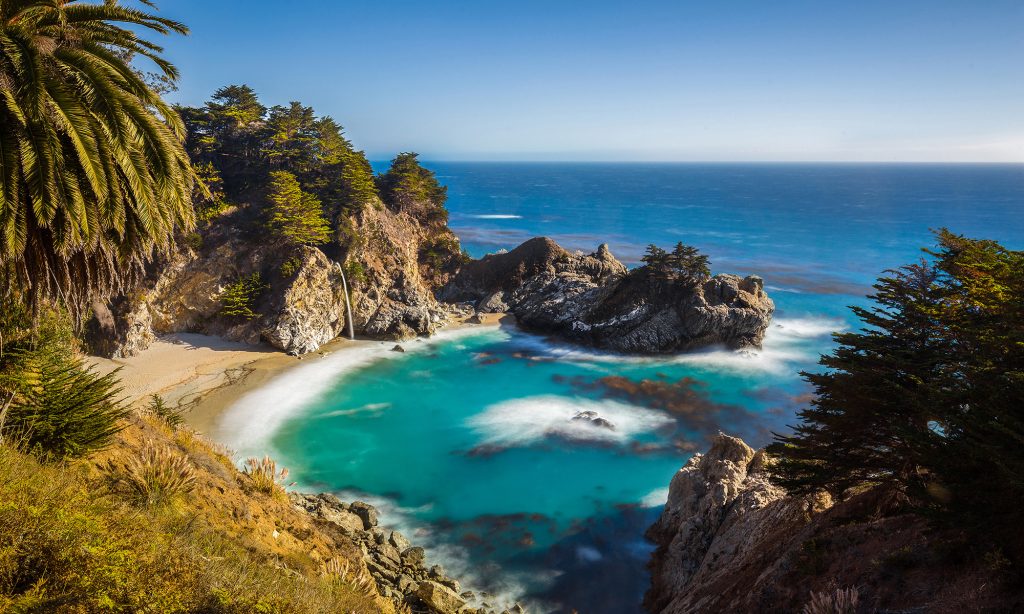
Soledad is located in beautiful Monterey County and is home to Correctional Training Facility. Located along one of the world’s most scenic coastlines, the area offers ideal climate, cultural diversity and a unique blend of small town and big city opportunities. The National John Steinbeck Center, the California Rodeo and wineries throughout the region, make this a great place to visit and live. Also in Monterey County is the world famous Pebble Beach golf course and Big Sur State Park.

Details
The CTF is a Level I and II, General Population prison consisting to three separate facilities. Facility’s A and B are Level II Non-Designated Programming Facility (NDPF) units consisting of four (4) three tier cell block housing units; two (2) man cells, and two (2) Dorms with a total bed capacity of 2800. Facility C is a Level II General Population unit consisting of nine (9) three tier cell block housing units; two (2) man cells with a total bed capacity of 2496. Facility C also consist of an Administrative Segregation Unit, which is a three (3) tier cell block housing unit consisting of one man cells with a total bed capacity of 240. Each facility has an independent dining room, clothing distribution, canteen, medical/dental/mental health services, education, library, chapel, and visiting rooms.
CTF Facility D closed in 2021. Prior to its closure Facility D was designated as a Level I NDPF unit consisting of six (6) Dorms with a total bed capacity of 1012.
Fiscal Year 2020/2021 Budget: $181,387,213
History
In the early months of 1946 the Carlyle Thorpe property four miles north of Soledad, on Highway 101, was selected as a suitable location for the new prison that would become the Correctional Training Facility (CTF), and 936.15 acres was purchased at a cost of $239,465.67. The prison began in 1947, as a minimum-medium security facility, housing 600 inmates in war surplus army barracks. Later known as South Facility, the prison was attached to San Quentin as a farming camp.
In 1948, Richard A. McGee, then director of Corrections, presented a plan to the California Legislature outlining the need for a facility for young adult offenders so they would not be exposed to the hardened criminal element of existing prisons. For that reason the Central Facility of the prison was built and later activated on December 3, 1951.
In 1954, there was a need to separate the older more problematic Youth Authority Wards from the younger Wards for the same reasons that are listed above regarding the adult offenders. Mr. McGee once again presented a plan to the California Legislature and was allotted funds to construct an additional facility (Later known as North Facility). In 1956, work was started on the construction of North Facility subsequently housing the first inmates in September of 1958.
In 1968, the name of these three facilities complex which housed 3,400 inmates, was changed from “Soledad State Prison” to “The Correctional Training Facility” due to the extensive educational and vocational training available to the inmate population.
Vision
Cultivate a safe, humane, and equitable environment that supports the Transformation of our residents through Focused rehabilitative and reintegrative programs.
Mission
The Mission of the Correctional Training Facility is to reduce criminal behavior by providing rehabilitation through individualized treatment and education, resulting in successful community reintegration.

Cynthia Rojas is currently serving as the Acting (A) Warden at the Correctional Training Facility (CTF).
Rojas began her CDCR career in 1993 as an office assistant at Wasco State Prison – Reception Center (WSP-RC). She advanced through several administrative classifications before joining California Correctional Health Care Services (CCHCS) in 2006 and later promoting to labor relations specialist with the CDCR Office of Labor Relations. She later served as a correctional health services administrator I and II, contributing to the activation of the California Health Care Facility (CHCF) by helping establish policies, procedures, hiring practices.
In 2016, Rojas promoted to correctional administrator, serving at Richard J. Donovan Correctional Facility (RJD), California State Prison, Sacramento (SAC), Office of Appeals, and California State Prison, Corcoran (COR). She later promoted to chief deputy warden (A) and was assigned to the California Correctional Institution (CCI), RJD, and the Central California Women’s Facility (CCWF), wherein she was appointed in May 2024.
Rojas believes correctional institutions play a vital role in rehabilitation and public safety, recognizing that they are not only responsible for maintaining security but also for preparing incarcerated individuals for successful reintegration into the community. She strongly supports structured, evidence-based programming that promotes accountability, personal growth, and long term behavioral change. Equally important to her leadership philosophy is employee wellness. She values the well-being, professional development, and resilience of staff, understanding that a supported and healthy workforce is essential to maintaining institutional safety, operational effectiveness, and a positive organizational culture.
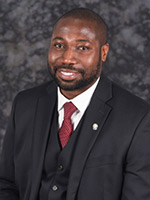
Bayode Omosaiye, MBA FACHE, LSSBB is currently the CEO, Healthcare at Correctional Training Facility (CTF) in Soledad, CA. Prior to CTF, Mr. Omosaiye served as CEO for Salinas Valley State Prison (SVSP) and Psychiatric Inpatient Program (PIP) until 2019. Mr. Omosaiye went on to serve as the Acting Regional Healthcare Executive for Region II over eight Institutions including SVSP, CTF, CHCF, VSP, CMC, SCC, CCWF, PVSP from December 2022 to June 2023
Mr. Omosaiye is a Board Certified Healthcare Executive who began his career as an Intern at Ryder Trauma Center, Jackson Memorial Hospital in Miami, FL. He went on to work as a Project Manager for FQHCs (Federally Qualified Healthcare Centers) before serving as Associate Administrator, Healthcare System COO and then CEO at Acute Care Hospitals with Community Health Systems (CHS) Inc. of Tennessee and Hospital Corporation of America (HCA). In 2017 he served as Interim CEO for Maui Health System assisting Kaiser Permanente with the acquisition of Maui Memorial Medical Center, Kula Hospital, and Lanai Community Hospital from the Hawaii Healthcare System Corporation (HHSC). Overall, Mr. Omosaiye has over 23 years of Executive Management in the Healthcare industry, including time as a Regional Manager for Geo Care (Well path), a for-profit corrections company headquartered in Boca Raton, FL.
Mr. Omosaiye has a Master’s in Business Administration, a Graduate Degree in Healthcare Administration, and a Bachelor’s of Science in Pre-Med Chemistry. Mr. Omosaiye is a Fellow of the American College of Healthcare Executives and Lean Six Sigma Black Belt.
His hobbies are exercising, spending time with family, and reading.
Local Inmate Family Councils (IFC’s) are a gathering of family and friends of the incarcerated who meet regularly with Wardens to support visiting since keeping strong family connections with loved ones is a powerful rehabilitative tool. These IFC’s promote visiting by clarifying rules and regulations as well as discussing health, education, vocational training, packages, books, and related issues. For more information on connecting with a local IFC, please visit the Statewide IFC website.