

Pelican Bay State Prison (PBSP)
Main Phone: (707) 465-1000
Physical Address: 5905 Lake Earl Drive, Crescent City, CA 95531 (Directions)
- Institution: P.O. Box 7500, Crescent City, CA 95532
- Staff: P.O. Box 7000, Crescent City, CA 95531-7000
Visiting an incarcerated person: learn how to visit an incarcerated person at our institutions.
Other Resources: explore family & friends resources, including how to contact or send packages to those incarcerated in our institutions.
PROGRAMS AND PERSONAL GROWTH
- Pelican Bay State Prison (PBSP) is designed to offer incarcerated persons who, based on their own behaviors and choices, are ready to take full advantage of programming opportunities. Programs are volunteer based and are intended to incentivize and reinforce positive life choices. These productivity and self-improvement opportunities are provided for incarcerated persons through academic classes, work programs, religious and self-help groups.
Some program options may include:
- General Education Development (GED)
- High school diploma
- Partnerships with College of The Redwoods, a community college, and Cal Poly Humbolt, a state university.
- Access to multiple college degree programs
- Vocational training programs
- Additional self-help groups (Alcoholics Anonymous, Narcotic Anonymous, concerts, guest speakers, etc.)
- Murals crew, gardens, worm farms, and music bands
- Hobby craft programs
- Prison Paws Partnership dog program
- Arts in Corrections
- Groups such as 7 Habits course, Building Resilience course, etc.
- Mental health services
- Technology-based privileges as approved (i.e. tablets)
- Food sales
- Religious services
- Sports and game tournaments.
California Prison Industry Authority (CALPIA)
- CALPIA is a self-supporting, customer-focused business that reduces recidivism, increases prison safety, and enhances public safety by providing offenders productive work and training opportunities. CALPIA operates one Industry at PBSP, Laundry. The Laundry has contracts with Pelican Bay State Prison and Del Norte School District. PIA is also Partners with the Last Mile offering Computer Coding, Computer Related Technologies, and Computer-Aided Design (CAD).
Division of Rehabilitative Programs (DRP)
- Substance abuse treatment and pre-release programs
- CBI-Intensive Outpatient 2-hours/day, 5-days/week, 52-weeks completion
- CBI-Outpatient 2-hours/day, 3-days/week, 14-weeks completion
- CBI-Life Skills 2-hours/day, 3-days/week, 29-weeks completion
- All participants will be assessed by medical staff and referred to one of the CBI classes.
Family Liaison Service Specialist
- Through a contract with a community-based organization, CDCR provides an on-site case manager as a family reunification liaison for incarcerated persons and family members, to assist with an incarcerated person’s pre-release preparation; and conduct Parenting and Creative Conflict Resolution classes for incarcerated persons. Please call the institution to contact the Family Reunification Liaison.
- PBSP is continually striving to increase the quantity and quality of programming opportunities afforded to the population in an ongoing effort to help reduce recidivism and effectively prepare incarcerated persons for successful reintegration into their communities. These programs aim to provide incarcerated persons with skills and knowledge which can greatly improve their prospects after release.
Pelican Bay State Prison is located in Crescent City. Situated in the northwest corner of California along the Pacific coast, this thriving community is famous for some of the world’s most beautiful coastline. Cool ocean mists nurture the giant Redwoods in Jedediah Smith Redwoods State Park. The crystal-clear Smith River is one of California’s largest wild river systems. The majestic Redwood forests, local beaches, river rafting, miles of hiking and wonderful places to fish are all easily accessible. Youth engagement is encouraged through events and organizations such as the county fair and 4-H. Del Norte County is uncrowded and unspoiled.


Pelican Bay State Prison (PBSP), is located in Crescent City, California. PBSP encompasses approximately 275 acres. Crescent City is a coastal city known for its scenic beauty, such as beaches and redwood forests. It has a small-town feel with a population of around 5,611 residents and 2,054 incarcerated persons. The town is characterized by its maritime culture and outdoor recreational activities such as fishing, hiking, and beachcombing. It also has historical sites and attractions. It is situated on the northern coast of California, 13 miles from the Oregon/California Border.
The institution opened on Dec. 1, 1989, to accommodate the need for a growing population of maximum-security incarcerated persons. It was designed to accommodate California’s most serious criminal offenders in a secure, safe, and disciplined institutional setting. Half of the prison housed maximum security incarcerated persons in a general population (GP) setting. The other half of the institution housed incarcerated persons in the Security Housing Unit (SHU), designed for incarcerated persons presenting serious management concerns.
PBSP has now been open for over three decades. In this time, the institution has evolved and transitioned into a place of rehabilitation, providing growth opportunities to our incarcerated persons.
PBSP has an electrified fence surrounding the perimeter of our Level II and Level IV facilities, providing a secure and cost-effective method for preventing escape.
PBSP currently houses the following custody levels:
- Facility A: Level IV General Population (GP)
- Facility B: Level IV Sensitive Needs Yard (SNY), and Enhanced Outpatient Patient (EOP)
- Facility C: Closed, previously served as the Security Housing Unit (SHU)
- Facility D: Level II, Non-designated Facility (NDPF) open cell, dorm-like environment, with a new expansive state of the art exercise yard.
- Minimum Support Facility: Level I houses non-violent offenders outside of the secure perimeter of the main institution in a dorm environment, and a Firehouse with eight full-time incarcerated firefighters.
- Correctional Treatment Center/Infirmary: Is an equipped medical unit that provides medical attention to the incarcerated persons of the institution. Maintaining a generally healthy patient population with the capability of providing specialty medical services. The unit also houses Mental Health Crisis Beds (MHCB) and Inpatient Medical Patients.
- Restricted Housing Unit (RHU): Restricted housing is used to manage the behavior of individuals who may pose a risk to others or to themselves, or whose behavior disrupts the safe and orderly operations of the facility. People in restricted housing continue to have access to rehabilitative and educational services as well as voluntary self-help programs. In addition, some programs allow people on restricted housing status to complete rehabilitative modules, such as criminal thinking and anger management, to address criminogenic triggers. For every 20 hours of completed course work, an individual can earn a five-day reduction in their RHU term, not to exceed 25 percent of the set term. This allows the person to engage in positive programming and gain insight into their behavior while reducing their RHU term.
Objective
PBSP operates under the California Department of Corrections and Rehabilitation (CDCR) and incorporates principles from the California Model and its Four Pillars:
- Dynamic Security: At PBSP this involves the continuous interaction between staff and incarcerated persons. Officers are encouraged to build a rapport with the incarcerated persons, observe behaviors, and maintain a secure environment. This approach helps to manage the populations effectively and can lead to reduced incidents of violence.
- Normalization: This principle aims to make the prison environment more like the outside community, which includes fostering a sense of personal responsibility and respect among incarcerated persons. This can be demonstrated through programs that encourage incarcerated persons to participate in daily activities, vocational training, and educational courses designed to replicate real-world experiences.
- Peer Support: Pelican Bay incorporates peer support programs allowing incarcerated persons to offer guidance and support to one another. These programs can help build a sense of community and responsibility among incarcerated persons, encouraging positive interactions and behaviors. Peer support can be particularly effective in educational and self-help contexts.
- Becoming A Trama Informed Organization: The trauma-informed approach addresses the needs of incarcerated persons who may have experienced trauma in their lives. PBSP recognizes and responds sensitively to trauma-related issues. This may include mental health services, counseling, and educational programs, DRP, all while considering the diverse backgrounds and experiences of the population.
By integrating these four pillars of the California Model, PBSP seeks to create a more rehabilitative environment which supports the personal growth and successful reintegration of incarcerated persons into society.
PBSP encourages public awareness and community interaction through the Citizens’ Advisory Committee, incarcerated persons family council, and by facilitating appropriate access to outside agencies, legislators, media, and the public. PBSP employees take pride in their continual efforts to ensure the delivery of services to the population in their primary mission of ensuring public safety and trust.
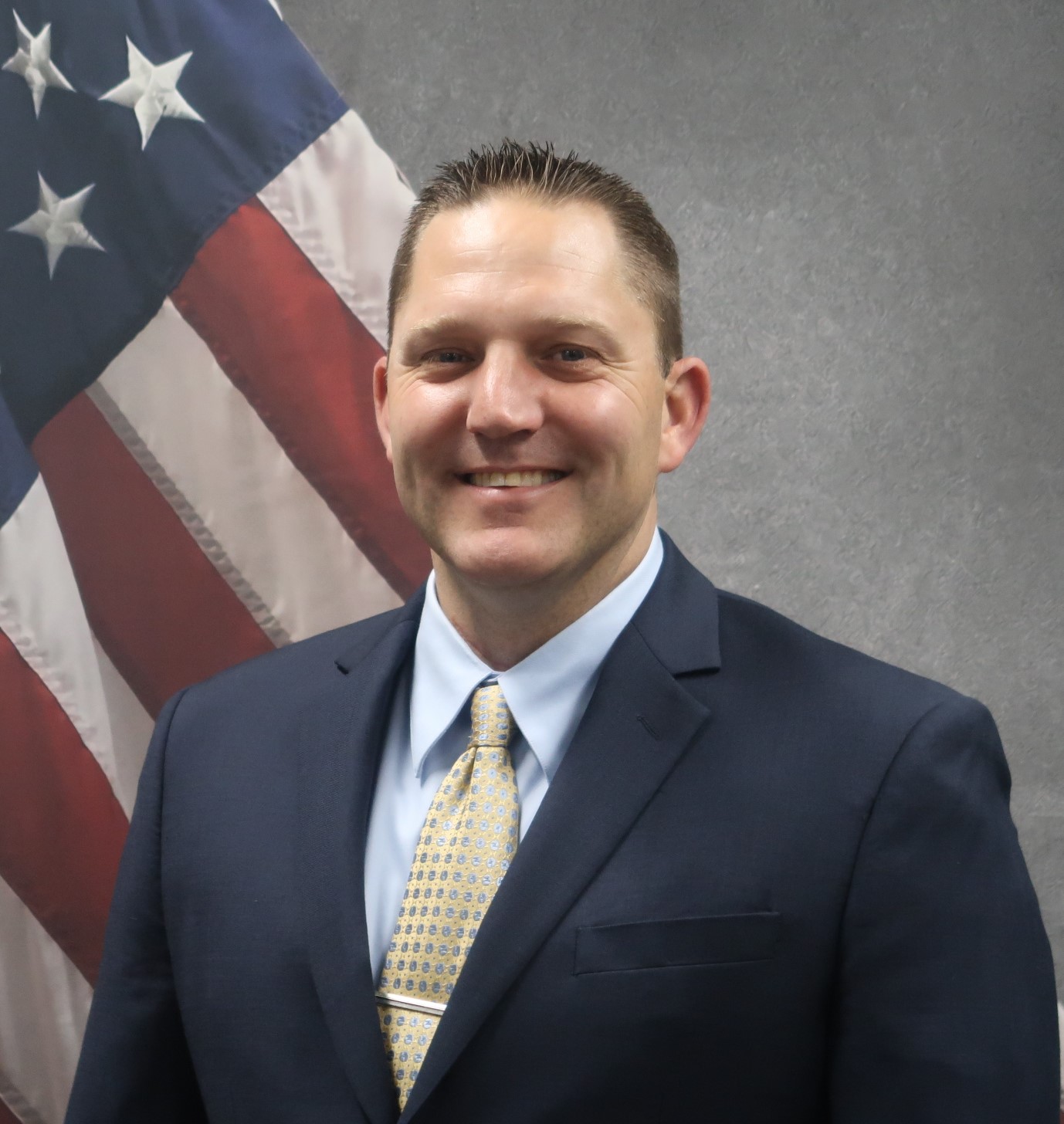
Michael Betzinger was appointed acting Warden of Pelican Bay State Prison (PBSP) in December 2025. He had served as Chief Deputy Warden since December 2023.
Betzinger began his career at Kern Valley State Prison (KVSP) in 2005. Over 14 years, he advanced through the ranks of Correctional Officer, Sergeant, Lieutenant, and Acting Captain. This tenure provided him with a broad understanding of facility operations, inmate programming, and policy development within an effective management team.
In 2019, he transferred to PBSP upon his promotion to Captain. He was subsequently promoted to Associate Warden in 2022 and Chief Deputy Warden in 2023.
Clarence Cryer was appointed Chief Executive Officer (CEO), Health Care (Safety) at Pelican Bay State Prison (PBSP), September 28, 2026.

Cryer brings more than 25 years of executive leadership experience in health care operations, with a specialized focus on correctional health. Throughout his career, he has directed health care services across a diverse range of carceral settings, including jails, detention centers, state prisons and Immigration and Customs Enforcement (ICE) facilities in Florida, Georgia, Louisiana, Texas, and California.
His experience includes leadership roles within several California institutions, including the San Quentin Rehabilitation Center (SQ), Pleasant Valley State Prison (PVSP), California State Prison-Corcoran (CSP-COR), and the Substance Abuse Treatment Facility (SATF),
Cryer is a National Commission on Correctional Health Care (NCCHC) Accreditation Surveyor, an advanced certified correctional health professional (CCHP-A) and a Lean Six Sigma Green Belt. Prior to returning to CDCR in 2026, he served as a deputy in the Tangipahoa Parish Sheriff’s Office (TPSO) in rural Louisiana.
He is committed to driving operational excellence, quality improvement, compliance and advancing health care delivery in correctional environments.
Local Inmate Family Councils (IFC’s) are a gathering of family and friends of the incarcerated who meet regularly with Wardens to support visiting since keeping strong family connections with loved ones is a powerful rehabilitative tool. These IFC’s promote visiting by clarifying rules and regulations as well as discussing health, education, vocational training, packages, books, and related issues. For more information on connecting with a local IFC, please visit the Statewide IFC website.