

California State Prison Solano (SOL)
Main Phone: (707) 451-0182
Physical Address: 2100 Peabody Road, Vacaville, CA 95687 (Directions)
- P. O. Box 4000, Vacaville, CA 95696-4000
Visiting an incarcerated person: learn how to visit an incarcerated person at our institutions.
Other Resources: explore family & friends resources, including how to contact or send packages to those incarcerated in our institutions.
- PIA: Book Bindery, Laundry, Metal Fabrication, and Optical.
- Vocational: Carpentry, Fiber Optics (electronics), Masonry, Building Maintenance , Office Services and Related Technology (OSRT), Computer Literacy, Residential Electrical, and Welding.
- Academic: Adult Basic Education,GED, Literacy Program, College Program, Voluntary Education Program.
- Inmate Leisure Time Activity Groups (ILTAG) Programs: Alcoholics Anonymous (AA), Al-anon, Alternatives to Violence Project (AVP)-Reinforcement, Alternatives to Violence Project (AVP)-Workshops (Basic, Advanced, T4F), Insight Garden Program, Narcotics Anonymous (NA), Pop Tops for Ronald McDonald House Charities, Veteran’s Re-Entry Preparation, Youth Diversion Prisoners’ Outreach Program (POP).
- Inmate Self-Help Programs: A Step Closer, American Sign Language, Anger Management, Art Development, Artists Serving Humanity (ASH), Art Technique, Asatru 9-Step, Breaking Barriers, BRIDGES, Celebrate Recovery, Child Support Services, Cleansing Stream, Coffee House, Conflict Recognition and Resolution, Creative Conflict Resolution, Criminals and Gangs Anonymous (CGA), Cultural Awareness Organization, Denial Management, Domestic Violence, Dysfunctional Families, Dysfunctional Families Support Group, Emotional Maturity, Entrepreneurship, Epictetus Club, Facilitator Training, Facilitator/Coordinator Training Workshop, Flight of the Phoenix, Framework for Recovery, Friday Night Lights (FNL), Get on the Bus, Getting Out by Going In (GOGI), Going for the Gold, Growing Up Male, Helping Men Recover, In-Building Self-Help Programs (IBSHPs) – Leadership Development, Insightful Books Club, Katargeo, Languages, Learning Through Languages, Lifer Crochet Group, Locks of Love/Wigs for Kids, Man to Men Process Group, MAN UP, Men of Purpose, Millati Islami: Islamic Pathway Recovery, Motivational Musicals, Music (Band Practice), Music Innovators, Music Program, Music Theory, Parenting, Passport to Purpose, Passport to Purpose Alumni, Pathways to Sobriety, Partnership for Re-Entry Program (PREP), Purpose Driven Life/40 Days of Community, Purpose Driven Life/40 Days of Purpose, Qualified Applicators Course (QAC), RAGE, Real Talk, Recovery, Relapse Prevention, Self-Help Book Groups, Self-Help Book Group, Speak Easy, Tawheed/Changing Faces, The Urban Ministry Institute (TUMI), The Victims Voice, Transcending Reflections, Transformational Meditation, Truck Driving Courses, Veteran’s Assistance, Victim Awareness Phase II, Victims Impact, Victims Voice, Visual Art Class, Yoga.
- Religious Groups: Apostolic, Asatru/Odinism, Assembly of God, Buddhist, Catholic, Christian, Christian Science, Druid, Episcopal, Hawaiian/Pacific Islander, Islam, Jehovah’s Witness, Jewish, Latter Day Saints/Mormon, Nation of Islam, Native American, Protestant, Rastafarian, Seventh Day Adventist, Sikh, Wicca, Yahweh Messianist
- Other: Special Events, Motivational Seminars.
Family Unification – Friends Outside Visitor Center:
Pursuant to Penal Code 6352, CDCR is mandated to provide through a contact with a non-profit agency (Friends Outside) an on-site visitor center. The Friends Outside visitor center, called the Friendship House, provided inmate family members assistance with a sheltered area for visitors who are waiting before and after visits, appropriate attire via a clothing exchange, childcare during visiting hours for visitors’ children, assistance with transportation between public transit terminals and the institution, information on visiting regulations and processes, and referrals to other agencies and services.
Family Unification – Family Liaison Services (FLS):
CDCR FLS provides contract staff who will offer personal services to inmates and liaison services between inmates and their families to meet the requirements of Assembly Bill 2848 (AB 2848). The purpose is to alleviate inmate anxiety during incarceration and to promote family unity and reunification to increase the number of parole successes, reduce recidivism and enhance public safety. The Family Liaison Services Specialist also offers Parenting and Creative Conflict Resolution workshops for inmates. The responsibility of the FLS staff is to facilitate successful parole through the provision of personal services regarding family and personal issues by accomplishing the following objectives:
- Increase direct communication between inmates and their families
- Increase the number of visits between inmates and their families
- Increase the number of contacts between institutional staff and the families of inmates
- Locate relatives with whom an inmate has lost contact
Family Unification – Parenting Inside Out:
CDCR contracted with Community Works West to provide Parenting Inside Out (PIO) as a pilot program at selected institutions. CSP-Solano was selected as a pilot institution and implemented PIO on March 5, 2014. PIO offers inmates a 60-hour parenting curriculum recognized in California by Child Protective Services (CPS), a parenting support group for successful graduates, and supervised visits between inmates enrolled in PIO and their children and their care givers. PIO is intended to equip parents with cognitive and behavioral skills they can use to solve problems in the daily lives of their children and families.
DRP Programs
Integrated Substance Use Disorder Treatment (ISUDT)–Overview
On January 21, 2020, the California Department of Corrections and Rehabilitation (CDCR) and California Correctional Health Care Services (CCHCS) implemented ISUDT. ISUDT is a comprehensive and evidence-based cross-divisional program with pathways to treatment through DRP Cognitive Behavioral Interventions (CBI) programs referred to as:
CBI-Intensive Outpatient (Medical Classification T1, SOMS assignment code ISI) 2-hours/day, 5-days/week, 52-weeks completion
CBI-Outpatient (Medical Classification T2, SOMS assignment code ISO) 2-hours/day, 3-days/week, 14-weeks completion
CBI-Life Skills (Medical Classification T3, SOMS assignment code CB2) 2-hours/day, 3-days/week, 29-weeks completion
All participants will be assessed by medical and referred to one of the CBI classes.
California State Prison, Solano is located in the vibrant city of Vacaville. A family oriented community, booming development and sweeping vistas make it a fantastic city to live and work in. The attractiveness of nearby day trips to Napa, San Francisco, Sacramento or Lake Tahoe adds to the pleasure of living here. The city’s pleasant climate, high quality of life, art and cultural offerings, exceptional restaurants and shops, and diversity make Vacaville and extraordinary place to work, live, relax and play.


Details
CSP-Solano focuses on providing a comprehensive work/training program with academic education, vocational training, and industries assignments geared towards providing inmates with work skills and education. Additionally, the institution has a variety of self-help programs including Al-anon, Alcoholics Anonymous (AA), Alternatives to Violence Project (AVP), In-Building Self-Help Programs (IBSHPs), Narcotics Anonymous (NA), The Urban Ministry Institute (TUMI), The Victims Voice, Veterans Assistance, and the Youth Diversion Prisoners’ Outreach Program (POP). Through the educational and vocational training, industries assignments, and self-help programs, the institution provides inmates the opportunity to develop the life skills necessary for successful re-integration into society. The institution is comprised of four separate, semi-autonomous facilities, a 125 bed Administrative Segregation Unit, and a 16 bed Correctional Treatment Center.
History
When the prison opened in 1984, it was administered by the warden of the California Medical Facility. In January 1992, the two prisons were separated administratively and a warden was assigned to each prison.
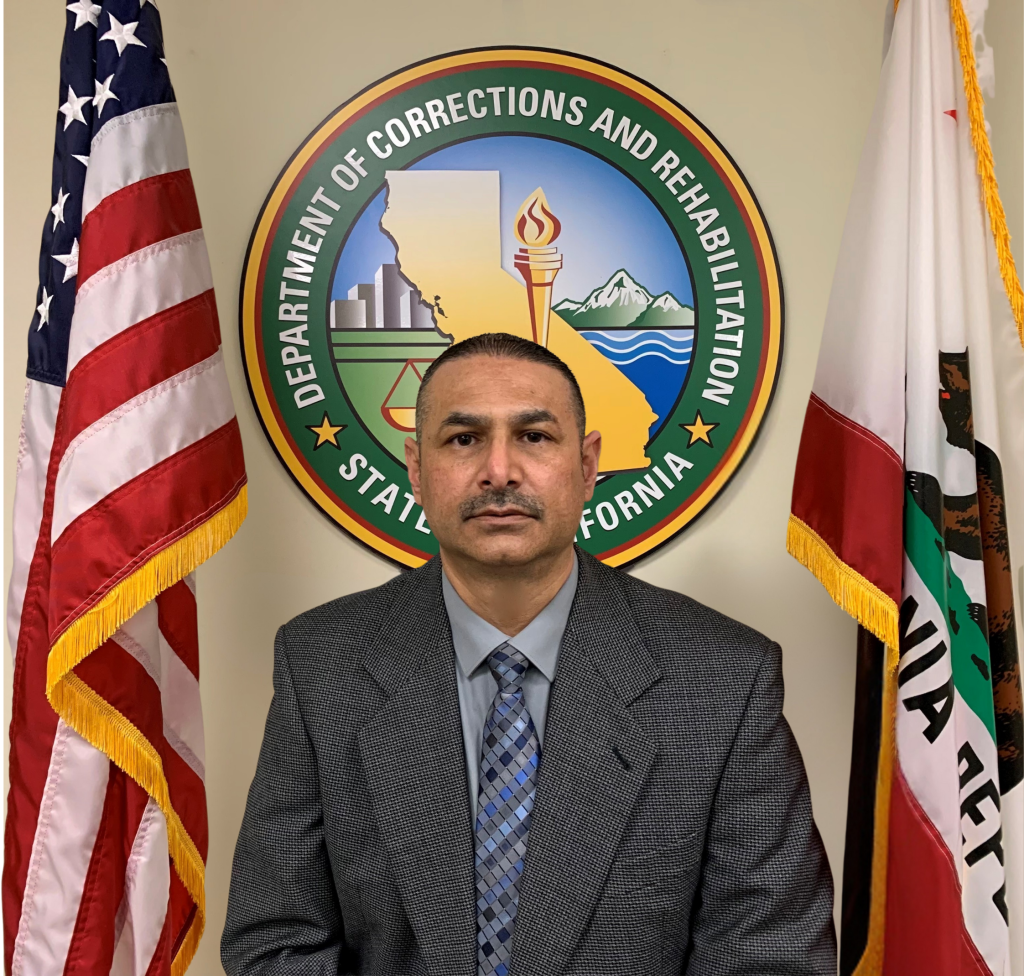
Acting Warden Andre Gonzales started at CSP-Solano in 1997 as a correctional officer and later promoted to sergeant.
Gonzales transferred to the Academy as a sergeant and instructed cadets who later graduated to become correctional officers. During his tenure at the Academy, he became a company commander, program sergeant and program lieutenant. These roles were very important to Gonzales because he was able to provide guidance in a way to help change the future, attitudes, and morale of the institution.
These roles were also a constant reminder of what an honor and privilege it was to become a correctional peace officer, working alongside amazing staff throughout the institution who provide various services and support for the day-to-day operations.
In 2010, Gonzales transferred to California Medical Facility (CMF) as a lieutenant, and a few years later to acting captain where he continued to learn and grow within the organization.
In 2016, Gonzales promoted to captain within the Division of Rehabilitative Programs at headquarters. While there, he oversaw community reentry programs throughout the state for male incarcerated individuals who met the criteria to be placed in the community prior to release.
A few years later, Gonzales was promoted to associate warden and was fortunate to also oversee In-Prison Programming at all the institutions throughout the State. In-Prison Programming consisted of ISUDT-Cognitive Behavior Interventions, Occupational Mentor Certification Program and the former Step-Down Program at Pelican Bay and California State Prison, Corcoran.
In January 2024, Gonzales returned to CSP-Solano as chief deputy warden. Gonzales said collaboration and employee wellness are his top priorities.
Gonzales is thankful to all the various staff members in different classifications who played a role as mentor and coach, helping guide him along the way.
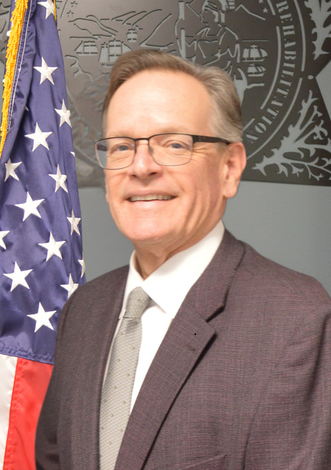
Jon Friedenberg has served as the Health Care CEO at California State Prison Solano since joining CCHCS in May 2025.
Prior to joining CCHCS Friedenberg served as the CEO of Mary Crowley Cancer Research in Dallas, Texas, the president and chief operating officer at Marin Health (formerly Marin General Hospital) in Greenbrae and the vice president of El Camino Hospital in Mountain View. Mr. Friedenberg holds a master’s degree from UC Davis and bachelor’s degree from UC Berkeley. GO BEARS!
Local Inmate Family Councils (IFC’s) are a gathering of family and friends of the incarcerated who meet regularly with Wardens to support visiting since keeping strong family connections with loved ones is a powerful rehabilitative tool. These IFC’s promote visiting by clarifying rules and regulations as well as discussing health, education, vocational training, packages, books, and related issues. For more information on connecting with a local IFC, please visit the Statewide IFC website.