

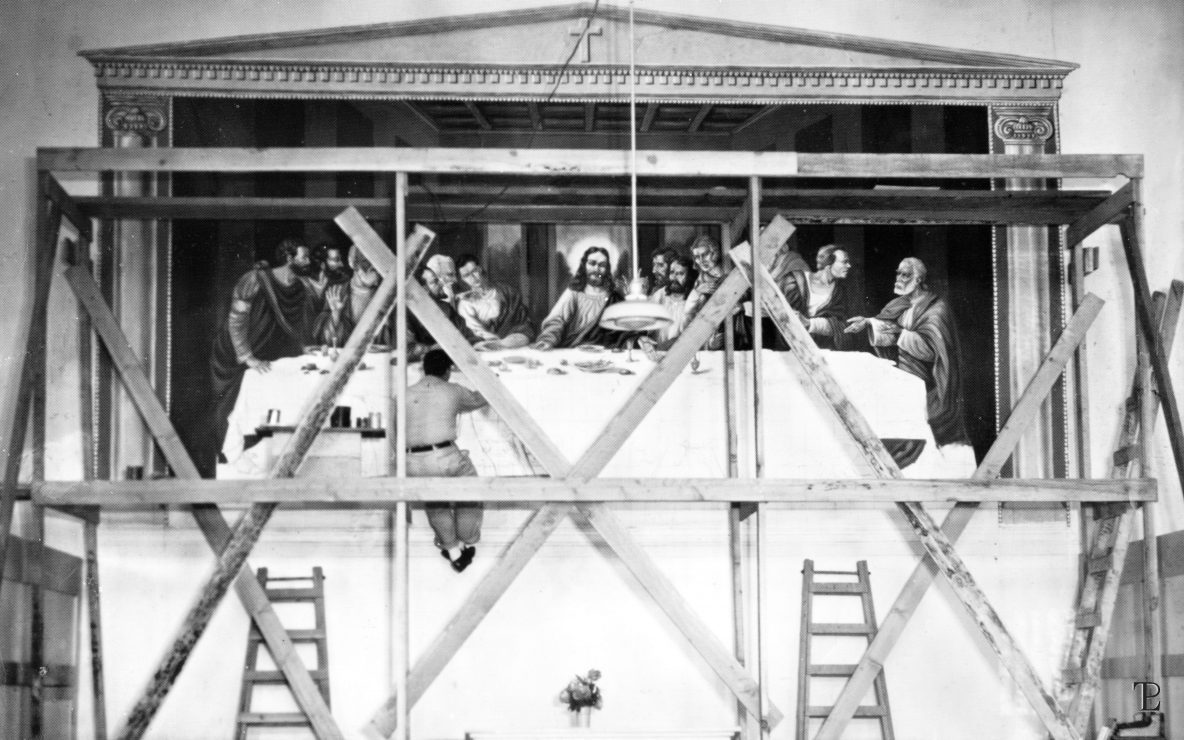
A 1938 mural at Folsom State Prison is beginning to show its age but behind the scenes, volunteers are trying to restore the artwork.
Ralph Pecor, an incarcerated artist at the prison, recreated Leonardo da Vinci’s The Last Supper on the back wall of the Greystone Chapel.
More than three-quarters of a century later, the mural is rapidly decaying. Thanks to efforts from a retired correctional officer and retired parole agent, steps are being taken to preserve the mural.
Water damages artwork
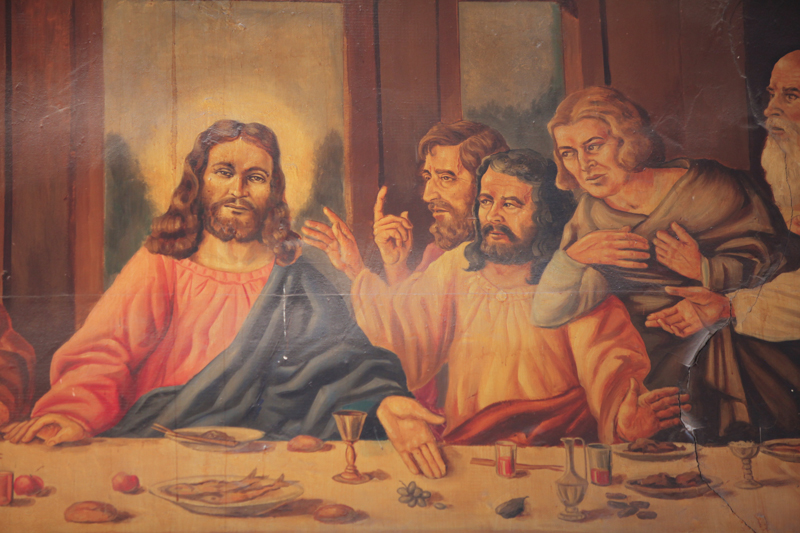

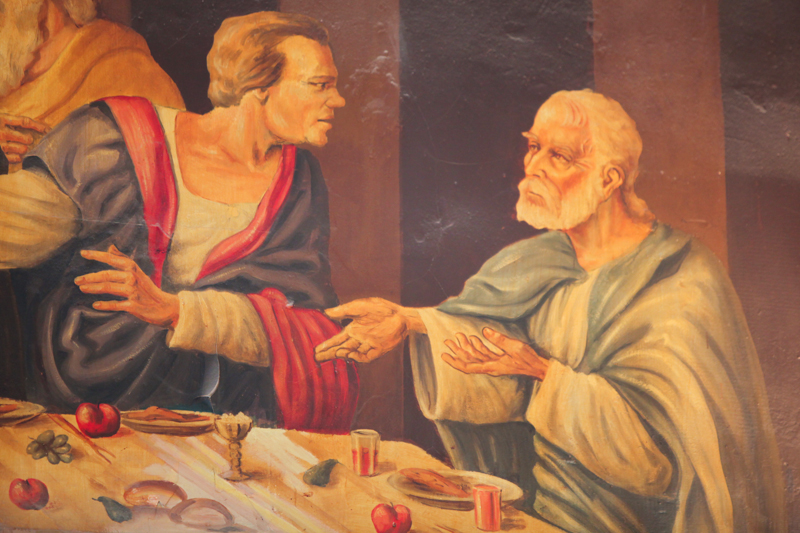
“It’s absorbing water,” said Lt. Joe Tuggle, the prison’s public information officer.
“Moisture is coming through the granite,” said retired Parole Agent Joel Valencia, who is spearheading the restoration effort. He’s with the planned Big House Museum project as well as a member of the Old Guard Foundation.
Retired Correctional Officer Jim Brown, with the current Folsom Prison Museum, has been in contact with restoration experts. They estimate removing it from the wall would cost $250,000.
They also recommended the mural not be touched because it is too fragile, according to Valencia.
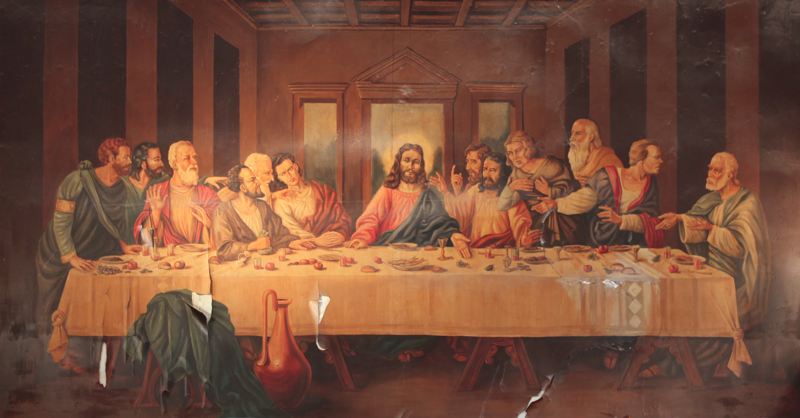
Another restoration expert believes it can be done for between $100,000 and $150,000.
The real question is what to do with the mural once it’s been removed.
“My thought is, this has historical and religious value and it’s a shame it’s in prison,” Valencia said. “The public can’t see it if it’s in prison.”
There is already some money available to go toward at least stabilizing the crumbling mural.
“There was $30,000 donated by the (company) which filmed ‘Walk the Line’ here,” Valencia said. “The (restoration experts) want to go in and stabilize the mural which will cost about $5,000.”
He said it’s the first step in the restoration process.
Eventually, he hopes it can be removed in pieces, reassembled and restored on a more stable material.
“There should be something put back on the chapel wall, whether it’s the original or duplicate,” Valencia said.
Faces in the Folsom State Prison mural
Legend has it the artist used the faces of fellow inmates and prison staff as those of the disciples. These rumors also claim he used his own face as Jesus.
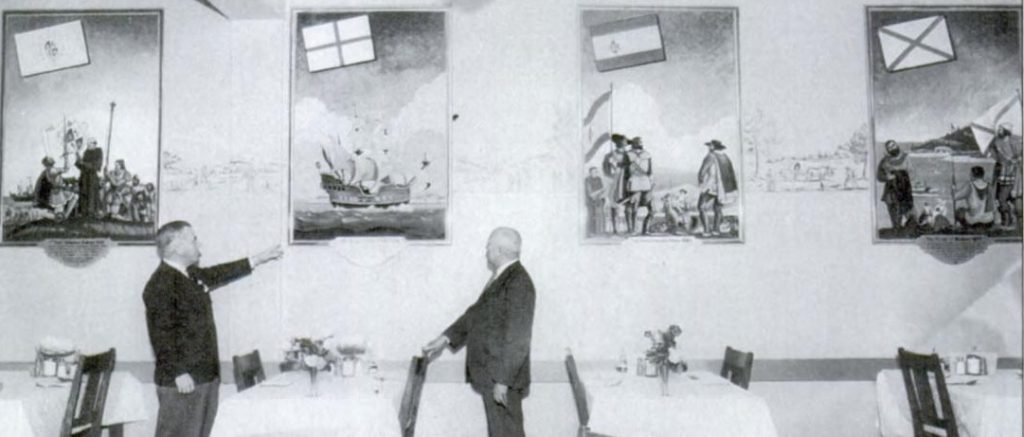
In addition to The Last Supper, Pecor painted a dozen other smaller murals, depicting scenes of historic significance. They were located in the Officers Dining Room at the prison.
Greystone Chapel in song
According to the Sacramento Historical Society’s “Golden Notes” (Volume 39, Numbers 3 and 4), construction of the chapel was completed in 1903. The historical society notes the famous granite walls surrounding the prison weren’t completed until the late 1920s.
The chapel was made famous by the Johnny Cash song, “Greystone Chapel,” which he performed live at Folsom State Prison in 1968. The song, penned by inmate Glen Sherley, was included in his album, “At Folsom Prison.”
Years later, Cash recounted in a magazine interview how his performance of the song came about. He said he heard a tape of the song, recorded by Sherley, the night before his prison performance. In 1994, Cash told Life magazine, after hearing the song, he knew he needed to perform it the following day.
“So, I stayed up and learned it. The next day, the (chapel’s) preacher had him in the front row,” Cash said in the interview. “I announced, ‘This song was written by Glen Sherley.’ It was a terrible thing to point him out among all those cons, but I didn’t think about that then.”
An ally from Los Angeles
The effort to restore the mural has gotten a boost from the Johnny Cash tribute band The Walking Phoenixes. The Los Angeles-based musical group has performed in Folsom a few times over the last three years and have virtually adopted the city. The band created a website to help with the fundraising efforts.
“I have been blessed to be part of this wonderful mission of developing a fundraiser for the restoration of the Last Supper Mural hanging on the wall of the Greystone Chapel,” lead singer Drew Young writes on the website. “Over the past three years of spending time in Folsom with the correctional officers of Folsom Prison, I have become inspired by the incredible courage of the correctional officers and the history of (the) prison and the inmates.”
Story by Don Chaddock, Inside CDCR editor
Current mural photos by Eric Owens, CDCR staff photographer
Office of Public and Employee Communications
Follow CDCR on YouTube, Facebook, X (formerly Twitter).