

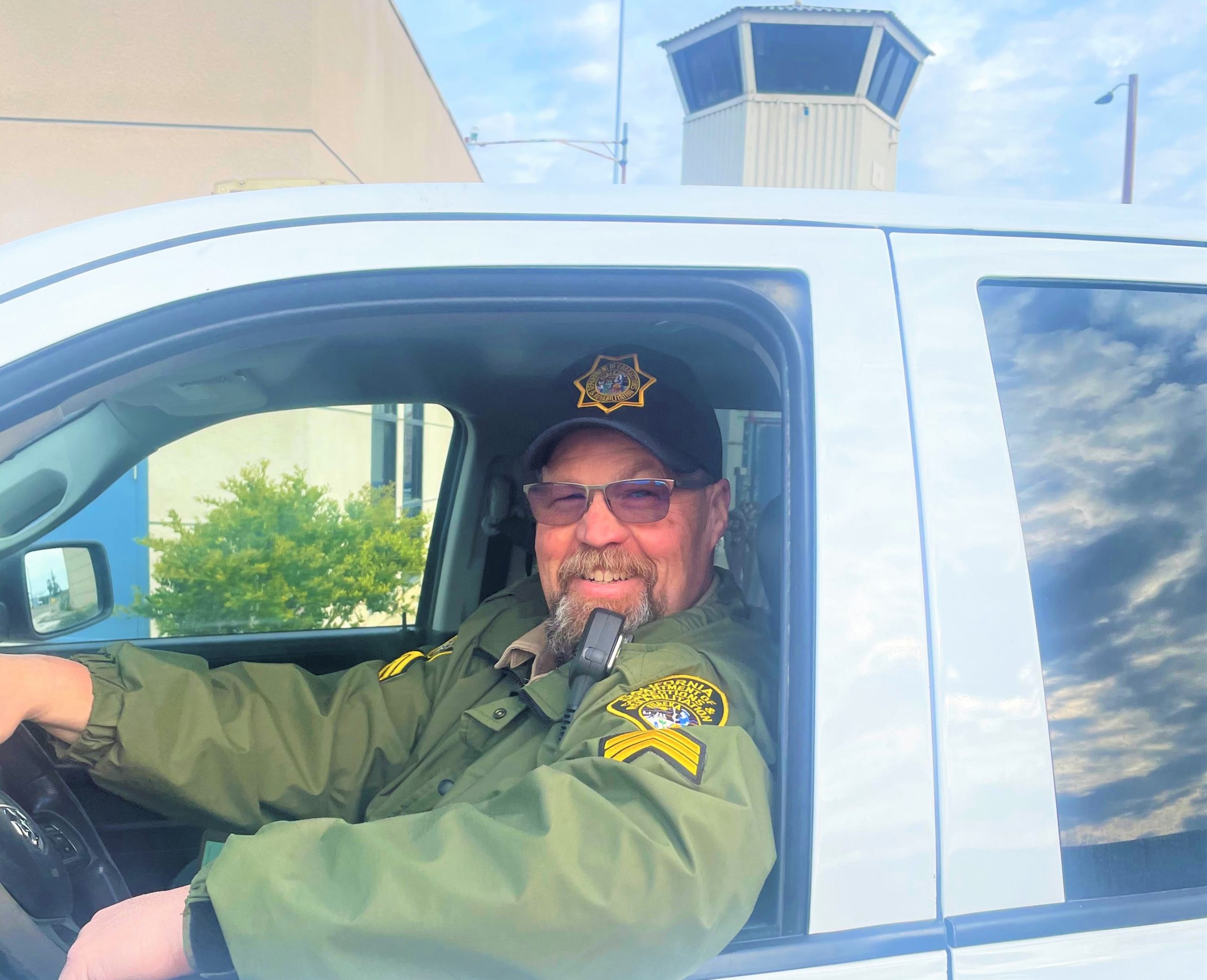
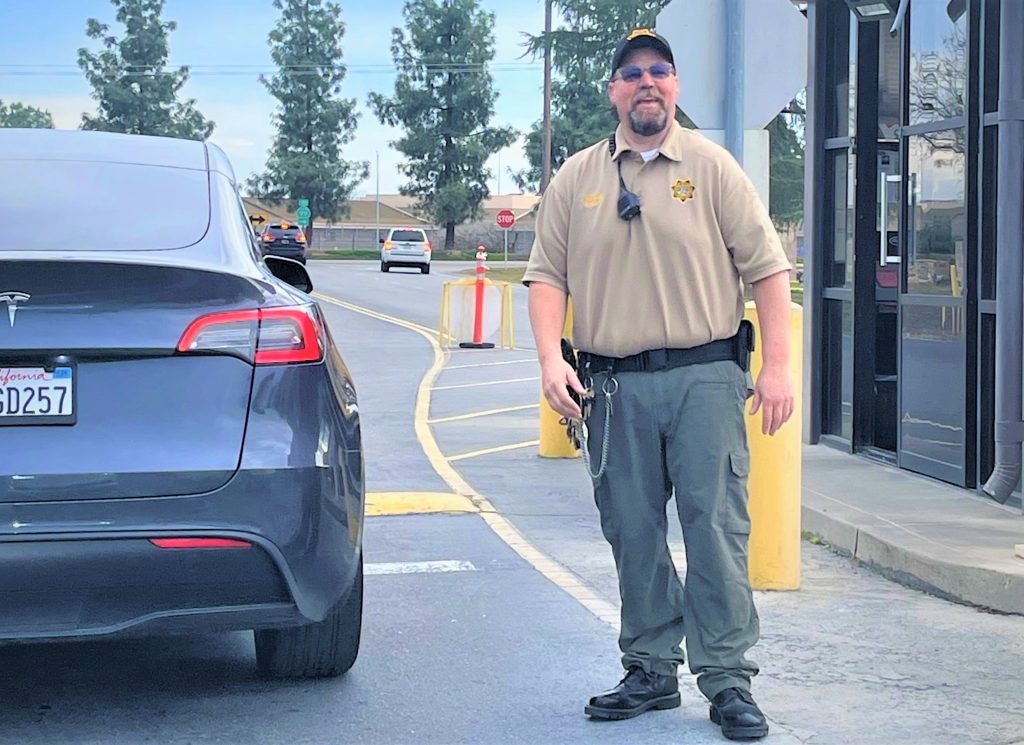
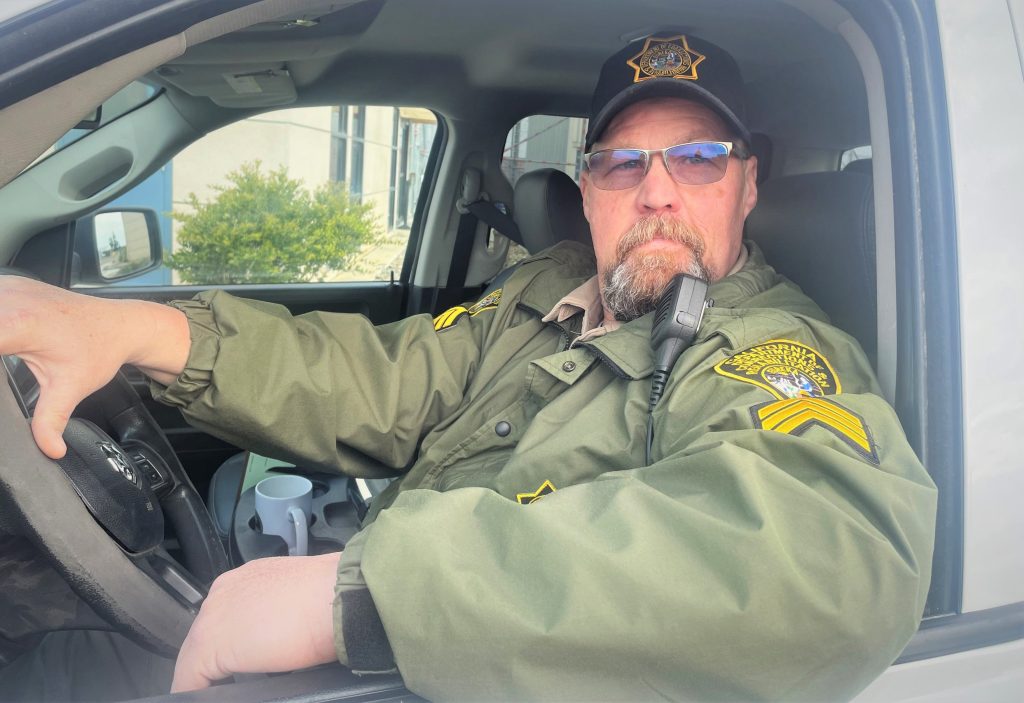
Sergeant Jonathan Haynes, looking to retire after decades of service, recently sat down with Inside CDCR to reflect on his 30-year career.
He’s spent his entire career at Valley State Prison, starting when it was activated as a women’s prison in 1995.
At 22, he earned an associate of arts degree, certifications in firefighting, Peace Officer Standards and Training (POST) as well as emergency medical technician programs.
Originally planning to move forward with a Bachelor’s degree, he instead chose to join the department.
With retirement approaching later this year, he took time to reflect on his long career.
Q&A with Sergeant Haynes
Why did you choose this line of work?
I was 22 and started looking at costs and length to complete a Bachelor’s degree and figured that I wanted to start living my life and get out of school for a while. Ironwood was just opening up and I applied there. I already had family in the department. There was a hiring freeze there so I (ended up) opening Valley State Prison for Women.
(Editor’s note: In 2013, Valley State Prison for Women was converted to a men’s facility.)
How do you make it to retirement and stay healthy physically and mentally?
A good mentor. I had that CDCR moment where you figure if they don’t care, I don’t care. My sick leave went up and my performance went down. Later, an old partner, an Administrative Segregation Unit lieutenant, came back from being out on workers comp for an assault injury. She had a conversation with me about where I was mentally and emotionally as well as what I wanted. It was that discussion that brought me to the realization that my career is what I make it, not where I am put by others.
I worked harder, made changes in my professional and personal life, and began to enjoy the new challenges that I was taking on. Maybe that’s the key — continuing to challenge yourself by trying different areas of corrections. It could be promoting, working a different post or trying some of the more challenging areas like the Investigative Service Unit or Crisis Response Team.
What do you do to keep your emotional and mental health state in balance?
I never really thought about the impact our job has on us. It was just second nature, kind of wash-rinse-repeat for the most part. It wasn’t until I went to a training where we were working with a doctor that I realized my physical and emotional deterioration was caused by years of dealing with the stressors of the job.
That realization helped prompt me to perform self-checks on myself and my colleagues. We all have bad days, but they shouldn’t blend into bad months or years. If they do, then it is something that we have to take a role in changing by working actively to make different choices in our life or by seeking out people who can help. They can be friends, family, or professionals.
What do you find fulfilling about your job? What challenges do you face?
For years I found absolutely nothing fulfilling about this job other than the paycheck. Unlike most careers, where you see positive effects of your work, in corrections those positive impacts seldom ever present themselves.
Most of the time, as a sergeant, I took solace in the fact that none of my staff were assaulted that day. My crew always has each other’s backs. We walk in together and we walk out together.
What would you say is the hardest thing about this job?
The loss of innocence. Before this job, I trusted people and I liked to be around people. I found that for the longest time, I didn’t want to be around people. Family and close friends were fine, but the public was hard to feel comfortable in. That loss of trust in society puts a spin on all your actions.
It’s kind of like we lifted or pulled back the veil of society and revealed the darkness of what is out there. It can’t be unseen and that impacts our souls.
How do you earn respect from the incarcerated population?
The older ones seem to respect professionalism and those staff who conduct themselves in an even consistent manner. That was what I strove for. While it’s a generalization, the newer, younger population don’t seem to respect anything, including staff, other (incarcerated people) or themselves.
What was one of the toughest situations you were involved in?
Situations with the incarcerated in my opinion were always the same. They want, need or feel a certain kind of way and want resolution from us for their issue. My solution was to try and figure out what was wanted, weighed against what they had coming, and staff safety.
Then, we went to work to bring about a resolution. So, none of those problems ever seemed to stick with me as far as being incredibly tough.
After all this time, staff issues are what haunt me like suicides, deaths of current staff, or deaths of staff who recently retired. I hate it when staff have worked hard to have an enjoyable retirement and never made it.
For years, I have been an advocate of seeking some kind of help to get us out of our prison mindset and back to where we want to live life again.
When you get home, what do you do to decompress from work?
I always was told to leave work at work. Cheers to those who can do this. My mentality, however, is the one that plays reruns of the day’s events. I try and think of what could have worked or what I could have done or said differently.
That makes it hard to leave it at work. If I talk about the day with my wife, who is also an officer, we can unload our baggage, organize it, and repack it in a way that helps us move on. Then we try and enjoy the rest of our time with our kids, grandkids, and other family.
Do you think the California Model will eventually bring down recidivism rates?
In the last 29 years, I have seen the Department roll out a lot of different programs for staff and (the incarcerated). Some of them looked like great programs but very few seemed to have stood the test of time or the budget. I hope the California Model works, offering a correctional environment that provides a positive effect on its incarcerated population as well as the staff. Ultimately, I believe that an (an incarcerated person) has to want to change in order to change. If this program can change their mindset, then it will succeed.
Retirement beckons. What are your plans?
I have bought some land in Tennessee. I plan on building a home, a nice woodworking shop, and try to create something beautiful with the rest of my life.
Story by Viorel Vintila, Psychiatric Technician
Valley State Prison
See more stories highlighting CDCR/CCHCS staff.
Follow CDCR on YouTube, Facebook, X (formerly Twitter). Listen to the CDCR Unlocked podcast.