

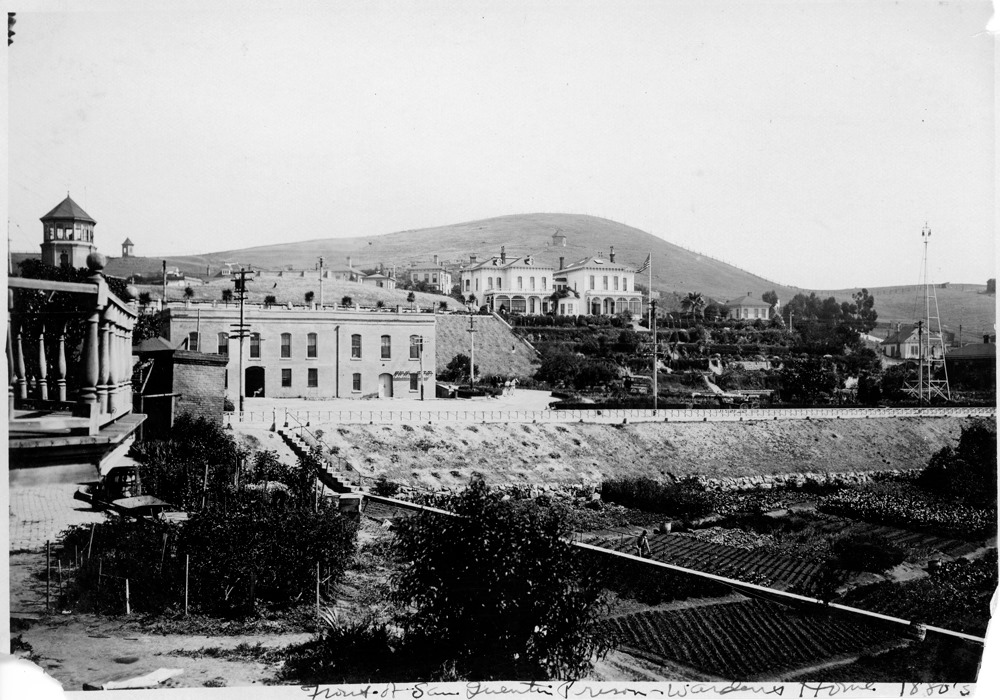
Juneteenth, the holiday marking when enslaved people in Texas learned they were free, came nearly two months after the Civil War ended on June 19, 1865. In this installment of Unlocking History, we look at how the Civil War touched California and the state prison at San Quentin.
Even 160 years after Texans learned of their freedom, the nation continues to heal.
Confederates rob stagecoach to fund war
While California is far from the battlefields of the Civil War, the Confederacy still impacted the Golden State. In 1864, Confederate sympathizers hatched a plan to kill a sheriff’s deputy and make off with money to help fund the south’s war effort.
“Confederate robbers and assassins slew the deputy sheriff of El Dorado County and robbed the Virginia City stage of its treasures,” reported the Stockton Independent, Sept. 16, 1864. “(Their) avowed purpose (was to) aid the cause of the rebellion.”
A California law, passed in 1863, targeted those “providing, preparing, or furnishing the means for any military or hostile expedition to be carried on against the government of the United States, or the loyal citizens thereof, or their property.”
The punishment ranged from five to 20 years or the death penalty, as determined by a jury.
Ten charged in Confederate plot
Preston Hodges, 33, was the ringleader and planner, meeting with a group of like-minded people at his home. While he didn’t carry out the robbery or murder, he was still charged as an accomplice to the crime as well as treason, as set forth in the 1863 state law.
“Hodges, who was sentenced to the state prison for 20 years, barely escaped death,” the newspaper reported.
The judge had harsh words for Hodges during the sentencing portion of the trial.
“With the means you acquired by robbery and murder, (evidence shows) you were to recruit more men and increase the ranks of (your small army). You were to wage war and incite civil war in California,” Judge Brockway said.
Hodges, given the number 2820, was received at San Quentin on Sept. 13, 1864.
In all, 10 people were charged with the murder of Deputy Sheriff Joseph M. Staples. In addition to Hodges, also charged were Henry Jarboe, George Cross, John A. Robertson, Wallace Clendenen, H. Gately, Joseph Gambill, John Ingren, Allen H. Glasby, and Thomas H. Poole.
The Hodges appeal case made its way up to the state Supreme Court. The judges agreed with the defense, throwing out his conviction. The court ruled the “treason” charge only applied in federal court. Essentially, the convictions were thrown out on a technicality. After the ruling, not seeing a clear pathway to conviction, the district attorney dropped the charges.
A faded note in the register indicates Hodges was released “by order of the court” in 1865.
Restoration and healing from a time of war
While California’s involvement in the Civil War was limited, the negative ramifications were not. A racial epithet was used to name a town of black miners near Folsom State Prison. When Folsom Lake was created in the 1950s, and cemeteries were moved to make way for the new lake, the name carried over to the new headstones. Around 2010, California Prison Industry Authority workers, under supervision, removed the old markers and replaced them. Recently, Negro Bar State Recreation Area was renamed Black Miners Bar. The weekend after June 19, the park holds a Juneteenth celebration to honor people of color who made a difference in helping shape the Folsom region. More than 150 years after the end of the Civil War, healing is still taking place, making Juneteenth even more important.
Did you know? Civil War veteran Col. Allen Allensworth founded a town in California in 1908. Although born into slavery, Allensworth escaped and became a Union soldier; later to become a Baptist minister and educator, and was appointed as a chaplain in the U.S. Army, according to California State Parks. He was the first African American to reach the rank of Lieutenant Colonel. In 1974, California State Parks purchased land within the historical town site of Allensworth, which is now called Colonel Allensworth State Historic Park. For more than 20 years, CDCR staff have served holiday meals for school in Allensworth.
What is Juneteenth?
See the 2024 proclamation signed by Governor Gavin Newsom recognizing Juneteenth.
Read the 2025 Governor proclamation.
Juneteenth (short for “June Nineteenth”) marks the day when federal troops arrived in Galveston, Texas, in 1865 to take control of the state and ensure all enslaved people be freed. Their arrival came a full two and a half years after President Abraham Lincoln signed the Emancipation Proclamation.
According to the 2021 presidential proclamation: “On June 19, 1865 — nearly nine decades after our Nation’s founding, and more than two years after President Lincoln signed the Emancipation Proclamation — enslaved Americans in Galveston, Texas, finally received word that they were free from bondage.”
Juneteenth honors the end of slavery in the United States and is considered the longest-running African American holiday. It began as a regional observance and slowly grew. The day is celebrated in 47 states and the District of Columbia. In 2021, Juneteenth officially became a federal holiday.
Explore photos and stories related to Juneteenth on the Library of Congress website.
Story by Don Chaddock, Inside CDCR editor
Office of Public and Employee Communications
Learn more about California prison history.
Follow CDCR on YouTube, Facebook, X (formerly Twitter). Listen to the CDCR Unlocked podcast.