

Just outside the granite walls of Folsom State Prison is the Big House Museum, boasting a collection rich in corrections history.
Watch the video (story continues below):
Duke Juanitas is president of the museum as well as a fire captain at the institution. He said the museum volunteers field plenty of questions.
“People ask (about) all kinds of stuff. They want to know some of our darker history and some of our craziest stories,” he said. “They also want to know what our population is. We have something for everybody.”
Musem is in former prison warden’s home

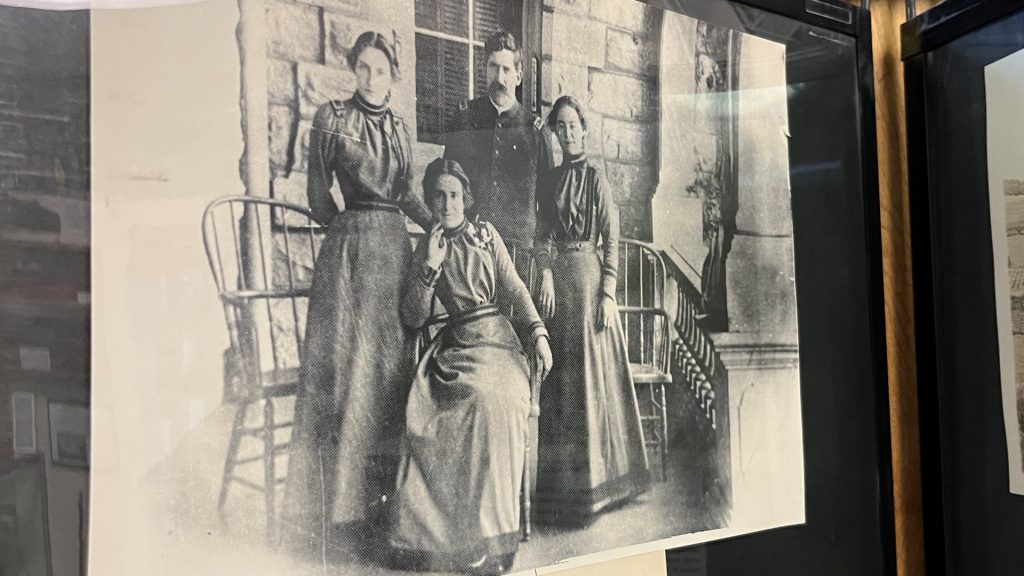
The museum, located in the former warden’s home, is packed with history, drawing visitors from across the world.
Juanitas, who is also a volunteer docent, educates busloads of visitors excited to learn the history of the prison.
“We are more than just Johnny Cash at Folsom Prison,” he said. “We have a rich history like being the first prison to ever have electricity in the whole United States. Our mission is to have a better understanding of our corrections profession.”
Exhibits at the Folsom prison museum
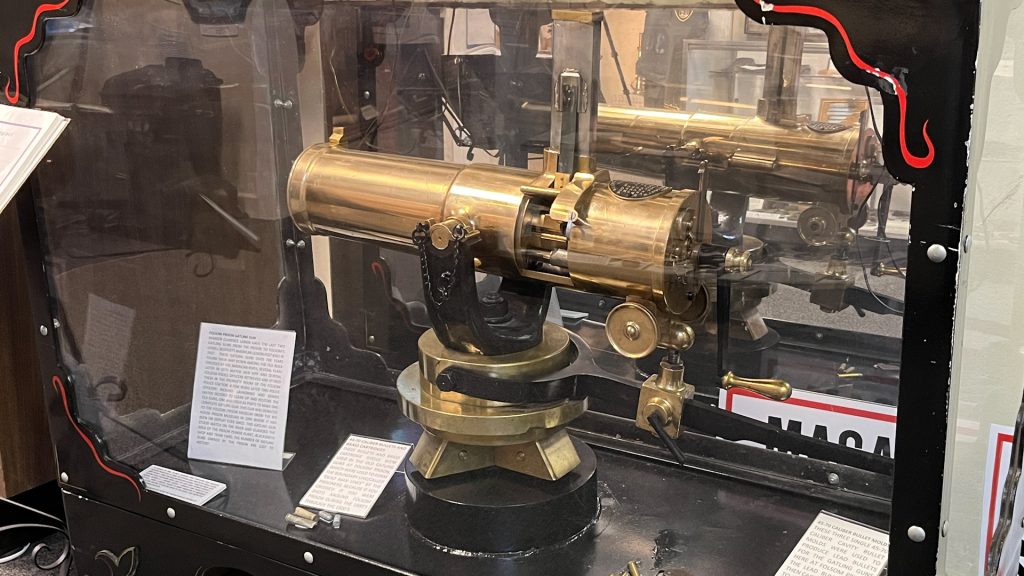
Exhibits include an actual ball-and-chain used at the prison as well as a Ferris wheel made of 250,000 toothpicks.
“We also have a mock-up of a cell where we have Sam, our animatronic, tell the history of the prison back in the day,” Juanitas said.
There are also new exhibits.
“Well, we have quite a few new exhibits, including one that kind of showcases a little bit of my story of the fire department,” he said. “We have a Bible that was found that was utilized in 1884 here at the prison.”
Learn about the history of SERT
Another new exhibit showcases the Special Emergency Response Teams, more commonly known as SERT. Today, these are known as Crisis Response Teams.
Visitors could meet Cindy Shellabarger, a volunteer museum docent who was one of the first two women to join SERT in 1984.
Shellabarger recounts her story of joining SERT.
“The guy says, come out for the SERT team (and) respond to riots and hostage negotiation,” she said. “Any bad situation, they would call SERT.”
She said the SERT team began as a response to New York’s 1971 Attica Prison Rebellion. By the 1980s, all California prisons had a SERT team. She said there weren’t many female correctional officers in the 1980s.
To get into the program, they were required to pass a physical fitness test. Shellabarger, along with three teammates, carried a heavy wet telephone pole for 2 miles. Each quarter of a mile, they had to do a log press overhead. At completion, Shellabarger and two teammates remained. The museum exhibit, dubbed Shelly 2, describes the special task force and displays gear from Shellabarger’s ready bag.
Volunteers keep it going
CDCR retiree Stephen Walters said he enjoys volunteering at the museum.
“It’s a wonderful place to come to (with) lots of history. I like to meet the people from around the world. It’s kind of therapy to come here and just tell my stories. I do have to filter myself because some of them are pretty graphic, but some people love that,” he said.
He said he often talks about his time working at a conservation camp.
“I like talking about some of the great work the officers and the inmates did during these horrific fires,” he said. “It’s just amazing how well-trained (the firefighters) are and what they can do. And how important they are for the state, especially, during the summertime.”
Remembering longtime volunteer Jim Brown
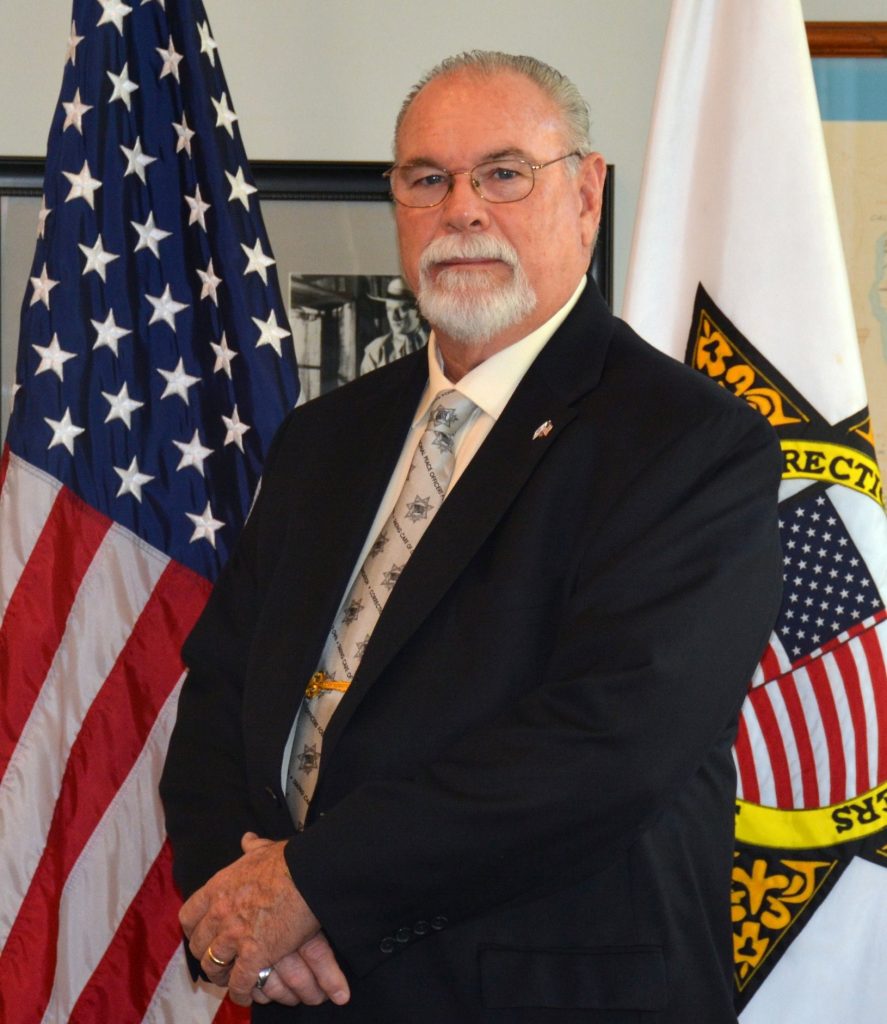
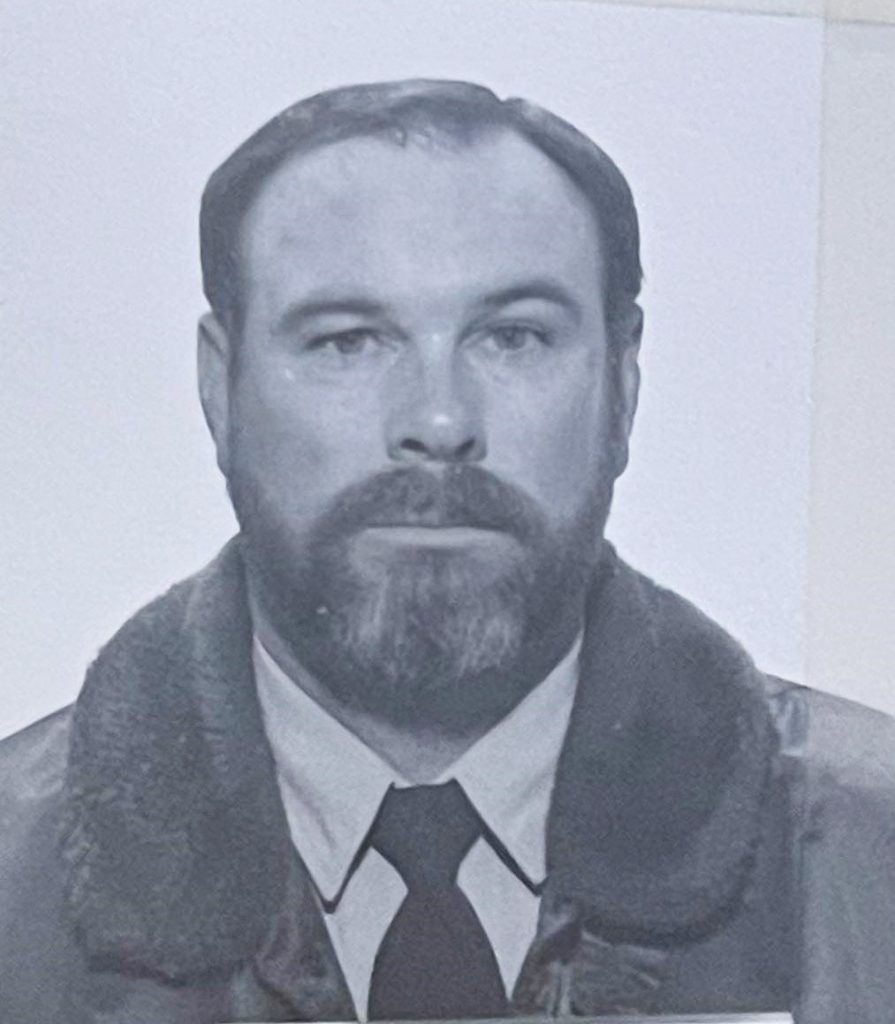
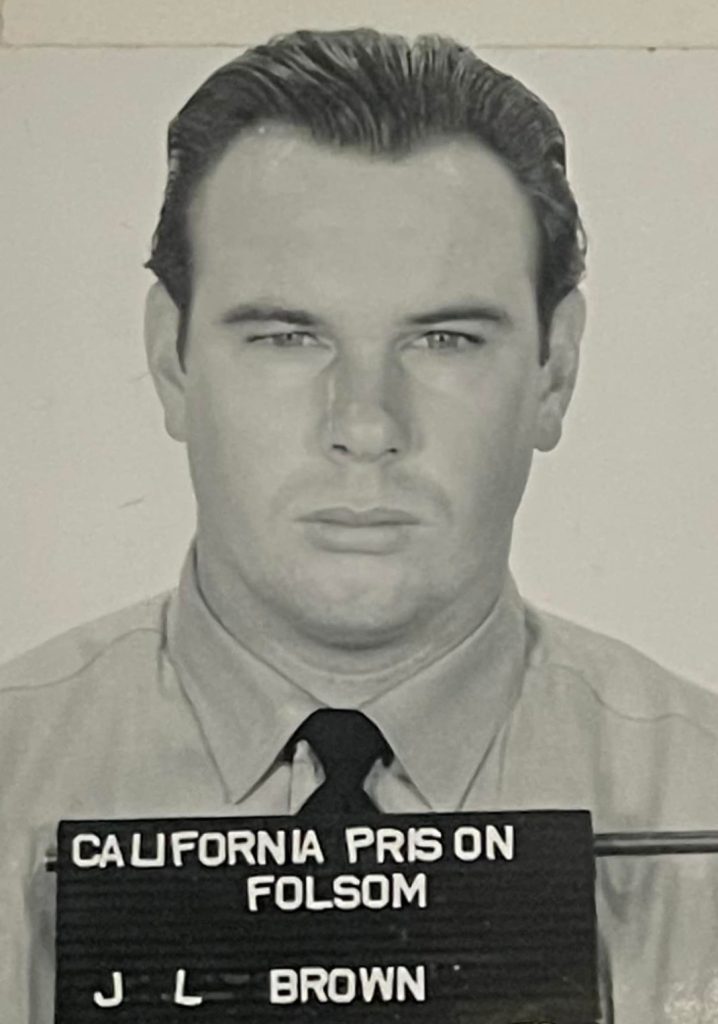
At the museum, a special bench and memorial signage is dedicated to a man with a vast knowledge of Folsom State Prison’s history. Retired Lt. Jim Brown was a longtime museum volunteer, coordinating efforts with the late Associate Warden Dick Nelson, who helped establish the San Quentin Museum.
“I think everybody knew Jim,” said Juanitas. “He was a fixture. Jim was the curator for the last 23 years and passed away in 2022. (He was) very passionate about the museum and keeping the history of corrections. We have a couple of books that Jim has written and published.”
Walters praised Brown’s contributions to the museum.
“He just had a big collection of old history. A lot of people want to know about the escapes and the different riots that happened here at the prison. Those books highlight all of those.”
The museum is a popular stop for buses filled with students, visitors from retirement communities and tourists from all over. Subject to change, the museum is currently open Saturday through Monday, 10 a.m. to 4 p.m.
“We’re always looking for newer volunteers so we can expand our hours. If anybody is retired and has free time, they can come and check it out as a possible volunteer opportunity. We’ve got people coming through here every day wanting to see this place,” Walters said. “It’d be wonderful to do seven days again if we can.”
Story and video by Clarissa Resultan, staff photographer
Learn more about California prison history.
Follow CDCR on YouTube, Facebook, X (formerly Twitter). Listen to the CDCR Unlocked podcast.