

A recent question came across the Inside CDCR desk regarding a counterfeiter who was incarcerated at San Quentin in 1903.
The original query was made with San Quentin public information officer Lt. G. Berry. She then referred the requestor to the Office of Public and Employee Communications.
“(I’m seeking) information (and) historical records for an incarcerated person held at San Quentin between Sept. 23, 1903, and May 23, 1907. His name is Clement Duchesne, 20316, and is my husband’s newly discovered great-grandfather. Any insights you have are greatly appreciated,” the requestor wrote.
Armed with a name, CDCR number, and timeframe, it was time to start digging.
Suspicious activity down by the river
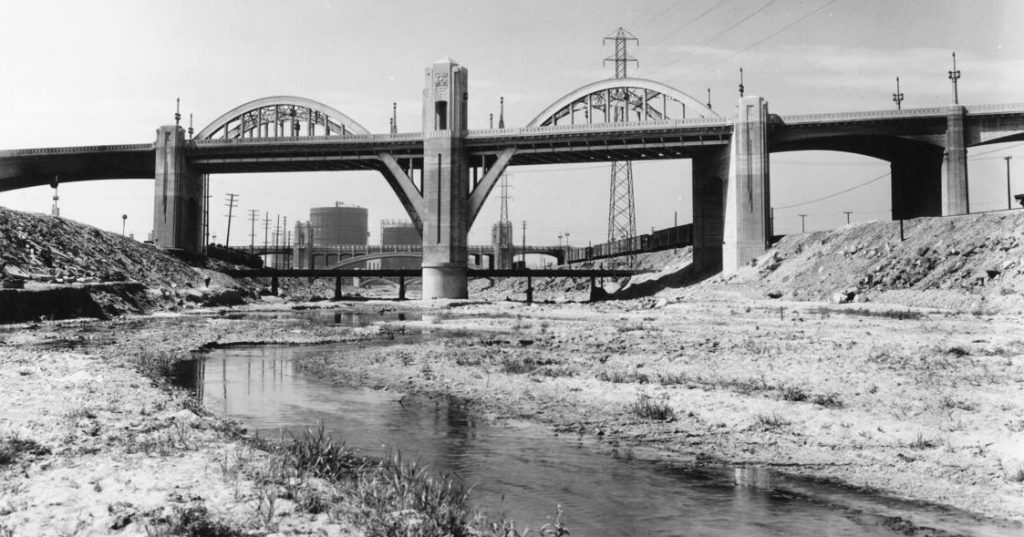
According to news reports, Duchesne and Emile Bruder came to the attention of a police officer in March 1903.
Assigned to keep homeless people from establishing permanent camps along the Los Angeles River, Officer D.V. Helman noticed two men sitting in a gulch opposite Ninth Street.
“(The men) seemed to be rubbing something,” reported the Los Angeles Evening Post-Record, March 3, 1903. “When he approached (on horseback), the two men had their shoes off and were washing their feet in the river. After examining the place and putting some questions to the men, Helman rode on up the river.”
Two days later, while again patrolling the river bottom, he noticed the same two men in the same gulch as well as a small plume of smoke. He then dismounted to investigate.
“As he approached the place where the men had been sitting beside a small fire, they rose and ran up the bank (near the viaduct). Helman called to them to halt, but they kept on,” the newspaper reported. “He fired at the larger of the two men, who stumbled and fell (but wasn’t hit). He also fired at the small man but failed to hit him as they were 200 yards (ahead) of the officer.”
Mounted officer catches coin-casting counterfeiters
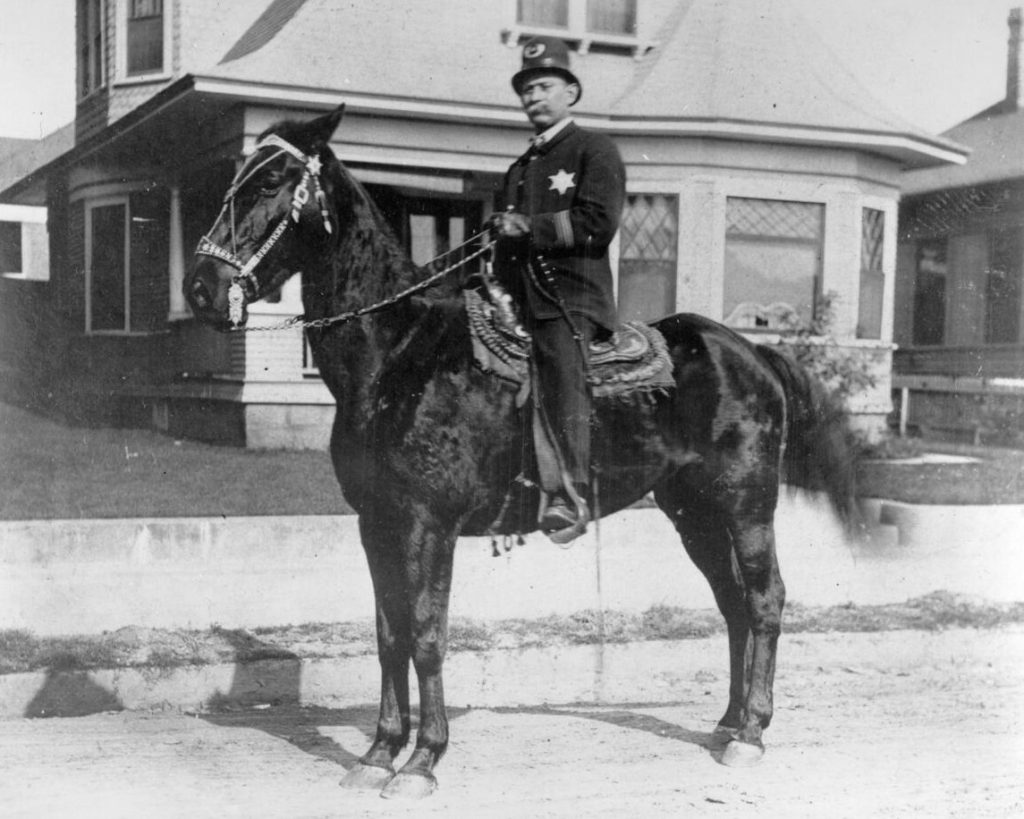
Helman returned to his horse, reloaded his revolver, and gave chase. The suspects didn’t get far as Helman quickly apprehended the two men. After transporting the men to the police station, he returned to the river to continue his investigation.
Near the river, he found “several packages containing counterfeit coins and some bottles of acid. When the men were searched at the police station, bogus half-dollars were found in different pockets of both men’s clothing.”
French language barrier
Hailing from France, Duchesne and Bruder spoke little to no English. Through an interpreter, they denied being counterfeiters.
The local police brought in federal Secret Service Special Agent Cronin to assist in the investigation.
According to news reports, the men appeared to have been placer miners in Mexico before making their way to Southern California. Authorities also believed the men briefly ran a small shop in Los Angeles. But as far as their criminal ambitions were concerned, officials claimed “they are novices in the counterfeiting business.”
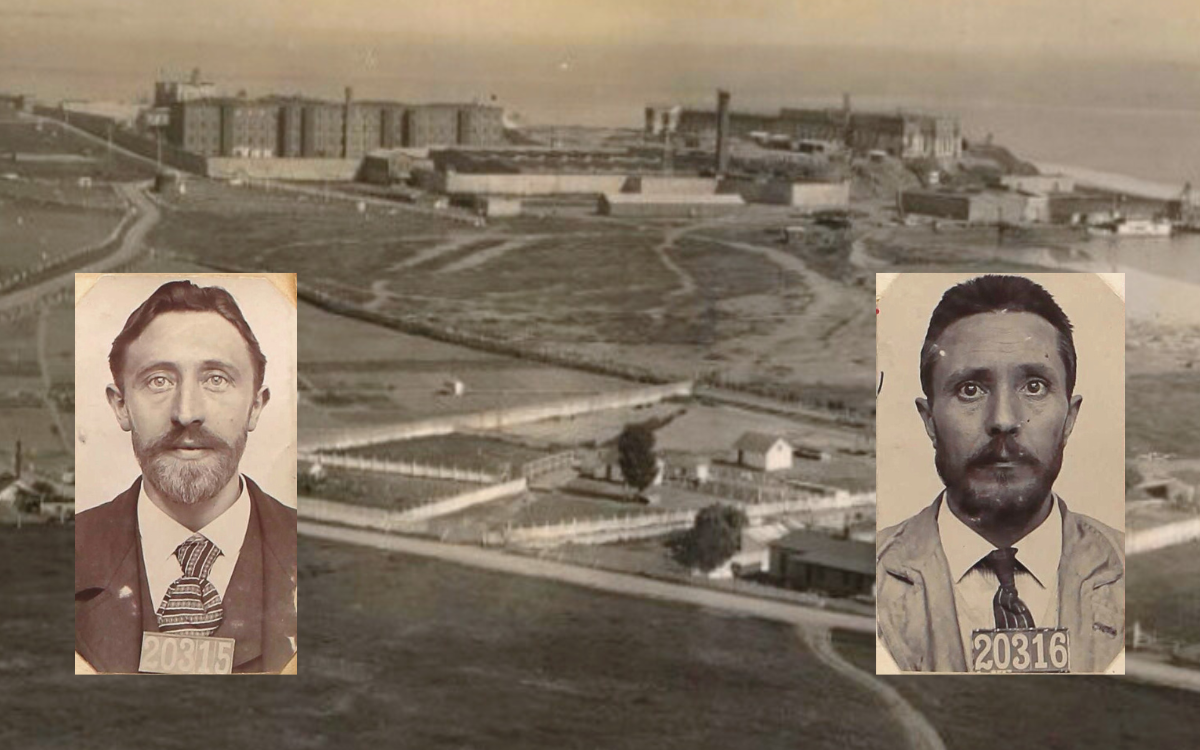
Duchesne and Bruder were tried and convicted. Since there were no federal penitentiaries in California, they were sentenced to San Quentin. Each was given a five-year term, with their records noted as USP, or United States prisoner.

Bruder, age 30, was given the number 20315, while Duchesne, his 42-year-old partner in crime, was given 20316. Both were received at San Quentin on the same day, Sept. 23, 1903, and released May 23, 1907.
By Don Chaddock, Inside CDCR editor
Office of Public and Employee Communications
Follow CDCR on YouTube, Facebook, X (formerly Twitter). Listen to the CDCR Unlocked podcast.
Learn more about California prison history.
Explore CDCR history
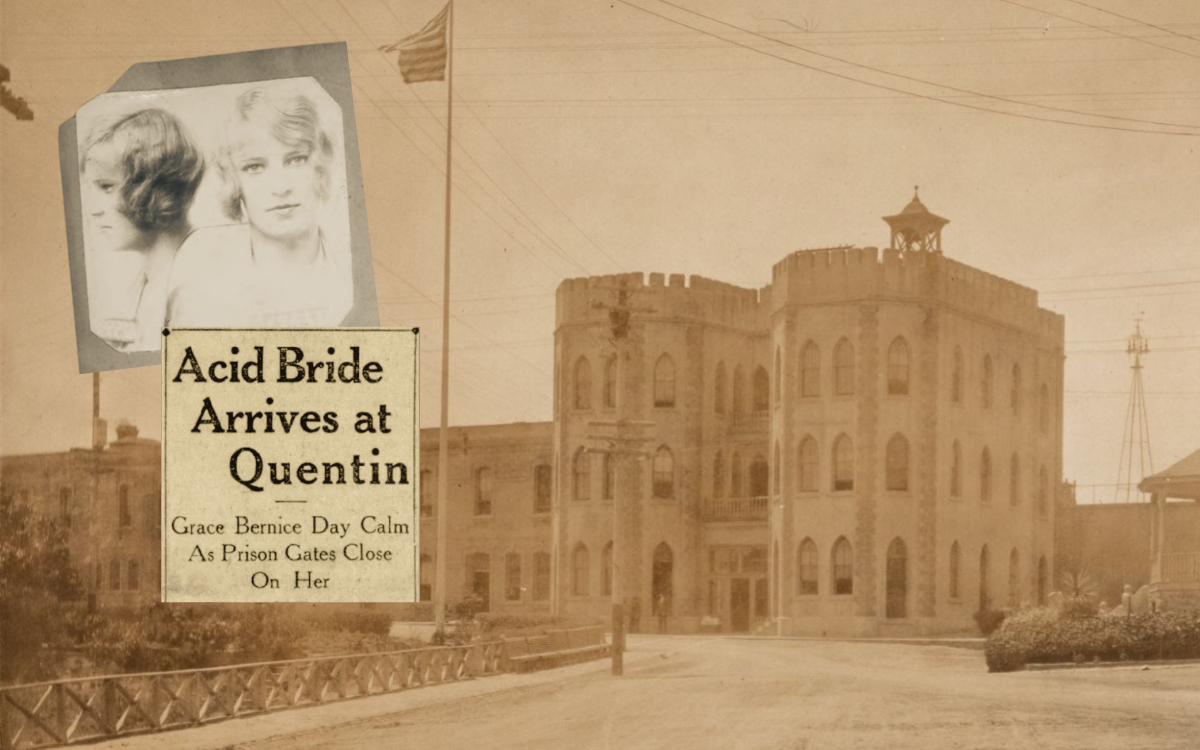
Echoes from the Past: Restoring history’s missing pages
While researching stories for the Unlocking History series, we often find damaged documents, missing photos, or incomplete information. One example…
Family seeks information on 1903 counterfeiter
A recent question came across the Inside CDCR desk regarding a counterfeiter who was incarcerated at San Quentin in 1903.…
Cemetery Tales: Harry Stewart, Fresno embezzler
In our final Cemetery Tales of the season, we look more closely at Harry Stewart, early 1900s embezzler, thief, and…
Cemetery Tales: Meet JE McKim, thieving drifter
In our third installment of this month’s Cemetery Tales, we look at a drifter with a long criminal record dating…
Cemetery Tales: Raymond Blade and Henry Hunt
The second installment of this month’s Cemetery Tales looks at two incarcerated people at different stages in their lives when…