

To decrease overdose deaths in California prisons, CDCR has expanded unprecedented access to naloxone. Commonly known by its brand name, Narcan, the life-saving medication rapidly reverses opioid overdoses.
Amid a shifting national overdose landscape driven by synthetic opioids, CDCR has implemented a systemwide harm-reduction framework prioritizing rapid overdose response, broad naloxone access, and the Integrated Substance Use Disorder Treatment (ISUDT) Program’s Medication-Assisted Treatment (MAT). Data show naloxone is a critical life-saving intervention bridging individuals from overdose crisis to treatment engagement and recovery support.
CDCR is national leader in harm-reduction practices
From 2019–2024, over 7,000 overdose reversals were documented within CDCR institutions. While 2025 numbers are not yet available, thousands more such reversals are expected to be discovered.
Deputy Director of Nursing Services Barbara Barney-Knox supports the department’s efforts.
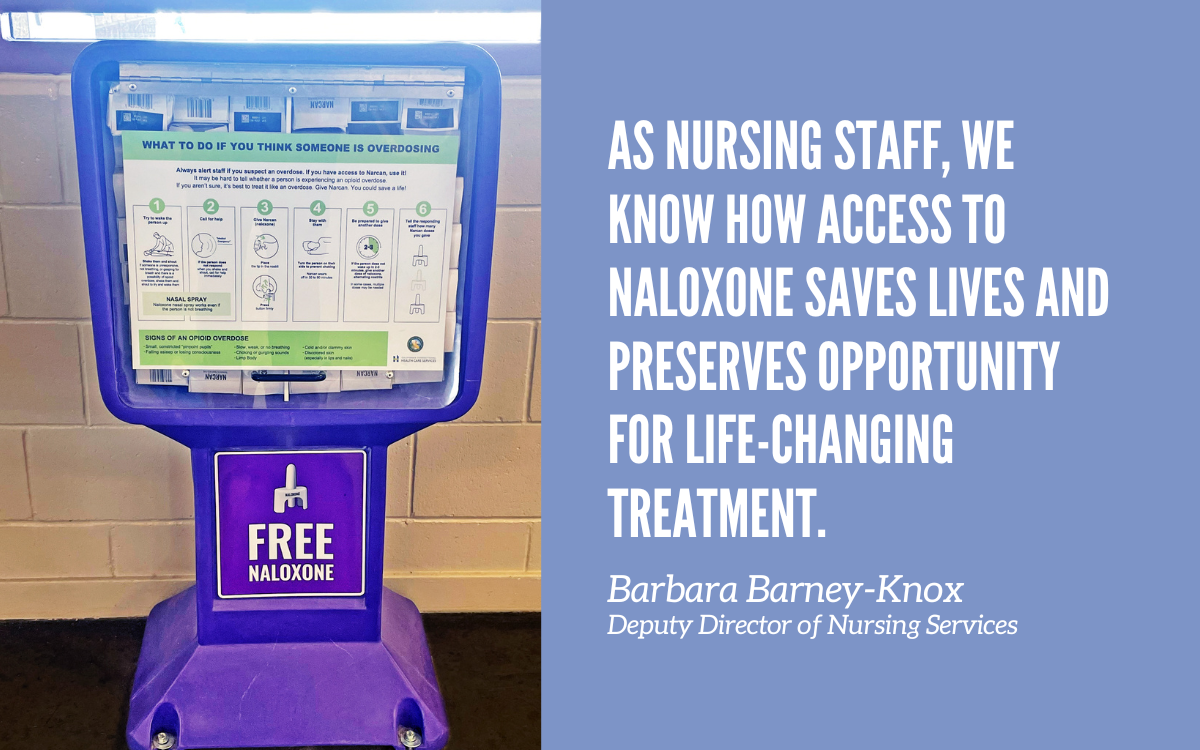
“As nursing staff, we know how access to naloxone saves lives and preserves opportunity for life-changing treatment,” she said. “CDCR is leading the way among state correctional systems by making sure this medication is readily available to staff and incarcerated individuals when it matters most.”
While naloxone is not a treatment for opioid use disorders, it saves lives among people who have experienced an opioid overdose. Because of this, CDCR operates one of the largest naloxone education and distribution programs in the nation.
Naloxone by the numbers
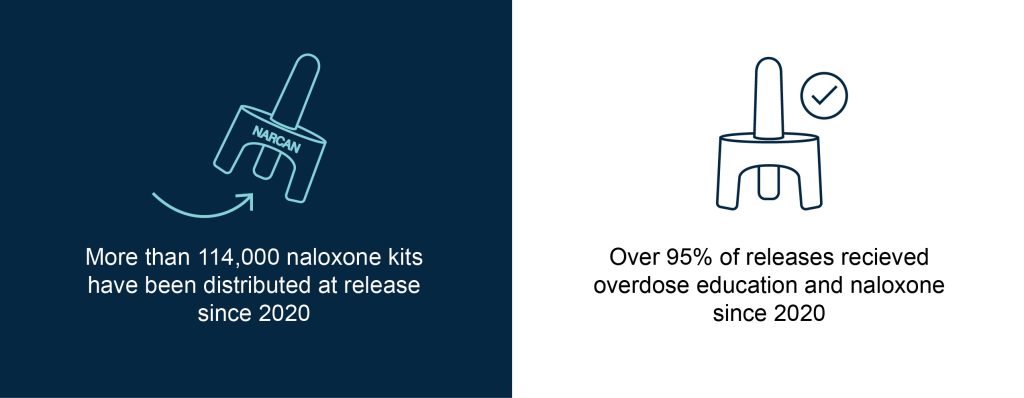
Seeing results:
- Since 2020, more than 114,000 naloxone kits have been distributed at release. Over 95% of releases receive overdose education and naloxone.
- Naloxone administrations by health care and custody staff have dramatically increased. Among health care staff, it’s a 2,000% increase while custody staff shows a 4,147% increase since program implementation.
- CDCR is the only U.S. state prison system allowing incarcerated individuals to carry naloxone within prison. This enables faster peer response to overdoses.
- Statewide installation of self-service naloxone dispensers was completed by March 2025, with 286,061 kits distributed in fiscal year 2024–25.
- Integration with MAT strengthens outcomes. National data show MAT reduces all-cause mortality by up to 85% and overdose death risk by approximately 75% after release.
Overdose risk remains high for justice-involved populations, especially post-release, reinforcing the importance of naloxone distribution and education.
“Prioritizing naloxone distribution has allowed us to respond quickly to overdoses and prevent countless deaths,” Barney-Knox said. “CDCR will continue to focus on evidence-based harm reduction strategies (and) expand access to care. (We will) do everything we can to reduce opioid overdoses and overdose deaths.”
By removing access barriers, expanding education, and embedding naloxone within broader treatment infrastructure, CDCR has built a scalable, national best-practice model. This effort strengthens public health outcomes, improves reentry safety, and sets a benchmark for correctional systems nationwide.
Story by Ike Dodson, supervisor II
Office of Public and Employee Communications
Follow CDCR on YouTube, Facebook, X (formerly Twitter). Listen to the CDCR Unlocked podcast.
Read more stories related to prison health care.
Related content
CCHCS staff reflect on mentorship during Women’s History Month
During Women’s History Month, CCHCS staff are reflecting on the women who helped shape their careers, highlighting how mentorship from…
Life‑saving era: CDCR expands naloxone access
To decrease overdose deaths in California prisons, CDCR has expanded unprecedented access to naloxone. Commonly known by its brand name,…
Watch: Observing Patient Safety Week 2026
Editor’s note: Patient Safety Week is observed March 9-13, 2026. Most incarcerated people leave institutional life at some point and…