

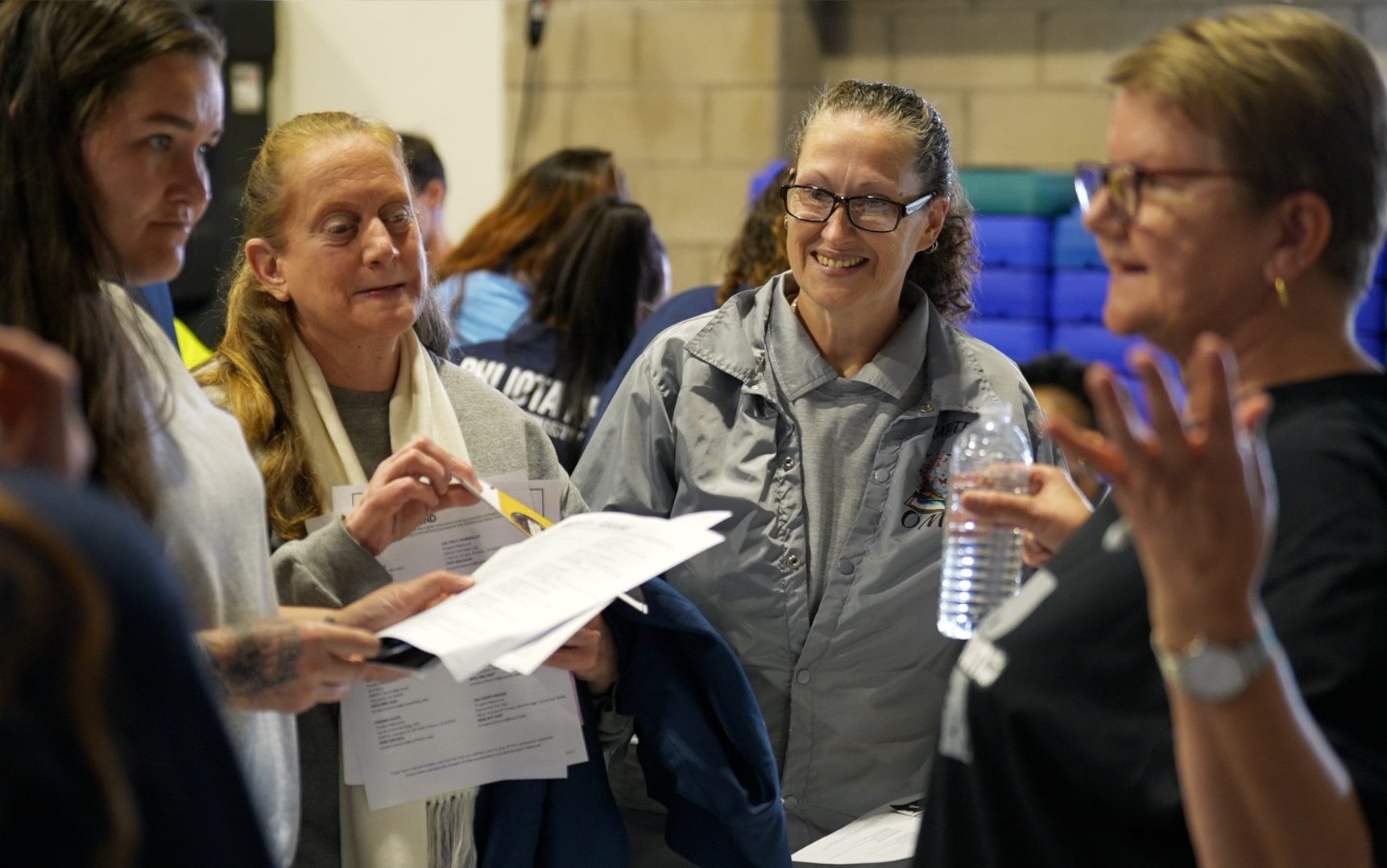
More than a dozen schools recently held a College Fair at Central California Women’s Facility (CCWF) to promote education opportunities.
Members of Merced Alpha Gamma Sigma (AGS), the California Community College Honor Society, drafted a proposal to bring together schools to provide re-entry resources to the CCWF population.
“What you’re seeing today is about 15 schools here sharing the resources of Reentry, Project Rebound, Underground Scholars, and Rising Scholars,” said H. Martinez, supervisor of academic instruction at CCWF.
Watch the video (story continues below):
Support from beyond the institution
Michelle, an incarcerated student, said she’s grateful for the support from those outside the institution.
“It was really encouraging to see how far they’re willing to go to work with us, especially being incarcerated people,” she explained. “Because when you’re in here, sometimes it feels a little lonely. Sometimes it feels like the world out there has forgotten you and moved on. Knowing there (are) colleges … fighting for you to get a higher education and better yourself, it’s a really good feeling.”
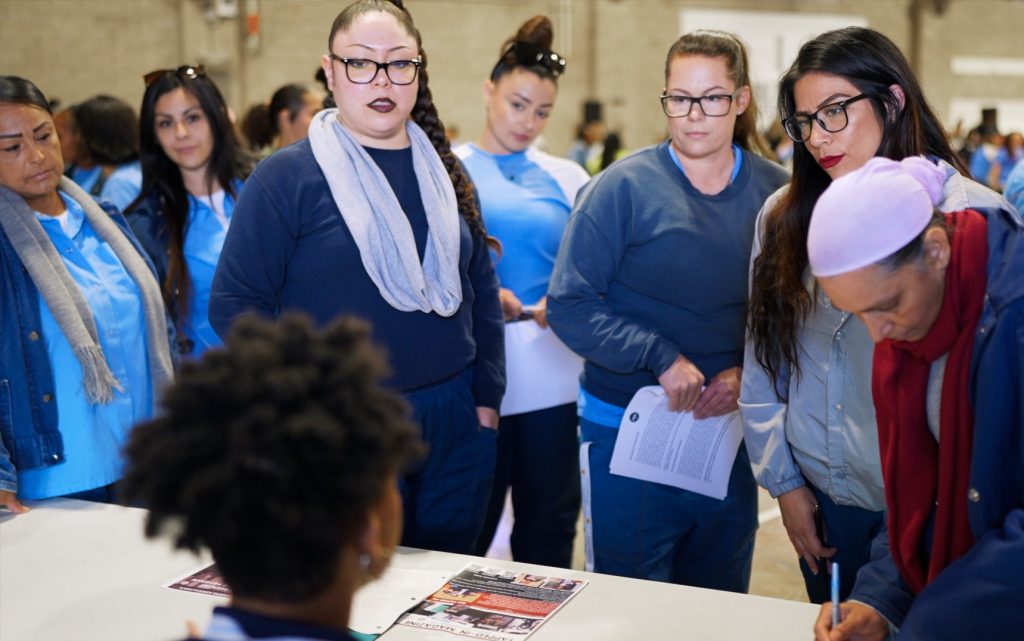
Merced College professor Cory McCullough said it’s all about showing people they have opportunities during and after incarceration.
“We want to give them the opportunity to do something with their lives so they can realize their potential. (Also, they can) realize they’re more than what they’ve heard they are,” he said.
Amylou, Alpha Gamma Sigma president and an incarcerated person, said being aware of rehabilitative educational opportunities is important.
“A lot of people don’t know what they have available to them out there for higher education and being formerly incarcerated. That was our goal today,” she said.
Martinez believes events like these help people better prepare for life after incarceration.
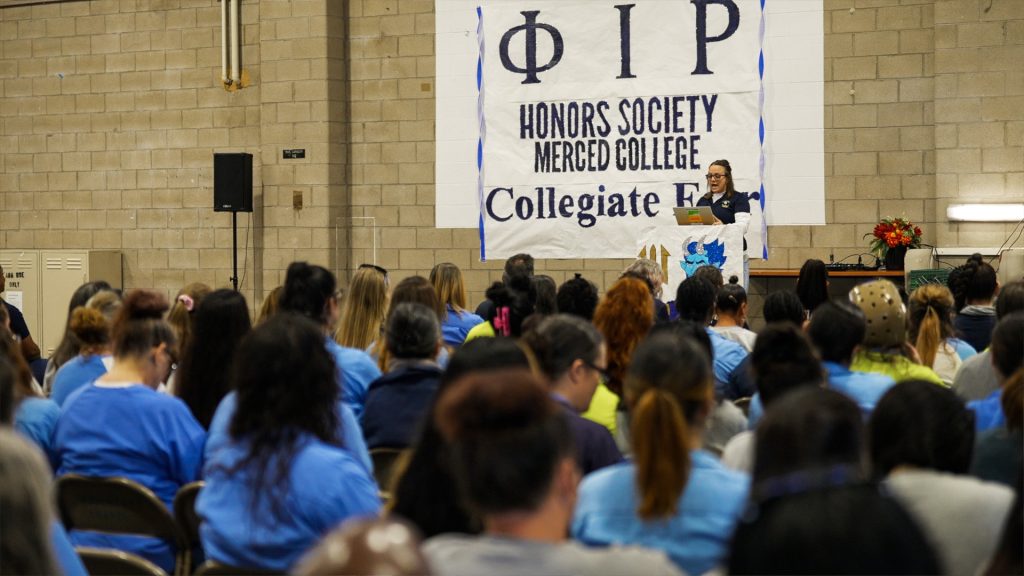
“It is important for us to have events like this collegiate fair because 95% of our population is going to be returning to communities,” he said. “They started their rehabilitation here with us. We don’t want a lapse in that rehabilitation. As they depart CCWF and return to their communities, they are connected with that added resource. (With this,) they can continue on that path, become a productive citizen (and) someone who is going to uplift communities.”
Photos, video by Chris Medina, Director (specialist), TV Communications Center
Story by Don Chaddock, Inside CDCR editor
Office of Public and Employee Communications
Follow CDCR on YouTube, Facebook, X (formerly Twitter).
Read more rehabilitation stories.
Related content
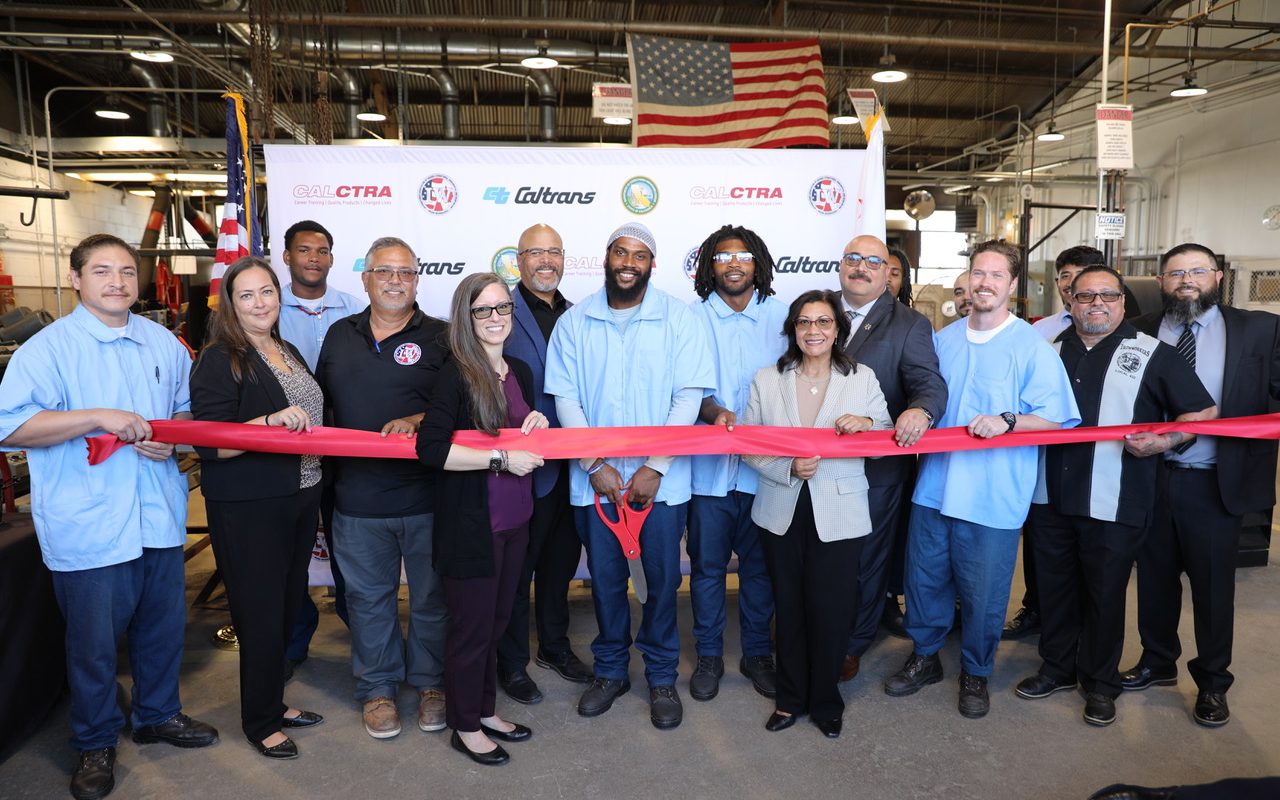
Caltrans, CALCTRA, CDCR, Ironworkers launch CIM program
The California Correctional Training and Rehabilitation Authority (CALCTRA), Caltrans, CDCR, and the Ironworkers Local Union 416 and 433, have launched…
CDCR schools ready incarcerated for reentry
CDCR schools are helping incarcerated individuals get ready for their eventual reentry back into the community. The Adult Basic Education…

Secretary leads San Quentin Learning Center tour
CDCR Secretary Jeff Macomber recently led a tour of the new San Quentin Learning Center for Governor’s Office staff and…
Winning design becomes milestone in MCRP student’s reentry
For Angel Paredes, seeing his design on thousands of Cal Poly Pomona shirts demonstrates the progress he’s made since leaving…
NKSP walks for Suicide Prevention
North Kern State Prison (NKSP) staff, leadership and the incarcerated population united to raise awareness during National Suicide Prevention Week.…
Valley State Prison hosts wellness fair
Valley State Prison in Chowchilla recently hosted a health and wellness fair. The event brought together 13 information booths designed…