

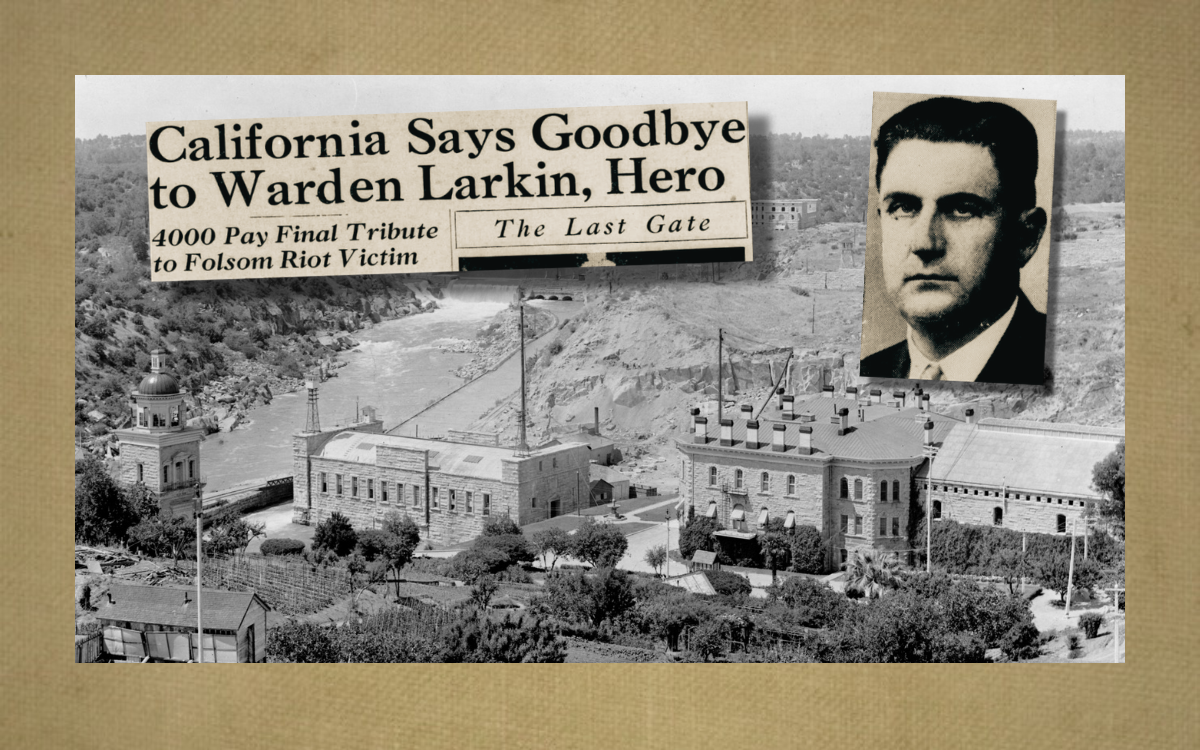
In this installment of Unlocking History, we look at the life of Clarence Larkin, a longtime Folsom State Prison employee. His career began there in 1915 and his life ended there in 1937.
Larkin, described as “6-foot-6” and “burly” by newspapers at the time, was no stranger to handling difficult situations. He served in the military during the first world war, tracked down prison escapees as a guard and convict camp supervisor, helped quell the deadly 1927 riot and stood by his principles in 1937, costing him his life.
(Editor’s note: This story originally published in 2018 as part of a larger piece on staff historically going above the call. It is republished here, updated and posted on its own. The other sections will also be published as their own stories.)
Larkin tracks camp escapees
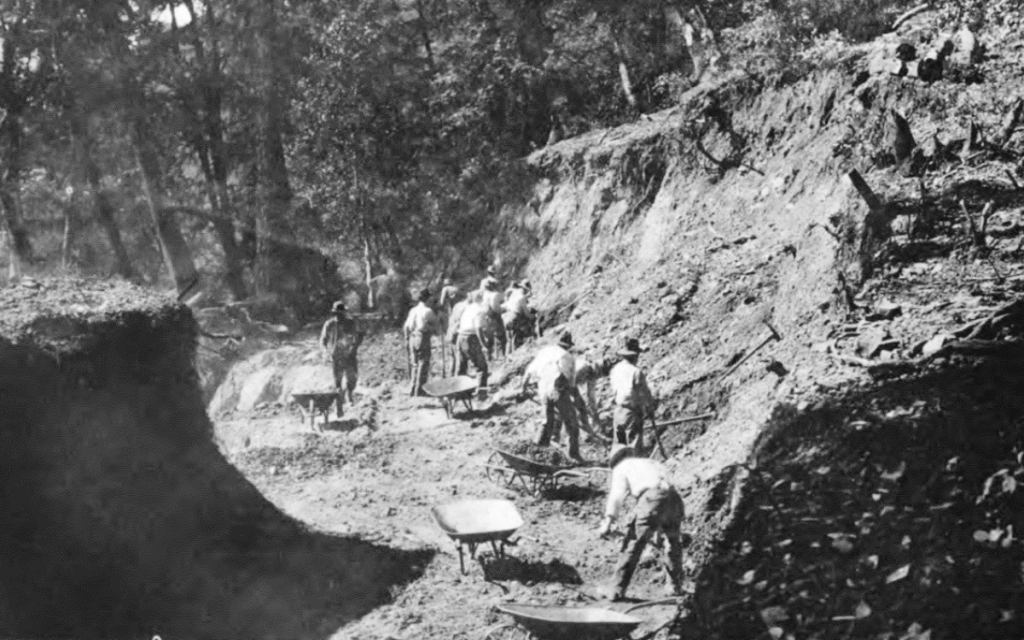
After working as a guard* at Folsom State Prison, Larkin quickly earned a reputation as someone who could track down escapees. In early 1916, while serving as a guard at a camp at Manzanita Hill, he was promoted to foreman of a camp stationed at North Beach in Calaveras County.
(*Editor’s note: Guard was the official job classification until the department was created in 1944 when the position was reclassified as correctional officer.)
When Jose Mena and Pete Corty escaped the Big Bar highway camp in 1921, guards Larkin and Ed Carson tracked them to the Redding area.
“Larkin and Carson, having got trail of the fugitives, sent word to Sheriff Richardson to send men with shotguns. The guards lay in wait on the highway over which the convicts were expected to approach,” reported the Sacramento Union, Sept. 22, 1921. “Finally, the two arrived, carrying a small bundle. They were at once covered by flashlights and revolvers of the guards. A command to halt was not obeyed, however, and the convicts fled in the darkness, firing as they retreated.”
The guards continued their pursuit in the dark, but the wanted men split up.
The following day, the sheriff’s posse and prison guards found tracks leading in different directions.
“Corty has been tracked up Mt. Berry on this side of Tower House. Mena went across Clear Creek, (dropping) his prison coat and little bundle of food,” reported the Redding Searchlight, Sept. 23, 1921. “John Kimball of Old Diggings, considered one of the best (trackers) in the county, is with the party pursuing Mena.”
Continuing to promote, he was appointed captain of the yard in July 1924.
Deadly 1927 Thanksgiving Day riot

Just a few years after Larkin’s appointment, a massive riot took place Thanksgiving Day, Nov. 24, 1927.
Guards were taken hostage and nearly 1,000 tried to escape. The incarcerated rioters armed themselves with two pistols, an ax and multiple knives. The National Guard was called in to help.
Larkin was hailed as the “hero of the riot” for his actions. The standoff lasted for nearly 24 hours.
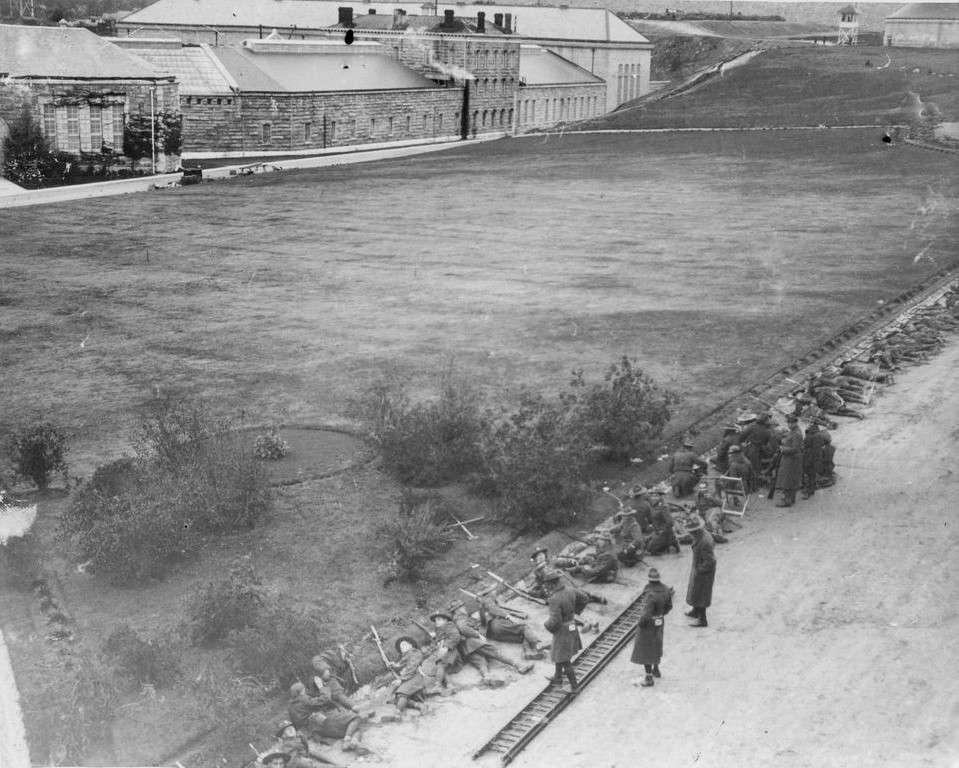
“The end of the rebellion came after a night during which state officials assembled at the prison all resources of the National Guard, including guardsmen, machine guns and armored tanks. It was the greatest turnout of state troops since the Wheatland hop riots of 1913,” reported the Santa Cruz Evening Sentinel, Nov. 25, 1927. “Prison directors and representatives of Governor C.C. Young gathered at the prison to advise Warden Court Smith and kept a night-long vigil.”
According to the newspaper, “for the first time in California’s history, many modern weapons that had been used in the world war were called into play. These ranged from machine guns and rifles to tanks and tear gas bombs.”
In all, 13 lost their lives, including Guard Ray Singleton and an incarcerated trustee who was hit by a stray bullet fired by the rioters.
Seeing they were outgunned, the rioters surrendered, turning over the weapons and ammunition. Six were charged with being the ringleaders of the revolt. One of the ringleaders, Albert Stewart, agreed to cooperate with prosecutors to avoid the death penalty. He was transferred to San Quentin for his own safety. The others were given the death penalty.
Larkin named Folsom Prison warden
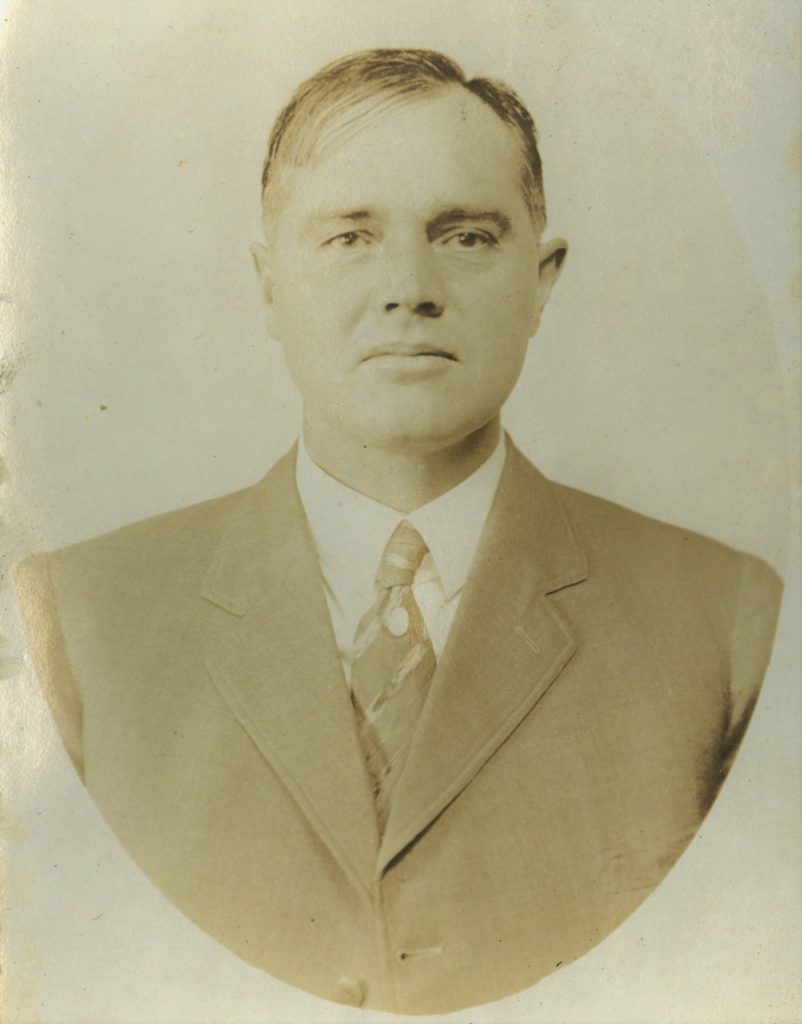
A decade after the large-scale riot, Larkin was named warden.
“Larkin, former captain of the guard and recognized as one of the toughest penal institution officers in the United States, has been appointed warden of Folsom,” reported the Healdsburg Tribune, April 21, 1936.
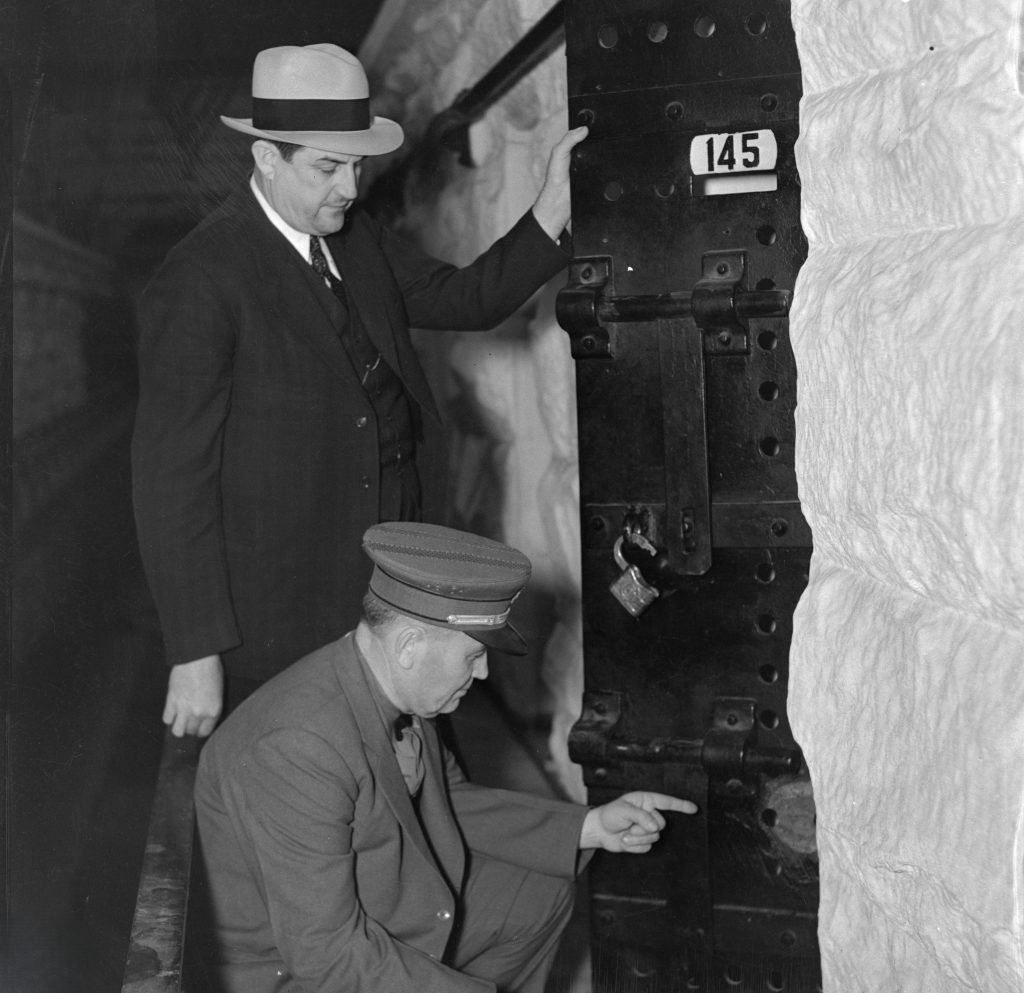
In March 1937, one man decided he was going to get out, even if it meant taking a slow and methodical approach.

Vladimir Pruszynski, 17055, was incarcerated at Folsom State Prison to serve a five-to-life sentence. He managed to swipe a hand drill from one of the toolboxes being used by workers to improve the old cell block buildings. He quietly worked at drilling a series of holes in the iron door. Each night, he used putty and paint to hide his work. He hoped to weaken the iron enough to break open a passage.
Turnkey Lanbert Buchanan received a tip about Pruszynski’s efforts and managed to catch him and his cellmate in the process of trying to remove a plate from the door.
While this escape attempt was quickly quashed, the next one proved fatal.
Larkin taken hostage
Larkin’s tenure as warden was short-lived. A year after his appointment, he was taken hostage during a prison riot Sept. 19, 1937.
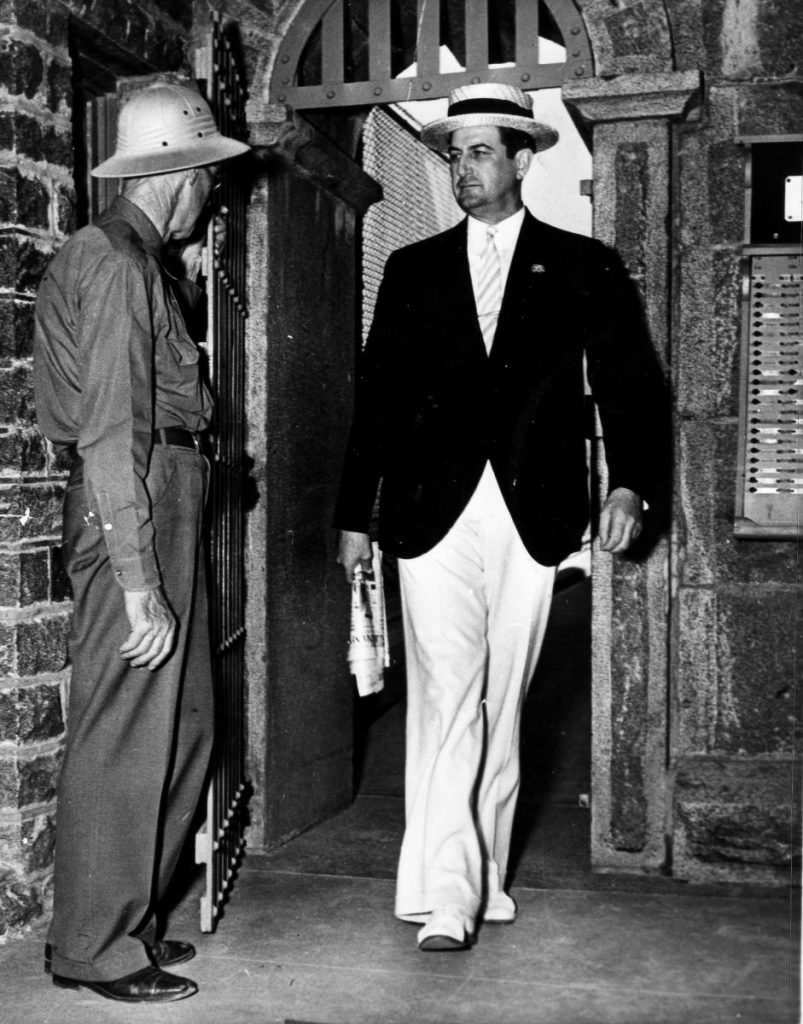
Dubbed “Bloody Sunday” by the press, the riot resulted in three deaths, with a fourth following a few days later.
The escape attempt began during the warden’s routine Sunday interviews with the incarcerated population, allowing them to air grievances or make requests.
A pre-planned signal allowed seven incarcerated people to jump the warden and Captain of the Guard William Ryan. Guard Harry E. Martin tried to get to them but was killed while pushing his way through the men.
Meanwhile, a convict clerk managed to sneak out the back door of the building, narrowly avoiding being stabbed while fleeing. He ran to the guard tower directly over the captain’s office, alerting them to what was happening inside. He then ran to other guard stations to spread the word.
Taken hostage, the men told Larkin they wanted him to tell the guards to throw down their guns and open the gates.
“If we go out of here, they will shoot me, if necessary, to shoot you,” Larkin told the ringleaders.
Despite his warning, and with a wire tightly wrapped around his neck, the rioters took Larkin outside, threatening to kill the warden if the guards didn’t do as they said. The men told Larkin to order his guards to do as they’re told. Rather than asking them to drop their guns, Larkin yelled for his yard officers to stand back to avoid being shot. The warden then ordered the tower to open fire.
With their plans dashed, the rioters turned their blades on the warden. The riot was over, lasting all of 10 minutes.
Warden Larkin, Capt. Ryan severely injured in riot
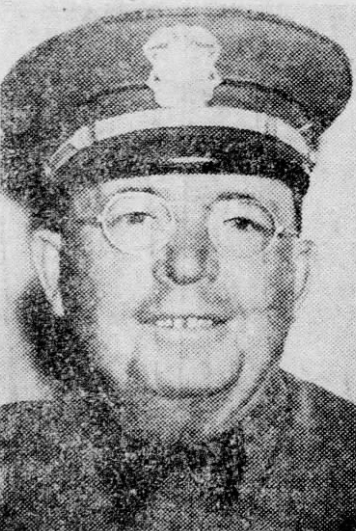
“Larkin, stabbed 12 times with one of the blades penetrating his liver, and (Captain of the Guard William) Ryan, stabbed three times in the lungs, were taken to Sacramento hospitals,” reported the Santa Cruz Sentinel, Sept. 21, 1937. “Larkin, Ryan and guards Harry E. Martin and James Kearns battled seven convicts in the escape attempt, which began in Ryan’s office in the prison yard. Martin was stabbed fatally in the melee.”
Stabbed through the heart, 41-year-old Martin was killed trying to save Larkin and Ryan.
“Martin met a hero’s death, slashed a dozen times as he fought his way to the side of the superiors whom the convicts sought to hold as hostage,” reported the Madera Tribune, Sept. 20, 1937. Martin had worked at the prison for eight years when he was killed, according to newspaper accounts.
Praises staff for quick actions
From his hospital bed, Larkin issued a statement later the same day, praising his staff. He also expressed concern for Capt. Ryan’s health.
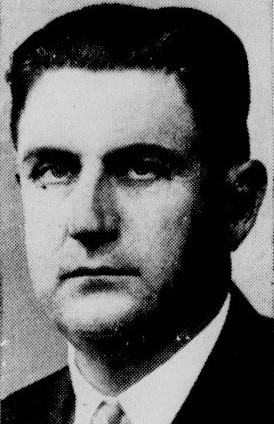
“Whatever happens to me, I am glad we caught them and none of the men escaped. I cannot give too much credit to the bravery of the prison guards who rushed in there with their canes and prevented the men from rushing the gates. The convicts, when I refused to order the tower guard to throw down their guns, stabbed me repeatedly and twisted a wire around my neck,” he said Sept. 19, 1937. “I am deeply concerned about the condition of Capt. Ryan who was with me in the guard house during the fight.”
Frank Sykes, a member of the Board of Prison Terms and Paroles, spoke highly of Larkin’s actions.
“If he had laid down, the whole mess would have escaped,” said Sykes. “(Larkin) deserves the highest of praise.”
San Quentin Warden Court Smith, also a former warden of Folsom, was called in to assist in the aftermath of the riot.
Larkin loses battle for life
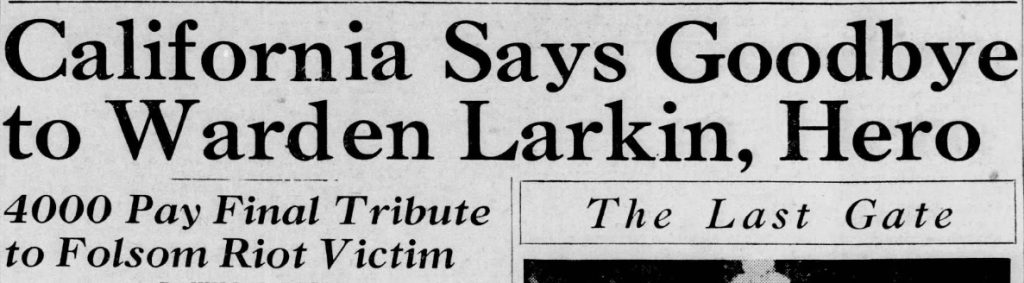
Larkin died a few days later, making him the fourth death associated with the attempted prison break.
“Folsom Prison Warden Larkin, 46, died this morning from injuries received from knife stabs in a prison outbreak attempt,” reported the Healdsburg Tribune, Sept. 24, 1937. “Infection followed the 12 stab wounds, however, gradually spreading through the warden’s chest and abdominal tract.”
An estimated 4,000 people turned out for Larkin’s services at Memorial Auditorium in Sacramento. He was laid to rest at East Lawn cemetery to a military three-volley gun salute and the playing of Taps.
“Larkin was in many ways a remarkable man. When he was appointed warden at Folsom, the convicts themselves cheered him and nearly 250 wrote him letters applauding his appointment. He was in truth a hero who died because of his own strict sense of duty,” according to an editorial in the Desert Sun, Oct. 15, 1937.
Five were charged with organizing the 1937 break and sentenced to death. Their sentences were carried out in 1938, the first executions in the state’s new gas chamber at San Quentin.
Building dedicated to Larkin’s memory
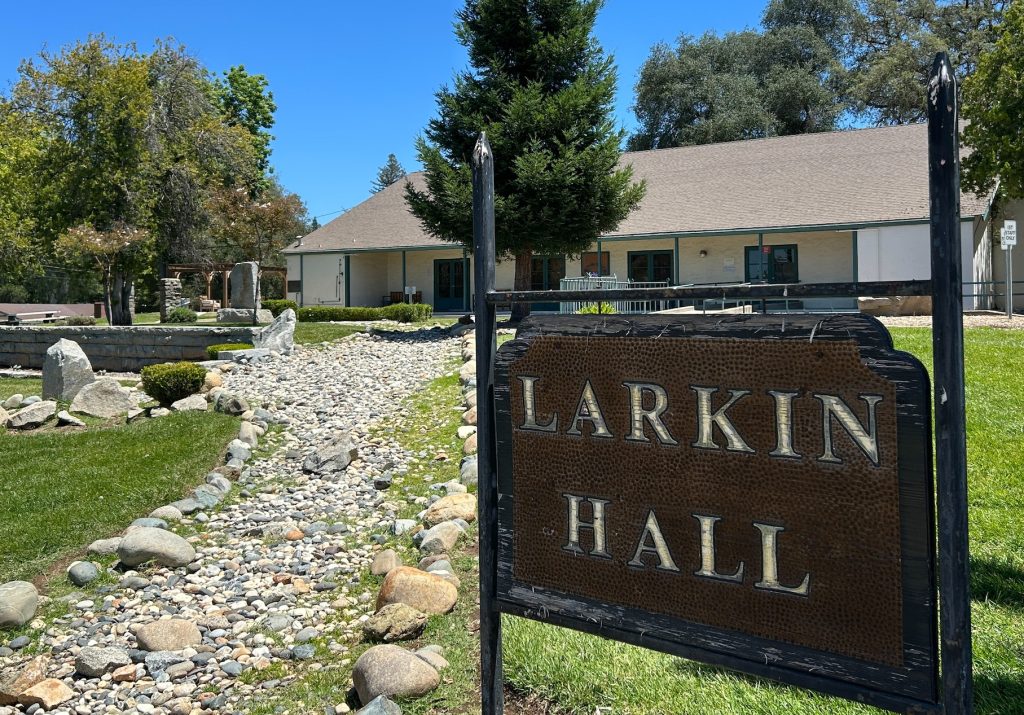
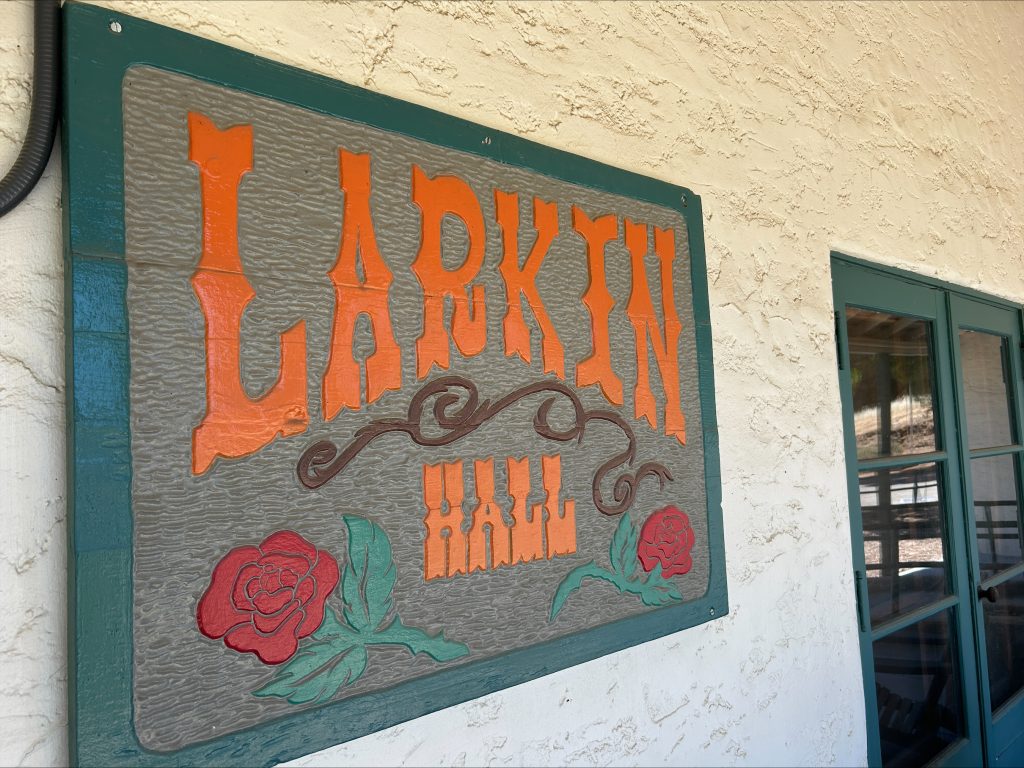
In November 1937, a recently completed building was named Larkin Hall to honor the memory of the warden who gave his life only a few months earlier.
“The new clubhouse, built for a recreational center for prison employees and their families, has been officially named Larkin Hall by resolution adopted by the prison directors,” reported the Folsom Telegraph, Nov. 5, 1937.

Story by Don Chaddock, Inside CDCR editor
Historical photos compiled by Eric Owens, CDCR staff photographer
Office of Public and Employee Communications
Follow CDCR on YouTube, Facebook, X (formerly Twitter).