

When Summer Peterson officially started at California State Prison (CSP) Solano, last September, she came with an understanding of the rehabilitative value of Career Technical Education. She made expanding these opportunities for incarcerated persons a priority.
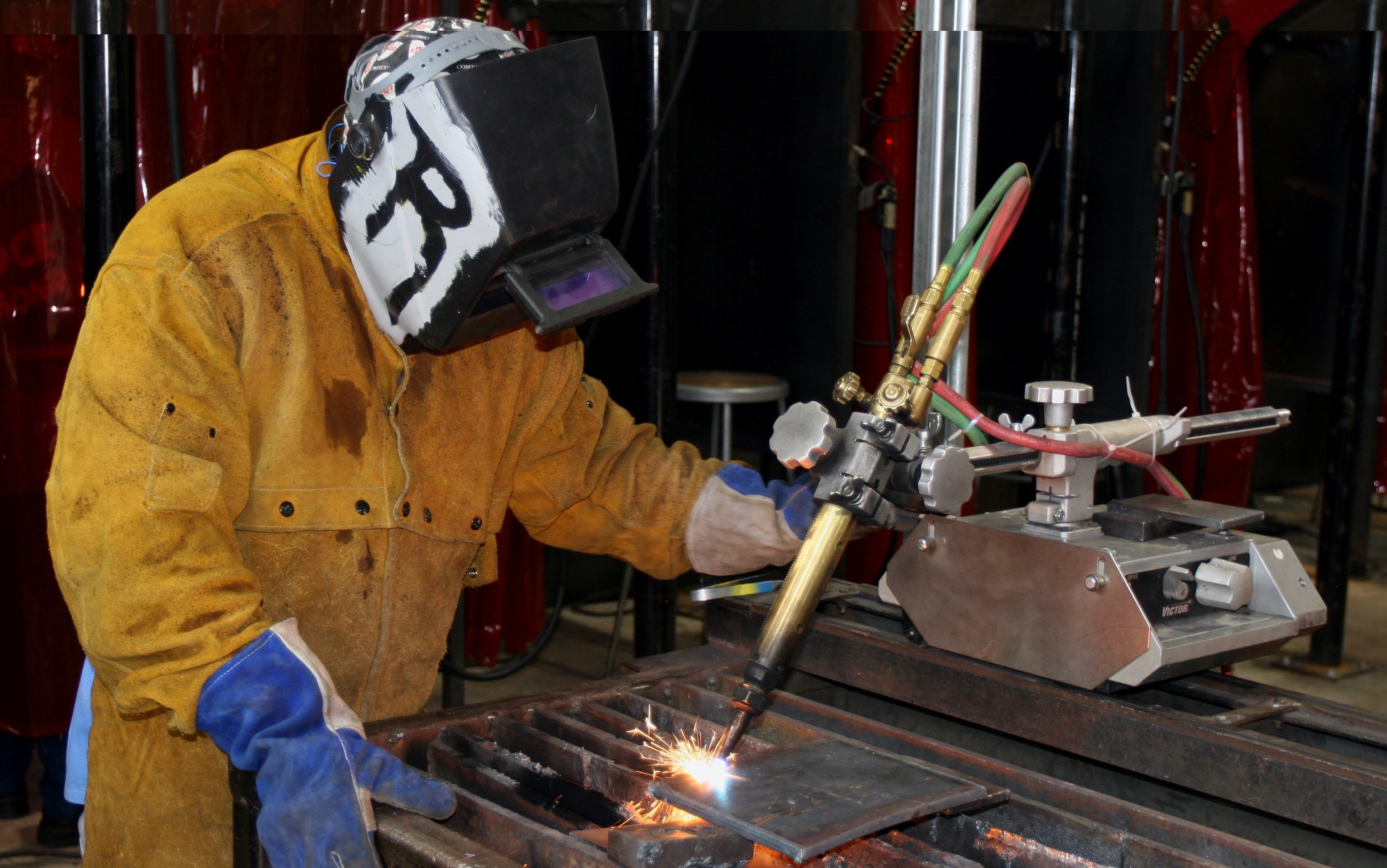
In less than a year, Solano increased offerings from one to four vocational programs – masonry, welding, electrical works and plumbing. The CTE training spaces are optimal for maximizing access to the population. The support of custody partners, management and executive leadership makes CSP-Solano a prime location.
It’s the stories from these opportunities that tell Peterson this is a path worth pursuing. She said it’s especially true at an institution where the population is predominately youth offenders. Peterson is Solano’s Supervisor of Correctional Education Programs.
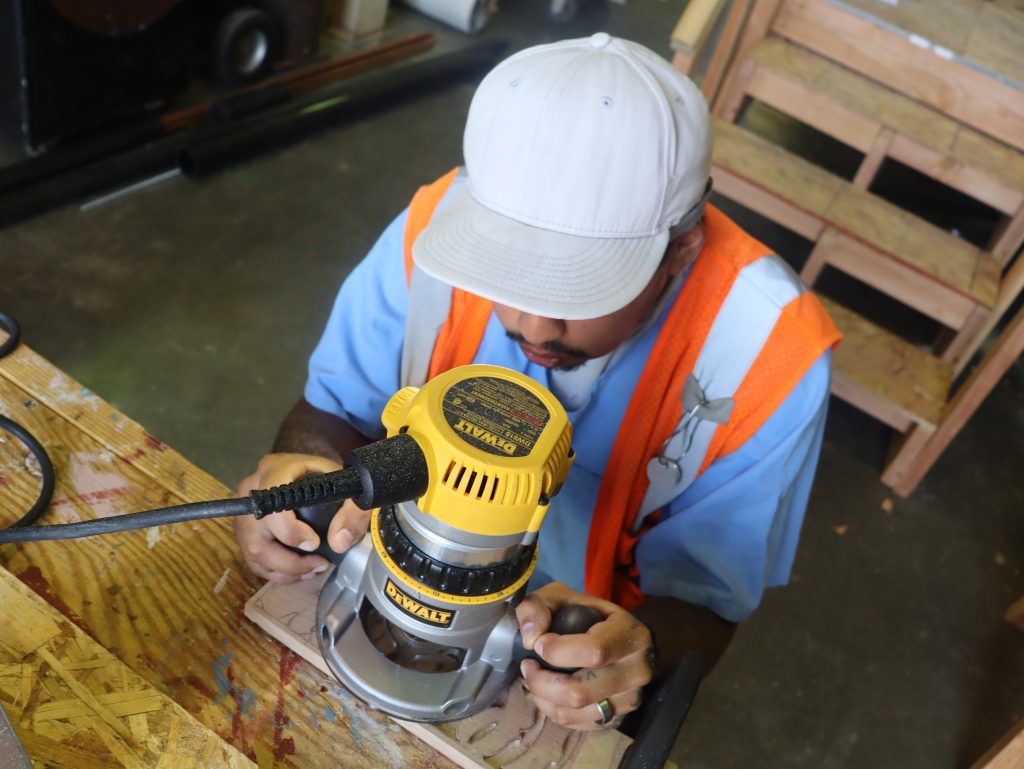
Plumbing instructor Christopher Carr said he had a student in the plumbing program who left custody before finishing. Still, he was hired immediately at a higher wage because of what he learned in class.
“I want to say he’s making somewhere in mid‑30s an hour right now, coming straight out of prison,” Carr said.
“The plan is to put Solano on the map, to be the most robust trade school in the CDCR.”
Summer Peterson, Supervisor of Correctional Education Programs
California State Prison, Solano
The programs provide rigorous training, so students learn trade skills equivalent to a first-year apprentice. This goes along with industry-recognized certification that could lead to a job. Peterson said these outcomes push her to create more opportunities.
“Just hearing those success stories makes me want to do everything I possibly can to expand vocational opportunities here,” Peterson said.
Readying students for reentry
According to Associate Superintendent Hillary Iserman, CDCR’s mission is to equip students with rigorous college and career readiness skills to support their successful reintegration into our communities. By preparing individuals for employment in high‑demand, livable‑wage careers, they are empowered to become productive contributors to society. Ultimately, this strengthens our communities while enhancing public safety
Even after students are released from the institutions, these programs have an impact. Those who pursued Career Technical Education had on average a 14 percent lower rate of recidivism when compared to those who did not pursue it.
Peterson emphasized the transformative power of education within correctional settings. She said when participants walk into the classroom, they shed the identity of “incarcerated individuals” and become students.
“When they walk in, they respect the classroom and they respect their teachers and instructors. If you talk to any number of them, they’ll tell you it feels almost like a safe haven,” Peterson said.
Vocational training programs, in particular, draw a significant amount of enthusiasm, she added.
Learning career skills to succeed after incarceration
Looking to the future, she said the plan is simple: offer everything the Office of Correctional Education can provide.
”The plan is to put Solano on the map, to be the most robust trade school in CDCR,” Peterson said.
In the meantime, Peterson said the education department is “booming” at Solano. GED numbers are rising and at least eight vocational graduates are expected in their next ceremony. This number may be higher with more possibly finishing plumbing certificates in time to walk.
Carr said the outcomes, where people see themselves getting jobs and doing better, are one of the perks of the job.
“If I can just get a fraction of my guys to get a job and not come back, I’m doing my part to help their success upon release into the communities,” Carr said.
However, this work cannot be accomplished by her team alone. According to Peterson, the warden, custody staff, and administrators have been exceptional partners. They provide steadfast support, enabling the school to sustain its momentum.
Peterson said this all builds to one goal: give students the chance to believe they can succeed when they are released into society. “Why wouldn’t you want them to be released and have a skill where they can walk right into a job and be a tax-paying productive member of society?”
Story by Eric Escalante, information officer
Office of Public and Employee Communications
Follow CDCR on YouTube, Facebook, X (formerly Twitter).
Read more rehabilitation stories.
Related content
CDCR schools ready incarcerated for reentry
CDCR schools are helping incarcerated individuals get ready for their eventual reentry back into the community. The Adult Basic Education…
Read More
Secretary leads San Quentin Learning Center tour
CDCR Secretary Jeff Macomber recently led a tour of the new San Quentin Learning Center for Governor’s Office staff and…
Read More
Winning design becomes milestone in MCRP student’s reentry
For Angel Paredes, seeing his design on thousands of Cal Poly Pomona shirts demonstrates the progress he’s made since leaving…
Read More