

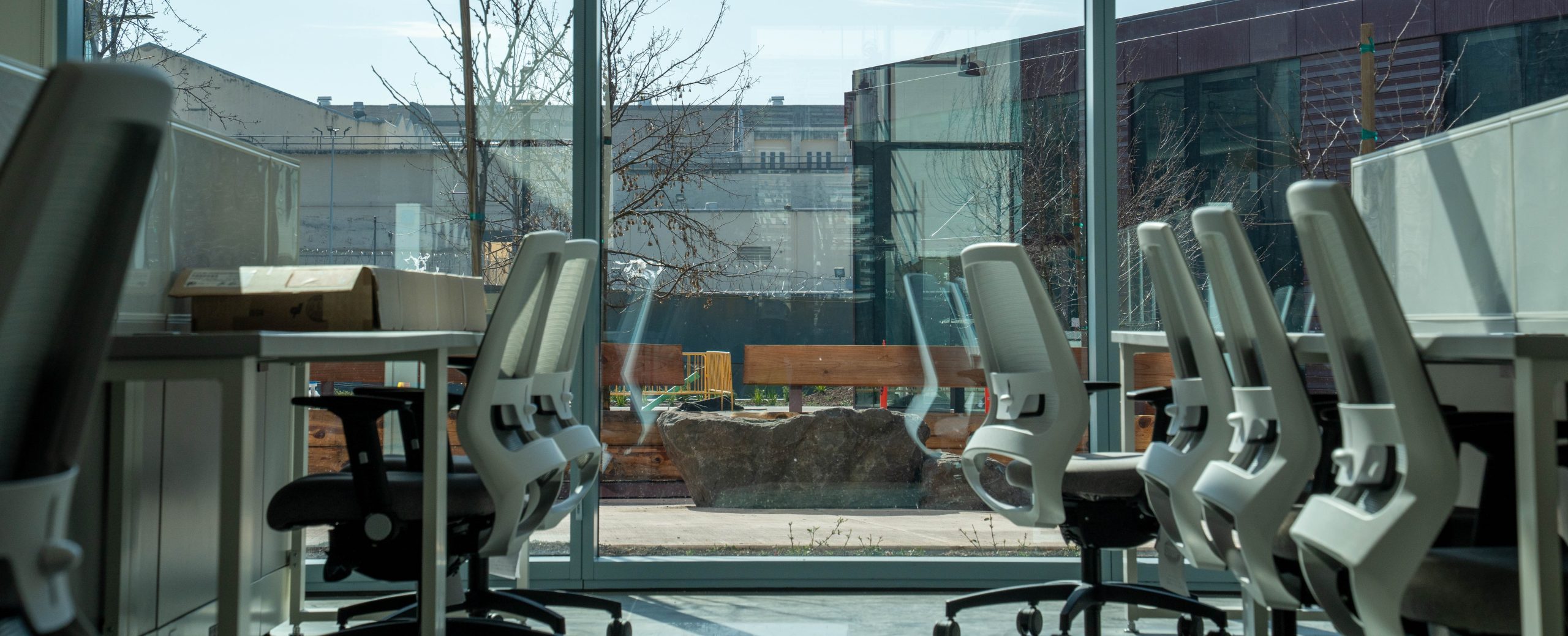
San Quentin Learning Center
What you need to know
The California Department of Corrections and Rehabilitation (CDCR) is announcing the completion of its innovative educational complex – the San Quentin Learning Center. The project nearly triples classroom space, provides new staff meeting areas, and includes a one-stop reentry program.
Despite the challenges of construction in an occupied prison, the 80,000 square-foot sustainable complex was completed in just 18 months. A ribbon cutting celebration for the complex was held on Feb. 20, 2026. Full operations will begin in spring 2026.
The bigger picture
The Learning Center is San Quentin’s centerpiece project as the institution moves to transform into a rehabilitation center. The Center is designed to improve the lives of and working conditions for employees and the incarcerated population, creating a more effective justice system that builds safer communities. The project builds on important concepts for culture change, including normalization, which aims to bring life in prison as close as possible to life outside of prison. The more life in prison resembles life in the community, the easier it will be for people to transition and adjust to life in the community upon release.
Using a progressive design-build process, a team comprised of McCarthy Building Companies, Inc., DLR Group, and Schmidt Hammer Lassen designed and constructed the complex, which is sustainable and aiming for LEED Silver certification. Former warehouse Building 38 was demolished and the new complex constructed. The total project cost of $239 million is funded through a lease revenue bond.
“Three years ago, I stood here and promised to turn this symbol of the old system into the crown jewel of a new one. Today, with the opening of this Learning Center, we are proving that rehabilitation and public safety go hand in hand – and that hope is a powerful tool for safer communities.”
Gov. Gavin Newsom
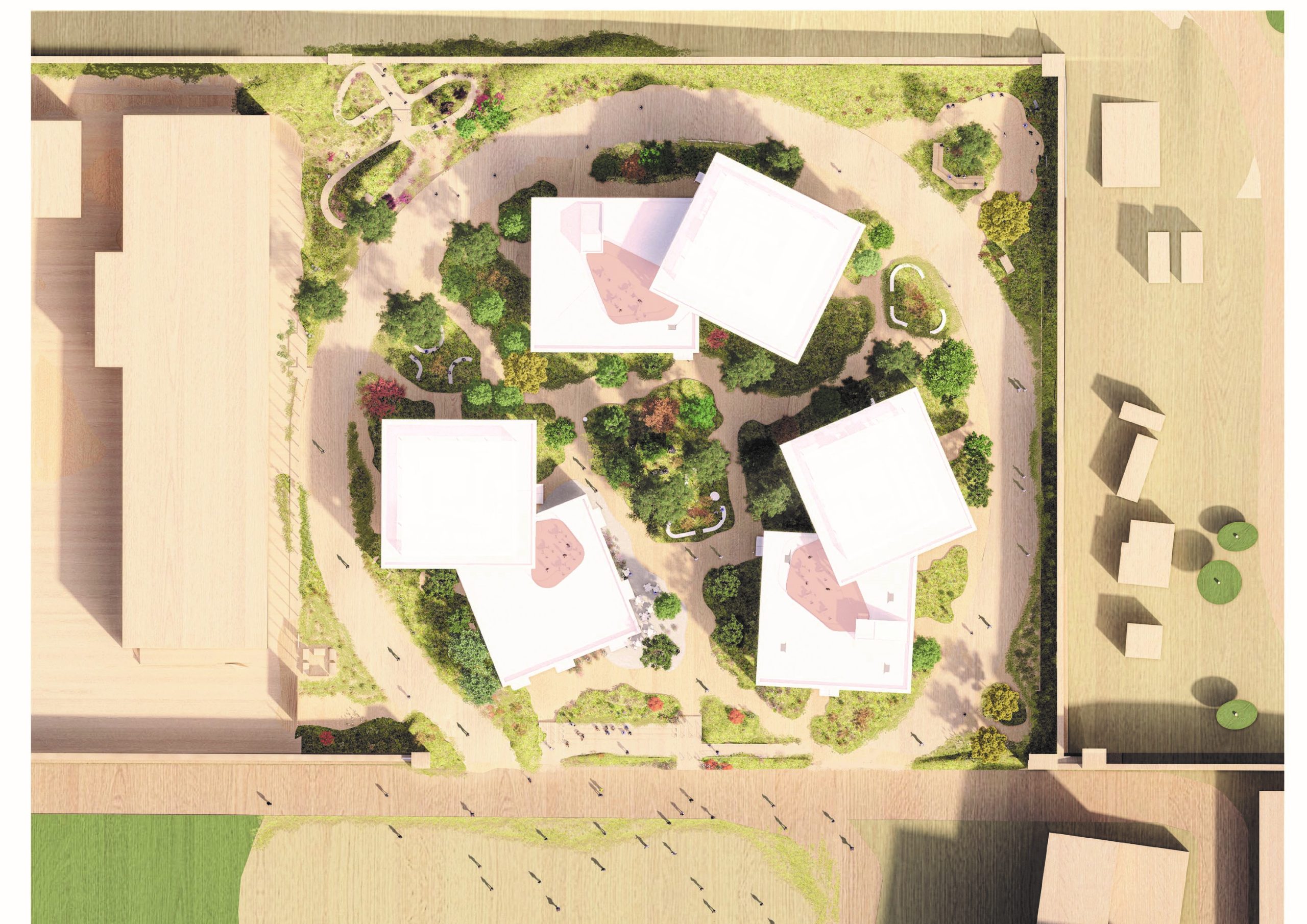
The construction includes four new buildings.
- Building A: A technology and media center, equipped for coding classrooms, podcast studios and multi-media production spaces. Upper levels accommodate general classrooms and staff facilities. A reentry center is located on the ground level.
- Building B: Home to a comprehensive library and classrooms. Upper levels include classrooms and administrative and staff offices.
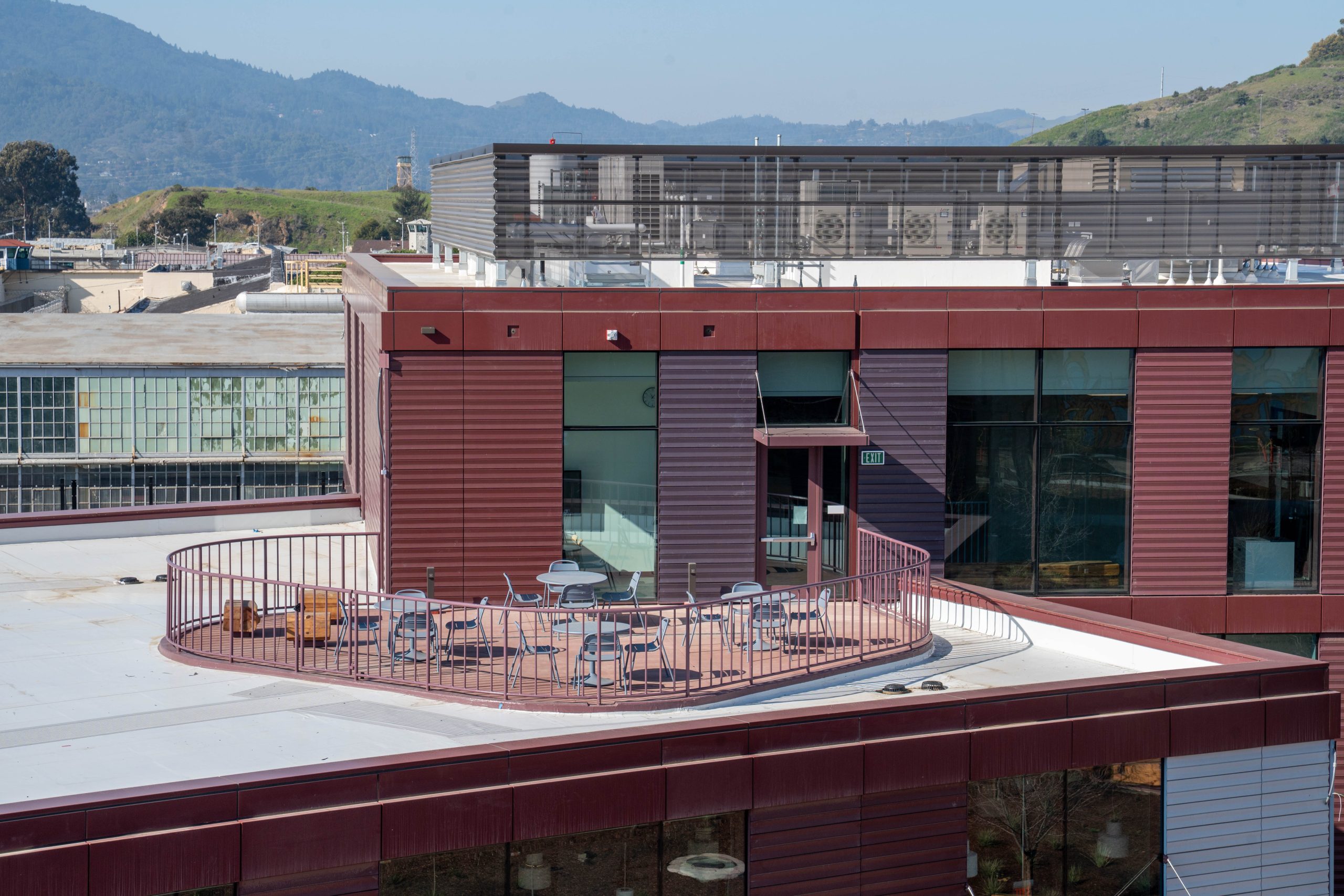
- Building C: A large multi-purpose gathering space, cafe, and a store. The upper level contains general classrooms with exterior access to an outdoor learning space.
- Building D: Security processing area into the new complex for staff and volunteers.
“The establishment of this new rehabilitative center marks a pivotal step toward fostering genuine transformation in our correctional system,” said CDCR Secretary Jeff Macomber. “We are not just rebuilding walls but constructing pathways to restoration and rehabilitation for those in our care.”
Transformation Timeline
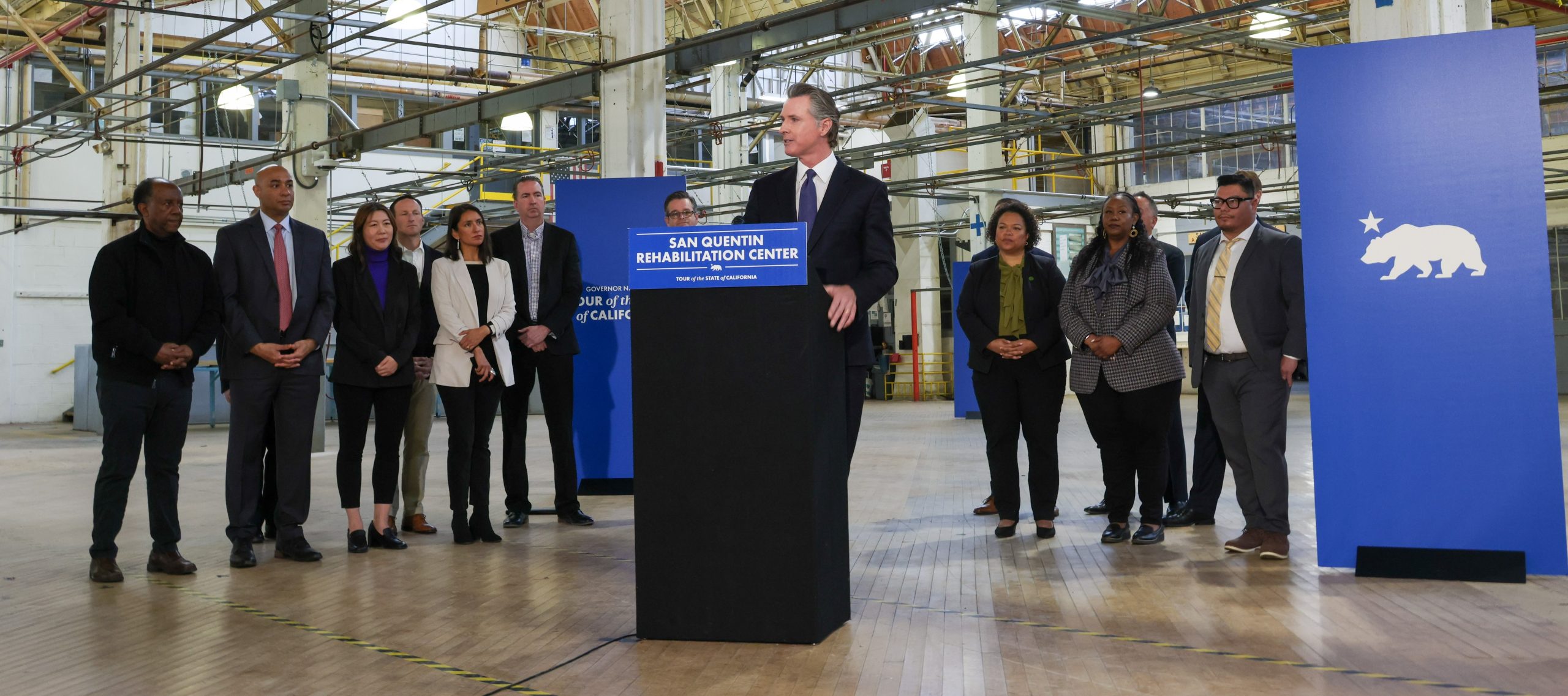
March 17, 2023
Governor Newsom unveils plans for the San Quentin Rehabilitation Center at a press conference titled, "Historic Transformation of San Quentin State Prison."
Read the release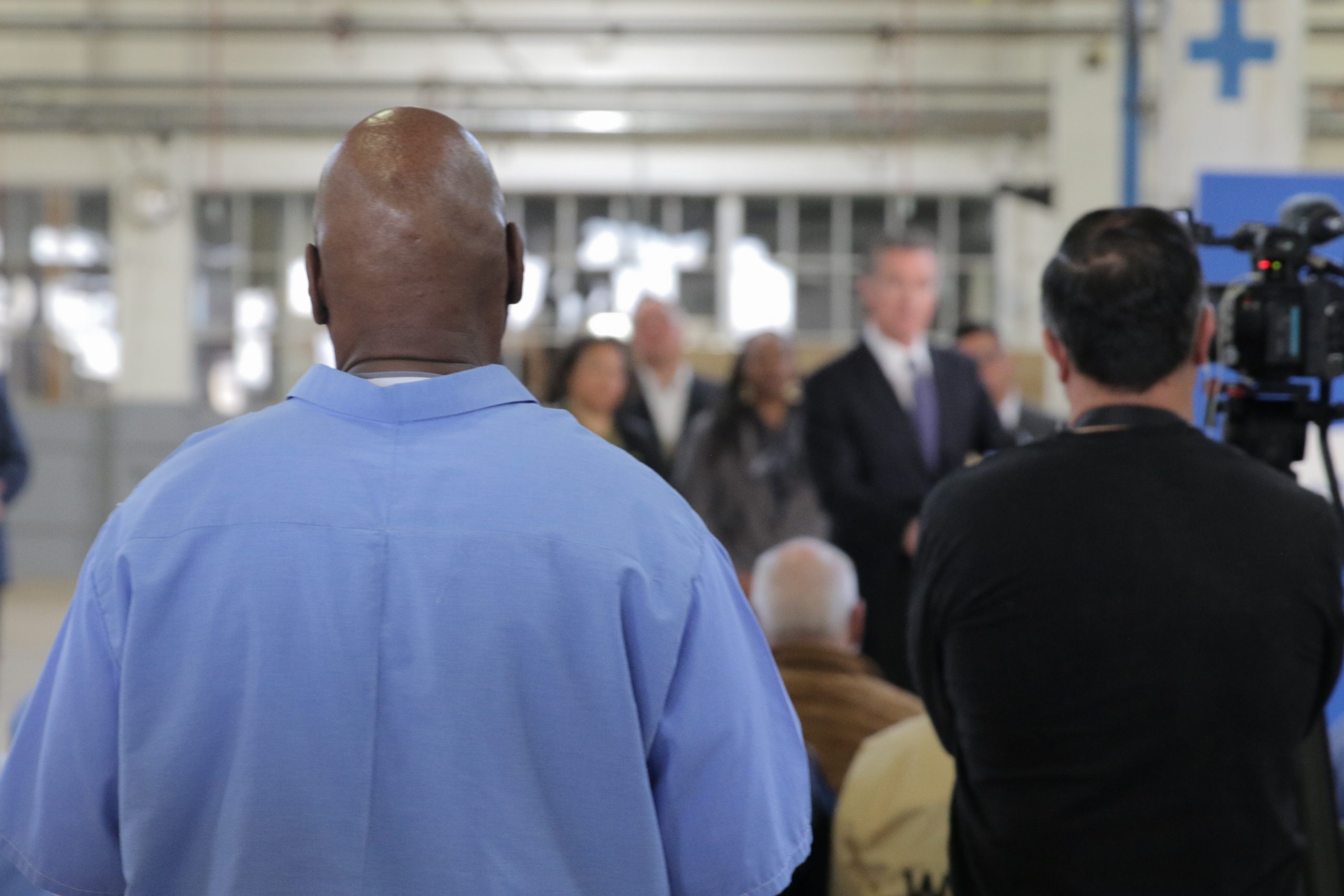
May 5, 2023
Governor Newsom establishes the San Quentin Transformation Advisory Council to guide the center's development.
Meet the Advisory Council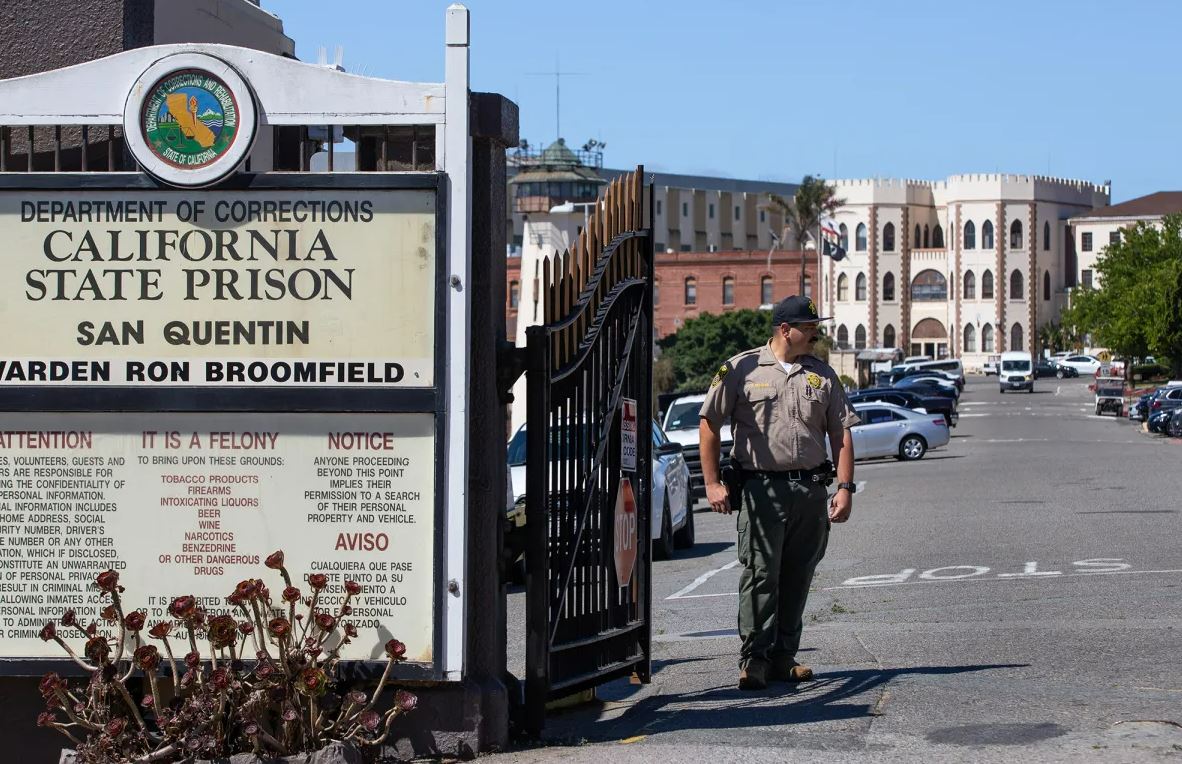
July 10, 2023
San Quentin State Prison is officially renamed the San Quentin Rehabilitation Center following the passage of AB-134.
AB-134
July 2023
CDCR selects McCarthy Building Companies, Inc., DLR Group, and Schmidt Hammer Lassen to lead the design-build team, aligning with the Advisory Council's recommendations for an integrated approach. The project budget is initially set at $360 million in the Budget Act of 2023, later optimized to $239 million by December 2023.

August 2023
Design sessions commence, focus on innovative solutions tailored to the center's rehabilitative mission.
November 2023
Pre-design activities such as safety protocols and cost management are finalized.

January 2024
The San Quentin Advisory Council publishes the "Reimagining San Quentin" report, advocating for the transition to a Rehabilitation Center.
Read the Press Release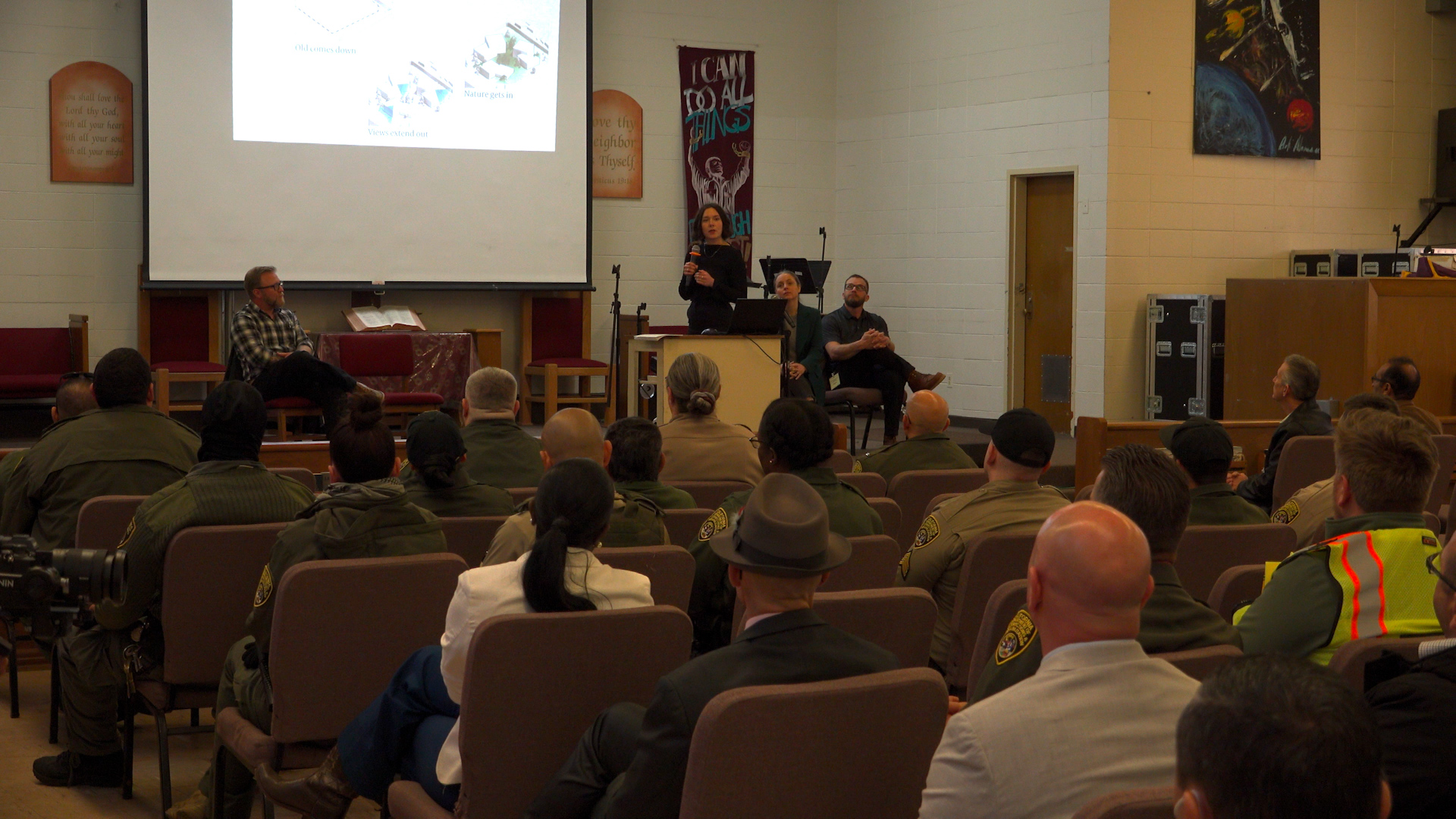
March 2024
Information sessions are conducted with San Quentin staff and the incarcerated population to ensure transparency and engagement. The State Public Works Board greenlights the initial phase of construction, prioritizing security measures, utility relocation, and demolition.

May 2024
Demolition begins on Building 38.

Summer 2024
Temporary construction barriers are planned to be erected, utilities rerouted, and Building 38 continues to be demolished..

August 2024
Demolition of Building 38, a former warehouse, complete.

August 26, 2024
Demolition of the south interior wall begins.

Fall 2024
CDCR seeks approval from the State Public Works Board to advance into the construction phase.
November 2025
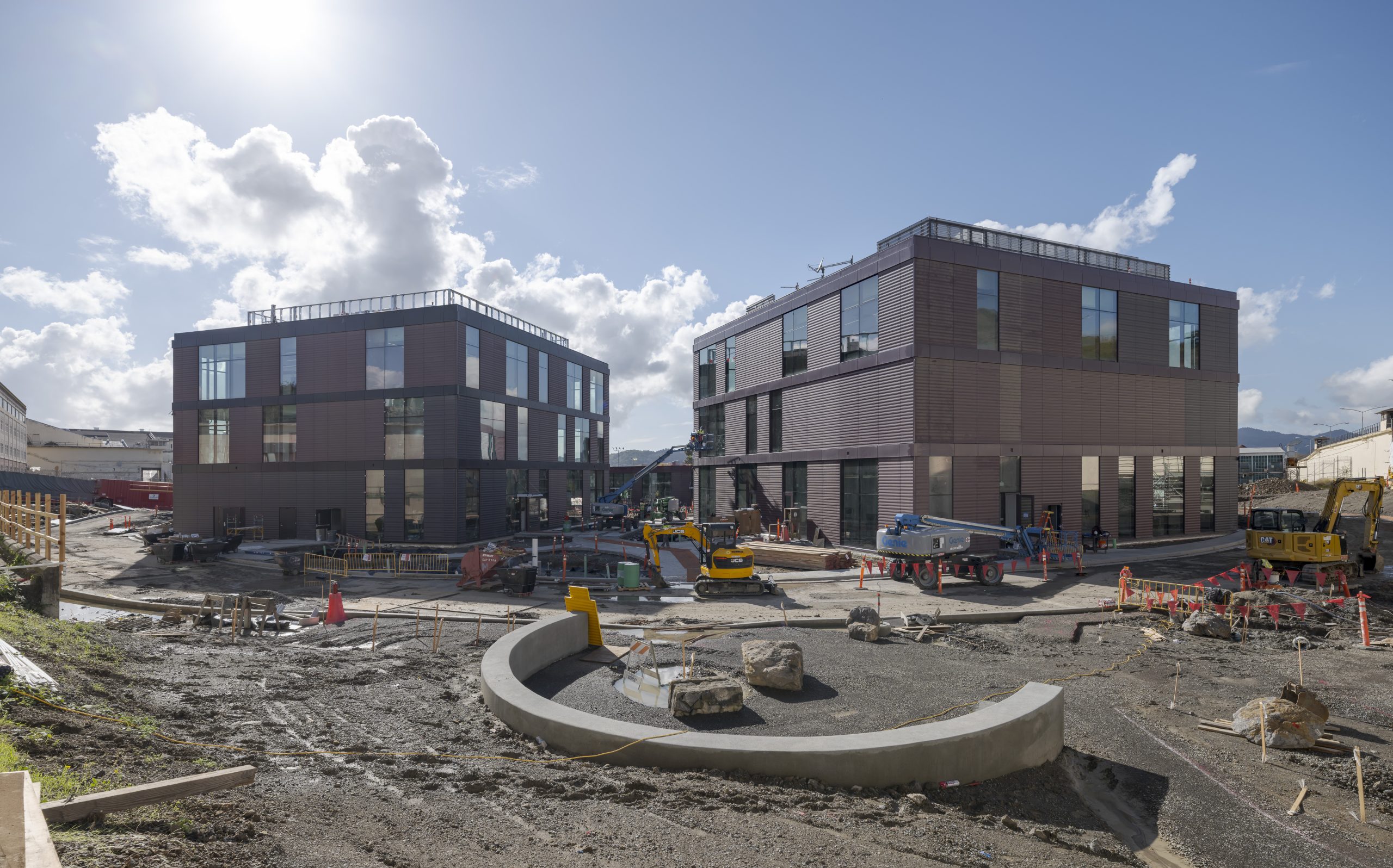
Progress continues to move forward as scheduled.
February 2026
The ribbon cutting ceremony for the new San Quentin Learning Center was held on Feb. 20, 2026.
Read the Press Release- Previous slide
- Next slide
Learn more about the San Quentin Rehabilitation Center transformation.
Frequently Asked Questions
CDCR is launching a large-scale effort to improve the lives of employees and incarcerated people and create a more effective justice system that builds safer communities. The new education and vocational center project will change the feel of the institution and offer opportunities that will positively impact the lives of everyone who lives and works at the institution.
The mission of San Quentin Rehabilitation Center aims to facilitate rehabilitation and successful reentry to benefit public safety. It is also the goal of the California Model, which aims to build safer communities through rehabilitation, education, restorative justice, and reentry.
More than 50 meetings were conducted to gather stakeholder input including from incarcerated people and SQRC staff. The consensus was a priority on flexible space for education programs, a focus on technology needs, staff space, a place for reentry programming and resources such as a library, café and store.
The buildings will have options including large classrooms, medium classrooms, small meeting spaces, library, reentry meeting space, various studios, work areas, cafe, and a multipurpose room.
The design was inspired by a place where learning happens beyond classroom boundaries, blurring the lines between indoors and outdoors. The local climate and respect for historical and social heritage of San Quentin were also considered. The design fosters community and celebrates diversity and inclusivity. Moreover, it supports and elevates learning and development at the essence of rehabilitation.
The buildings are being constructed in accordance with green-build, high-performance design principles. The design team is accounting for environmental impacts in their design and looks to create a building which people would feel comfortable, both physically and mentally.
The project is using cutting-edge technology to assist with every aspect of the design. A 3D model is used to assist preconstruction coordination The designers used technology to ensure that the building accounts for year-round solar effects, wind comfort and views.
In the northeast corner of the walled perimeter at the current location of Building 38 (warehouse) which will be demolished.
The project funding was appropriated in the Budget Act of 2023 utilizing lease revenue bonds.
The final list of programs has not been determined and will be finalized prior to the completion of construction in early 2026.