

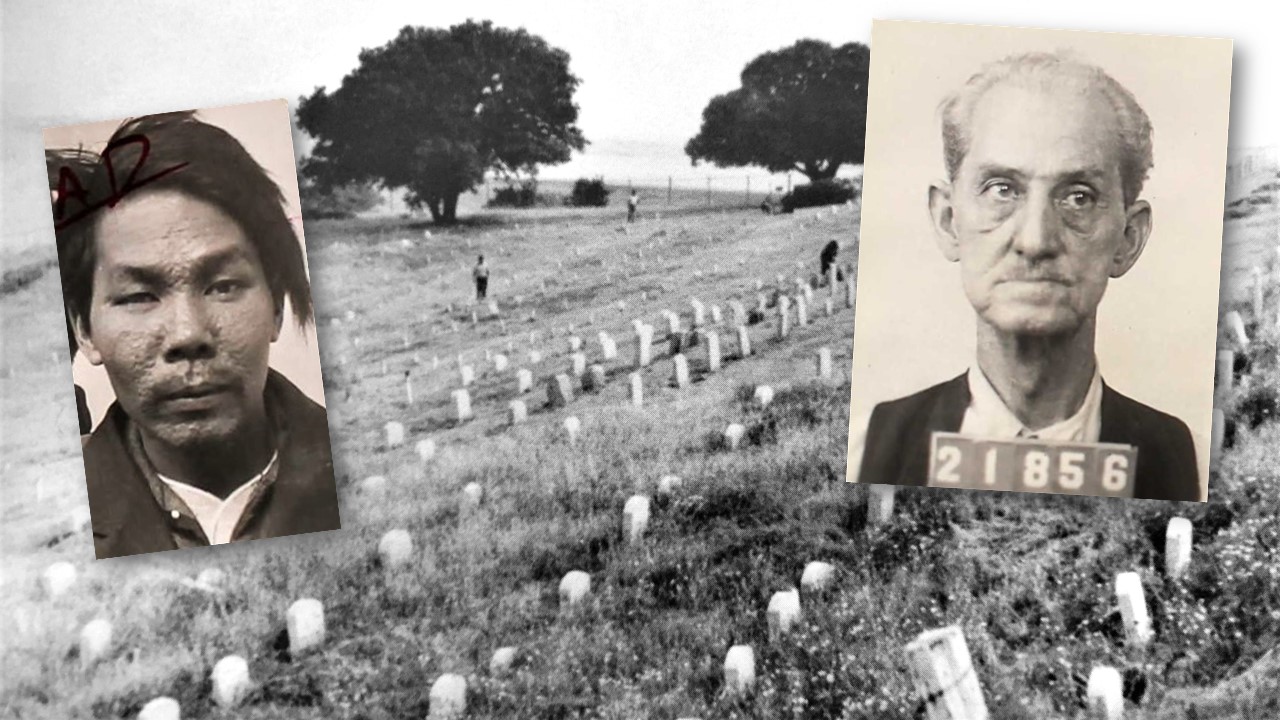
The last names appearing on the lists for each prison cemetery at San Quentin and Folsom are Leong Ying and former missionary William Young. Ying killed 11 people, including three children. Young, a former missionary, made headlines decades earlier for killing a New Jersey woman. These are the stories of two men buried in prison cemeteries marked only with their inmate numbers.
(Editor’s note: Ying and Young are the last of a five-part series of looking closer at people buried in the San Quentin, Folsom prison or the Preston School of Industry cemeteries. Read part 1, part 2, part 3, or part 4.)
Ying, Solano ranch slayer, kills 11 ‘for revenge’
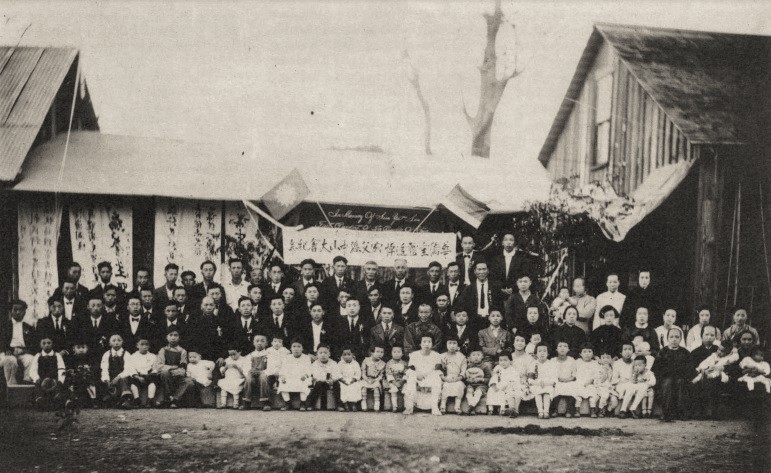
On Aug. 22, 1928, farmhand Leong Ying grabbed a hatchet and rifle, turning the deadly weapons on those living and working at a Solano County ranch near Fairfield.
“After shooting several people, he walked through an orchard and attacked the family of (ranch superintendent) Wong Gee,” according to newspaper accounts of the crime. “(His) wife was shot as she came to the door shortly after her husband was killed.”
Ying fled the ranch in the superintendent’s car.
On-the-run in victim’s car
Using his victim’s vehicle, he traveled to the Chinese quarter in Nevada City. When questioned by police, he was calm and gave “so straightforward an alibi that they let him go,” according to news accounts.
A short time later, the sheriff wasn’t convinced and decided to personally question the suspect. When the sheriff arrived at the Chinese quarter, Ying was already gone.
Posse tracks Ying to Empire Mine
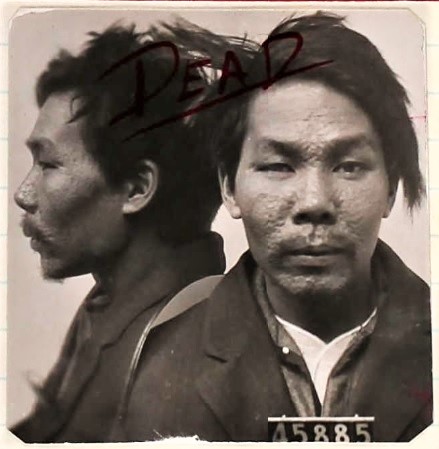
Gathering a posse, the sheriff tracked Ying to a barn at the Empire Mine near Grass Valley. According to accounts, Ying “offered no resistance, confessed to the murders and asked for narcotics.”
He said he killed the ranch superintendent, his wife and their three children “for revenge.”
Ying told Solano County Sheriff John Thornton he had been evicted from the ranch for making unwanted advances on the superintendent’s 15-year-old daughter, Nellie. He shot Nellie in the back as she attempted to run. She died five days later.
In all, the 30-year-old Ying killed 11 people.
He was tried and convicted, sentenced to hang at San Quentin on Nov. 9. When the judge pronounced his sentence, “the stillness of the superior courtroom was shattered by (Ying’s) loud laugh.”
Received at the prison Sept. 1, 1928, he was assigned number 45885. About six weeks later, Ying was dead by suicide.
“He was found dead on the floor of his cell (Oct. 23) when guards came through the death house for the 11 p.m. inspection,” according to newspapers at the time.
After the murders, the small Chinatown in Suisun was deserted.
“As for Chinatown, that was its end. In about six months, no one was living there. Little by little, the many buildings were either torn down or disintegrated,” according to the December 1985 issue of the Solano Historian.
Ling was buried at San Quentin prison cemetery.
Young, former missionary, ends up at Folsom
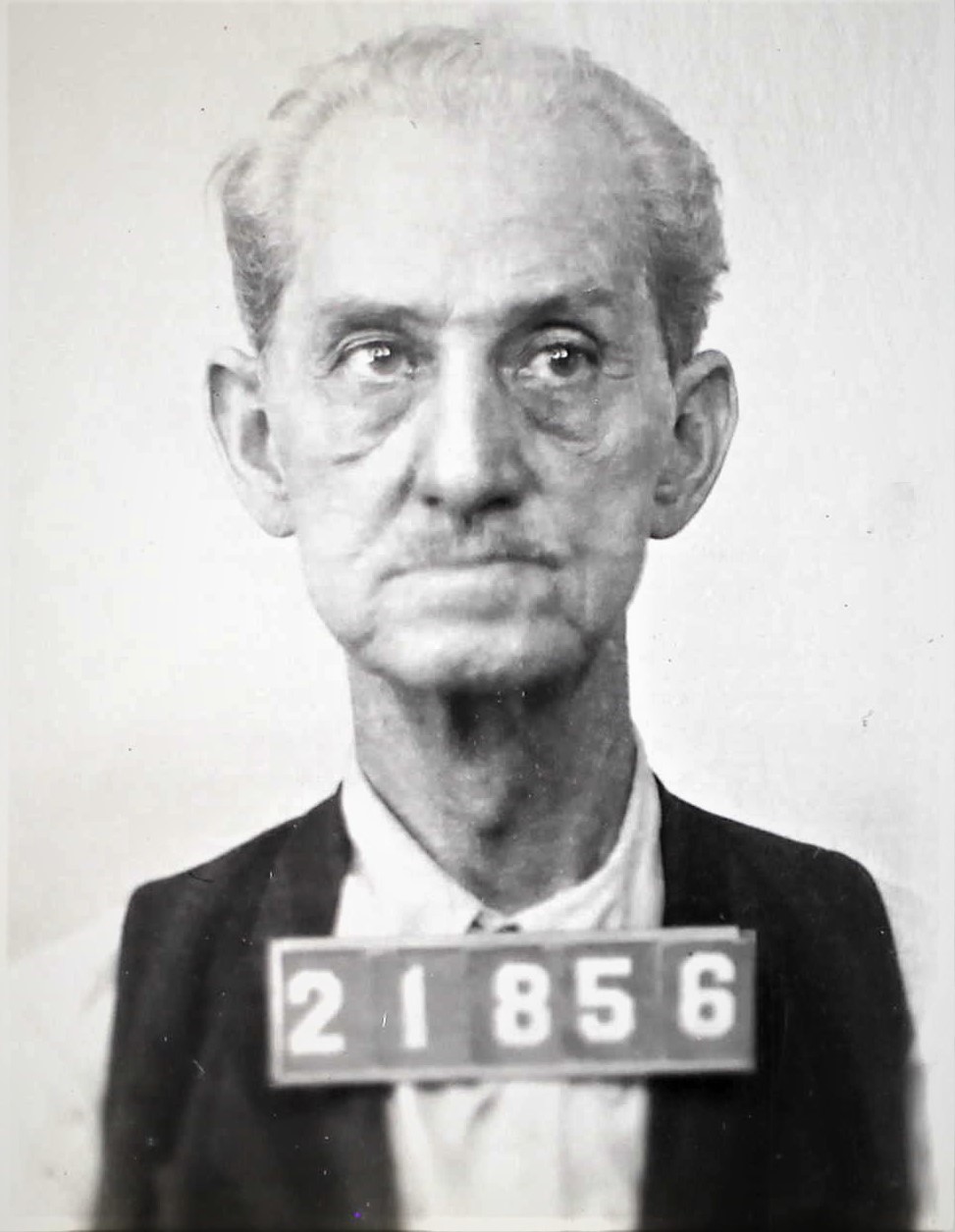
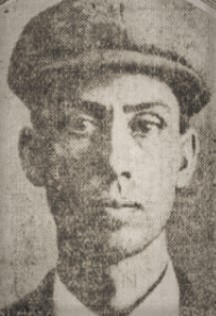
William Hooper Young was 67 when he was sent to Folsom State Prison as a sex offender. Received July 20, 1938, he was assigned number 21856.
Young was no stranger to prison, having served a sentence in New York’s Sing Sing Prison for second-degree murder under the number 54020.
Born in 1871 in Salt Lake City, Utah Territory, he was the grandson of Brigham Young and son of John Willard Young, a prominent businessman. After becoming a church elder in 1891, William was sent on Mormon missionary work in New York, New Jersey and Washington, D.C.
Eventually, he strayed from the church, living in the Pacific Northwest as well as Chicago.
Woman killed, Young stands accused
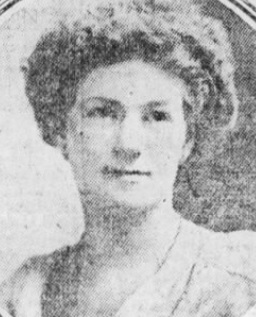
In September 1902, the body of a young woman was found in a New Jersey barge canal. Stabbed and beaten, police identified her as Anna Pulitzer. During their investigation, authorities spoke to a coachman who said he drove Pulitzer and a young man to an apartment.
That apartment belonged to William’s father, who was away on business at the time. Police tracked William to a park in Connecticut. He admitted picking up Pulitzer and taking her to his father’s apartment, but claims she was killed by another man with an overdose of chloral hydrate crystals.
His story didn’t hold up. Detectives found the victim’s bloody clothing and jewelry in a trunk Young had shipped to his home in Chicago. They also found letters addressed to William Hooper Young in the same trunk, positively identifying the trunk was his.
In 1903, Young pleaded guilty to second-degree murder, receiving life without parole in Sing Sing prison.
He managed to avoid the death penalty because medical experts believed his morphine addiction and alcoholism caused insanity. This eventually led to his parole in 1924.
Four years later, William Young turned up in California, allegedly trying to track down family members.
While his death date isn’t listed, it was sometime after 1938. Young was buried in the Folsom prison cemetery.
Story by Don Chaddock, Inside CDCR editor
Learn more about California prison history.
Follow CDCR on YouTube, Facebook, X (formerly Twitter). Listen to the CDCR Unlocked podcast.
Cemetery Tales
Cemetery Tales: Harry Stewart, Fresno embezzler
In our final Cemetery Tales of the season, we look more closely at Harry Stewart, early 1900s embezzler, thief, and…
Cemetery Tales: Meet JE McKim, thieving drifter
In our third installment of this month’s Cemetery Tales, we look at a drifter with a long criminal record dating…
Cemetery Tales: Raymond Blade and Henry Hunt
The second installment of this month’s Cemetery Tales looks at two incarcerated people at different stages in their lives when…

Cemetery Tales: John Beebe and Joseph Balado
The first Cemetery Tales story for 2025 looks at the lives of career criminal John Beebe and Joseph “Jose” Balado,…

Cemetery Tales: Estranged husband and a robber
In this month’s fifth installment of Cemetery Tales, we examine the stories of an estranged husband and a robber who…
Cemetery Tales: The farmer and a self‑appointed king
Our fourth Cemetery Tales looks at farmer-turned-double-murderer George Biggs and Judah Benjamin, a self-proclaimed king. Both men ended up in…