

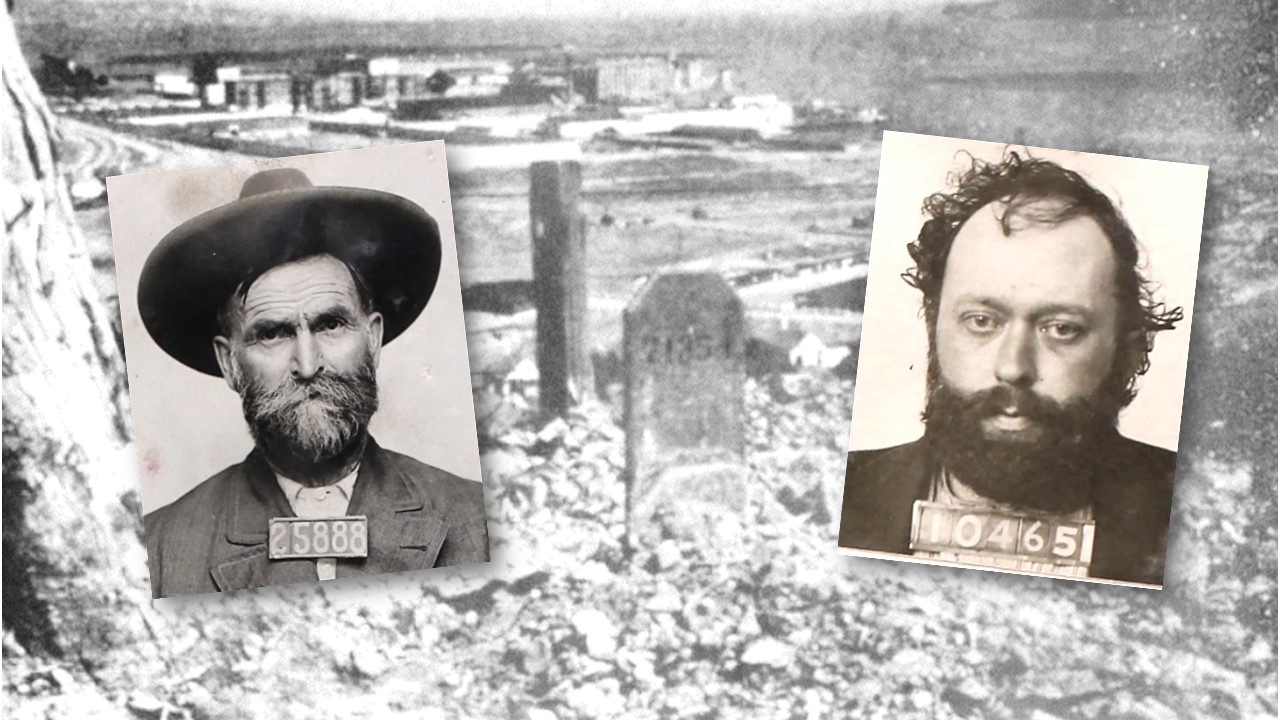
Our fourth Cemetery Tales looks at farmer-turned-double-murderer George Biggs and Judah Benjamin, a self-proclaimed king. Both men ended up in the cemeteries at Folsom and San Quentin.
Farmer takes issue with potatoes


Farmers George Biggs and Francis Abraham “Abe” Montee shared a road but not much else. When one decided to turn dirt for a plot of potatoes, the other took offense.
“Biggs and Montee were neighbors in the sand wash district east of Anaheim. Montee plowed part of the road on his side and planted it with potatoes. (Meanwhile,) Biggs cut trenches crosswise into the road on his side,” according to the Anaheim Register, July 17, 1912.

The trenches were meant to force Montee to drive on his own side of the road.
“The difficulties reached a culmination April 12 when Montee was shot (while on the roadway) in his wagon. He jumped out and grappled with Biggs, who shook him off and took a shovel to Montee’s head,” according to the newspaper.
A teenage boy was sitting with Montee in the wagon and the only witness to the altercation.
“Biggs came up and a quarrel started over Biggs having dug holes in the roadway,” said the teen. “Biggs pulled his gun and shot Montee while he was on the wagon seat. He fell to the ground. (Then) they began struggling. Mrs. Montee came screaming from the house. (That’s when) I became frightened (so I) jumped down and ran away.”
Wife rushes to husband’s aid
As Catharine Montee rushed to assist her fallen husband, Biggs swung the shovel, landing a fatal blow to her head.
Throughout police questioning as well as the trial, he claimed his actions were self-defense.
“It was kill or be killed,” he said.
The victims were in their mid-40s and had no children. They were buried in the Evergreen Cemetery in Los Angeles.
Biggs was found guilty of first-degree murder, receiving a life sentence.
“I could not have expected any different verdict,” he said to reporters after sentence was pronounced.
He was assigned number 25888 when he was received at San Quentin July 27, 1912. Nine years later, Sept. 21, 1921, Biggs passed away. He was buried at the San Quentin Cemetery.
Letter-writing self-proclaimed king tried for murder

Judah Benjamin was arrested for killing an Oakland police officer after threatening letters were received by the chief of police, newspapers, and other organizations. The letters were signed, “The One Who Killed Gushe.”
The bizarre case made headlines in 1916 after police officer Robert Gushe was killed by an unknown assailant. Letters were anonymously sent to the police, with the writer claiming responsibility. The writer boasted other officers would be killed as well.
During Gushe’s funeral, witnesses said they spotted Benjamin among the public mourners. They said he even spent time peering into the casket. Photos taken during the funeral seemed to back up the claim, but officials said they couldn’t be absolutely positive.
Police find manifesto
Later, Benjamin happened to be picked up on other charges. While he was taken out for exercise, a search of his cell turned up a hand-written manifesto.
Benjamin claimed he was the “king of kings” and the “new messiah.” He also claimed if anyone tried stopping him from earning a living, it was his divine right to slay the person standing in his way. Using handwriting experts, they found the manifesto matched the threatening letters.
The defendant argued with his attorneys, the judge, witnesses, and experts, often representing himself after firing his attorneys. After numerous delays, outbursts, and stalling tactics, Benjamin was sentenced in 1917 to serve a life sentence for murder.
While being processed for intake, Benjamin attacked the San Quentin prison barber. The warden requested a sanity hearing with experts finding him insane. But Benjamin would have none of it, demanding a jury trial for his sanity. Well spoken, he persuaded the jury to find him sane. During his incarceration, he was shuttled between Folsom and San Quentin for various medical treatments.

Authorities weren’t even sure Judah Benjamin was his real name. In 1934, he passed away at age 52 at Folsom State Prison.
Story by Don Chaddock, Inside CDCR editor
Office of Public and Employee Communications
Learn more about California prison history.
Follow CDCR on YouTube, Facebook, X (formerly Twitter).
Cemetery Tales
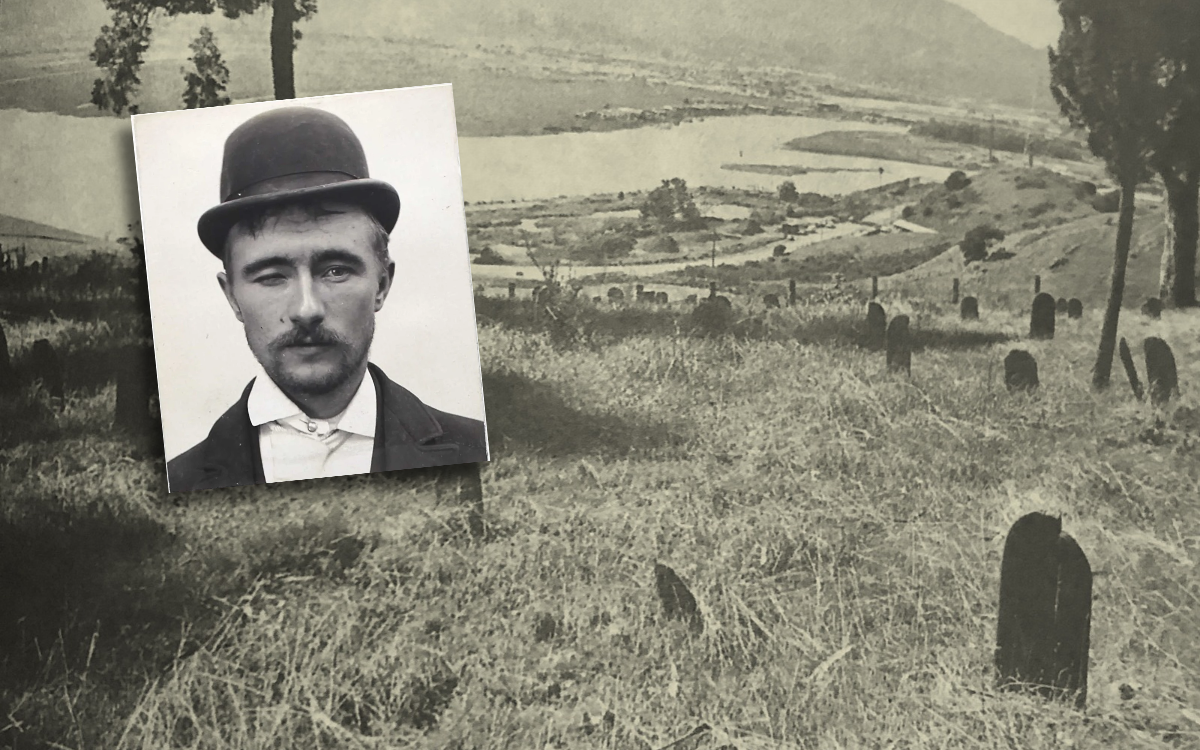
Cemetery Tales: William Fredericks, aka The Mariposa Robber
The fourth installment of the 2026 Cemetery Tales looks at William Fredericks, also known as the Mariposa Robber. Like all…
Read More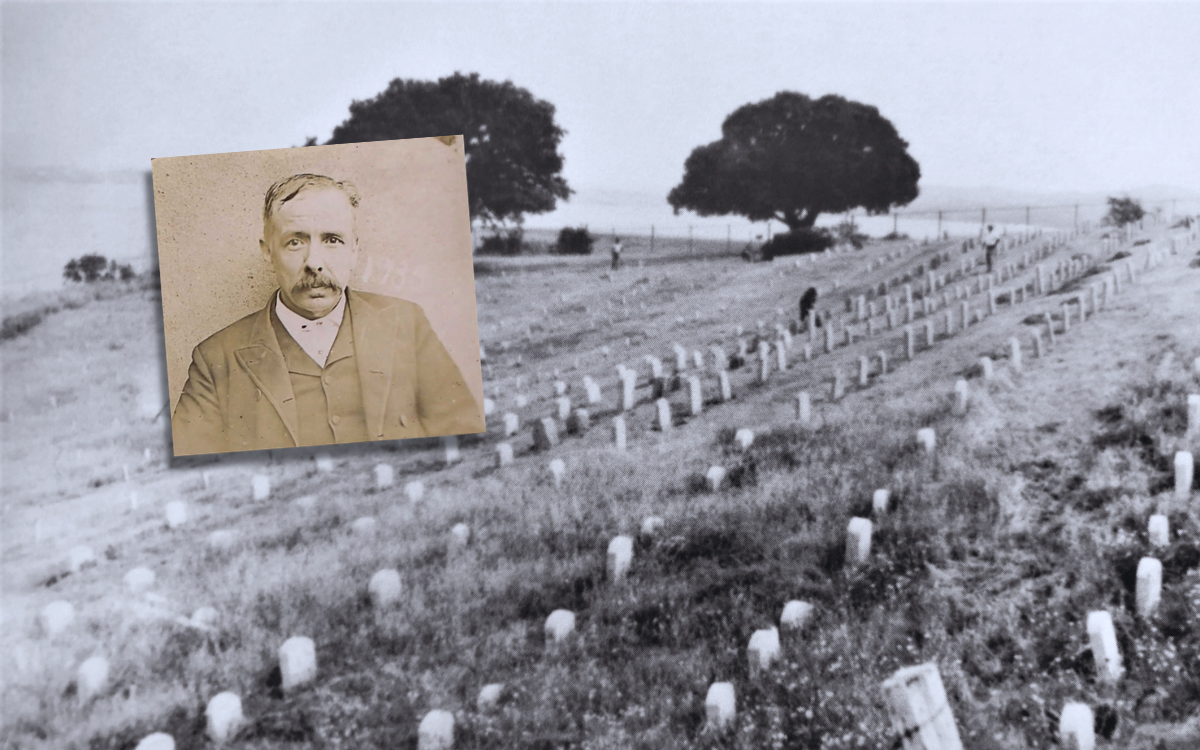
Cemetery Tales: William Clark, alias Sacramento Bill
The third installment of the 2026 Cemetery Tales takes a closer look at William Clark, alias Sacramento Bill. He was…
Read More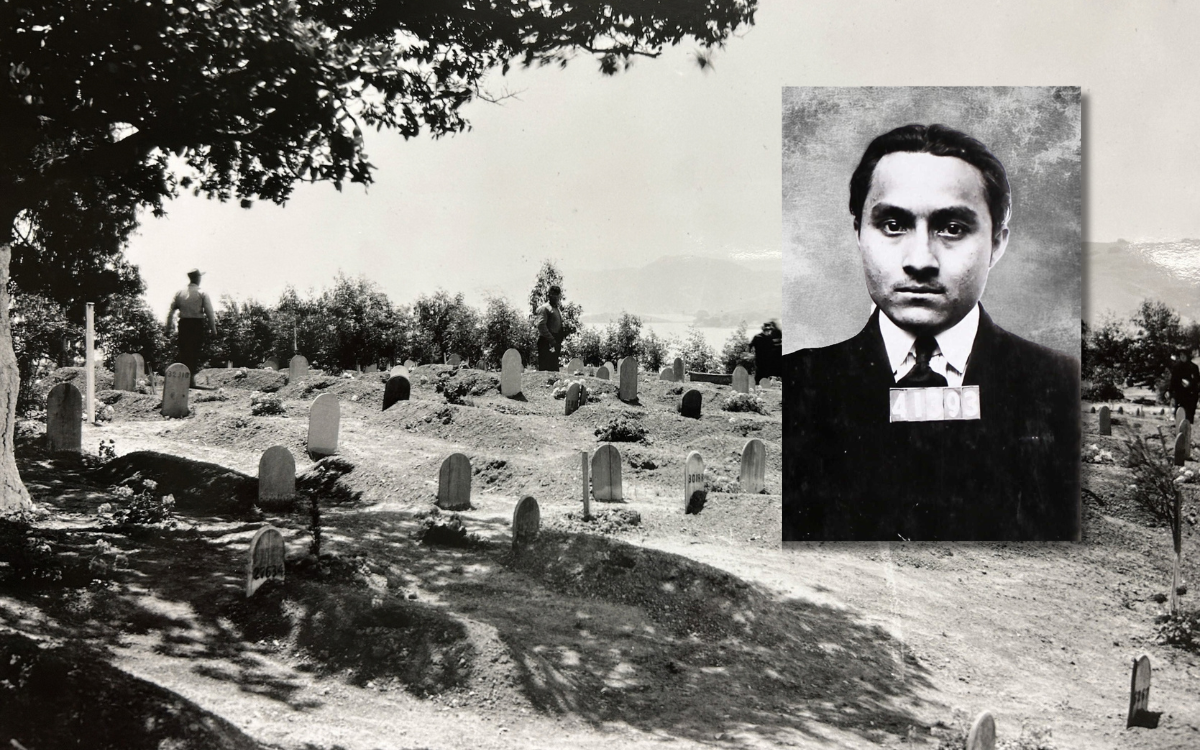
Cemetery Tales: Miguel Bravo meets end at SQ
The second installment of Cemetery Tales looks at Miguel Bravo, a 23-year-old who ended up in San Quentin in 1925.…
Read More