

The third installment of the 2026 Cemetery Tales takes a closer look at William Clark, alias Sacramento Bill. He was in and out of San Quentin and Folsom State Prison, in addition to stints in county jails. The prison register also mentions he served time at Nevada State Penitentiary in Carson City.
With this information, we began digging into California prison records and newspaper archives. We also reached out to Nevada State Archives regarding his record in the Silver State.
Early start with criminal career
The first newspaper story regarding Sacramento Bill dates back to February 1872.
“William Clark and John Sevado Dominguez pleaded guilty to a charge of malicious mischief and fined $20,” reported the San Francisco Chronicle, Feb. 21, 1872.
A few months later, he was again in trouble.
“The police made a descent upon the Barbary Coast rangers Tuesday night and arrested a number of them and locked them up in the City Prison on a charge of vagrancy,” reported the San Francisco Chronicle, May 23, 1872. “A man named Baker, charged with soliciting sailors, occupied the same cell with William Clark and John Williams, two of the rangers, who made a brutal assault upon him. Sam Rainey, the prison-keeper, was compelled to go to the rescue and relieve him from their clutches.”
What was a Barbary Coast ranger? San Francisco’s redlight district grew from the population explosion during the Gold Rush. Some of those who frequented the area were called the Barbary Coast rangers. The redlight district was notorious for hold-ups, prostitution, gambling and attacks targeting sailors and merchants, earning the nickname Barbary Coast. Learn more at the Barbary Coast Trail website.
“John Williams, found guilty of aiding William Clark to make a brutal assault on a fellow prisoner in the City Prison, was sentenced to pay a fine of $100 or be imprisoned in the County Jail for 50 days,” reported the San Francisco Call, May 24, 1872. “William Clark, the principal assaulter in this case, was sentenced to pay a fine of $200, with the usual alternative.”
Clark would have been approximately 22 years old at the time.
Clark leaves damage in wake
A few months after being released from the City Prison, Clark again found himself in trouble with the law.
“William Clark, alias Sacramento Bill, was arrested on a charge of making an assault on Robert Dugan, with intent to rob him,” reported the San Francisco Examiner, Oct. 21, 1872.
News accounts claim Dugan was “a little too strong (for Clark) and possessed powerful lungs. Dugan caught hold of Clark and yelled until an officer arrived,” reported the San Francisco Chronicle, Oct. 21, 1872.
Two days later, the newspaper reported he was found guilty and sentenced to pay a $300 fine or go to San Quentin for 150 days. Since there is no record of him serving time at San Quentin in 1872, we can assume he paid the fine.

Just a year later, Clark was convicted of petty larceny and sentenced to six months in the county jail. He escaped, was recaptured and sent to Folsom State Prison May 12, 1874, to serve 30 months. His crime is listed simply as “felony.” He was given number 5990.
The record also notes he had previously served a sentence at Folsom under the number 112. He was discharged July 5, 1876.
Escalating crimes
After his release, his crimes continued escalating.
He was sent to San Quentin May 1, 1878, on a burglary conviction out of San Francisco County to serve four years. He was then transferred to Folsom State Prison Sept. 6, 1880. Clark was released May 1, 1881.
One newspaper account claims Clark and Mike “French Mike” Dumas were arrested in Sacramento in April 1882 “on suspicion of having committed a stage robbery.” It’s unclear if he was actually charged with a crime but it was enough for Clark to decide to leave California.
Stint in Nevada State Prison
Tiring of the Golden State, Clark made his way to the Silver State.
In May 1883, shortly after arriving in Virginia City, he was arrested for stealing a watch and cash from a would-be suitor to Agnes Miller. Police also arrested Miller as an accomplice in the crime, believing the couple set up the young man.
“Both of the parties charged with the robbery are well known to police, having skipped into this town from Reno about three weeks ago. They had been charged with robbery (in Reno) but escaped conviction,” reported the Nevada State Journal, May 19, 1883. “It is evident Sacramento Bill and Miss Agnes Miller are not valuable acquisitions to any well-regulated community. (They are) not particularly desired in Virginia (City) at the present time.”
Clark was received Jan. 23, 1885, at Nevada State Prison in Carson City and assigned number 317. He was sentenced to five years out of Ormsby County on a burglary conviction. His prison records indicate the 35-year-old Clark was not married, weighed 158 pounds and stood 5 feet 7 inches tall. No occupation is listed. Another note states he “served in San Quentin.”

“Drinks moderately and was not drunk when crime was committed,” his Nevada prison record states. “Does not use opium or morphine.”
He was discharged Nov. 28, 1888, after serving his sentence.
Seeing his time in Nevada was done, Clark and Miller pulled up stakes and headed to Sacramento.
Shooting in Penryn
The Pacific Bee, May 16, 1889, gives a detailed description of Clark’s final crime, earning him a lengthy sentence at Folsom State Prison.
During the evening of May 3, the new operator of the Buckeye saloon wanted to throw a dance. So, he gave some money to Frank Dailey, alias Brown, to travel into Sacramento to gather some people.
“Daily went to Sacramento to get a fiddler and the girls. I gave him money with which to pay their fares. He did not get a fiddler but brought up Rosa Gallagher, Lillie ‘Slivers’ Jefferson and a man named (Frank) Blakely,” said William Howland, saloonkeeper. “Dailey and Clark arrived together and appeared to be friends. (Luckily,) Mr. Saylor played the fiddle, and we had a social time.”
After some merriment and getting ready to close, Howland announced the evening was his treat.
“The next I knew a gun was fired and Dailey clasped his hands over his stomach. There had been no quarrel over (Miller), as has been stated, and nothing to indicate trouble. Except, during the evening, Clark said to me, ‘(Dailey’s) a mug.’ At another time, when Dailey was standing at one side of the room talking, Clark drew a pistol, snapped it, and then walked up to the bar. Soon after, the shooting occurred,” Howland recalled.
Blakely described his friendship with Dailey as having lasted two or three years after they met in Carson City, Nev.
“I came to Buckeye on Dailey’s invitation,” he explained on the witness stand. “Lilly Jefferson and Rose Gallagher were with us. I had known Clark two or three months. It seems Dailey and Clark did not agree. In fact, Dailey told me in Sacramento they did not (get along).”
Self-defense or murder?
Multiple witnesses said Clark was “pretty well gone” on liquor at the time of the shooting.
“A short time before the trouble, (Clark) pointed (the gun) over my shoulder and snapped it. When I spoke to him, he said it (wasn’t loaded),” Blakely said.
At the trial, Clark claimed the shooting was self-defense.
“Didn’t Dailey tell you he would fix me if he got a chance?” Clark asked Blakely.
“He said he would fix you if you made a break toward him,” Blakely responded.
The victim was shot in each leg and once in the stomach. The following day, he passed away at an Auburn hospital.
The trial only lasted a few days, ending with Clark found guilty of first-degree murder.
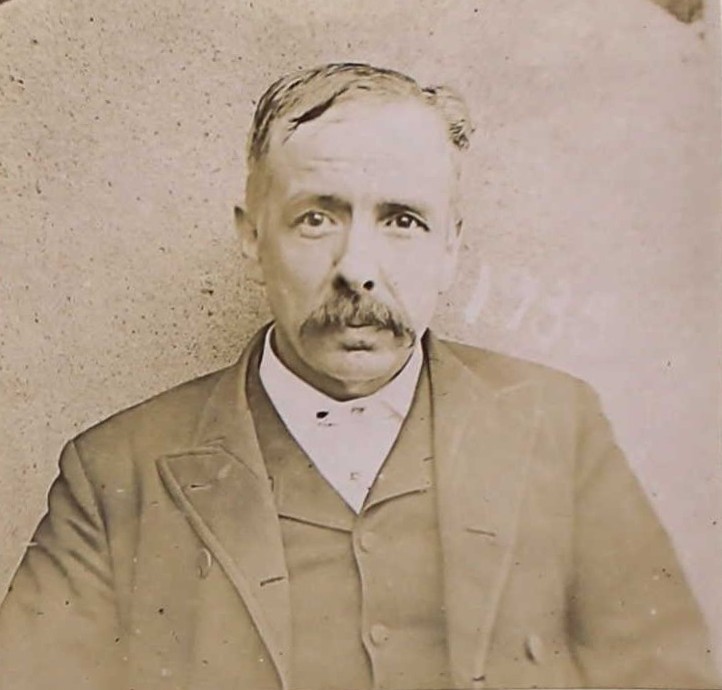
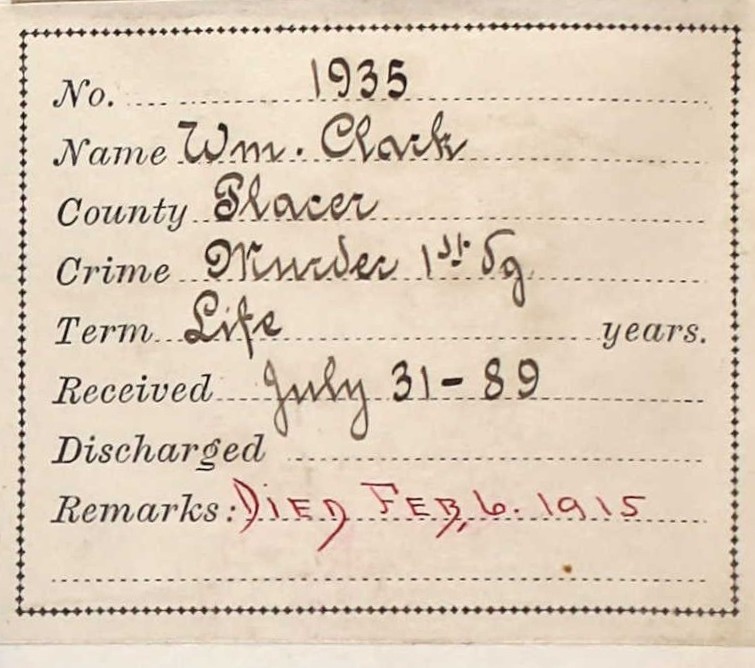
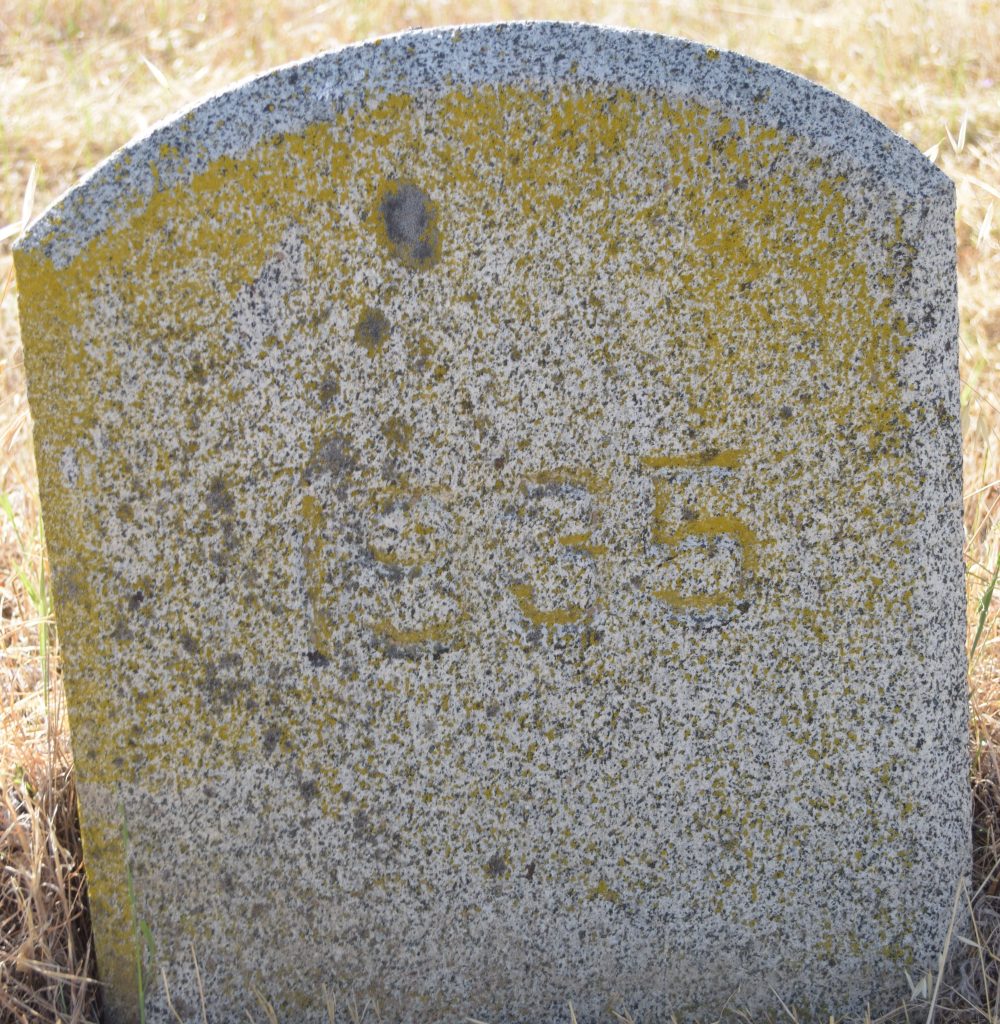
Clark, aka Sacramento Bill, was received at Folsom State Prison July 31, 1889, and assigned number 1935.
He died Feb. 6, 1915. With his body unclaimed, his story ends in a grave at the Folsom State Prison cemetery.
Story by Don Chaddock, Inside CDCR editor
CDCR Office of Public and Employee Communications
Assistance provided by Cynthia C. Laframboise, State Archives Manager
Nevada State Library, Archives and Public Records
Follow CDCR on YouTube, Facebook, X (formerly Twitter).
Learn more about California prison history.
Cemetery Tales
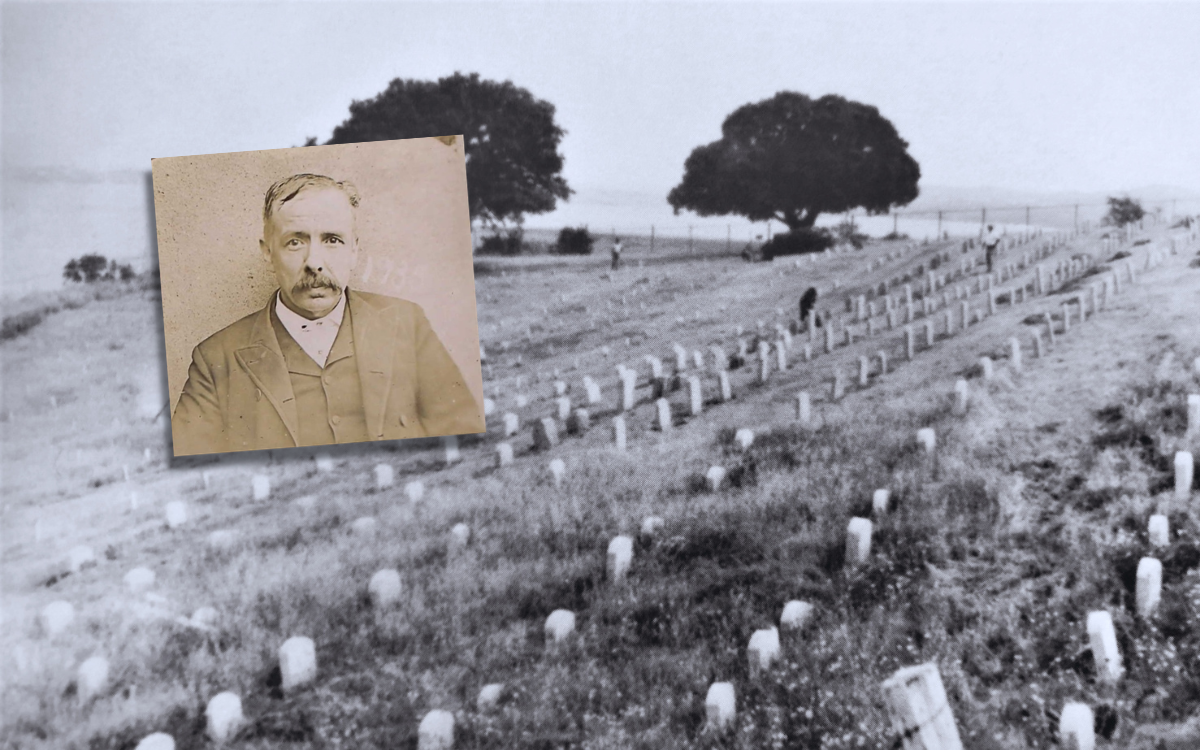
Cemetery Tales: William Clark, alias Sacramento Bill
The third installment of the 2026 Cemetery Tales takes a closer look at William Clark, alias Sacramento Bill. He was…
Read More
Cemetery Tales: Miguel Bravo meets end at SQ
The second installment of Cemetery Tales looks at Miguel Bravo, a 23-year-old who ended up in San Quentin in 1925.…
Read More
Cemetery Tales: Meet Augustine Berryessa
Augustine Berryessa, a petty crook whose life story ended at Folsom State Prison in 1905, is the subject of the…
Read MoreExplore CDCR history
CDCR history requests come from families, writers, professors
Requests for CDCR history can come from a variety of sources. They range from family members tracking down a rumor…
Read More
Explore 80 years of CTF‑Soledad’s history
Explore the history of the state’s fifth prison, the Correctional Training Facility (CTF) at Soledad. Activated in 1946, CTF was…
Read More
California Institution for Men marks 85 years of public safety
In 2026, California Institution for Men (CIM) is celebrating 85 years of public safety. The Chino institution, the fourth state…
Read More