

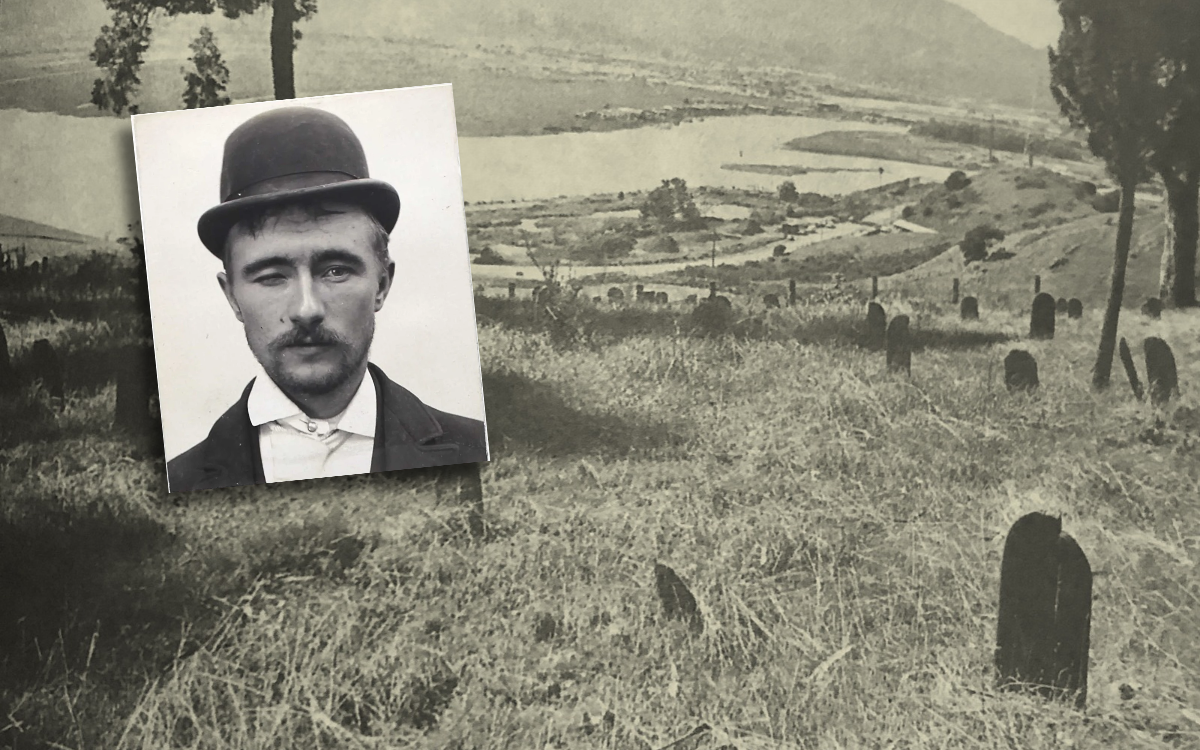
The fourth installment of the 2026 Cemetery Tales looks at William Fredericks, also known as the Mariposa Robber. Like all the other names in the series, his was selected at random from the list of those buried at San Quentin.
His story is unique in our series as he met his fate at the end of the hangman’s rope at San Quentin’s gallows in 1895. His criminal exploits were generally unsuccessful. Over the brief course of his criminal career, Fredericks left a trail of destruction in his wake.
Fredericks sent to prison over 30 cents
Fredericks earned the Mariposa Robber moniker after he held up a stagecoach near Bear Valley in the Sierra foothills.
“William Fredericks was arrested and charged with robbing the Mariposa stage last week,” reported the San Francisco Chronicle, May 25, 1890. “The robber secured 30 cents. … He pleaded guilty and was sentenced to four years in Folsom Prison.”
The Merced Sun-Star also covered the crime.
“The prisoner was visibly affected by the judge’s remarks in passing sentence,” reported the Sun-Star, May 31, 1890.
The San Francisco Call, May 25, 1890, notes the sentence could have been much more severe. The headline states he “got a short term.”
“In consideration of his youth and apparent inexperience as a stage robber, a light sentence was inflicted,” the paper reported. “(After the) judge’s lecture, the prisoner … wept freely.”
Fredericks, sentenced to four years, was transported by Sheriff Turner of Mariposa to Folsom.
The 18-year-old Fredericks was received at Folsom State Prison May 26, 1890, and assigned number 2221. The prison register lists his occupation as barber.
While incarcerated, he fell in with notorious bandits George Sontag and Chris Evans. Fredericks was released May 26, 1893, and immediately began carrying out a plan to help them escape.
Plays crucial role in attempted prison break
“(After his release), he at once began a plan to effect the forcible release of George Sontag and several other convicts,” reported the Visalia Daily Times, March 26, 1894. “He came to Visalia, stole two guns from a Main Street saloon, got a revolver from Eva Evans and went back to Folsom (June 26, 1893,) where he deposited the firearms in a place formerly agreed upon. All this he accomplished in one month. The very next day, the outbreak headed by George Sontag occurred.”
On his way from Visalia to Folsom Prison, Fredericks needed cash so he turned to what he thought he could do best: rob a stagecoach. It was the early morning of June 15.
On the road between Ione and Jackson in Amador County, he attempted to hold up the Wells Fargo Stagecoach. While most bandits normally attempted to get a stagecoach on the incline, Fredericks chose the descent. As the stage crested the hill, Fredericks opened fire.
The shot was instantly fatal for messenger Mike Tovey. Grabbing Tovey’s arm to keep him from falling off them stage, the driver ran the horses as fast as they could go on the downhill grade. Frustrated, Fredericks fired again, killing two of the horses. The driver pressed on, only stopping when he believed he was out of range, leaving Fredericks in the dust. Rather than 30 cents, this time Fredericks came up empty handed.
Mike Tovey was considered hero
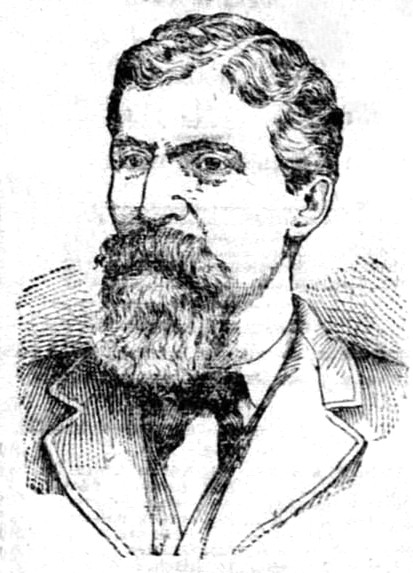
The Chicago Tribune interviewed a longtime Wells Fargo employee at the company’s booth at the 1893 Chicago World’s Fair. Their historical exhibit featured a portrait of Tovey, draped in black.
“I tell you, Mike Tovey was a hero,” Capt. Otey Bradford of San Francisco told the Tribune, June 25, 1893. “The record of his adventures would read like fiction. He began his career way back in the 1850s as a stagecoach driver. Later, he was made a guard, or as we say at Wells Fargo, a shotgun messenger. He was a man of herculean proportions, standing over 6 feet and was absolutely without fear. (Tovey) has been the hero of dozens of escapades and has shot a dozen robbers. He regarded the treasure box at his feet as a sacred trust and the company knew no robber could ever get a dollar of its money from Mike Tovey as long as breath of life was in him.”
Bradford recounted a robbery attempt against a stage the year before during which a man ambushed them on the road from San Andreas to Sheep Ranch. The box was loaded with payroll funds.
“A masked man emerged from behind a tree and without warning, fired both barrels in the direction of the driver, instantly killing (a female passenger), mortally wounding the driver and wounding Mike Tovey in the arm,” the newspaper reported. “Seizing the reins, Tovey manipulated the brake to place the stage and its precious cargo beyond the reach of the robber, who was never discovered.”
Arrives at Folsom, flees to foothills
In 1893, Folsom Prison’s walls were not yet completed, making Fredericks’ task much easier. After hiding the weapons at Folsom, Fredericks hopped a freight train.
At 2:30 a.m. June 28, the train was nearing Gold Run when Southern Pacific Railroad Brakeman J.T. Bruce discovered a group of rail hoppers. While trying to remove the unwanted passengers, Fredericks shot and seriously wounded the brakeman.
Harry Smith was arrested in the round-up of train hoppers but was also a witness to the attack and positively identified Fredericks as the shooter. To help catch Fredericks, Folsom Prison Warden Charles Aull traveled to Sacramento to assist in the investigation.
“Smith, who is an intelligent, honest fellow whose only misfortune is he occasionally drinks to excess and thus cannot hold steady employment, identified two photos of William Fredericks … as the man who shot Bruce,” reported the Sacramento Union, July 3, 1893.
He said he first met Fredericks in February 1890 when both were part of a group of workers hired to shovel snow on the railroad in Shasta County.
“He worked six or seven days in the same gang and when they were discharged, a number of the men started on a train for (Sacramento),” the Union reported. “On the way down, Fredericks got to drinking and assaulted an old man on the train, shoving his head through a window of the car, cutting him badly. Some of the men (defended) the old man and Fredericks, to escape being mobbed (hopped) a different train.”
Smith said he didn’t see him again until they met at Colfax a few days before the shooting. They were waiting to jump a train in the company of three other freight hoppers.
Brakeman survives shooting
Surviving the shooting, the brakeman provided a description to Nevada County Sheriff William Pascoe. Two days later, the sheriff found Fredericks. While trying to arrest him, the sheriff was shot and killed.
This sparked an $1,800 reward for information leading to the arrest of Fredericks. The first $1,000 was offered by the state of California, authorized by Governor H.H. Markham. This was followed by $500 offered by citizens of Grass Valley and $300 offered by Nevada City. With others looking to help, the reward fund grew much larger.
“In case William Fredericks is proven to be the murderer of Sheriff Pascoe, the reward offered from various sources (totals) $2,600,” reported the Daily Miner-Transcript, July 31, 1893. This is the equivalent of more than $100,000 in today’s money.
Weeks of chaos in Montana
Fredericks made his way to Montana, where trouble followed.
“He remained several weeks (and) murdered three (miners) in a cabin at the entrance to Horse Canyon last October,” reported the Butte (Montana) Weekly Miner, March 1, 1894.
Fredericks, using the name William Barrignan, was staying with a friend in a nearby cabin in the same canyon.
“They would come into the city nearly every night but did not spend much time here during the day,” the newspaper reported.
While in Montana, he wooed a young housekeeper, eventually gaining access to her employer’s home. Taking advantage of the situation, he robbed the wealthy businessman’s house before returning to California.
“(He) also committed a number of highway robberies in Butte about the same time,” reported the Associated Press, July 26, 1895.
Back in California, back to old ways
When he returned, he concocted a scheme to hold up a bank, expecting to get away with at least $5,000. Once again, he failed.
Entering a branch of the San Francisco Savings Union at 9 a.m. in December 1893, Fredericks slipped a note to teller William Herrick.
The note:
“After considering my deplorable circumstances, I am convinced this life is not worth living without (money). Therefore, I am resolved to make one more effort in the high road of self-help to sustain my miserable existence. Should you not comply with my demand, I am compelled to employ my last remedy, a bottle of nitroglycerine and to bury myself under the ruins of this building, blasted to everlasting nothingness.
Yours respectfully,
A Despondent Man.”
As the teller realized what was happening, he reached toward the right-hand drawer of his desk.
Fredericks fired a warning shot and “the ball whistled past Herrick’s head. The cashier (aimed) the gun he (retrieved) from the drawer and fired through the thick plate glass at the robber,” reported the San Francisco Call, March 24, 1894.
Shattered glass sprayed Fredericks, striking his right eye.
“The robber fired again and Herrick fell dead behind the counter, shot through the heart,” the Call reported.
Shootout in the bank
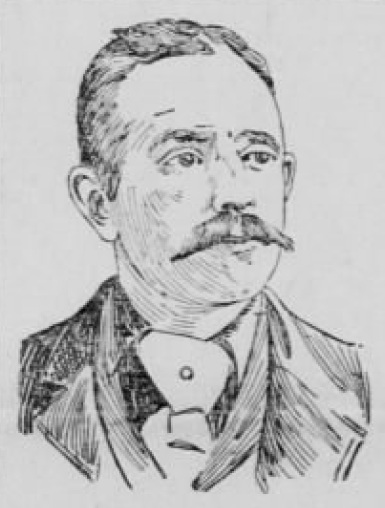
The shots drew the attention of the bookkeeper, the only other person in the bank, who came running out, gun in hand.
“Quickly he leveled a revolver at the murderer, who, panic-stricken, was making frantic efforts to reach the street,” the newspaper continued. “(The bookkeeper) fired twice, shattering the glass of the counter doors, but (Fredericks) got through the doors and into the street.”
Fredericks ran up Market Street, fleeing several blocks while residents followed, yelling. To evade capture by the crowd, he stole a horse and buggy, driving “at a breakneck pace.”
Turning into an alley, he found it was a dead end.
“The buggy was stuck, as he could not turn. Realizing this, (he) climbed out and ran to Mission Street, then up toward 14th,” the newspaper reported. “He ran into a small alley leading behind the houses and took refuge in the cellar of a (vacant) house at 1805 Mission Street. The crowd surrounded the house while Officer Shields entered the cellar.”
Two other officers positioned themselves at the front and rear of the house. Knowing he was cornered and surrounded, Fredericks surrendered. His bottle of nitroglycerine turned out to be a simple bottle of alcohol.
The investigation
In his pockets, police found 20 cents and a small notebook containing the name and newspaper picture of the detective who captured Chris Evans. Fredericks said he held no ill will toward the detective, brushing aside any suggestion it was part of a vendetta orchestrated by Evans.
He blamed the bank teller for the shooting, claiming self-defense.
“I shot to wing him, that’s all. I aimed for his shoulder. It was his own fault. I shot in self-defense,” he told officers. “The plan would have worked if the fool hadn’t been so bull-headed.”
He told investigators he selected the bank because it was small.
“Fredericks admitted having (studied) the bank for days, often peering in through the windows until he had a clear idea of the location of things inside,” the Call reported.
“I went there because I knew there were only two men there and I guessed I could manage two easily enough,” Fredericks said. “If I had got away with the stuff, the police could never have got me again.”
In an interview with The San Francisco Examiner published March 26, 1894, he said he didn’t consider himself a member of the criminal class.
“I went into the bank to do what many men have gone there for,” he told the reporter. “I wanted money (and) had to have it as there was no other way to get it. … The world owes me a living, and I have to get it.”
Fredericks’ trial
The San Francisco Chronicle, April 3, 1894, reported on the arraignment.
He refused to enter a plea. After asking the defendant three times for an answer, the judge entered a plea of not guilty on Fredericks’ behalf. The first trial date was only two days away. His defense attorney sought a 30-day delay so he could prepare and consult with experts and the family regarding Fredericks’ sanity. The judge denied the motion. The defense then motioned for a change of venue.
“Great crowds of people have assembled in and about the City Prison where I was confined and threatened my life,” Fredericks swore in his affidavit. He also cited the intense media coverage in San Francisco. “Threats have been made to resort to … hang me without a trial by jury.”
This motion was also denied.
Following a quick trial, Fredericks was found guilty and sentenced to be hanged July 11, 1894, at San Quentin. He was only charged with killing the bank teller. To this day, the slaying of Tovey and the miners in Montana technically remain unsolved.
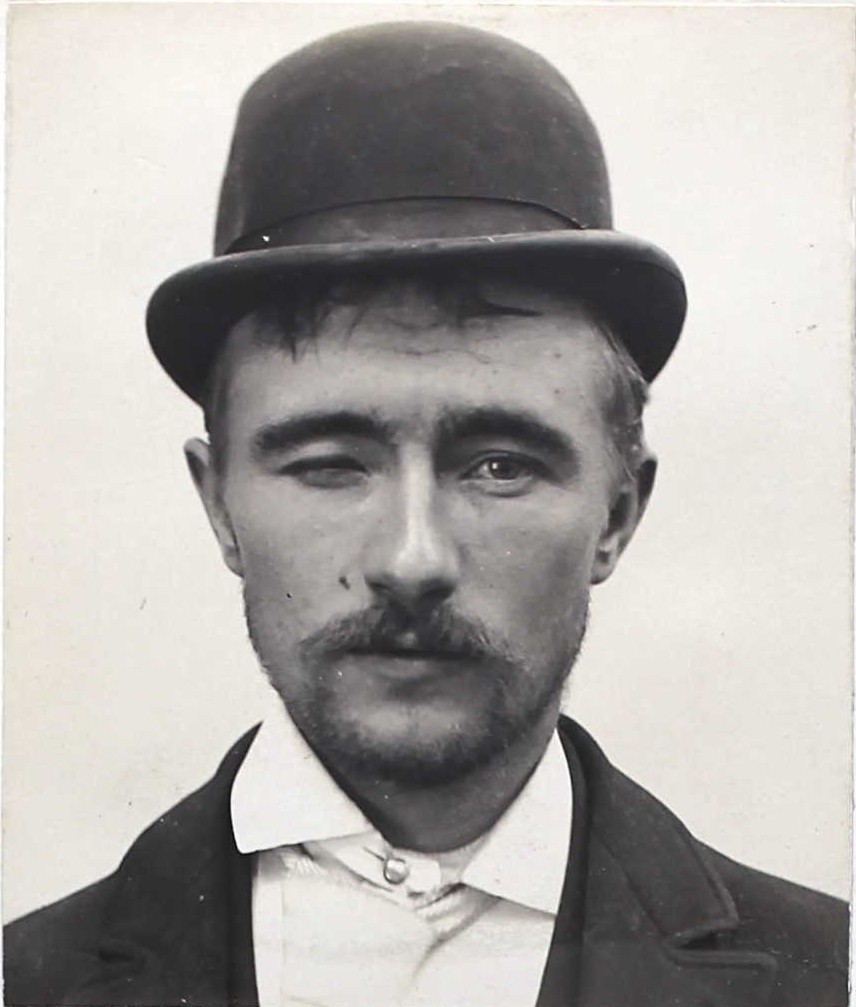

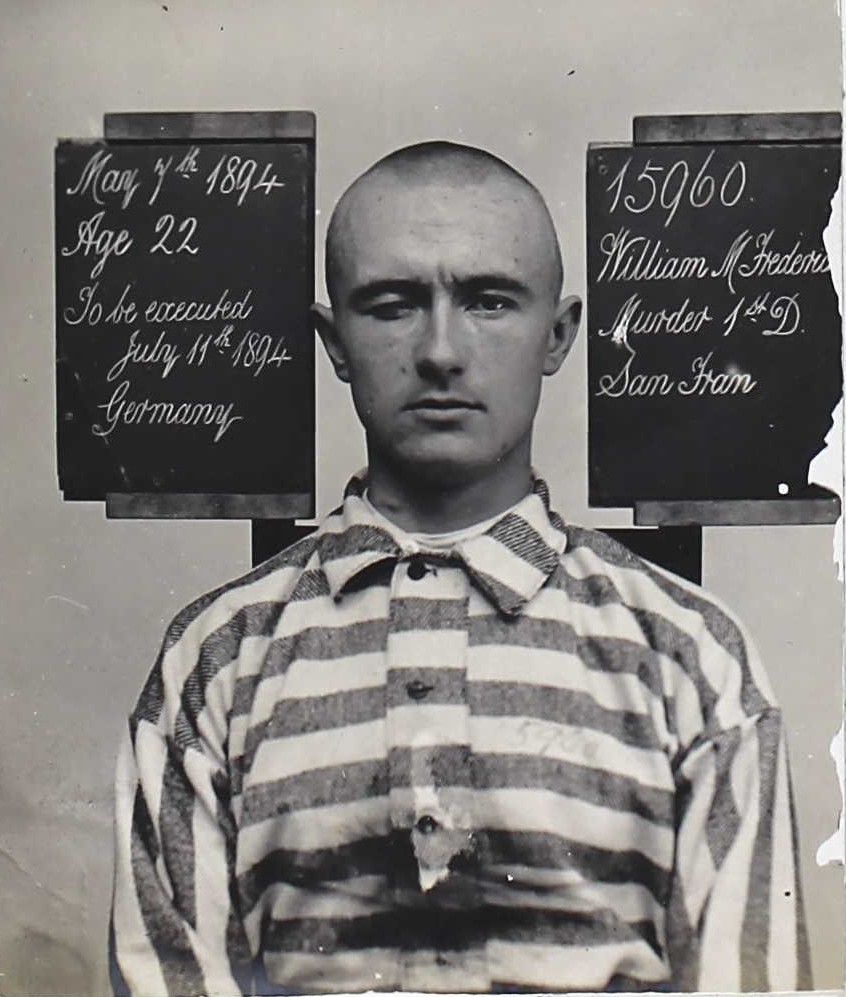
He was received at San Quentin, May 7, 1894, and assigned number 15960. His intake photos show he is unable to open his right eye.
On appeal, the case ended up at the State Supreme Court.
“The State Supreme Court this morning handed down a decision affirming the decision of the lower court in the case of William Fredericks,” reported the Sacramento Bee, March 21, 1895. “Fredericks has been sentenced to be hanged.”
Waiting for the final drop
The night before his scheduled execution, he spoke with a newspaper reporter.
“I am reconciled to my fate and will meet my end in a manly way,” he said. “I see before me a big hole, about six feet (deep) in which I will bury everything. What is the use of talking about this case?”
San Quentin Chief Deputy Warden Amos Lunt made sure the gallows were prepared for the following morning.
“The attendance will be larger than at the last hanging,” reported the San Francisco Chronicle, July 25, 1895. “The four sons of Sheriff Pascoe will be present. More than 15 physicians who have been interested in the case, have gained cards. It is probable 75 or 100 persons will witness the execution.”
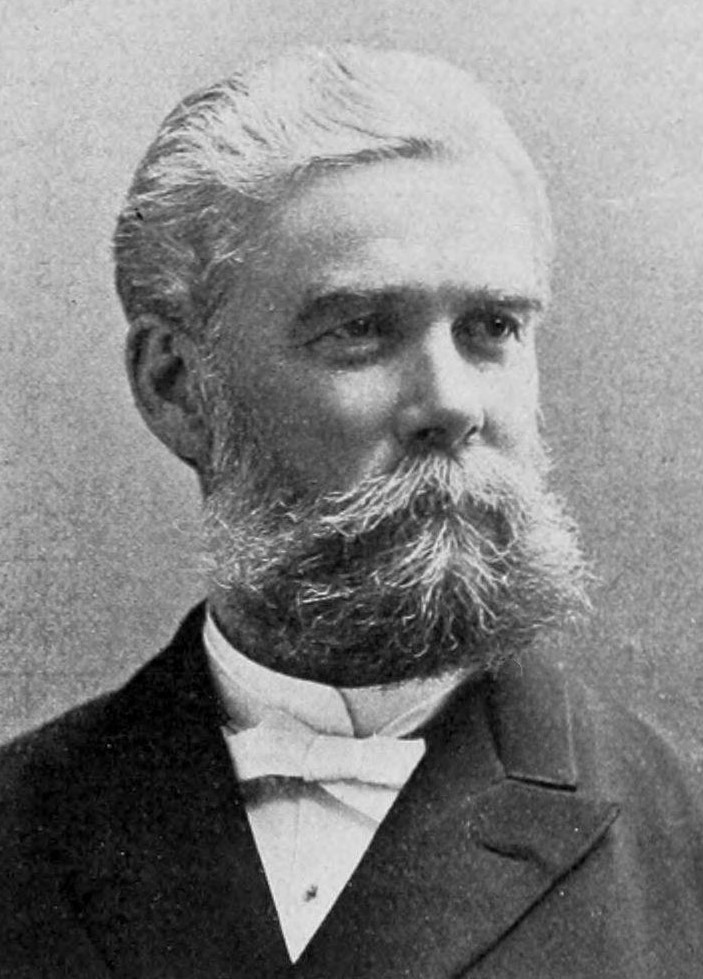
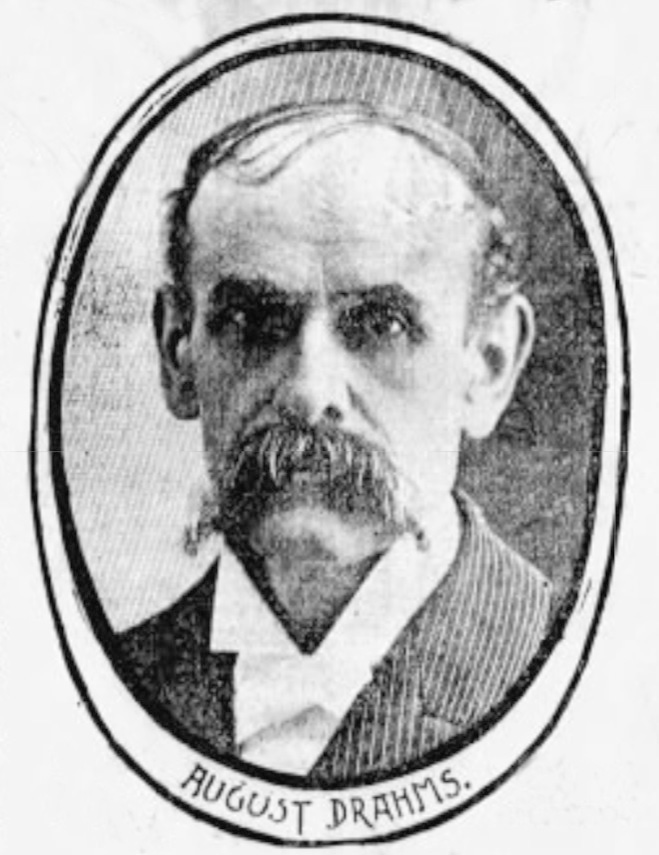
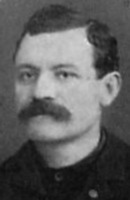
The following day, at 9:55 a.m., July 26, 1895, Warden William E. Hale informed Fredericks it was time. “I am ready,” was the young man’s reply.
Hale and Prison Chaplian Drahms led the way up the steps to the gallows followed by two priests in robes. Fredericks walked behind them, supported by Amos Lunt.
After his hanging, the body was unclaimed. Fredericks was buried in the San Quentin cemetery marked by number 15960.
Story by Don Chaddock, Inside CDCR editor
Office of Public and Employee Communications
Follow CDCR on YouTube, Facebook, X (formerly Twitter).
Learn more about California prison history.
Cemetery Tales
Cemetery Tales: William Fredericks, aka The Mariposa Robber
The fourth installment of the 2026 Cemetery Tales looks at William Fredericks, also known as the Mariposa Robber. Like all…
Read More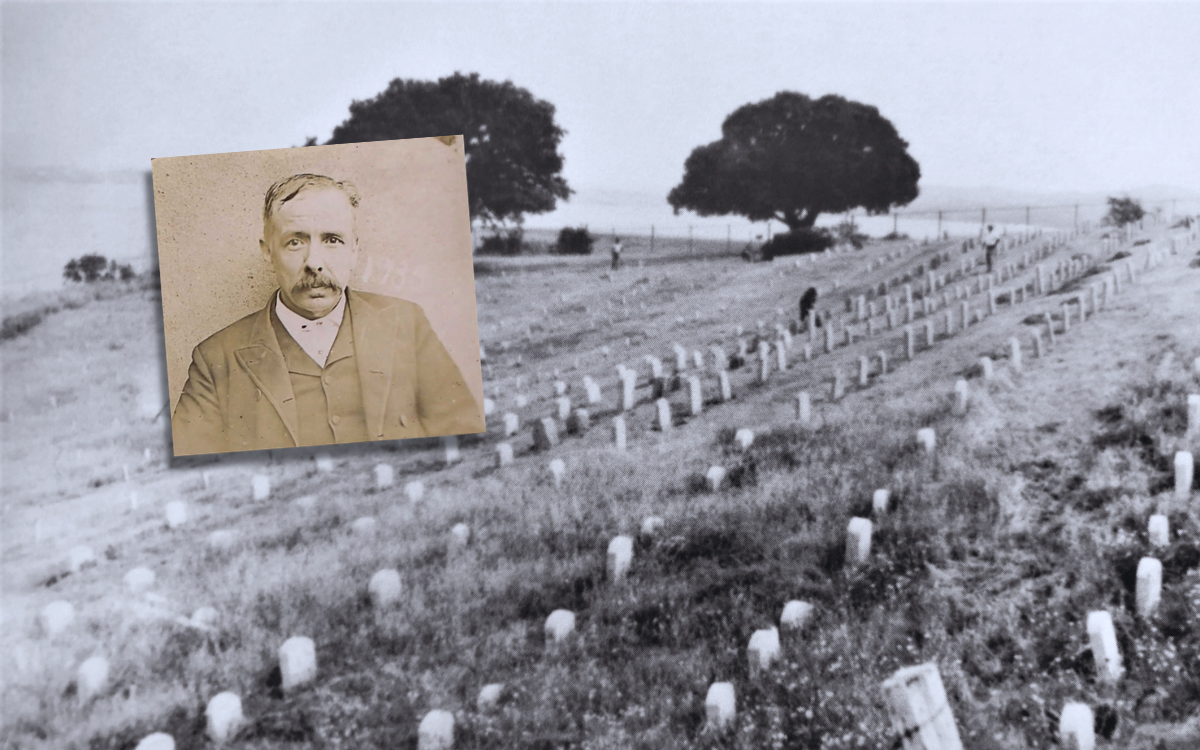
Cemetery Tales: William Clark, alias Sacramento Bill
The third installment of the 2026 Cemetery Tales takes a closer look at William Clark, alias Sacramento Bill. He was…
Read More
Cemetery Tales: Miguel Bravo meets end at SQ
The second installment of Cemetery Tales looks at Miguel Bravo, a 23-year-old who ended up in San Quentin in 1925.…
Read MoreExplore CDCR history
CDCR history requests come from families, writers, professors
Requests for CDCR history can come from a variety of sources. They range from family members tracking down a rumor…
Read More
Explore 80 years of CTF‑Soledad’s history
Explore the history of the state’s fifth prison, the Correctional Training Facility (CTF) at Soledad. Activated in 1946, CTF was…
Read More
California Institution for Men marks 85 years of public safety
In 2026, California Institution for Men (CIM) is celebrating 85 years of public safety. The Chino institution, the fourth state…
Read More