

Requests for CDCR history can come from a variety of sources. They range from family members tracking down a rumor or authors researching early prison conditions to someone digging into a late 1800s incarcerated person. Requests have come from college professors, reporters, magazine writers and CDCR staff members. Like any other request, we try to follow through and provide as much information as we can find.
The following are but a handful of recent history requests.
East coast professor seeks 1906 information
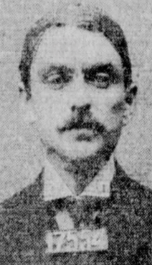
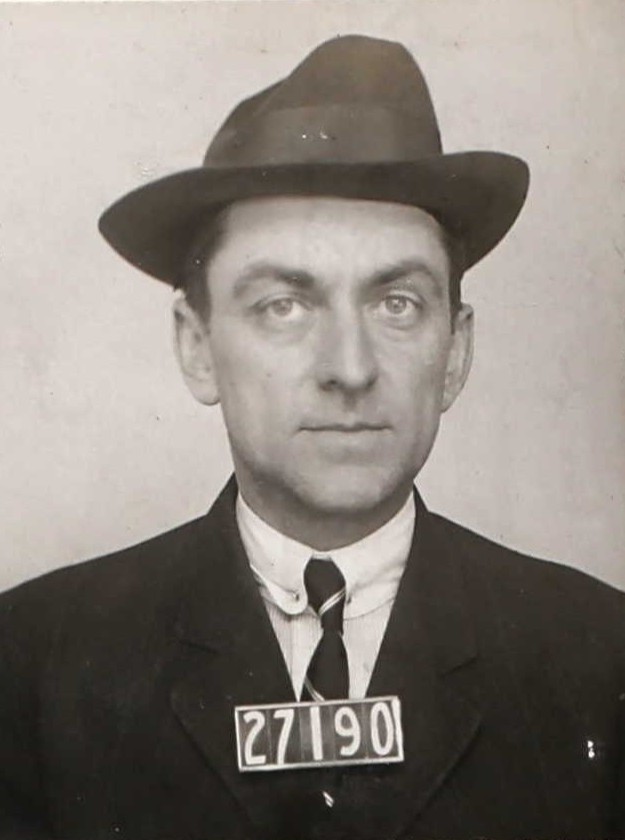
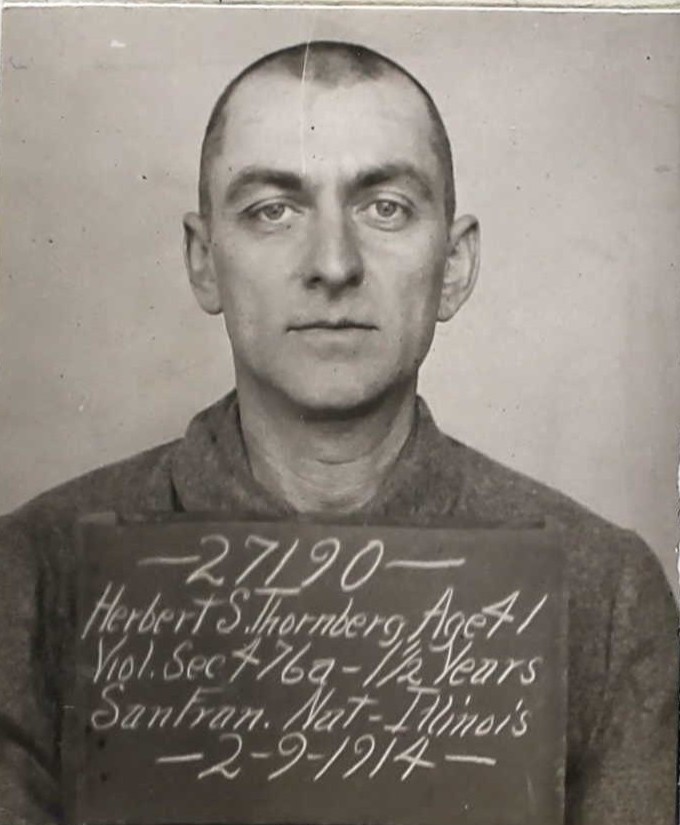
Above, Herbert Thornburg in 1906, at left, and in 1914.
A university professor in New Jersey requested any information CDCR had regarding an incarcerated person convicted of forgery in 1905 and serving his sentence in 1906 at San Quentin. The professor wanted to know any details we had on this person. He also asked if county jails attempted to take their prisoners to the state prison after the San Francisco earthquake but were turned away.
This one took some digging. I couldn’t find any reference to a Thornburg in prison records for 1905-1906, so I turned to newspapers published at the time. While Dr. H.T. Thornburg was convicted in 1905 of forgery for a check for $3, he remained in county jail pending appeals. The appellate court eventually overturned the original ruling, meaning Thornburg wasn’t sent to San Quentin. At least, not in 1905.
A decade later, he did serve a sentence in San Quentin, again for forgery.
Dr. Herbert T. Thornburg was a dispensing physician at a pharmacy in 1905 but after taking his boss’ wife on a trip, found himself facing allegations of forgery.
“Charles A. Baxter, manager of the Globe Medical Dispensary Company, went before a magistrate and formally charged (Thornburg) with the abduction of his wife. Baxter, accompanied by his pretty wife, went before Police Judge Morgan and swore out two warrants for the arrest of Thornburg. One charges him with threats against life and the other with forgery,” reported the San Francisco Bulletin, April 18, 1905.
Thornburg also lived with the couple at the time.
Hypnotism and revenge
“Thornburg alleged the (warrants were) brought against him through revenge. He said he was in the habit of signing small checks for Dr. Baxter in the course of business and no trouble had ever occurred before,” Thornburg said, reported the San Francisco Bulletin, Sept. 9, 1906. “A short time before the action was brought, Thornberg made a trip to San Jose with Dr. Baxter’s wife. She claimed she had been hypnotized into accompanying him and had gone against her will.”
According to Thornburg, after Dr. Baxter learned of the trip, he pulled out the weeks-old check and claimed forgery.
He sat in county jail until his case was dismissed Sept. 29, 1906.
In 1914, he was arrested on new forgery charges and sentenced to San Quentin for 18 months. He was released in May 1915. By December 1915, he was once again being arraigned on fraud and forgery charges, but his trail runs cold after this.
Salt Lake City rumors

A credit manager from Salt Lake City, Utah, was convicted of a crime but may have served his sentence in California, according to a family rumor. The timeframe was the 1960s, which is usually a decade later than I research.
But, with some digging in the historical newspaper archives, I found stories on Davis, his crime and sentence being served in Utah.
“The Sugar House Finance Company (is) suing its former credit manager, Guy E. Davis, and his family for some $103,000 allegedly taken by fraudulent means,” reported the Deseret News, Dec. 22, 1965.
By the time the complaint was filed against Davis, he had relocated with his family to California. According to the company, Davis embezzled and defrauded the company of much more than the $100k claimed. He also had several businesses he either outright owned or partly owned. To hide the funds, he also purchased stocks in his children’s names.
“The stock was put in the name of the children as a device to place assets beyond control of defendants’ creditors (and his employer),” the newspaper reported.
After the grand jury indictment, Davis voluntarily turned himself into the Utah authorities.
The following year, 38-year-old Davis pleaded guilty to two grand larceny charges in a plea agreement. He received two one-to-10-year terms in the Utah State Prison.
In April 1967, Davis went before the parole board, but his parole request was denied.
“Davis, 40, of Fountain Valley, Calif., was denied a parole when he appeared before the pardons board at the prison. He has served one year of the two counts, each carrying a one-to-10-year sentence,” reported the Salt Lake City Tribune, April 27, 1967.
As for serving time in a California prison, I could find no records related to the claim.
British TV company seeks Houdini San Quentin photo

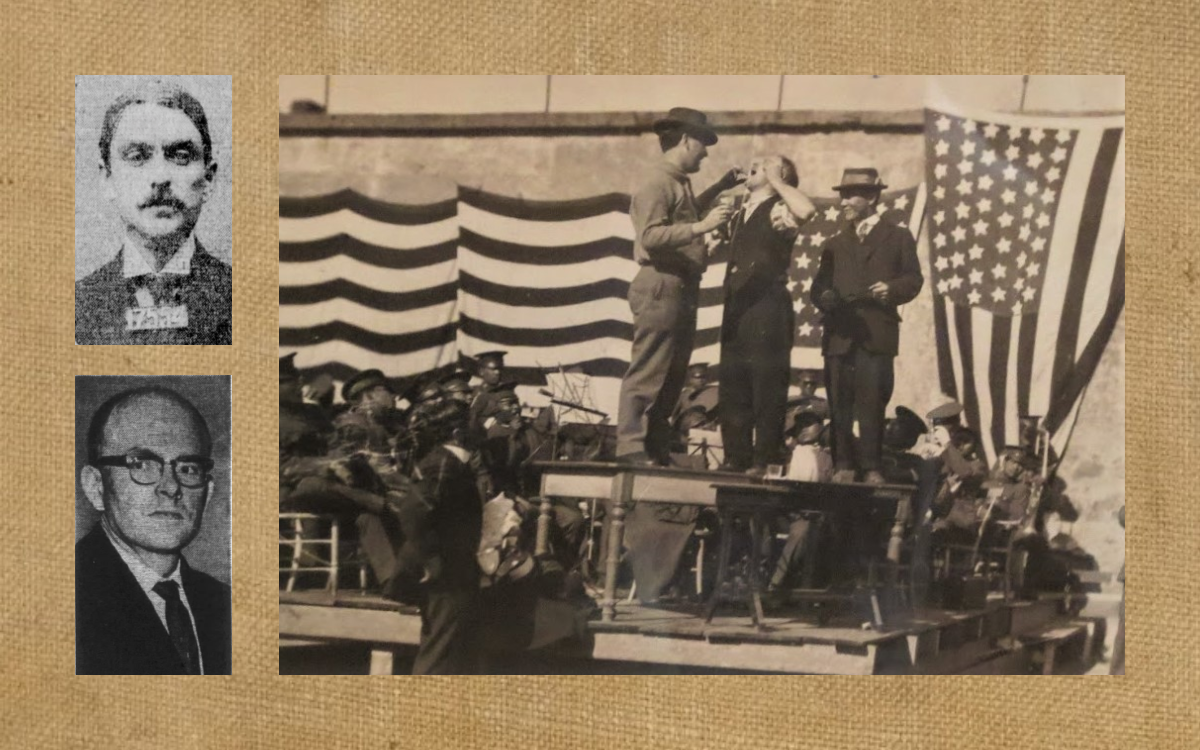
A British TV production company reached out to CDCR to inquire about a photo of magician Harry Houdini performing at San Quentin in 1915. The company found the photo in a 2018 Unlocking History story, originally part of a larger series looking at artists and performers coming into state prisons to aid rehabilitation through entertainment. The company also requested the source for the photo.
I supplied two photos of Houdini at San Quentin while noting their origins. One photo, which I didn’t publish, was from a now defunct Houdini museum. Since I failed to track down the owners, it wasn’t used.
Unlocking History series began in 2014
Did you know? CDCR’s Unlocking History began in 2014 as a 12-part series highlighting the state’s first 12 prisons. As it grew in popularity, the series has continued long beyond its initial one-year plan.
Story by Don Chaddock, Inside CDCR editor
Follow CDCR on YouTube, Facebook, X (formerly Twitter).
Learn more about California prison history.
Explore CDCR history
CDCR history requests come from families, writers, professors
Requests for CDCR history can come from a variety of sources. They range from family members tracking down a rumor…
Read More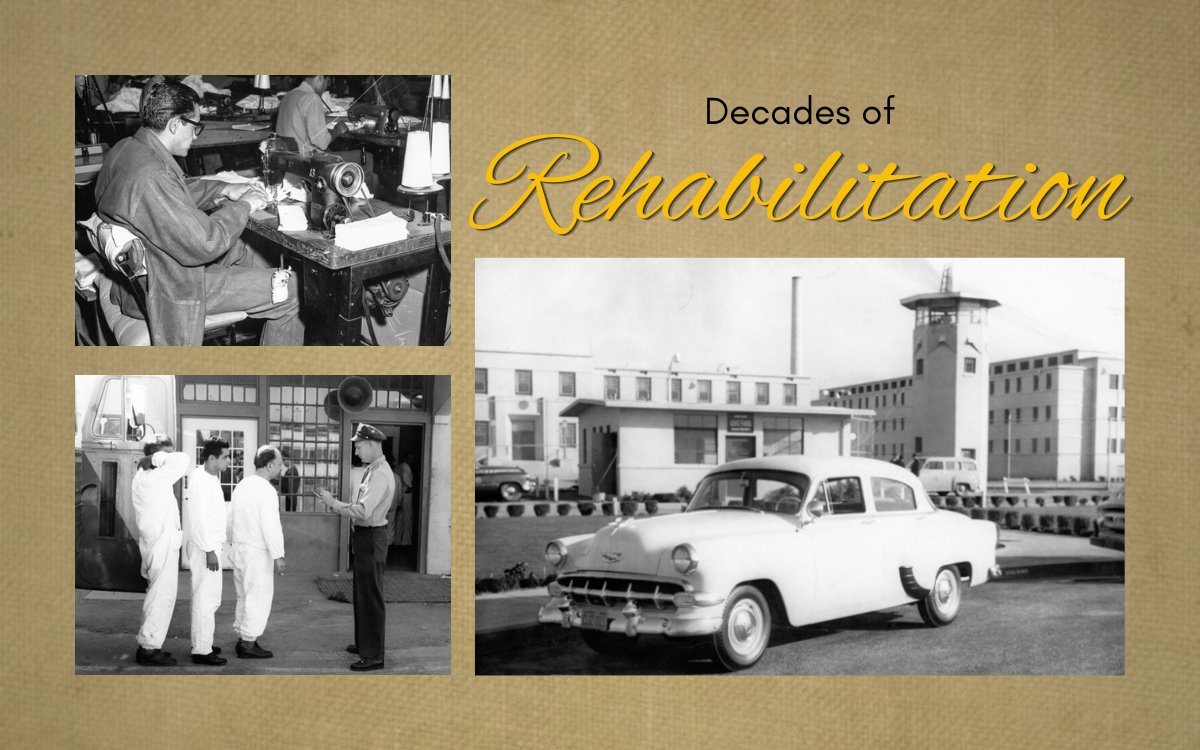
Explore 80 years of CTF‑Soledad’s history
Explore the history of the state’s fifth prison, the Correctional Training Facility (CTF) at Soledad. Activated in 1946, CTF was…
Read More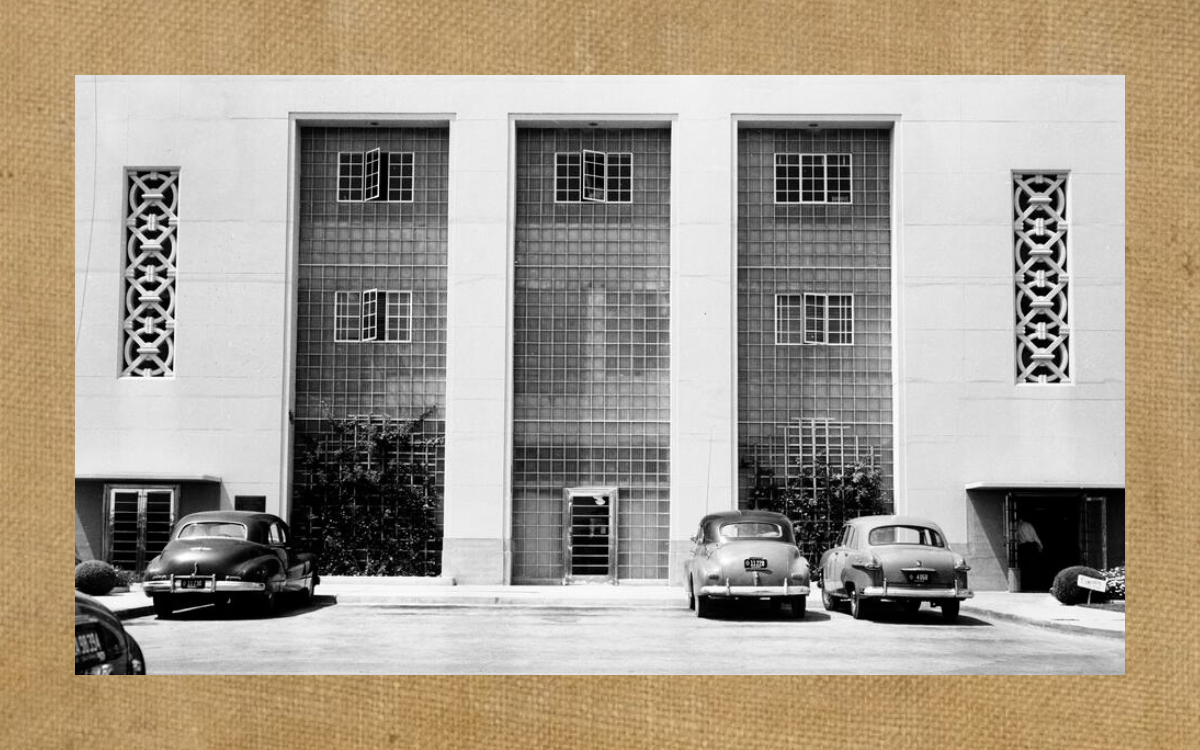
California Institution for Men marks 85 years of public safety
In 2026, California Institution for Men (CIM) is celebrating 85 years of public safety. The Chino institution, the fourth state…
Read More