

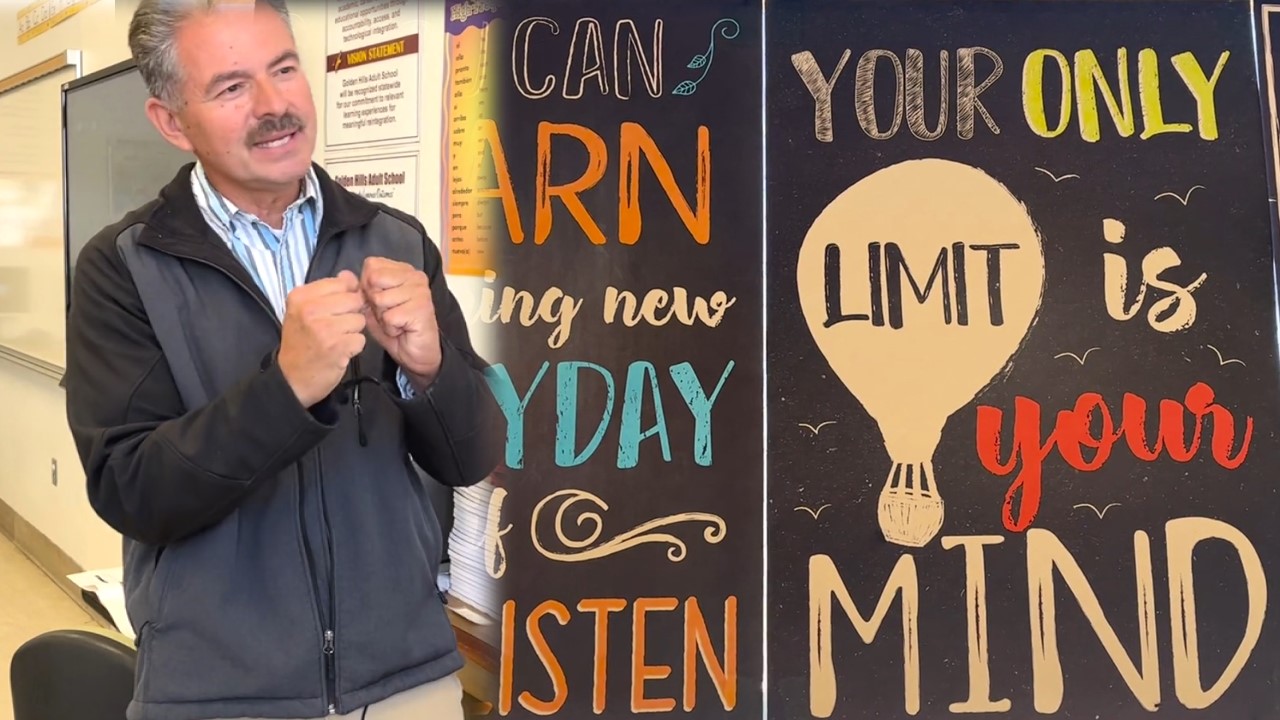
Dozens of incarcerated students enrolled in teacher Pedro Rios’ classes at Avenal State Prison seek to better their chances at reentry success.
Teaching in English and Spanish, Rios is helping provide the second chance these students are striving for, as many begin their education as English learners.
“I would say 99.9% are Hispanic and many of them are on a journey of learning and acquiring English. So, my job is to help them acquire English, learn how to read it, learn how to write it, and learn how to speak it,” said Rios.
Avenal teacher says class offers opportunity to inspire
Watch the video:
“We all make mistakes in life. If they can go back to their communities and their families different and with academic skills, their opportunities will open up. That is why I am here and what I hope I can help them do,” said Rios.
Students at Golden Hills Adult School at Avenal can progress through basic and secondary education, earn a high school diploma or General Equivalency Diploma (GED). This foundation provides essential skills for entry-level employment in a variety of fields.
“I never finished school, so this helped me get a new start, to get a GED and hopefully start a new career,” said incarcerated student Martin Delapaz. “I changed my ways of thinking and progressed to be a better father to my kids.”
California Model is transforming corrections
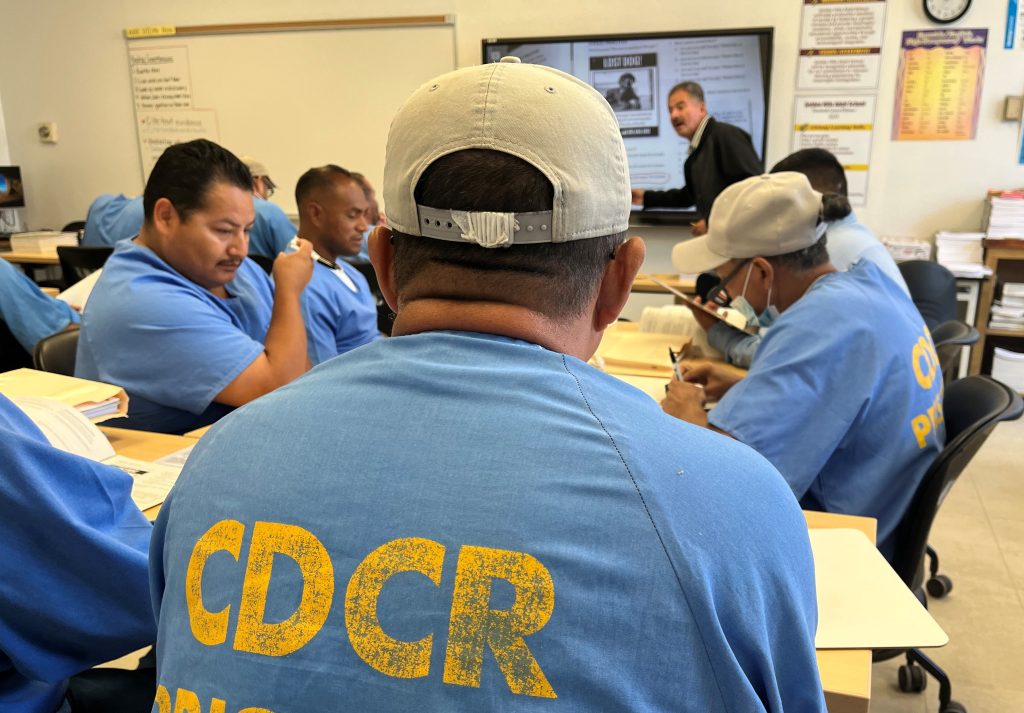
Education programs at CDCR institutions provide incarcerated people the opportunity to learn while gaining skills to ease reentry efforts.
As of August 2024, there are 4,291 incarcerated students enrolled in basic and secondary education courses across the state’s correctional institutions.
CDCR is transforming its operations and culture through an effort known as the California Model. One of the model’s essential elements is normalization, and education programs help with that by bringing the prison experience closer to life outside the walls of the institution. The goal of the California Model is to promote public safety by providing incarcerated people with tools to become self-sufficient and ease community reentry.
Making amends while improving their future
Incarcerated student Daniel Salazar said it is important for him to go back to school.
“To be able to support myself when I get out and get a job,” he said. “I’m here trying my hardest to make my family proud.”
Rios puts it more succinctly. “It’s an opportunity to inspire them.”
All CDCR institutions provide the opportunity to earn a high school diploma or GED. Both prepare students to continue their education through career technical education or college courses.
Story by Ashton Harris, information officer
Office of Public and Employee Communications
For more information about CDCR’s adult education offerings visit the Adult Education webpage.
Read more rehabilitation stories.
Follow CDCR on YouTube, Facebook, X (formerly Twitter).
Related content
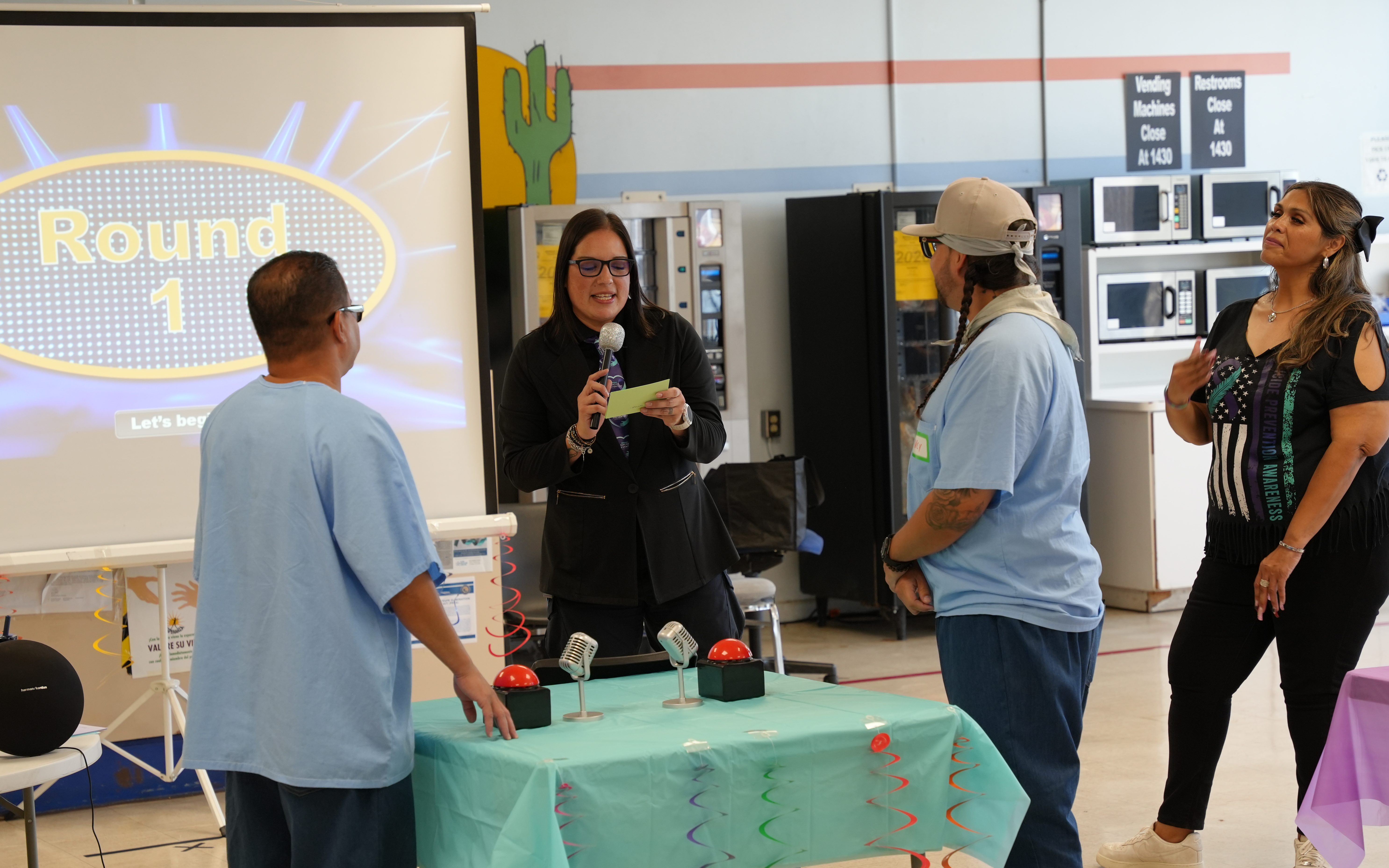
Calipatria mental health team hosts game for population
Mental health staff at Calipatria State Prison hosted a game for the population as part of Suicide Prevention Awareness Month.…
Read More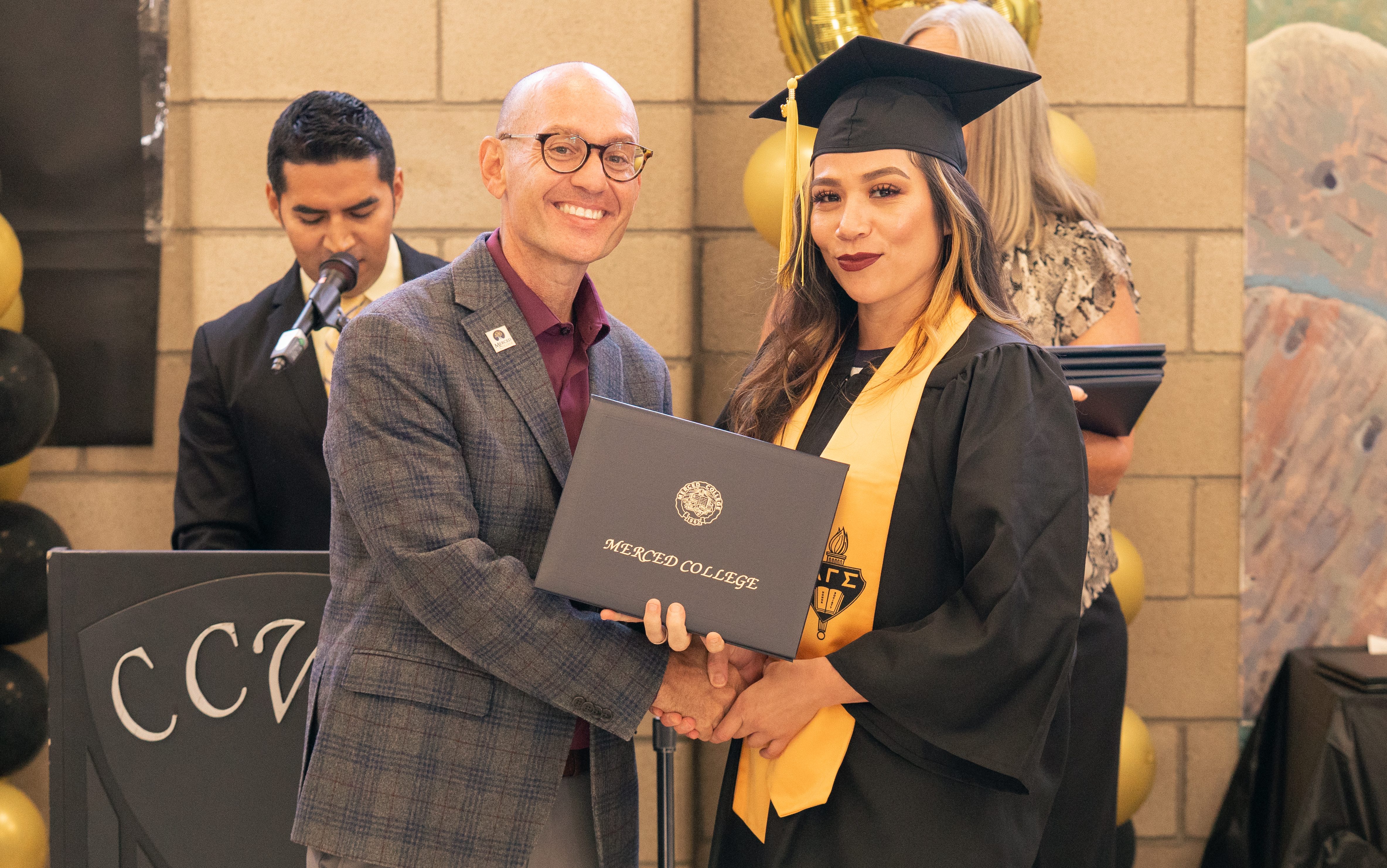
CCWF sees 59 earn college degrees
Central California Women’s Facility (CCWF) in Chowchilla held its annual college graduation for 59 earning degrees. The Sept. 30 graduation…
Read More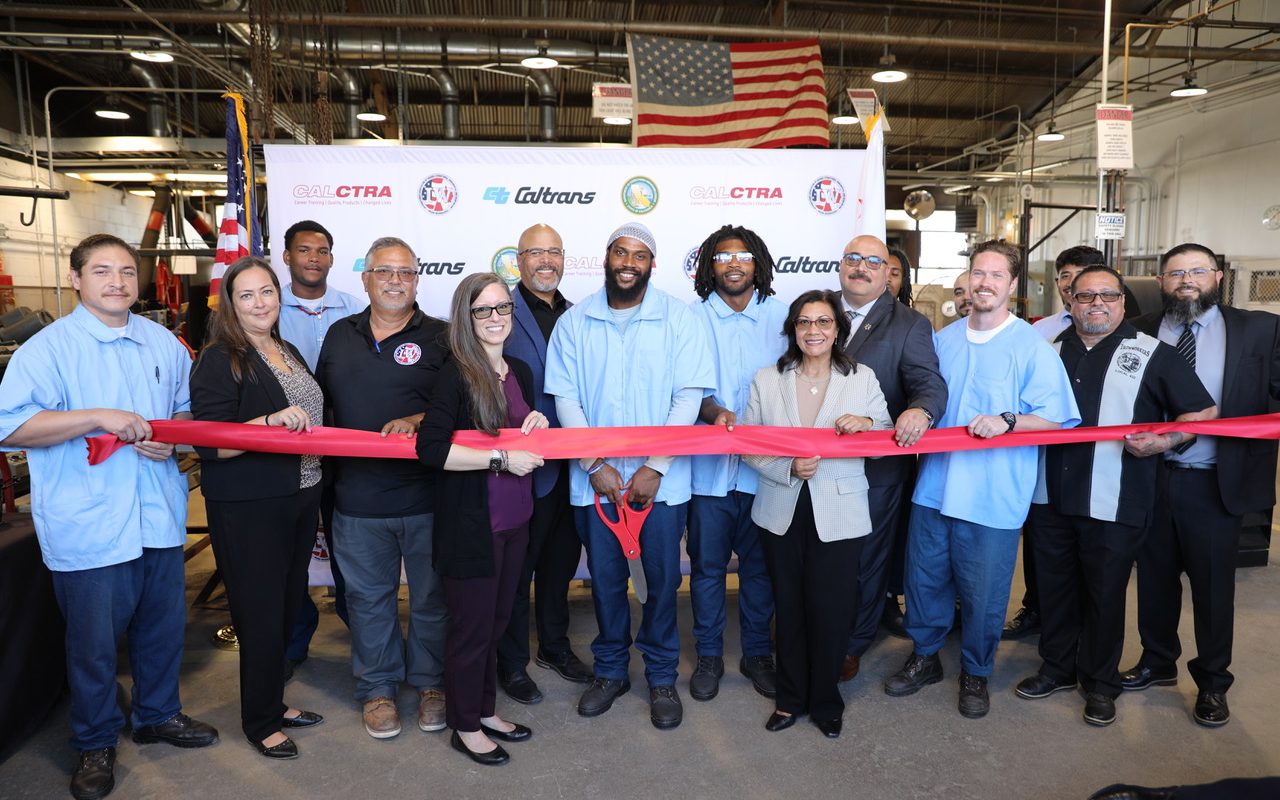
Caltrans, CALCTRA, CDCR, Ironworkers launch CIM program
The California Correctional Training and Rehabilitation Authority (CALCTRA), Caltrans, CDCR, and the Ironworkers Local Union 416 and 433, have launched…
Read More