

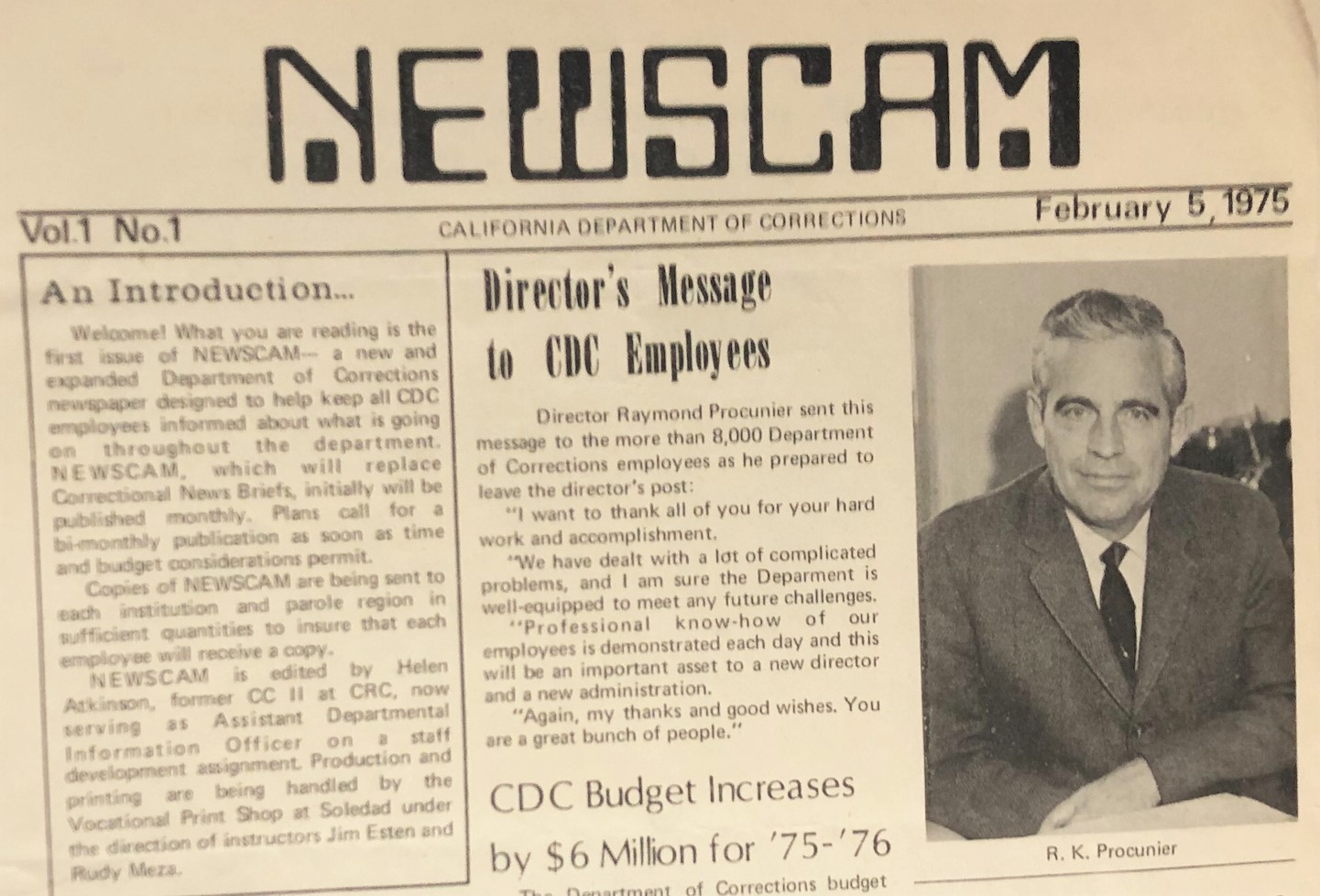
In February 1975, the department launched a newspaper to keep employees informed about happenings statewide. This publication replaced Correctional News Briefs, the previous departmental newsletter.
The first issue looked at the budget, female recruitment, retirements, and other topics of interest in 1975.
Today, CDCR uses videos, email, social media, apps and a host of other methods to communicate with staff.
Did you know? Since 1940, National Newspaper Week has been observed with the week beginning the first Sunday in October. In 2024, it is observed Oct. 6-12.
Called Newscam, the newspaper was edited by Helen Atkinson, previously a correctional counselor II at California Rehabilitation Center in Norco.
According to the publication, Atkinson was “now serving as assistant departmental information officer on a staff development assignment.”
Layout, production and printing were handled by the vocational off-set print shop at the Correctional Training Facility at Soledad. Production was under the direction of instructors Jim Esten and Rudy Meza.
Budget was a front-page story
The first issue, dated Feb. 5, 1975, covered the department’s budget of $202,689,889 for fiscal year 1975-76. There were 8,000 employees at the time.
“Among the provisions of the new budget are $1.6 million in capital outlay funds, a fund to cover $200 release allowance, $2 million in merit salary adjustments, and $100,000 for cost-of-living increase in inmate pay,” the paper reported.
Elton Farmer, deputy director of administration, issued the budget information.
Director bids farewell
Director Raymond Procunier wrote, “I want to thank all of you for your hard work and accomplishment. We have dealt with a lot of complicated problems. I am sure the department is well-equipped to meet any future challenges. Professional know-how of our employees is demonstrated each day. This will be an important asset to a new director and administration. Again, my thanks and good wishes. You are a great bunch of people.”
Women working for department was new priority
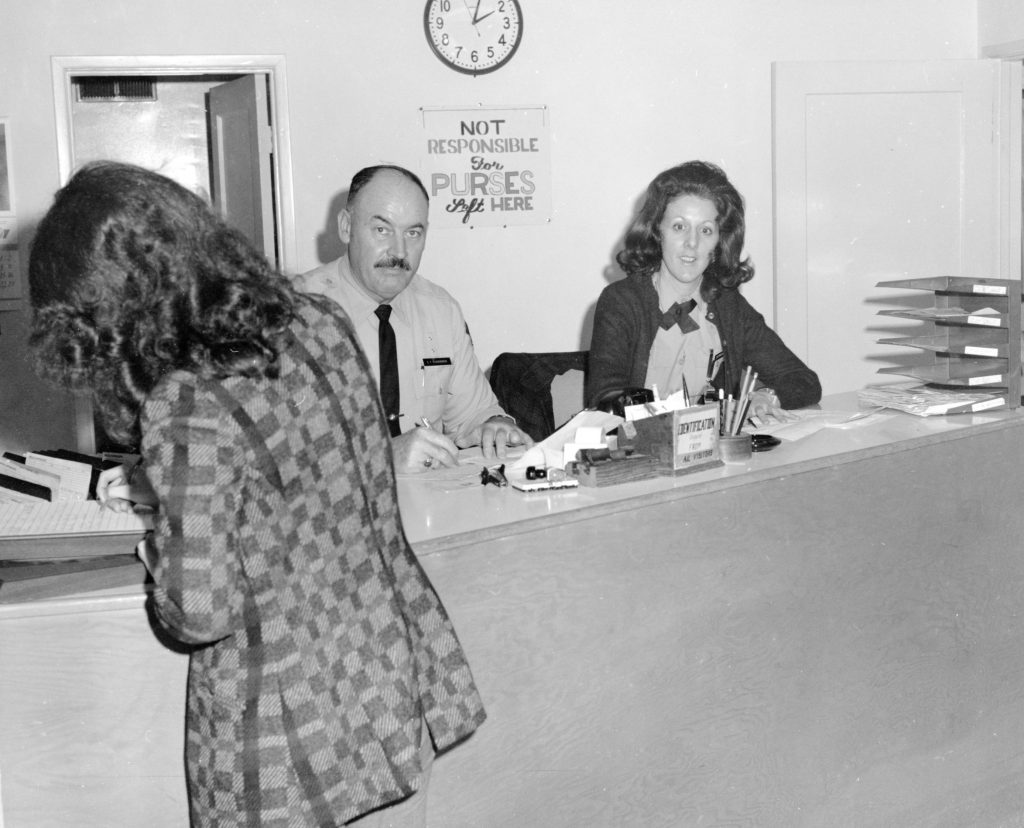
A major topic was the effort to have more women working in the department at higher levels.
“Progress continues to be made toward the full utilization of women in (the department). Because of the limited opportunities available to women in the past, there are many experienced female employees (with) college degrees in low-paying jobs,” according to the paper. “Efforts are being made through the office of the assistant director for Women’s Affairs to find ways to better tap this under-utilized resource.”
Steps being taken in 1975 included reviewing job requirements as well as expanding training opportunities. The department also instructed managers and supervisors to allow interested staff, regardless of gender, to take the training.
Central office launched a program allowing clerical staff to enroll in an on-site program established by Cosumnes River College and the state. Through this program, employees attended classes on state time while the department also covered the cost of tuition and books. Male employees were also encouraged to participate in the program.
Female correctional officers growing
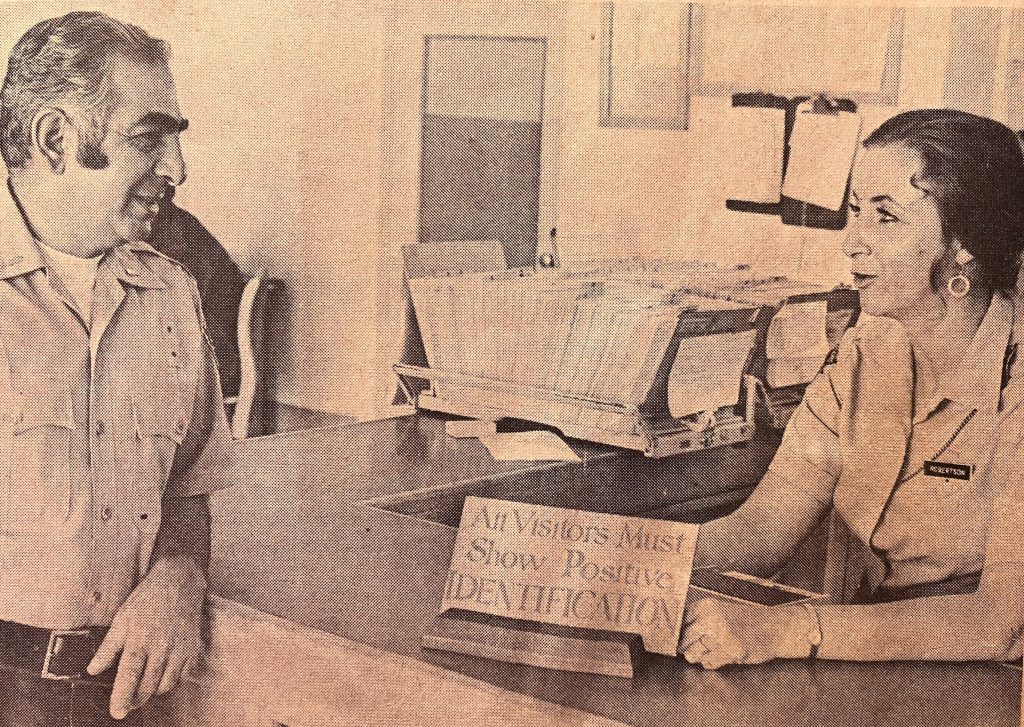
“The gradual increase of women correctional officers in male institutions continues. A slow, cautious approach prevails, moving ahead with each progressive step as experience is gained. Currently, 85 women officers are assigned to the 12 male institutions in a variety of roles,” the newspaper reported. “As a pilot project, the Reception Center-East at the California Institution for Men complex has been assigning six women officers at the direction of the watch commander since November 1974. Although still in the early stages, initial experience has been positive. California Medical Facility has very recently begun assigning women officers to first watch housing units as part of a broader utilization of women officers at the institution.”
At central office, the following management-level positions were filled by women over the course of a year: two classification and staff representatives; safety coordinator; assistant director; assistant departmental training officer; legal affairs coordinator for Parole and Community Services; chief of records; business services officer; and assistant information officer.
Other highlights from first issue
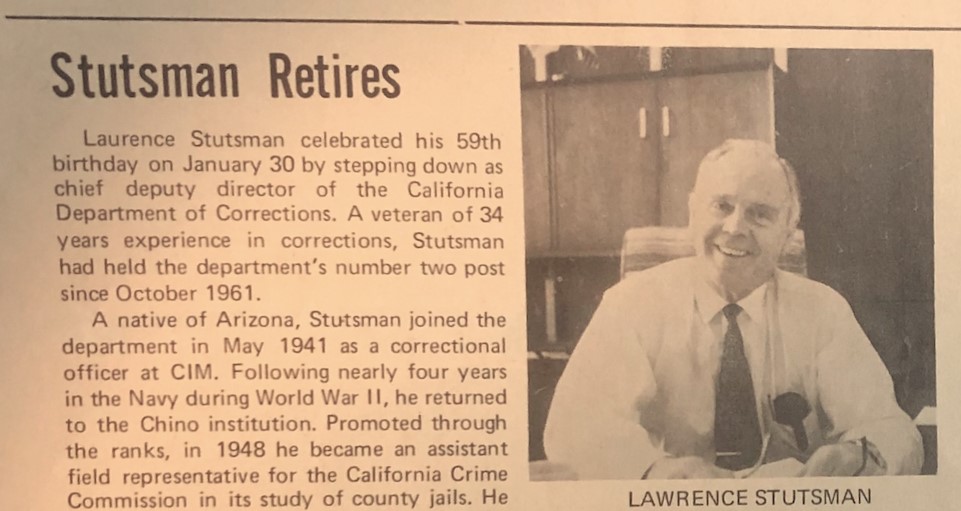
Lawrence Stutsman retires
Chief Deputy Director Lawrence Stutsman, a 34-year veteran of the department who started in May 1941 as a correctional officer in Chino, retired in January 1975. He left the department for four years to join the US Navy during World War II. After the war, he returned to the California Institution for Men to continue his career.
Off-duty officer helps apprehend assault suspects
Deuel Vocational Institution Correctional Officer Walter Snell was off duty when he helped San Joaquin County Sheriff’s deputies apprehend three people suspected of felony assault. He was awarded a commendation by the sheriff Jan. 16 for his actions.
Parole agent receives commendations
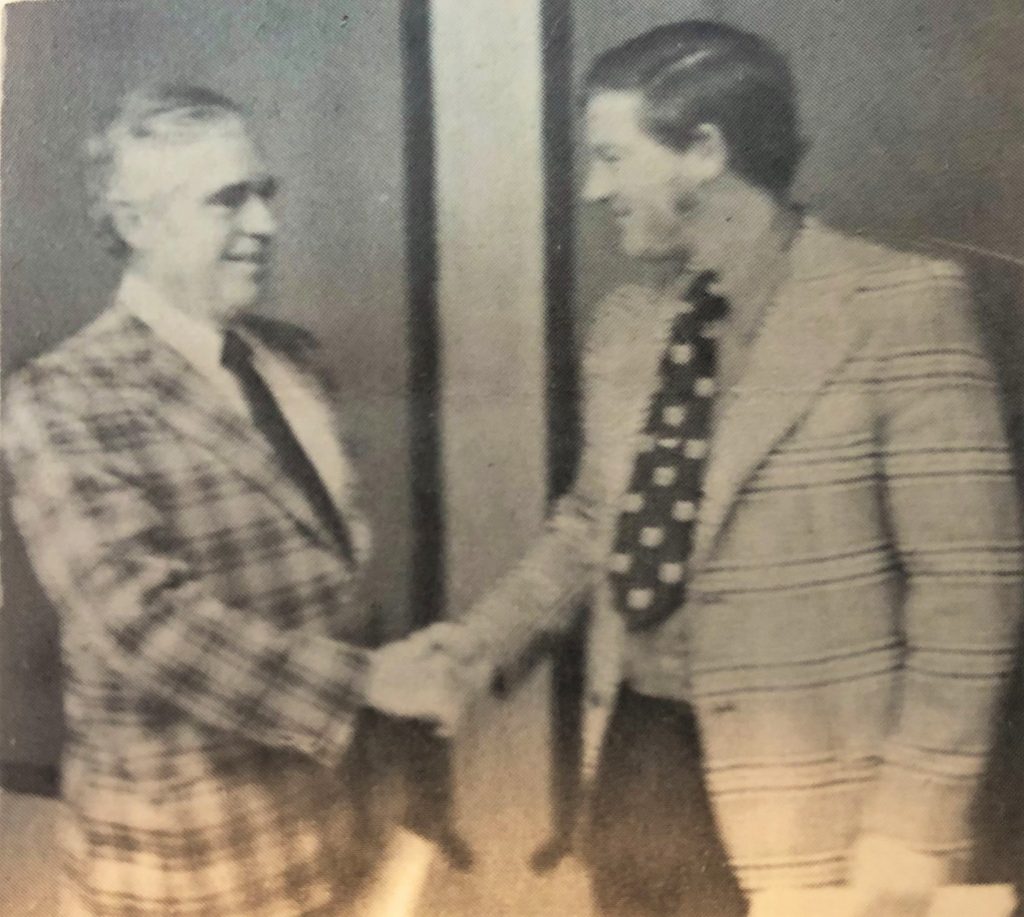
San Francisco Parole Agent Steve Northrup received praise and commendations for helping during a stand-off with a robber who was holding eight hostages.
After several hours of negotiating, Northrup and a San Francisco Police Department lieutenant finally persuaded the robber to throw down his weapon and surrender.
Due to his actions, Northrup was honored by the police department and received a letter of commendation from Ray Procunier, the director of corrections.
“Your calm, confident, professional manner in convincing a highly confused robber to release his hostages and surrender was in the highest tradition of the parole division,” Procunier said.
The first issue was six pages and published on newsprint in black ink.
By Don Chaddock, Inside CDCR editor.
Learn more about California prison history.
Follow CDCR on YouTube, Facebook, X (formerly Twitter).