

This CDCR Unlocked podcast is a continuation of episodes diving into the four California Model pillars, this one focusing on normalization.

This this episode, Ashton Harris, information officer with CDCR’s Office of Public and Employee Communications, interviews Lt. David Gonzales.
They continue the podcast’s conversation about the normalization pillar.
Learn more about environmental changes already being made within our institutions including other ways to help CDCR reach normalization within the prison environment.
Gonzales, who has been with the department for 18 years, has served as the public information officer for California State Prison (CSP) Sacramento for about a year-and-a-half. He’s spent his entire career at the same institution.
Highlights from the CDCR Unlocked podcast on normalization
What is normalization?
“Normalization within our prison system right now is simply a more modern approach to day-to-day life for the incarcerated person,” said Gonzales. “It’s a more modern approach to how staff and the population interact on a daily basis, making things as close to the outside world as possible.”
He said basic communication is important to improving interactions between staff and the incarcerated population.
“Communication with the population has always been from a supervisor standpoint, to giving orders, facilitating movement and so on. With the normalization aspect of it, it’s brought a more personalized interaction and relationship with the population,” he said. “I feel like that’s probably the biggest immediate impact (and) creates a better, more-social environment.”
The physical environment is also getting a makeover.
“We’re changing the environment inside the prison walls. For years, we’ve had nothing but bare concrete inside the walls (but) we’re now (using) paint. We’re allowing the population to produce murals inside the housing units (as well as outside),” Gonzales said. “It sounds like a very minor detail, but it’s actually pretty impactful for the population and staff to be on the yard and have something on the walls other than bare concrete.”
Learn more about the California Model on the CDCR website.
Read more rehabilitation stories.
Follow CDCR on YouTube, Facebook, X (formerly Twitter).
Related content
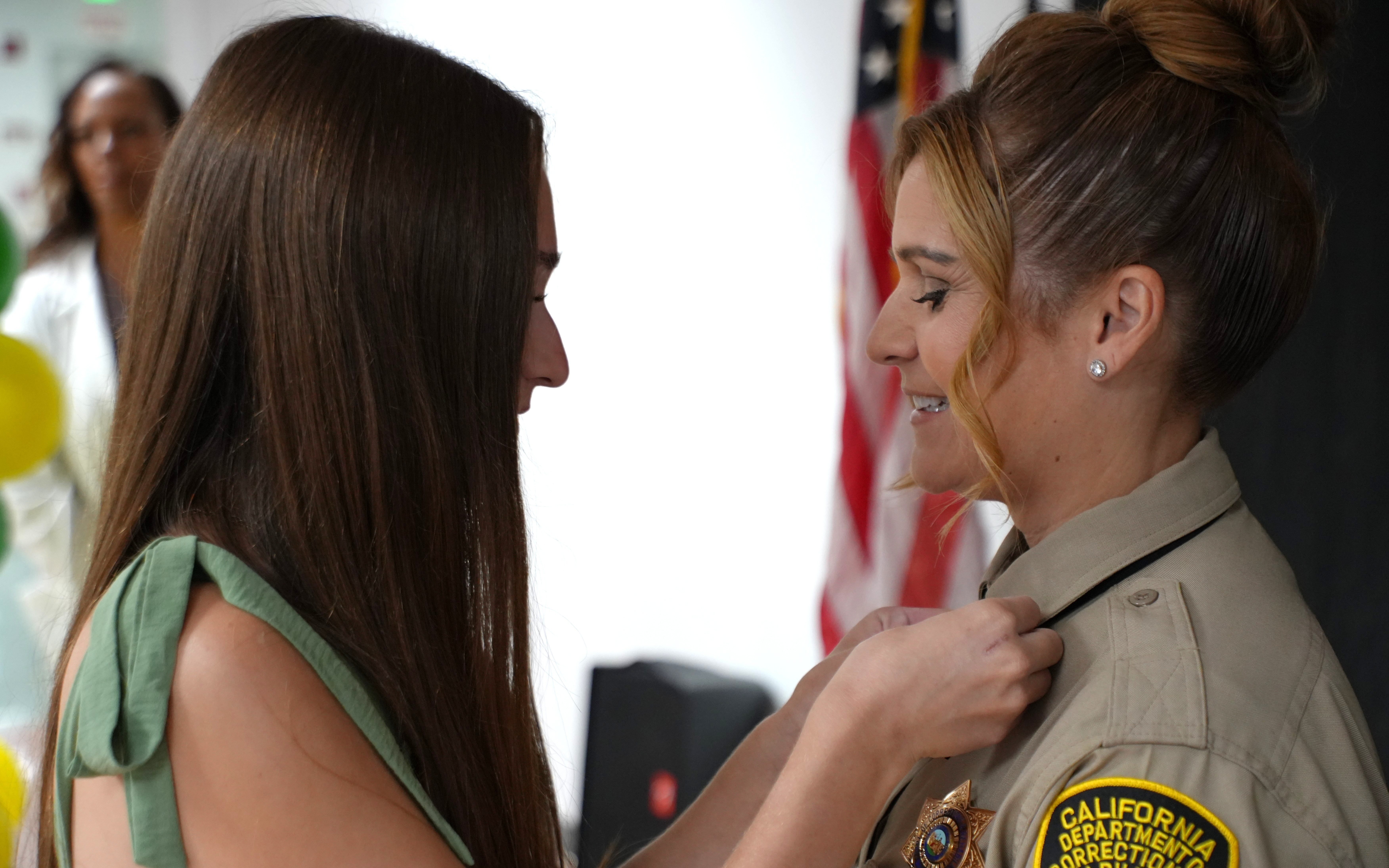
CHCF hosts third promotional ceremony
California Health Care Facility (CHCF) in Stockton hosted its third promotional ceremony to honor 19 staff members. The summer ceremony…
Read More
Secretary leads San Quentin Learning Center tour
CDCR Secretary Jeff Macomber recently led a tour of the new San Quentin Learning Center for Governor’s Office staff and…
Read More
Watch: Meet Parole Agent Kesteloot
A decade after earning his correctional officer badge, Kyle Kesteloot returned to the academy, this time to become a parole…
Read More