

In our final Cemetery Tales of the season, we look more closely at Harry Stewart, early 1900s embezzler, thief, and swindler. Stewart served time in county jails from Sacramento to Modesto and Fresno before landing in San Quentin and Folsom State Prison.
Stewart comes to our attention thanks to an email from a CDCR staff member seeking to dispel or confirm family stories.
“I would be very interested to see if you could find any information on a distant relative of mine, Harry Stewart. Our family heard he was shot and killed trying to escape Folsom State Prison back in 1930 and is buried out there with just his number to identify his grave. I don’t think he was in there for anything too serious by today’s standards, but I believe his sentence was very long. Maybe your resources could shed more light on the stories we have heard,” writes the employee.
Armed with a name, time frame, and prison of commitment, Inside CDCR got to digging.
Caught with stolen cloth
Stewart begins showing up in police blotters in the early 1900s.
In 1919, he and accomplice James Harris were arrested after a police sting caught them with $1,500 worth of stolen cloth. Swiped the night before, police believed the suspects would attempt to sell it at a Sacramento shop.
Officers waited in the vicinity of the store when Stewart and Harris drove to the front and unloaded a large box. When officers opened the box, it was found to contain the cloth stolen from the California Tailor Shop at 414 J St. in Sacramento.
“(They) have refused to talk of the (crime) other than to deny they are guilty,” reported the Sacramento Bee, Nov. 28, 1919. “Stewart, who is a truck driver, declares two men hired him to take the box to the store.”
The following year, he was charged with embezzling tires.
In 1921, Stewart was accused of setting up his criminal accomplices in a federal drug bust.
“Jason Brennan, member of the theatrical profession, was found guilty of the sale of a bindle of (drugs) to Harry Stewart,” reported the Sacramento Bee, July 19, 1921.
Brennan claimed Stewart was a plant used by the agents.
While mainly focusing on petty crimes, Stewart was also an accused bigamist, with two women claiming to be his wives.
Stewart’s coat caper
“Harry Stewart, alias H.G. Spencer, came up smiling in the police station,” reported the Sacramento Star, Aug. 14, 1923. “Stewart was arrested in Stockton (yesterday) at the request of local police. He was returned to (Sacramento) by Detective Sgt. Ed Brown.”
Apparently, Stewart stopped to offer help to a woman whose vehicle broke down near Sacramento.
“Stewart succeeded in starting the car and running it to a garage,” the newspaper reported. “Noticing (the motorist) left an expensive fur coat in the car, Stewart (returned) to the garage alone. When he was arrested in Stockton, the coat was in his possession, police say. He faces a probable felony charge of grand larceny.”
When news of his arrest made the rounds in Sacramento, actress Judith Kennon claimed to be Stewart’s wife. But she wasn’t the only one as a second woman in Sacramento also claimed to be his wife.
“Bigamy charges will also be brought against the man, police say,” according to the newspaper. “And Stewart, well dressed and smiling, says nothing.”
In 1924, Stewart was charged with embezzling a $600 diamond from his wife, Judith, a former Ziegfield Follies performer. He was sentenced to five years in San Quentin. In one newspaper account, he admits in court to being a narcotic addict, perhaps giving some insight into the reasons driving his criminal activity.
Escape from county jails, hospitals
Stewart also had a habit of slipping the confines of the county clink, regardless of which county was housing him.
In August 1920, he escaped from the Stanislaus County hospital while being held for a psychiatric evaluation. He’d been arrested in May for forgery but on Aug. 9, he was taken to the hospital when doctors “pronounced him temporarily insane.” He escaped the following night.
“(He) made (his escape) by digging his way out through the floor of his room on the night of Aug. 10,” reported the Fresno Morning Republican, March 19, 1921. “Harry Stewart (was) last night returned to the county jail (in Modesto) by Deputy Sheriff Emmett Elmore.”
Stewart was found by police already in the Sacramento County Jail serving 60 days for auto theft. At the end of his sentence, he was released to Deputy Sheriff Elmore.
He also escaped the jail at San Joaquin County.
“Four (San Joaquin) county jail prisoners have been recaptured after a wholesale attempt to break jail in which (the) jailer was badly beaten,” reported the Sacramento Bee, Nov. 8, 1924. “The fifth man, Harry Stewart, awaiting trial on a number of minor charges, is still at large.”
Man of many numbers
Stewart spent a lot of time behind bars. In Sacramento County Jail, it was 9026. In Fresno, it was 2203. At Los Angeles, it 20048. While at Stanislaus County Jail, he received number 311 while in Oakland, he was given 11722. At San Quentin in 1924, he was given the number 39477. While he was paroled in January 1928, he was only free a short time.
In October 1928, he, his new wife, and an accomplice were arrested after a string San Francisco area stores were robbed.
“Stewart, who is also known under the aliases of Coffing and Glenn, served a term for embezzlement from Fresno County,” reported the Oakland Tribune, Oct. 3, 1928.
The robberies earned him a one-year-to-life sentence.
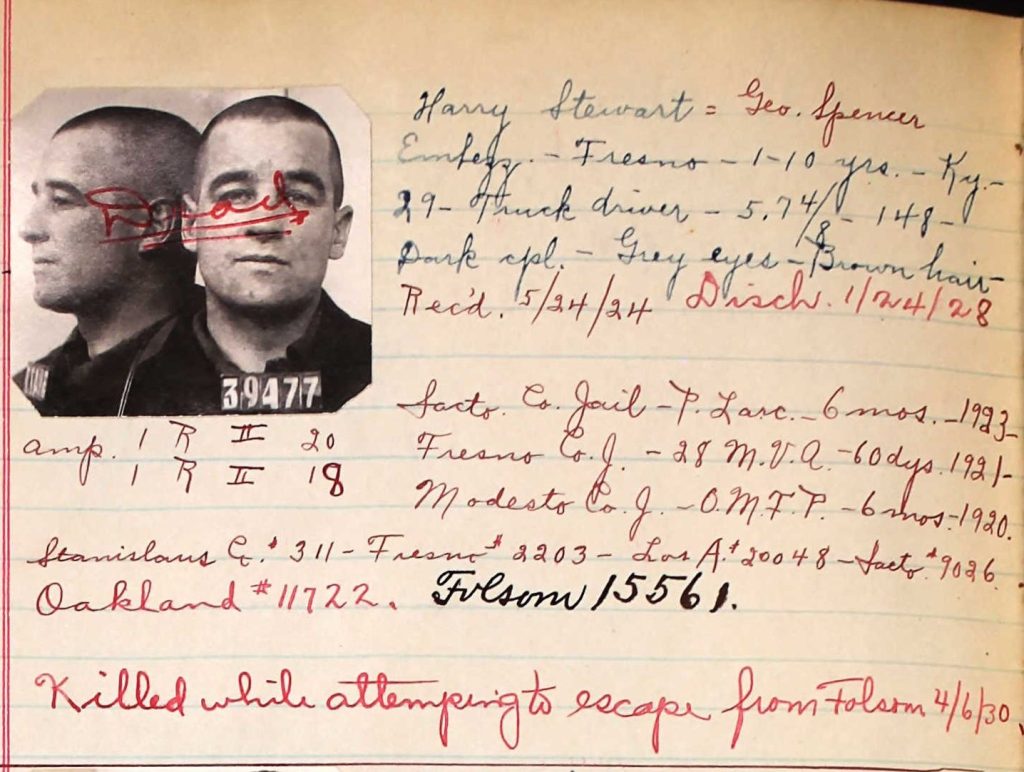
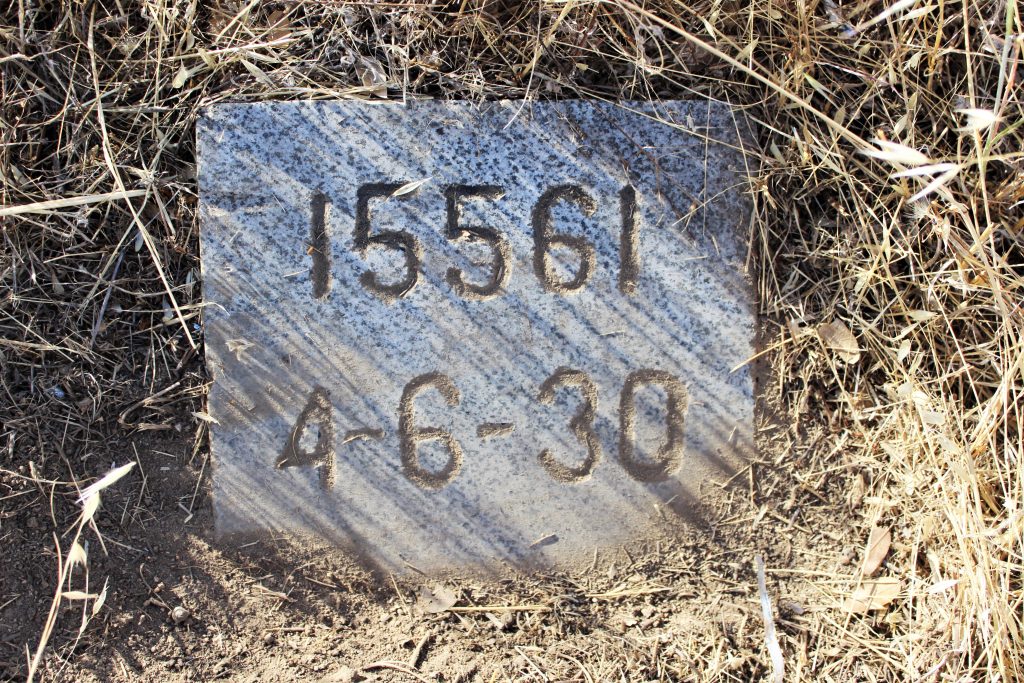
His final number, and the one marking his final resting place at Folsom State Prison, is 15561. Stewart’s entry in the register at San Quentin notes he was killed while attempting to escape from Folsom on April 6, 1930. Across his photo, prison staff scrawled the word “dead,” a common practice at the time.
Stewart’s last day
While a baseball game was being enjoyed by the incarcerated population at Folsom, Stewart and a few others made a break for the canal. Spotted by one of the guards, a warning shot was fired, but Stewart and two others kept running.
“A guard on the tramway which leads from the upper yard down into the quarry, or lower yard, first noted the attempt at escape. He saw the three (men) dash toward the canal which flows between the quarry and the banks of the American River. His shout to them to stop, accompanied by a shot over their heads, went unanswered,” reported the Sacramento Bee, April 7, 1930.
From their tower posts, guards joined in firing over the heads of the fleeing men.
“They refused to halt and continued running,” reported the newspaper. “When shots fired into the air failed to (stop) the fugitives, the guards turned their rifles upon the men. Stewart fell at the first volley.”
Story by Don Chaddock, Inside CDCR editor
Learn more about California prison history.
Follow CDCR on YouTube, Facebook, X (formerly Twitter). Listen to the CDCR Unlocked podcast.
Cemetery Tales
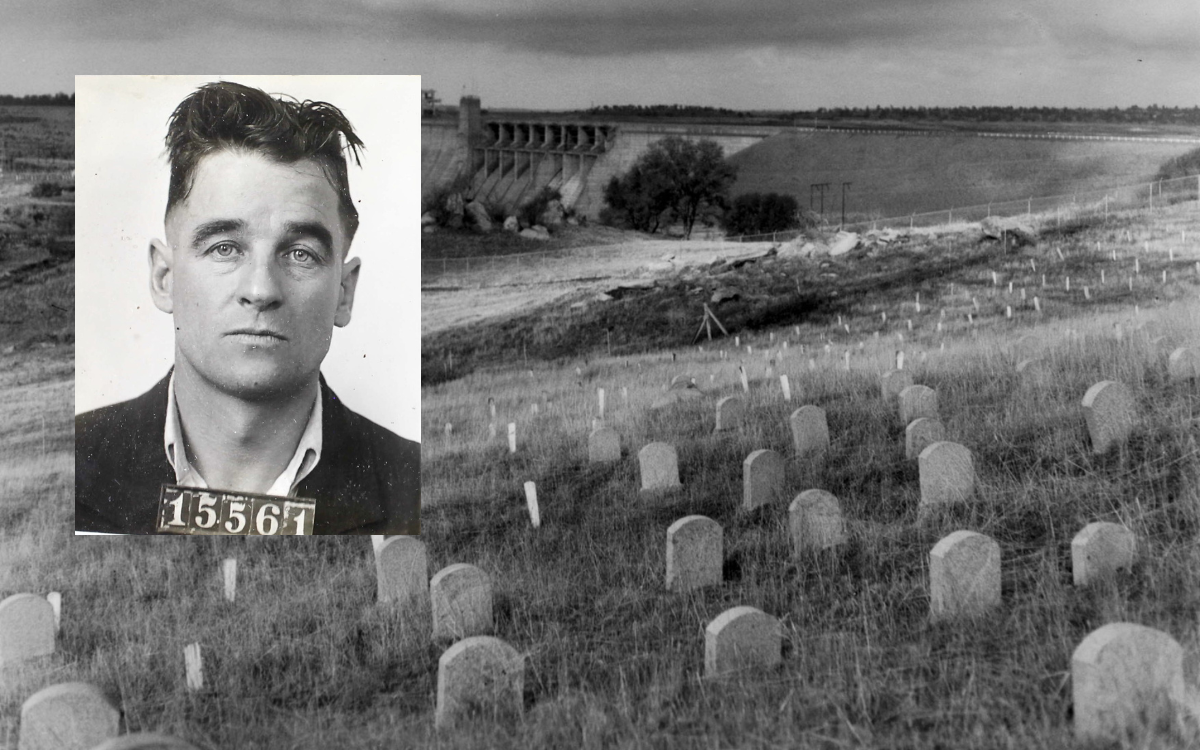
Cemetery Tales: Harry Stewart, Fresno embezzler
In our final Cemetery Tales of the season, we look more closely at Harry Stewart, early 1900s embezzler, thief, and…
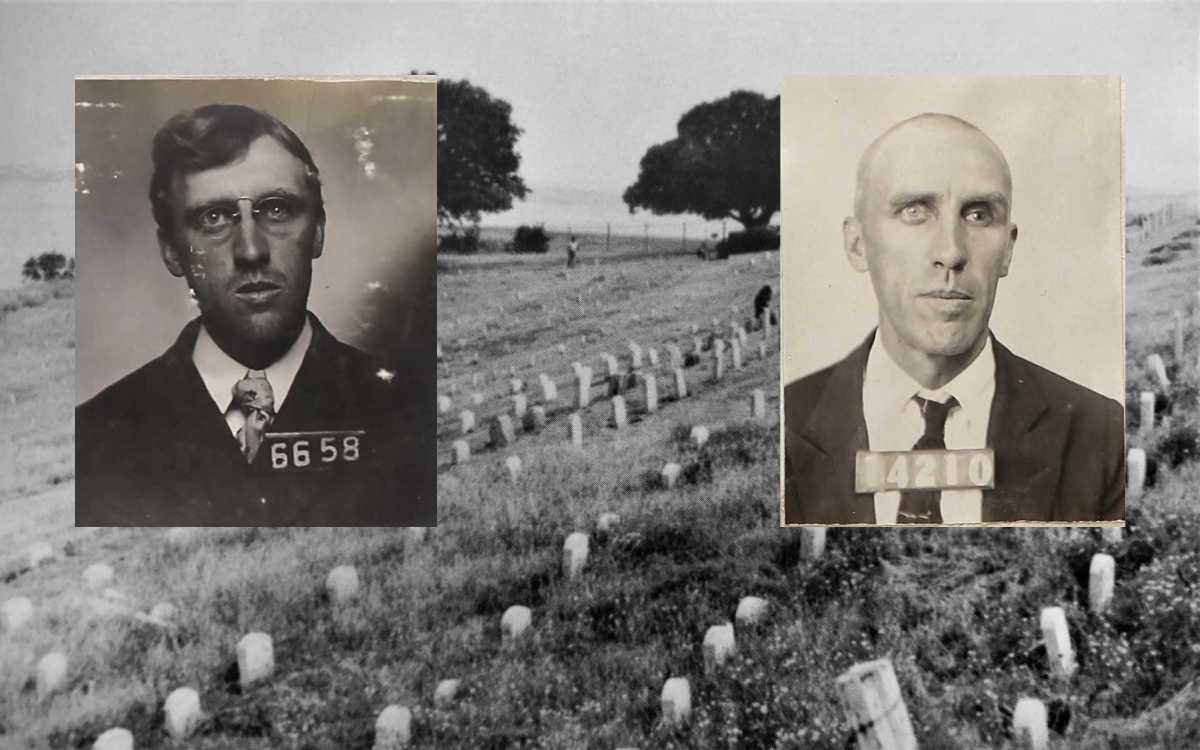
Cemetery Tales: Meet JE McKim, thieving drifter
In our third installment of this month’s Cemetery Tales, we look at a drifter with a long criminal record dating…
Cemetery Tales: Raymond Blade and Henry Hunt
The second installment of this month’s Cemetery Tales looks at two incarcerated people at different stages in their lives when…

Cemetery Tales: John Beebe and Joseph Balado
The first Cemetery Tales story for 2025 looks at the lives of career criminal John Beebe and Joseph “Jose” Balado,…

Cemetery Tales: Estranged husband and a robber
In this month’s fifth installment of Cemetery Tales, we examine the stories of an estranged husband and a robber who…
Cemetery Tales: The farmer and a self‑appointed king
Our fourth Cemetery Tales looks at farmer-turned-double-murderer George Biggs and Judah Benjamin, a self-proclaimed king. Both men ended up in…