

With 15 women incarcerated at San Quentin in the mid-1880s, the state decided to create a matron position to oversee them.
Originally housed above the Captain’s Porch, the incarcerated women were kept separate from the men. The building was eventually expanded to create a wing for the women. Later, a new facility, dubbed Bay View, was constructed on the point just outside the wall. When California Institution for Women at Tehachapi was activated in 1933, the women were relocated and their building was repurposed.
In this installment of Unlocking History, we look more closely at the first women to hold the matron position at San Quentin.
1885: Lancaster is first San Quentin matron
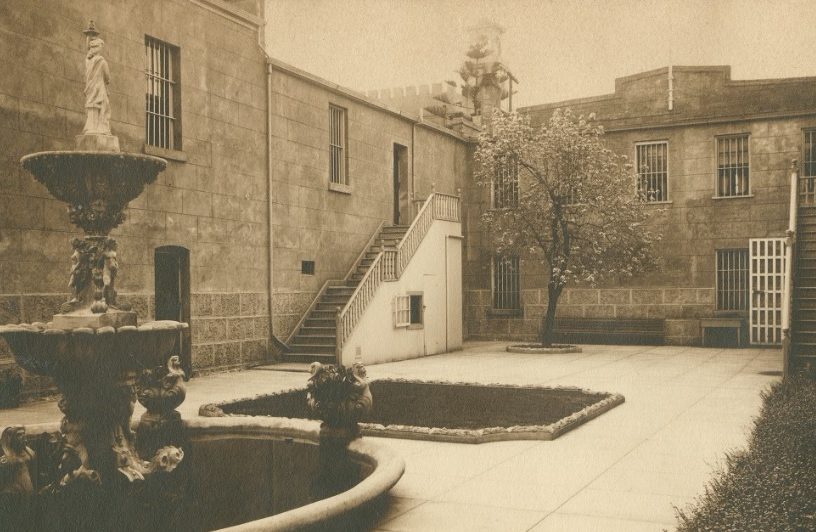
Changes came to San Quentin in 1885. First, the Prison Board of Directors voted to have all correctional officers wear uniforms. Second, they created the prison matron position.
“The women’s department is under the supervision of Mrs. Lancaster, who is the matron,” reported the Merced Sun-Star, Aug. 1, 1885, in a piece penned by Mrs. R.G. Steele.
Steele toured the Women’s Department and met with the Prison Board of Directors.
She described the matron as a “pleasant little widow gifted with firmness which will enable her to command the profound respect of those under her charge.”
The newspaper described the Women’s Department as having 19 sleeping rooms containing a bed and rocking chair.
“In the large dining room is a long table with comfortable seats and each woman is seated according to the number of her room. They have three meals per day with plenty of good substantial food,” the Sun-Star reported. “The cooking, cleaning, and chamber work is done by these women prisoners under the supervision of Mrs. Lancaster and Capt. Auld.”
Nearly a month later, the Prison Board of Directors praised Lancaster for improving conditions.
“Director Hendricks submitted a (report in which) he finds general improvement (in) the female department,” reported The Call Supplement, Aug. 27, 1885. “The management of that department by the matron, Mrs. Lancaster, is especially commended.”
In his report, Hendricks wrote, “(The women’s) contentment and happiness (are) much improved, their moral condition much benefited, (and are) living a great deal better.”
No other information regarding Mrs. Lancaster was found.
1888: Mary Kane is second San Quentin matron
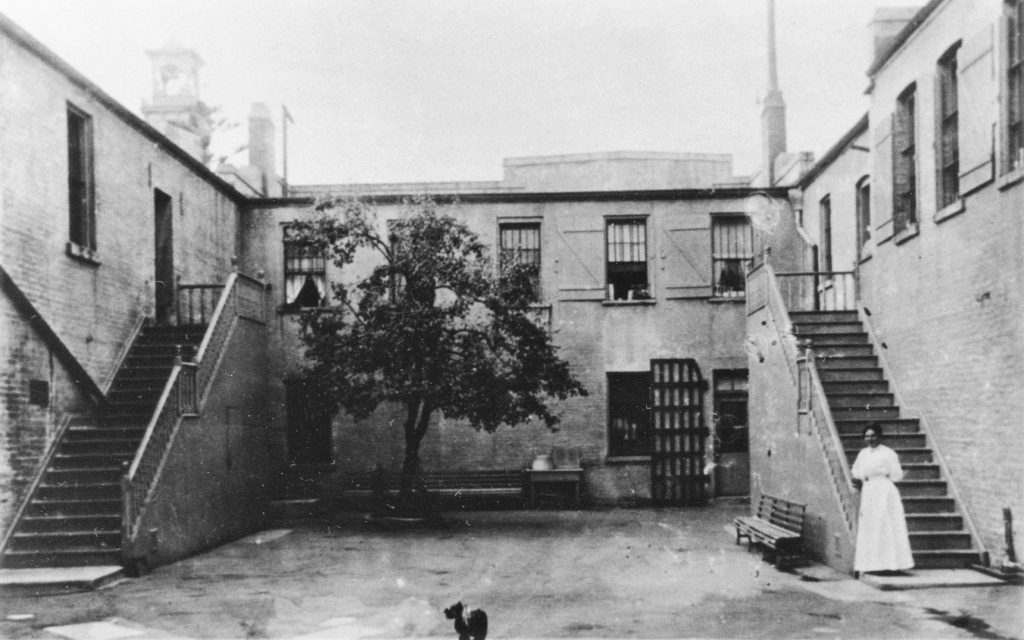
After Lancaster’s service, Mary Kane was named her replacement as matron of the prison in January 1888.
“General McComb last week took full charge of San Quentin Prison,” reported the Sausalito News, Jan. 5, 1888. “Warden McComb (appointed as) matron of the female prison, Mrs. Mary Kane.”
Seven months later, she was attacked by convicted murderer Mary Von.
“It appears (Kane) had gone her usual rounds locking up the prisoners, and (believing) she had them all safe, was going down the stairs leading to the washroom,” reported the San Francisco Call Bulletin, July 17, 1888. “Von, who was (hiding) in a doorway, suddenly sprang upon her and dealt her a heavy blow with an iron instrument used to lift the lids off a cooking stove.”
Kane was able to scream for help while Von continued her assault. Officers quickly rushed in and disarmed Von. Kane served in her position until 1891.
Matrons from 1891-1918
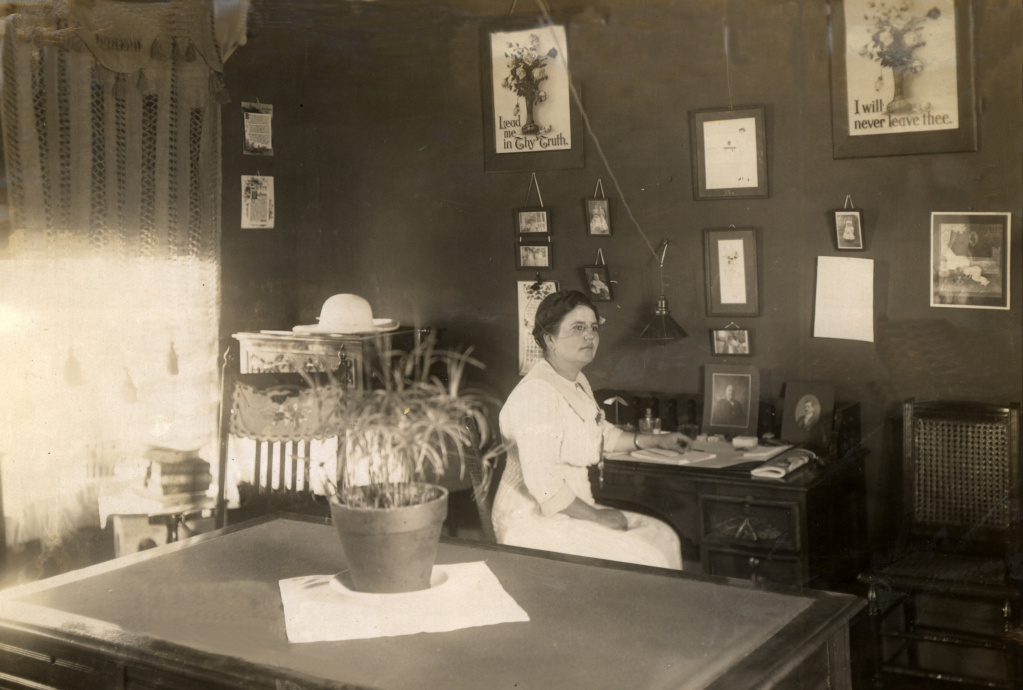
- 1891: C.E. Dutcher was then appointed by Warden Hale, replacing Mary Kane. She was possibly Catherine Elizabeth Dutcher, who passed away in 1906 at age 74. She is buried in Sacramento.
- 1895: Mrs. Keys was appointed matron by Warden Hale early in the year. She is most likely Kate Keys, who passed away in 1909 in Berkeley at age 63.
- 1895 (late) or 1896: Belle Van Doren appointed matron. She served in the role until 1909, holding the distinction as the longest-serving San Quentin matron. Widowed, she lived on prison grounds with her son.
- 1909: Genevieve Smith was appointed matron. She served in the role until 1914.
- 1914: Jessie E. Whalen, a mental health advocate, was appointed matron by Warden James Johnston. When the U.S. entered World War I, she enlisted in the Army as a nurse in 1918. Whalen served soldiers suffering from shell shock, now known as post-traumatic stress, during the war. When she returned home, she continued her mental health work at Patton State Hospital.
Story by Don Chaddock, Inside CDCR editor
Follow CDCR on YouTube, Facebook, X (formerly Twitter). Listen to the CDCR Unlocked podcast.
Learn more about California prison history.
Explore CDCR history
Meet the first matrons of San Quentin
With 15 women incarcerated at San Quentin in the mid-1880s, the state decided to create a matron position to oversee…
Roosevelt Clopton served state as officer, agent
For military veteran Roosevelt “Ted” Clopton, being a lifelong student guided his choices from joining the Army to becoming a…
SQ Captain Rivera Smith served nearly 4 decades
Rivera Smith was the longest serving staff member at San Quentin (SQ) when he passed away in 1950, serving nearly…
Echoes from the Past: Restoring history’s missing pages
While researching stories for the Unlocking History series, we often find damaged documents, missing photos, or incomplete information. One example…
Family seeks information on 1903 counterfeiter
A recent question came across the Inside CDCR desk regarding a counterfeiter who was incarcerated at San Quentin in 1903.…