

(Editor’s note: CDCR education leaders recently spent three days in leadership training to improve instruction methods and support teachers.)
The success of California’s prison education programs starts long before students enter a classroom. Often, it starts with the leaders responsible for shaping what happens inside them. That’s where the Instructional Leadership Development Program, or ILDP, comes in.
“The whole experience was geared at supporting teachers, teaching and learning,” said Troy Tenhet, associate superintendent for Region III. “What is it really that the mission is? Get the incarcerated folks ready and tooled up to be successful when they get let out the gate.”
Gathering to learn
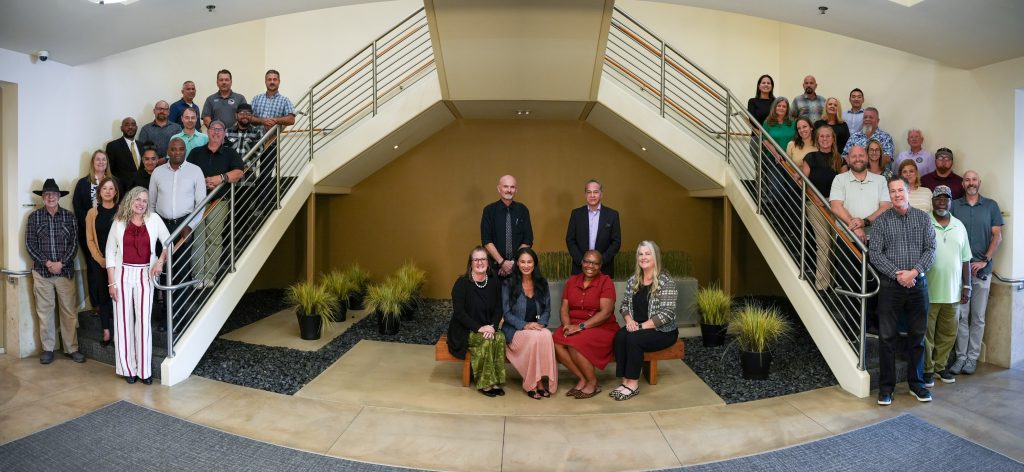
This mission brought administrators from across CDCR’s education system together for ILDP. The training is designed to strengthen instructional leadership and improve student learning outcomes in CDCR classrooms throughout the state.
Those outcomes are critical at increasing safe reentry. CDCR research shows those who earn Educational Merit Credits succeeded on parole 76.7 percent of the time.
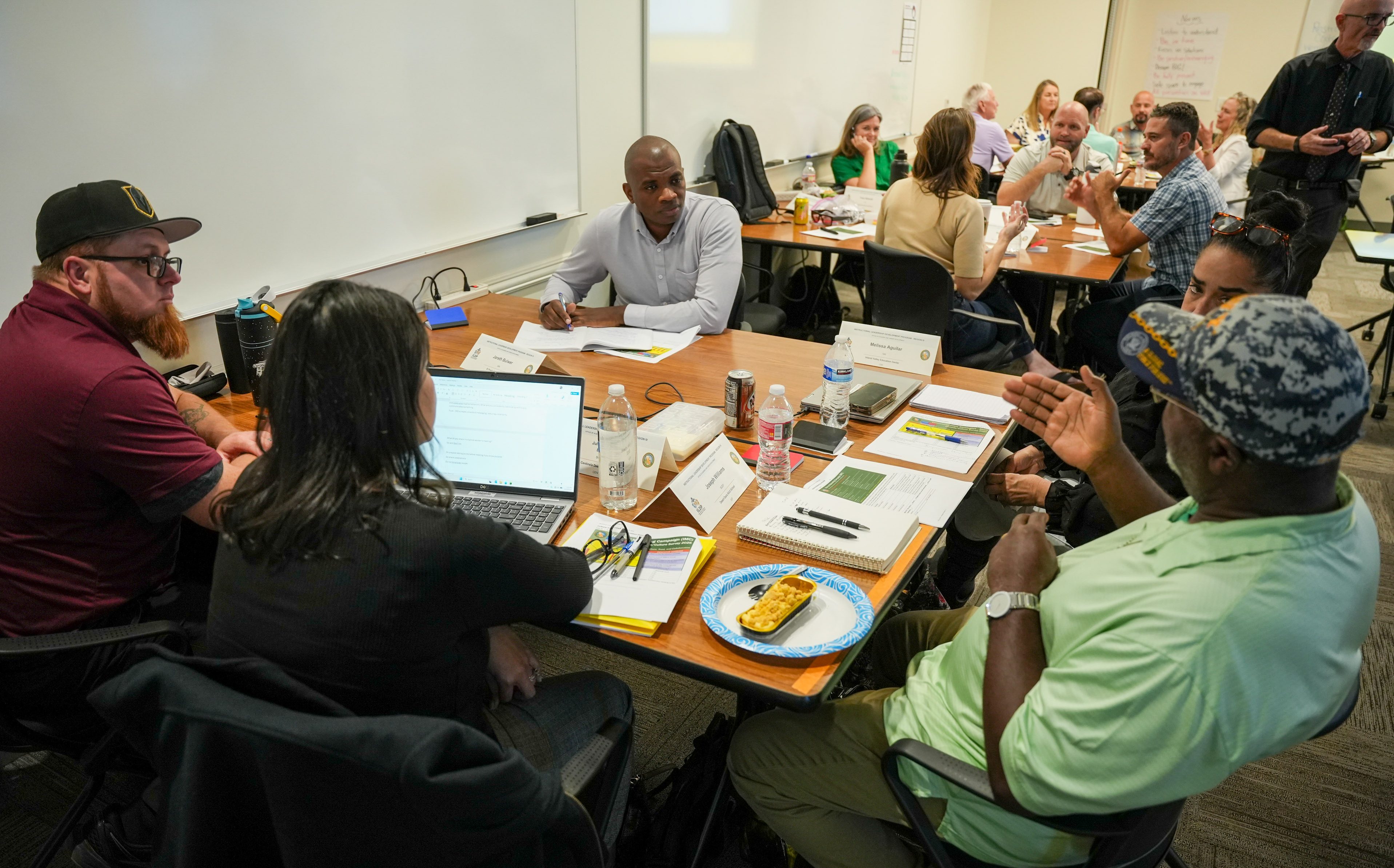
Rather than relying on lectures, the ILDP team designed the training around discussion, collaboration and problem-solving. People worked through scenarios, analyzed education data and modeled what administrators could do at their own sites.
“It wasn’t me and Nicole (Malan) and Wendy (Olono) standing up there, just preaching from the pulpit. These administrators were talking to each other,” Tenhet said. “We were kind of modeling what we expect them to do at the sites with their teachers and their staff.”
They were the kind of practices and conversations Region IV Associate Superintendent Nicole Malan said staff could observe and promote in their own classrooms.
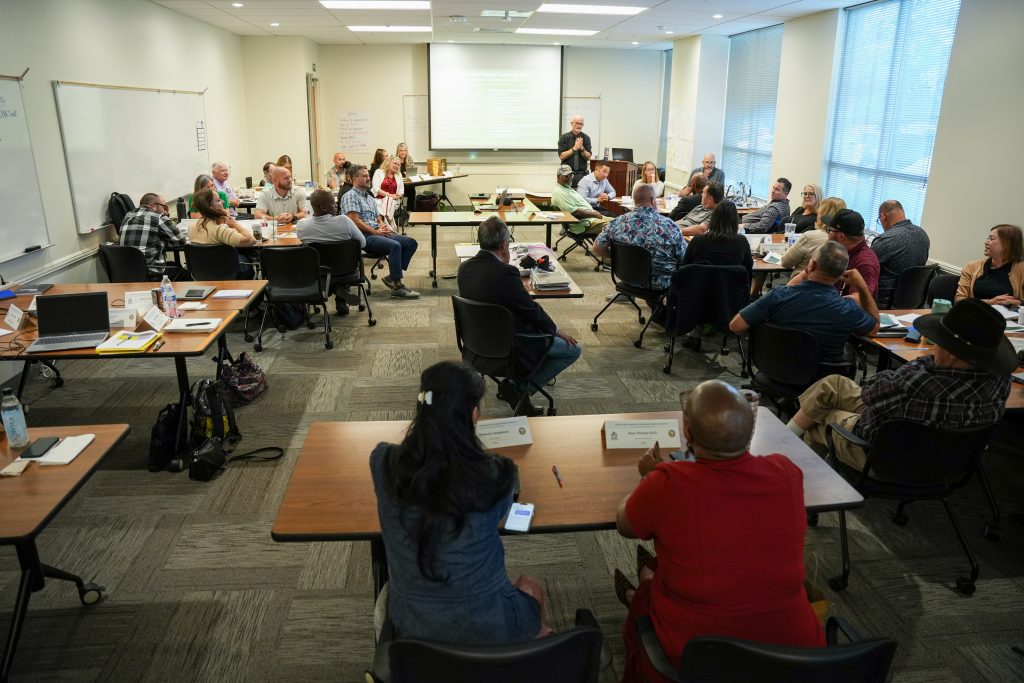
These lessons resonated with Alesha McCoy, supervisor of academic instruction at Corcoran State Prison’s Visions Adult School. While she’s been with CDCR for three years, she just entered her second month as an administrator. She said one of the program’s biggest strengths was the opportunity to work with colleagues facing similar day-to-day challenges.
“I could probably reach out right now to 10 or 15 people, and they would help me in a heartbeat if I had an issue like ‘Hey, can you help me? What would you do about this?’” McCoy said.
It didn’t take long for her to put those lessons into practice. Her first push after getting back to Corcoran centered on having everyone use academic language – and holding them to that standard – by using “sentence frames.”
“We gave different scenarios of how we can use it and then you give the accountability of ‘OK, for this next month, we’re going to be looking at this. When we come in, this is what we want to see,” McCoy said. “I mean just laying it out step by step, so there’s no questions about it.”
Communication, support, accountability
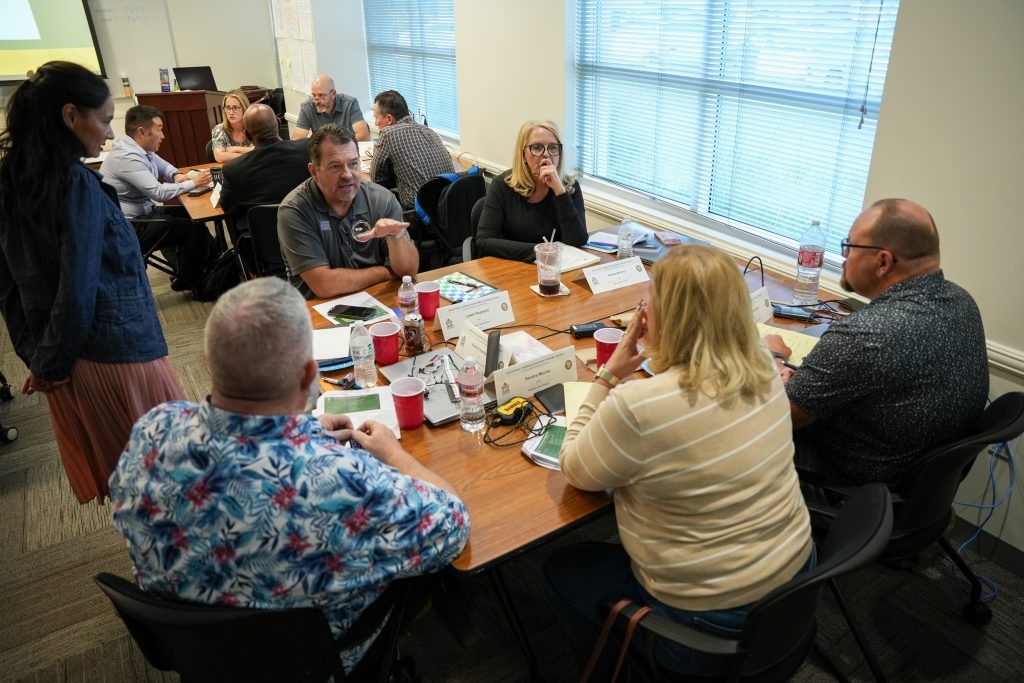
The emphasis was on communication, supporting staff and accountability through consistent communication.
“Sometimes, we just expect people to know what we want, and we want to hold them accountable,” McCoy said. “But really without that really in-depth communication and outlining what we want, expecting people to be accountable for something is our job to communicate to that and support them in those endeavors, to be accountable… We have an obligation to elevate our practice and to support our students.”
The training also focused on how staff could use data to better guide instruction, training people to look beyond individual assessments and examine how data, collaboration and feedback can drive improvement, according to McCoy. That emphasis is ultimately the difference between instructional leadership and general leadership.
“When we’re looking at instructional leadership, we are looking at how it drives student learning,” Malan said.
Throughout the training, organizers modeled research-based strategies referred to as Common Instructional Practices and highlighted strategies administrators should look for during classroom observations. These included structured student interaction, checking for understanding, academic language and the use of graphic organizers.
“What we were wanting to do is just really show what good learning looks like in a classroom setting,” Malan said.
In the end, the days of training revolved around a broader purpose: helping incarcerated students develop the skills they need for success after release.
“We want to make sure that we capitalize on that and that we’re giving that high-quality instruction and we’re really given these folks a chance to be successful,” Tenhet said. “That’s why you do stuff like this. That’s why it’s so critical.”
Story by Eric Escalante, information officer
Office of Public and Employee Communications
Follow CDCR on YouTube, Facebook, X (formerly Twitter).
See more stories about CDCR facilities, training and jobs.
Related content
CDCR education leaders rethink instruction
(Editor’s note: CDCR education leaders recently spent three days in leadership training to improve instruction methods and support teachers.) The…
Read More
CCWF marks 36 years of public safety
Central California Women’s Facility (CCWF) in Chowchilla recently hosted a family night to mark 36 years of public safety for…
Read More
CCI hosts 2026 staff health fair
The California Correctional Institution (CCI) in Tehachapi recently hosted its 2026 annual Health Fair, an event fostering staff wellness and…
Read More