

Salinas Valley State Prison (SVSP)
Main Phone: (831) 678-5500
Physical Address: 31625 Highway 101, Soledad, CA 93960 (Directions)
- Institution: P. O. Box 1020, Soledad, CA 93960-1020
- Inmate Mail: P. O. Box 1050, Soledad, CA 93960-1050
(make sure to include Inmate’s Name and CDCR number as well as last known housing)
Visiting an incarcerated person: learn how to visit an incarcerated person at our institutions.
Other Resources: explore family & friends resources, including how to contact or send packages to those incarcerated in our institutions.
Inmate Educational Programs
Incarcerated Person Self Help Programs and Volunteer Programs
SVSP offers multiple self-help groups and volunteer programs. The institution is continually striving to help facilitate a productive growth of new programming. These programs are designed to enable the inmate population a way to express themselves in a non-violent manner and/or utilize various coping mechanisms, with the overall goal of reducing adverse behavior and recidivism rates to those who participate.
Current Programs:
- Alcoholic Anonymous (AA) -Volunteer facilitators teach 12- step recovery program where inmates learn to acknowledge alcohol addiction and the need to live a sober life.
- Spanish Language Groups Available
- Narcotics Anonymous (NA) – Volunteer facilitators teach 12- step recovery program where inmates learn to acknowledge narcotic addiction and the need to live a sober life.
- Spanish Language Groups Available
- Veterans Group – Self Help sponsors provide aid and support to inmates that are Veterans relating to benefits, Post Traumatic Stress Disorder (PTSD) and substance abuse.
- Veterans Healing Veterans (VHV) – Veteran Volunteers provide aid and support in this trauma recovery program by practicing self-awareness and successful transition back into society.
- Power Up – Empowers individuals to get out of old behaviors buy going into oneself for solutions
- Criminal & Gang Members Anonymous – Self Help Sponsors provide a network of peers to share life experiences which shall help accomplish the change and transformation.
- Creative Writing – Self Help Sponsors and Volunteers promotes positive relationships and team building through their knowledge and creativity.
- Alternatives to Violence (AVP) – Volunteer facilitators teach how to deal with anger in a positive manner.
Lifer Support Group – The group’s purpose is to raise awareness and improve attitudes while helping Life Term prisoners adjust to a more focused disciplined and structured life within their environment. The group shall deal with issues such as self-esteem, positive behavior, personal character, conduct and anger management.
- Spanish Language Groups Available
- Freedom Within Prison Project – Volunteers provide incarcerated persons with the opportunity to reform behavior by promoting positive family relationships and skills to be active and involved fathers.
- Bridges to Freedom – Self Help Sponsors encourage incarcerated persons to prepare for parole, suitability hearings, clemency hearings and community reentry by learning skills to put remorse into action.
- Ruff Start – Partnered with the SPCA, incarcerated persons are assigned to specific dog to provide a safe, clean, and human care.
- Anger Management – Self Help sponsors follow an established curriculum with the purpose of managing anger, emotional intelligence, and empathy awareness.
- Kid CAT – Self Help Sponsors inspire humanity through education, mentorship, and restorative practices.
- Malachi Dads – Self Help Sponsors provide opportunity for peer support network designed for fathers in prison. Christ followers grow in their faith with practical biblical advice for life, marriage, and parenting.
- Gavel – Self Help Sponsors provide an avenue of expressing creativity through speech. Participants are encouraged to read and listen analytically through peer sport network.
- Alternative Music Program (AMP) – Combines composers, artists, and writers who have a genuine desire to withdraw from illegal criminal activities, gang involvement and other destructive addictions.
- Home After Harm – Volunteers from Uncommon Law provide the tools for people to develop accountability for past actions, heal from past trauma and create their own safe pathways home from prison.
- Center for Council – Self Help Sponsors provides a network of peers to change habits through the application of the principles of the CGA 12 steps to Recovery, 12 Traditions to Safety and 12 Promises through Recovery.
- Trendsetters – Self Help Sponsors inspire men to live to higher standards of character and principles by showcasing leadership and intelligence in all interactions with others.
- Life Cycle – Self Help Sponsors provide positive learning experience of working together in solidarity to improve their environment while positively contributing to the reduction of violence and recidivism.
- Right Person Right Prison – Self Help Sponsors assist transgender, non-binary or intersex incarcerated persons with transition from living in a female institution to living in a male institution.
- Writer’s Workshop – Volunteers provide an opportunity for Enhanced Outpatient Inmates to develop their ability to express ideas and experiences in writing. Creativity is a way inmates can come to know and own the events and feelings of their lives and expand them from personal suffering into communal experience. In breaking the silence, the journey toward wholeness begins.
- Victim Impact Program – Self Help Sponsors provide instructions to understand and acknowledge how their actions have harmed victims, victims’ families and their communities by focusing on areas of physical, financial, emotional and religious/spiritual.
DRP Programs
Integrated Substance Use Disorder Treatment (ISUDT)–Overview
On January 21, 2020, the California Department of Corrections and Rehabilitation (CDCR) and California Correctional Health Care Services (CCHCS) implemented ISUDT. ISUDT is a comprehensive and evidence-based cross-divisional program with pathways to treatment through DRP Cognitive Behavioral Interventions (CBI) programs referred to as:
CBI-Intensive Outpatient (Medical Classification T1, SOMS assignment code ISI) 2-hours/day, 5-days/week, 52-weeks completion
CBI-Outpatient (Medical Classification T2, SOMS assignment code ISO) 2-hours/day, 3-days/week, 16-weeks completion
CBI-Life Skills (Medical Classification T3, SOMS assignment code CB2) 2-hours/day, 3-days/week, 29-weeks completion
All participants will be assessed by medical and referred to one of the CBI classes.
Salinas Valley State Prison is located in Monterey County on the Pacific Central Coast of California, famous for some of the world’s most beautiful coastlines. It also features the well-known destinations of Pebble Beach, Big Sur State Park and the John Steinbeck Center. Monterey County offers ideal climate, cultural diversity, and a unique blend of small-town and bigger city opportunity, all make this location a desired place to live, work and play.


Productivity and self-improvement opportunities are provided for inmates through academic classes, work programs, religious and self-help groups. SVSP is continually moving forward to increase the quantity and quality of programming afforded to the inmate population in an ongoing effort to help reduce recidivism. SVSP was constructed to meet the access requirements of the Americans with Disabilities Act (ADA). SVSP has been designated to house Level I, III, and IV inmates. The housing of these inmates is accomplished on a Minimum Support Facility (MSF), two 270 design facilities, two 180 design facilities and a 100 cell standalone Administrative Segregation Unit (ASU). SVSP has a Correctional Treatment Center (CTC) where inmates receive professionally supervised health care in an inpatient setting. SVSP provides Correctional Clinical Case Management System (CCCMS), Enhanced Outpatient Program (EOP) and Mental Health Crisis Bed (MHCB) for those inmates requiring mental health services. SVSP also houses inmates who meet the criteria of the CDCR Disability Placement Program (DPP) excluding DPV, DPH and DPS.
This facility provides both outpatient and inpatient mental health services for patients with a serious mental disorder. The licensed Psychiatric Inpatient Program at this facility is designed to provide more intensive treatment for patients who cannot function adequately or stabilize in an outpatient program.
The mission of Salinas Valley State Prison (SVSP) is to provide long-term housing and services for minimum and maximum custody male inmates. In doing so SVSP offers educational, religious and self-help programming in the ongoing effort to help alleviate adverse behavior and reduce recidivism within the prison system. SVSP employees take pride in their continual efforts to ensure the delivery of services to the inmate population and in their primary mission of ensuring public safety and trust.
The SVSP motto: COURAGE, INTEGRITY, PROFESSIONALISM
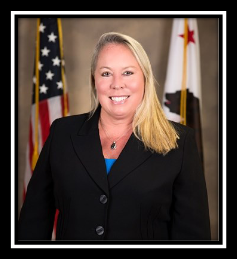
Kelly Santoro was appointed Warden at Salinas Valley State Prison in January 2026 and previously served as acting warden since Jan. 30, 2025.
Santoro attended the California State University Bakersfield where she received her Bachelor of Science Degree in Business Administration in 1990.
In December 1990, she began her career in corrections at Taft Community Correctional Facility. In July of 1993, she began with the Department of Corrections and Rehabilitation (CDCR) as a correctional officer at Centinela State Prison where she promoted to Correctional Counselor I in March 1996. She transferred to North Kern State Prison (NKSP) in July of 1997 as a counselor and promoted to Correctional Counselor II Specialist in the administrative segregation unit in October of 2001 at the California Substance Abuse Treatment Facility (CSATF). In February 2003, she was assigned as the Administrative Assistant and Public Information Officer (AA/PIO) Lieutenant. In February 2005, she continued her assignment as AA/PIO, as Correctional Counselor II Specialist. In March 2006, she promoted to Facility Captain.
She transferred as a Facility Captain to the Health Care Services Division in November 2006 through February 2008 and then promoted to Associate Warden at Corcoran State Prison. She was assigned to the security housing units in March 2009 through July 2009. She transferred back to NKSP in July 2009 where she was assigned as the Associate Warden over Support Services. In April 2010, she transferred to California Substance Abuse Treatment Facility as the Associate Warden. In March 2012, Santoro promoted to Chief Deputy Warden at Wasco State Prison-Reception Center. She served as Warden at NKSP from April 2015 to December 2022.
She has received certification by CDCR Internal Affairs Investigation in Interviewing and Interrogation Techniques and has served as the Equal Opportunity Coordinator. Ms. Santoro is a member of the Executive Advisory Board in the Salvation Army in Visalia. She was a member and past Chapter President of the Chicano Correctional Workers Association. In addition, she is a subject matter expert in various fields, which include Classification, State Personnel Board; Credit Earning Program; and Milestone Matrix Schedule.
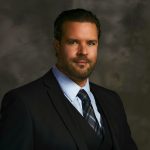
Scott Langevin is the CEO of Salinas Valley State Prison (SVSP).
Scott Langevin has built a reputation for being an accomplished and experienced Executive in today’s complex and ever-changing Healthcare field. Scott has earned advanced degrees from the University of Nevada Las Vegas in the fields of Nuclear Medicine and Healthcare Administration, along with being Six Sigma Black Belt and Champion Certified.
Scott has successfully served as Chief Executive Officer within Government Organizations, Acute Care Hospital Systems, Psychiatric Behavioral Hospitals, and Multi-State Physician Organizations. During this tenure, Scott has also served as both a Board Appointee and member of various professional organizations including the Nevada Hospital Association, American College of Healthcare Executives, National Alliance on Mental Illness, and American Health Care Association. Scott is originally from the State of Minnesota and enjoys traveling throughout the country to experience new places as well as visit friends and family whenever possible. Scott is an avid reader, enjoys hiking and water sports, and has served as an active volunteer in his community for various organizations not limited to the ASPCA and Wounded Warrior Project.
Local Inmate Family Councils (IFC’s) are a gathering of family and friends of the incarcerated who meet regularly with Wardens to support visiting since keeping strong family connections with loved ones is a powerful rehabilitative tool. These IFC’s promote visiting by clarifying rules and regulations as well as discussing health, education, vocational training, packages, books, and related issues. For more information on connecting with a local IFC, please visit the Statewide IFC website.