

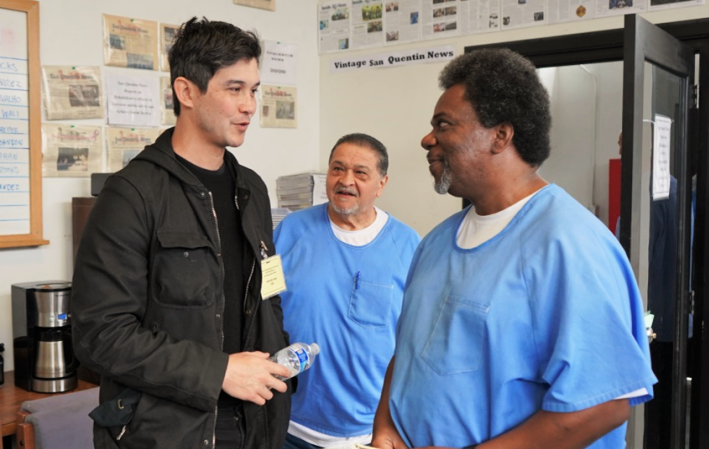
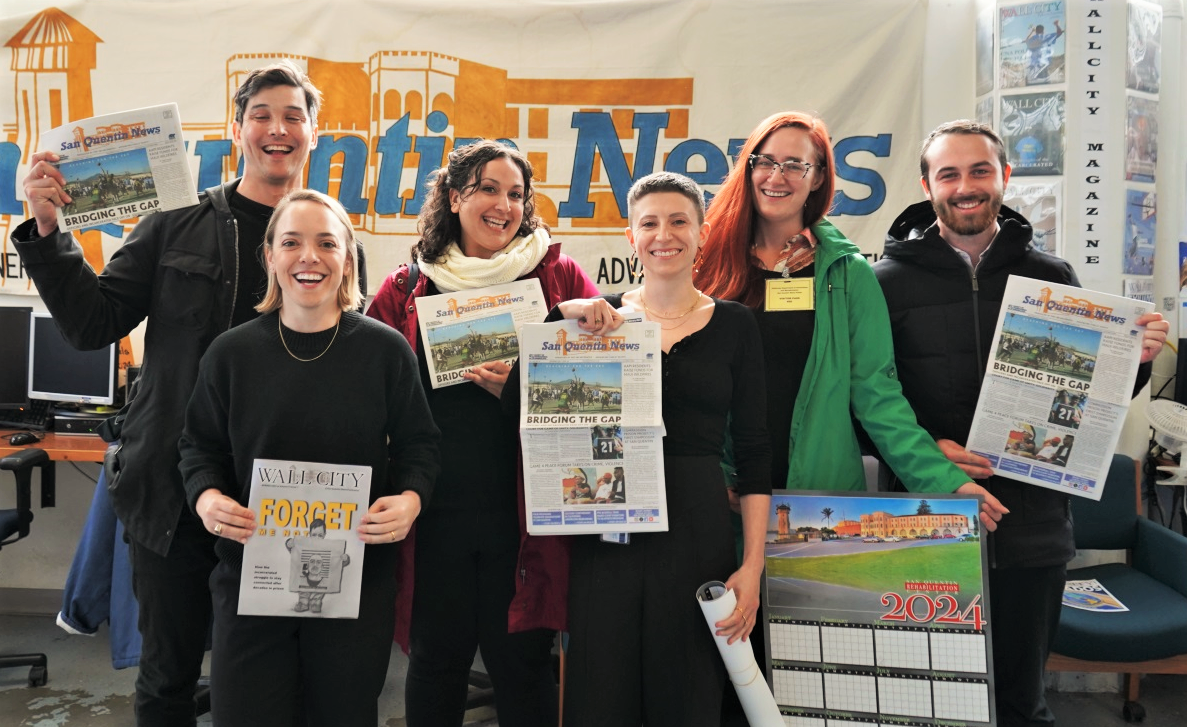
Discussing the parole hearings process and reentry, San Francisco Public Defenders recently met with incarcerated people at San Quentin Rehabilitation Center.
The gathering was held in the Media Center with seven attorneys and 25 incarcerated people attending.
This is the second visit in a year for the San Francisco Public Defender’s Office.
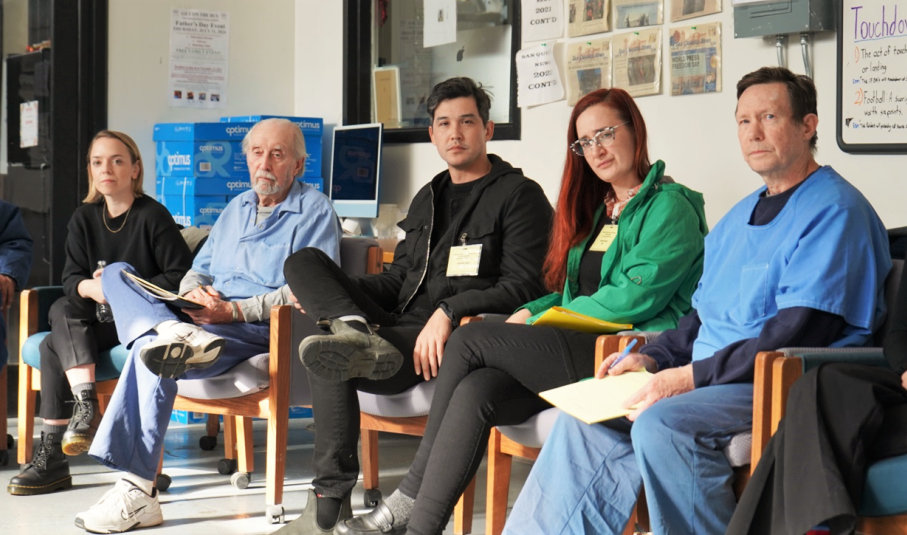
“I have a lot of respect for what you all are doing here,” said Peter Chadwick, one of the incarcerated people attending the visit.
Working with post-convictions for more than a year, one public defender said their goal is to improve social work options for parolees so that returning to prison is not the only option for survival. The other public defenders agreed saying parolees need more resources upon reentry, better reentry plans, and more litigation to help.
Services available for reentry
The public defenders provided reentry information to the residents, including Uncommon Law’s list of transitional housing. They also offered information on the Homecoming Project, an organization providing rooms at private homes for formerly incarcerated men and women.
“The Homecoming Project provides stipends to homeowners in exchange for hosting someone returning home from prison. By matching formerly incarcerated people with safe and stable housing in the community, the project not only bridges a gap in services, it also bridges a social divide,” according to the organization’s website.
When he was 15 years old, Eric Allen began his life of incarceration. Now 30, he spoke about his transformation.
“I felt hopeless,” he said. “I felt a need to change and had to grow up.”
Public Defenders offer advice, information

The public defenders offered advice on the importance of an incarcerated person advocating for themselves. They spoke about parole hearings and filing writs concerning denials.
Another public defender elaborated on the original purpose of the Board of Parole Hearings, saying it was originally created in 1901 to reduce the prison population.
Noah Winchester, a military veteran, has been incarcerated for eight years. He said the resources he has received through the Veterans Group and the Veterans Healing Veterans programs has helped him cope with PTSD. In turn, this has allowed him to feel more a part of the community in the San Quentin Rehabilitation Center.
“What I have experienced, has allowed me to let my guard down,” he said.
At the end of the visit, the attorneys expressed appreciation to the prison and the incarcerated attendees.
Story by Jerry Gearin, Incarcerated Writer
Photos by Aristeo Sampablo, Incarcerated Photographer
San Quentin News
Learn more about the California Model on the CDCR website.
Follow CDCR on YouTube, Facebook, X (formerly Twitter).
Related content
CDCR schools ready incarcerated for reentry
CDCR schools are helping incarcerated individuals get ready for their eventual reentry back into the community. The Adult Basic Education…

Secretary leads San Quentin Learning Center tour
CDCR Secretary Jeff Macomber recently led a tour of the new San Quentin Learning Center for Governor’s Office staff and…
Winning design becomes milestone in MCRP student’s reentry
For Angel Paredes, seeing his design on thousands of Cal Poly Pomona shirts demonstrates the progress he’s made since leaving…