

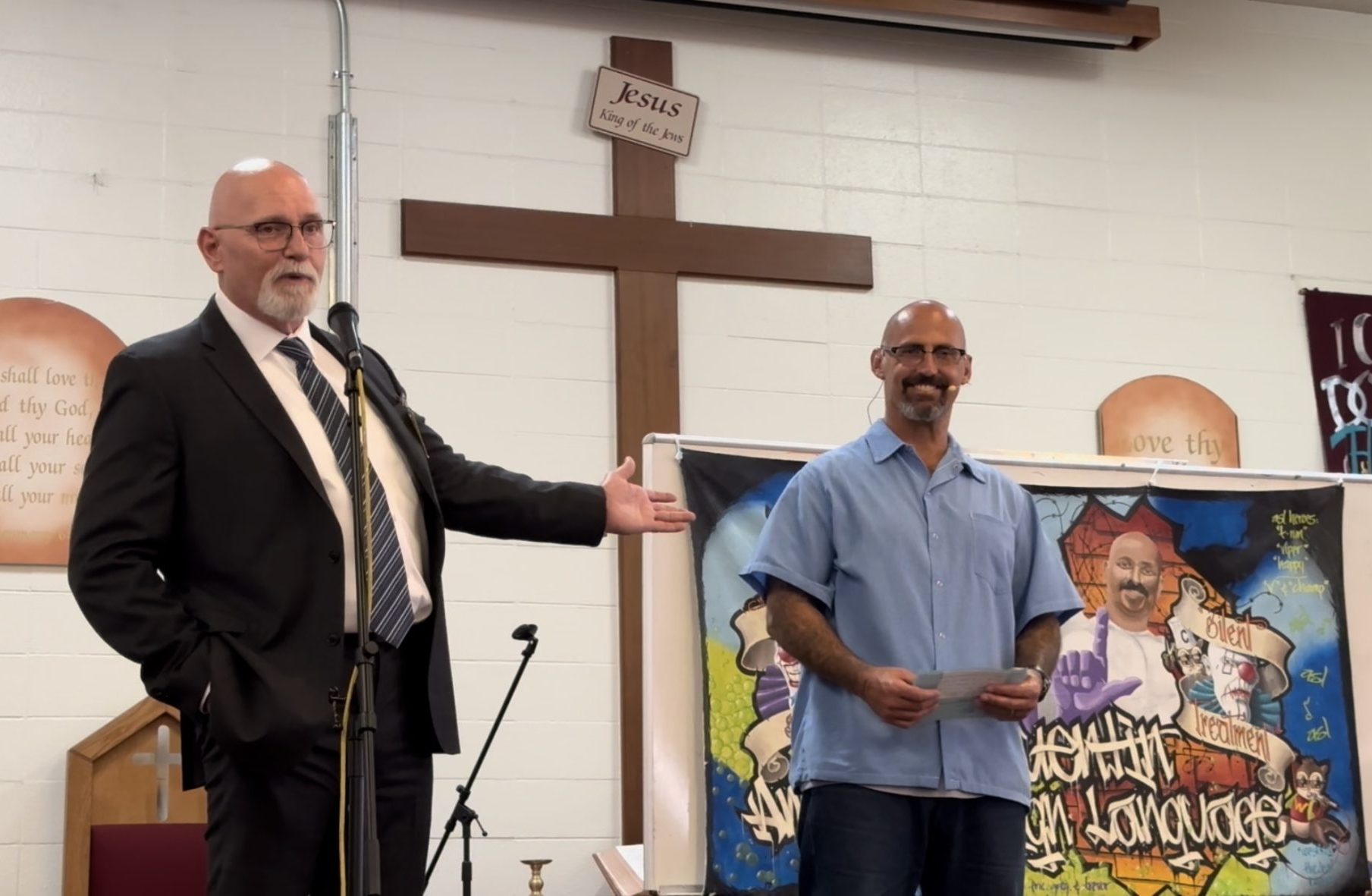
San Quentin Rehabilitation Center recognized 32 students during its second graduation for an American Sign Language (ASL) class. At present, 63 incarcerated individuals are able to communicate with deaf people.
The deaf population at San Quentin comprises eight incarcerated individuals, and the ASL course is taught by incarcerated residents. The class aims to bridge the communication gap between the deaf community and the rest of the population.
Student followed what he felt to be his duty
Watch the video (story continues below):
“I really just wanted to learn the language at first. Then we had all these deaf guys come to our prison and it became more than just learning something,” said Brian Conroy, an ASL graduate. “(It became) more about being able to communicate with the people around me so I felt that it was my duty to take this opportunity.”
The ceremony was held at the chapel with the attendance of family members of the graduates, volunteers, and staff. Musical performances, pizza, and light-hearted jests contributed to the convivial atmosphere of the event.
Proud not of what he knows, but of what he has shared
“It is awesome to see incarcerated deaf people come out of their shell, out of isolation to communicate with society. Even though we are incarcerated, they are communicating with society,” said Tommy Wickerd, lead teacher of the ASL class.
At the ceremony, Wickerd shared that having a deaf brother while growing up made him regret not being more supportive during their youth. This experience inspired him to promote inclusivity within the deaf community at San Quentin Rehabilitation Center by teaching ASL.
“We had our second American Sign Language class and we also had three incarcerated deaf people teach their language to hearing people to break language barriers,” said Wickerd.
By Pedro Calderón Michel, Deputy Press Secretary
Office of Public and Employee Communications

Read more rehabilitation stories.
Follow CDCR on YouTube, Facebook, X (formerly Twitter).
Related content

Secretary leads San Quentin Learning Center tour
CDCR Secretary Jeff Macomber recently led a tour of the new San Quentin Learning Center for Governor’s Office staff and…
Read More
Winning design becomes milestone in MCRP student’s reentry
For Angel Paredes, seeing his design on thousands of Cal Poly Pomona shirts demonstrates the progress he’s made since leaving…
Read More
NKSP walks for Suicide Prevention
North Kern State Prison (NKSP) staff, leadership and the incarcerated population united to raise awareness during National Suicide Prevention Week.…
Read More