


Only three years after California introduced the wild turkey to the state, a swindler found himself behind bars.
(Editor’s note: This story was originally published June 7, 2018, and is being republished on the current Inside CDCR website.)
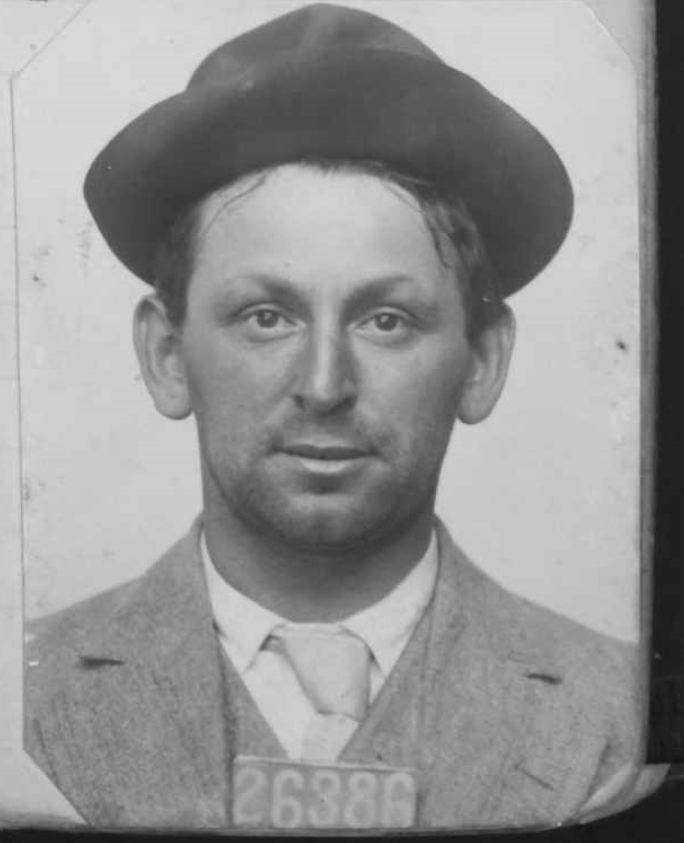
Turkeys were big business at the time. In the shadow of the state’s efforts to establish wild turkeys in California, Sam Tomsky saw an opportunity.
Forging checks to purchase and resale turkeys, Tomsky was arrested in 1911 in San Francisco. He also faced felony charges in Colusa and Yolo counties, defrauding ranchers of turkeys totaling thousands of dollars.
“Tomsky (was) charged with buying turkeys in large numbers and paying for them with checks returned (for) no funds,” reported the Sacramento Union, Jan. 28, 1911.
“Tomsky purchased turkeys, primarily in Hungry Hollow, with checks to which he signed his brother’s name,” reported the Woodland Daily Democrat, May 10, 1911.
Tomsky’s father, an attorney, used every tool at his disposal to save his son. Two years later, a Yolo County Superior Court judge ordered the younger Tomsky to begin a five-year sentence.
“Tomsky, the young man who swindled a number of Yolo County ranches on turkey deals, is under sentence of five years in San Quentin,” reported the Union, March 18, 1913.
Tomsky was received at San Quentin March 19, 1913, to serve five years for “obtaining money under false pretenses.” The 34-year-old’s occupation is listed as salesman. Tomsky was paroled Oct. 19, 1916.
Turkeys aren’t native to California
CDCR employees making their way to work often see deer, turkey and other game animals at their workplace. Enterprise Information Services employees in Rancho Cordova sidestep droppings on their way into the office while employees in other rural areas often find themselves waiting for animals to slowly meander across a road.
One of those game animals – the wild turkey – isn’t native to California. In fact, its introduction to California was part of a coordinated effort.
There were many attempts to introduce the bird to the state, dating as far back as 1877, according to the 2004 Strategic Plan for Turkey Wildlife Management published by the California Department of Fish and Wildlife. In the early 1900s, 1920s and 1950s, additional attempts were made.
In this installment of Unlocking History, we’re talking turkey.
Bird bounty hunter hired by state
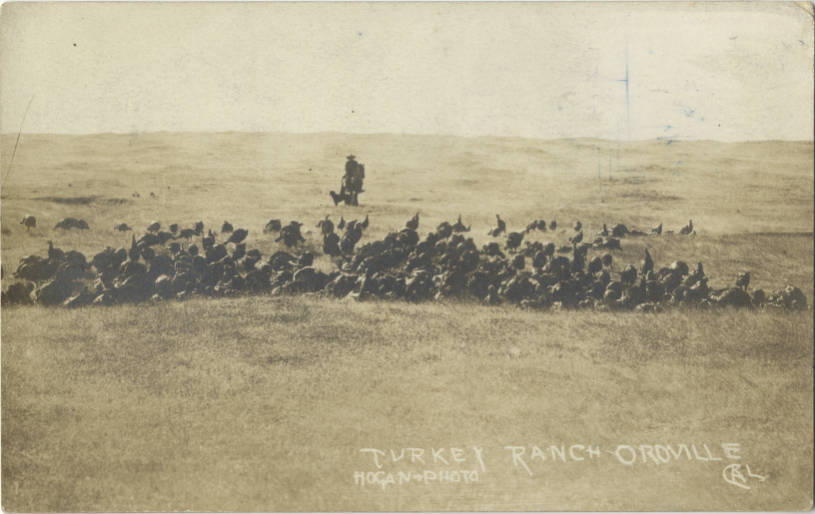
Photo courtesy of Meriam Library, CSU-Chico.
Just two years after the great 1906 San Francisco earthquake, the state sought to make turkeys available for hunters. Unfortunately, the bird was nowhere to be found in the Golden State.
“In response to requests and suggestions from a number of sportsmen in our State, we had for several years made efforts to secure (turkeys) from Virginia, Texas, New Mexico, and Arizona. (We required) a sufficient number to them (for) a trial in California, believing they would establish themselves if given reasonable protection,” according to a 1910 Fish and Wildlife report to the state legislature. “No variety of game birds or animals could be shipped outside their boundaries for any purpose whatsoever (in those states). We appealed to the attorney general of each state, and while we were assured (they personally wanted) to help us out, they were bound by the law to rule against our request.”
Unable to secure turkeys from other states, California looked to its southern neighbor: Mexico. Essentially, the state hired a turkey bounty hunter with orders to bring the birds back alive.
“We then decided to go outside of the United States. Accordingly, in March 1908, W.E. Van Slyke of San Bernardino, who had spent several years in Mexico (hunting) wild turkeys, was (sent) to Sinaloa, Mexico. (His mission included) procuring and shipping as many of these great game birds as could be obtained in four months. He delivered 22 turkeys and 11 ‘chachalacas’ at San Bernardino on June 15, 1908. They were liberated in two places in the San Bernardino range of mountains under the direction of Senator H.M. Willis (author of the hunting license law).'”
California runs wild turkey breeding farms
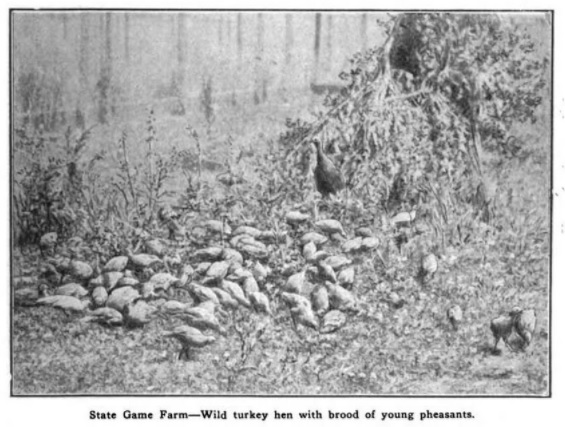
“The services to Van Slyke were re-engaged in October 1908 to procure additional stock to be used for breeding purposes at the Game Farm. He was again successful and shipped to us 26 fine specimens, which reached their destination in excellent condition. From this stock there was raised at the Game Farm in the spring of 1909 upwards of 100 strong, healthy, young birds, of which 48 were sent to Wawona and liberated in the lower part of Yosemite Valley. Feed was scattered about, enough to supply their wants for several days. Although raised in captivity and not accustomed to anything higher for a perch than ordinary domestic fowls, they flew to the tops of tall trees immediately after liberation,” the report stated. “Conditions seemed favorable for them so far as feed was concerned. They have been reported as seen by several reliable persons, but no increase has been noted.”
Since they seemed to take to Yosemite, the game commission released them in another national park.
“A shipment of 34 birds was made to Sequoia National Park in eastern Tulare County in November 1909,” according to the report. The park superintendent kept track of the birds, their nests, and number of eggs. By May 1910, park staff reported finding “many tracks of young birds, all seen at various places.”
National parks take on turkey populations
They then released turkeys in Sequoia National Park in July.
“They seem quite contented in their new surroundings (while) some flew up into the tall trees,” park staff reported.
According to the game commission, the turkeys would have a bright future in California. Little did they know how successful the birds would be at establishing themselves.
“For the season of 1910 we are pleased to report remarkable success, having raised upwards of 200 young wild turkeys, of which 85 were sent to the Sequoia National Park, 10 to citizens of Porterville, Tulare County, who liberated them in a particularly favorable section, and 30 to San Bernardino County. We feel greatly encouraged over the success attained thus far in the introduction of these magnificent game birds and firmly believe that they will establish themselves permanently. There is no reason in our opinion why they should not thrive in this state. They have been known for many years in Arizona and New Mexico, and would, we believe, have reached California but for the great American desert, which encompasses our entire southern and eastern borders, and has always been an impassable barrier.”
A 1954 article on introducing wild turkeys to California gave some hard numbers.
“Since 1928, some 3,000 wild turkeys have been distributed in 118 separate plants in 71 different areas throughout 23 counties,” reported The Farm Tribune, Nov. 25, 1954. “Only time will tell.”
Staff comments to original 2018 Inside CDCR story
“We also have wild turkeys here at Mule Creek State Prison in Ione. They love to attack the shiny black trucks in the parking lot, thinking their reflection is another turkey. If you see paint chips missing from your vehicle, it may have been attacked by a turkey. They also keep the rattlesnake population in check,” wrote N. Tucker.
A Folsom State Prison correctional officer also mentioned the wild turkeys roaming the hills.
“We have a lot of wild turkeys here at Folsom Prison. They run wild in the nearby hills and on the prison grounds. They appear to be thriving very well,” Correctional Officer M. Hailey wrote. “Employees enjoy (seeing them) and have learned where to step.”
By Don Chaddock, Inside CDCR editor
Office of Public and Employee Communications
Learn more about California prison history.
Follow CDCR on YouTube, Facebook, X (formerly Twitter).
Explore CDCR history
CDCR history requests come from families, writers, professors
Requests for CDCR history can come from a variety of sources. They range from family members tracking down a rumor…
Read More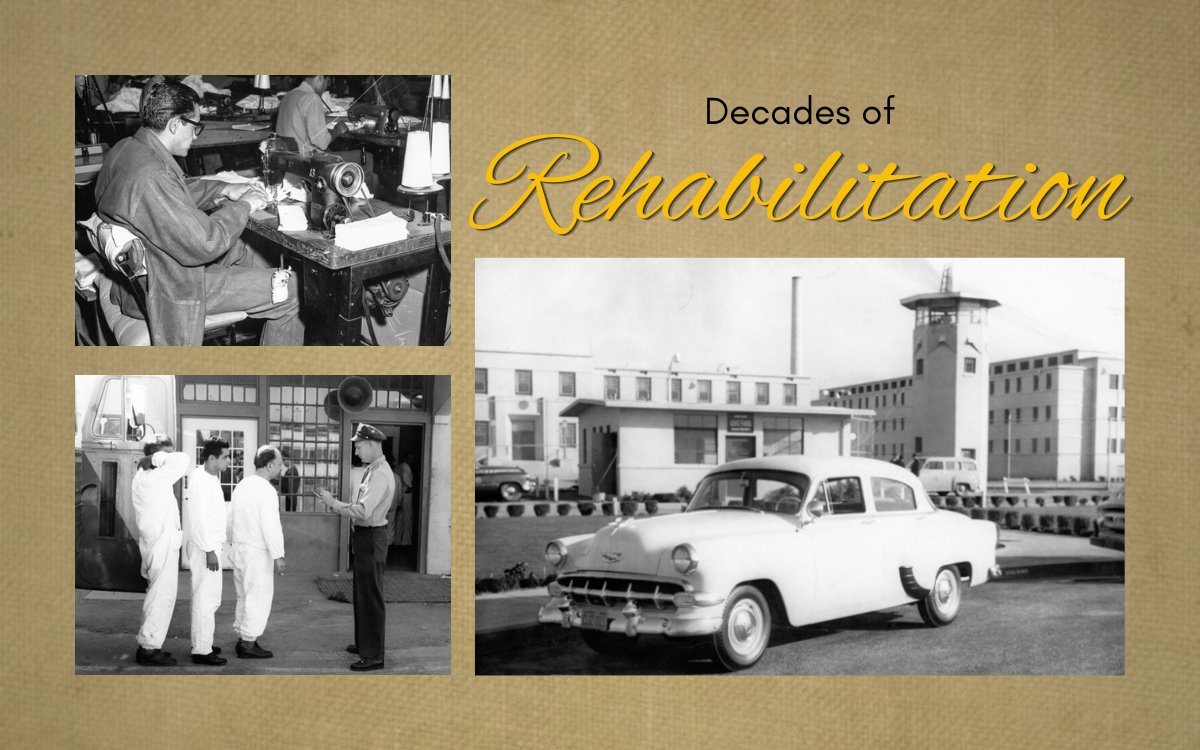
Explore 80 years of CTF‑Soledad’s history
Explore the history of the state’s fifth prison, the Correctional Training Facility (CTF) at Soledad. Activated in 1946, CTF was…
Read More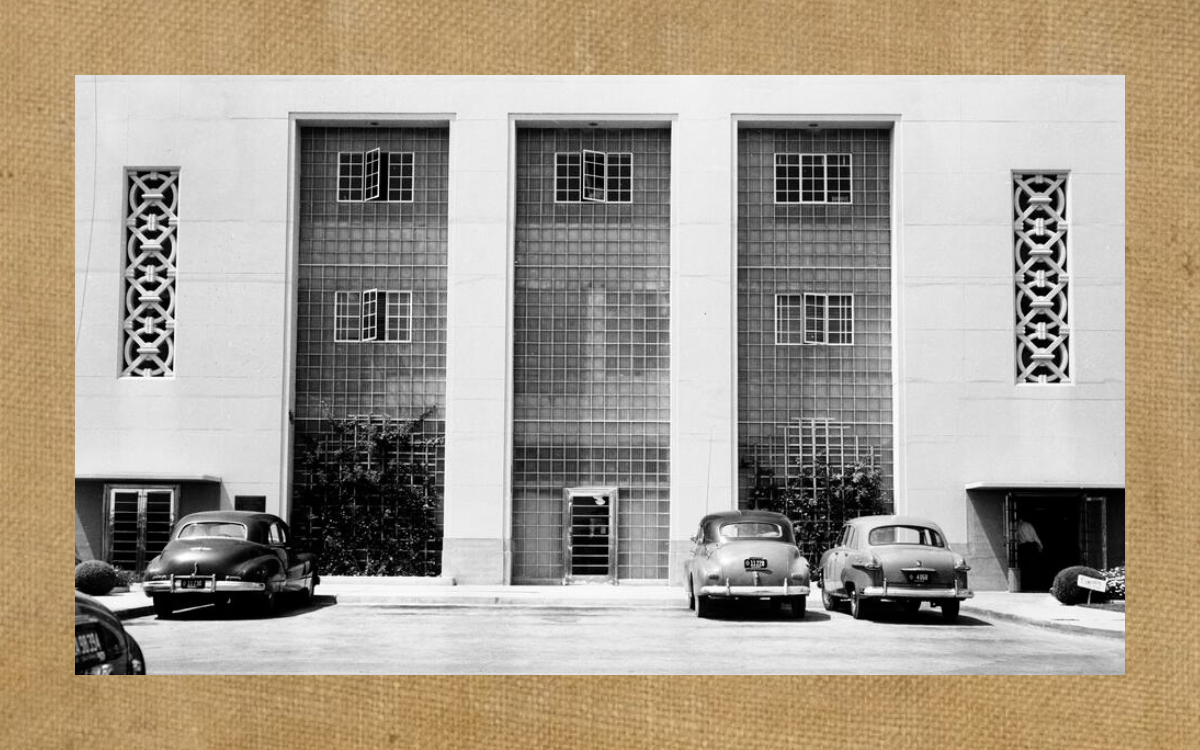
California Institution for Men marks 85 years of public safety
In 2026, California Institution for Men (CIM) is celebrating 85 years of public safety. The Chino institution, the fourth state…
Read More