

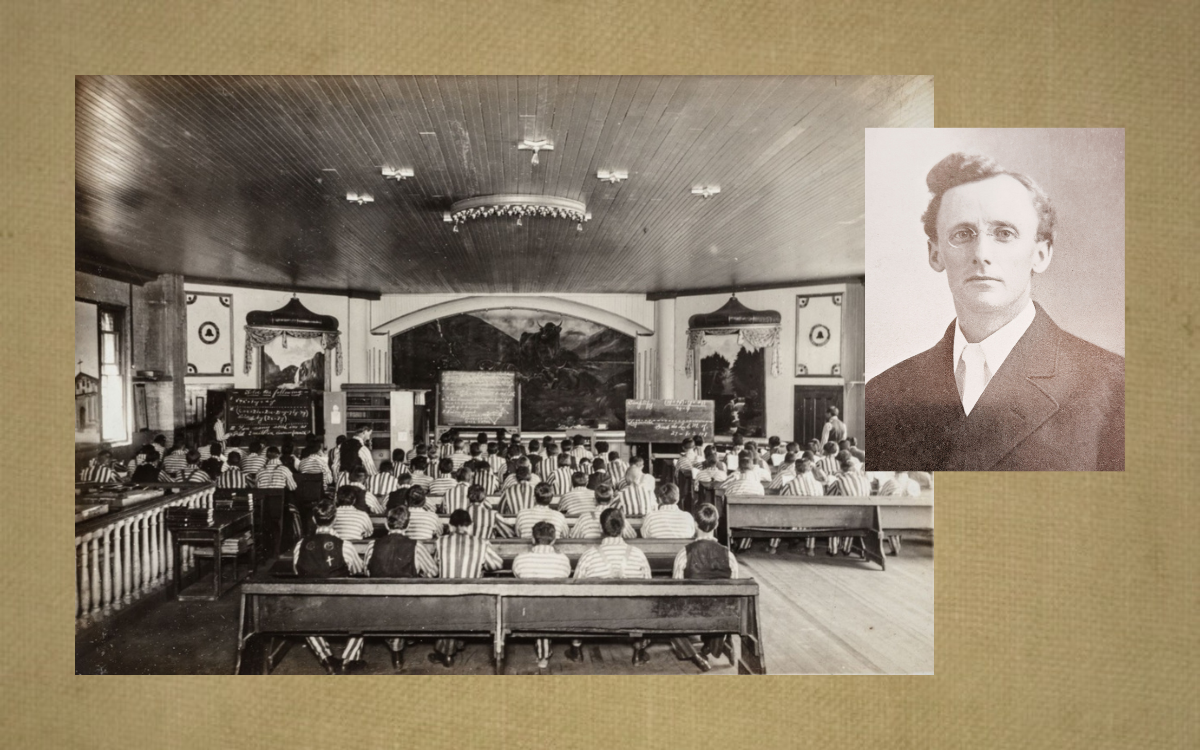
In 1905, WH Lloyd was tapped to replace an ailing minister at a church in Folsom and act as chaplain at the prison.
At the time, Folsom State Prison didn’t have a resident chaplain position like San Quentin. Four years later, after impressing the board of prison directors, William H. (WH) Lloyd was appointed resident chaplain at San Quentin.
Lloyd fought for reform, education and giving people a second chance when released from prison. In public lectures, he spoke about formerly incarcerated people finding jobs and contributing to society.
WH Lloyd: From Oakland to Folsom
“Owing to ill health, Rev. John Williams has been forced to resign as pastor of the Folsom Methodist Episcopal Church. Rev. WH Lloyd of Oakland has been appointed to fill the vacancy,” reported the Folsom Telegraph, Dec. 2, 1905. “Mr. Lloyd will also conduct services at the prison twice a month.”
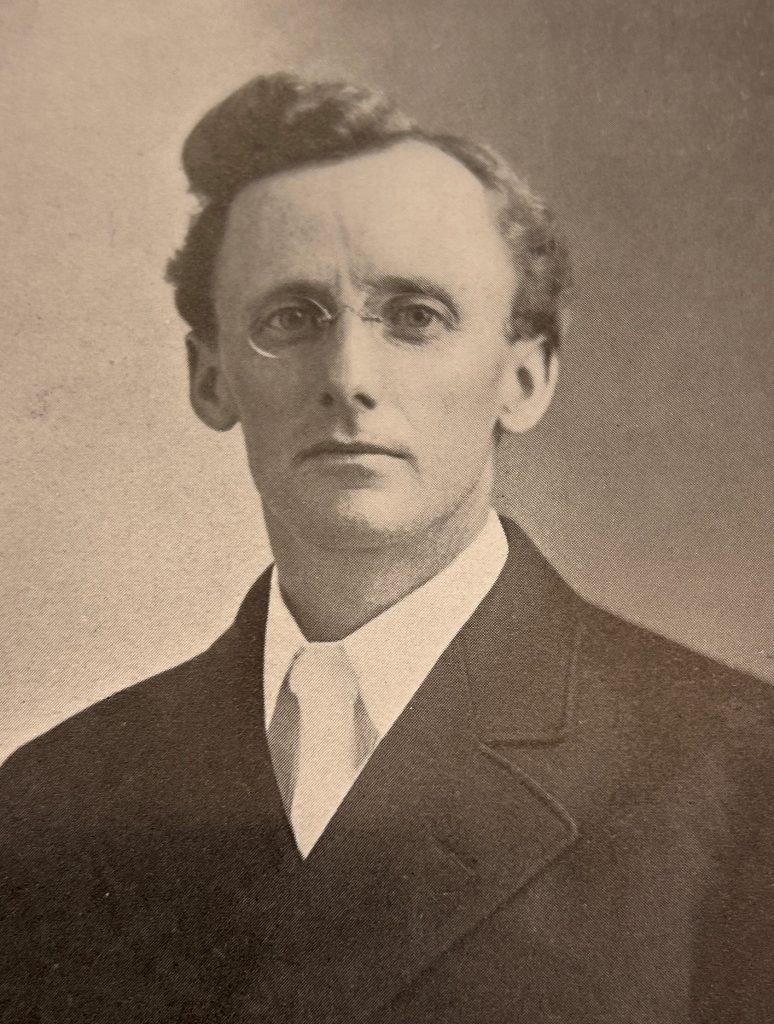
Later, he was invited to attend the chaplain’s convention at the American Prison Association in Seattle.
“Lloyd, who fills the position of chaplain at Folsom prison, has received an invitation (to attend the convention) in August,” reported the Folsom Telegraph, June 4, 1909. “This association is the strongest working for prison reform in the country and Governor Gillett has commissioned the prison directors to (also) attend.”
The newspaper indicated Lloyd was very active in his role at the prison.
“(He) has taken more interest in the work than any of his predecessors and the warden and prison directors have often commended his efforts,” the article states. “Lloyd has delivered in various cities lectures on prison reform and he is in constant demand to speak in other places. (This shows) the interest the public has in the moral welfare of the unfortunate men who are occupying our prisons.”
Later the same year, his efforts had been noticed, leading to a new appointment.
“Rev. Lloyd is preparing to move with his family to San Quentin, where he will fill the position of prison chaplain, to which he was recently appointed,” reported the Telegraph, Oct. 29, 1909. “(His) good work at Folsom Prison attracted the attention of the governor and prison directors, through whom the appointment came. At San Quentin Prison, the chaplain has long been recognized as an important factor in the conduct of the institution. (It also offers) a much larger field than at Folsom Prison.”
Chaplain continues educating public
At San Quentin, Lloyd was still being sought after as a guest speaker.
“(He) will give a lecture in Petaluma Friday evening at the Methodist Episcopal Church. He will be accompanied by his daughter,” reported the Petaluma Daily Courier, June 23, 1910. “Rev. Lloyd’s duties as chaplain bring him into constant touch with the (incarcerated) population of 1,900. He has supervision of the library and school in addition to religious services. There is no officer of the prison in a better position to study the character and dispositions of the prisoners than the chaplain.”
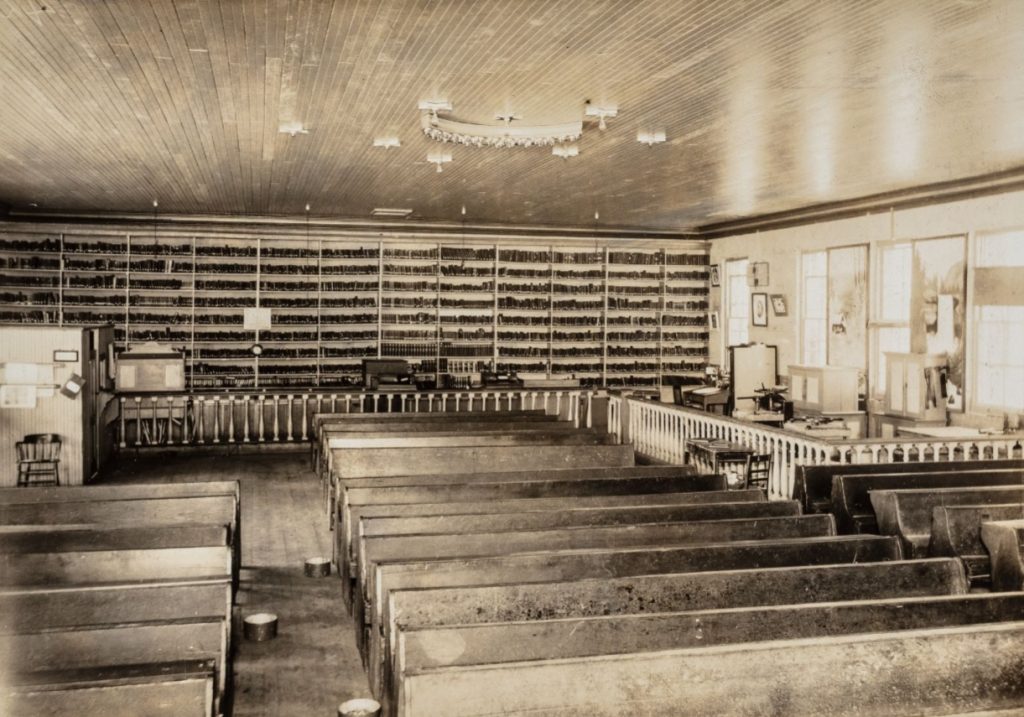
He was scheduled to speak about the causes and prevention of crime.
A year later, he spoke about life in prison to a “large audience at the First Methodist Church (in Santa Cruz).”
Lloyd’s lecture, “Glimpses of Life in San Quentin,” was described as illuminating and highly interesting.
“(His prison experience) has given (him) a knowledge of prison matters few possess and among those who know, he is recognized as an authority,” reported the Santa Cruz Evening News, May 27, 1911. “His remarks dealt with the history of prison work in California, the present equipment and that which is now being built, the life of the men there and the work in which they are engaged. (He also spoke of) his own varied services in their behalf.”
After his lecture, he remained an extra hour to answer questions from the audience.
Believes in redemption, rehabilitation
Lloyd was also a vocal proponent of rehabilitation.
“Old theories … have been abandoned; systems have been overturned; methods of management have been transformed,” Lloyd told a gathering in 1909. “These radical changes are being followed rapidly by others still better calculated to represent the spirit of the age in which we live.”
Rehabilitation over punishment was his chief goal, reported the Sacramento Union, July 13, 1909.
“Punishment is no longer held to be the chief aim in the incarceration of the criminal. The idea of society taking vengeance on the offender is fast giving place to the more humane view that men are imprisoned to protect society in the first instance, together with the hope that they may be brought to reform their ways.”
Two years later, his message remained the same.
“Criminals have opportunity to lead healthy lives and win place in the world,” reads the headline in the San Francisco Chronicle, June 13, 1911. “Being the chaplain at San Quentin, Lloyd can speak with authority. (He said) there are San Quentin graduates holding down responsible positions in the state today. He says, too, the new San Quentin prison will be a great improvement on the old one. There will (also) be a corresponding improvement in the numbers of men who emerge therefrom, healthy and wise.”
By mid-1912, Lloyd left his position at San Quentin to lead an Oakland congregation.
At the time, the San Quentin resident chaplain was paid a salary of $1,200 per year.
Learn more about the history of prison chaplains.
Story by Don Chaddock, Inside CDCR editor
Follow CDCR on YouTube, Facebook, X (formerly Twitter).
Learn more about California prison history.
Explore CDCR history
CDCR history requests come from families, writers, professors
Requests for CDCR history can come from a variety of sources. They range from family members tracking down a rumor…
Read More
Explore 80 years of CTF‑Soledad’s history
Explore the history of the state’s fifth prison, the Correctional Training Facility (CTF) at Soledad. Activated in 1946, CTF was…
Read More
California Institution for Men marks 85 years of public safety
In 2026, California Institution for Men (CIM) is celebrating 85 years of public safety. The Chino institution, the fourth state…
Read More