

The first Cemetery Tales story for 2025 looks at the lives of career criminal John Beebe and Joseph “Jose” Balado, dubbed the Jamestown Slayer by the press. Their poor choices led them to serving sentences at Folsom State Prison and San Quentin.
A Beebe by any other name
Beebe went by many names including Harry Cady, Henry Morgan, and Charles McKee. His story is a mix of petty theft, burglary, forgery, fraud, identity theft, and bank robbery.
While on probation out of San Francisco in 1914, he robbed Dr. Charles Bradford McKee in Sacramento. He then traveled under this alias and headed to Fresno. There, he registered at the Hughes Hotel, presenting a check to the clerk for $25. The clerk refused to cash the check.
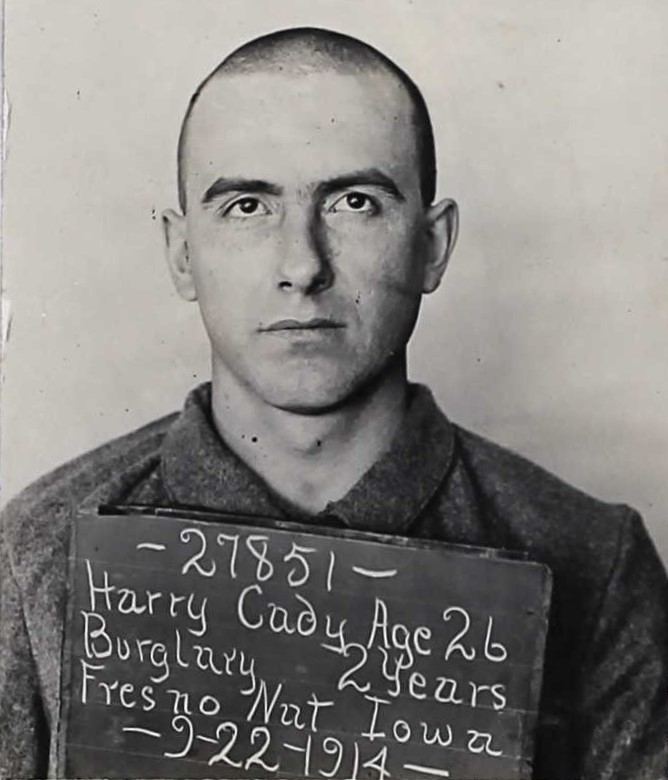
That night, he entered the hotel room of Dr. W.M. Guinn, swiping $200 in jewelry and other valuables.
The next day, he walked into the Walkover Shoe Store, purchased a pair of shoes, and cashed a $20 check.
“Shortly after cashing the check, officers at police headquarters were notified of the Sacramento robbery and asked to look for (the suspect),” reported the Fresno Morning Republican, July 12, 1914. “A (bulletin) was immediately sent to all stores.”
When Beebe walked into Iverson & Harvey’s clothing store, he wrote a $14 check to cover $2.50 worth of goods. Co-owner Bart Harvey quickly notified the police and stalled to keep Beebe waiting until they arrived.
“When arrested, (Beebe) protested his innocence and for a time refused to accompany (the detective),” the newspaper reported. “When threatened (with) force, (Beebe) smiled affably and accompanied the detective without resistance.”
Beebe: ‘Laughing and talking with the detectives’
According to the paper, Beebe was in a fine mood while the two walked to the police station and even after they arrived.
“(He was in) most excellent humor, laughing and talking with the detectives and jailer. For a time, the forger stoutly maintained his innocence but when property stolen from the Hughes hotel and Dr. McKee of Sacramento was found on his person, (he) broke down and confessed,” according to the newspaper.
Beebe had a card case with Dr. McKee’s cards which he used as a form of identification while passing the bogus checks. Police also found two suits of clothing and jewelry stolen from Dr. McKee. The rest of the loot was hidden in the mattress of Beebe’s hotel bed. They found a watch, diamond locket, and diamond ring, totaling roughly $500.
According to San Francisco police, Beebe had been convicted of robbery but was released on probation because of his youth.
For his crimes in Fresno, the 26-year-old Beebe was sentenced to two years. He was received at San Quentin on Sept. 22, 1914, and given the number 27851. He was discharged to parole May 22, 1916.
Running with a gang
He wasn’t out long before he started running with a gang known as Thirty Strong in the San Francisco Bay Area.
When the gang robbed the Alvarado Bank in Oakland on Oct. 13, 1920, they made off with $23,000. For months, detectives followed leads and clues, eventually zeroing in on a handful of suspects. They began tailing them, watching as they committed lesser crimes but hoping they could catch them in a group.
The gang wasn’t as tight as many assumed. One of the members openly complained about his cut only being $1,000, with others overhearing. Meanwhile, another member’s girlfriend felt she had been betrayed, so she talked to the district attorney about what she knew.
Of all the members, the first to be convicted was Beebe in March 1921. With two prior convictions under his belt, he was given a life sentence.
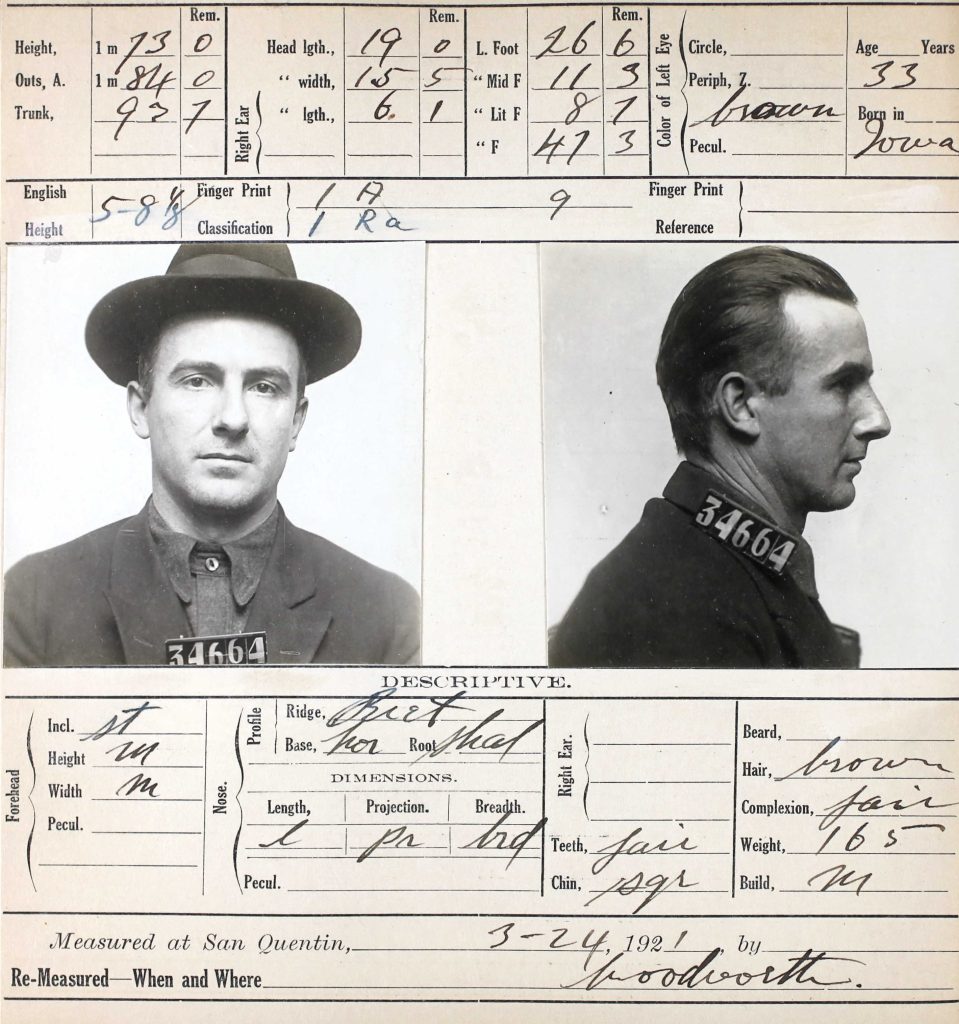
Being closer to the courthouse, he was first received at San Quentin on March 24, 1921, under the number 34664. The following day, the 33-year-old Beebe was transferred to Folsom State Prison and given the number 11723.
In 1934, Beebe applied for parole but didn’t make the cut.
End of the line for Beebe
Two years later, on May 21, 1936, Beebe was throwing a baseball with another incarcerated person on the yard. When he failed to catch the ball, it rolled into a small garden tended by Tom Kelly.
“The ball rolled into Kelly’s garden and injured his plants. He threw (the ball) into a canal,” reported the Associated Press. “Beebe and Kelly were fighting within a few minutes. Before guards could interfere, Beebe (fell to the ground with) knife wounds in his chest and abdomen.”
Staff were unable to locate the weapon.
His body unclaimed, Beebe was buried at Folsom State Prison.

San Quentin is final resting place for Jamestown Slayer
For months in 1930, newspapers across the state followed the manhunt and murder trial of Joseph “Jose” Balado, dubbed the Jamestown Slayer by the media.
Balado, a sheep herder and rancher, was the third husband of Louise Jardine. The couple divorced in December 1929 “on a charge against Balado of willful desertion,” according to news accounts at the time.

Eight months later, in the early morning hours of Aug. 23, 1930, neighbors were wakened by the screams and gunshots at Jardine’s Jamestown home.
A 17-year-old young man and his father, who lived across the street, were the first to arrive at the scene. They found Jardine on her porch with multiple gunshot wounds. The duo tried to carry her inside, but she passed before they crossed the door’s threshold.
When police began their investigation, neighbors pointed to one suspect: ex-husband Joseph “Jose” Balado. They said he had been seen around town and at her home earlier in the day.
The sheriff quickly formed a posse with the cooperation of a neighboring county’s sheriff and deputies. Then, they were hot in pursuit, hunting the Jamestown Slayer.
They caught up with him the next day near Angels Camp.
“He offered no resistance when officers found him hiding in shrubs beside the road and freely discussed the slaying,” reported the Associated Press, Monday, Aug. 25.
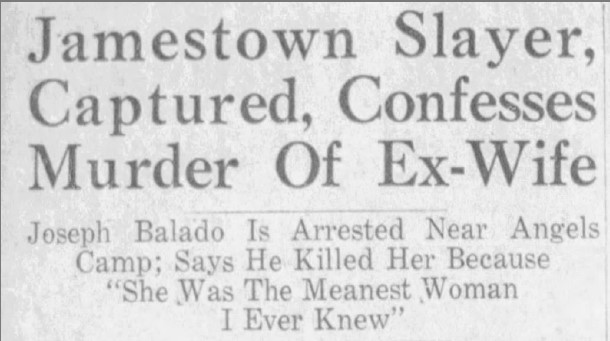
He said he returned to Jamestown on Tuesday to kill her but left when he discovered she had company. He returned Thursday but again his plans were thwarted.
The fatal night
“Friday evening he said he went to her home about 8 o’clock and had coffee with her. He said he shot her as he was leaving about midnight,” the Associated Press reported.
According to Balado, after he left her home, he fled across a field to the highway where he hitchhiked to Angels Camp.
“He was continuing his flight when officers overtook him,” the report states. “Following Balado’s directions, officers found a .32 caliber revolver and box of cartridges hidden by the highway near Jamestown.”
He was convicted of her murder a month later and sentenced to life in prison at San Quentin. Balado was received Sept. 25, 1930, at San Quentin and given the number 49078. He passed away while still incarcerated exactly eight years after he first entered the San Quentin gates, Sept. 25, 1938. No cause of death is listed.
Story by Don Chaddock, Inside CDCR editor
Learn more about California prison history.
Follow CDCR on YouTube, Facebook, X (formerly Twitter). Listen to the CDCR Unlocked podcast.
Cemetery Tales
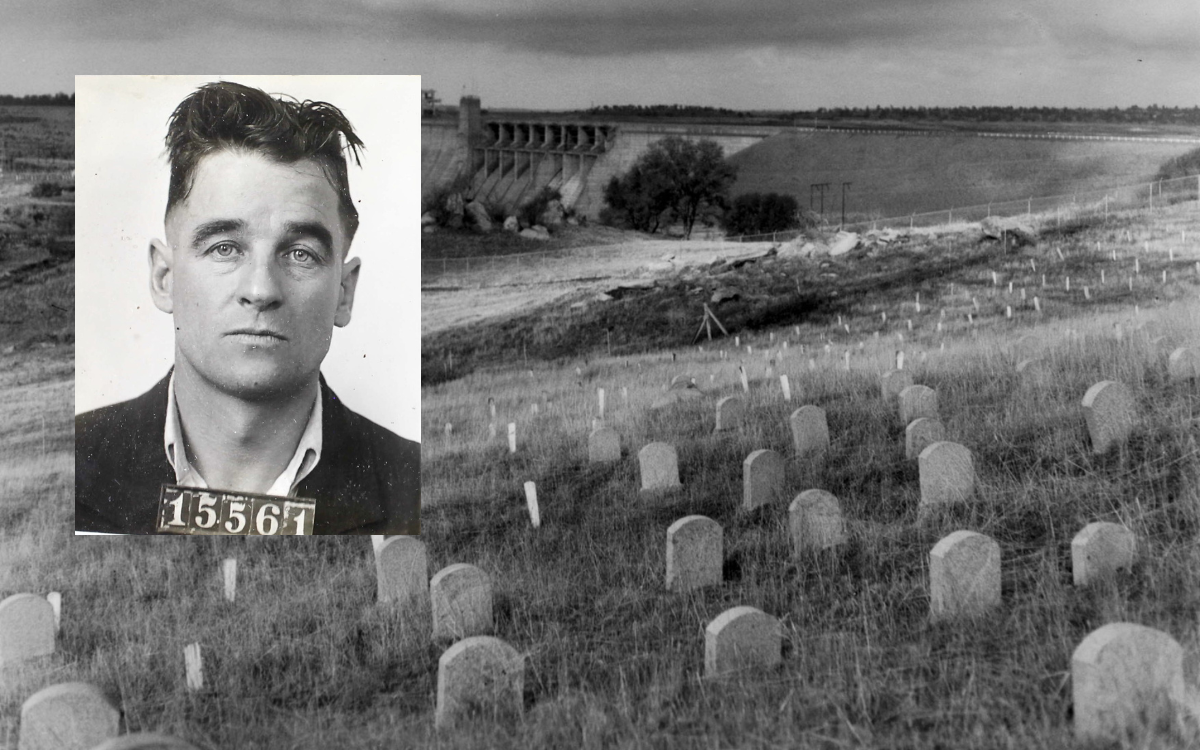
Cemetery Tales: Harry Stewart, Fresno embezzler
In our final Cemetery Tales of the season, we look more closely at Harry Stewart, early 1900s embezzler, thief, and…
Cemetery Tales: Meet JE McKim, thieving drifter
In our third installment of this month’s Cemetery Tales, we look at a drifter with a long criminal record dating…
Cemetery Tales: Raymond Blade and Henry Hunt
The second installment of this month’s Cemetery Tales looks at two incarcerated people at different stages in their lives when…

Cemetery Tales: John Beebe and Joseph Balado
The first Cemetery Tales story for 2025 looks at the lives of career criminal John Beebe and Joseph “Jose” Balado,…

Cemetery Tales: Estranged husband and a robber
In this month’s fifth installment of Cemetery Tales, we examine the stories of an estranged husband and a robber who…
Cemetery Tales: The farmer and a self‑appointed king
Our fourth Cemetery Tales looks at farmer-turned-double-murderer George Biggs and Judah Benjamin, a self-proclaimed king. Both men ended up in…