


A 10-member delegation from the State of Qatar Ministry of Interior visited CDCR to learn more about California’s innovative approach to rehabilitation and reentry.
The two-day visit included stops at the Male Community Reentry Program (MCRP) Los Angeles 2, operated in partnership with the Amity Foundation, and California State Prison, Los Angeles County (LAC).
Learning from CDCR’s rehabilitation efforts
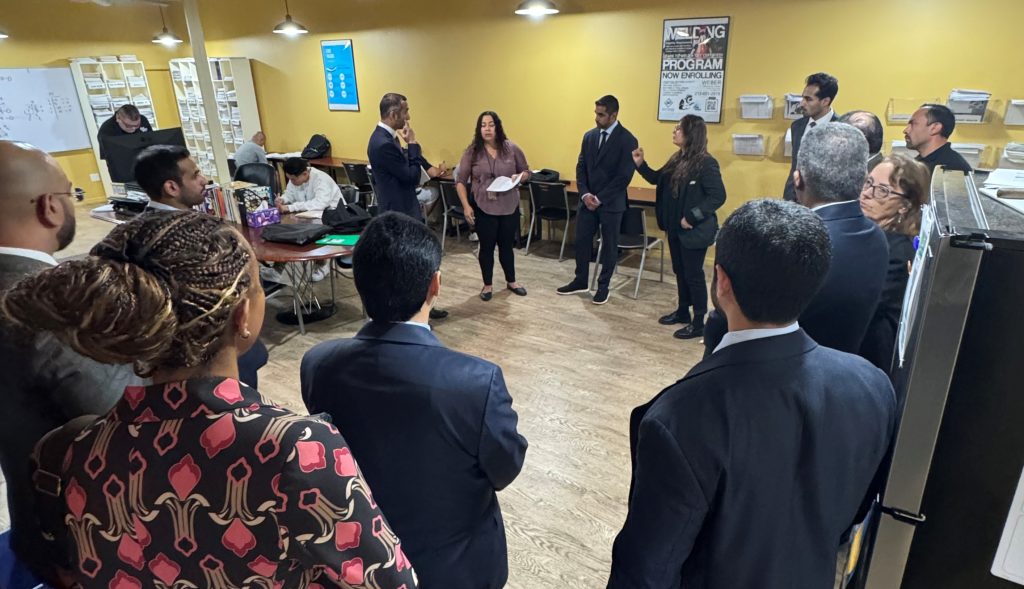
The Qatari delegation sought to gain insight into modern correctional practices to help design new penal institutions and strengthen their criminal justice system. During their time in California, the group focused on:
- Exploring alternatives to incarceration, such as electronic monitoring bracelets with GPS and radio frequency (RF) technology.
- Examining operational efficiency in correctional facilities.
- Understanding step-down models that connect in-prison rehabilitation programs to community-based reentry support.
Inside the MCRP experience
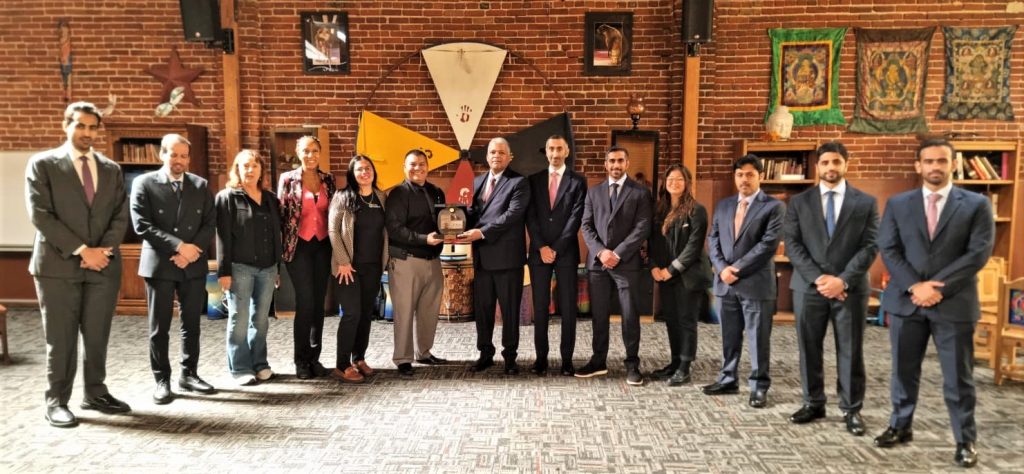
At MCRP Los Angeles 2, staff welcomed the visitors while offering an overview of the program. Topics included security measures, program history, recidivism trends, and the curriculum used to prepare participants for reentry success.
Amity Foundation staff also outlined their role in providing services. Four current MCRP participants shared their personal experiences in an open forum, answering questions directly from the delegation.
The tour also showed:
- Employment services to prepare participants for jobs.
- Parole agent and correctional officer offices to support supervision and safety.
- The residential housing units, dining areas, and outdoor spaces designed to help simulate real-world transition.
Touring California State Prison, Los Angeles County

The following day, the delegation visited California State Prison, Los Angeles County. There, they observed institution-based programming, comparing it with the reentry model seen at MCRP. This provided a full picture of how California aligns in-custody rehabilitation with community reintegration.
Why it matters
By sharing knowledge across borders, CDCR helps strengthen global understanding of correctional practices that focus on rehabilitation, public safety, and community reintegration. The delegation from Qatar expressed interest in adapting aspects of CDCR’s rehabilitation strategies, including electronic monitoring, case management, and continuity of care while modernizing their own correctional system.
Story by David Maldonado, deputy chief, Strategic Communications and External Affairs
Office of Public and Employee Communications
See more stories about CDCR facilities, training and jobs.
Follow CDCR on YouTube, Facebook, X (formerly Twitter).
Related content

CCI holds fourth promotional ceremony
California Correctional Institution (CCI) at Tehachapi recognized its dedicated staff during its fourth quarterly promotional ceremony. Leadership honored custody and…
Read More
PVSP to staff: ‘Don’t gamble with your health’
Don’t Gamble with Your Health was the theme of this year’s annual staff health benefits fair at Pleasant Valley State…
Read More
CIM hosts staff health, benefits fair
California Institution for Men (CIM) in Chino recently hosted its annual Employee Health and Benefits Fair. The fair brought together…
Read More