

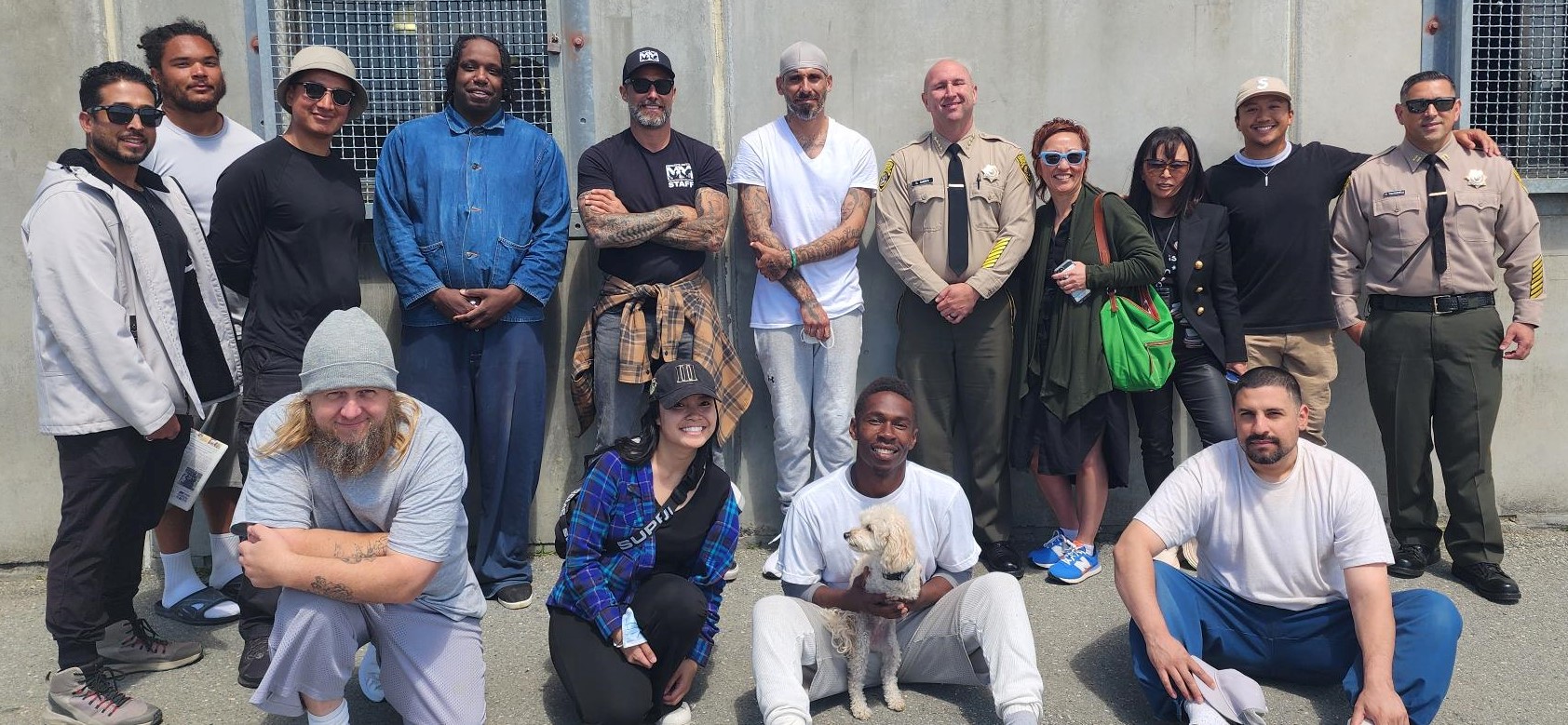
Marley’s Mutts founder Zack Skow recently visited San Quentin Rehabilitation Center to provide information about his organization. Marley’s Mutts rescues dogs with behavioral issues in danger of possibly euthanized.
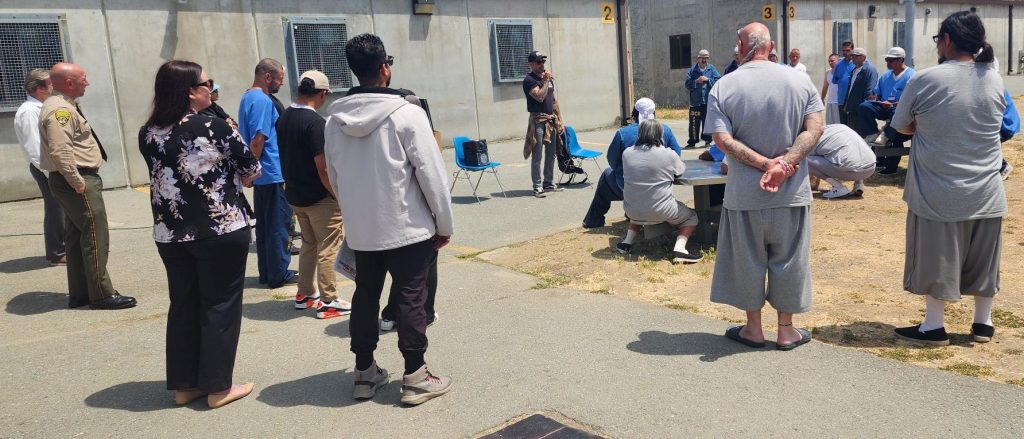
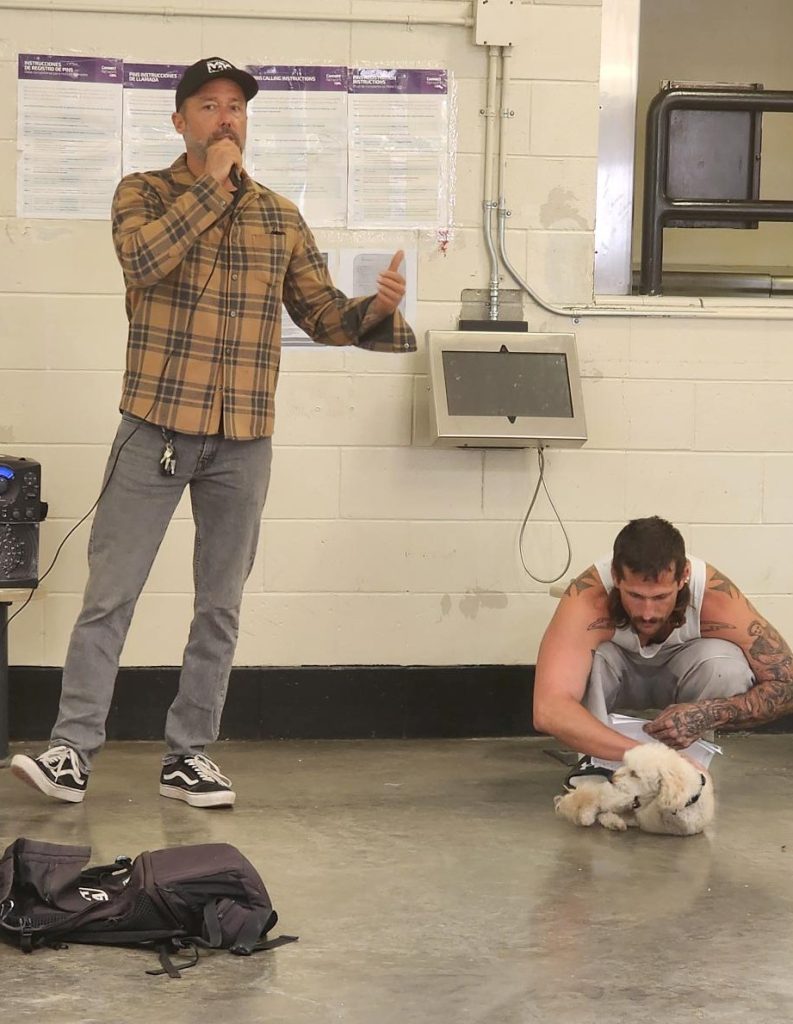
Skow and his canine companion visited the Enhanced Outpatient Program (EOP) at San Quentin. Many of the residents have not had physical contact with a pet for several years. He began by telling the population they were allowed to pick up the dog or pet her if they wanted.
Dogs save founder’s life
He spoke to the population about second chances and his 16 years of sobriety after spending most of his life using drugs and alcohol. Skow spoke about his battle with addiction and alcohol abuse. He suffered through several withdrawals and weighed 130 pounds. For 48-hours, he attempted to kick the habit. Then, he passed by a mirror and looked at himself, shocked by his sickly appearance.
His dog made him feel like he had a sense of purpose. The dog believed in him, and this was the motivation he needed. Skow started a journal and began going to support-group meetings. He also volunteered, fostering dogs with behavioral issues. With the built-in support from his meetings and volunteering, Skow had a renewed sense of purpose.
Marley’s Mutts partners with CDCR institutions
His life experiences led him to partner with other correctional facilities such as California State Prison, Corcoran, California Correctional Institution, and North Kern State Prison. The accelerated 10-week program teaches handlers how to introduce socialization into the dog’s daily routines. There is also an extended 14-week program that prepares the dogs for more extensive training.
“I remember the first time going to the market, I ran into my drug dealer. (After that) I said I was never going out to the public again. My passion for coming to these places is because you guys need us. We want to believe in you guys and use you as an asset and not a liability,” said Skow.
Participants of the Marley’s Mutts program typically find employment as trainers within weeks of their release. His hope is to get the dogs involved in the substance use treatment programs.
“Positive change will help you succeed,” said Skow.
Story submitted by Lt. Guim’Mara Berry
San Quentin Rehabilitation Center
Learn more about the California Model on the CDCR website.
Follow CDCR on YouTube, Facebook, X (formerly Twitter).
Related content
CDCR schools ready incarcerated for reentry
CDCR schools are helping incarcerated individuals get ready for their eventual reentry back into the community. The Adult Basic Education…
Read More
Secretary leads San Quentin Learning Center tour
CDCR Secretary Jeff Macomber recently led a tour of the new San Quentin Learning Center for Governor’s Office staff and…
Read More
Winning design becomes milestone in MCRP student’s reentry
For Angel Paredes, seeing his design on thousands of Cal Poly Pomona shirts demonstrates the progress he’s made since leaving…
Read More