

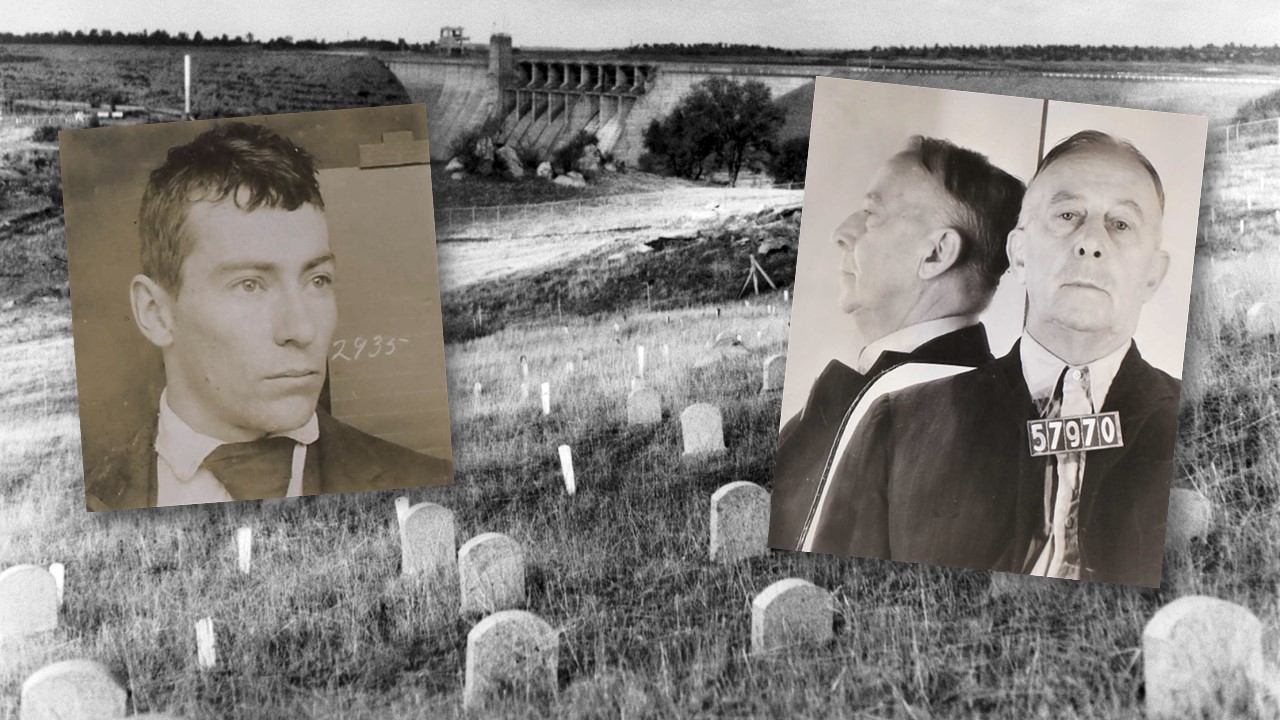
Two cooks, incarcerated at different times and institutions, are the subjects of the second installment of this month’s Cemetery Tales. Both men ended up in the cemeteries of Folsom State Prison and San Quentin.
Young man doesn’t learn lesson
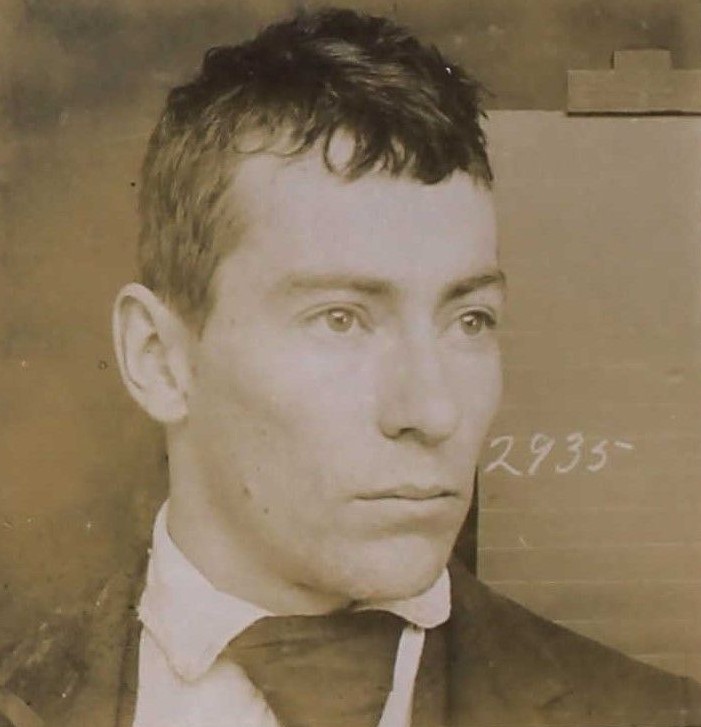
In 1891, Charles Barry was 19 when he and two other men in Stockton robbed Lewis Bozzo, a lumber yard watchman.
While one choked Bozzo, the others took a watch and $32.
The cash alone is the equivalent of $1,100 in today’s money. When Barry tried selling the watch, he was caught. The bandits were dubbed the Stockton garroters by the press.
Given his age, law enforcement offered him a deal: receive immunity if you testify against the other two robbers.
Following through on his end of the bargain, Barry went on his way but apparently didn’t learn his lesson.
Back at it again
Two years later, Barry was again caught up in a robbery.
After the victim met friends at a bar, tossing back a few-too many beers, he was slowly making his way home when two men jumped him.
One choked him from behind, leaning him backwards, while the other punched him. Swiping what they could off of the stunned man, the pair fled.
Luckily, a young man witnessed the entire episode and followed the robbers, eventually leading to their arrest.
This time around, Barry was given a hefty 20-year sentence.
“As he showed no disposition to reform, the sentence was made heavy,” according to newspaper accounts at the time.
Barry was received Aug. 9, 1893, at Folsom State Prison and given the number 2935. He was paroled in 1905.
Returns to Folsom as a 60-year-old
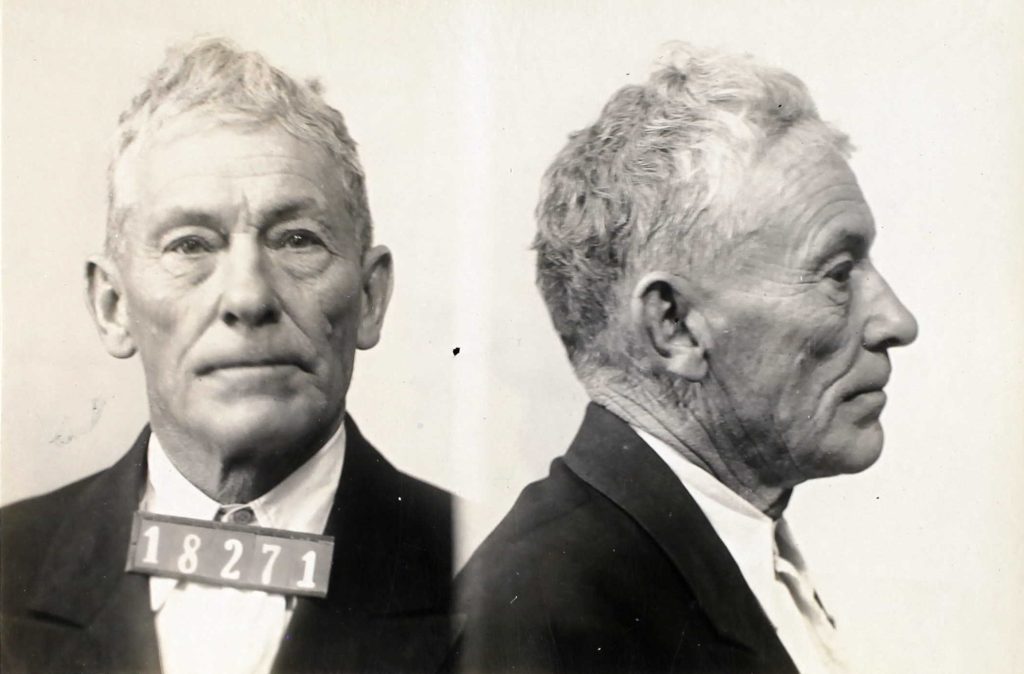
He didn’t return to Folsom State Prison until Jan. 19, 1933, after pleading guilty to second-degree murder in the death of 72-year-old Collin Baldwin. Barry was now 60 years old, serving a five-year-to-life sentence. This time, he was given the number 18271.
During his time outside of prison, he had become a cook and baker, according to prison records. Barry passed away Dec. 1, 1936, at age 64. He was buried at the cemetery at Folsom State Prison.
Camp cook kills coworker
In 1935, Charles English was employed as a cook at the Federal Emergency Relief Administration camp near Greenwood in El Dorado County.

In the mid-1930s, the Great Depression was in full swing, leaving many people turning to farm camps and soup kitchens. President Franklin D. Roosevelt created the relief administration to provide direct assistance. Later, the relief administration was replaced by the Works Progress Administration.
English helped prepare the meals for those needing help but on July 22, 1935, he flew into a rage, directing his anger at a hospital orderly.
“English is accused of slaying Junior DeLong, 24, by hurling a knife into (DeLong’s) lung,” reported the Grass Valley Union, Aug. 3, 1935.
The victim died nine days later in the Placer County Hospital in Auburn. English was charged with first-degree murder.
According to the Sacramento Bee, “the cook at the camp hurled an 18-inch butcher knife which penetrated DeLong’s (chest, going in) three inches.”
English told police he “flipped the knife” at DeLong because he believed the 24-year-old “intentionally spilled some lye water on his shoes.”
In a dying statement, DeLong told law enforcement English, also known as Charles Jones, had threatened to kill him.
Spilled water leads to slaying
After the water-splashing incident, DeLong said English tried attacking him with a club but was stopped by the head waiter. Later, English followed DeLong, throwing the butcher knife at him through the screen door.
“He turned just in time to have the knife strike him in the (chest),” according to the Sacramento Bee, Aug. 1, 1935.
English pleaded guilty to a lesser second-degree murder charge. He was 56 years old when he was sentenced to serve five years to life at San Quentin. He was received Aug. 17, 1935.
English passed away Sept. 2, 1942, at 63 years old and was buried at the San Quentin Prison Cemetery.
By Don Chaddock, Inside CDCR editor
Learn more about California prison history.
Follow CDCR on YouTube, Facebook, X (formerly Twitter). Listen to the CDCR Unlocked podcast.
Cemetery Tales
Cemetery Tales: Harry Stewart, Fresno embezzler
In our final Cemetery Tales of the season, we look more closely at Harry Stewart, early 1900s embezzler, thief, and…
Cemetery Tales: Meet JE McKim, thieving drifter
In our third installment of this month’s Cemetery Tales, we look at a drifter with a long criminal record dating…
Cemetery Tales: Raymond Blade and Henry Hunt
The second installment of this month’s Cemetery Tales looks at two incarcerated people at different stages in their lives when…

Cemetery Tales: John Beebe and Joseph Balado
The first Cemetery Tales story for 2025 looks at the lives of career criminal John Beebe and Joseph “Jose” Balado,…

Cemetery Tales: Estranged husband and a robber
In this month’s fifth installment of Cemetery Tales, we examine the stories of an estranged husband and a robber who…
Cemetery Tales: The farmer and a self‑appointed king
Our fourth Cemetery Tales looks at farmer-turned-double-murderer George Biggs and Judah Benjamin, a self-proclaimed king. Both men ended up in…