

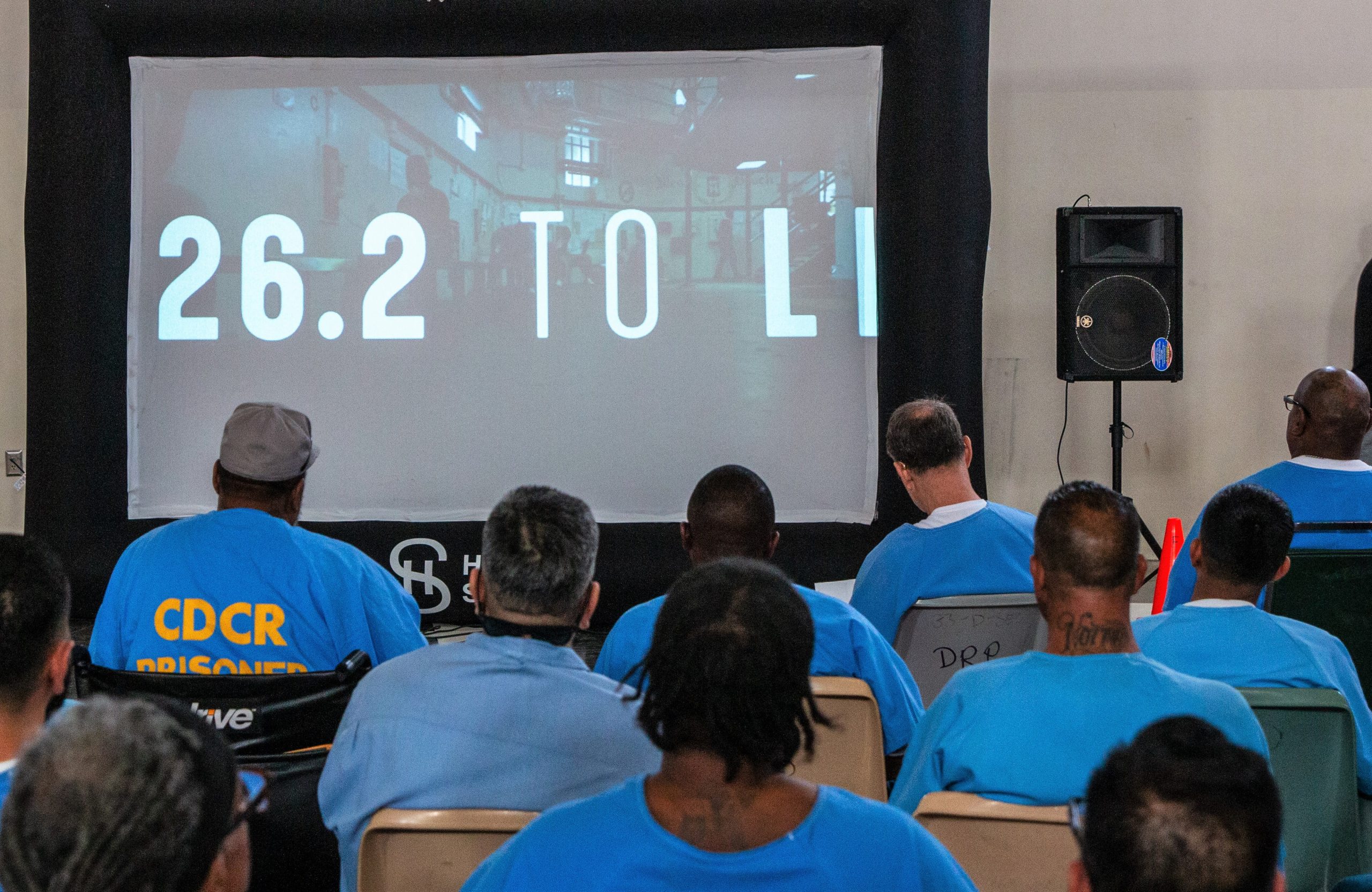
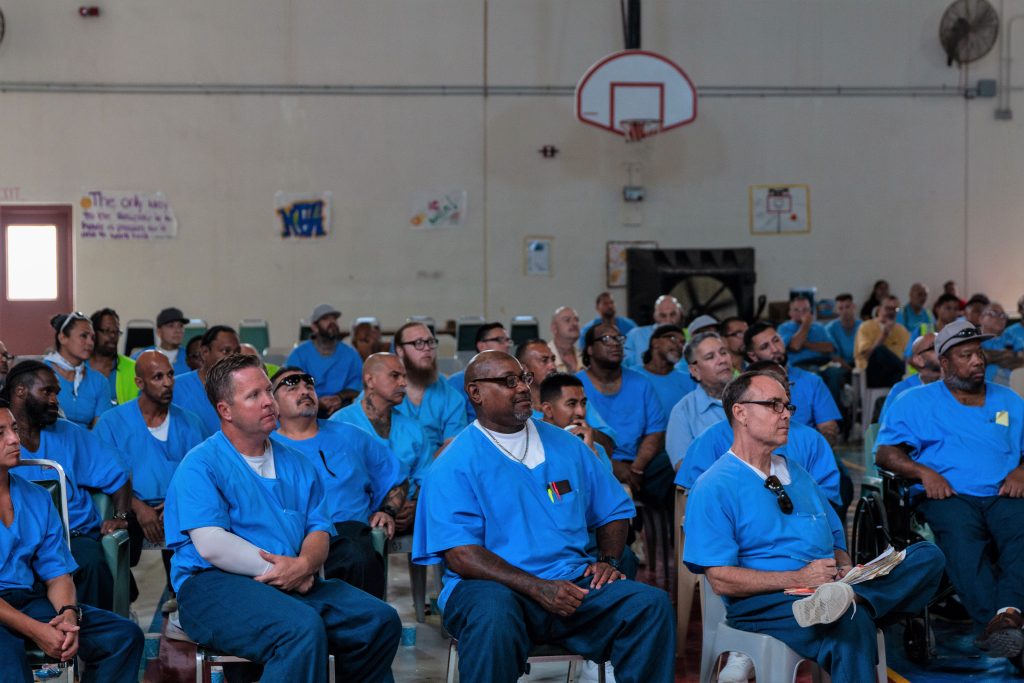
The incarcerated population at Substance Abuse Treatment Facility (SATF) at Corcoran recently watched a special screening of the documentary, “26.2 to Life.”
The documentary shows how running and running clubs can make a significant impact on rehabilitation.
Christine Yoo, filmmaker and director, said the screening project was nine months in the making.
“This is a prison in the middle of the state that’s a bit more isolated,” she explained. “To be able to bring the film here is something we really wanted to do and is very special.”
Watch the video (story continues below):
Sports benefits highlighted by documentary at SATF
Heidi Wippel, CDCR’s head physical education and recreation coach, said activities like these are important.
“Sports and recreation (are a) huge piece of the rehabilitation puzzle,” she said. “We’re looking at expanding some of the recreation programs, particularly the running clubs, statewide.”
Warden R. Morales said bringing outside groups into the correctional setting helps promote normalcy, better preparing incarcerated people for reentry into society.
“(This helps) show them what it’s like to achieve a goal,” Morales said. “Put that goal in front of them and (they learn they can) make it through adversity and everything else.”
He said the process helps them learn to use coping skills they otherwise don’t know they already possess. Programs like running clubs, as well as screening the documentary, also helps the population understand ways staff can help them on their rehabilitation journey.
Wippel believes it’s all a team effort involving staff, the outside community, and incarcerated people willing and eager to change.
“Starting a running club allows the community to come in (and helps teach the incarcerated participants) to overcome and persevere,” said Wippel. “(They learn they can overcome) personal issues in their own personal lives such as drug addiction, family issues, or behavioral issues.”
“It’s important (to get) people treating everybody with respect, with dignity, and looking at everybody as a person.”
R. Morales, warden, Substance Abuse Treatment Facility, Corcoran
SATF staff, incarcerated consider forming running club
According to Associate Warden C. Critchlow, the population was excited about the prospect of starting a running club at the institution.
“I think we might actually have some staff participate in the forming of these clubs on the facility,” she said.
Michael, an incarcerated person serving a life sentence, said the movie made an impact.
“The movie was very touching and inspiring,” he said. “I’m a lifer myself so this gives us all hope. It’s nice to see we can make it. Once you set your mind to something, you know you can achieve a lot in life. Having a running club here would be awesome.”
Warden Morales said it’s important to get staff and the population to work together.
“I’m really big on trying to build rapport with both sides,” he said. “It’s important (to get) people treating everybody with respect, with dignity, and looking at everybody as a person. (This screening) is a big step forward and I believe the team here are SATF, as in the staff and the incarcerated people, are doing a great job.”
Learn more about the California Model on the CDCR website.
Video by Christopher Medina, director, TV Communications Center, specialist
Story by Don Chaddock, Inside CDCR editor
SATF screening in photos


Read more rehabilitation stories.
Follow CDCR on YouTube, Facebook, X (formerly Twitter).
Related content
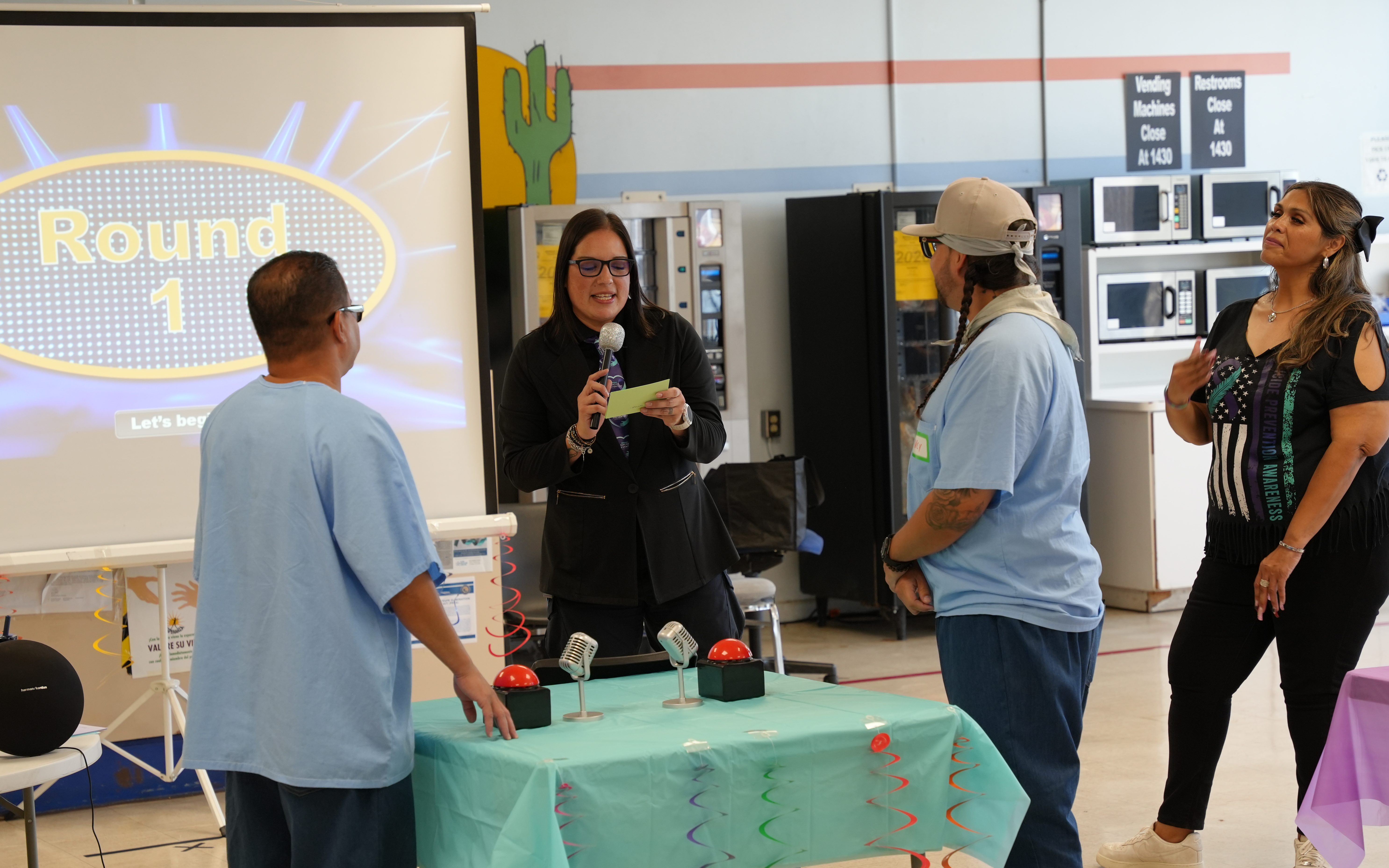
Calipatria mental health team hosts game for population
Mental health staff at Calipatria State Prison hosted a game for the population as part of Suicide Prevention Awareness Month.…
Read More
CCWF sees 59 earn college degrees
Central California Women’s Facility (CCWF) in Chowchilla held its annual college graduation for 59 earning degrees. The Sept. 30 graduation…
Read More
Caltrans, CALCTRA, CDCR, Ironworkers launch CIM program
The California Correctional Training and Rehabilitation Authority (CALCTRA), Caltrans, CDCR, and the Ironworkers Local Union 416 and 433, have launched…
Read More