

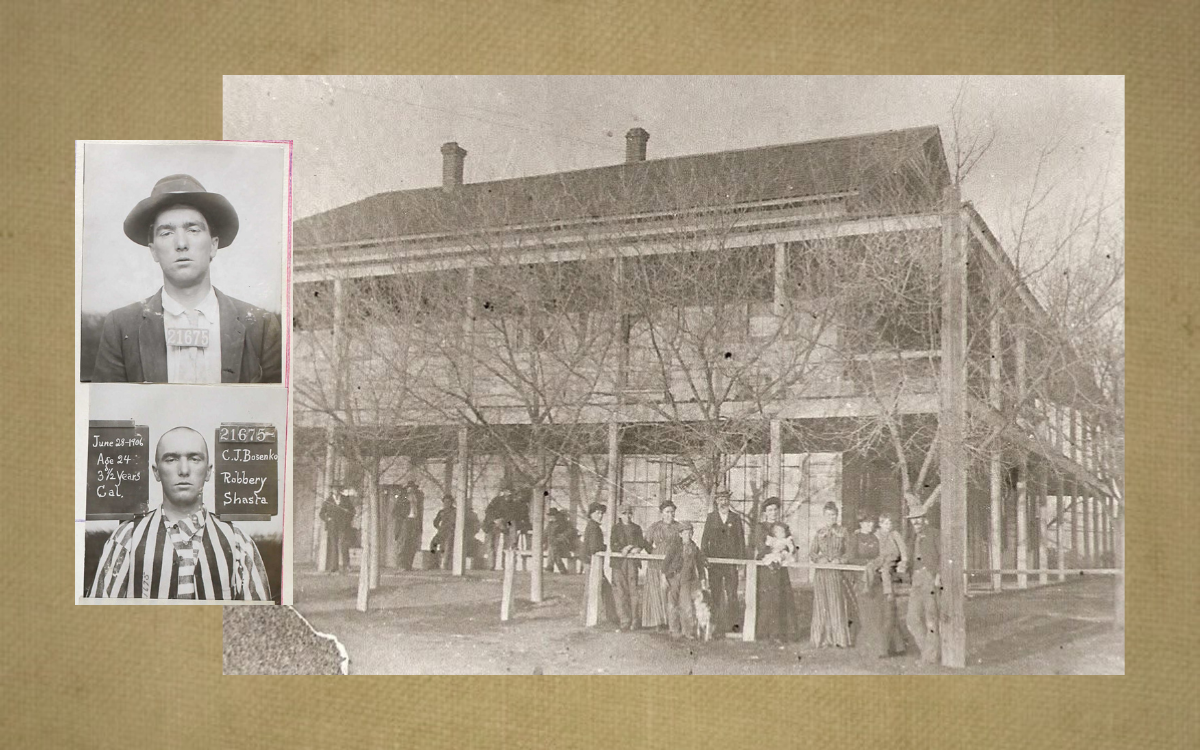
Robbers Clifford Bosenko and Sid Horn knocked down a man in 1905 in Cottonwood, relieving his pockets of $45. More than a 120 years later, Bosenko’s descendant is seeking details on her ancestor.
“I think Clifford John Bosenko is related to my family. My dad says his grandmother never talked about that side of the family due to issues in their marriage. Researching some information online, I think he went to San Quentin in the early 1900s. My grandmother recently passed away and while I was at the gravesite in Cottonwood, it reminded me to submit this request as she is buried near him,” writes the Bosenko family member who is also a CDCR employee.
With a name, general timeframe and possible prison sentence, we started digging into the peculiar case of Clifford Bosenko, a Cottonwood robber whose life ended in violence.
Cottonwood crime garners headlines
One night in November 1905, Charles “Sid” Horn and Clifford Bosenko followed sheepherder Fred Stortz as he left a saloon.
Stortz had been in the country for nearly 40 years, immigrating from Germany. He would have been around 60 years old in 1905.
“As he was passing on his way last Wednesday night to his lodgings, he was pounced upon by three men between Morgan’s saloon and the Cottonwood Hotel. One held him from behind, another choked him and the third went through his pockets, securing $45 in gold,” reported the Redding Searchlight, Nov. 22, 1905.
Earlier in the evening, Stortz paid for drinks with a $10 gold coin, catching the eye of a few men in the saloon.
When he reported the crime, Stortz easily described one the men.
“The description as given fit Sid Horn,” reported the newspaper. “The officers (placed) the suspect under strict surveillance for almost a week, waiting to collect evidence on which to (secure) the arrest.”
Tracking down the first suspect
In a small town, word travels fast. Horn found out about the police and their suspicions, so made plans to skip town. Investigators also heard Horn was about to flee so they crafted a plan to head him off.
“Eluding the officers, Horn succeeded in boarding the first section of the Monday night southbound passenger train,” the newspaper reported. “Officers were … on board the second section. Thinking he was safe, Horn got off the train at Red Bluff.”
When officers failed to find their suspect on the train, they too stepped off at Red Bluff. They began tracking Horn’s movements, finding he had gone into a saloon, flashing a $20 gold piece to pay for food and drink.
The next afternoon, with the assistance of the Red Bluff police, authorities took Horn into custody. Stortz then positively identified Horn as the man who took the money from his pockets during the robbery.
“Horn is a Cottonwood boy, 20 years of age,” the newspaper reported. “For several years he has led a shiftless life, associating generally with the tough and disreputable character who come to the little valley town.”
Confession implicates Bosenko
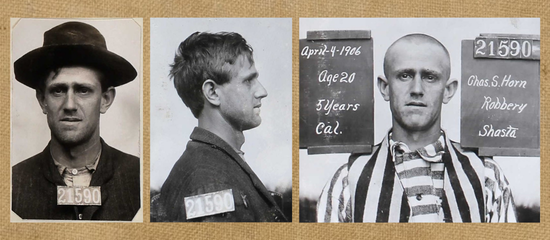
When questioned by the sheriff, Horn confessed, naming Bosenko as his accomplice.
“This confession, coupled with the identification made by Fred Stortz, forms a strong (case against) the defendants,” police told the Redding Searchlight, Dec. 3, 1905.
Two others were initially suspected of participating in the robbery, the Denlis brothers, who pocketed the money Stortz used to pay for his drink, short-changing him. They were charged with petty larceny.
After Horn confessed, Bosenko changed his plea to guilty. While he said others were involved, Bosenko refused to reveal their names.
Horn was sentenced to five years at San Quentin. He was received April 4, 1906, from Shasta County and given the number 21590.
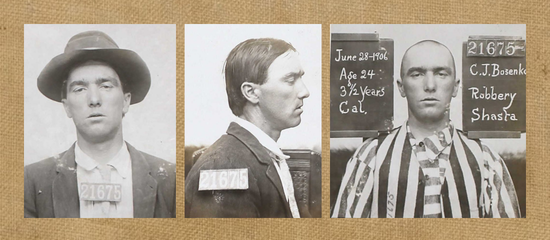
Bosenko, in a separate trial, was sentenced to three-and-a-half years at San Quentin.
Bosenko was assigned the number 21675, received from Shasta County June 28, 1906. He was 26 years old. Two years later, he petitioned for parole, which was granted April 28, 1908. He was then discharged from parole supervision Feb. 28, 1909.
Bosenko meets violent end
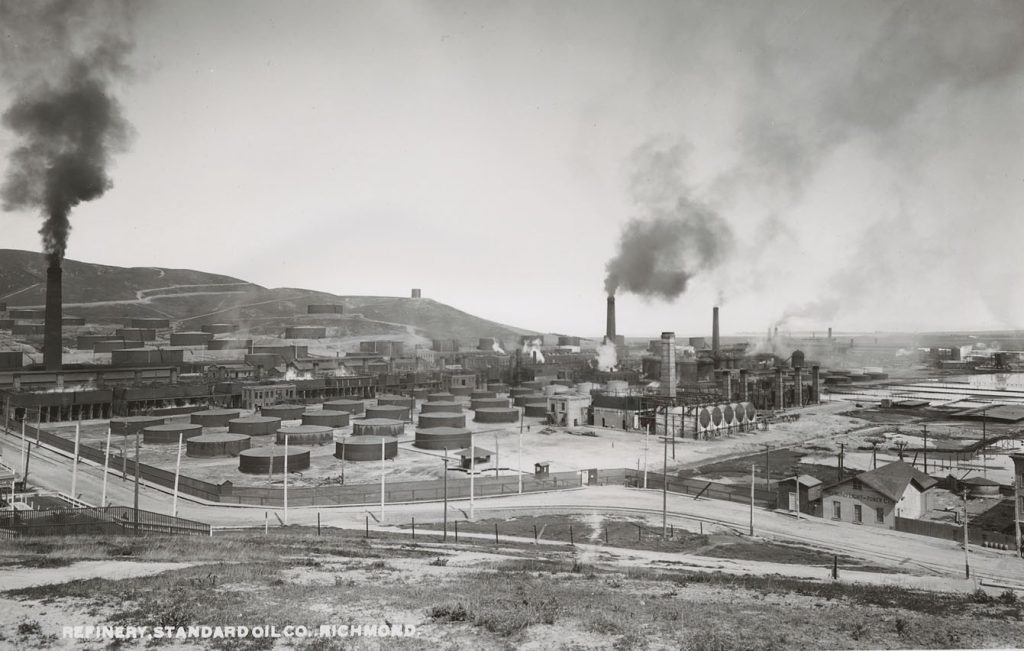
Years later, in 1926, 42-year-old Bosenko was employed at the Standard Oil Refinery in Richmond. There, he also worked with a man named Donald Streeter. For weeks, possibly even months, Bosenko butted heads with the 23-year-old Streeter, bickering and arguing. He also enlisted the help of other coworkers in disparaging Streeter while also saying unkind things about his family.
Their fights eventually turned physical.
“Streeter accosted Bosenko and demanded a retraction of the insult made against his wife (and children),” reported the Richmond Record-Herald, Jan. 15, 1927. “Bosenko is reported to have refused and as a result a fight ensued in which Bosenko was knocked to the ground several times.
Streeter quit his job, finding new employment at a local newspaper, but couldn’t let go of the resentments he held toward Bosenko and others at the refinery. Armed with a pistol, he returned to his former workplace, sneaking past the gate guard on Nov. 16, 1926.
“Streeter, brooding over the slurs hurled at his wife, the mother of two (young) children, and the loss of his position at the local plant, is said to have had the matter on his mind continually,” the paper reported.
Without warning, he walked up behind Bosanko and shot him in the back. Before he could fire another round, other workers wrestled him to the ground, disarming their former coworker.
Bosenko was laid to rest at the cemetery in Cottonwood, Nov. 22, 1926.
“Attending the last rites were a sister and two brothers, Mrs. Fred Klemmer of McCloud, Henry Bosenko and William Bosenko of Redding. Clifford Bosenka was born and reared in Cottonwood,” reported the Shasta Courier, Nov. 25, 1926.
Evaluated for competency
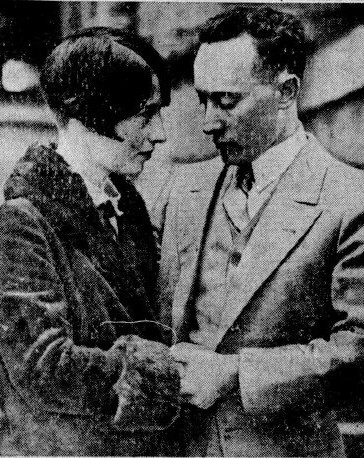
The court, and his defense attorneys, decided it best have the young man evaluated to see if he was competent to stand trial.
“What’s this insanity business all about. I’m not insane,” Streeter argued with his own attorneys in court. “I know just as much as any of them do.”
Streeter was found to be insane at the time of the murder and sent to Napa State Hospital in 1927.
Seven years later, doctors reported he had been restored and found competent to stand trial.
In December 1934, the jury returned a quick decision, finding he was not guilty by reason of insanity. Doctors said at the time of the murder, he “suffered from hallucinations of persecution.”
Story by Don Chaddock, Inside CDCR editor
Office of Public and Employee Communications
Learn more about California prison history.
Follow CDCR on YouTube, Facebook, X (formerly Twitter).
CDCR History
Explore 80 years of CTF‑Soledad’s history
Explore the history of the state’s fifth prison, the Correctional Training Facility (CTF) at Soledad. Activated in 1946, CTF was…
Read More
California Institution for Men marks 85 years of public safety
In 2026, California Institution for Men (CIM) is celebrating 85 years of public safety. The Chino institution, the fourth state…
Read More
History on display: Folsom Prison Big House Museum re‑opens
The Big House Museum at Folsom State Prison re-opened its doors to the public Saturday, July 25. The museum will…
Read More
History snapshot: Early parole officer urged youth diversion
In this installment of Unlocking History, we look more closely at early California state Parole Officer R.A. Lang. He originally…
Read More
Remembering Samuel Randolph, SQ Captain of the Yard
Like many in CDCR’s history, some staff go above and beyond the call of duty with one example being San…
Read More
Remembering Folsom State Prison Warden Clarence Larkin
In this installment of Unlocking History, we look at the life of Clarence Larkin, a longtime Folsom State Prison employee.…
Read More