

Step 4:
Background Investigation
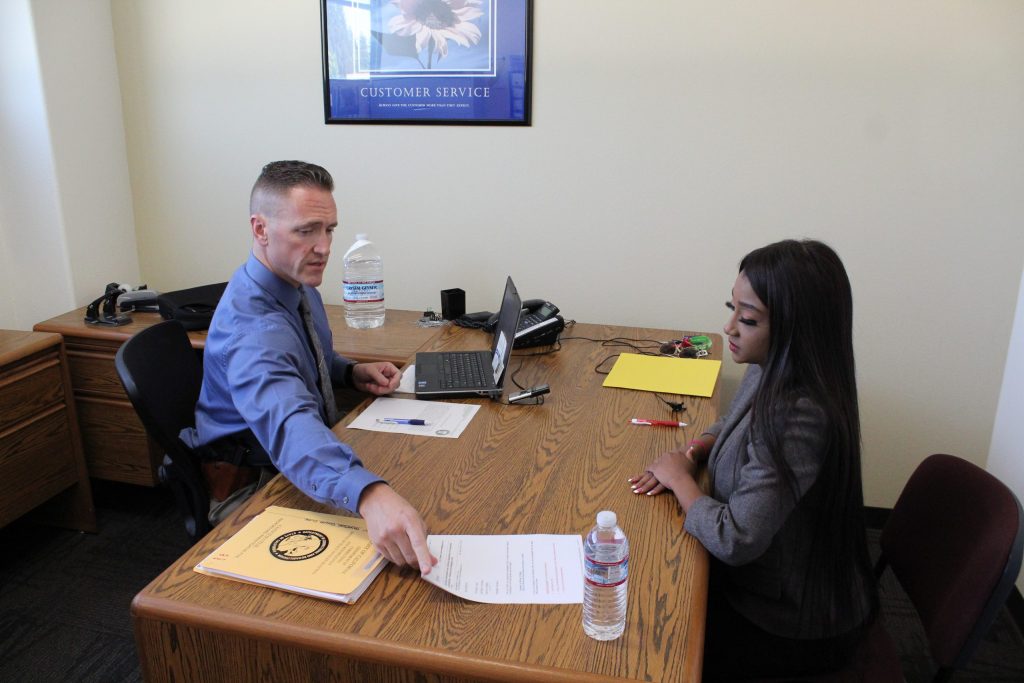

CDCR is always looking to hire peace officers to ensure the safety of the people of California.
During the background investigation we use the ten Peace Officer Standards and Training (POST) dimensions to help us determine suitability.
The background investigation is completed to establish the honesty and integrity of each applicant.
The following are some of the areas of an applicant’s life we review:
- Employment
- Housing
- Relationships
- Credit responsibility
- Criminality
- Fingerprint search
As part of the background investigation, CDCR may contact:
- Personal references
- Employers
- Educational institutions
- Law enforcement agencies
Investigation Timing
- The background investigation process begins after passing the Written Exam.
- A background investigation can be completed in approximately 90 days, some more complex investigations may exceed the 90-day timeframe.
- Although processing times will vary, priority processing may result in an earlier hire date.
Regulations, Rules, and Policies
Government Code Section 1031 requires the California Department of Corrections and Rehabilitation (CDCR) to determine that “peace officer candidates are of good moral character, as determined by a thorough background investigation.” Civil Code 1798.15 requires that “personal information shall be collected to the greatest extent practical.” Additionally, Labor Code Section 432.7 requires that you disclose arrests or detentions which did or did not result in a conviction, as well as referral to and participation in pretrial diversion programs.
1. Fingerprinting (Live Scan)
All candidates will be fingerprinted as part of the background investigation. Fingerprints are provided to the Department of Justice to complete a nationwide criminal records check.
REQUIRED MINIMUM QUALIFICATION DOCUMENTS TO BRING TO LIVESCAN:
- Valid Driver’s License
- Proof of Citizenship:
- Certified United States Birth Certificate or
- Original Naturalization Certificate or
- US passport or
- United States Permanent Resident Card or
- Employment Authorization Document
It is strongly recommended that you also provide the following documents at your live scan appointment as they will be required during the background process:
- Social Security Card
- Legal Name Change Documents (if applicable)
- Adoption, Change of Birth Name
- Marriage Certificate (if applicable)
- Divorce Decree (if applicable)
Note: The required minimum qualification documents are required to complete your live scan. If you do not have them upon completion of passing the physical fitness exam, you will be scheduled at a later date and time to be live scanned.
Government Code section 1030 requires that each candidate be fingerprinted as part of the Background Investigation. Each fingerprint is scanned into a computer database at the Department of Justice and checked against criminal records nationwide. Information received may include charges that have been dismissed.
Applicants will be live scanned upon successful completion of the physical fitness test.
Background Investigation Instructions
2. Create a Profile for Electronic Statement of Personal History (eSOPH)
Once you successfully pass the physical fitness exam, you will receive an eSOPH informational packet during the live scan component that provides detailed instructions on how to create your eSOPH profile. When you create your profile, you will be prompted to complete the Personal History Statement (PHS) (known in eSOPH as Questionnaires).
You will be contacted by your investigator via phone and/or email when your file is assigned.
If assigned to a background investigator, you are required to contact your investigator to update information on employment, legal issues, major life changes, or other background-related issues. Failure to keep your investigator updated on the above items may result in elimination from the selection process. You should not contact your investigator to check the status of your investigation.
If you have questions regarding the background process but have not been assigned a background investigator, please contact the regional Background Investigation Unit. Find your specific regions contact information on the Selections Centers page.
You will be notified via email when you complete the Background Investigation process.
3. Watch The Personal History Statement Questionnaire Instructional Guide with a video series titled “Required Documents”
The Background Investigation Unit has created a video series to assist in completing the questionnaires accurately and thoroughly. We want you to succeed.
*Applicants who possess an Employment Authorization Document must provide documentation.
4. Complete the PHS Questionnaires
The questionnaires are extensive sections of the PHS used to collect personal information regarding a candidate’s current and past life history. All candidates must complete and submit the PHS questionnaire via eSOPH.
Be completely honest in completing the PHS questionnaires. Do not leave out the little things you believe are not or may not be an issue. Once your background investigation has started, if there are any changes to your life history (including receiving a new tattoo and traffic citation), inform your assigned investigator as soon as possible.
Candidates must bring valid picture identification and other required original documents as indicated by their Background Investigator. Candidates are also required to wear business attire and are encouraged to review their PHS prior to this interview.
The Background Investigation Unit is currently using a computer-based software solution called the Electronic Statement of Personal History (eSOPH). All applicants will create and submit all required documents via eSOPH, required documents are:
- Certified United States Birth Certificate, Original Naturalization Certificate, United States Passport, or Employment Authorization Document
- Social Security Card
- Documents reflecting any name changes from your Birth Certificate. This includes, marriage certificates, divorce decrees, court adoption documents, etc.
- Certified and Sealed High School Transcripts (the high school you graduated from) or Certified proof of GED or passing California High School Proficiency Examination.
- Certified and Sealed College Transcripts from any colleges or universities attended.
- If you served in the Military, provide a copy of your DD-214, Military Discharge documents (Member 4, long form).
- Professional License or Credential (if applicable to position)
- Current/valid automobile insurance card.
Thoroughness and accuracy are required when completing the PHS. Deliberate omissions of information on the PHS may result in elimination from the selection process.
Examples of disqualifying information include a felony conviction, current firearm prohibition, being currently on probation, or an active criminal warrant.
Examples of possible disqualifying factors that could be discovered during the background investigation and require evaluation on a case by case basis include misdemeanor convictions, certain serious traffic convictions or patterns of traffic law violations, failure to appear, driver’s license suspensions, driving under the influence, failure to comply with legal obligations, negative employment history, and substance abuse.
No, a credit score or the establishment of credit is not a minimum qualification for an entry-level peace officer position.
5. Upload Notarized Authorization for Release of Information
The “Authorization for Release of Information” (which is contained in eSOPH as an agreement) must be printed, filled out, and notarized. Upload the notarized “Authorization for Release of Information” into eSOPH.
6. Upload Documents
Upload all required documents via eSOPH with the exception of documents required to be “sealed.” Documents required to be verified original will be verified by your assigned background investigator.
- Documents reflecting any name changes from your Birth Certificate. For example, marriage certificate, divorce decrees, court adoption documents, etc.
- Current/valid automobile insurance card.
- If you served in the Military, provide a copy of your DD-214, Military Discharge Form (Member 4, long form).
- Social security card.
7. Deliver Original Documents
The following original documents must be presented in person to your assigned background investigator or one of the Background Investigation Unit offices.
- Original Certified U.S. Birth Certificate/Original Certified Naturalization Certificate/U.S. Passport (bring original and a copy).
- Certified and sealed original high school transcripts from the high school you graduated from or Certified proof of GED or passing California High School Proficiency Examination.
- Certified and sealed college transcripts from any colleges or universities attended.
Initially, candidates can upload copies of original documents and as they move forward in the background investigation, you will be required to show the original copies in person for verification. However, do not remove sealed educational transcripts from the envelope you received them in. You will need to bring the sealed transcripts to your Investigator as directed.
Please communicate any issues with receiving your transcripts once the investigator assigned to your background investigation is determined. Ultimately, you will need to obtain sealed transcripts.
The Background Investigation Unit does not keep any original documents received from a candidate. We will verify all received documents and return the originals to the candidate, with the exception of transcripts.
Please note: The original documents are required to complete the background investigation.
The best advice is to be completely honest. There are many issues we can work through. However, if you’re found to be dishonest or omit pertinent information in your life history, it could be cause for elimination from the process.

Important Policies and Information
Illegal Drug Use
Experimental use of drugs may not be a disqualifying factor. The recency and specific circumstances of illegal drug activity will be evaluated to determine suitability for employment as a peace officer.
CDCR recognizes some qualified applicants may have used illegal drugs or abused legal drugs or substances, at some point in their past; application of CDCR’s drug use policy, in conjunction with case-by-case analysis, will determine if an applicant’s prior drug activity or usage will result in the applicant not being selected for employment with the CDCR. All applicants are required to disclose their current and past drug activity and usage. An applicant will not be selected for employment if they deliberately misrepresent their drug history in connection with their application for employment.
Previous Step:
Physical Fitness Test

The Physical Fitness Test (PFT) evaluates strength, endurance, and agility required to perform the essential duties and functions expected.
Previous StepNext Step:
Psychological Exam

The role of a peace officer can be physically and emotionally demanding. The Psychological Evaluation helps determine how you respond to stressful and challenging situations, and it gives you a better idea of how you might feel in the peace officer role.
Next Step